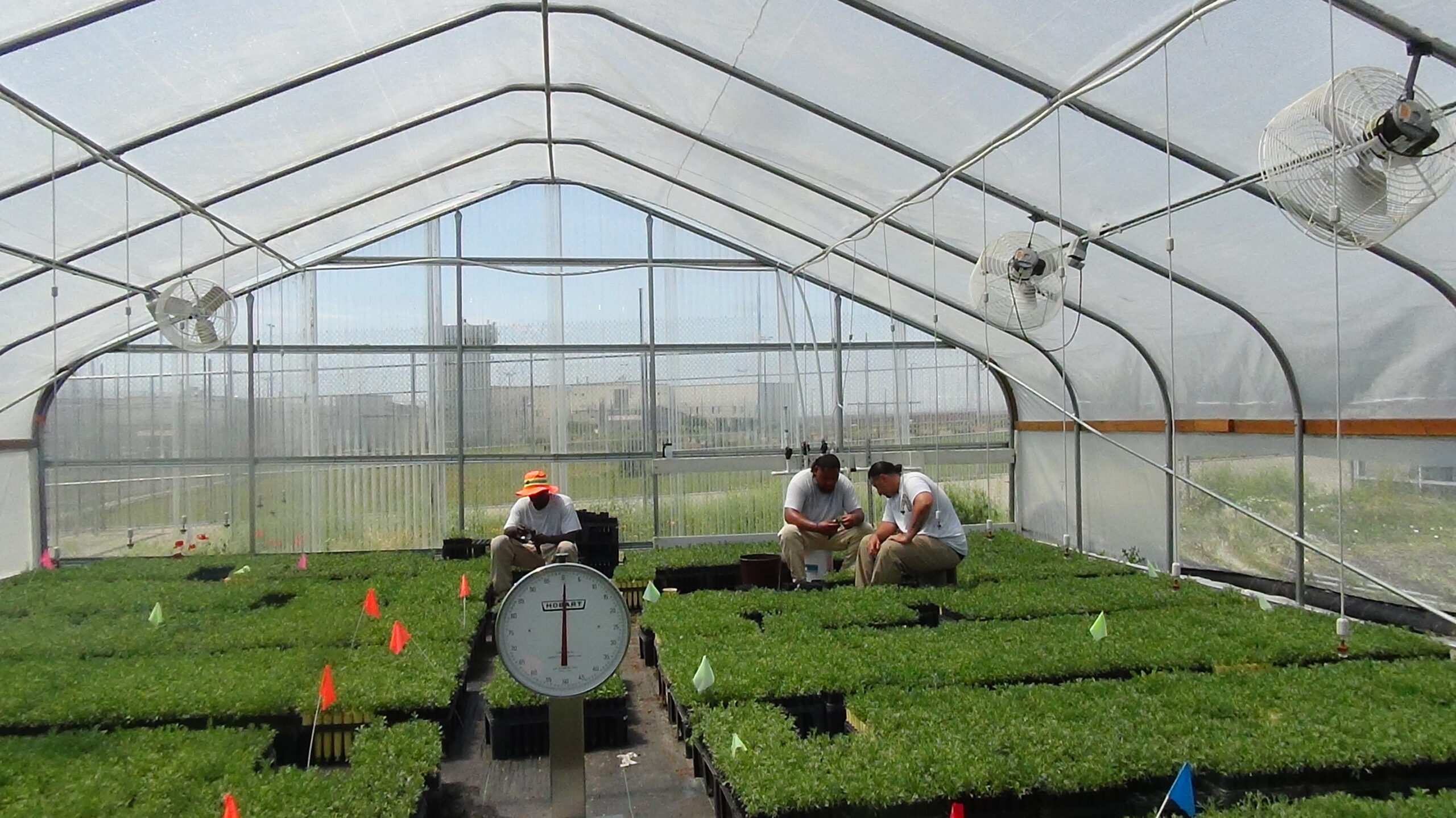
Text and photos by Erica Benoit, SPP Environmental Workshop Series Coordinator
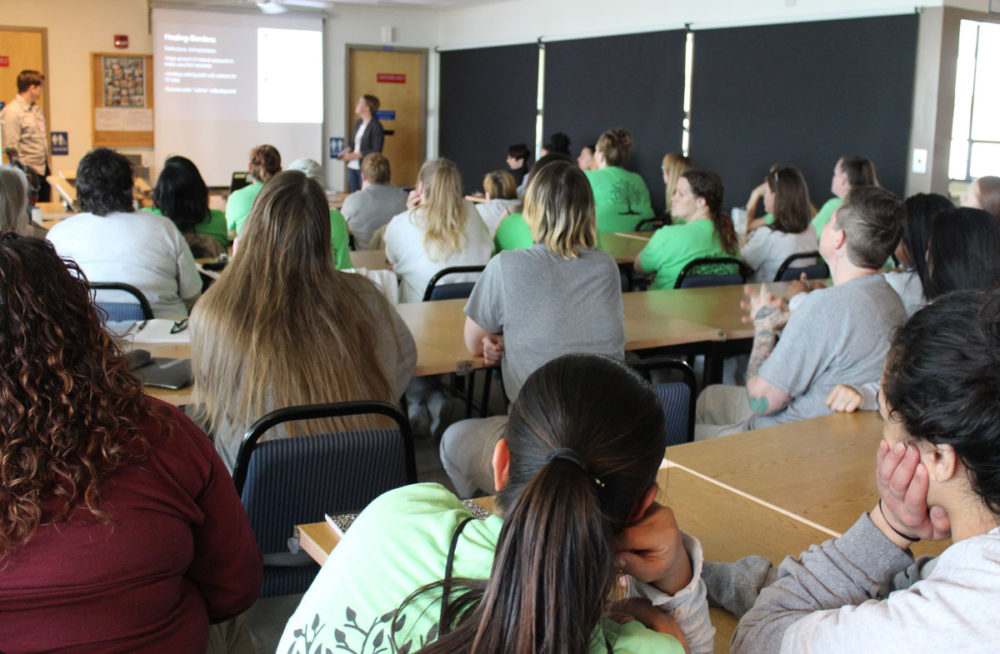
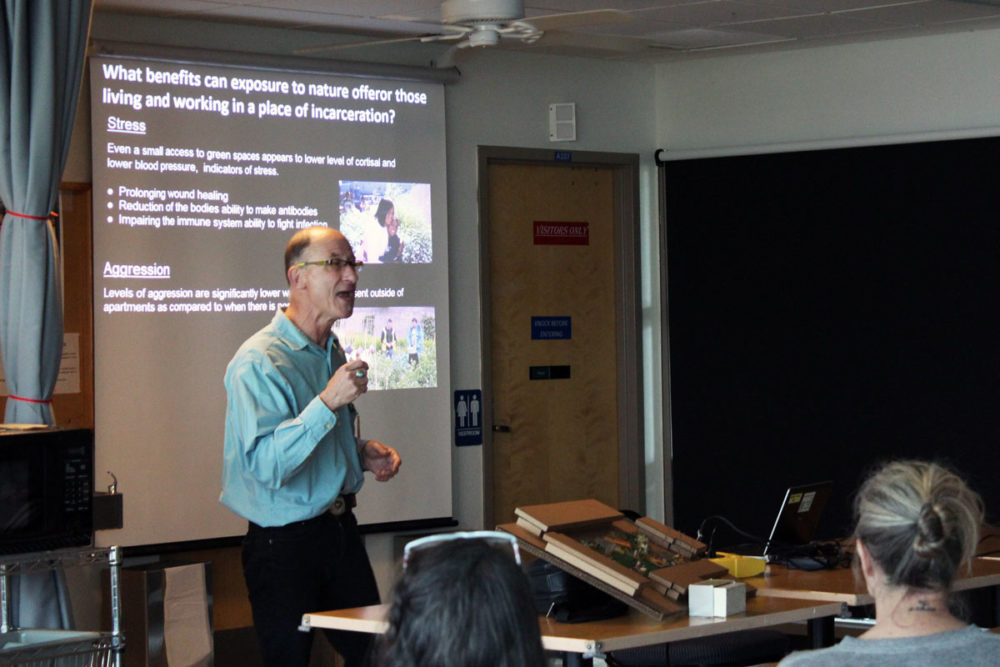
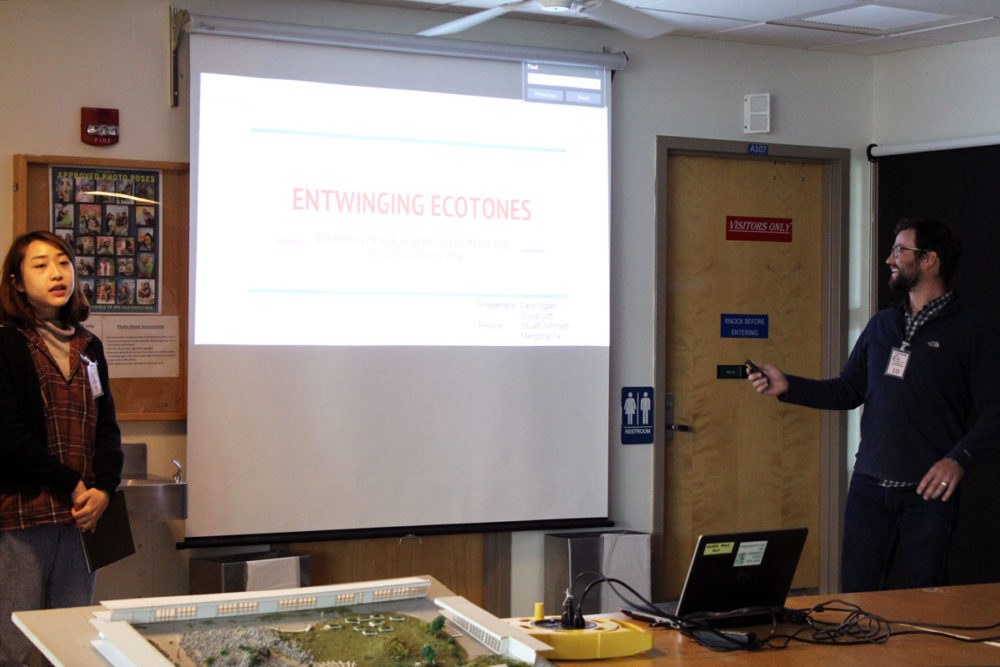
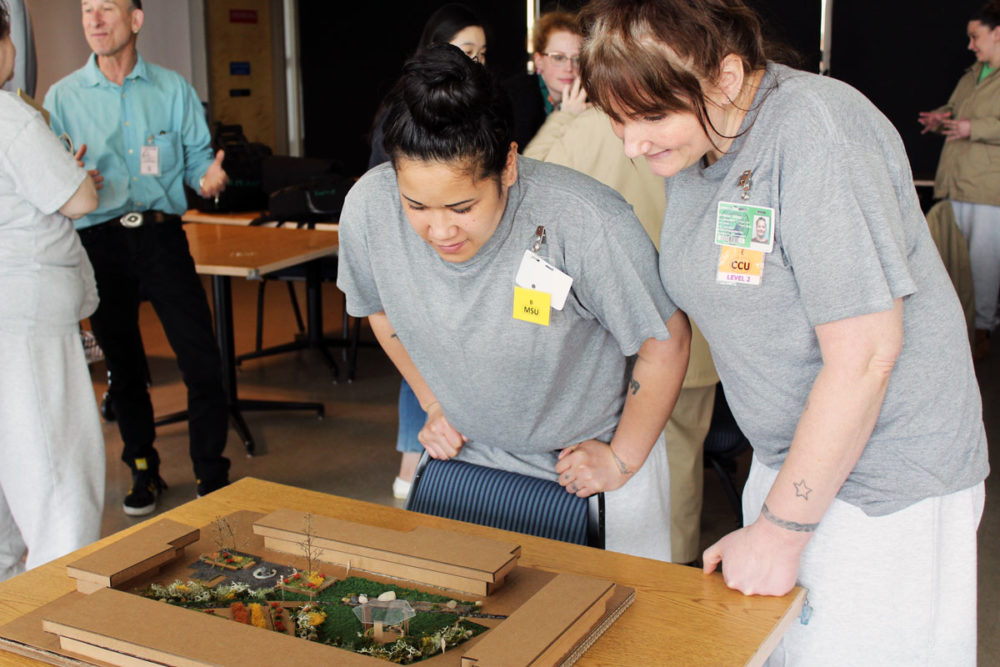
More than 70 students filled the workshop classroom at the Washington Corrections Center for Women (WCCW) in Gig Harbor to engage with Professor of Landscape Architecture Daniel Winterbottom and his students from the University of Washington (UW) College of Built Environments. The students enthusiastically presented six proposals for a re-envisioned prison landscape, one that offers many ecological, psychological and emotional wellness.
Professor Winterbottom first came to WCCW early in 2016, along with Dr. Barb Toews of UW-Tacoma. Both academics saw potential for building restorative landscapes at the prison, for the benefit of both incarcerated individuals and prison staff. They also found willing partners among WCCW’s leadership, particularly Associate Superintendent Felice Davis, Facilities Manager Rod Coberly, and Superintendent Jo Wofford. Even so, it took three years of persistence before Professor Winterbottom had the go-ahead to make the prison the topic of his Therapeutic Master Plan Studio class.
Last month, he and his students presented their recommendations to WCCW’s leadership, which were met with further support and enthusiasm. The next step was to get feedback from the incarcerated individuals, the folks who might be most affected by the potential project. Luckily, there was an opening in the workshop series calendar, creating the perfect opportunity to bring everyone together!
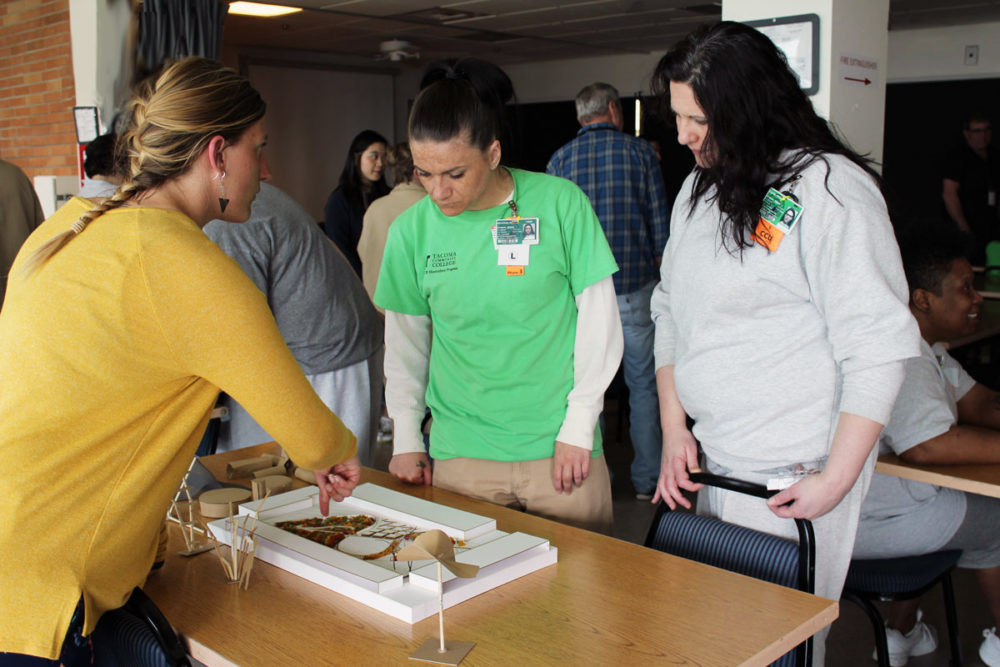
The student groups, with architecture models and posters in hand, presented projects focused on designing a nurturing and healing environment as an exercise of rethinking the landscape of incarceration.
They proposed creating places that stimulate the senses, and that offer both respite and engagement through the garden. Each proposal offered different approaches and methods, but all were intended to create a more humane place for both residents and staff.
Workshop students were especially respectful of the time and effort the UW students put into their projects, and their comments and questions reflected that appreciation.
Overall, workshop students were engaged and excited to hear about the potential to transform their built living environment.
Are octopuses smarter than a 5th grader? Are you? How do we measure intelligence? In a June workshop at the Washington Corrections Center for Women (WCCW), Rus Higley and Aeriel Wauhob from MaST Center Aquarium posed these questions to a group of incarcerated students who are part of the Freedom Education Project Puget Sound (FEPPS). FEPPS is a non-profit organization that offers Associates of Arts and Bachelor of Arts degree to incarcerated people at WCCW.
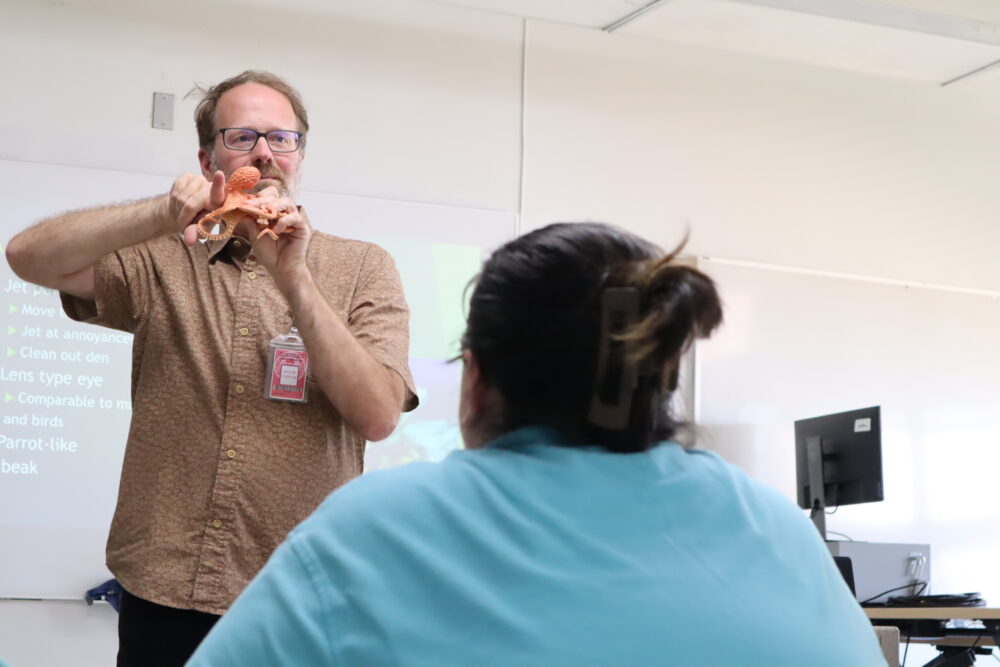
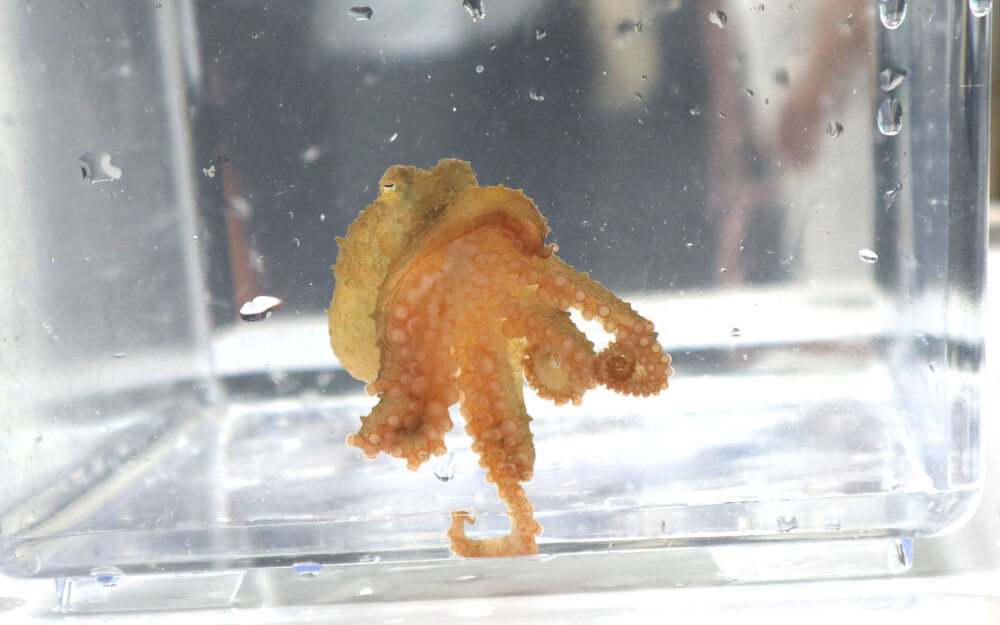
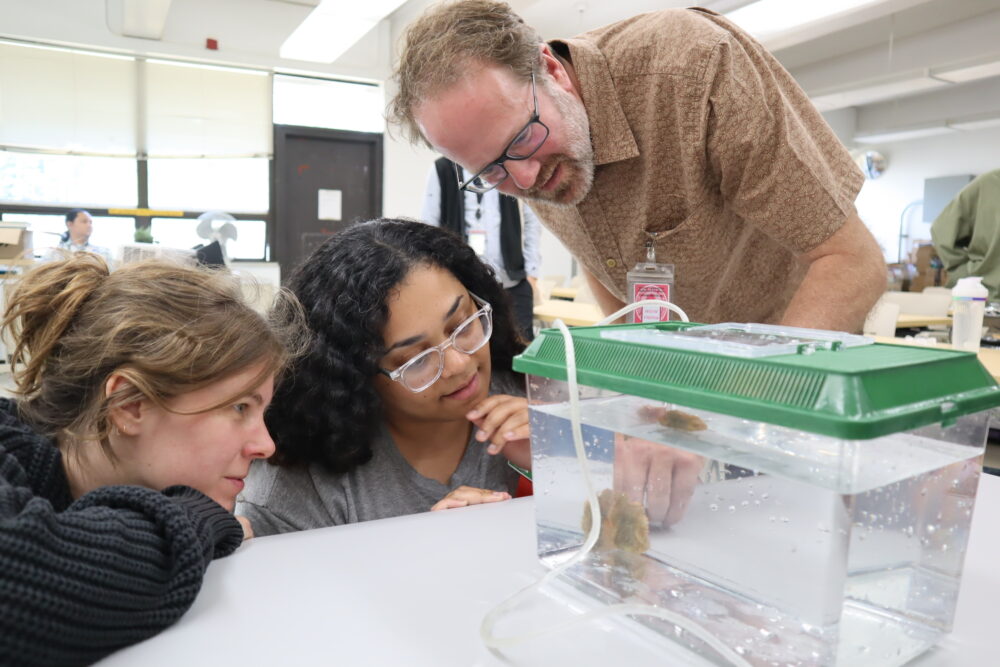
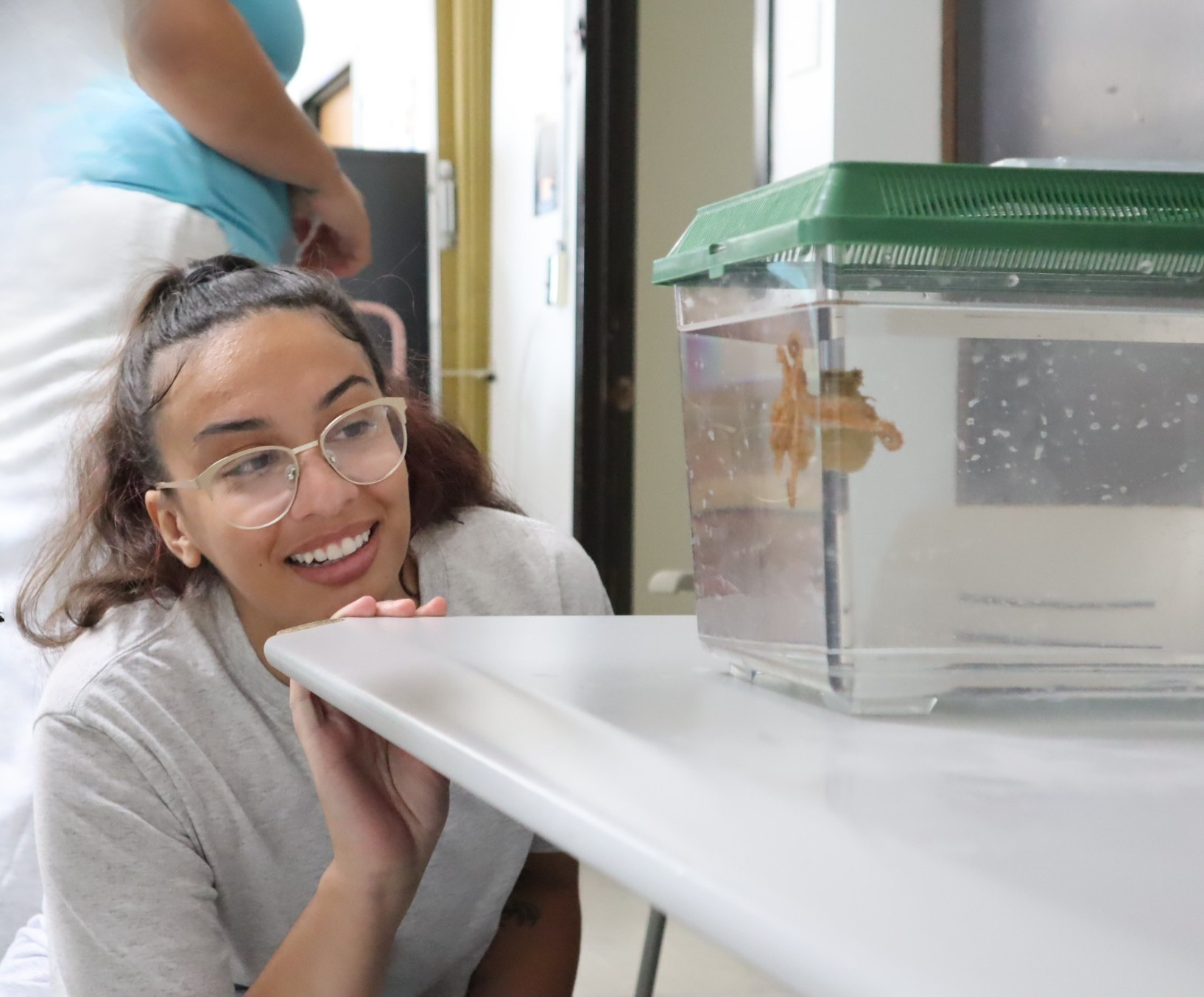
In a fantastic presentation given by Higley, students watched amazing videos of camouflaged octopuses, learned about species native to the PNW, and even got to meet a live juvenile Pacific red octopus!
Russ Higley from the MaST Center Aquarium in Tacoma explains octopus anatomy. Photo by Emily Passarelli.Red pacific octopus (Octopus rubescens). Photo by Emily Passarelli.
Octopuses use tools, have spatial memories and personalities, and engage in play, all attributes that humans consider signs of intelligence. So, ARE octopuses smarter than 5th graders? It’s complicated. While an octopus may not pass a 5th grade multiple choice test, the workshop hosts and participants all agreed that knowing facts on a test was not the best way to measure intelligence, especially for a creature who has nerve cells (like the ones found in our brains) in all eight of its arms!
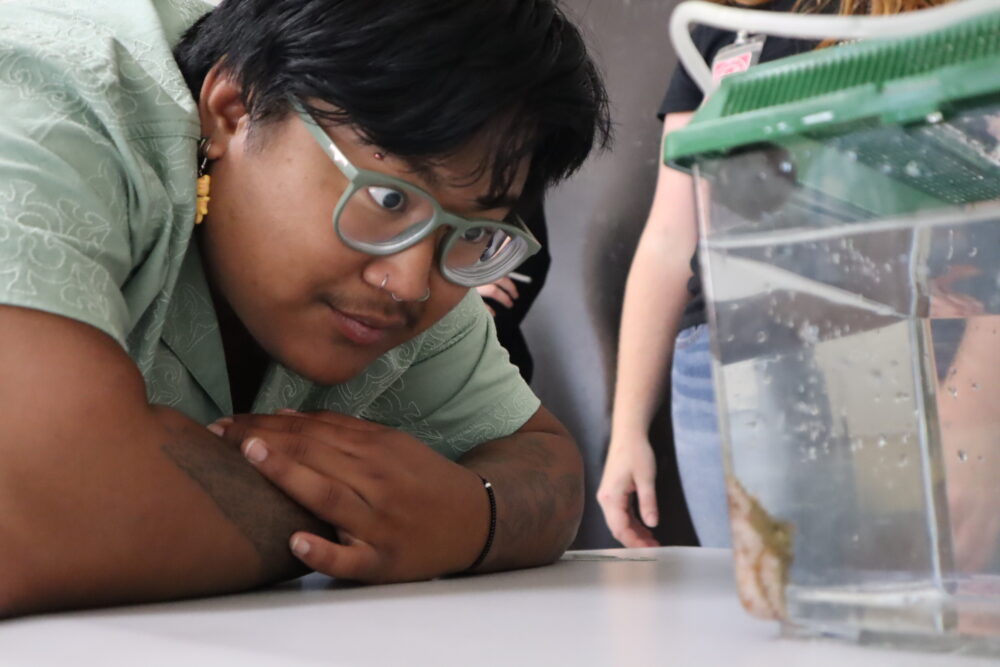
Andrew Campbell from the Freedom Education Project Puget Sound (FEPPS) looks at the Pacific red octopus.Russ Higley (right) points out octopus anatomy to SPP coordinator Anneke Wilder (left) and student Tatiana Baker (middle).Olivia Bebic gets an up-close look at the Pacific red octopus.
As SPP continues to ramp up our workshop offerings, now is a great time to get in touch if you or someone you know may be interested in offering a workshop in a prison facility. Contact Michael Zirpoli at michael.zirpoli@evergreen.edu for more information! Workshops provide fantastic opportunities for community learning exchanges, and they are an integral part of our educational offerings at SPP.
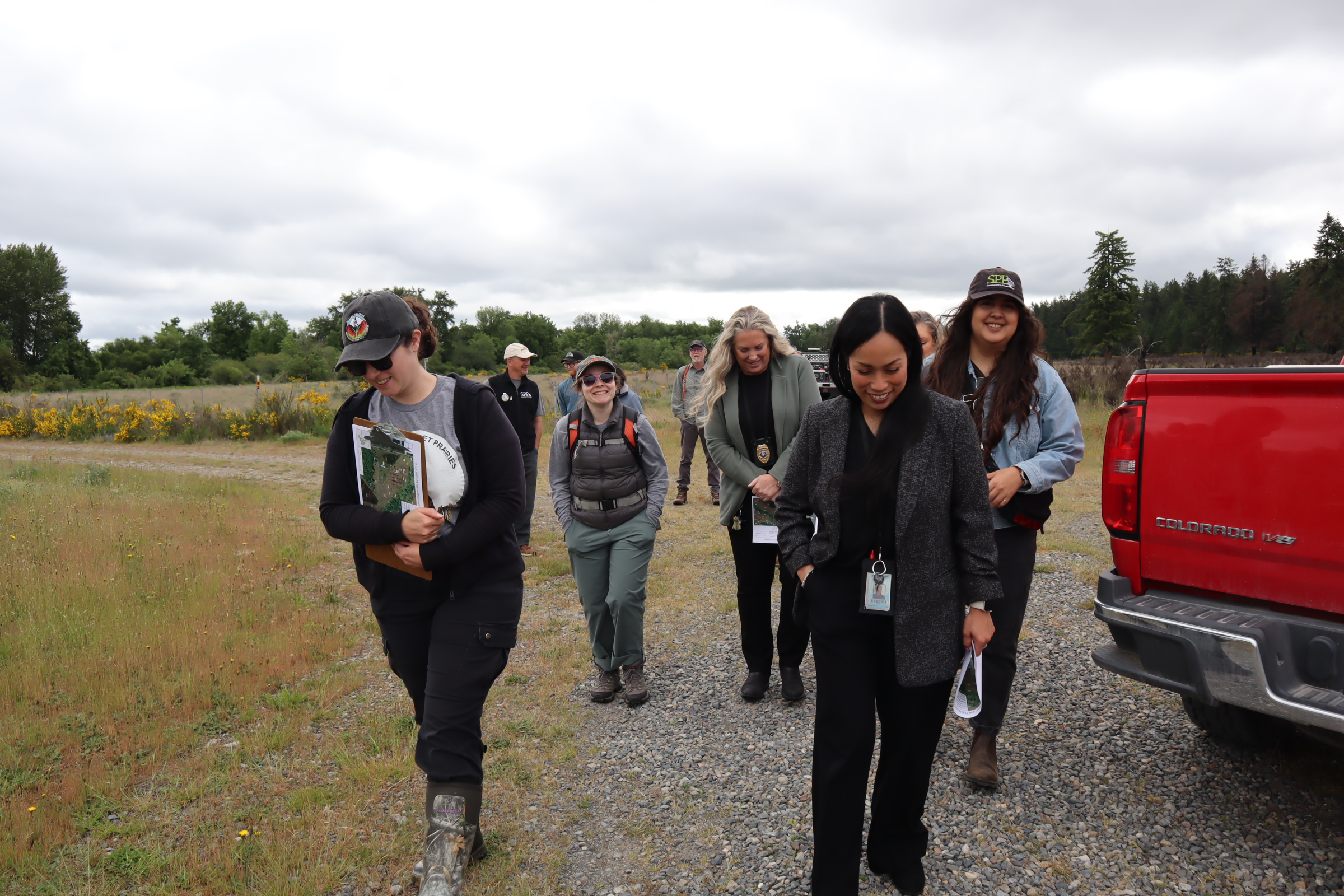
At the end of May, a group of SPP and Department of Corrections (DOC) staff got the chance to tour one of the prairies that is supported by the SPP Ecological Conservation Nursery programs and the SPP Taylor’s Checkerspot Butterfly Program. The restored prairie site is located on the federally owned land of Joint Base Lewis McChord (JBLM).
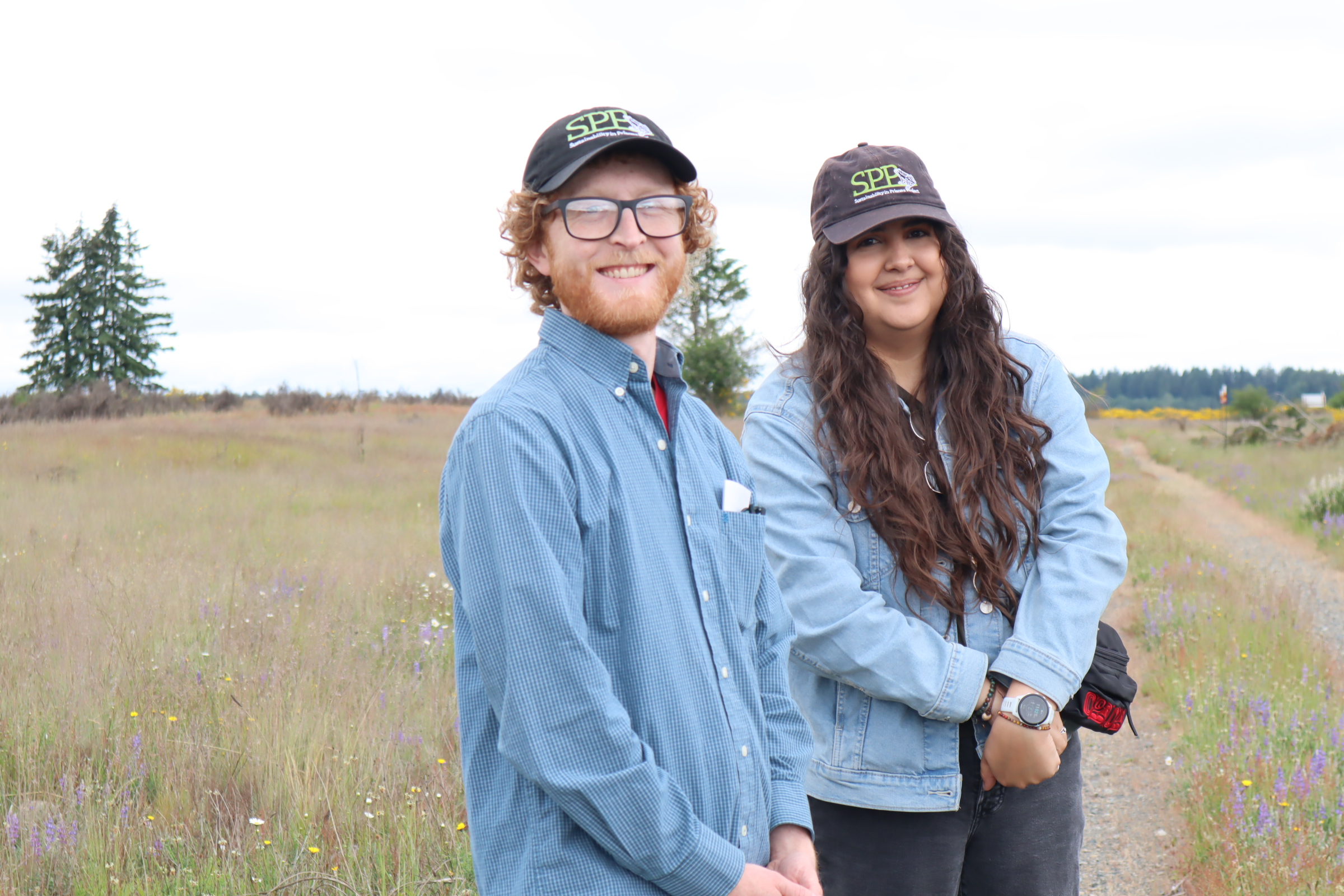
From left to right: Gina Smith (JBLM Fish & Wildlife), Mikala Waldrup (SPP), Sonja Alley (DOC), Maria Hall (DOC), and Mariana Cervantes (SPP)
Prior to colonization, Washington prairies were maintained by indigenous groups through harvesting and cultural burning. Once prevalent in the region, prairies are now considered one of Washington’s rarest ecosystems. This ecosystem has been reduced to less than 3% of its original area due to development and natural resource demand. Populations of animals that rely on the prairies, like the endangered Taylor’s Checkerspot Butterfly, have dwindled as well.
Around 90% of the remaining prairie ecosystems in the South Puget Sound are located at JBLM, where less development and periodic burns have allowed prairies to persist1. These ecosystems are considered critical habitat for Taylor’s Checkerspot butterflies and must be maintained for their survival.
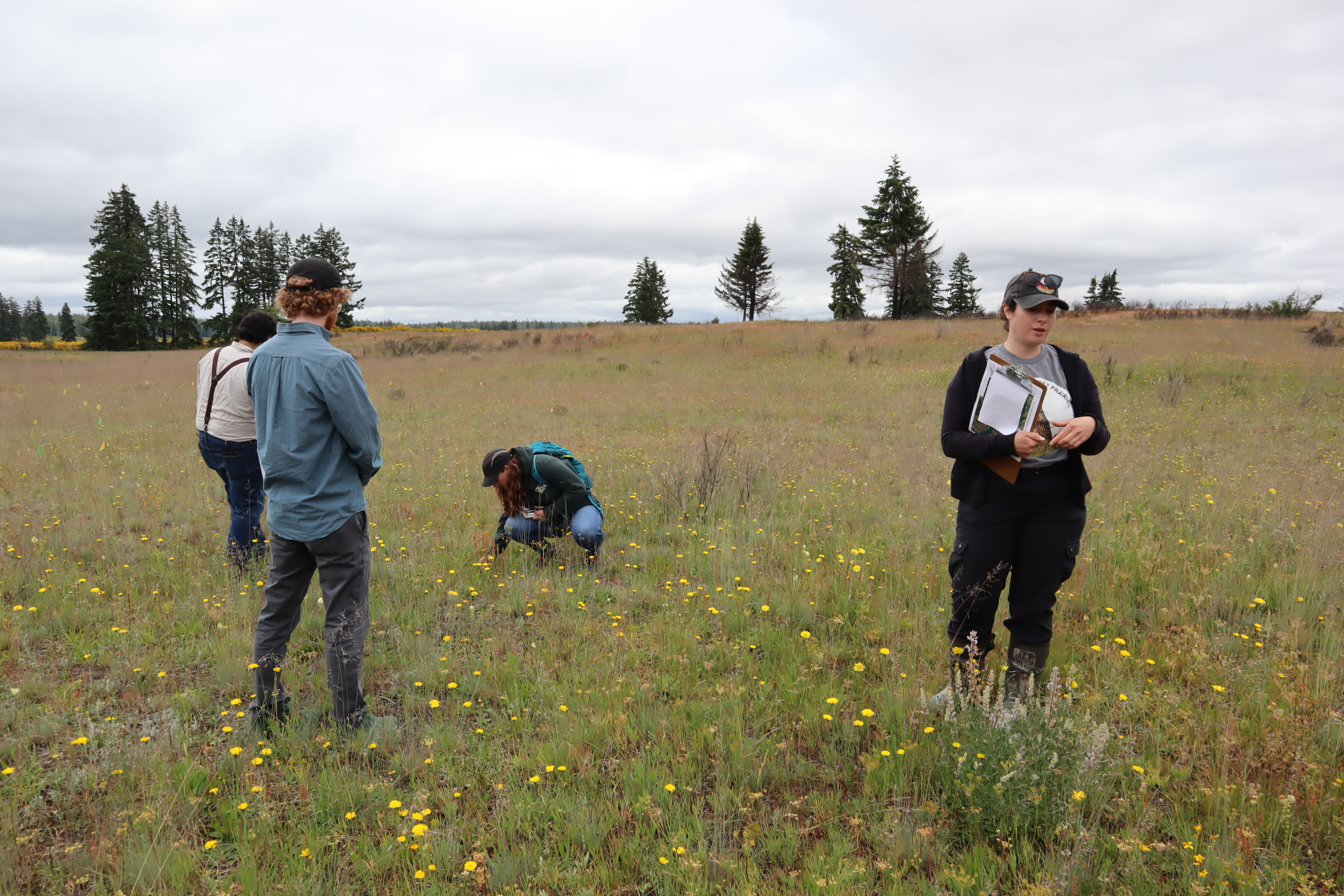
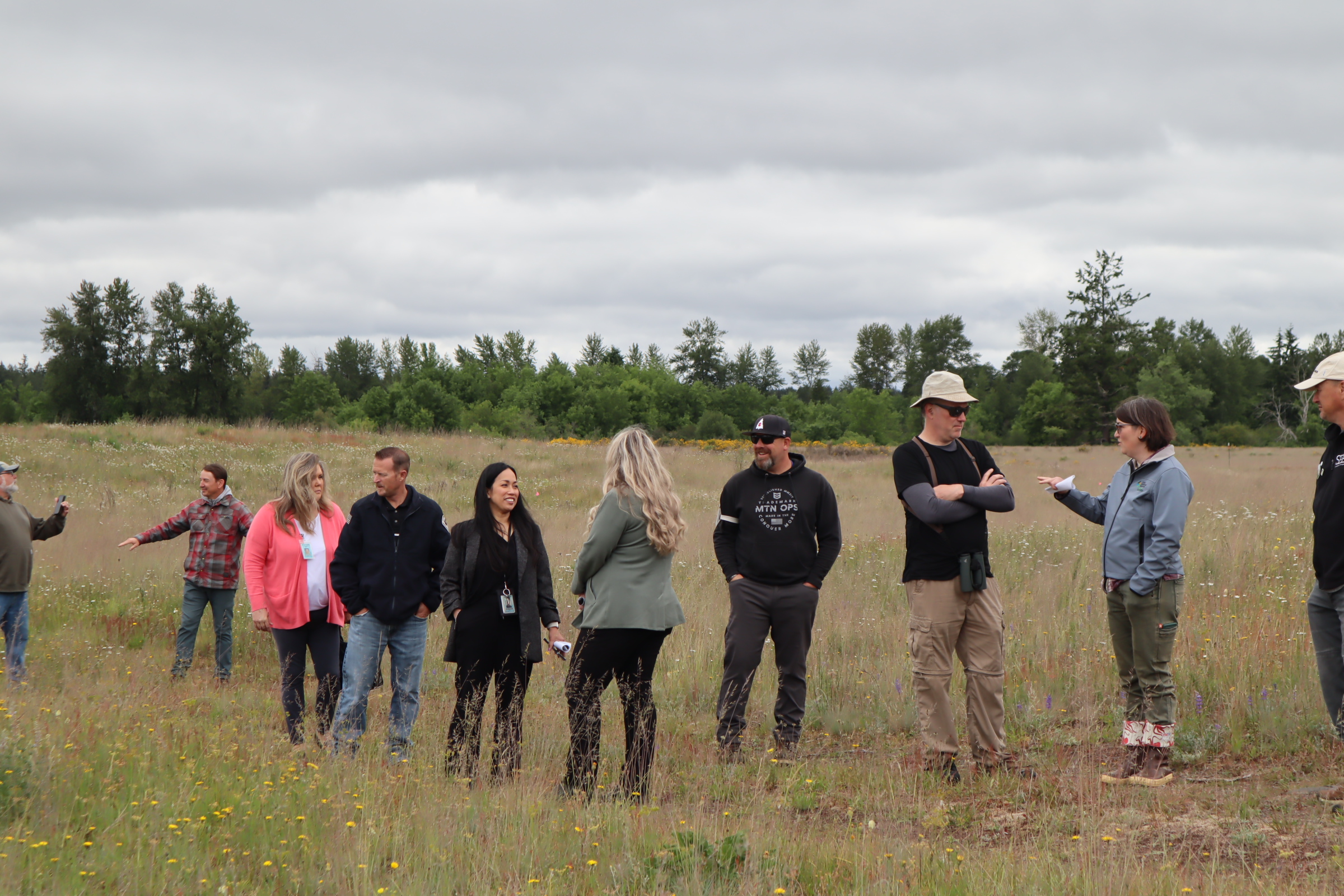
SPP staff and Gina Smith (JBLM Fish & Wildlife) step off the path in an area unlikely to have Taylor’s checkerspot eggs. Many plants in this area werelikely grown by SPP’s Ecological Conservation Nursery Programs. Photo by Anneke Wilder.
On the tour, JBLM Fish and Wildlife ecologistsshared their passion and knowledge of the prairie ecosystem with DOC and SPP staff. The ecologists talked about the history of the site and the work that has been done to restore habitat for the butterflies. This work includes outplanting of plugs and seeds that were grown and harvested at prison facilities, as well as releases of butterflies reared by incarcerated butterfly technicians. They stressed that none of this work would be successful without the partnership between SPP, DOC, and USFWS.
“I will never look at a prairie the same after listening to the information shared on the intricacies of each aspect of conservation work and what is needed for a healthy prairie to support the butterflies. Observing the passion of the others on the tour was inspiring!” – Kari Figueira (DOC)
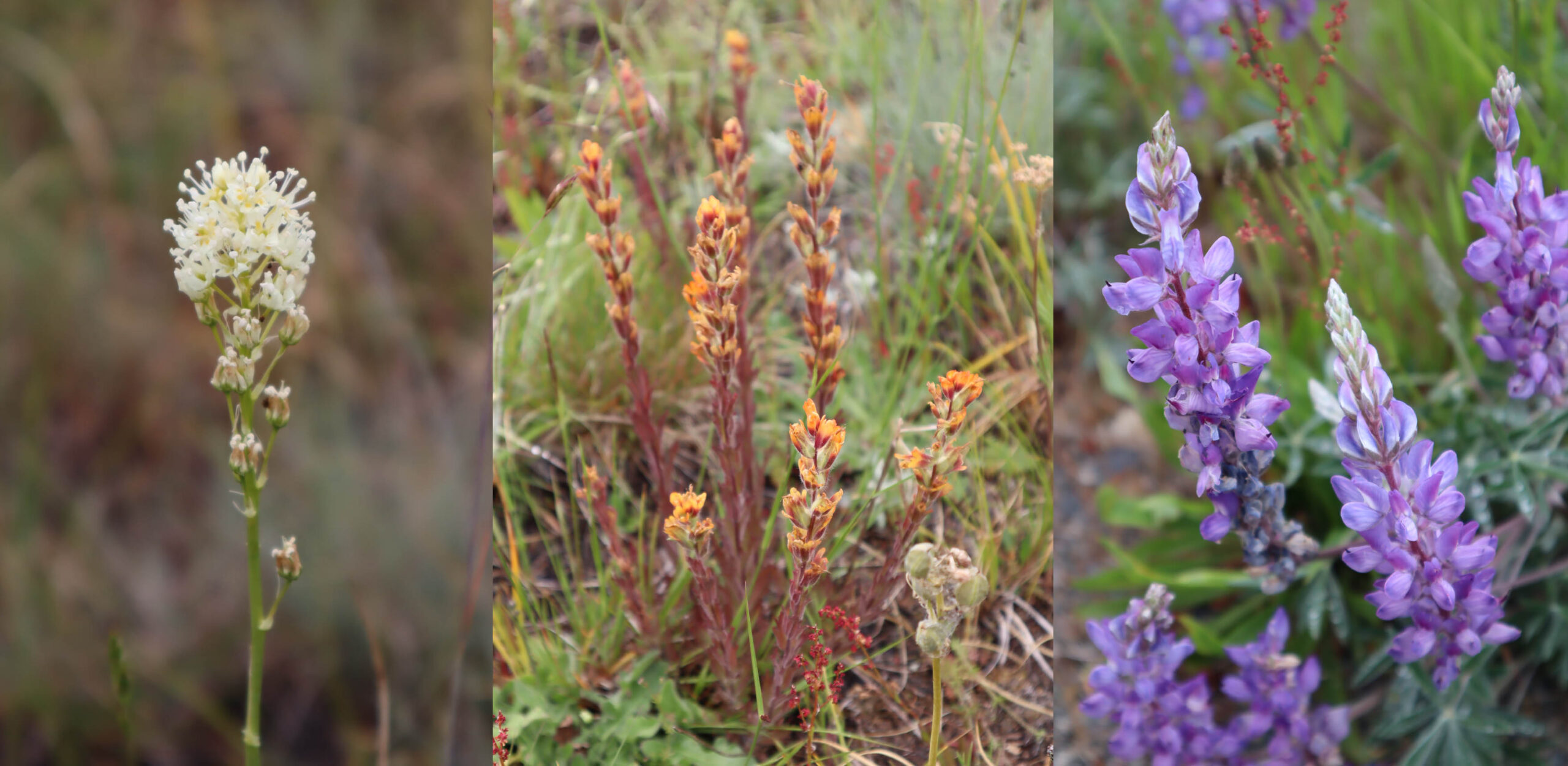
From left to right: Death camas (Zigadenus venenosus), Harsh paintbrush (Castilleja hispida) and Lupine (Lupinus sp.) Photos by Anneke Wilder.
Many prairie plants were in bloom, including lupine (Lupinus sp.), balsamroot (Balsamorhiza sagittate), death camas (Zigadenus venenosus), and paintbrush (Castilleja sp.). In many areas, visitors had to take care not to step off the main path, as eggs from the butterflies could be damaged by foot traffic. These rare opportunities to connect with the work and understand the impact of SPP programs are beneficial for all involved in the partnership.
“The experience was a full circle moment, as DOC often does not see what is beyond the fence and the positive impact that is made by initiatives with SPP. I appreciate the opportunity to walk and learn about the checkerspot in their environment with such knowledgeable experts in the area of conservation.” – Sonja Alley (DOC)
DOC staff tour the prairie accompanied by JBLM Fish and Wildlife ecologists. Photo by Anneke Wilder.Nat Kelly (left, SPP) and Mariana Cervantes (right, SPP) are both Ecological Conservation Nursery Coordinators. Photo by Anneke Wilder.
Could you tell us a little bit about your background and what brought you to SPP?
I’ve been living in Walla Walla since 2007. My husband, who is from Seattle and is retired from the military, got a job at WSP, and we ended up moving to Walla Walla. I have my bachelor’s degree in animal welfare and science, but with my experience with dementia through my grandfather, I ended up working in a dementia care home. That experience made me consider nursing. I went through all the steps and was just about to apply and decided that no, I wanted to work with animals.
So, I opened my own small business working with animals and was doing a lot of farm work. Ultimately, the farm work got me involved with the vice president of the Washington State Sheep Association. We became friends and he said, “Gerry, they’re opening a sheep project at the prison, would you be interested?” I’d learnt to sheep shear through going round all these farms and shearing, so I said “Yeah, I’m interested.”
In 2017 they began the sheep program here at WSP, where participants could get 5 credits from Evergreen State College for completing the class. The incarcerated technicians were taking care of all the husbandry, and I oversaw them. I did that for four years and it was amazing.
I wanted to keep the land going when the program ended and got approval to do so, but I decided not to because it was going to be a lot of responsibility by myself. Then I heard from Kelli Bush (SPP Co-director) that they were going to be doing a sagebrush program at WSP, and I was offered a temporary position until they found a teacher.
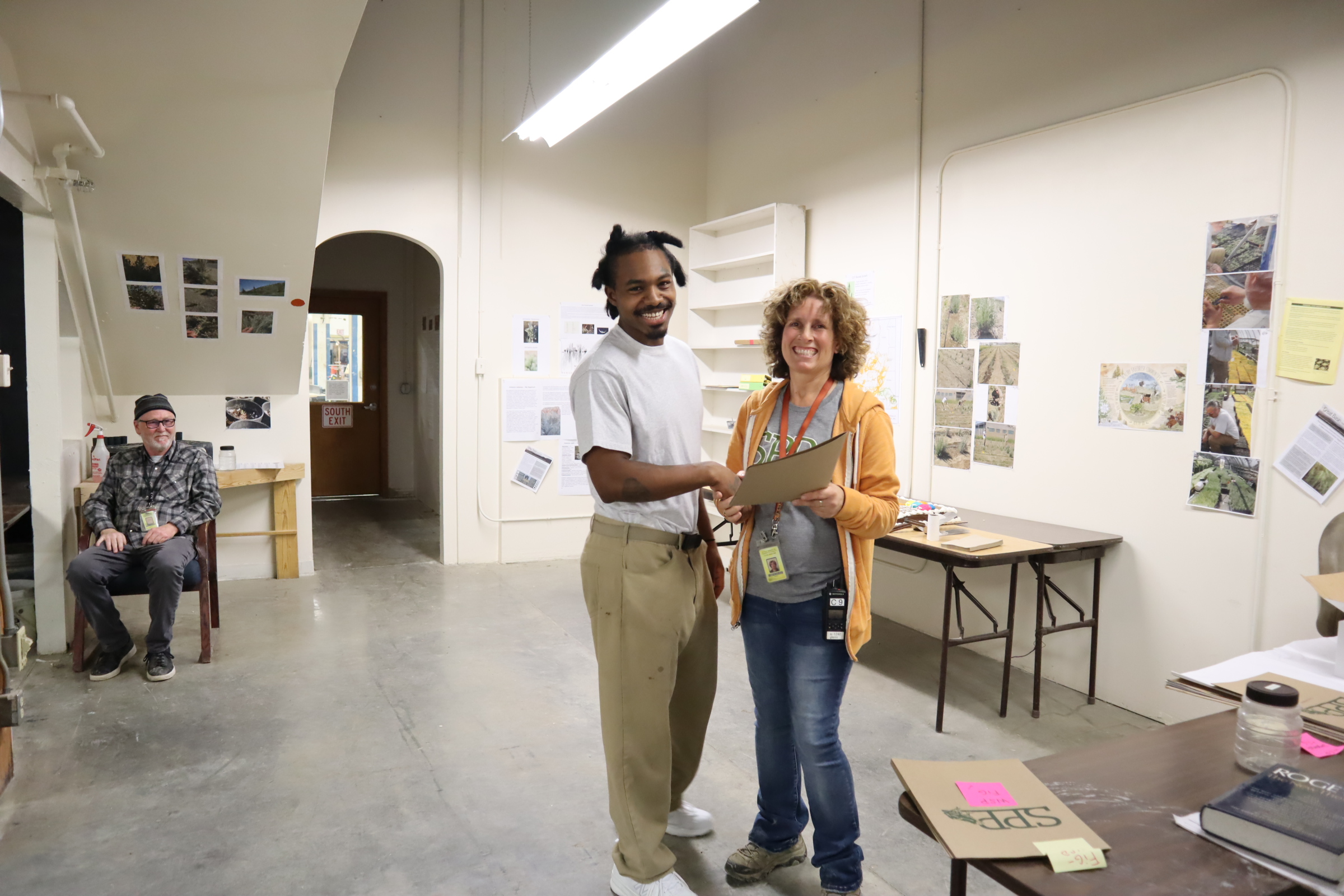
Technician Marje McKenzie receives his certificate from Gerry Glenn at a Sagebrush program graduation ceremony. Photo by Emily Passarelli.
What has your experience with the Sagebrush program been so far?
With the sheep program I had been working with camp workers, which is minimum security outside of the prison on 40 acres of land with a guard. With the sagebrush program, it was a little daunting to work with medium security guys within the prison. I was nervous at first, but I settled down and immersed myself in the program.
The animal welfare side of it is to help with conservation of the sage grouse, because we are planting the sagebrush that they require as habitat. So, if someone said to me, “How do you save the sage grouse?” This is what I would say.
Kelli told me that there would be modules on education for the program. I remember asking Kelli if I could take the classes as well, and she said “no, you’re going to be teaching those classes.” I started doing my own research and everything. The first group was in 2023, and it was phenomenal. It was so great working with these guys and being with them 40 hours a week. You build up a different relationship than if you just come and go. You get to know more about them and the type of people they are.
The first class was successful. We sent out 16,000 plants that year. Then Carl Elliot (SPP Ecological Conservation Nursery Manager) asked if I would be interested in assisting with the Foundations in Gardening class, which I did. At this point I had been offered and accepted the permanent sagebrush teaching position; I was very happy. We did the next sagebrush class in 2024 followed by an advanced sagebrush class last, and now I’m doing my third class.
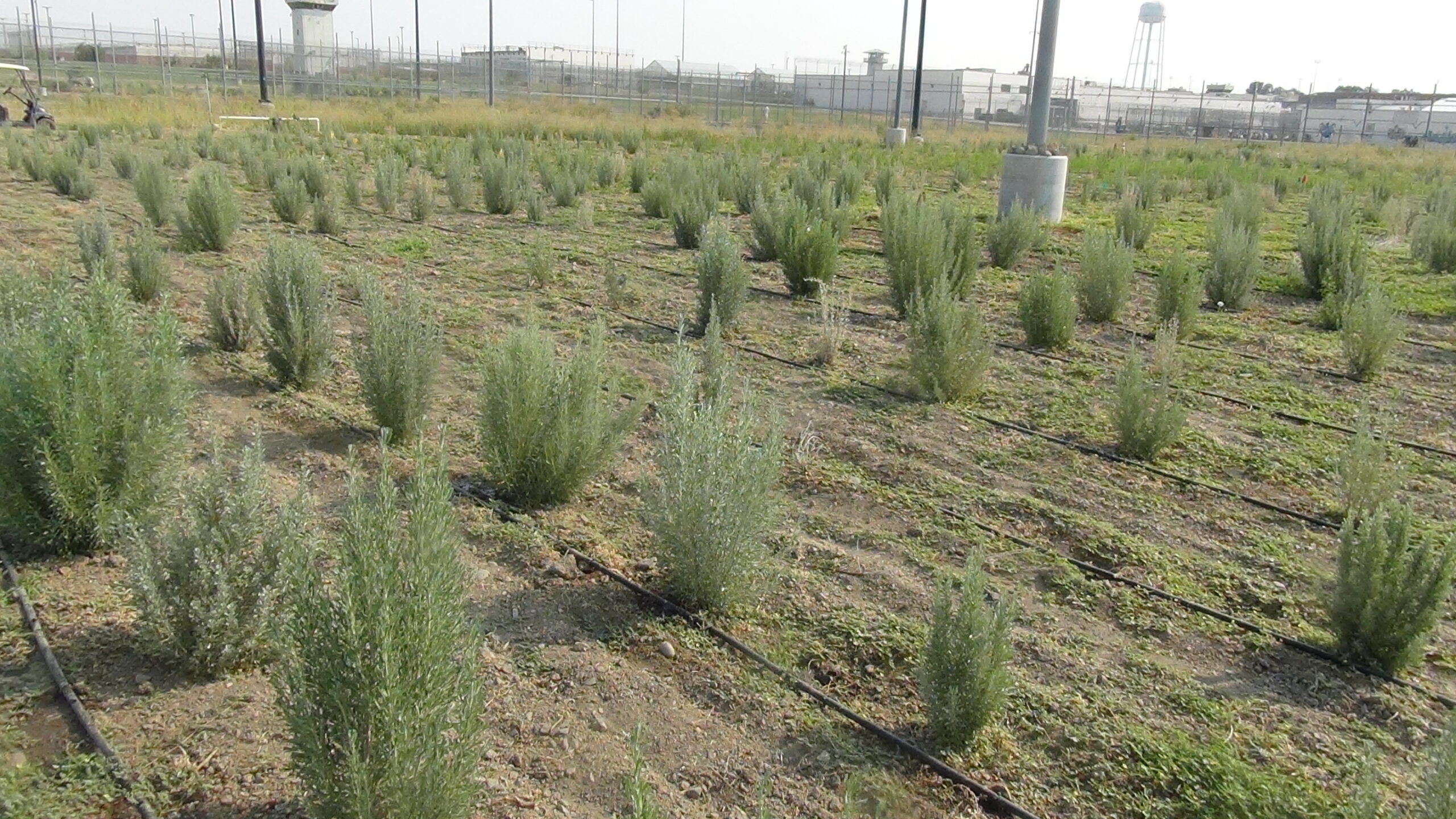
I’m much more confident now, and I know what I’m doing. We’ve got bigger expectations, we’ve got more space, we’ve got new hoop houses and it’s just fantastic what we’re doing. We have got 65,000 sagebrush plants growing right now. Before, I relied on the Sustainable Practices Lab staff to help me. Now they’re whittling down, and I have a lot more responsibility, and it’s great.
I love being positive around the guys, and I encourage them to get credits from The Evergreen State College. There’s a lot of pride in what we’re doing. There are some guys who were maybe a little bit lazier at the beginning, and bam, all of a sudden, they’re experts at talking about the sagebrush. Just to see that progression for me is fantastic.
I opened an animal business because I love animals, and it was the best job ever for me. Having my own business is amazing. To have a second job which is equally as amazing… I feel very blessed right now work wise.
Of course, you’ve got the SPP people, which is the other side. When I come over there and meet everybody, it’s fantastic. It’s so relaxed, but we all do our jobs and get it done, and it’s such a great atmosphere. I know I could call anyone on the team if I had an issue and it would be OK. So, you don’t often get these great opportunities. I know how lucky I am. Every day I come in and I think this is great, I think it’s rubbing off. People see how I love what I’m doing, and I can’t help it, I’m not even pretending!
Sagebrush plants at WSP. Photo by SPP staff.
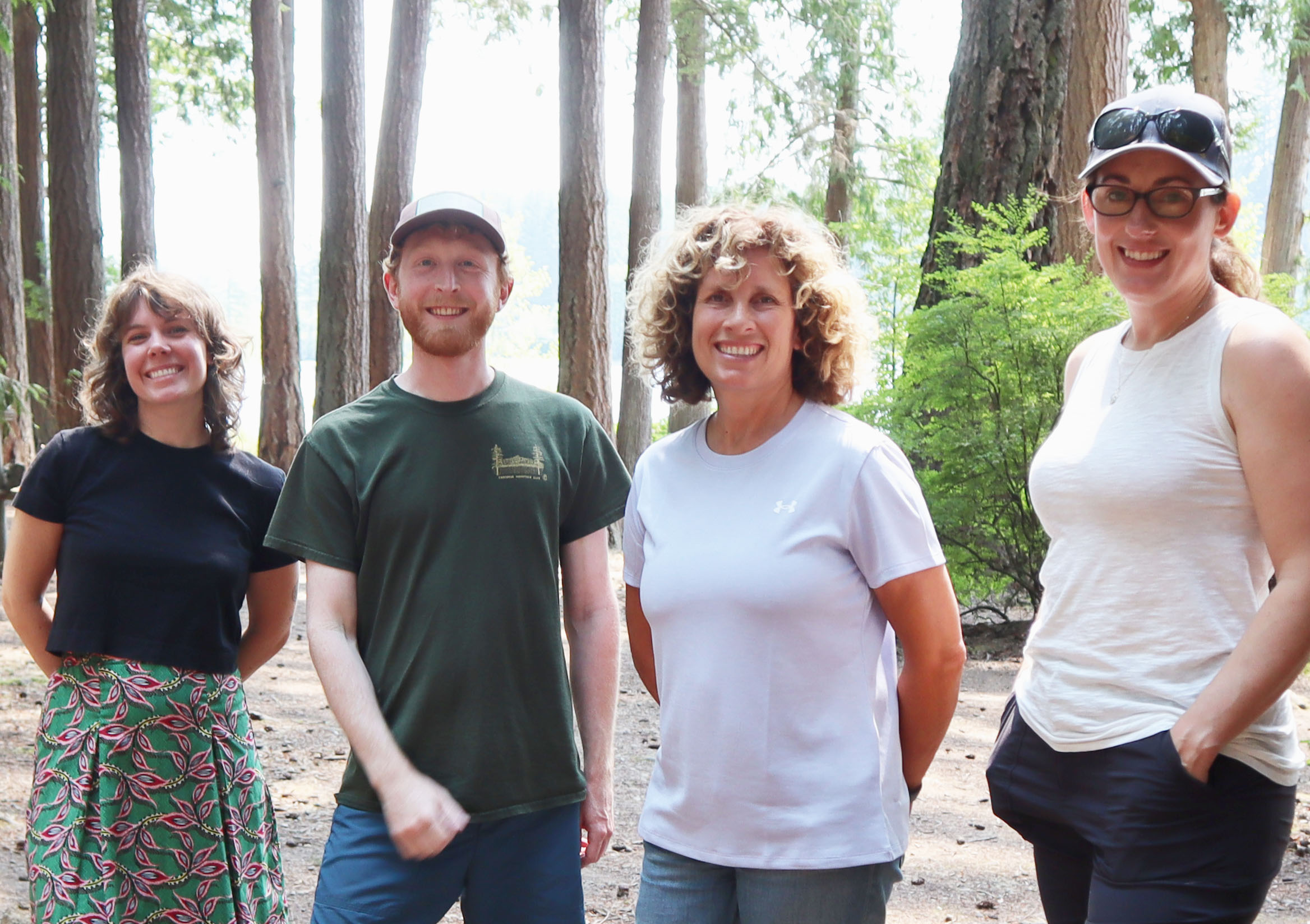
SPP staff members at Millersylvania State Park for a picnic. Left to right: Anneke Wilder, Nat Kelly, Gerry Glenn, and Sarah Larson. Photo by Emily Passarelli.
That’s great, and that’s why you got contractor of the year! Because everyone can see how much you enjoy your job, and that inspires people, I think.
I hope so! I hope that’s how I come across and not, oh, God, here she comes again, bubbling and yapping on about wonderful things.
I still know these are incarcerated individuals. When I talk to my friends on the outside and I say, “Look, I’ve got this great job, I still know that they’ve done the things that they’ve done to get here. But I don’t know what they’ve done, I don’t check their records. It’s not my business. It’s how they treat me and what they give me regarding work, you know, their skills. So that makes a difference. You’re not there to punish them. Imprisonment is punishment enough.”
We all work as a crew and so for me, contractor of the year means that I’ve got a great relationship with my crew. I’ve got a brilliant relationship with the staff who are working with me and that’s what makes me successful. If they didn’t care, then the project wouldn’t be successful. I won the award because I’m the face of the project, the teacher, but it wouldn’t work if I didn’t have everyone’s support around me.
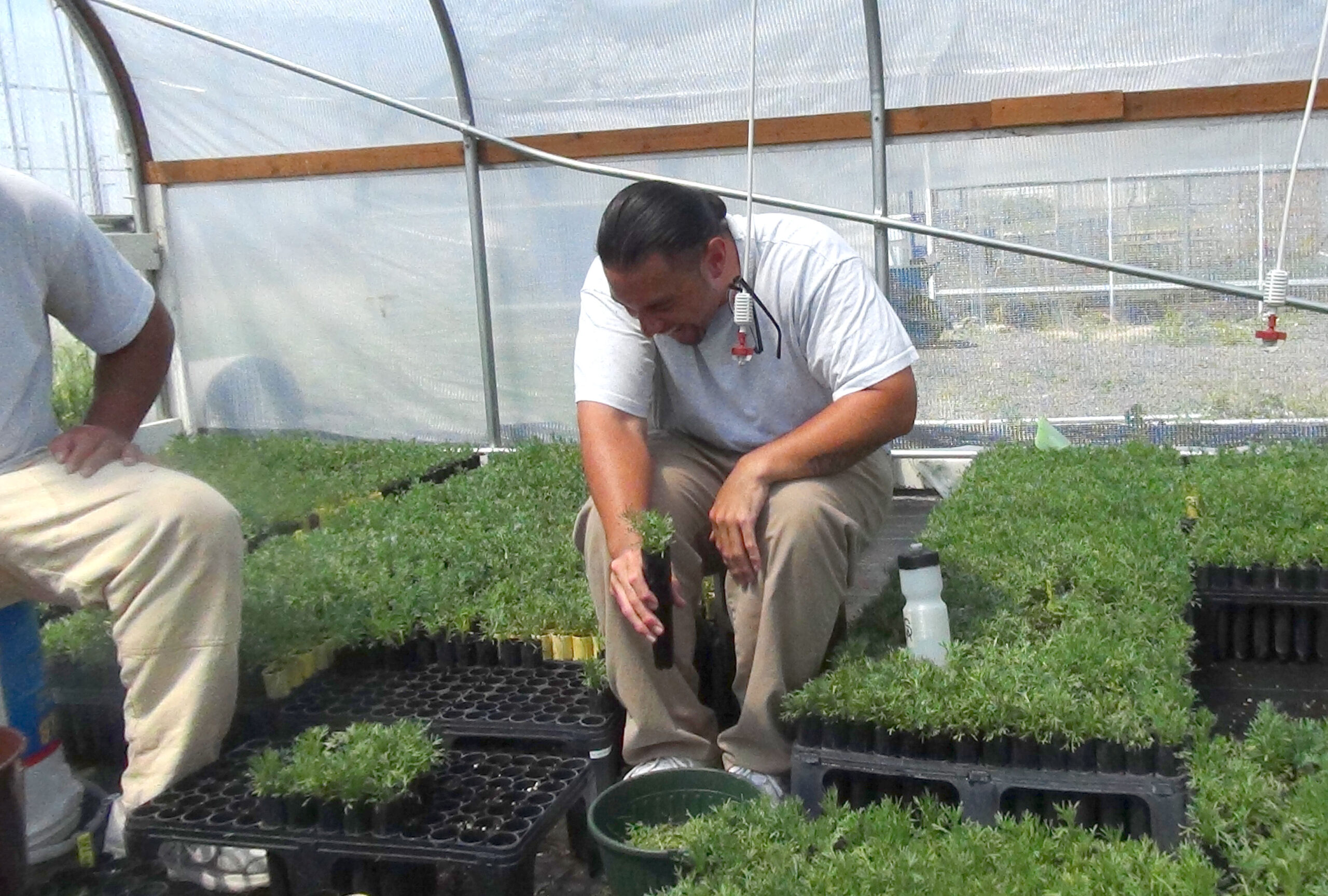
Eson Herr thinning sagebrush cones down to one plant. Photo by SPP Staff.
Can you tell me a little bit more about your day-to-day? What are some of the goals of the program as it relates to ecological goals specifically? Why is the sagebrush habitat so special?
Number one goal, restoration of the sagebrush steppe. We’ve got an issue now where the sagebrush steppe has become so fragmented due to wildfires, invasive plant species, anthropogenic development, livestock grazing to name a few reasons, that species of fauna that require this habitat to survive, are disappearing.
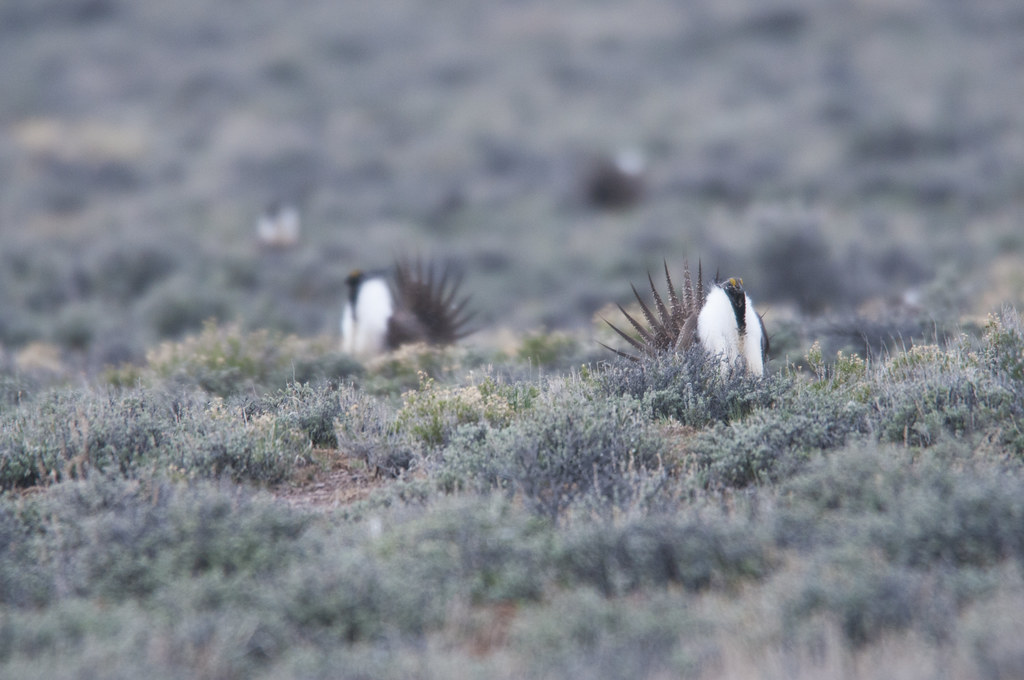
An example is the sage grouse, who are not officially classed as endangered, but should be. They are 100% sagebrush obligate, meaning they need it to survive. What we’re doing is replenishing the sagebrush.
We grow the sagebrush from seed in April and then when ready in October, we take it up to a Spokane reservation where Airway Heights, another prison facility in the Spokane area, have a crew that goes out with DNR to replant the sagebrush.
And yes, that’s great for the sagebrush and ecological goals of the program, but to me a big part of it is that the guys are taking responsibility for something and learning. There are so many issues facing restoration of the habitat, and they learn about that in class. We talk about other creatures that are becoming endangered – it’s not just big animals. It’s also reptiles and bugs and birds and other creatures that need this habitat. The insects and pollinators that come in, they feed on the sagebrush. They use it for protection. You know, they live in it.
And that’s the side that I really love. The education. I’m also learning different things myself, and we’re all learning together.
Photo of the endangered Sage Grouse on the sagebrush steppe. Photo by Bureau of Land Management Oregon.
Incarcerated technicians thinning the sagebrush down to one plant per cone and removing any cones that are empty (luckily not many!). Photo by SPP Staff.