Working With Offenders at Shotwell’s Landing Nursery

By Graduate Research Assistant Jaal Mann

When most people imagine offenders in a prison work crew, they probably see surly, unmotivated folks who don’t want to be there and may even be frightening. This couldn’t be farther from the truth.

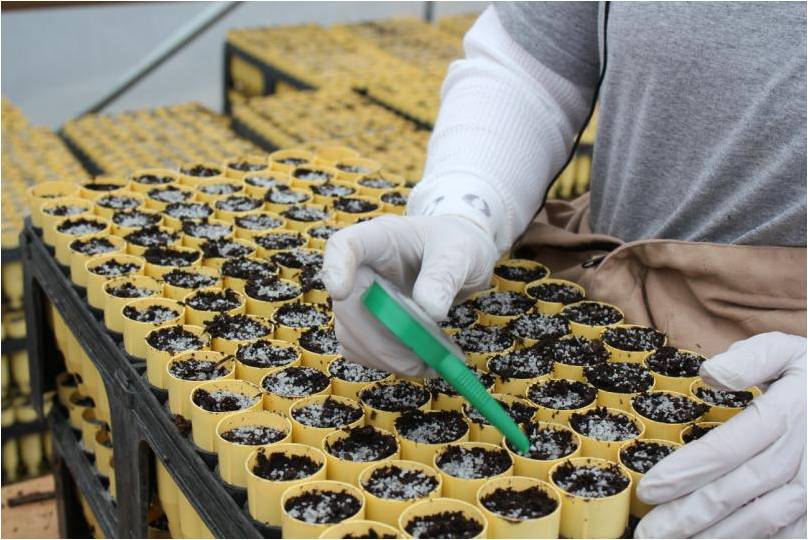
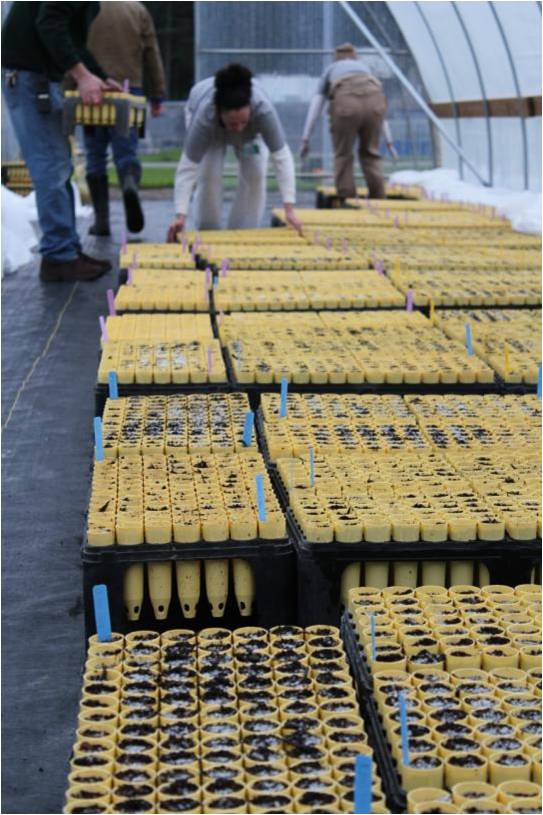
Prison work crews make a large part of our conservation nursery work possible. They assist with  everything, from cleaning and sanitizing used cells to sowing seeds and weeding germinating plants. Most offenders participating at Shotwell’s Landing nursery are highly motivated and want to learn. They are excited when they hear how their work is going to help conserve endangered prairie species, and it really seems to make them feel more connected to the world outside of prison. “I’d come out here every day if I could,” said one inmate as he prepared the lower hoop house for new seedlings that they would sow a few weeks later.
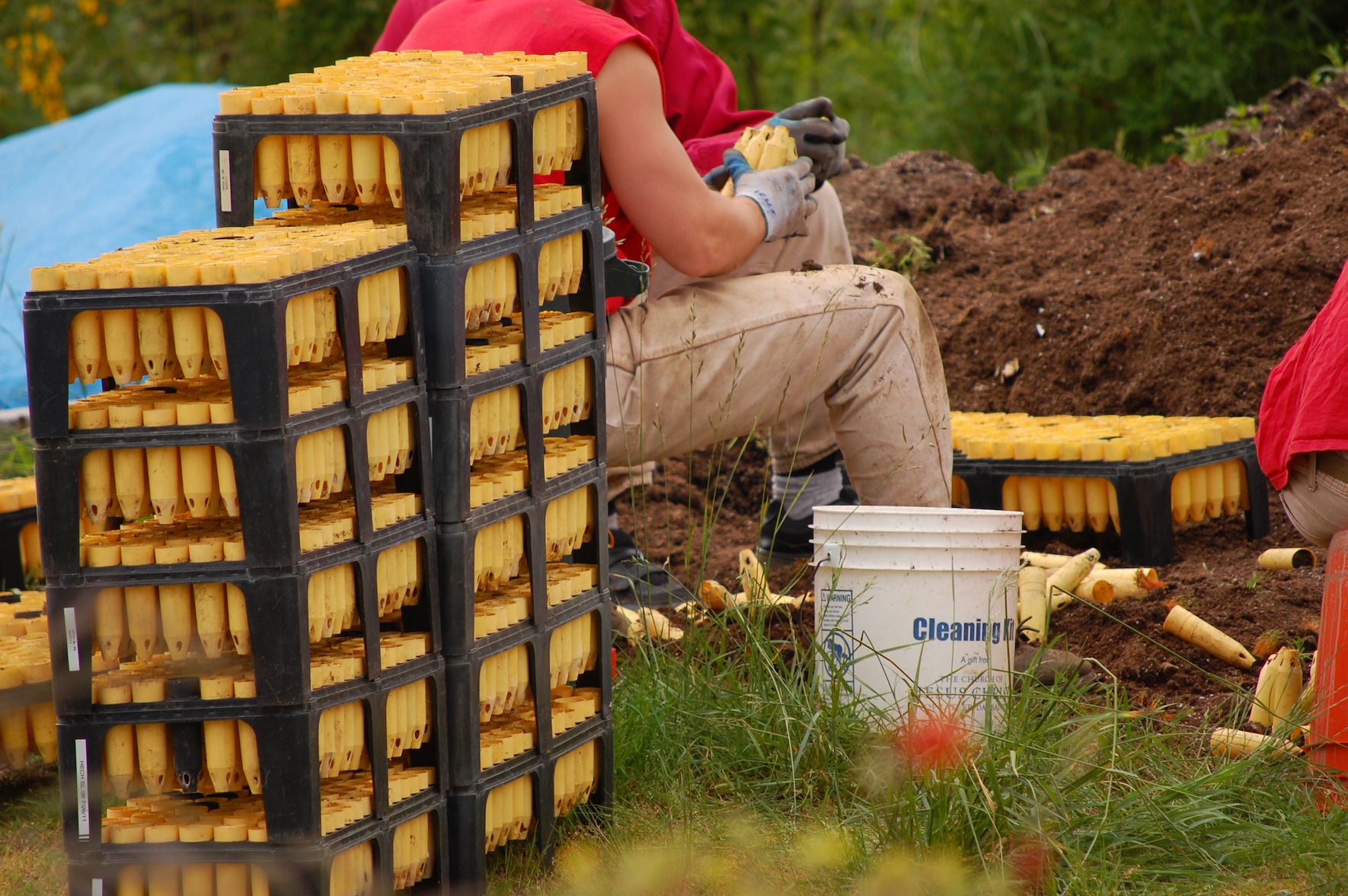
Many of these offenders are already highly knowledgeable about biology and horticulture. They are able to offer valuable input on nursery methods and are often pleased to contribute ideas to make the nursery run more smoothly. They take pride in their work, and most of the offenders truly appreciate when we describe its ecological context; they want to understand the impacts of their labor and see how it fits in to the bigger picture of conservation. In general, they are much more open-minded than many non-incarcerated people.
After a couple of hours working with offenders, people realize that while certain rules must be observed, working with prisoners isn’t such a frightening experience.  The inmates are excited to work hard to help make a difference.


All photos by Jaal Mann.
Ecological Conservation Nursery Crew Begins Work at WCCW

By Graduate Research Assistant Brianna Morningred

With the completion of two hoop houses, work with the inmate crew at Washington State Correction Center for Women (WCCW) has begun. We have three inmates working with us and it is so wonderful that they all are genuinely excited to be a part of the project. The very first day Carl Elliott and I introduced ourselves and began teaching the women about the work they will be doing. One of them had horticulture experience, but regardless, conservation nursery work is a lot different than your average gardening.  All three women picked up the technique quickly and were excited to get started.


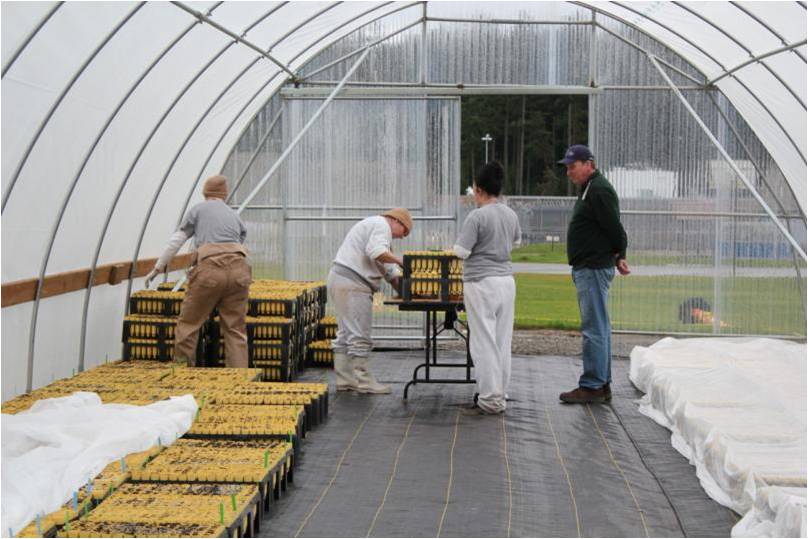
WCCW conservation nursery technicians and their supervisor work in a new hoop house. Photo by B. Morningred.


We began sowing work with CAHI, also known as Castilleja hispida or Indian Paintbrush. This rare native plant species is crucial for the preservation of Puget Sound Prairies.  As it is difficult to germinate successfully, we at SPP put a lot of care into sowing CAHI.  In order to help the inmate technicians really understand what they are a part of, I brought them visual aids to show them where their plants would go and why what they are doing matters so much. They seemed to really appreciate knowing that their work is a part of something bigger—which is one of most important points I wanted to get across.

As of January 9, 2013, our great crew at WCCW has sown approximately 300 trays—30,000 cells—of CAHI and they are still going strong.  The increasingly colder weather is making work a little more difficult but we are fortunate to have such a dedicated crew—being productive no matter what the fickle Washington weather may bring. In the next couple of weeks we’ll begin sowing WYAN or Wyethia angustifolia, the Narrowleaf Wyethia. WYAN is an essential daisy-like perennial that supports the endangered Fender’s Blue Butterfly species that are native to Washington and Oregon prairies.


An inmate technician at WCCW sows seed using a dial seed sower. Photo by B. Morningred.


In addition to learning a lot about sowing techniques, we have also organized a Lending Library so each inmate can check out one book each week for additional learning.  The women have really enjoyed this opportunity as their prison library is currently closed for renovation.  They have taken particular advantage of the copies of our Ecological Conservation Nursery Manual, which we have supplied for them to learn in more detail about the processes they are completing each day.

It has been a wonderful start at WCCW. We are looking forward to spring, warmer weather, and hopefully high germination rates!


Ecological Conservation nursery technicians arrange trays in a hoop house at WCCW. Photo by B. Morningred.