Text and photos by Bethany Shepler, SPP Green Track Coordinator
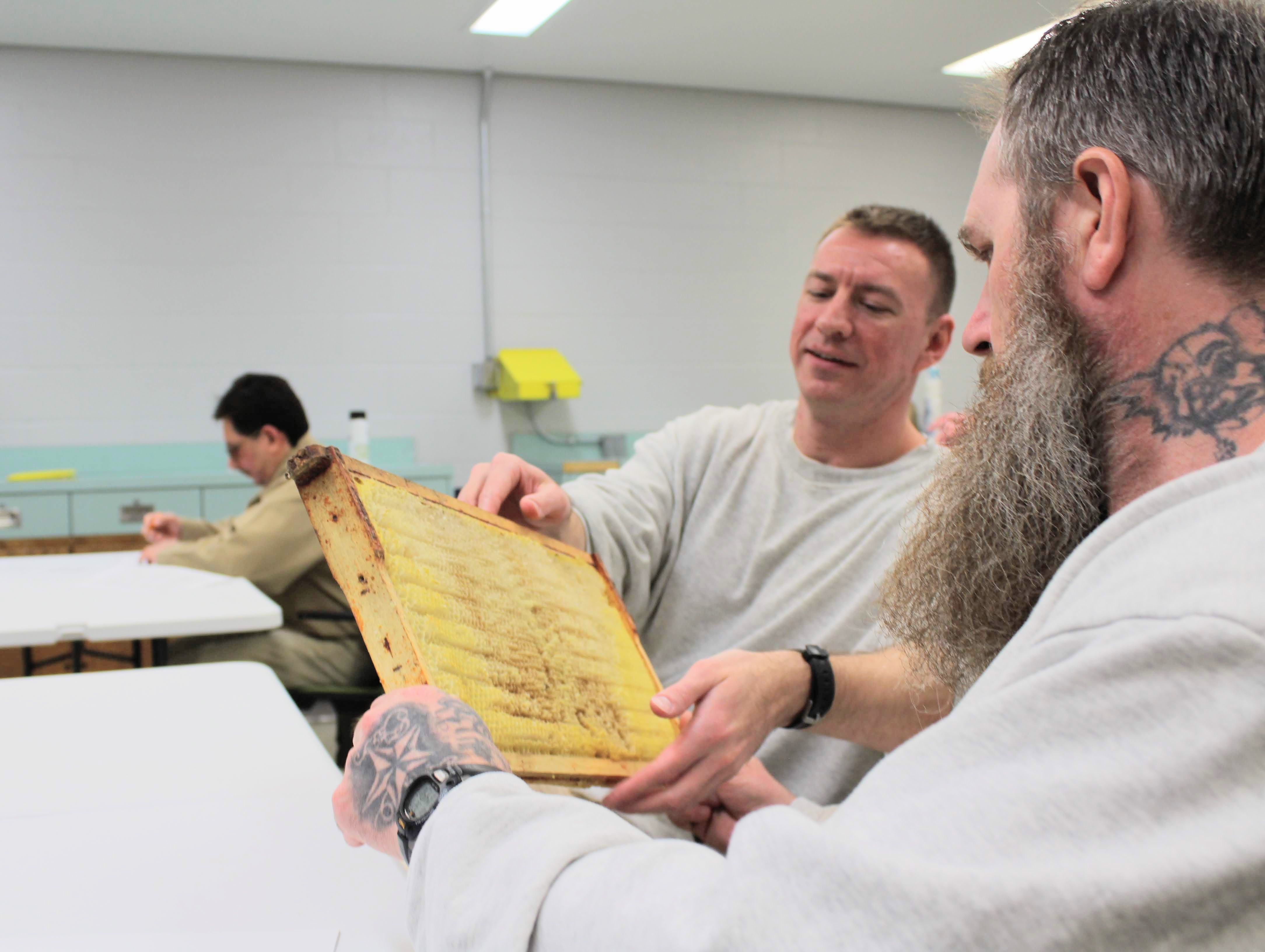
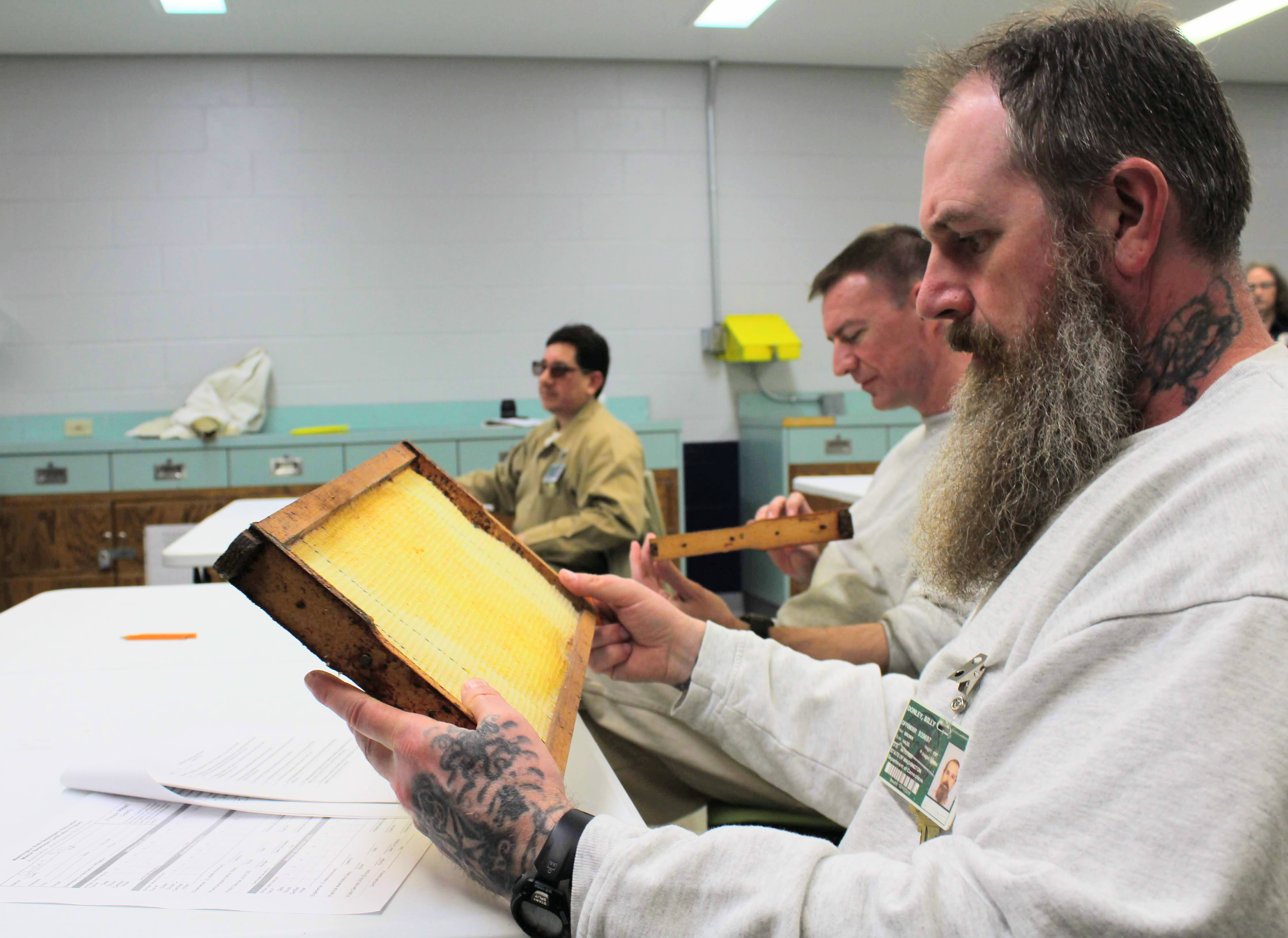
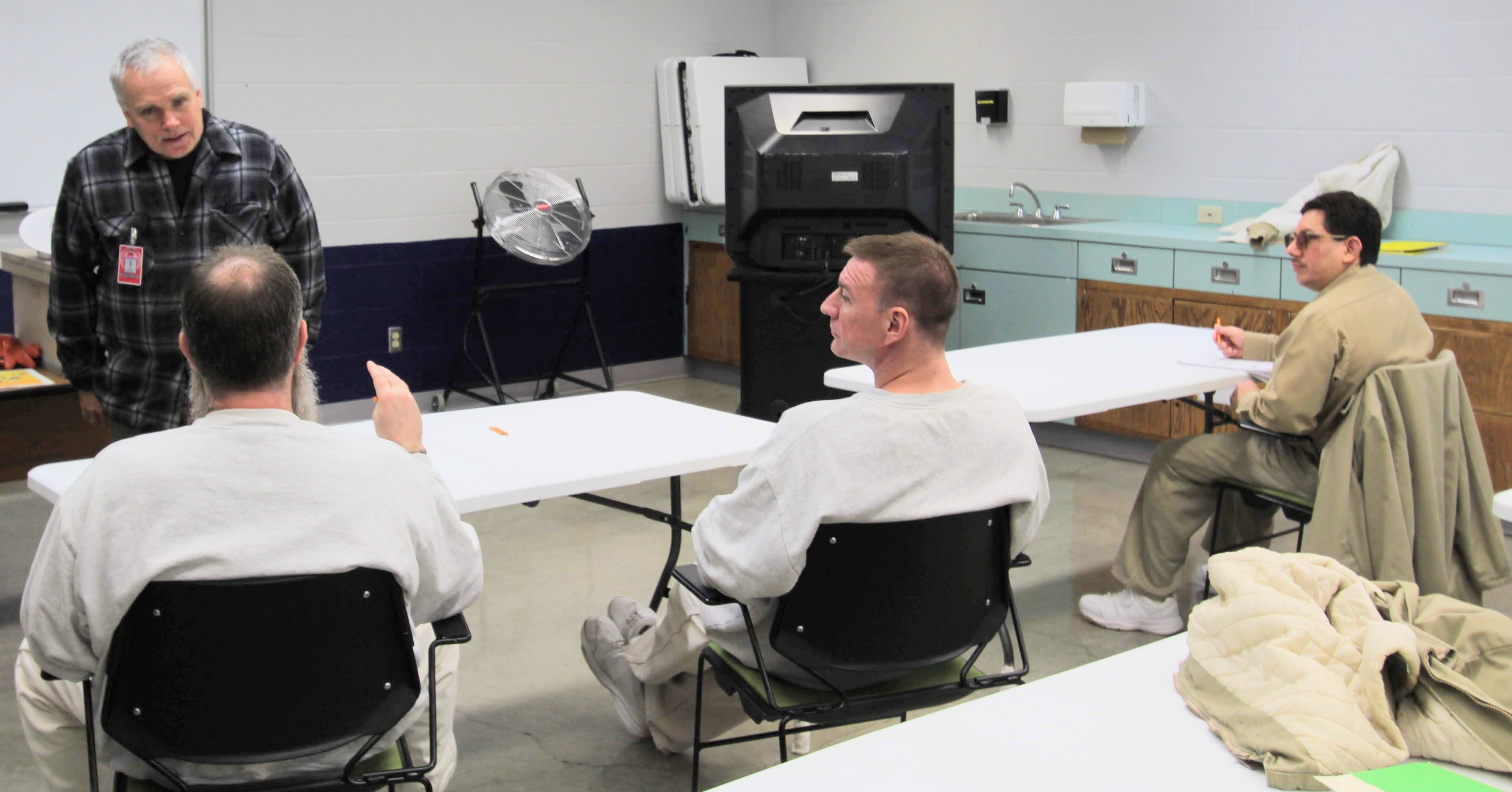
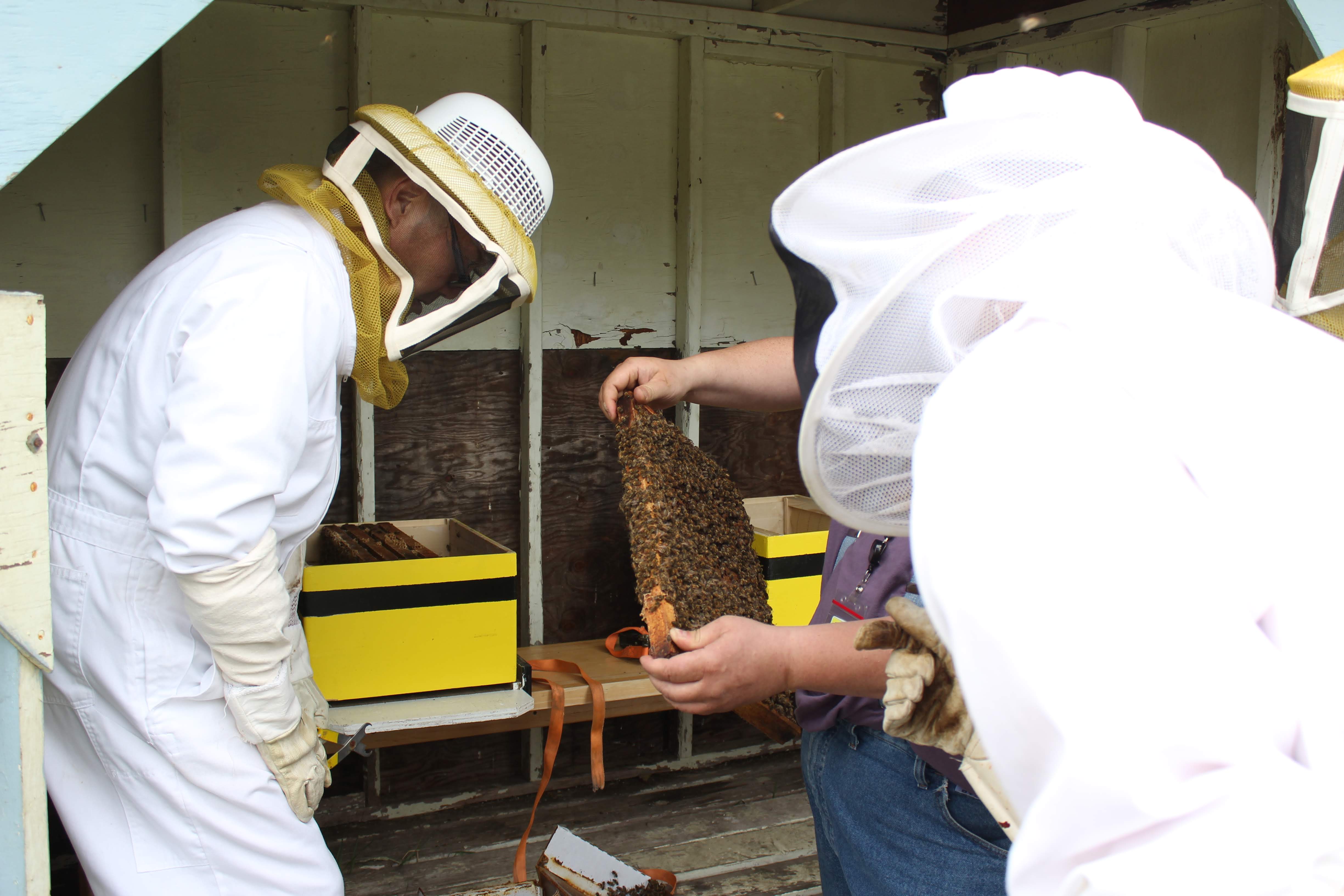
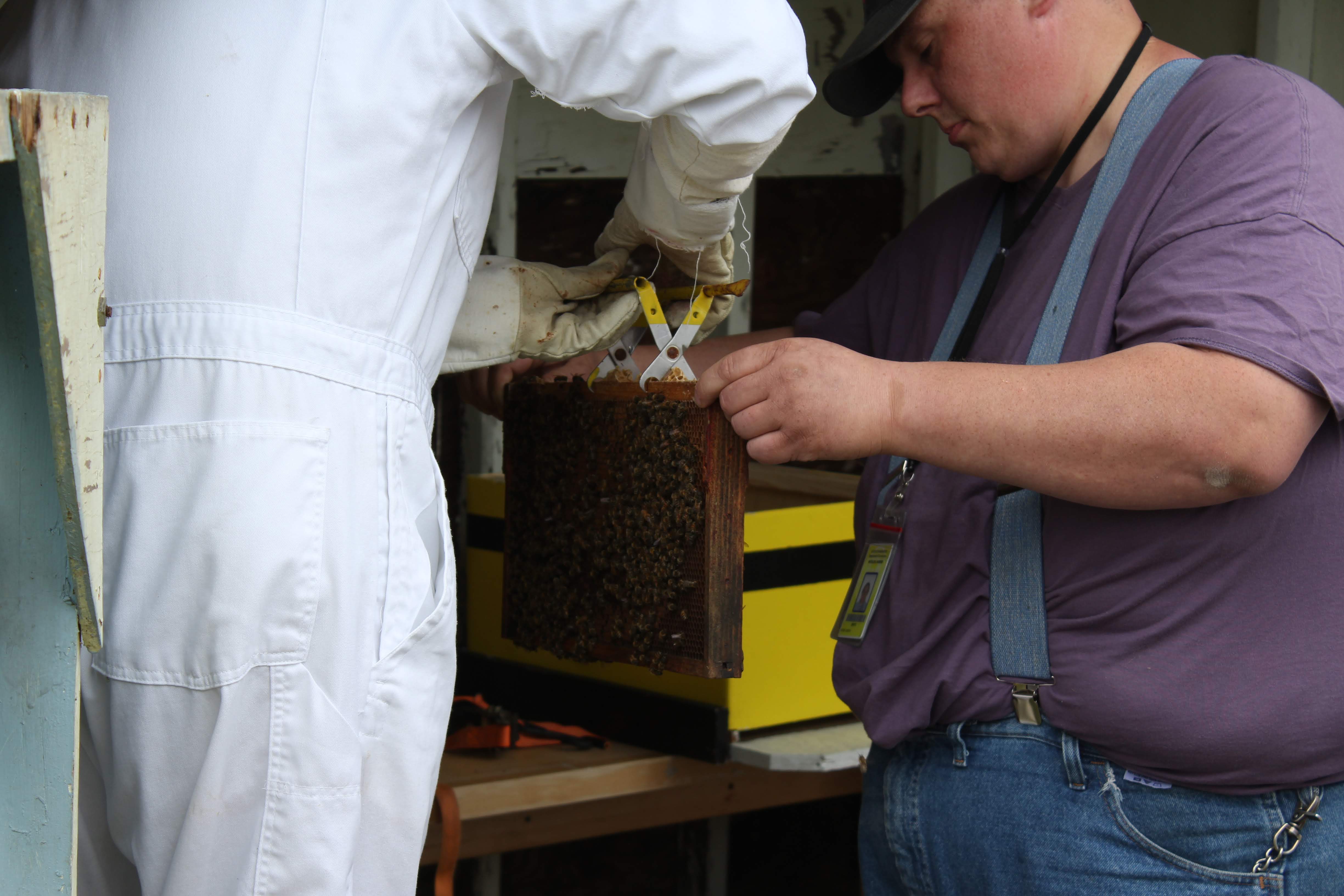
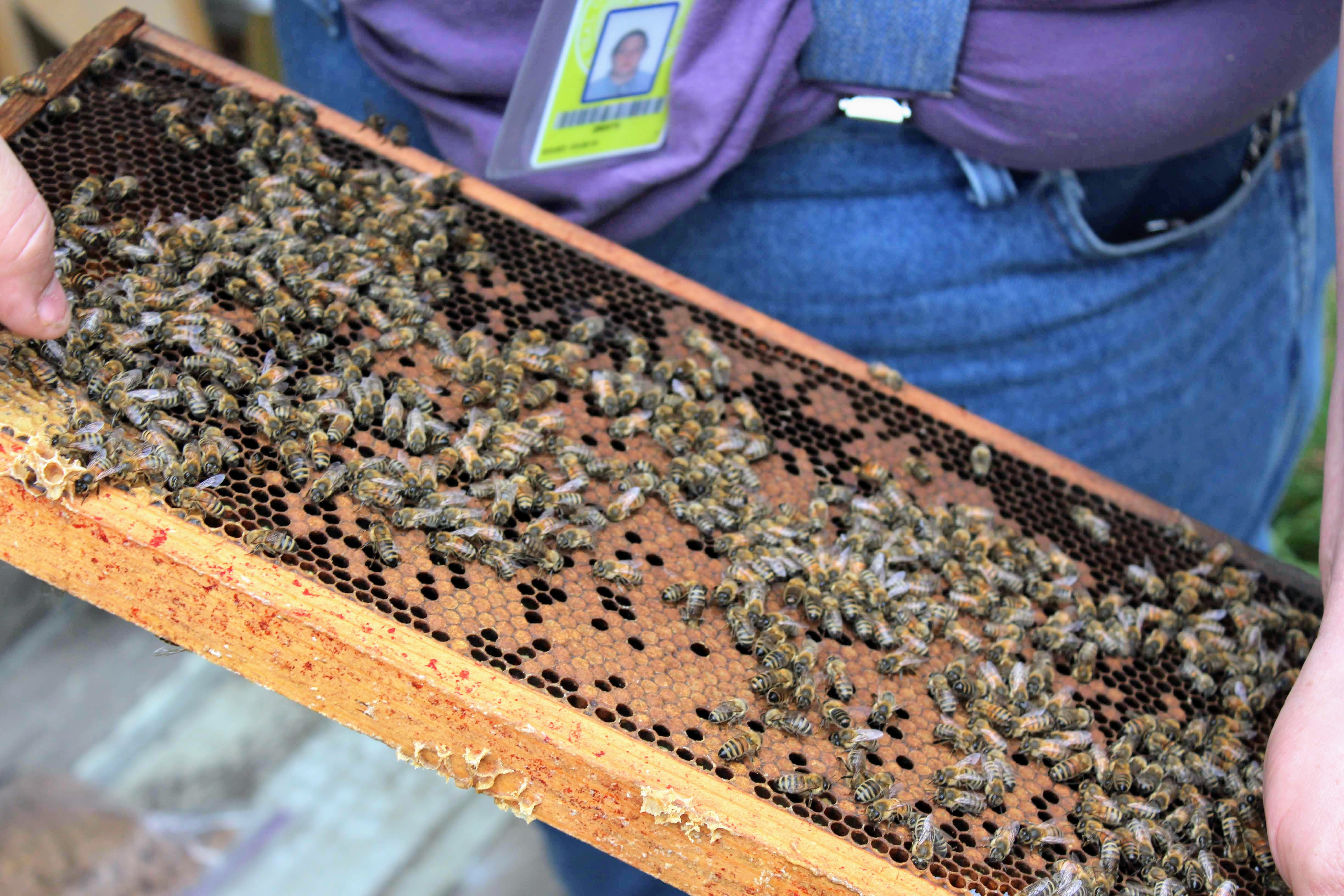
Students observe a frame from the hive Mark brought in. This frame has wax on it and some cells were full of pollen.
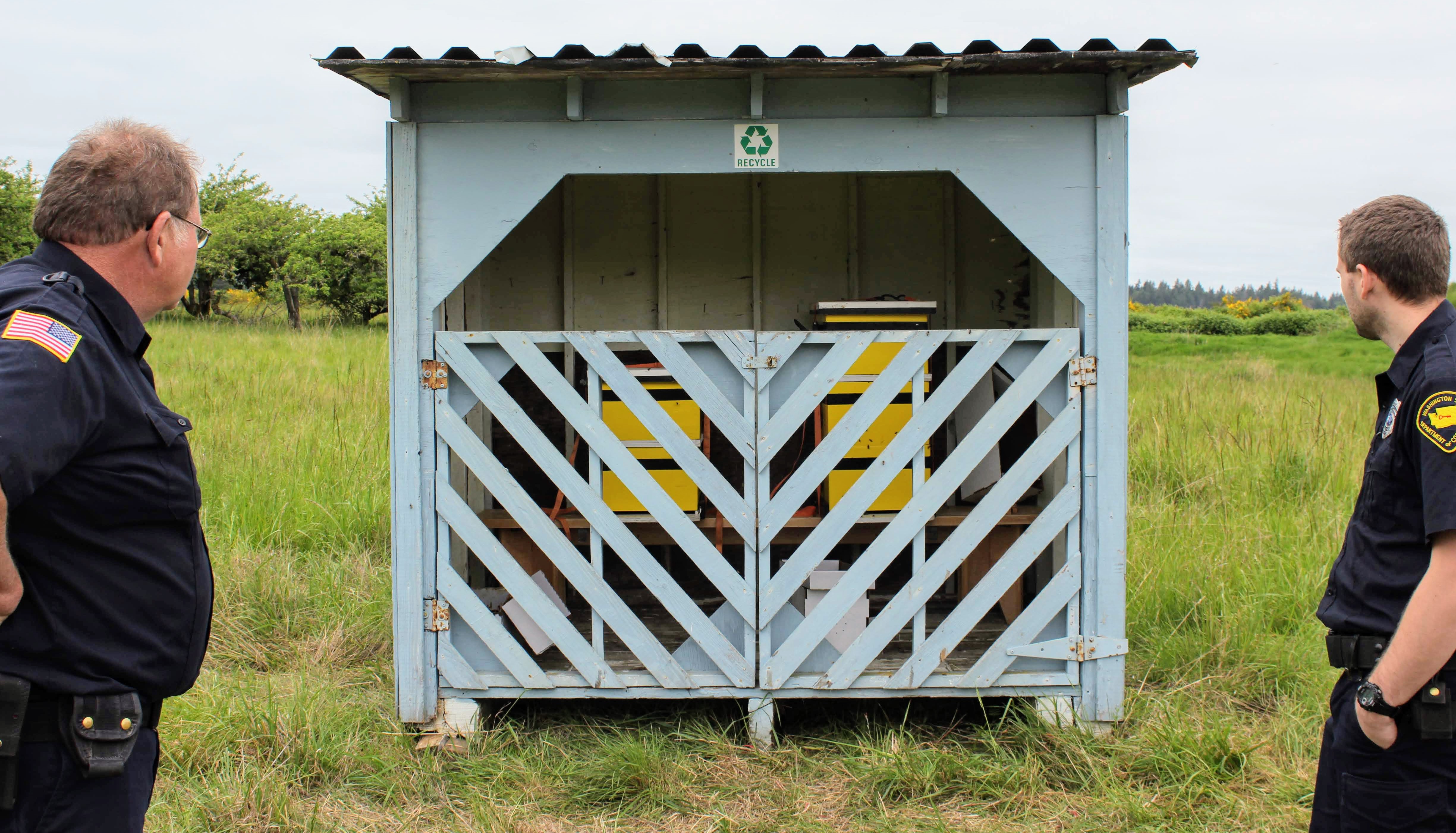
Beekeeping has been growing in popularity throughout prisons in Washington State, with 12 facilities now housing hives! Clallam Bay Corrections Center (CBCC) is among them; the prison has 3 healthy hives tended by inmate and staff apprentice beekeepers certified by WA State Beekeepers Association. CBCC is located in Clallam Bay on the Olympic Peninsula adjacent to the Strait of Juan de Fuca.
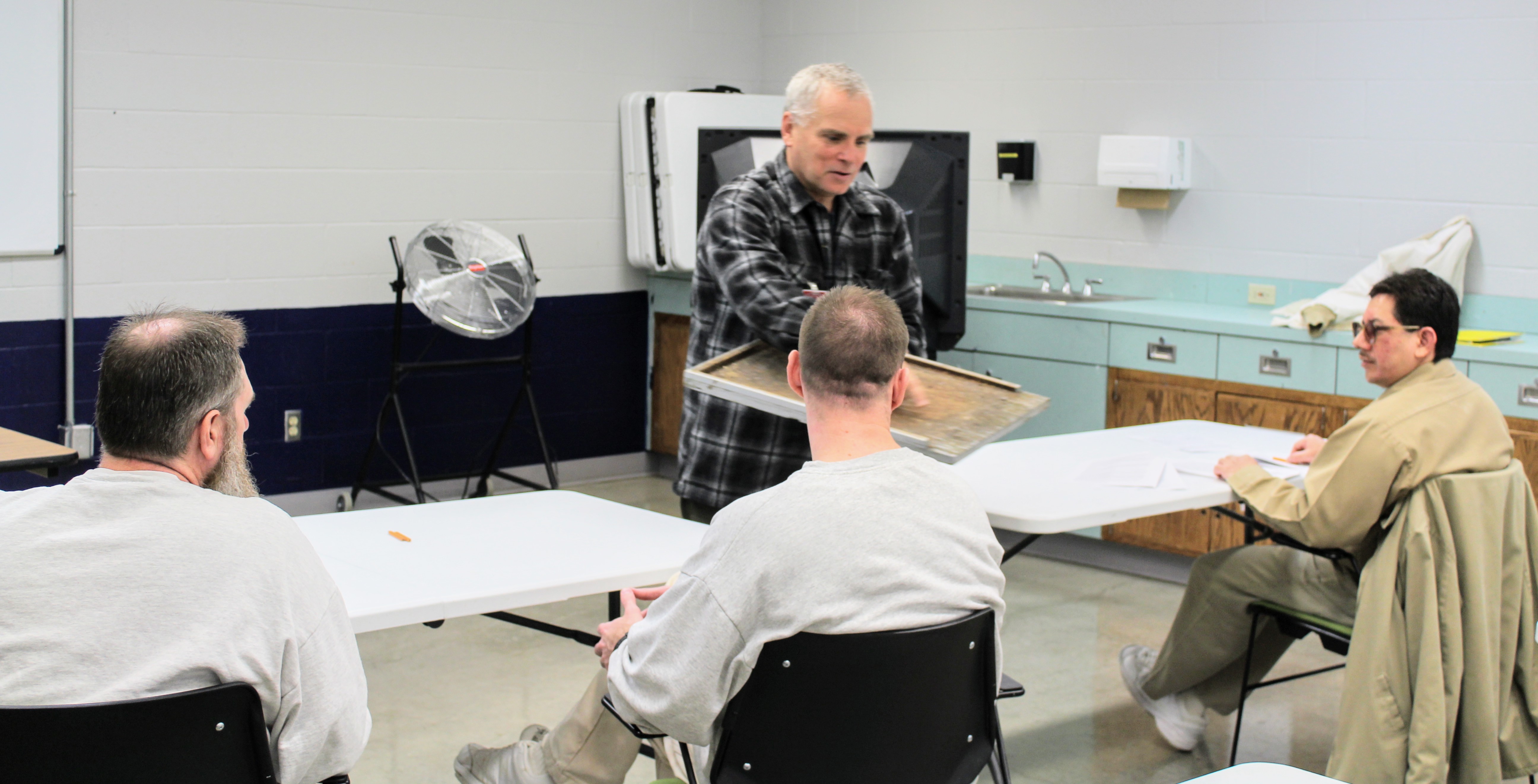
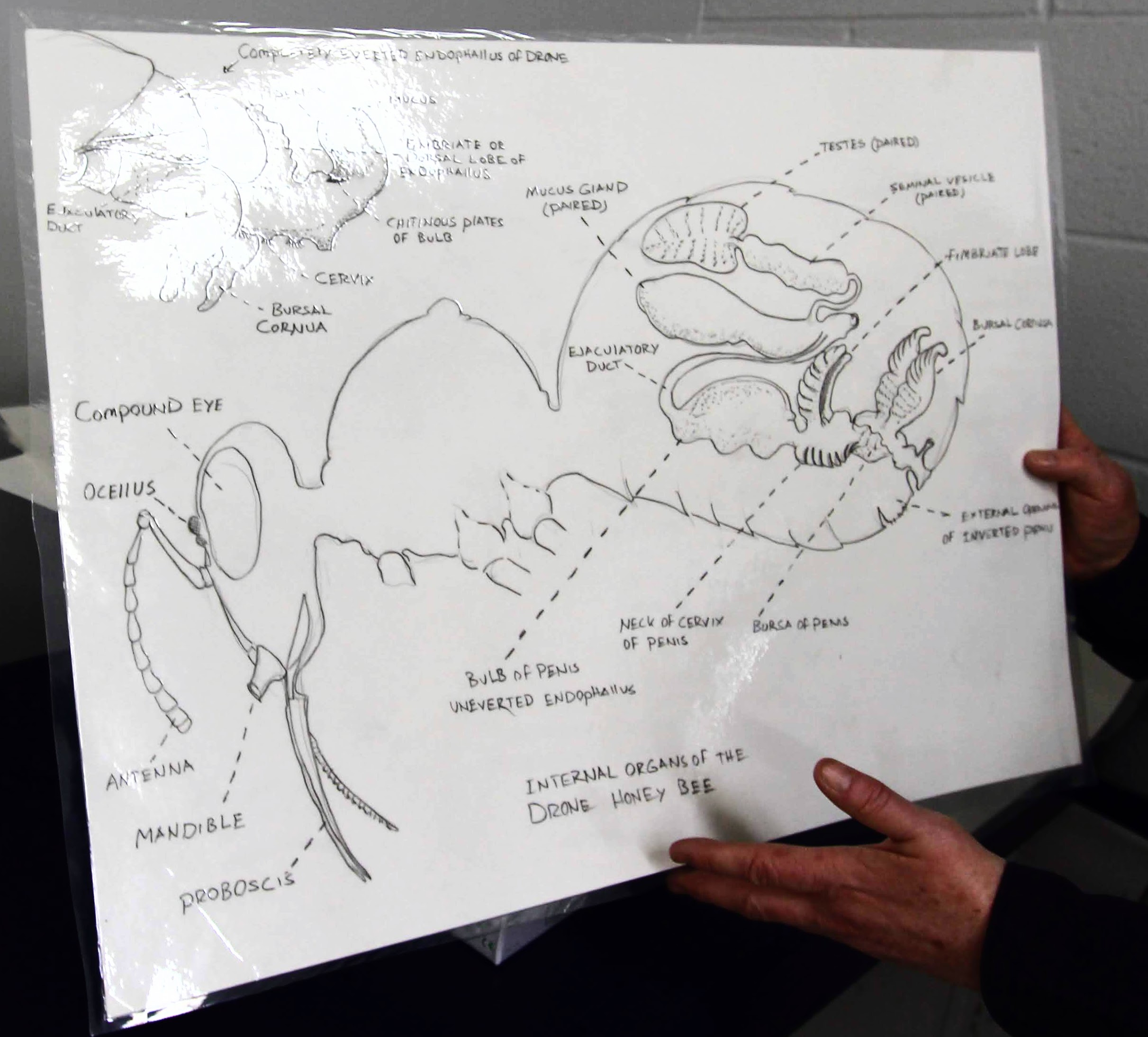
Beekeeping instructor Mark Urnes shows students a bottom board from the hive he brought in as a demonstration tool.The liaison holds a drawing of bee drone biology made by incarcerated students.
Earlier in the spring, CBCC hosted a day-long intensive seminar for a new group of incarcerated beekeepers. Beekeeping instructor Mark Urnes, the education lead for the North Olympic Peninsula Beekeepers’ Association, led the seminar and fielded many questions from the inmate beekeepers.They covered topics such as bee biology, pathogens, and colony collapse disorder. Students came prepared, so that they could get as much out of the intensive as possible; all had read scientific articles, bee journals, and reviewed their class notes from WA State Beekeepers Association apprenticeship curriculum. They brought with them drawings of bee biology and model hives that aided Mark’s descriptions and demonstrations.
The CBCC officer who sponsors the beekeeping program told me many stories about how beekeeping has had positive impacts on the lives of inmates and staff. The staff sponsor was proud to share that inmates who go through the program have a lasting positive effects from it. I was so happy to hear that the program is being so well received and having such a positive effect on the lives of those involved in it.
More images from the intensive follow.
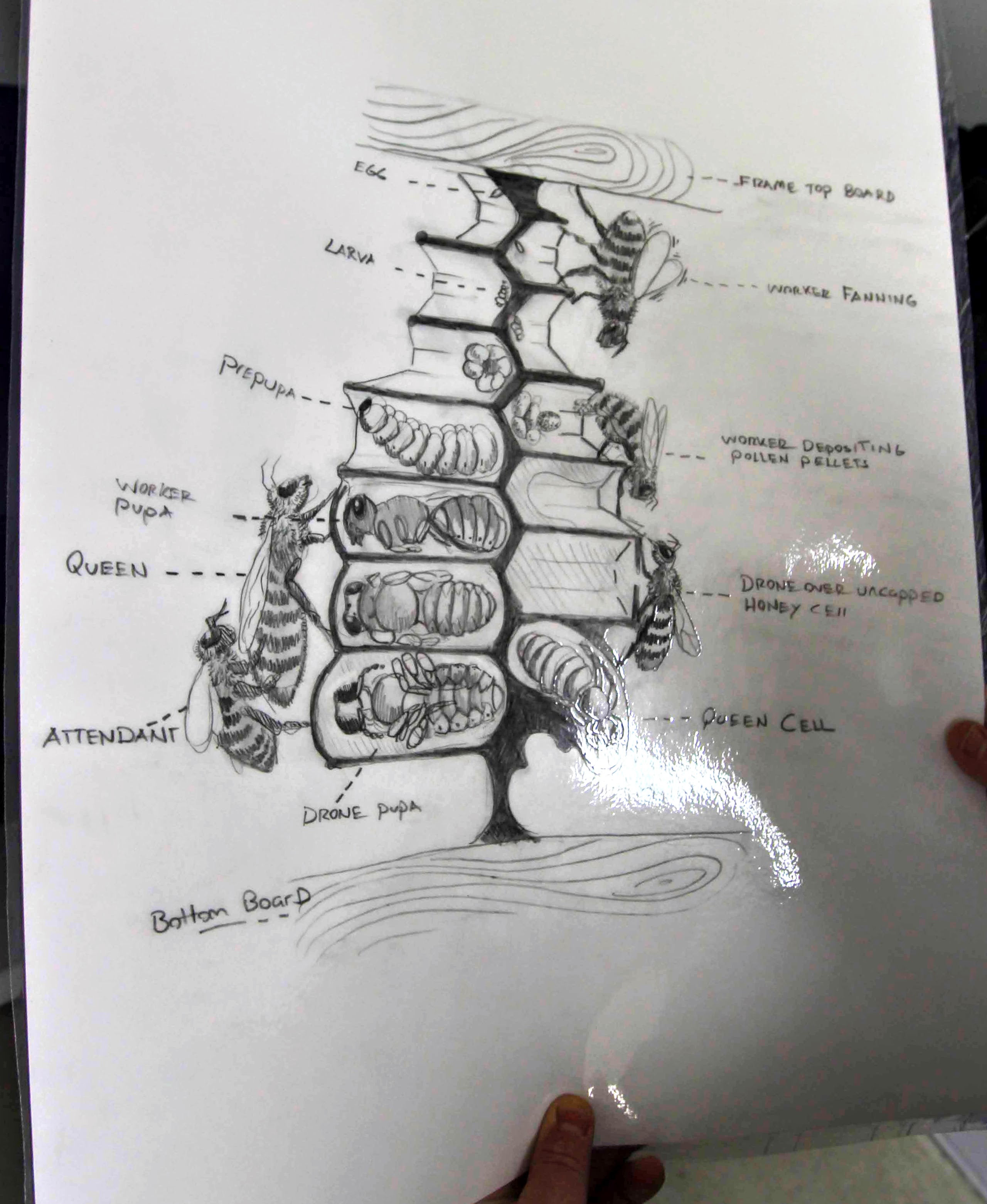
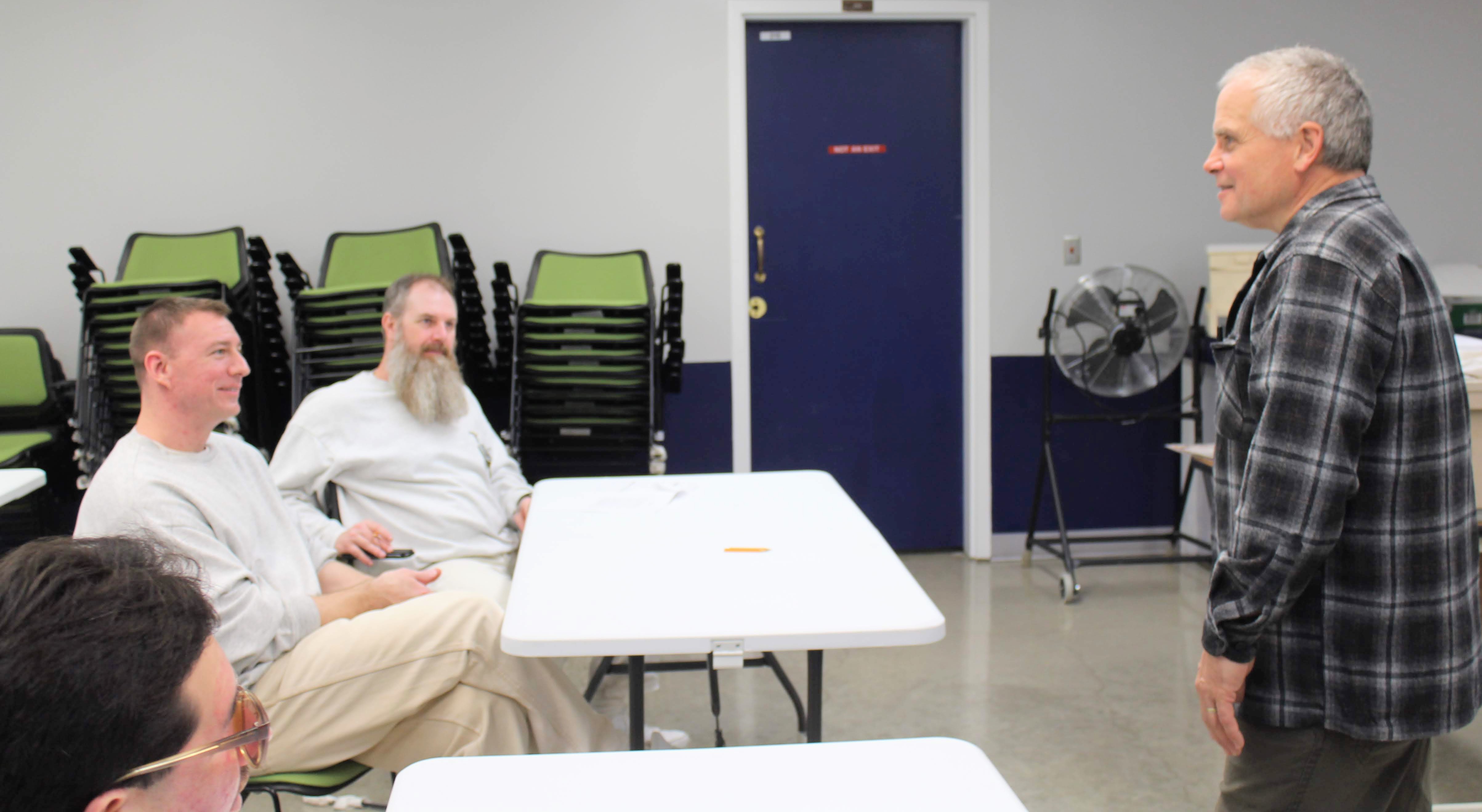
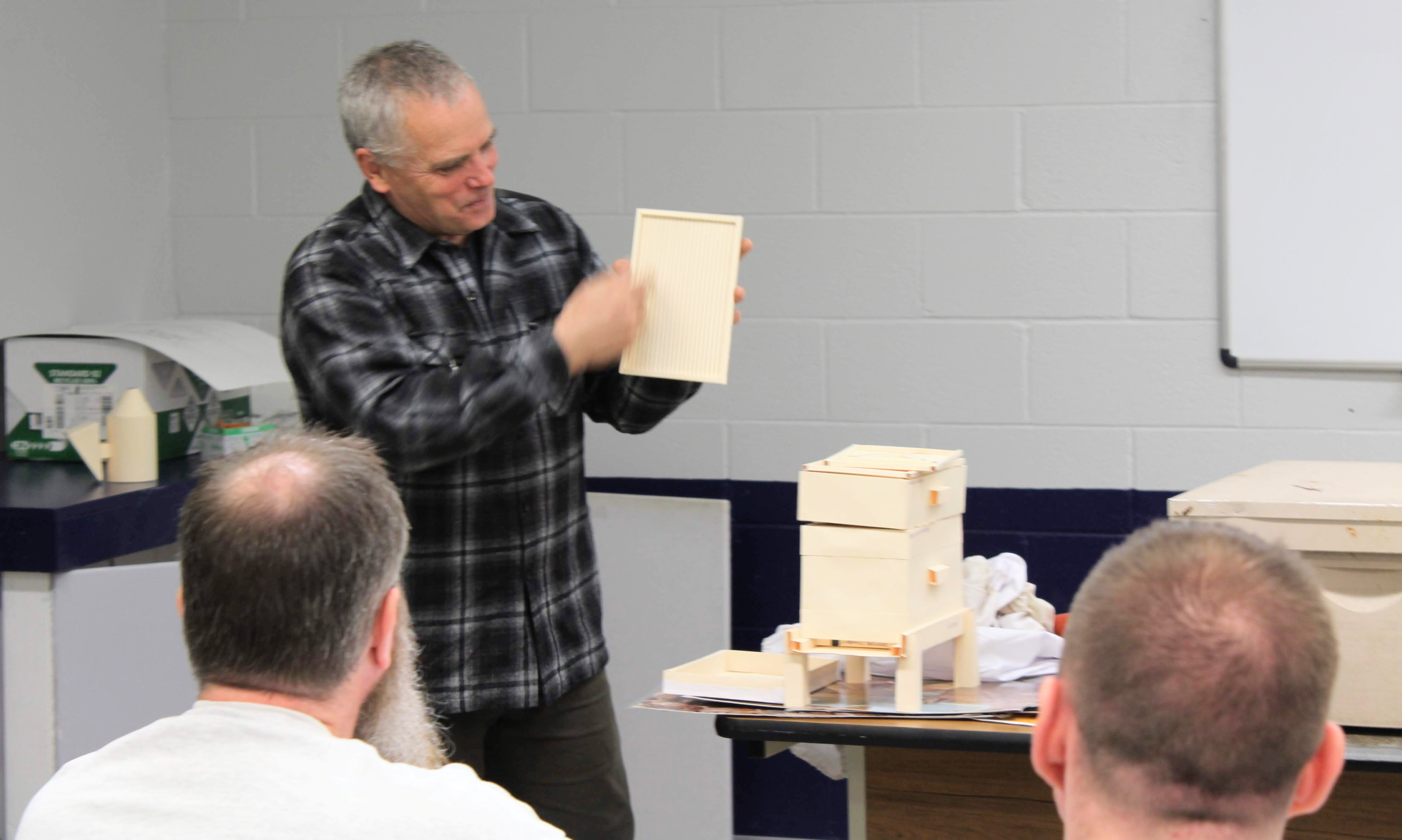
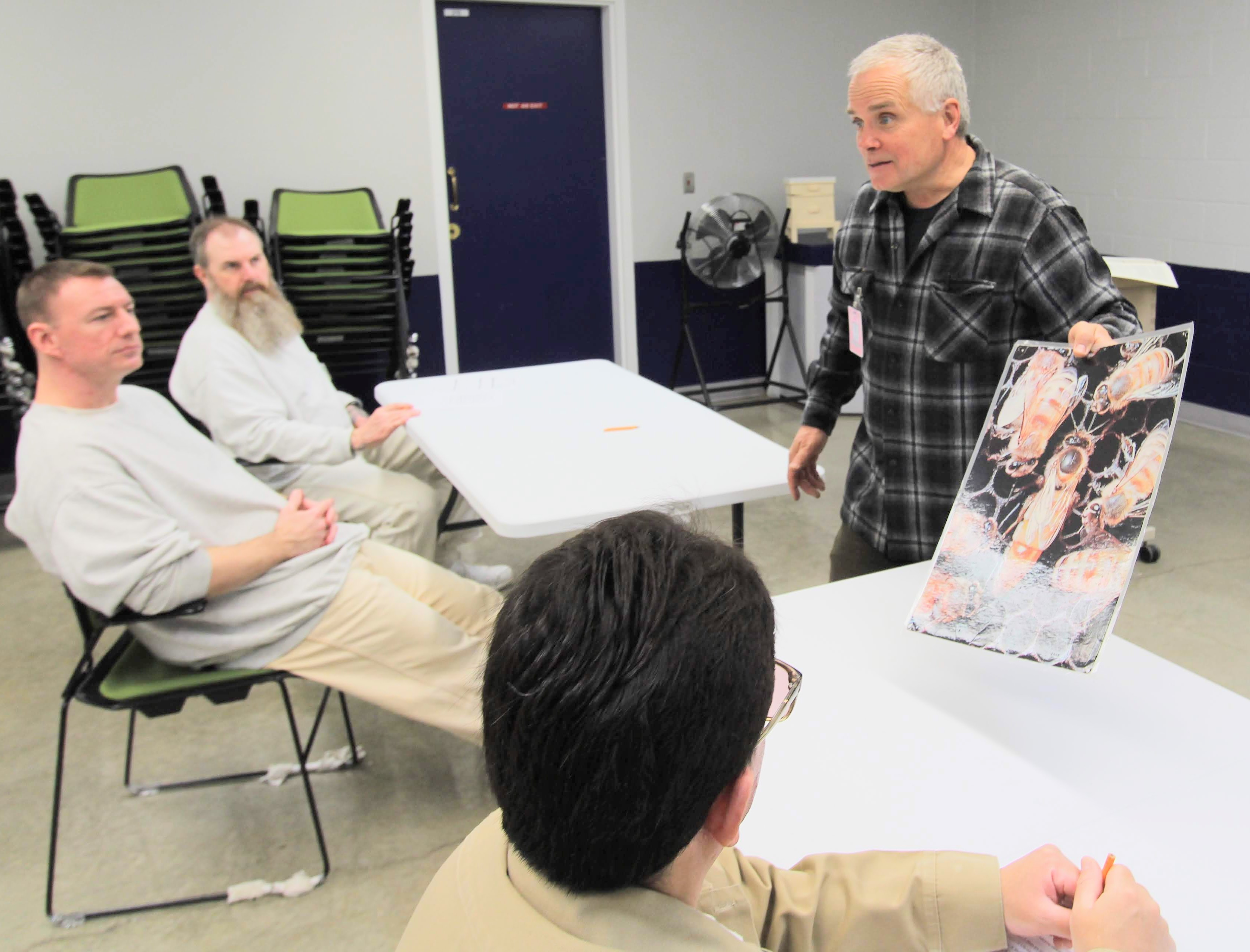
Another sketch by incarcerated students shows a cross section of a hive showing the different stages of bee larvae within the hive cells.This frame shows wax that is fresher, towards the side of the frame, compared to older wax in the middle of the frame.Students listen as Mark answers questions.Students had constructed a model hive out of paper (seen on the table) and Mark used it to aid the part of his presentation about the different parts of a hive and the purpose they serve.Mark holds a picture of queen next to some worker bees. Here he was talking about the importance of queen health to the hive as a whole.Mark listens as a student asks a question.
Keep up the good work, CBCC!
Text and photos by Bethany Shepler, Green Track Program Coordinator
After four years of organizing, planning, and building a team, honeybees have arrived at McNeil Island.
This spring marks a special occasion for Washington State beekeeping and beekeepers: we have installed honeybees on McNeil Island! McNeil Island offers wonderful beekeeping prospects because the island is pesticide-free—a rare resource in the region. Pesticides can interfere with bees’ senses, or even be toxic, so having access to a place that is free of pesticides is an exciting opportunity for beekeepers.
A bit of background on McNeil Island
McNeil Island housed a federal penitentiary from 1875 to 1981, when WA Department of Corrections (WA Corrections) took over the facility. In 2011, WA Corrections closed down the prison on McNeil Island, but they continue to be stewards of this epic landscape—Correctional Industry (CI) staff oversee stewardship operations. McNeil Island now houses a Department of Social and Human Services (DSHS) special commitment facility, and the old prison is used by the military, National Guard, WA Corrections, and others for training purposes. (If you want to know more about the island and its history, here’s the link to the Wikipedia page.)
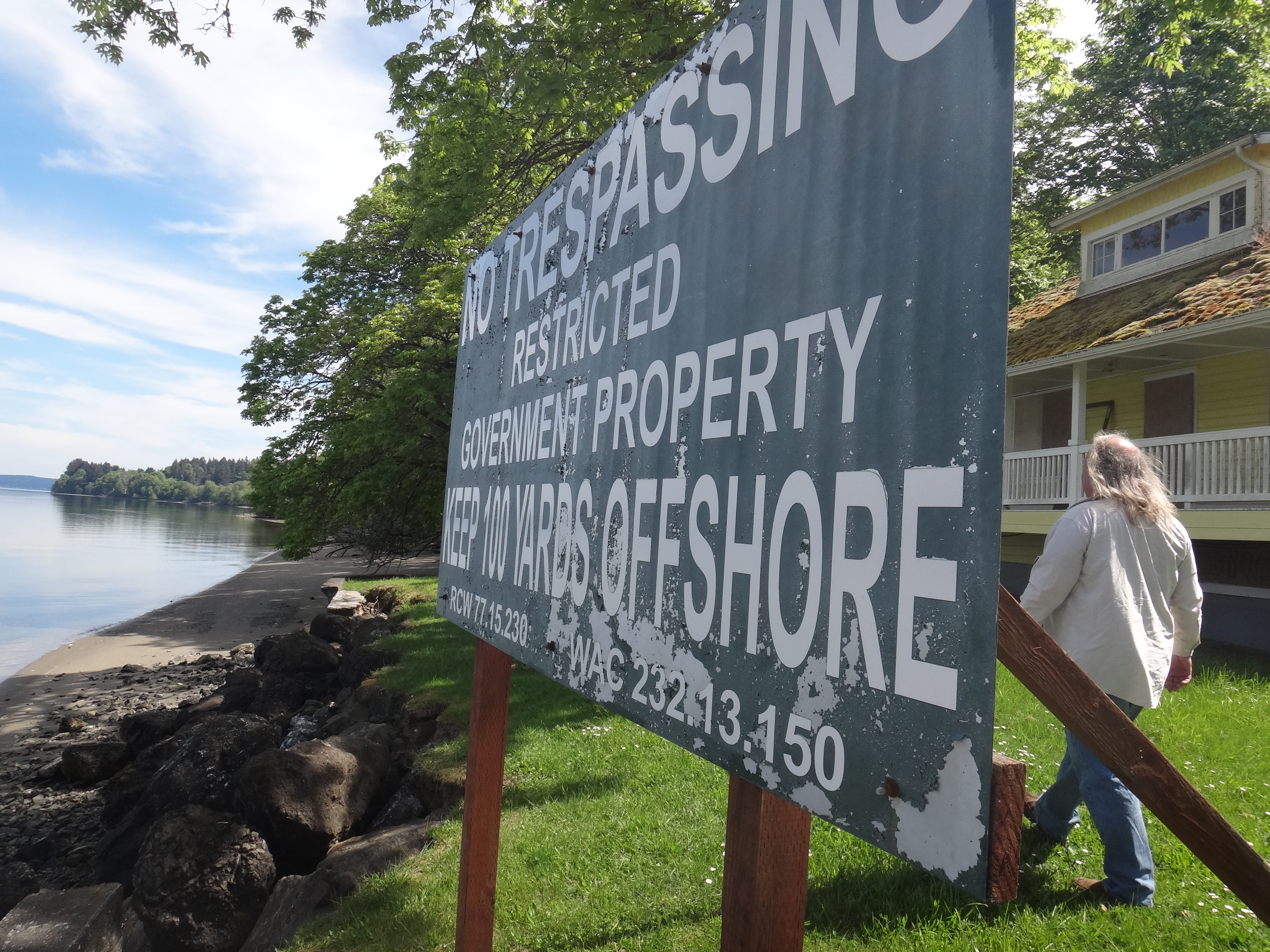
On our trip around the island we would see signs like this one.
We visited the island a week before the bees were dropped off to take a tour and complete preparations. It’s not very big, but it’s a beautiful island nestled in the Puget Sound and mostly covered in vegetation. Sprinkled around the island are boarded-up houses where prison staff lived when the facility was in operation, and there’s even an old school house for their families. Even though we haven’t seen them yet, there are a few bears that live on the island, too!
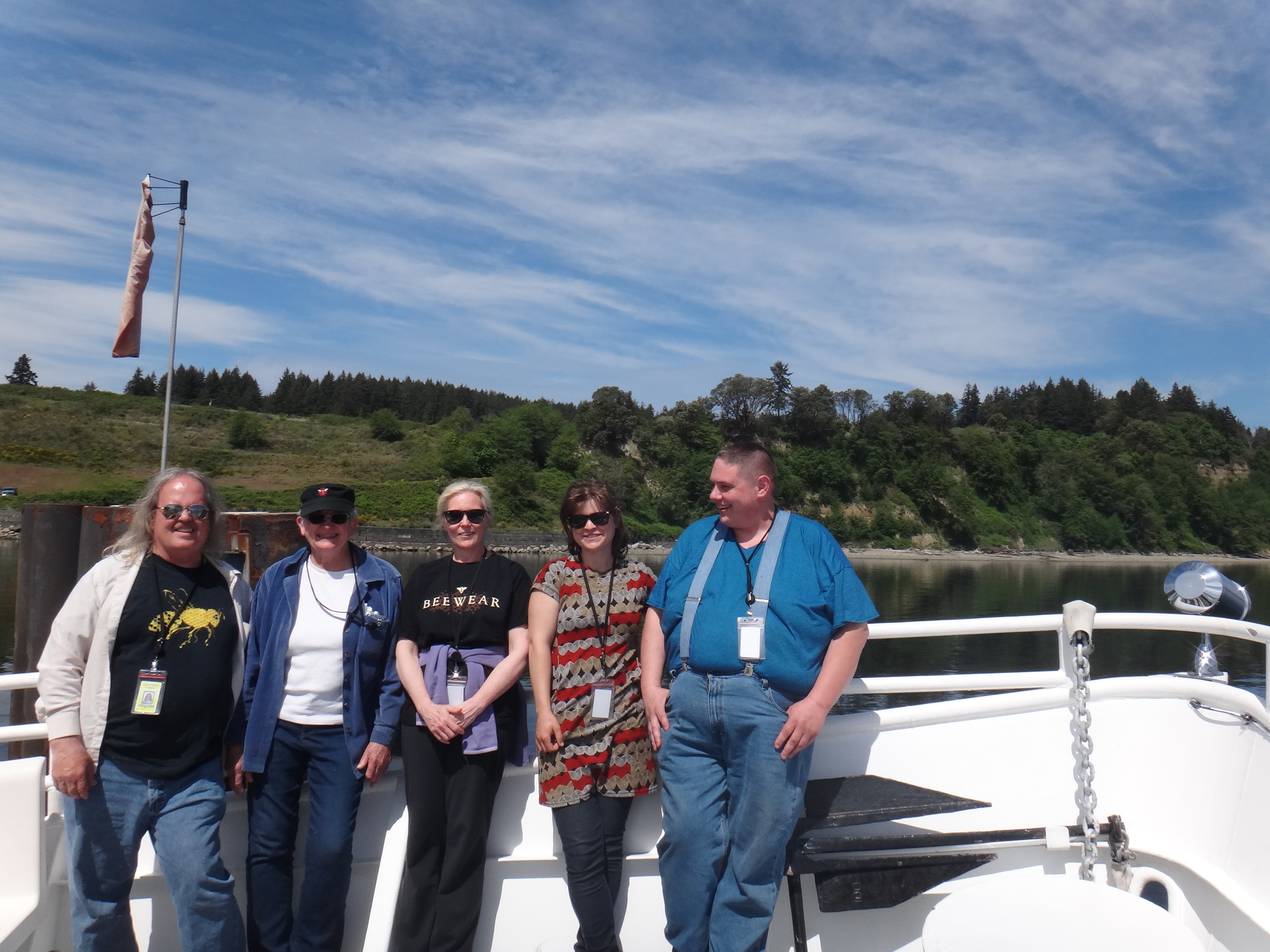
The expert beekeeping team—we’re so lucky to be working with them! From left to right: Dixon Fellows, Gail Booth, Laurie Pyne, Maren Anderson, and Andy Matelich.
Honeybee Home
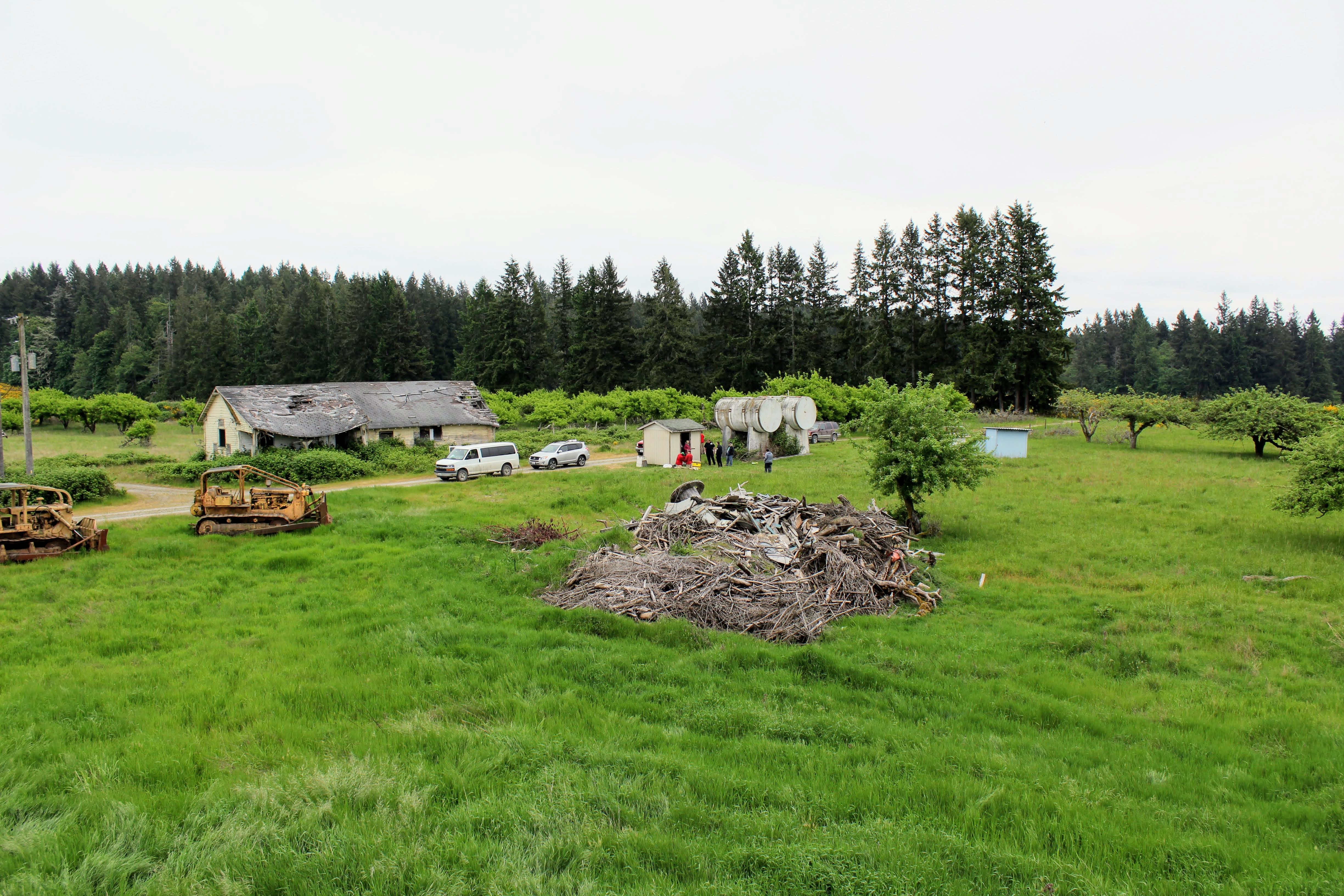
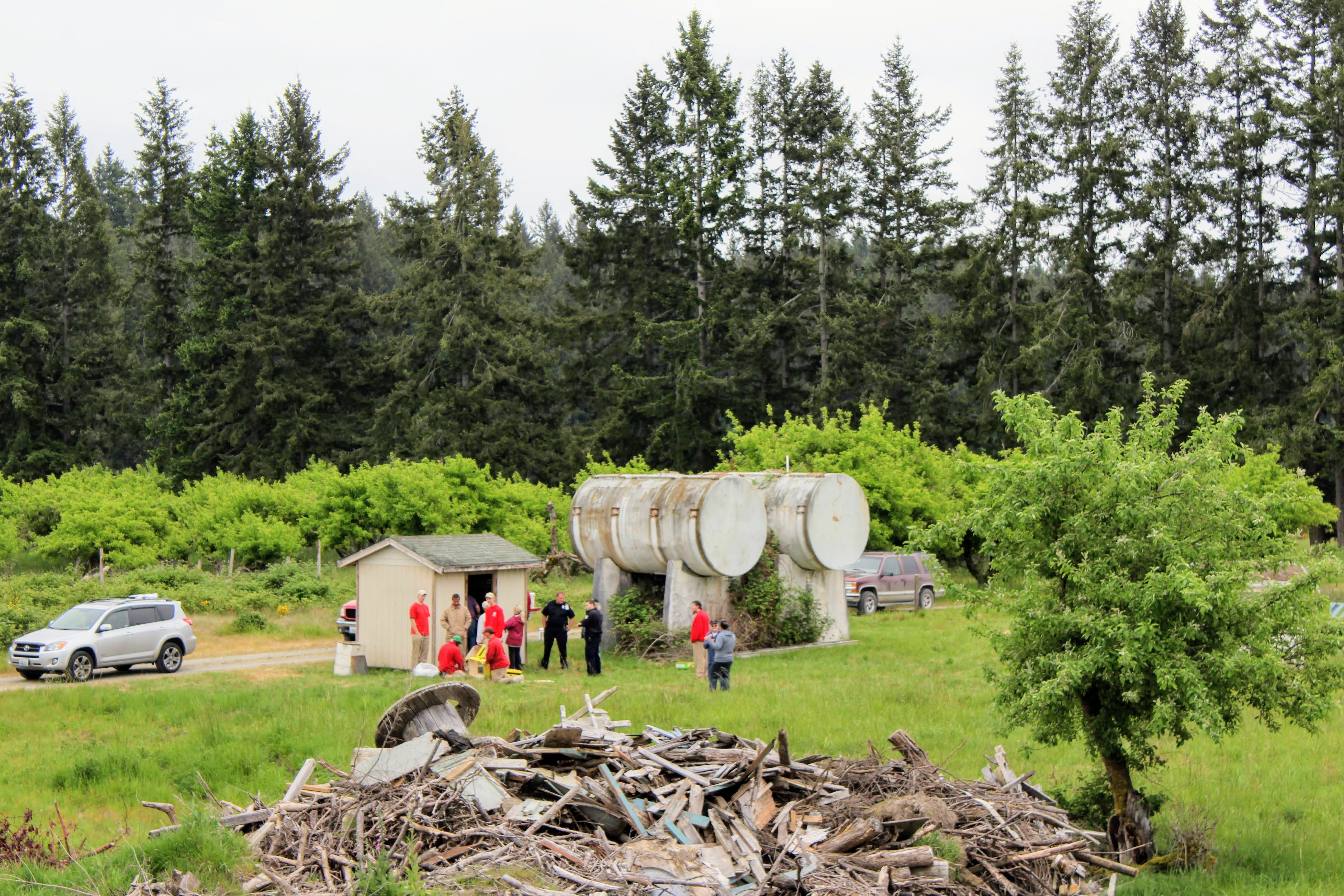
The bee hives are in a small structure in the center of this photo; it’s a perfect location, surrounded by an orchard and shielded from the elements by an old bus stop.The bee installation crew made some final preparations just before the bees moved to their new home.
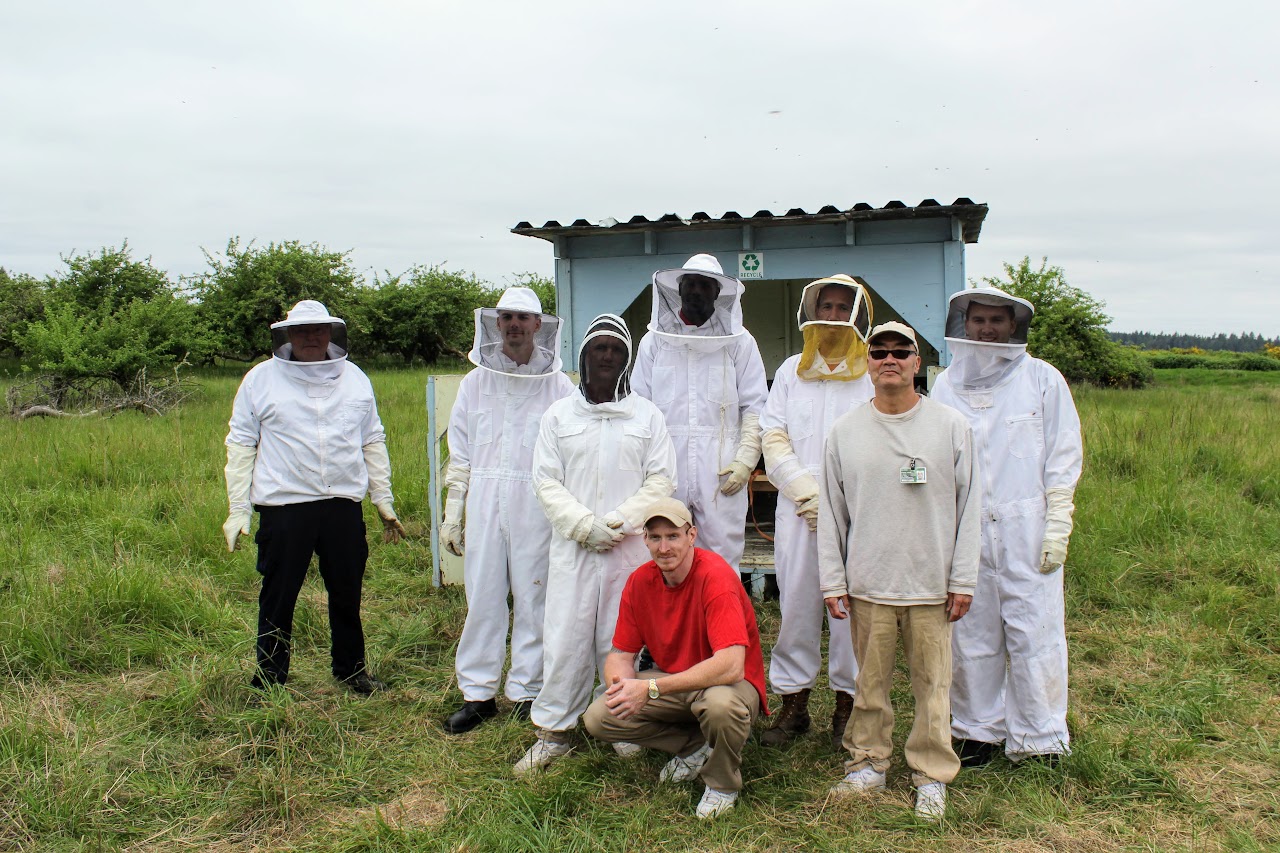
The installation crew included expert beekeepers from the Olympia area, incarcerated beekeepers from CCCC, and staff from CI and CCCC. Five expert beekeepers worked with us to bring this project to life: Maren Anderson, Gail Booth, Dixon Fellows, Andy Matelich, and team lead Laurie Pyne. They scoped-out the island and picked the best location for the bee hives inside the orchard. CCCC inmate beekeepers and and carpenters also made critical contributions to the program, too: they built the hive boxes and supporting benches, helped locate the bus stop, assisted in placement, helped move the bees, and and shone as invested partners! More recently, a major supplier of beekeeping equipment in the region, Mann Lake, donated some of the supplies the program will need as the hives grow and multiply—it is wonderful to have their support.
Honeybees are Nothing to Bee Scared of!
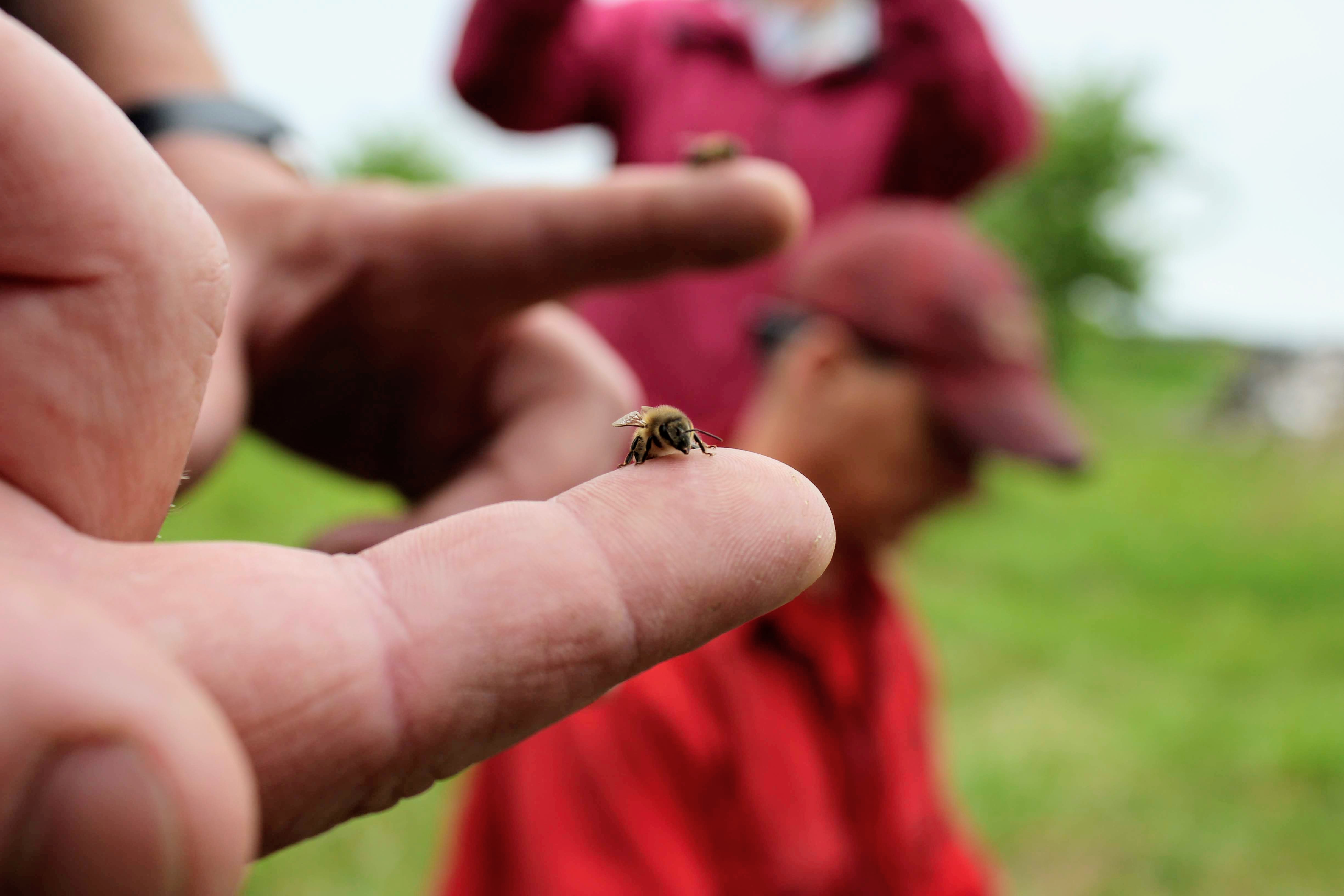
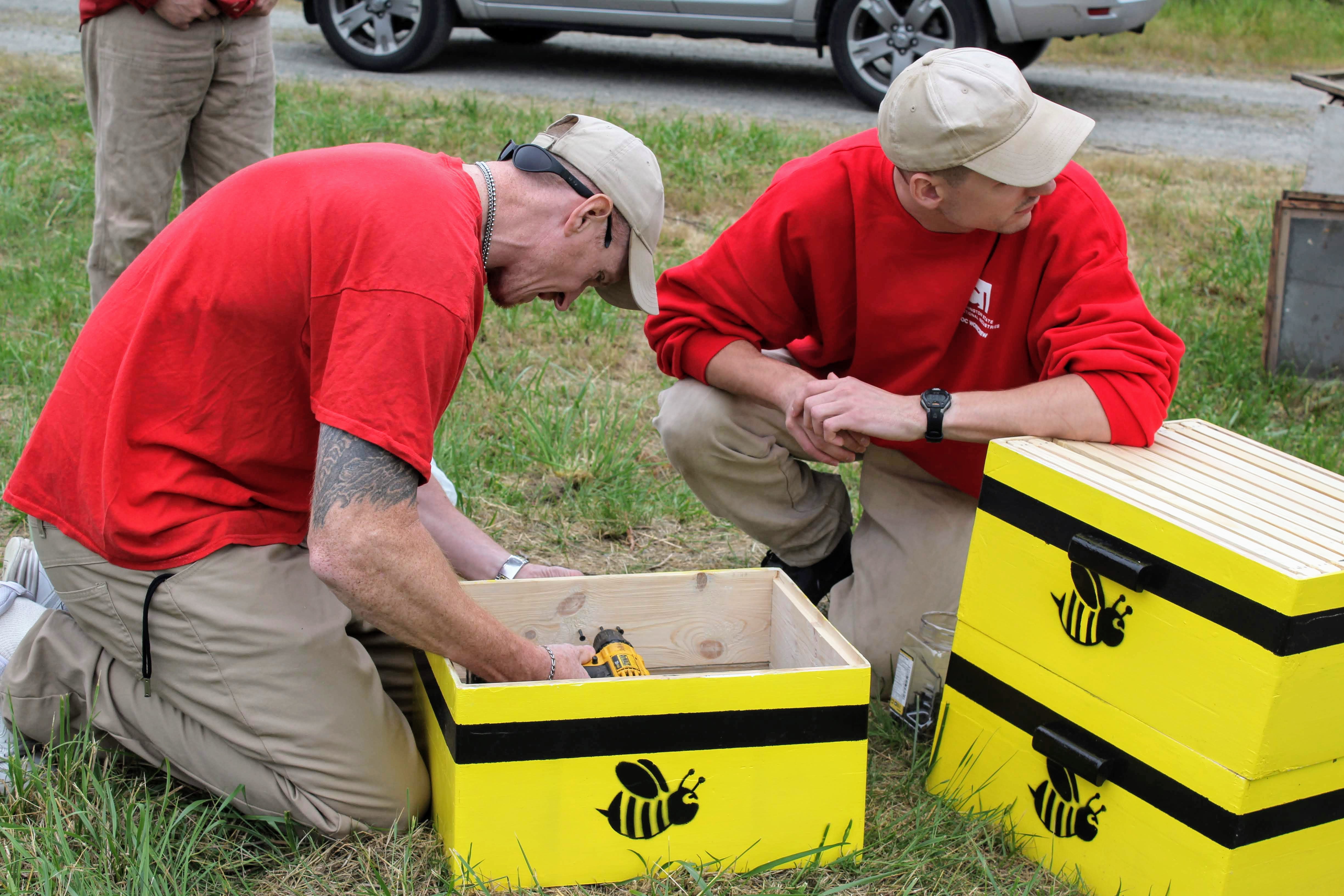
Two worker bees landed on Officer Epling’s fingers; in the background, incarcerated beekeepers attached handles to the hives constructed in the CCCC woodshop.
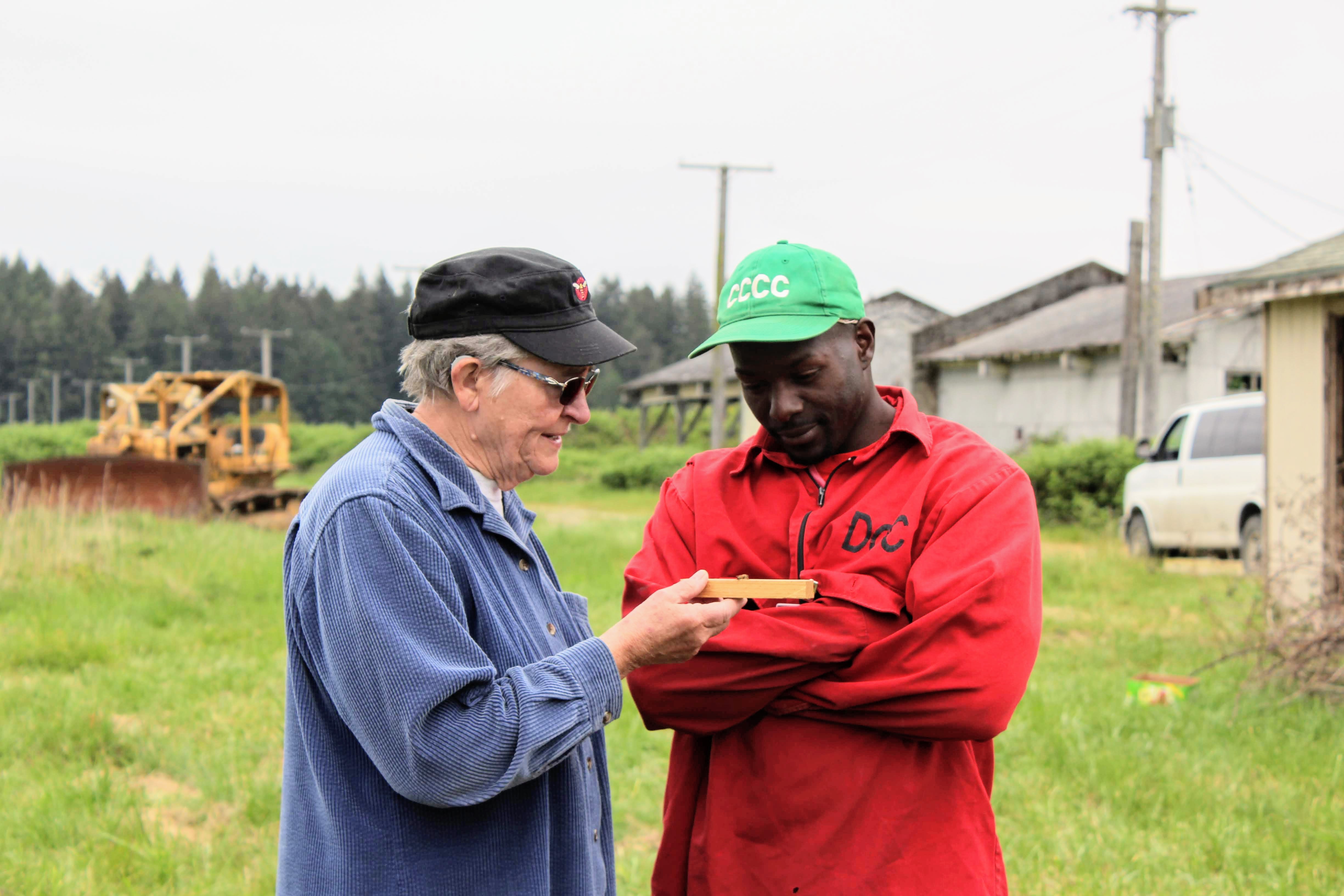
Expert beekeeper Gail Booth shows an unsure beekeeper a young worker bee that landed on the stick. Gail walked around with the female bee discussing how you could tell her age and what tasks she might perform for her hive; the informal “meet-and-greet” eased some nerves about being so close to the bees.
The Hive Boxes
Incarcerated students from CCCC’s carpentry program, with guidance from Centralia College instructor Bruce Carley, built the custom hives from reclaimed wood. Students also painted and stenciled the bee logo onto each hive box. They look great!
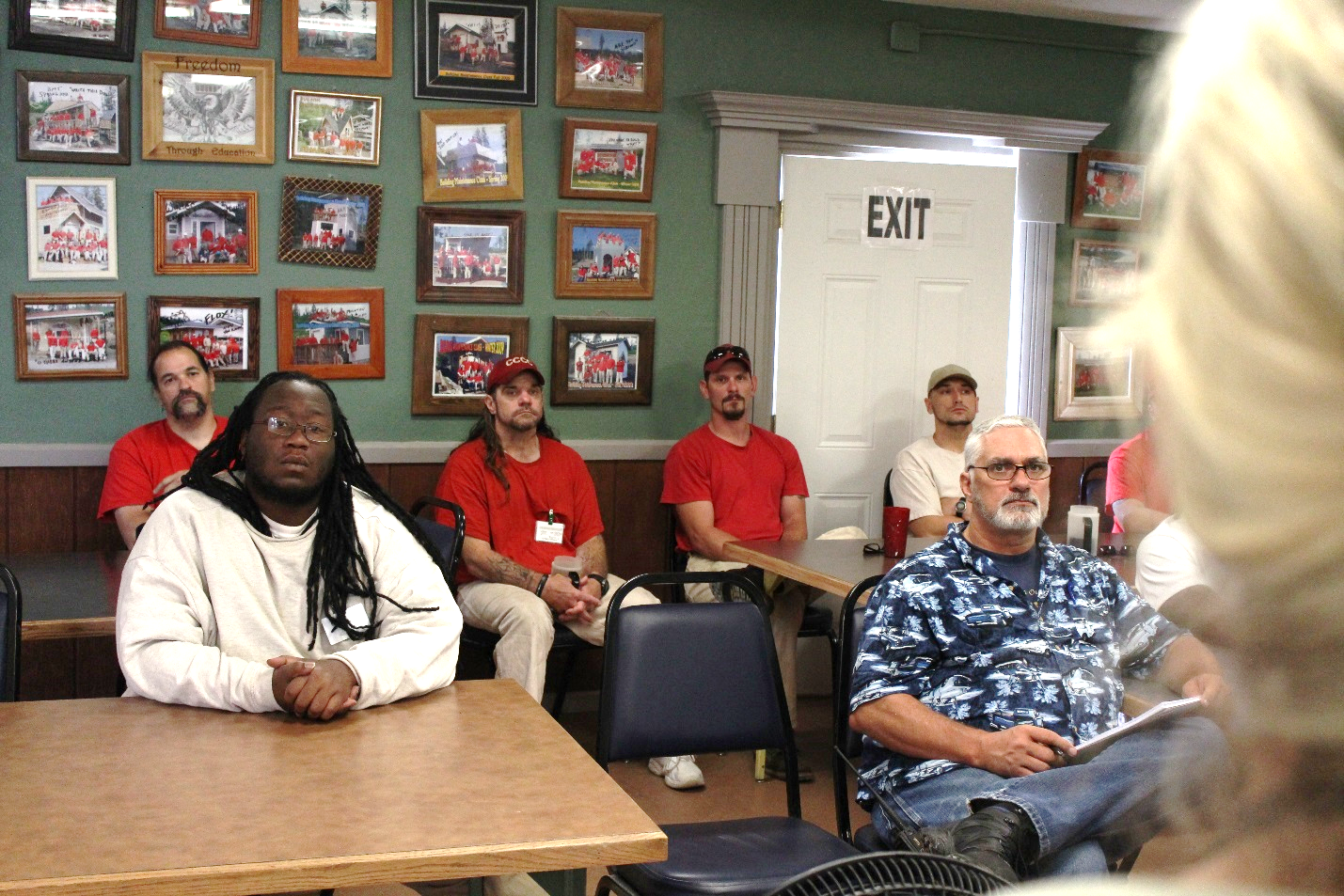
Following the McNeil Island launch, Laurie Pyne visited CCCC’s carpentry class and offered a talk; the students had a chance to learn more about the program and see their great hive boxes in place on the island. They also partook of a honey tasting, comparing the flavors and consistencies of honey made from six sources of nectar; wildflower honey was a favorite.
Suit up
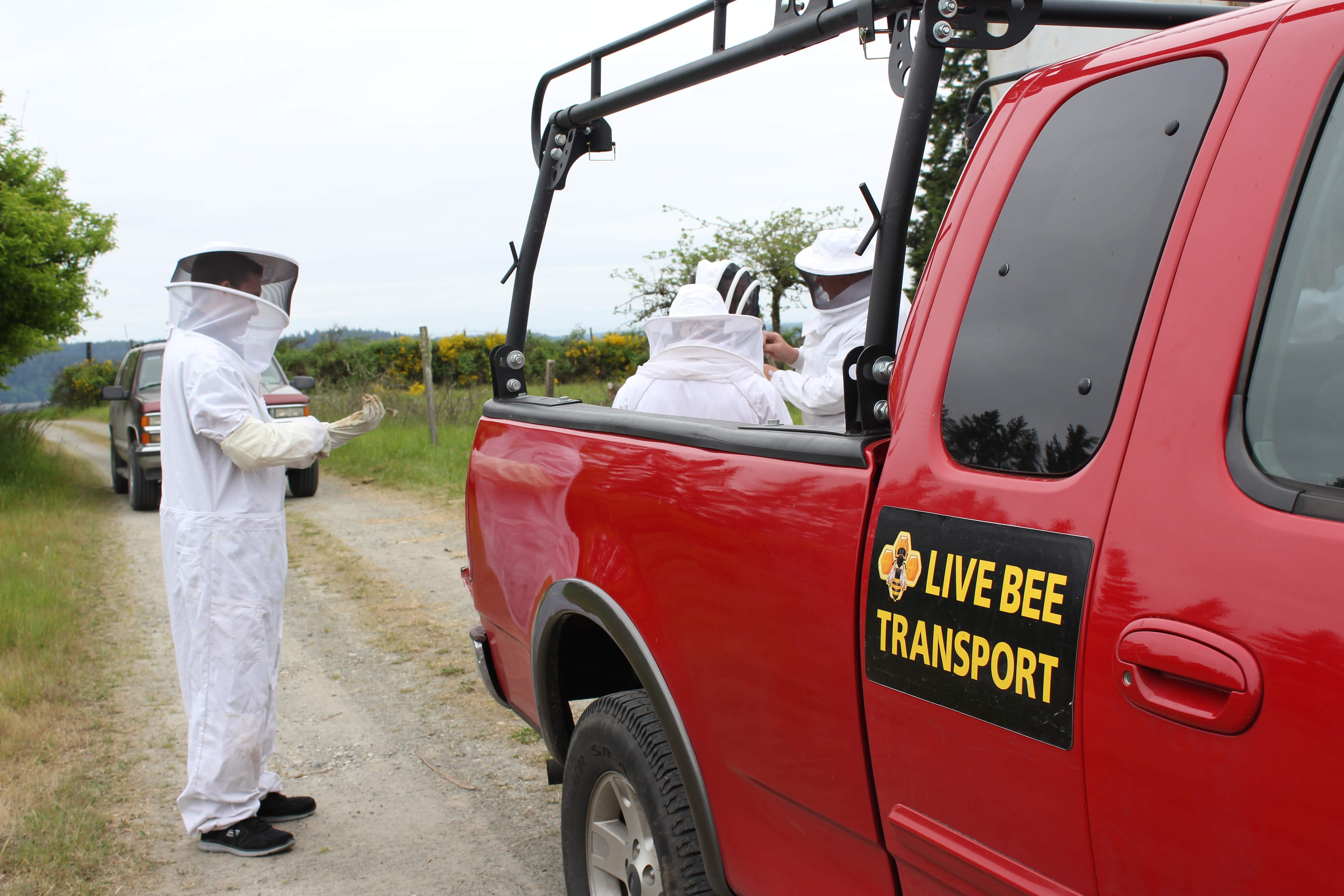
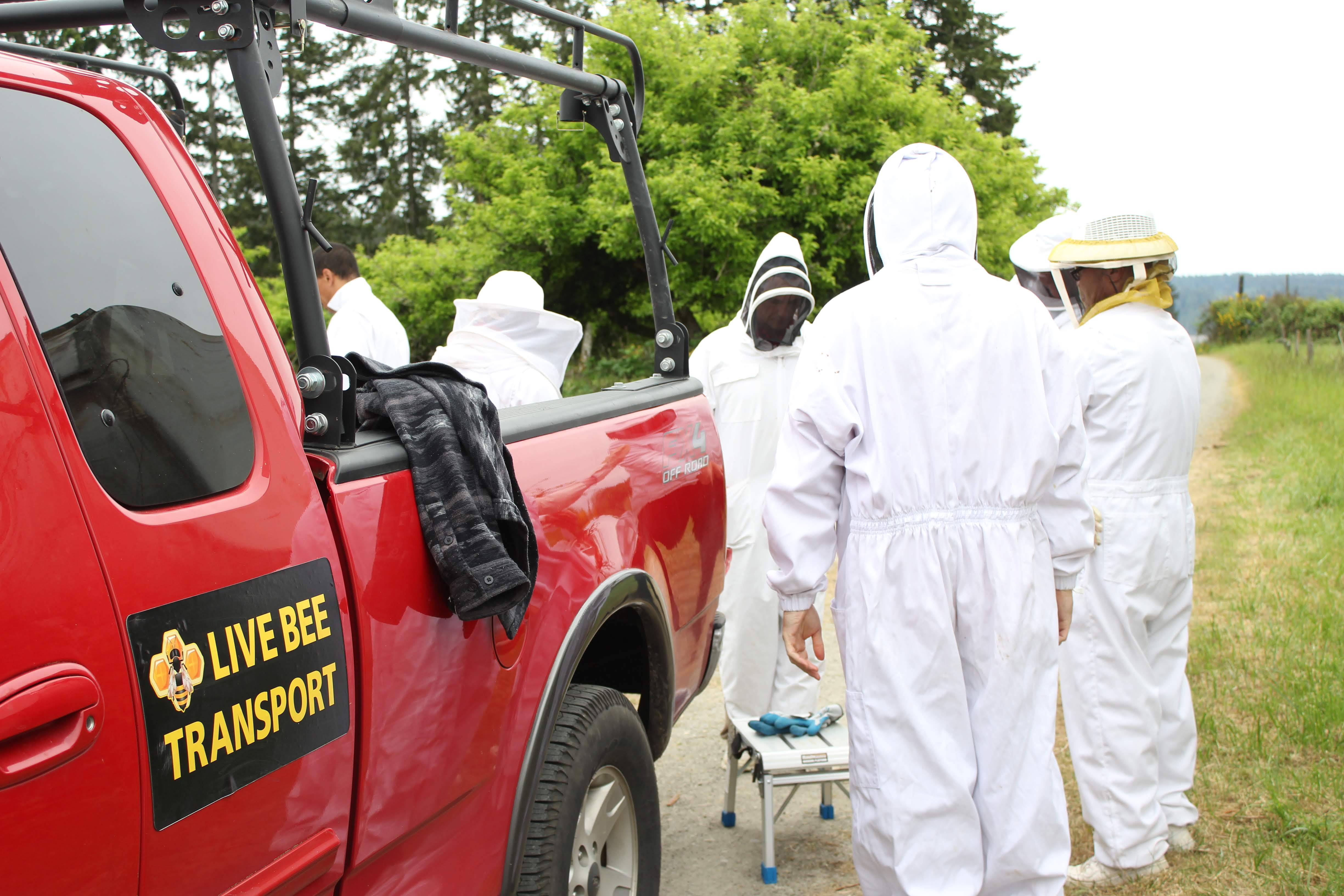
The bees were transported in one of the beekeeper’s truck.
Everyone suited up to protect against getting stung. Even though bees are docile and don’t want to sting you, sometimes they get pinched between clothes or think that the hive is threatened and then they will sting; it’s good to be prepared.
Where’s the Queen?
Expert beekeeper Andy Matelich holds up a frame and looks for the queen. The queens are a key indicator of a hive’s health, and get marked so that they could be easily found again. One of the queens dropped to the ground and could have been squished, but an incarcerated beekeeper with a good eye spotted her and saved the day!
An incarcerated beekeeper placed a frame into the new hive boxes.
Andy and the rest of the bee installation crew inspected each frame before inserting them into the new hive boxes.
At the end of the day, the bees were buzzing around their new homes, no one got stung, and everyone had learned something about bees and beekeeping…there is always more to learn when it comes to bees.
Officer Epling, left, and Officer Kennedy, right, take a minute to look at the bee hives. Officer Epling is teaching Officer Kennedy about bees and beekeeping as Officer Kennedy prepares to take over as liaison for the beekeeping program at CCCC and McNeil Island.
by Joslyn Rose Trivett, SPP Education and Outreach Manager
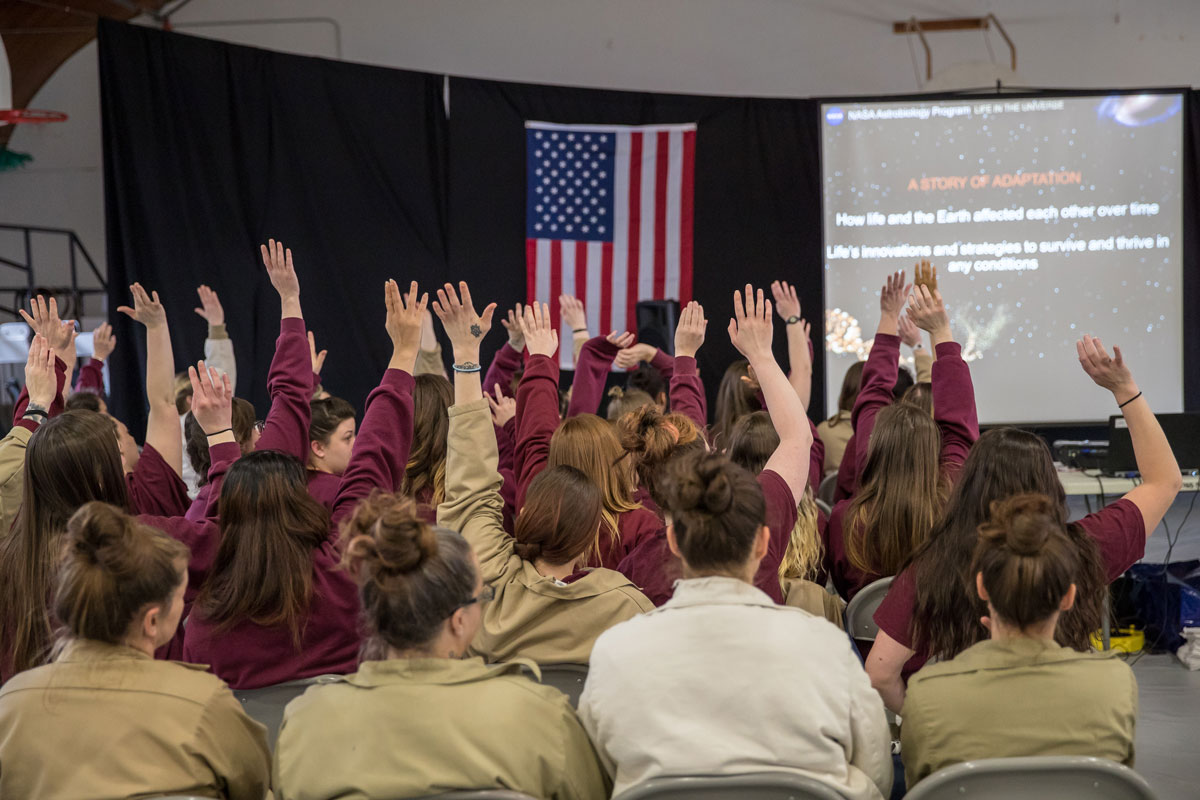
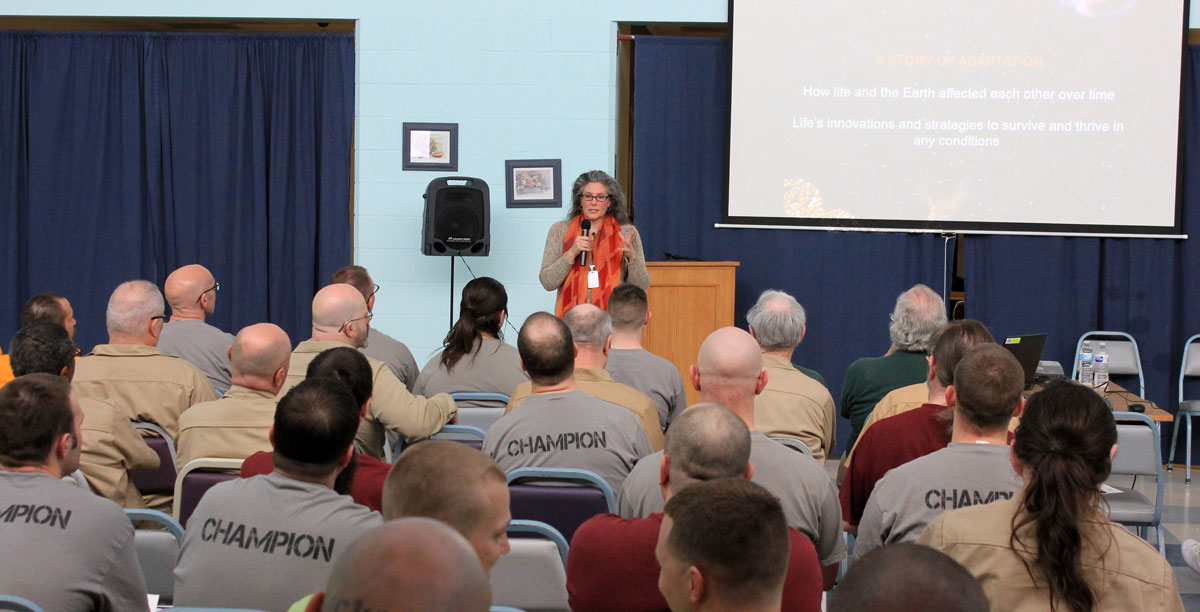
In April, I was fortunate to spend days and days immersed in the topic of astrobiology. What is astrobiology? It is the study of how stars and planets form, how that relates to life here on Earth, and the search for life elsewhere in the Universe. Alongside hundreds of incarcerated students and dozens of corrections staff in both Washington and Ohio, I got to learn about what is known, what is still unknown, and ponder immense questions. I had stars in my eyes, for sure!
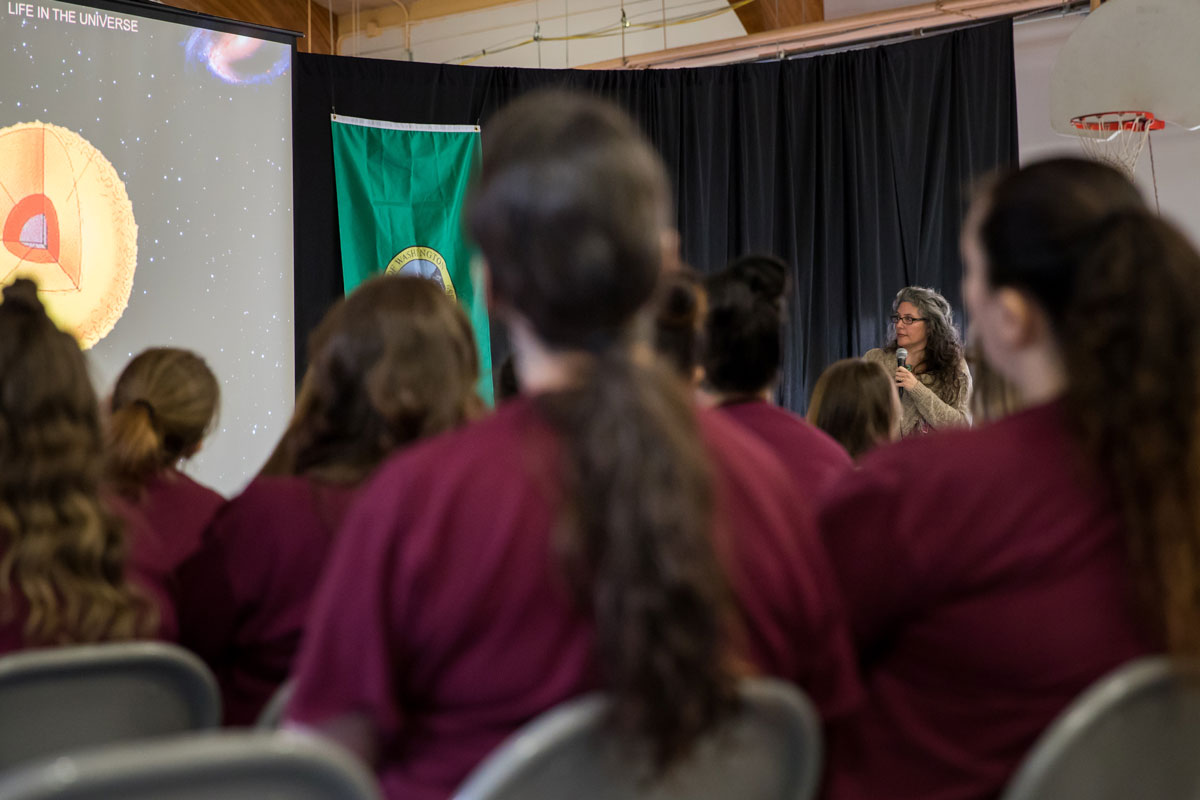
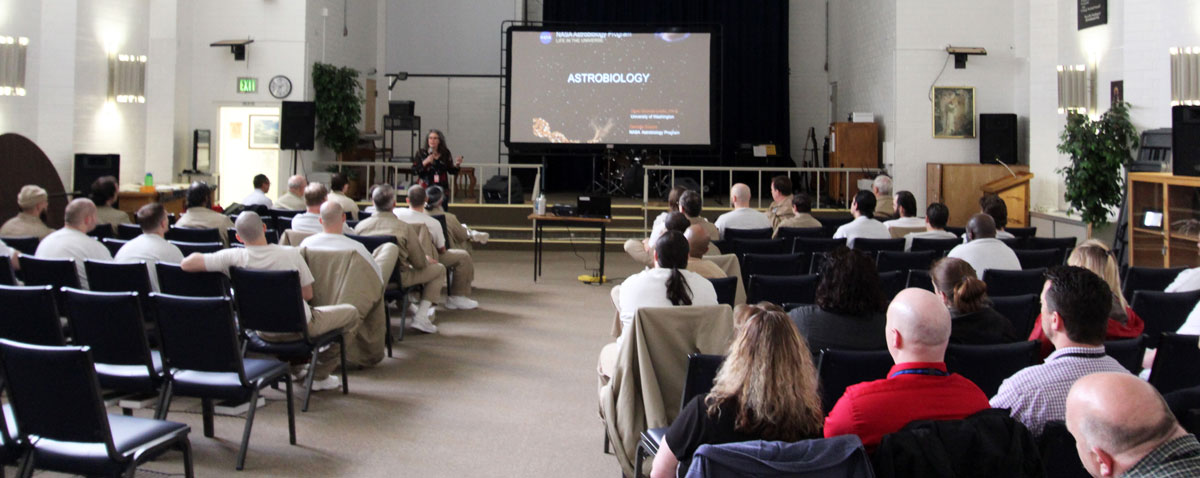
Daniella Scalice, Education and Communications Lead for NASA’s Astrobiology Program, describes element creation in the core of a star to students at Mission Creek Corrections Center. Photo by Ricky Osborne.
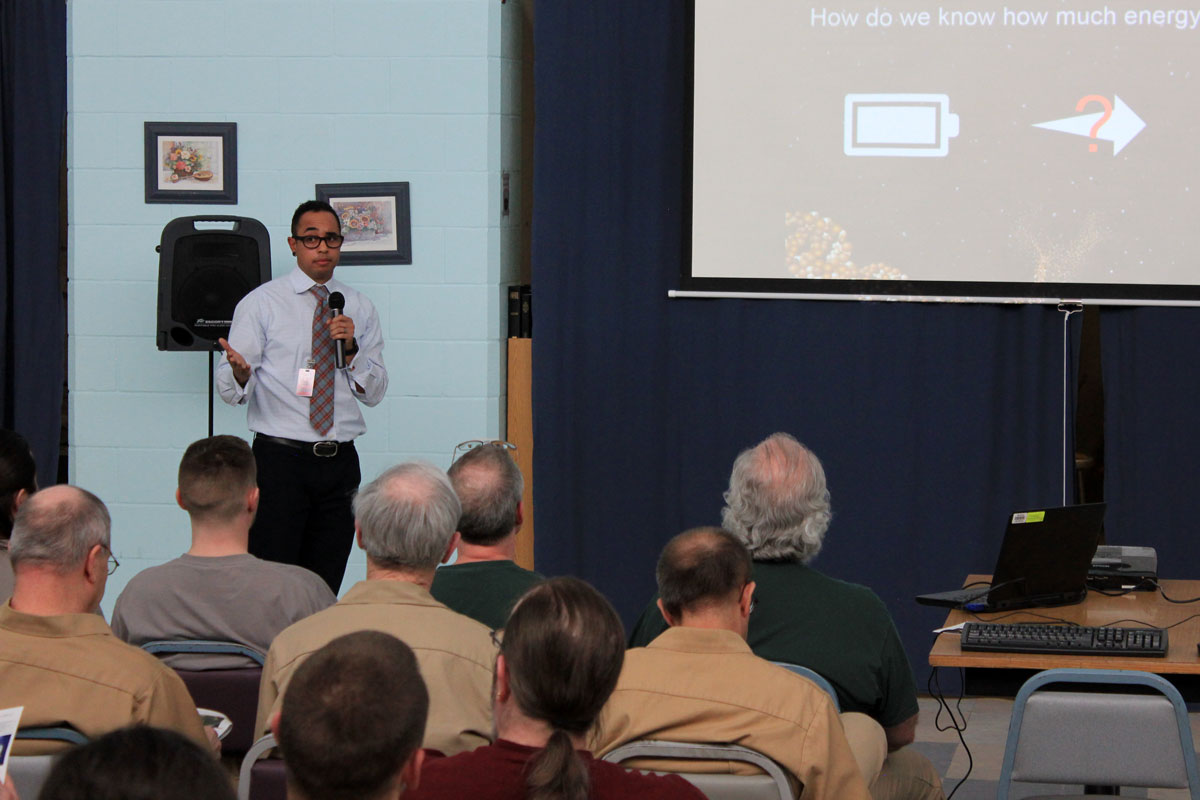
Dr Drew Gorman-Lewis, Associate Professor in the Earth and Space Sciences at University of Washington, responds to a question from a student at Airway Heights Corrections Center. Photo by Kelli Bush.
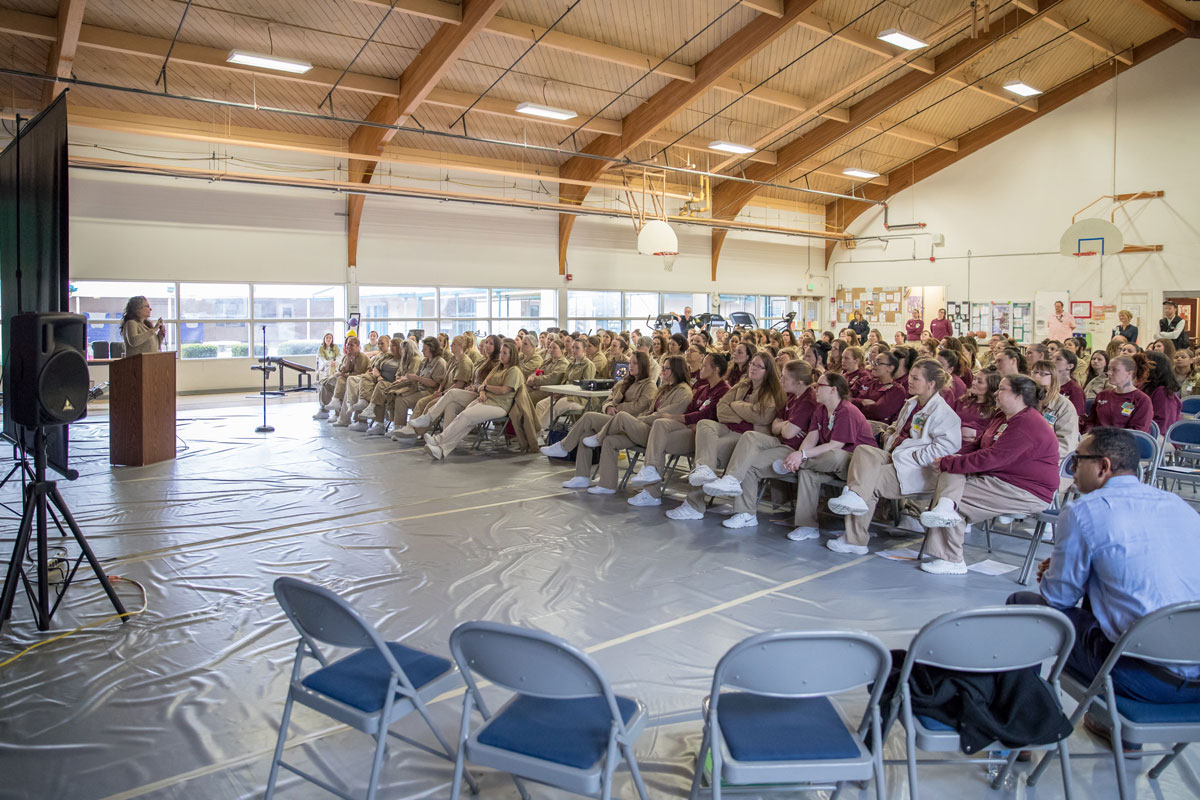
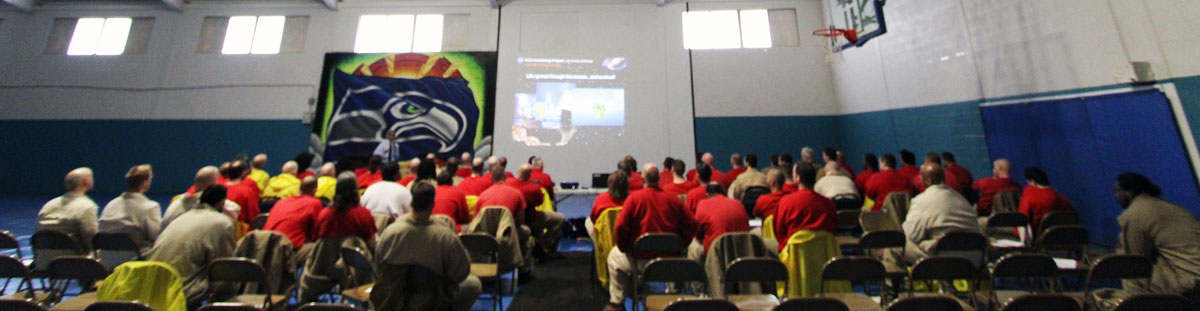
Washington State’s lecture series started at Mission Creek Corrections Center where they packed the gym; 150 students’ attention and curiosity gave us a great sense of success. Photo by Ricky Osborne.
Here I will share details from the Washington State programs; I will share Ohio’s in part 2. In Washington, Daniella was joined by Dr Drew Gorman-Lewis, Associate Professor in the Earth and Space Sciences at University of Washington. Our small team visited five prisons in four days, reaching 450 incarcerated students and 52 corrections staff. At each venue, Drew and Daniella told us a three-part story.
Part One: Creation
Daniella introduced us to the life cycle of stars—who knew that stars had life cycles!—and how their birth, maturity, and death creates and distributes most of the elements that makes up the Universe as we know it. She told us: Every atom in our bodies, the water we drink, the food we eat, our buildings, our roads, the things we buy and make, all were built in the heart of a star. It’s a dizzying concept, one that connects everyone and everything.
She outlined how these elements may have come together in the nutrient and energy rich environments of hydrothermal vents—hot water vents at the ocean floor—to create the first microbes, the first life on Earth.
Part Two: Adaptation
Part two came from Drew. He told us about his research with microbes, single-celled organisms, that live in extreme environments on earth. His personal and professional favorites live in near-boiling pools of acid—really! He emphasized that there are microbes living and thriving in nearly every environment on Earth. Those inhabitants also influence their environments; their life processes take up, transform, and leave behind new elements and structures. The microbes can quickly adapt to take advantage of new conditions, and so back and forth, life and the Earth interact and influence each other. His research investigates how much energy microbes use to live in extreme environments, and in this way sheds a bit of light on where and how we might find microbes beyond our Earth.
Students respond to a question from Daniella. Photo by Ricky Osborne.
Part Three: Exploration
Daniella’s part three dove into this search for life, focusing on the most promising worlds within our solar system. I was amazed to learn that there are some excellent contenders! I was particularly taken by moons of Jupiter and Saturn, Europa and Enceladus, that have global oceans: hidden beneath icy crusts, their worlds are covered with liquid water. On Enceladus, there is also evidence of geothermal vents. Given that one of the theories for the origin of life places it in Earth vents, this news of similar environments on a moon of Saturn gave me the chills (the good kind).
At every venue, the students dazzled us with ideas and questions. I think that’s the best part for me—hearing how others are making sense of the concepts, the collective insights and exploration. I learned as much from them as from the scientists…as usual!
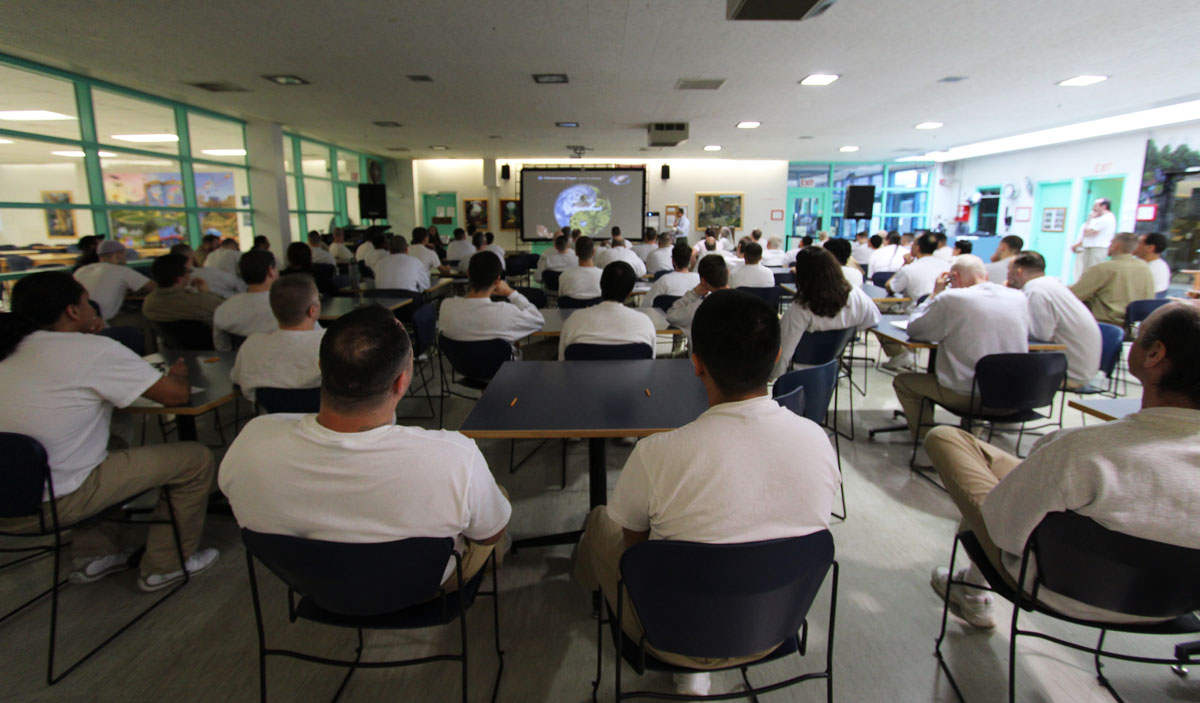
Our second stop was Cedar Creek Corrections Center. Students and staff had to walk through the rain to attend, and still brought their best selves. Photo by Joslyn Rose Trivett.
To the class at Twin Rivers Unit, Monroe Correctional Complex, Daniella emphasized that astrobiology is not possible without collaboration, and she invited the students present to bring their diversity of knowledge and insight to the topic. Photo by Joslyn Rose Trivett.
Students had trouble signing up for the session at Washington State Reformatory, also in Monroe Correctional Complex, and that seemed to mean that only the most avidly interested were present. Their questions and comments were advanced, for sure. Photo by Joslyn Rose Trivett.
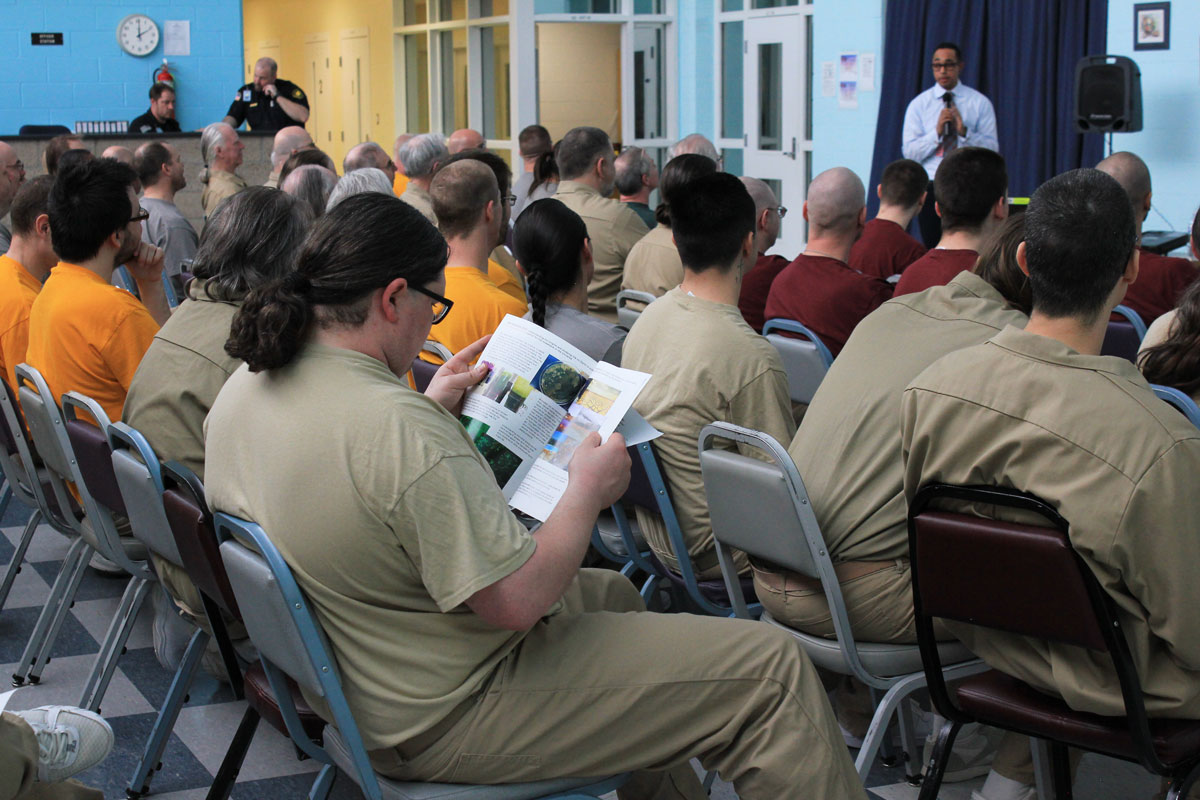
Our last stop in Washington was at Airway Heights Corrections Center. Photo by Kelli Bush.
All attendees left with a gorgeous, ten page summary of the presentation. Photo by Kelli Bush.