Text and photos by Erica Benoit, SPP Workshop Series Coordinator

Unfortunately, the Environmental Workshop Series may be facing the greatest impact of all SPP programs due to COVID-19. While we are proud of the programs’ large crowds, we know that the coronavirus thrives in such environments. In an effort to protect our incarcerated and staff partners, the workshop series has been temporarily paused at all facilities. It is our goal to resume the regular workshop schedule and reschedule canceled workshops once it is safe to do so again.
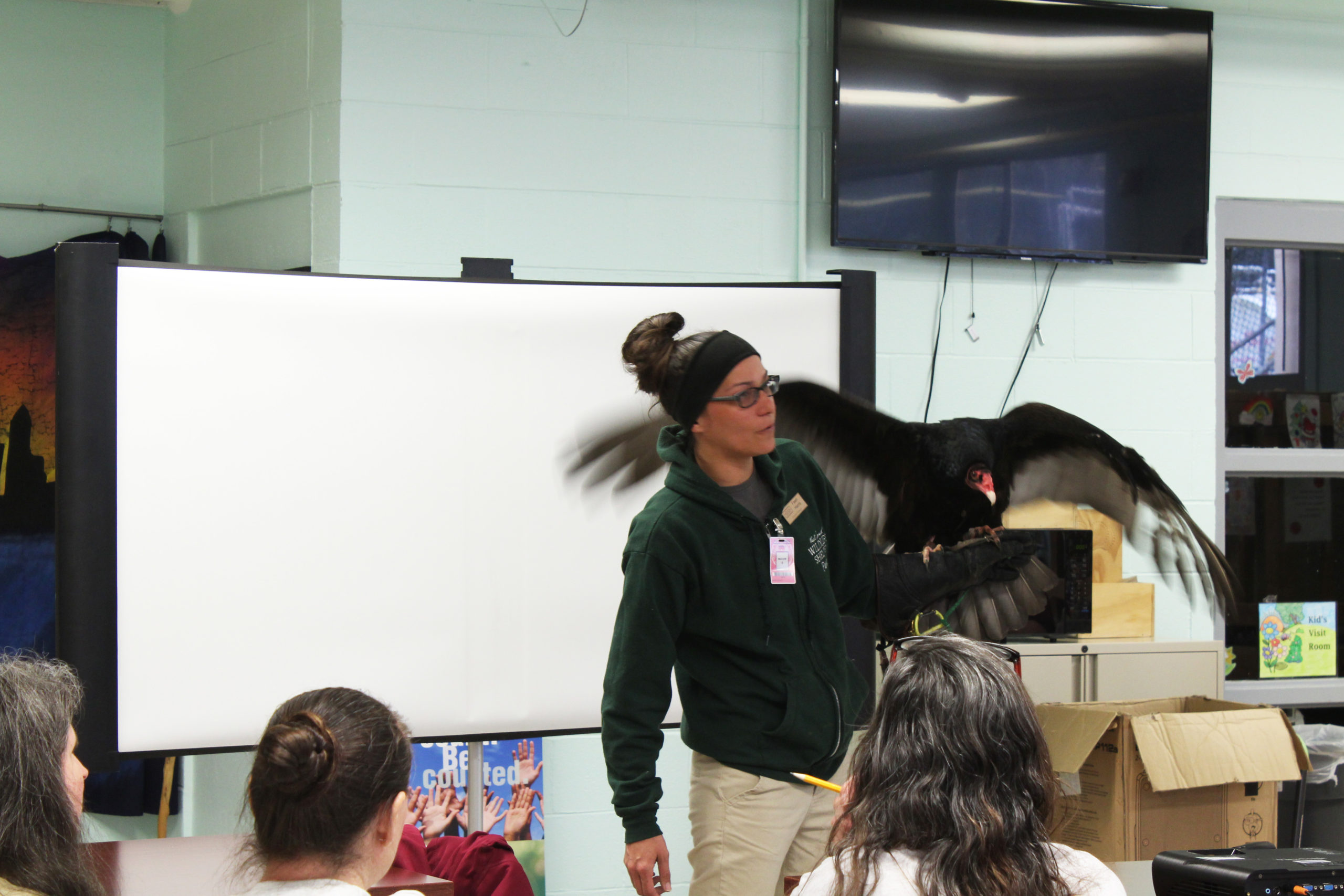
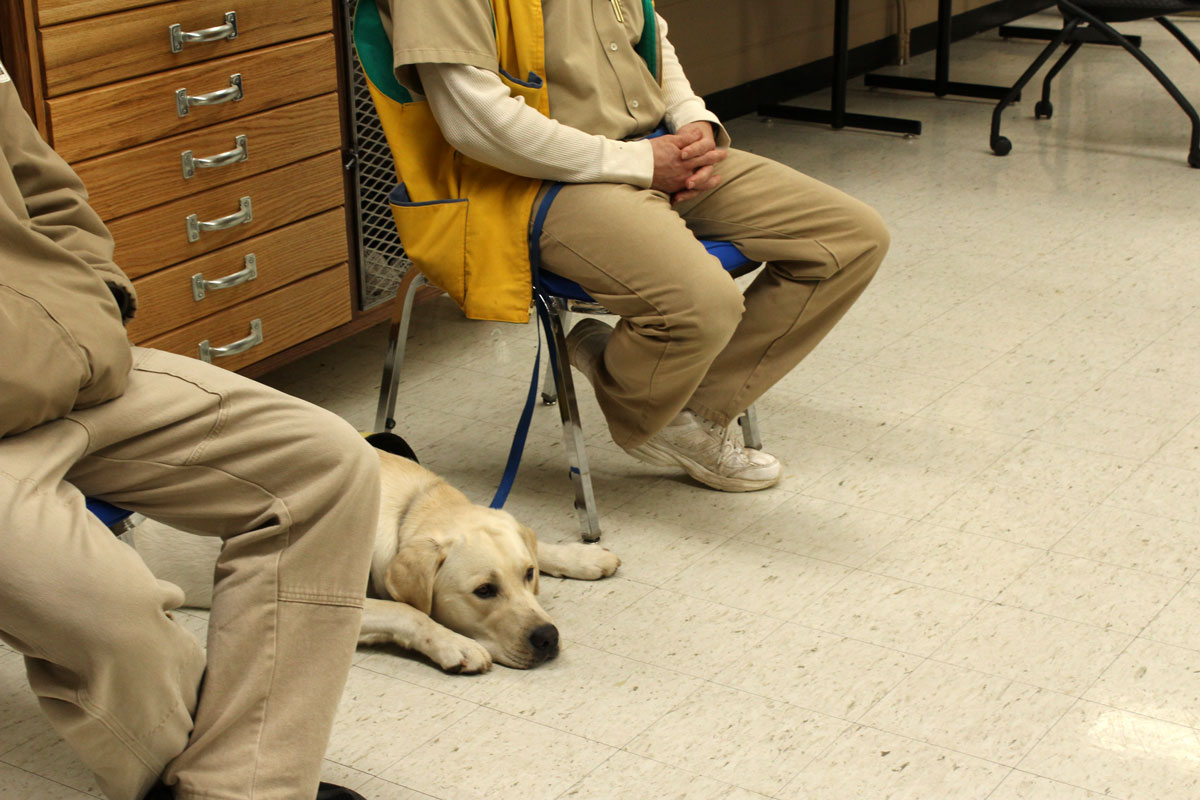
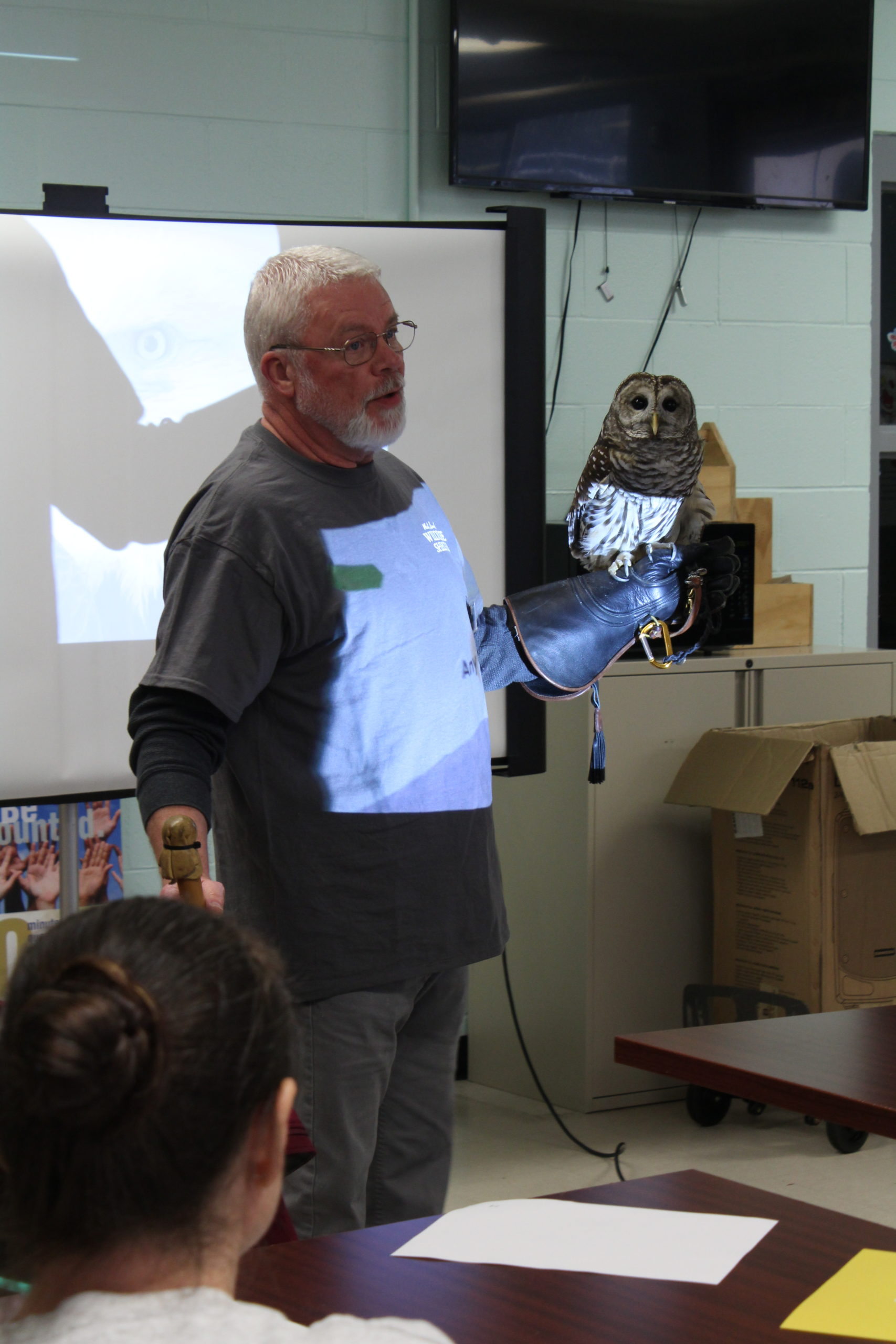
Just before the shut-down, Fawn Harris brought Princess Remington back to prison.

As a part of our efforts to adapt and evolve, we are also test-driving a remote workshop learning plan at Stafford Creek Corrections Center so workshop students can continue to earn credit towards their workshop certificates. Beginning this month (May 2020), in lieu of in-person workshops, students will be able to watch videos on a specific environmental topic through an in-facility TV channel. In addition to viewing the selected videos, students will be required to reflect on what they learned in writing. Submitting this assignment will earn the equivalent of 1 regular workshop credit. Depending on the success of the remote learning plan, it may be expanded to additional facilities.

Still, we miss the workshops and the in-person interaction and knowledge gained from them. So, please enjoy these images of the last few in-person workshops we had in late February and early May.

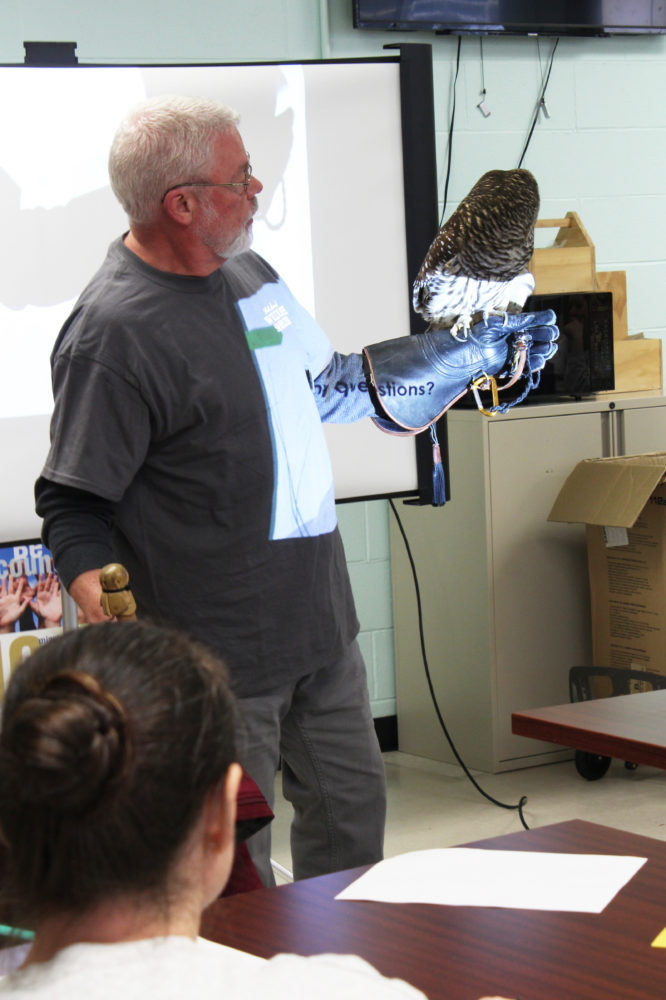
Raptors of the Pacific Northwest, Workshop on March 6 at Mission Creek Corrections Center for Women (MCCCW)

Fawn Harris and Michael William Etgen are from West Sound Wildlife Shelter. Fawn used to coordinate one of SPP’s conservation nurseries and she facilitates wonderful workshops! (A photo of her and Princess Remington is at the top of this story.)
An Introduction to Permaculture, Workshop on February 20 at Stafford Creek Corrections Center (SCCC)

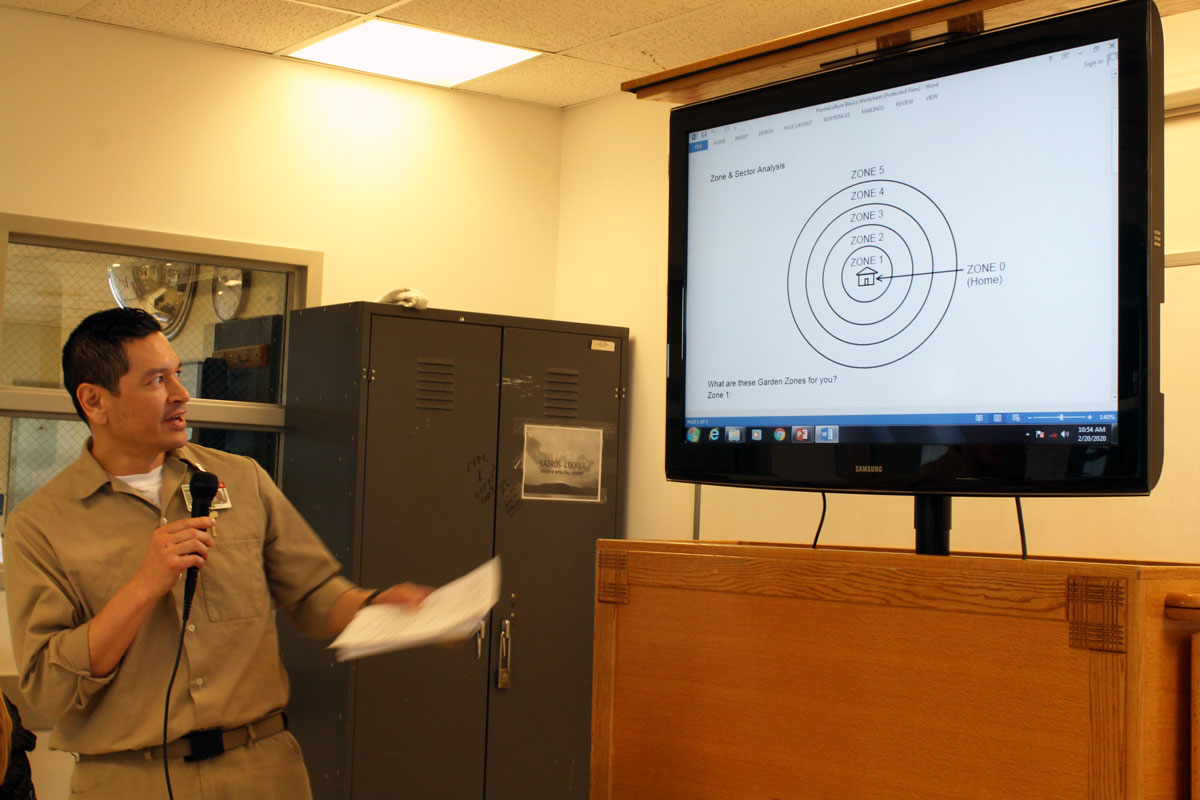
Sheilia Canada led a workshop on a sustainable living system that supplies all the needs of humanity while it benefits all creatures on Earth.
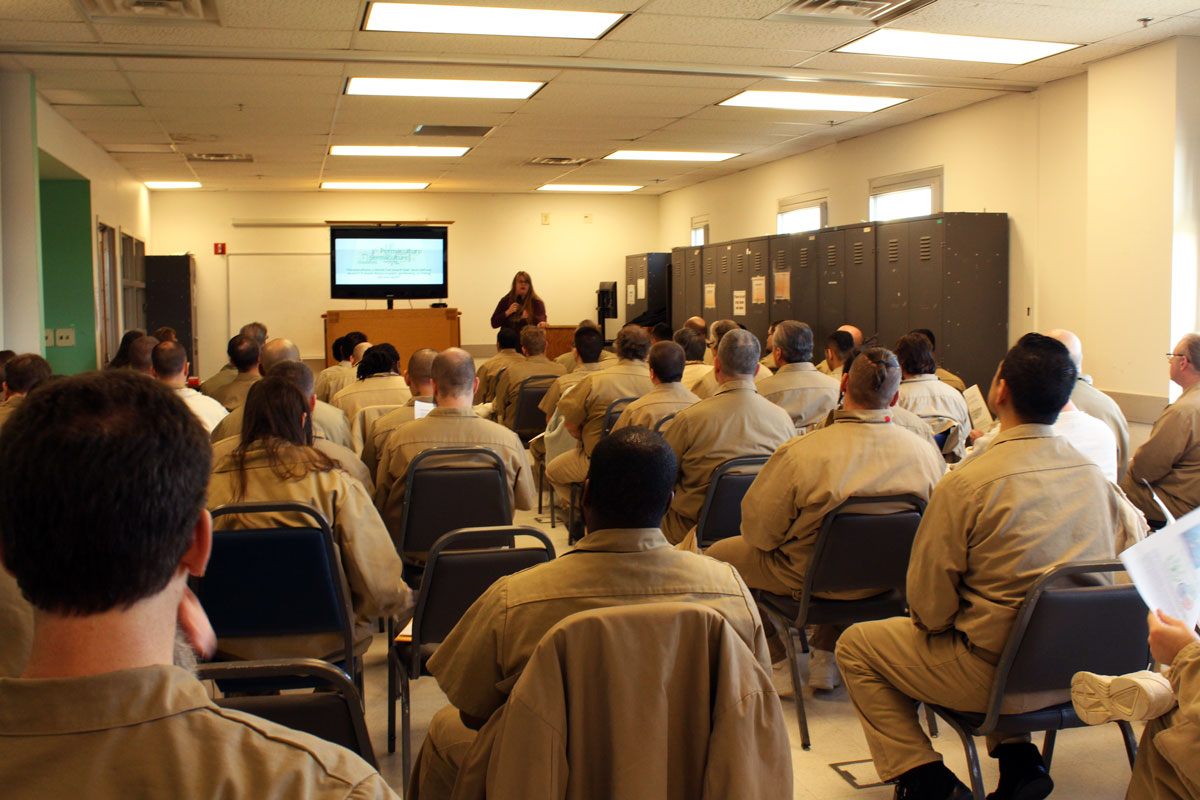
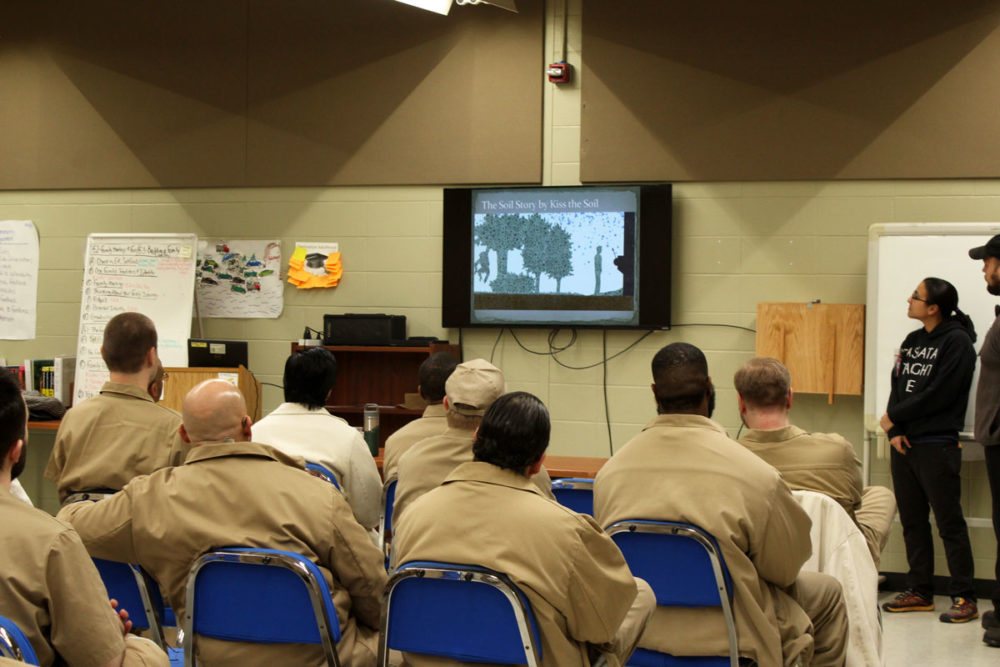
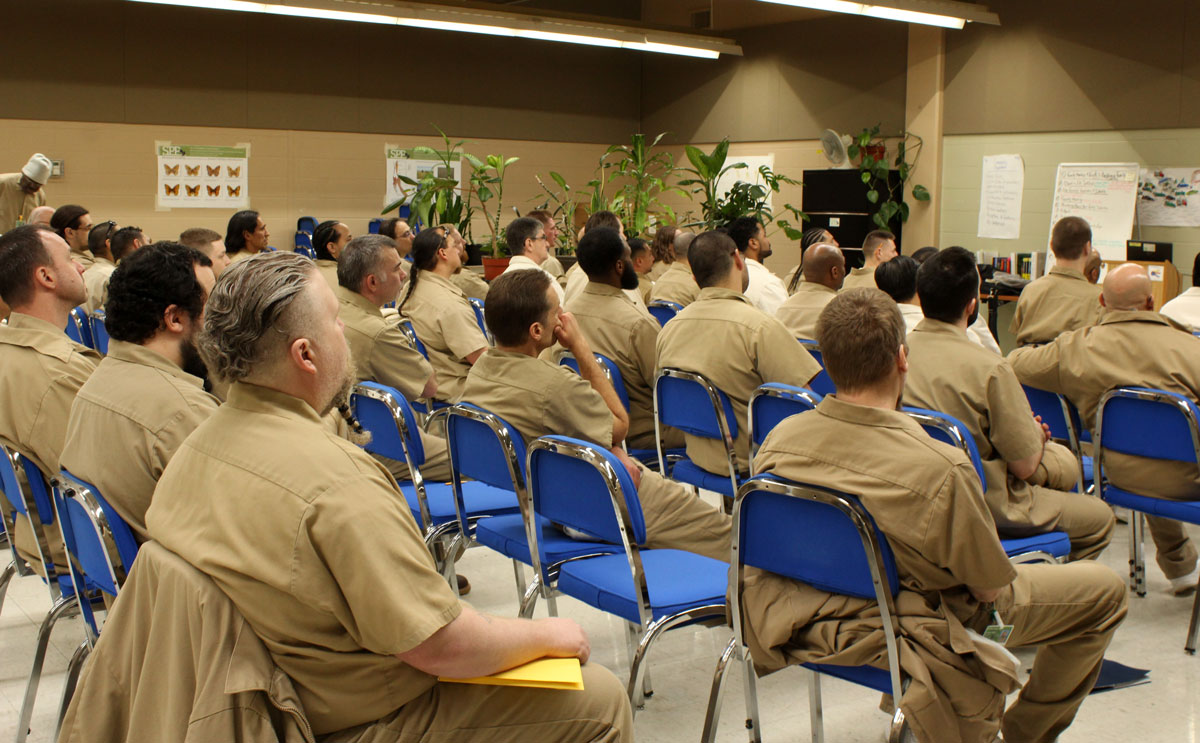
Hard to imagine when a class this size will feel safe again.
Following an in-class brainstorm session, a student shares with the class how he applied the zonal model of permaculture to an everyday life scenario.

Climate Crisis Solutions: Healthy Soils & Food Forests, Workshop on February 26 at Washington Corrections Center (WCC)

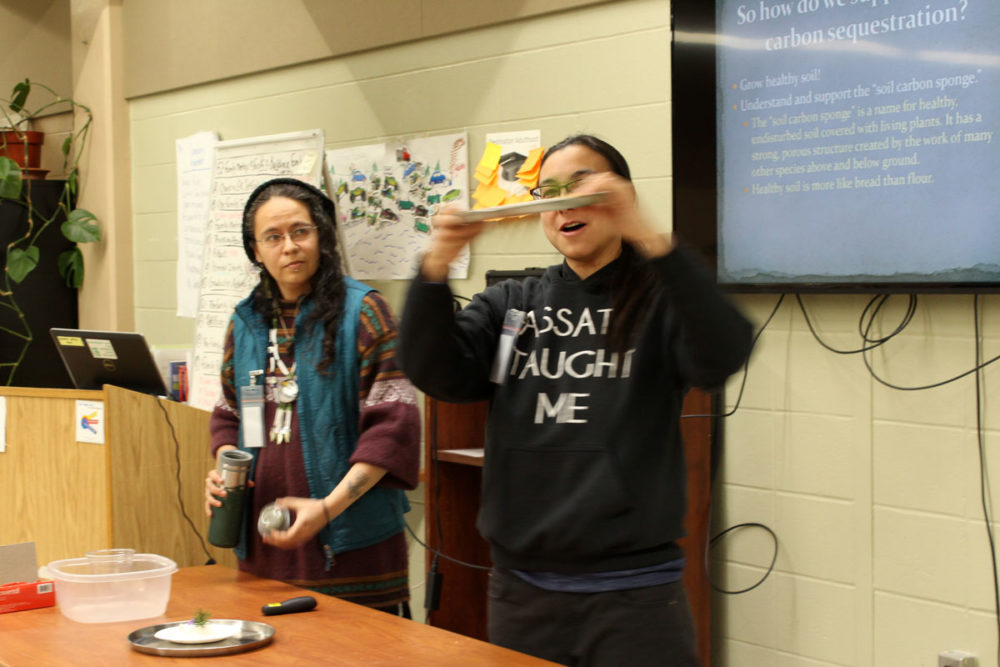
Julianne Gale, Zephyr Elise, and James Landreth from Mason County Climate Justice led a session on healthy soils and food forests as a potential solution to the climate crisis.
By Graham Klag, SPP Prairie Ecological Conservation Nursery Coordinator and MES Student

Graham recently presented on the SPP-supported project at an International Association for Landscape Ecology – North America conference; see his virtual poster here.

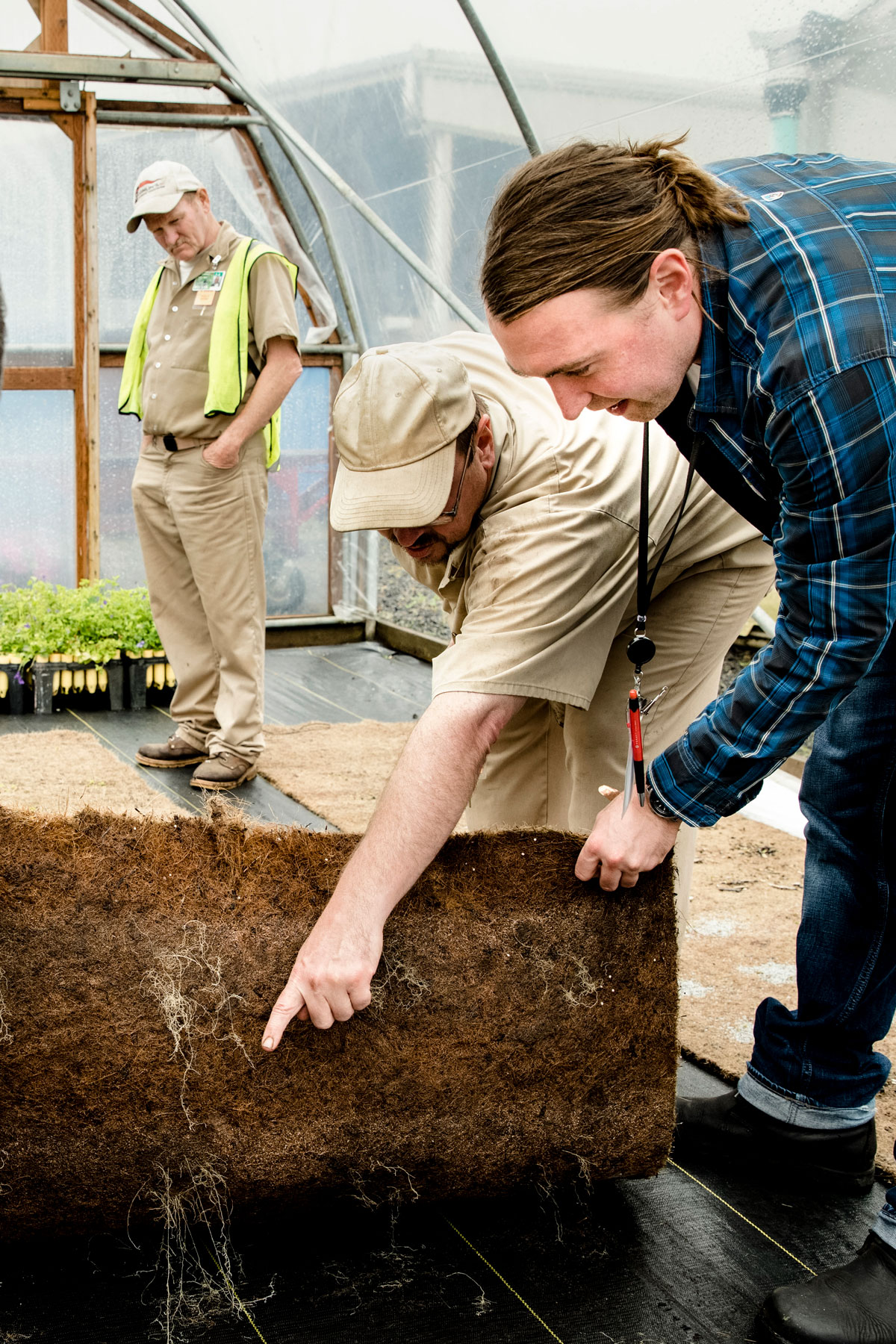
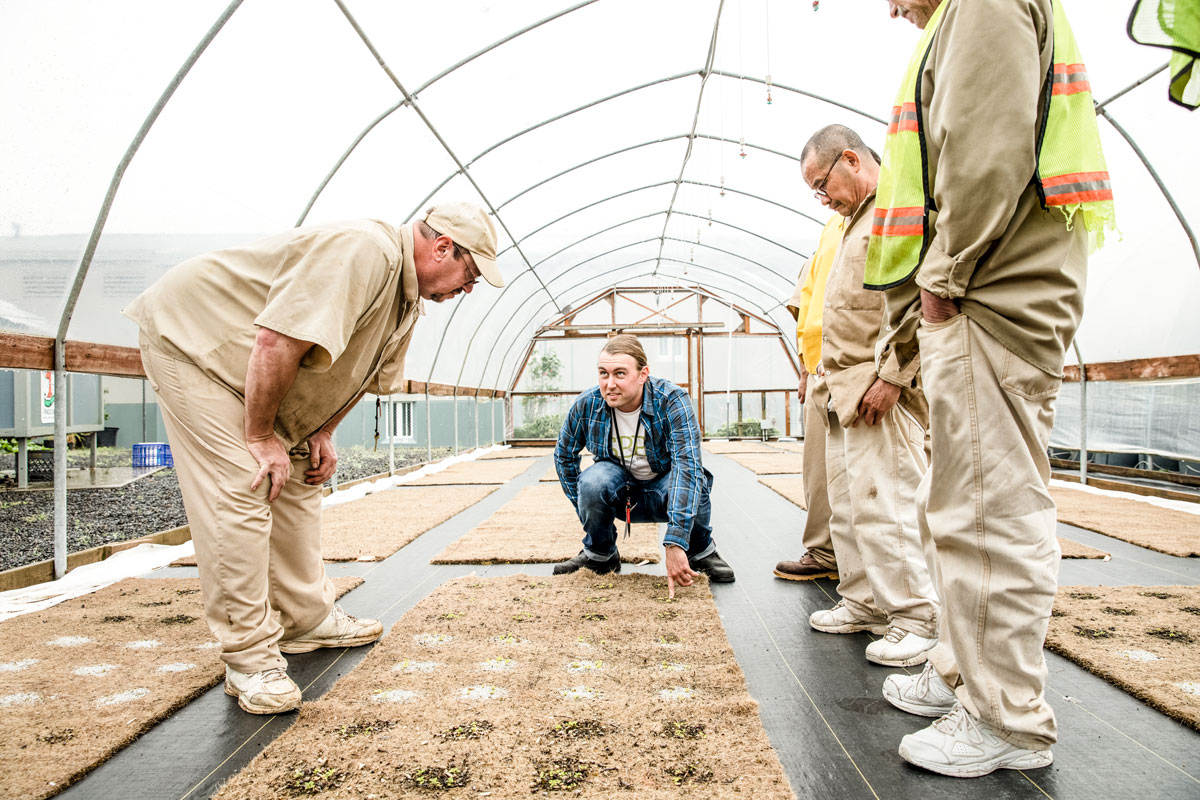
The team examines and discusses new root growth; two of the technicians, Ronald Snider and Toby Erhart, seen here with Graham. Photo by Shauna Bittle.

The Sustainability in Prisons Project (SPP) affords Master of Environmental Studies students an endemic and indelible academic and professional-development opportunity. My experience as the Prairie Ecological Conservation Nursery Coordinator for the programs at Stafford Creek and Washington Corrections Center for Women (SCCC and WCCW) gave me the chance to promote my academic and professional passion: promoting the restoration and enhancement of marginalized populations of Pacific Northwest prairie plant communities. While I contributed to the ecological functions of the Pacific Northwest’s most endangered ecosystems, I also learned how to better support the basic human functions of endangered and marginalized populations of people.

Working with incarcerated technicians continually revealed their resourceful creativity and their desire to meaningfully contribute to the society from which they have been disconnected. Masters students such as myself support technicians’ connections to ecological concepts, while we also connect our (my) consciousness to our nation’s culture of incarceration.

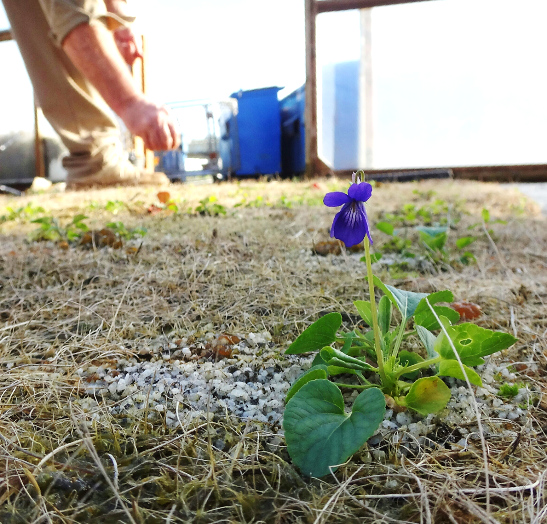
In the project, this was the first violet to bloom! Photo by Graham Klag.

My thesis research project uses coconut coir mats for the restoration and enhancement of the early-blue violet (Viola adunca) for the larval development of the Oregon silverspot butterfly. The project has been possible only due to the combination of resources and partnerships that SPP has afforded me. As part of my work coordinating SPP’s Prairie Ecological Conservation Nurseries, my position helped me access hoop house space, seed, materials, staff, input, and other resources that have led to the success of my research project. The experience allows me to see the value of project-based adaptive management, scientific research, and education to advance the skills and education of technicians and myself.

The team discusses trials of mat substrate types; Toby Erhart and Bien Van Nguyen are the most-visible technicians. Photo by Shauna Bittle.
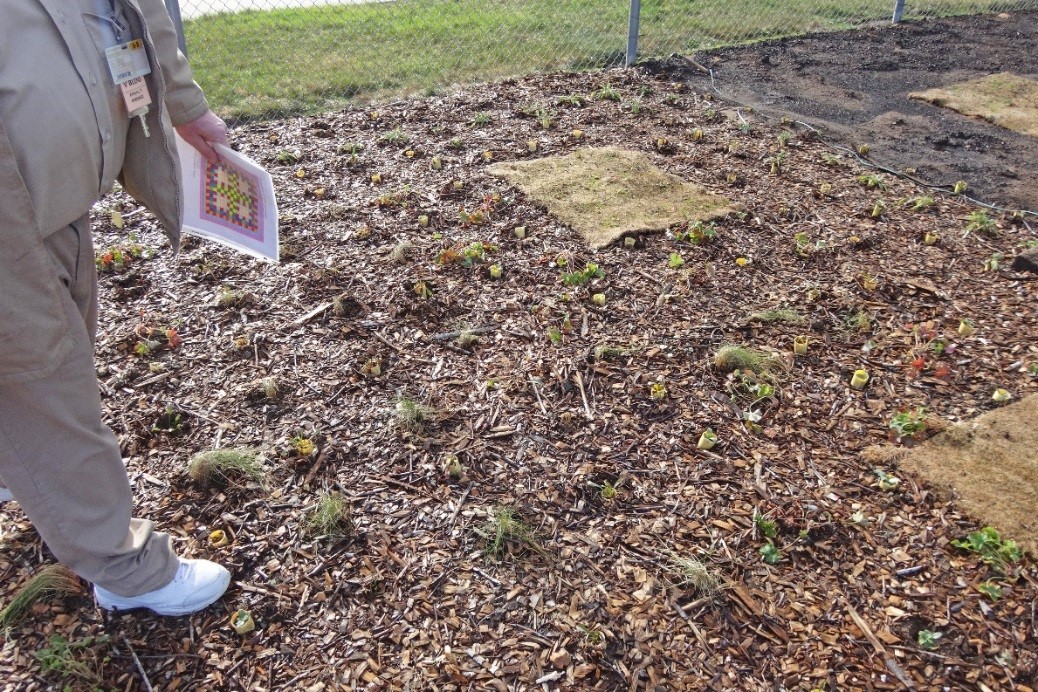
SCCC’s place-made prairie; the technician holds the garden’s design template. Photo by Graham Klag.

During my time with SPP, I have learned that this connection to place is a basic human need. While dealing with incarcerated technicians’ unfortunate connection to the place of prison, we fostered their connection to other ecosystems — ones that need our help. The fortune of those rare ecosystems can be found from more and more connections to conservation science.

I see restoration ecology as a place-making process. Through my research design and implementation, technicians and I shared in the scientific method, connecting us to the coastal prairie environments of the Washington and Oregon coast. As part of that process, this year we constructed a prairie garden inside the facility at SCCC; we planted extra prairie plants that we had grown for various restoration sites within the Salish lowlands and created a bit of prairie inside the prison.

At the basis of all life’s functions is the need for connection. My position with SPP combined with my studies provides me a connective power. I wish to share that power with individuals disconnected from our modern society. SPP is a true asset to The Evergreen State College’s mission and core values, providing academic and professional empowerment opportunities to students, staff, and the greater community. I feel lucky to be a part of this special community experience and reflect on human ecology and empathy. I have new insight into how the landscape reflects how we treat each other and the good life of being a Greener.

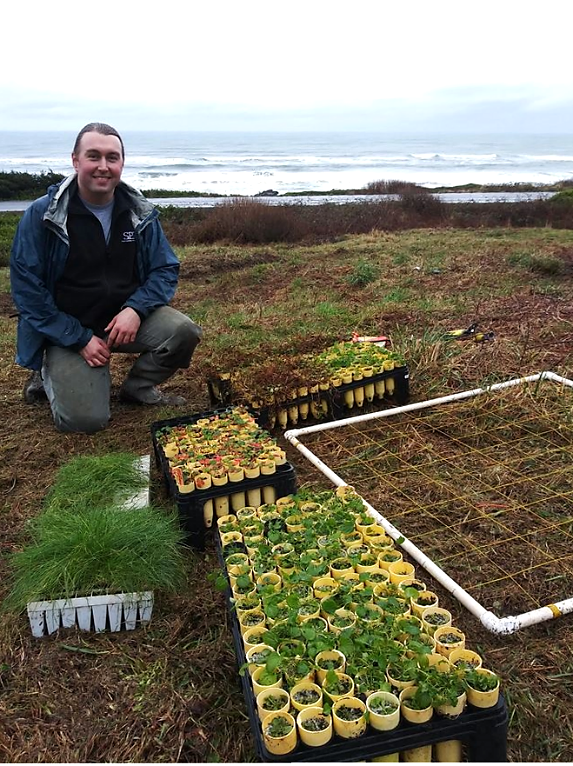
Graham at the Rock Creek coastal prairie research site with ready-to-plant plugs of early blue violet (Viola adunca), Roemer’s fescue (Festuca roemeri), and coastal strawberry (Fragaria chiloensis). Photo by Rolando Beorchia from Institute for Applied Ecology.

By Carly Rose, Curriculum Development Coordinator at SPP-Evergreen

Gardeners work together at WCCW. Photo by Ricky Osborne.

What makes a garden in prison worth tending, and how does an incarcerated person know that gardening is a good fit for them? The history of agriculture in the U.S. has encompassed both incredible advances in supporting human health while also contributing to historical oppression. Especially given that history, whether or not to garden should be the decision of the gardener. Especially in prison, how does an incarcerated person know that gardening is a worthy part of their journey?

Horticulture students at Washington Corrections Center for Women (WCCW) harvest potatoes. Photo by Joslyn Rose Trivett.

I have created a list of conditions that I believe signify that the person is right for the garden and the garden is right for them. These principles may be considered by any gardener, whether inside or outside of prison.

1. You want to grow plants.

Two gardeners wash and bag bok choi harvested at WCC. Photo by Ricky Osborne.

2. You find joy in growing plants. Gardening is an act of dedication, patience, and surrender, and not everyone finds joy in such a commitment. When you are in the garden, if you lose track of time, if you find yourself reveling in the small details of the garden,  if you find yourself a student of the garden, then the garden is for you.

3. The act of gardening reflects your inner self. You can see yourself in the cycles of the garden.

4. Your body, mind, heart, and spirit want you to tend the garden.

Ben Aseali poses in his garden at Stafford Creek Corrections Center. Photo by Marisa Pushee.

5. Gardening connects you to your community. Whether you produce beautiful flowers and food for people, animals, or insects, aquatic plants to oxygenate bodies of water, shrubs, and trees to oxygenate the air, you will be able to sense the ways that gardening connects you to your world.

6. Gardening connects you to your culture. In almost every culture of the world, people cultivate plants to feed their community. If gardening connects you to your culture, it is a gift to you and your loved ones.

A gardener steps on her shovel at WCCW. Photo by Benj Drummond & Sara Joy Steele.

Gardening is not everyone’s cup of chamomile tea – and it shouldn’t be. As a collective, we are made stronger through a diversity of interests and talents, and gardening is only one. For those of you who are willing, joyful, and overwhelmed with the beauty (ok…and work) at harvest time, I hope the seasons are kind to you this year.

The garden crew shows off a prize cauliflower at Washington Corrections Center. Photo by Don Carlstad.