By Kelli Bush, SPP Program Manager

It’s always nice to do positive projects. It helps us do our time with rewarding accomplishment knowing it helps the community and wildlife. ~Michael Feeney

We appreciate the opportunity to work with the public for environmental causes. ~Roy Townsend
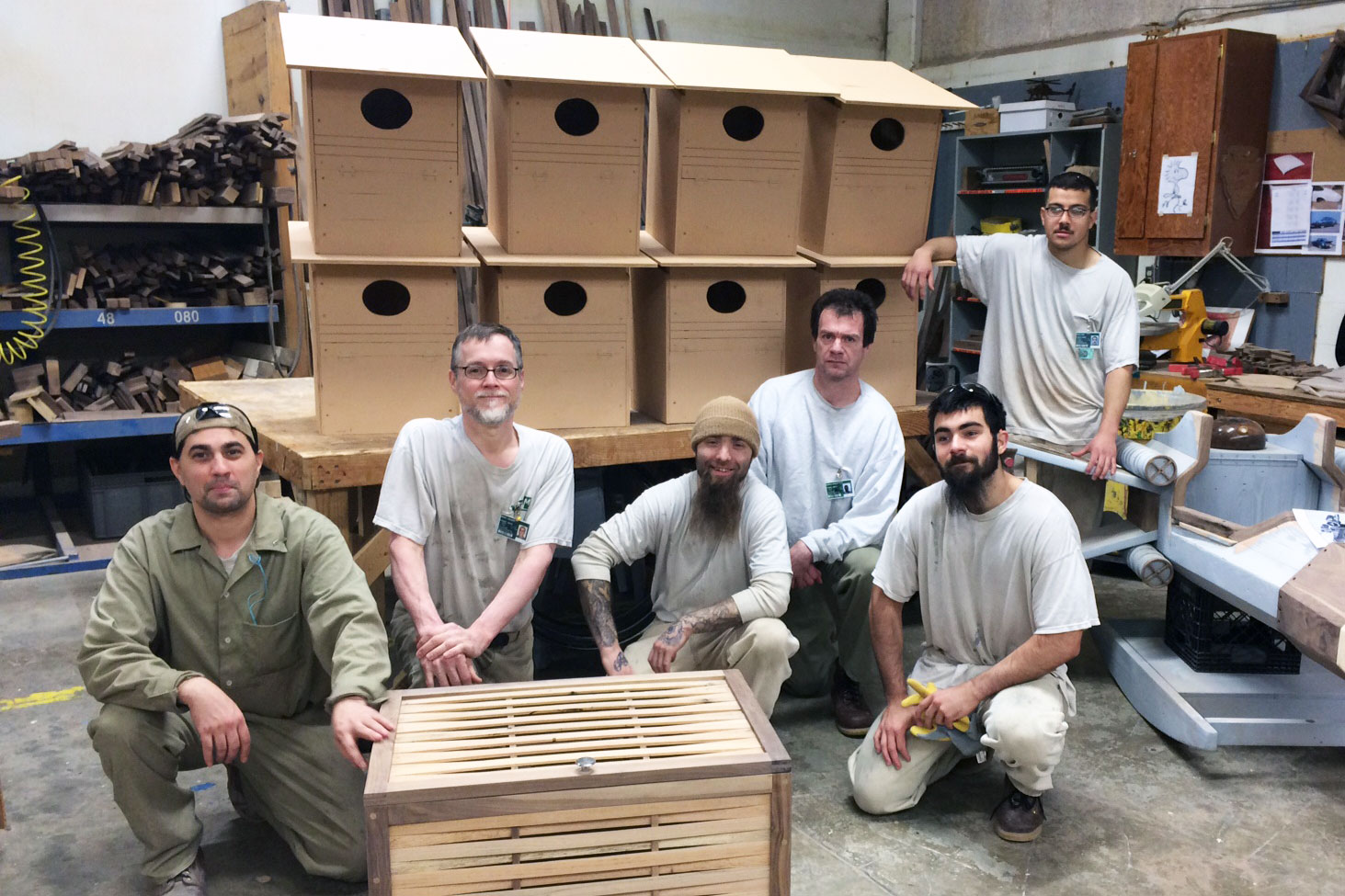
Roy Townsend, Michael Feeney, Robert Beck, Robert Haugen, Luke Andrade, and Jose Ayala pose with the barn owl next boxes they build in the Sustainable Practices Lab. Photo by DOC staff.

Inmates working in the Sustainable Practices Lab at Washington State Penitentiary (WSP) are building owl boxes for the Blue Mountain Audubon. The boxes are installed in vineyards to help with rodent control—a strategy that will benefit viticulturists and owls alike. The boxes are designed to be suitable homes for barn owls. The Blue Mountain Audubon’s Owl Nest Box Project was inspired by the Hungry Owl Project, a non-profit dedicated to reducing the use of toxic rodenticides while promoting owl and wildlife conservation.

Rodenticides can be slow to poison rodents. Poisoned rodents are sluggish and debilitated—easy prey for owls, hawks, eagles, falcons and other wildlife. Consuming contaminated rodents can make predator animals ill and can even result in death.

Barn owls have voracious appetites. Installing barn owl boxes can be a cost effective way to manage a rodent problem without relying on rodenticides, and can support healthy wildlife. According the Hungry Owl website, a single Barn Owl family can consume 3,000 rodents during their 4 month breeding cycle. Barn owls can have multiple clutches a year, raising the total for possible consumed rodents to 6,000 – 9,000 a year per owl box!
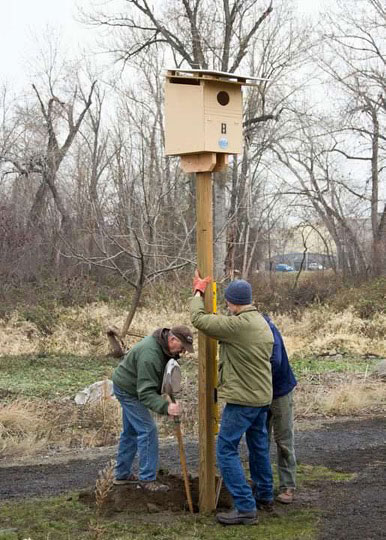
Blue Mountain Audubon installs a barn owl nest box in a Walla Walla area vineyard.

According to WSP Corrections Specialist Chris McGill, the first round of owl boxes built by inmates was “a big hit” and they have received a request for 20 more boxes. This is an excellent example of a collaborative program to benefit people and wildlife. Great work WSP Sustainable Practices Lab!
By Emily Passarelli, SPP Green Track Program Coordinator

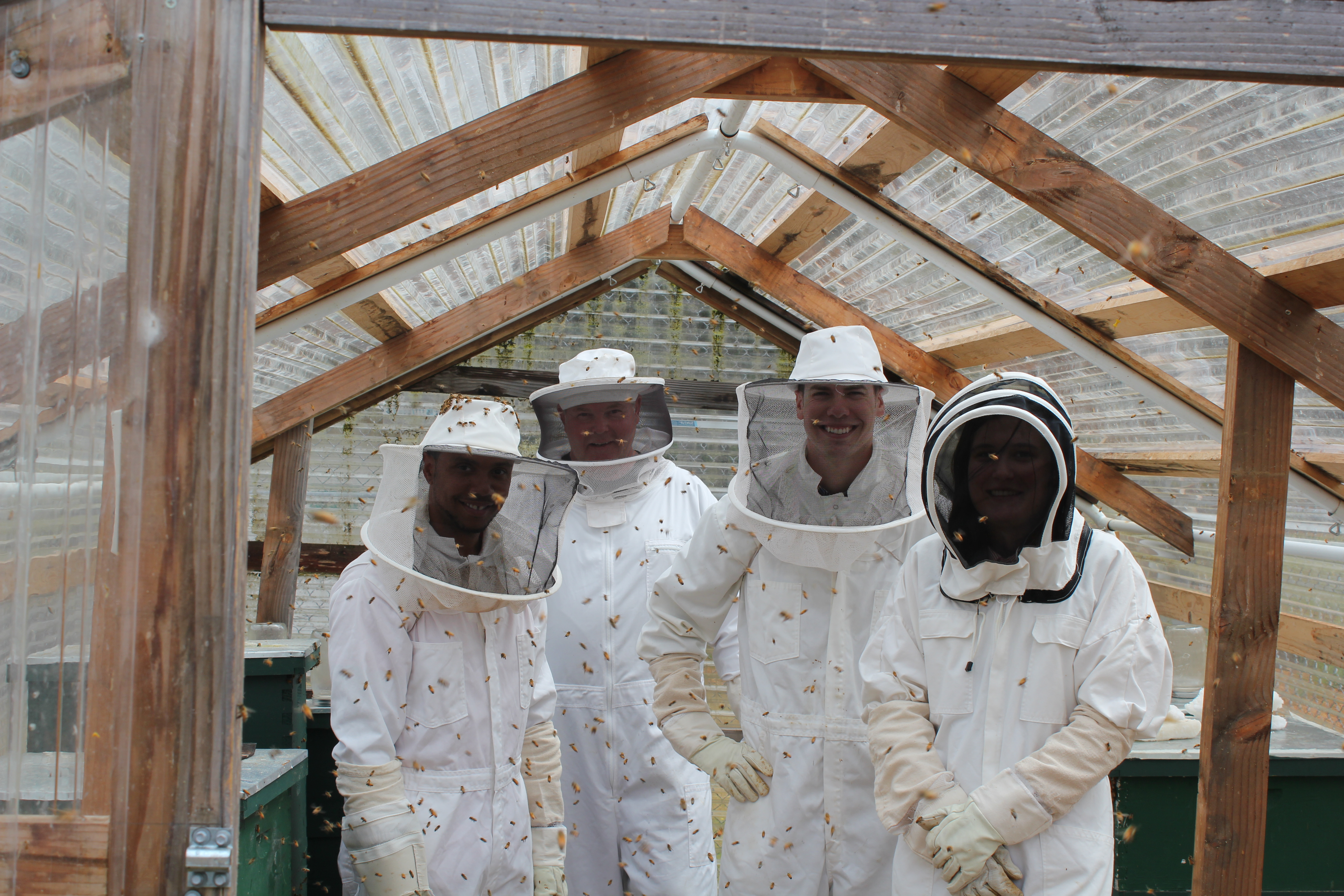
It is with great excitement that I announce: SPP is adding beekeeping certification to our lovely list of programs. Our goal is to bring this program to every prison hosting beekeeping within the next few years. As Green Track Program Coordinator, I have the amazing opportunity to coordinate two programs: beekeeping certification and Roots of Success.

Staff and offender beekeepers take a break to pose for the camera. Photo by SPP.

This beekeeping certification will be a 10-20 hour course taught by a local beekeeping volunteers. Inmates and DOC staff will earn the title of “Apprentice.” If they find that beekeeping is their calling, they have the opportunity to advance to “Journeyman.” If they’re REALLY dedicated they can even advance up to “Master” (though there are only 6 Masters in the entire state of Washington!). This class will be a spectacular opportunity for hands-on experience in a green jobs field. It will also be a great way for our prisons to do more for honeybee conservation. We hope that this certification program will give a chance for everyone interested to learn about bees and their amazing life stories. To learn more about these amazing creatures check out Joslyn Trivett’s recent blog or our new beekeeping page!

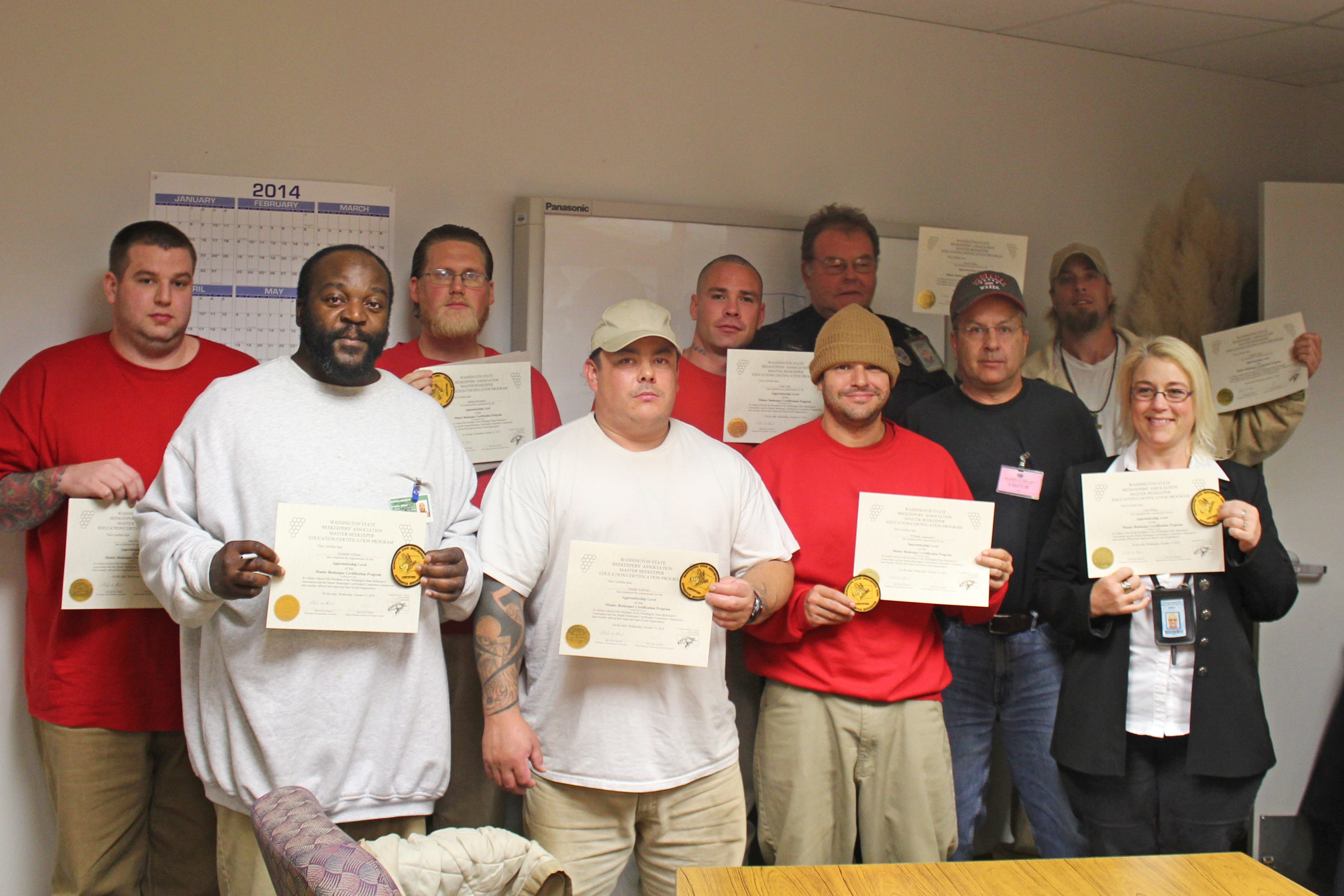
We have already had two graduating classes at Cedar Creek Corrections Center. That’s almost 45 graduates! Prisons next in line to bring in beekeeping certification are SCCC, WCCW, MCC, WSP, CRCC, and AHCC. We cannot wait to see what the future has in store for our partnerships with bees!

A graduating class of newly certified beekeepers. Photo by SPP Staff.
SPP feels very positively about work with honeybees in prisons. Photo by SPP staff.

by Joslyn Rose Trivett, SPP Network Manager

After months of pre-meetings and scheduling, Clallam Bay Corrections Center (CBCC) hosted two days of Action Planning: deciding next steps to expand SPP programs at the prison. The event brought together many great minds and stakeholders: the Director of Prisons Steve Sinclair, prison Superintendent Ronald Hayes, the well-stocked Sustainability Committee, visiting experts on beekeeping, rainwater catchment, and the Makah tribe, SPP managers, and Capitol Programs staff from Headquarters. We were there to plan for two or three new sustainability initiatives.

There was no shortage of excellent ideas in the room. We explored the merits of many, many programs and strategies. Narrowing our focus was a real challenge—so many contenders, so many promising avenues toward sustainability, how to pick which are the very best?

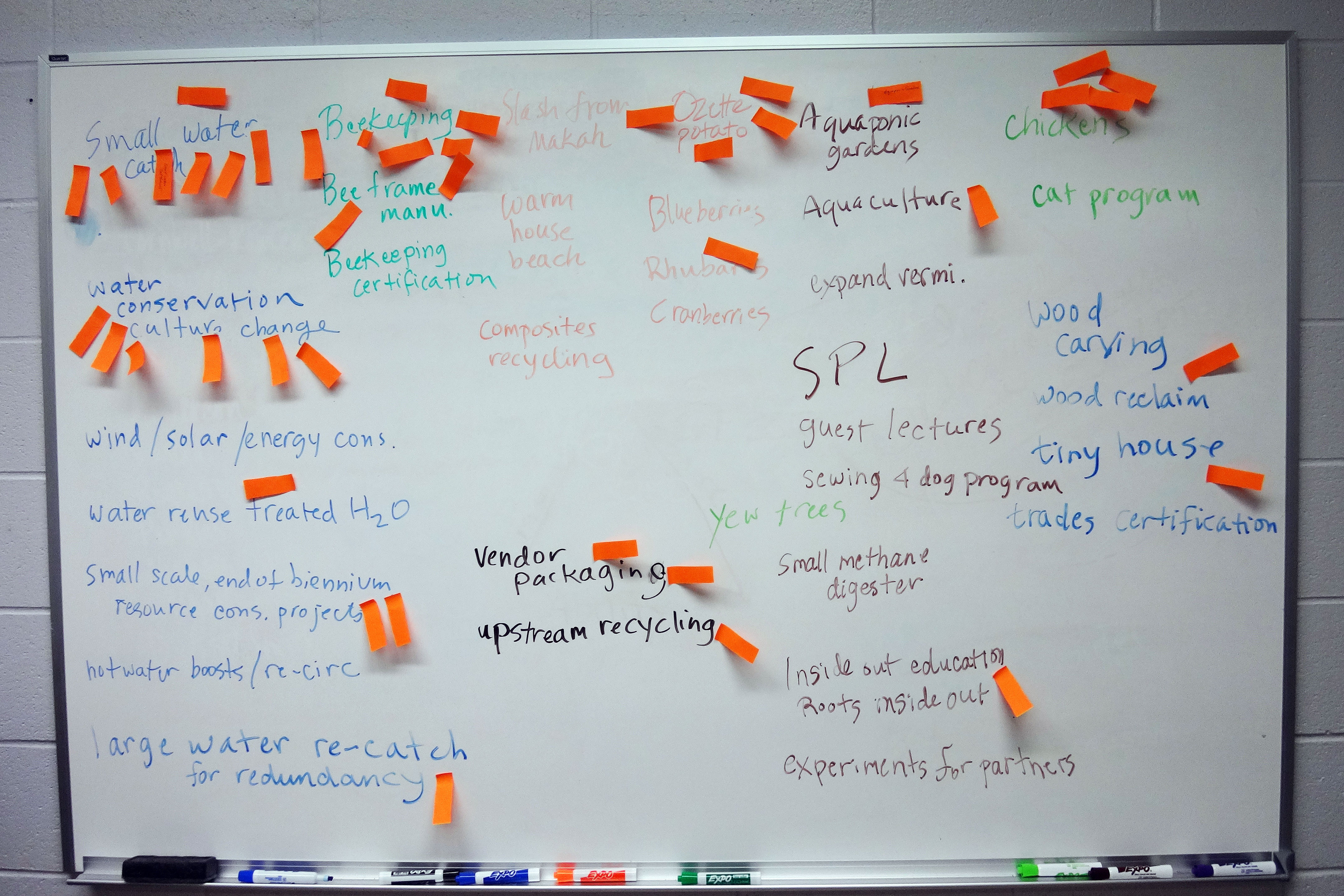
At the end of Day 1, we held a vote, and it was a relief to see a few clear winners emerge.

Officer-Buttram-makes-a-point
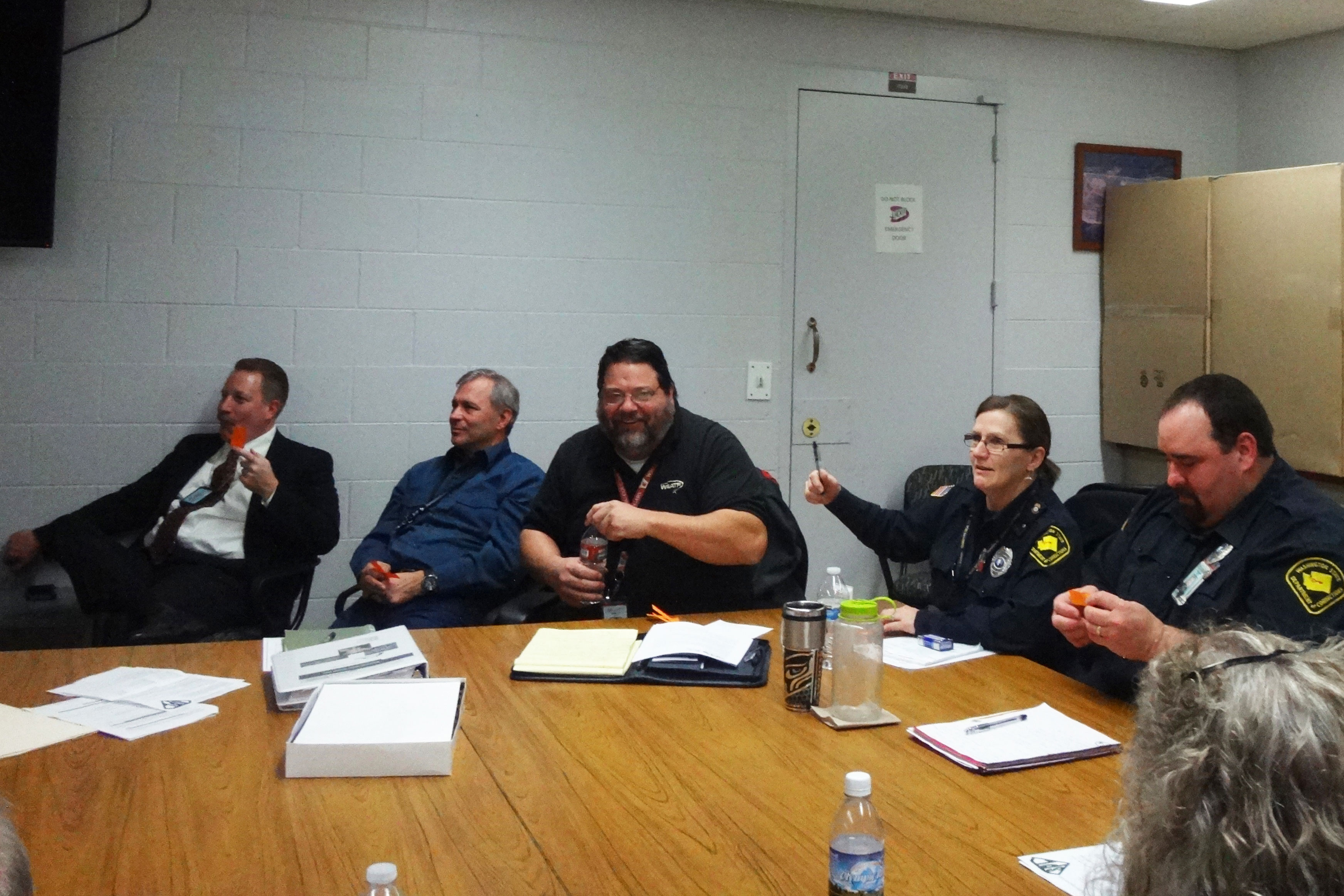
After a day of good-natured debate over CBCC’s sustainability priorities, the group gets ready to vote.
CBCC-vote
When the votes were cast, the clear winners were water conservation/culture change and beekeeping.

Culture change through water conservation

The top choice was a hybrid focus: water conservation and culture change. At a prison where it rains 95 inches a year (that’s really wet), and pulls water from a salmon-bearing stream, the group was determined to use less tap water and catch more rainwater. Promoting these changes seemed an ideal way to promote sustainable choices in general.

To achieve this goal, we decided on several action items, including:

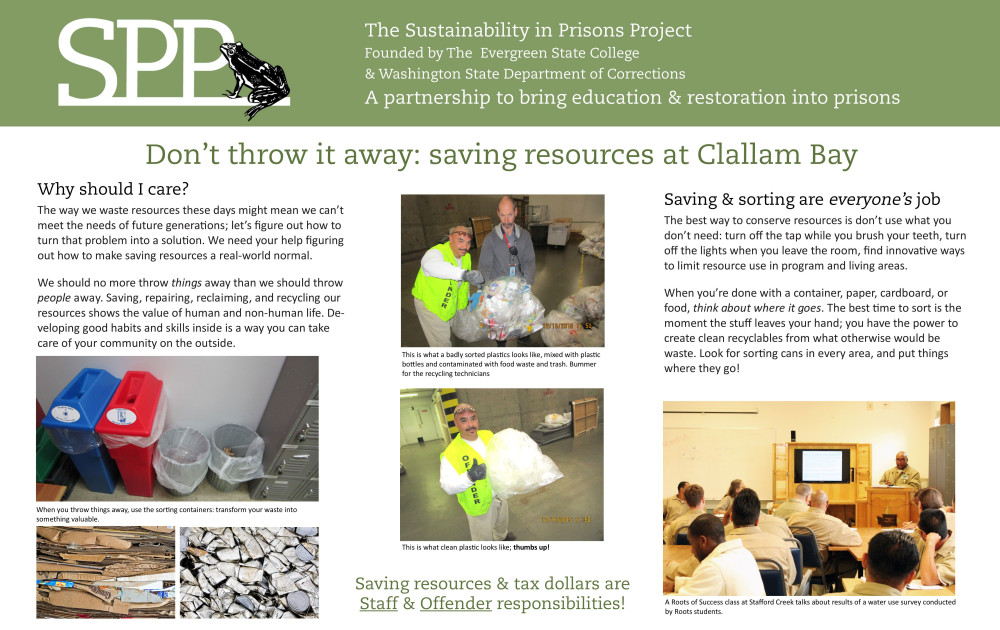
  • create posters to display throughout the facility (see example below)
  • publish and distribute sustainability newsletters, with versions for inmates and staff
  • in each housing unit, hold Town Hall sustainability meetings
CBCC-SPP-resources-offender-version
This poster promotes saving resources at the prison, with an inmate audience in mind; the version for staff is slightly different.

Beekeeping

The other winner was beekeeping—all agreed that a honeybee program could bring numerous rewards to the prison. Corrections staff and inmates could gain recognized education and certification. In-prison beekeepers could enjoy calming, meditative work with the hives. The hives could contribute healthy bees to pollinate the prison’s organic gardens and bolster local honeybee population. All involved could help build the international effort to restore the pollinators on which we depend.

We settled on these actions to bring beekeeping to CBCC:

  • Create beekeeping posters
  • Write and submit a proposal to the prison Captain, identifying planned costs, siting, and safety protocol
  • Consult with the North Olympic Peninsula Beekeepers on how best to offer certification program at the prison

All in all, we were impressed by how much we were able to plan in two days. The actions taken since also attest to Action Planning’s worth: we have been busy as bees turning those plans into reality.


by Kelli Bush, SPP Program Manager

From left to right, a WDFW biologist, SPP program coordinator Sadie Gilliom, and two new turtle technicians, discuss how to biologist how to care for a western pond turtle. Photo by Kelli Bush.
WDFW Biologist Stefani Bergh, Facilities Manager Terry Hettinger, and the new turtle technicians discuss how to care for western pond turtles at Larch Corrections Center. Photo by Carl Elliott.

It has been an exciting year at Larch Corrections Center (LCC) as two new SPP conservation programs have been established at the minimum security prison located east of Vancouver, WA. Prison staff and leadership have been excellent partners—they worked quickly to create a new turtle lab and build plantain beds, and have been great collaborators and communicators.

Turtles

The first new program involves work with state-endangered western pond turtles (Actinemys marmorata), that builds on the success of the turtle program at Cedar Creek Corrections Center. Washington Department of Fish and Wildlife biologists have been finding turtles in the wild afflicted with a shell disease. Sick reptiles are transferred from the wild to the Oregon Zoo to receive acute veterinary care. After initial treatment, turtles are transported to LCC to receive extended care and monitoring. Inmate technicians are providing excellent care. Once recovered, turtles will be returned to the wild. Currently Larch Corrections Center is caring for eight turtles which will likely be released late March or early April.

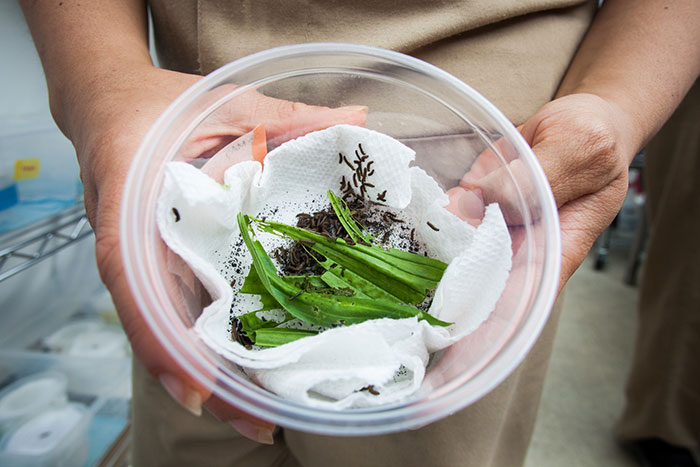
Taylor's checkerspot butterfly caterpillars munch on plantain at SPP's butterfly rearing program at Mission Creek Corrections Center. Photo by Benj Drummond and Sara Joy Steele.
Taylor’s checkerspot butterfly caterpillars munch on plantain at SPP’s butterfly rearing program at Mission Creek Corrections Center. Photo by Benj Drummond and Sara Joy Steele.

Plantain for butterflies

SPP and LCC have also teamed up with the Oregon Zoo to grow narrow leaf plantain (Plantago lanceolata). This plant is a critical food source for federally-endangered Taylor’s checkerspot butterflies (Euphydryas editha taylori) which are being reared at the Oregon Zoo and at Mission Creek Corrections Center for Women. LCC is growing about 3,500 plants to feed rapidly growing butterfly larvae at the Oregon Zoo. One to two times per week, inmate technicians will harvest leaves from plantain plants grown in 10 raised bed gardens at LCC.

We are so pleased to collaborate with the fabulous folks at Oregon Zoo, Washington Department of Fish and Wildlife and others to bring these programs to LCC!


by Joslyn Rose Trivett, SPP Network Manager

I am dangerously allergic to yellowjacket stings. I have been stung by yellowjackets many times, and I fear and avoid them.

As a good ecologist, I know that honeybees are very different than yellowjackets, but I still wanted to stay away from them. Even the thought of bees, wasps, and hornets has been enough to scare me. I tolerated SPP’s honeybee programs because I supported them in principle, but never wanted too get too close.

A few weeks ago, I suddenly realized that I’ve changed: I have learned to love honeybees. It happened by accident—I didn’t set out to change my mind, but changed it is!

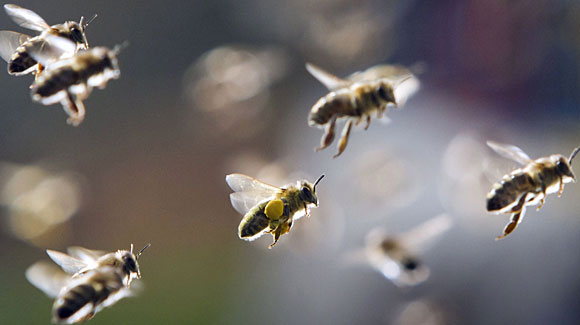
I love this photo of bees in flight; on some of them, you can clearly see their "baskets" full of pollen on their rear legs. Image from organizedchaos.com.
I love this photo of bees in flight; on the central bee, you can clearly see one of her “baskets” full of pollen. Image from organizedchaos.com.

I think the shift started last summer, working on King 5’s story on beekeeping. Mr. Anglemeyer, Mr. Boyson, and Officer Epling’s enthusiasm and praise for the program must have been infectious. It was also the first time I met Laurie Pyne of the Olympia Beekeepers Association, and she radiates excitement about honeybees. Last fall, her guest lecture on honeybees had my rapt attention, and I memorized parts of her presentation without even trying.

Also during recent months, we have heard more and more beekeeping interest from prison staff and inmates. Cedar Creek has graduated their second class of Apprentice Beekeepers. Stafford Creek Corrections Center, Washington Corrections Center for Women, and the Penitentiary also have hives. For the prisons that don’t have honeybees yet, we keep hearing that they want them: Clallam Bay Corrections Center, Airway Heights, Coyote Ridge, and Washington Corrections Center all want honeybees too…time for me to get with the program! Luckily, seems I already have.

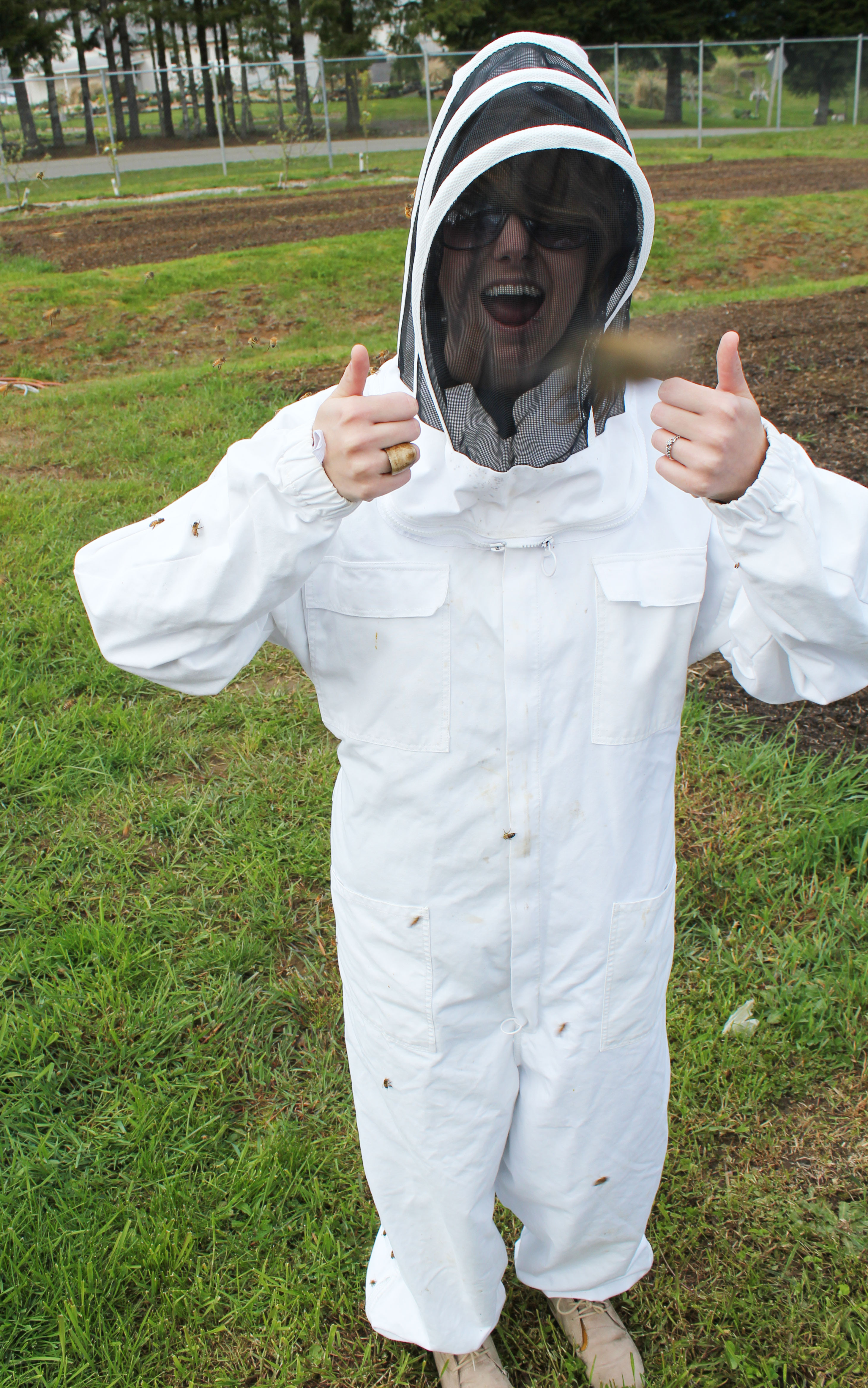
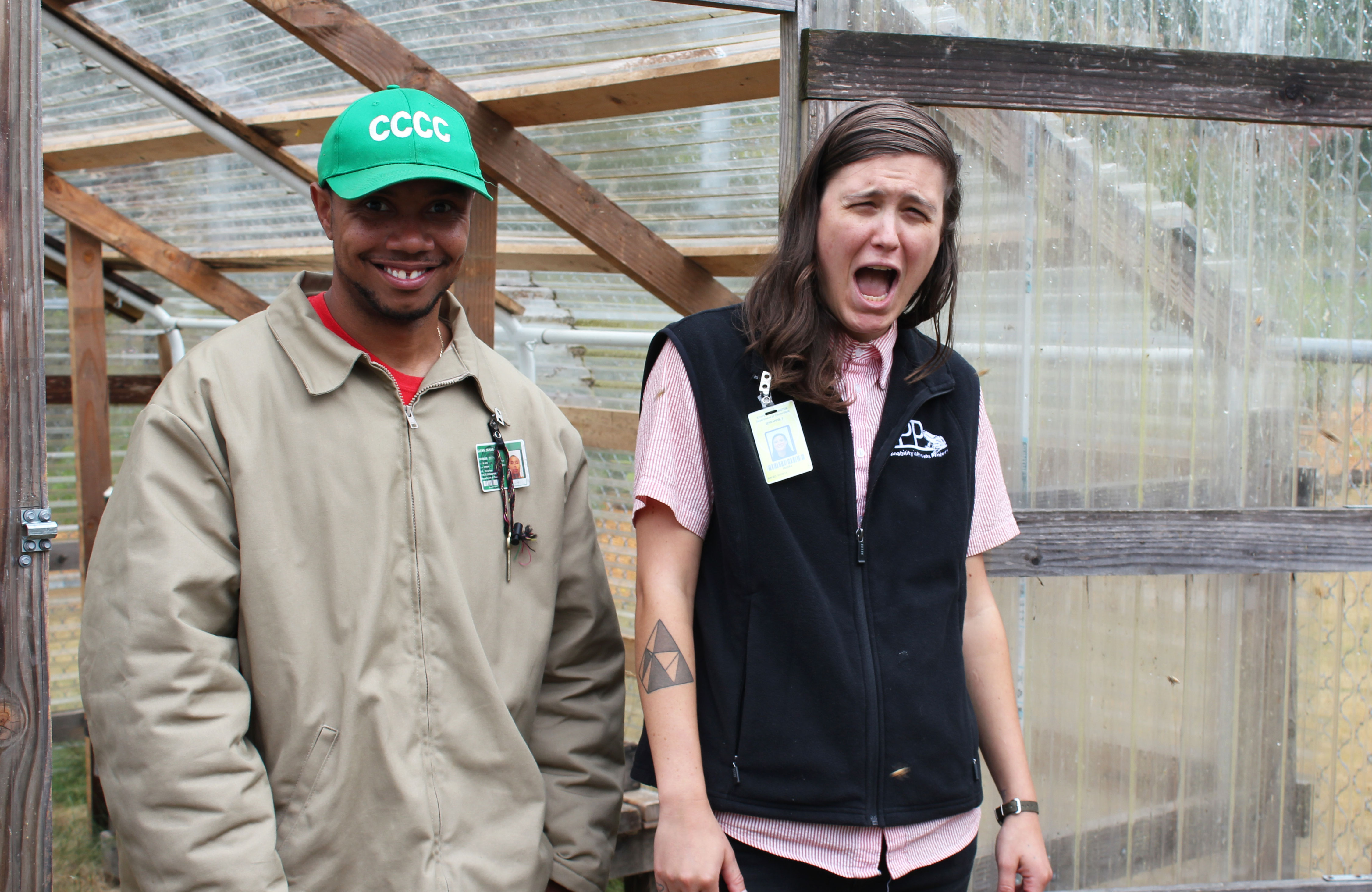
If I stood right next to a hive, I might still feel like screaming.

Fiona-freaking-out
Jamar Glenn and Fiona Edwards stand among honeybees flying to and from their hives. Photo by SPP staff.

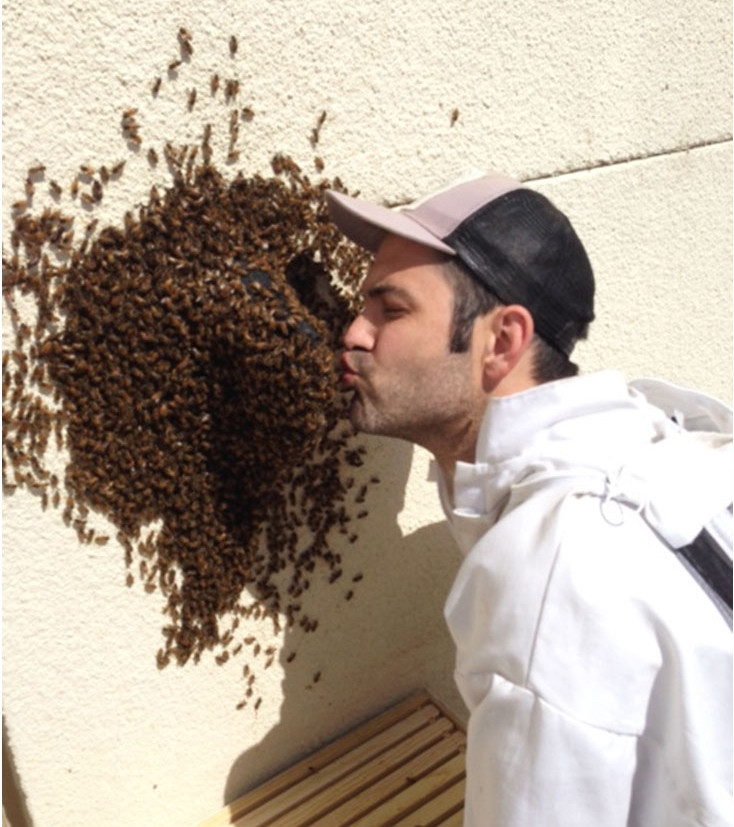
But it seems more likely that I would feel like this:

WSP-bee-kiss
A beekeeper at Washington State Penitentiary shows his love for a honeybee swarm. Photo by DOC staff.

Thanks for being patient with me, honeybees. I’m your new biggest fan.