By Graduate Research Associate Evan Hayduk
Basic information:
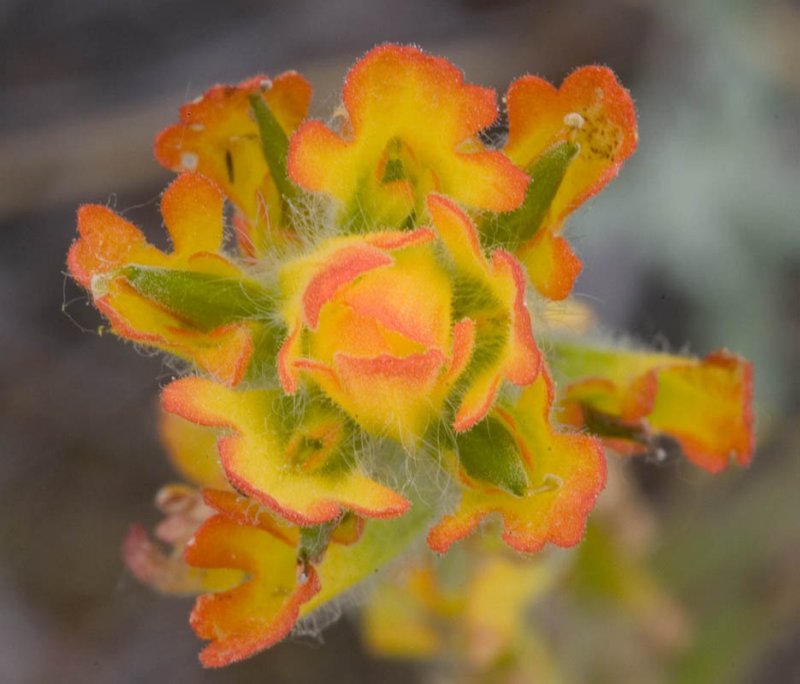
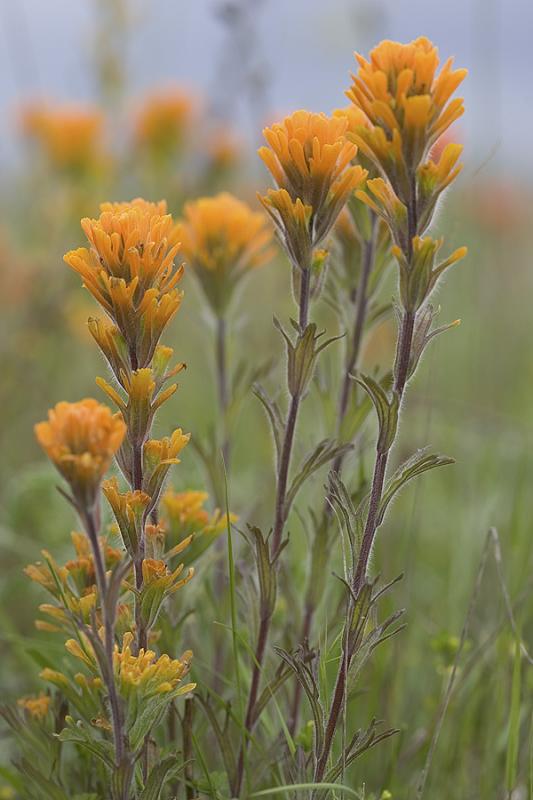
Castilleja hispida, or harsh Indian paintbrush, grows in a cluster from a woody perennial base with many fine hairs throughout. Its leaves are lance-shaped, and the upper stem may be divided into shallow lobes. Flowers are greenish, but are partially covered by bracts of bright scarlet, yellow, or orange. It grows best in dry openings in forests and meadows, from the coast to high elevations. Locally common, it flowers in the early summer.
Ecological Importance:
Castilleja hispida is an important larval host for Taylor’s checkerspot (Euphydryas editha taylori) butterflies, state listed as endangered and a candidate for federal listing. In February, SPP will begin a captive rearing program for Taylor’s checkerspot butterflies at Mission Creek Correctional Center for Women (MCCCW). Inmates at MCCCW, along with SPP graduate research associate Dennis Aubrey, have been preparing by raising a surrogate species. The painted lady (Vanessa cardui) butterflies have been successfully bred in facilities at MCCCW and The Evergreen State College over the last six months.
An interesting and potentially important relationship between Castilleja hispida, Taylor’s checkerspot butterflies and gophers has been witnessed. Some paintbrush specimens at the Artillery Impact Area (AIA) have been found fresh and green well after the majority of the population has senesced on Joint Base Lewis McChord (JBLM) prairies. Currently, the only remaining population of Taylor’s checkerspot butterflies on JBLM is also found on the AIA. It is hypothesized that these persistent blooming paintbrush specimens may be atop gopher or mole mounds, which create enough of a microclimate to lengthen flowering time. This factor, along with other reasons such as frequent fires from artillery exercises may help to explain the long-term persistence of Taylor’s checkerspot butterflies on the JBLM prairies.
Fun Facts:
Similar to other Castilleja species, harsh paintbrush is hemiparasitic, which means it’s parasitic under natural conditions but is also photosynthetic. It may just obtain water, mineral nutrients, or organic nutrients from the host plant. Although it does not always require a host plant, it may grow better with a host, such as Roemer’s fescue (Festuca roemeri).