

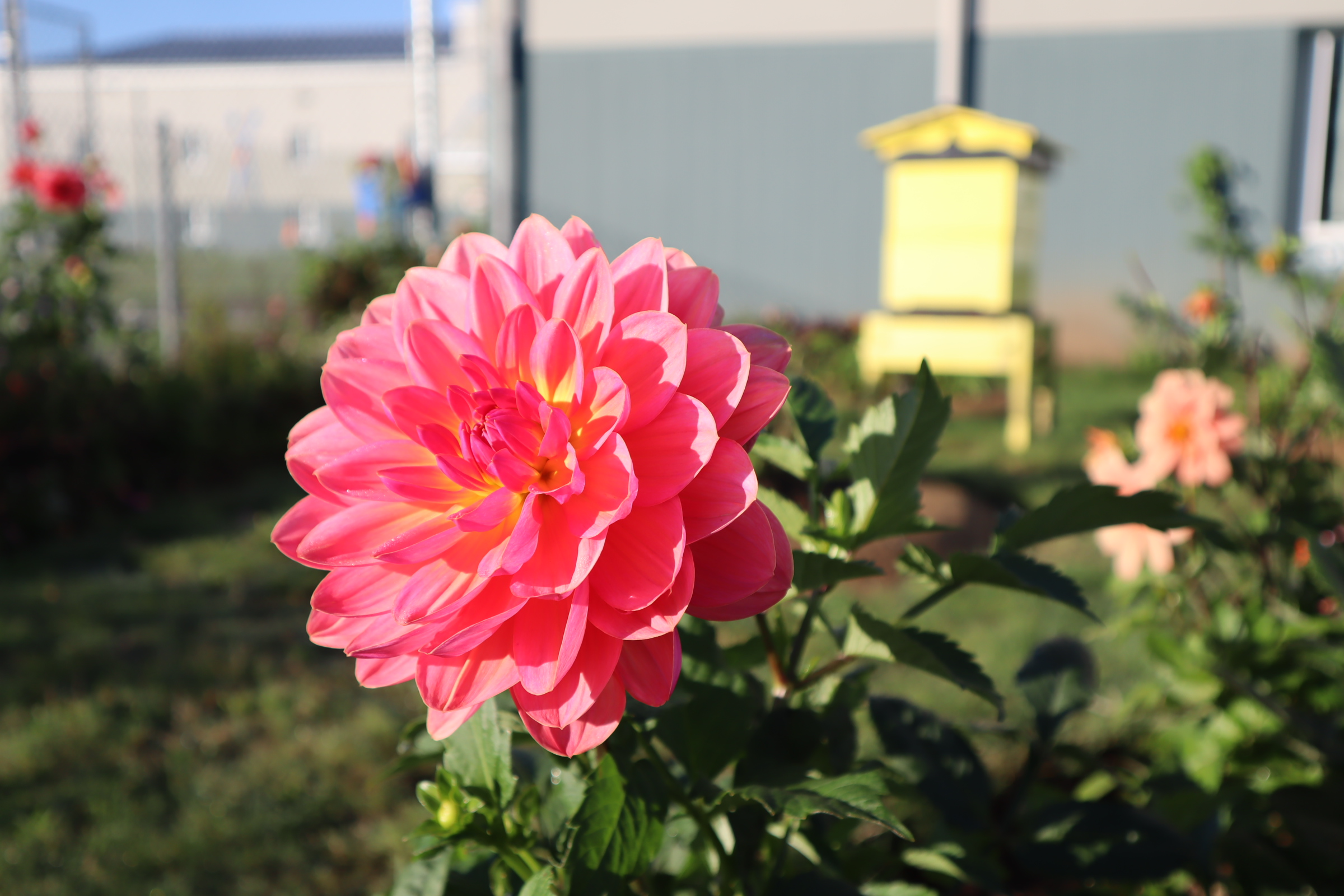
lmost all facilities have flower gardens that beautify the area and bring contact with nature inside. Photo by Emily Passarelli.
Restorative Nature & Sustainable Living
The composting program housed by the Washington Corrections Center (WCC) is like none other. The program was originally founded at the Washington State Reformatory Unit (WRSU) at Monroe Correctional Complex in 2010 by two men incarcerated in the unit. Fifteen years later, the program has moved, but has continued to grow and partner with multiple non-profits and schools. The program is internationally recognized as a model and is still led and operated by incarcerated technicians and teaching assistants.
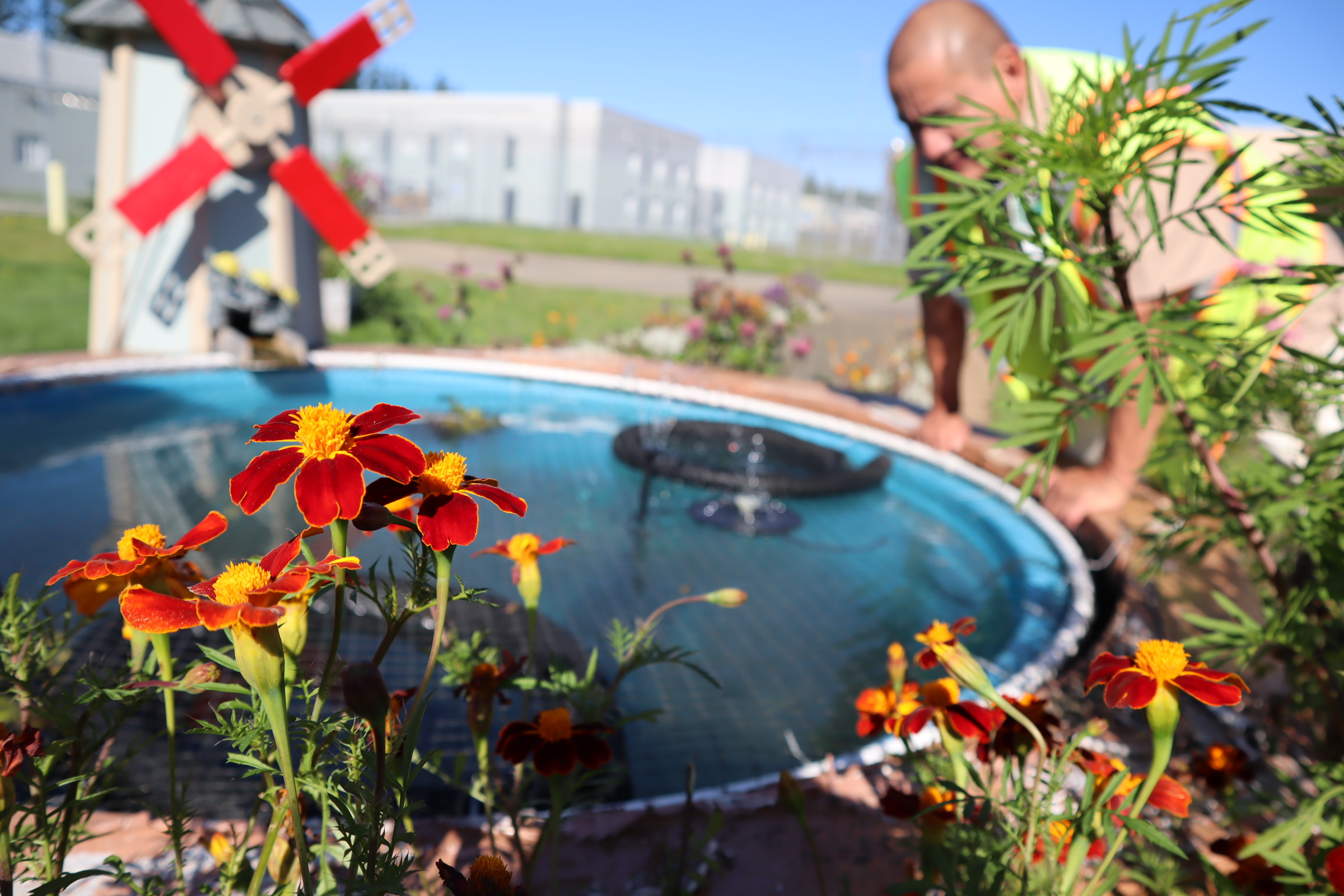
A gardener checks on the koi fish pond at Stafford Creek. Photo by Emily Passarelli.
Restorative Nature & Sustainable Living Highlights

A collage of facility gardens, indoor house plants, and SCCC’s koi fish pond. Photos by Emily Passarelli.
Restorative Nature & Sustainable Living
SPP aims to bring nature inside prisons for the numerous benefits it can provide for people living and working in prisons. Benefits can include stress relief and the enhanced well-being of human and non-human organisms. Research demonstrates that incorporating nature into institutional and urban environments positively impacts mental and emotional health. Specifically, Nalini Nadkarni’s Nature Imagery in Prisons Project revealed that even indirect exposure to nature through videos has a therapeutic effect on incarcerated people and staff. Both incarcerated and staff partners consistently recognize SPP’s programs for their therapeutic values, ability to support well-being, and connections to nature within the prison environment.
While all SPP programs are intended to offer positive contact with nature, the initiatives detailed here include enjoying nature and/or providing wildlife habitat as their primary functions. The following table aims to represent the status of various initiatives reported to us by WA Corrections.
Composting with Bugs

Incarcerated technicians at MCC poses with the worm bins. Photo by Erica Benoit.
The Washington Way
The Washington Way (WA Way) is a partnership between the Washington State Department of Corrections (DOC) and Amend at the University of California, San Francisco. It introduces a health-centered approach to transforming correctional culture within Washington’s prison facilities and Reentry Centers. The Washington Way focuses on sustaining and expanding culture change efforts in partnership with frontline staff and incarcerated people to improve overall health and well-being. Achieving sustainable, widespread cultural transformation requires multiple interventions. The Washington Way offers staff-centered models, such as Resource/Activity Teams, Contact Officers, and Change Agents, to equip staff with the tools and resources needed to drive meaningful change. These models can often lead to ideas for projects that align with the SPP mission.
A key example of this alignment is grounded in the principle of normality, the idea that life inside prison should resemble life outside as much as possible to reduce the harms of institutionalization on both staff and incarcerated people. Research consistently shows that workplaces and living environments that incorporate nature are better equipped to support the well-being and health of those within them.
Two technicians take a moment in the WCC SPL area. Photo by Emily Passarelli.
Restorative Nature & Sustainable Living Highlights
Chickens
Status & Highlights
- 3 chickens are thriving at MCCCW.
- They are very well taken care of and are checked on and cared for daily.
- They are very loved and happy hens!
Chickens
Status & Highlights
WCC now has 70 chickens that are fed un-processed food waste, processed food waste (Bokashi), and black solider flies. 42 chickens live in the SPL and the other 28 live outside the perimeter in the second compost area. WCC started using an incubator and have been hatching batches of chickens to replenish the flocks.
Flower gardens
Status & Highlights
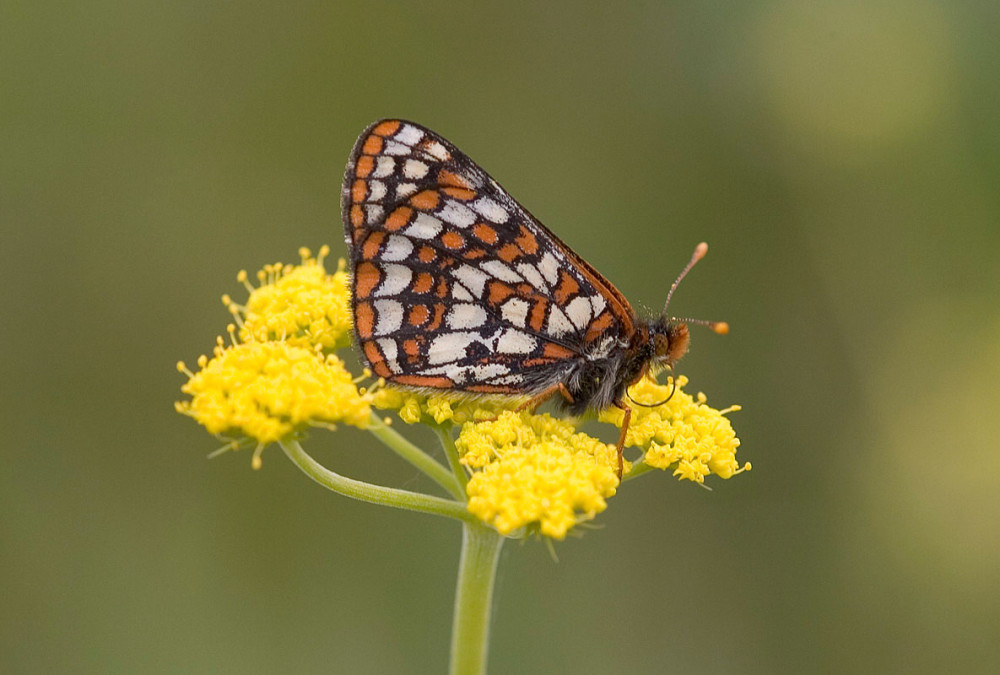
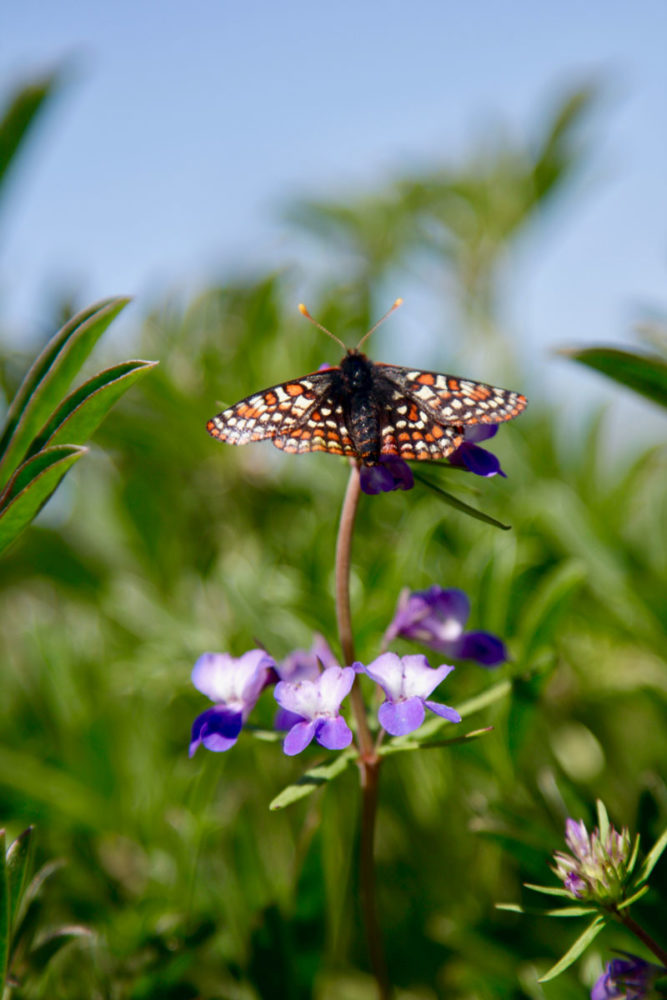
Olympic College’s Horticulture program planted a flower garden next to the bee hives and planted the grounds with approximately 7,000 annuals, perennials, and herbs to encourage pollinators.
Flower gardens
Status & Highlights
Flower beds continue to be well maintained.
Flower gardens
Status & Highlights
This is an annual undertaking to plant all the flower beds inside the facilities, Cedar Hall, Evergreen, and Pine Hall. Any excess seedlings were donated to the Food Banks.
Flower gardens
Status & Highlights
Flower gardens were well-maintained and planted with perennials, butterfly bushes, lavender, and lupin.
Flower gardens
Status & Highlights
Gardens at MSU were planted during 2024. Rabbits continue to be an issue.
Gardens
Status & Highlights
Added beautiful flowers to the gardens for pollinators and beautification.
Heritage and flower gardens
Status & Highlights
Gardens are doing amazing and are enjoyed by the population. This year CRCC expanded the Heritage Gardens to minimum security living units. CRCC plans to expand the Heritage Gardens to the medium units.
House plants
Status & Highlights
586 house plants were distributed or donated.
Land restoration
Status & Highlights
Land restoration area thriving and looking beautiful.
Lifer garden
Status & Highlights
The Lifer Garden crew has been working on propagating flowers to provide support for pollinators.
Nature imagery
Status & Highlights
Nature imagery rooms are available for use in the SOU Core Units.
Nature imagery
Status & Highlights
Nature imagery rooms are available for use in the SMU Unit.
Pollinator plantings
Status & Highlights
The apiary was improved with many pollinator-friendly plants and bricks made from clay in the soil. The new dog enclosure is surrounded by new beautiful plants.
Pollinator plantings
Status & Highlights
In 2024, the main greenhouse successfully supplied over 5,000 plant starts, further enriching the flower gardens and promoting the health of the local bee population. This multifaceted approach not only beautifies our surroundings but also supports sustainability and rehabilitation efforts within the community.
Pollinator plantings
Status & Highlights
Continued the Beautification Project started in the summer of 2023, as funds allowed. Purchased more plants and focused on getting pollinator plants both inside and outside of the facility.
Pollinator-friendly flowers
Status & Highlights
Used cover crops to benefit pollinators. Most flowers and bushes planted in 2024 were for the bees and other pollinators.
Pond
Status & Highlights
Installed a new koi fishpond with picnic benches to enjoy the gardens.
Water features
Status & Highlights
1 living unit has a fishpond; the other has a fountain and basin.


Once a year, SPP reports on all things sustainable happening in Washington State Prisons.