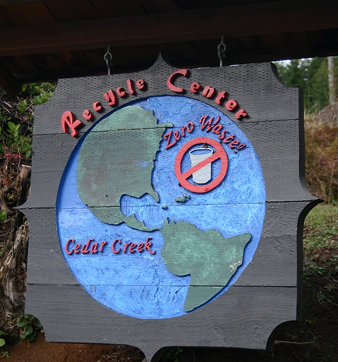
Cedar Creek's Recycle Center sign — a handcrafted globe with a "Zero Waste" seal, marking the facility's long-running commitment to sustainable waste management. A small piece of art with a big message: nothing goes to waste at Cedar Creek.


Our History
How the Sustainability in Prisons Project Began
The Sustainability in Prisons Project (SPP) began in 2003 as a small collaboration between faculty at The Evergreen State College and staff at the Washington State Department of Corrections. What started as a classroom idea quickly grew into hands-on sustainability programs inside prisons.
From the beginning, the goal was simple: bring science, education, and environmental stewardship into correctional facilities in ways that benefit incarcerated people, staff, and the broader community.
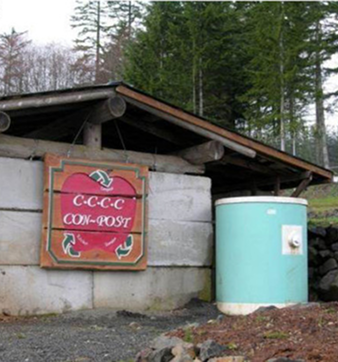
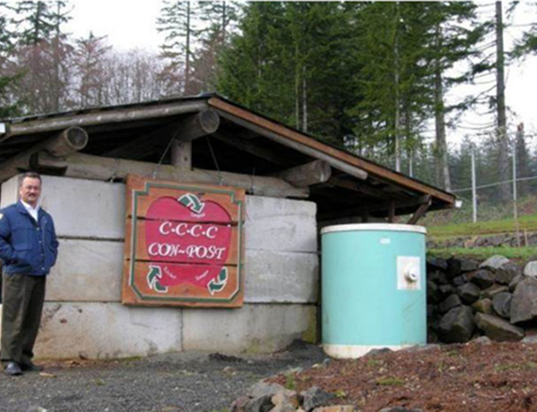
Superintendent Dan Pacholke built a compost facility and water catchment with spare materials at Cedar Creek Corrections Center. He didn’t realize he also was building a new way to think about sustainability and prisons. Photo by WA Corrections staff.
2003–2005
Early Foundations
SPP began with pilot programs focused on environmental education and Sustainable Operations. Early efforts showed that incarcerated people were eager to learn scientific skills and contribute positively to their communities.
These initial successes demonstrated that sustainability programs could thrive in correctional settings and laid the groundwork for long-term collaboration between corrections, higher education, and community partners.
Superintendent Dan Pacholke built a compost facility and water catchment with spare materials at Cedar Creek Corrections Center. He didn’t realize he also was building a new way to think about sustainability and prisons. Photo by WA Corrections staff.
1
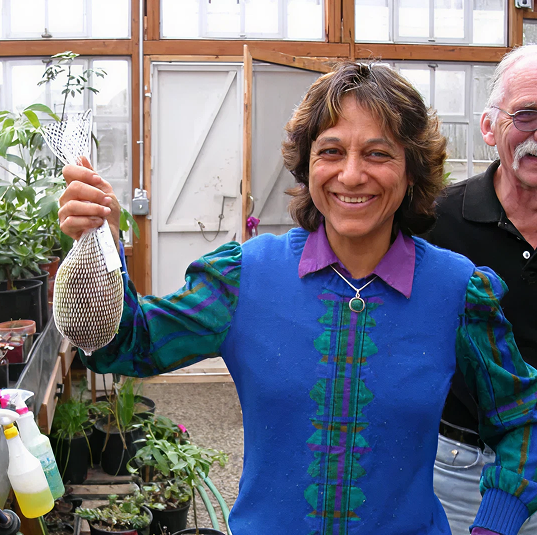
Dr. Nalini Nadkarni shows off a bag of moss in the Cedar Creek greenhouse, 2004. Raymond Price stands behind her in the photo and figuratively as well: he volunteered his time to ensure that the new programs operated day to day. Photo by SPP staff.
2
2006–2010
Growing Programs & Partnerships
As interest grew, SPP expanded into additional Washington state prisons. Programs began to include:
- Gardening and food production
- Composting and waste reduction
- Environmental science education
- Ecological Conservation and habitat restoration
Partnerships with scientists, nonprofits, and community organizations became essential, helping programs grow in scale and impact.
2011–2015
Statewide Expansion
During this period, SPP became a recognized statewide program. More facilities joined, and programs became more structured and diverse. Ecological Conservation initiatives, including species recovery and pollinator projects, gained national attention.
SPP also expanded its educational offerings, allowing incarcerated participants to earn college credit and gain real-world skills.
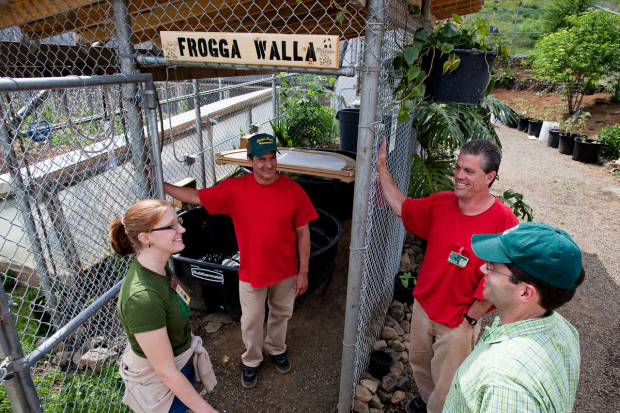
Partners in SPP’s Oregon spotted frog rearing program converse at the entrance to Frogga Walla, the rearing facility. Photo by Benj Drummond.
3
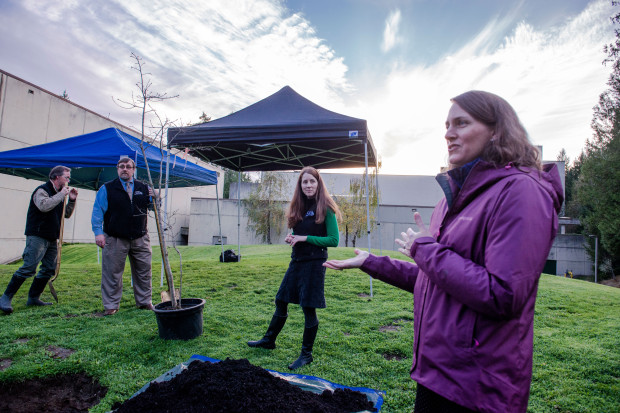
Then-SPP Co-Director Dr. Carri LeRoy speaks at the ten year celebration at The Evergreen State College in 2013; Oregon white oaks were planted both at Evergreen and at Cedar Creek Corrections Center to recognize SPP’s founding partnership. Photo by Danielle Winder.
4
2016–2020
Strengthening Impact
By this time, SPP programs were active in nearly every Washington state prison. The focus shifted toward:
- Deepening educational outcomes
- Strengthening community partnerships
- Strengthening community partnerships
Programs consistently demonstrated benefits for environmental health, institutional culture, and individual growth.
2016–2025
Providing College Credit and Global Consulting
During this period, SPP became a recognized statewide program. More facilities joined, and programs became more structured and diverse. Ecological Conservation initiatives, including species recovery and pollinator projects, gained national and international attention.
SPP also expanded its educational offerings, allowing incarcerated participants to earn college credit and gain real-world skills.
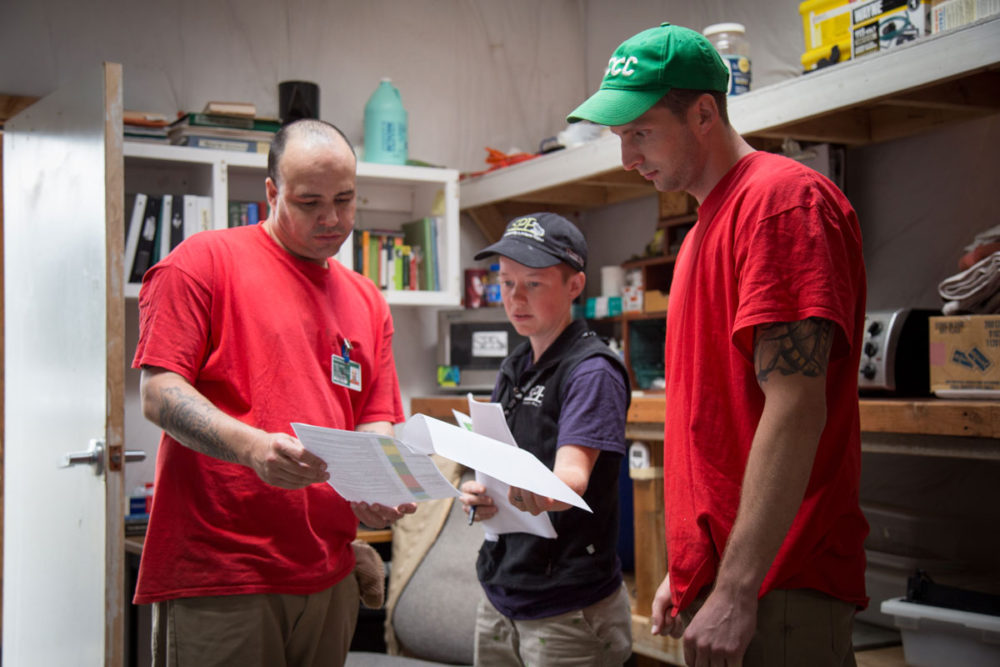
Turtle technicians and program coordinator discuss their work at Cedar Creek Corrections Center. Photo by Ricky Osborne.
5
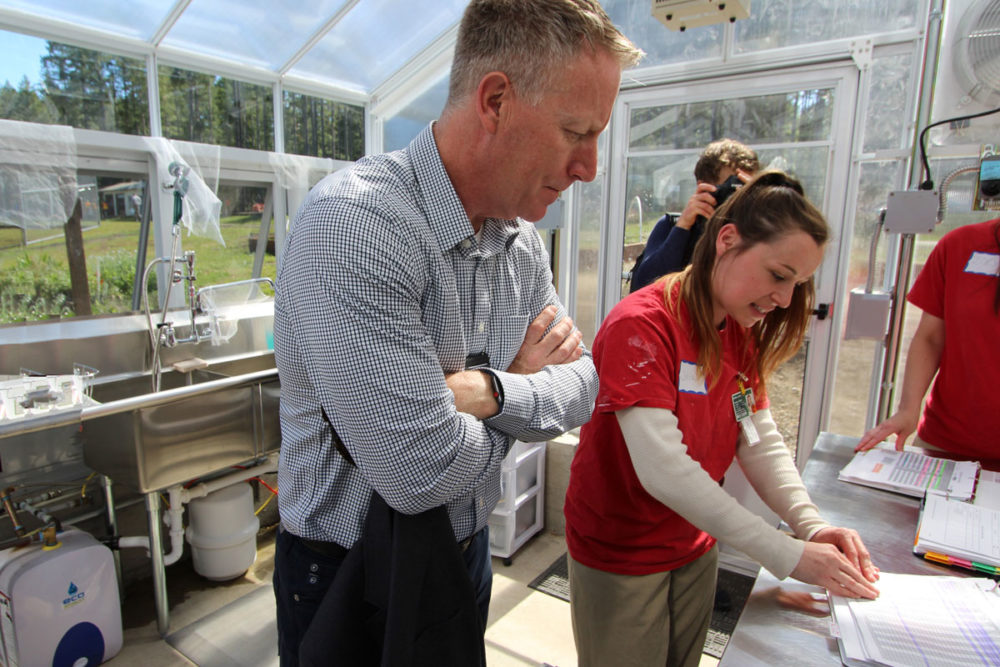
Butterfly Technician Julia Bonsell explains data collection to WA Corrections Secretary Steve Sinclair. Photo by Joslyn Rose Trivett.
6
2026 - Present
Looking to the Future
By this time, SPP programs were active in nearly every Washington state prison. The focus shifted toward:
- Deepening educational outcomes
- Strengthening community partnerships
- Measuring environmental and social impact
Programs consistently demonstrated benefits for environmental health, institutional culture, and individual growth.



Once a year, SPP reports on all things sustainable happening in Washington State Prisons.