Prairie Ecological Conservation
Nursery Programs
The Salish Lowland Ecological Conservation Nursery Technician program provides interdisciplinary academic and vocational education centered on conservation ecology in Salish lowland prairie ecosystems. Concepts in plant propagation, nursery anagement, conservation biology, restoration ecology and federal and state environmental policies are examined. Students explore topics and concepts through readings, participation in seminars, hands-on workshops, presentations, and writing assignments. Students have the opportunity to work towards three credit bearing milestones: Salish Lowland Ecological Conservation Nursery Technician (18 credits), Salish Lowland Ecological Conservation Nursery Ecological Practicum (8 credits), and Advanced Topics (9 credit).
Program Partners



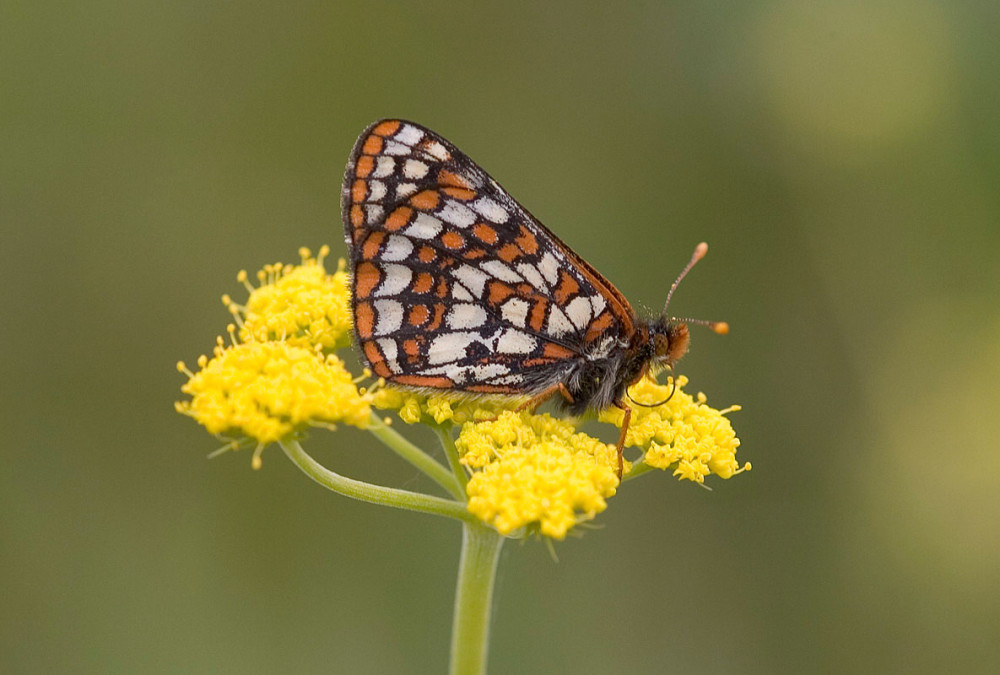
A Taylor's checkerspot butterfly sits on a Lomatium flower on a Puget Lowland Prairie. Photo by Rod Gilbert.
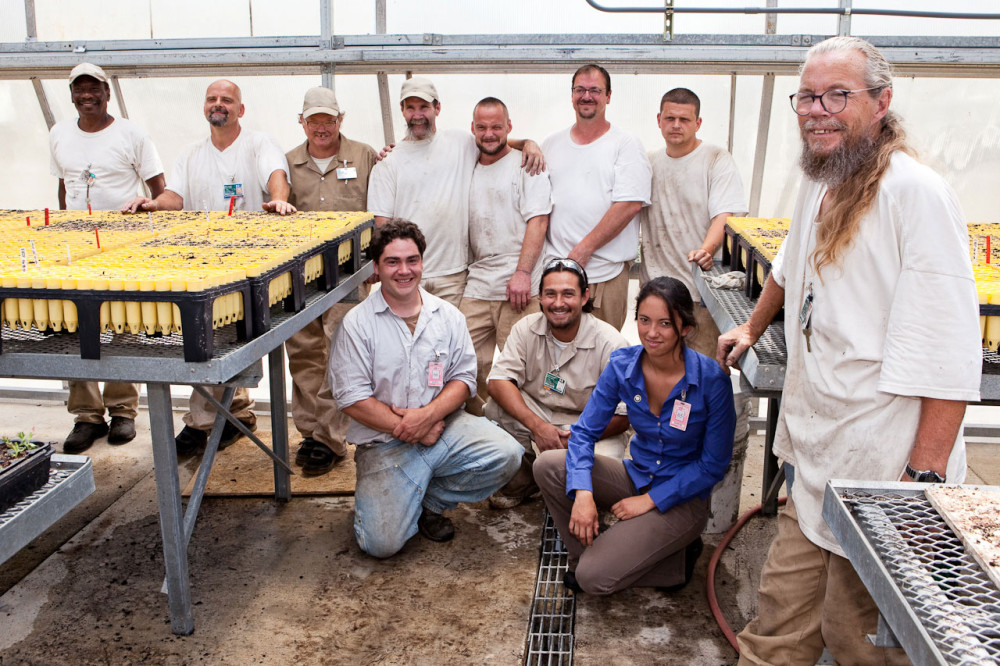
SPP's first native plant nursery was established at Stafford Creek Corrections Center in 2009. Photo by Benj Drummond.
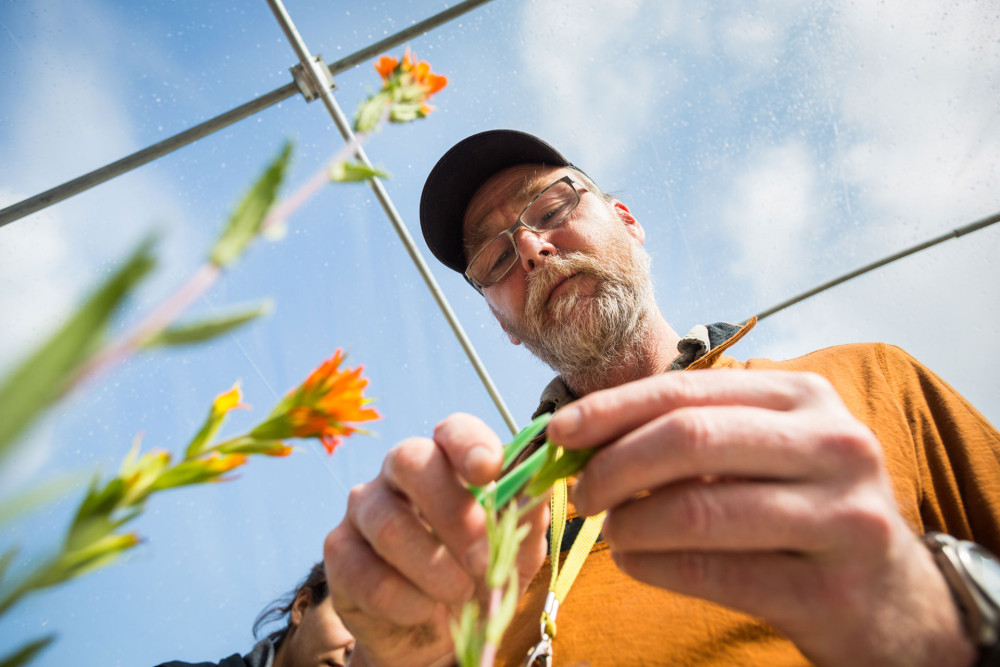
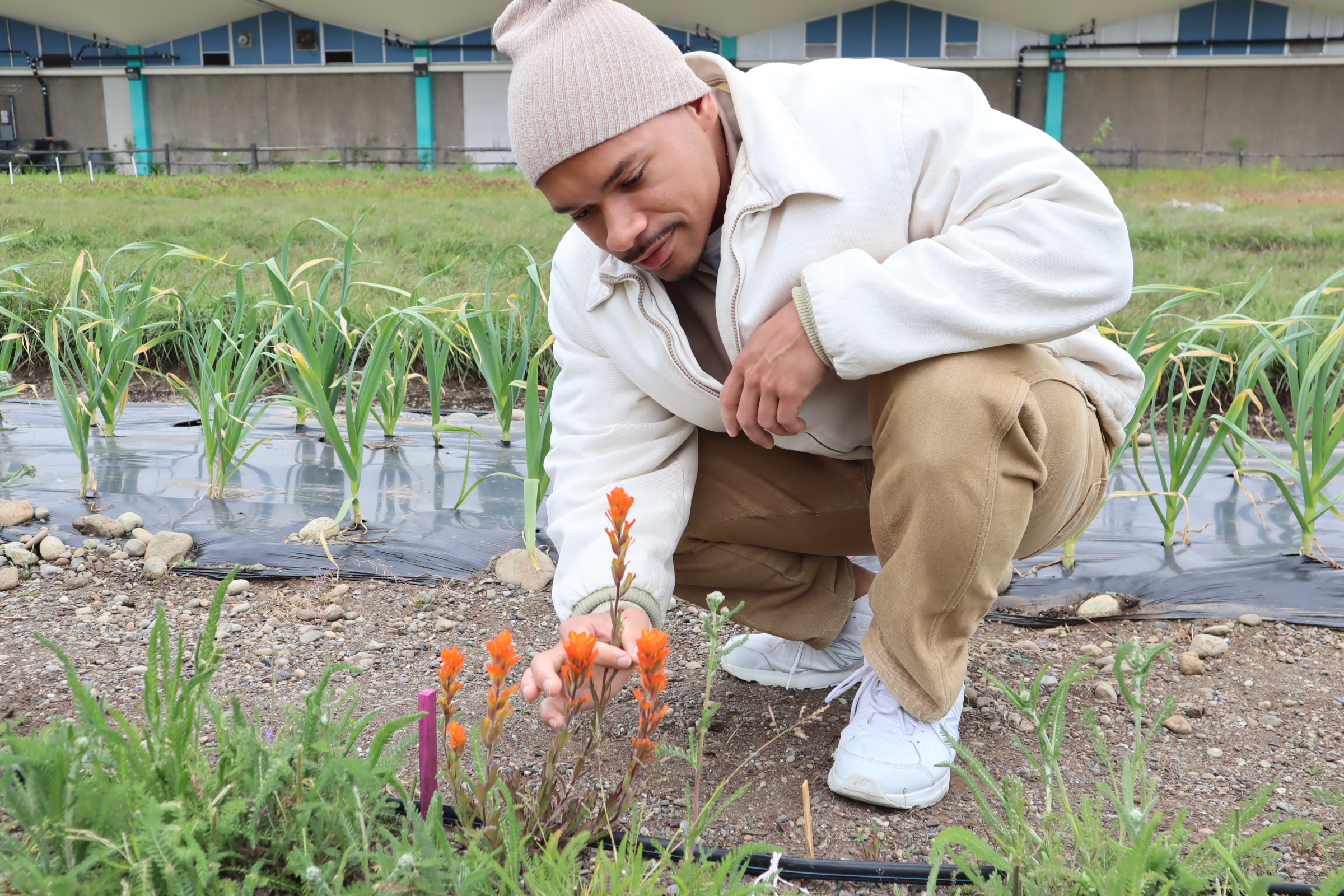
SPP's Ecological Conservation Nursery Manager Carl Elliott works with the Indian paintbrush growing in the nursery at WCCW. Photo by Benj Drummond and Sara Joy Steele.
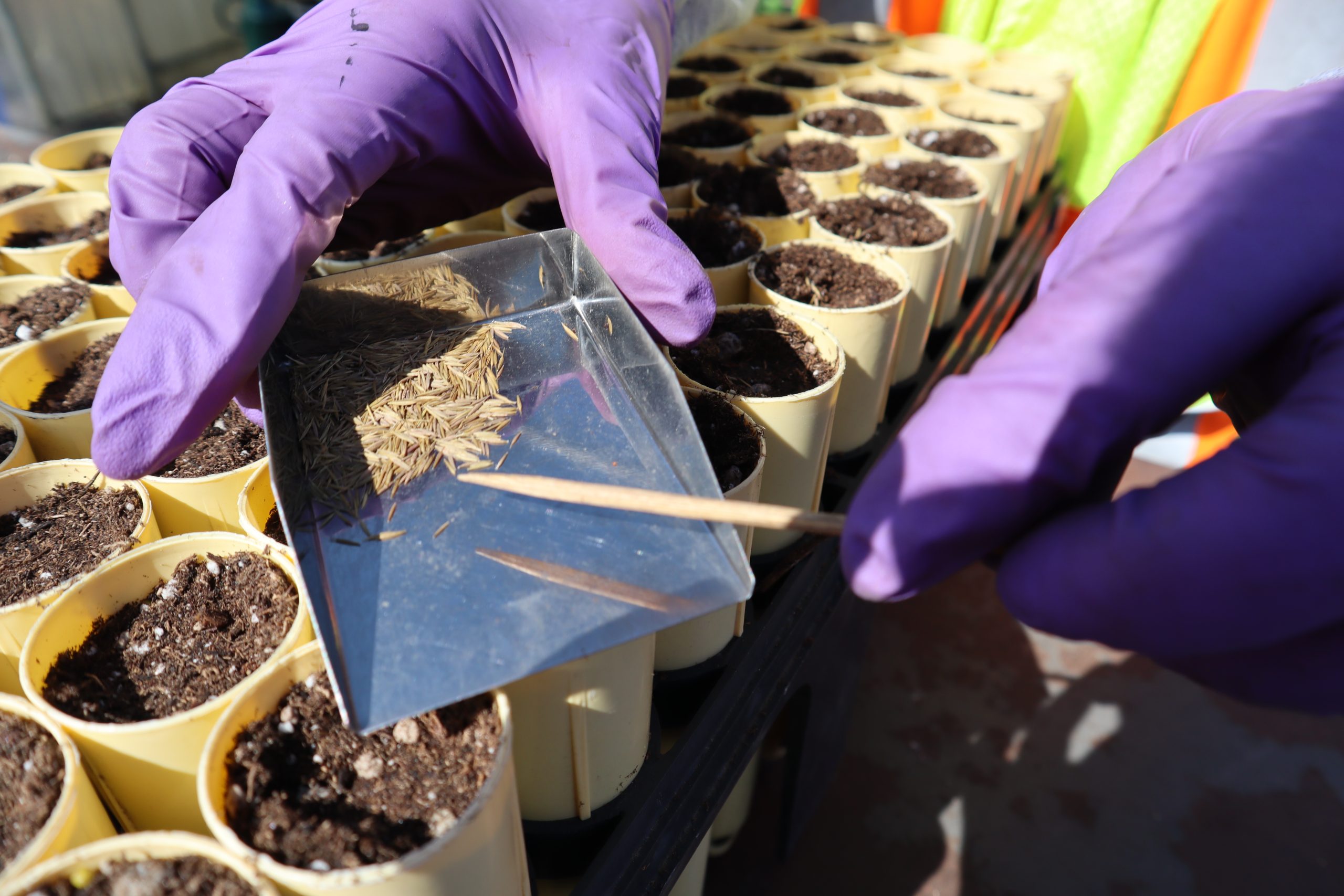
Salish Lowland Ecological Conservation Nursery Technicians are responsible for meeting daily needs of the program and work closely with WA Corrections staff and SPP Evergreen staff to maintain high program standards. Technicians are expected to attain subject matter expertise, job autonomy, and exhibit personal accountability for projects. The program requires detailed technical work, self-direction, and advanced problem-solving skills. Duties include maintaining records and field notes, communicating frequently with team members, partners, and the public to update program status and outcomes, ensuring effective plant cultivation, and implementing scientific trials.
Learning Objectives
Academic
- Apply ecological principles to current conservation issues and discuss interactions between species and the environment that determine Salish lowland prairie community composition and structure.
- Discuss processes that influence species’ distribution and abundance using Salish lowland prairie plant examples.
- Participate in and demonstrate knowledge acquired from formal instruction provided by SPP Evergreen staff and program partner scientists. Topics include field botany, ecology of fire-dependent ecosystems, seed ecology, and horticulture.
- Utilize concepts in restoration ecology to understand decisions in ecological restoration.
- Demonstrate understanding, apply concepts, and able to analyze papers from assigned peer-reviewed papers and texts (listed in Bibliography).
Vocational
- Demonstrate knowledge of all aspects of native plant conservation nursery operation including:
- Follow best practices, as detailed in protocols.
- Weed species life history, seed dispersal, and management practices.
- Native plant identification, life history, ecosystem role, and ethnobotanical background.
- Native plant cultivation, propagation, care, seed collection, and soil fertility.
- Identify plant health issues and principles of integrated pest management.
- Tool safety, use, and maintenance.
- Adaptive management when encountering cultivation challenges.
- Able to maintain detailed records such as tracking genetic and geographical sources for batches of plants, or detailed personal journal observations.
- Work collaboratively to achieve education, training, and operation goals.
- Perform rigorous trials testing promising cultivation and care methodology, documenting outcomes, and contributing to analysis and synthesis.
Course Structure (varies by program, description below for the Salish Lowland Ecological Conservation Nursery Technician Program)
- Experiential Learning: at least 425 hours of hands-on experience caring for Salish lowland plants.
- Protocol Workshops: 8 of 12 workshops or readings will be completed with demonstrated proficiency in technical skills and completing all daily nursery tasks.
- Academic learning; 40 hours of academic learning including the following:
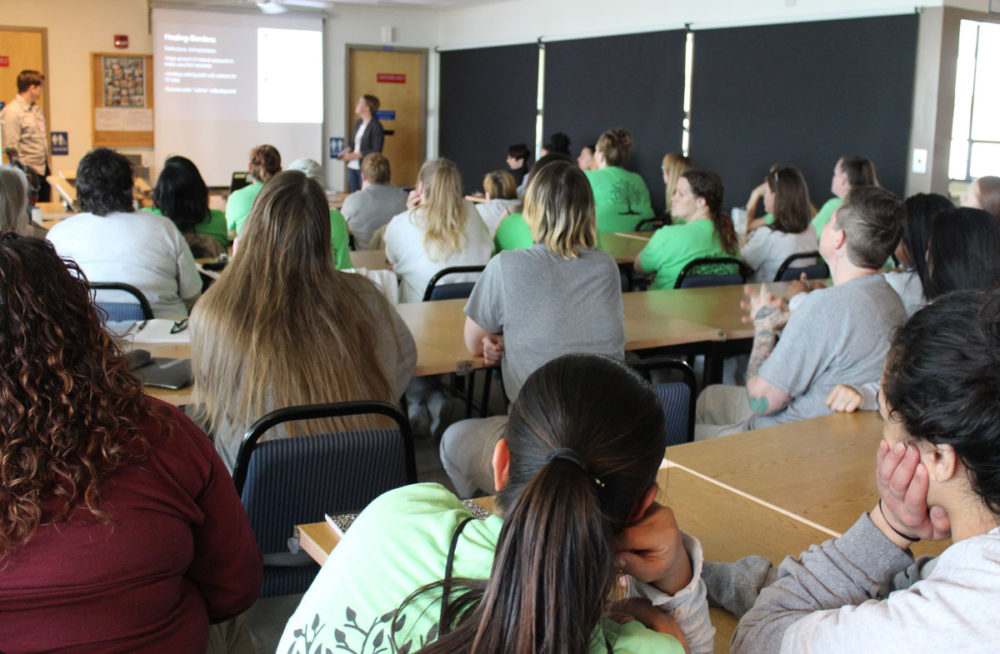
- Seminars and Education Sections: Will be tracked by SPP Program Coordinator and assessed by participation in discussions and completion of activities.
- Reading Responses: Students will be evaluated upon completion of reading responses recorded in their notebook.
- Reflective Writing: The SPP program coordinator will provide a reflective writing prompt. To receive college credit for this course, you will need to complete the reflective writing assignment and submit your legible, hand-written, or typed reflection writing to SPP-Evergreen.
 Read More