Taylor’s Checkerspot
Butterfly Program
With the guidance of Washington Department of Fish and Wildlife and the Oregon Zoo, SPP partners (Evergreen and WA Corrections) rear and release federally-endangered Taylor’s checkerspot butterflies.
Program Partners




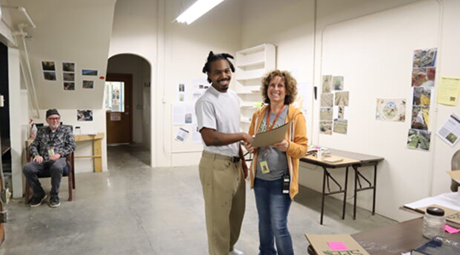
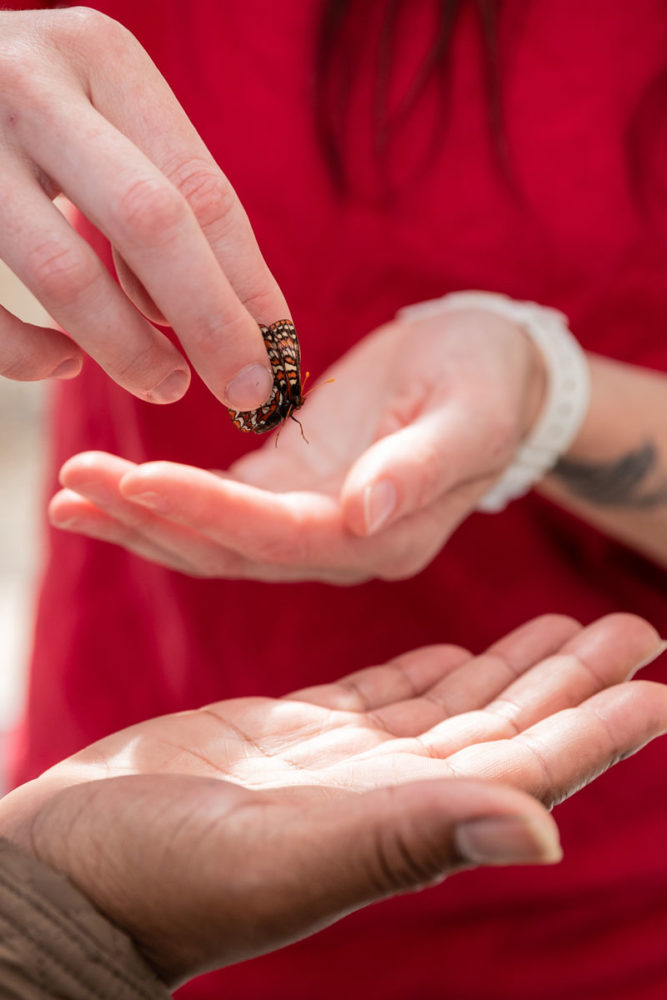
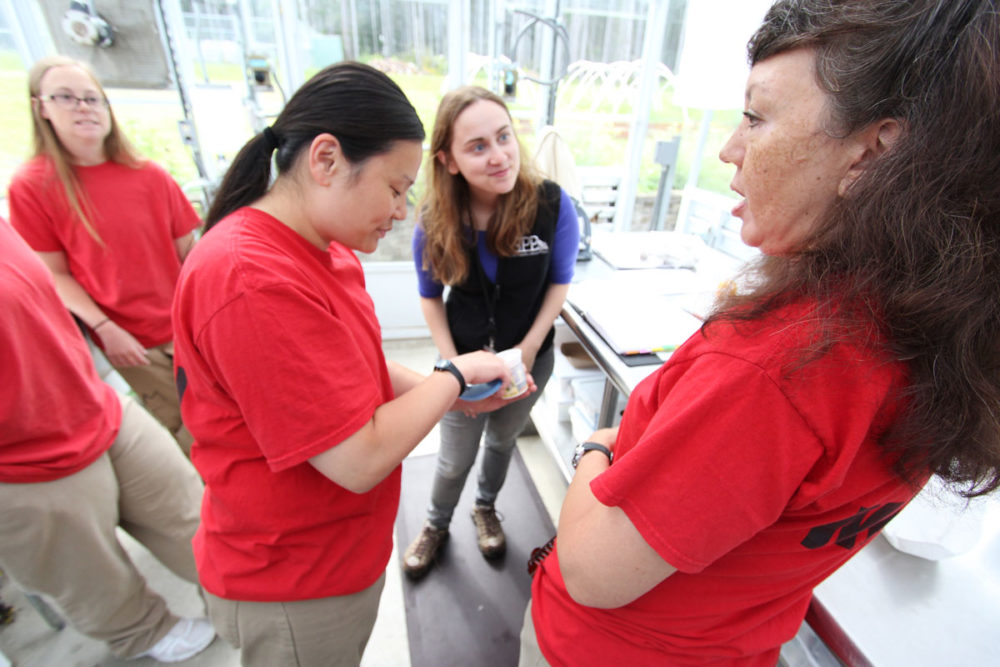
A butterfly technician passes an adult butterfly to Evergreen’s Allison Anderson. Photo by Ricky Osborne.
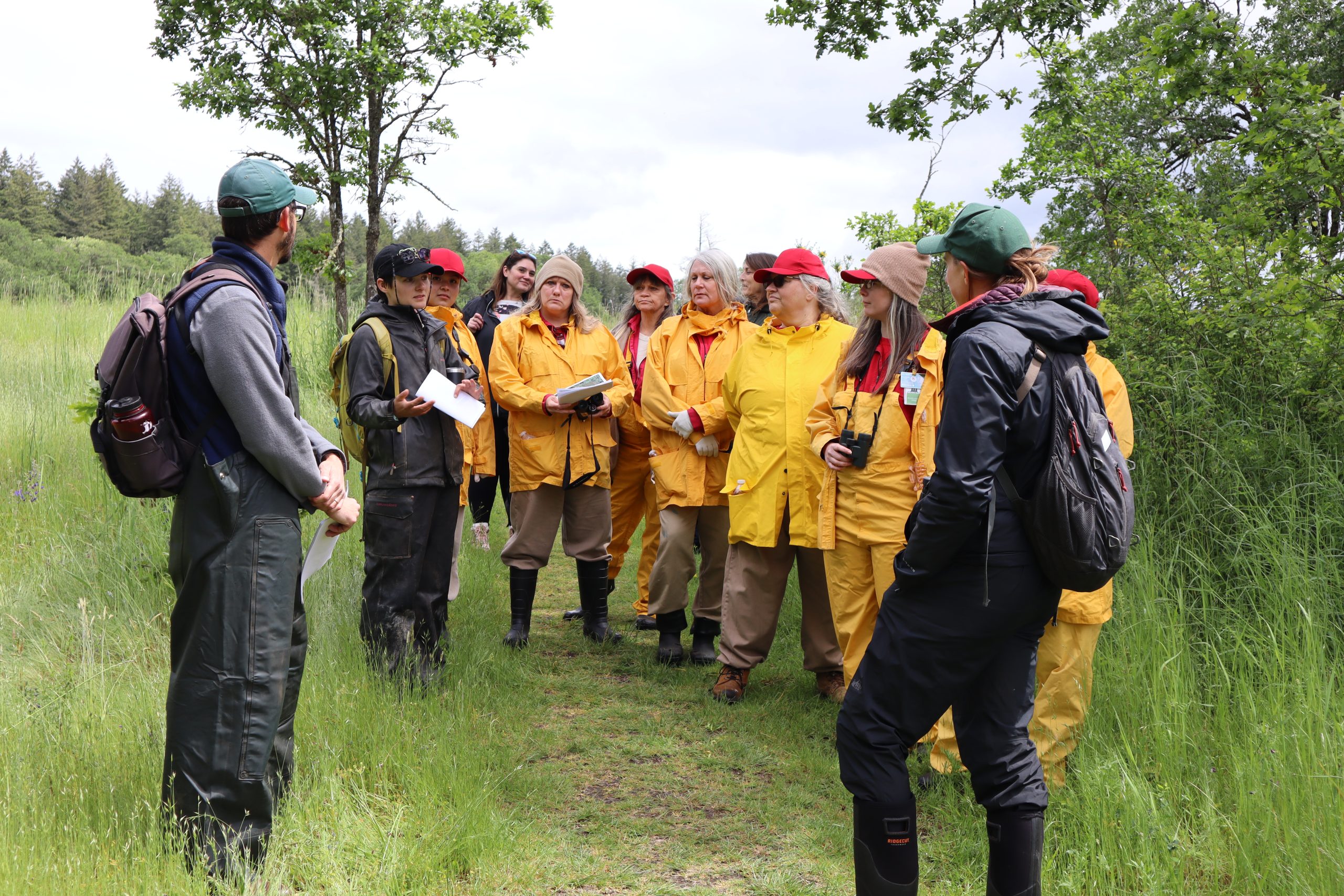
To learn more about the program and recovery efforts, SPP partners visit a Taylor's checkerspot release site. Photo by Keegan Curry.
Master of Environmental Studies student Emily Passarelli visits the program coordinated by her peer Keegan Curry, and learns about butterfly rearing from the technician team. Photo by Keegan Curry.
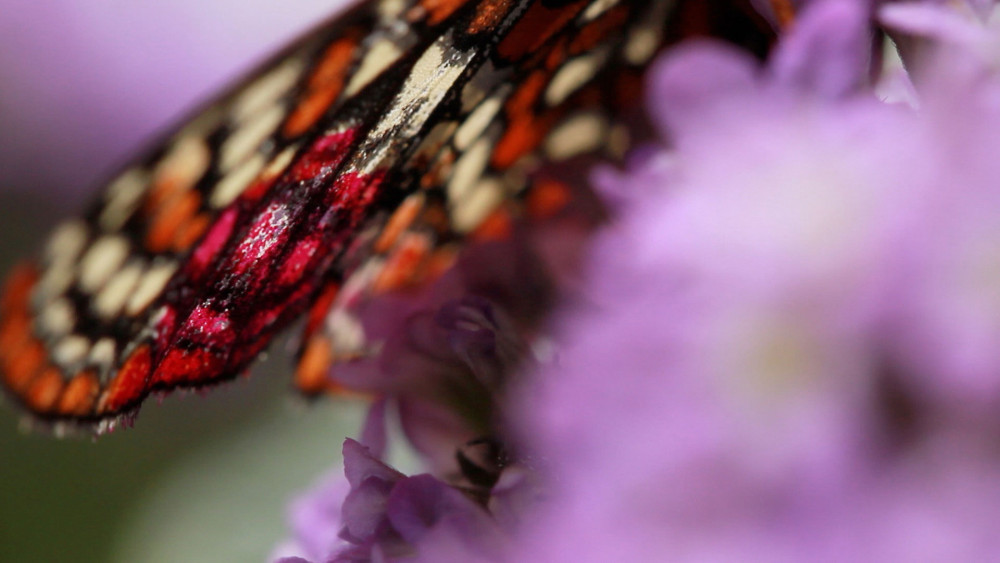
A close-up of an adult butterfly on nectaring on a flower in the prison's rearing facility. Video still by Rosemarie Padovano.
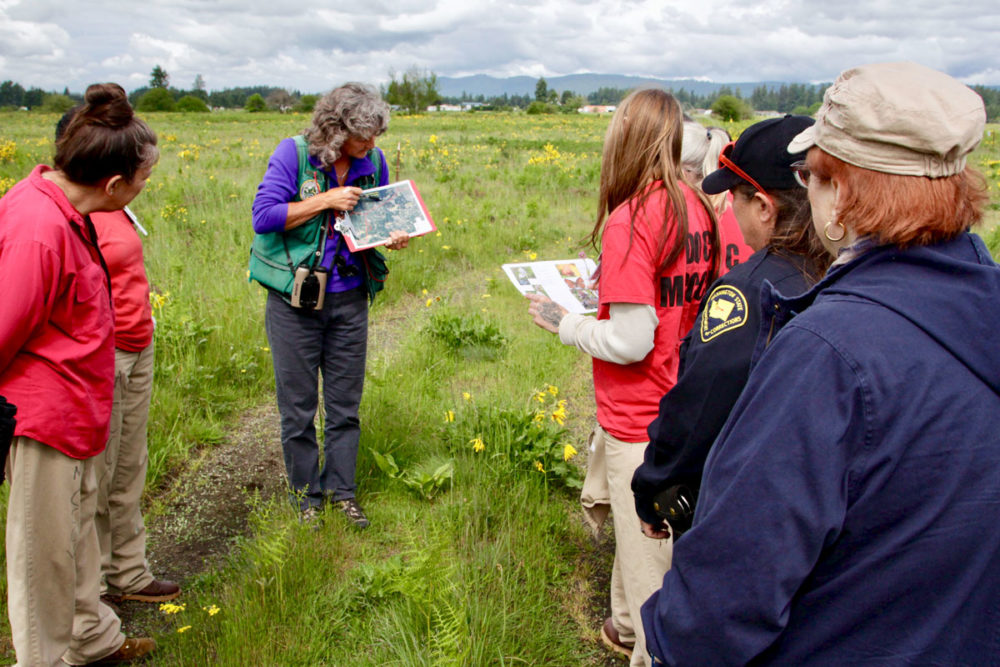
SPP program Coordinator, Courtney Murphy, Butterfly Technicians, and WDFW partners take a stroll through a South Sound prairie to learn about TCB habitat. Photo by SPP Staff.
Program Description
The Butterfly Ecological Conservation Technician Program is a 6-month, 14-credit ecological conservation course offered July through December each year. Participants receive education and training on butterfly husbandry applicable to the diapause life phase, introduction to the taxonomic order lepidoptera, plant and pollinator interactions, general principles of ecology, data entry and reporting, overwintering plant care, greenhouse management, and pest and disease control. The course includes general study of butterflies with specific resources on Taylor’s checkerspot butterfly taxonomy, life history, ecological significance, and conservation biology. Participants also review all butterfly husbandry procedures and make suggested improvements for clarity and to reflect proposed program and process updates. The program includes significant experiential learning components with academic components supporting hands-on education. This course builds on the 16- credit Butterfly Captive Rearing Specialist program, providing further education on conservation biology and ecology.
SPP also offers an additional 6-month, 16 credit course called Butterfly Captive Rearing Specialist Programs for those who want to continue this program and earn more college credit.
Technician Responsibilities
Butterfly Ecological Conservation Technicians meet the daily needs of the program and work closely with WA Corrections and SPP staff to maintain high program standards. Technicians are expected to attain subject matter expertise, work effectively as a team,
and demonstrate autonomy and accountability. The program requires detailed, technical work, frequent contact with partners and visitors, and may include performing scientific research.
Course Learning Objectives:
- Demonstrate butterfly husbandry knowledge by providing effective care, monitoring, and accurately recording data and observations for butterfly larvae throughout their diapause life phase.
- Practice and apply the education provided through
this course by recording observations, participating in regular program check-
ins, and documenting data throughout the butterfly’s diapause life phase and
fall/winter plantain plant care. - Demonstrate understanding of random sampling methods through applied use of diapause and other program procedures including sampling the population of larvae, calculating movement percentage, and accurate placing of matrilines in locations to mitigate risk of losses in genetic diversity.
- Actively participate in discussions and demonstrate general knowledge with
Butterfly Coordinators, other course participants, and program visitors on topics such as butterfly husbandry, Taylor’s checkerspot life history, conservation biology, lowland Salish Sea prairie ecosystems, ecological horticulture, the impacts of phenology and climate change on Taylor’s checkerspot butterflies, and species conservation efforts. - Demonstrate knowledge of the role of pollinators in an ecosystem, and co- evolutionary relationships between pollinators and plants through active participation in seminar discussions.
- Demonstrate understanding of how to effectively read scientific articles and interpret graphs and figures through active participation
in seminar discussions. - Apply course learning by documenting quantitative and qualitative data results of various husbandry methodologies and life stage outcomes; synthesize data to practice program reporting skills.
- Evaluate program procedures, data collection, and tracking systems. Describe and document proposed changes for all butterfly life stages to reflect thorough review of program procedures and understanding.
- Demonstrate competence using laboratory equipment including digital thermometers, digital scales, data loggers, stereo microscopes, and humidity gauges and implementing proper biosecurity laboratory techniques.
- Apply education and training by practicing skills to overwinter host plant species, identify and treat plant pests and/or diseases, and effectively
manage the growing environment in greenhouse and cloche structures during fall and winter seasons. - Provide written and oral reflection of program experiences.
- Demonstrate effective and efficient communication through successful teamwork, active participation, outreach, and problem solving.
Taylor’s Checkerspot Butterfly Technicians pose with SPP Co-Director, Kelli Bush, SPP Ecological Conservation and Workshop Manager, Michael Zirpoli, SPP Program Coordinator, Amanda Rueda, and former program participant, Nicole Alexander. Photo by DOC Staff.
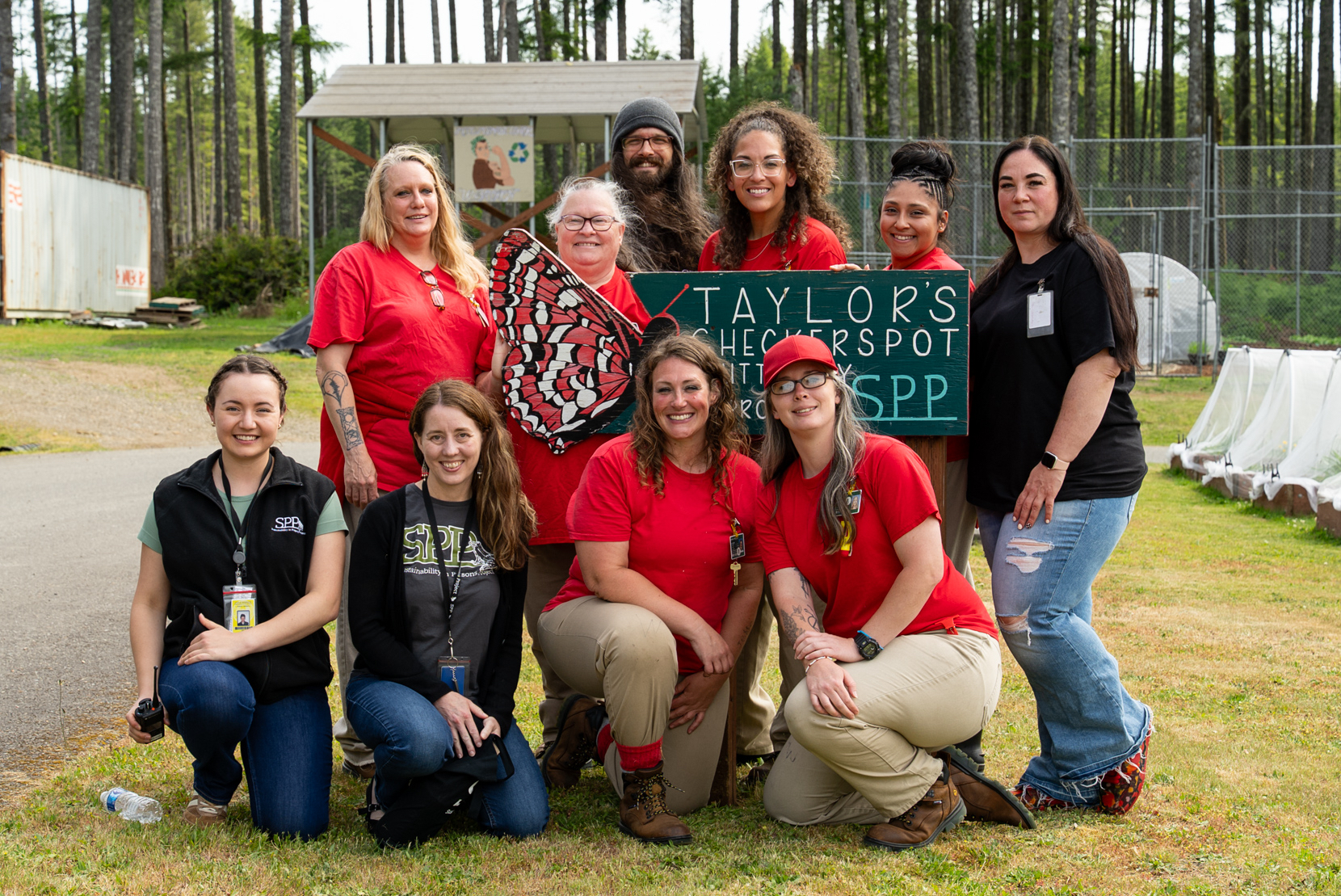
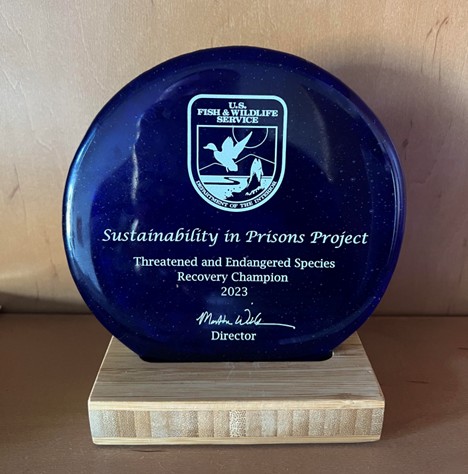
Photo of award presented by USFWS to the MCCCW Taylors checkerspot butterfly program and SPP. Photo by SPP Staff.
Program Requirements & Course Structure
The SPP Program Coordinator supports and facilitates education, training, and butterfly care. Program participants complete at least 300 hours of experiential learning.
The table at the end of this syllabus includes a brief overview of the workshops, modules, seminars, and other portfolio requirements for this program. Program participants complete at least 300 hours of experiential learning through hands-on butterfly captive rearing and care and at least 54 hours of academic education including participation in 4 of the 5 required workshops listed in the course activities table below. Each education and training session takes 1 to 8 hours to complete.
 Read More