SPP Oregon Spotted Frog Program Transitions

By SPP Project Manager Kelli Bush

The SPP Oregon spotted frog program at Cedar Creek Corrections Center (CCCC) has recently undergone a few changes. The continued success of this and other SPP programs is owed to a collaborative effort. Department of Corrections (DOC) staff members are an essential part of the team working to rear frogs at the prison. Since 2009, Classification Counselor Marko Anderson has been the staff person supervising the daily work of the inmate technicians, communicating project needs, and coordinating access for SPP staff, project biologists, and other visitors. Marko has been dedicated and hard-working. He took on the duties of the program in addition to his work load as a Classification Counselor. It is with mixed emotions that we bid Marko farewell. He has accepted a promotion at Washington Correction Center in Shelton. We are very happy he has been promoted, but he will be missed. We are grateful to have had such a devoted person working to ensure success of the program.

On the bright side, we are pleased to announce that Classification Counselor Vicki Briggs has volunteered to take on the OSF program duties at CCCC. Over the past several years Vicki has been regularly serving as the back-up supervisor for the program during times when Marko was on leave. She has always been a tremendous help, including when we were dealing with mortalities this season. Vicki also leads the beekeeping program at CCCC. We are so pleased to continue the program with her help.

A few months ago we also welcomed a new inmate frog technician to the program. Mr. Hensen has been hardworking and very eager to learn all things Oregon spotted frog. He plans to study marine biology when he is released. The program’s other frog technician, Mr. Davis, remains on the team. He has done an excellent job using his experience to help train Mr. Hensen. It is shaping up to be another successful season!
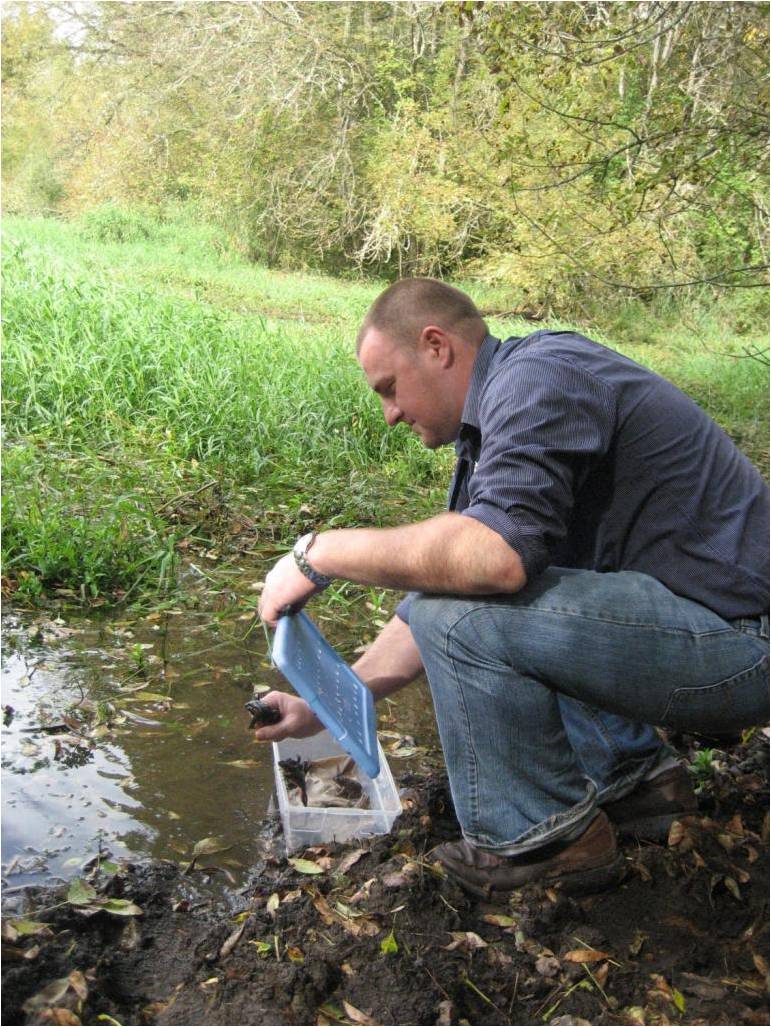
Thank you Marko!

Celebrating a Successful Inaugural Season for the Butterfly Program at Mission Creek

by Graduate Research Associate Dennis Aubrey

The Sustainability in Prisons Project’s newest program, the rearing of Taylor’s checkerspot butterflies at Mission Creek Corrections Center for Women, has just concluded its first season. A second generation of more than 3500 caterpillars has now safely gone into diapause, and the effort can officially be considered a complete success. Some of the season’s highlights include:

More than 700 Taylor’s checkerspots were released onto South Puget Sound prairies. Six hundred of these were released as post-diapause caterpillars in early March, placed one at a time on available host plants. Another 101 were released as adults, following breeding and oviposition. These were placed carefully on nectar flowers or, if they chose to, simply allowed to flutter off across the prairie.

Breeding activities were also highly successful. Males and females were crossed according to specific lineage pairings designated by staff at the Oregon Zoo to preserve genetic diversity. Seventy-two mating introductions were made, with 32 of these resulting in a successful pairing. From these, 3,515 eggs were laid. 3,395 of these successfully developed into healthy caterpillars and entered diapause, a survivorship of 96.6%.

A novel research project was carried out at the facility, examining host plant choice by female checkerspots. This work is showing that they prefer to lay eggs on two native plants, harsh paintbrush and Washington-endangered golden paintbrush, over the exotic but well-documented host English plantain. This finding has the potential to alter restoration practices for the butterfly and possibly unite the recovery efforts for both it and the golden paintbrush.

Currently, in addition to caring for the 3,624 caterpillars in diapause at the facility, inmate technicians are working on end-of-season reporting, putting in host plant gardens around the greenhouse and tending the plants, and creating a butterfly coloring book for children visitors to the prison. Their work with the butterflies this season has been exemplary in every way, and the overwhelming success of the project’s first year is thanks to their tireless and meticulous work.

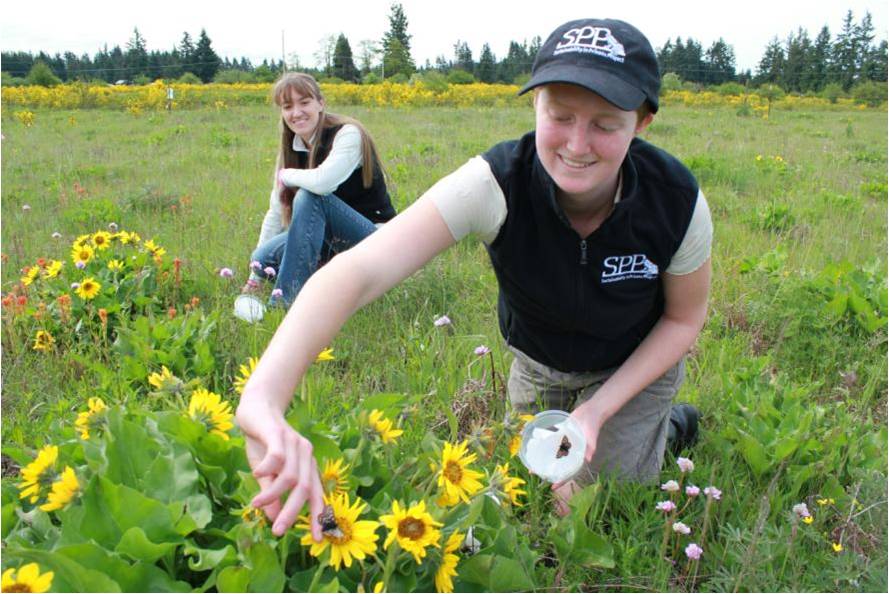
Undergraduate intern Caitlin Fate releases a Taylor's checkerspot on Scatter Creek Prairie, Spring 2012. Photo by D.Aubrey.
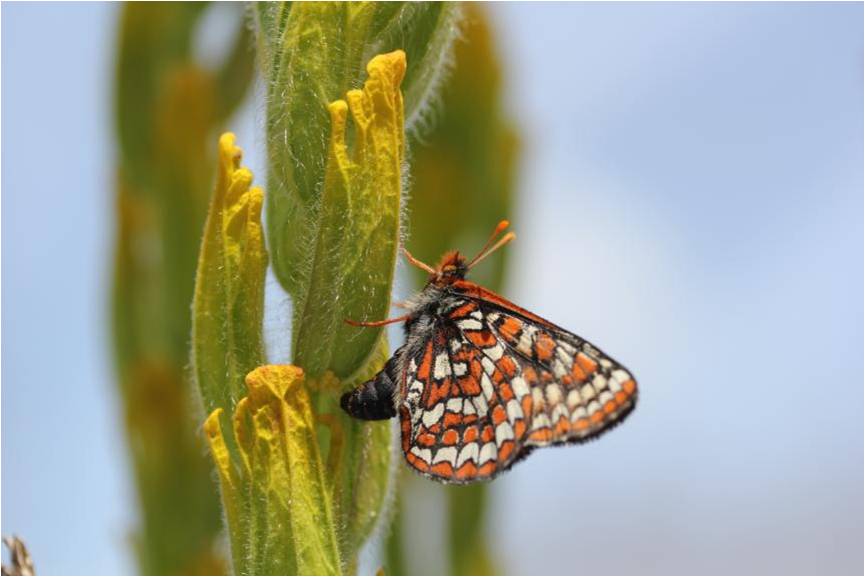
A Taylor's checkerspot lays eggs on a Golden paintbrush (Castilleja levisecta), a state-endangered plant.

To support the Taylor’s checkerspot program and others like it, click here to donate to SPP.

Workshops address needs to help advance SPP goals

By Julie Vanneste, Sustainability Coordinator, Washington State Department of Corrections (DOC)

For two days last week Department of Corrections staff, consultants, representatives from fellow state agencies and the National Institute of Corrections met to work on the sustainability goals of the Washington DOC. From these meetings the Department is better equipped to implement sustainable purchasing policies and training for staff and offenders.

Washington DOC was one of three states to be awarded a Technical Assistance Grant by the National Institute of Corrections toward Greening Corrections.  The award provided funds to recruit subject matter experts to convene for two days of workshops to address an area where the stated identified a need for assistance.

Washington was the first state to hold its workshops.  We chose to focus on greening our procurement process and creating a sustainability curriculum to be delivered to both staff and offenders.

In our first meeting we quickly concluded we need to take ourselves back to foundations and write a sustainable procurement plan that will augment the broader sustainability plan.  We left the workshop with some ideas for drafting a sustainable purchasing plan.

We were able to move on to some critical points of discussion including reframing our approach to sustainable purchasing. We re-confirmed the Department’s commitment to “Sustainable Purchasing” over “Green Purchasing.” We view sustainable purchasing as a more holistic approach to include regard for social and economic well-being as well as environmental concerns. Pursuing a sustainable purchasing program is the more challenging option, but this path will satisfy the Department’s economic and social responsibilities as well. To achieve this we have begun to produce a new sustainable purchasing policy and companion purchasing guide to nest in our broader Sustainability Plan and began work to identify and prioritize opportunities to apply this strategy.

In the second workshop we were joined by both the Deputy Secretary and Chief of Maintenance of Maryland’s Department of Public Safety & Correctional Services.  Maryland, too, expressed a need for a sustainability training tool – a means or curriculum to introduce, educate and market sustainability to both staff and offenders.

With the help of our Maryland colleagues, our partners in the Sustainability in Prisons Project from The Evergreen State College, and staff from the U.S. Department of Energy, we developed a draft curriculum that will further strengthen the culture of environmental, economic and social responsibility already present at our facilities.  This curriculum, “Living Sustainably in a Correctional Environment: Why we do it”, was designed to be flexible and adaptable between audiences and facilities across the nation.

All credit for the successful outcomes of these two workshops are due to the support received by NIC, the consultants from FHI360 and the facilitators, technical experts and fellow stakeholders who came to the table to help us forward our sustainability goals.  The collaboration around the table was invaluable.

SPP Plant Profile: Blanketflower (Gaillardia aristata)
Asteraceae Family

Basic Information

Blanketflower is a tap-rooted perennial, with large showy yellow and reddish-brown flowers. Leaves are alternate, 3-6 inches long with coarsely toothed and deeply divided margins. The species is moderately long-lived, and re-seeds in abundance once established. Distributed throughout the northern part of North America and the Western United States, it’s found in dry open spaces in prairies, mountain foothills and roadside clearings.

Ecological Importance

Blanketflower stands as a nectar and food source, as well as providing resting and cover, for many important pollinators and beneficial insects. Edward fritillary (Speyeria Edwards) butterflies rely on the species as a nectar source in their adult stage. A moth species, (Schinia masoni), is camouflaged to specifically mimic the yellow ray flowers and purplish-brown disk flowers to aid in avoiding predators. Throughout Western North America, blanketflower is pollinated by the soft-winged flower beetle (Listrus senilis), recognized as a critical pollinator of the species. Blanketflower and its associated beneficial insects are main components of many northern grassland ecosystems, breaking down organic matter, increasing soil fertility and improving soil water-holding capacity and water infiltration.

Fun Facts:

Blanketflower’s drought tolerance and brilliant flowers make it a popular choice for residential and commercial landscapes. Its low water demand leads to its use in low watering zones of XeriscapeTM and water wise gardens. Furthermore, the mature leaves of blanket flower are unpalatable and its rough textured stems make this species deer-resistant, even though some whitetail deer will browse lightly at different times of the year. Finally, as long as soils are well draining, no serious pest or disease problems are associated with blanketflower, adding to its ease of growth in both the nursery and in backyards.

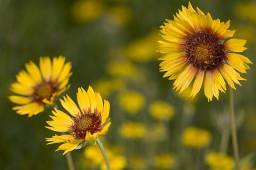
Close-up of Gaillardia aristata flowers. Photo by R.Gilbert.


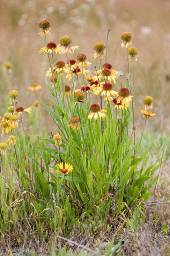
Blanketflower on the prairie. Photo by R.Gilbert.