Prepared by Carl Elliott, Evan Hayduk, Jaal Mann, Brianna Morningred, and Drissia Ras.
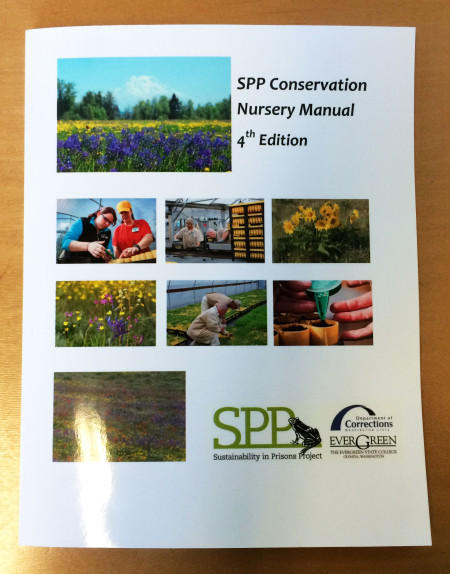
I am super impressed by the hot-off-the-press, 4th edition SPP Ecological Conservation Nursery Manual. The 4th edition represents the cumulative knowledge and effort of Carl Elliott, Ecological Conservation Nursery Manager, four Graduate Research Assistants, and suggestions and observations of numerous inmate technicians. All have worked together to make the nurseries SPP’s largest, most productive conservation program.
The nursery manual serves primarily as a reference for the inmates who propagate and care for rare and endangered species of prairie plants. For each of 50 species, the manual provides detailed, illustrated instructions for how to prepare, sow, water, fertilize, manage pests, and keep excellent records. With approximately 18 inmate technicians working at three nursery sites growing thousands of plants, such a reference is essential to success.
Beyond that, though, the manual serves as a field guide, ecological text book, and provides the basics of botany and plant identification. Clearly, it is intended to link inmate technicians’ nursery work to the bigger pictures of ecology and restoration in the region. It is a gorgeous educational resource.
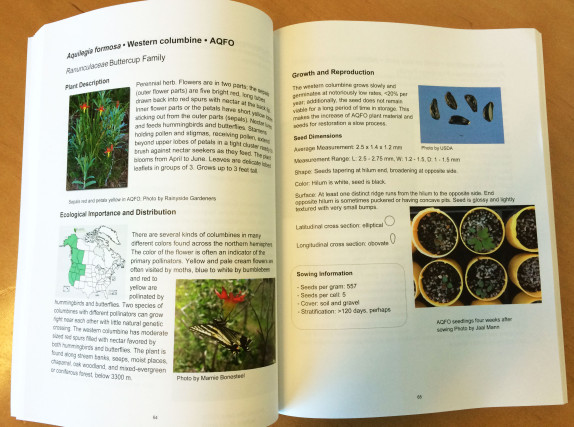
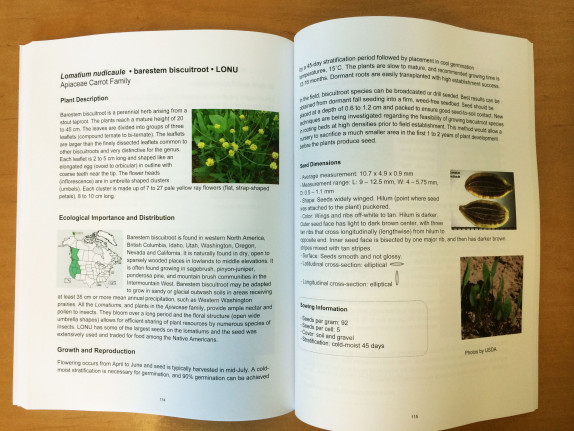
A typical species overview in the new nursery manual.Many of the photos in the species descriptions, especially those of seeds and seedlings, have been taken by SPP’s Graduate Research Assistants.
By Kelli Bush, SPP Program Manager
On March 15, 2014 Monroe Correctional Complex in Monroe, Washington will host a TEDx event. TED stands for Technology, Entertainment, Design; it’s is a non-profit organization committed to sharing “ideas worth spreading” through lectures. TEDx talks are held at locations around the world. The event at Monroe will feature presentations from inmates, corrections staff, and community members. The theme of the event is “Turning Keys,” which will describe how many small and relatively quick changes can result in significant positive outcomes in the corrections system.
There will be two talks featuring SPP’s programs. Dr. Carri LeRoy, Co-Director of SPP and Evergreen faculty member, will present on the transformative qualities of SPP programs and Mr. Nick Hacheney will highlight his experience as an inmate managing the vermicomposting program at Monroe Corrections Complex. Mr. Dan Pacholke, Co-Director of SPP and Assistant Secretary of WA Dept. of Corrections, will present on how small changes can alter the future of prisons.
Over the past several weeks SPP staff have assisted with preparation for all three talks. The talks are presented without notes and require lots of practice and polishing along the way. Mr. Hacheney and another inmate have been preparing a beautiful CD Rom that will include a wealth of information about the vermicomposting program and SPP. The CD will be available to audience members at the presentation. Space to attend the live presentation is extremely limited, but the event will be recorded and available for viewing online—we will be sure to share that video as soon as it is available!
SPP’s TEDx presenters
Dr. Carri LeRoy
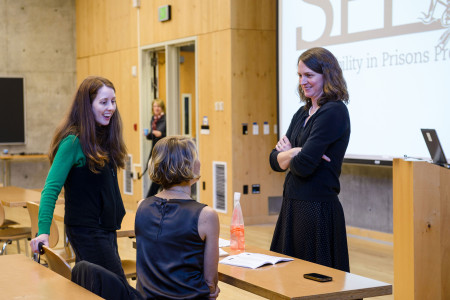
Dr. Carri LeRoy (right), faculty at The Evergreen State College and Co-Director of SPP, prepares for a talk at SPP’s ten year celebration. Photo by Dani Winder.
Mr. Dan Pacholke
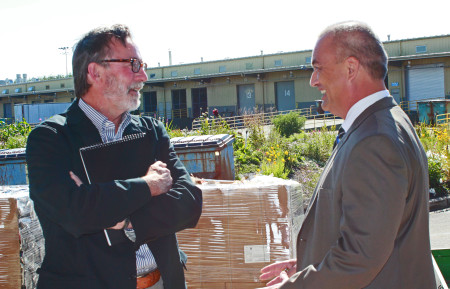
Dan Pacholke (right), Assistant Secretary for Washington Dept. of Corrections and SPP Co-Director, talks with Lyle Morse, Director of Correctional Industries, at the SPP National Conference in 2012. Photo by SPP staff.
Mr. Nick Hacheney
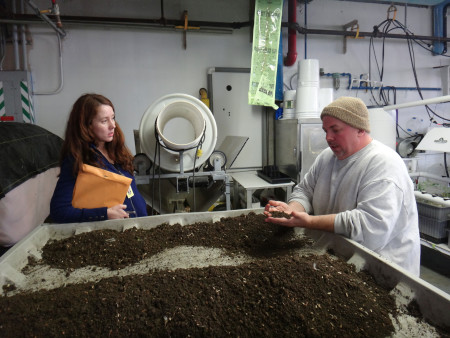
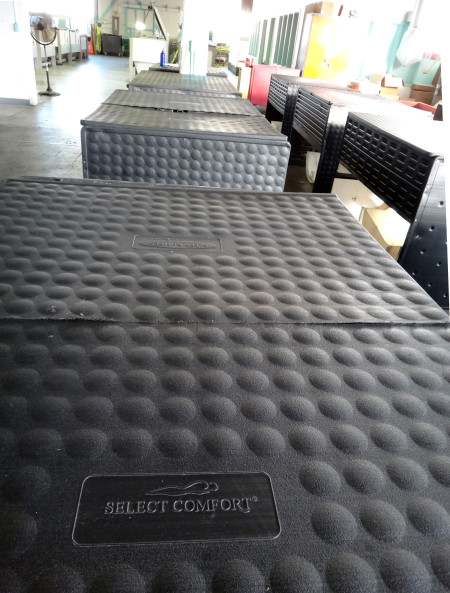
Nick Hacheney, lead worm farmer at Monroe Correctional Complex, discusses methods with SPP Program Manager, Kelli Bush. The worm farm is amazingly clean and sweet-smelling; it only smells of food waste for a few hours a week, right after the food has been put into the vermicomposting bins. Photo by Joslyn Rose Trivett.Worm breeder bins at Monroe Correctional Complex were constructed from re-used mattress parts; the worms live and breed in “Select Comfort”! Photo by Joslyn Rose Trivett.
By Carl Elliott, SPP Ecological Conservation Nursery Manager
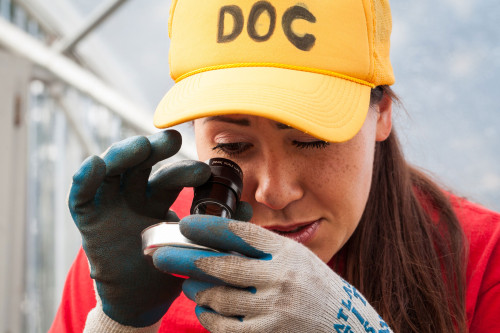
An SPP technician uses a hand lens to examine signs of insect damage on a plant grown in the nursery. Photo by Benj Drummond and Sara Joy Steele.
The cultivation of native plant material in a nursery is fraught with unknowns. Wild-collected and farm-raised seed often have erratic germination requirements and germination percentages from year to year. The year’s weather, seed collection times, and how seeds are cleaned and handled all can affect how the native plants grow.
Unknown conditions
Our wild seed collectors work carefully to reduce variables in timing, handling, and storage. They diligently follow protocols for every step in the process. But often variable summer weather plays a paramount role in defining seed quality, and that’s a factor no one can control. In 2013, spring rains gradually tapered off to bring a bright and warm July and August and provided a large crop of summer seeds; however, in early September rain made late-season seed collection difficult. We shall see in 2014 how the late summer ripeners, members of the Aster family (Solidago and Symphyotrichum species), germinate this spring.
Unknown water needs
Additionally, cultivating summer-dormant plants in containers poses establishment and survival challenges. A number of the plants we cultivate grow actively in the spring, but when the hot weather of summer arrives they go dormant. Leaves die back and small feeder roots slough off. The challenge is to keep the plants alive until planting time in the fall: too much water and the storage roots will rot; too little water and the plants dry up entirely. It is a careful balancing act until the plants wake up with September’s cool weather.
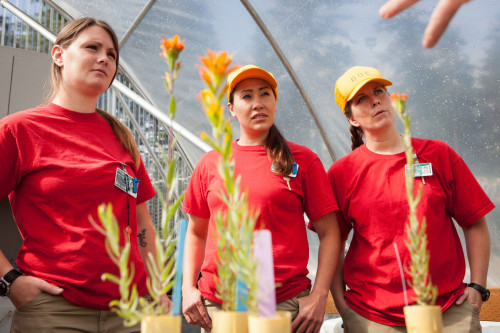
Offender Technicians examining nursery plants to identify insect pests. Photo by Jaal Mann.
Since 2009, SPP’s nurseries have built up a bank of knowledge and proficiency in prairie seed ecology and cultivation. To disseminate the knowledge, we hold seed ecology workshops at each nursery with the full crew of offender technicians. Graduate students present the workshops from a manual on the propagation protocols for each species cultivated. Our shared proficiency has yielded increased plug production at all three of our nurseries.
A workshop on the cultivation of harsh paintbrush (Castilleja hispida). Photo by Benj Drummond and Sarah Joy Steele.
Unknown species
The same workshops also introduce plants for which we have no known protocol. The student describes the plant from seed, to active growth, flowering, and back to seed. The group investigates the ecological role for that plant on the prairies referring to primary research from the literature and field. Then, the technicians perform observations and measurements necessary to develop a draft protocol, and craft descriptions, weights and measures of the seed. Finally, SPP involves the technicians in scientific testing of the draft protocol. An example of a protocol under development is for a rare native plant of the Puget lowland prairies, Packera macounii.
Packera macounii. Photo by Keir Morse, Cal photos.
In the last five years, we have fully developed protocols for 37 native prairie species using this approach. In collaboration with our partners at the Center for Natural Lands and Joint Base Lewis-McChord, we are actively researching another 37 species to add to our diverse suite of plants for prairie restoration.
 There will be two talks featuring SPP’s programs. Dr. Carri LeRoy, Co-Director of SPP and