Text by Kay Heinrich, Associate Superintendent, Airway Heights Corrections Center (AHCC)
Photo by AHCC staff.
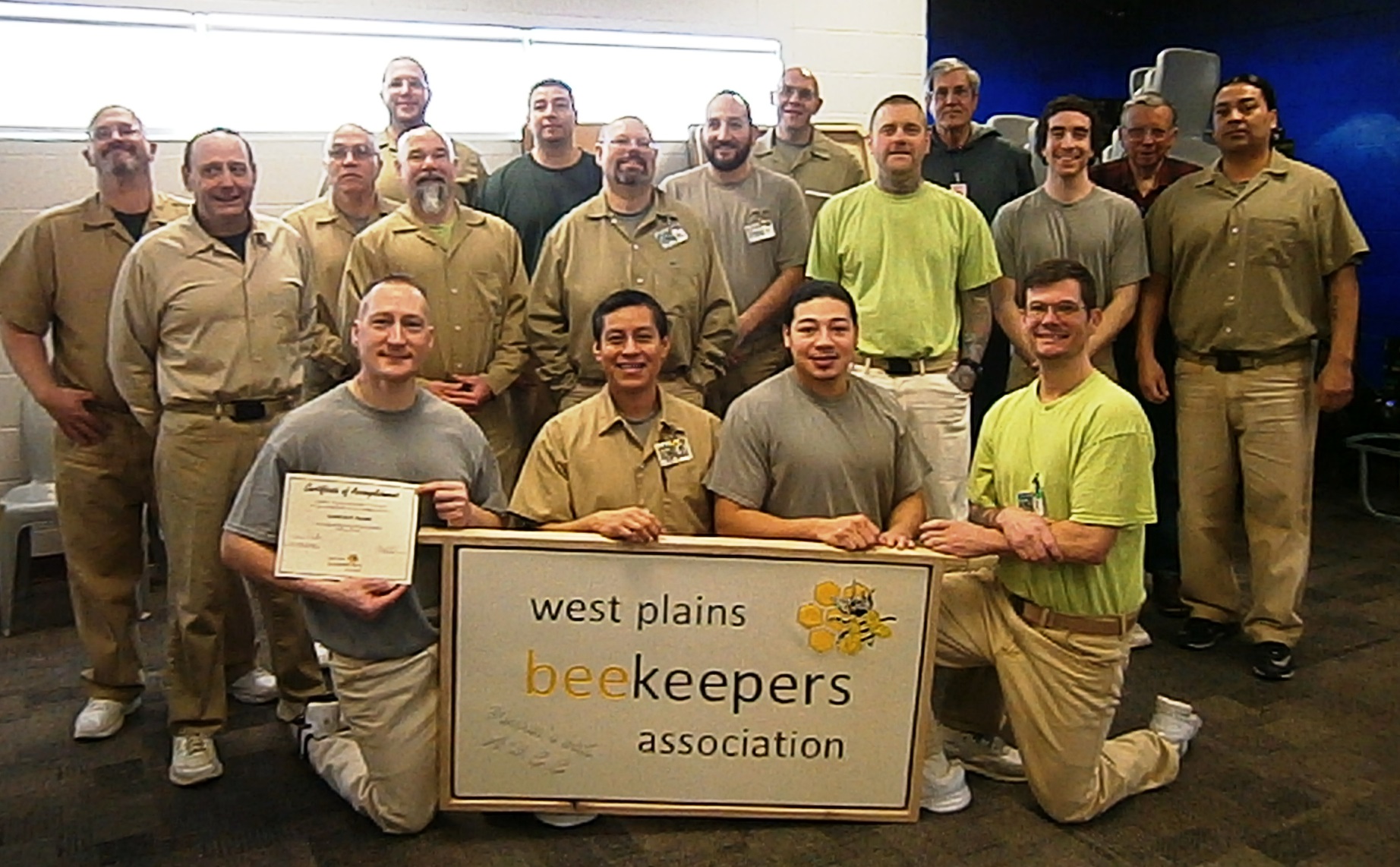
Graduating class from AHCC.

Airway Heights Apiculture is Preparing Apprentice Beekeepers to Become Journeyman and to Raise Queen Honeybees!

About fifty inmates at the Airway Heights Corrections Center (AHCC) have successfully completed an apprentice course and are certified Apprentice Beekeepers through the Washington State Beekeepers Association (WASBA). Of those, approximately fifteen are on their way to becoming Journeyman-level Beekeepers through the WASBA Master Beekeepers program. The inmates who are pursuing Journeyman status have formed a beekeeping club named Airway Heights Apiculture (AHA). This is possible because of the administration’s support and expert tutelage of Master Beekeeper Jim Miller. Also, the class of students itself has helped to develop test and training materials, creating a training curriculum that fits the needs of a corrections environment (more about that from club members, below). The AHA club is a subsidiary of the West Plains Beekeepers Association, a nonprofit organization.

On 2/15/2018, the Bee class graduated its first Journeyman Beekeeping class. We had a celebration for the gentlemen who graduated to celebrate their hard work that was well attended.

Behind The Scenes: Writing from members of AHA

After several months of club meetings, serious discussions began to take place regarding the future of the beekeeping program and possible means to advance educational and organizational objectives. Jim mentioned that he would like to replace the existing Journeyman Beekeeper training manual currently in use in the beekeeping community. Would the AHA club be up for the challenge of expanding on Jim’s outline for a new journeyman manual and developing an entire training curriculum to be implemented at AHCC?
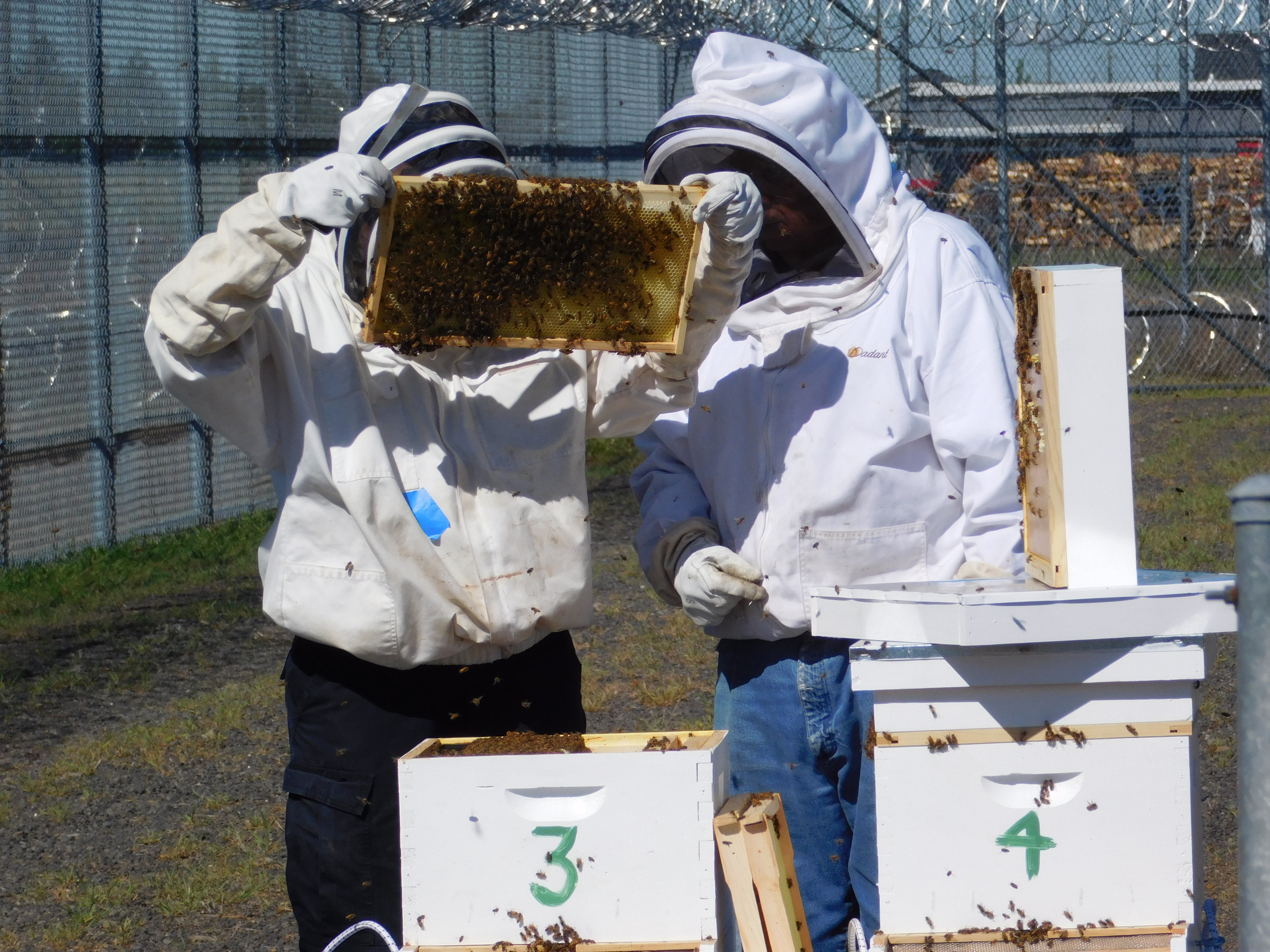
Beekeepers at AHCC check on a hive. Photo by DOC staff.

Of course! The club members had wanted to do something meaningful and have a lasting positive impact; their creation would be greater than themselves and would survive long after their release back into the community.

The project was simple enough: ten chapters based on a pre-existing outline by Jim, 20 questions for each chapter, and PowerPoint presentations for each of the lessons. Ten club members accepted the challenge. Following several weeks of writing, revising, and debate over the details of educational objectives, the booklet was finally complete. Club members worked together well and overcame apprehension and doubt. Now they can see the results of their hard work. A few weeks later they finished development of PowerPoint presentations and the first Journeyman class was ready to begin.
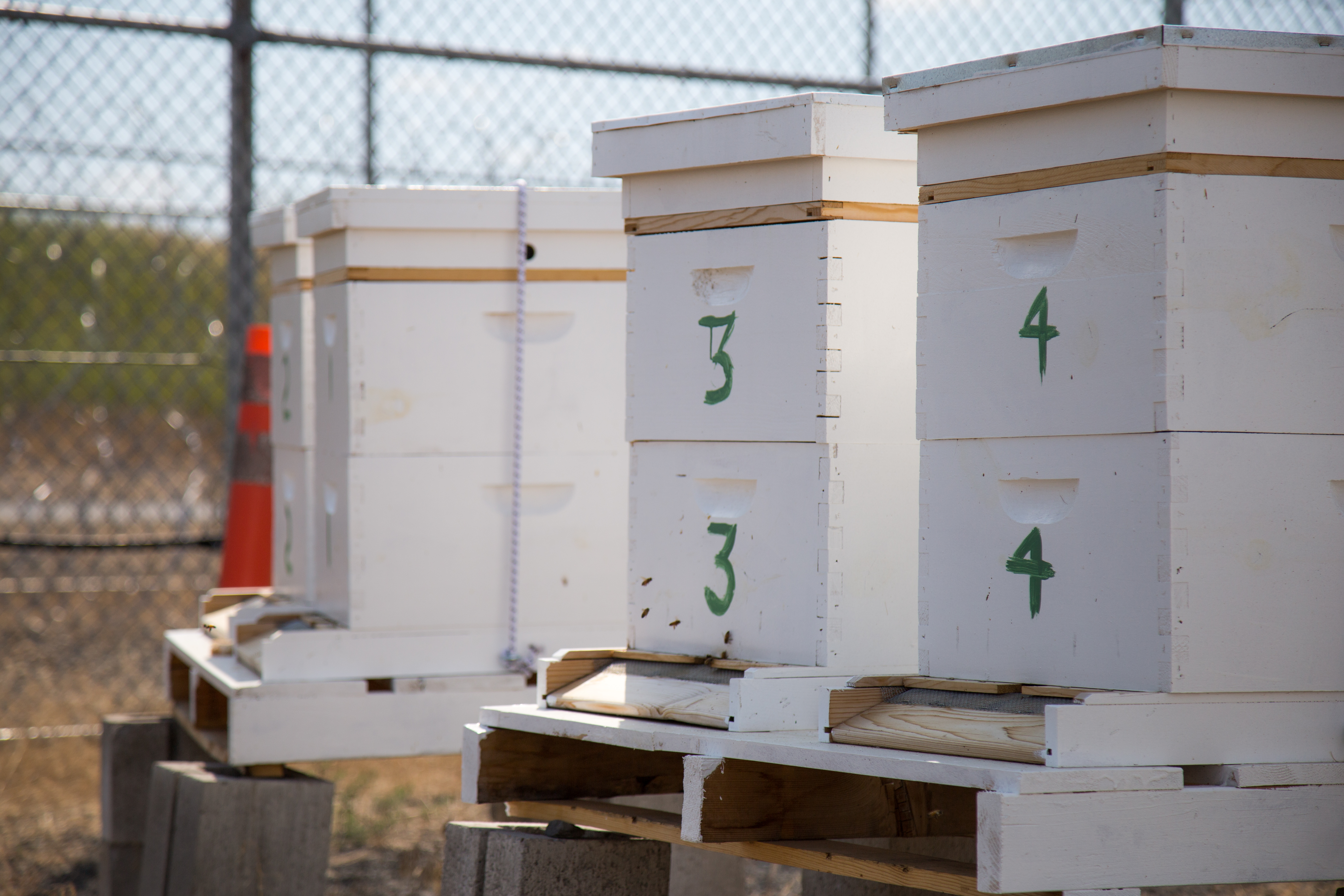
Hives next to the prisons largest garden. Photo by Ricky Osborne.

Roughly 15 eager and enthusiastic students signed up – all graduates from the first three Apprentice classes. The aspiring Journeyman who developed the presentations did an excellent job facilitating the classes and helped set the standard for future classes. Students will have to pass a test spanning 100 questions. They must also pass a practical field exam to show their knowledge of beekeeping by demonstrating setting up hives, using hive tools, and inspecting frames. Students who graduate will be that much closer to their goal of becoming a Journeyman Beekeeper. Each student will still have to serve as an apprentice for three years, earn 30 service points, maintain a hive journal for a year, and mentor a new beekeeper.

Queen-Rearing: A Crowning Achievement!

Another exciting stage of progress is coming to AHCC – queen-rearing is about to be implemented by AHA and the time couldn’t be better! One of the long term goals which stated by administration is to advance sustainable beekeeping to other institutions in Washington. Queen-rearing at AHCC would help to provide queen bees to the various beekeeping programs throughout the state. This will advance beekeeping efforts to be self-sustaining and would provide additional education to inmates aspiring towards the level of Master Beekeeper. In addition to facilitating training for new apprentice and journeyman beekeepers, inmate beekeepers would be responsible for maintaining the activities of the queen-rearing program with the continued assistance of community sponsors and the support of administration.

*********

For further reading, see a related article from Sue Box, Library Associate at the Airway Heights Corrections Center: https://blogs.sos.wa.gov/library/index.php/2018/02/beekeepers-at-the-airway-heights-corrections-center/
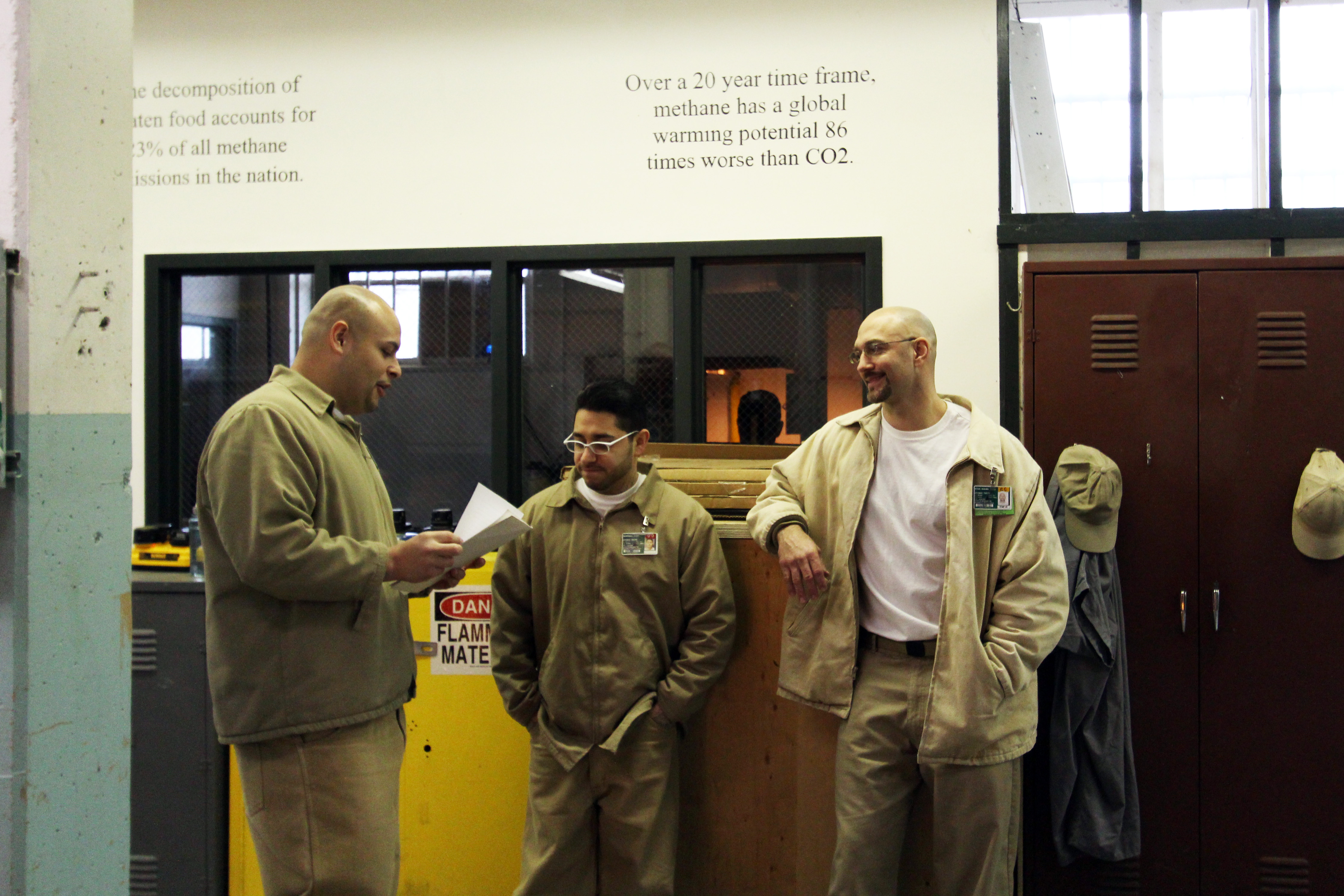
Text includes excerpts from speeches by: Certified Vermiculture and Composting Specialists Juan Hernandez, Rudy Madrigal, and Nick Hacheney, with introduction by Kelli Bush, SPP Director for The Evergreen State College
Photos by Kelli Bush and Bethany Shepler, SPP Green Track Coordinator

Certified Vermiculture and Composting Specialists Juan Hernandez practices his speech before the graduation ceremony.

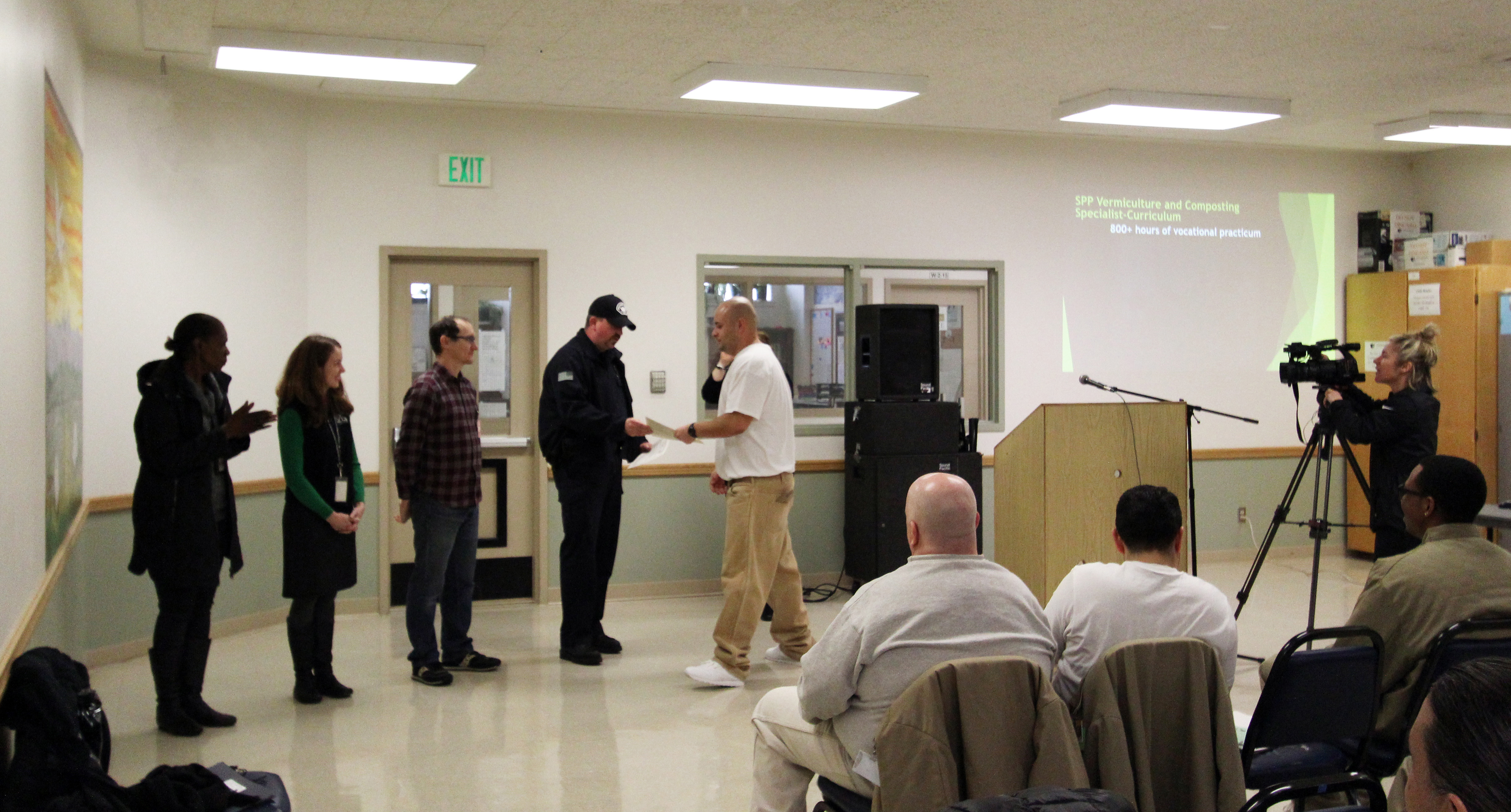
Monroe Correctional Complex – WA State Reformatory Unit (MCC-WSRU) recently graduated it’s first class of certified Vermiculture and Composting Specialists. Reaching this milestone is the result of a truly collaborative process, with contributions from incarcerated program participants and education instructor, WA Corrections staff, Tilth AllianceUniversity Beyond Bars, and Sustainability in Prisons Project (SPP) staff at The Evergreen State College. The success of this diverse and mutually-invested team is a model for collaborative work; the shared accomplishment offers an abundance of hope for tackling other social justice and environmental challenges.

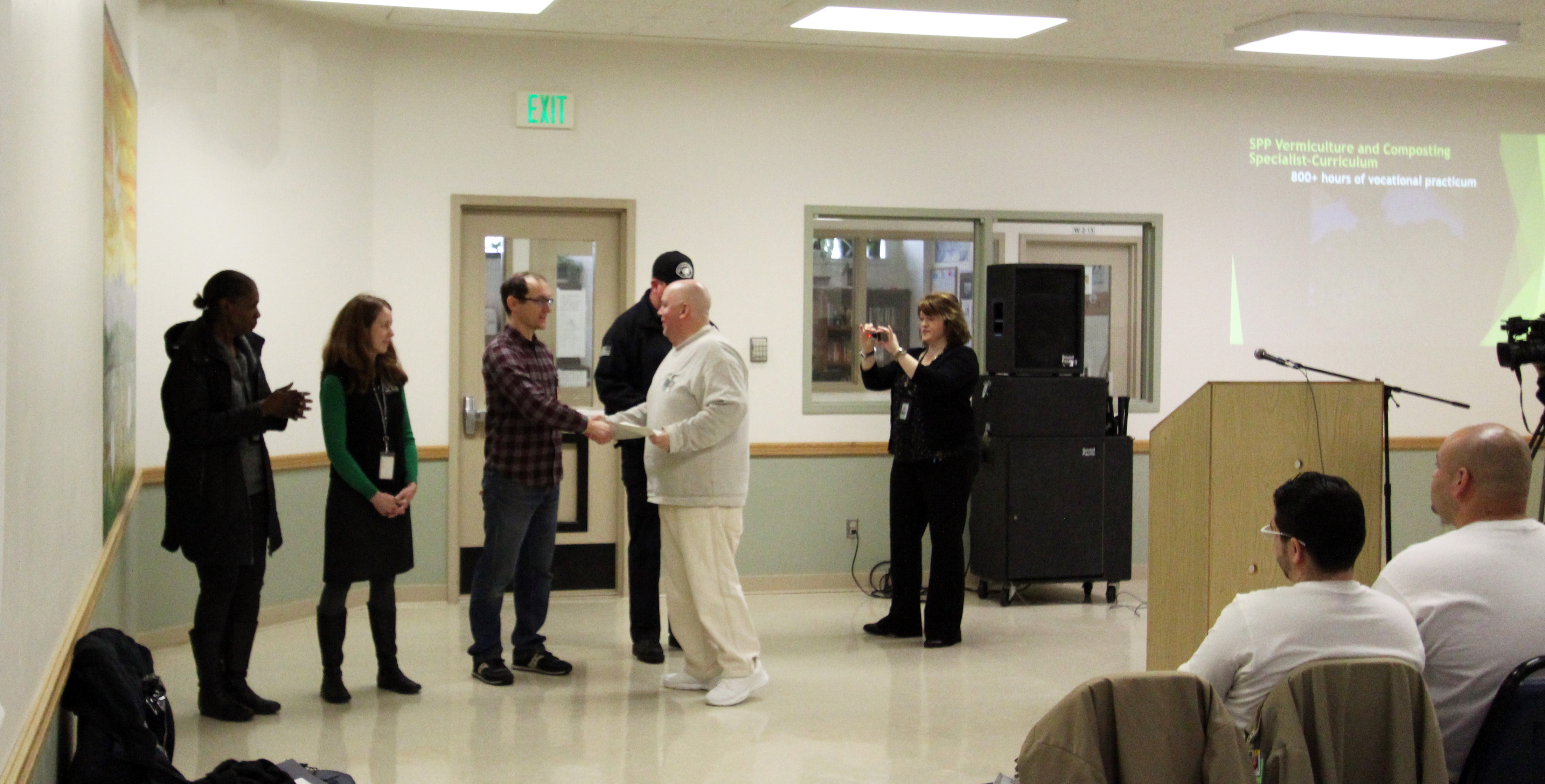
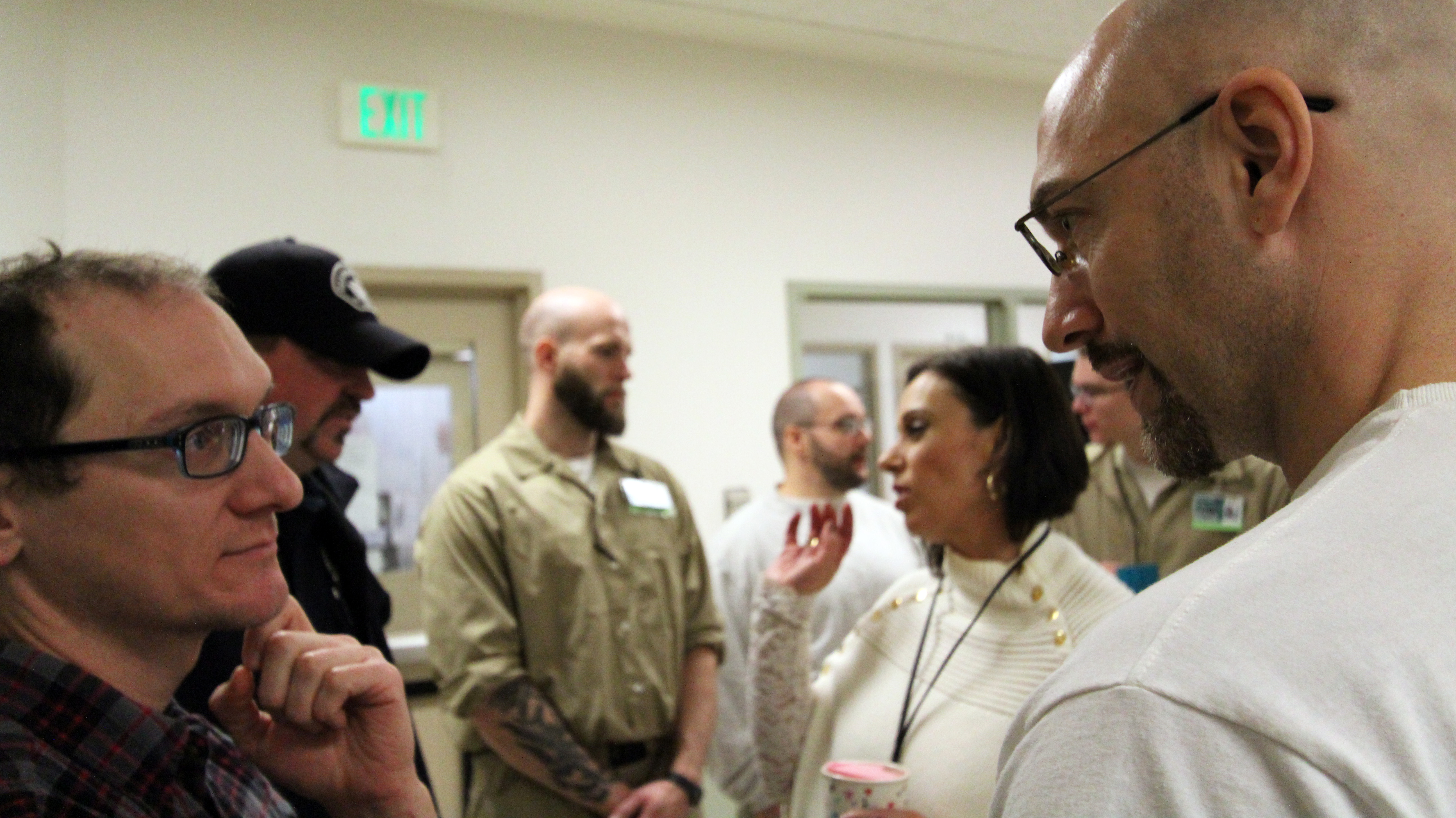
Tilth Alliance Program Coordinator, Justin Maltry (left) worked with partners to develop the certification. Corrections Officer Swan (pictured behind Justin, wearing a hat) was also critical to success effort.

The composting program at MCC-WSR was started by Nick Hacheney and corrections staff member Art King in 2009. Since that time, it has grown from a few hundred worms to a world-class program using multiple, innovative composting techniques. Not only does the program help significantly reduce food waste at the facility, but also provides participants extensive education, training, and opportunities to research and practice innovative composting techniques. Along the way, incarcerated participants have recruited input and assistance from professors, practitioners, and organizations around the country, and have found ways to improve on and fine tune their composting systems. Program protocols developed by incarcerated participants have been shared to start similar programs in other prisons and with non-profit organizations doing environmental and humanitarian work around the world. All of this work is done with tremendous support from corrections staff from MCC.

The graduation event was well-attended and included excellent speeches from graduates. Excerpts from their speeches follow.

Certificate development partners from WA Department of Corrections (CPM Anne Williams & Officer Jeff Swan), Tilth Alliance (Justin Maltry), and SPP (Kelli Bush) congratulate Juan Hernandez on his achievement.

Juan Hernandez

“I know for me it’s been a long journey to be standing here in front of everyone today, but I wouldn’t change a thing, because along the way I have grown as a man and human being and I’ve learned so much. Today marks the day in which we can officially declare that we finished one of our biggest goals–completing the vermiculture and composting specialist certification. We have been working on this for about a year and getting to this moment has certainly been quite a journey through blood, sweat, tears, and stress.

This certification has not only enriched my life here, but I believe that it will truly give me opportunities when I get released to find employment and follow a career in sustainability. So today I stand in front of you a man with a dream but not only that; here stands a man with a dream and the skill-set to follow that dream and make it a reality. I started my journey of sustainability after my journey for bettering my life had already started. I now see that my two journeys are closely intertwined.

This program and programs like this are not only important but essential to guys in here in regaining their humanity and getting them ready for reentry into society.

I believe that not only do we recycle food waste, but we also recycle people. And so, with that, I leave you saying this: please don’t judge a person by their mistakes, but judge them by how they learn from their mistakes.

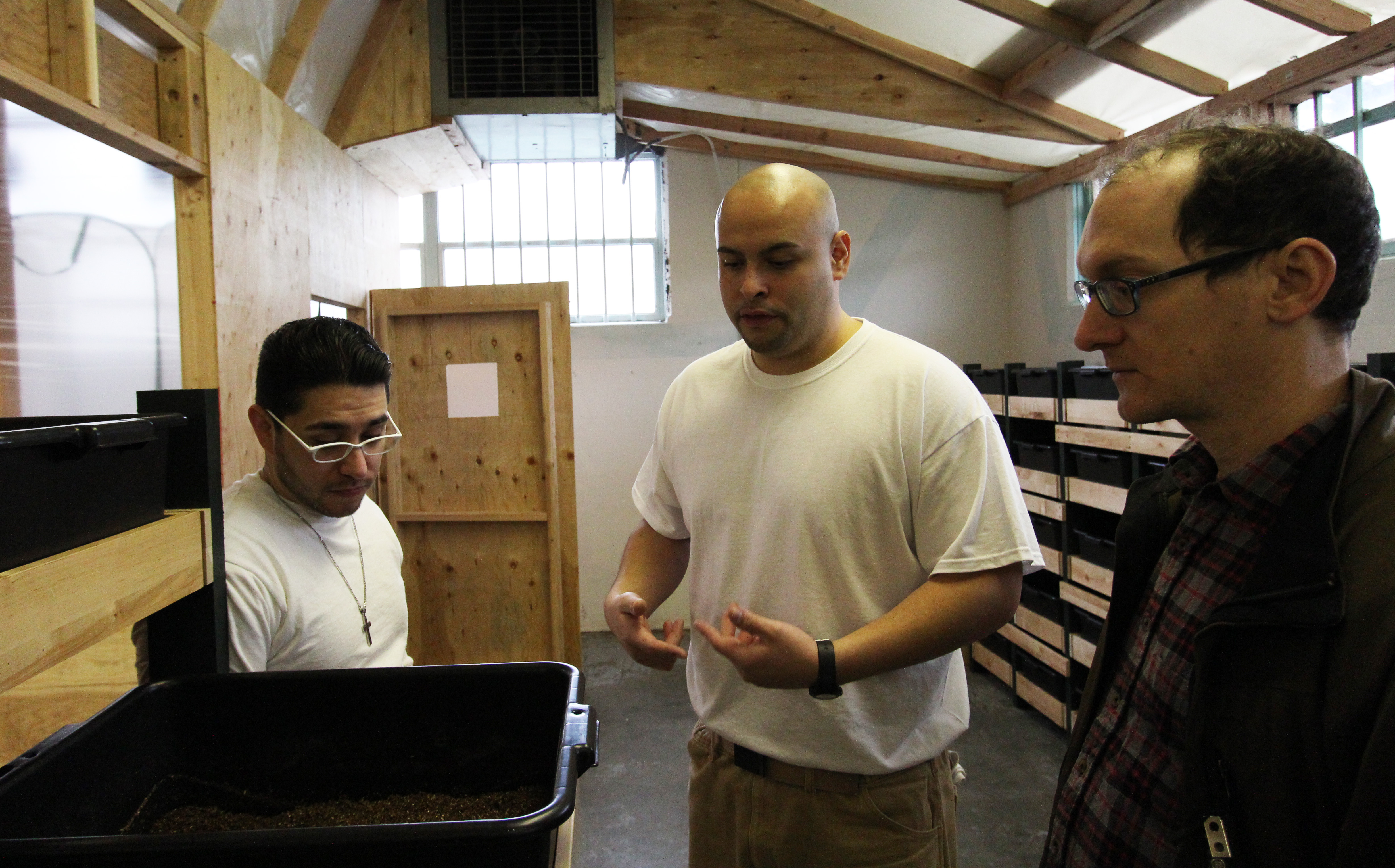
Juan Hernandez talking with Rudy Madrigal and Tilth Alliance Program Coordinator, Justin Maltry, about the Black Soldier Fly composting program.

Rudy Madrigal

“About a year and a half ago my friend Nick told me that they really needed some workers at the worm farm and he asked if I would consider working back there. I’m not going to lie; I was dodging him for a while. But finally he got me to commit and I went out for an interview.

I’m not going to confirm or deny that I may have come for the promise of desserts. What Nick did try to convince me of was that I was going to be helping the environment, that this program would grow and become what we wanted it to be, that I would be given the right tools to succeed both in here and on the outside, and that in the end I would be recognized for all my hard work. Well everything my friend told me that day was true, and it happened! And that makes this day such a special day for me.

Thank you Nick for being a great friend and mentor, for challenging me, for always holding me accountable, telling me the truth, even if it hurt a little bit, for changing the view I had on the world and helping me realize the impact that I have on it, and for trusting me with the black soldier fly program.”

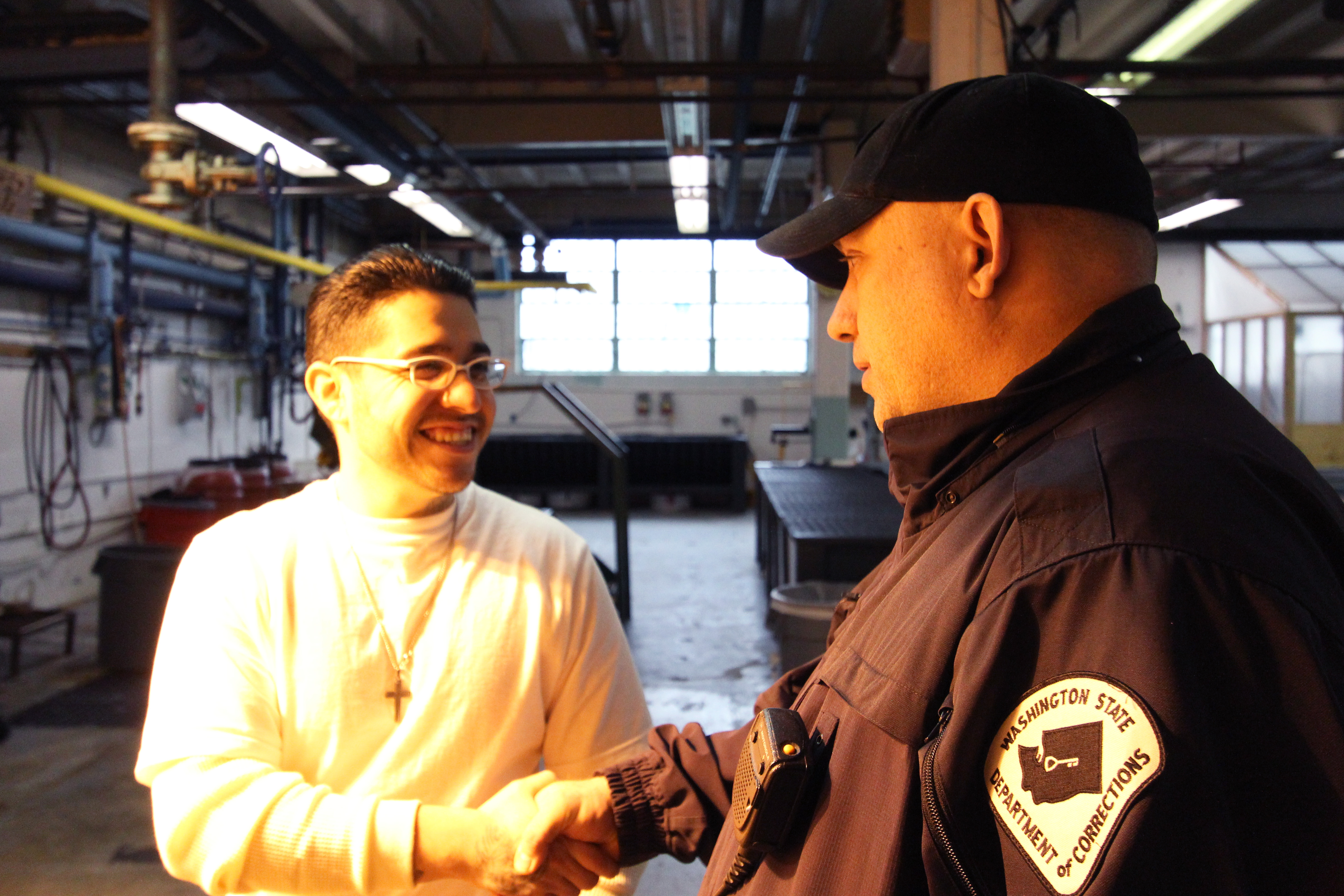
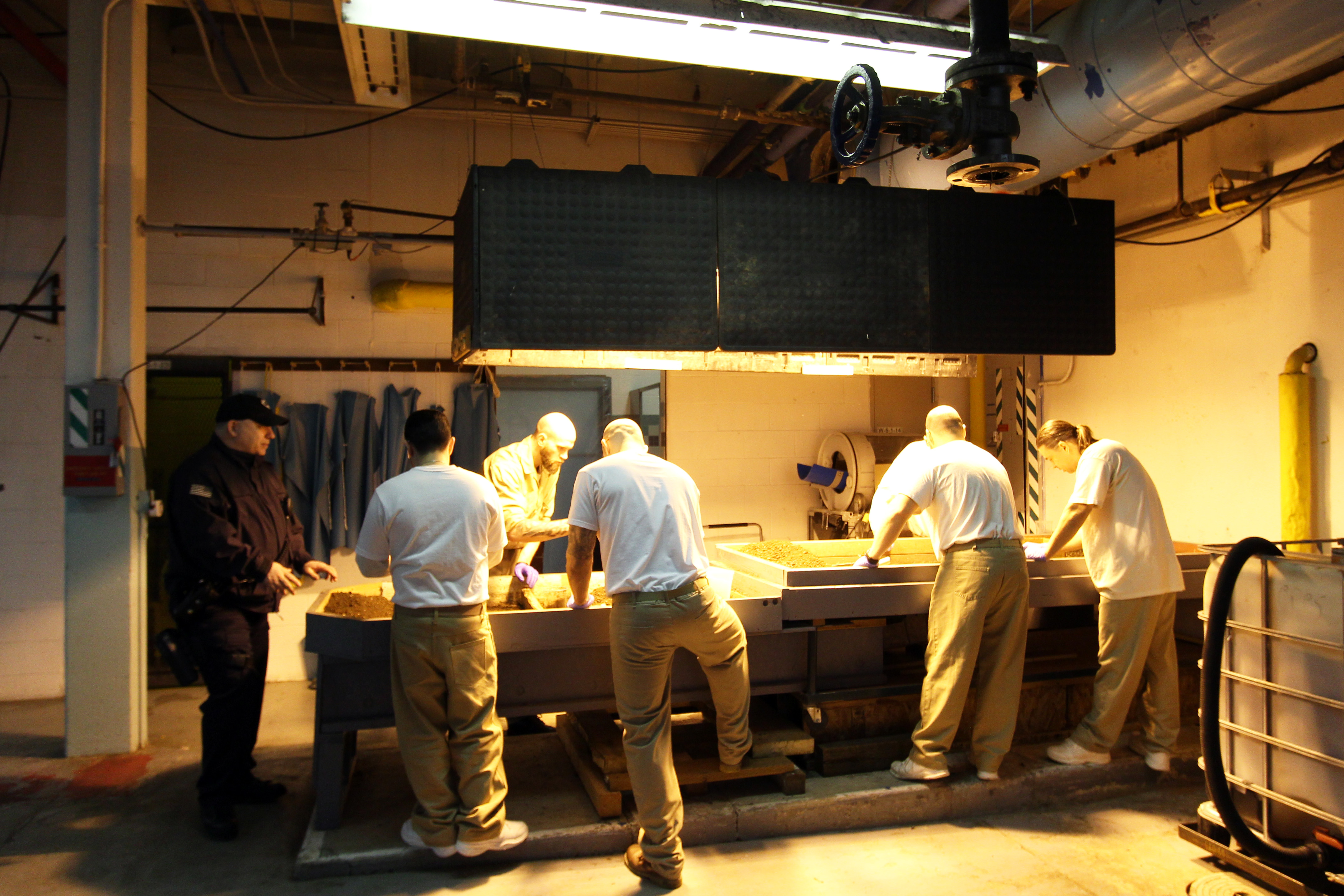
At the worm castings sifting table, Rudy Madrigal shakes hands with Sgt. LaMunyon.

Nick Hacheney

“Days like today don’t happen often in prison and it really means a great deal to us that you have decided to spend this time here.

First, we would like to thank all the DOC officials in the room. These types of programs would not happen if it wasn’t for the vision and courage of prison officials. Administrators take risks to make programs like this happen. They have to find money in ever-shrinking budgets and they have to bravely promote a narrative that prisoners are capable of great things and worth making an investment in.

We had the right ingredients here in staff willing to work with us, support from community partners and men who got busy making a difference in their world. So thank you to all.

It will surprise most people to learn that prisoners actually care about big issues like global warming and water quality. But these guys are more than prisoners – they are fathers who care about the world their children are growing up in; they are environmentalists who care about the planet; and they are advocates who understand the needs of a growing world population.

Nick Hacheney helped found the composting program at MCC and develop program education materials and vermicomposting certificate.
Composting Technicians talk with Sgt. LaMunyon as they sift worm castings.

Text by Jessica Brown, SPP Turtle Program Coordinator, Philip Fischer, U.S. Forest Service volunteer and Adam Mlady, Biological Science Technician.
Photos by Jessica Brown

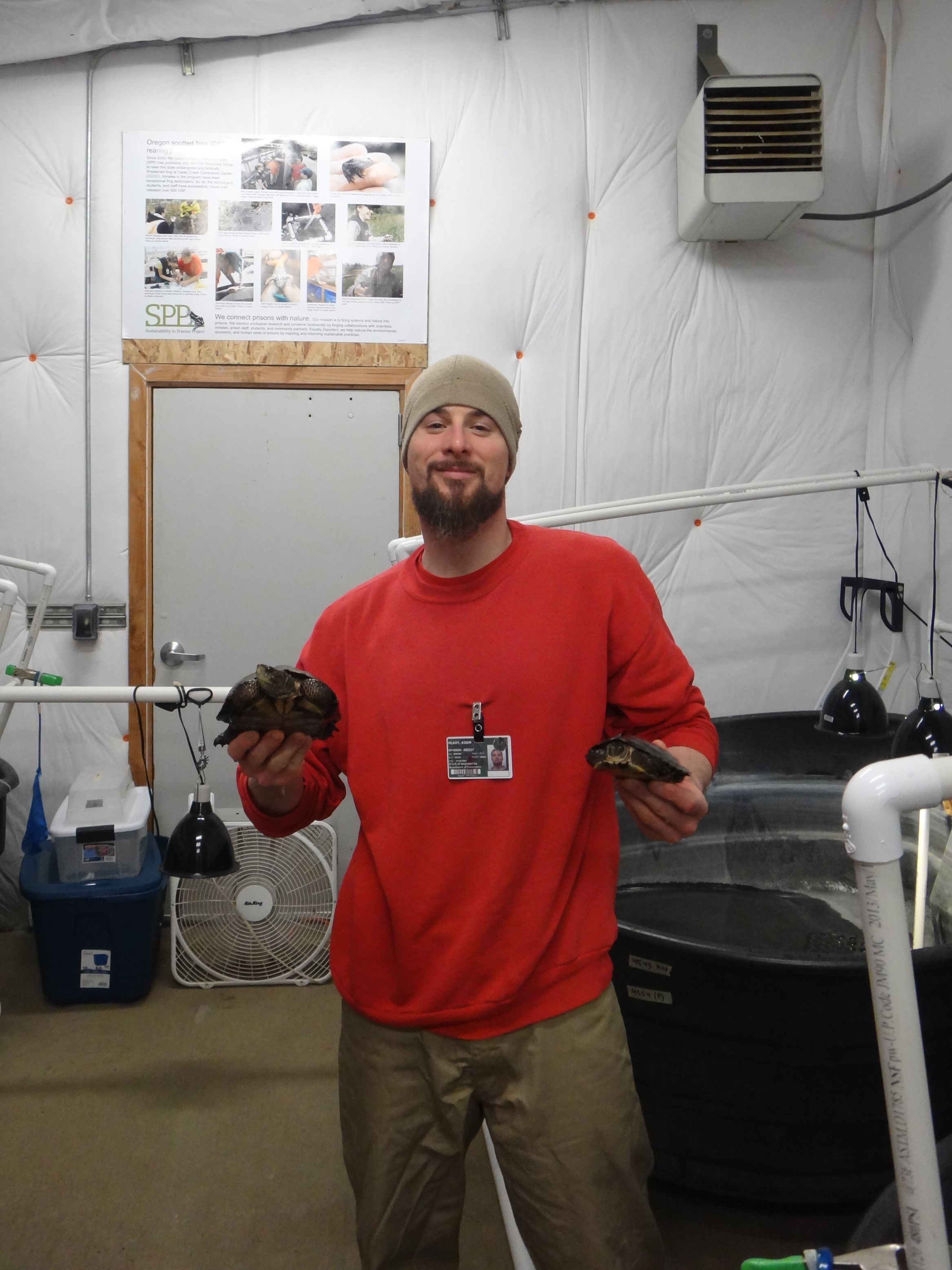
Biological Science Technician Adam Mlady holding two of the Western Pond Turtles currently housed at Cedar Creek Correctional Center.

Cedar Creek Corrections Center (Cedar Creek) was home to the very first endangered animal program in a prison: they raised and released hundreds of Oregon spotted frogs from 2009-2015. In 2018, ecological conservation at Cedar Creek is thriving and evolving to encompass a small array of conservation and sustainability programs. Offering an array of programs allows us to partner with a larger group of incarcerated technicians; there are five at this time, and we plan to add a few more. All participants will have a new position title of Biological Science Technicians, and will receive education and training in the  turtle, beekeeping and woodpecker programs, and—later on—a new aquaponics program.

Turtles

Cedar Creek hosts endangered pond turtles that need daily attention; from Technician Adam Mlady’s writing last month, “currently we have two females, one male, and are expecting seven more to be dropped off later today…Taking care of them is very rewarding. I get a sense of unity and accomplishment in ensuring they are clean and fed, and working them back to health. It’s even a sustainable project to feed them! They eat a mix of goodies, but one of the days the pond turtles get mealworms, which we grow and harvest ourselves. Eggs to larva to pupae to beetle, we are hands-on (gloved of course!) the whole way through.”

Woodpeckers

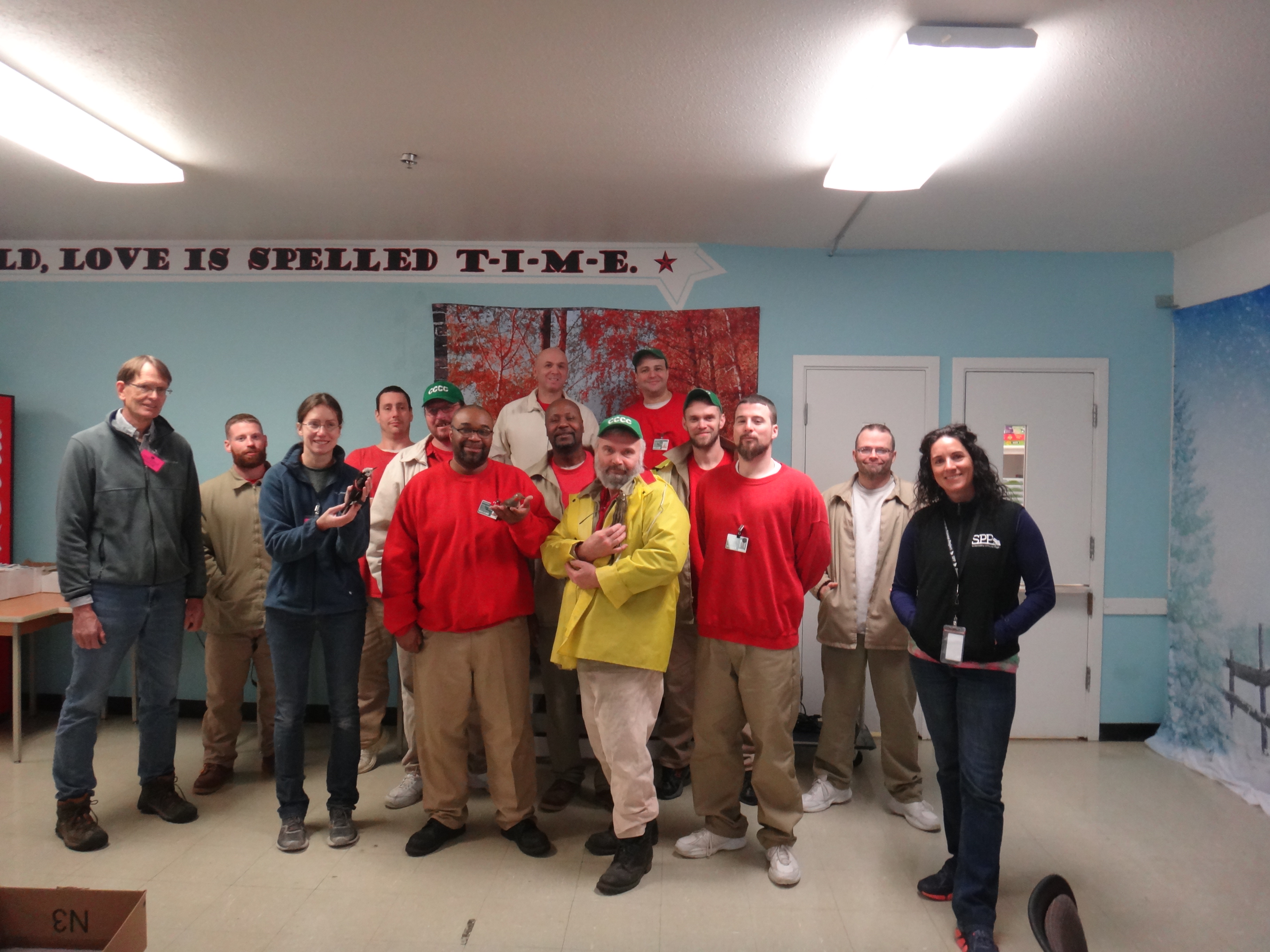
USFS trainers, SPP coordinator, and participants of the woodpecker nest monitoring project training pose with bird specimens.

In November, the Woodpecker Nest Monitoring Project was launched with a two-day training for all five turtle technicians, four greenhouse workers, and two other interested individuals. The purpose of the Woodpecker Nest Monitoring Video Review is to support a multi-year research project through the U.S. Forest Service (USFS) focused on identification of nest predators.

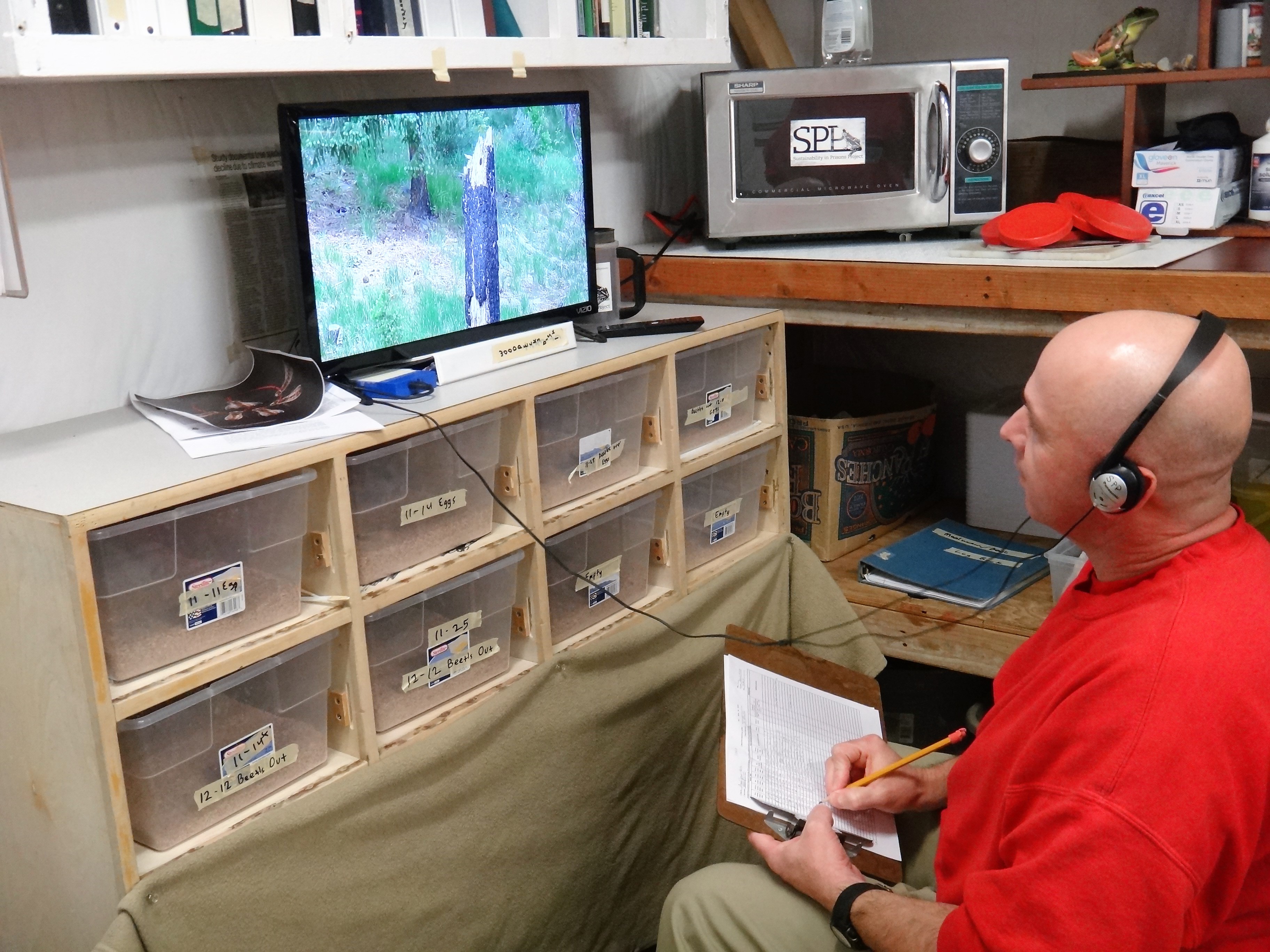
Woodpeckers are a keystone species that provide cavities not only for their own nesting use, but also for a broad spectrum of secondary cavity users including small mammals and other birds. Video footage comes from cameras operating 24/7 at cavity nests. This is the only sure way to document nest depredation, however, reviewing the enormous amount of video footage requires an equally enormous amount of reviewer time. In order to accurately monitor video footage, correctly identify species, and describe animal behaviors, reviewers need considerable training.

Biological Science Technician Modesto Silva reviewing video footage of a Northern Flicker cavity nest. This video station sits atop the mealworm rearing bins for the western pond turtle program.

Participants at Cedar Creek received six hours of education and training from Teresa Lorenz, USFS biologist and Phil Fischer, USFS volunteer, covering woodpecker, raptor, song bird, and small mammal identification; background information relating to the project, including project protocol and species behavior descriptions; and monitoring and data recording techniques. In the past, video monitoring has only been performed by undergraduate students, however, collaboration between USFS and SPP has made it possible to also bring this type of education and experience into prison.

And coming soon…

Cedar Creek has long had a productive greenhouse, including a small aquaponics system. The old aquaponics will be replaced with a more productive system designed by Symbiotic Cycles LLC, an Olympia-based company dedicated to the application of regenerative food production through aquaponics. The new design will support production of fresh greens year round for use in the kitchen.

Technician Mlady has said, “I’m really excited about the upcoming aquaponics pond we will be building. It is huge, and tucked away safely up in our camp’s greenhouse. Once we get the plumbing correctly set up, the koi fish will be able to fertilize our selected plants and vegetables. Brilliant system.” Aquaponics training will start sometime this March, and the system should be up and running soon after.

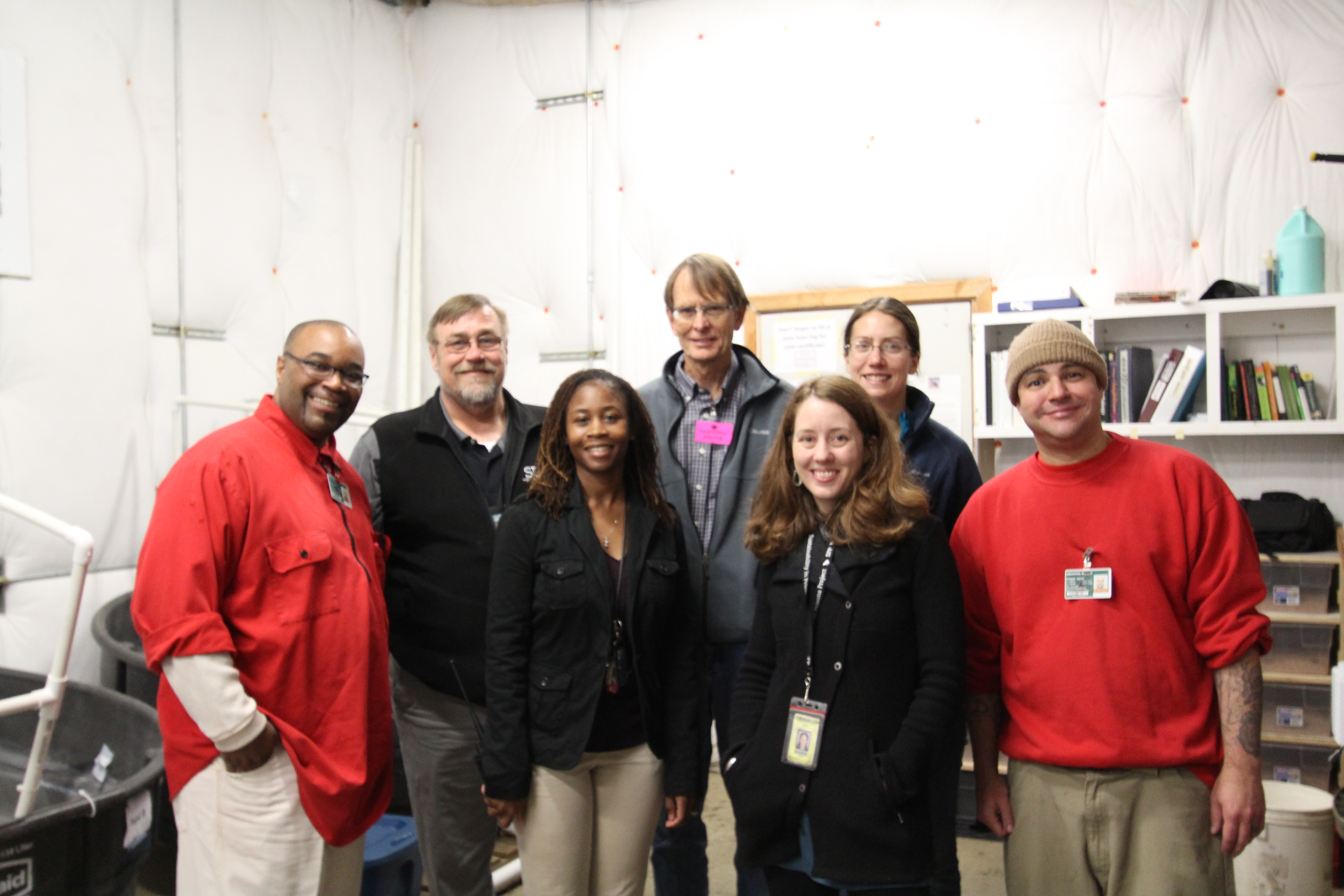
Partners in endangered species conservation for Cedar Creek Corrections Center, from left to right: Technician, John Fitzpatrick, Superintendent Douglas Cole, Loretta Adams (SPP Liaison), Philip Fischer (U.S. Forest Service), Kelli Bush (SPP Co-Director, Teresa Lorenz (U.S. Forest Service), Technician William Anglemyer). Photo by Jessica Brown.


By SPP Co-Director Kelli Bush

Following six years of dedicated leadership from Dr. Carri LeRoy, Evergreen’s team for the Sustainability in Prisons Project (SPP) enters a new era. We are so pleased that Carri will continue to support and influence SPP as our Senior Science Advisor. SPP is also now a Public Service Center for The Evergreen State College, playing a greater role in Evergreen’s campus community and receiving increased recognition and support. Together we are continually improving and growing SPP, and we know there’s still so much more to do!

SPP partners from Evergreen and Washington State Department of Corrections have just completed updates to SPP’s mission and vision statements. The new text represents greater emphases on education and change, acknowledgement of current environmental and justice system challenges, values shared by SPP partners, and a more succinct, stand-alone mission statement.

Mission Statement: We empower sustainable change by bringing nature, science, and environmental education into prisons.

Vision: In response to the dual crises of ecological degradation and mass incarceration, we aim to reduce recidivism while improving human well-being and ecosystem health. SPP brings together incarcerated individuals, scientists, corrections staff, students, and program partners to promote education, conserve biodiversity, practice sustainability, and help build healthy communities. Together, we reduce the environmental, economic, and human costs of prisons.

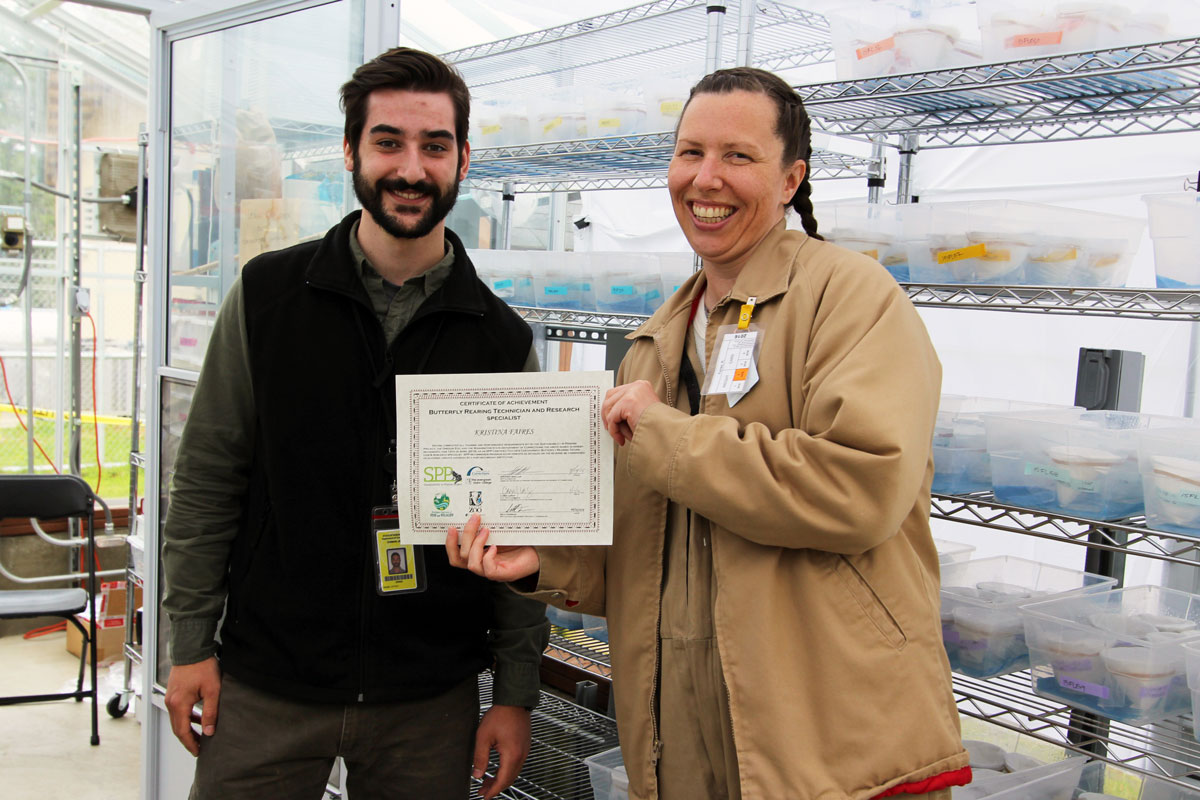
Butterfly technician Kristina Faires receives a certificate for her academic and technical accomplishments in the program; program coordinator Seth Dorman poses with her to recognize her achievements. Photo by Keegan Curry.

Going forward, our top priority is identifying mechanisms to award college credit to incarcerated participants in SPP certificate programs. Education is the most effective way to reduce recidivism. These certificate programs serve as high quality apprenticeships where participants receive extensive training, education, and experience addressing complex conservation issues, delivering environmental education, or participating in our workshop series. Recently, Dr. Carri LeRoy provided valuable review that informed significant improvements to SPP certifications. We are so grateful she plans to continue providing certification oversight to ensure program quality and consistency. SPP’s certificate recipients are clearly worthy of academic recognition; they demonstrate advanced environmental knowledge and application on a daily basis.

Our programs are unconventional, and retrofitting accreditation to existing practices is a challenge, but this long-time effort seems to be gaining momentum. Acknowledging SPP certificate completion with college credit could serve to complement post-secondary education with allied prison education programs and/or inspire continued education post-release.

As always, thanks for your partnership and support of SPP. We’re so pleased to be offering these programs with you!