By Laureen Dulo

You may not expect it, but Washington State prisons are full of a variety of gardens. Garden types vary depending on the facility’s climate, partnerships, goals, and programs. Most facilities feature a variety of gardens which may include educational gardens to accompany SPP’s Foundations in Gardening classes, produce gardens for donation or on-site use, herb and medicinal gardens, culture gardens for cultural groups, flower gardens, pollinator friendly gardens, small orchards, rental plot gardens, and drought tolerant native plant gardens. These gardens not only enrich the prison environment but also have positive effects on incarcerated individuals, correctional staff, and visitors.

By cultivating gardens and actively using or donating their produce, incarcerated individuals have the opportunity to gain valuable gardening skills, knowledge about healthy eating, and contribute positively to the local communities. Since 2020, almost 200 students have taken SPP’s 4-credit Foundations in Gardening course. In 2024, prisons reported donating 110,399 lbs. of produce to local food banks and using 131,482 lbs. of produce grown on site within the facilities. However, challenges persist, mainly related to incarcerated individuals having access to the fresh produce grown at facilities.
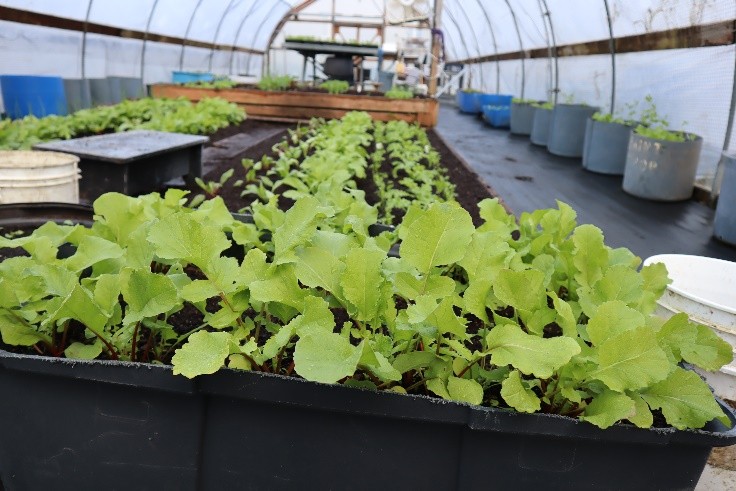
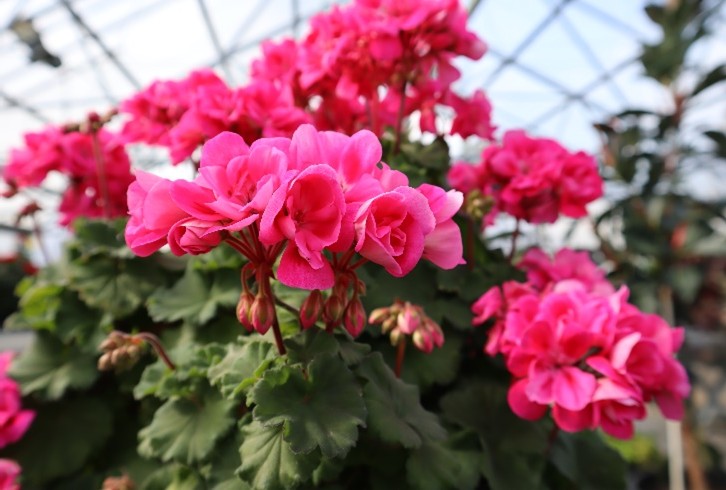
Some plants and flowers from the gardens at Stafford Creek Correctional Center. Photos by Emily Passarelli.

To address these challenges, SPP, with support from former Secretary Strange and other Department of Corrections (DOC) leadership, launched the ‘Garden to Kitchen Project’ (G2K Project) in the Fall of 2021. The goal of this initiative was to create a stronger link between kitchen managers, plant managers, incarcerated gardeners, and various stakeholders to tackle existing barriers and improve access to fresh produce in prisons.

The Garden to Kitchen Project began by collecting information on the challenges and successes associated with utilizing prison-grown produce in facility kitchens. To gain a comprehensive understanding, SPP reached out to plant and kitchen managers across twelve prisons to discuss the limitations and obstacles related to growing, cleaning, and preparing produce. Additionally, the G2K team conducted several in-person listening sessions with incarcerated gardeners to further identify challenges regarding produce access. These gardeners expressed frustration over the waste of facility-grown produce and the lack of formal education on cleaning and preparing it. They also highlighted issues such as staffing shortages, movement closures, small crew sizes, and quarantines. Concerns were raised about the lack of compost and fertilizers, the absence of a formal planting plan, unfair pricing of produce, and the inability to have produce in living unit.

Building on the insights gathered, the Stafford Creek Corrections Center (SCCC) took the lead in piloting the Garden to Kitchen  initiative, with support from SPP. To address the challenges identified, SPP provided resources including composting tumblers, seeds, materials for garden beds, books, and garden tools. These contributions were designed to enhance the facility’s capacity to grow and effectively utilize produce, fostering a more sustainable connection between the garden and the kitchen. Through these efforts, the initiative aimed to overcome the previously identified obstacles and improve the overall efficiency and sustainability of produce use within the facility.

To address more barriers, SPP is actively leading sustainability workshops focused on addressing the challenges identified by gardeners, kitchen managers, and plant managers, like delivering dirty produce to the kitchens.

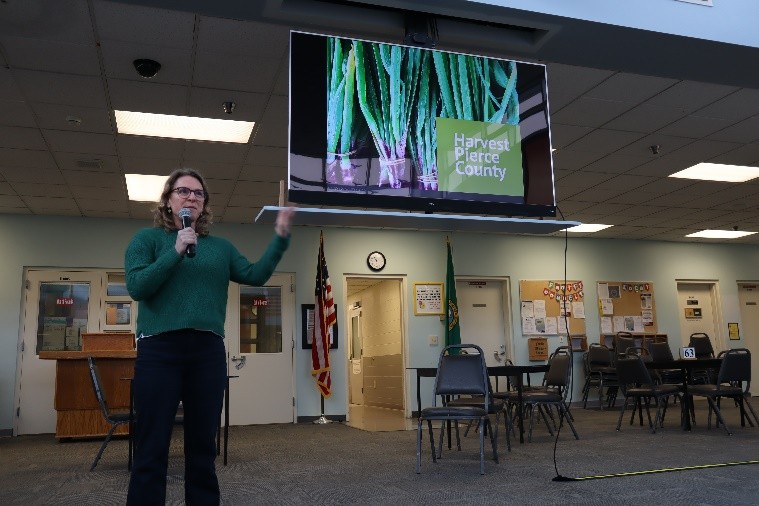
On April 2, 2025, Stafford Creek Correctional Center hosted an inspiring and thought-provoking workshop featuring Kristen McIvor, Director of Harvest Pierce County. Founded in 2010, Harvest Pierce County aims to bridge the gap between food, community, and the environment by engaging residents in creating a just and nutritious food system. With over 15 years of experience in cultivating sustainable food systems in Tacoma, WA, McIvor brought a wealth of knowledge and passion to the conversation, emphasizing the critical role of community engagement in creating a more just and healthy food system. During her presentation, she discussed the importance of building sustainable systems that promote transforming garden produce into healthy meals
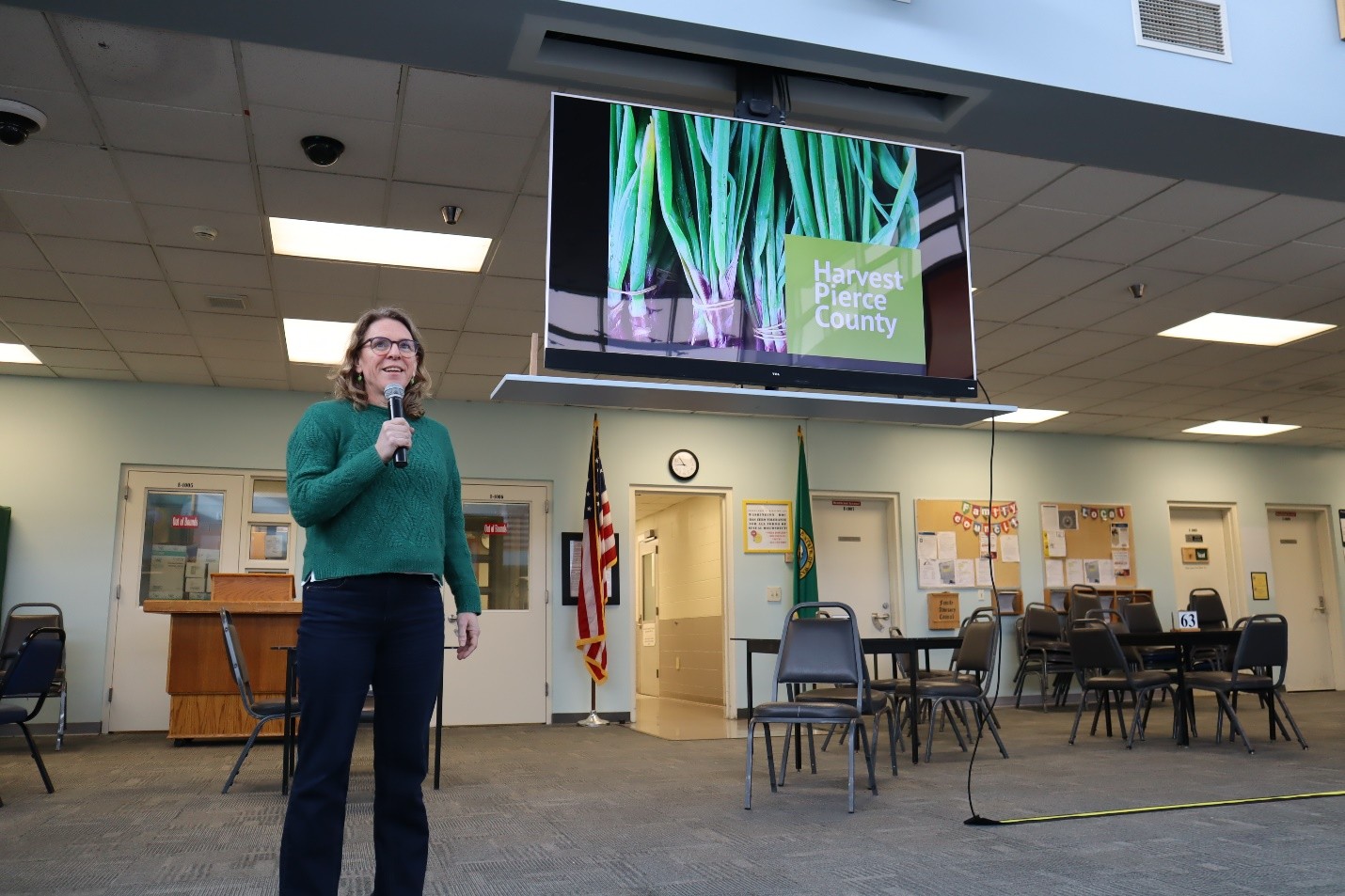
Kristen Mclvor introducing herself to students from Stafford Creek Correctional Center. Photo by Emily Passarelli.

McIvor outlined key programs that were relevant to challenges identified by the facility. Essential practices like basic garden planning, recognizing planting schedules, and understanding food safety were highlighted, with emphasis on understanding your kitchen’s needs, barriers, and limitations

McIvor also shared practical tips that included harvesting techniques specific to various crops, with an emphasis on timing and handling to ensure food safety and quality. Participants were encouraged to engage with the kitchen staff to explore how to prepare their produce, understand any logistical barriers they may face and food safety practices like worker hygiene and proper harvesting methods to mitigate contamination risks.
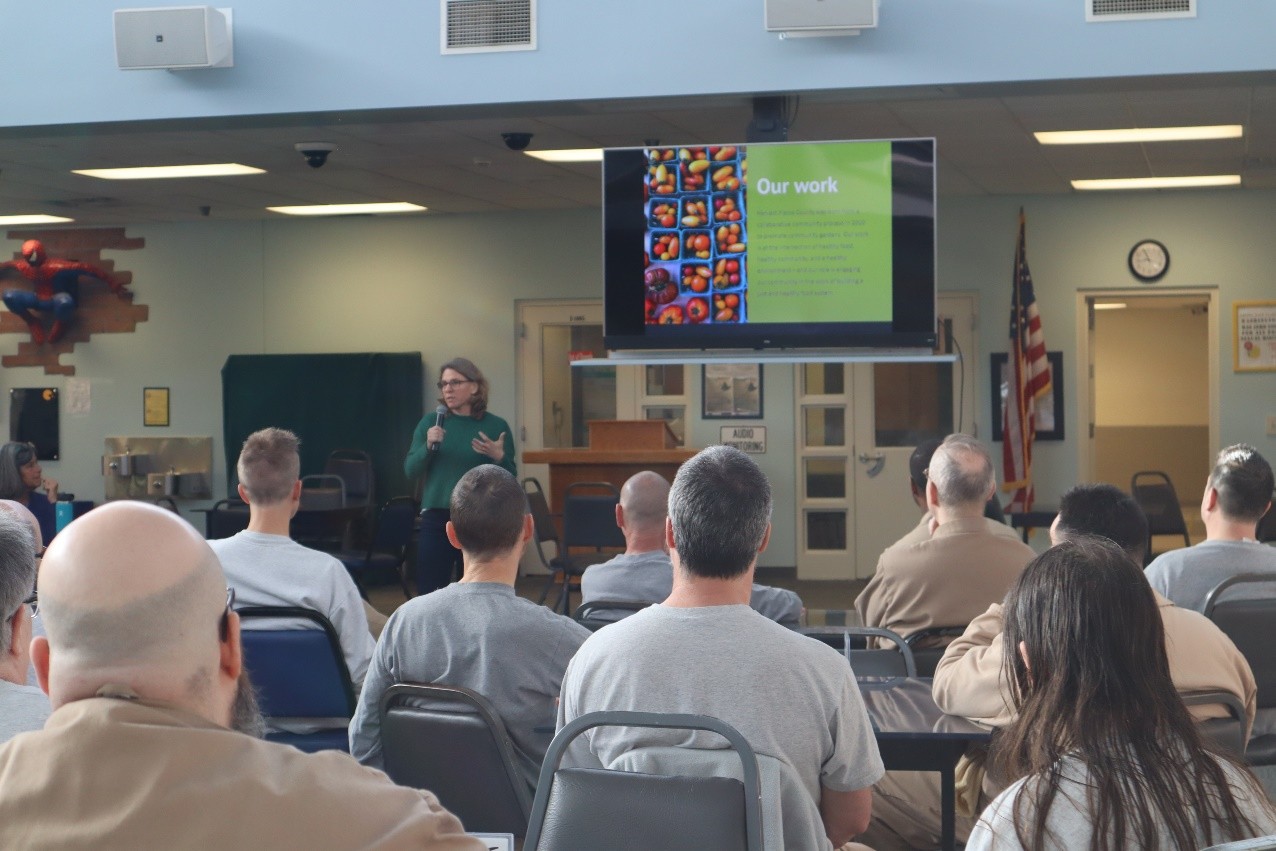
Kristen Mclvor discusses the work they do at Harvest Pierce County with students from Stafford Creek Correctional Center Photo by Emily Passarelli.

The workshop sparked meaningful dialogue about the unique challenges of connecting prison-grown produce to institutional kitchens. Issues such as food safety regulations, kitchen infrastructure, and access barriers remain significant. Yet, with open communication and a commitment to collaborative problem-solving, progress is possible. Programs like those led by Harvest Pierce County, along with the efforts of the Sustainability in Prisons Project, continue to demonstrate how innovation, partnership, and equity can transform systems from within.
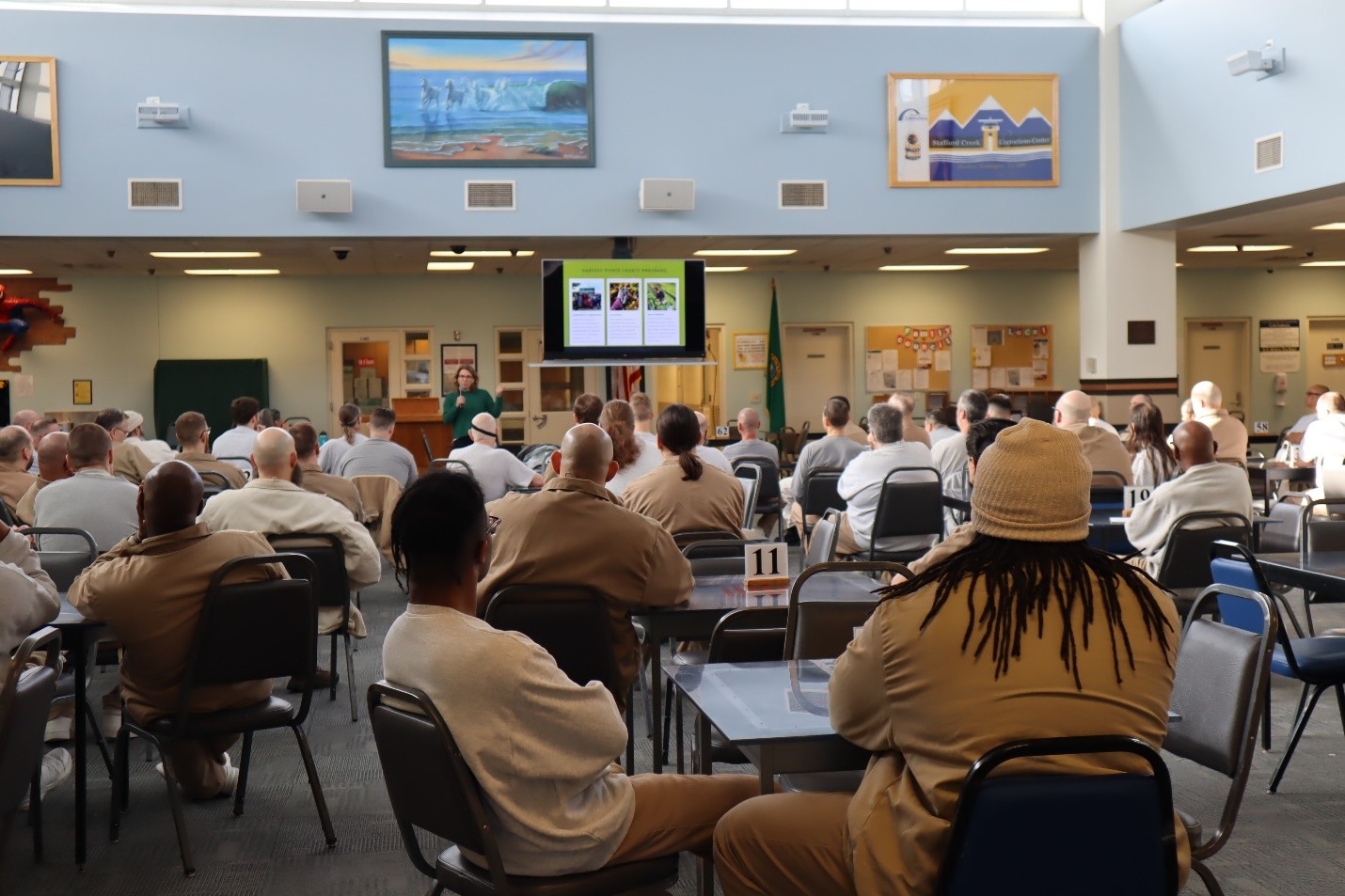
Kristen Mclvor discusses the various programs under Harvest Pierce County with students from Stafford Creek Correctional Center. Photo by Emily Passarelli.

The workshop was a remarkable gathering, attended by incarcerated students, SCCC staff, SPP staff, and Sally Brown, one of SPP’s long-term partners and a UW research professor. As the workshop concluded, students engaged with both Kristen and Sally, asking insightful questions that sparked meaningful discussions. Following this, Kristen and Sally enjoyed a visit to the beautiful gardens at SCCC, witnessing firsthand the incredible progress being made, an inspiring wrap-up to a productive day. To learn more about Kristen and her impactful work at Harvest Pierce County, please visit their website:https://piercecd.org/190/Urban-Agriculture

As we prepare for the next phase of the Gardens to Kitchens Project, we encourage stakeholders, community members, and partner organizations to stay engaged. Together, we can cultivate not only gardens but also thriving ecosystems that support health, dignity, and sustainability both inside and outside of prison walls.
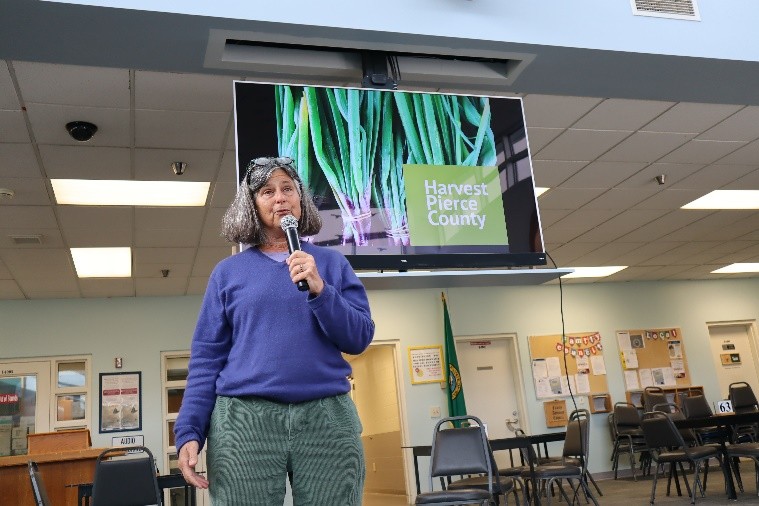
Sally Brown (left) and Kristen Mclvor (right) answering students’ questions at the end of the workshop. Photos by Emily Passarelli. 
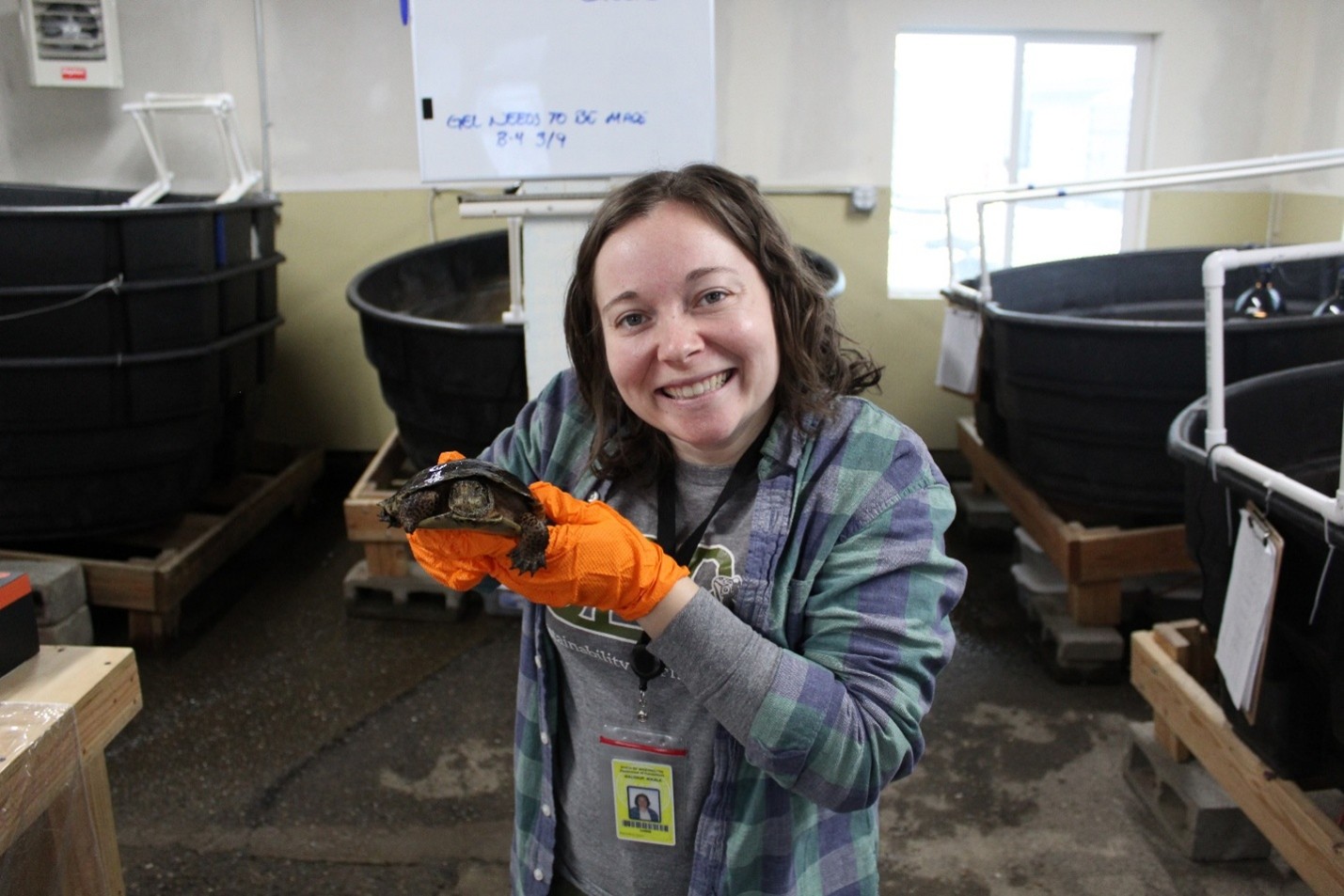
We sat down with Mikala to learn more about her role at SPP, as well as her SPP supported thesis work. 

Mikala Waldrup with a Western Pond turtle. Photo by Xitlali Herrera.

Could you tell us a little bit about your background and what brought you to Evergreen and SPP?  

After undergrad I joined a Ecological Conservation Corps, which was an AmeriCorps program that mainly focused on conservation, disaster relief, and wildland firefighting and fire mitigation. I spent three years with that program, mostly doing conservation, stewardship, and learning about management practices and restoration ecology through hands-on practice. But I didn’t feel like I had the science background, or the educational background, and I felt like to be more marketable to potential employers I wanted to pursue a master’s degree. 

 I also love learning, and I felt ready and excited to go back to school. I wanted to move the Pacific Northwest and Evergreen just spoke the most to me. My aunt used to live out here in Washington, and I would visit in the summers in high school. I fell in love with the flora and landscapes that are out here, and it felt right. I really love the Evergreen model in terms of not having grades or tests, and the learning community that it can create.  

I was looking for a new job in the transition and the SPP position that I’m currently in was open. I love doing environmental interpretation and education, and I also love doing hands-on conservation work. Getting to work with the western pond turtles and also getting to lead educational modules, seminars, and workshops has just been a dream come true for me.  

Could you expand a little bit on your program and the work you do with SPP?  

As the Ecological Program Coordinator, I facilitate the Western Pond turtle recovery program and coordinate the ecological programs at Cedar Creek Corrections Center.  

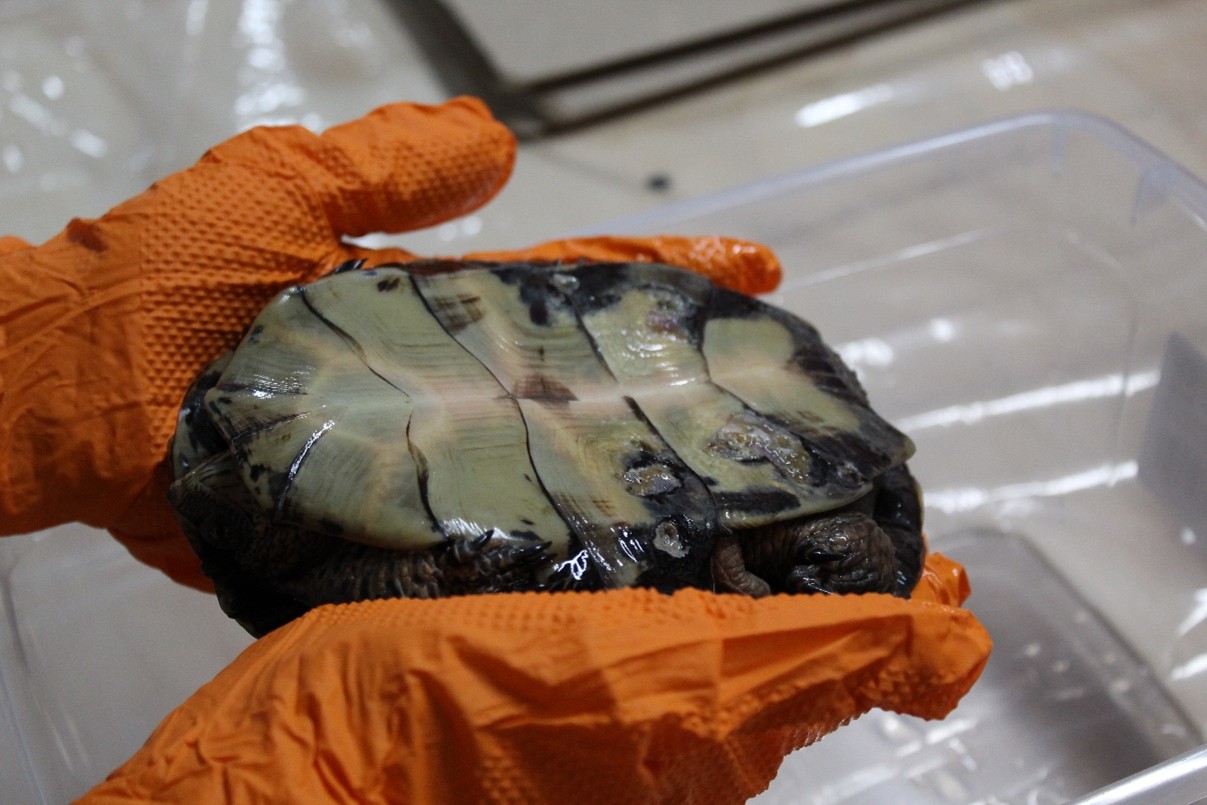
The western pond turtle is one of two native turtles in Washington, and it is afflicted by a shell disease. It’s caused by a fungus (Emydomyces) that eats away at the keratin in the shells. It creates pits and lesions, and when that happens, it can create a fluid sack underneath the turtle’s shell. This can press against the lungs or the spinal cord as the turtle is trying to heal itself. If it’s left untreated it can kill the turtles. Wildlife biologists with Fish and Wildlife go out and catch the turtles in the wild, assess them in the field for shell disease, and then bring them to vet partners where they undergo CT scans. Infected turtles go through surgical debridement during which affected parts of the shell are removed. They then fill it with bone cement similar to how a filling is done in dental work. After they’ve been in care at the zoo and the vets for a period of time, they come to Cedar Creek for longer-term care. The technicians feed them daily, clean their enclosures, monitor health, and maintain environmental conditions. 

My piece of the puzzle is coordinating that effort between all the partners (Washington Department of Fish and Wildlife, PAWS, The Oregon Zoo, and Cedar Creek Corrections Center) and the technicians. Each week I go into the facility and lead education, and we talk about the turtle’s recovery. We note if there’s any health concerns, take pictures, and weigh the turtles. I also bring in outside partners to give the technicians a more well-rounded picture of the full recovery and the broader partnership.  

Western Pond turtle exhibiting signs of shell disease. Photo by Xitlali Herrera.

You also are doing an SPP supported thesis in restoration work. We’d love to hear more about that.  

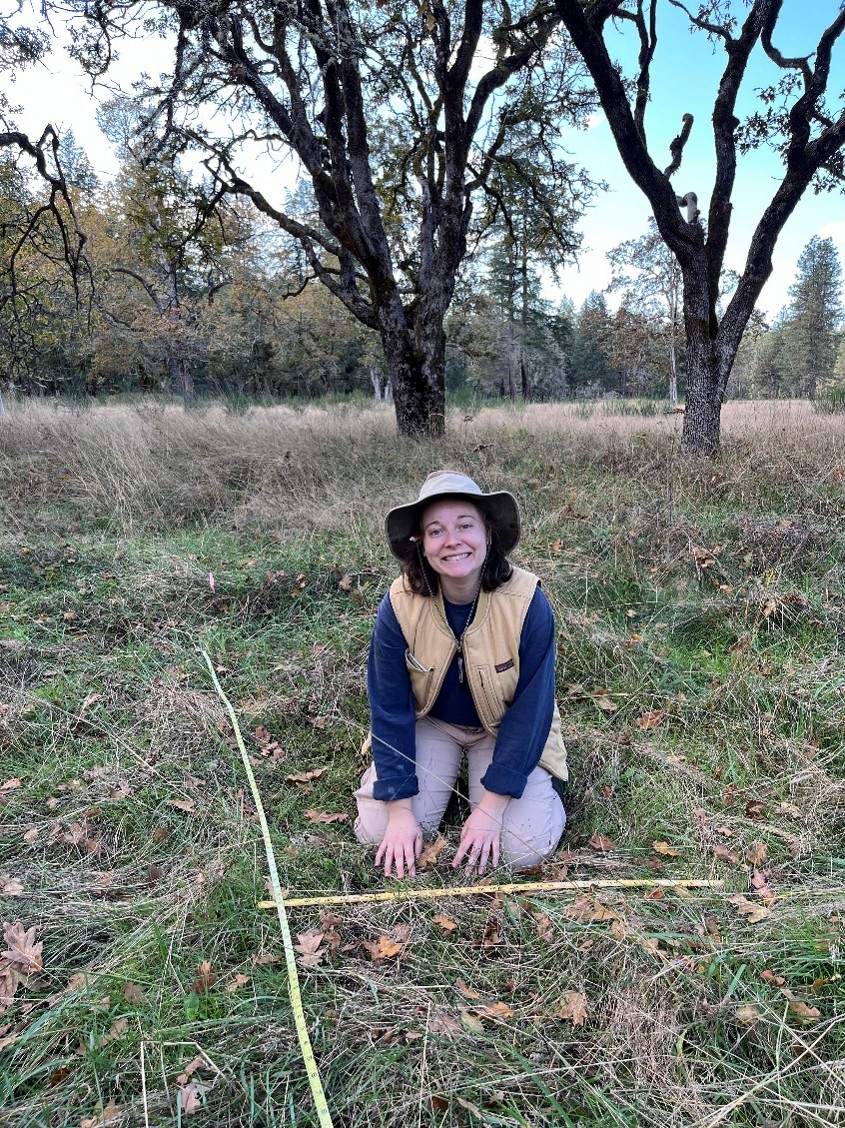
Yeah, so I am doing a thesis on Oregon White Oaks (Quercus garryana), which is the only native oak species here in Washington, and their relationship to prescribed fire. Oregon white oaks are a transition species, meaning that they typically inhabit areas between open prairies to a more closed canopy forest. Conifer encroachment and fire suppression have really put the species at risk. I’m studying the effects of prescribed fire on both mature and immature (seedlings and saplings) white oaks.  

SPP grows this species in conservation nurseries at Stafford Creek (SCCC), Washington Corrections Center (WCC), and Washington Corrections Center for Women (WCCW). I think there’s several thousand that have been sowed within the last year, and they will be grown and planted back out into the prairies in oak savannah and oak woodlands here in Western Washington. My thesis is related to prairie oak restoration work. 

Mikala doing thesis field work at Joint Base Lewis-McChord (JBLM). Photo by JBLM staff.

What are you hoping to do with your degree after Evergreen? 

Get a job (laughs). I would love to go into something related to restoration ecology or fire ecology. Ideally, I would be able to do some hands-on work, and my most ideal position would look something like half field/half office. I’d like to be involved in decision-making regarding restoration practices happening in the field. I also really love the work that SPP does and would love to continue incorporating ecological restoration with the human side of it—the human restoration and healing that can happen through nature. So, if there’s a way to marry all of those things that’s really a dream for me.  

What is your favorite reptile or amphibian?  

You know I wasn’t really into them before this position! I think turtles are pretty cool and yeah, I guess I would say the Western Pond turtle because it’s the species that I have worked most closely with and they’re just really cute. The corners of their mouths are turned up, so they always look like they’re smiling. They’re very photogenic whether or not they are smiling, maybe that’s anthropomorphizing them, but they’re a really docile, calm species. They have a lot to teach us in terms of the pace at which they move, as they are a slow growing species. They move slowly; they live long lives. They do everything really slowly. The shell disease comes on slowly. The treatment of it is slow. The recovery is slow. They have something to teach us in terms of moving slowly through our days and in our society. 

What kind of things do you like to do in your free time? 

I love to garden, do yoga, and watercolor. I also love exploring trails and our natural areas here. Grad school doesn’t provide a lot of time for extracurriculars or hobbies, but it is really nice to have a few things that bring me a lot of joy and stress relief. I also love making lots of vegan recipes.  

Anything else you’d like the readers to know 

I think I just really want to emphasize the SPP model and how transformative it is—the partnership between biologists, veterinary partners, incarcerated technicians, our DOC partners, the coordinators, and SPP staff. The way the SPP model is built everyone should be benefiting if it’s working correctly, and if anyone within the partnership is not benefiting there’s something going wrong. And I just think that that model where the partnership is the project is so cool. Getting to work with such a diverse group of people with different backgrounds is something that I’m so grateful for, and I’m very grateful for the support that SPP has given me throughout my grad school career. I’m grateful for the gift of presence from the technicians I work with. I just want to express my gratitude for SPP and all that it does for so many people.