By Carly Rose, SPP Curriculum Development Coordinator and Emerico, Gardening Curriculum Author
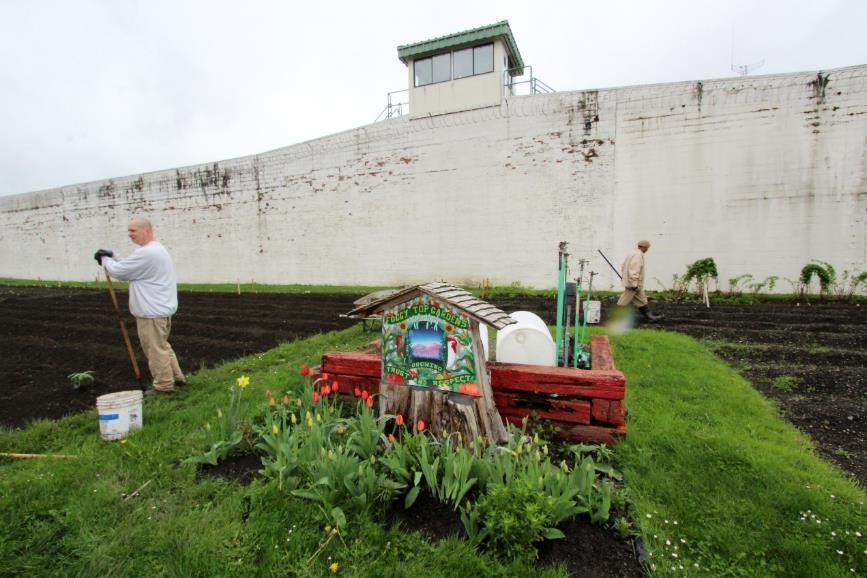
Gardeners tend to the soil in the gardens at Monroe Correctional Complex – Washington State Reformatory Unit. Incarcerated authors at MCC-WSRU are working with SPP to author chapters on Vermicomposting, Bokashi Composting, and Soil Science. Photo by Joslyn Rose Trivett.

For the past six months, gardeners at Stafford Creek Corrections Center and Monroe Correctional Complex – Washington State Reformatory Unit have been helping to build the new Gardening Curriculum. To develop course chapters, authors are combining expertise gained through personal experience with knowledge from scholarly research. Authors are working on a voluntary basis: they elect to share based on their desire to explore and describe a particular topic; some of the chapters currently in development include Vermicomposting & Bokashi Composting, Soil Science, the Soil Food Web, Planting and Harvesting Vegetables in Prison, Seed Saving, and Aquaponics.

Developing part of a curriculum while incarcerated requires some creativity. In order to submit materials, authors have provided handwritten work that is then typed and formatted by myself. One author types his work into JPay (social email) and mails it to a family member who mails it back, which gives him a pre-typed manuscript to submit. Most authors also provide their own illustrations and diagrams to be included in the chapter. Authors use a mixture of narrative from personal experience, tips on gardening that are specific to a prison environment, and college-level scholarly research to produce their work. They provide instruction that is created by and intended for incarcerated gardeners across the country. Authors and I send materials back and forth so they may provide feedback and edits on separate drafts of their work. One of the authors, Emerico, offered a personal narrative on his motivation to learn and write about his topic, Aquaponics. 

Introduction to Aquaponics by Emerico

I first became interested in aquaponics after reading a few articles and watching some educational television programs. I was working on the gardening crew at Stafford Creek and when the gardening classes started, I was thrilled to be included. Over time, I have learned every person—incarcerated or not—has a purpose in life. My purpose was building an aquaponics system with no budget. I had to lose my freedoms before I could find my purpose in life. This is where aquaponics all began for me. I had an idea, so I put it to paper and talked to the garden supervisor about the idea.

One of my first jobs on the garden crew was working with the hydroponics system. I found out that this type of system, which requires chemicals to grow plants and vegetables, is expensive and I believe far less healthy. My goal was to get away from using chemicals and go to more of a natural resource system. I thought about a way to build a small-scale aquaponics system that uses fish to feed the vegetables. After many attempts to get it approved, and with the help of the garden crew, we built a recycled materials aquaponics system. The first part of the vision of my idea came to life.
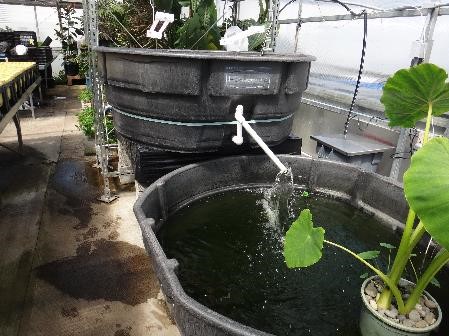
This is part of the aquaponics system built by Emerico, who is authoring a chapter on Aquaponics. He explained that he wants the chapter to be accessible to both incarcerated gardeners and low-income families outside of prison. Photo by Jacob Meyers.

There is a sense of satisfaction when growing your own vegetables whether for self/family or others. I believe also that gardening can relieve stress. This country is blessed; there should not be anyone going hungry. We see too much senseless hunger in our country and throughout the world. There must be a solution to this problem. How can we do this? By making people aware and teaching them that aquaponics is not only a healthier way to grow produce, but is also cheaper. Aquaponics saves money in the long run for people and their families, and is a fun way to bring families together in the garden.

As for me, it is all about giving back and helping those in the community and throughout society that are less fortunate. The purpose is to get a finer perception of aquaponics through research. Anyone can pretty much build a small-scale aquaponics system with a limited budget and few resources. I hope this brief overview has helped you. Above all else, have fun.
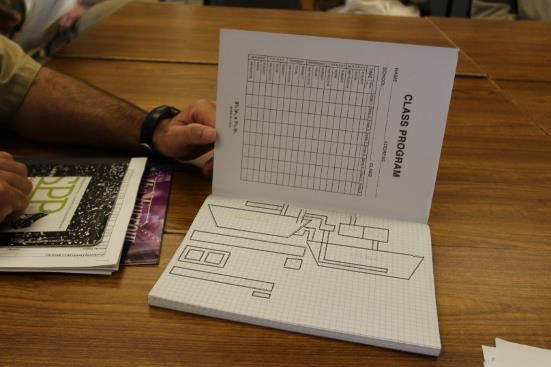
From his lab notebook, Emerico shows a diagram of the aquaponics system. Photo by Joslyn Rose Trivett.

Next Steps

The course is projected to pilot in winter of this year. The two teams of authors plan to be part of that process as well; they will be among the first to try out the new program. Their feedback during and after the trial run will help us further refine the course, and then be ready to share it statewide and beyond.
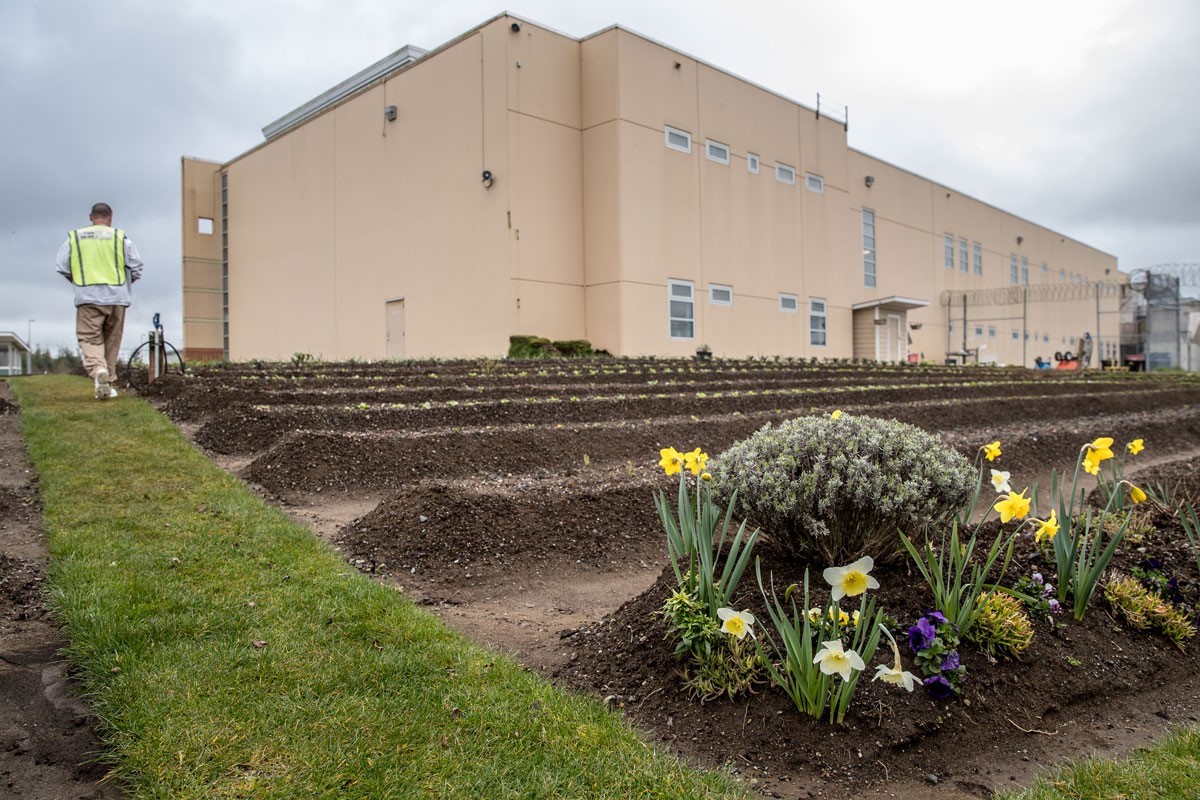
All of the authors have personal experience gardening in prison, working on projects such as this garden at Stafford Creek Corrections Center. This garden is tended by individuals serving a life sentence, and is known as the “lifer’s garden.” Photo by Ricky Osborne.

Text by Bethany Shepler, Green Track Program Coordinator

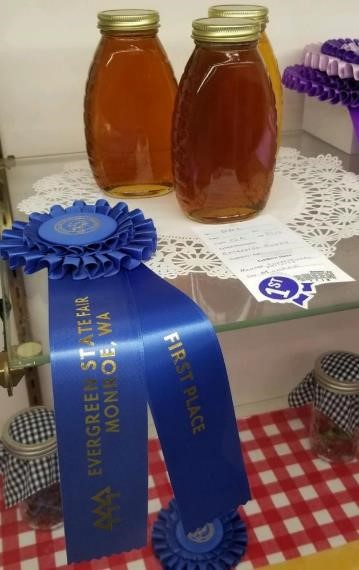
Twin Rivers Unit’s honey took first place! Photo by Susan Collins, Beekeeping Liaison and Correctional Unit Supervisor at MCC-TRU

Monroe Correctional Complex – Twin Rivers Unit‘s (MCC-TRU) beekeeping program participated in the Evergreen State Fair for the second time this year. They host a booth along with Northwest District Beekeepers Association. This year, for the first time, they entered their honey into the Fair’s honey competition and…they won first place!

Their bee program is only in its second year, but it has blossomed thanks to the unending support from staff at MCC-TRU and the enthusiastic participation from incarcerated students. We can’t wait to see all the great things this program in the future.

Congratulations, MCC-TRU!

Text and Photos by Bethany J. Shepler, Green Track Program Coordinator

Olympic Corrections Center once again earned an Outstanding Performance Award in 2018. Photo courtesy of Department of Ecology.

Olympic Corrections Center (OCC)’s wastewater treatment plant is among the best in the state. The Department of Ecology (DOE) has recognized OCC’s outstanding performance, and for being 100% compliant, for 8 consecutive years. In 2018, OCC once again earned an Outstanding Performance recognition. A blog posted by DOE highlighted OCC’s accomplishments with a quote from Mike Henry, the Wastewater Treatment Plant Operator:

“We have won the award quite a few times and I think everyone is determined to win the award because they don’t want to be the first group of operators to not win it. The operators are proud of the awards. We have them hanging in the lab, except for the ones hanging in our administration building. That makes me think that our administration is as proud of our achievements as we are.”

And the administration certainly is—they proudly showed the awards to me as soon as I arrived.

Everyone at the facility is very proud of the program, and they should be. OCC’s team consistently averages 0.4 mg/L of suspended solids in their wastewater. DOE requires that the maximum limit of suspended solids in wastewater amounts to 30 mg/L. That means their wastewater contains 98.7% less than the maximum limit. Keep up the great work, OCC!

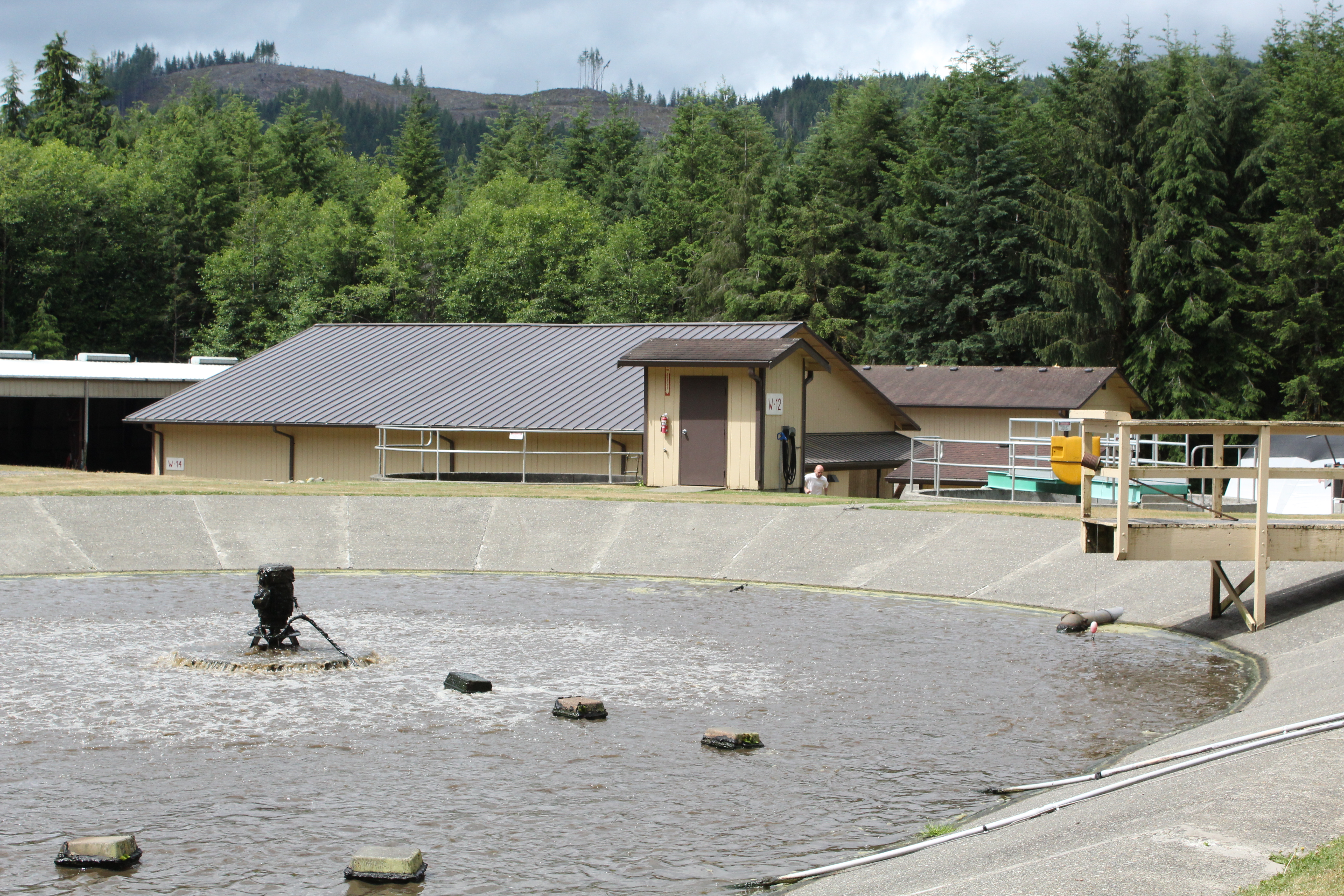
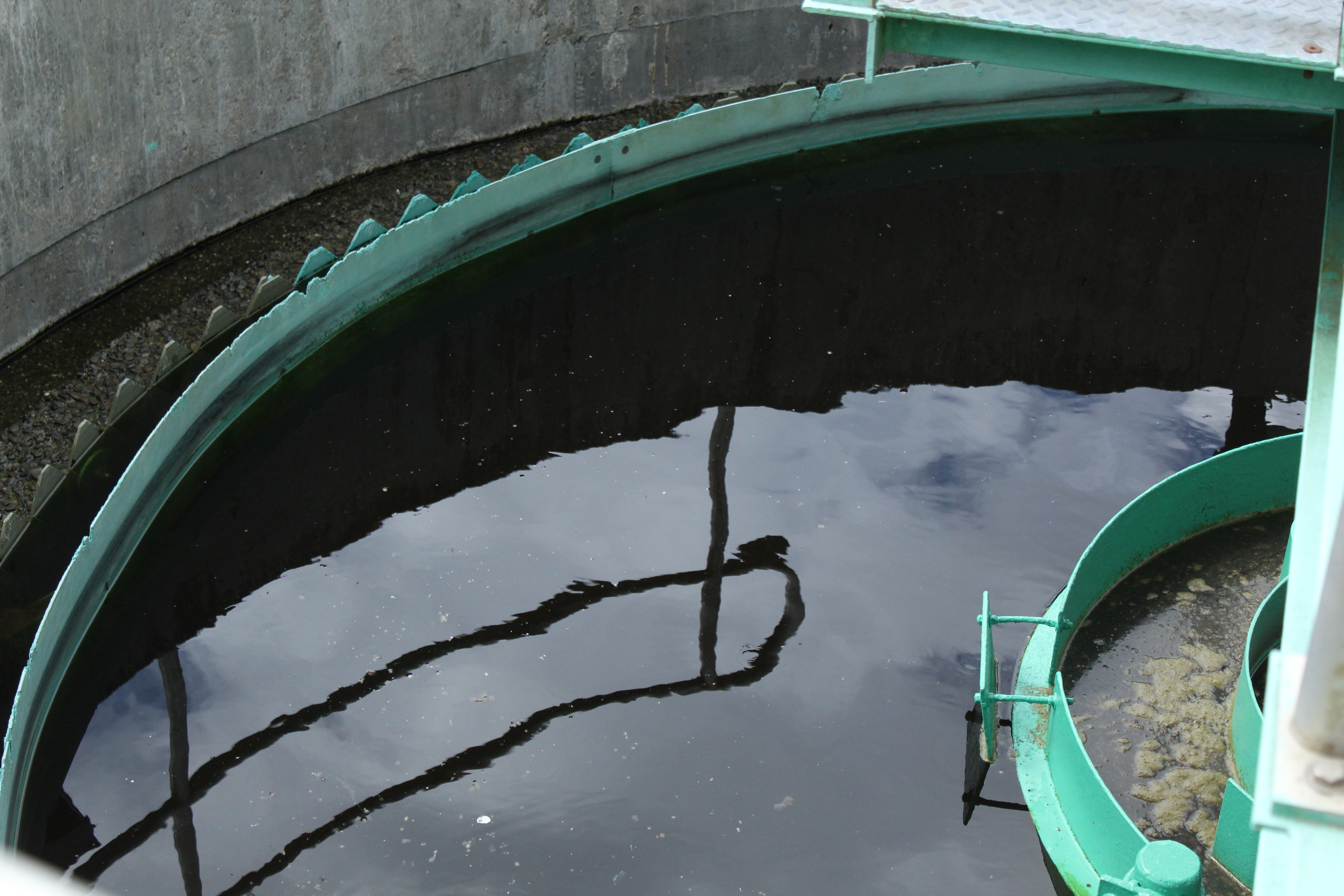
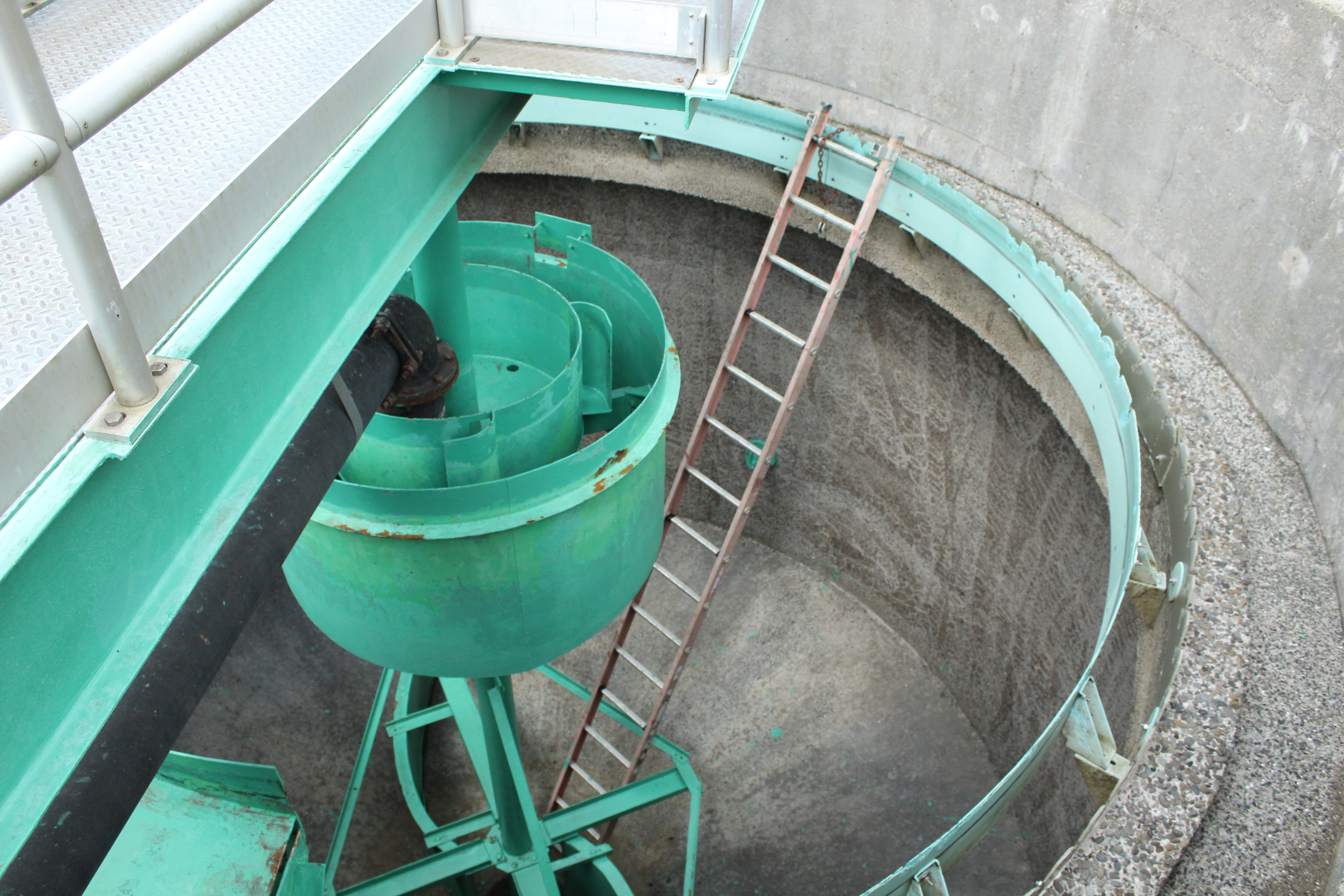
Below are pictures of the treatment plant showing the journey that OCC’s wastewater goes through before flowing into the nearby river. Take a look!

The first stop in the wastewater journey is this big pool where the water is aerated.
This is a secondary clarifier that allows for solids to sedimentate out of the water.
This is one of their secondary clarifiers that was empty for its regular cleaning.
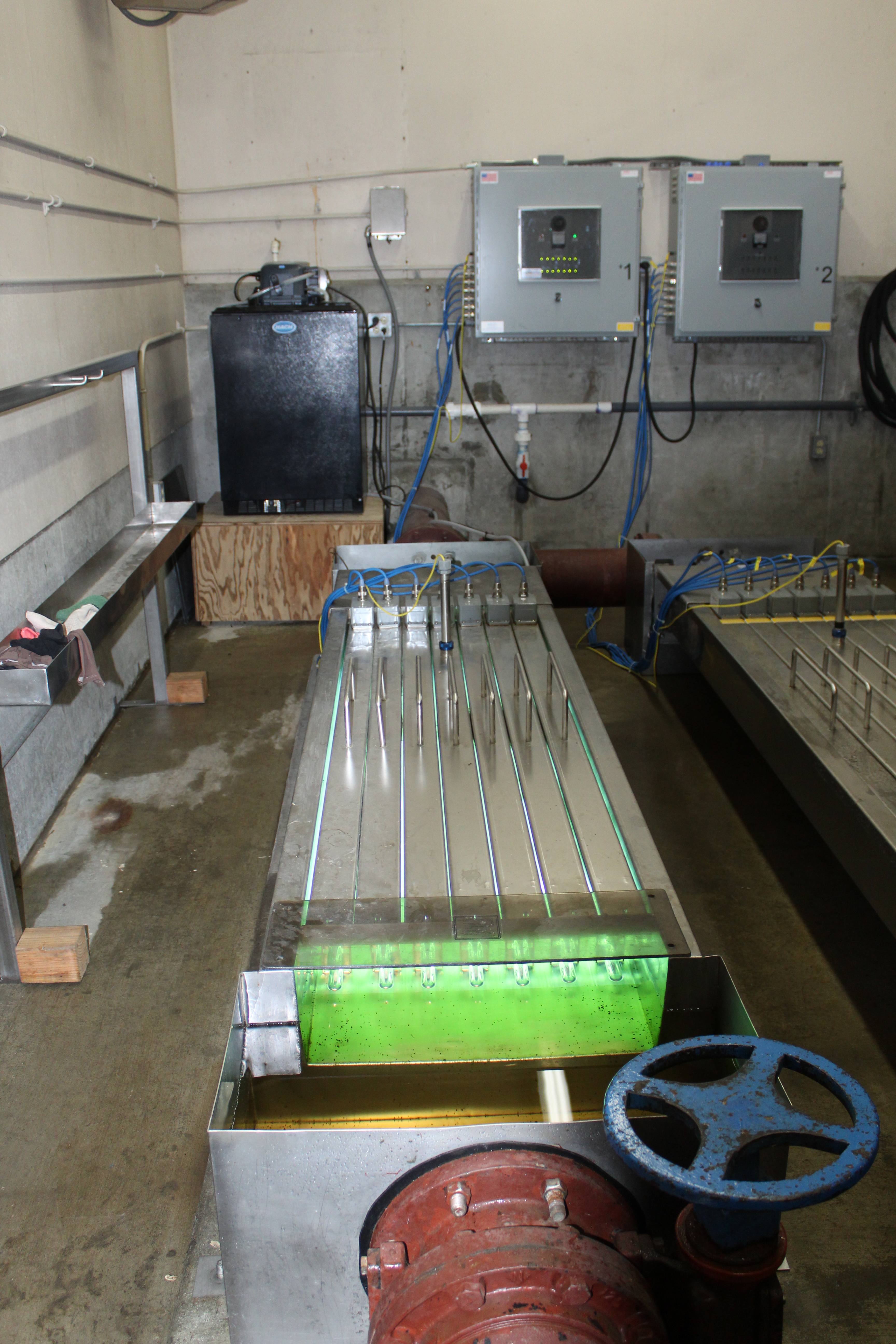
One of the last stops the water goes through is to be disinfected by this UV disinfectant.
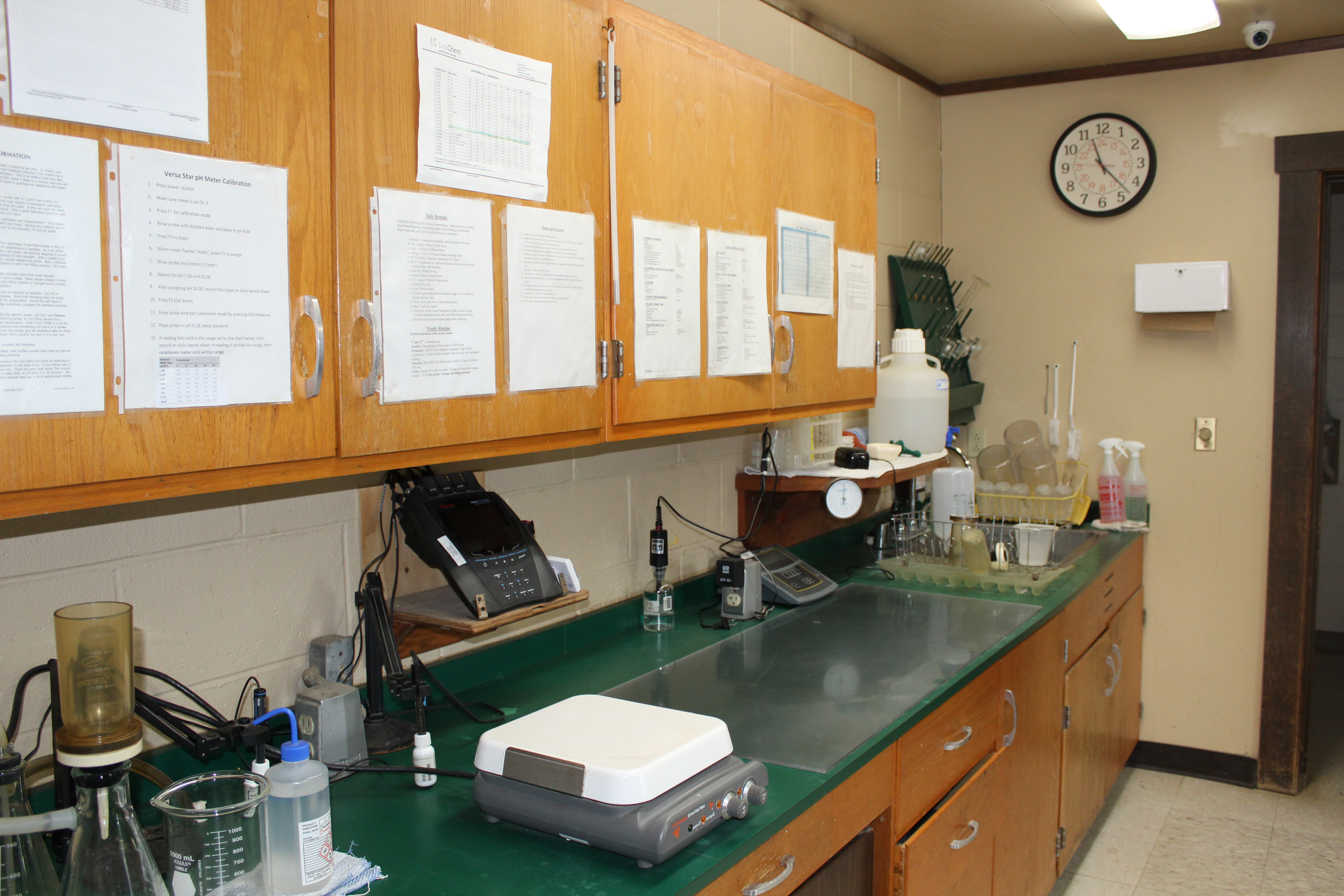
All of the wastewater is tested throughout the process to ensure that it is up to regulation and that everything is operating the way it should be. This is the lab that incarcerated participants use to test the water.
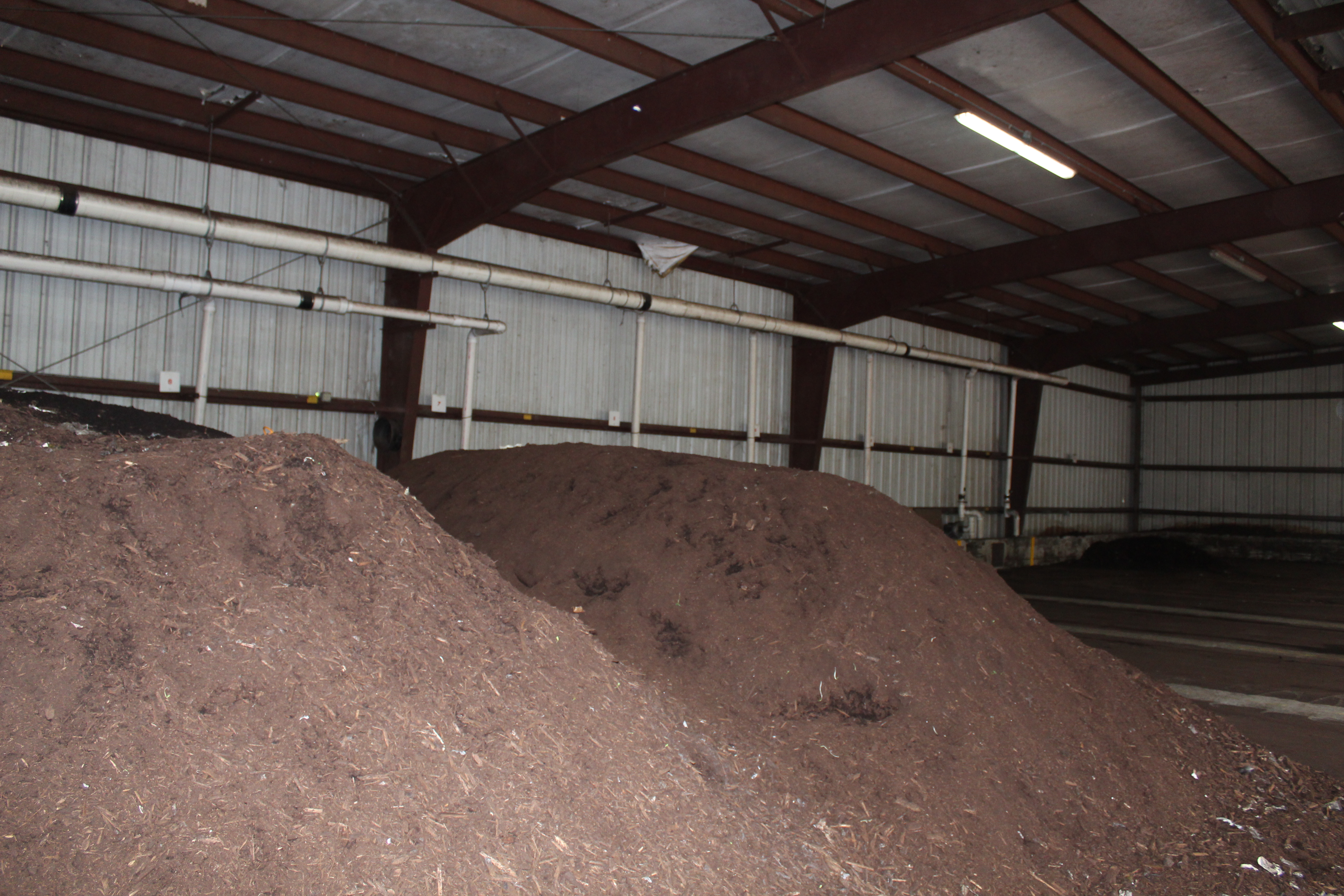
The solids from the treatment are used in OCC’s large-scale composting operation. The compost is also fed by food and yard waste from around the facility.
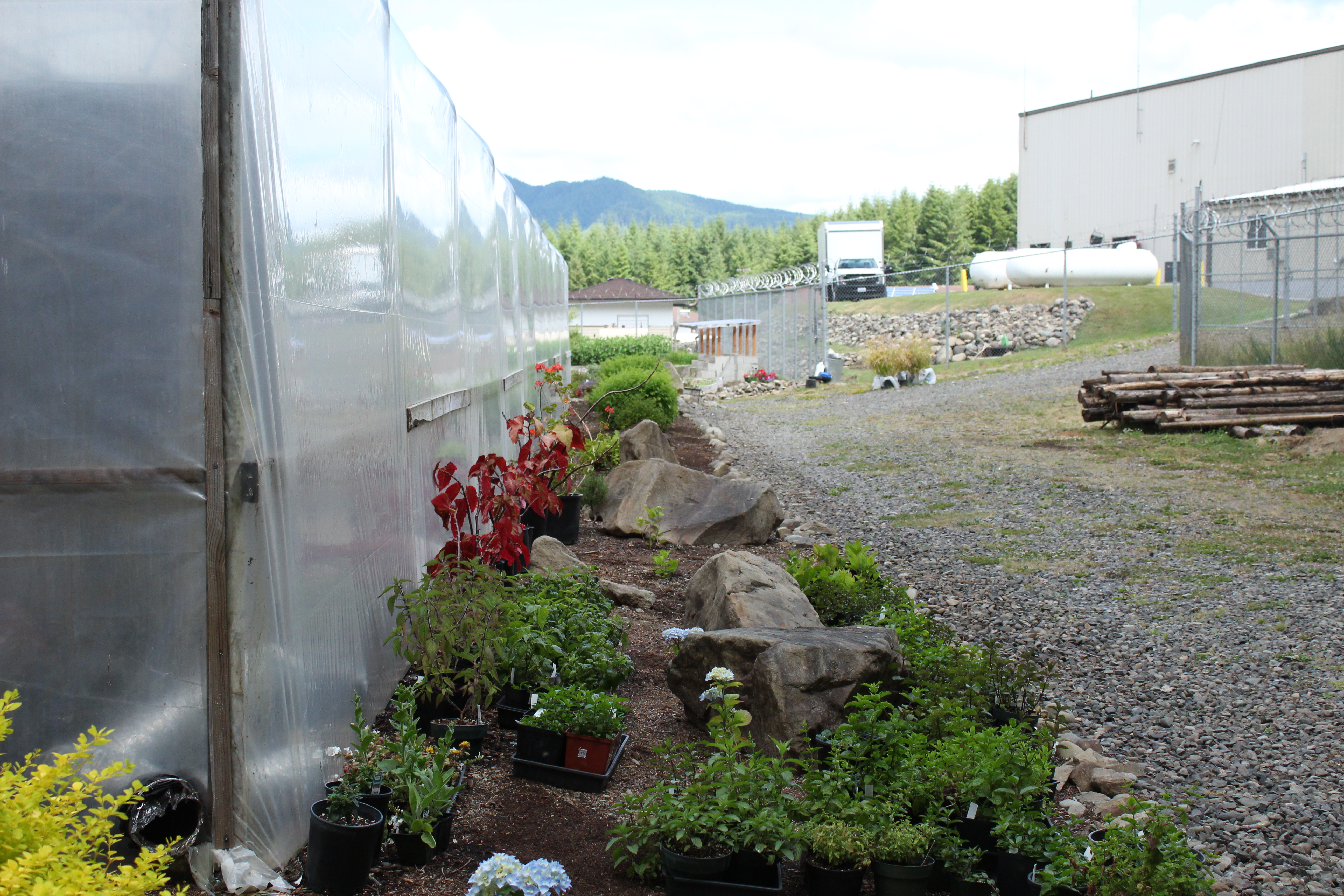
The compost is used around the facility to create and stimulate soil. Here, the compost has been used to foster the garden expansion around the greenhouses.

Text by Bethany Shepler, Green Track Program Coordinator
Photos by Jonathan Fischer, Beekeeping Liaison and Classification Counselor at Washington State Penitentiary

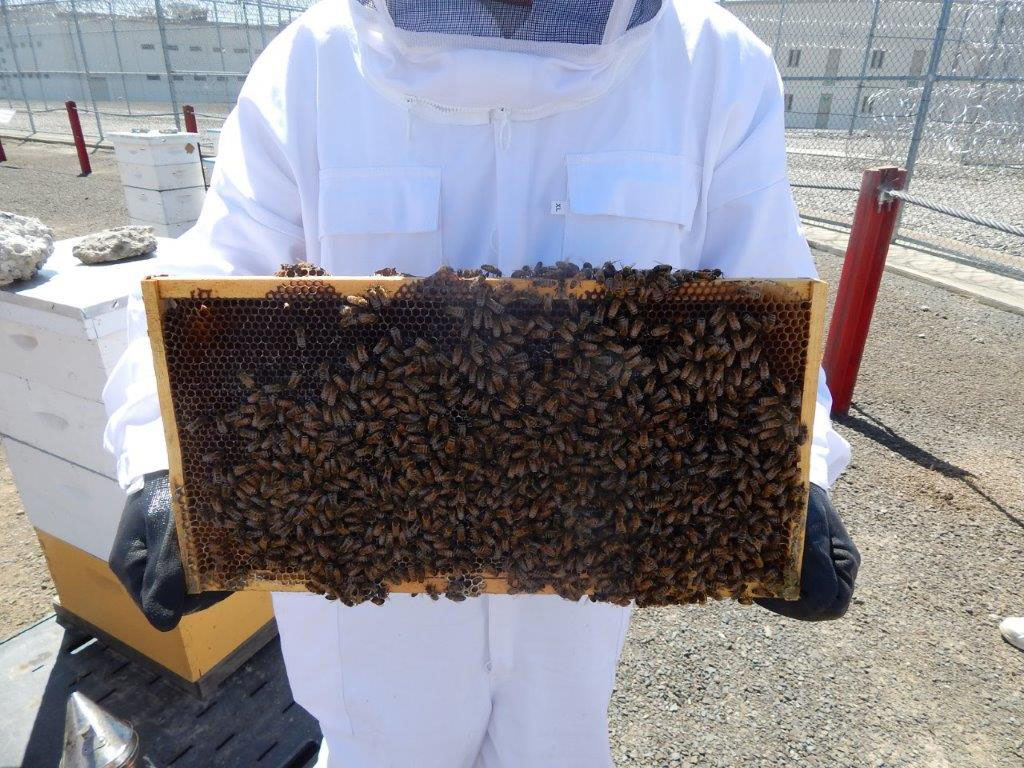
Ryder Chronic, a Journeyman beekeeper, inspects a frame.

The Washington State Penitentiary (WSP) hosts one of the oldest and best-established beekeeping programs in Washington State Department of Corrections. They have built a professional-size apiary, certified 44 incarcerated men as beekeepers, participated in a National Honey Bee Pest Survey by the USDA, hosted a professional beekeeper (Mona Chambers, founder of See the Bees), and—in general— have established themselves as a leader in prison beekeeping.

They are about to finish a Journeyman Beekeeper course, putting them on the path to classes led by incarcerated beekeepers!

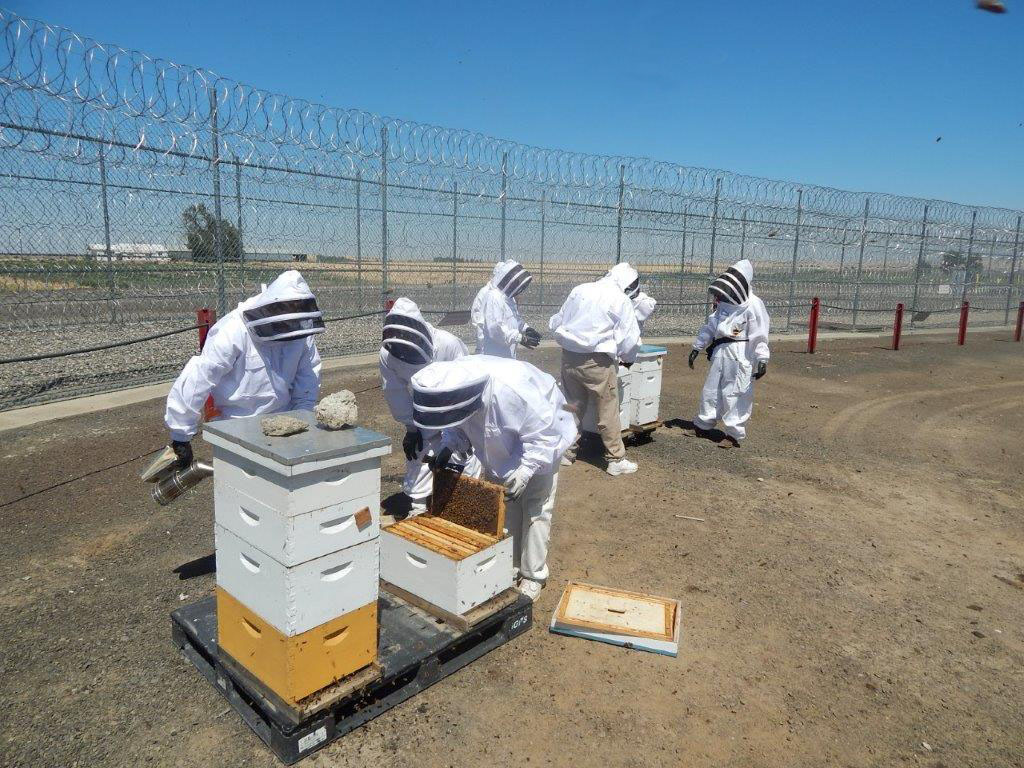
Below are some photos from the last day of a recent Beginner class, when students and staff sponsors left the classroom to inspect some of the many hives that WSP keeps.

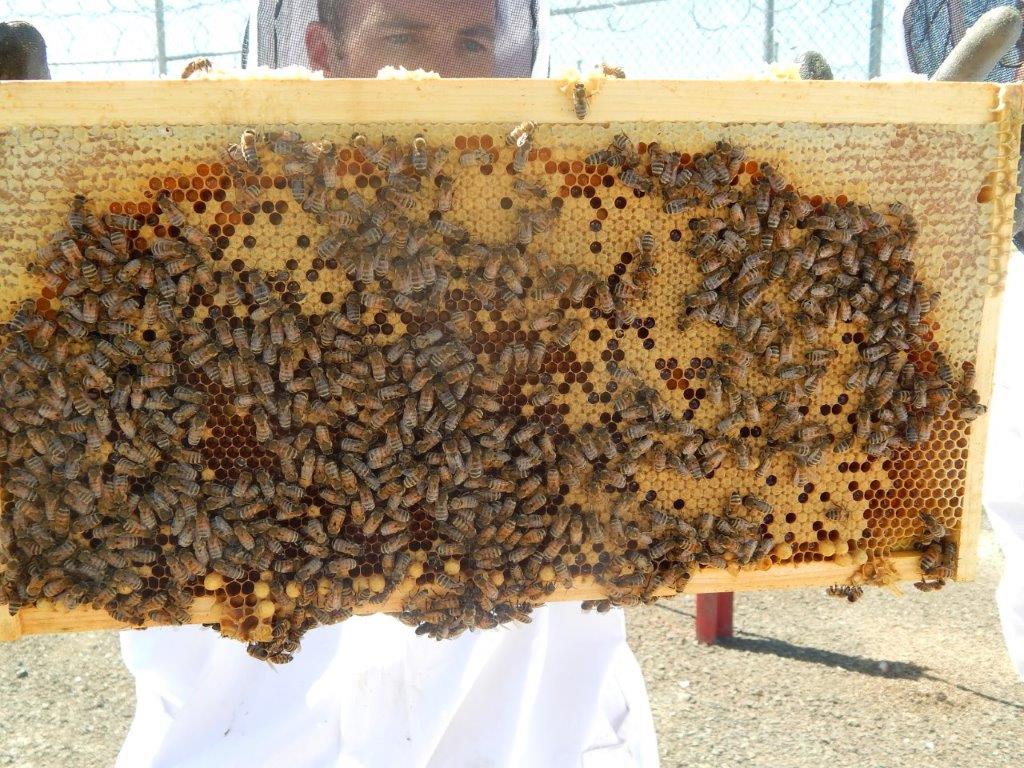
A beekeeper is inspecting this hive frame to see what the bees are doing – are they making honey, storing pollen, or caring for baby bees? Can you tell?
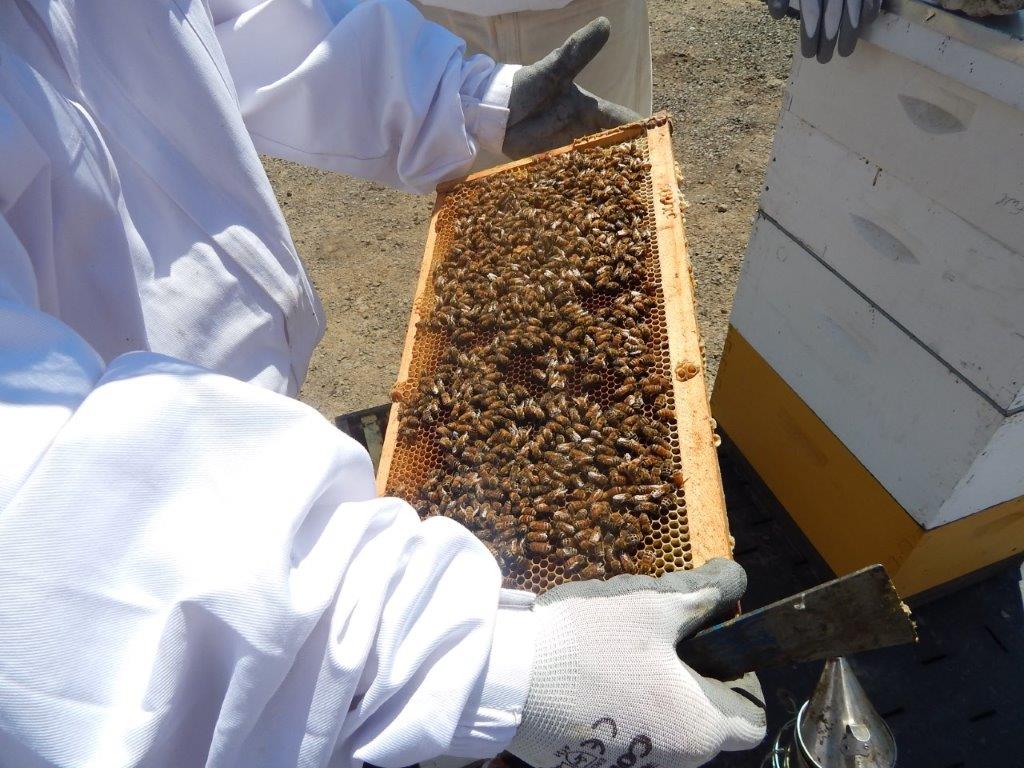
A beekeeper holds a frame full of bees. A healthy hive at the peak of the season can have 60,000 – 80,000 bees in it!
Hives are inspected a few times a month to make sure that the queen and hive are healthy. During this inspection, beekeepers added honey supers to catch honey the bees produce.

Jonathan Fischer, the beekeeping liaison, had this to say about the program “we had a stellar year, with 8 honey supers ready for harvest. These 8 boxes will produce about 270-300 pounds of honey.”