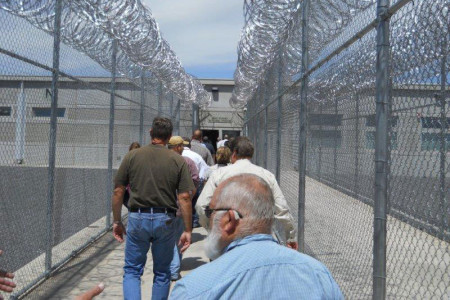
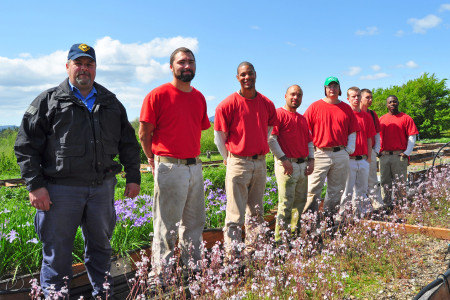
The group tours CRCC's main campus.
The group tours CRCC’s main campus.

SPP Peer to Peer gathering

By Joslyn Rose Trivett, SPP Network Manager
All photos by Kelly Frakes, Capitol Programs

Twenty-two people gathered at Coyote Ridge Corrections Center (CRCC) for a two-day, high-intensity meeting at the end of June. This was a “peer to peer” event, funded in part by the SPP Network Conference Grant from the National Science Foundation. To make plans for CRCC’s sustainability programs, we brought experts (“peers”) in sustainability from Airway Heights Corrections Center and Washington State Penitentiary, WA Department of Ecology, Joint Base Lewis-McChord (JBLM), and SPP staff from Washington Department of Corrections headquarters and The Evergreen State College. Many of CRCC’s administrative and operations staff joined the meeting, and they proved both gracious hosts and willing subjects.
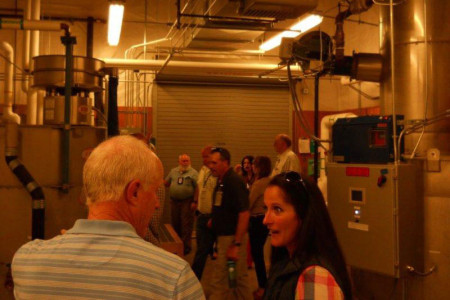
The state of the art laundry facility at CRCC reclaims heat and water at multiple steps.

The first order of business for the visitors was learning about CRCC’s campus and existing sustainability programs. CRCC’s main complex is Washington’s newest prison, opened in 2009. It holds the distinction of being the only LEED Gold Certified prison campus in the country. Linda Glasier from WA Ecology related that the extra costs incurred by meeting LEED Gold standards was paid back in about six months (through energy savings), and that CRCC is one of the state’s most resource-efficient complexes. This infrastructure could be the foundation for surpassing sustainable operations programs in a prison.

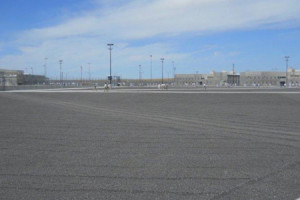
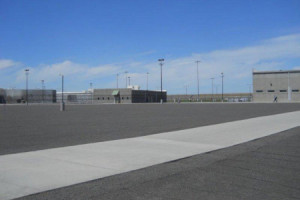
The central yard at CRCC reflects the need to use no water for irrigation. The prison is located in a desert.
CRCC is located in a desert. The stark central yard reflects the standard of using little-to-no water for irrigation.

One of the challenges faced by CRCC is How to bring nature inside without using more water?

After an initial welcome and setting the stage, the group toured many areas of the expansive campus: kitchen, warehouse, laundry, textile shop, a living unit, the main yard, and waste collection sites. We also visited the recycling center, housed in the older, minimum security area. All were impressed by the rigorous sorting and the impressive reductions in waste already accomplished. All were also impressed by the extreme heat outside—even though we were not in the heat of summer, many bodies were wilting in the hot, arid environment!
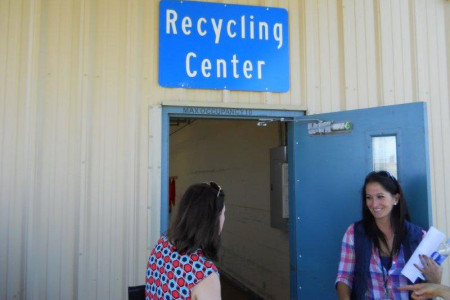
Kelley Thompson who runs the recycling center for CRCC shared the impressive programming already in place.
Shelley Thompson who runs the recycling center for CRCC shared the impressive operations already in place.
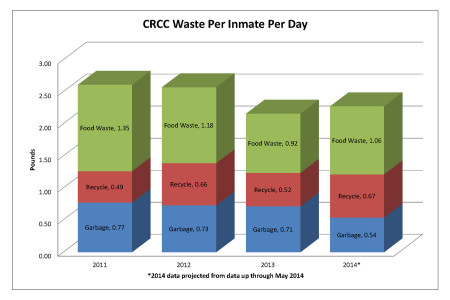
Graph showing CRCC's waste reductions over a four year period. Graphic courtesy of Kelley Thompson.
Graph showing CRCC’s waste reductions over a four year period. Graphic courtesy of Shelley Thompson.

Day two of the gathering was devoted to a marathon meeting. The group participated in a “brain dump,” committing to paper their ideas for sustainability programming. We also heard from our visiting experts. Linda Glasier from Ecology encouraged CRCC not to talk about “waste”. The materials called “waste” are actually commodities, and there are better uses and destinations for those resources than the landfill. Along similar lines, Sergeant Resor from the Correctional Facility at JBLM advised the group to “throw nothing away!”

The results of the brain dump were organized into topics, and the group voted to determine three top priorities for action:

  • Elimination of single-use plastics
  • Zero net waste
  • Education and culture change

With determination and focus, the group crafted action plans for the three initiatives. We emphasized immediate next steps and short term goals. We left the meeting with concrete commitments to further building on the already-excellent sustainability programs at CRCC.
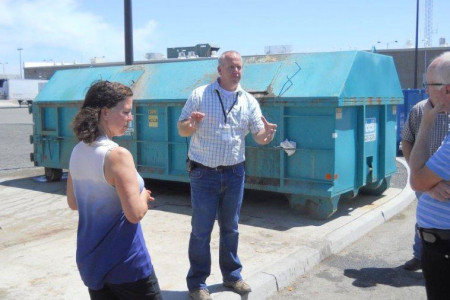
"Sustainability guru" for CRCC, Sam Harris, talks with Linda Glasier from WA Dept. of Ecology and JBLM's Solid Waste & Recycling Program Manager Ron Norton.
“Sustainability guru” for CRCC, Sam Harris, talks with Linda Glasier from WA Dept. of Ecology and JBLM’s Solid Waste & Recycling Program Manager Ron Norton.

Carl Elliott, SPP Ecological Conservation Nursery Manager

Photos by Jaal Mann, SPP Ecological Conservation Nursery Coordinator

The 2014 prairie restoration crew.
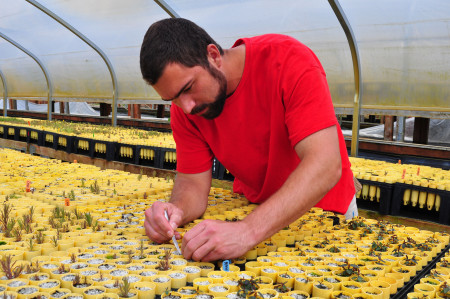
The 200,000 plant pots require a delicate and precise process of weeding.

This is the second spring for a crew from Cedar Creek Corrections Center dedicated year-round to prairie restoration work. The program links community service to education and training in a range of ecological restoration skills.

The crew participates in every facet of restoration ecology on Puget lowland prairies in Thurston County. Their work is guided by regional land managers from The Washington Department of Fish and Wildlife, Washington Department of Natural Resources, and The Center for Natural Lands Management, and by SPP’s Ecological Conservation Nursery staff. Their activities are highly varied. Spring work centers on the identification and removal of noxious weeds, reducing brush and tree competition in oak savannahs, and identification of prairie sites with a high amount of native biodiversity. In summer and fall their tasks move to seed collection and cleaning as well as providing support for the prescribed burn crews.

Ecological Conservation Nursery Coordinator Drissia Ras demonstrates seed sowing techniques.

More formal workshops and classroom education occurs while the crew works at the seed nursery managed by the Center for Natural Lands Management and the plant nursery (Shotwell’s Landing) managed by the Sustainability in Prisons Project. At the three seed farms in Thurston County, nearly fifteen acres are cultivated with more than 100 species of seed plants. The offender technicians receive training in plant identification, soil fertility, integrated pest management and a wide range of practical landscape skills. At the plant nursery, they develop adaptive cultivation skills: cultivation techniques that adapt to changing weather and plant needs throughout the growing season. They hone their abilities to monitor plant growth and manage pests to produce the highest quality plants. Adaptive cultivation management is particularly challenging when working with a group of native plants rarely or never grown before.

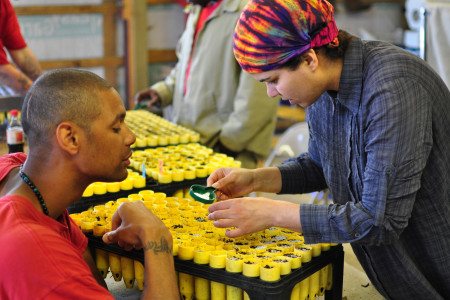
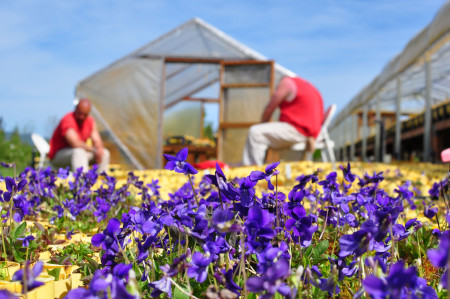
Crew members prepare early blue violet for plant out at the seed farms.

The plants produced at the nursery go towards the production of seed and habitat enhancement for the Taylor’s checkerspot butterfly. Our goal this year for SPP’s three nursery sites (Shotwell’s, Washington Corrections Center for Women, and Stafford Creek Corrections Center) is 400,000 plants. Outplantings will be a substantial contribution toward creating nectar and larval host plants at sites in Thurston County where the butterfly larvae and adults will be released. Other plants will be used for seed production–with increased availability of seed, even more prairie acreage can be restored. The offender technicians participate in all these efforts; as you can see, they are a primary force in the restoration and habitat enhancement for Puget lowland prairie species for future generations to enjoy.

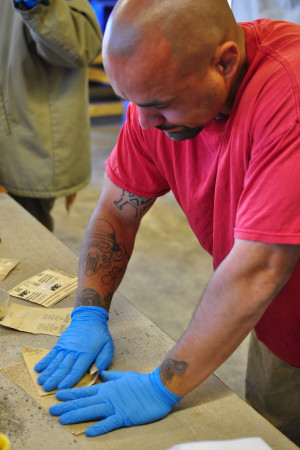
A crew member scarifies (scratches the seed coat of) American vetch seed prior to sowing; this was done as a comparison study with unscarified seed.


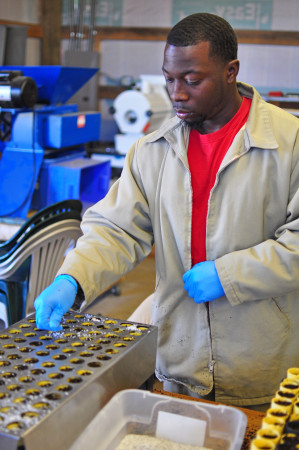
A crew member covers sown seeds with a gravel cover; a gravel cover reduces moss competition and keeps light seed from floating to the surface.


by Tiffany Webb, SPP Lecture Series Coordinator

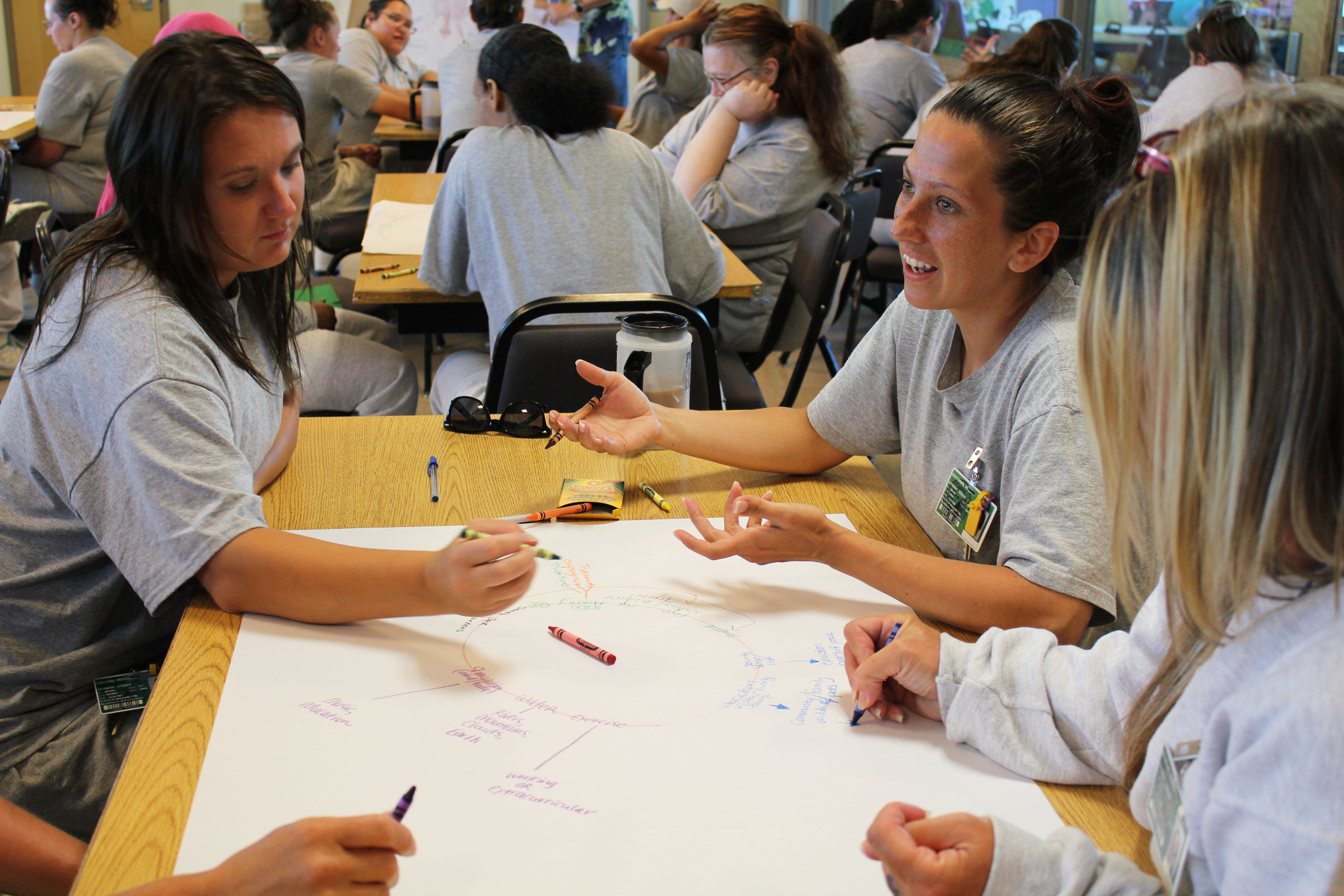
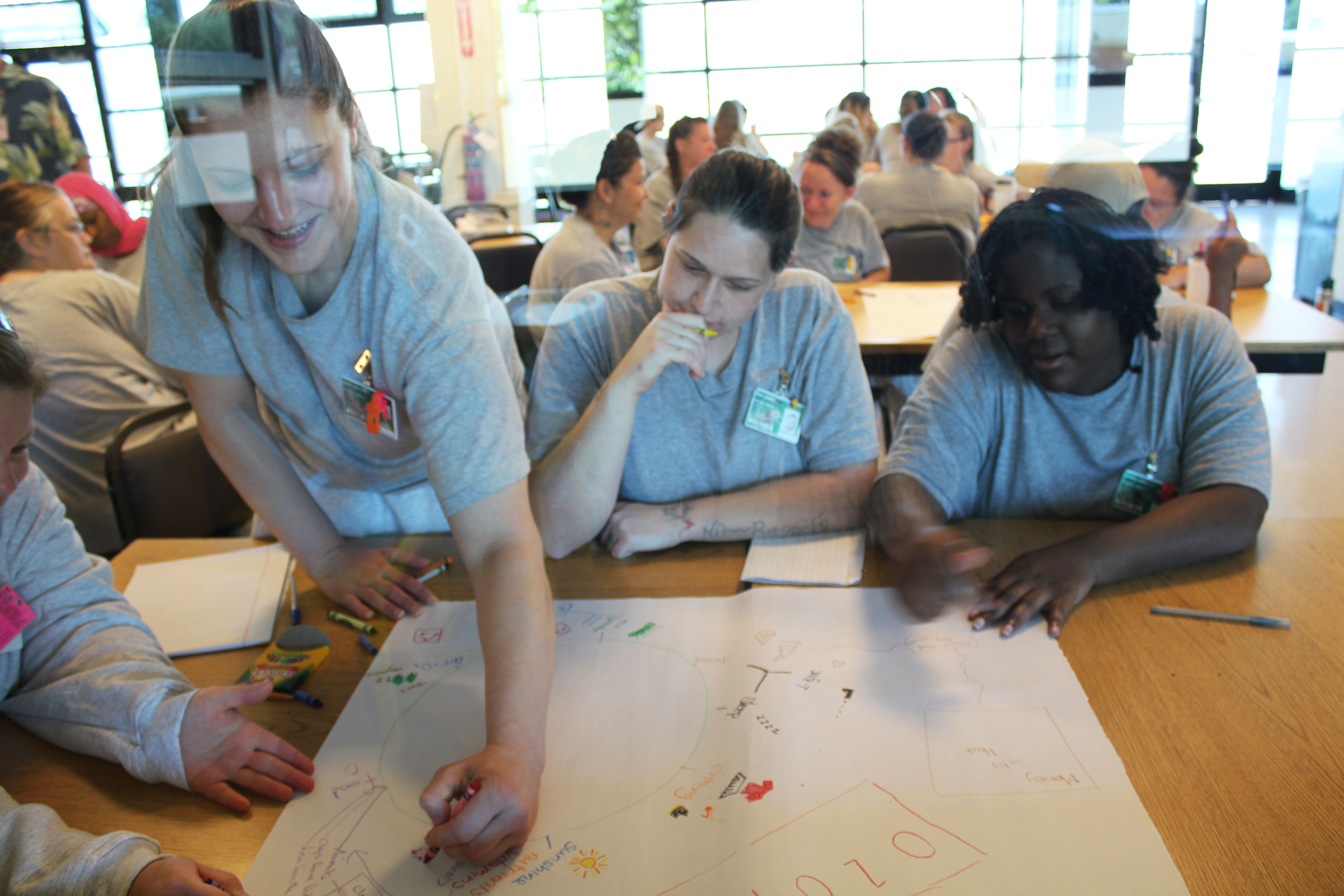
Inmates discuss sustainability while creating their group diagram. Photo credit: Joslyn Rose Trivett

On July 1, SPP offered a sustainability workshop at the Washington Corrections Center for Women (WCCW) as part of the Science and Sustainability Lecture Series. The workshop was led by Scott Morgan, the Sustainability Director at The Evergreen State College, with the help of SPP staff Lindsey Hamilton, Tiffany Webb, and Joslyn Trivett.

Regular lecture series attendees add colorful drawings to their diagram. Photo credit: Joslyn Rose Trivett

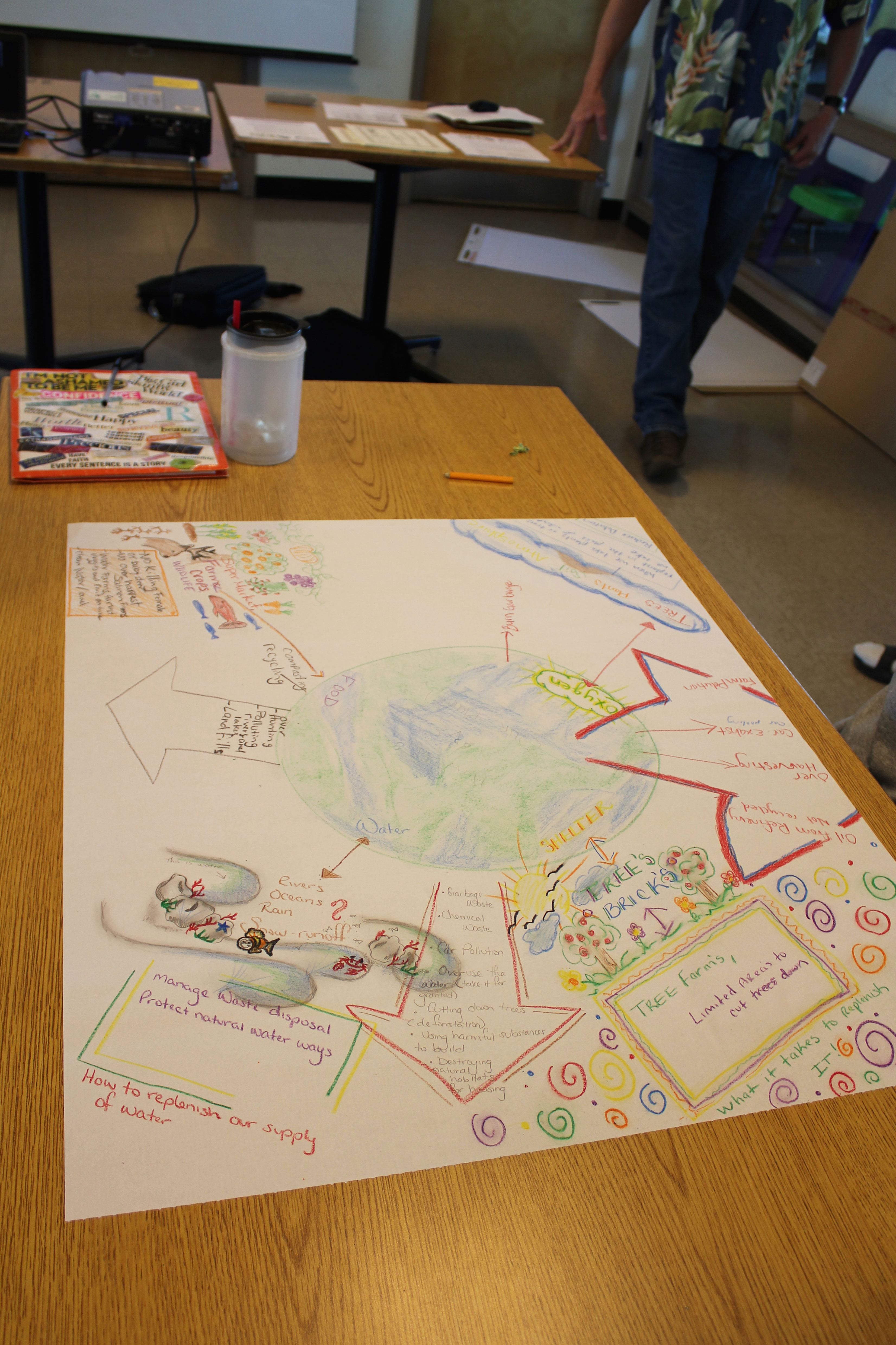
Scott opened the workshop by asking those in attendance what sustainability meant to them. Then the women split into small groups and he tasked them with creating a systems diagram of human needs, the natural resources necessary for those needs, and the positive and negative human impacts on these resources. While some focused on basic needs like food and water, others included things like “community and belonging” and “interaction with other living things.” The participants’ diagrams were creative, including innovative ideas for managing resources as well as beautiful, colorful drawings.

An inmate adds ideas for how to maintain important natural resources. Photo credit: Joslyn Rose Trivett
One group’s vibrant diagram. Photo credit: Joslyn Rose Trivett

At the end of the workshop, Scott covered a broad range of environmental success stories, offering resources and organizations that are making great strides in sustainability. The activities closed with an open discussion about the various topics that came up during the workshop, offering an outlet for the women to share their knowledge and experiences in sustainability.

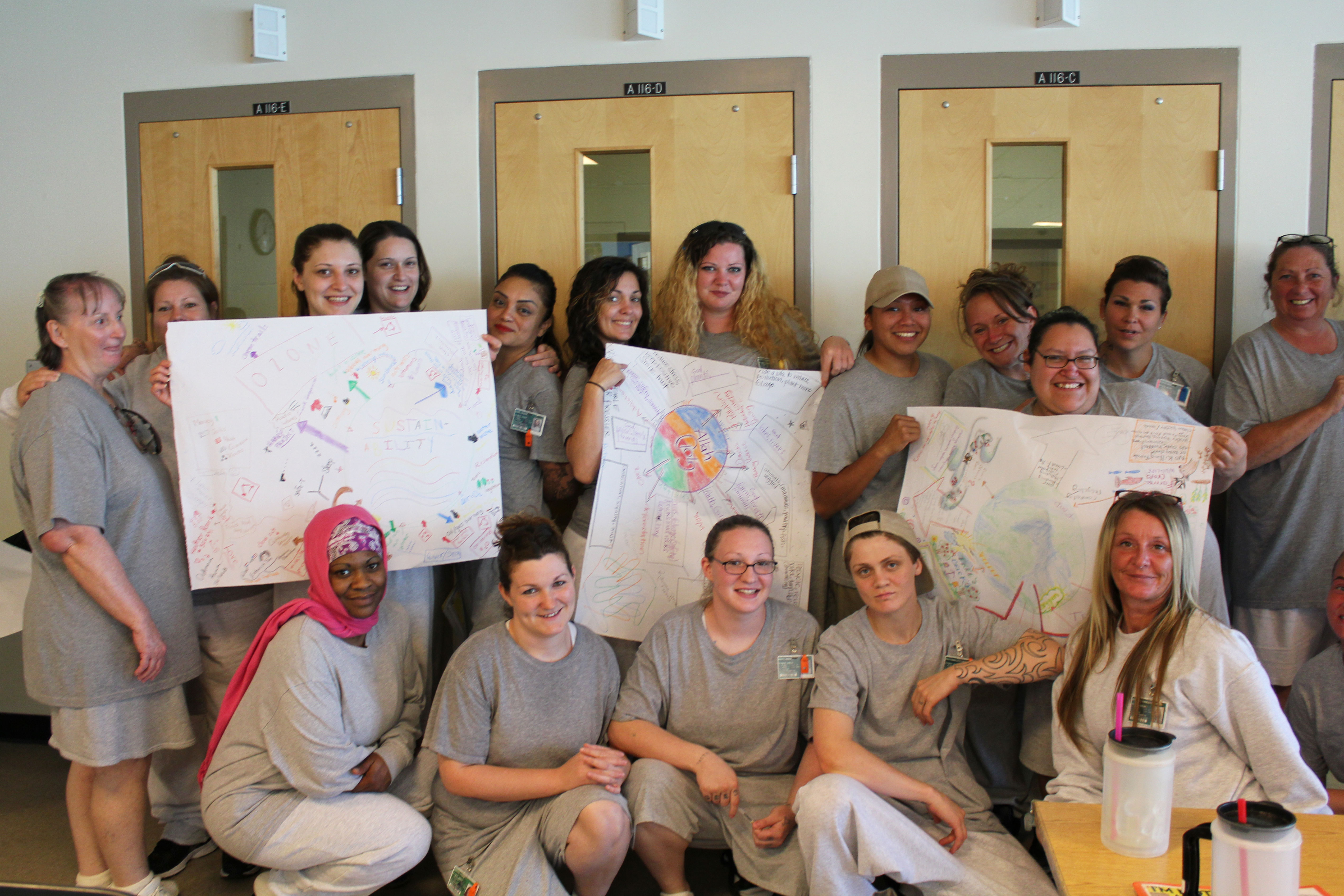
A few women who participated in the workshop display their work. Photo credit: Joslyn Rose Trivett
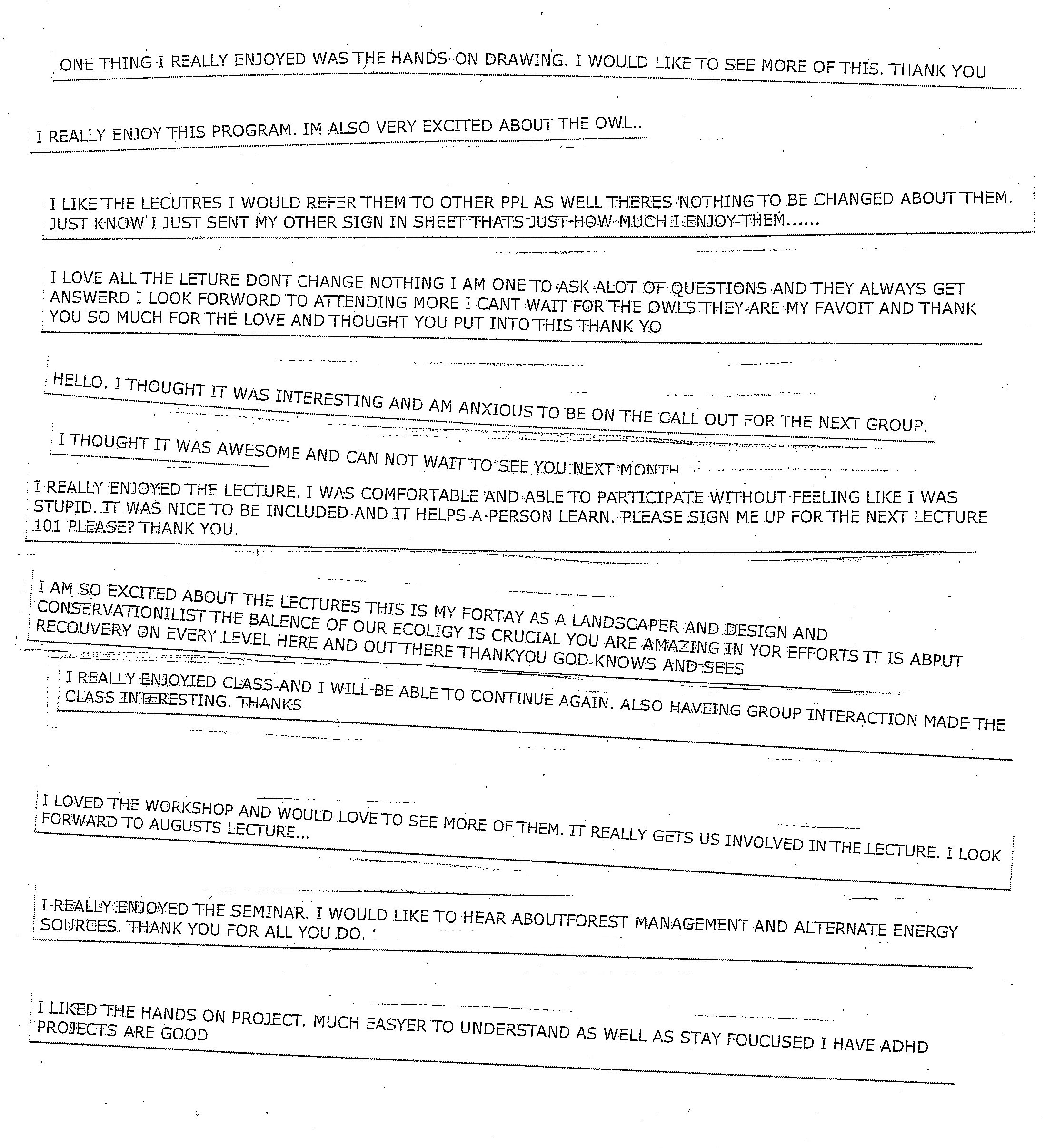
After the workshop, many participants contacted the SPP liaison at WCCW with comments about the activities and lecture series.The image above shows a few of the messages that were received. Source: Paula Andrew, WCCW

_________________________________________________________________________________________________

Certificates Too!

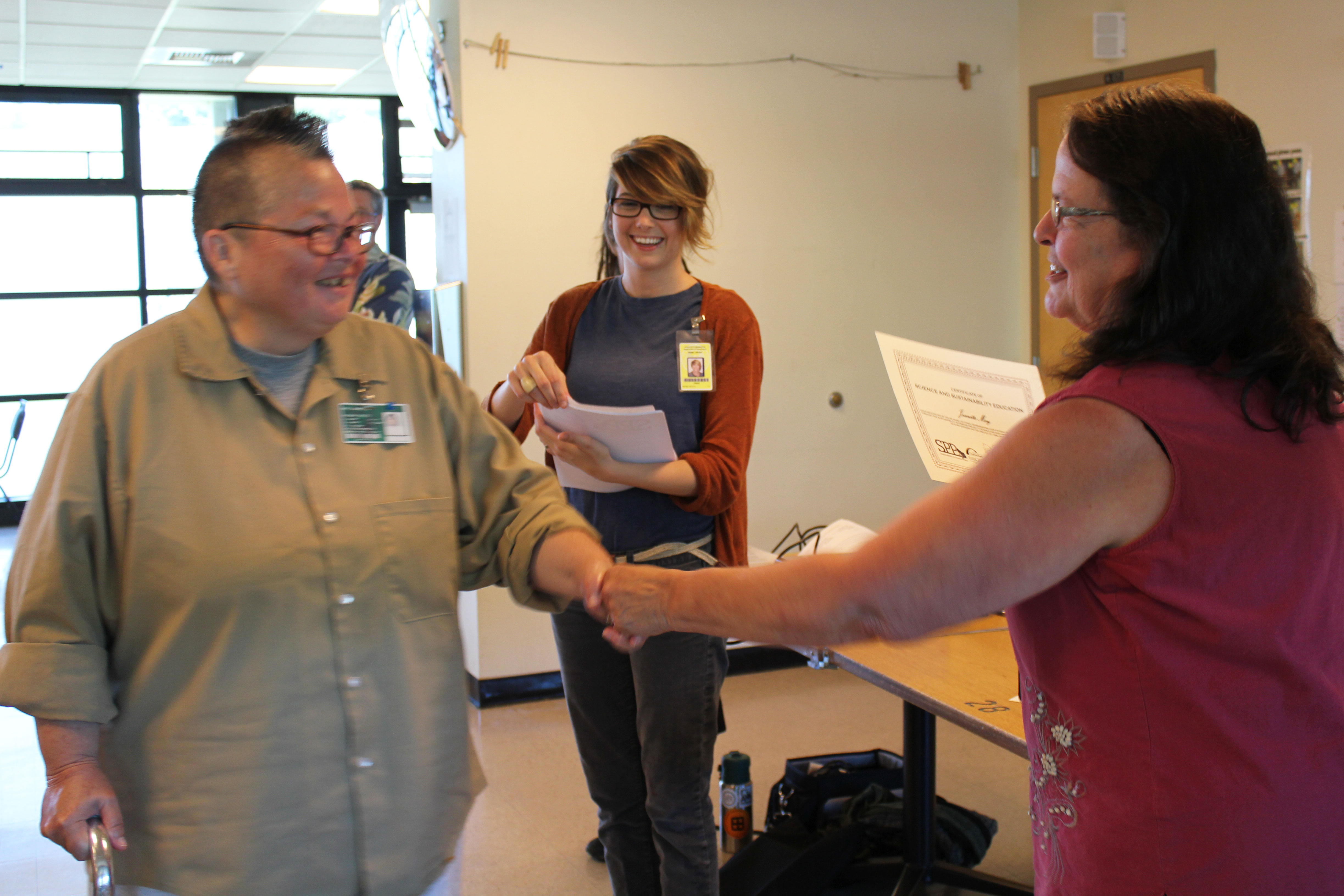
Before the workshop began, attendees were awarded certificates for on-going participation in the lecture series. This was the first round of certificates to be given out at WCCW, a recent addition to the lecture series. Women were awarded a certificate of science and sustainability education for attending 5, 10, 20 or more lectures throughout their time at the women’s center. Many women are already eligible for the next round of certification and have expressed excitement at receiving awards for their environmental education achievements!

Paula Andrew, the SPP liaison at WCCW, awards a lecture series certificate. The recipient has attended more than 20 lectures in her time at WCCW. Photo credit: Joslyn Rose Trivett

By SPP Taylor’s checkerspot program coordinator Lindsey Hamilton

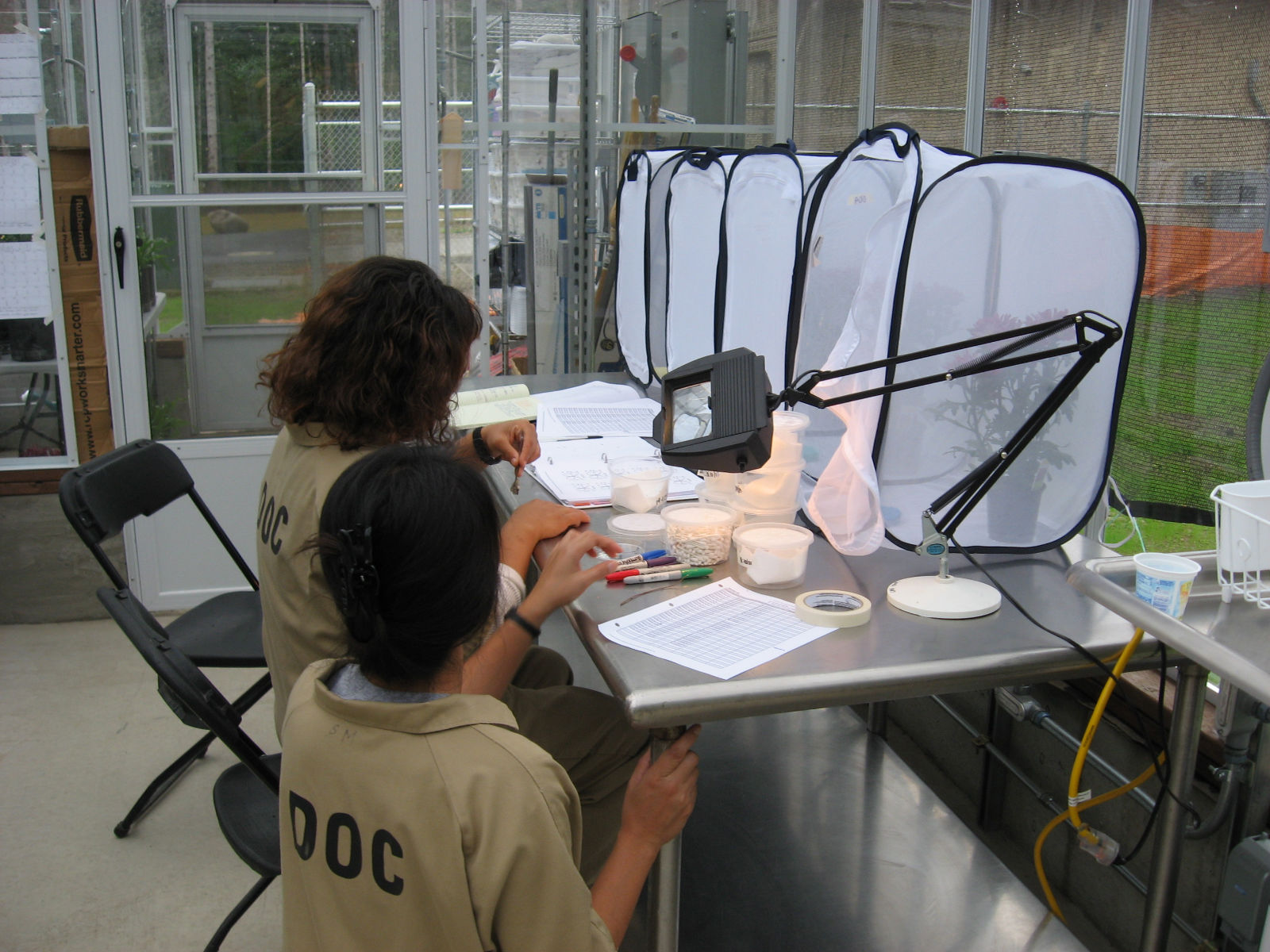
At Mission Creek Corrections Center for Women (MCCCW) four inmate technicians raise Taylor’s checkerspot butterflies as a contribution to the recovery of this prairie species. Following the direction of the Oregon Zoo in Portland, Oregon, they have been successfully rearing and breeding these butterflies for three years. This butterfly was federally listed in October of 2013, which means that anyone working with this species is now held to high accountability and rigorous reporting. The technicians at MCCCW have always been successful at collecting detailed data on all phases of butterfly husbandry.

IMG_0693
The Oregon Zoo recently created an Access database that will store all rearing and breeding information for both facilities in one place. This database will increase the quality of all data collected and provide for efficient access for tracking trends and bi-annual reporting.

Butterfly Computer
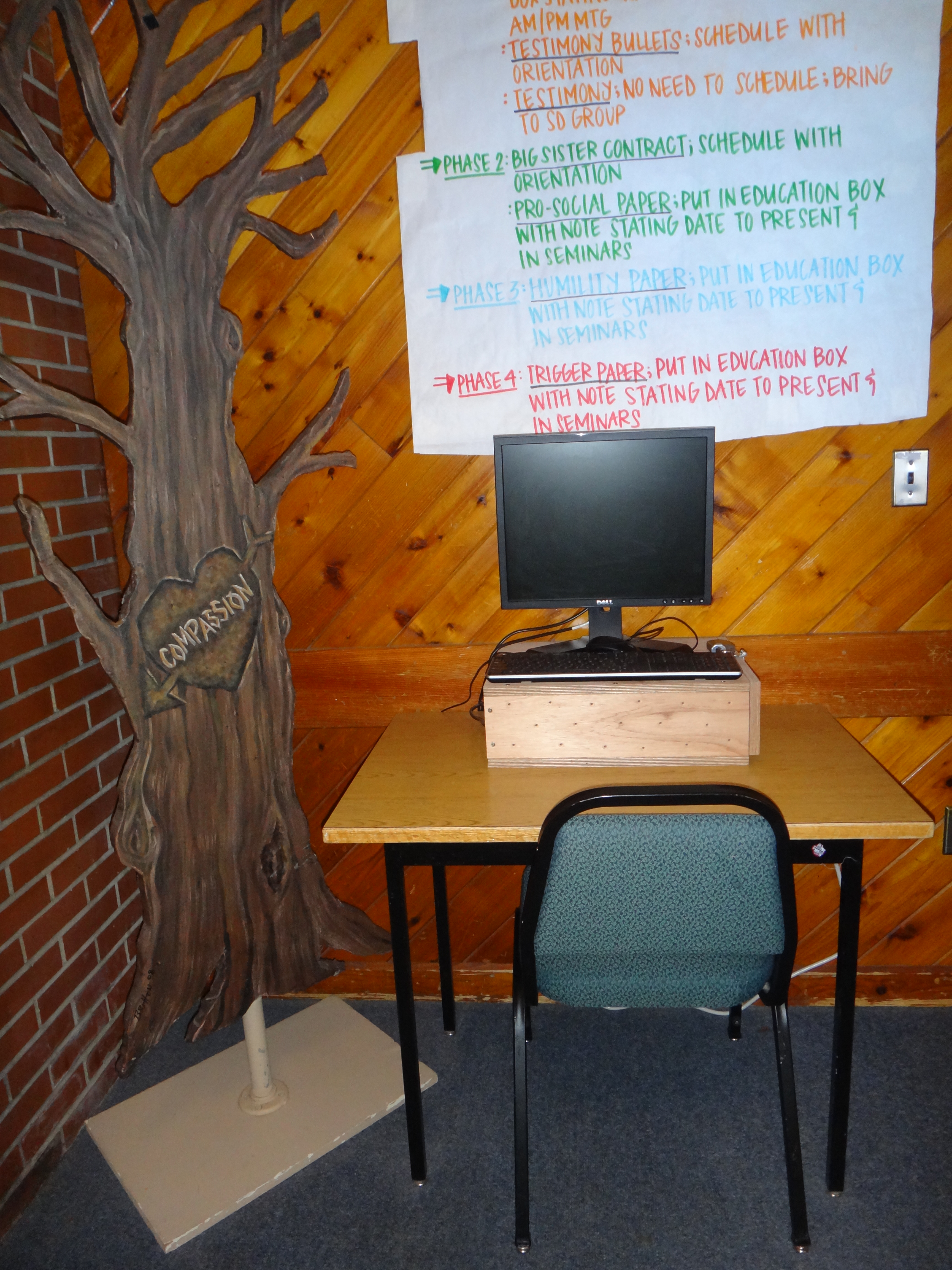
This has created a new opportunity for the technicians at MCCCW to learn the skill of data entry and management using Access. A computer containing this database was set up in a common living area within the facility last fall, and as simple as this sounds, it represents a major accomplishment for a prison environment! The inmate technicians will now be able to directly enter their data from the program . The Taylor’s checkerspot butterfly program coordinator for SPP, Lindsey Hamilton, will then extract the data via USB and send it to the Oregon Zoo. Butterfly rearing is seasonal work, and the technicians usually have little to do in the off season. With the 2 years of back logged data that needs to be entered, the technicians will stay busy this winter when our caterpillars are sleeping.

by Tiffany Webb, SPP Lecture Series Coordinator
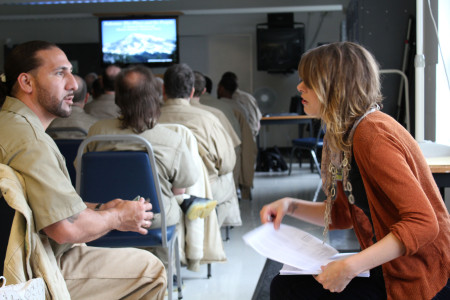
Students at Stafford Creek Corrections Center (SCCC) take in the lecture on Mt. Rainier.
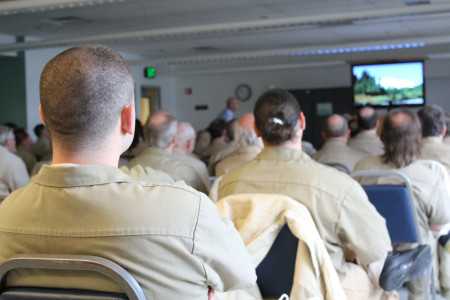
Students at Stafford Creek Corrections Center (SCCC) take in the lecture on Mt. Rainier. Photo credit: John Dominoski

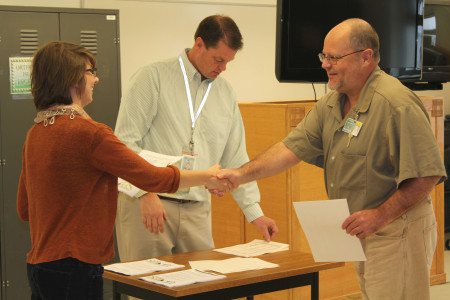
This past Thursday at Stafford Creek Corrections Center (SCCC), inmates were recognized for their science and sustainability education achievements! This is a new certification program through the SPP Science and Sustainability Lecture Series in which inmates are recognized for attending 5, 10, 20 or more lectures.

Tiffany Webb congratulates a lecture series certificate recipient.
Tiffany Webb congratulates a lecture series certificate recipient. Photo credit: John Dominoski

Following the award ceremony, Jeff Antonelis-Lapp, a faculty of The Evergreen State College, presented on the natural history of Mt. Rainier— a topic he is currently researching and writing a book about. The presentation included both the geological history and indigenous peoples’ interactions with the mountain hundreds of years ago. Mr. Antonelis-Lapp also spoke about future hazards associated with Mt. Rainier, particularly lahars (volcanic mudflows). He displayed breathtaking images of the mountain, surrounding areas, archeological sites, and animals that call the range home. Those in attendance received a fact sheet and image of Mt. Rainier to keep.

Tiffany Webb talks with an inmate during the lecture.
Tiffany Webb talks with an inmate before the lecture. Photo credit: John Dominoski
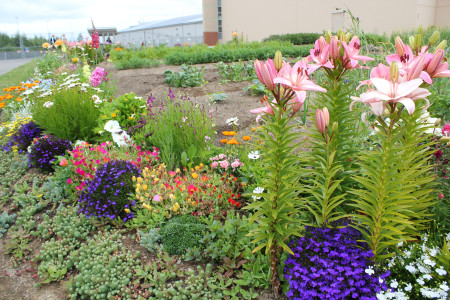
After the lecture, Jeff and I toured SCCC’s sustainability programs. This was my first time at Stafford Creek during this time of year, and I just have to say, their gardens are beautiful! The flowers are blooming in brilliant colors and you can tell the inmates involved are very proud of their work.
The "Lifer" garden at SCCC in full bloom.
The “Lifer” garden at SCCC in full bloom. Photo credit: Tiffany Webb