By Fiona Edwards, SPP Graduate Research Assistant

Recently three of SPP’s graduate research assistants completed their Master of Environmental Studies theses and presented their findings to an audience of faculty, peers, and SPP partners. Congratulations to Dennis Aubrey, Brittany Gallagher, and Andrea Martin!

Andrea conducted a study on conservation corps to investigate the long-term influence of these programs on youth participants.
Slide1

Dennis and Brittany explored topics directly related to their work at SPP.
Slide01

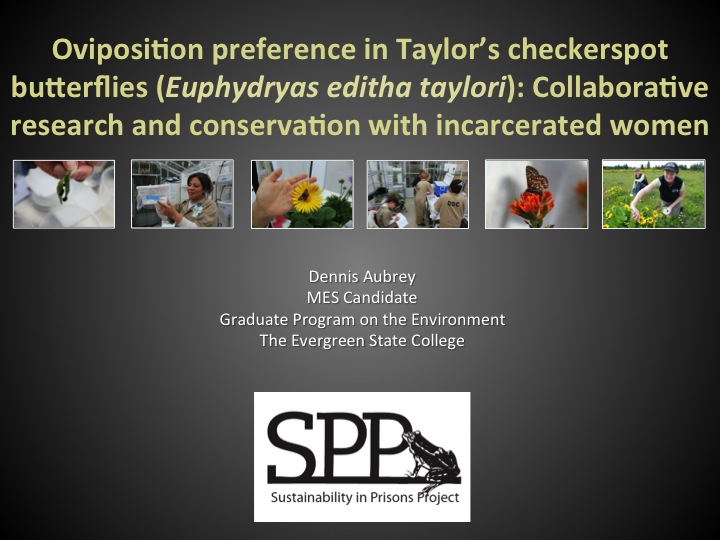
Dennis’ research showed that the Taylor’s checkerspot significantly preferred the native Indian paintbrushes (Castilleja hispida and Castillega levisecta) over the commonly-known non-native host species (Plantago lanceolata) for oviposition. His finding highlights the synergistic benefits of the SPP butterfly program and the SPP conservation nursery programs that rear the butterfly’s host plants. Dennis’ study will be submitted for publication with two inmate coauthors, who contributed to the research. Mary Linders, the Biologist specializing on the Taylor’s checkerspot at Washington Department of Fish and Wildlife, also collaborated on the study.
Slide01

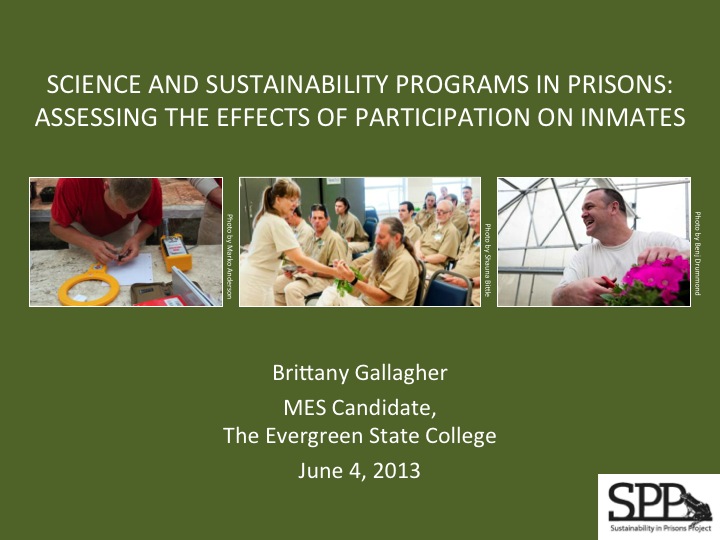
Brittany conducted a statewide evaluation of all SPP work-programs in Washington. Brittany measured  effects of employment in SPP programs on inmate environmental attitudes. The literature in environmental and social psychology suggests that pro-environmental behavior is correlated with pro-social behavior, and the criminology literature suggests a correlation between pro-social attitudes and parole success. With Likert-scale and open-ended questions, 293 inmates filled out Brittany’s questionnaires. She found that inmates whose jobs involved more education and training, more work with living things, and more opportunities for community contribution (as SPP work programs do) expressed more pro-environmental attitudes. Simply stated: employment in SPP programs is correlated with more pro-environmental attitudes.

SPP has been so fortunate to work with these outstanding students. We can’t wait to see what great things Dennis, Brittany, and Andrea will do next.
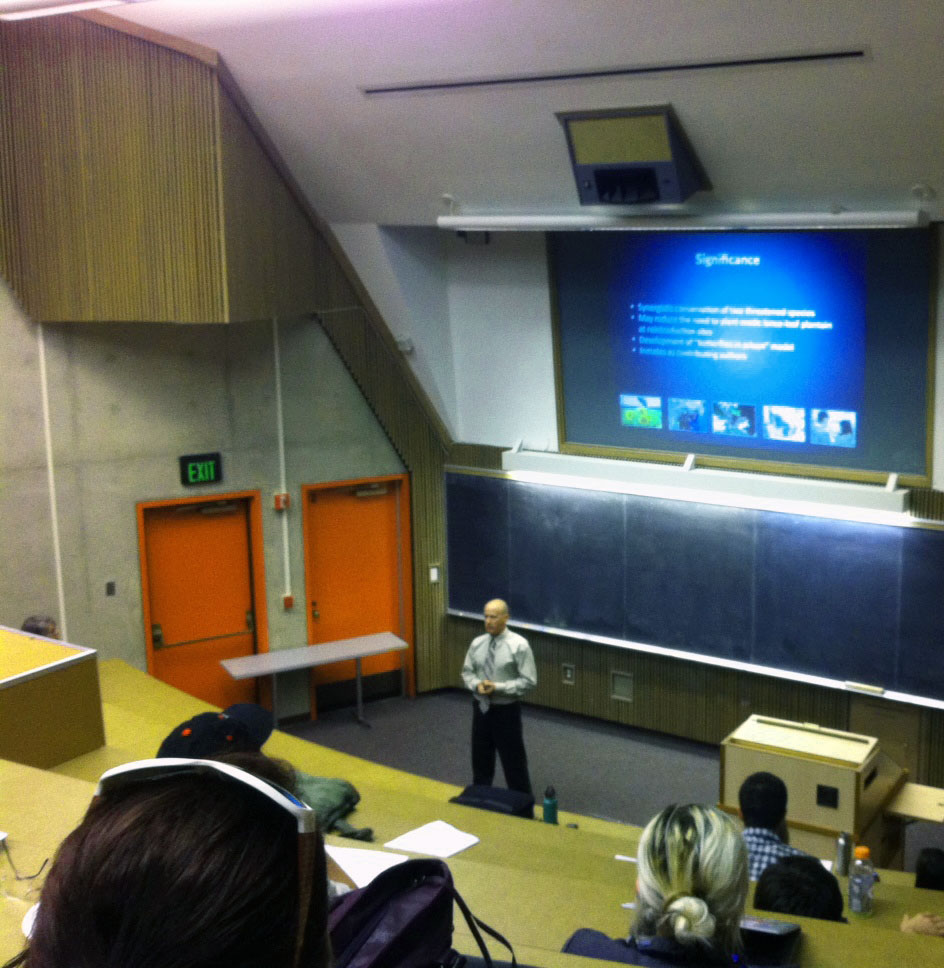
Dennis Aubrey presents his results.

By Fiona Edwards, Graduate Research Assistant

DSC_1788
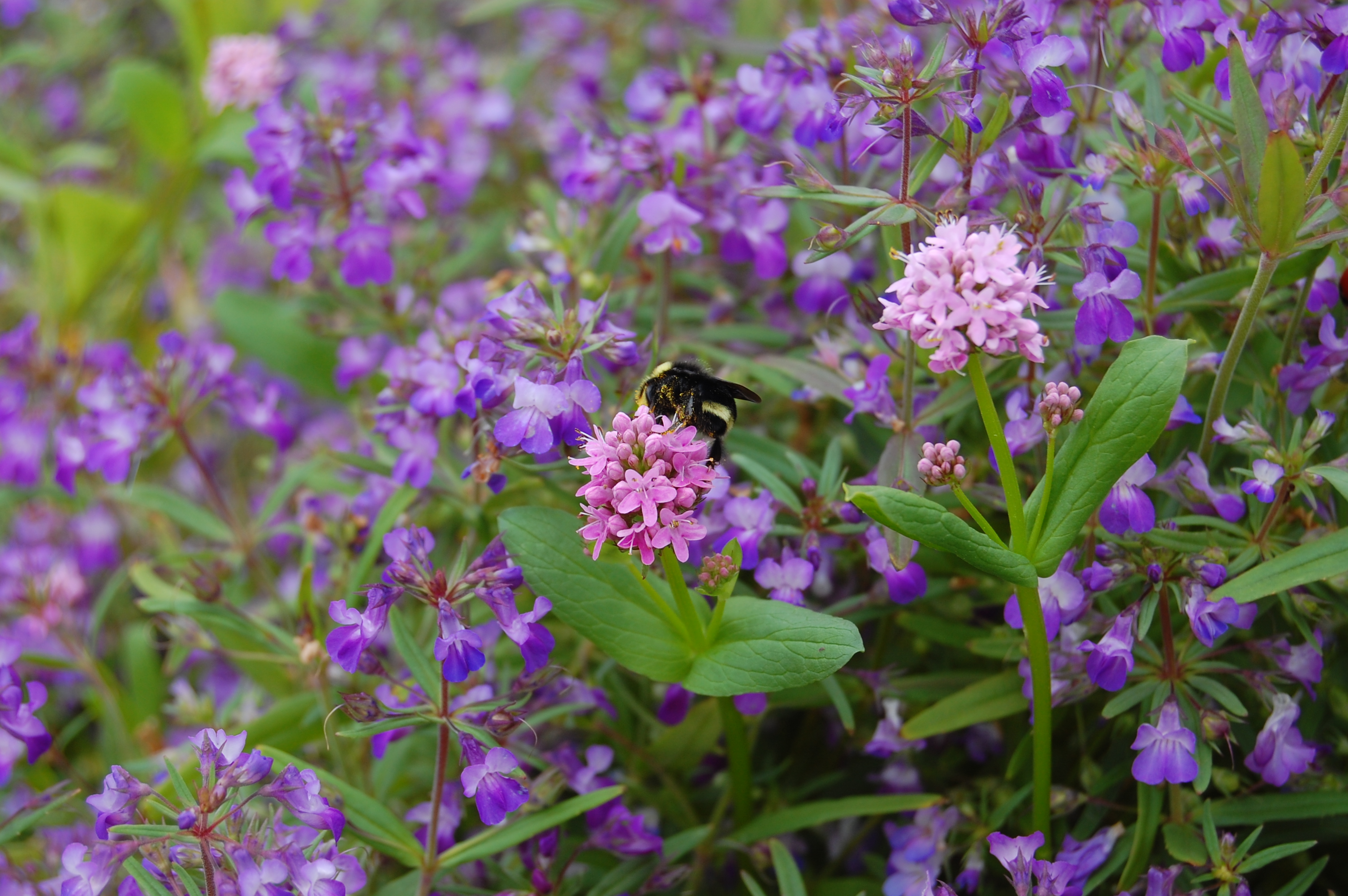
A bumblebee visits large blue-eyed Mary (Collinsia grandiflora) and sea pink (Plectritus congesta). Photo by Jaal Mann.

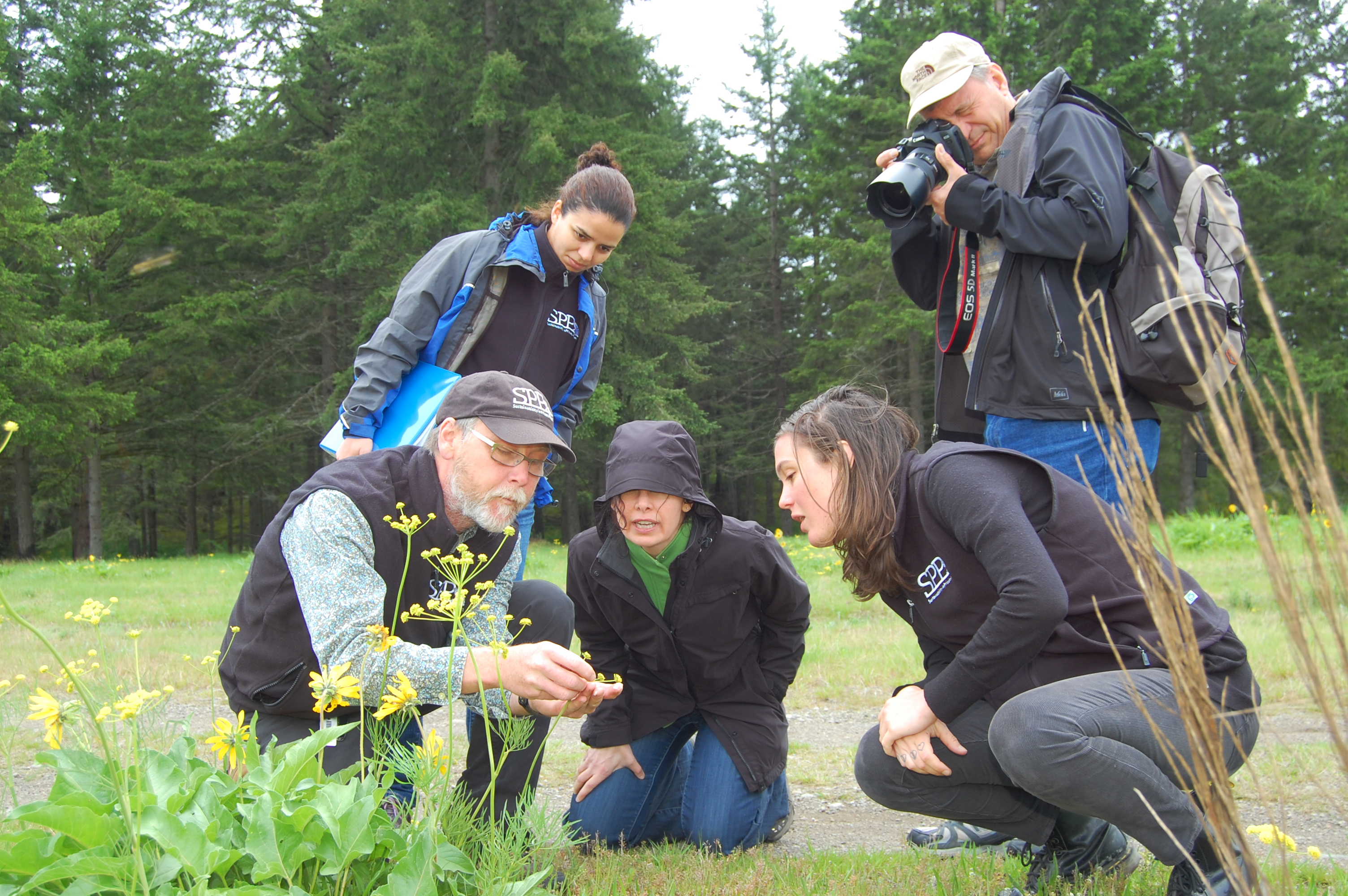
Several Fridays ago, SPP hosted a Prairie Tour at Joint Base Lewis-McChord (JBLM) in order to share the rare landscape with WDOC and TESC partners. Jim Lynch, Field Biologist for the Fort Lewis Fish and Wildlife Program, led us to two different prairie sites where he explained the importance of maintaining these nearly nonexistent ecosystems.

Jim began the tour by explaining that JBLM has one of the largest last remaining prairies in Washington because it is constantly lit on fire both by military exercises and prescribed burns. Controlled burns are an important ecological function in prairie habitats and were used centuries ago by Native Americans for agricultural purposes. Without these fires, Douglas fir trees and other invasive species (such as Scotch broom) would take over the prairies. Jim stressed the importance of maintaining prairie ecosystems for its endemic species–species that are found nowhere else. The JBLM prairies are home to the Taylor’s checkerspot butterfly, Mazama pocket gopher, and Streaked horn lark, all of which will soon be listed under the Endangered Species Act. Jim showed us the recent outplantings from SPP conservation nursery production. The native plantings are crucial to maintaining prairie biodiversity. Furthermore, these plants are key to the Taylor’s checkerspot’s survival, as they rely on them for food and shelter.

The tour not only revealed the integral connection between the conservation nursery and the butterfly-rearing program, but between the partners that were present. The work that the conservation and butterfly-rearing crews accomplish in the prisons manifests on the prairies at JBLM. Members of SPP, WDOC, and Evergreen witnessed this complex process during the Prairie Tour, and we were all reminded of the invaluable collaboration required to achieve such a feat. I look forward to the next trip out to the JBLM prairies.

SPP's Carl Elliott shows Drissia Ras, Julie Vanneste, Eric Heinitz, and Fiona Edwards lomatium (Lomatium utriculatum). Photo by Jaal Mann.
SPP’s Carl Elliott shows lomatium (Lomatium utriculatum) to Drissia Ras, Julie Vanneste, Eric Heinitz, and Fiona Edwards. Photo by Jaal Mann.
WDOC Videographer William C. Mader shoots in an oak woodland prairie. Photo by Jaal Mann.