By Brittany Gallagher, SPP Evaluations Coordinator and Graduate Research Assistant
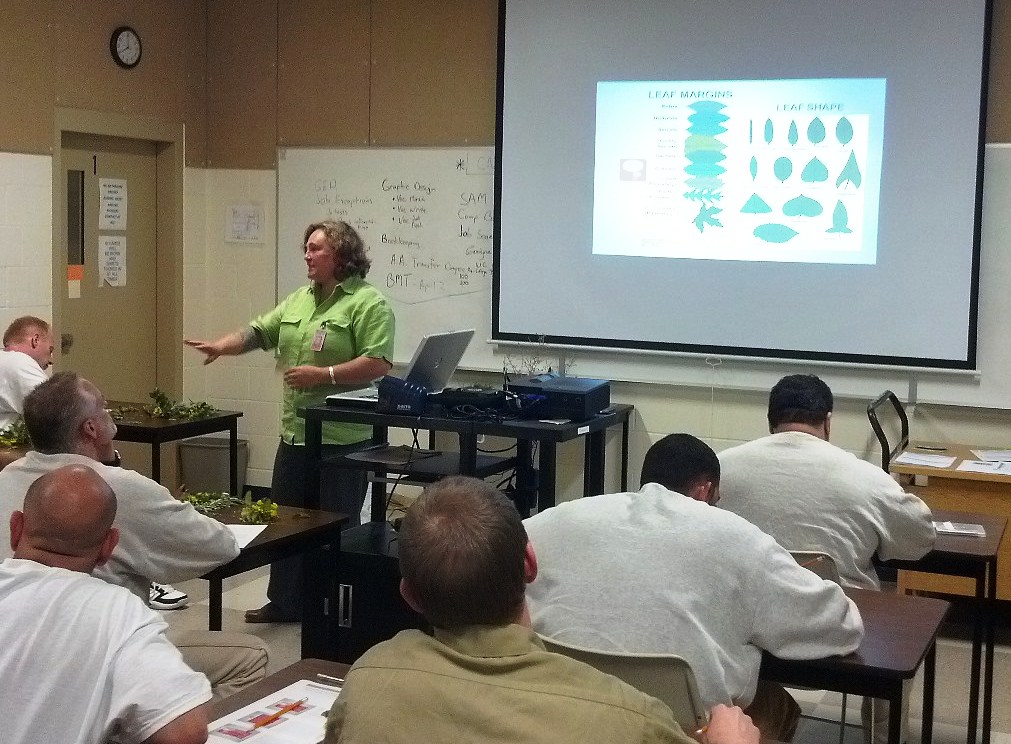
 This winter, the SPP began its first statewide evaluation of the effects of SPP programming on inmate program participants. More than 400 offenders, including those who work in a variety of SPP programs as well as a control group of offenders not involved in sustainability-related programming, were invited to enroll in the study. The study was designed to examine the effects of participation in SPP programs on offenders’ well-being, plans for the future, and interpersonal relationships, as well as their environmental attitudes and beliefs.
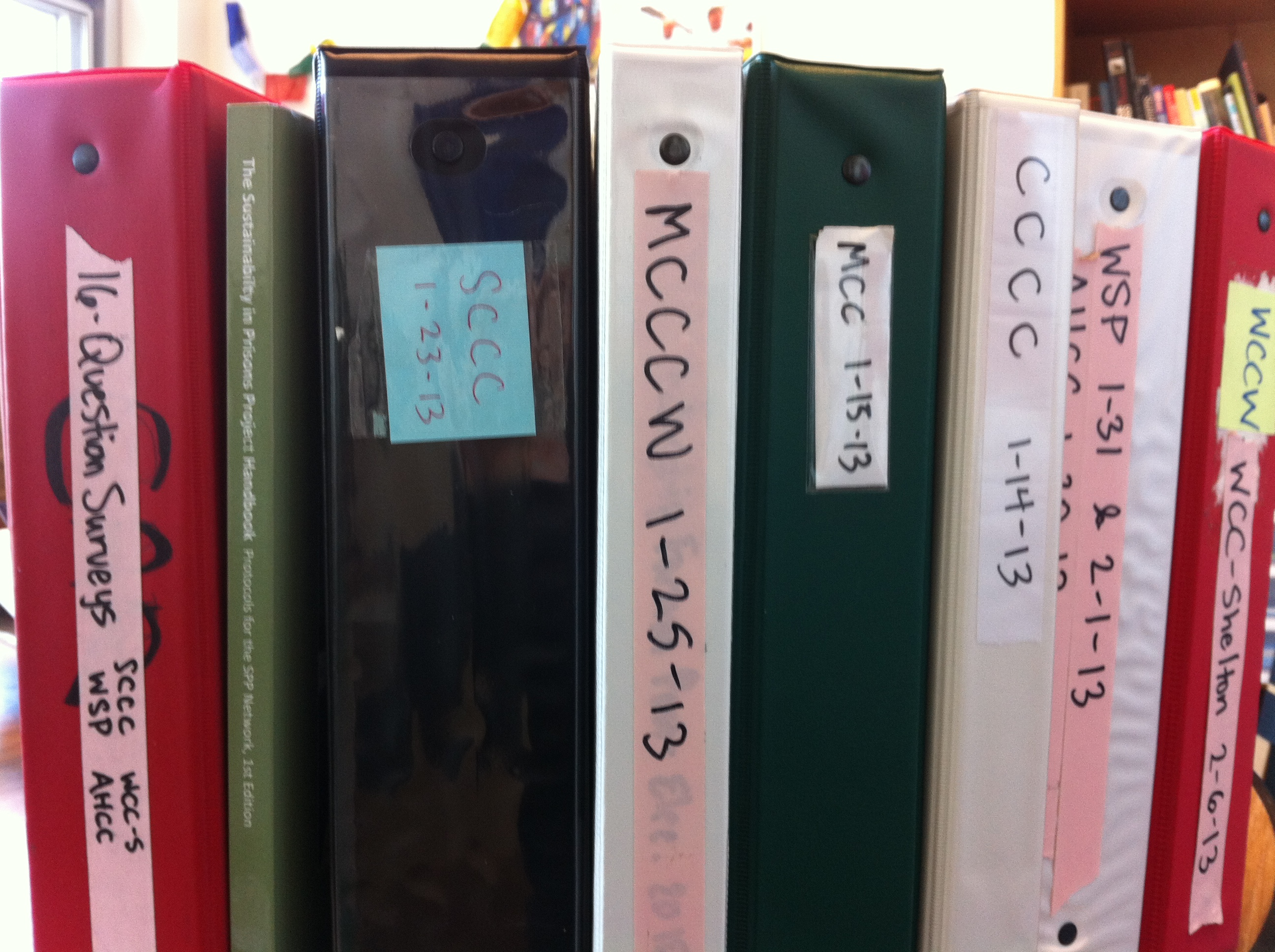
In order to begin this study, students, staff, and faculty from SPP worked with researchers at Washington State University, the University of Washington, The Evergreen State College, and the Department of Corrections to design survey tools and complete a full Human Subjects Review (HSR) application. Once the HSR research application was approved, we submitted an additional application to the Department of Corrections for approval to conduct research in their prison facilities. SPP staff scheduled research visits to nine Washington prisons. During January and February, more than 375 offenders at these prisons completed surveys contributing to the study. Our thanks go out to prison staff and administrators who helped survey administration run smoothly and to the offenders who filled out the surveys.
SPP graduate research assistants have been busily entering mountains of resulting data, and early analysis has already begun. We presented study design and preliminary results at the recent SPP Network meeting in Salt Lake City, Utah and were well received. I will also present the study at CONFOR, an international conference for graduate students, held this year in Kananaskis, Alberta.
Stay tuned for updates–as I continue my analysis I hope to have much more to share!