Main text by Douglas Gallagher, Incarcerated Dog Trainer at Clallam Bay Corrections Center
Introduction by Bethany J. Shepler, Green Track Program Coordinator
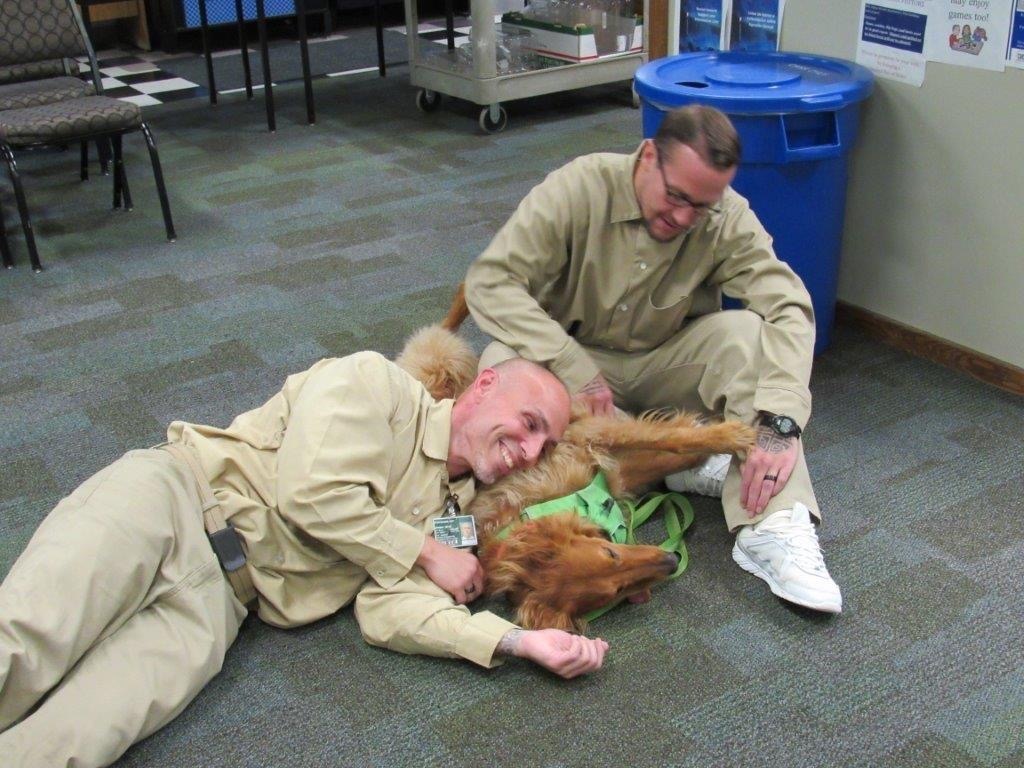
Incarcerated dog handlers reunite with a dog they trained at the second annual reunion on October 17, 2017. Photo by Brian Harmon, taken from http://www.wagsequimwa.com/PrisonProgram.html

At the Sustainability Fair at Clallam Bay Corrections Center (CBCC), I had the chance to learn about the Welfare for Animals Guild (WAG) dog program. WAG works with incarcerated dog handlers at CBCC to train dogs who have been labeled as “unadoptable.” Since the program’s inception in 2012, incarcerated dog handlers have trained over 200 adult dogs and puppies. This training often includes teaching the dogs to trust people, interact with other dogs, and perform for common commands. 99% of the dogs that have gone through training at CBCC has been adopted into a forever home! Each one went through WAG’s rigorous adoption process including applications, interviews, and inspecting the potential house. Check out WAG’s Facebook page and their website for more information about the work they do (and for beautiful dog portraits).
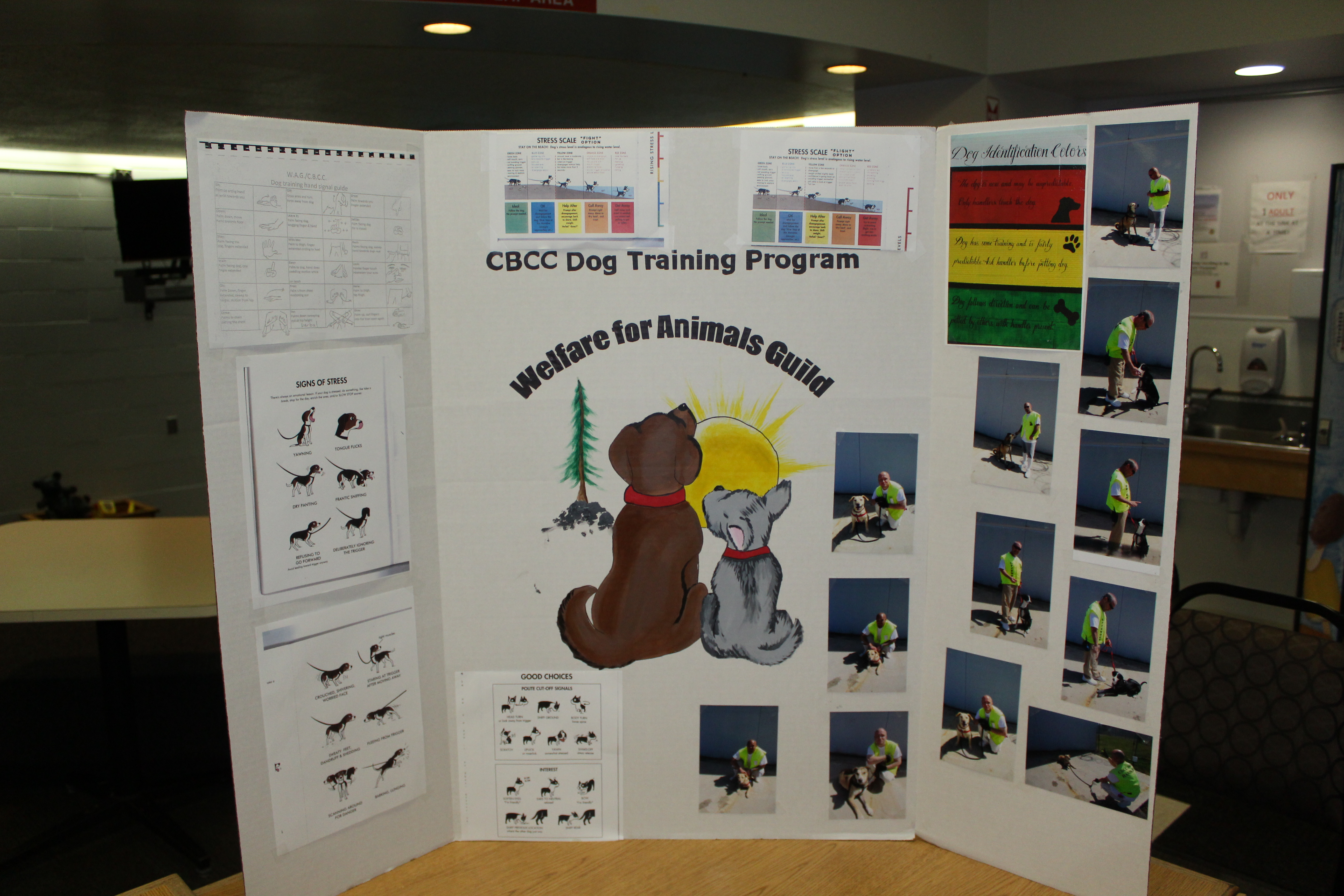
Welfare for Animals Guild (WAG) at Clallam Bay Corrections Center (CBCC). Photo by Bethany Shepler.

The dog program sponsor at CBCC, Tanja Cain, worked with WAG to establish a “Reunion Day.” Dogs return to the prison for a day along with their adoptive parents. Incarcerated dog handlers get to see dogs they helped train and meet the people who adopted them. And the dogs get to see the people who gave them a second chance at life. When the dogs arrive, they know exactly where they are and rush to their former handlers with wagging tails and lots of kisses.

Mr. Gallagher is a certified trainer working at CBCC and he gave a speech at the Sustainability Fair about the WAG program and what it means to him.

The WAG program and what it means to me

My name Douglas Gallagher and I have been in the dog program here at Clallam Bay since March of 2014. In the last five years, I have had the pleasure of training 26 dogs. I have also become a Certified Behavior Adjustment Trainer Instructor otherwise known as a “CBATI” something I am very proud of.
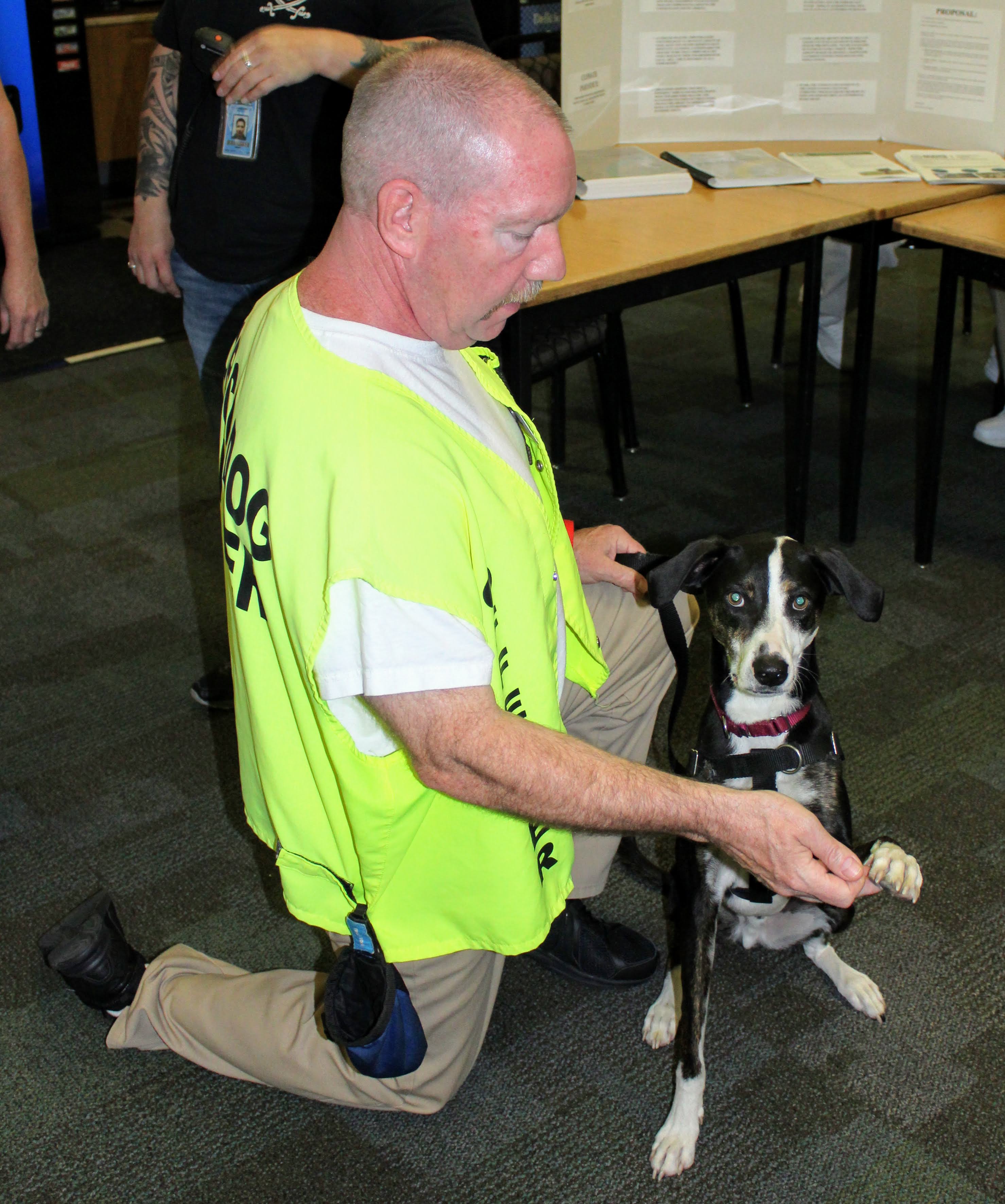
Mr. Gallagher was one of the incarcerated handlers who helped to train Andy. Even though Andy is a little shy, he agreed to pose for this photo. Photo by Bethany Shepler.

When I first got into the program, I knew nothing about training dogs, and in fact, felt a little overwhelmed by it all. I was lucky to move in with someone who had trained a few dogs, and he assured me that if I read all of the books and paid attention, I would learn fast and become confident in my abilities. As nervous as I was about my newfound responsibility, I took to it as a fish takes to water. I read all of the books that were provided to us, watched the videos and worked with the other handlers who had more experience than I did. And I learned how to work as part of a team. It was a challenge, and coming from a background where I only cared about myself, it took some time for me to adjust to it all and I love it.
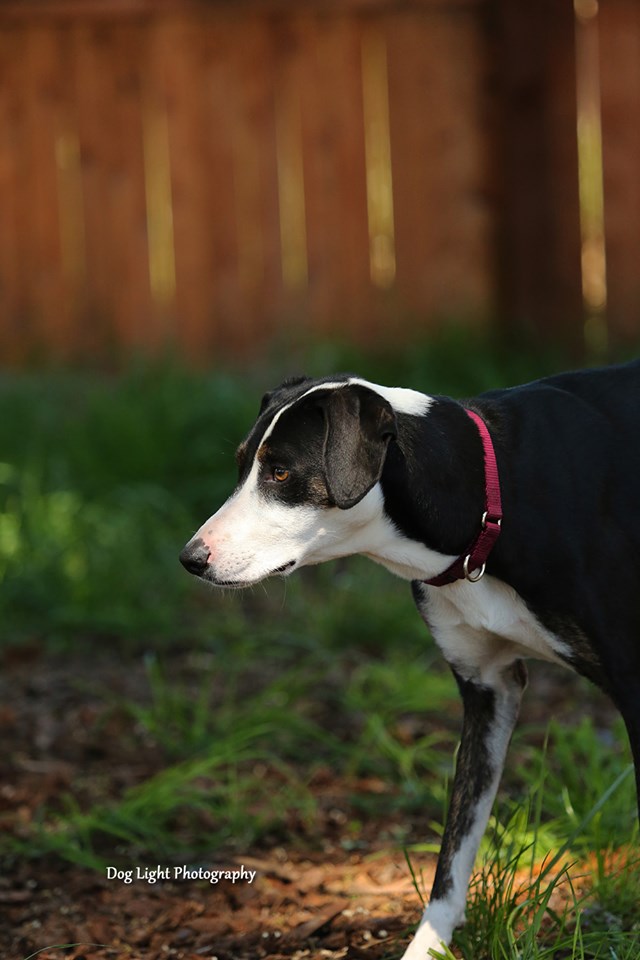
Here’s Andy’s portrait picture from WAG’s Facebook page. Photo credit: Dog Light Photography.

You see, like most of the dogs that we get from WAG, I too was broken. When I came back to prison with my third strike, I was at my wit’s end. Drug addiction had broken me, and I had a long road of recovery before me. Over the last several years in the program, I have become a new person.

I could identify with the dogs that WAG brings us because like most of them, I knew what it was like to be cast off. The program has taught me more than I ever thought it would – how to be responsible, how to be patient, to have empathy, how to work with others, and most of all, how to love. When I get a fearful dog who won’t even take treats, and nurse it back to health and watch it transform into a new dog, it brings me great joy. There are just no words to describe it. Each dog has its issues, just like us. Each dog is unique in its own way, just like us. Each day I look forward to learning something new. When I first joined the program I knew that it was going to be a challenge, and take a lot of dedication, yet I had no idea just how fulfilling it would be. There is no greater feeling than watching a broken dog become whole and go to its forever home. I want to thank WAG and Ms. Cain for allowing all of us handlers to participate in this life-changing endeavor. Now I will share some quotes from some of the other handlers.

“The dog program gives me a sense of purpose and allows me to make a positive impact on the lives of dogs as well as myself. All while giving me skills that I can use to help me to be successful out in the community and prevent me from re-offending.” Mr. Thompson


“What the dog program means to me is: love, passion for life, teaching, and learning!” Mr. Parren

“This dog program has helped me grow as a person. It showed me how to be responsible and not be a selfish person. Now I have someone that depends on me for everything and I love it. This program gives me a sense of self-worth.” Mr. De Le Cruz

“It has made me less selfish.” Mr. Osalde

by Shappa, Journeyman Beekeeper at Airway Heights Corrections Center. Shappa wrote this piece in response to a call for writing on “science in prison.”

Living in a prison cell is a combination of living in a honeybee hive and a monastery: a place where active growth where peace and contentment can be attained once you realize your vocation in life. In all three — prison, hive, and monastery — there is growth in a small space for each transitory life (inmate, bee, and monk) living in the cell. All are organized, by either custody level, colony, or community, in a structured, and hopefully disciplined way. One of the strangest and yet unsurprising aspects of each is the frequency of death, disorder, or disruption.

A queen bee (marked by a pink dot) is surrounded by worker bees in this healthy hive. Photo by Rachel Friederich.

The lives of honeybees are spent mostly working and living in a colony, or a hive, that has combs consisting of numerous cells. Their lifespans are short: 3-5 years for the queen, about 6 weeks for the female workers, and only 3 weeks or so for the males, called “drones.” The queen governs her colony, but she can and will be replaced if she’s not healthy enough or some other deficiency exists as determined by the worker bees. After mating with several drones, the queen lays hundreds of eggs daily, and the hive’s operation produces honey, wax, pollen, and royal jelly. In each magnificently-engineered comb (every cell is perfectly constructed at 70° angles), a honeybee’s life begins, honey is stored, wax is produced, and workers function in many other ways to furiously try to keep pace with a healthy queen in her hive.

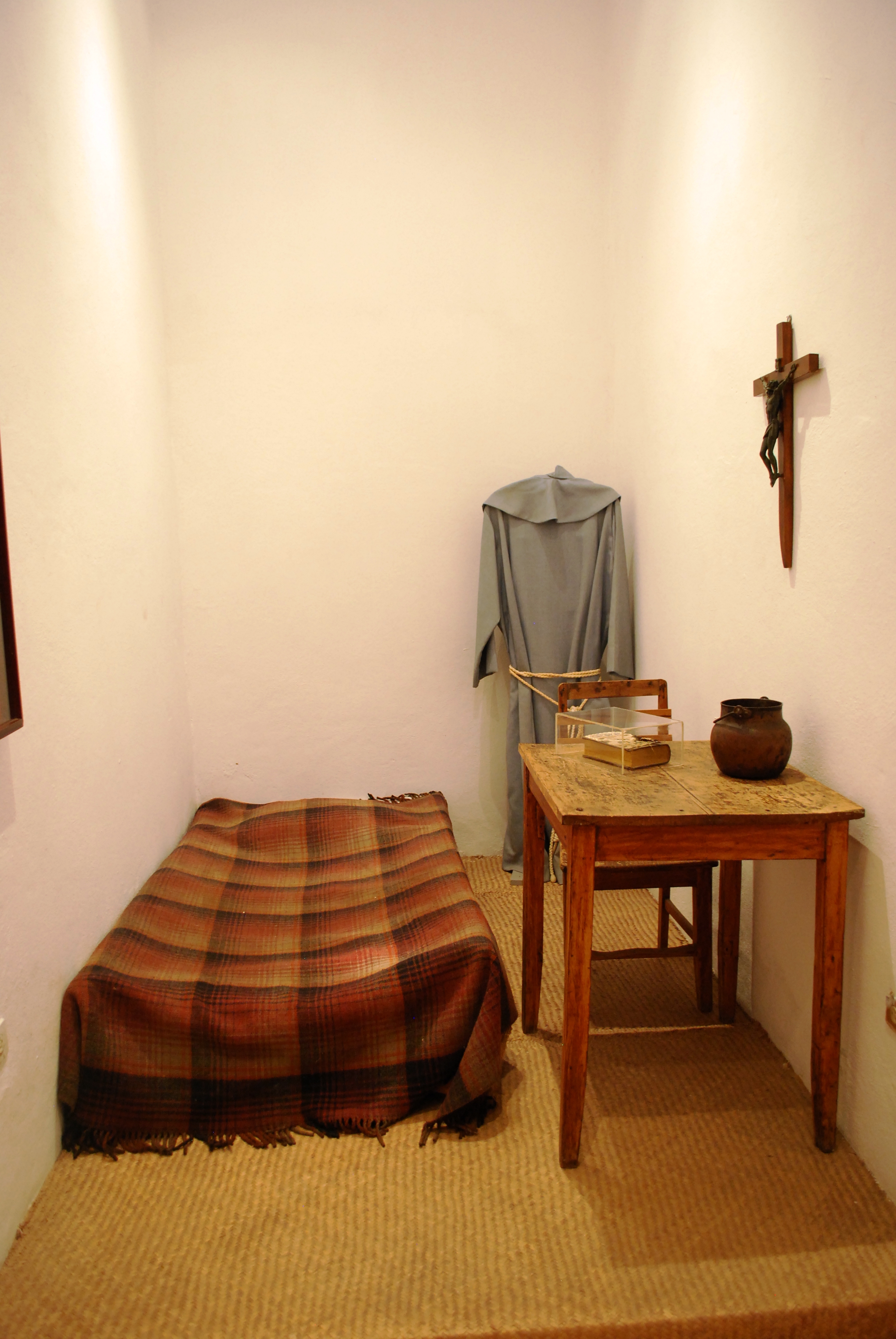
Recreation of a monk’s cell in the Museum of the Sierra Gorda in Mexico. Photo by AlejandroLinaresGarcia.

Monks live in cells within a community where efforts to “die-to-self” begin. An abbot or prior manages the monastery; he instills obedience and becomes, in most cases, a spiritual counselor for the monks housed there. The monastery is a place of spiritual growth through prayer and work, referred to by Benedictine monks in Latin: ora et labora. It is a world far removed from secular society where a monk can fine-tune his prayers from the heart and hone skills of contentment and discernment using solitude, silence, and stillness. The unsatisfying, competitive consumerism of the world is abandoned and replaced when the monk surrenders to his higher authority, even at the cost of needed sleep when he’s called upon by God (or his abbot) to asceticism and self-sacrifice: intercessory prayer day and night can help those suffering; fasting can discipline oneself to exercise self-control over the flesh and build the virtue of temperance to overcome sin; and other forms of penance can excise vices. The consecrated life of a monk includes the three evangelical counsels: vows of chastity, poverty, and obedience. A vow of stability is also included for Benedictines. Contemplative prayer, humility, and obedience — even in solitude when the monk is quietly alone with God and only God — are critical components of spiritual growth and heightened discernment, which is granted to the ones who have experiential encounters with Christ in the ineffable mysticism discovered in his cell.

Inmates live in a prison where they’re assigned to a cell: the place where you flourish, fail, or die depends on the choices you make. Prison is controlled and managed as a quasi-military organization with teams of officers who respond to situations ranging from an emotionally disturbed patient’s hurt feelings to hostage negotiations. Sometimes it’s a hostile battlefield where small wars erupt, both within oneself and without engagement of the mind. Other times it’s just an overflow for Eastern State Hospital. For the man who’s willing to honestly assess himself, put in the often difficult work necessary to change, start to properly order his life in a healthy way and answer his calling, there’s plenty of time and available resources to better their lives with spiritual enlightenment and enhance the future for themselves, their family, and their community.

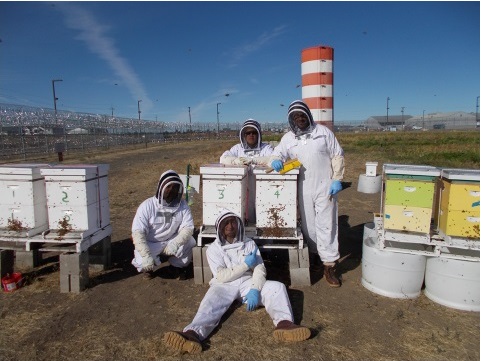
Beekeepers at Airway Heights Corrections Center pose with their hives. Photo courtesy of Kay Heinrich.

An incubation period is always good for growth, whether it’s in a honeybee hive, a monastery, or a prison.