by Cyril Walrond, Roots of Success Instructor and Master Trainer

“…All things are possible to him that believes.” Mark 9:23
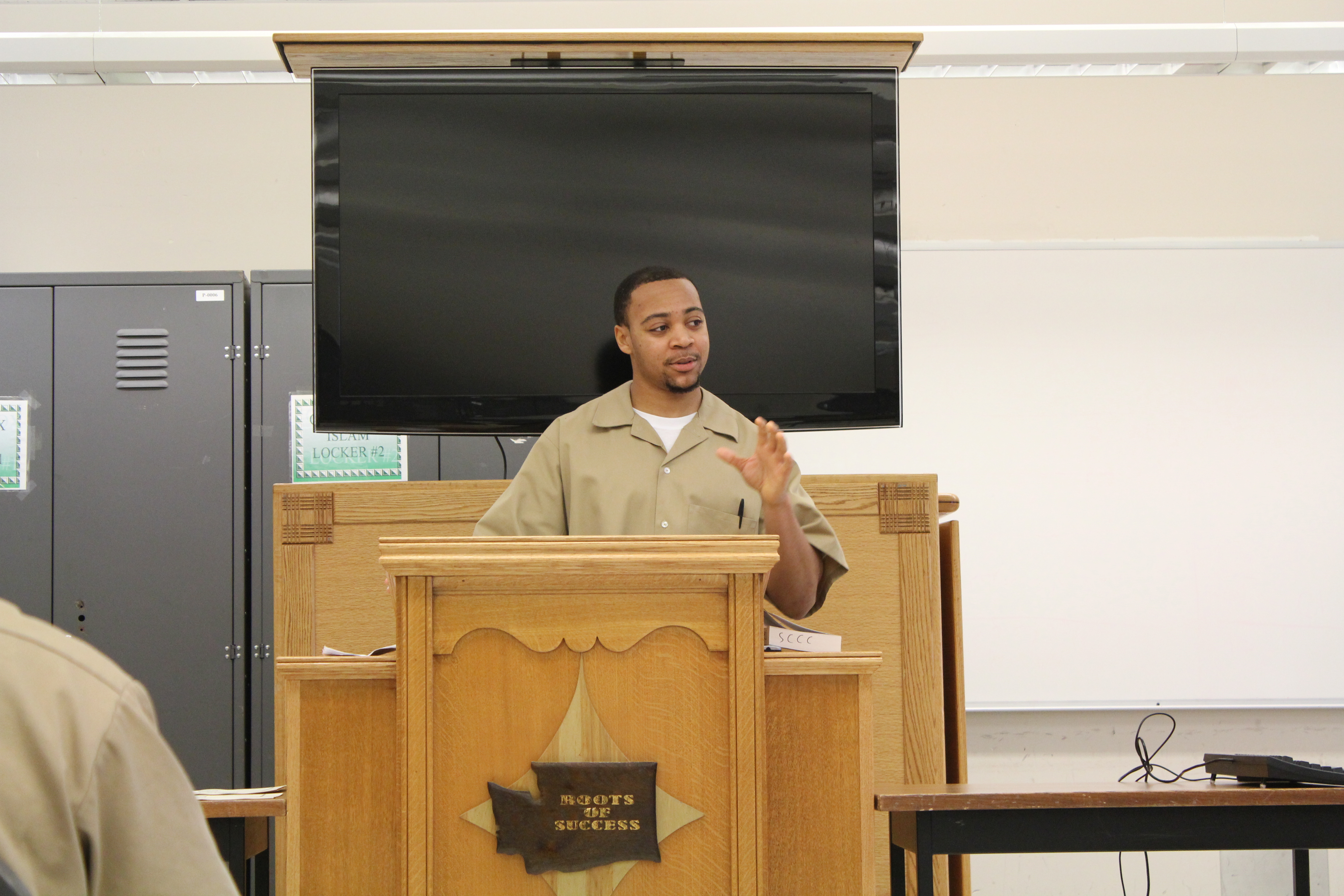
IMG_1260
Cyril Walrond, Roots of Success instructor speaking at the class graduation ceremony in 2014. Photo by Joslyn Rose Trivett.

Teaching the Roots of Success environmental literacy curriculum here at Stafford Creek has been not only a blessing to my life but has also been an enriching privilege and honor. To teach this 10-module course in a classroom without any correctional staff, administration, or outside volunteers to sponsor it is unprecedented in the Department of Corrections. Daily it is just me and my two co-workers Grady Mitchell and David Duhaime in our classroom teaching a class of 20-30 eager incarcerated students.

They told us it could not be done, but we are doing it. They doubted that there would be any interest, but we have become one of the most sought after programs among the men at the facility. They thought that the material might be too difficult or challenging, we said let’s challenge them. Now, nearly 2 1/2 years later, we have graduated 8 classes and over 200 students. How was this done?… Through believing!

It is only through believing that we can make a difference that we can then impact our students. It is only through instilling this belief in our students, that they have something to contribute to this world, that they began to care about how they have impacted their environment and how they will impact it into the future. Looking beyond their present pain and into the future possibilities.
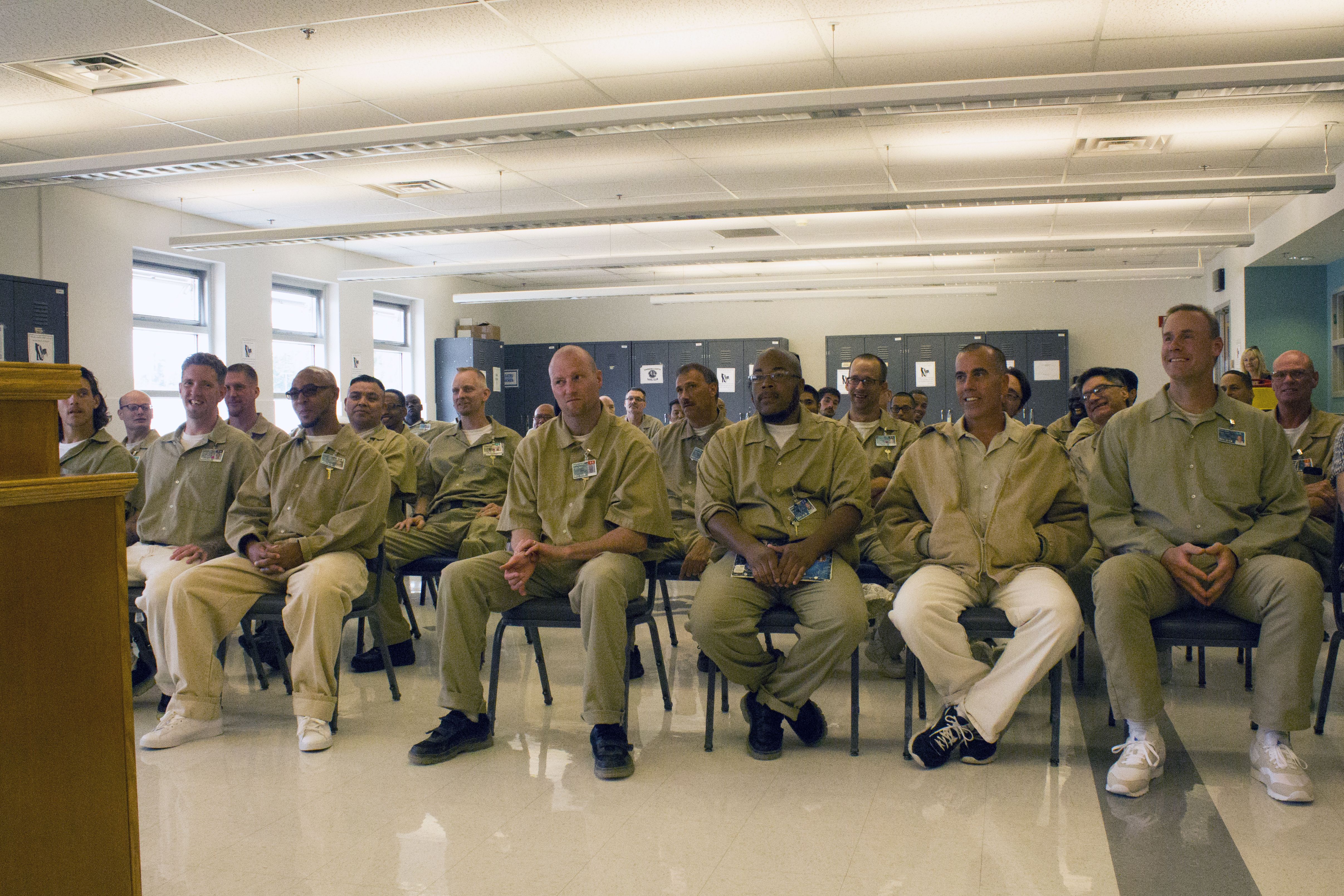
SCCC Roots graduates whole room
A look at over 50 students graduating from the Roots of Success program at Stafford Creek. Photo by Tiffany Webb.

My co-workers and I met frequently before our first class and agreed that if we did not believe in ourselves, this curriculum, and then each other, our students would never believe in us, this curriculum, or themselves. Now we are seeing the effects of our believing on the lives of not inmates, not convicts, not offenders, but on once-broken men who are now on a conquest to make a difference as they repair their lives.

Many of our students came into class with a warped self-image. Programmed to think that prison was inevitably predestined for their lives and that this is what they were being groomed for from the time they were conceived. We assure them these lies have conditioned them to the point of complacency, stagnation, and then finally acceptance. This place of acceptance is the realm in which many of them dwell, after having accepted their plight. However, they are made for more!

This is why one of my students, who we call Radio, really touched my heart when he personally thanked me at the conclusion of this class’s graduation. “Sir, thank you. You pushed me when I did not want to move. You challenged me when I felt like giving up. You believed in me when I did not believe in myself. Even when I thought my future was hopeless, you quoted to me several times Jeremiah 29:11.”

Radio is just one of many success stories that the 3 of us laugh and joke about when times get hard and our patience may be running thin with our students. (Trust me, anyone who has ever taught knows what I mean.) But we never get discouraged by the uphill battle. We press on and continue to believe that what we are accomplishing is much bigger than any one of us. Radio is a perfect example of how our believing in our students against all odds is giving hope to the hopeless.
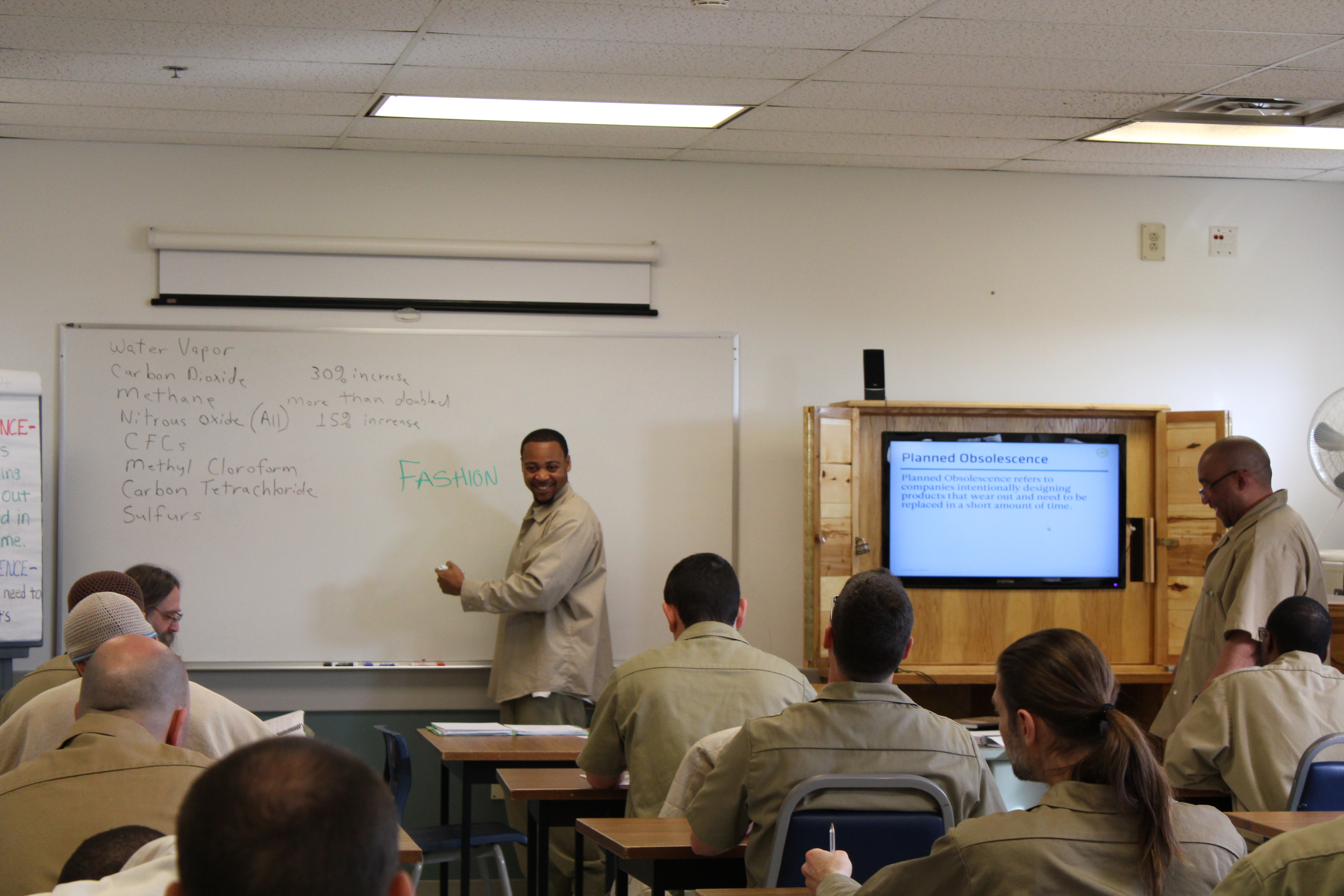
Roots-of-Success-SCCC 5-7-14 217
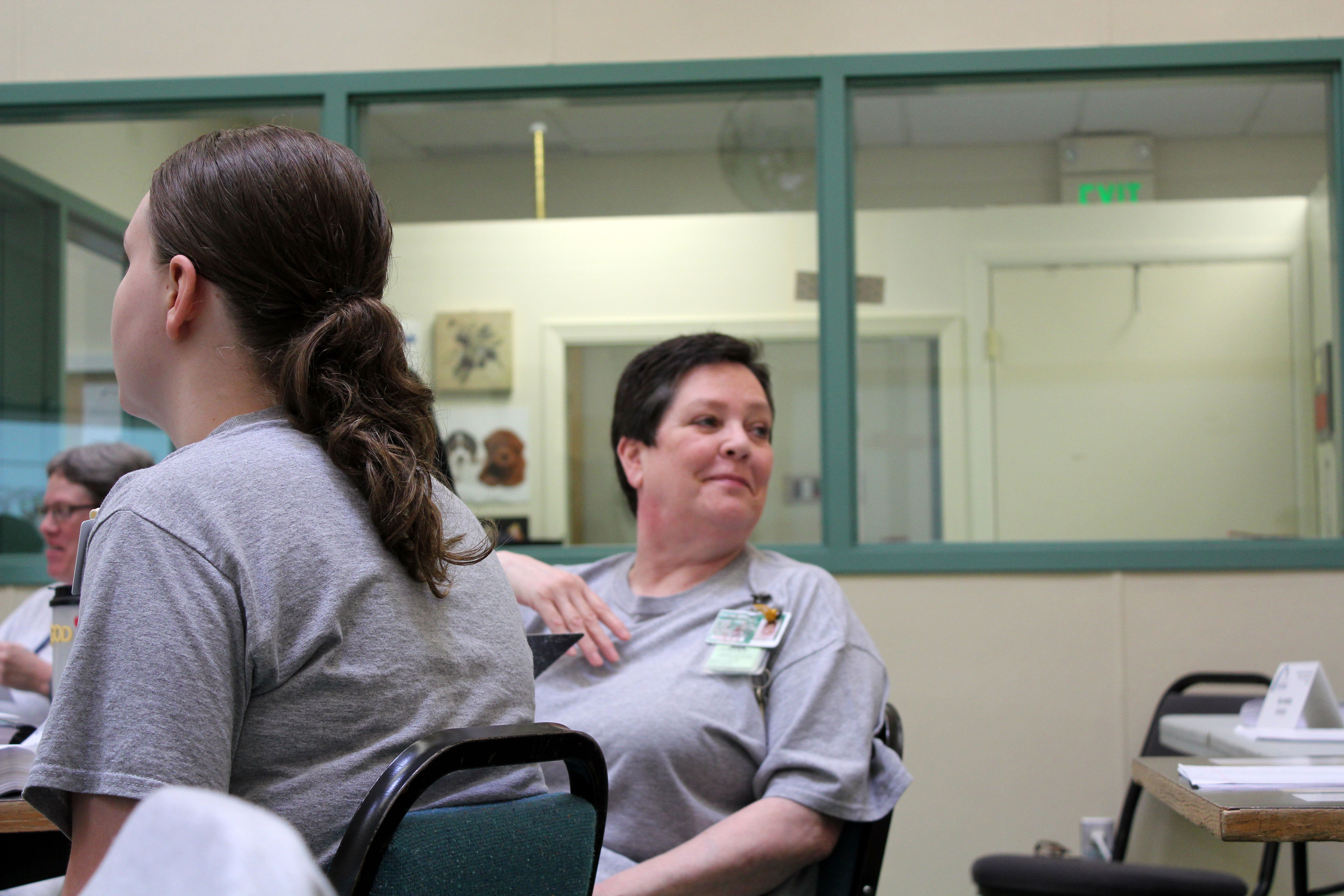
A Roots of Success class in action at Stafford Creek Corrections Center. Photo by Joslyn Rose Trivett.

Sooner or later most of these men will be released. These men enter into our classroom one way and by the time that they leave their minds have been expanded beyond recognition. David, Grady, and I believe that what we are doing will transcend these walls, and society will begin to believe in the great potential held within.

“‘For I know the plans I have for you,’ declares the Lord, ‘plans to prosper you and not to harm you, plans to give you a hope and a future.'” Jeremiah 29:11

These are the effects of believing! So let me ask, what are you believing for?
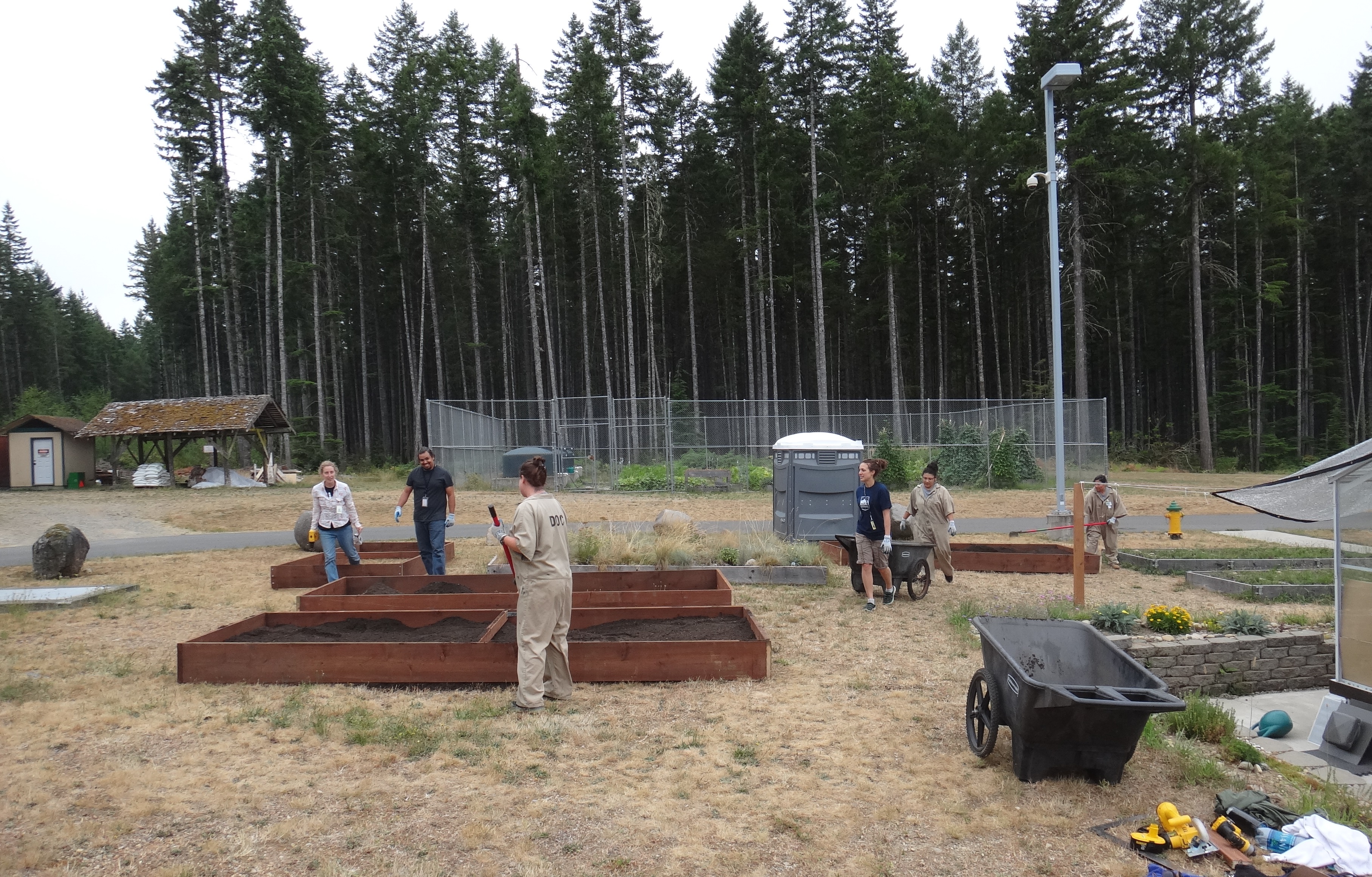


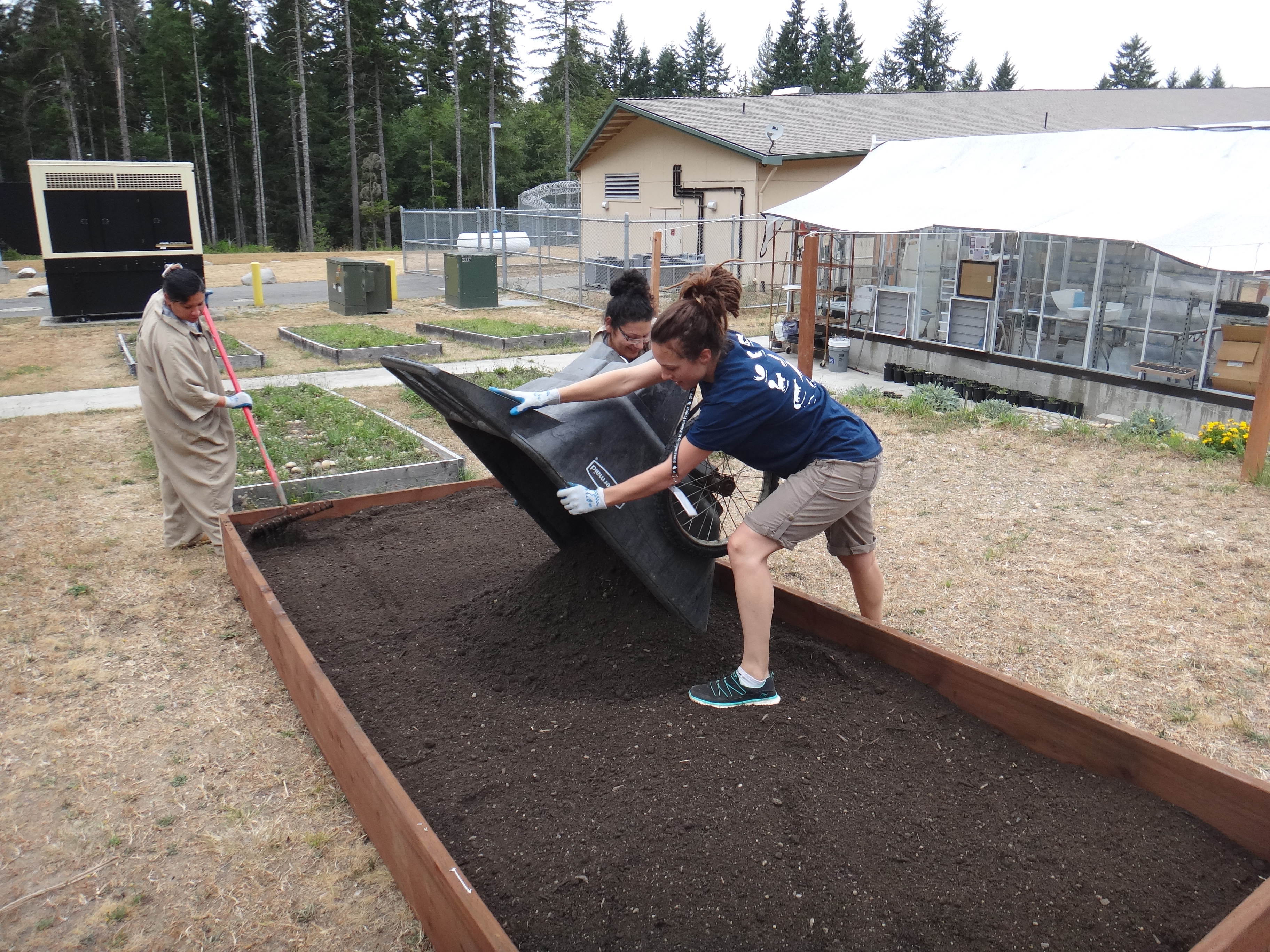
SPP student-staff and butterfly technicians at MCCCW install four new raise beds to grow Plantago, food for the butterfly larvae.
SPP student-staff and butterfly technicians at MCCCW install four new raise beds to grow plantain, a common weed preferred by the endangered butterfly as food in their larval life-stage. Photo by Seth Dorman.

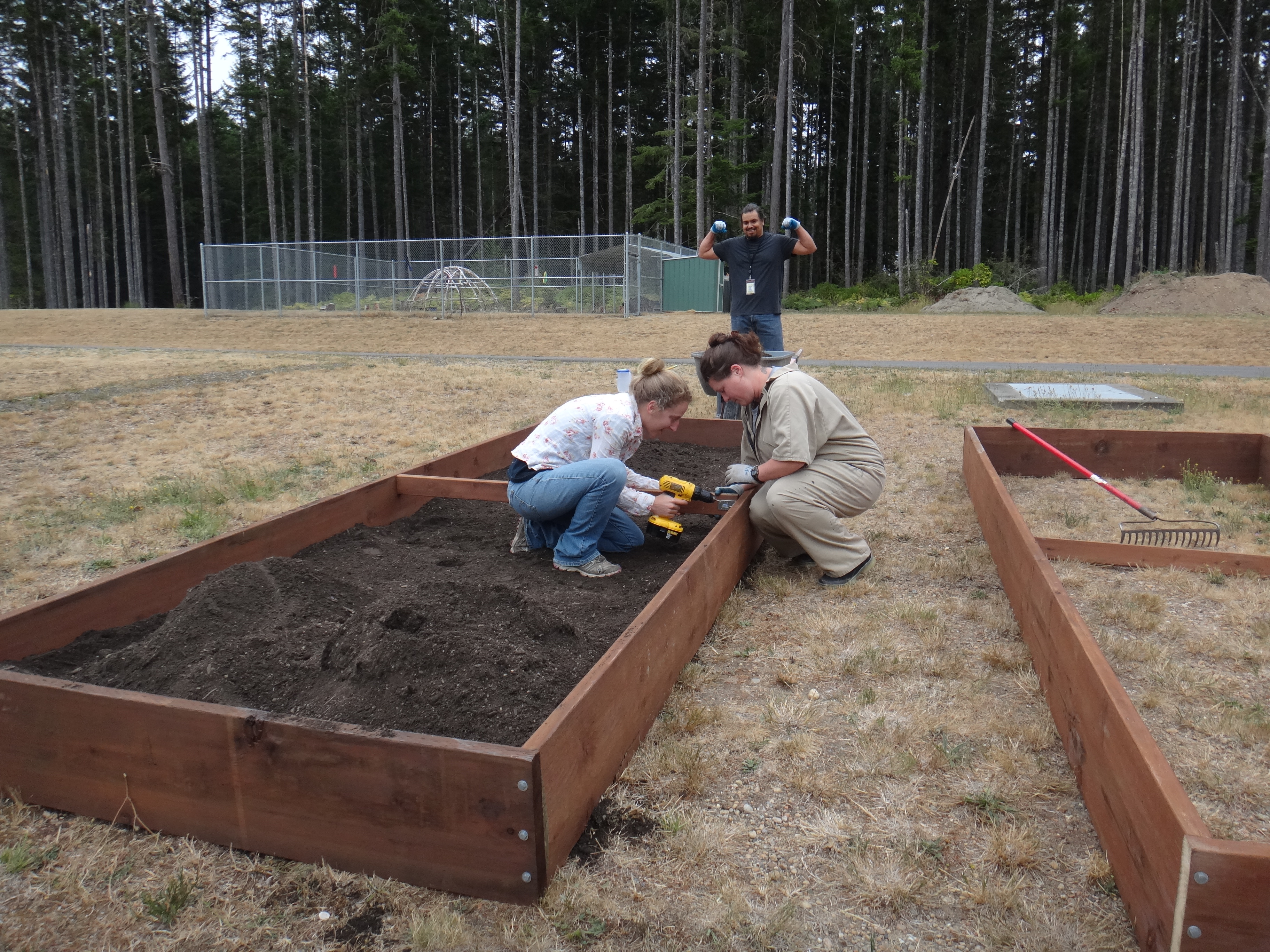
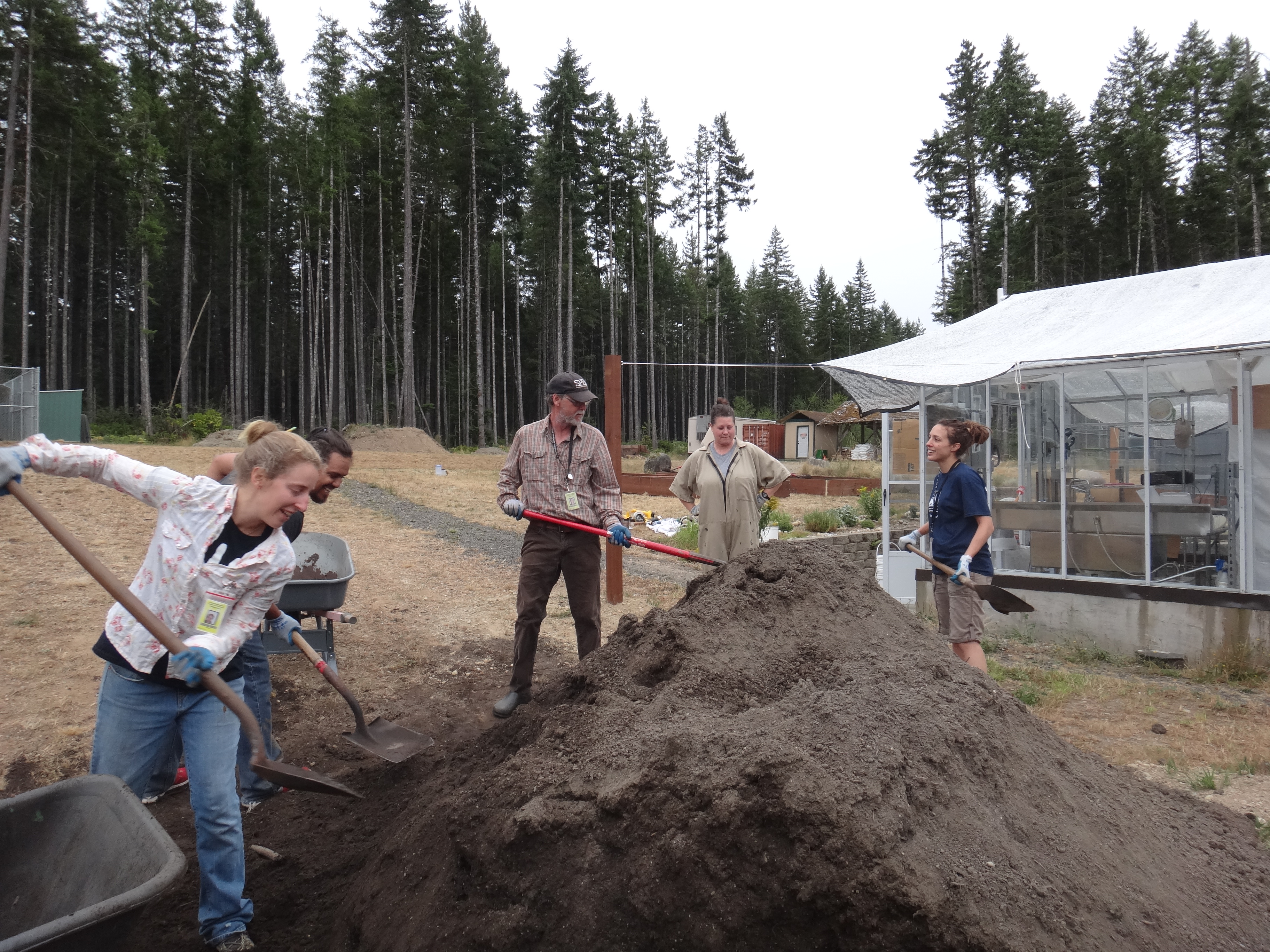
A refreshing, overcast morning at Mission Creek Corrections Center for Women (MCCCW) made for great weather to build four new raised beds for the Taylor’s Checkerspot Butterfly Program. We will grow plantain (Plantago) in these beds to increase the amount of food for the caterpillars (larvae) at the facility. SPP’s nursery crew—including Carl Elliott, Allie Denzler, and Ricky Johnson— joined the butterfly team on the project.

Lindsey Hamilton, Taylor's Checkerspot Program Coordinator, and butterfly technician Eva Ortiz unload a wheelbarrow full of soil.
Lindsey Hamilton, Taylor’s Checkerspot Program Coordinator, and butterfly technician Eva Ortiz unload a wheelbarrow full of soil. Photo by Seth Dorman.


Butterfly technician Michelle Dittamore and SPP nursery coordinator Allie Denzler install support brackets. in a corner. Photo by Seth Dorman.

The Taylor’s Checkerspot larvae require Plantago leaves for foraging, and then as adult they can use the plants as a place to lay their eggs. In recent years, the larvae have prospered; the hard-working technicians dutifully supply each larva with an appropriate serving of food. The larvae will eat as much as they can in the fall to grow and store up enough energy to survive the cold, winter months of dormancy (diapause). When the hungry larvae wake-up in mid-February, they require an ample food each day to  become a pupa (pupate). Some Februarys, the Plantago plants have not yet had favorable weather conditions for sprouting new, plentiful leaves. Consequently, the food the larvae desperately need to complete their life cycle is scarce. Some years, technicians are forced to pick from scattered Plantago around the perimeter of the facility.

By adding the new raised beds, we hope to have a more dependable supply for larvae to metamorphose into beautifully checkered adults. With the bed additions, we hope to grow at least 3,500 plantain plants. This means each of the 3,500 larvae reared in a season will have their own individual plantain plant! We plan to add cold frames for each raised bed, which will boost plantain production in late winter. Bountiful food resources for the butterfly larvae are beneficial in the warmer months of the season if some food recourses become contaminated or reduced due to pests and disease.

DSC01276
SPP’s nursery crew and butterfly team shovel soil to be placed in new raise beds. Photo by Seth Dorman.
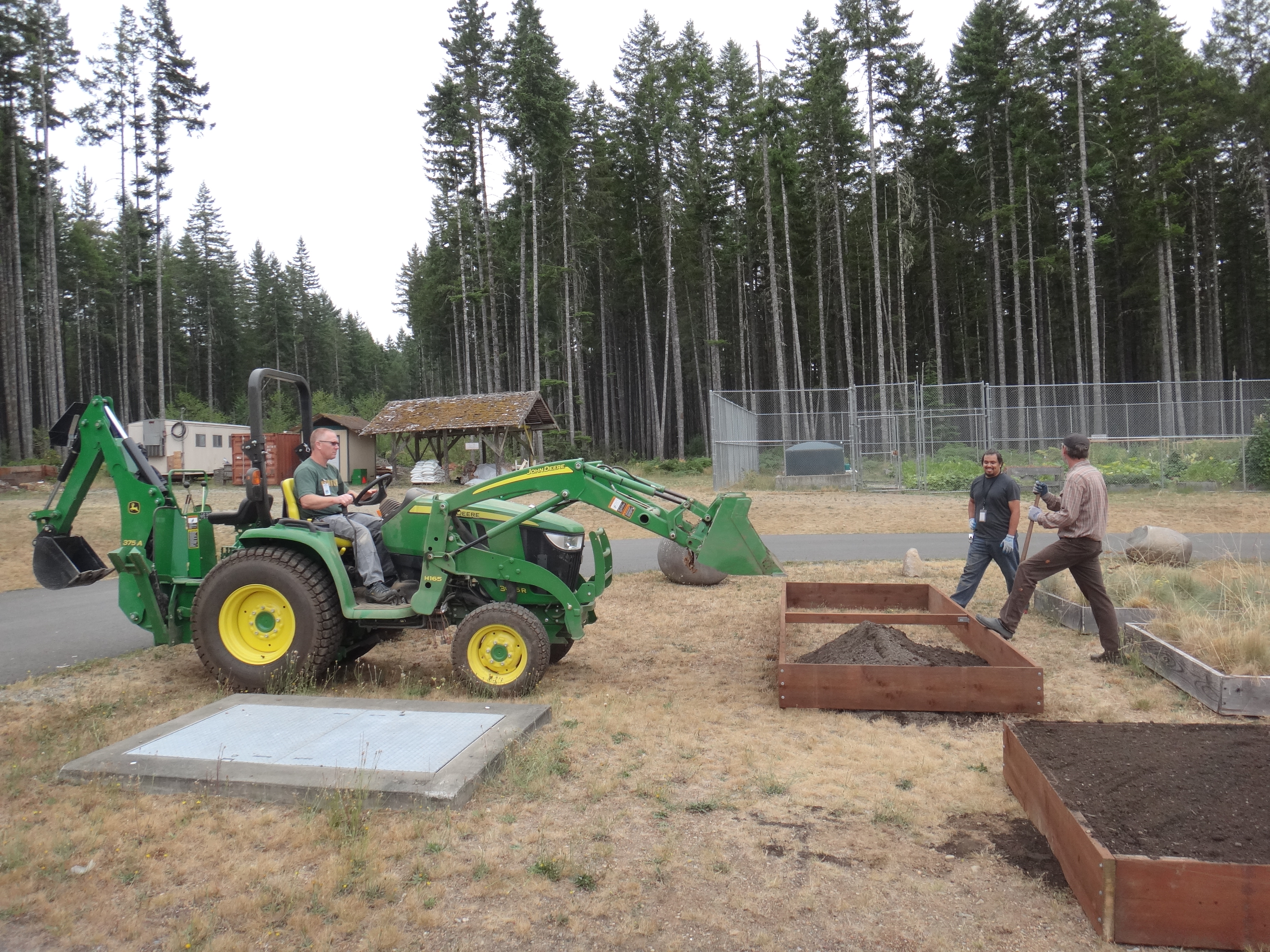
DSC01295
After some heavy lifting of soil with shovels, the maintenance crew at MCCCW shows SPP their bulldozing skills. Photo by Seth Dorman.


by Environmental Specialist Dorothy Trainer and SPP Program Manager Kelli Bush

Hoop-house-shot-Kellis-photos-057
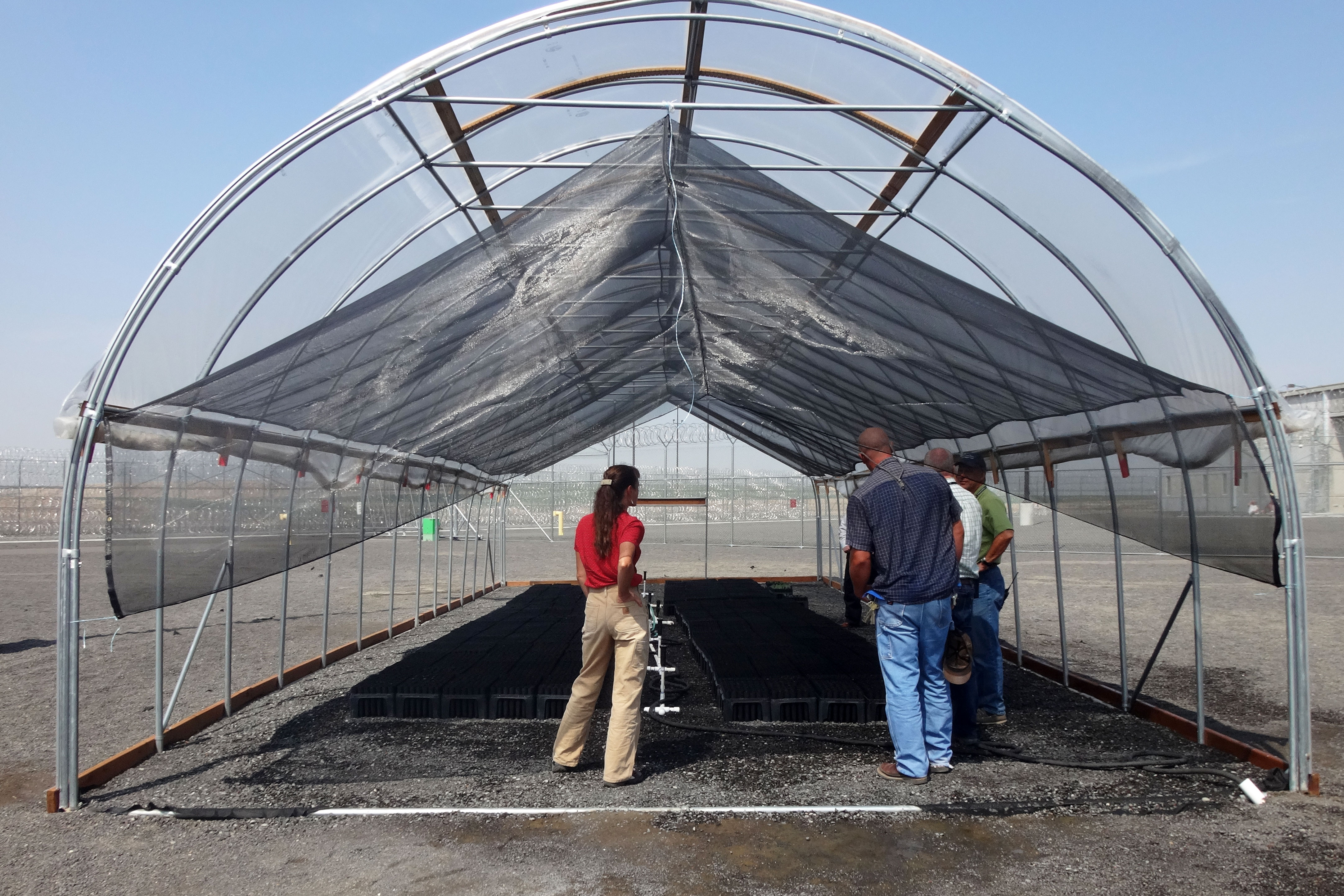
The hoop house at Coyote Ridge Corrections Center brings nature inside the prison with a new conservation nursery. Photo by Kelli Bush.

With funding support from the Institute for Applied Ecology (IAE), Coyote Ridge Correction Center (CRCC) has launched a new Sustainability in Prisons Project (SPP) Sagebrush Steppe Ecological Conservation Nursery Program. SPP is a partnership founded by Washington Department of Corrections and The Evergreen State College. The new program also includes collaborators from Bureau of Land Management (BLM), Washington Native Plant Society (WNP), Washington State University Tri-Cities (WSU TC), and IAE.

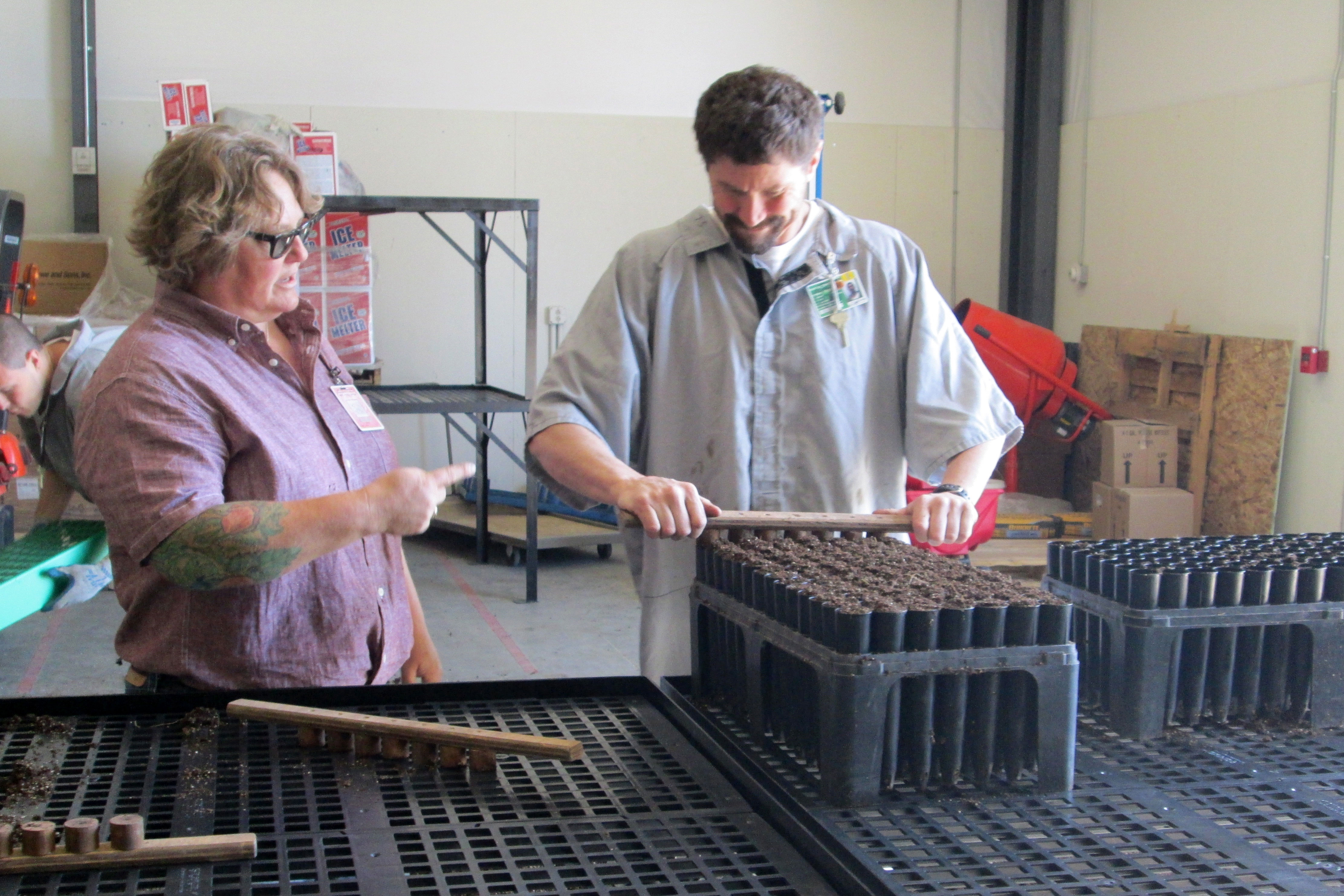
Plant ecologist and horticulture educator Gretchen Grabber works with an inmate technician filling tray for seed sewing. Photo by CRCC staff.

This spring inmates started 20,000 sage brush plants at CRCC. As an essential component of the program, hands on training and lectures are provided for inmates and staff by plant ecologist and horticulture educator Gretchen Grabber of WNP and WSU TC. The primary goal of this project is to provide sagebrush for restoration of greater sage grouse habitat. Fifty percent of the sagebrush steppe habitat in the United States has been lost to large scale fires, conversion to other land uses, invasive cheat grass, and noxious weeds. Sagebrush habitat provides important shelter and food for the greater sage grouse and many other species. All of the sagebrush plants grown at CRCC will be planted on BLM land for restoration in the Palisades Flat Fire Project area near Wenatchee, Washington.

Facility staff and Superintendent Uttecht eagerly accepted the opportunity to host this new program with very short notice, resulting in a busy spring and summer at CRCC. It was impressive how quickly they built a hoop house, hired an inmate crew, prepared containers for planting, and planted sagebrush seeds.

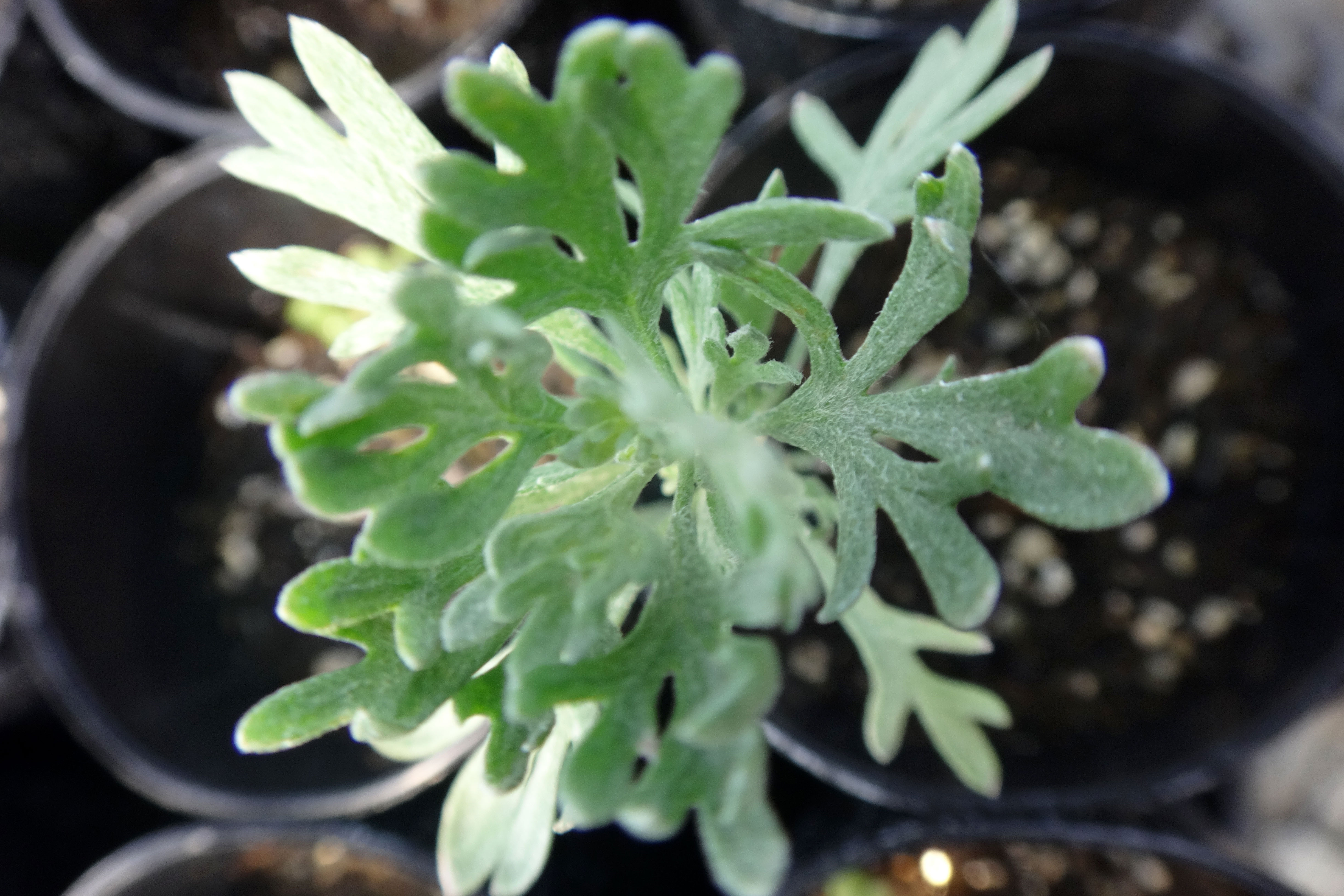
This is what we want! A seedling sagebrush shows its beauty in the conservation nursery. Photo by Kelli Bush
This is what we want! A seedling sagebrush shows its beauty in the conservation nursery. Photo by Kelli Bush.

Educational lectures and workshops and plant care will continue into fall. Inmate crews, staff, and Gretchen Grabber will assist BLM in planting sagebrush late fall 2015/early winter 2016.

The Sagebrush Steppe Ecological Conservation Nursery program at CRCC is part of a multi-state restoration program including nurseries located in Oregon and Idaho corrections centers. The Institute for Applied Ecology (IAE) is a founding partner of SPP-Oregon, and they have provided the grant funding and training materials making this program possible.

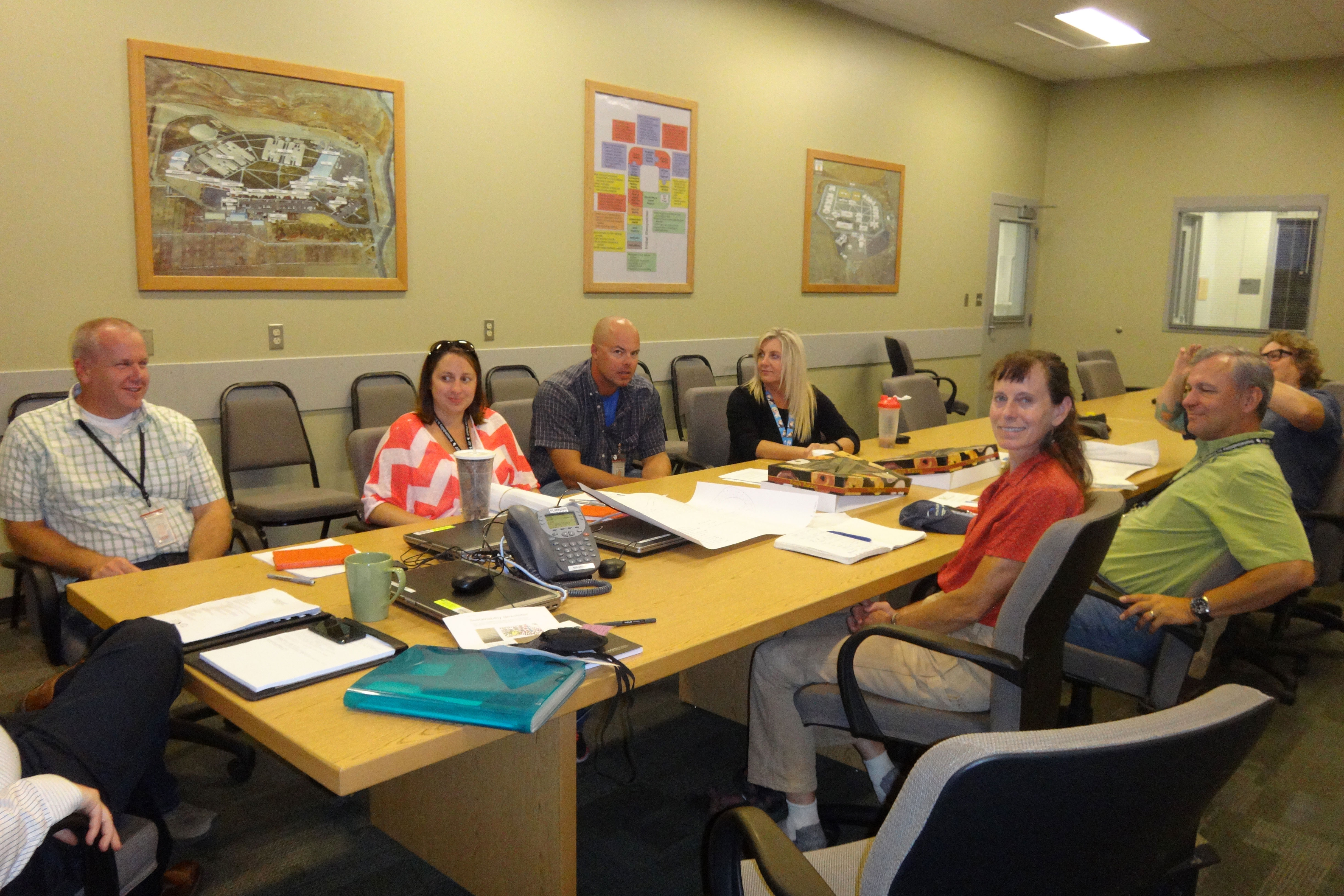
Here, CRCC’s superintendent, CRCC staff, Getchen Grabber, and representatives from IAE, DOC headquarters, and SPP meet to hash out critical details that will make the program a success. Photo by Kelli Bush.
Here, CRCC’s superintendent, CRCC staff, Getchen Grabber, and representatives from IAE, DOC headquarters, and SPP meet to hash out details critical to the program’s success. Photo by Kelli Bush.

Partners involved in the nursery recently met at CRCC to discuss program status. It was a productive meeting focused on planning for the rest of this season and dreaming about additions for next year. Thank you to each and every collaborator involved and we look forward to watching this program grow! Special thanks to Stacy Moore with IAE for bringing this opportunity to CRCC.


By Tiffany Webb, SPP Lecture Series Program Coordinator

(Follow-up post from May 2015 lecture at WCCW.)

Tiffany Webb is finishing her graduate degree in Environmental and Social Justice at the Evergreen State College. Her interdisciplinary thesis focuses on the intersection of environmental justice and education in prisons.

I can’t keep down some strong feelings about leaving every time I am at a lecture now. After nearly two years as the SPP Science and Sustainability Lecture Series Program Coordinator, I only have two more lectures to host before a new MES graduate student finds their own spot in this position. It is exciting to pass the opportunity to someone new, offering an experience that I imagine will be just as eye-opening and rewarding as my own. At the same time, it is very difficult to leave knowing I likely will never again see the people I’ve worked with, learned alongside, and advocated for in prisons.

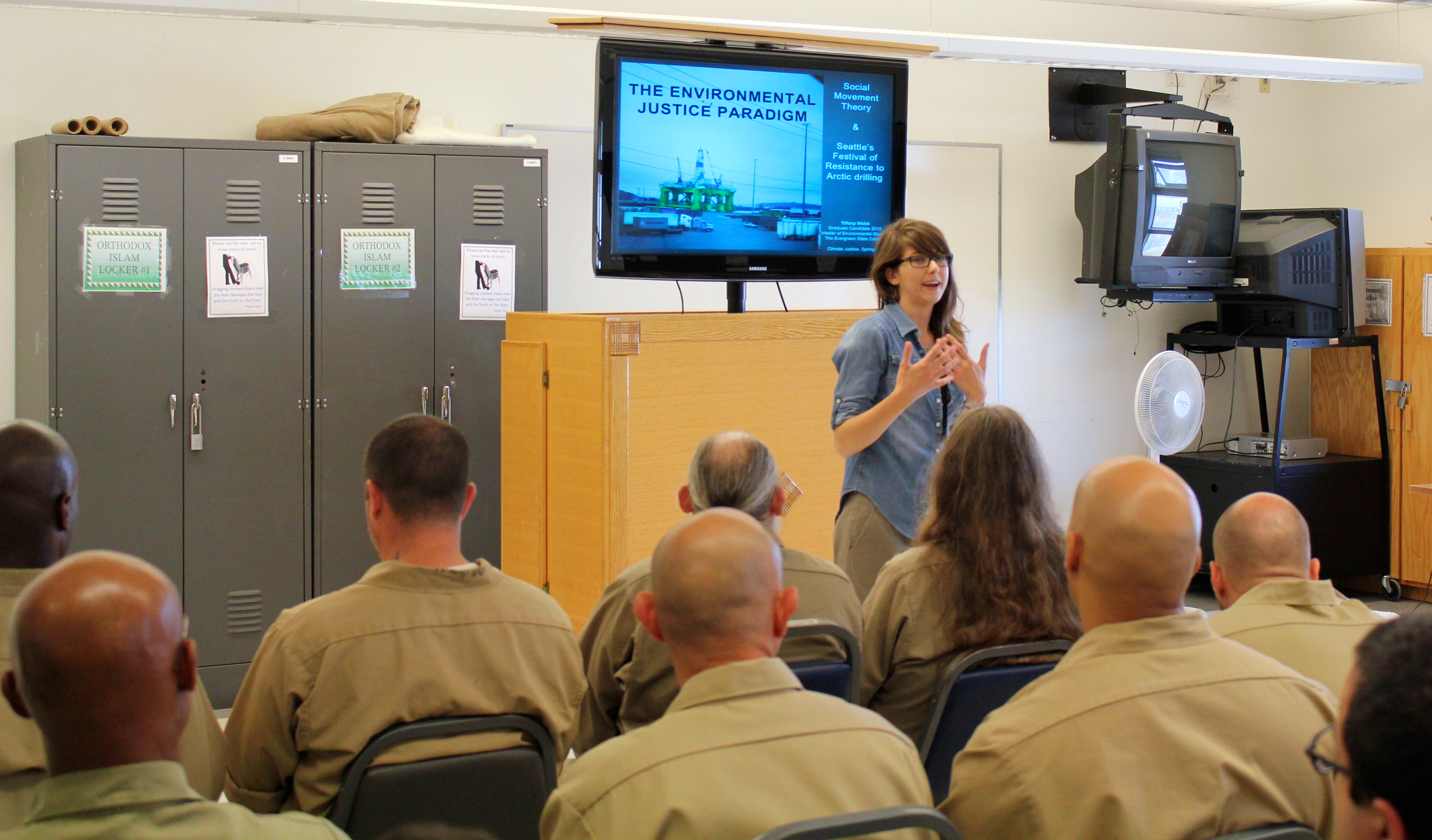
Tiffany Webb presenting on the environmental justice paradigm and climate justice.
Tiffany presenting on the EJ paradigm and climate justice at Stafford Creek Corrections Center.

Tuesday was a beautiful day. The SPP Network Manager and I have developed science and sustainability education certificates for incarcerated men and women who attend the lecture series regularly. After Tuesday’s presentations, a woman who has been going to lectures at Washington Corrections Center for Women (WCCW) for years received the very first certificate recommending transfer credit at Evergreen! We shared such a moment of pride in that room—women lifting each other up and celebrating, owning the classroom and their minds. I am thankful for these moments of victory behind prison walls, and the lasting impact formalization of the Science and Sustainability Lecture Series will have.

Chelsea Smith Waddell, recent MES graduate, giving a presenting on her thesis research.
Chelsea Smith Waddell, recent MES graduate, giving a presentation on her thesis research at Washington Corrections Center for Women.

That day, the new MES Director—someone I consider a huge mentor—Kevin Francis, gave a presentation. Chelsea Smith Waddell, one of the most brilliant and vibrant women I know, also joined us and she shared her thesis research with the class. Her research focused on habitat characteristics of the Oregon Spotted Frog, an endangered frog species being reared at Cedar Creek Corrections Center and released on WA prairies through SPP partnerships.

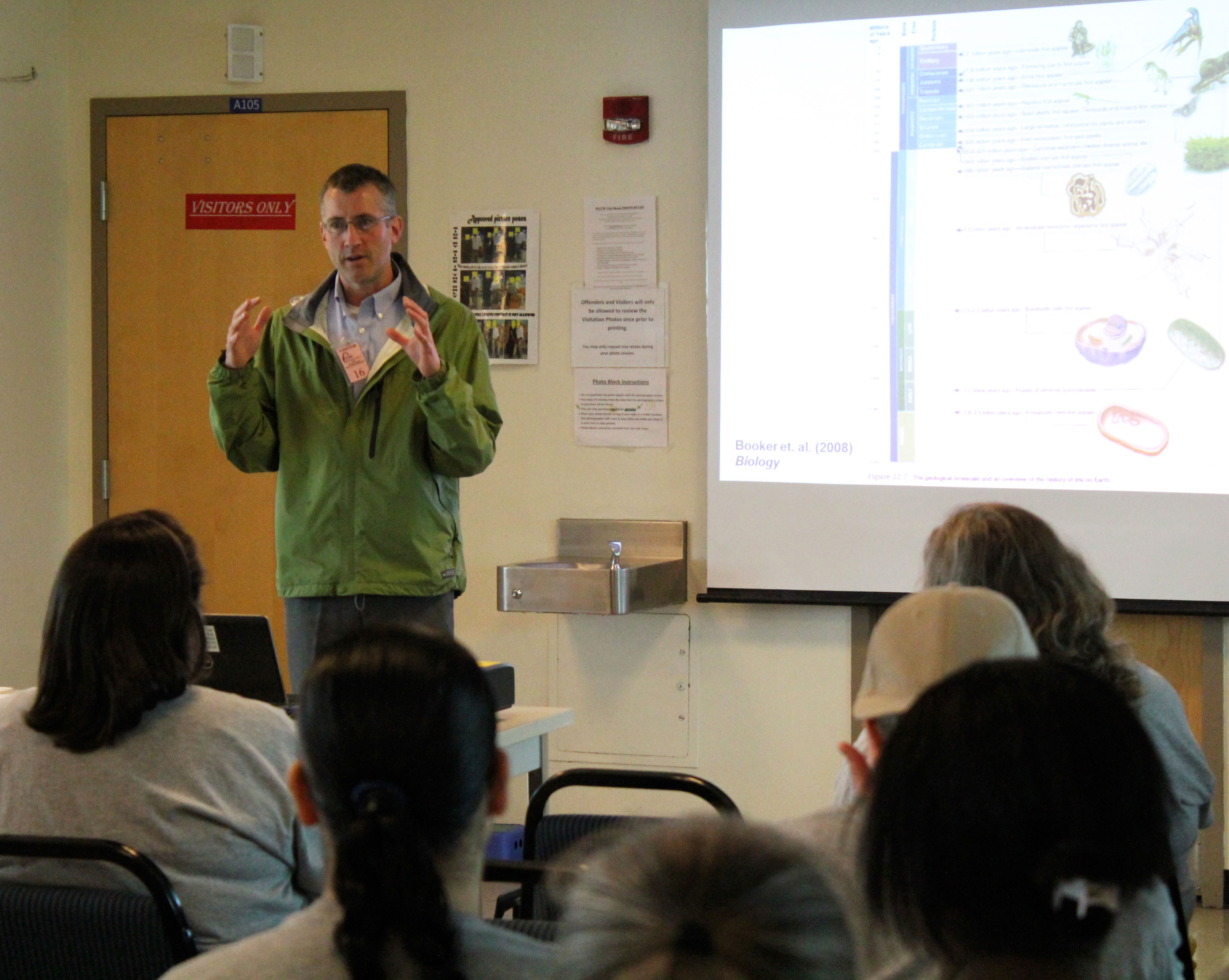
Kevin Francis, MES Director at the Evergreen State College lecturing at Washington Corrections Center for Women.
Kevin Francis, MES Director at the Evergreen State College, lecturing at WCCW.

It was amazing to be in that classroom, seeing my two worlds combine: my Evergreen and WCCW peers all in one room, engaging in education together. It brings me joy to know that while I am leaving this deeply important work, it doesn’t end here. The incarcerated men and women I know continue to push for more education and classroom space at their prisons. The Evergreen faculty and graduate students continue to engage with education outside of an academic institution “bubble”. And unique and empowering spaces will continue to develop in prisons as more people become aware of the injustices associated with the U.S. criminal justice system.”

Photos and text by Joslyn Rose Trivett, SPP Network Manager

Part One of the blog available here.

The four-day Roots of Success training event culminated with a day at Washington Corrections Center for Women (WCC-W). It was a joy to be in the classroom with incarcerated women from WCC-W and Mission Creek Corrections Center. The attention and interest they gave the material were palpable, and I cannot wait to see them as instructors! Here are some photo highlights from the day.

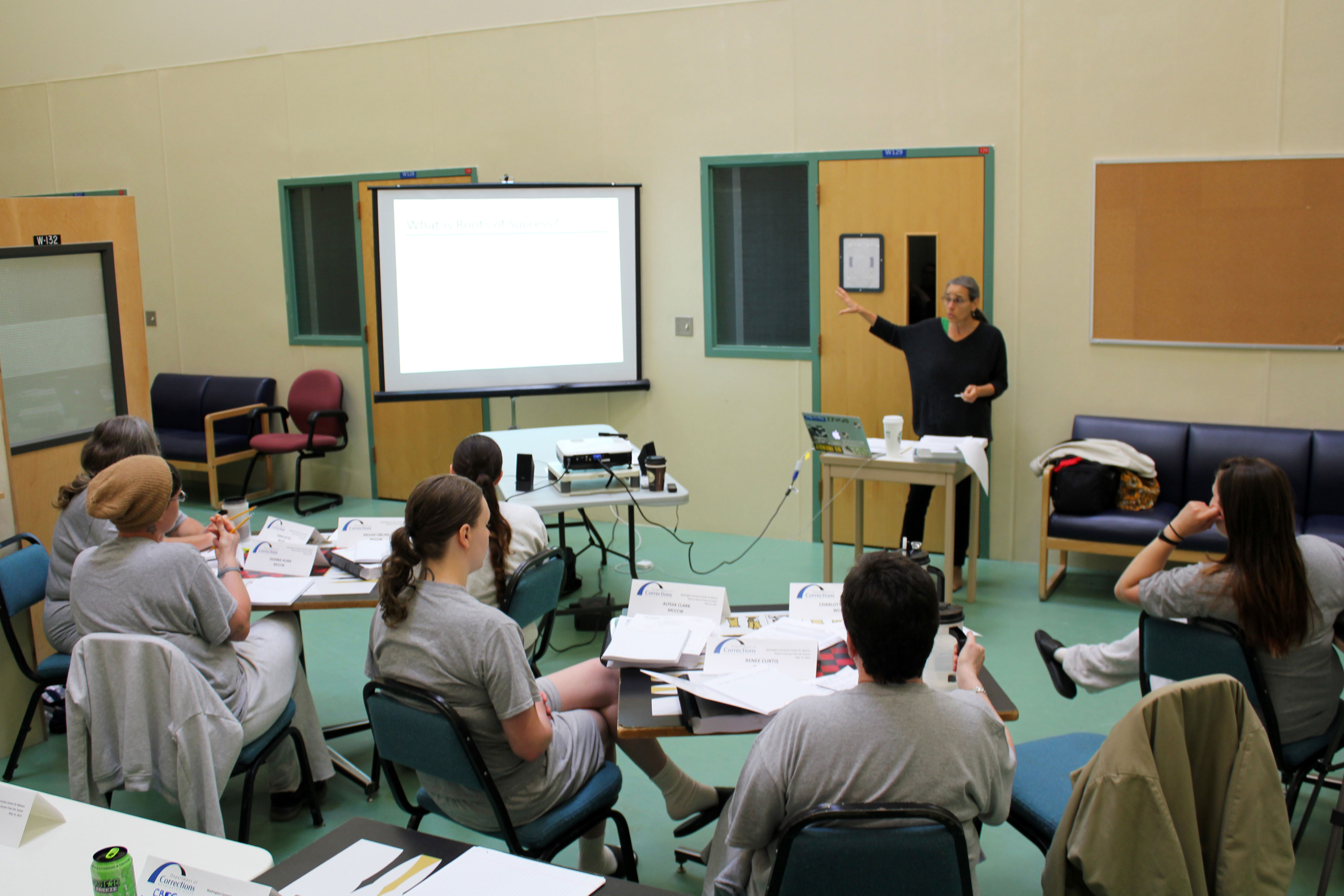
Professor of Urban Studies and Planning at San Francisco State University and the Founder and Executive Director of Roots of Success Raquel Pinderhughes teaches a class of future Roots of Success instructors.
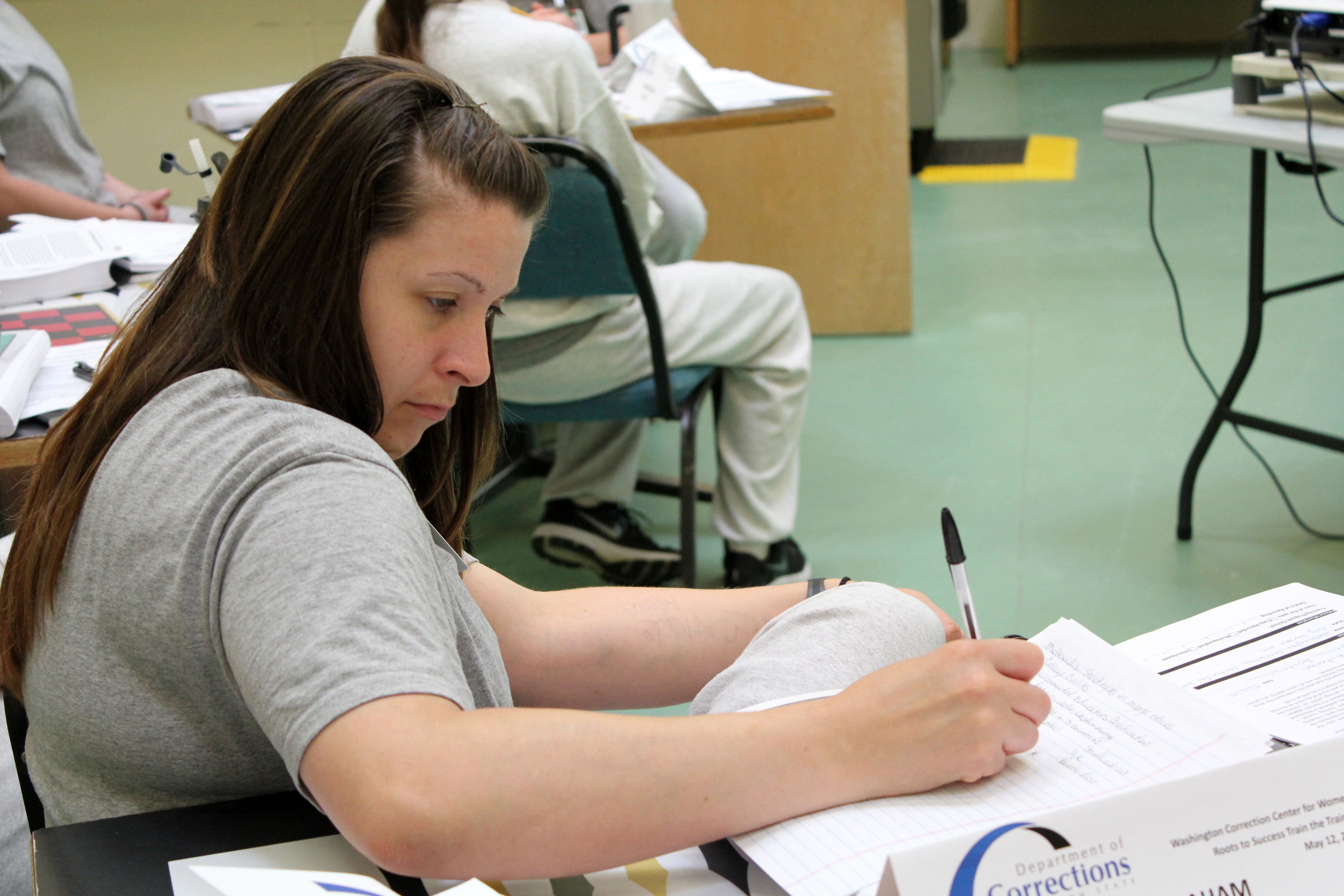
A future Roots of Success instructor takes careful notes.
student-portrait
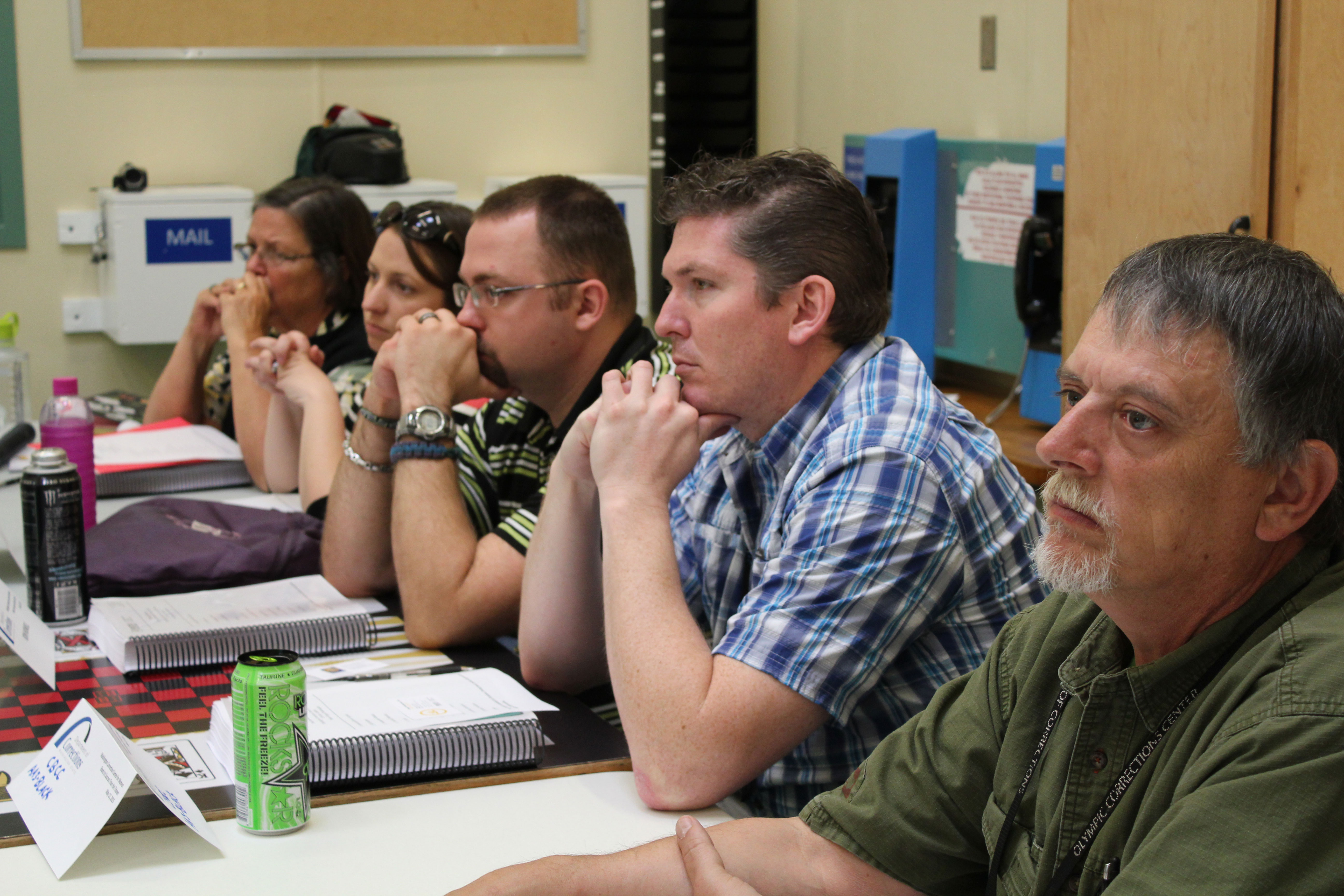
The instructor candidates were attentive throughout the presentations. They showed grace and optimism in the face of demanding and dense subject matter.
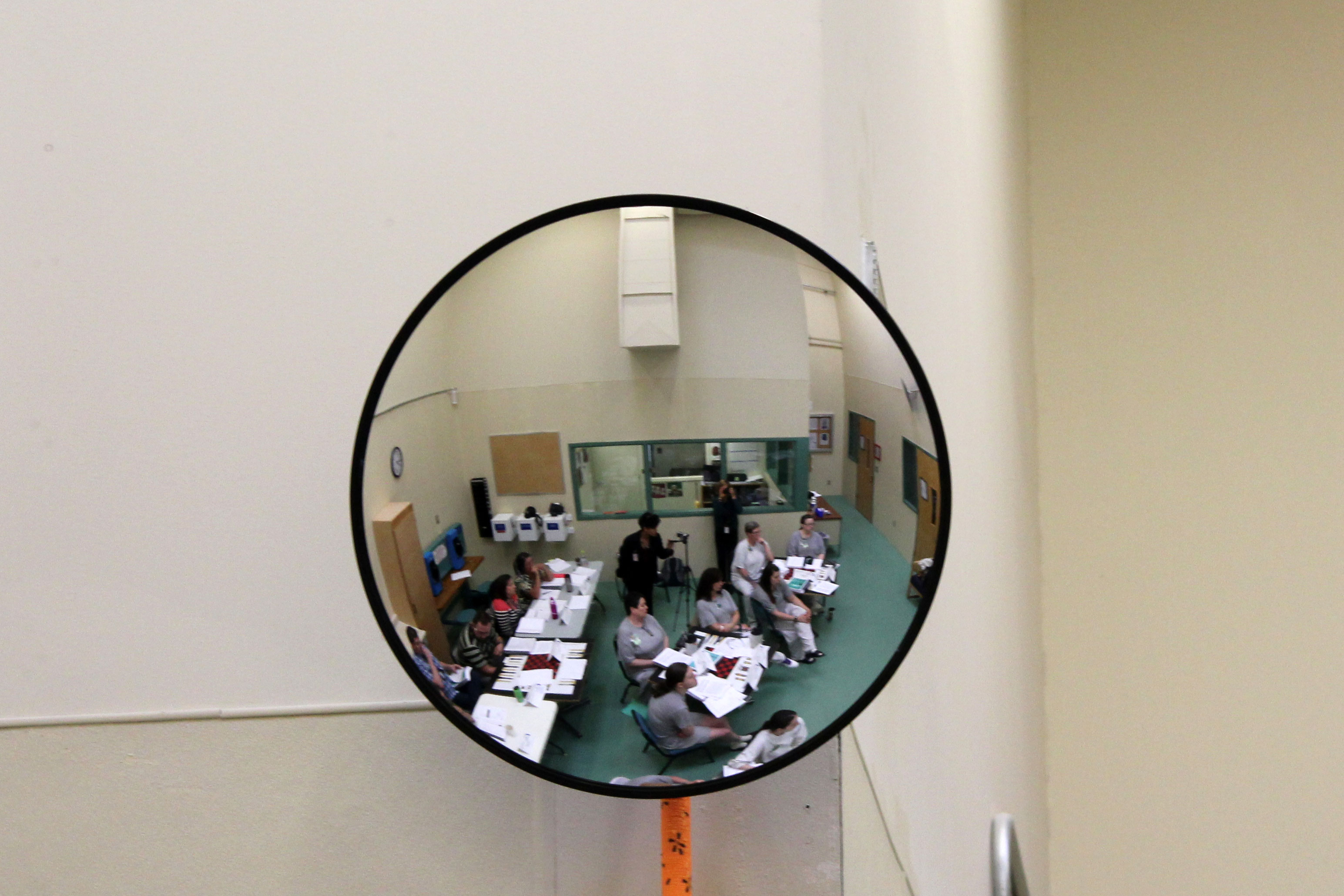
mirror
The classroom was illuminated by a skylight, and the day light entering the classroom was a lovely compliment to the intellectual and social illumination inside.

The future instructors were joined by staff from several prisons. They serve as liaisons for the Roots of Success program, and their enthusiasm for the course is a huge asset.

Paula Andrew, Dorothy Trainer, Ron Howell, Mark Black, and Greg Banner are DOC staff and SPP superstars--they do so much for our programs! The attended the training so that they can offer full support to the instructors and students of the course.
Paula Andrew, Dorothy Trainer, Ron Howell, Mark Black, and Greg Banner are DOC staff and SPP superstars—they do so much for our programs! The attended the training so that they can offer full support to the instructors and students of the course.

This Friday, I will visit the first Roots of Success class at WCC-W accompanied by SPP’s new program coordinator, Emily Passarelli. Emily takes over Roots coordination from Christina Stalnaker. Christina has graduated, and she left the program in great shape. She streamlined administration for Roots to the point that Emily will be able to give attention to developing further programs. Emily’s title is Green Track Coordinator, to represent a wider focus. Can’t wait to see where we take things next!