By Undergraduate Research Associate Dennis Aubrey
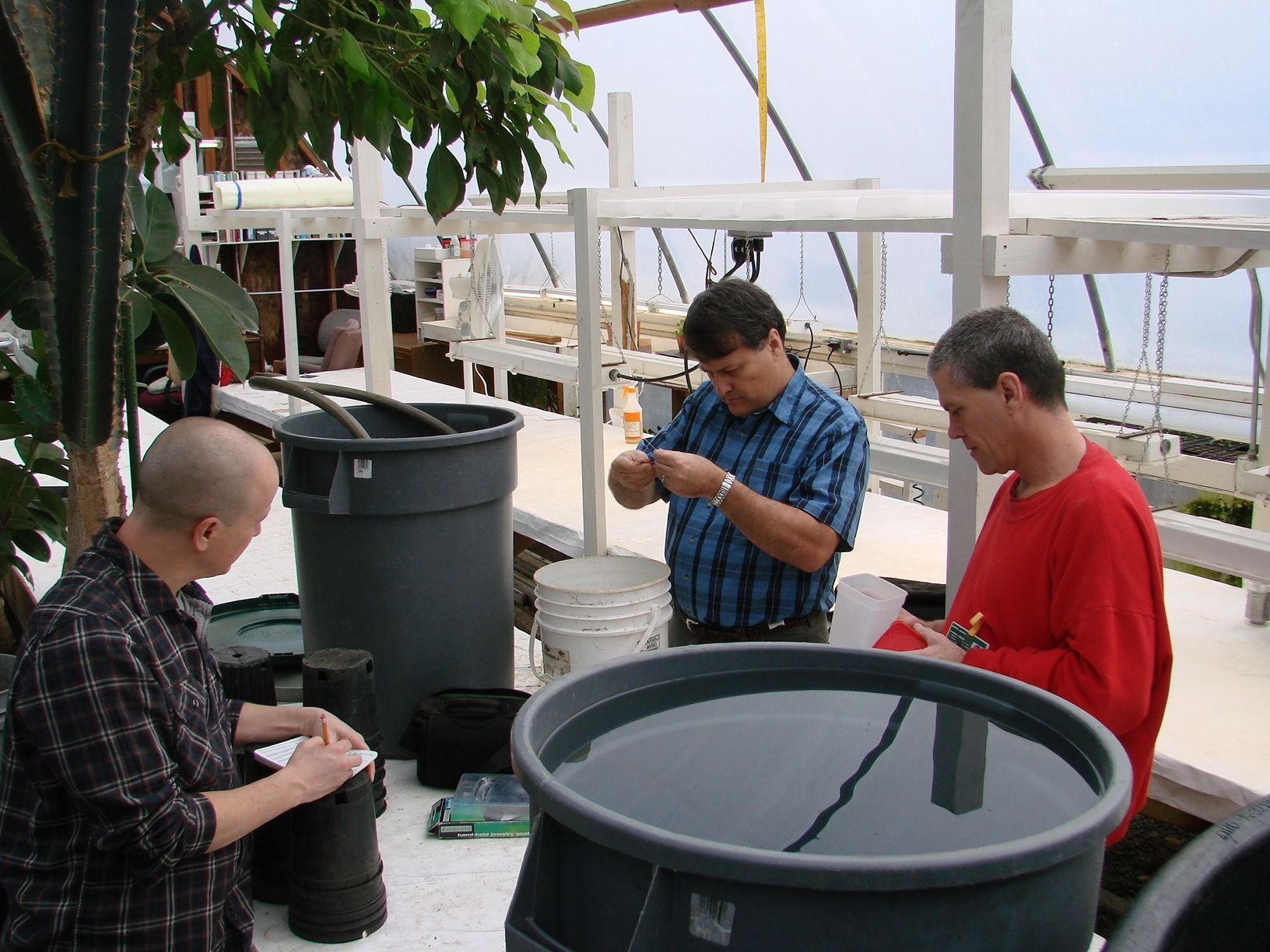
From left: SPP Research Associate Dennis Aubrey, WDFW Senior Biologist Marc Hayes and a CCCC offender measure the frogs' growth and health.

Over the winter inmates in SPP’s Oregon Spotted Frog (OSF) program at Cedar Creek Corrections Center (CCCC) have been caring for frogs from Northwest Trek, the Oregon Zoo, and the Woodland Park Zoo that were too small or unhealthy for release into the wild. The frogs have thrived under the offender’s constant care and are slated for release late this winter. By caring for the undersized frogs, CCCC has helped the zoos save money and staff time as they prepare for the new frog rearing season and tend to the many species of animals in their care.  The experience has also provided more hands-on science training for offenders.

The CCCC frog program is expanding its rearing space from one tank to four and will accept twice as many frog eggs this season. Using four tanks will allow side-by-side comparison of frogs from two locations, Conboy Lake and the Black River. Conboy Lake frogs may grow larger and faster due to their exposure to invasive bullfrogs.
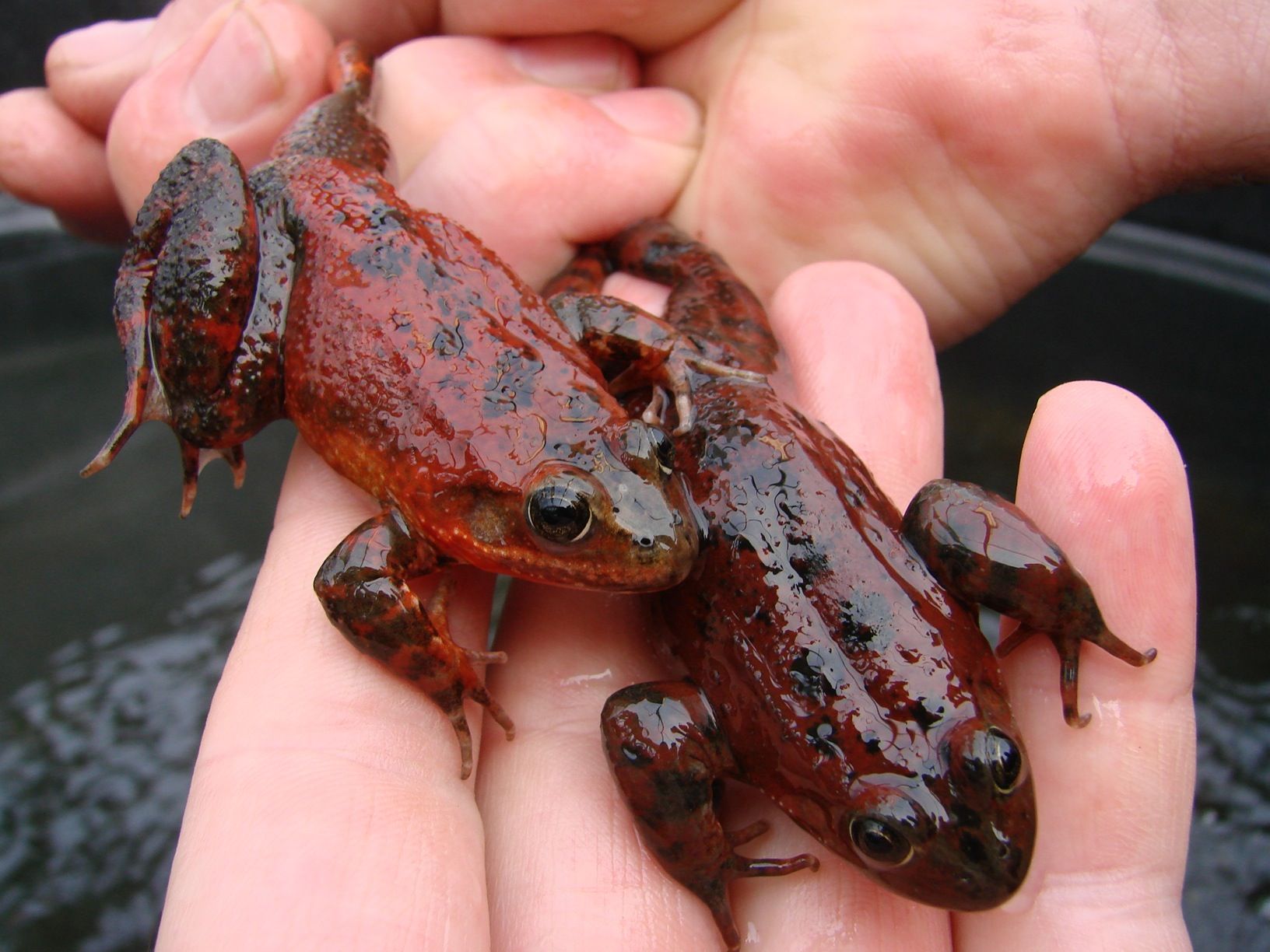
These Oregon Spotted Frogs show healthy growth and will be released this winter.

Washington Department of Fish and Wildlife Senior Biologist Marc Hayes suggested the comparative study at CCCC to to test this hypothesis and its implications for frog conservation. Partnering with SPP allows graduate students and offenders the unique opportunity to participate in this research.

To help reduce costs and the carbon footprint of the program, the SPP OSF team has also expanded and improved cricket breeding at CCCC.  After many trials and errors, and incorporating tips provided by experts, SPP staff and offenders are now creating a cricket husbandry manual.  The manual will be used to train the next group of offenders and students working on the project and may also help other facilities interested in sustainable source of crickets.


By Research Ambassador Program Project Manager Amy Stasch

The Sustainable Prisons Project (SPP) recently strengthened its Science and Sustainability Lecture Series with the initiation of a new partnership with the Research Ambassador Program (RAP), a project of The Evergreen State College, funded by the National Science Foundation. The RAP is led by Evergreen State College faculty member Dr. Nalini Nadkarni and Project Manager Amy Stasch.

The RAP enhances scientific engagement and scientific literacy among the public by connecting scientists with non-traditional audiences such as senior citizen centers, prisons, faith-based communities, and businesses to develop accessible and interactive communication strategies for public engagement with science. The SPP will collaborate with RAP to host visiting scientists as guest lecturers in the SPP’s monthly lecture series at three Washington State prisons.

The SPP hosted its first RAP science fellow, Katie Renwick, on Thursday, January 14th, 2011 for a presentation at the Mission Creek Corrections Center for Women, a minimum security prison located in Belfair, Washington.  Renwick is a first year doctoral student studying the interactions of bark beetle infestations, fire, disturbance, and recovery in the Rocky Mountains.  She presented an hour-long lecture about her scientific research on how ecological changes affect forests, and how they can recover after these changes.  From these concepts, offenders drew parallels to their own lives and the disturbances they have experienced and are recovering from.

The lecture was the first Science and Sustainability lecture to be hosted at Mission Creek, and received excellent turnout. The women attending were attentive and asked insightful questions. Several inmates approached Renwick following the lecture, thanking her for her time and for helping them relate their own struggles to phenomena that are continuously influencing the forests.  Through this unique encounter, Renwick was able to engage an otherwise unaware audience in scientific discussion, while attending offenders reaped the benefits of her specialized knowledge and inspiration, an experience the SPP and RAP hope to replicate in the coming months.

The SPP will continue to collaborate with the RAP and monthly lectures have already been scheduled through June 2011.