Photos and text by Marisa Pushee, SPP Ecological Conservation Coordinator.
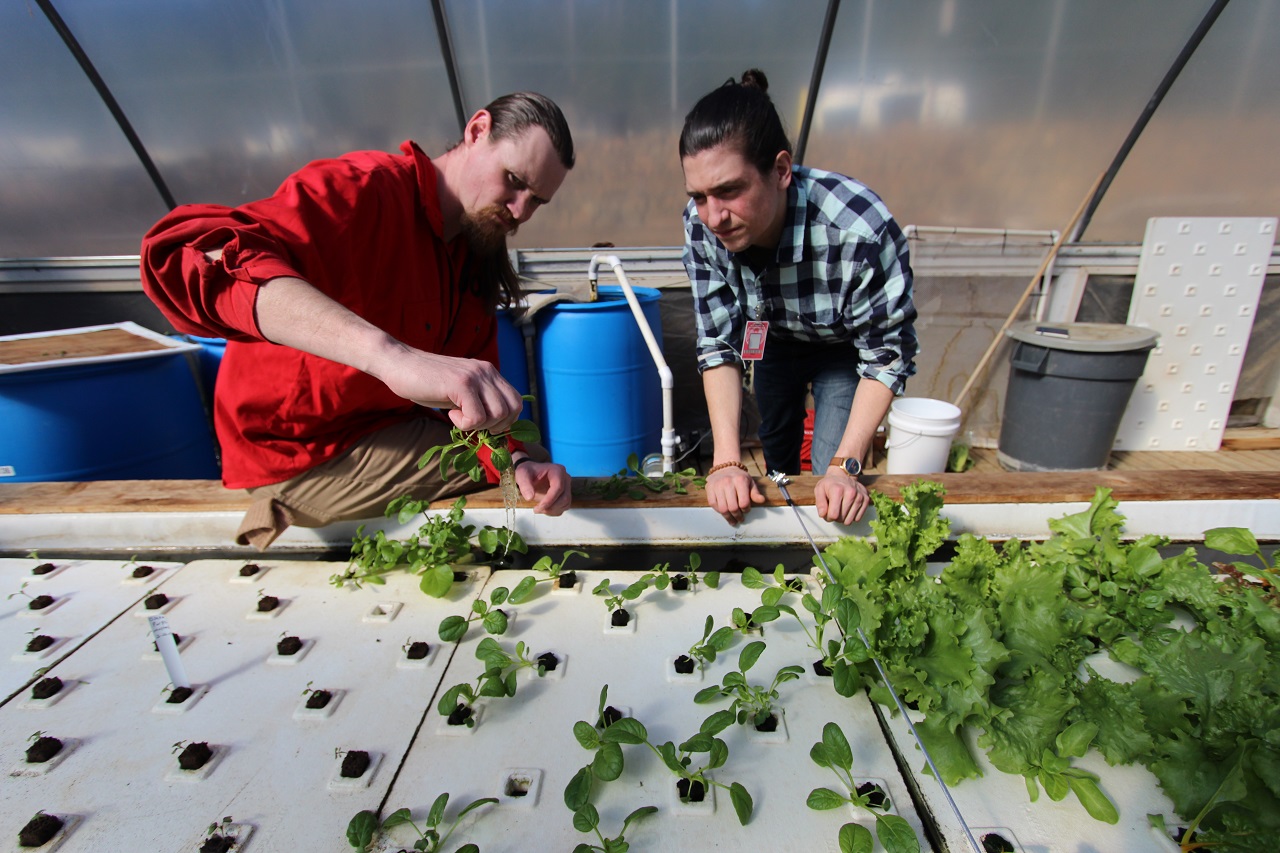
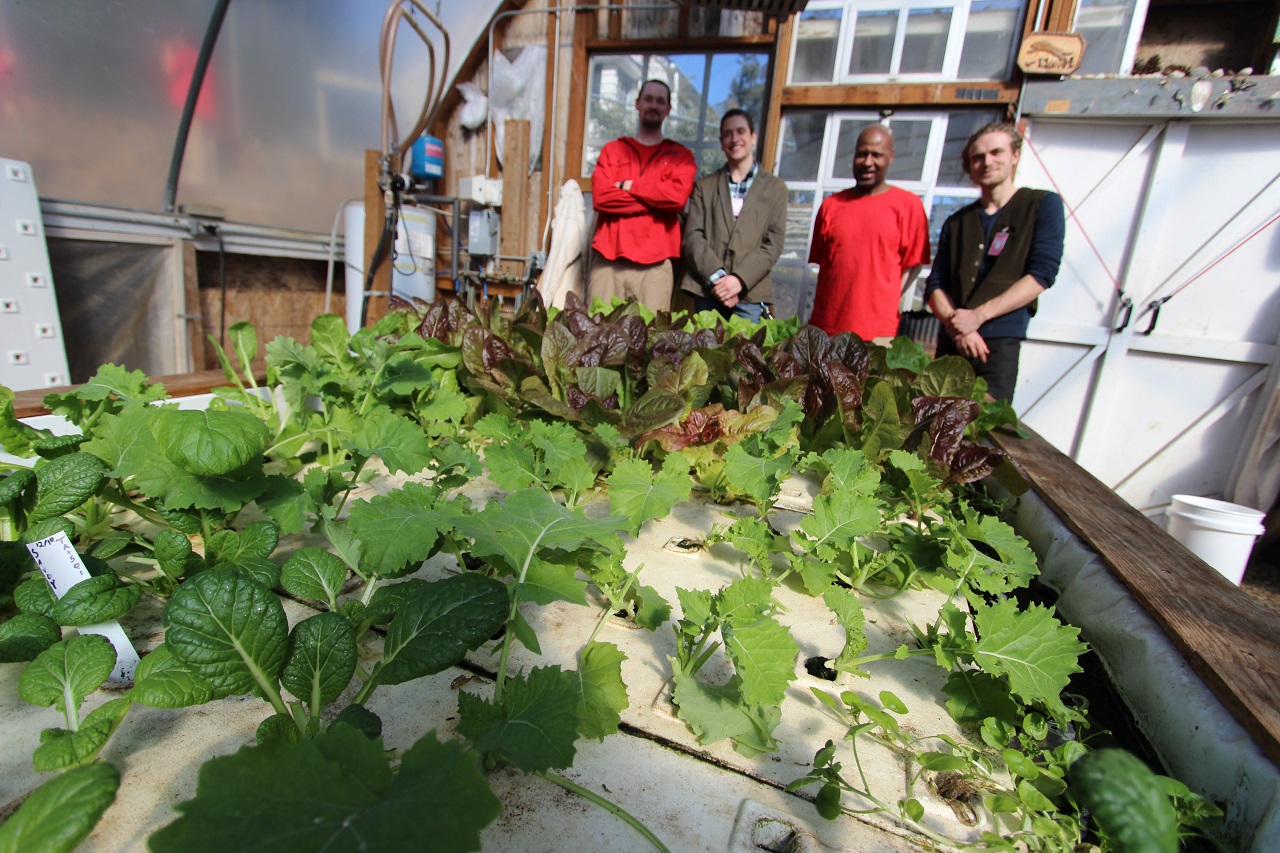
Symbiotic Cycles Co-founder Nick Naselli and SPP Biological Technician Donald McLain evaluate plant health.
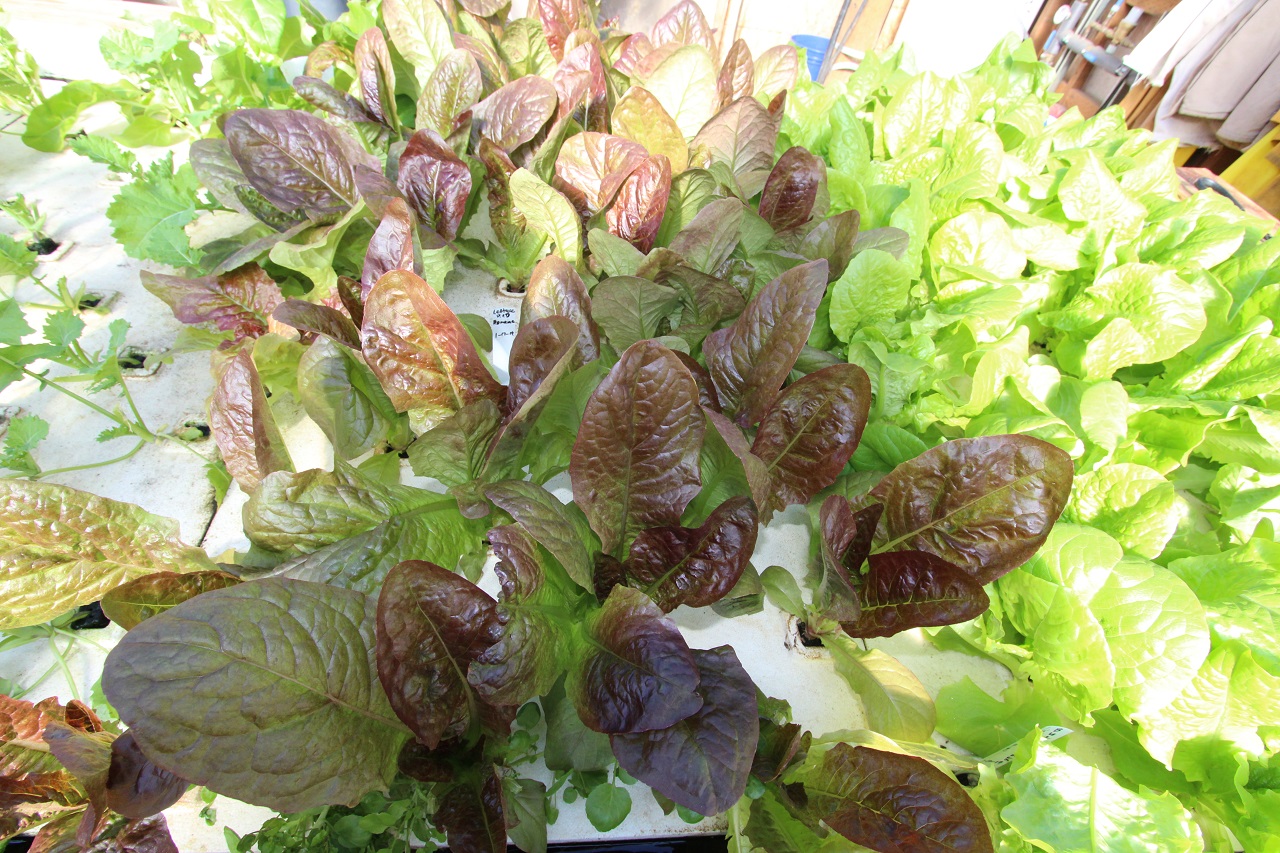
The aquaponics system at Cedar Creek Corrections Center (CCCC) received a new lease on life this winter. With assistance from CCCC’s technicians, Nick Naselli and Daniel Cherniske from Symbiotic Cycles first built the system at Cedar Creek in spring of 2018. To give the system a much-needed boost, they returned this January for a series of site visits and problem-solving sessions.
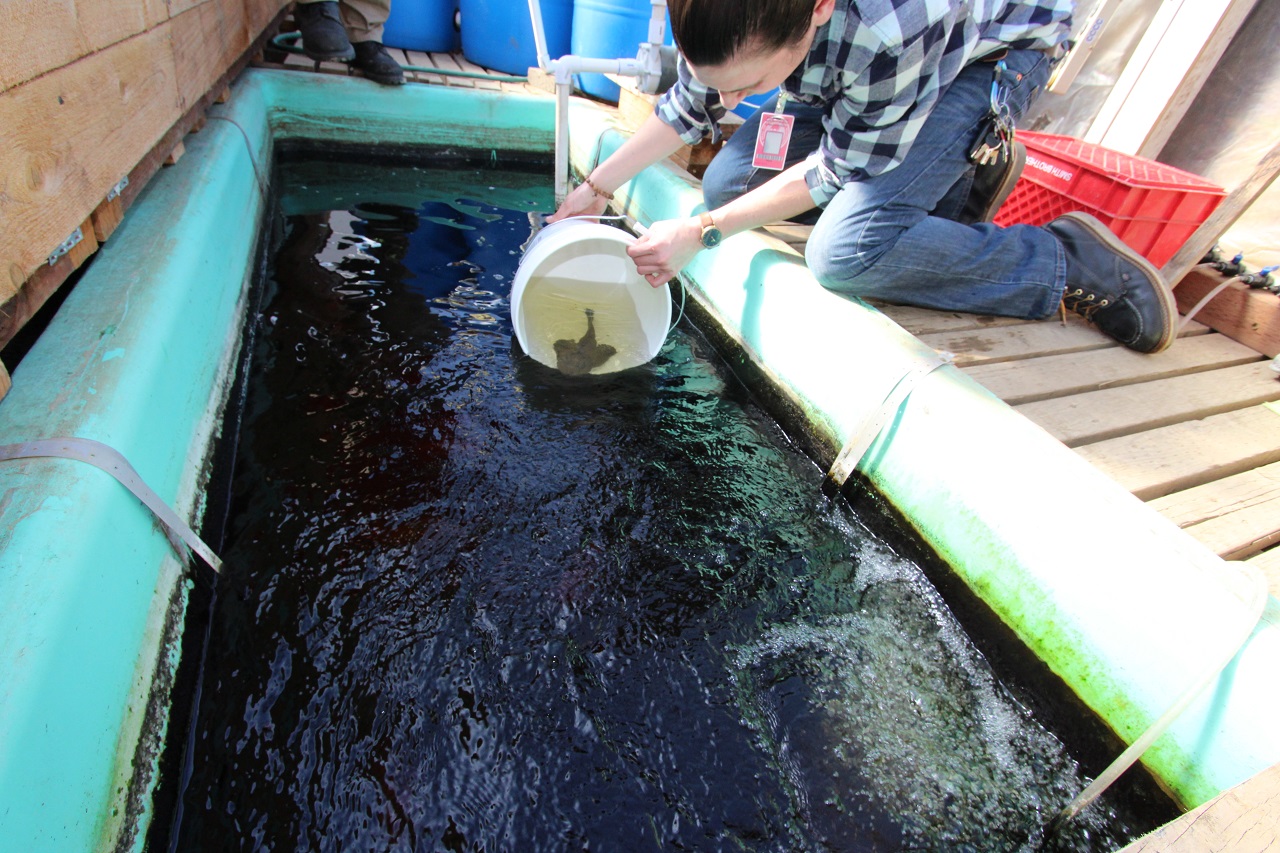
Nick Naselli introduces a suckerfish to the system. This fish eats algae and will improve visibility by cleaning up the water.
Aquaponics systems can be a great way to harvest food year-round, but they require some care and fine tuning to establish a system. It can take up to a year for a new aquaponics system to stabilize! SPP Biological Technicians have been putting in the work to ensure that the system thrives. And with the help of Nick and Daniel, Cedar Creek’s aquaponics is functioning better than ever, producing healthy and delicious greens for the facility’s kitchens.
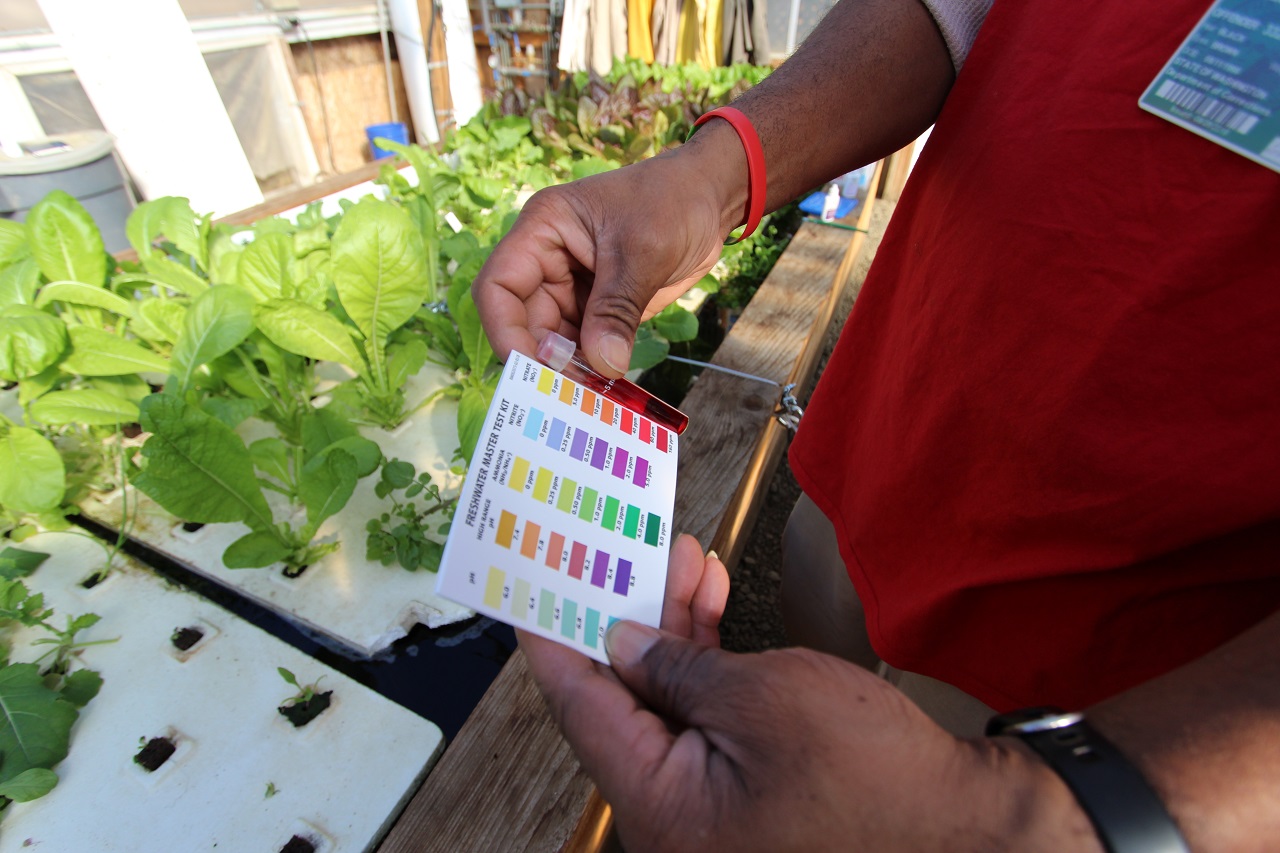
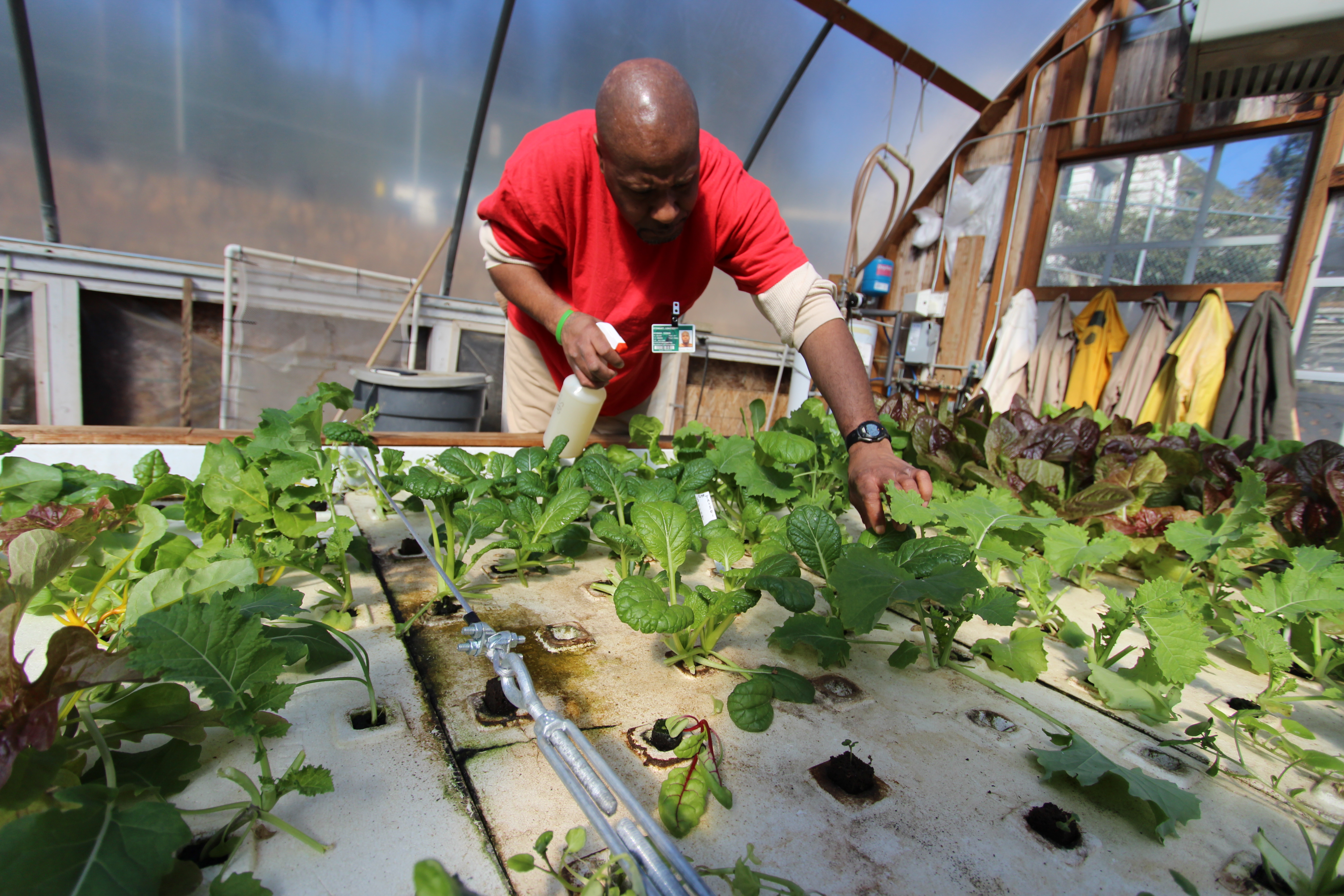
SPP Biological Technician Lorenzo Stewart tests the water’s nitrate levels.During this last winter, Symbiotic Cycles worked with SPP technicians to introduce the steel cables shown in this photo. The installation of this tensioning system to stabilize the raft beds will prevent further bowing of the system’s wooden sides. After a few adjustments, we saw fast and impressive improvements in plant health. Left to right: SPP Biological Technician Donald McLain, Symbiotic Cycles Co-founder Nick Naselli, SPP Biological Technician Lorenzo Stewart, and Symbiotic Cycles Co-founder Daniel Cherniske.
Stay tuned for an upcoming blog with more details on the plant growth in Cedar Creek’s aquaponics system!
By Joslyn Rose
Trivett, SPP Education and Outreach Manager, The Evergreen State College
In early
January, we welcomed Master of Environmental Studies graduate student Carly
Rose to the Sustainability in
Prisons Project team at The Evergreen
State College
(SPP-Evergreen). Her position, and now her presence, fulfills a long-held
dream: that someone on our team could be solely devoted to coordinating, creating,
and improving educational materials.
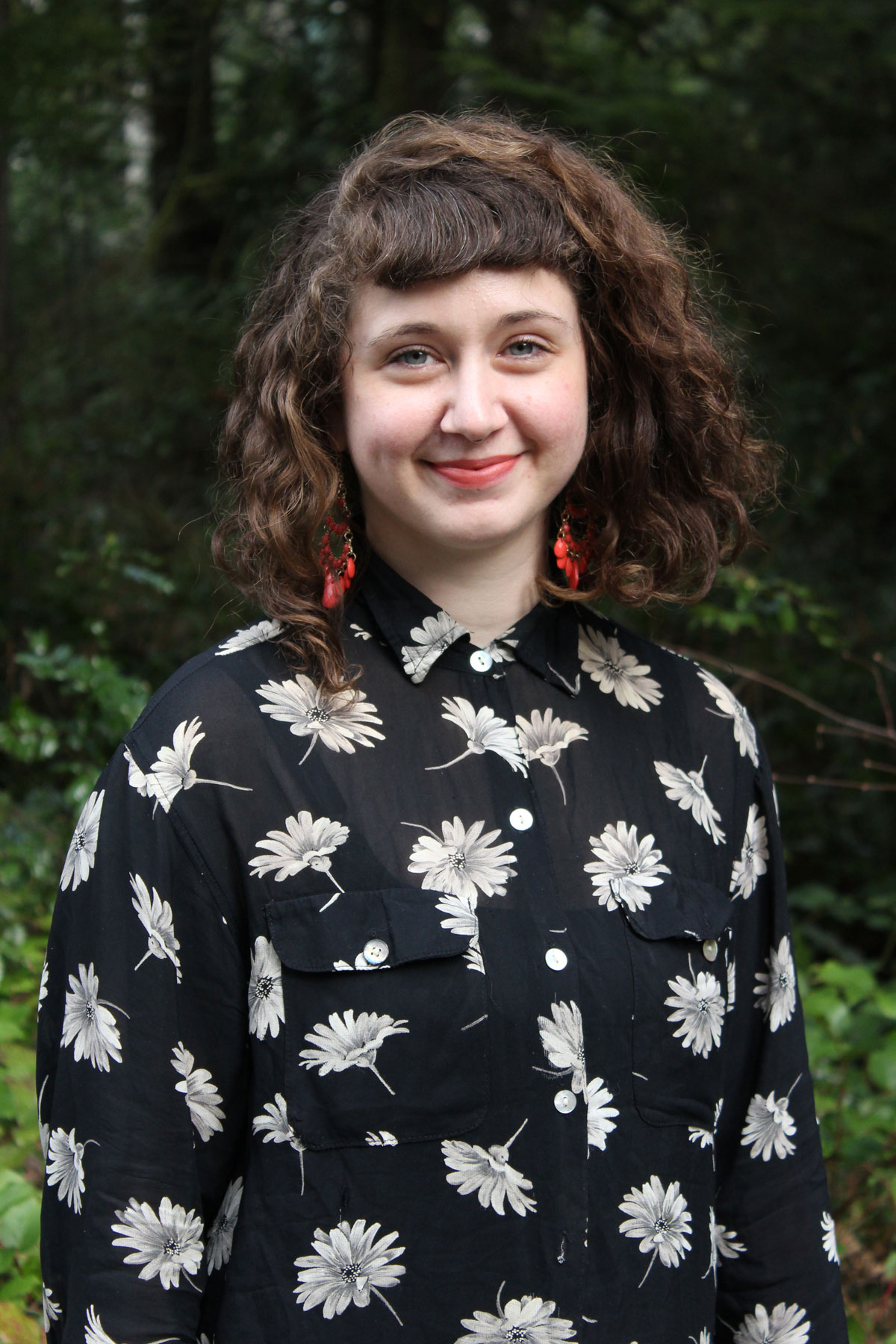
Photo of Carly by Keegan Curry.
The position creates a new focus on organizing and cataloging SPP’s existing educational materials and capacity for developing new materials that are in high demand. Three funders have made this possible. Via our Evergreen colleague Scott Morgan, we are delighted to host our first Sustainability Fellow, providing for about five months of the one-year position. Sustainability Fellowship positions at Evergreen are funded by a generous, anonymous donor. Matching that, we have a recent, very helpful gift from the Herb Alpert Foundation. With these two donations, there was only a small funding gap remaining and we were able to use funds provided by another anonymous donor from the Seattle Foundation to support Carly’s time for a full year.
The ability to add the position could not have come at a better time. In SPP programs, the demand for more educational content is higher than ever. Also, we have new allies in curriculum development, both within Washington State Department of Corrections prisons and in outside organizations. All these factors provide a tremendous opportunity and we’re so pleased to be able to make the most of it.
Our good
fortune continued with Carly Rose’s application. She brings an optimal mix of
environmental and social interests and expertise. She has a B.A. in Sociology
from Western Washington University and professional experience from a variety of social service settings,
including supported employment, foster care, and transitional aged youth mental
health. An ideal complement comes from her studies in Evergreen’s Master of
Environmental Studies program and her self-led exploration of organic farming,
native plant identification, and other elements of sustainable living – she can
easily relate to the students’ desire to learn more about such topics!
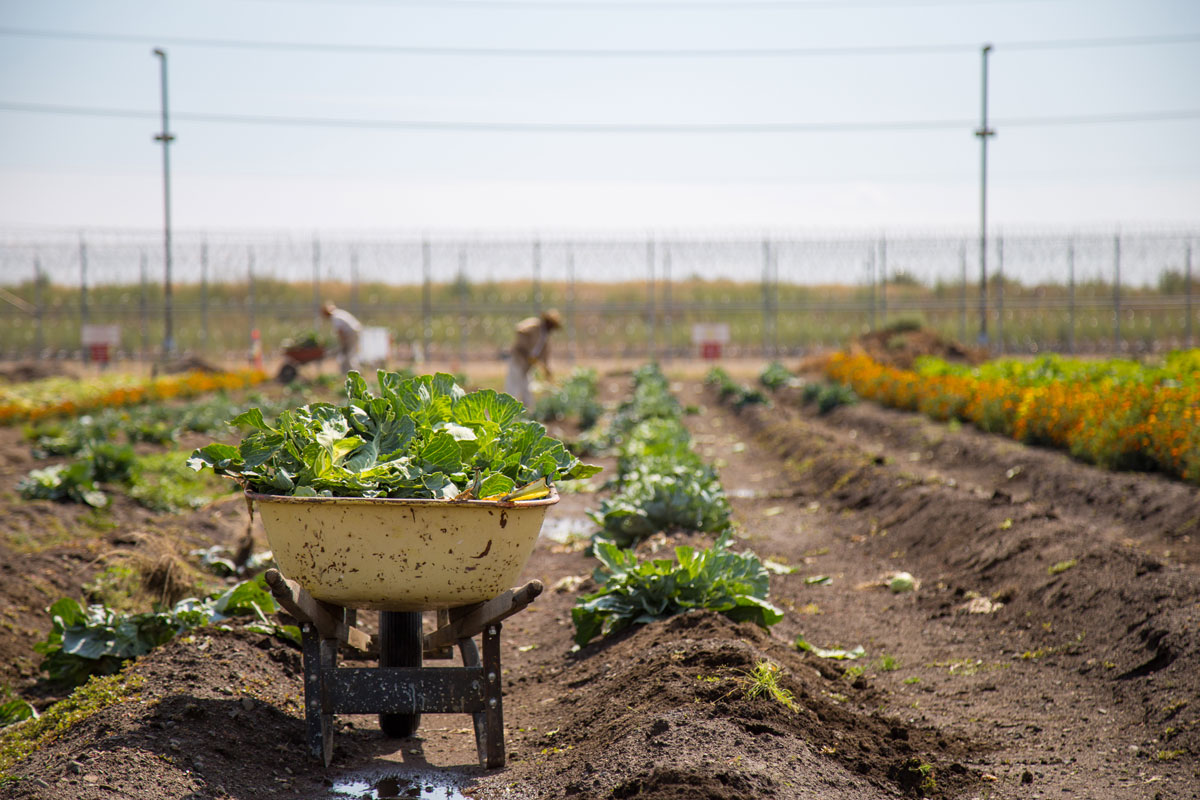
Gardeners at Airway Heights Corrections Center tend the prison’s “big” garden. Photo by Ricky Osborne.
With SPP,
Carly’s first priority is to coordinate efforts to create a peer-led gardening
curriculum that is
tailored to the particular interests and capacities of incarcerated gardeners.
In her first four months, she has connected with the many partners and
stakeholders in the effort, including two teams of incarcerated students, the Institute for
Applied Ecology, University Beyond Bars, and Oregon Food Bank’s
Seed to Supper program. Again, Carly
appears to be made for this work; she shows a partnership mindset with every
contributor, carefully considering their input, limitations, and needs. When
the curriculum is completed, SPP plans to work with partners to make it broadly
available—matching interest we’ve heard from allied organizations across the
country.
As envisioned,
Carly is also making strides to catalog SPP-Evergreen’s existing educational
files. She is developing templates for learning guides in all of our ecological
conservation programs. Our unwieldy collection of articles, presentations, and
handouts is beginning to take the shape of an accessible and powerful library.
With both efforts,
SPP’s ability to offer meaningful, empowering education to people in prisons
expands. We can better support staff turnover on our team, giving each new
program coordinator ready access to a wealth of educational materials. This
fall, we can support students and staff inside prisons as they try out the new
gardening curriculum, and then still have capacity for gathering their
suggestions for improvement. Carly sums it up well:
“I am so excited to contribute to and grow with the SPP team; a multi-disciplinary
team that includes Evergreen’s SPP staff, Washington State Department of
Corrections’ SPP staff, community supporters and partners, and most importantly
the incarcerated technicians and students who invest their time and hearts into
these sustainability programs.”
We are so
grateful to the three donors who have made this position possible. With their
combined contributions, we were able to take on this important work. Education
is the most effective way to reduce recidivism, breaking the cycle of
incarceration. The investment in Carly’s work has significant positive impacts
on SPP’s ability to deliver empowering education to benefit people, communities
and ecosystems.
Text and photos by Erica Benoit, SPP Environmental Workshop
Series Coordinator
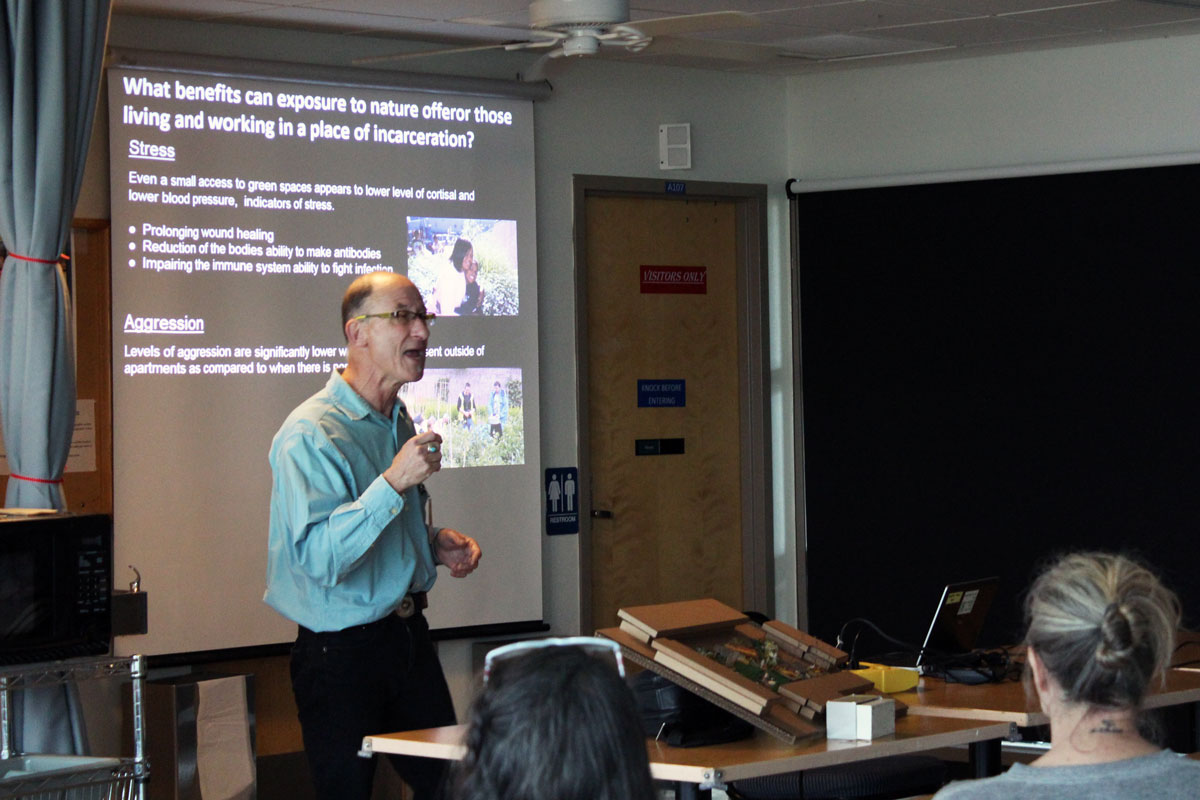
Professor Winterbottom first came to WCCW early in 2016, along with Dr. Barb Toews of UW-Tacoma. Both academics saw potential for building restorative landscapes at the prison, for the benefit of both incarcerated individuals and prison staff. They also found willing partners among WCCW’s leadership, particularly Associate Superintendent Felice Davis, Facilities Manager Rod Coberly, and Superintendent Jo Wofford. Even so, it took three years of persistence before Professor Winterbottom had the go-ahead to make the prison the topic of his Therapeutic Master Plan Studio class.
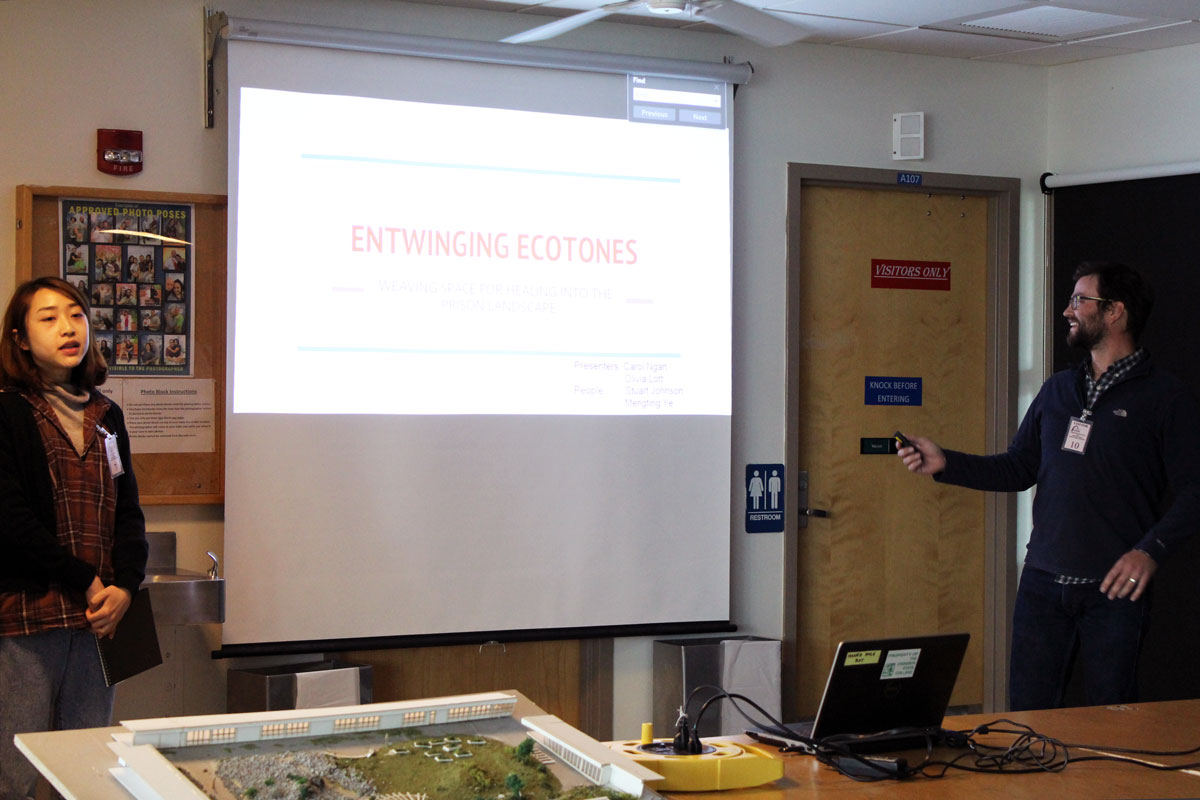
Last month, he and his students presented their recommendations to WCCW’s leadership, which were met with further support and enthusiasm. The next step was to get feedback from the incarcerated individuals, the folks who might be most affected by the potential project. Luckily, there was an opening in the workshop series calendar, creating the perfect opportunity to bring everyone together!
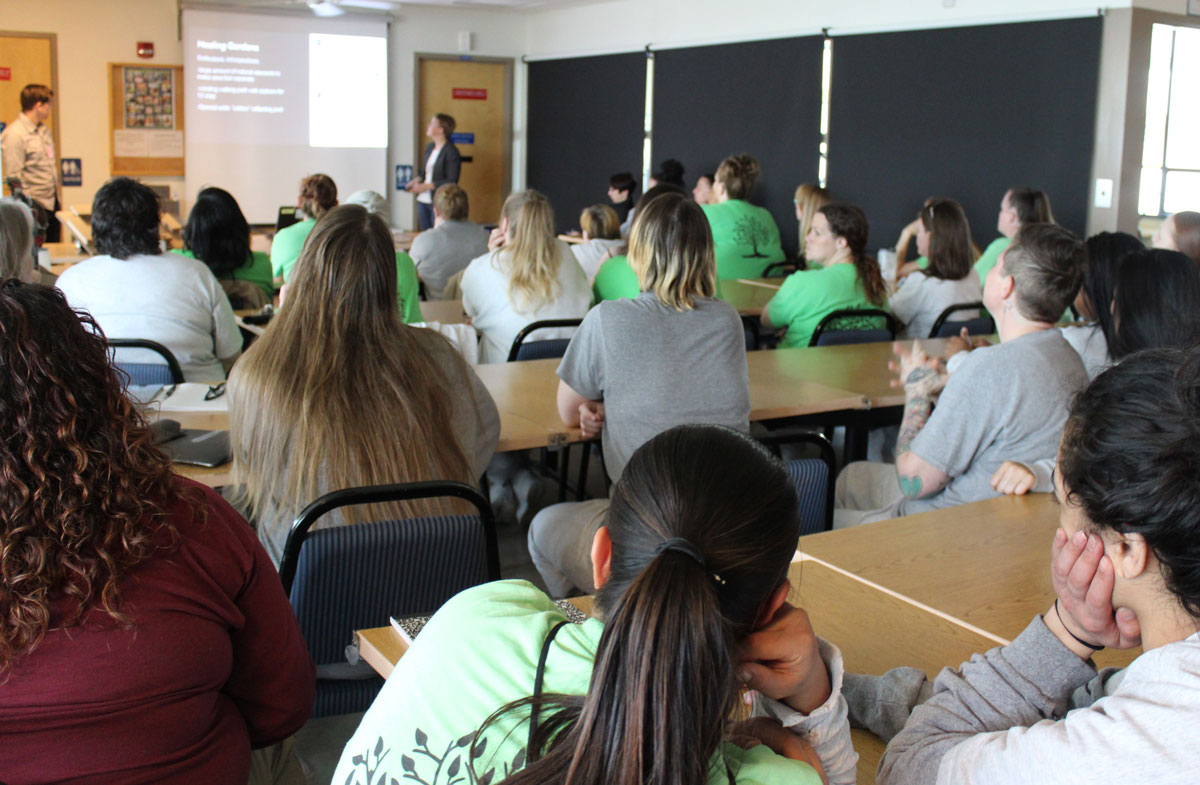
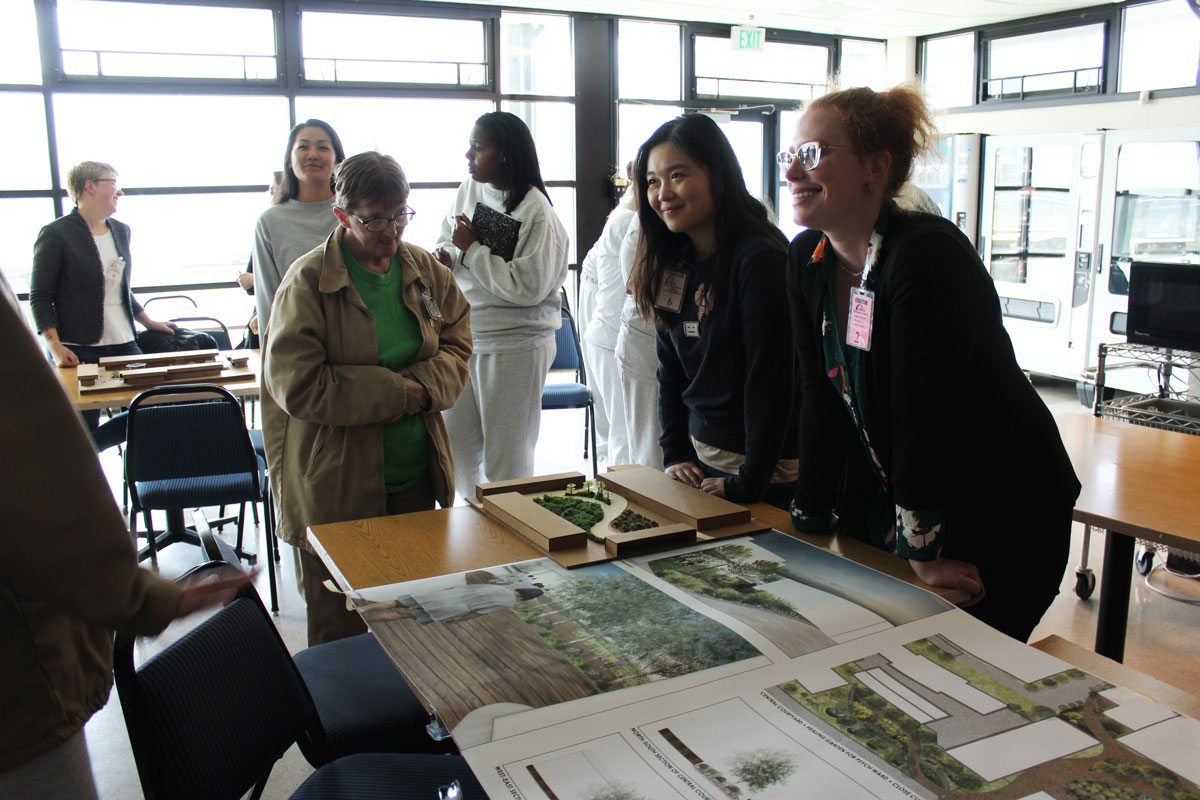
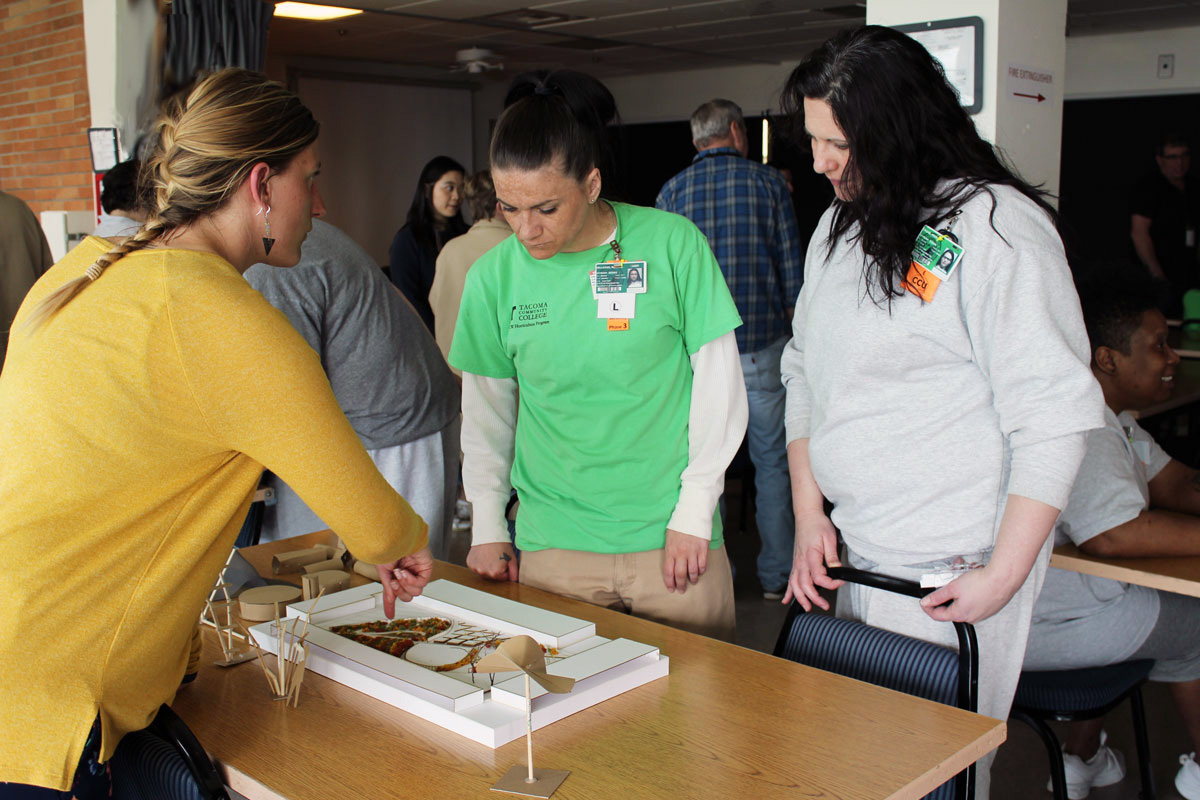
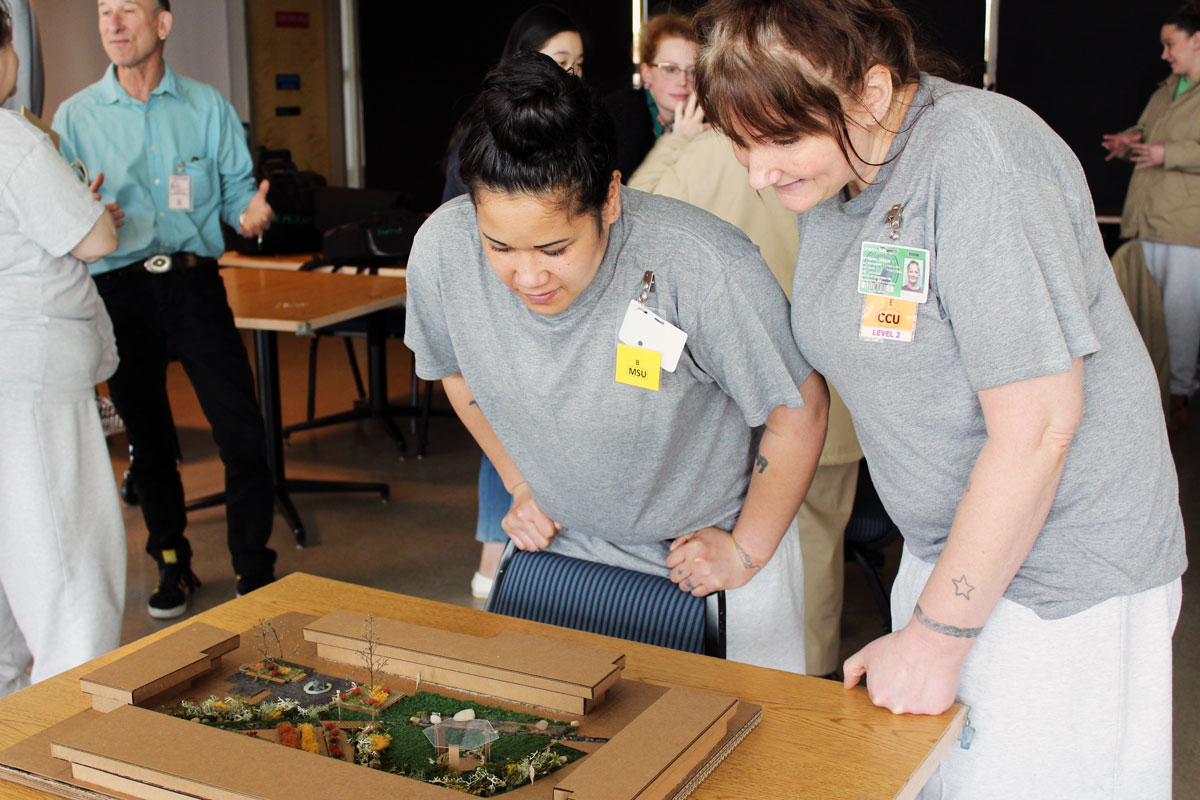
The student groups, with architecture models and posters in hand, presented projects focused on designing a nurturing and healing environment as an exercise of rethinking the landscape of incarceration.
They proposed creating places that stimulate the senses, and that offer both respite and engagement through the garden. Each proposal offered different approaches and methods, but all were intended to create a more humane place for both residents and staff.
Workshop students were especially respectful of the time and effort the UW students put into their projects, and their comments and questions reflected that appreciation.
Overall, workshop students were engaged and excited to hear about the potential to transform their built living environment.