By SPP SCCC Ecological Conservation Nursery Coordinator Graham Klag
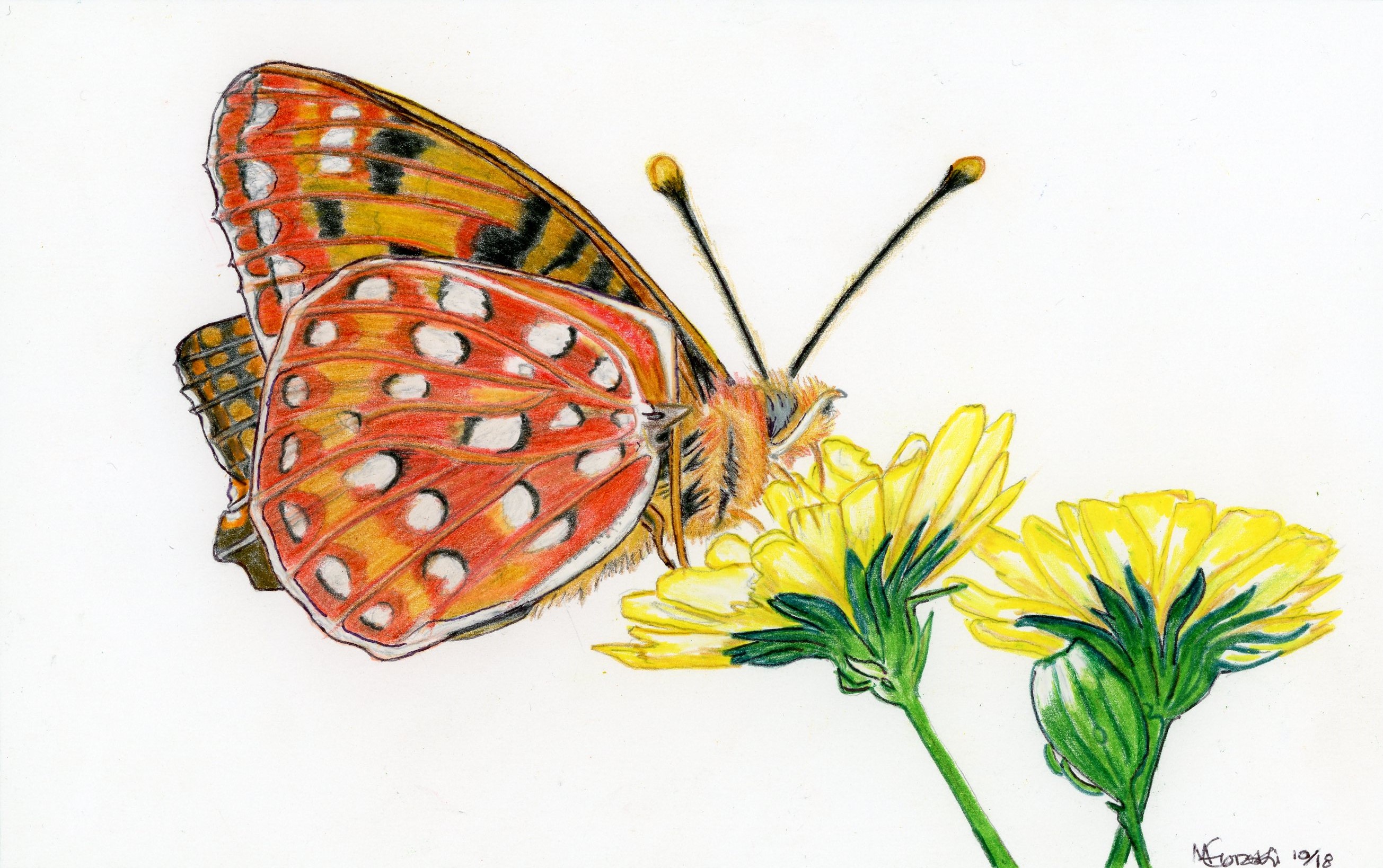
Fall colors continue to take flight at Stafford Creek Corrections Center through the artistic talents of conservation technician Michael! Inspired by SPP lectures and nursery work, Michael’s artistic illustrations of the Oregon silverspot butterfly (Speryeria zerene hippolyta) captures the beauty of prairie conservation work. The Early blue violet (Viola adunca) is grown at SPP Prairie Ecological Conservation Nurseries for the Oregon silverspot butterfly.
The Early blue violet is the sole host plant for the caterpillar of the butterfly who needs to eat ~ 250 violet leaves to complete its life cycle. Michael and the conservation technician crew at Stafford Creek continuing to grow their knowledge of Washington and Oregon’s prairie ecosystems, while out growing the Early blue violet, for the habitat and lifecycle of Oregon silverspot butterfly. SPP is thankful for our conservation technicians’ work and artistic inspiration!
Text and photos by Erica Benoit, SPP Environmental Workshop Series Coordinator
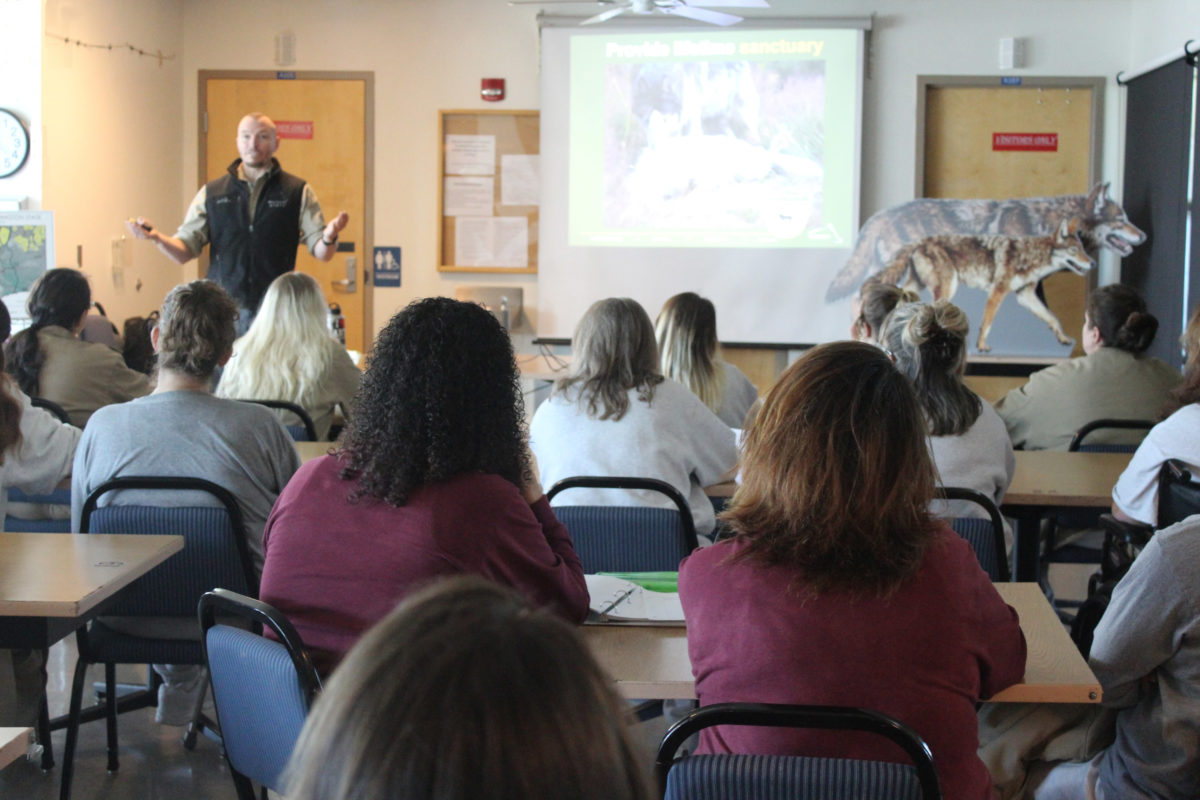
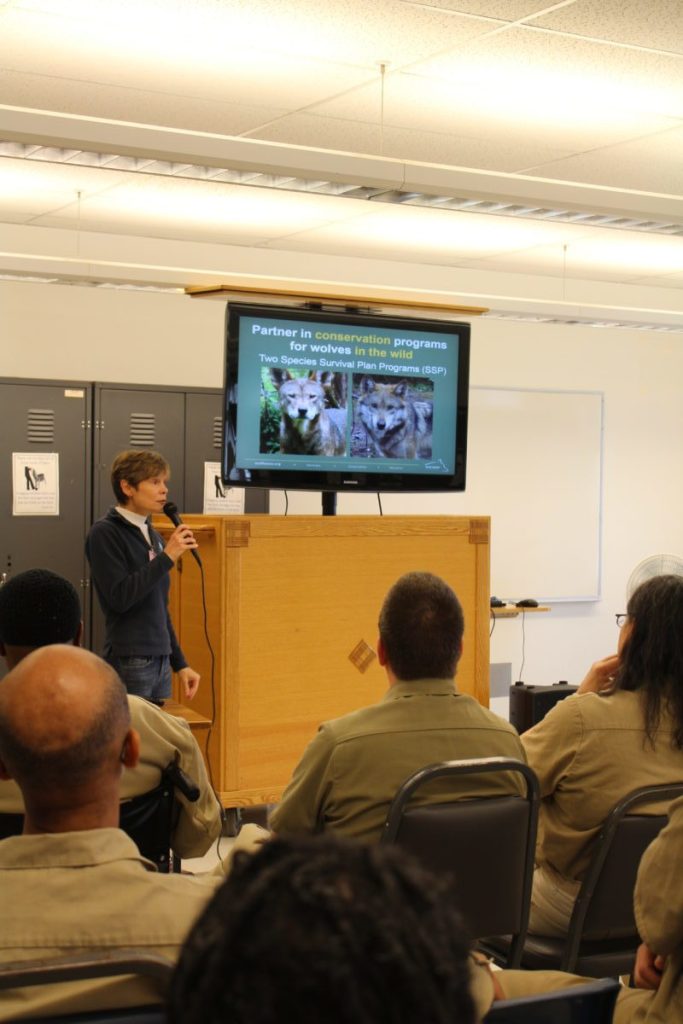
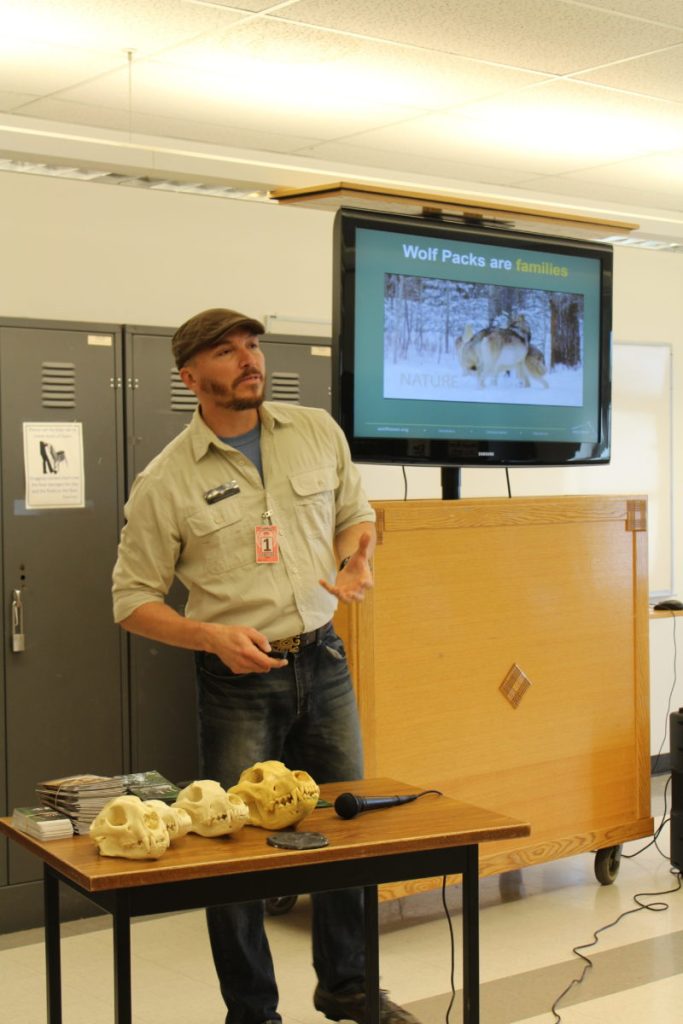
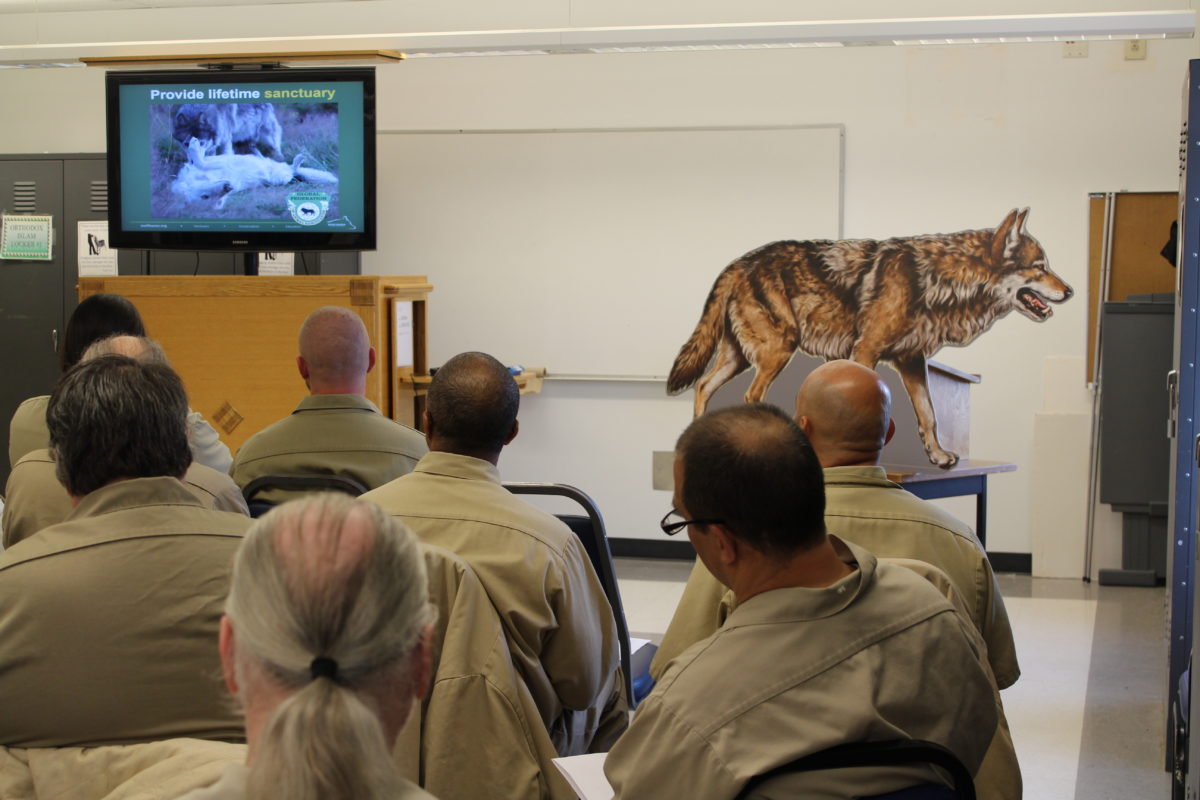
Over the last two months, representatives from Wolf Haven International, a frequent partner in the SPP Workshop Series, led workshops about wolves of Washington at both the Washington Corrections Center for Women (WCCW) in Gig Harbor and Stafford Creek Corrections Center (SCCC) in Aberdeen. Both workshops were well attended at both facilities, and students were fully engaged, thanks to the great presentation skills of Wolf Haven staff members Chris Montero and Cindy Irwin.
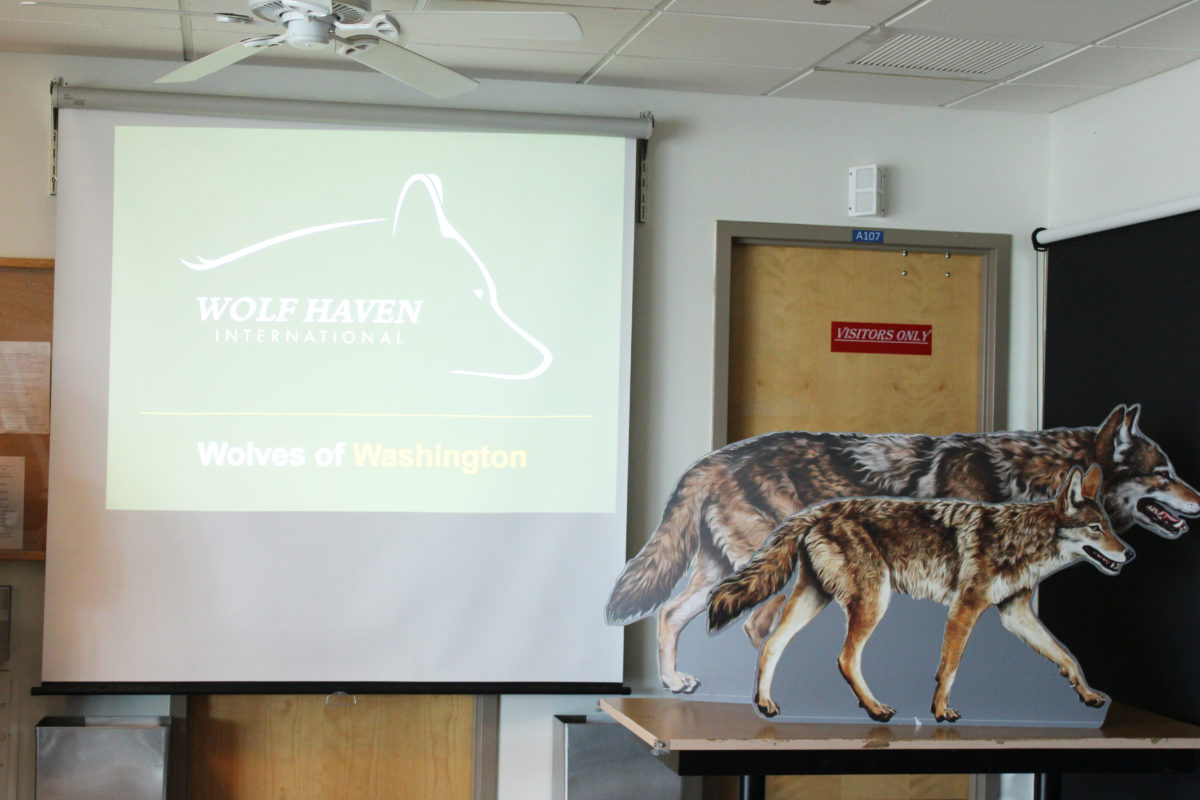
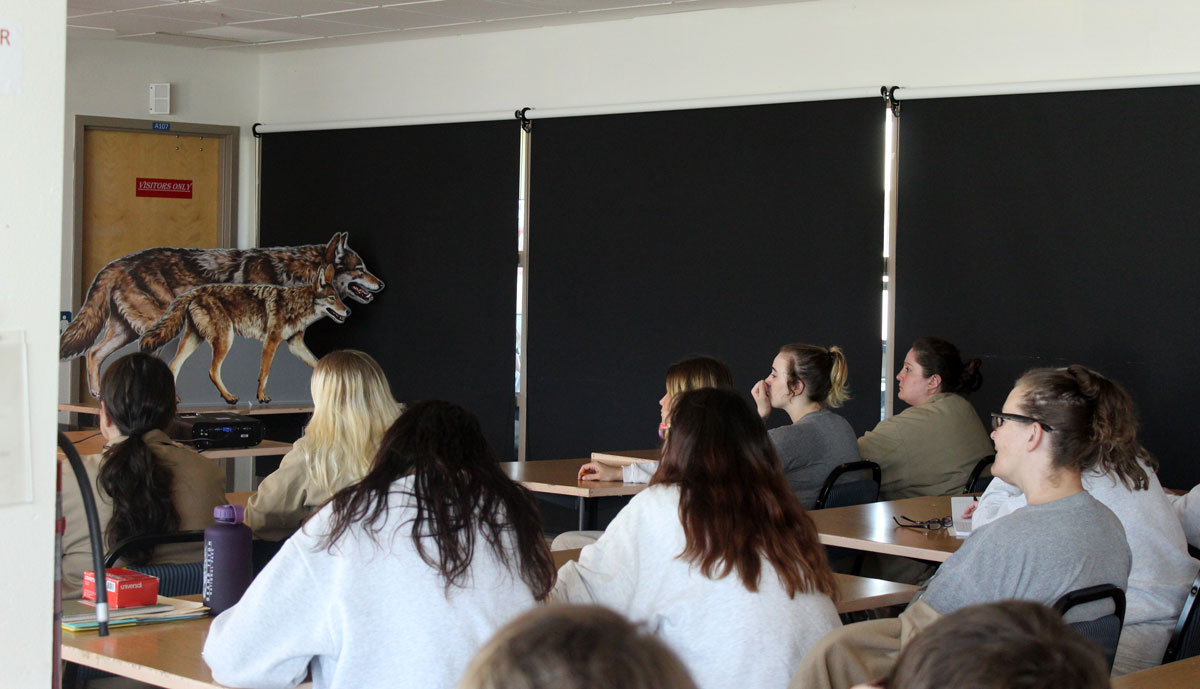
Their presentations touched on the ecological importance of wolves, behavior of wolves and their packs, historical and current conflict between humans and wolves, as well as recovery efforts to reestablish wolf populations in Washington. Chris and Cindy showcased compelling videos of the wolves residing at Wolf Haven’s sanctuary, life-size cutouts of a wolf and a coyote, skull replicas, and plenty of brochures and bookmarks for the students to take with them!
Wolves are commonly confused with coyotes, which are much less afraid of humans and are responsible for most of humans’ fear of wolves! These life-size cutouts were used to explain the difference coyotes and wolves.Chris Montero, Outreach Coordinator at Wolf Haven, enthusiastically presented to students at WCCW on October 2nd, 2018. From his ability to connect with the students, you can tell he’s done this before!
Cindy Irwin, Wolf Haven’s Director of Education and Volunteer Services, joined Chris at the workshop at SCCC on November 15th, 2018.
Chris was especially knowledgeable about wolf behavior. One student at SCCC noted: “Very informative. I’m amazed by the behavioral similarities that wolves and humans share.”
Students at SCCC were excited to hear about the opportunity for public tours at the Wolf Haven sanctuary in Tenino, Washington.Students at WCCW asked so many wonderful questions, and related what they were learning to their lives! One student shared in writing”: “Loved this lecture! I am from Rainier, which is right by Tenino, and have been by Wolf Haven many times. I am looking forward to actually visiting it – so fascinating!”
Text by Susan Christopher, photos by Keegan Curry
Hello! My name is Susan Christopher and I’m currently incarcerated at Mission Creek Corrections Center for Women in Belfair, Washington. I would like to thank the Sustainability in Prisons Project (SPP) for blessing me with the incredible opportunity of being involved with the Taylor’s Checkerspot Butterfly Program for more than three years.
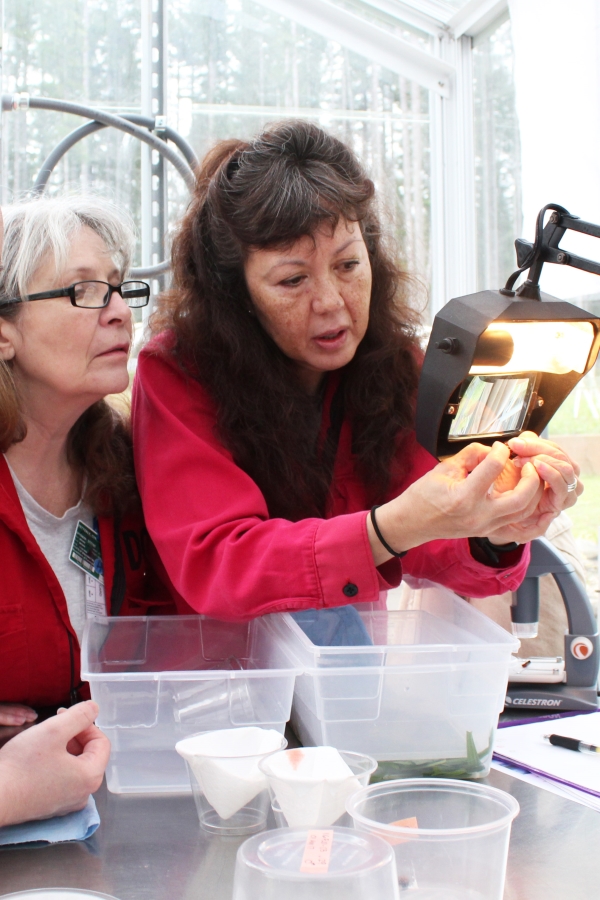
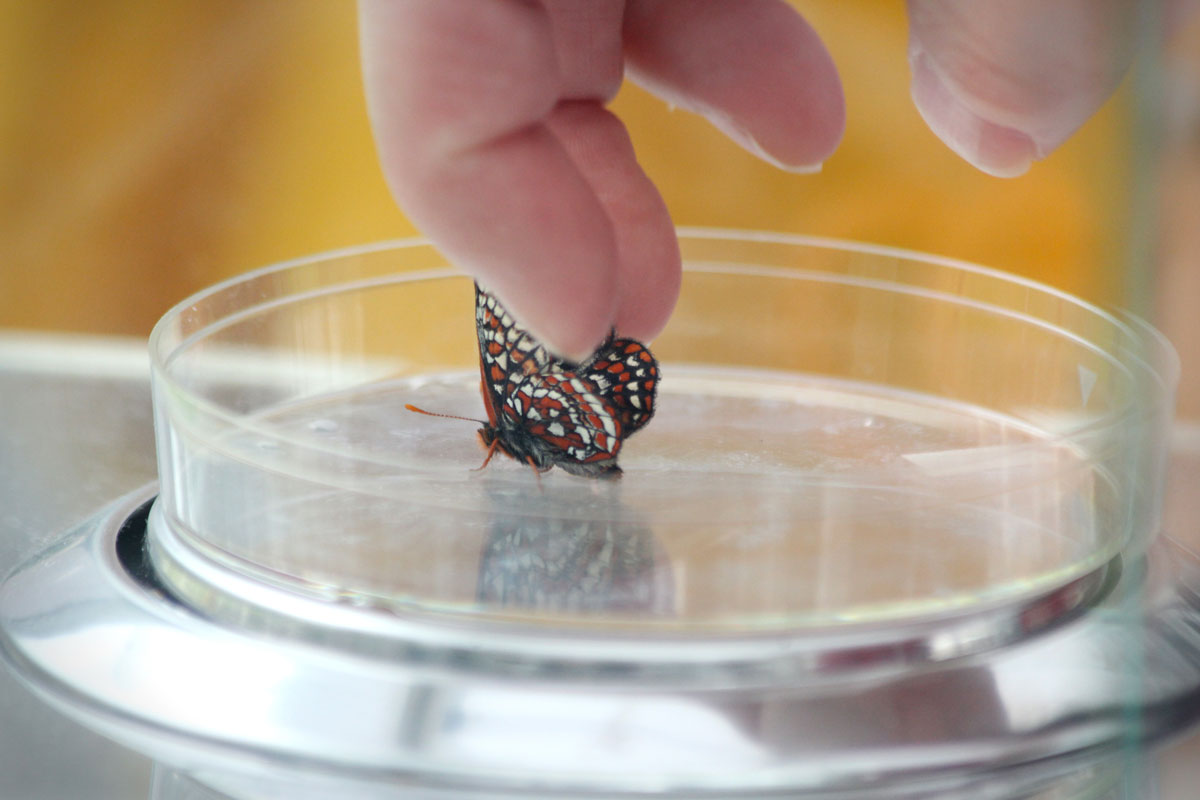
Susan helps technician Cynthia Fetterly examine a newly emerged butterfly.
During the four breeding seasons I worked in the program, I was able to witness every life stage up close and personal. I watched a butterfly lay her eggs on a leaf. A few weeks later, through a microscope, I watched those eggs hatch. While feeding those caterpillars every day, I saw many of them shed their outer skin—a process called molting—several times as they matured. I watched them reach the diapause stage, in which they slept for several months. Upon waking up in the spring, I would feed them again until the true miracle began: as they shed their last exoskeleton, I could see the chrysalis form until they became a pupa. Roughly three weeks later, I witnessed the final stage of the miracle of transformation when the butterfly emerges, unfurls its wings, and takes its first flight. It was simply amazing.
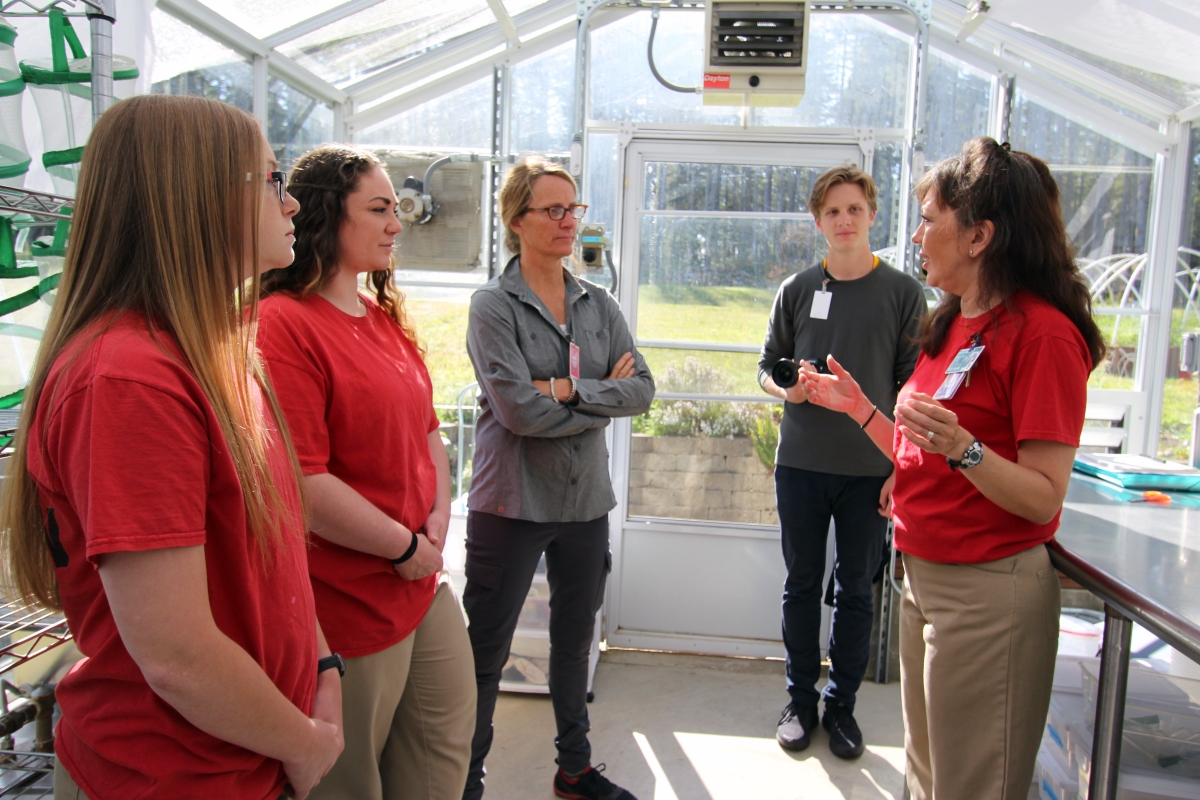
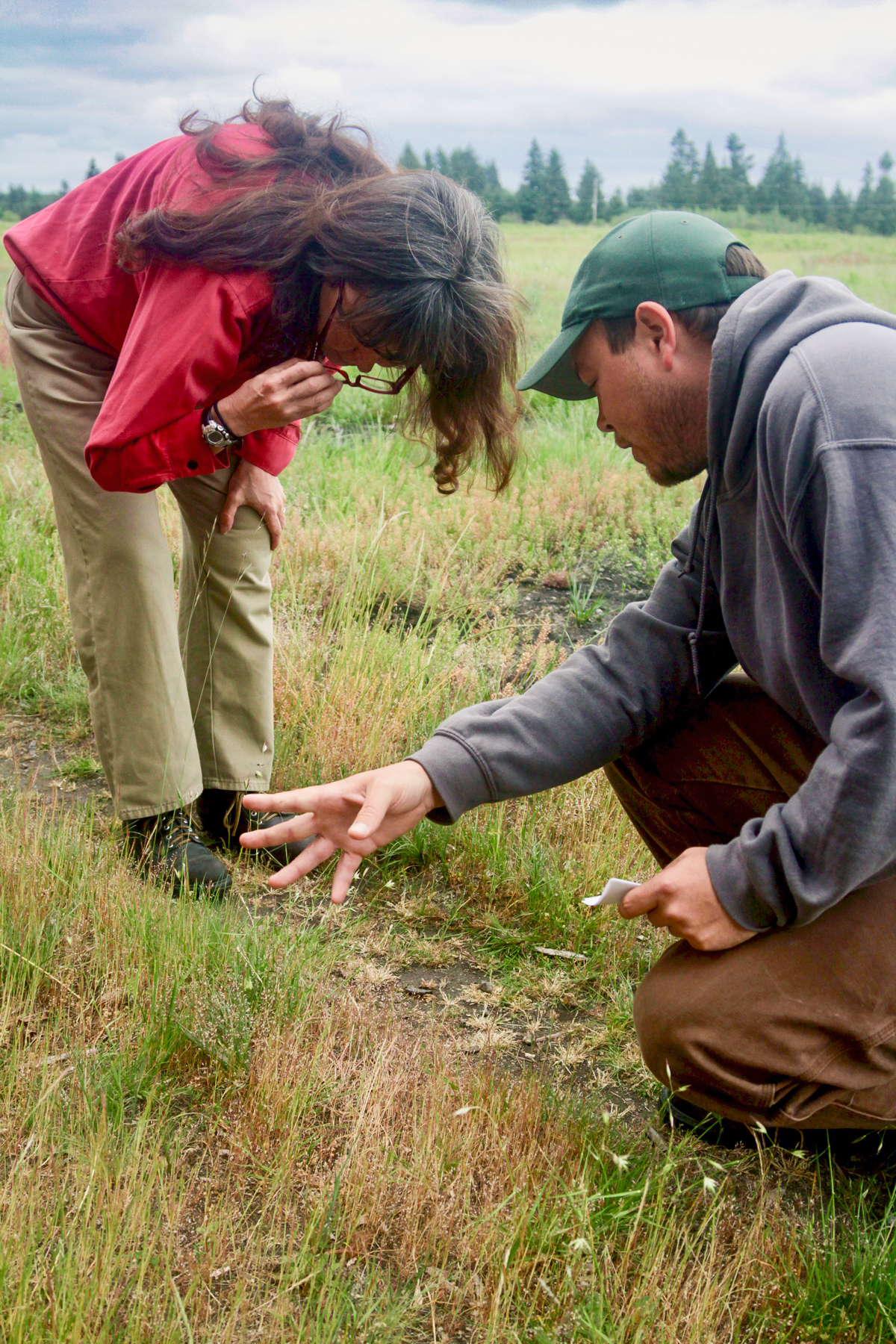
Susan offers her knowledge of Taylor’s checkerspot husbandry to producers from PBS Nature.A biologist from WDFW helps Susan understand the composition of prairie vegetation in a healthy Taylor’s checkerspot habitat.
I’ve often wondered how many people in this world have had the opportunity to observe each of those events. Only a handful, I would guess. But that is just part of what I got from this program.
I was interviewed by PBS twice and appeared on a PBS NewsHour segment. I was allowed to attend a Working Group Conference and gave a presentation about our program to approximately 40 managers and biologists who also work with Taylor’s checkerspot. I have also been interviewed by an author from Japan and a group of prison administrators from Thailand. This last spring, myself and the other butterfly technicians got to go on a field trip to see our “finished product”—wild checkerspots—in their restored habitat.
This was more than just a job; this was a once-in-a-lifetime opportunity that has provided me with professional skills and many lifelong memories.
I would never have believed I would be given such a chance in prison, but thanks to the people at SPP, WDFW, and the Oregon Zoo—all who took a risk by bringing this program to incarcerated individuals—I can truly say this has changed my life. Thank you to all those who had the foresight to believe in us.
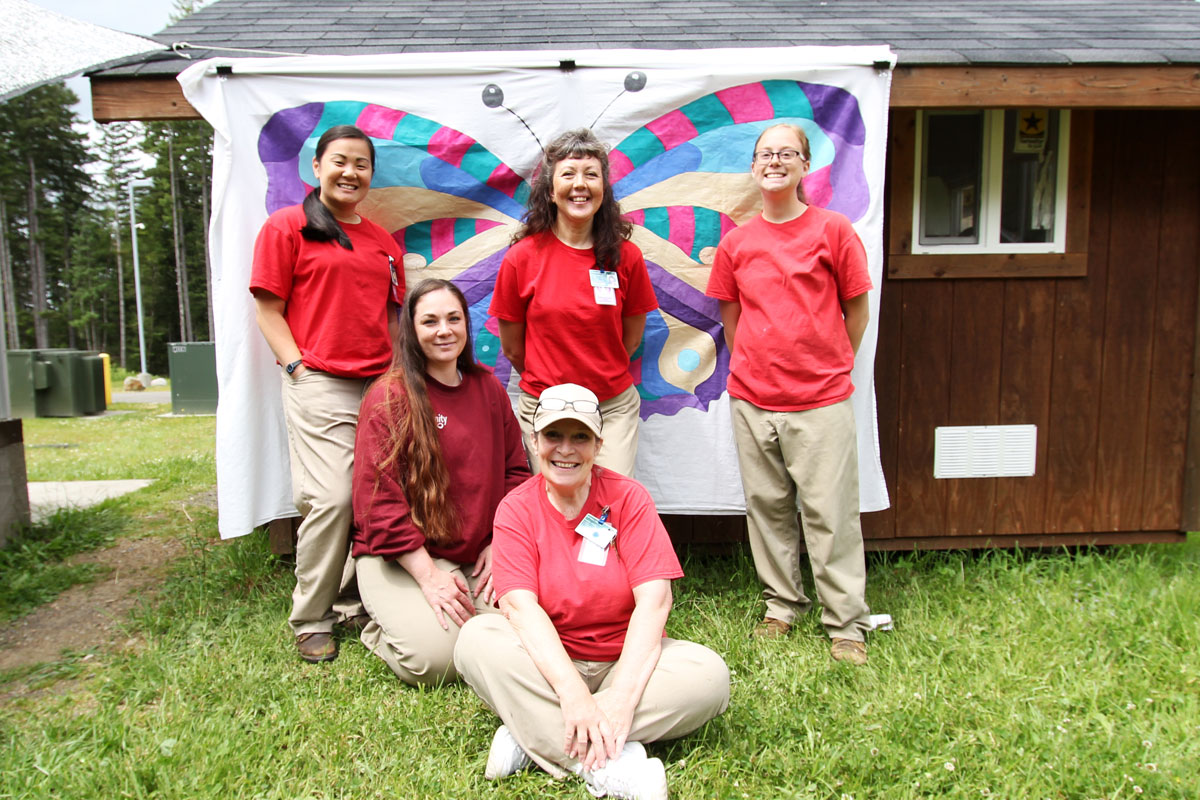
Susan Christopher and the 2017 butterfly crew—Jessica Stevens, Alexis Coleman, Nichole Alexander, and Cynthia Fetterly—pose for a photo after hosting Girl Scouts Beyond Bars in the greenhouse at MCCCW.
Text by Bethany Shepler, SPP Green Track Program Coordinator, and Joslyn Rose Trivett, SPP Education and Outreach Manager.
Photos by Bethany Shepler, except where otherwise noted.
Group photo from the Beekeeping Summit in Spring 2017. Photo by Ricky Osborne.
The summit was well timed to meet growing interest in bringing beekeeping to prisons around the state. A few WA prisons have hosted beekeeping for years and SPP partners were hearing inquiries from many others interested in starting new programs. SPP Co-Director Steve Sinclair suggested a summit, and that was the catalyst we needed; it brought everyone together to learn from each other, expand practical knowledge, and build enthusiasm.
Each program is worthy of its own article. Here, we will share just one or two highlights from each. Check out all of the incredible accomplishments of beekeepers in prisons:
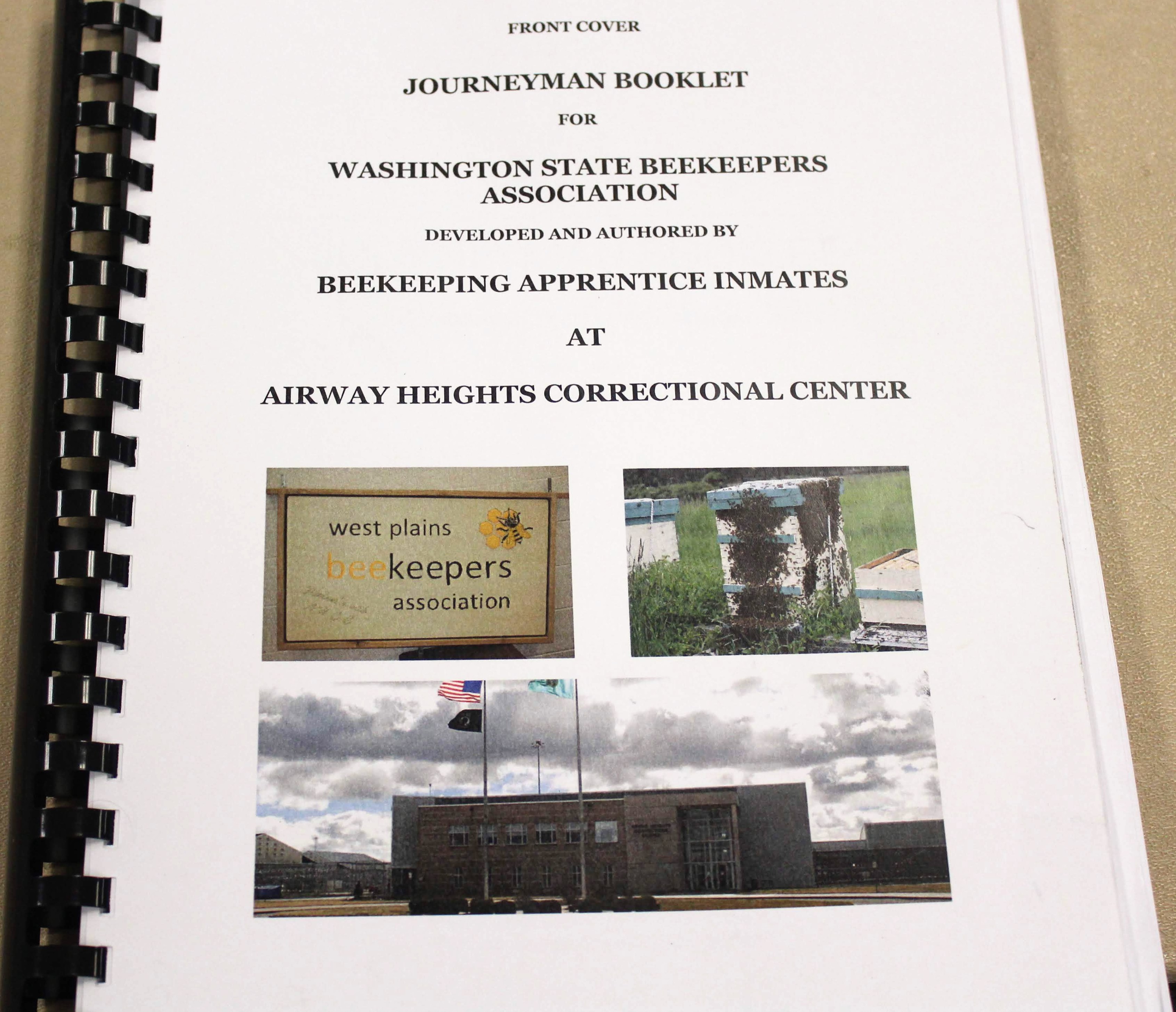
AHCC has one of the fastest growing beekeeping programs in Washington prisons, and the first to create their own bee club. Working with West Plains Beekeepers Association, incarcerated beekeepers created the first draft of a new, state-wide Journeyman course manual, pictured above—a stunning accomplishment. Currently, Washington State Beekeepers Association is refining AHCC’s draft for publication, for both prison and non-prison programs! We are ecstatic to see the support and excitement AHCC has shown for their beekeeping program and look forward to their continued success!
Clallam Bay hosted its second beekeeping intensive this spring. Students had already completed the Beginner Beekeeping modules, and prepared further by reading books and scientific articles. Mark Urnes of North Olympic Peninsula Beekeepers spent a full day with students; he answered questions and work-shopped on beekeeping best practices.
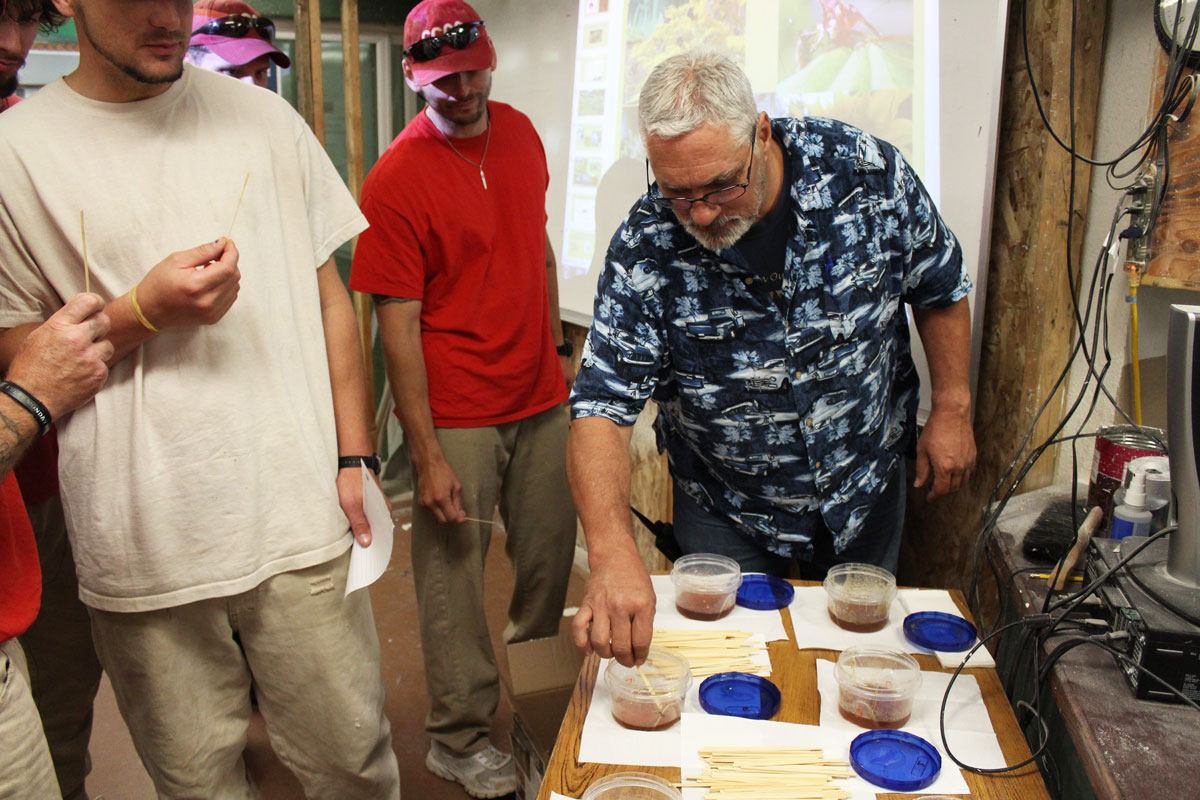
Cedar Creek is one of the oldest beekeeping programs in the state and has certified more than 60 beekeepers so far. The wood shop at the facility built the hives for the McNeil Island beekeeping program. The picture here is of wood shop crew and Centralia College instructor Bruce Carley tasting honey at a beekeeping workshop; expert beekeeper Laurie Pyne covered beekeeping basics and the differences in honey types from different pollen sources. CCCC’s beekeeping program is in partnership with Olympia Beekeepers Association.
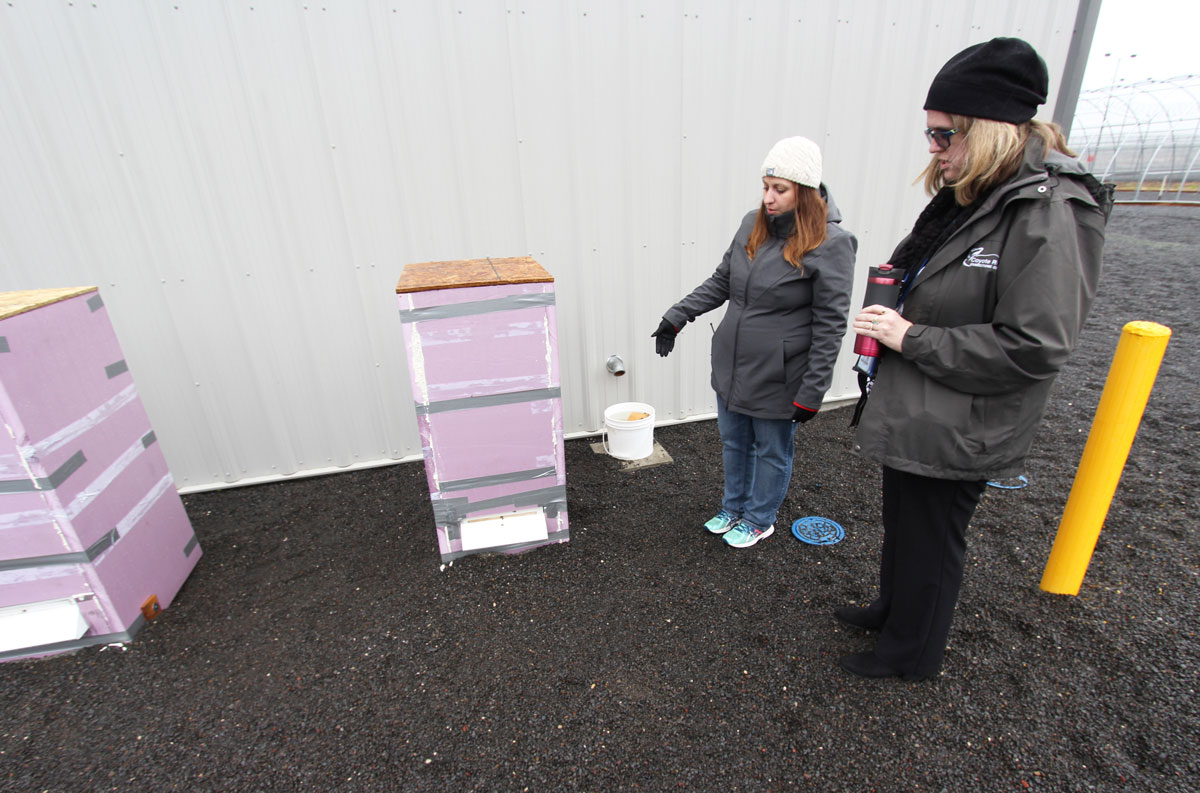
Coyote Ridge supports a beekeeping program that has been going strong since its inception 2 years ago. To support the bees, staff members and inmates planted more pollinator friendly plants around the facility. To protect the hives from central Washington’s cold winter weather, they “winter-ize” the boxes, shown above: they wrapped the hive in insulation and put cedar chips or burlap inside the hive to draw up moisture. CRCC beekeeping program is in partnership with Mid-Columbia Beekeepers Association.
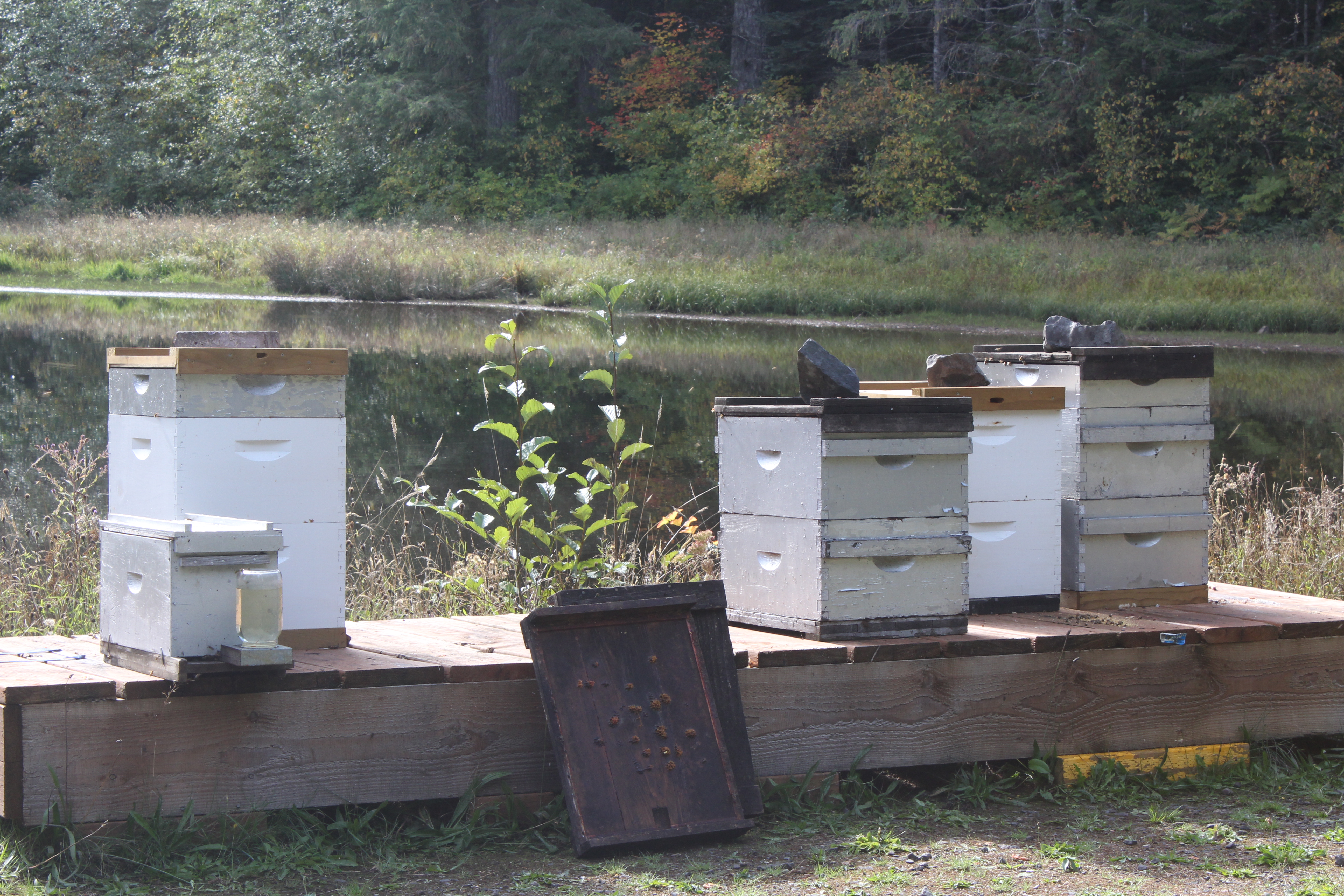
Larch has four hives and a nuc (that’s the small box on the left) at their facility. This picture was taken last week, just after the bees had been fed and they were all buzzing around busily! Their hives are really strong right now so we’re hopeful that they’ll do well over the Winter. LCC beekeeping program is in partnership with Clark County Beekeepers Association.
McNeil Island Beekeeping Program (McNeil Island and CCCC)
This project is so exciting and unusual! The McNeil Island beekeeping project has been a dream for more than 4 years and the Summit helped launch it into realty. Ownership and management of McNeil Island is complex, so the program needed input and support from many partners: staff and administration from Cedar Creek Corrections Center (CCCC), Washington Department of Fish and Wildlife, Washington Department of Natural Resources, and CI staff (thank you Brian Peterson, Vania Beard, and Henry Mack!). Enthusiastic endorsements from Secretary Steve Sinclair and then Deputy Secretary Jody Becker Green helped, too! 🙂
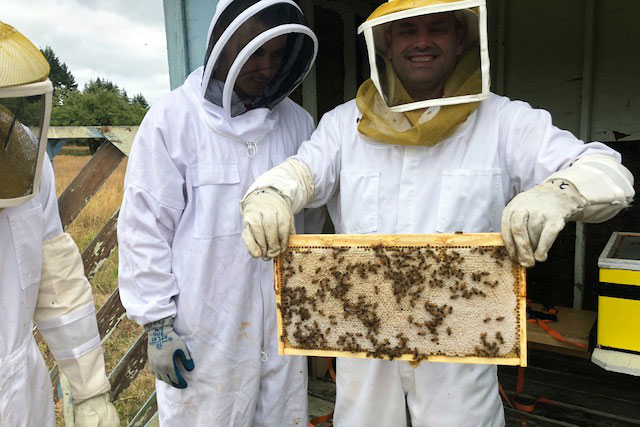
This past May, the first hives of bees arrived at the island. Throughout the spring, summer, and fall, a team of local beekeeping experts visited the hives frequently. On many visits, they support incarcerated beekeepers’ gaining hands-on experience (pictured above). The program’s beekeepers seek to understand the impact that pesticides have on bees–McNeil Island is a rare, pesticide-free environment. The expert beekeeping team includes Laurie Pyne, Maren Anderson, Gail Booth, Andy Matelich, and Dixon Fellows. Photo by Laurie Pyne.
Monroe Correctional Complex-Special Offenders Unit (MCC-SOU)
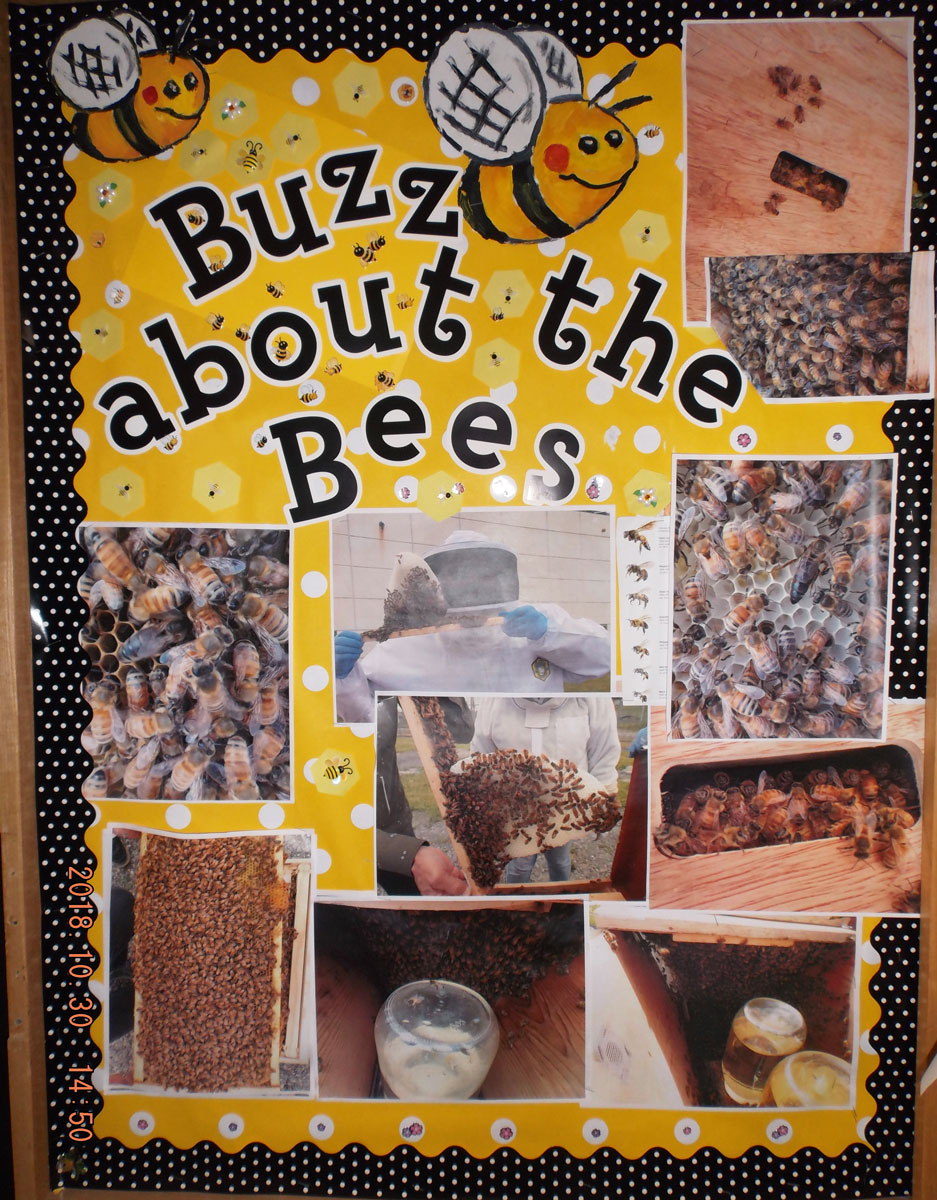
MCC-SOU has shown incredible amounts of enthusiasm for beekeeping! They launched their program just this spring, and it’s been so exciting to see the students, staff, and local beekeeping expert dive into the program. This is the only facility in the state using Top Bar Hives. The picture above shows the bulletin board in the facility advertising the beekeeping program, courtesy of Kathy Grey.
Monroe Correctional Complex – Twin Rivers Unit (MCC-TRU)
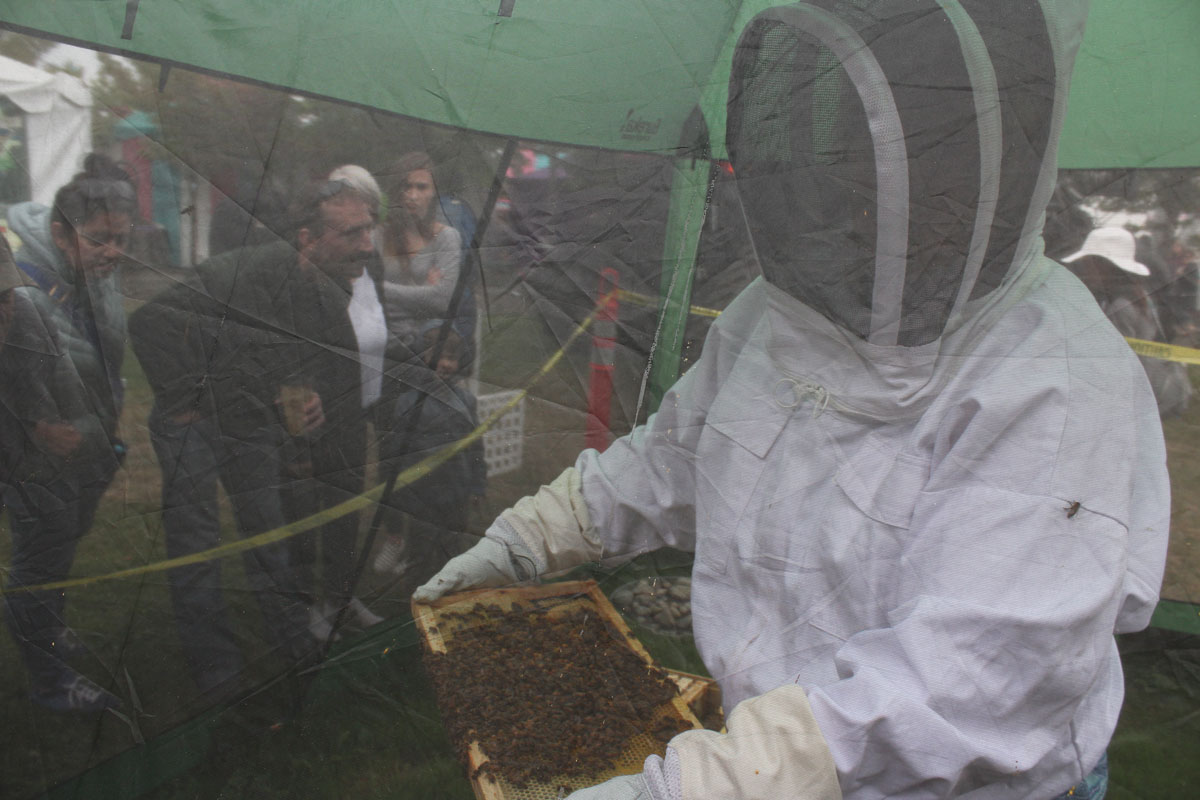
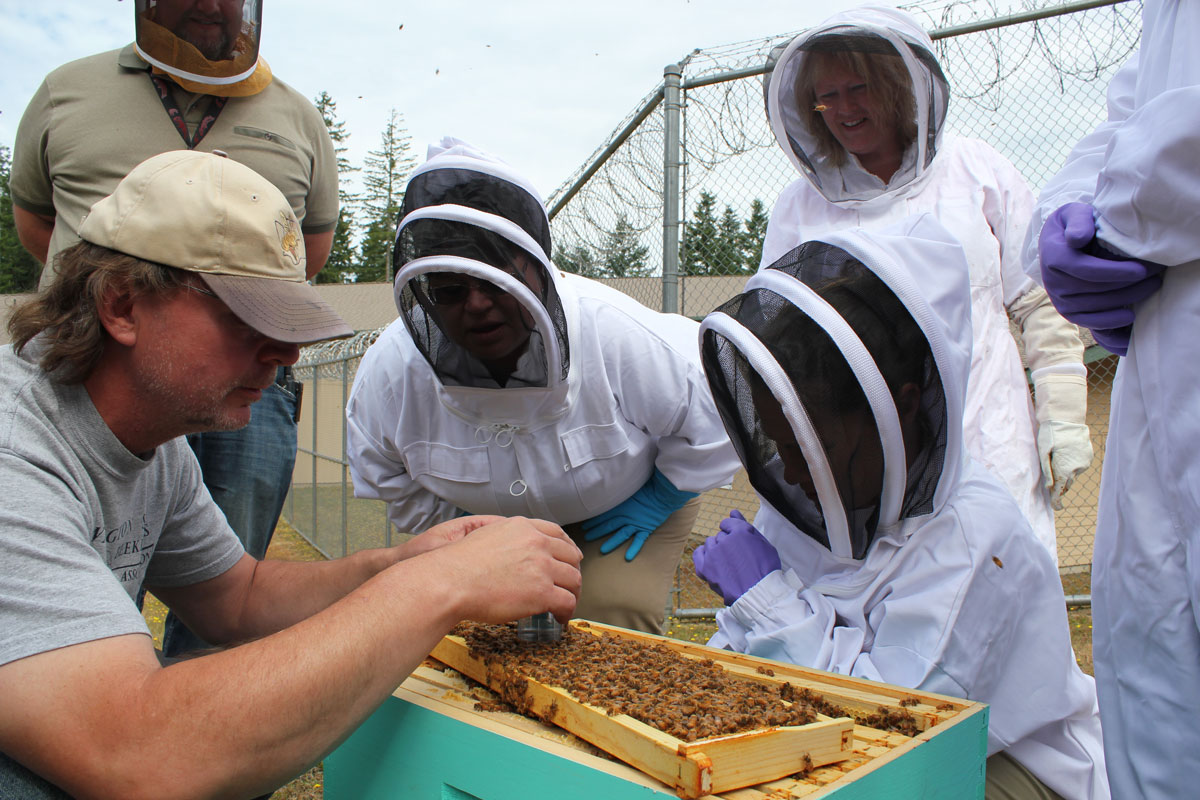
Inmates and staff at MCC-TRU have shown tons of energy for beekeeping! Even though bees were only delivered in April, they’ve already completed one Apprentice level certification course. Their hives have been so successful that they were able to split hives and collected honey! They also had a hive on display at the Evergreen State Fair, and they exhibited many photos of their beekeepers in action. The photo shows a staff beekeeper showing a frame covered in bees to onlookers at the fair. Photo by SPP staff.
Mission Creek Corrections Center for Women (MCCCW)
MCCCW may be small, but they are a mighty program. Over the last year, they faced some challenges with finding pollinating plants and relocating their hives. But that didn’t stop them or even slow the program–they graduated 3 times as many incarcerated students in their most recent class as their previous class. They also have strong, healthy hives going into winter! MCCCW beekeeping program is in partnership with West Sound Beekeepers Association.
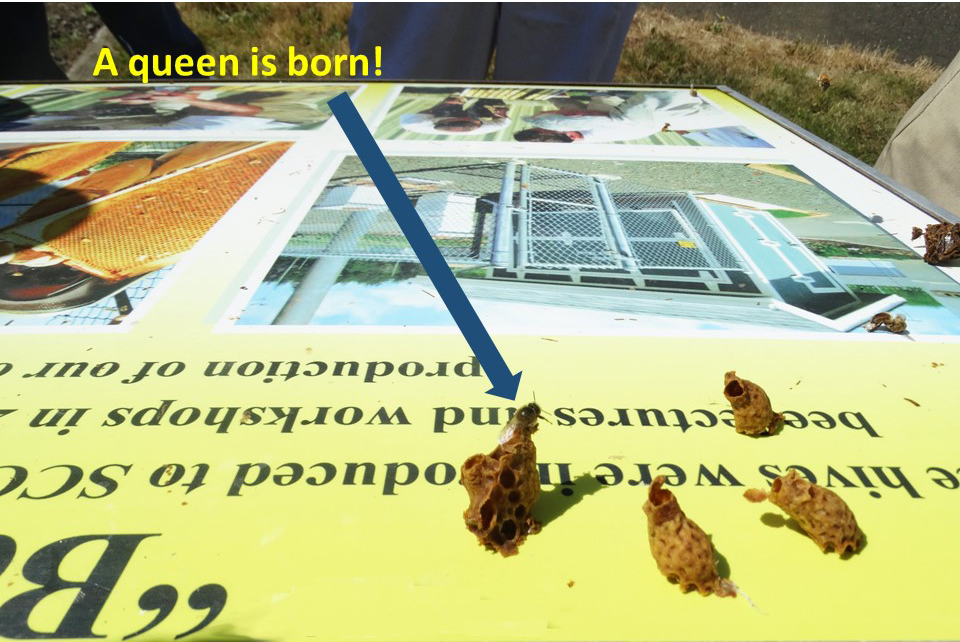
SCCC has had hives for many years. Next to the hives is a beekeeping interpretive sign–picture above–and in the summer of 2018 a few queen bees found that sign to be an ideal place to emerge into the world! Photo by Kelly Peterson.
SCCC’s bee program added a beekeeping class this year with it’s first class graduating in January. Since then, they have completed 4 classes, and the wait list of students keeps growing. Their classes regularly include both incarcerated and corrections staff students. SCCC beekeeping program is in partnership with local expert beekeeper Duane McBride.
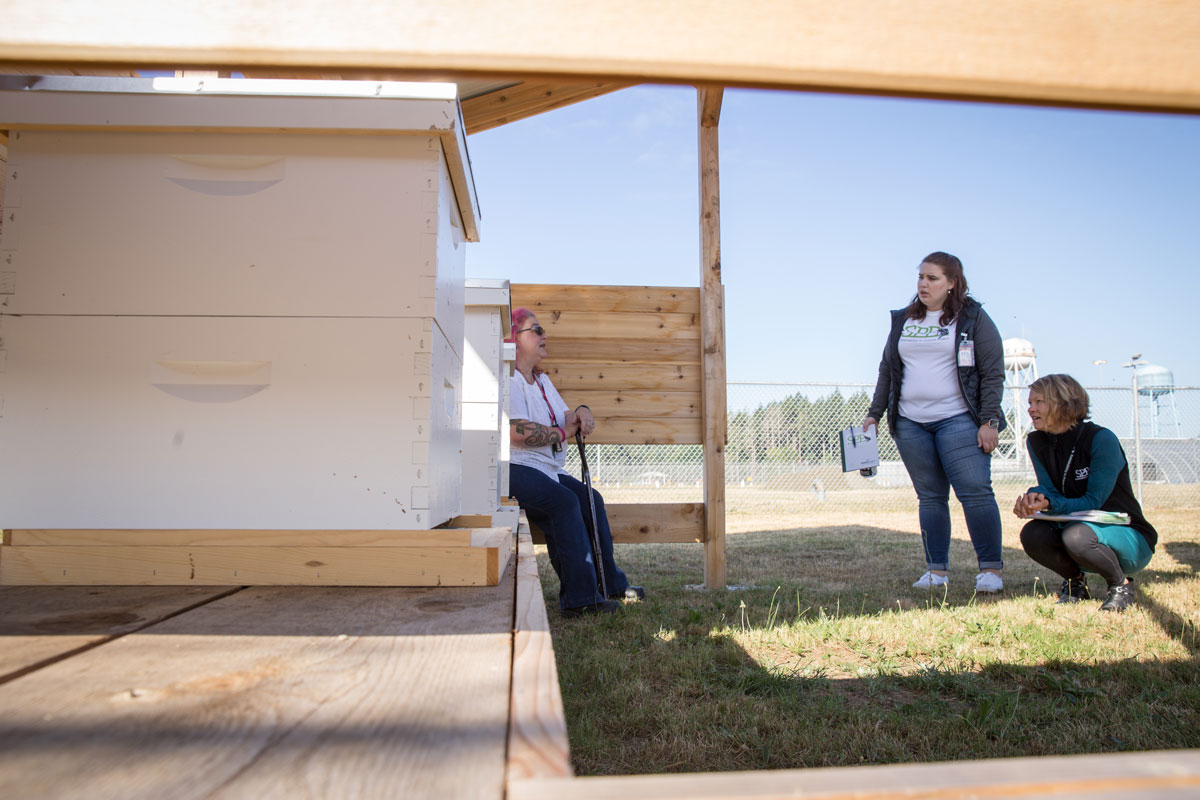
WCC hosts an ever-growing beekeeping program! They started out on the right foot, building a high quality shelter for their hives. The bees are housed next to the Prairie Ecological Conservation Nursery Program, and this means there can be a lot of cross pollination between the two SPP-supported programs. WCC’s beekeeping program is in partnership with Olympia Beekeepers Association. Photo by Ricky Osborne.
A crew from WCCW has been keeping bees at Mother Earth Farm for many years. Tacoma Community College students at the prison have long learned about beekeeping and pollinators as part of the horticulture program. In 2016, the two programs joined forces and brought hives inside the prison fence. Now you can see honeybees throughout WCCW’s gardens, happily tending to the many flowers. Photo by Joslyn Rose Trivett.
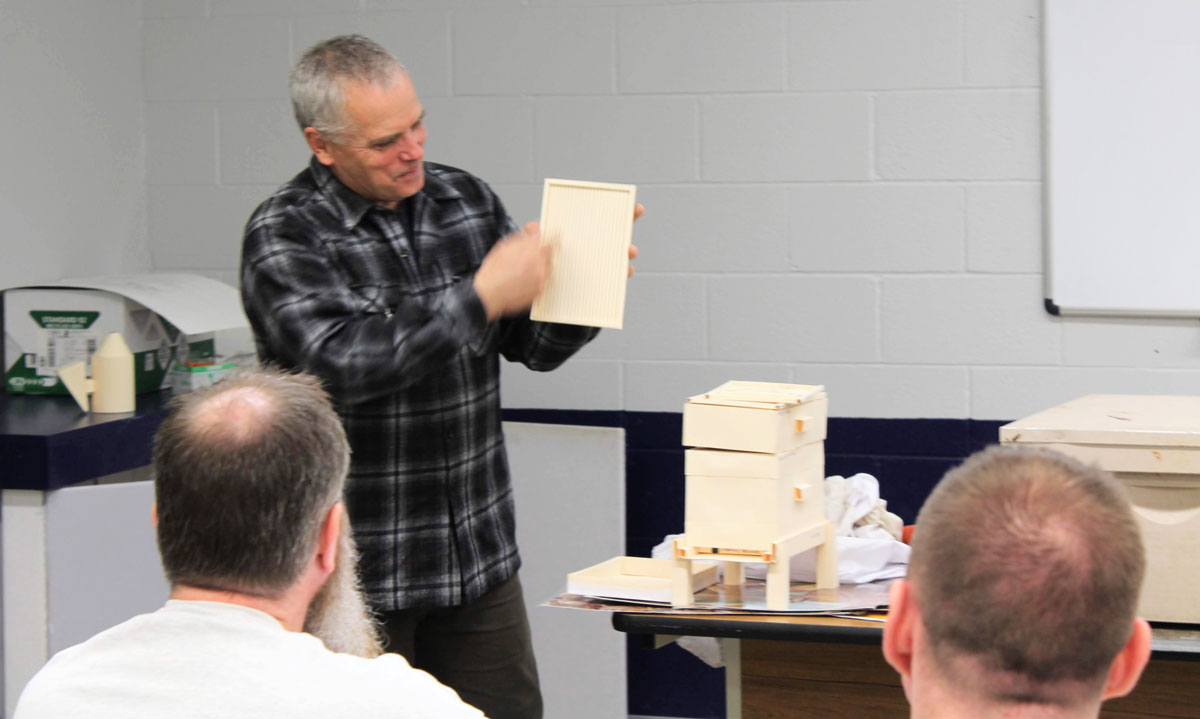
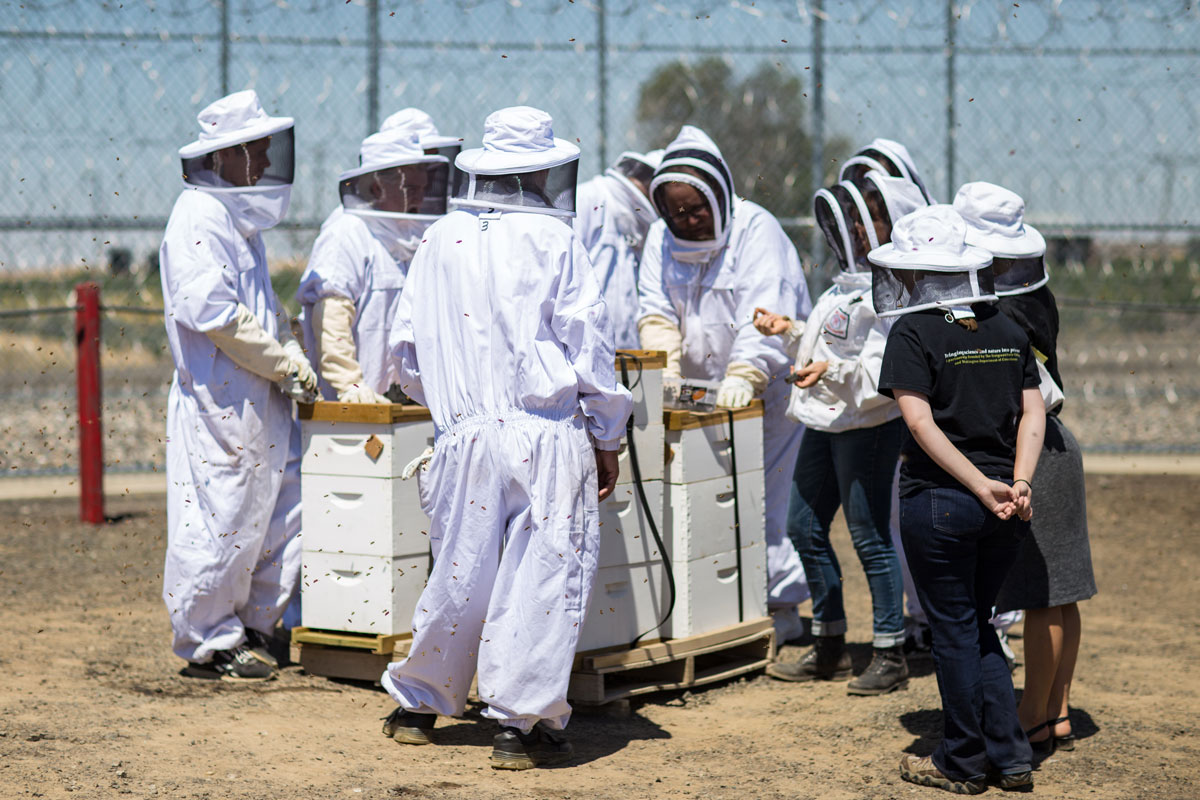
WSP hosts an enduring and impressive beekeeping program! Two WSP staff members are experienced beekeepers, and they serve both as instructors and program sponsors. This year they had 15 hives and participated in the USDA National Honey Bee Pest Survey! In this photo, beekeeping students learn from expert beekeeper Mona Chambers. Photo by Ricky Osborne.