Text by Bethany Shepler, SPP Green Track Coordinator

When I first heard about a job opening at the Sustainability in Prisons Project, I couldn’t believe there was a group that combined two of my passions. I called my best friend and excitedly shouted at her all I had learned about SPP. Her response was simply “you’re applying for that, right? Cause it’s perfect for you.”

Well, I applied for the position of Green Track Program Coordinator and practiced for my interview over and over. I would like to think I projected an air of confidence during my interview, but I desperately wanted to make a good impression so I made myself quite nervous. A few days later, I received the call offering me the position! I don’t really remember the call, I just remember being so excited I could hardly breathe.

For the second time in my life, I knew I was on the right path.
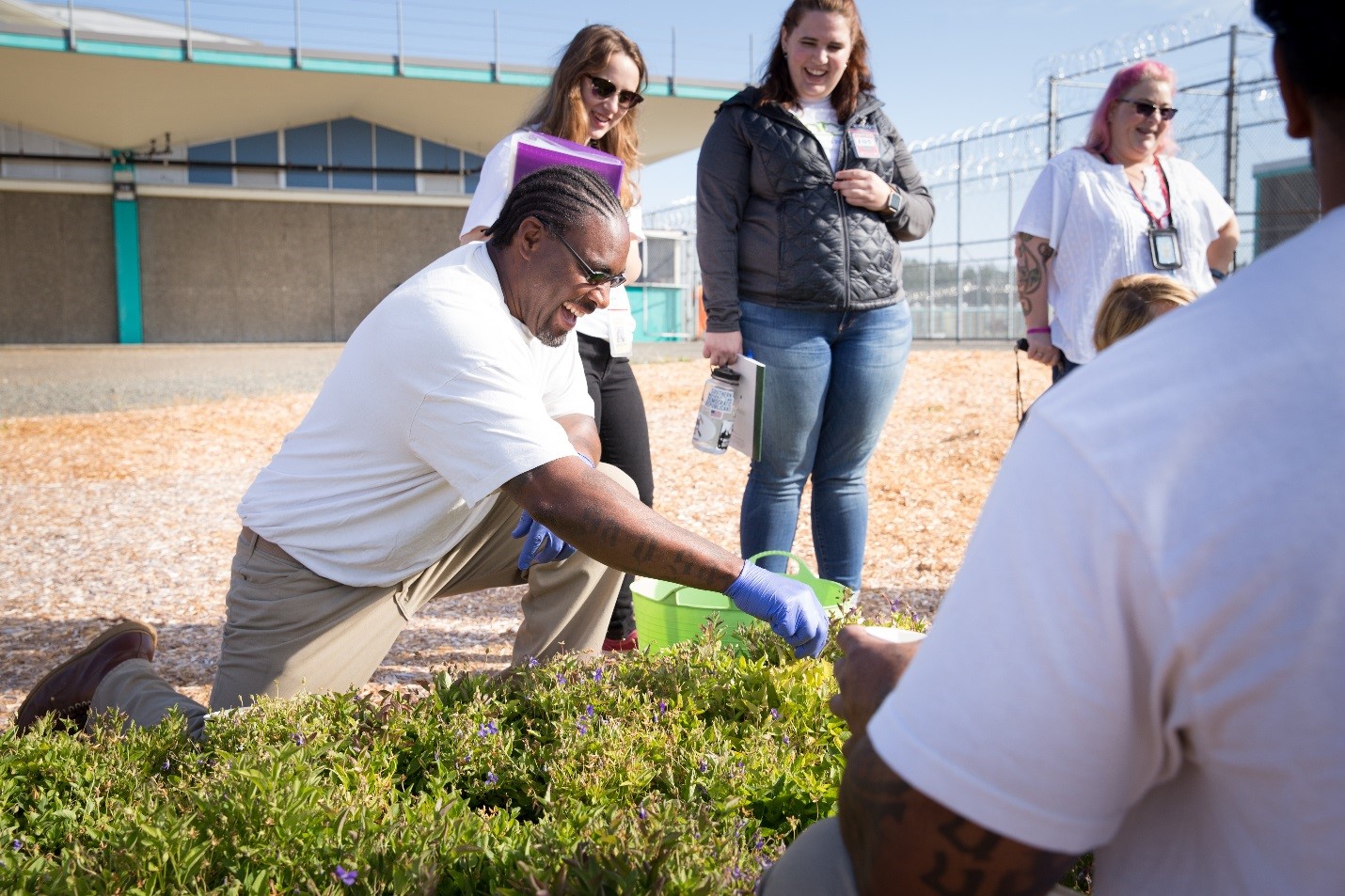
Emily Passarelli and Bethany Shepler observe nursery technicians at WCC picking buds from violets that will be used for re-seeding later. Photo by SPP Staff.

Sitting at my desk a few months later, I still know I’m where I’m supposed to be. I still get excited to go to work, I love the challenges this job brings, and I can’t wait to find out what I learn throughout my time here.

Although I don’t get to go to prison as often as my colleagues do, when I do I find that I’m always surprised by how normal everything feels “inside.” I sometimes forget where I am until I see the barbed wire and guard towers.
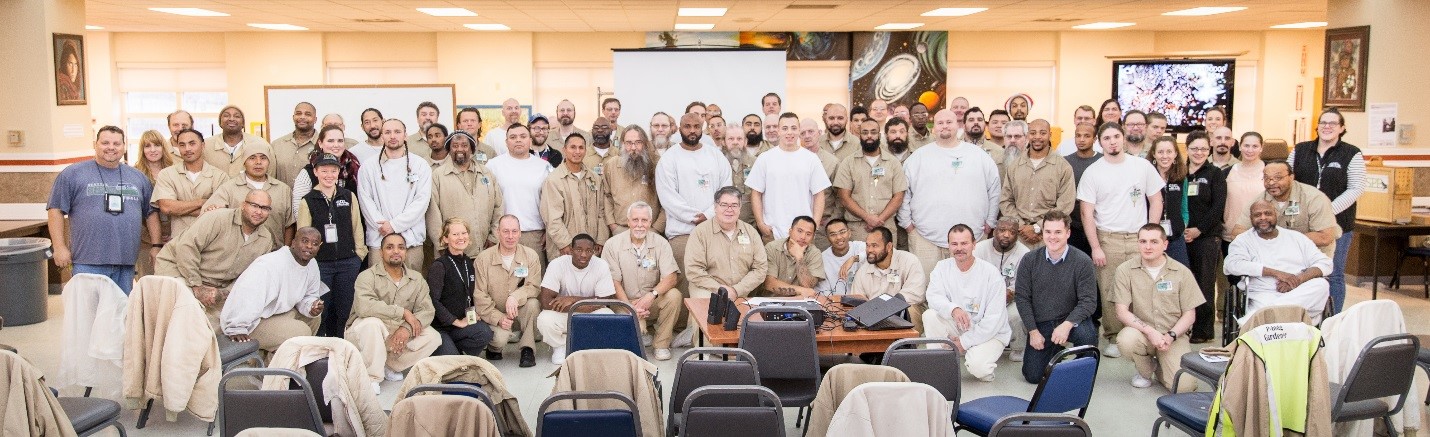
Group photo of Climate Symposium at SCCC. This was an incredible event about climate change and the actions people can take to mitigate it. Photo by Ricky Osborne.

The thing that surprises me the most is how inspiring the inmates are. They are full of hope. Out of all the inspirational speakers I’ve had the pleasure to listen to in my lifetime, the most powerful voices are those of the incarcerated individuals I work with. I often leave prison feeling hopeful and positive about the state of the world. Regardless of the tweets or breaking news, it’s the people who we’ve locked away that are showing me the way forward.
Text and photos by Jessica Brown, SPP Turtle Program Coordinator

After several months of planning, a new wildlife conservation program at Cedar Creek Correctional Facility will soon be up and running. We are excited to team up with biologists from the U.S. Forest Service to implement the woodpecker nest monitoring program. The program is mainly a research project: technicians review video footage of endangered woodpeckers at their nests, and document activities of animals that may depredate the nest.

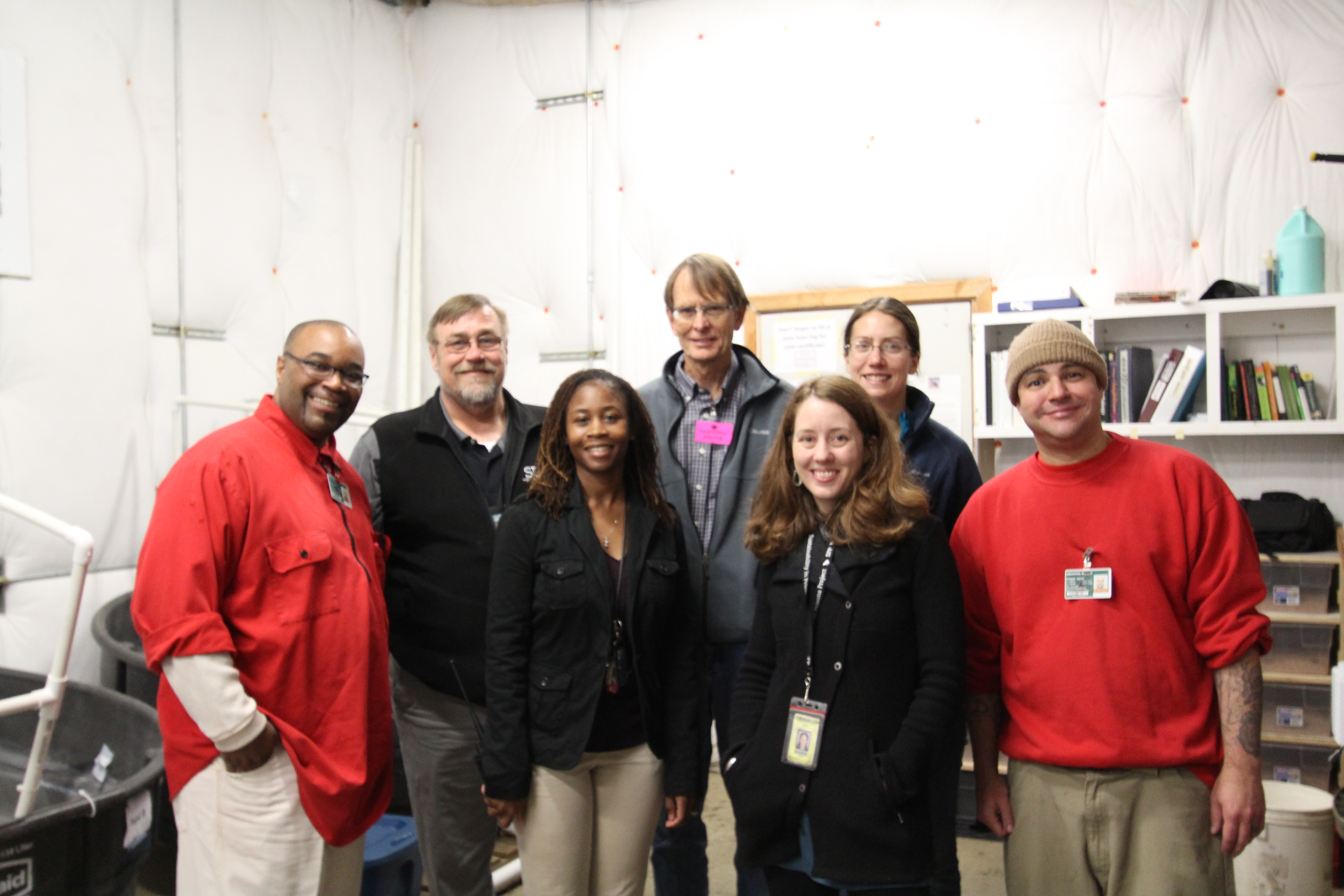
Partners in endangered species conservation for Cedar Creek Corrections Center, from left to right: Technician, John Fitzpatrick, Superintendent Douglas Cole, Loretta Adams (SPP Liaison), Philip Fischer (U.S. Forest Service), Kelli Bush (SPP Co-Director), Teresa Lorenz (U.S. Forest Service), Technician William Anglemyer

In part to allow the new program, Cedar Creek’s conservation efforts will be served by a larger group of incarcerated technicians, adding about 6 more individuals to the existing two turtle technicians; the larger group will rotate through turtle and woodpecker programs, plus a future aquaponics program. Woodpecker technicians in the prison will receive similar training and education to that of undergraduate students who perform the same work. They will learn about topics such as wildlife species identification, ecology, conservation, and data documentation.

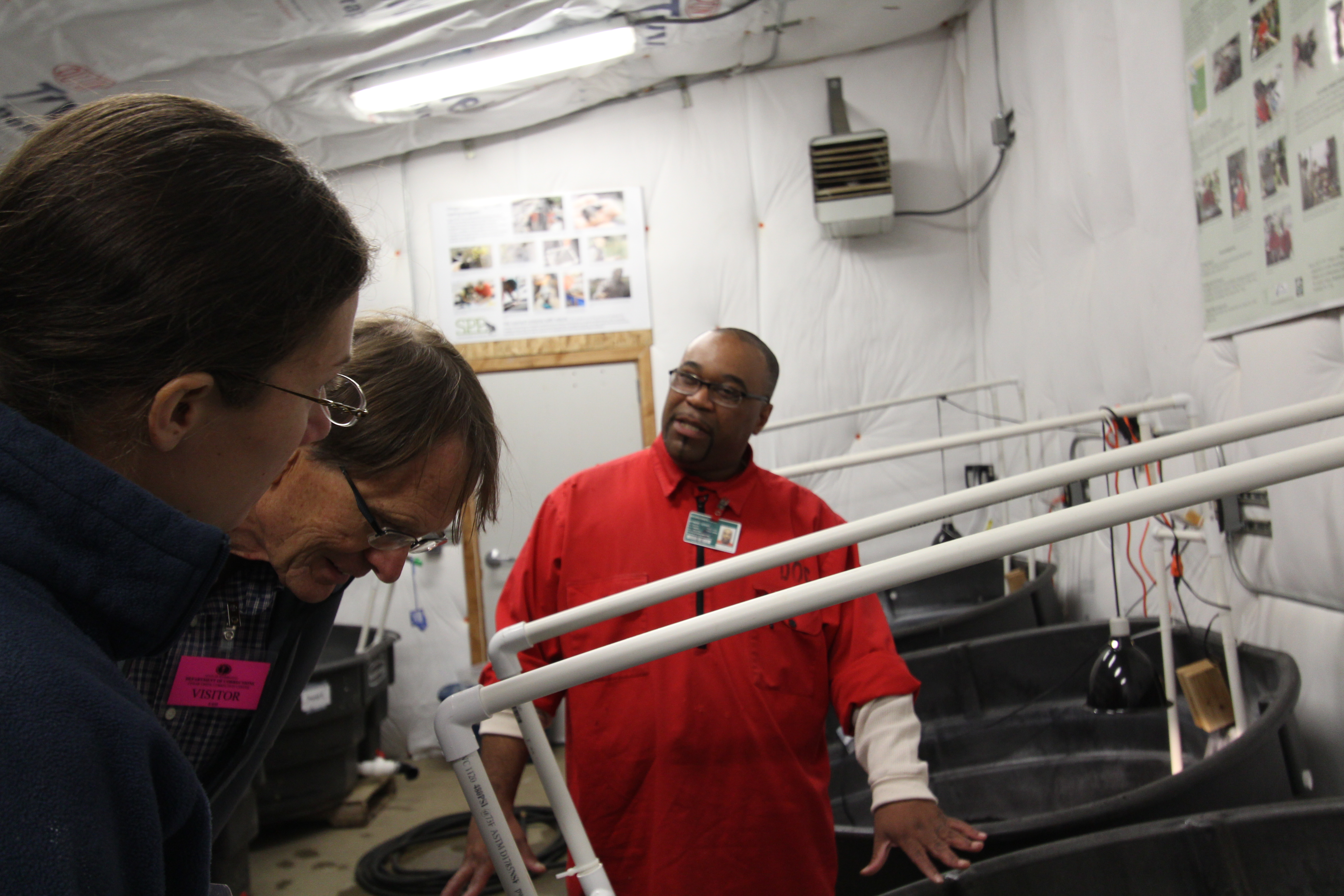
New turtle technician, Mr. Fitzpatrick leads a tour of the turtle facility at Cedar Creek.

Last month, U.S. Forest Service biologists, Teresa Lorenz and Philip Fischer were able to visit the Cedar Creek facility and turtle technicians treated them to a tour of the western pond turtle program. The newest turtle technician Mr. John Fitzpatrick did a great job of leading his first tour for an outside group. Mr. Fitzpatrick, the first incarcerated winner of a Mike Rowe Foundation scholarship, has been an excellent addition to the turtle team; he brings an infectious, positive attitude, and zest for learning. We are thankful for the animal handling skills, training, and wealth of knowledge he is receiving from veteran turtle technician Mr. William Angleymyer.

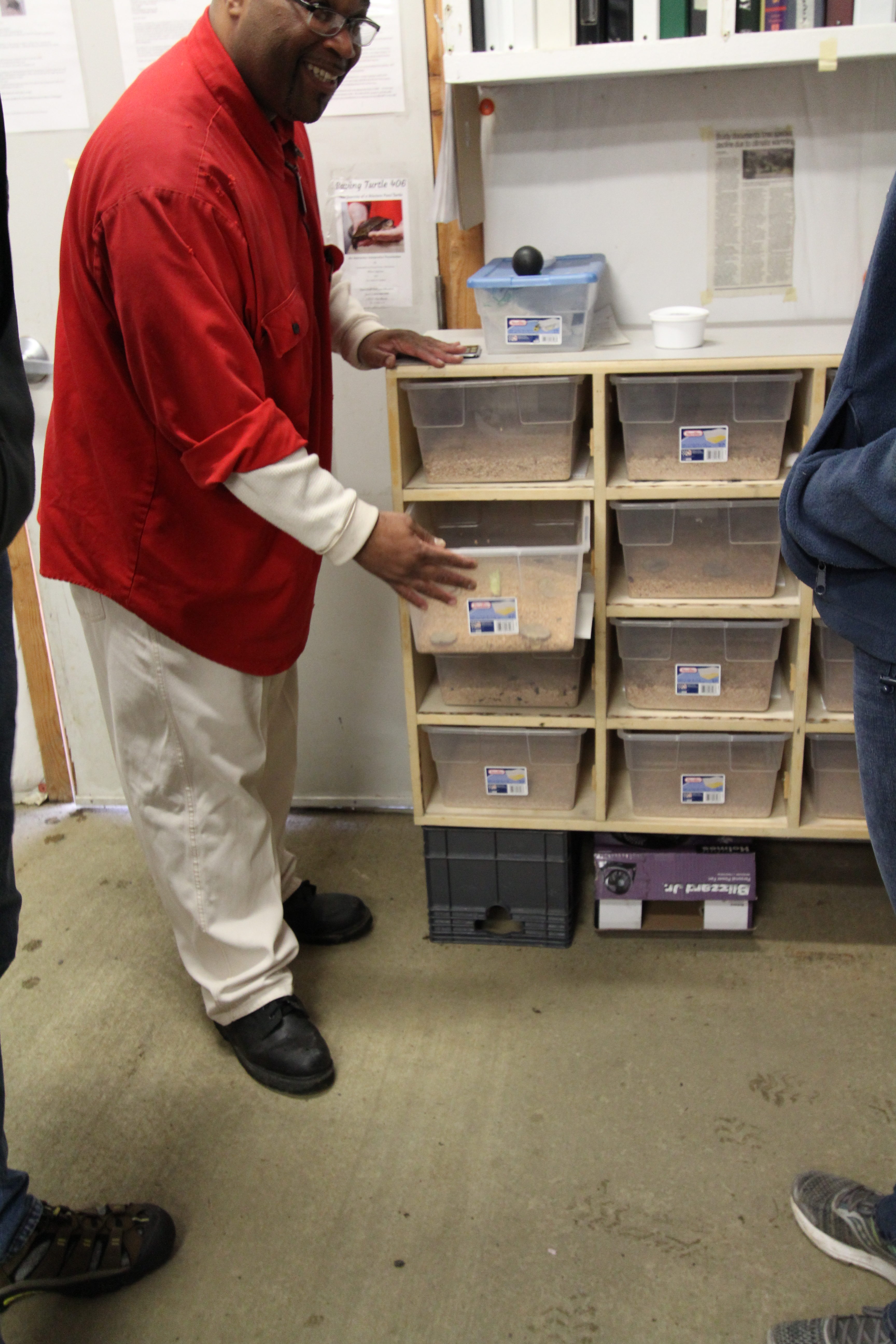
Mr. Fitzpatrick explains the mealworm rearing setup. The mealworms are a source of food for the turtles.

Cedar Creek currently has three resident western pond turtles, including one healthy turtle that was found by someone on the side of the road. Because this turtle is disease-free, he is being kept separately from the other turtles—in quarantine—until he can be released in the spring. The three turtles at Cedar Creek will be joined by 7 more by the end of November.

Training for the woodpecker nest monitoring project will take place in November where we will be joined with newly-hired technicians and members of the horticulture team.


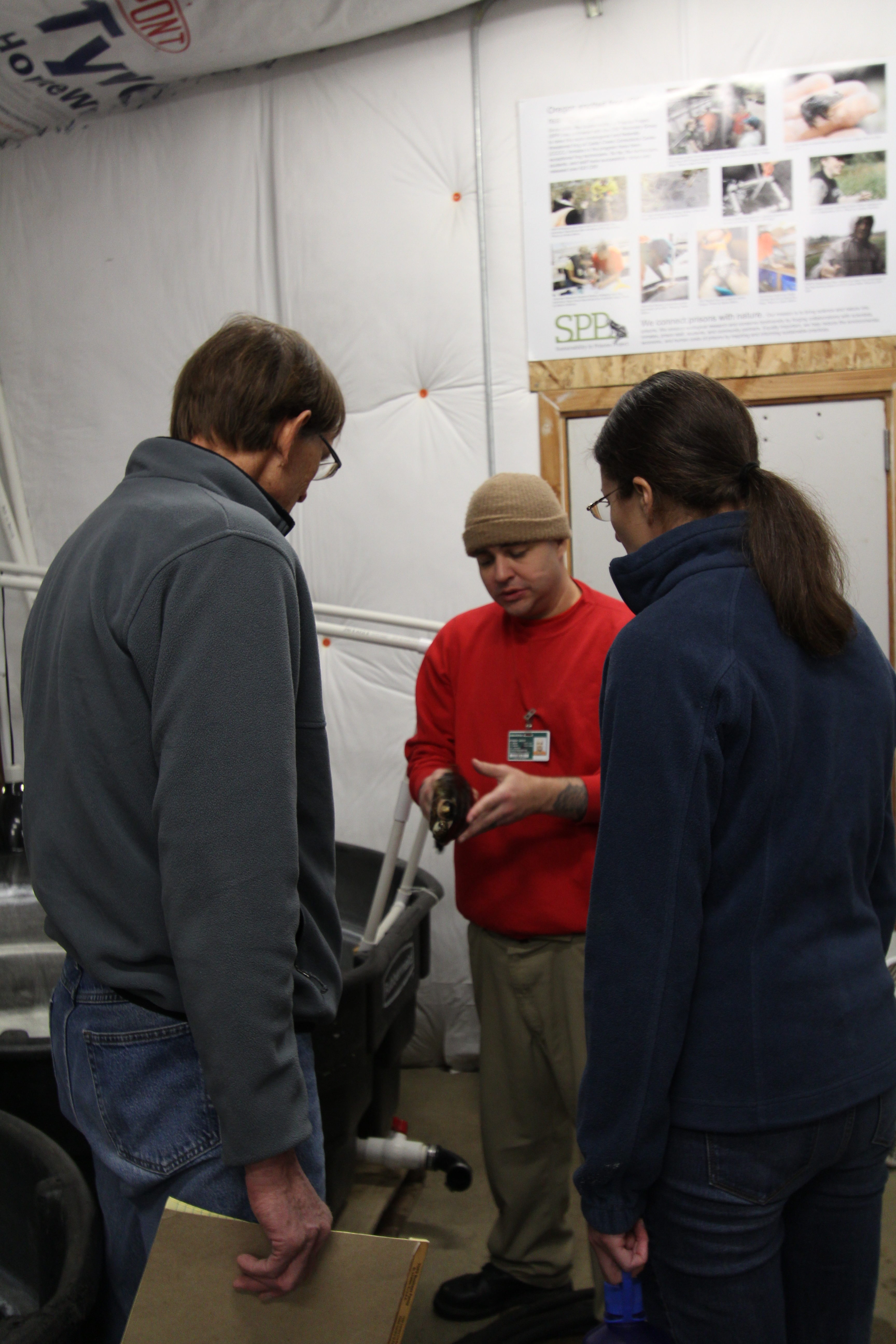
Mr. Anglemyer shows the healthy turtle to Teresa and Phil from the U.S. Forest Service.


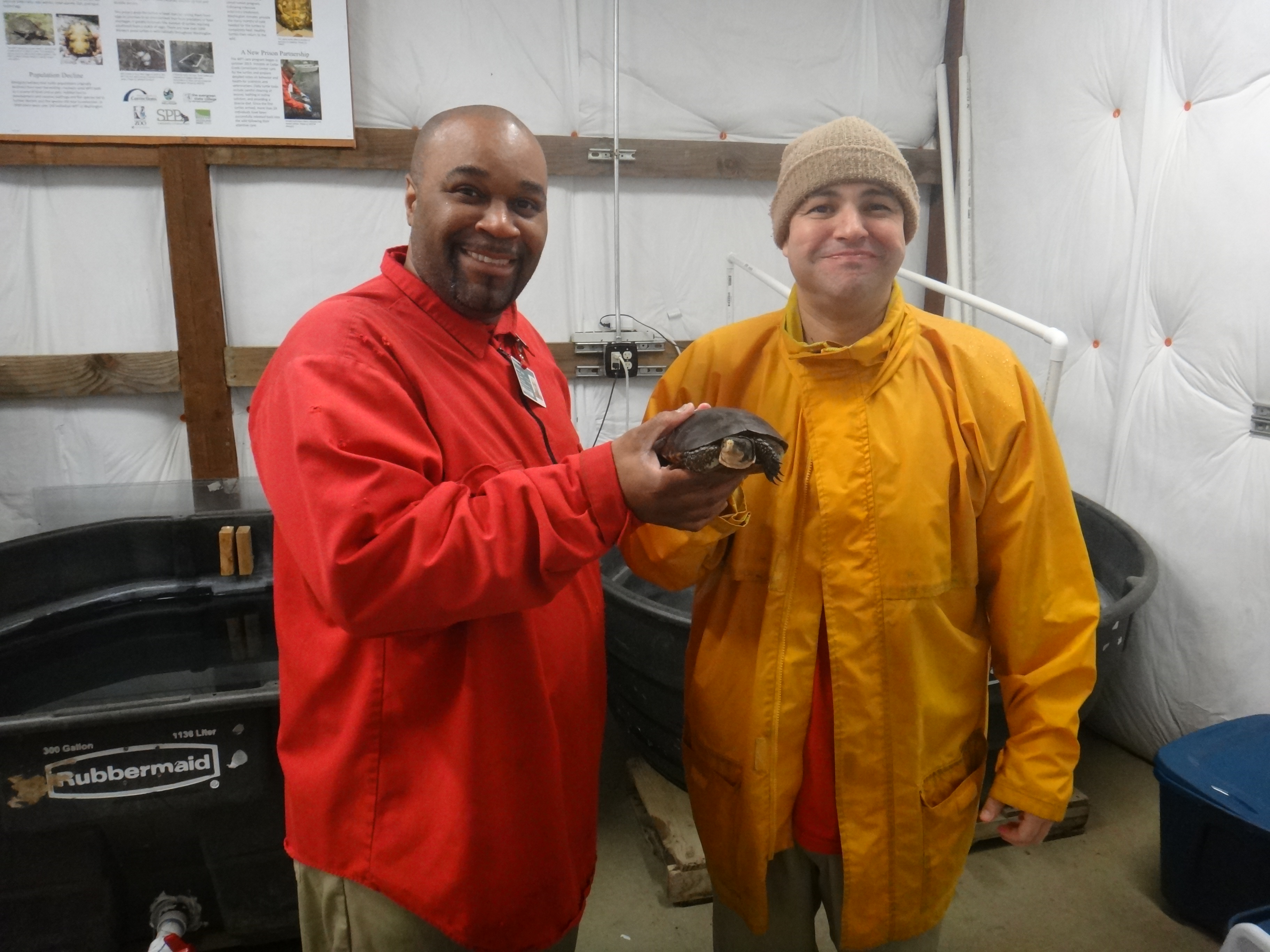
Turtle technicians Mr. Fitzpatrick and Mr. Anglemyer pose with the healthy western pond turtle.


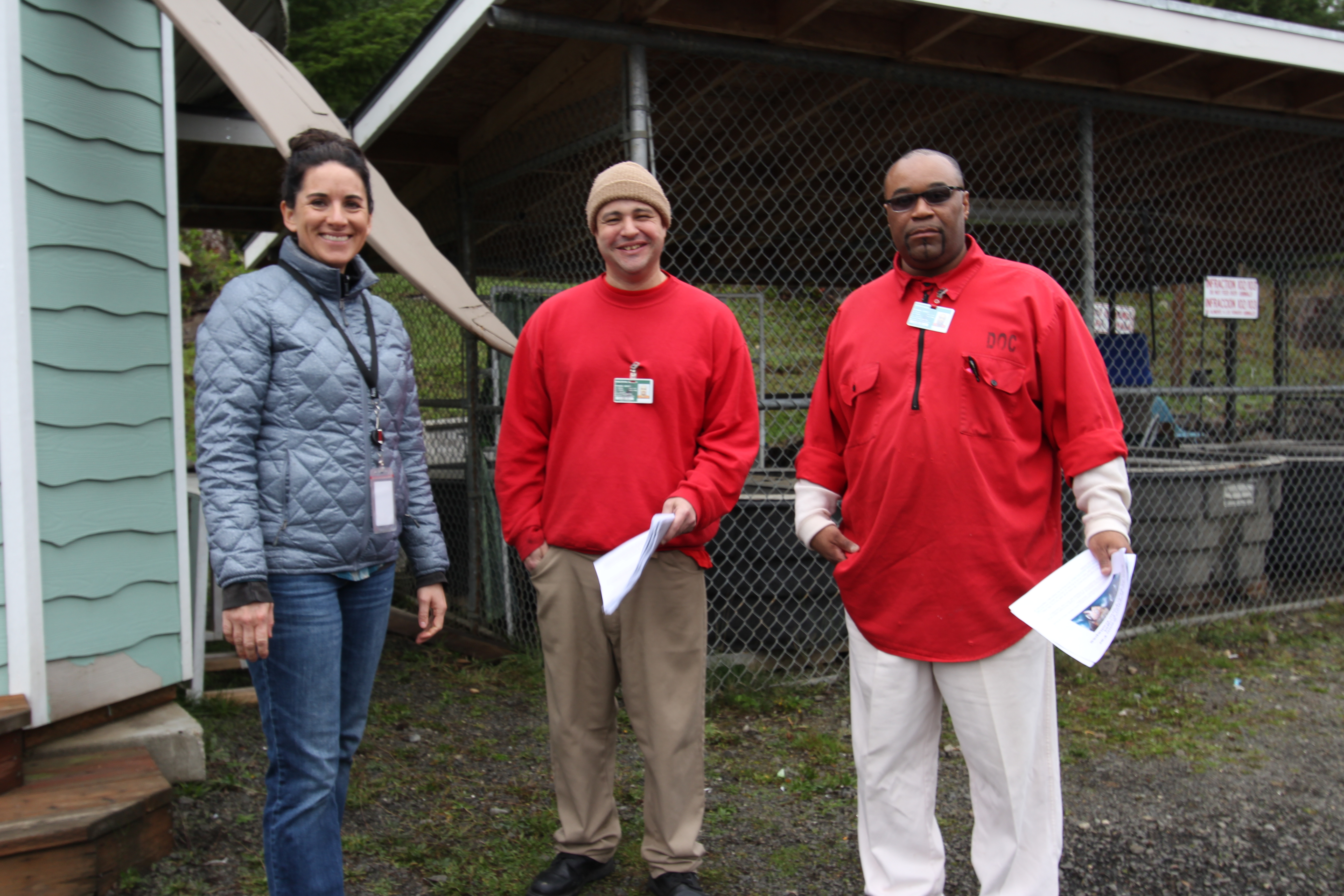
SPP Turtle Program Coordinator, Jessica with turtle technicians, Mr. Anglemyer and Mr. Fitzpatrick

By Rachel Friederich, DOC Communications
Originally published to Washington State Department of Corrections Newsroom

WALLA WALLA – More than 3.4 million people die each year from diseases caused by poor sanitation and unsafe drinking water, according to the World Health Organization.

A group of inmates is doing their part to help change that.

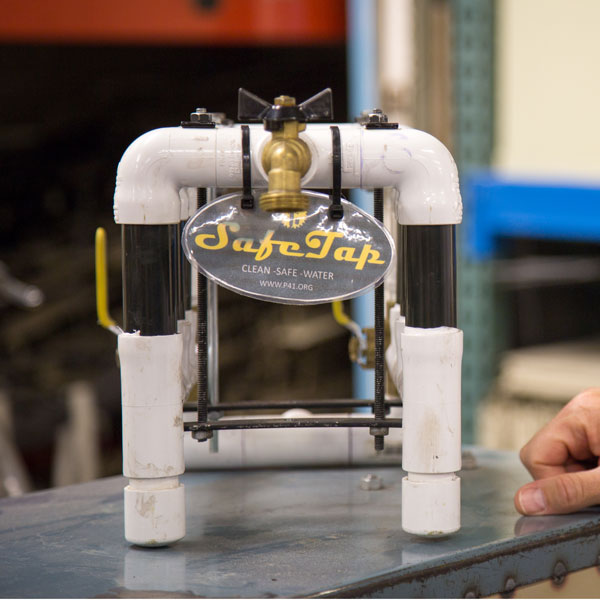
Inmate crews at the Washington State Penitentiary’s Sustainable Practices Lab (SPL) transform discarded and donated materials into usable items such as refurbished bicycles and furniture. The lab’s latest venture is a new type of water filtration system that will be sent to developing countries plagued with waterborne illnesses.

Inmates form an assembly line around a table surrounded by materials needed to build SafeTap water systems.
Inmates at the Washington State Penitentiary’s Sustainable Practices Lab assemble SafeTap water systems. The systems will be used to provide clean water to people living in developing countries. (Photo courtesy of Washington State Penitentiary Sustainable Practices Lab)

The SafeTap water filtration system is the brainchild of Andy Pierce, a former plumbing contractor who founded the California-based non-profit, Project 41. A volunteer humanitarian trip to Haiti following a deadly earthquake in 2010 inspired Pierce to start the organization. He’s taken subsequent trips to developing countries worldwide that often have hospitals and health clinics where water supplies are contaminated with harmful bacteria.

His humanitarian work involved installing large-scale water systems. While he was doing this, he came up with the idea of creating a small, portable water filter made from pipes, fittings and valves. The filters are stuffed with hundreds of tiny straws made of a hollow-fiber membrane that blocks bacteria. The SafeTap devices can be connected to existing water filtration systems to produce clean water. His invention can filter up to three gallons of water per minute.

“The Sustainable Practices Lab was just a huge answer to prayer,” Pierce said. “I was impressed with how well these guys have taken up the cause and keep pushing forward toward excellence and refining the (assembly) process. I’m really blown away.”

Impact of Partnership

The partnership between Pierce and the penitentiary resulted from a chance meeting at a national conference last year on environmental sustainability. The conference, held in Albany, Ore., had dozens of vendors from around the country. Pierce was one of the exhibitors.

Photo by Ricky Osborne.

Christopher McGill and Robert Branscum, two correctional specialists who oversee the penitentiary’s Sustainability Practices Lab, stopped at Pierce’s booth and learned about the SafeTap system.

At the time, Pierce was running his plumbing business by day and building SafeTap units at his home by night, but production time was slow, McGill said. “That’s when I told him about the Washington State Penitentiary’s Sustainable Practices Lab.”

For the past few months, a crew of nine inmates has been assembling SafeTap water filtration systems.

Project 41 funds the materials with donations from a private foundation, Pierce said.

Pierce ships the materials to the penitentiary. Inmates assemble the filtration systems. Once assembled, the systems are shipped to countries in need of clean water.

Inmates have assembled more than 150 SafeTap units. Thirty-five of the units have been sent to various countries, including eight to Puerto Rico to assist with Hurricane Maria relief efforts. A total of 115 units are heading to the island of Tortola, in the British Virgin Islands and more are headed to the East African Republic of Uganda and Ghana.

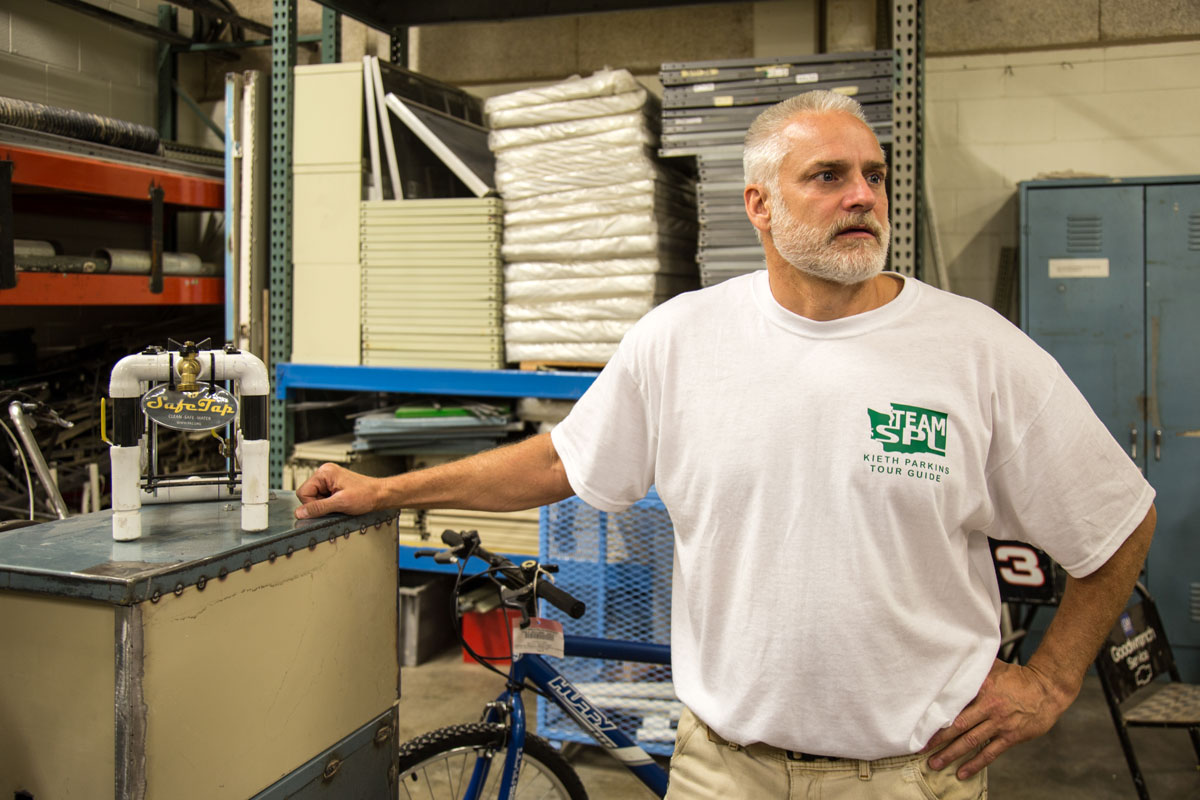
Sustainable Practices Lab’s Kieth Parkins has transformed his life sentence into a life of service. He expresses his empathy for families needing clean water by building water purification systems that will meet their needs. Photo by Ricky Osborne.

While the SafeTap systems are saving lives overseas, the partnership is transforming lives at the penitentiary.

Kieth Parkins, 49, is serving a life sentence for multiple robbery convictions. He knows his actions in prison won’t have any impact on the length of his sentence, but the project has helped him find something meaningful behind bars.

“As a prisoner, I have always felt like I was a drain on society,” Parkins said. “But now, through the Sustainable Practices Lab and the water department, I am able to be a part of something that is literally saving lives throughout the world. In the process, it’s saving my life as well.”

Editor’s note: The SafeTap water filtration system was also a finalist in the 2017 Chasing Genius contest, sponsored by National Geographic. Entrants competed against other groundbreaking humanitarian projects for a cash prize. Watch the video entry with inmate interviews.

by SPP Co-Director Kelli Bush

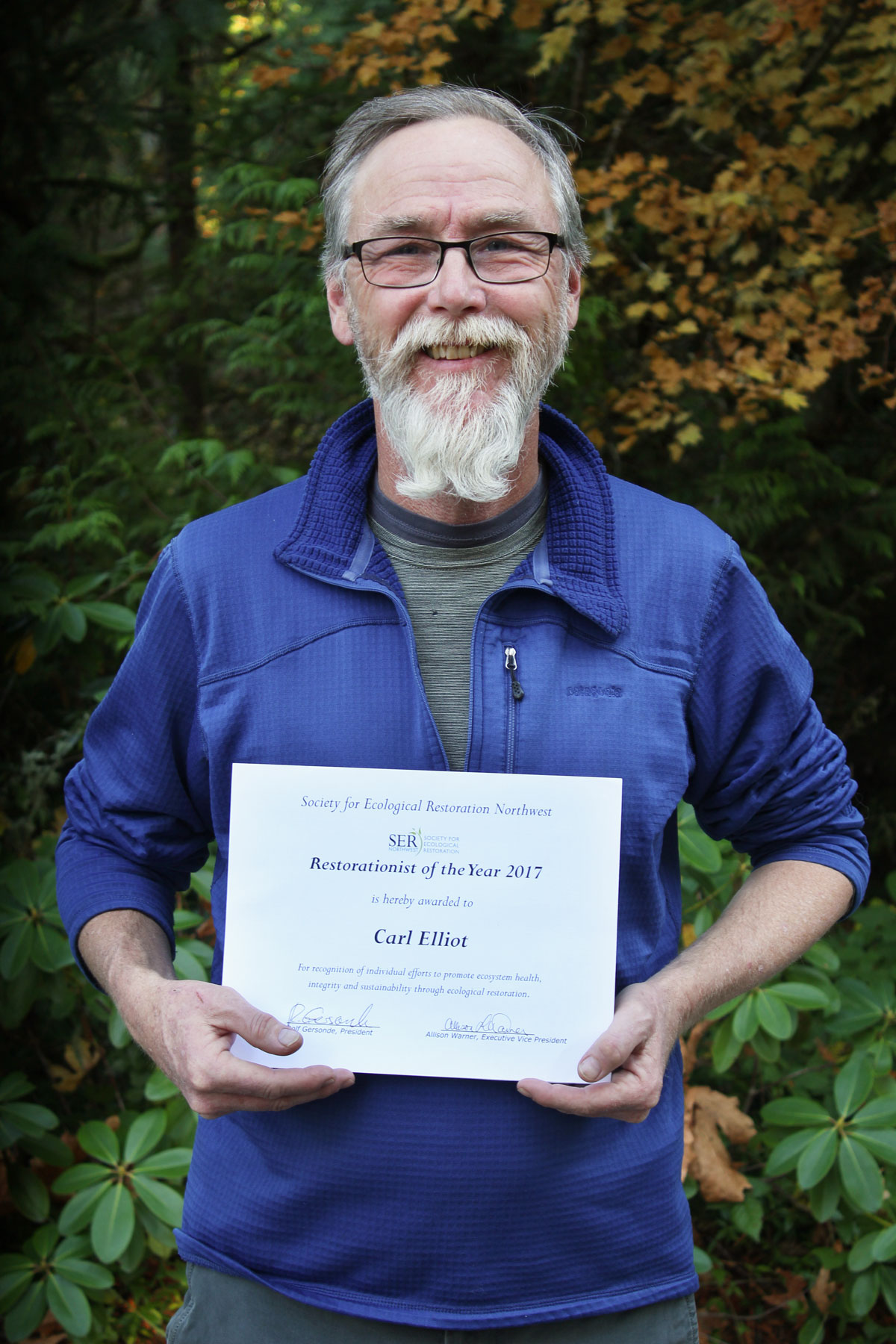
Sustainability in Prisons Project’s (SPP) Ecological Conservation Nursery Manager, Carl Elliott has been awarded the Society for Ecological Restoration Northwest Chapter’s  (SERNW) Restorationist of the Year Award for 2017.

Carl receiving the Restorationist of the Year 2017 award. Photo by Keegan Curry

The award is given “in recognition of individual efforts to promote ecosystem health, integrity and sustainability through ecological restoration.” Carl brings more than two decades of professional experience to SPP, including appearances as the “Radio Gardener” on a Seattle radio program, ecological restoration work with the Nature Conservancy, experience teaching organic gardening classes and serving as a founding board member of Seattle Youth Garden Works. During his graduate work in The Evergreen State College, Master of Environmental Studies program, Carl started SPP’s first Ecological Conservation Nursery program in a Washington Department of Corrections facility in 2009.

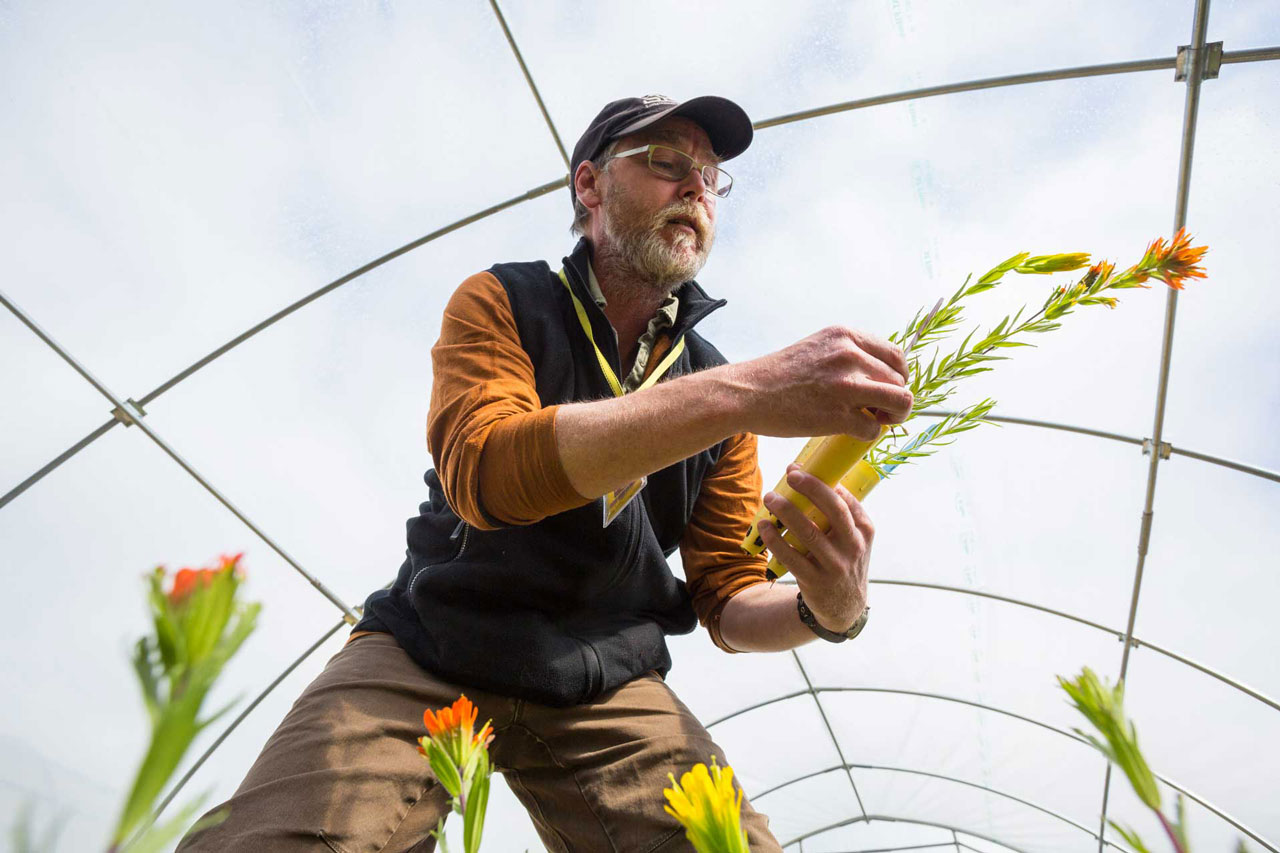
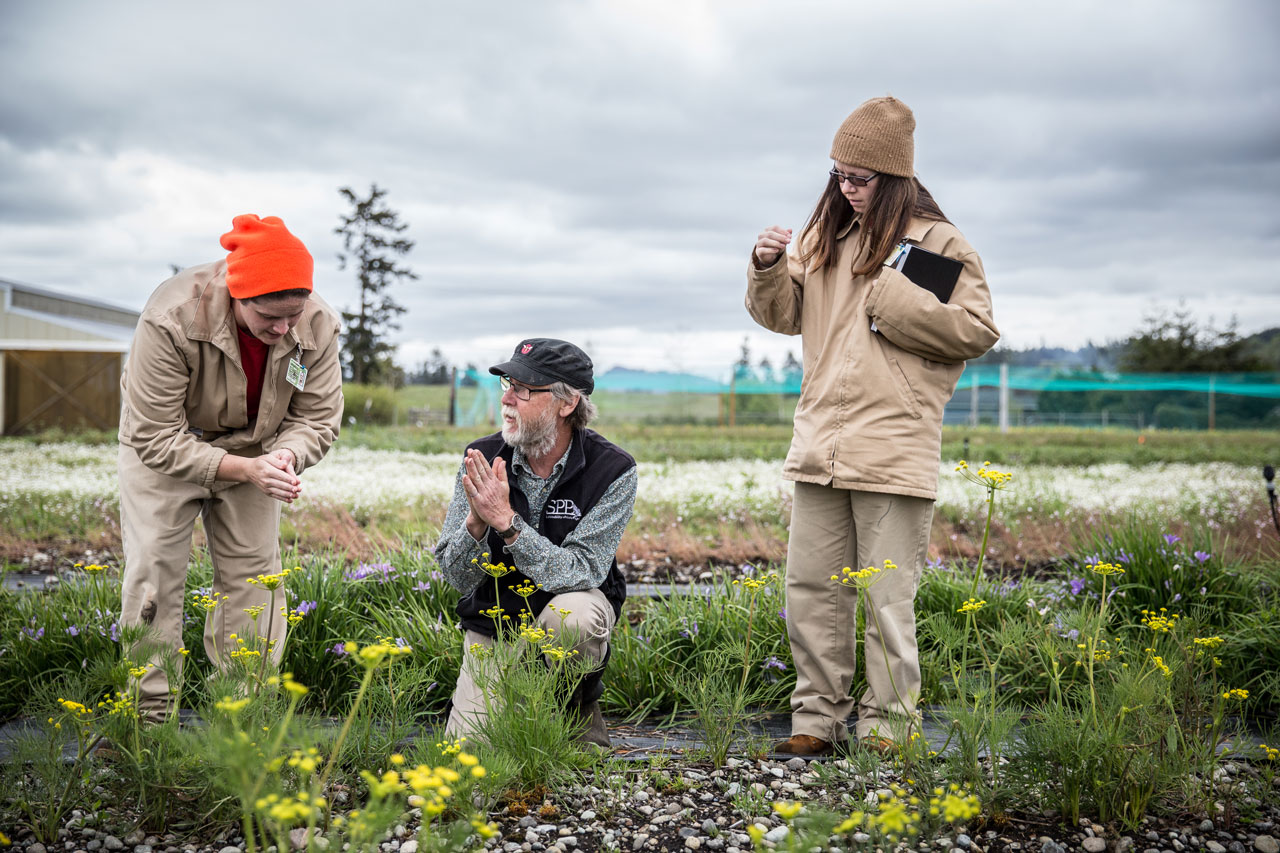
Carl explaining how to identify harsh Indian paint brush. Photo by Shauna Bittle.
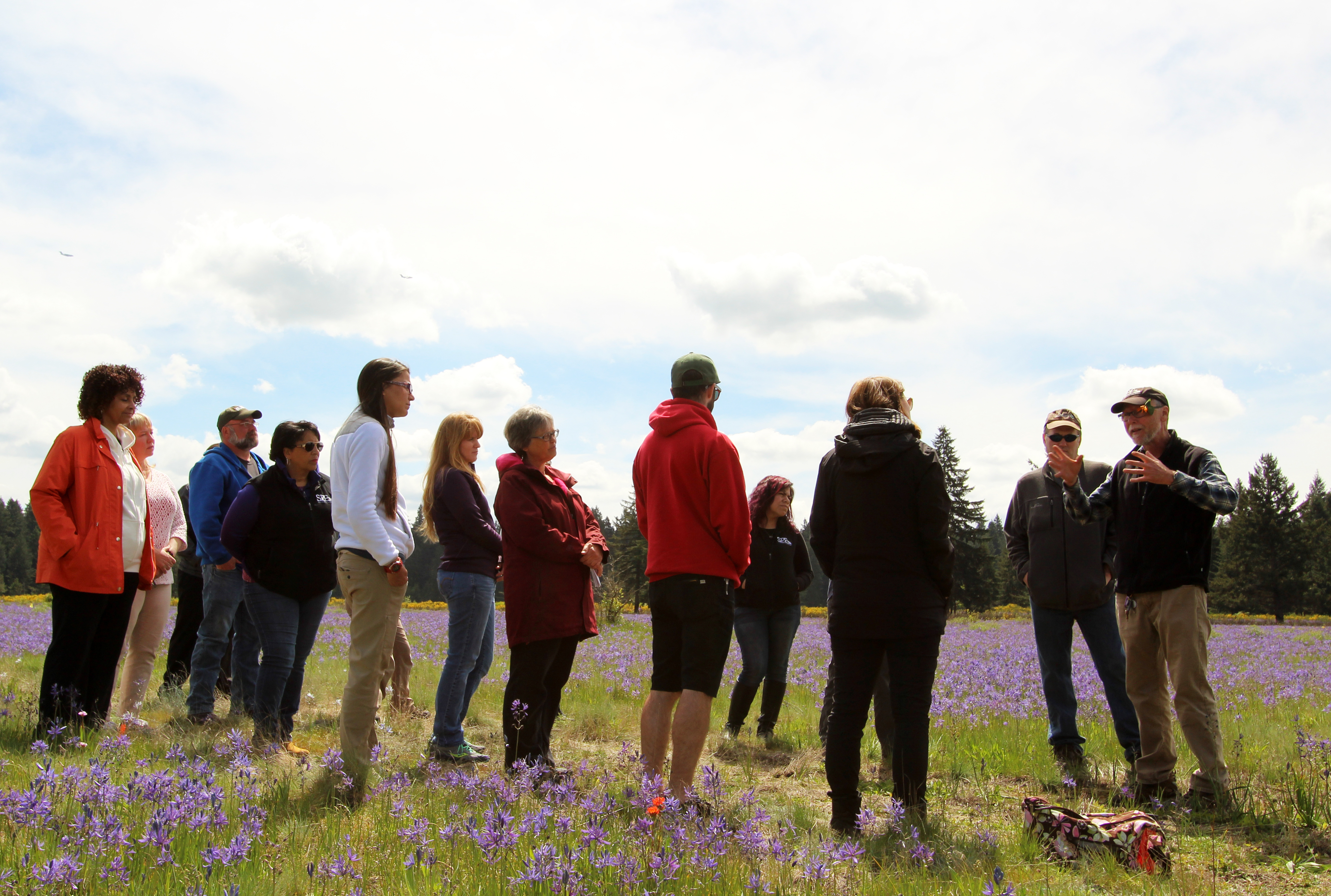
Carl giving a prairie tour. Photo by SPP Staff

SERNW presented this award in recognition of Carl’s “innovative application of horticulture to the restoration field in developing a conservation nursery program that additionally improves outcomes and conditions for incarcerated people in WA State’s correctional system.” With this award they “recognize the unique challenges and creativity needed” to develop a conservation nursery program in a prison while also providing education and training to incarecerated partners. They also state that Carl’s work has “greatly expanded capacity for native seed production needed for glacial outwash prairie restoration.”

Carl talks with incarcerated parners during a prairie nursery tour. Photo by Ricky Osborne.

With partner support, Carl has helped grow the SPP Ecological Conservation Nursery Program from one prison to three prisons, producing over 2 million native plants of about 60 different species. In 2016, Carl and the SPP staff he oversees, delivered more than 130 educational workshops and seminars for incarcerated program participants. More than 130 incarcerated people have participated in these programs since 2010. We are so grateful for all of Carl’s contributions to SPP and pleased that he has been recognized for his excellent work!