Text and photos by Amanda Mintz unless otherwise noted.

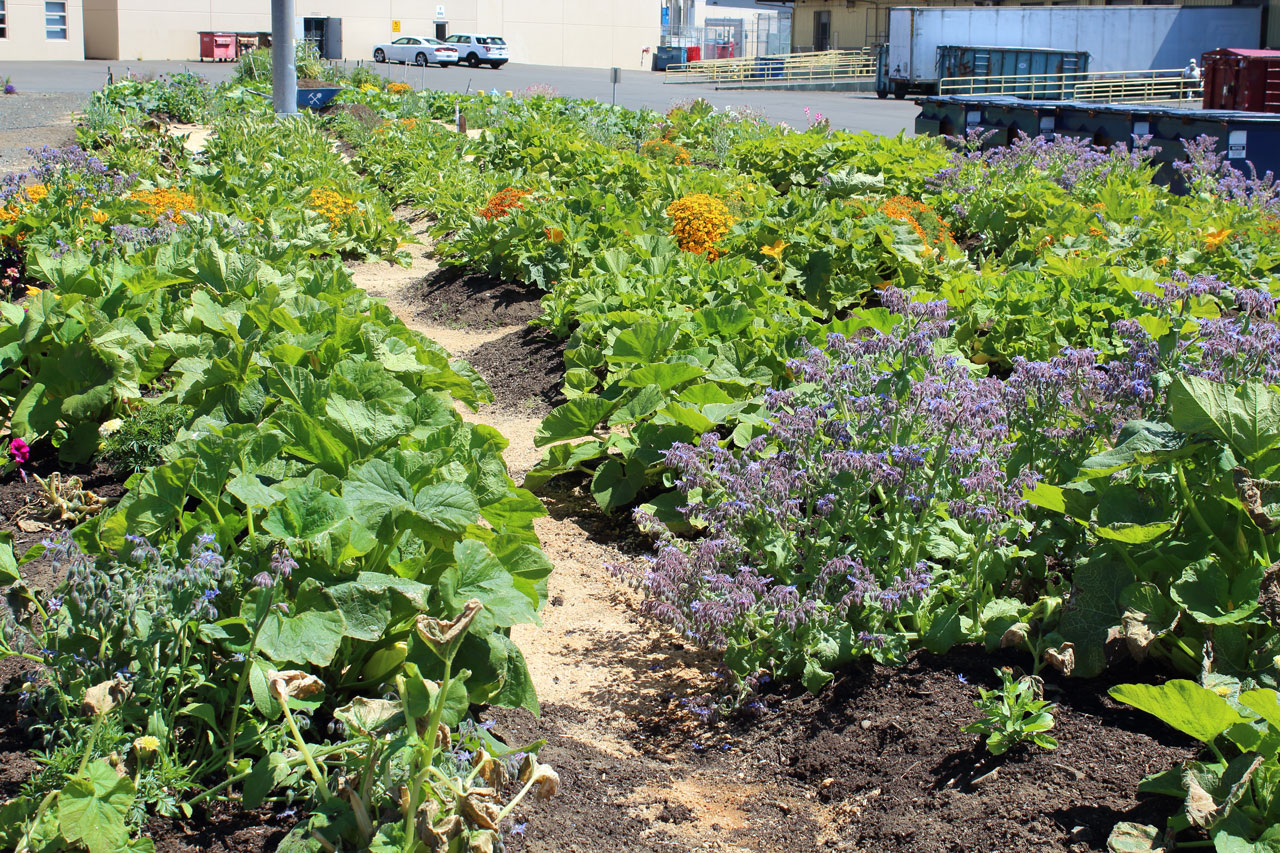
If you have never seen Stafford Creek Corrections Center, you might be surprised; among the fences and gray buildings are one and a half acres of flower and vegetable gardens. This includes several very large plots, many ornamental plantings, and a plot for every living unit. Inmates tend the gardens daily among the bees and butterflies; they experiment with novel gardening techniques, and carefully hand-water the plants.
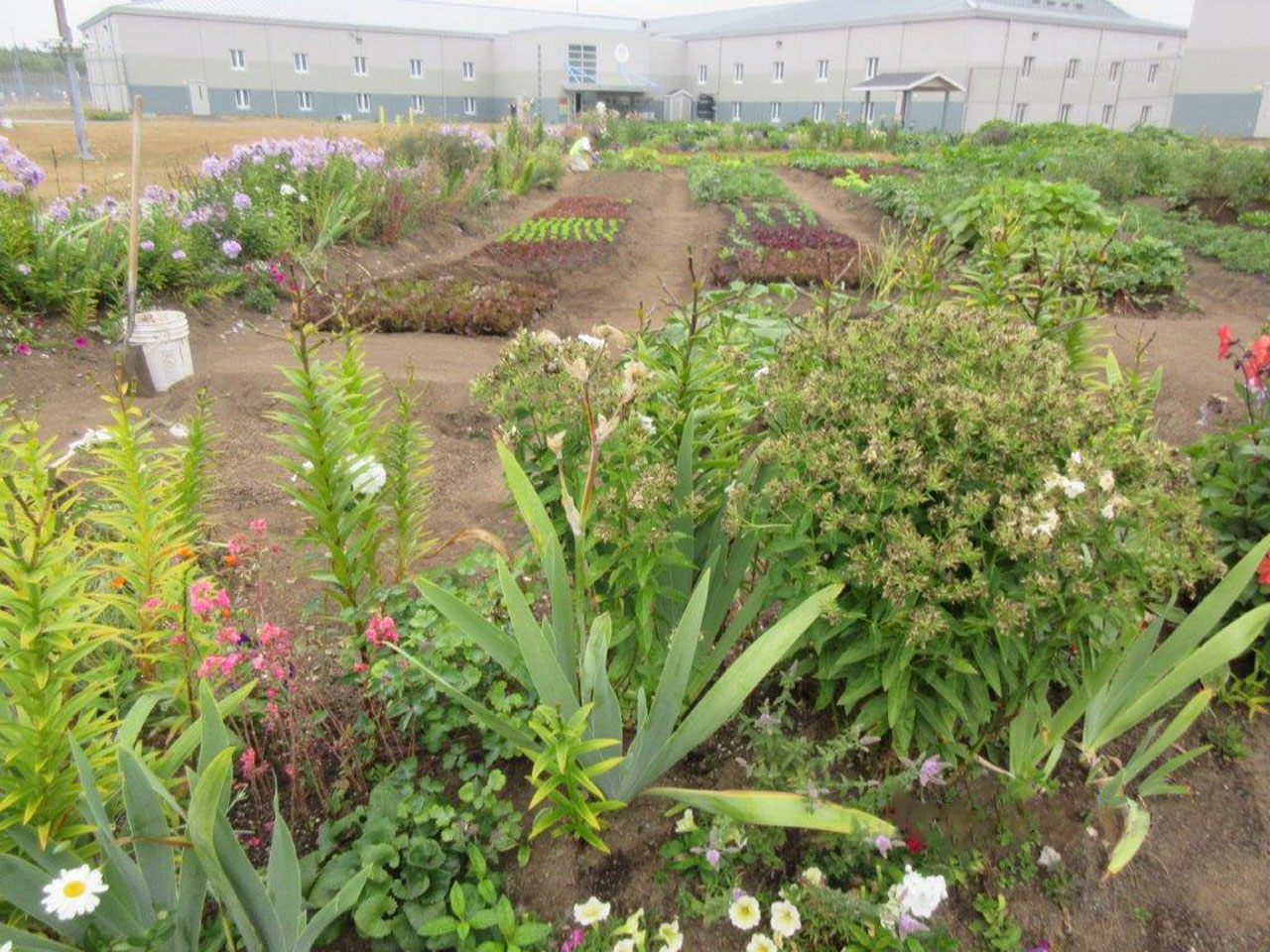
A unit garden at Stafford Creek Corrections Center. Photograph by Kelly Peterson.

The incarcerated gardeners take a monthly class called Seed to Supper, co-lead by SPP Ecological Conservation Nursery Coordinator Jacob Meyers and SCCC’s Grounds and Nursery Supervisor Ed Baldwin (Ed is also the Prairie Ecological Conservation Nursery Liaison). Seed to Supper lasts nine sessions, during which participants learn how to grow and harvest produce in the Pacific Northwest. Mr. Baldwin decides what to grow, sometimes choosing unusual vegetables new to the gardeners. In class, the gardeners are encouraged to share their strategies and successes with one another to improve their skills collectively. Each class concludes with Mr. Baldwin announcing the weekly haul for each living unit—usually several hundred pounds per garden. Last year, SCCC produced 11,000 pounds of food. This year they have already broken that record, and will harvest over 19,000 pounds of produce by the end of this month!
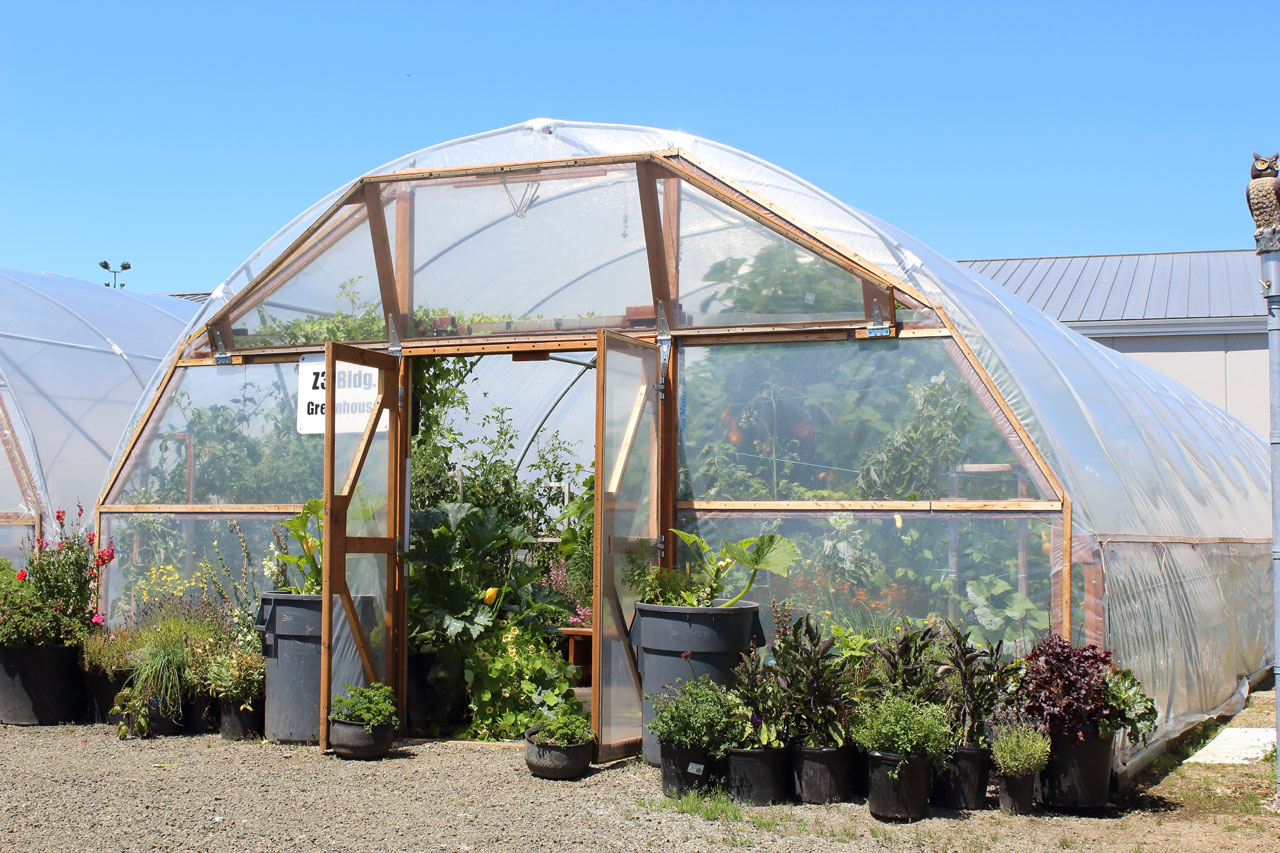
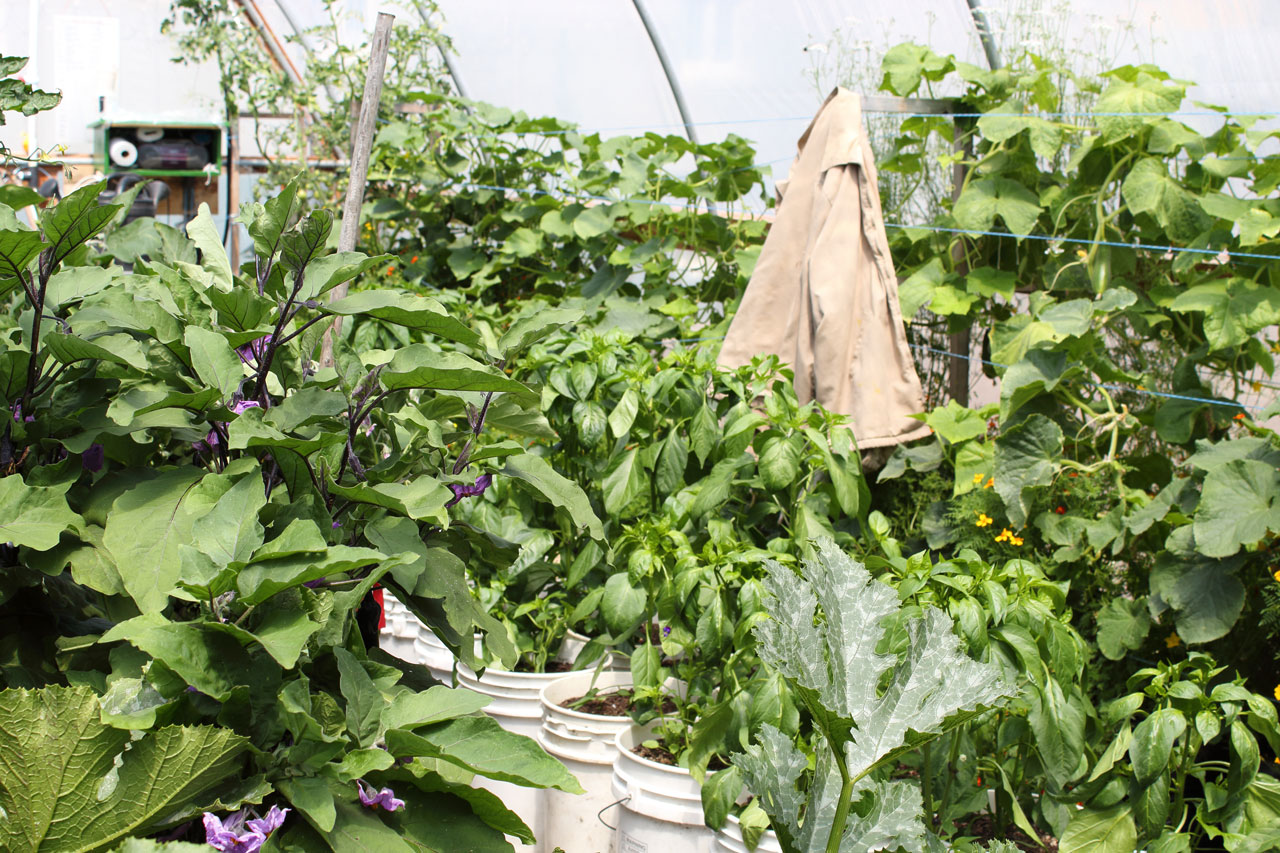
This hoop house was donated by SPP’s conservation nursery for growing food, and according to Ed Baldwin, it has increased production of heat and sun loving vegetables that are difficult to grow in the cooler coastal climate of SCCC.


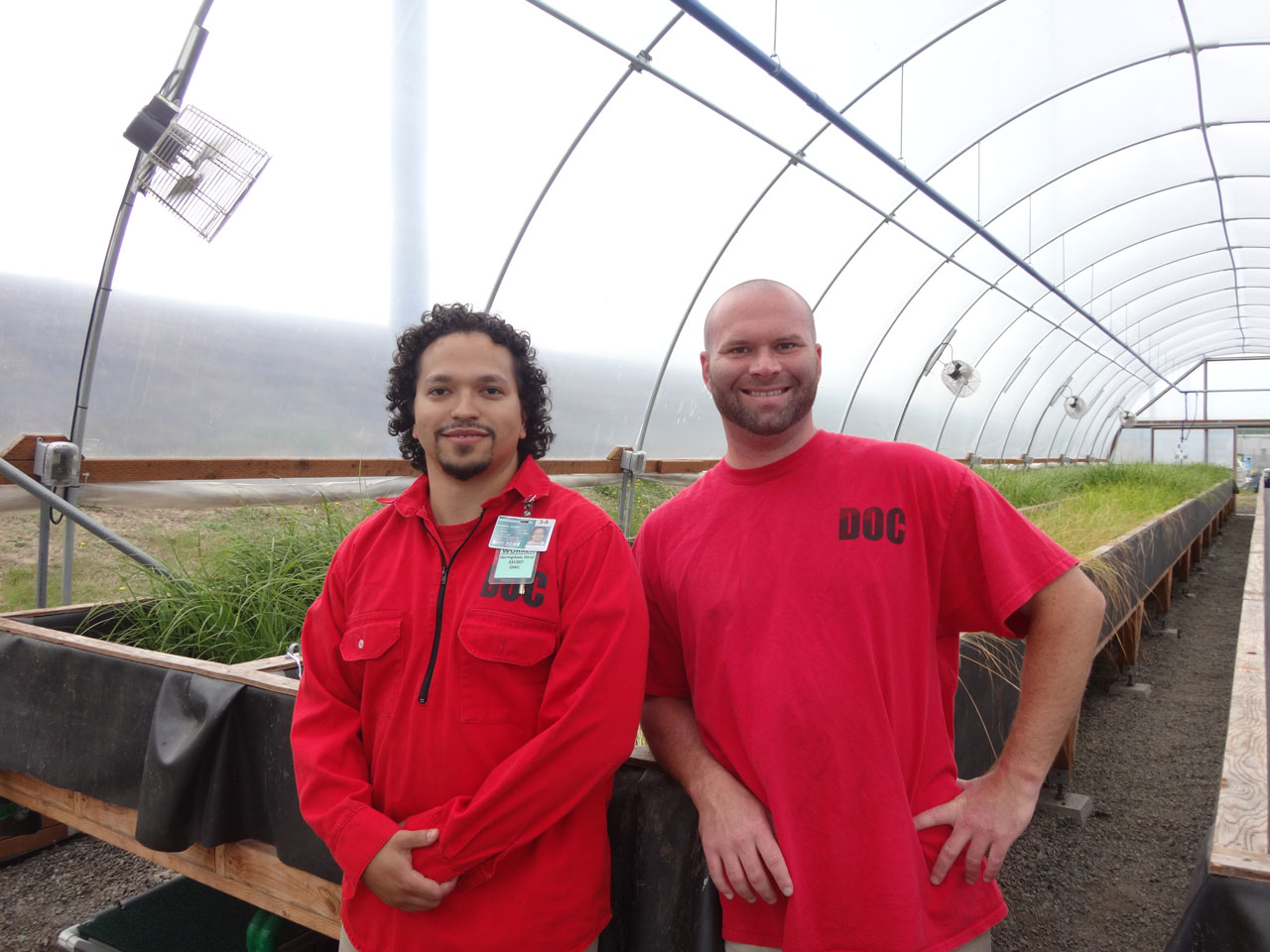
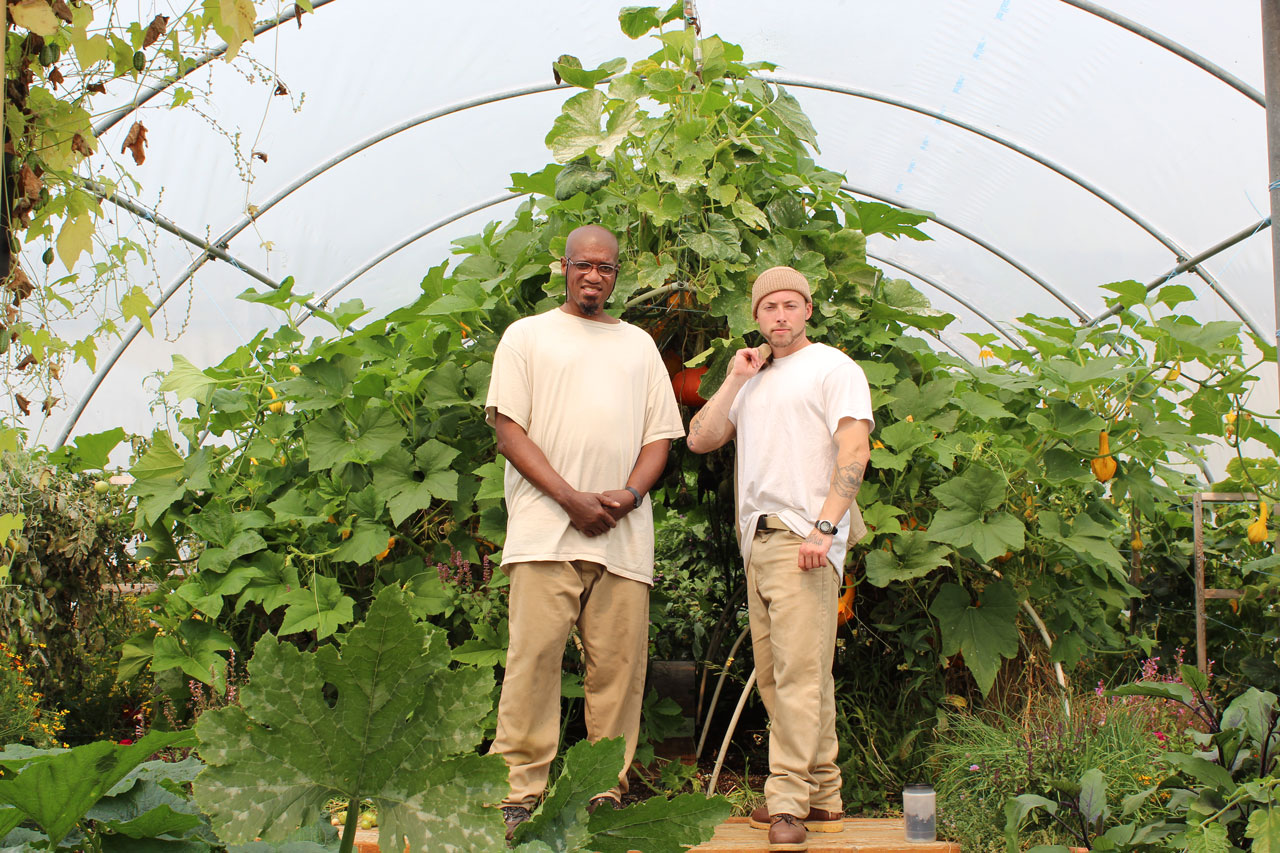
Ecological Conservation Nursery Technicians Shabazz Malekk and Aaron Bander strike a pose in the hoop house.


SPP’s Ecological Conservation Nursery Technicians maintain the HUB gardens, where they use experimental techniques for natural pest suppression and increasing plant growth.

Most garden seed comes from Harvest Now, an organization that works with correctional facilities nationwide to grow-to-donate and provide fresh food for their own cafeterias. At SCCC, most of the produce is donated to Coastal Harvest, a non-profit organization serving food banks and pantries in a seven-county area of Southwestern Washington. Ed Baldwin was responsible for initiating the partnership; he visited Coastal Harvest and invited them to come tour the gardens at SCCC. According to Coastal Harvest staff, the response to the partnership from the community is very positive; SCCC is their only regular weekly contributor of fresh produce, and they are grateful for it.

I asked some of SPP’s Ecological Conservation Nursery Technicians, who also tend the HUB gardens and greenhouse, and Mr. Baldwin how they feel about donating most of the food they grow.

Technician Dale King said that, before he came to Stafford Creek, his life was all about himself; he never did anything for anyone else.  Now he feels good about the opportunity to do something for others in need.
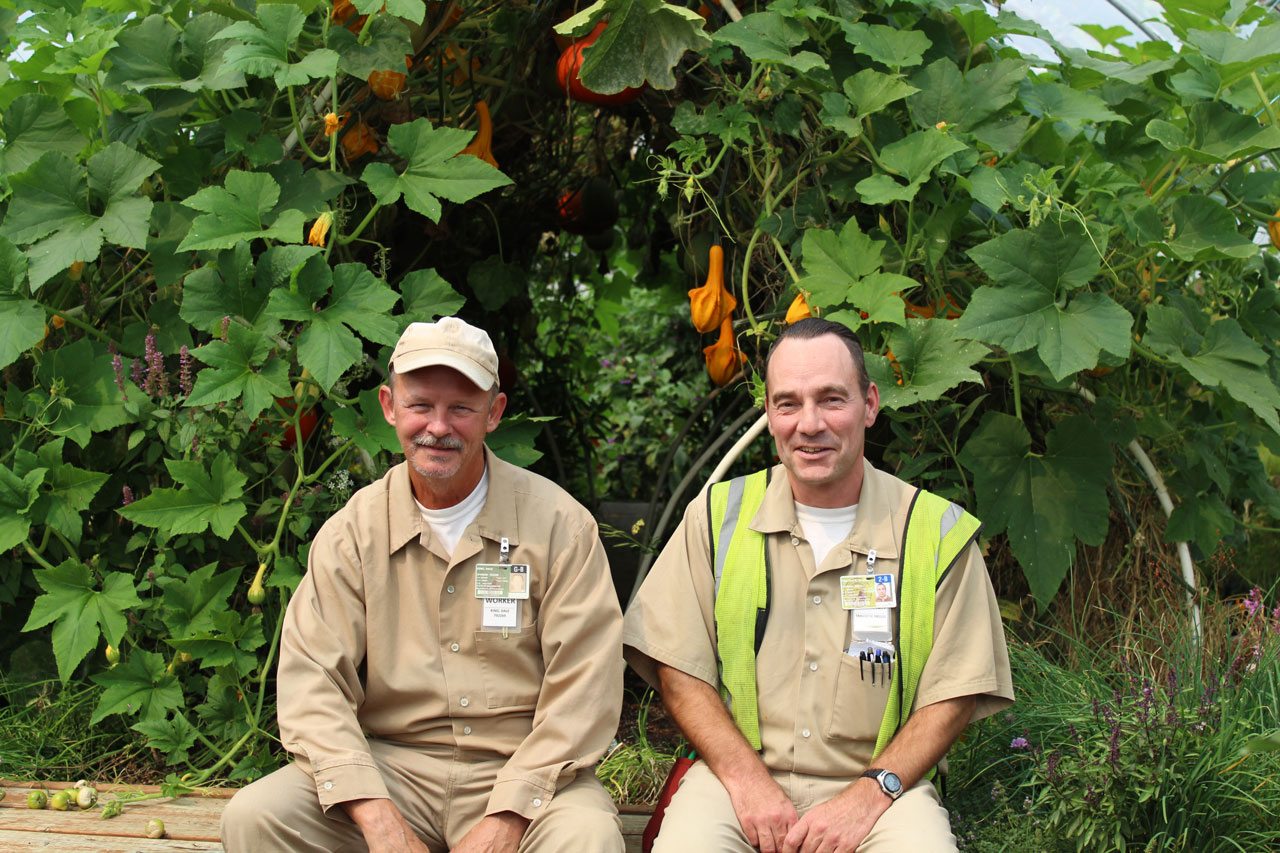
Ecological Conservation Nursery Technicians Dale King and Daniel Travatte are proud to provide food for Coastal Harvest.


In addition to experimenting with growing techniques, the garden crew re-purposes as many items as possible, such as using plastic bags and buckets to grow tomatoes and eggplants.

The other technicians agreed; because they have their basic needs addressed, their work has become a labor of love; the gratitude from the community is more important to them than eating the food themselves. The community served by Coastal Harvest is their community too, and it cultivates a sense of pride to be able to give back. They brought up the idea that it takes one to one-and-a-half acres to feed one person for a year. There are almost 2000 people at SCCC, and not even two acres of gardens; Ed Baldwin and the technicians agreed that what they grow would be only a drop in the bucket at the prison.

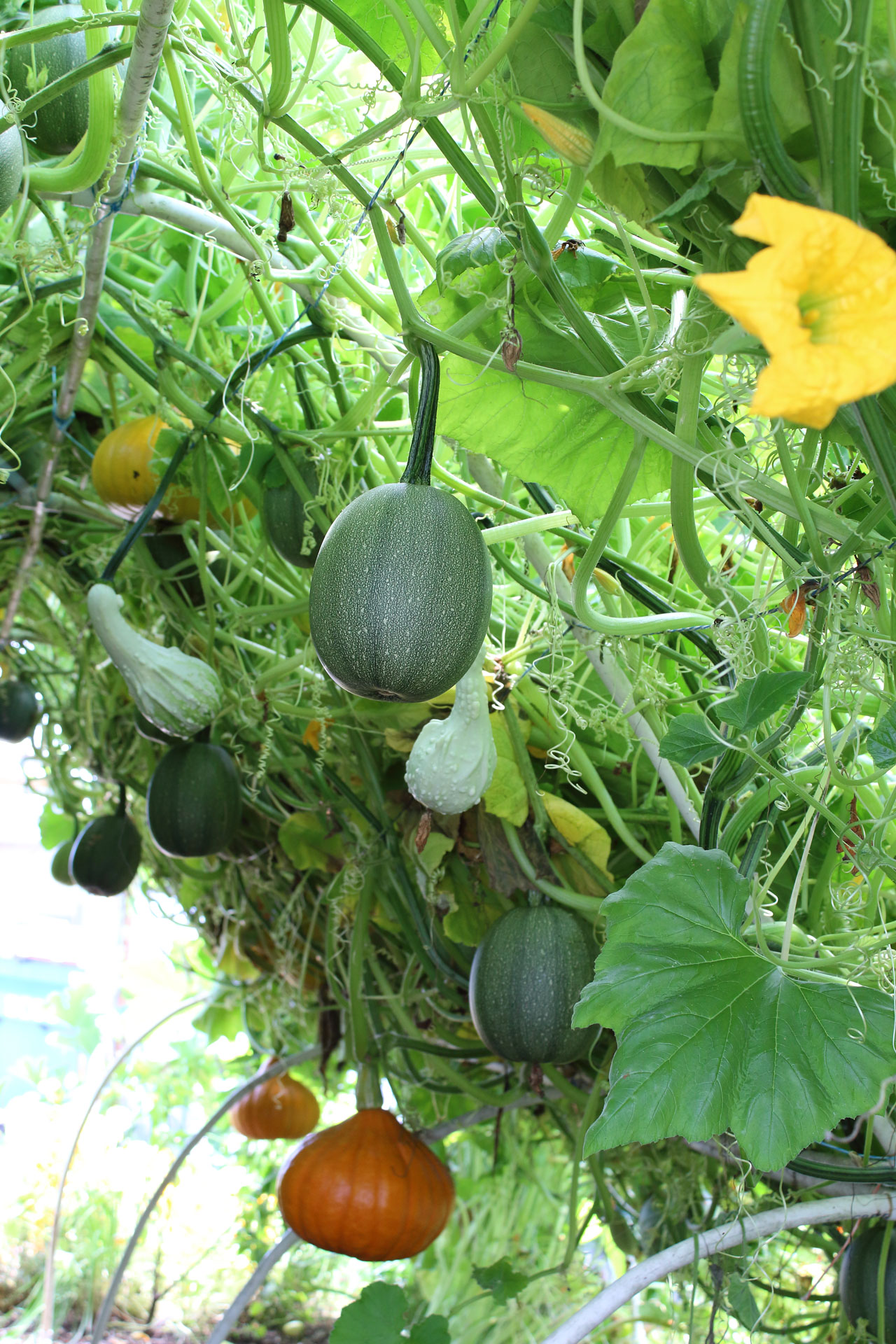
Starting in July, they figured out how to send some produce to the inmate kitchen; kitchen staff come out every Monday to look through the harvest and take what they can use to supplement inmate meals for the week, usually salad greens and herbs. Many of the prison-grown pumpkins will be contributed to SCCC’s monthly Family Fun Night in October, where inmates and their families will paint them for Halloween.

More than anything else, the Ecological Conservation Nursery Technicians at SCCC expressed that they appreciate the learning experience created by the partnership with Coastal Harvest. They have experimented with unusual fruit and vegetable varieties and adjusted their production based on feedback about the most popular items at the food banks and pantries. Mr. Baldwin thinks that at this point, each participating gardener could easily start his own business. Technician Daniel Travatte even went as far as saying he would pay to do this work!
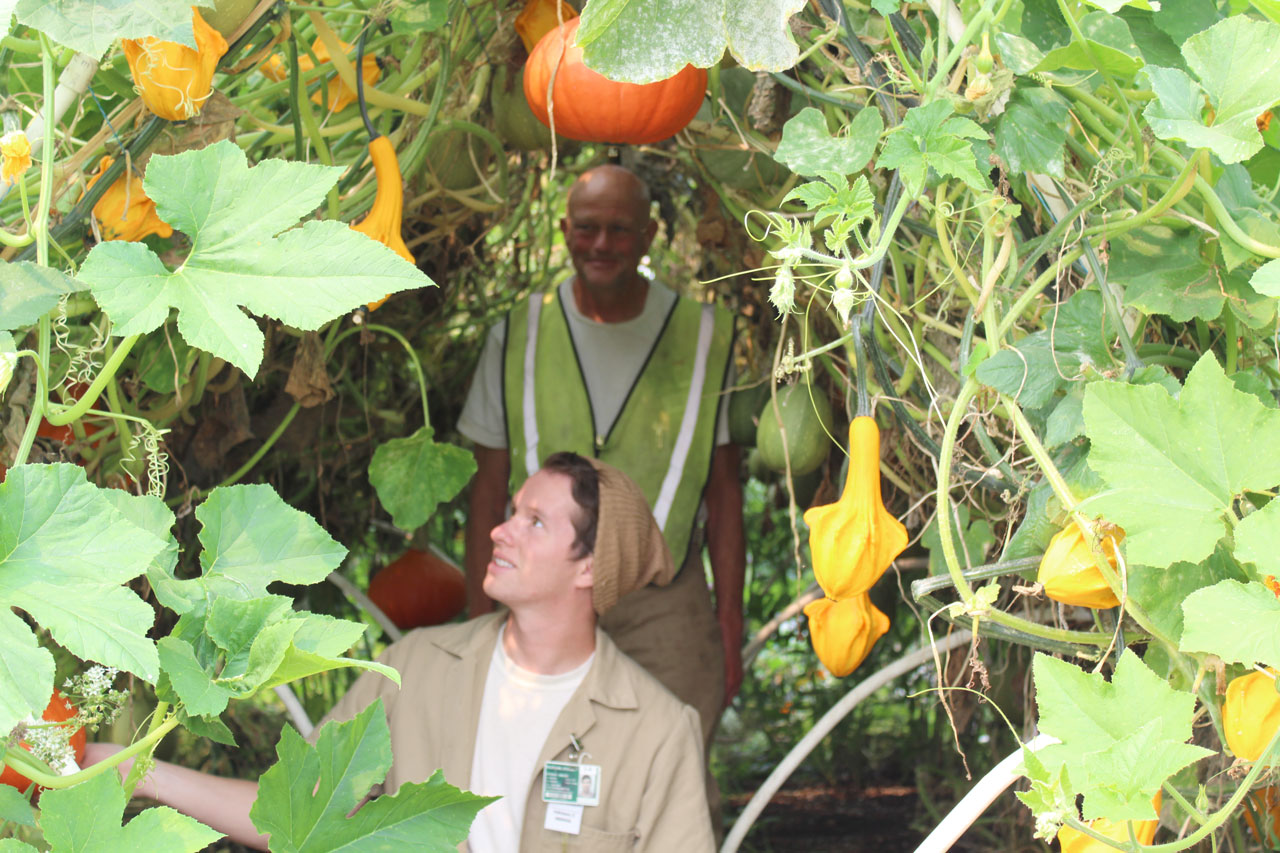
 

Ecological Conservation Nursery Technicians Kelly Lund and Stanley Feliciano cool off inside the squash trellis.


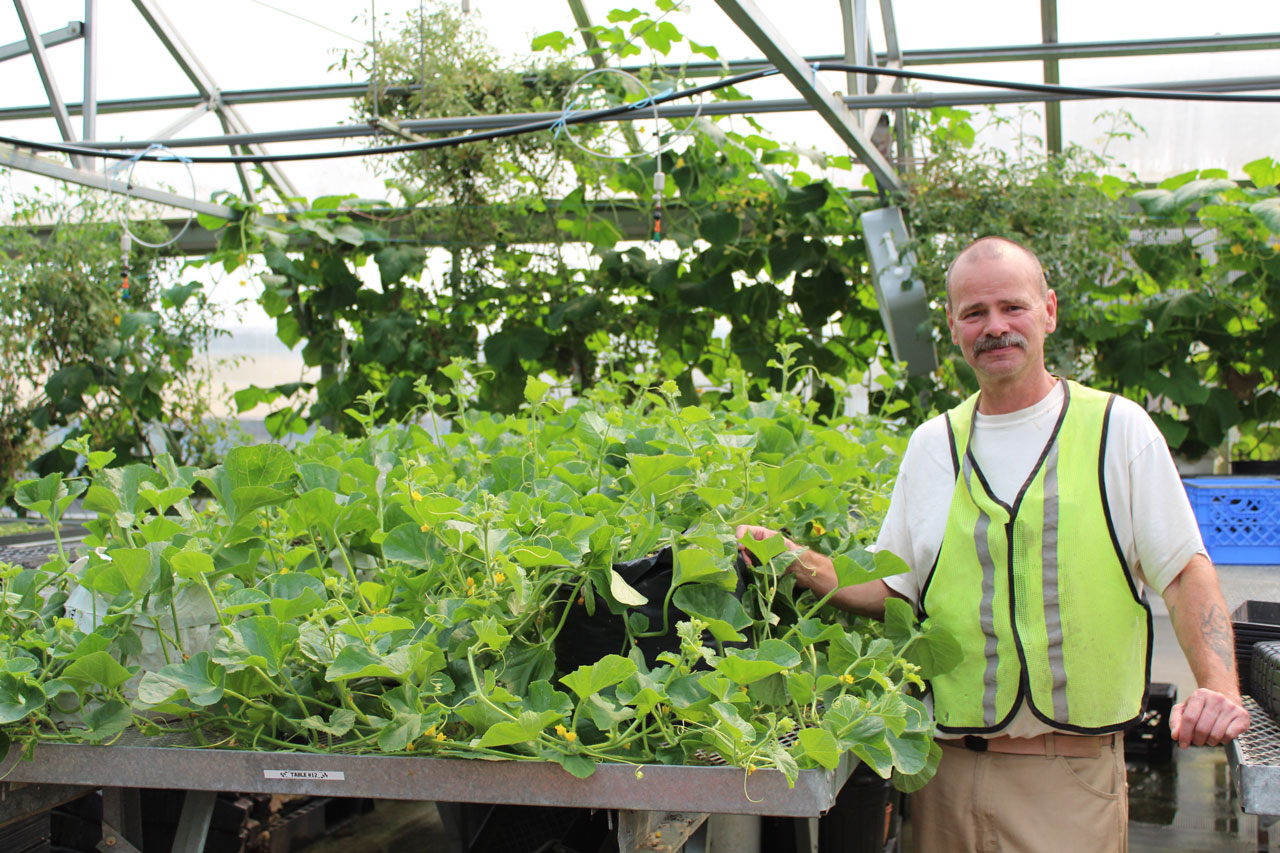
Many plants begin their lives in the greenhouse and move into the gardens as they mature.


Although less popular at the food banks, Coastal Harvest uses unusual or unknown vegetable varieties at their pantries, where they prepare and give away meals.


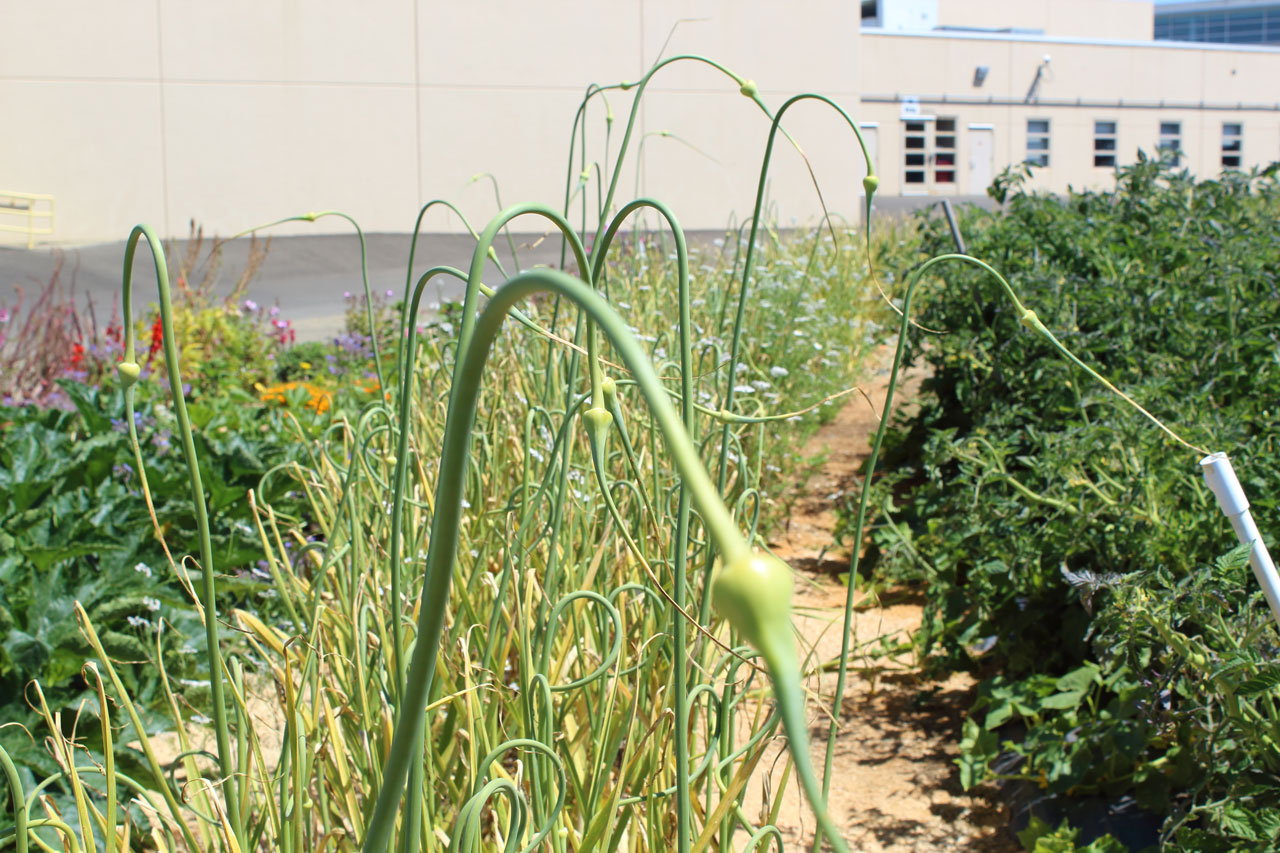
This gorgeous garlic is nearly ready for harvest.

by Joslyn Rose Trivett, SPP Education and Outreach Manager
Note: See an earlier article for an introduction to the Astrobiology for the Incarcerated program

In late April, the Astrobiology for the Incarcerated program visited five prisons plus a youth facility in Ohio. In four densely-packed days, we reached 440 incarcerated participants and 55 staff and teacher participants—it was a satisfying whirlwind of activity and ideas. Ohio Department of Rehabilitation and Correction‘s Energy Ecological Conservation & Sustainability Administrator Jacqueline Langhals gave excellent administrative support for the program, and Corrections staff and incarcerated students were gracious and enthusiastic hosts. Whereas Dr Drew Gorman-Lewis presented on astrobiology research in the Washington State series, in Ohio it was Dr Jackie Goordial who covered research; she is a microbiologist currently at the Bigelow Laboratory for Ocean Sciences.

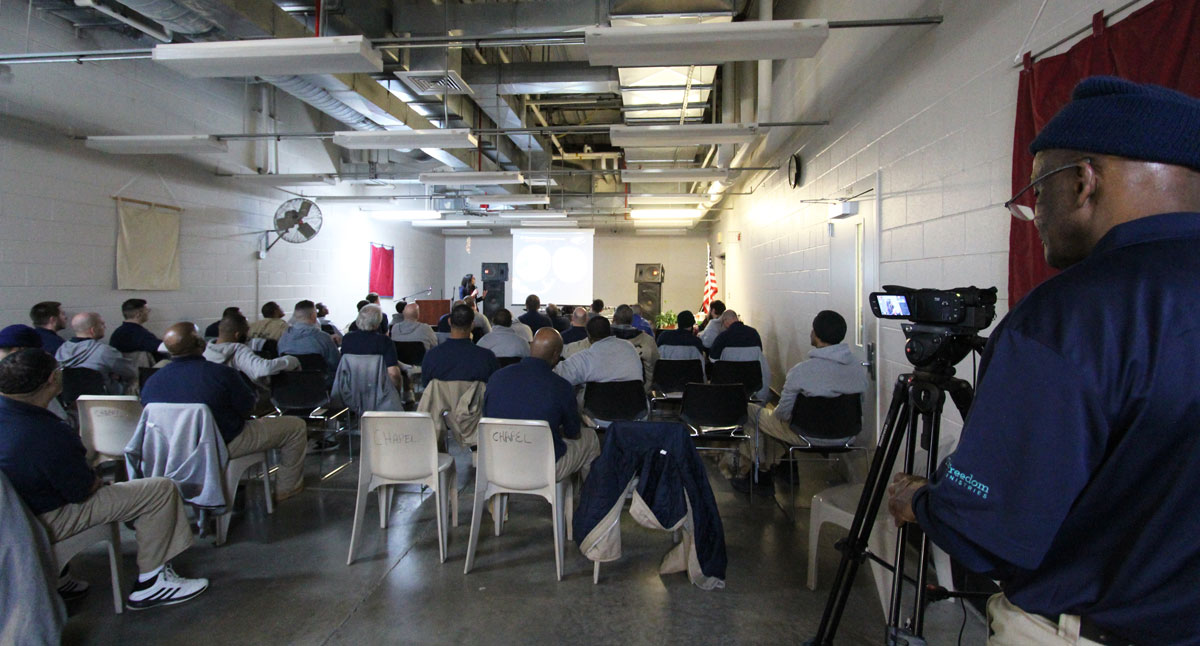
At Grafton Reintegration Center, the presentation was filmed for broadcast on a multi-institution channel.

Science vs Religion?

In Ohio, nearly every event was held in the prison chapel, which—for many—elicited a perceived conflict between science and spirituality. Luckily, Daniella Scalice is a master of taking a hard question and suggesting how to transform it into a beautiful idea. She offered that we think about astrobiology’s origin stories as complementary, even reinforcing, the origin stories of many religions. She pointed to the root meaning of the word Universe: uni meaning one; verse meaning story. Thinking about it this way, astrobiology gives us one of many powerful and meaningful origin stories.

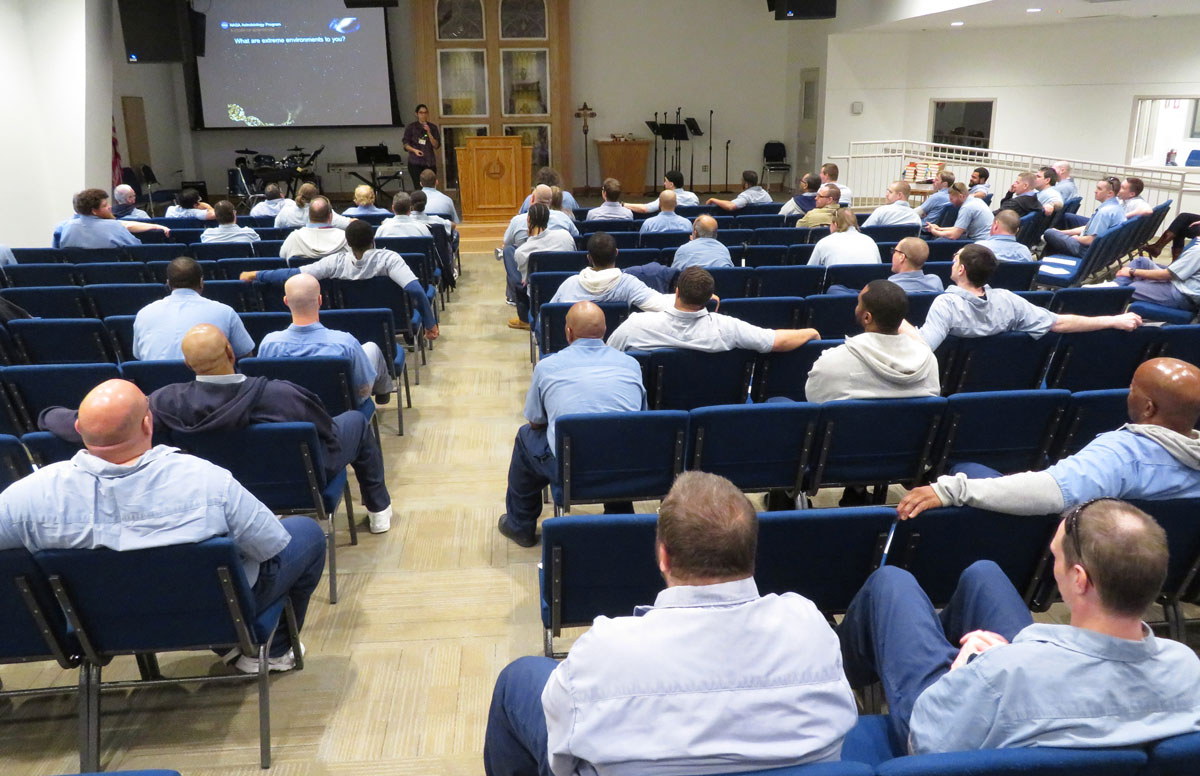
Dr Jackie Goordial presents in the chapel at London Corrections Institution.

The Pale Blue Dot

At every presentation, Daniella read a moving quote by Carl Sagan in which he describes a photograph of Earth taken by Voyager 1 from about 4 billion miles away; the earth appears as a pale blue dot—barely visible at that distance:

Look again at that dot. That’s here. That’s home. That’s us. On it everyone you love, everyone you know, everyone you ever heard of, every human being who ever was, lived out their lives. The aggregate of our joy and suffering, thousands of confident religions, ideologies, and economic doctrines, every hunter and forager, every hero and coward, every creator and destroyer of civilization, every king and peasant, every young couple in love, every mother and father, hopeful child, inventor and explorer, every teacher of morals, every corrupt politician, every “superstar,” every “supreme leader,” every saint and sinner in the history of our species lived there—on a mote of dust suspended in a sunbeam.

~ Carl Sagan, 1994
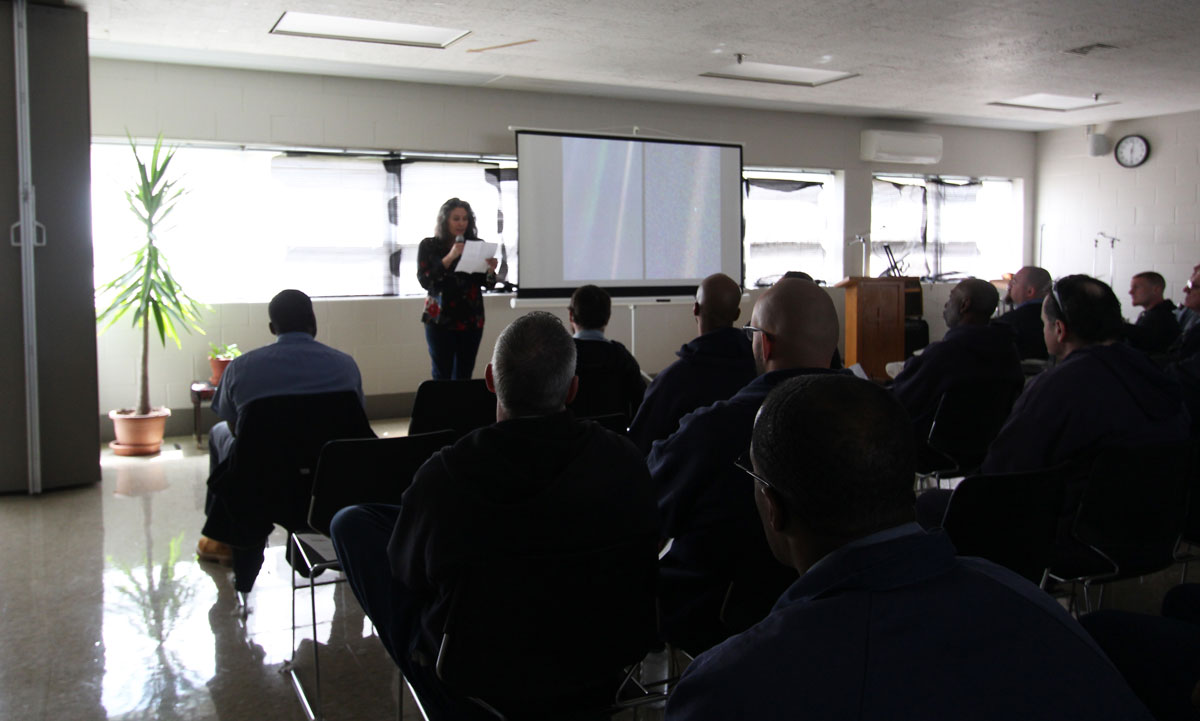
At Grafton Corrections Institution, Daniella Scalice reads Carl Sagan’s response to an image of Earth from 4 billion miles away.

Impromptu Seminars

At every facility, the incarcerated students brought excellent observations and queries. As Jackie described her research on microbes in an Antarctic desert and the depths of the Atlantic Ocean, she was peppered with keen questions. Sometimes, the questions were so insightful that Jackie would pause before responding to say, “That’s amazing.” Then she would explain how the question exposed the very heart of the topic, bringing up questions that she and her colleagues had investigated for months, or would be central to her future work as a scientist.

Students at Franklin Medical Center, just south of Columbus, asked highly scientific questions of Dr Jackie Goordial, to her delight.
Many students engaged in informal seminars following the presentation; this one is at Noble Corrections Institution.

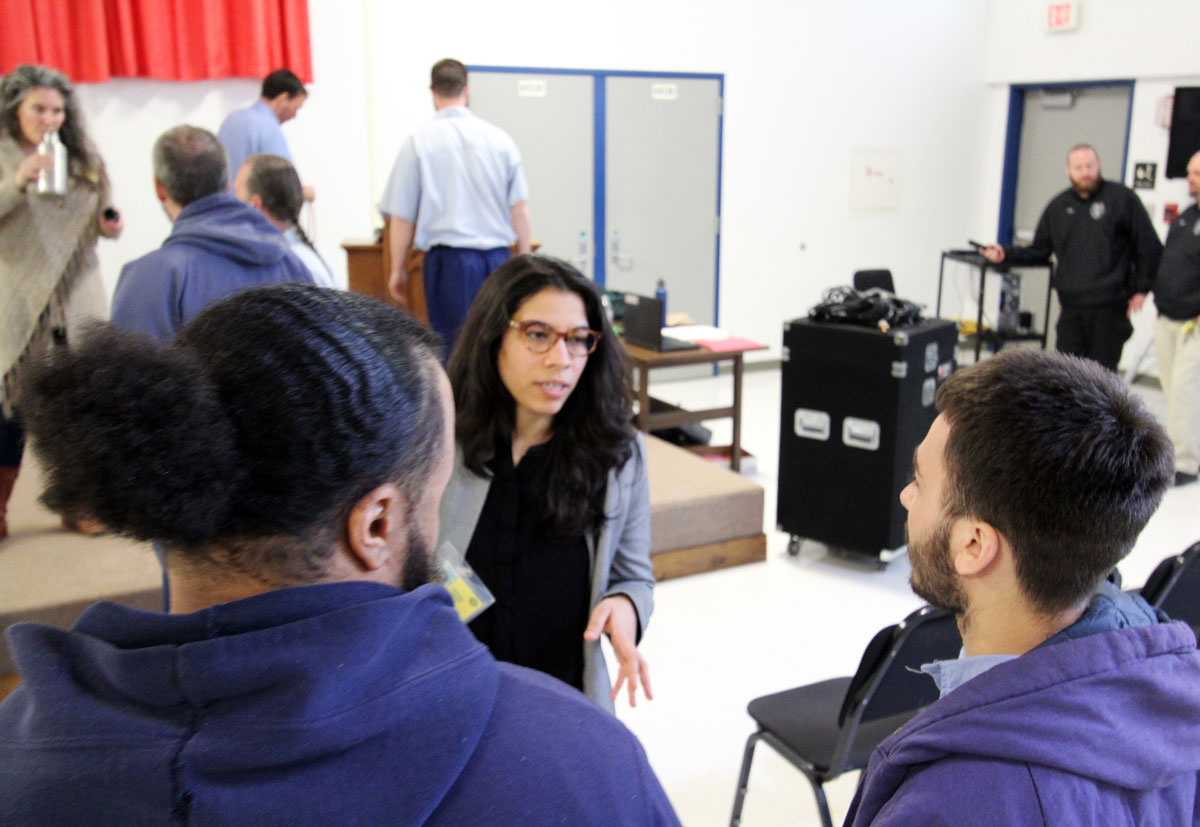
Following every presentation, many students would gather for informal seminar on astrobiology topics. Jackie and Daniella fielded their questions and input with grace and humor, listening carefully and validating the many astute observations. They discussed pathways for studying astrobiology and other scientific disciplines, how a person can become a scientist, and who pays for scientific research and outreach.

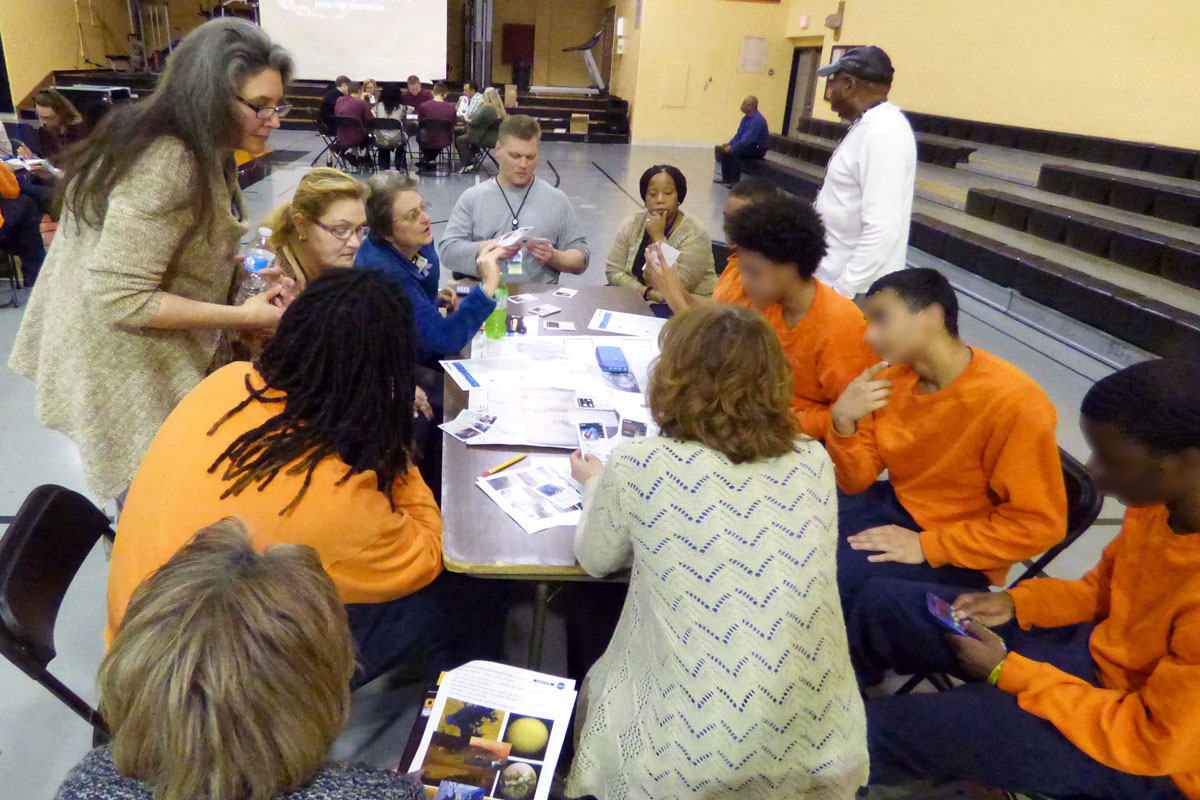
At Cuyahoga Hills Youth Facility, Daniella Scalice supported teams of students and teachers designing and budgeting a mission to search for life elsewhere in our Solar System. Photo by Doc Brown.

What next?

Next on the schedule is Florida Department of Corrections, where seven facilities will host the program in September. At the same time, the team will offer return visits and multimedia materials for prison libraries. Noble Corrections Institution plans to do even more, creating a multi-speaker series that’s a proper “program” yielding a certificate; speakers would present via video, and those sessions would tie to the multimedia library with post-lecture “homework” assignments. Sounds like an ideal iteration of the program!

Abundant thanks to all the staff, leadership, and incarcerated students in Ohio. It would be wonderful to bring the program back again in the future!

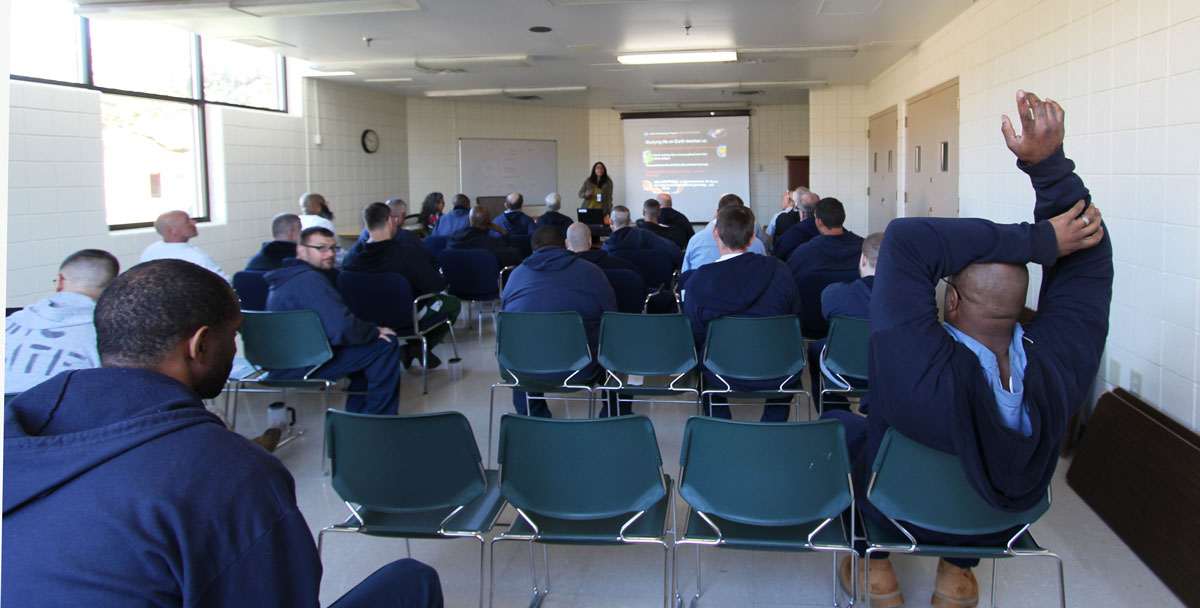
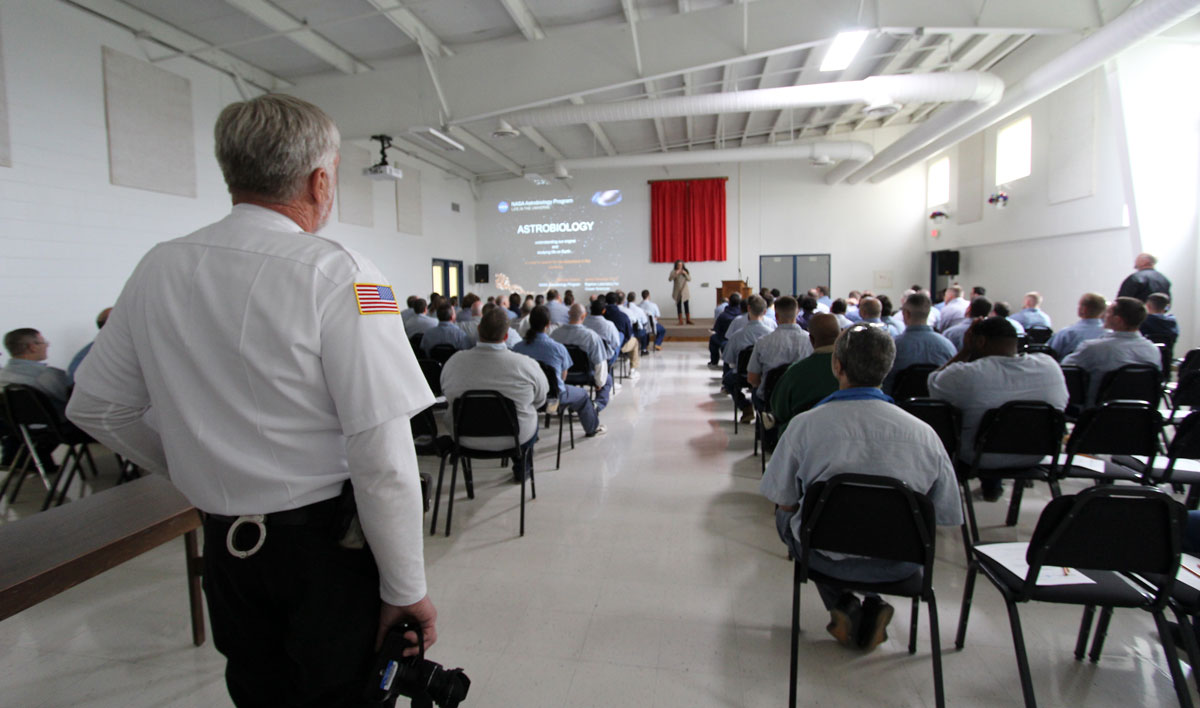
The crowd at Noble Corrections Institution takes in Daniella’s presentation.
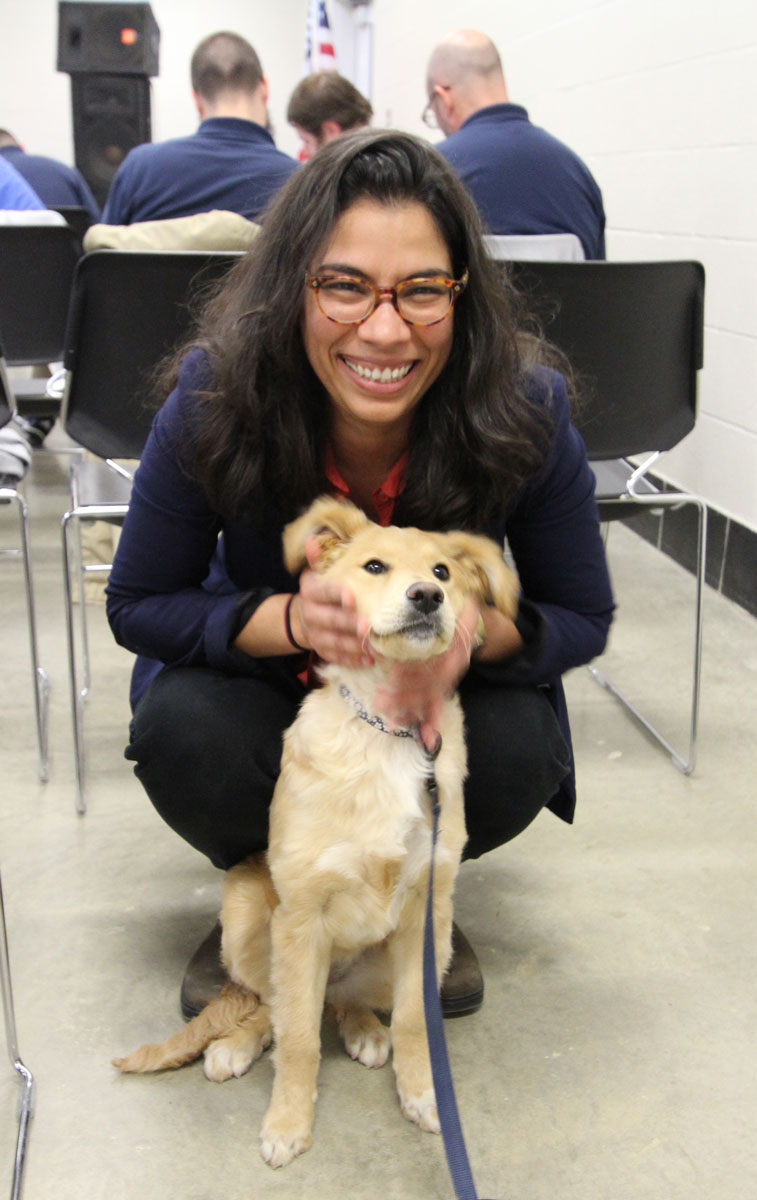
Jackie is charmed by Miss Josie at Grafton Reintegration Center. The tie to astrobiology? Well, even the atoms of adorable Miss Josie were built in the heart of a star.;-)

Text and images by Keegan Curry, SPP Taylor’s Checkerspot Butterfly Coordinator

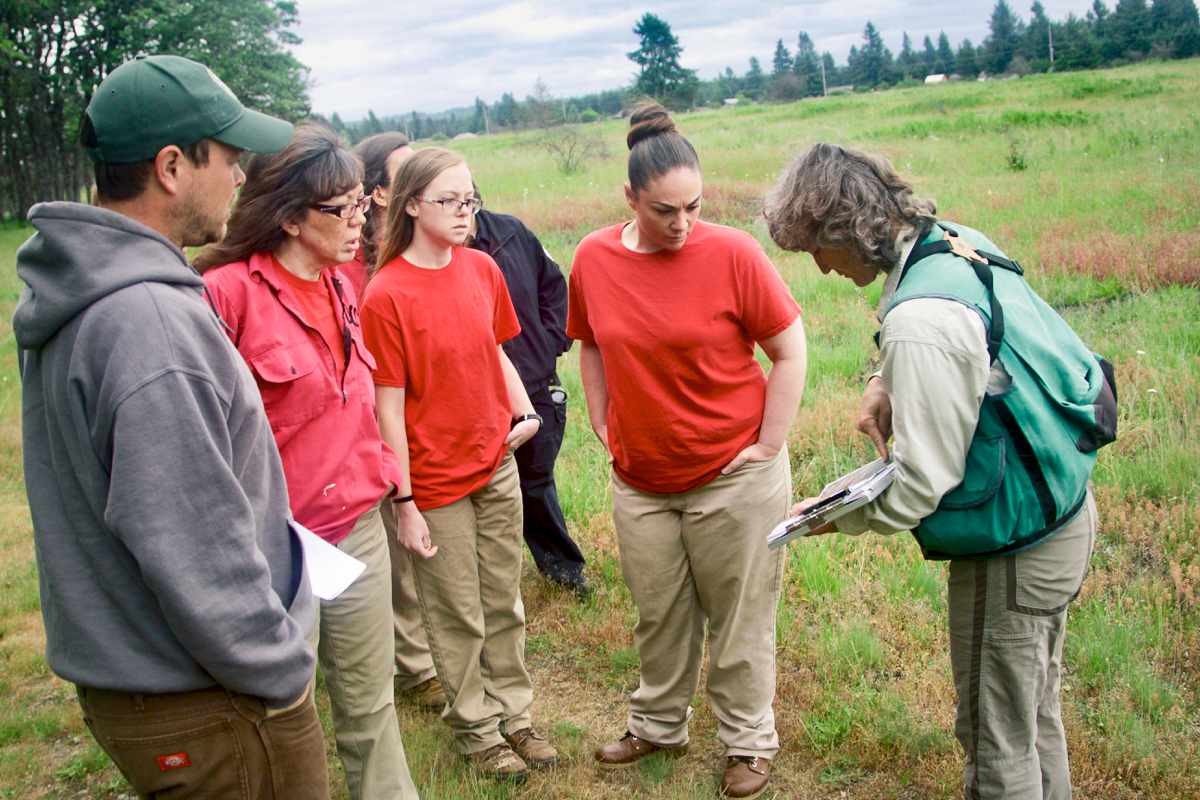
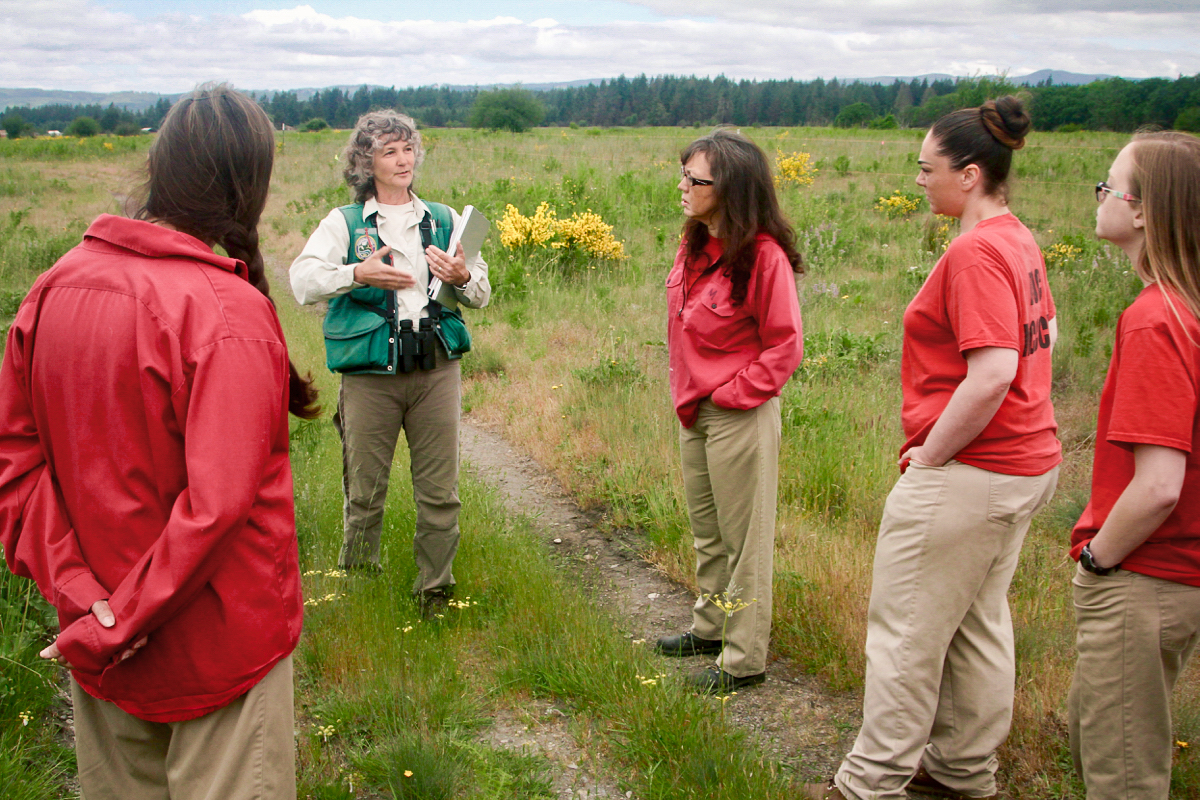
Biologist Mary Linders shows incarcerated technicians which areas of the prairie are currently occupied by reintroduced Taylor’s checkerspot butterflies.

In late spring, incarcerated technicians from Mission Creek Corrections Center for Women (MCCCW) had the opportunity to visit Scatter Creek Wildlife Area, a reintroduction site for federally-endangered Taylor’s checkerspot butterflies. These technicians work year-round to raise Taylor’s checkerspots in a greenhouse, but this is the first time they have been able to see the habitat where captive-reared butterflies and caterpillars have been released. Mary Linders and Josh Cook from Washington Department of Fish and Wildlife (WDFW) conducted a tour of the site, describing its history and ecology as they led us on a hike through the serene prairie.

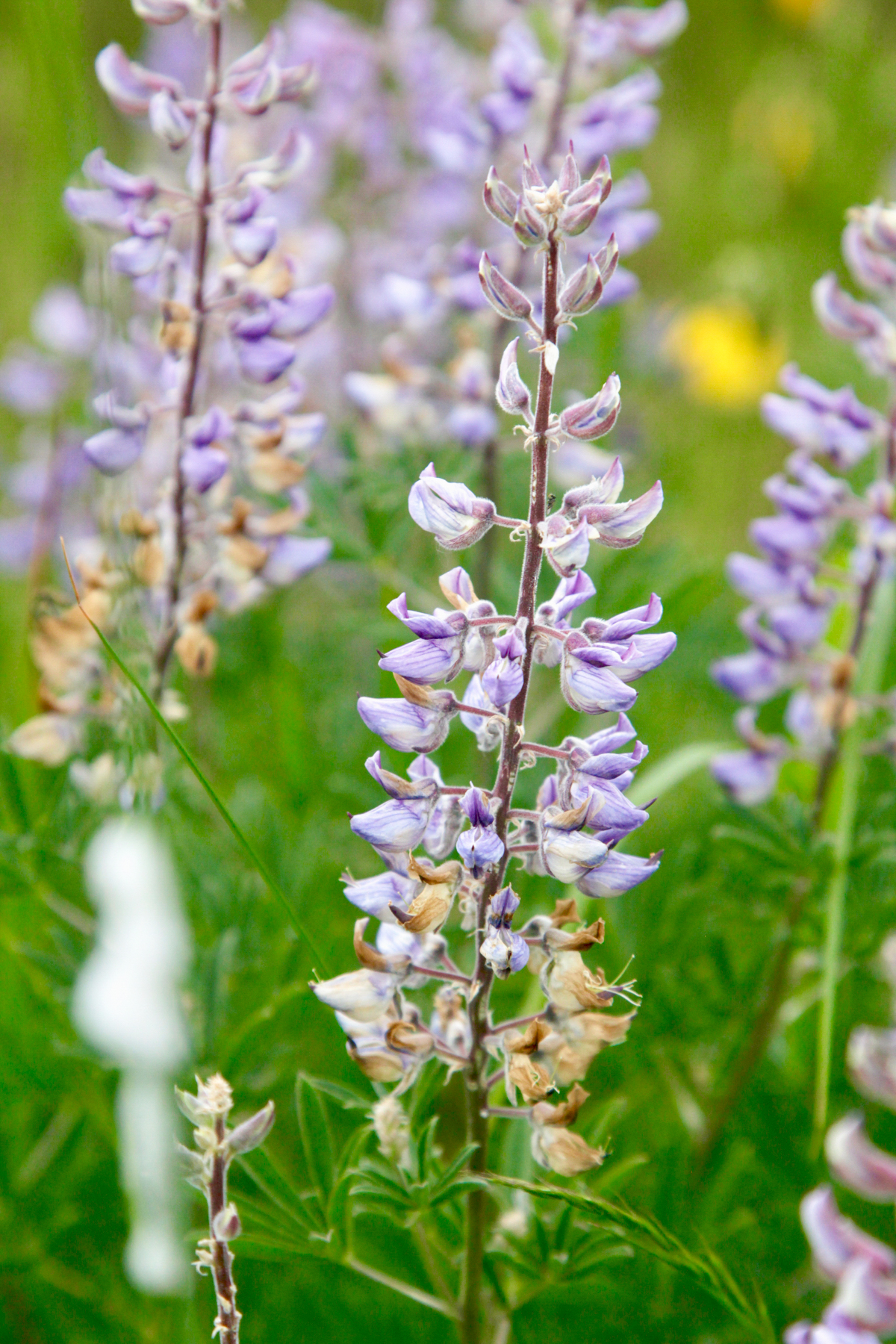
Sickle-keeled lupine (Lupinis albicaulis) was in full bloom during our prairie tour, dappling the scenery with vibrant purple.

Our visit coincided with the end of the 5-week flight season, so adult butterfly sightings were limited. But technicians wasted no time in examining the Plantago lanceolata host plants and soon discovered Taylor’s checkerspot caterpillars! These hatchlings were just like the ones back in the lab at MCCCW and it was thrilling to find them living out in the wild. At the level of our toes, the habitat appeared to be teeming with young larvae. This particular site represents a major success for Mary Linders and WDFW who carefully reintroduced the species here over many years with the help of rearing programs at MCCCW and the Oregon Zoo.

As a Sustainability in Prisons Project (SPP) coordinator, I am always searching for ways to connect incarcerated technicians with the ecosystems they are helping to restore. Butterfly technicians know a lot about Salish lowland prairies from readings and discussion, but seeing the habitat with their own eyes provided a whole new level of insight. Hopefully this kind of trip can become a regular component of the program. I know it will help this group of technicians as they return to the butterfly lab at MCCCW and integrate their experience on the prairie into their work.

Such an opportunity would not have been possible without the officers and staff at MCCCW who supported this trip, and who play a vital role in hosting the Taylor’s checkerspot butterfly program throughout the year. A special thank you to Mary Linders, Josh Cook, and WDFW for being so generous with their time and facilitating this valuable learning experience for SPP participants.

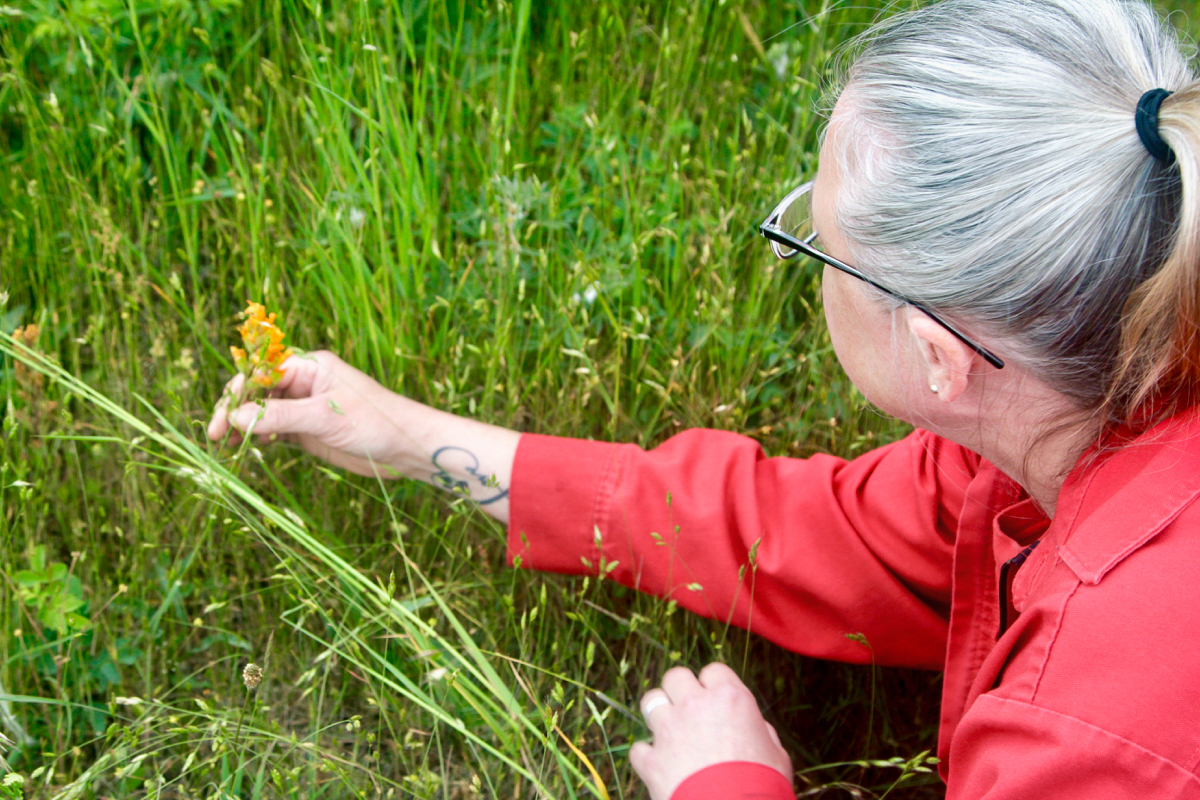
Technician Tracy Hatch studies harsh paintbrush (Castilleja hispida) blooming near the trail.

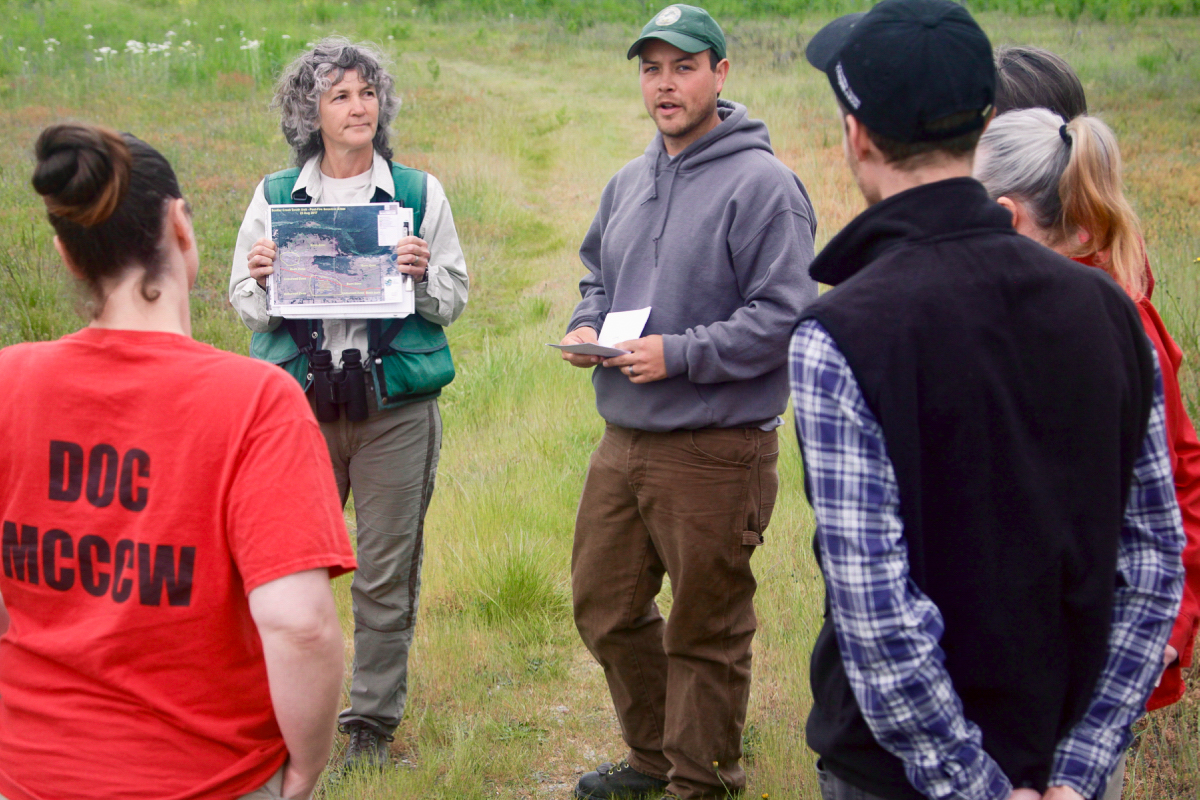
(left to right) Mary Linders and Josh Cook introduce the habitat’s vegetation and discuss the role of fire on the landscape. Photo by Kelli Bush.

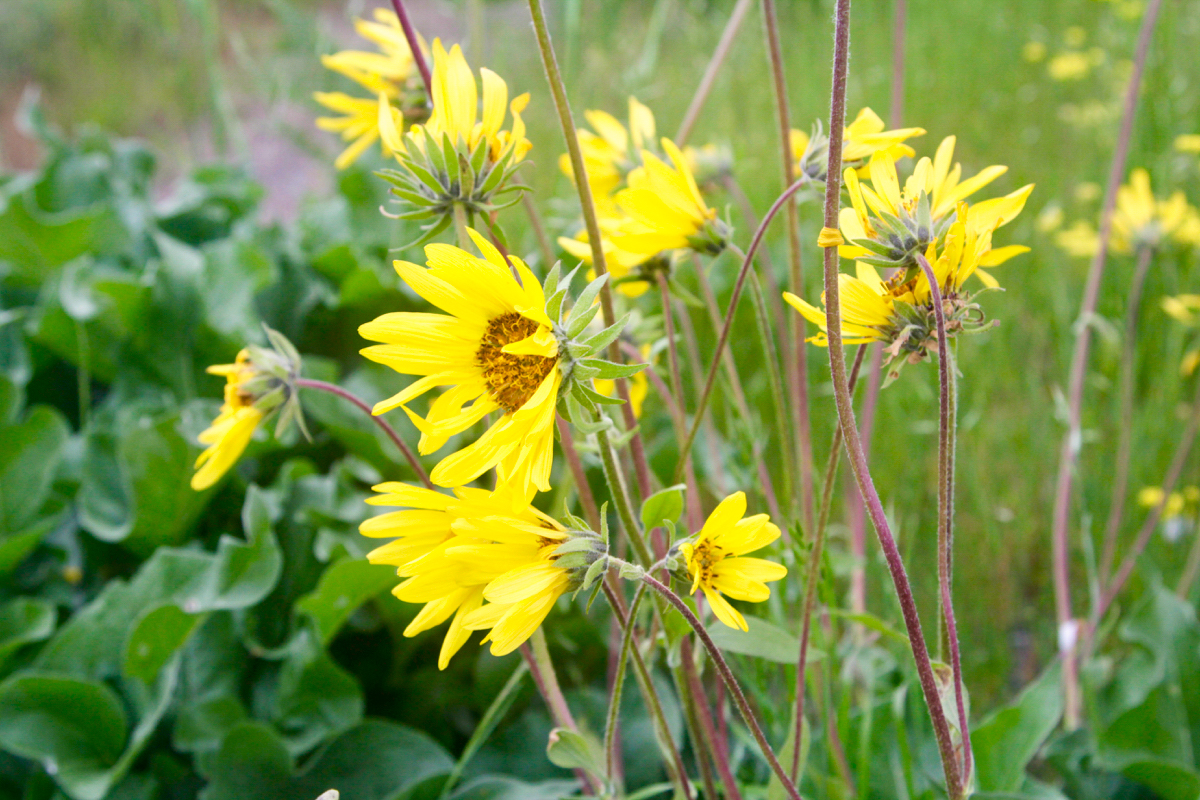
Balsamroot (Balsamorhiza deltoidea) is one of adult Taylor’s checkerspots’ favorite perches.

Mary Linders describes the reintroduction process and how the population has progressed in this particular area.

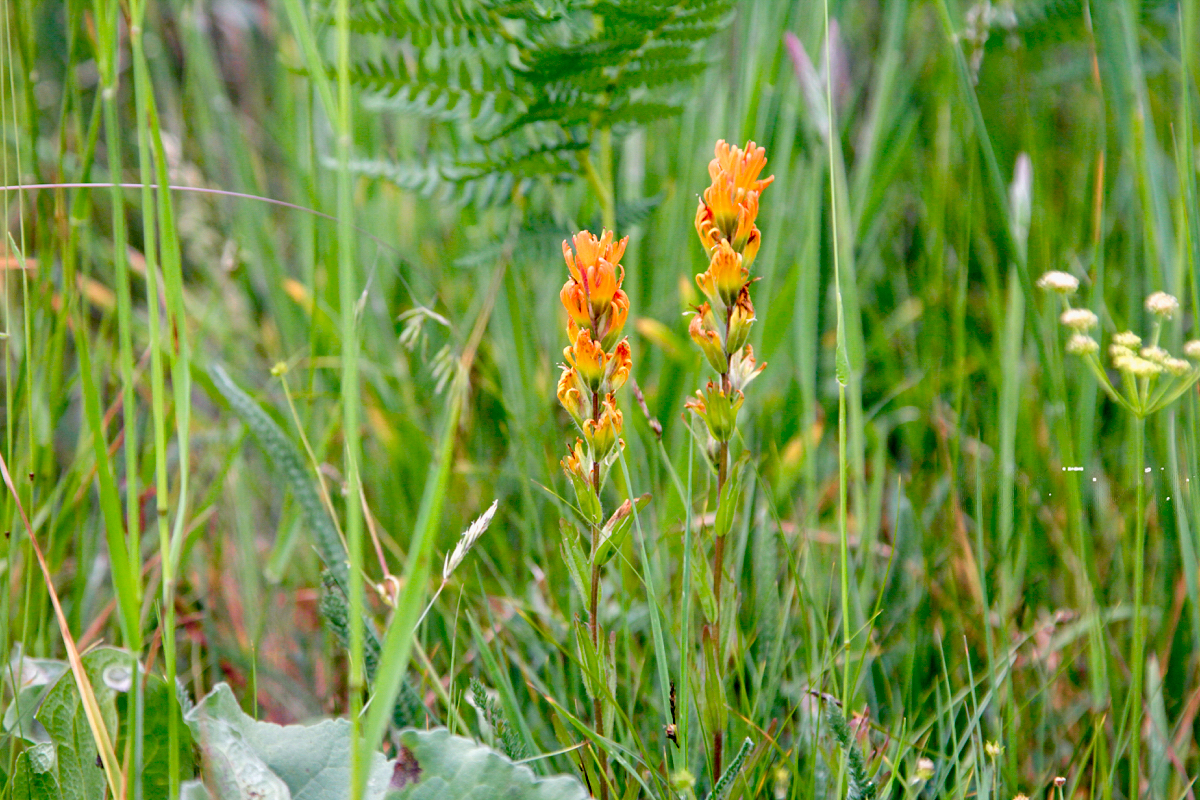
Harsh paintbrush (Castilleja hispida) stands out against the lush green grasses. This and other paintbrush varieties are known host plants for Taylor’s checkerspots.

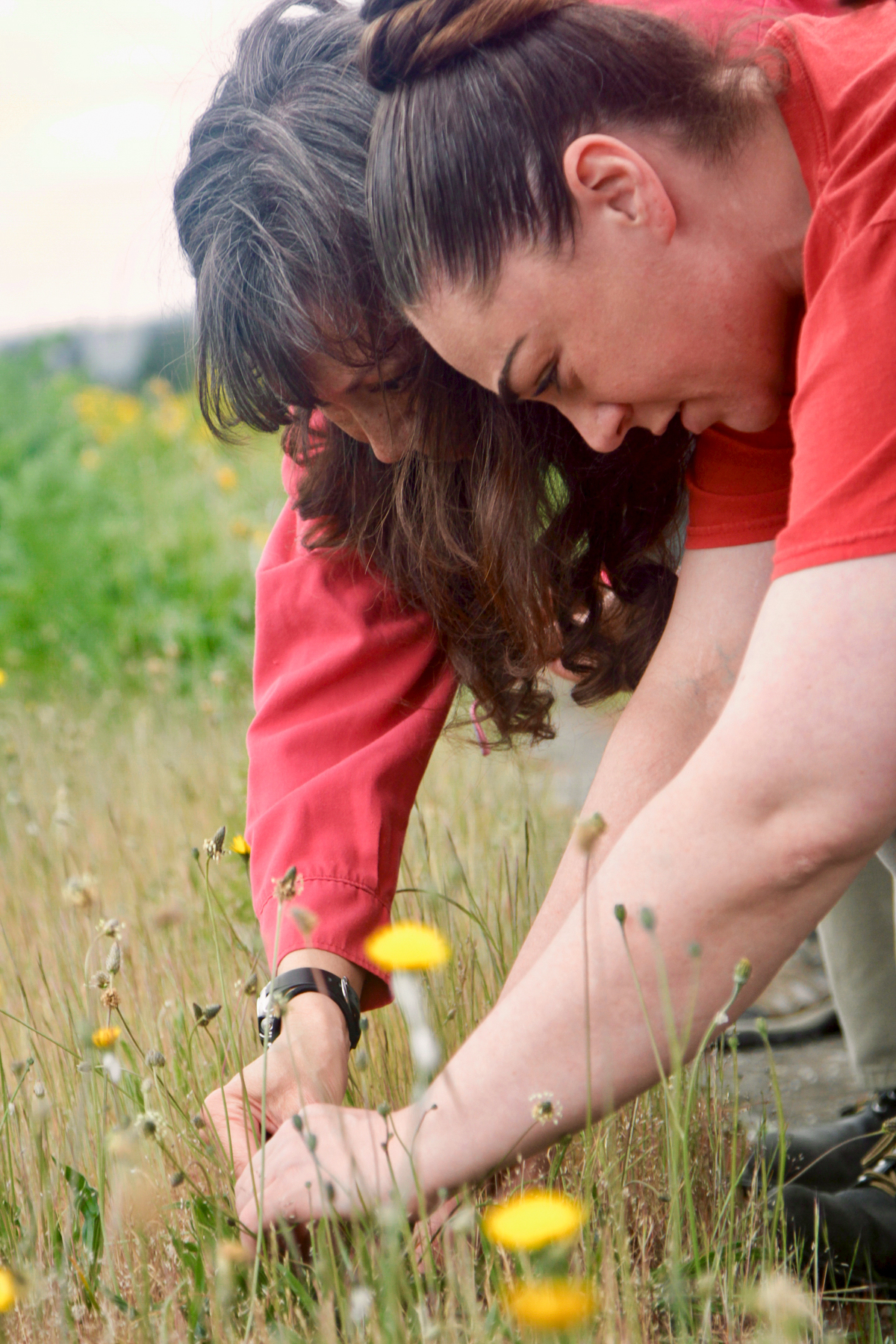
Susan Christopher and Nichole Alexander search for wild Taylor’s checkerspot larvae.

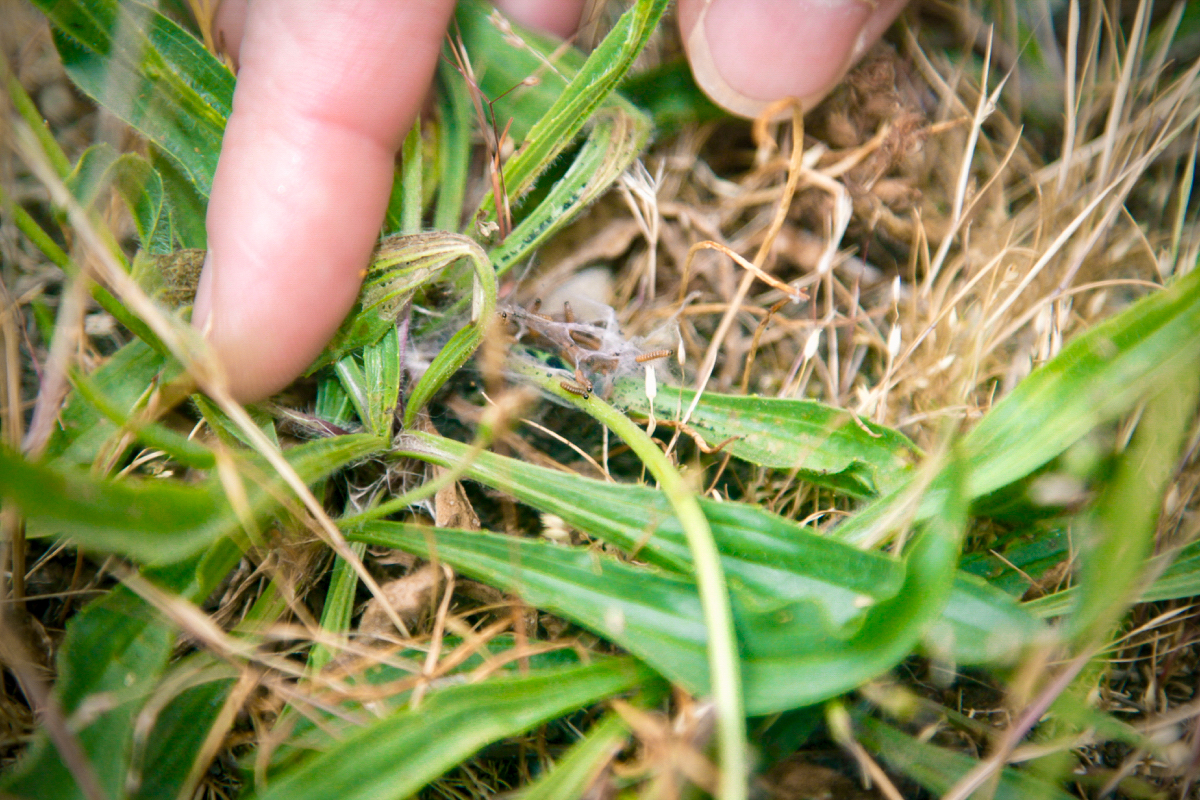
Success! Early instar caterpillars huddle within their delicate webbing on Plantago lanceolata, a satisfying moment for butterfly technicians and biologists alike.

by SPP Co-Director Kelli Bush

Note: This blog post was intended to be published sooner to acknowledge our contributors. We apologize for the delay.

Sustainability in Prisons Project’s mission is to bring sustainable change into prisons through science, nature and environmental education programs. To advance this mission, we leverage resources by collaborating with incarcerated people, agencies, organizations, and individuals, and together make innovative and impactful programs possible. Ecological conservation programs are perhaps our best examples of successful collaborations, as extensive partnerships are essential to the complex work involving threatened or endangered species. The new Sheep Husbandry Program at Washington State Penitentiary (WSP) is an excellent example of collaboration.

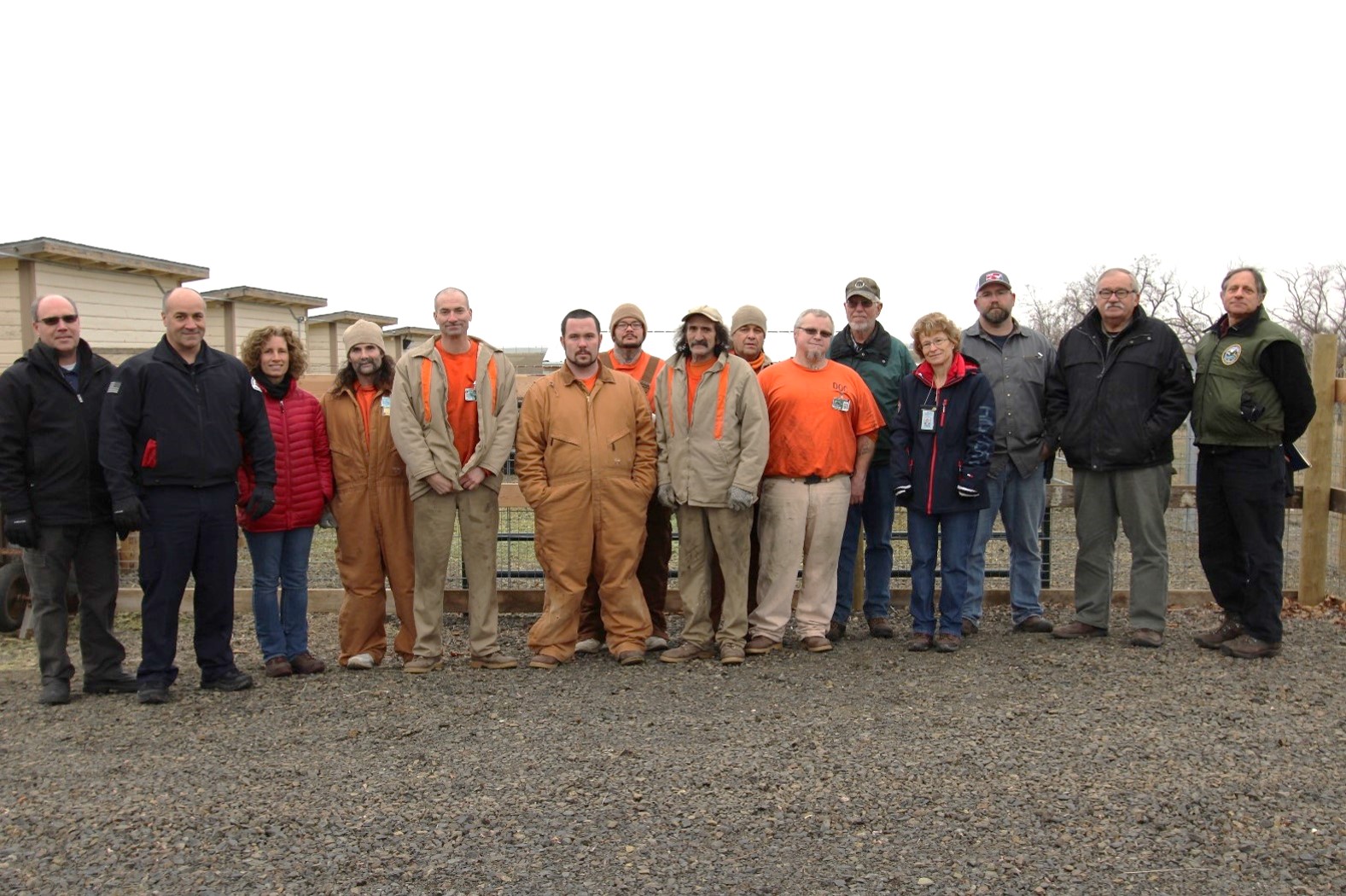
Sheep program partners (missing WSU and SPP staff). Photo credit: Kelli Bush, SPP

Washington Department of Fish and Wildlife has been guiding program development with their extensive knowledge of bighorn sheep recovery. Dr. Richard Harris and Mr. Jared Oyster have educated incarcerated participants and other partners on the issues facing wild bighorn sheep recovery. Through their established relationships at Washington State University, we have received excellent support for pathogen testing from Dr. Tom Besser. Also crucial, they have provided nearly all of the funding support for this pilot program.

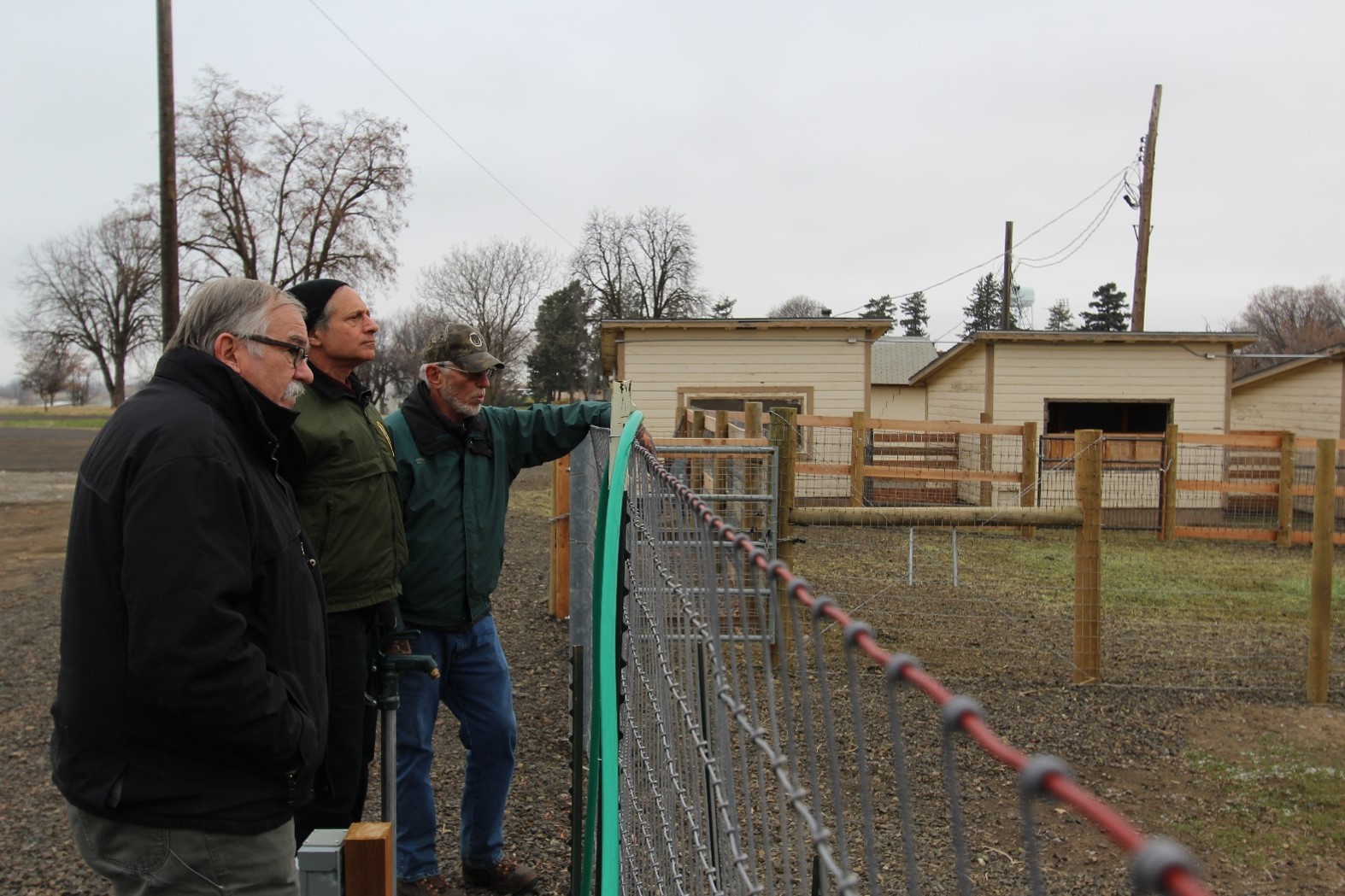
Mr. J.D. Atteberry, Dr. Richard Harris, and Mr. Jerry Kjack looking at the newly completed sheep program site. Photo credit: Kelli Bush, SPP

Many thanks to Superintendent Donald Holbrook and Associate Superintendent Carla Schettler for agreeing to host this program at WSP. Associate Carla Schettler, Sgt. Stefan Randolph, Lt. Jarrod Sumerlin, Donna Hubbs, Toni Alvarado-Jackson, Ken Mitchell, Tonya Gould, Ellis Erikson, Brad Bisconer, Stephanie Parrish, unit staff, and East Complex staff have all dedicated their time escorting incarcerated program participants to the sheep site, and assisting with animal care. Special thanks to third shift staff in the East Complex for their contributions.

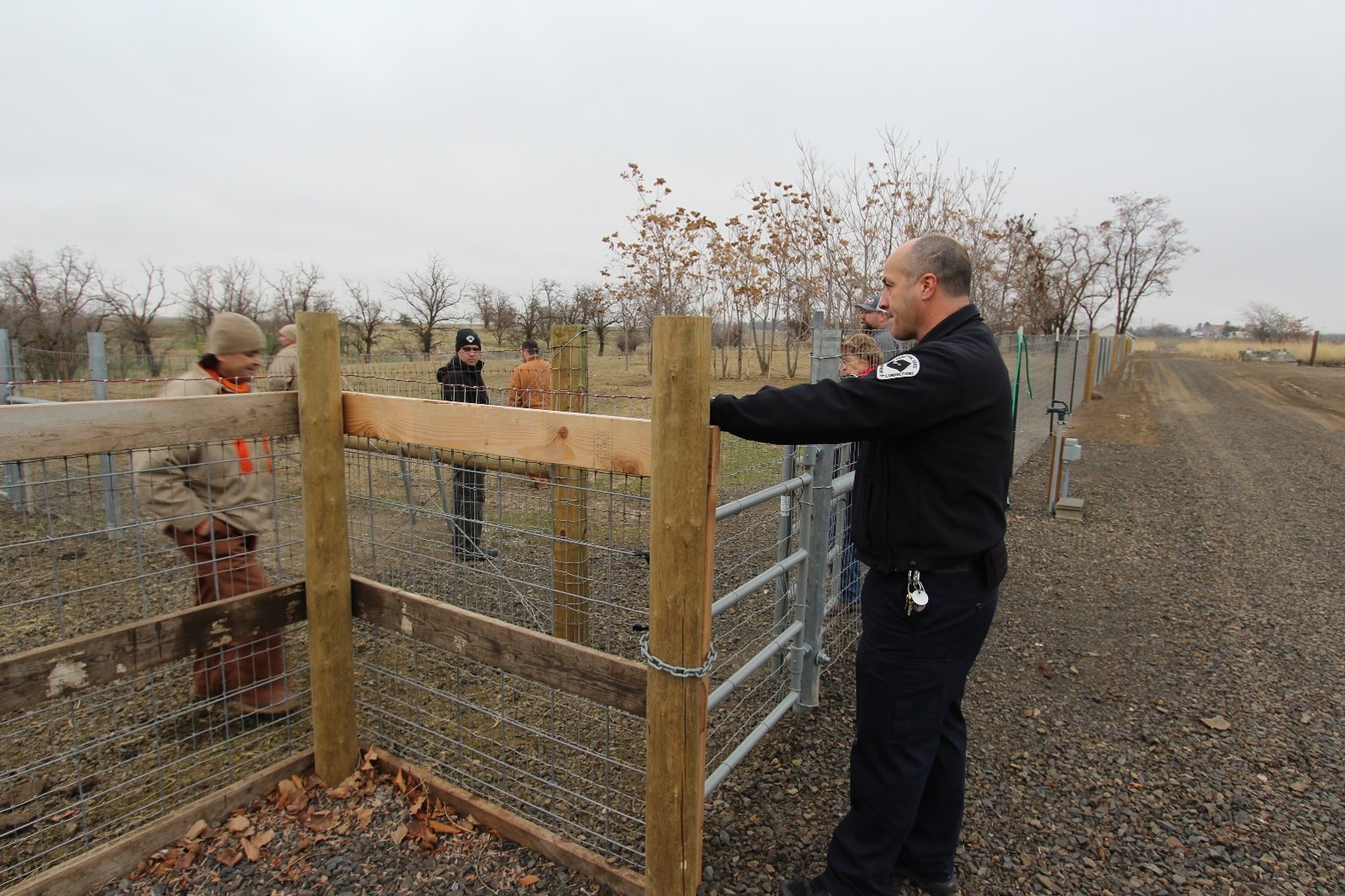
Lt. Jarrod Sumerlin opening gates to the sheep pasture area. Photo credit: Kelli Bush, SPP

Before sheep could even be housed at WSP, work had to be done to provide adequate shelter, pasture, water and electricity to the site. Thanks to J.D. Atteberry, Kellyo Gallaher, Stephan Birdwell, George Blevins, and Cheri Able-Johnson for their continued dedication to program infrastructure. Together this crew transformed an area previously used to raise pheasants into the new sheep program site.

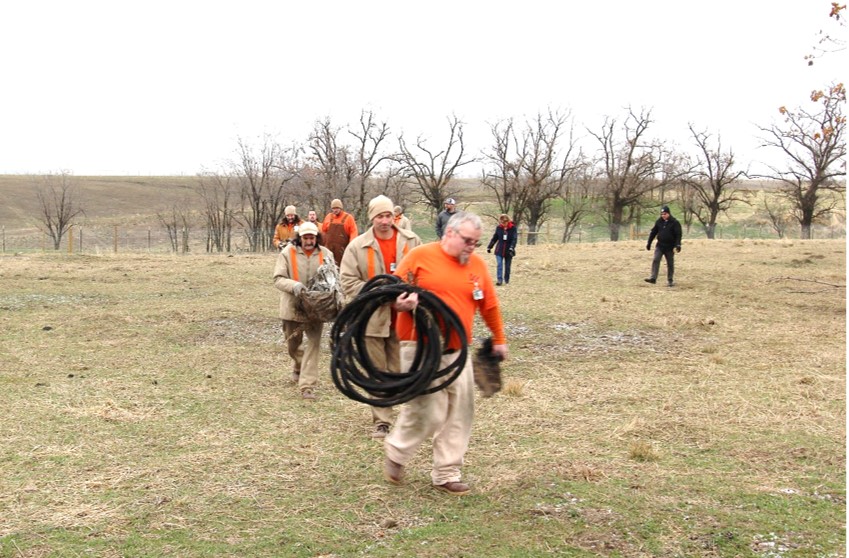
Program participants and corrections staff cleaning up pasture site. Photo credit: Kelli Bush, SPP

Also, we are grateful to the program participants incarcerated at WSP. Through their excellent care, dedication, and commitment to learning, the pilot program is able to explore innovative solutions to a complex wildlife conservation issue. Incarcerated participants are being trained and supported by local sheep husbandry experts Jerry Kjack and Gerry Glenn. Both Jerry and Gerry have also played critical roles in program development.

Together, all partners are playing key roles in making this collaboration a success. As a team, we can benefit incarcerated people, wildlife, and communities!

By Marisa Pushee, SPP Ecological Conservation Coordinator

South Puget Sound Wildlife Area in Lakewood, WA. Photo by Marisa Pushee.

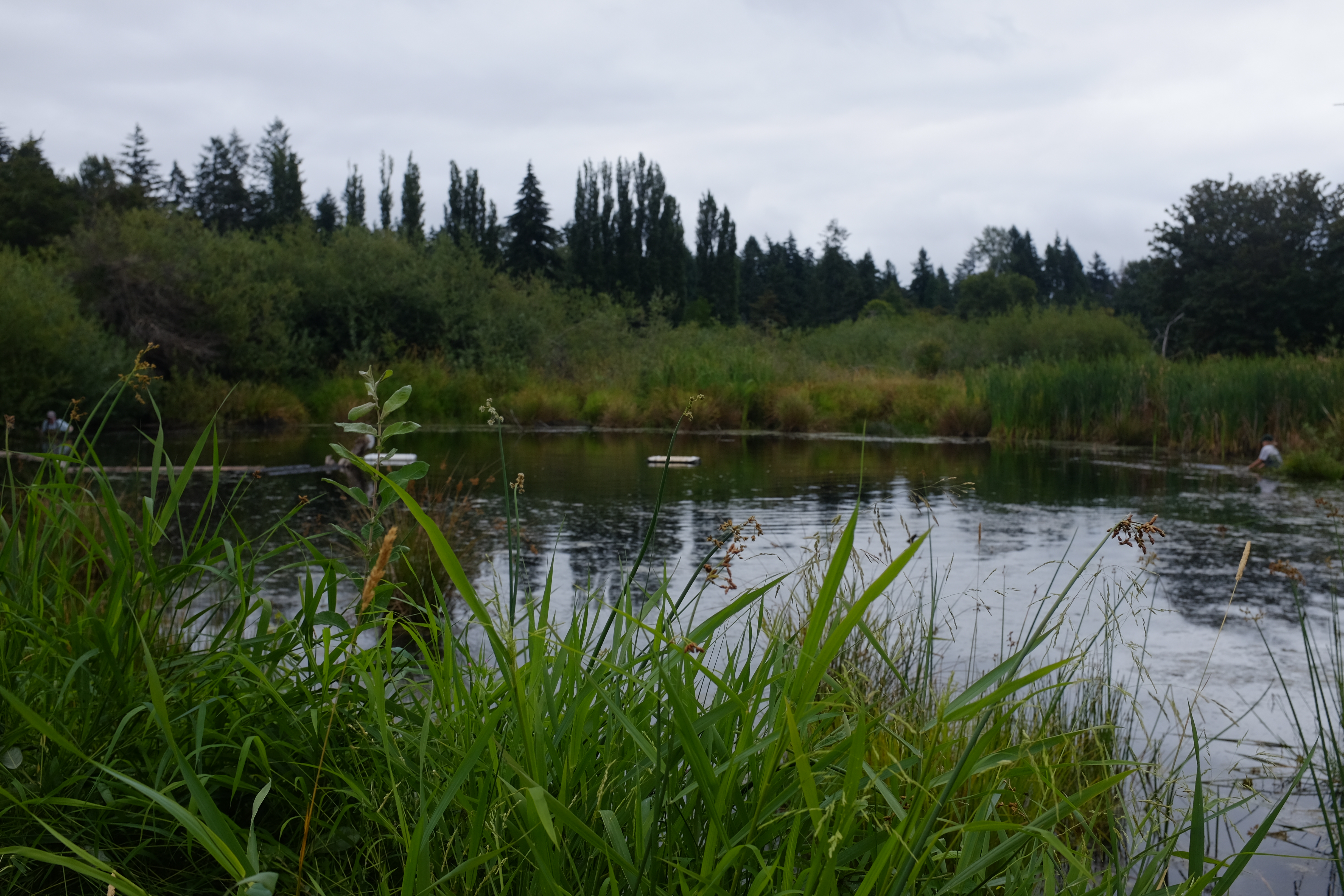
It’s turtle trapping season for the Washington Department of Fish and Wildlife (WDFW). When we arrived onsite at the South Puget Sound Wildlife Area, Wildlife Biologist Emily Butler was already hard at work and chest-deep in one of the three ponds at the wildlife area that western pond turtles (WPT) call home. Emily and two dedicated volunteers were diligently placing traps in turtle habitat.

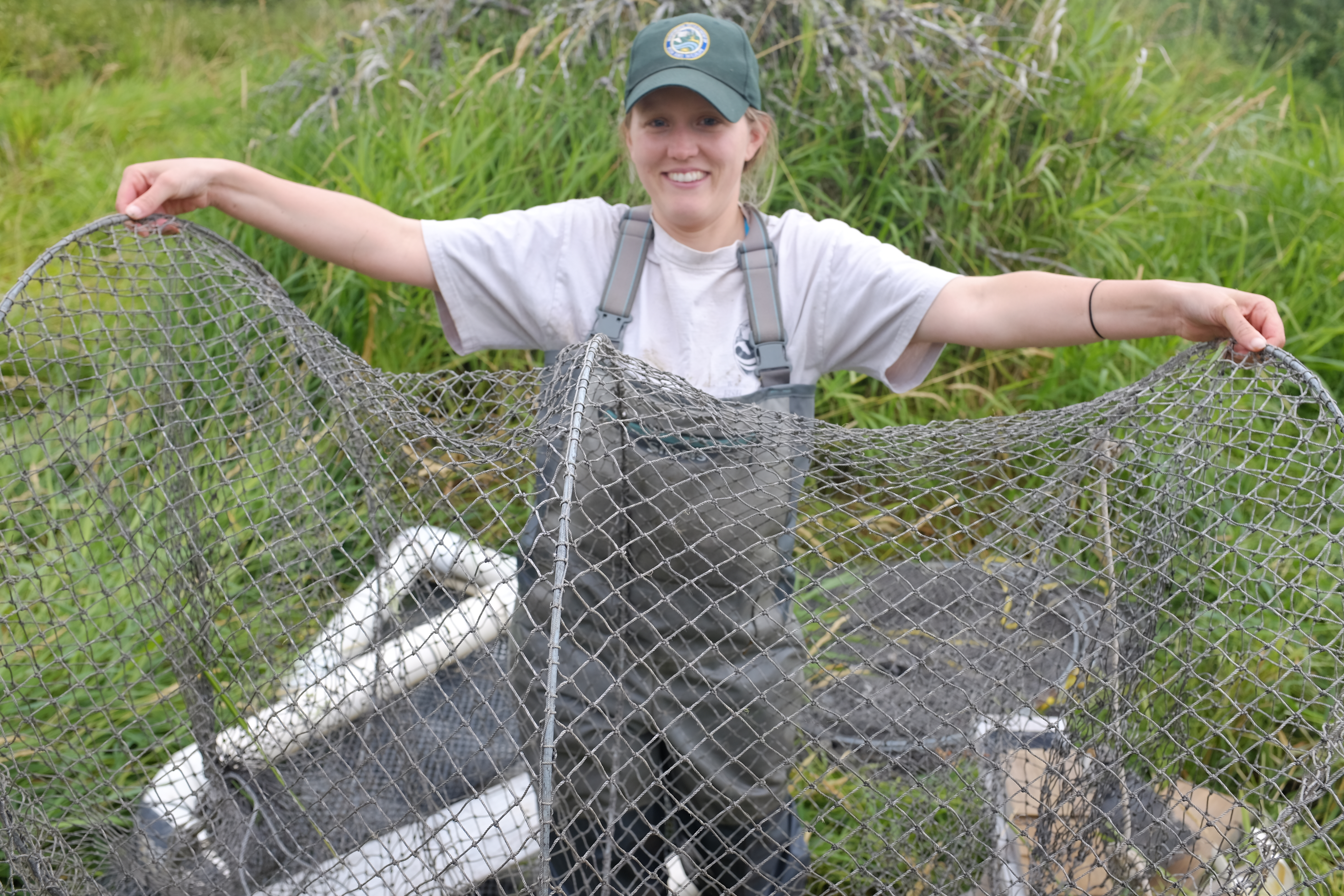
Emily Butler, Assistant District Biologist, Wildlife Program with one of the traps she uses for western pond turtles. Photo by Marisa Pushee.

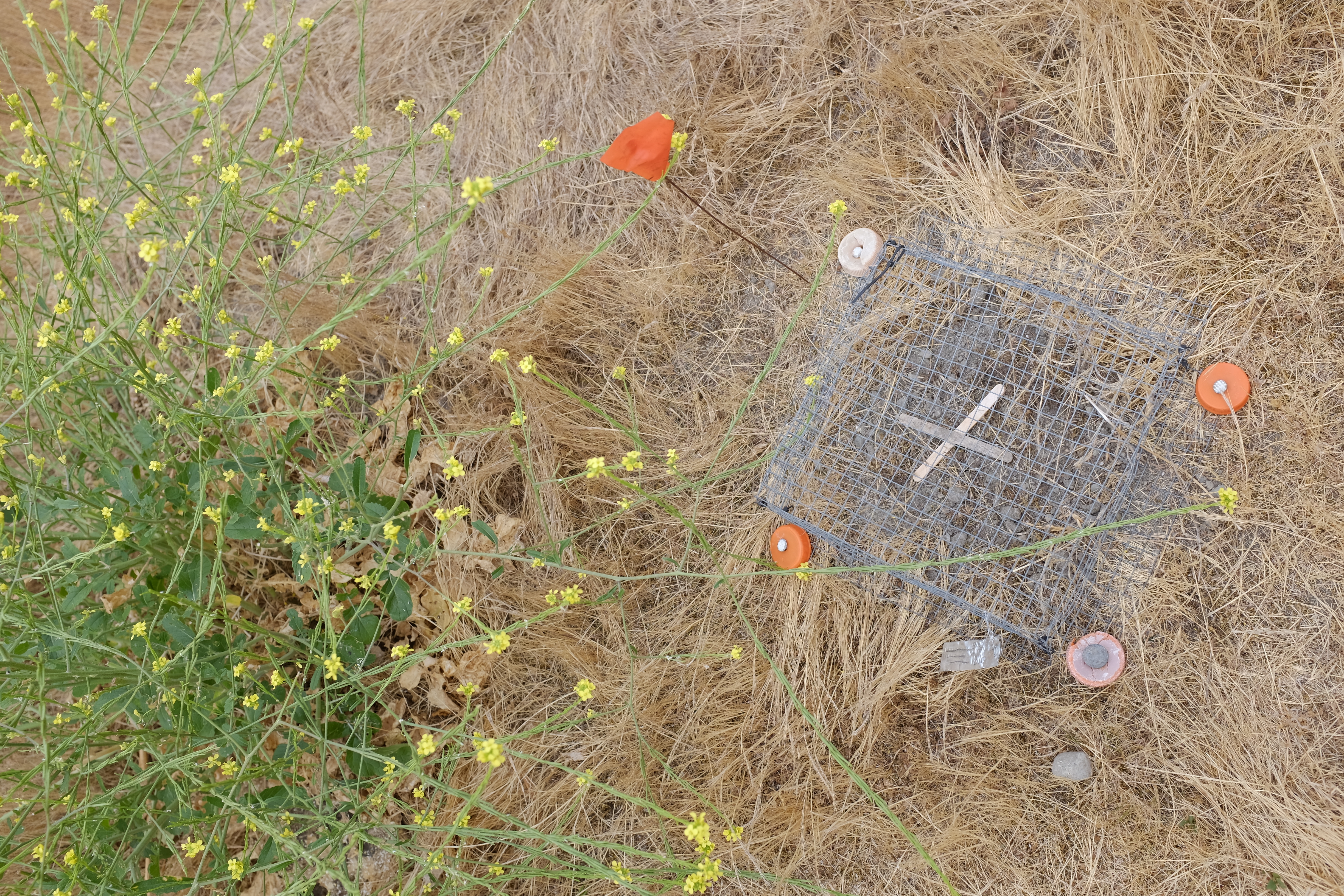
Along with trapping, WDFW also identifies turtle nests in the area. They establish a barrier to protect the site from predators. The barrier pictured below protects an active nest that currently houses WPT eggs. While the eggs will hatch in the fall, the turtles will not emerge until next spring, and it is crucial to protect them from predators until then.

Western Pond Turtle Nest. Photo by Marisa Pushee.

As a recent addition to the SPP team, I was excited to see the Western pond turtle habitat firsthand. I am taking over Jessica Brown’s position as Ecological Conservation Coordinator with Cedar Creek Corrections Center (CCCC) and Larch Corrections Center (LCC), and working closely with WDFW to help western pond turtles fight off shell disease. Critically endangered in the state of Washington, WPT are a crucial native species that have recently fallen victim to shell disease, which deteriorates their shells and shortens the turtles’ lifespans.

In the next week WDFW will locate and identify any turtles that show signs of shell disease. The turtles that they trap will be evaluated at Progressive Animal Welfare Society (PAWS) where veterinarians will determine which individuals require treatment. Those turtles will then be transferred to Cedar Creek Corrections Center (CCCC) where SPP Biological Science Technicians will care for and monitor them through their recovery, then releasing the turtles next spring.

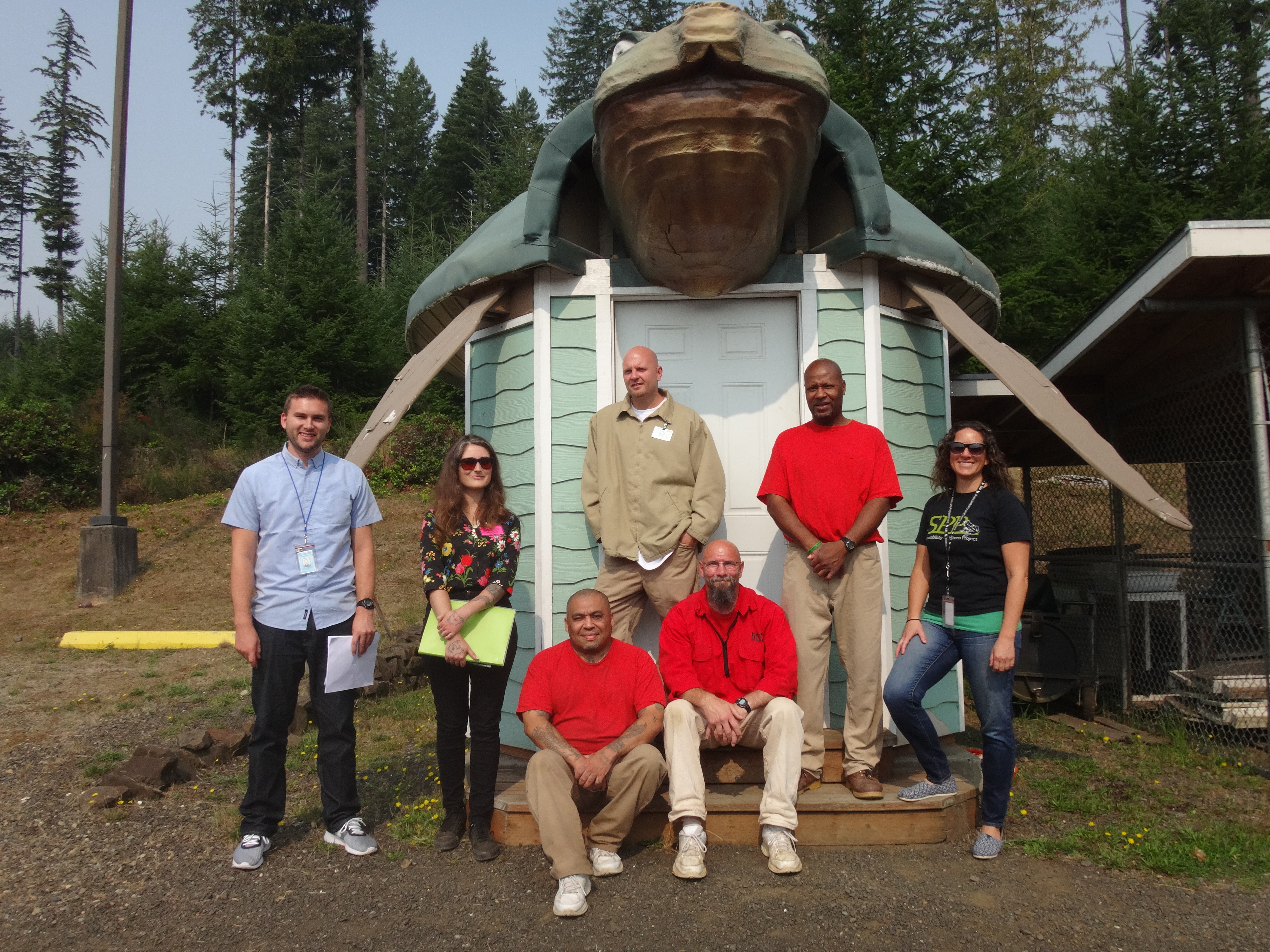
Left to right: SPP Liasion Tyler Kennedy, SPP Ecological Conservation Coordinator Marisa Pushee, Technician Daniel Silva, Technician Lorenzo Stewart, Technician George Gonzales, Technician Darin Armstrong, SPP Ecological Conservation Coordinator Jessica Brown. Photo by Amanda Mintz.

It was a pleasure to see the South Puget Sound Wildlife Area firsthand and gain insight from Emily. With two new Biological Science Technicians also joining our team, we all look forward to meeting our new patients soon and helping them along to a speedy recovery. Stay tuned for updates on our turtles in the fall!

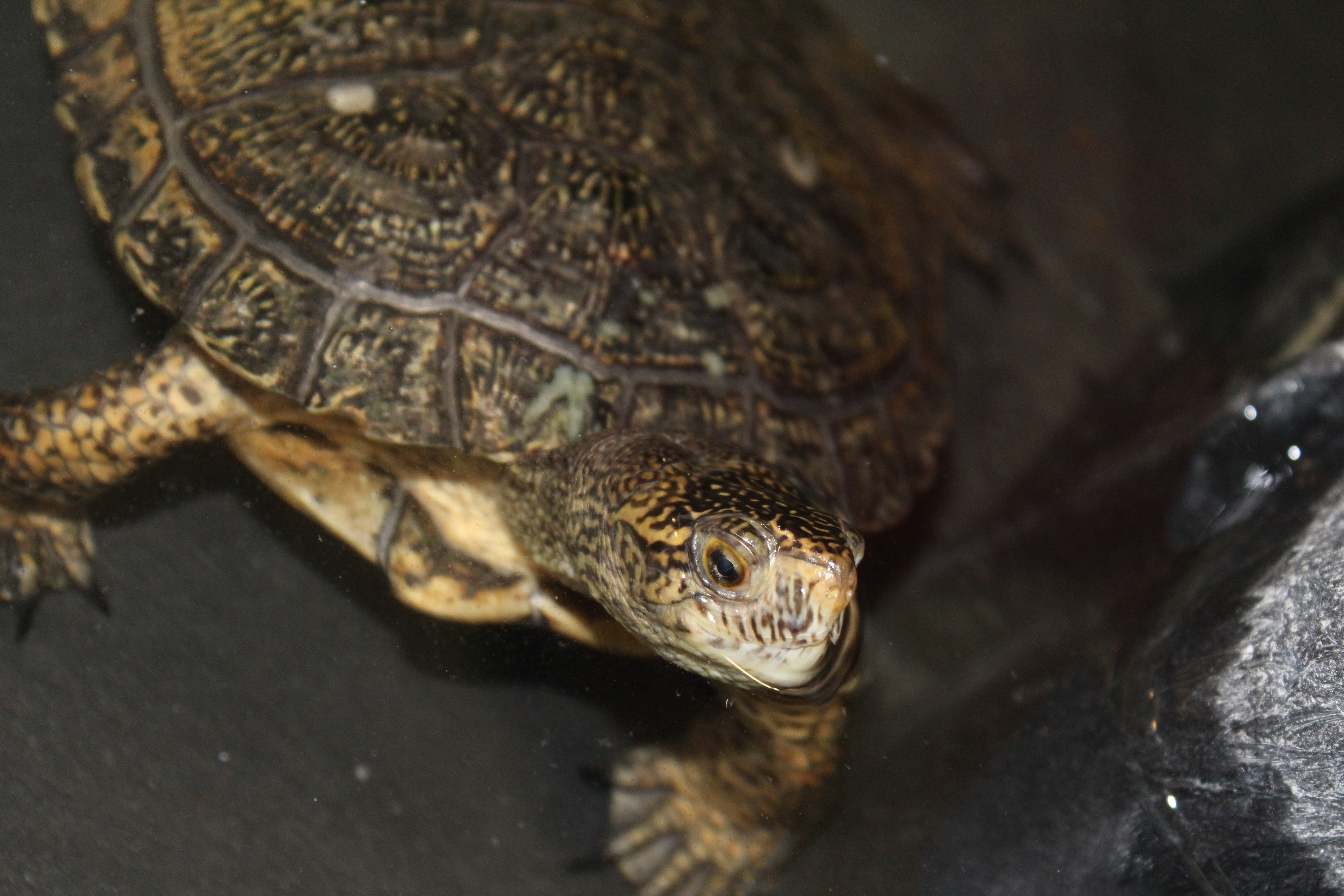
Western Pond Turtle. Photo by Keegan Curry.


Text by Amanda Mintz and Danyl Herringshaw. Photos by Amanda Mintz unless otherwise noted.

The goal of an aquaponics system is to mimic nature by recycling nutrients from animal waste into plant tissue through microbial decomposition. The needs of fish, plants, and microbes must be balanced to keep the system functioning properly. The technicians at Stafford Creek Corrections Center are tasked with being sensitive to the needs of the system and work hard to maintain the balance among these symbiotic organisms. The technicians learn about plant and microbial ecology, water quality, and fish biology while also learning how to troubleshoot plumbing, heating systems, and pumps. When the system is working as it should, the technicians may be left with little maintenance to do. But when something goes wrong, such as a spike in ammonia or a failed pump, it is their job to figure out how to find the problem and fix it.

Click to learn more about how SPP is partnering with the United States Fish and Wildlife Service, the Center for Natural Lands Management, and the Department of Defense to restore Oregon spotted frog habitat in Washington State.

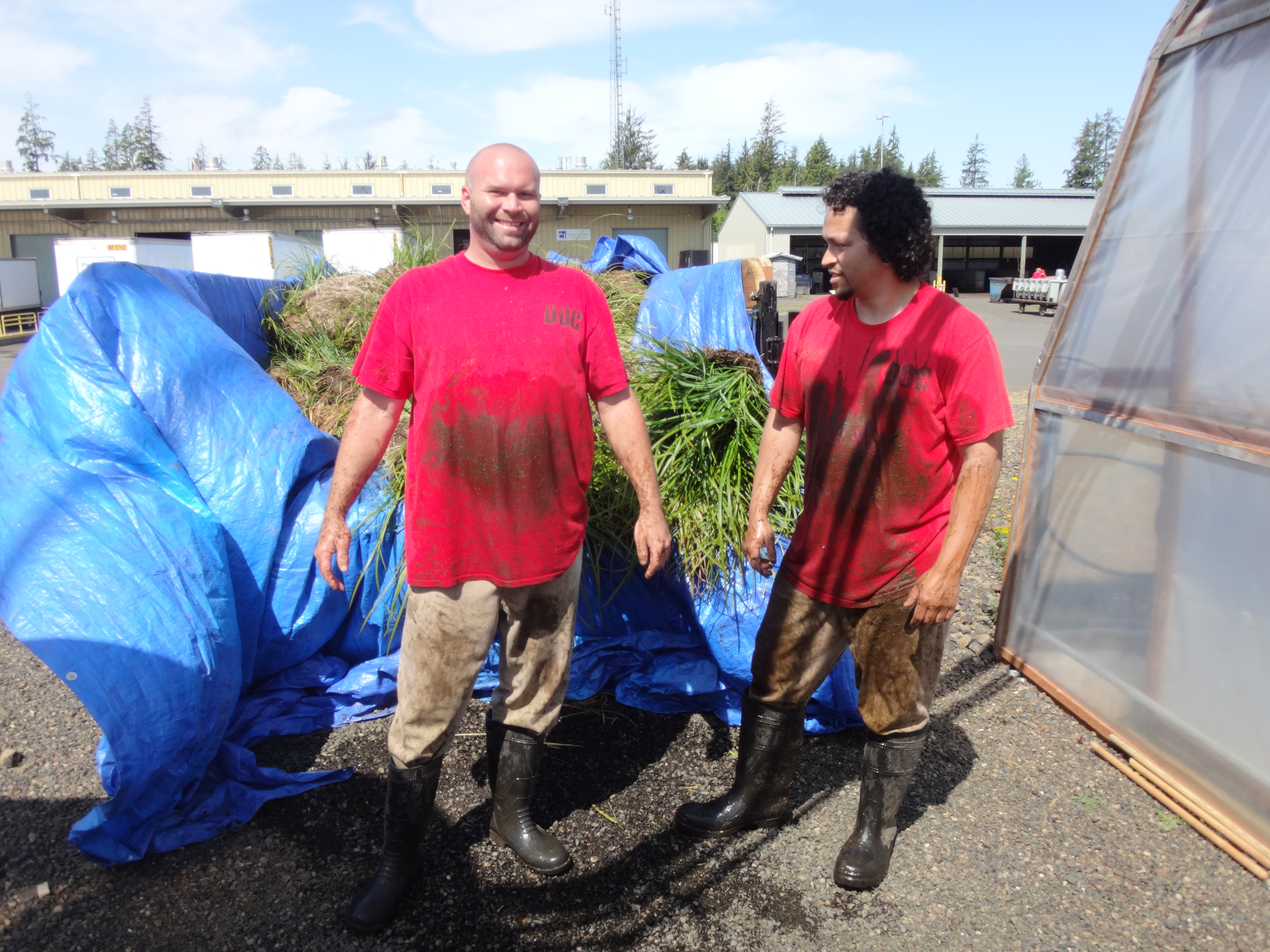
Danyl Herringshaw (left) and Joseph Oddo, current EVM technicians, are learning to maintain a system that often behaves in unexpected ways. This photo was taken just prior to loading mats for delivery…

This spring Danyl Herringshaw, an EVM technician since January, reflected on his experiences in the aquaponics facility:

“I think the most important thing I’ve learned since working at the EVM greenhouse at SCCC is the value of a mistake. The EVM greenhouse is a very delicate and fickle system. A small adjustment to the water flow can affect the entire system’s timing, for example. There have been countless examples of how I’ve learned and grown in my knowledge of this system from mine and others’ mistakes.

“This also puts into perspective how delicate a natural system is. Minor adjustments and maintenance seem to make this job slow, even boring sometimes. However, if an adjustment is too large or too small or a certain piece is overlooked during maintenance, it can have large ramifications. These adjustments and maintenance seem to happen effortlessly in nature.

“This is why natural habitats and ecosystems ought to be preserved when considering urban development. These systems are in place to keep us, and the wildlife that reside there, safe.”

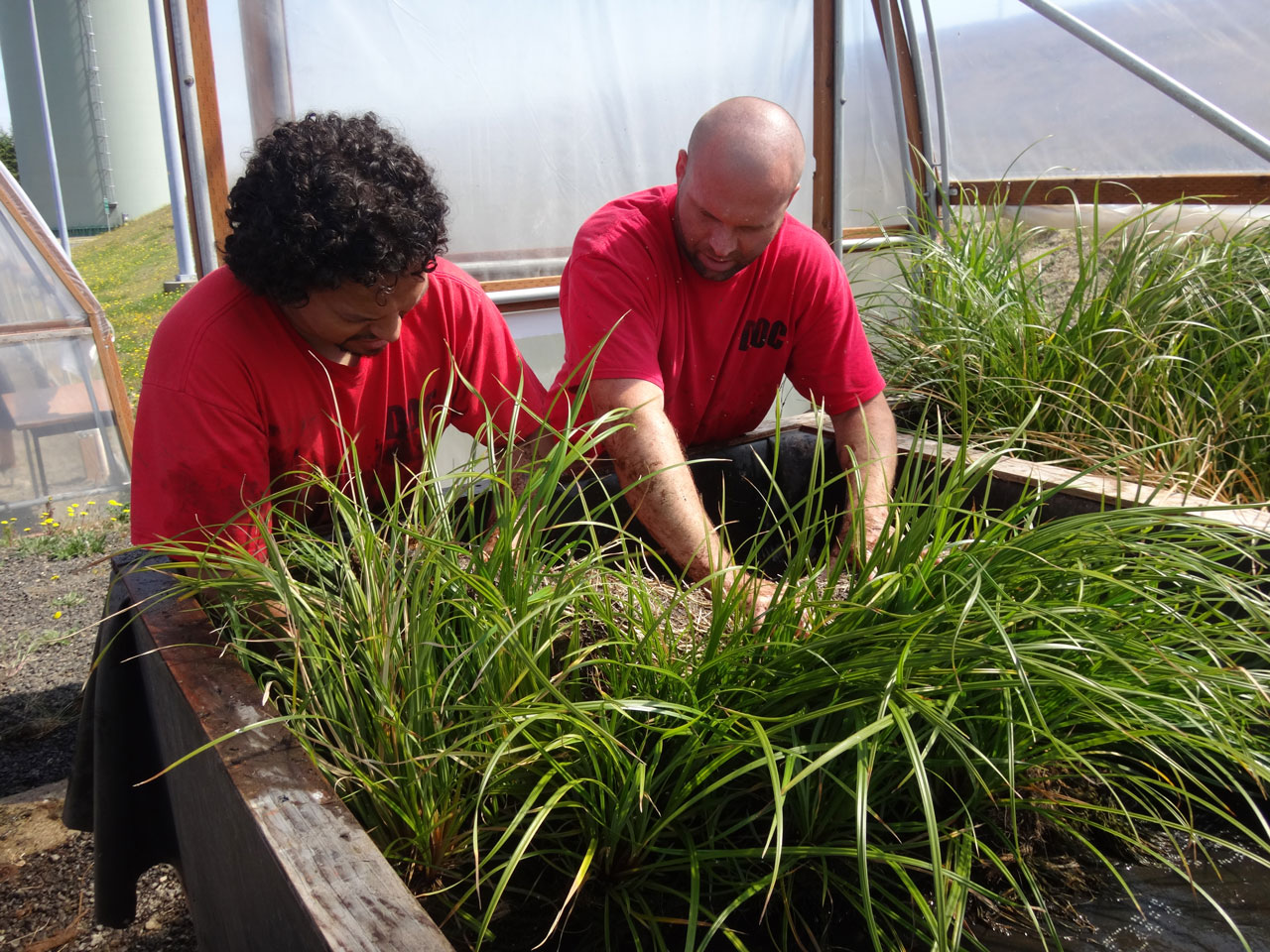
In the EVM, we are doing our part to enhance natural ecosystems by growing native wetland plants in support of wetland habitat restoration for the threatened Oregon spotted frog. The plants are sown in soil and installed in mats once their roots and shoots are large enough. Then they continue growing in the mats until they achieve at least 50% cover. Mr. Herringshaw and Joseph Oddo, who has been working on the EVM project since March, have done an exceptional job sowing, tracking growth, and maintaining the health of the plants. We delivered another set of mats to Joint Base Lewis McChord in June.

…and this photo was taken after loading the mats! Each mat can weigh up to 100 pounds, even after they are allowed to drain and dry out for 24 hours.


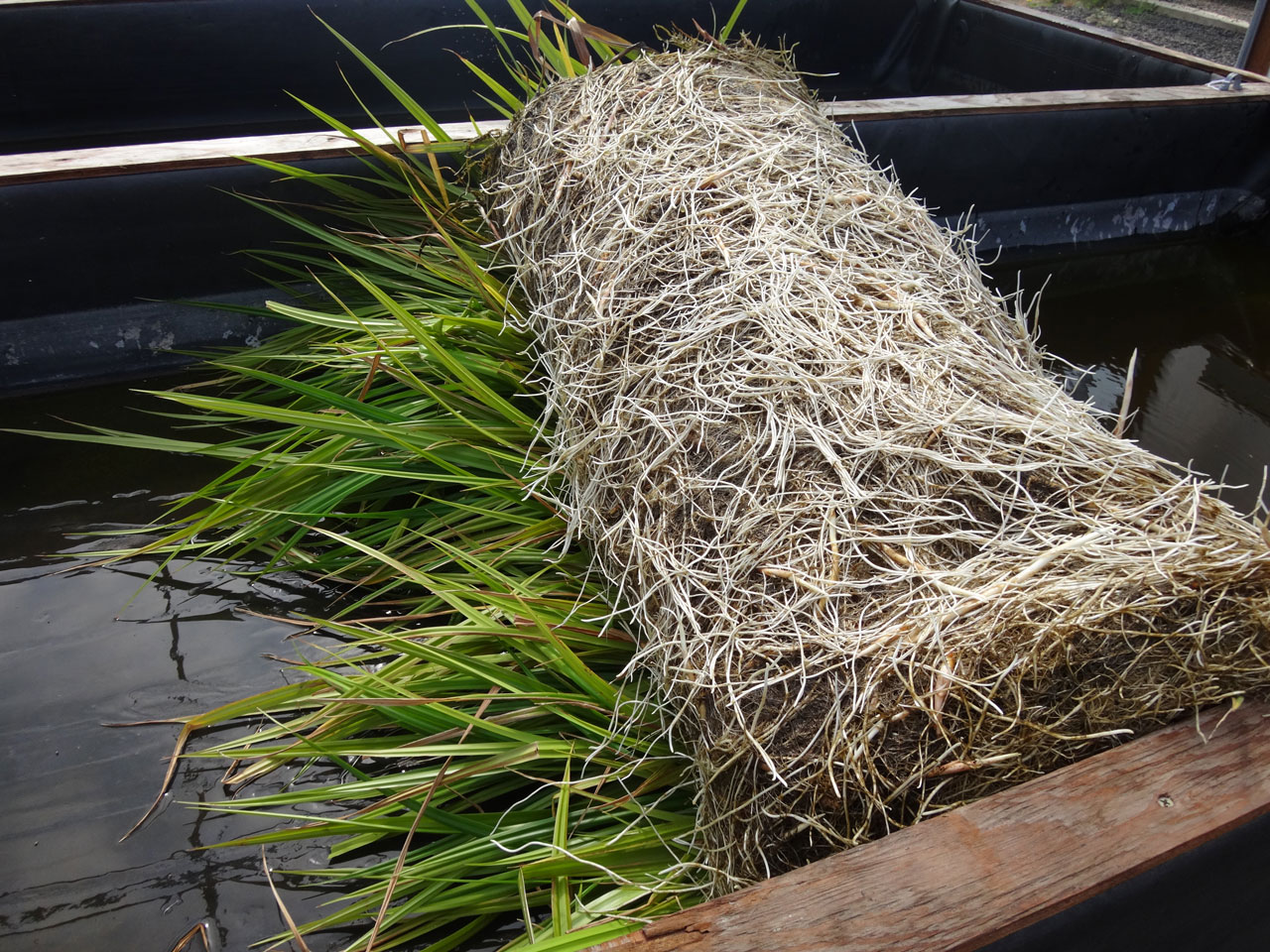
Mr. Herringshaw and Mr. Oddo roll up the mats before loading them onto the truck. In the field, they will be rolled out and secured in place; the plants perk right back up.


This mat can’t wait for contact with soil! Imagine reed canarygrass trying to grow through these lush roots.

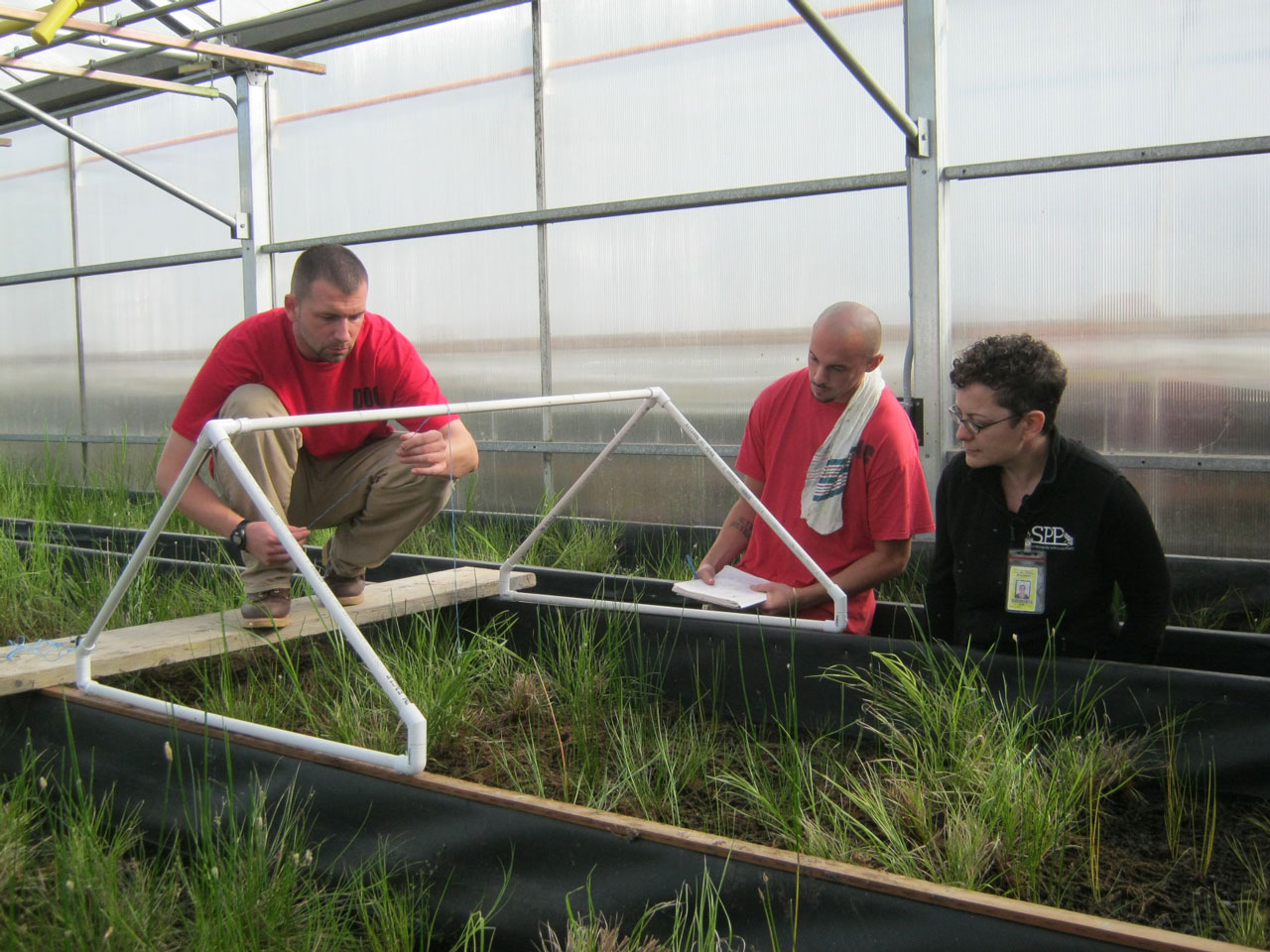
The EVM project is a learning laboratory for technicians and staff alike. Amanda Mintz, EVM Coordinator and Master of Environmental Studies graduate student at Evergreen, has been researching the effects of adding compost tea to the aquaponics water on plant nutrient content . Theoretically, the microbial community in the compost tea—a brew made by soaking bags of compost in aerated water—aids in plant nutrient uptake in several ways, such as helping decompose organic matter in the water, or stimulating plant hormones that promote growth and increase nutrient uptake. Mr. Herringshaw and former technician Matthew Fuller collected plant tissue samples for Amanda to take back to Evergreen’s laboratories for analysis, tracked plant growth and health data, and ensured that system parameters remained constant during the experiment.

Former EVM technicians Brian Bedilion and Matt Fuller calculate percent cover using the point method. Photo by Jim Snider, DOC

Stay tuned for the results of Amanda’s project!