Text and photos by Joslyn Rose Trivett, SPP Network Manager
In late March, the prairie conservation nursery at Washington Corrections Center for women held a work party. Three SPP staff who had never before worked in an SPP nursery got to join the crew for a day: Sadie Gilliom, SPP turtle program coordinator, Liliana Caughman, lecture series coordinator, and me. It was a gorgeous, sunny spring day—hot, even, under the hoop house plastic.
Our gracious hosts were conservation nursery technicians Stephanie Boyle and Lerissa Iata, SPP Ecological Conservation Nursery Manager Carl Elliott, and DOC’s Scott Skaggs. It was such fun to join their work, and help them catch up with the needs of sprouting seeds.
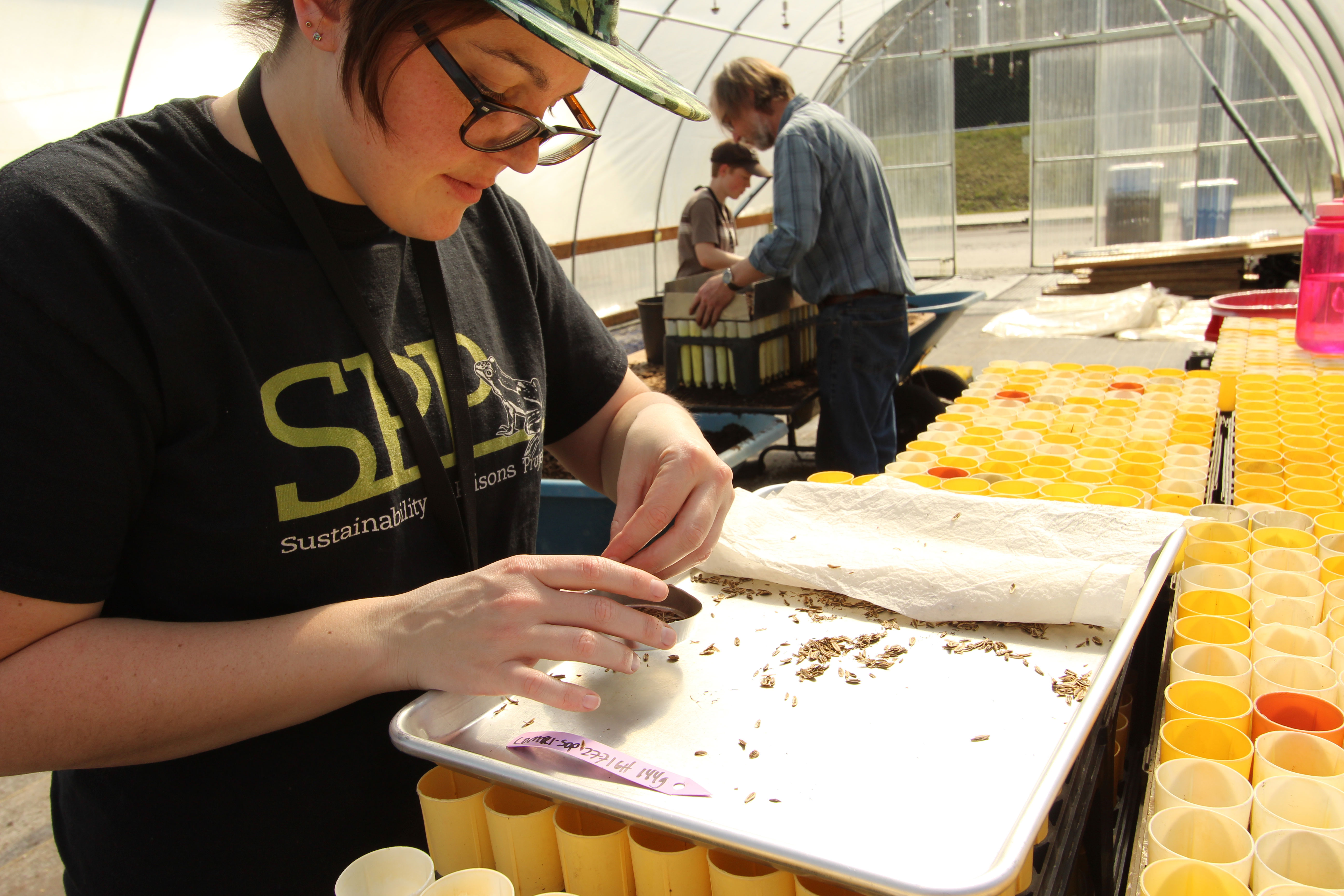
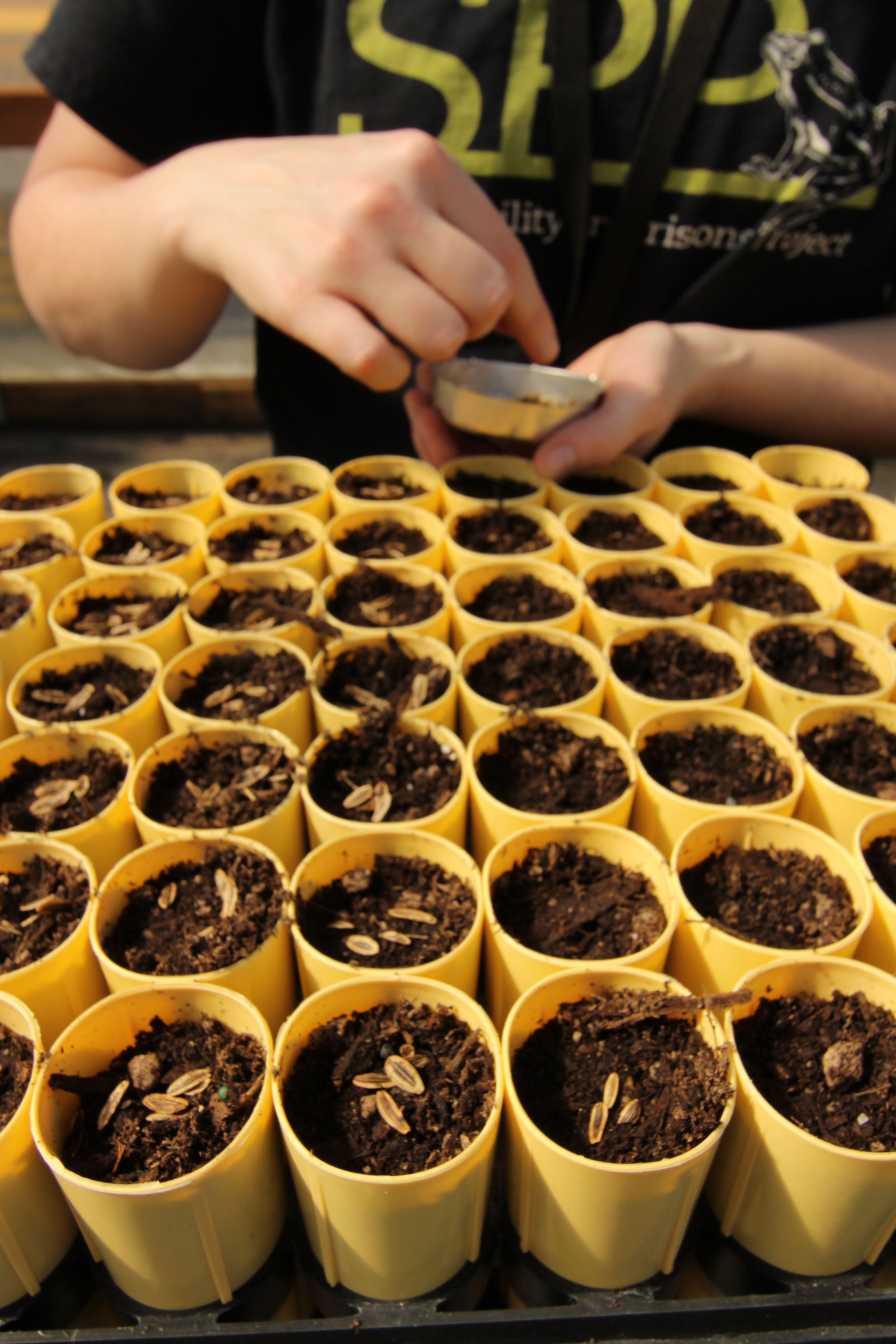
SPP’s Liliana Caughman fills her seeding tray with Lomatium seeds while Sadie Gilliom and Carl Elliott fill racks with soil.
The Lomatium helped inspire the work party—it started sprouting in the fridge earlier than normal.
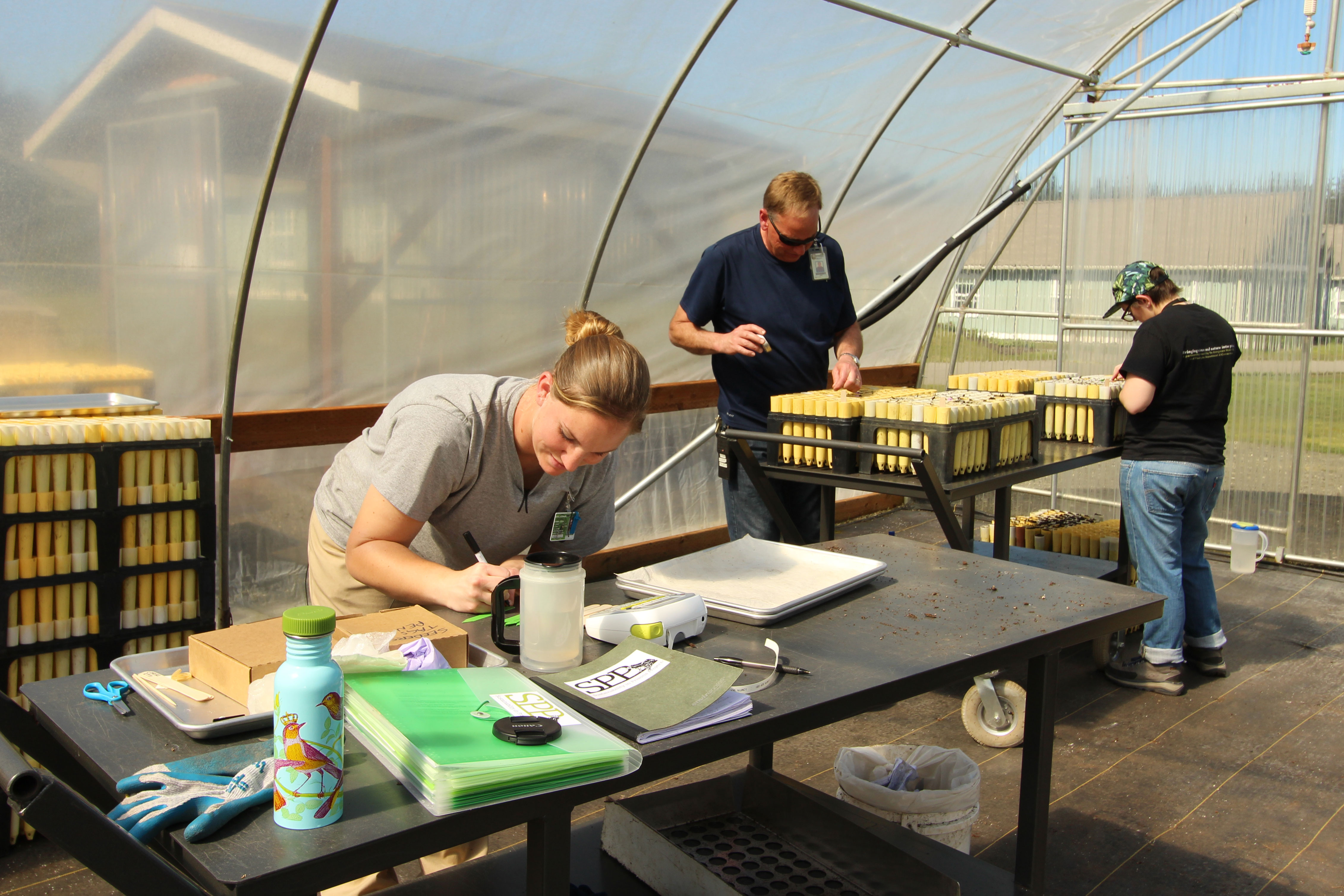
Ecological Conservation technicians Stephanie Boyle makes tags to label the seed lots sown.
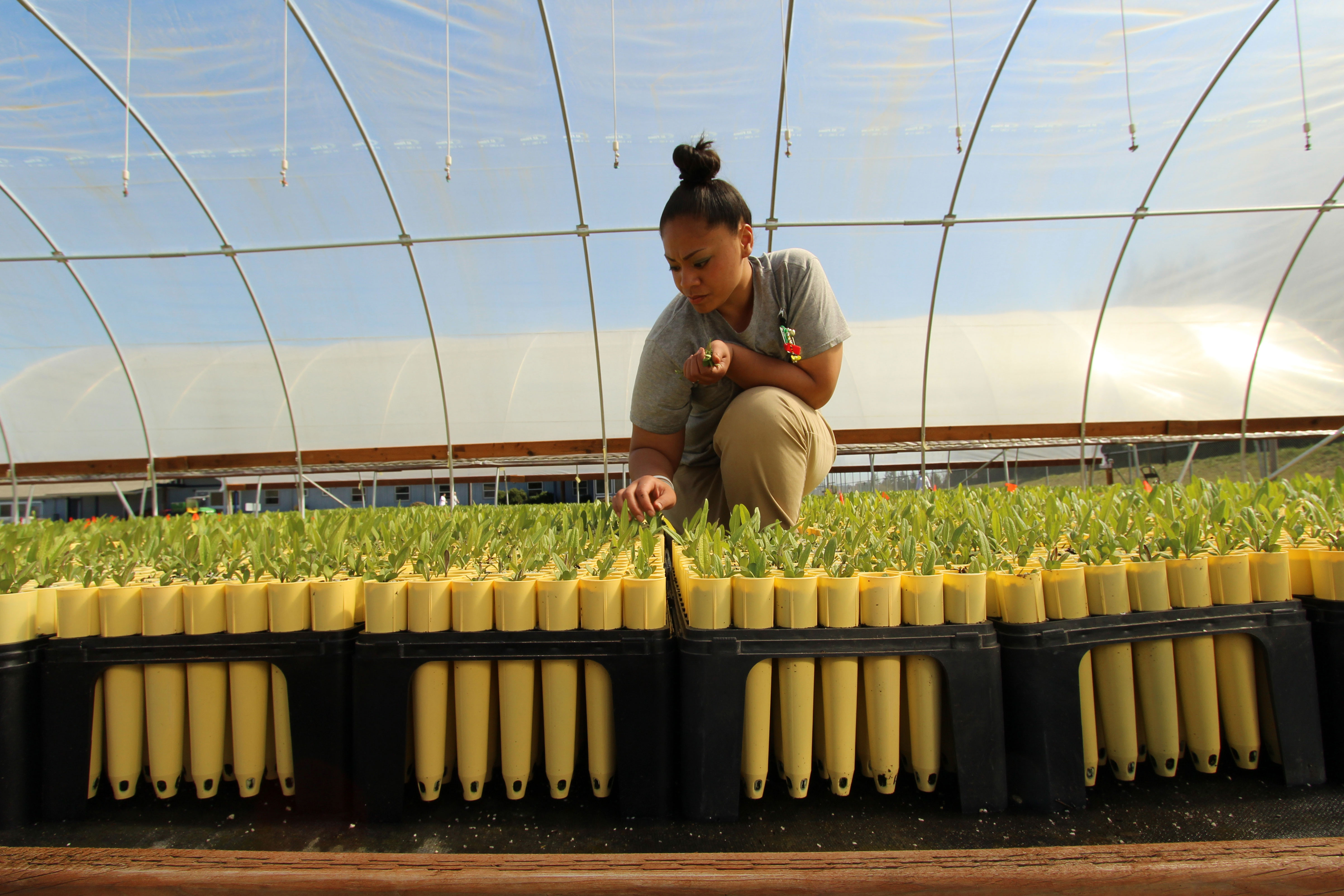
Ecological Conservation technician Lerissa Iata checks for weeds growing among prairie species.
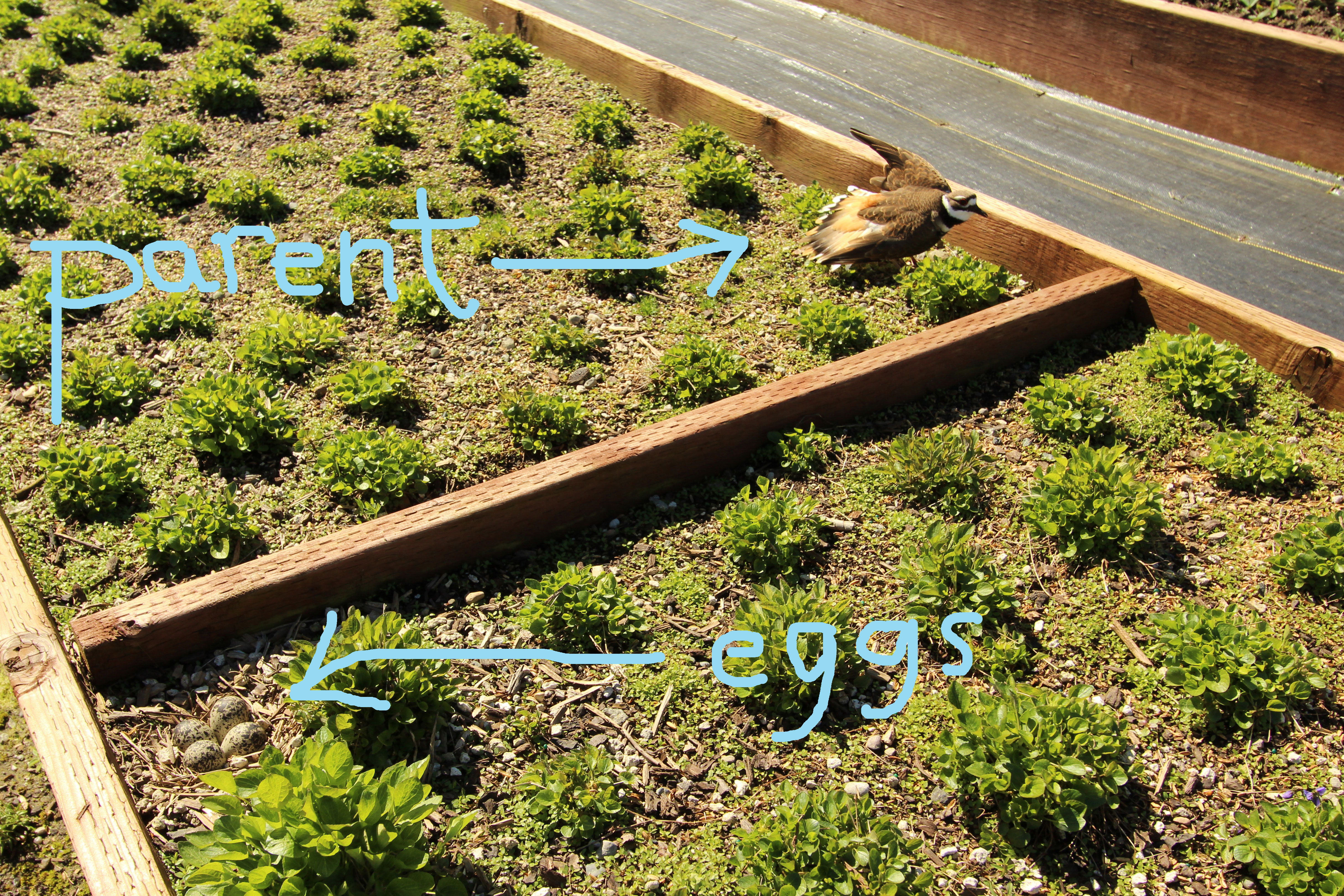
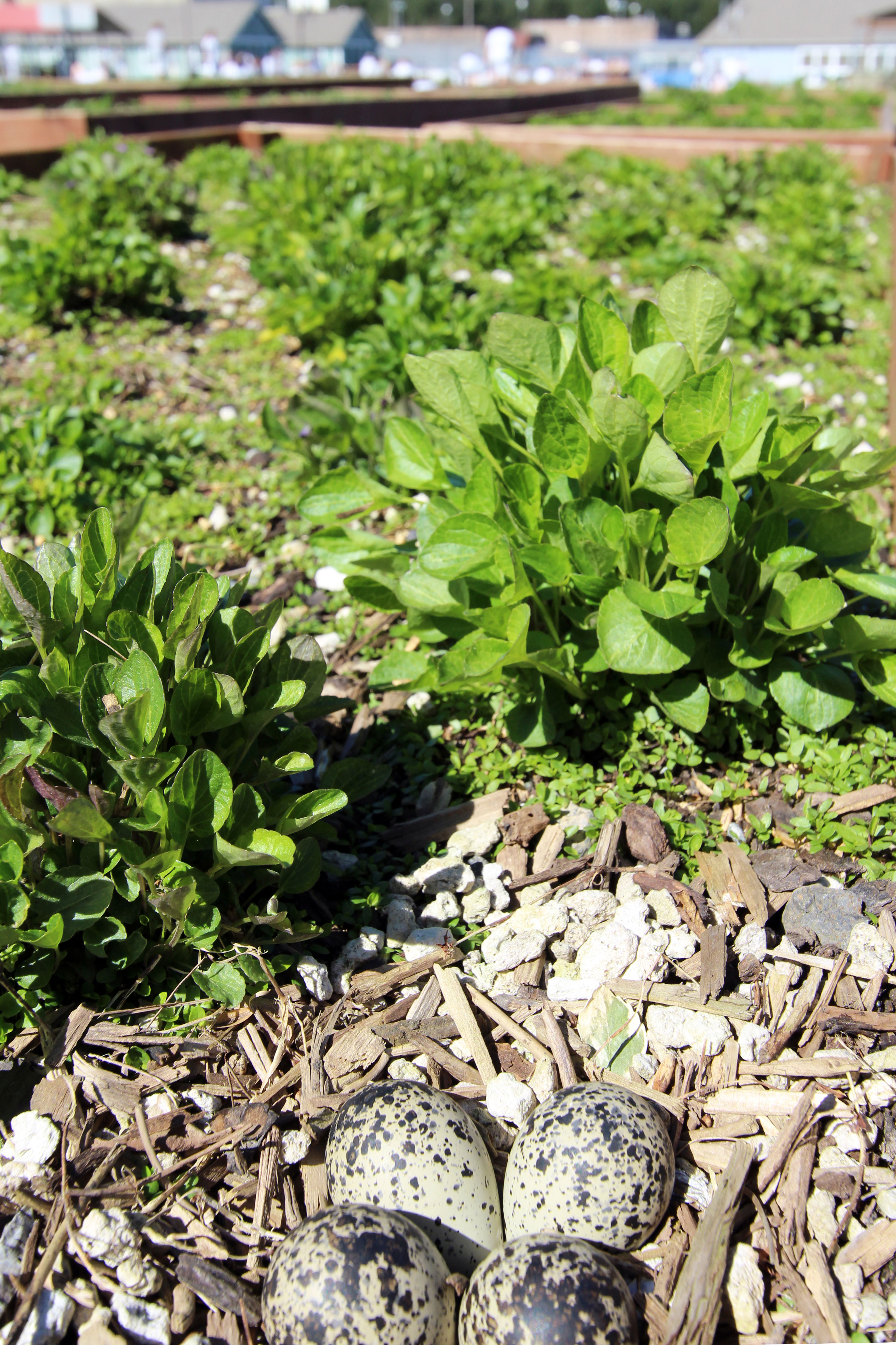
Since the violet beds were built, a pair of killdeer has used them as a nesting site, and the birds are adored by many at the prison. As is typical for killdeer, they laid their eggs out in the open, and anytime a visitor comes near they put on a loud and vigorous display.
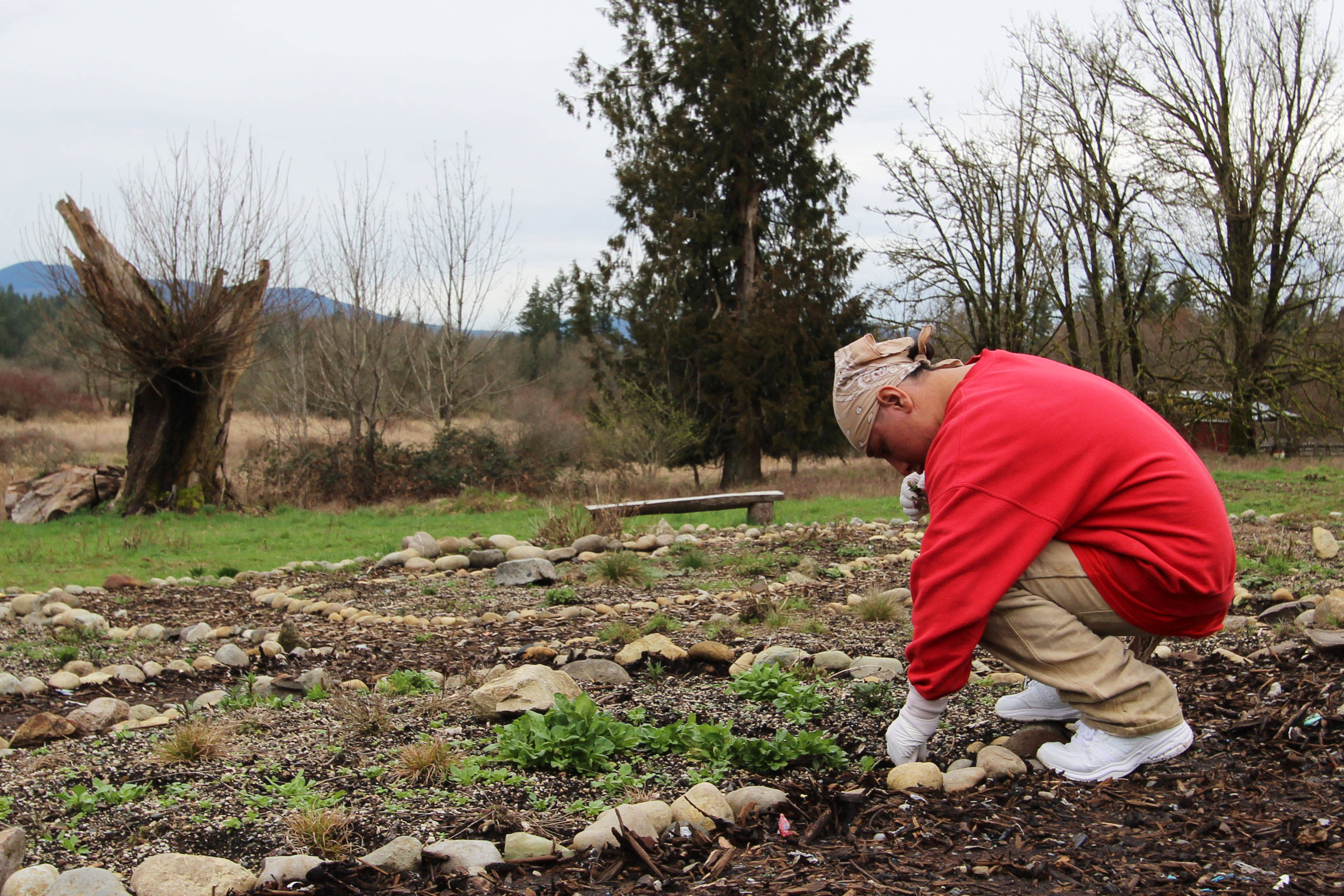
Beyond the killdeer eggs, on the first truly warm day of spring, you can see many sun lovers out in the yard.
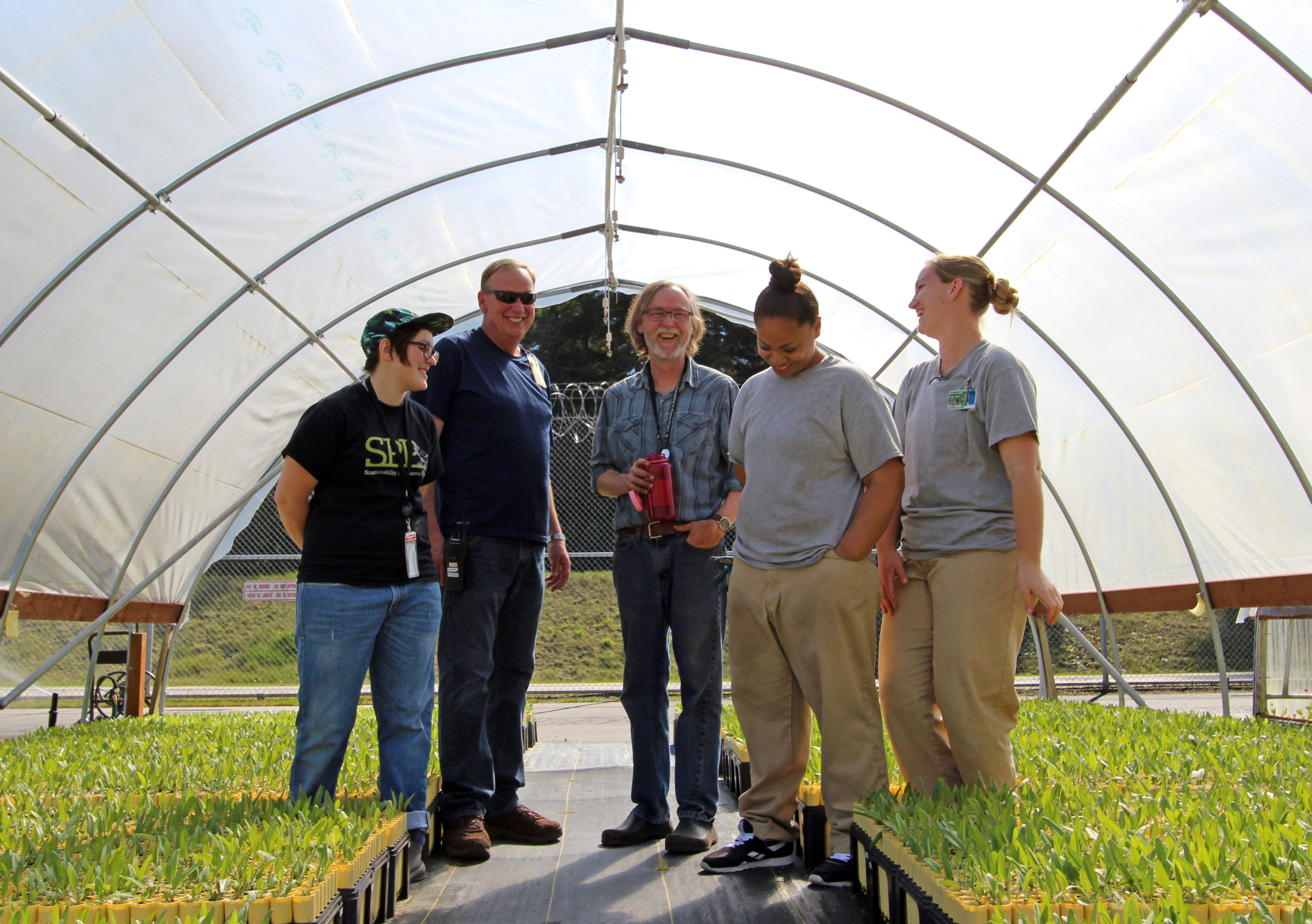
I asked the work party to pose for a group photo, and they were such cool subjects that we all cracked up.
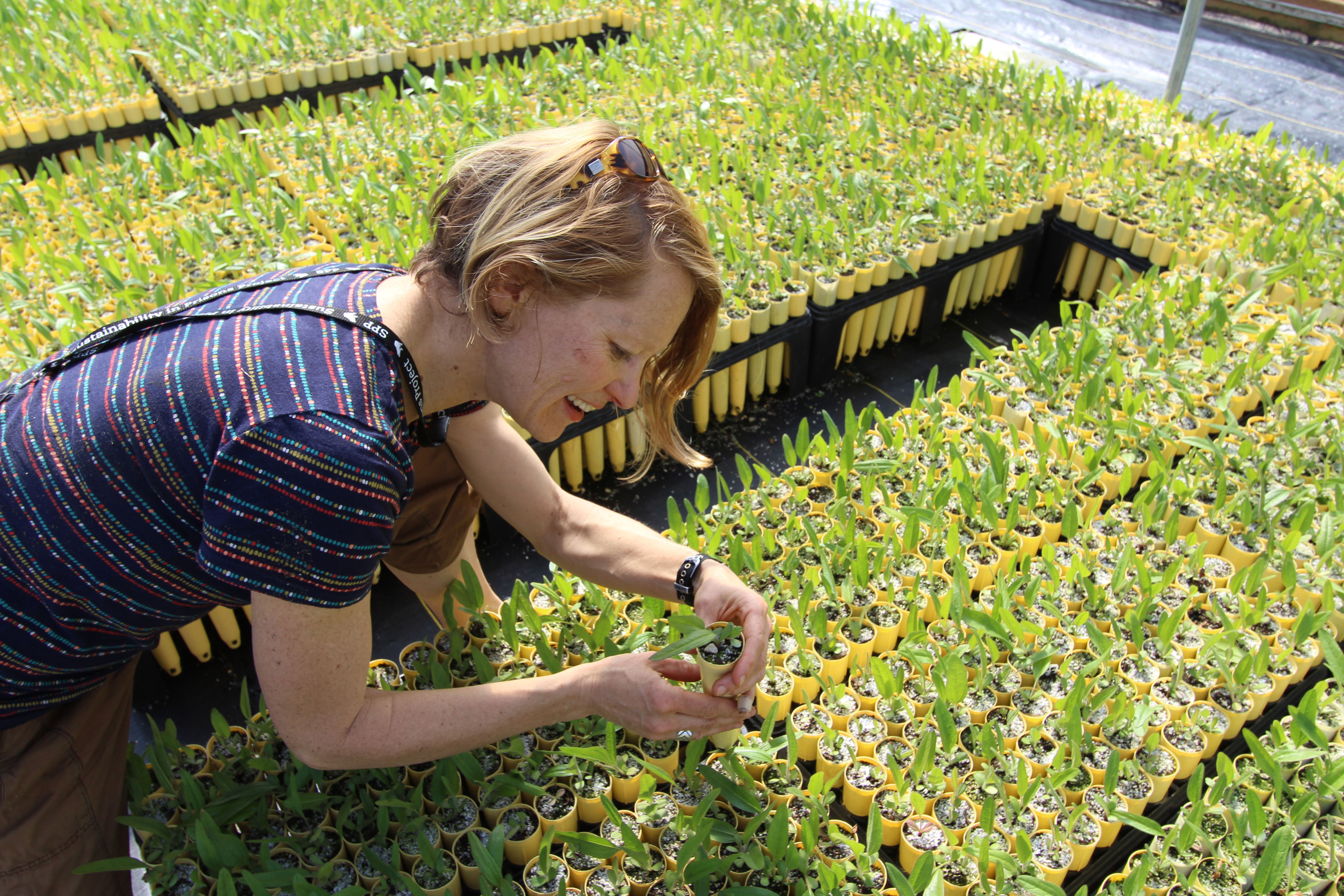
I admire the balsamroot seedlings in the nurery. I love plants! Photo by Liliana Caughman.
Anywhere and everywhere we can, we bring nature inside prisons.
by Joslyn Rose Trivett, SPP Network Manager
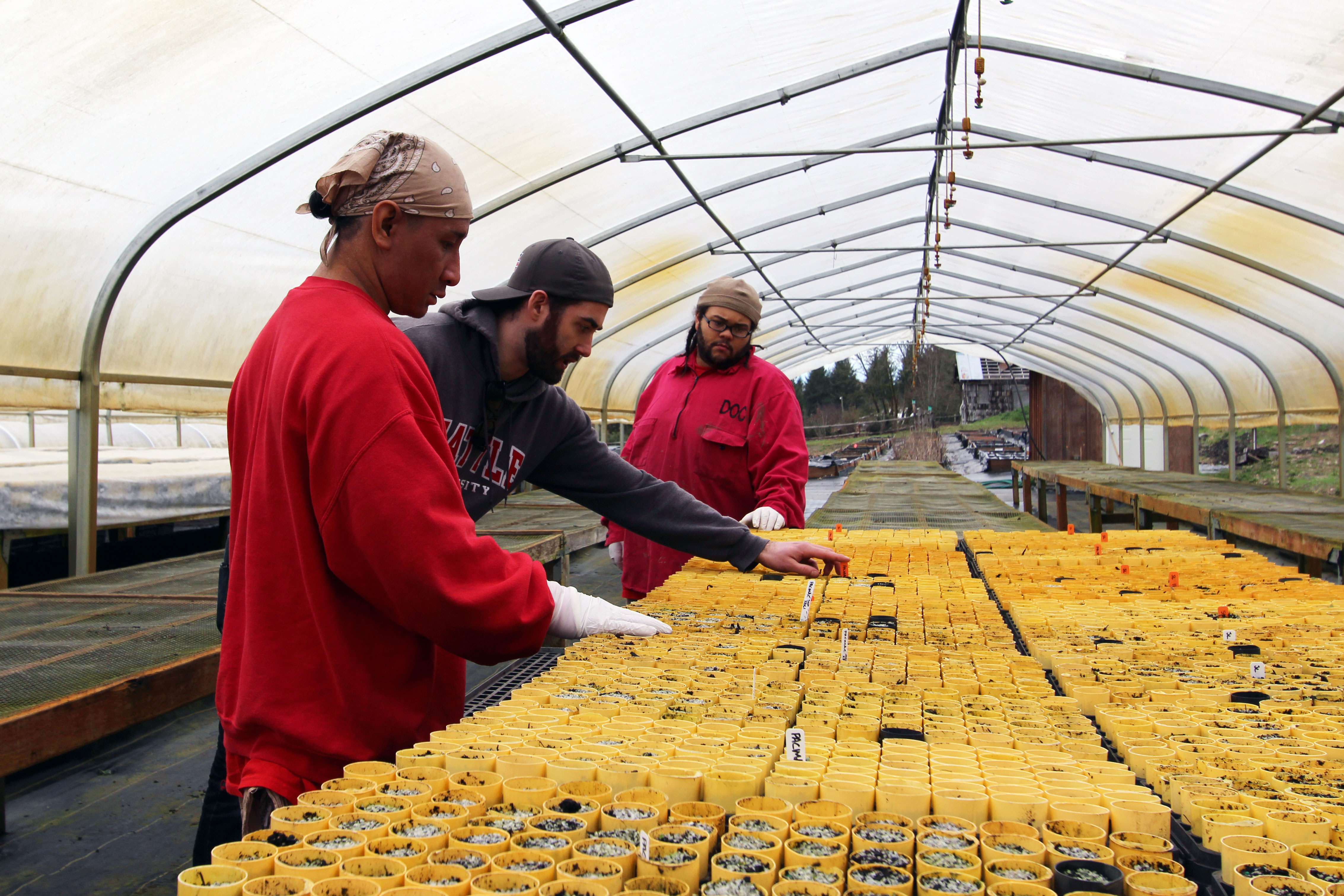
In February, I visited Shotwell’s Landing and got to see the prairie restoration crew in action. The crew is contributing to program coordinator Conrad Ely‘s thesis research for the Master of Environmental Studies program. The research builds on the work of an earlier Master’s thesis investigating how treating seeds with plant-derived smoke water, which contains many of the same chemicals present in prairie fires, can affect their germination rates and vigor—many prairie species are very difficult to propagate, and they hope to trigger germination with treatments simulating prairie fire.
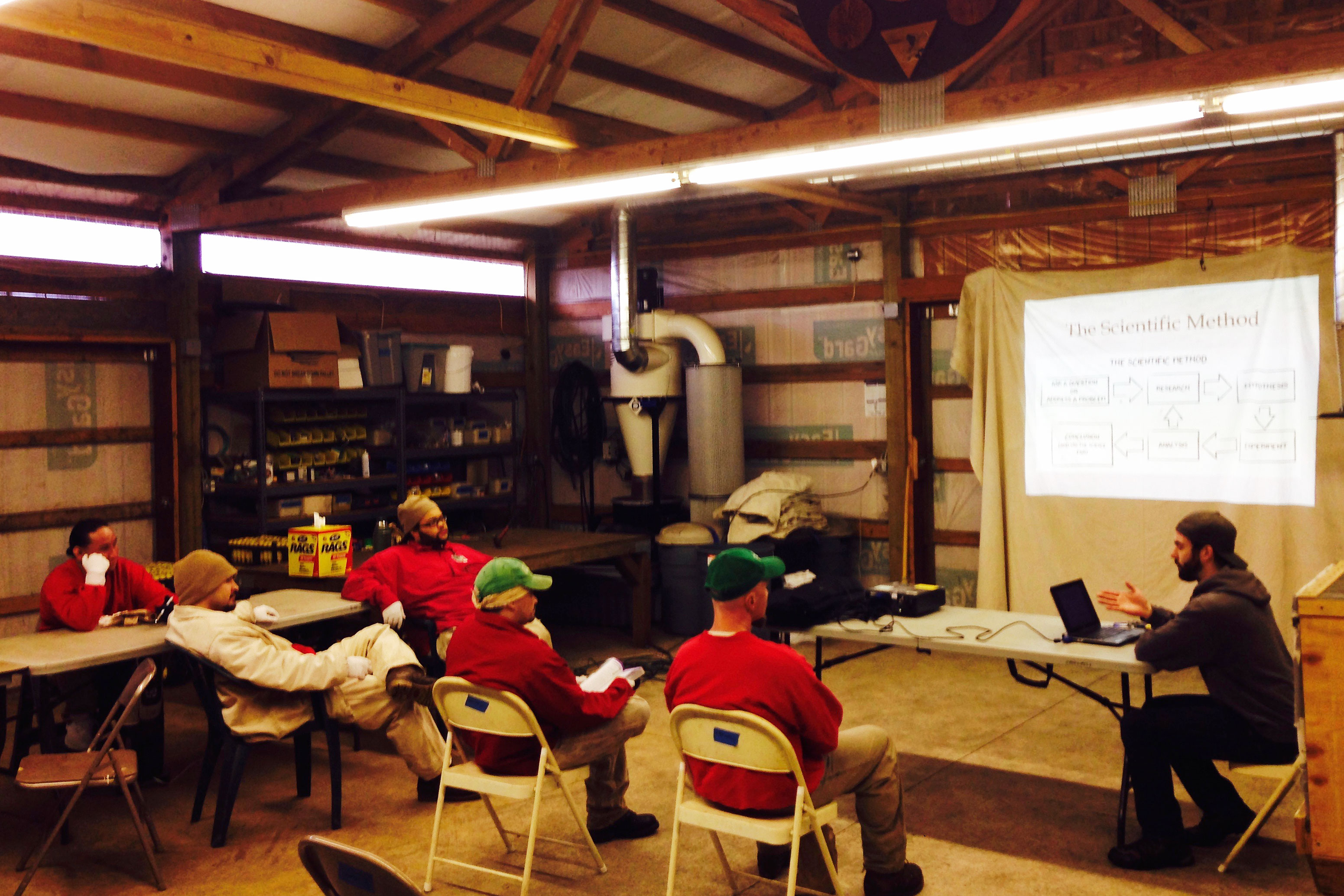
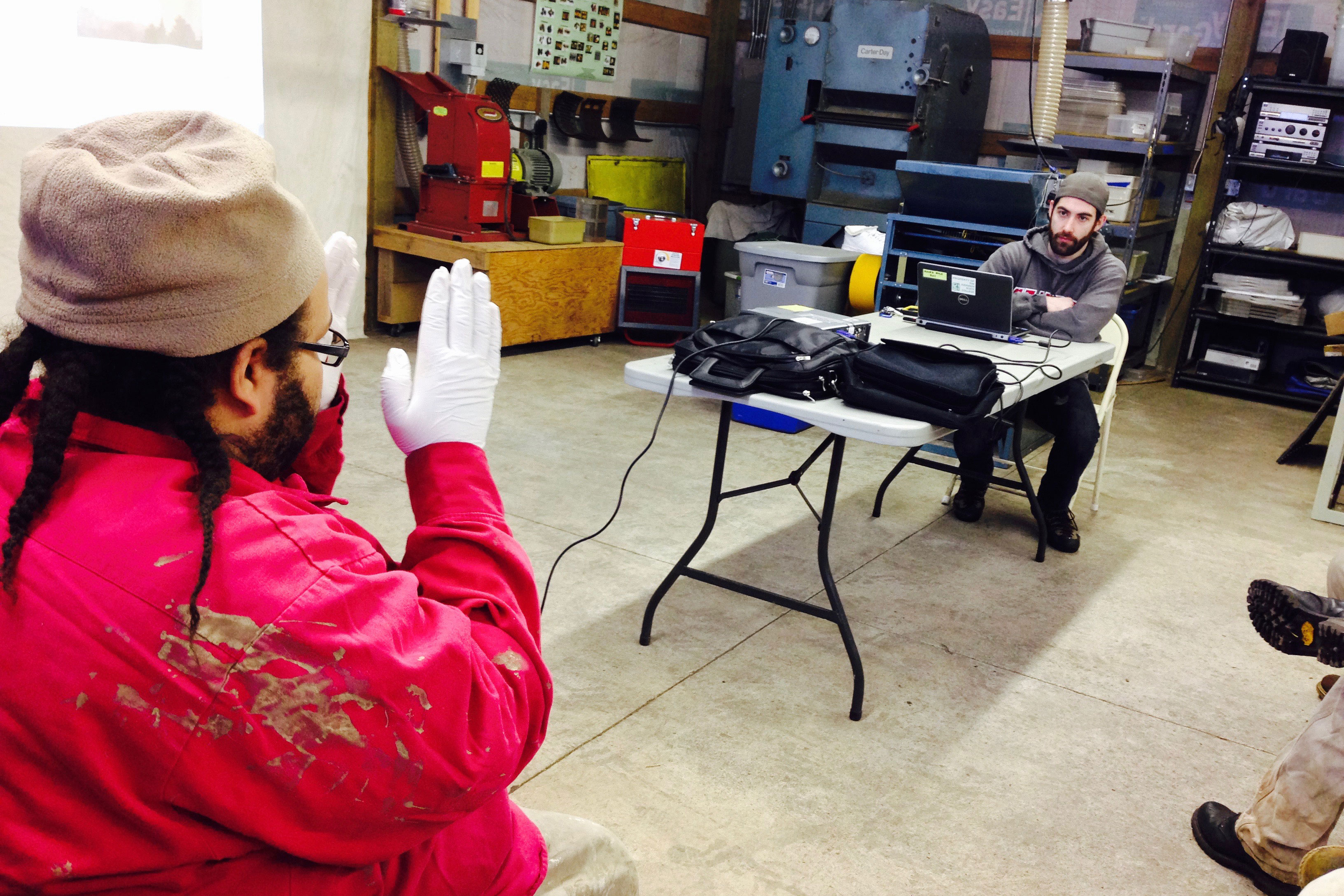
After the first nursery tasks of the day, program coordinator Conrad Ely shared a presentation on the scientific method. He tied principles of research design to their shared experiment, and then to Mima Mounds enigma. He used theories on the Mima Mounds’ formation to illustrate opportunities as well as limitations of the scientific process. From their experience with prairie restoration, the crew knows the Mounds well, and they jumped in with their own thoughts and theories.
My gratitude for everything the crew does for the region’s prairies. They are employed in prairie restoration full time, and their efforts and enthusiasm make a big difference for South Sound prairies, one of the most rare and threatened landscapes in the nation.
Program coordinator Conrad Ely leads discussion of the scientific method.
Benjamin Hall brought great questions and ideas to the discussion of the Mima Mounds mystery.
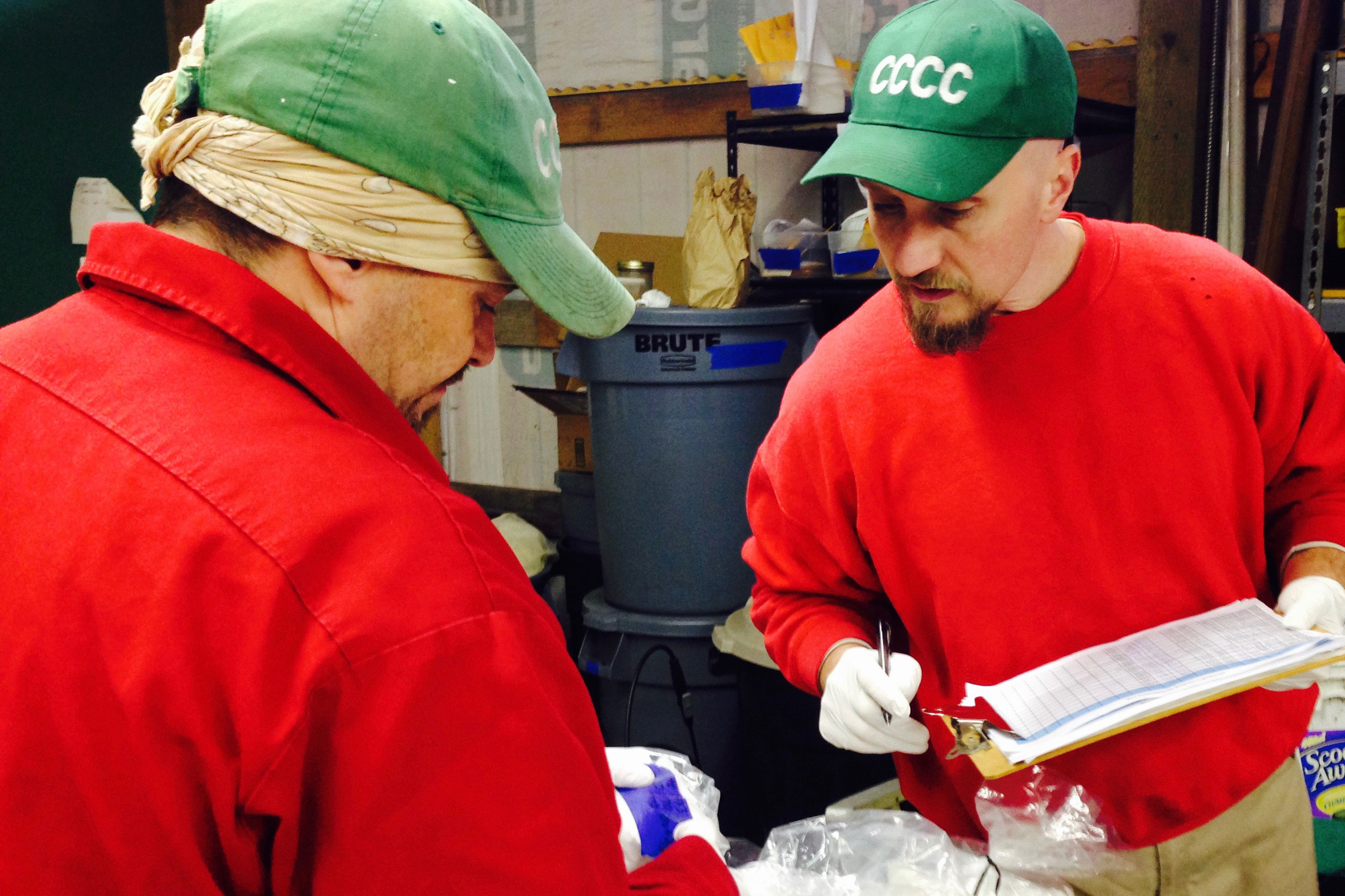
Nursery technicians Robert Bowers (left) and Andrew McManus (right) track seed lots for stratification prior to spring sowing.
Conrad discusses germination rates with technicians Bobby Un (left) and Benjamin Hall (right).
The group visited the demonstration garden at the north end of Shotwell’s Landing, mostly dormant in the winter but still a pleasing site for contemplation.