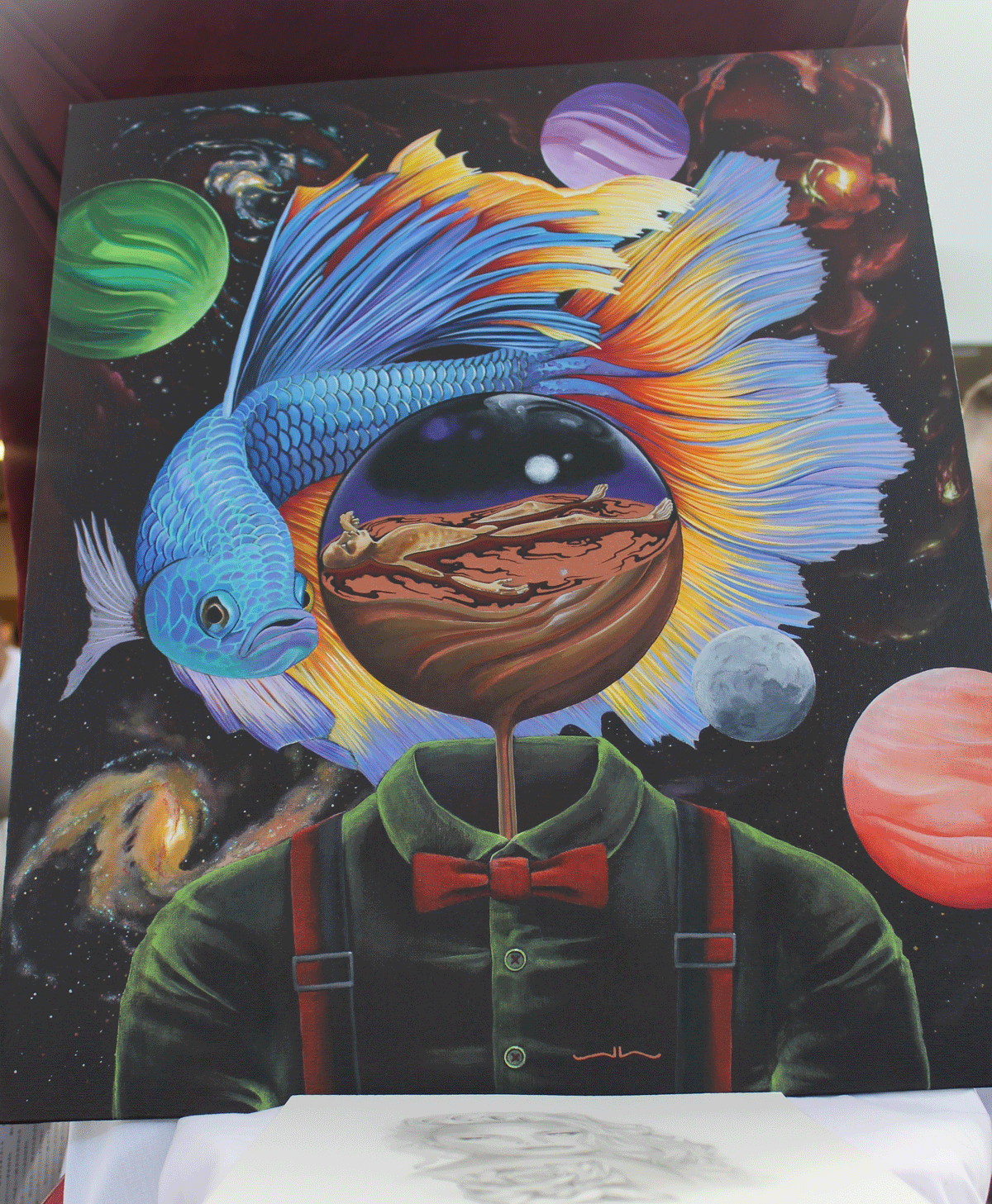
Text by Bethany Shepler, SPP Green Track Program Coordinator

Note: please be aware that individuals featured in this story and in these images have victims who are concerned about re-victimization; any sharing or promoting should keep that risk in mind.
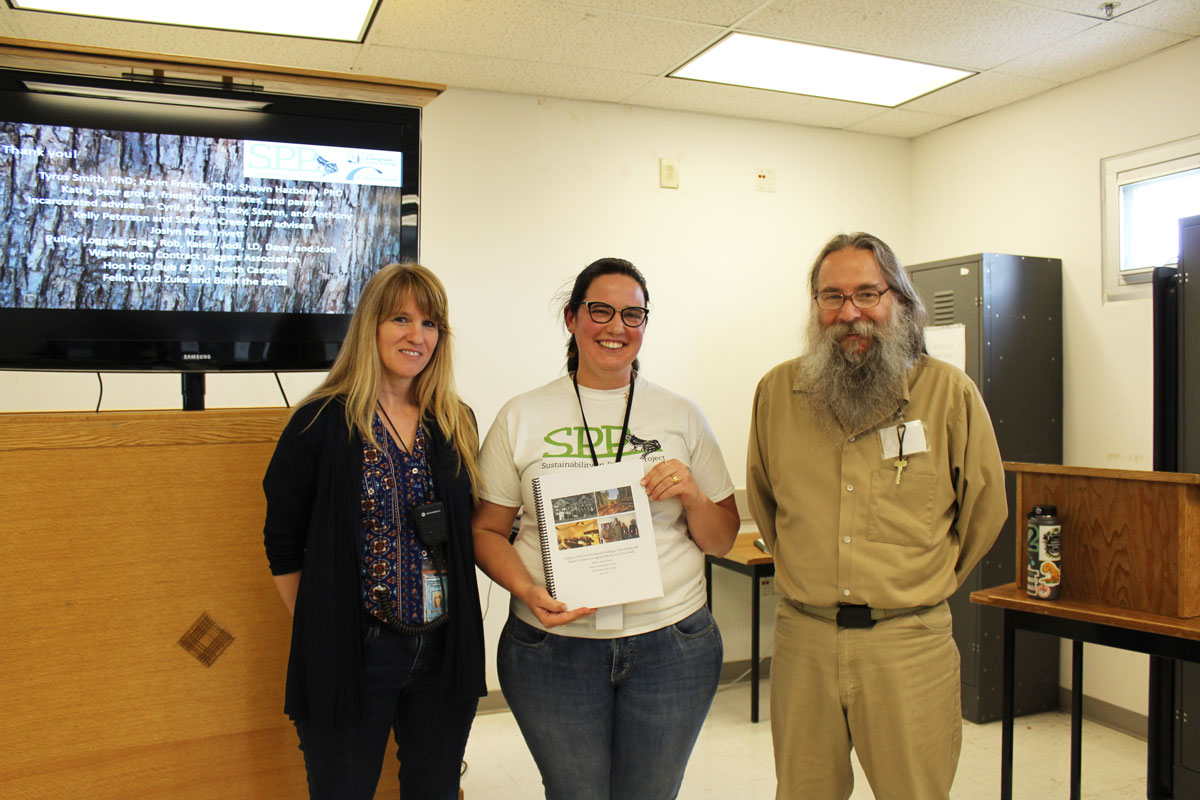
I presented this copy of my thesis to the advisor team at Stafford Creek Corrections Center, represented here by Kelly Peterson and David Duhaime. Photo by Erica Benoit.

This past June Dr. Tyrus Smith signed my thesis. He was my thesis advisor and his signature validated all of my hard work over the last year-and-a-half. Suffice it to say, I was ecstatic! My thesis process was more difficult than I imagined it would be, took longer than I expected, and I am truly proud of the end product.
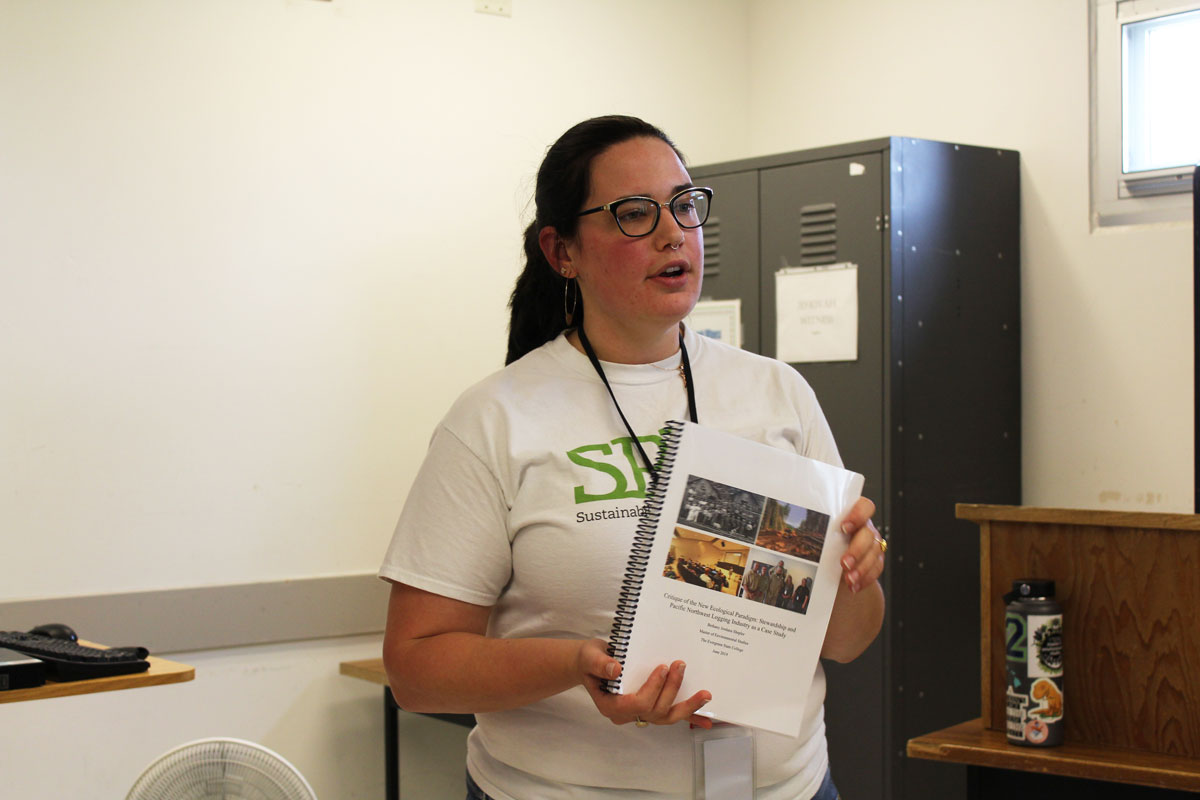
Following completion of my thesis, I returned to SCCC to present on the process and findings. Photo by Erica Benoit.

Before we move on, I could not have gotten to that moment of completion without the support of Evergreen Master of Environmental Studies faculty (Dr. Tyrus Smith, Dr. Kevin Francis, and Dr. Shawn Hazboun), my friends and family, my classmates, the people who participated in my study, the loggers that answered all of my questions, and the constant support from incarcerated and staff advisors at Stafford Creek Corrections Center (SCCC). Thank you all!!
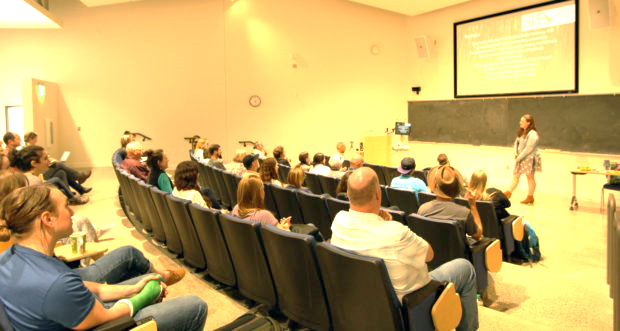
Thank you to everyone who supported me and made this research possible! That’s me presenting my thesis to the community at The Evergreen State College. Photo credit: Joslyn Rose Trivett.

Thesis advisors in prison

From the very beginning of my thesis process, I knew I wanted to work with incarcerated individuals and SPP supported me in making this possible. So, I invited environmental studies experts housed at SCCC to work with me as advisors. I worked with the Roots of Success instructors and the Roots liaison at the facility, Kelly Peterson. A photo of me and the advisors is shown below.
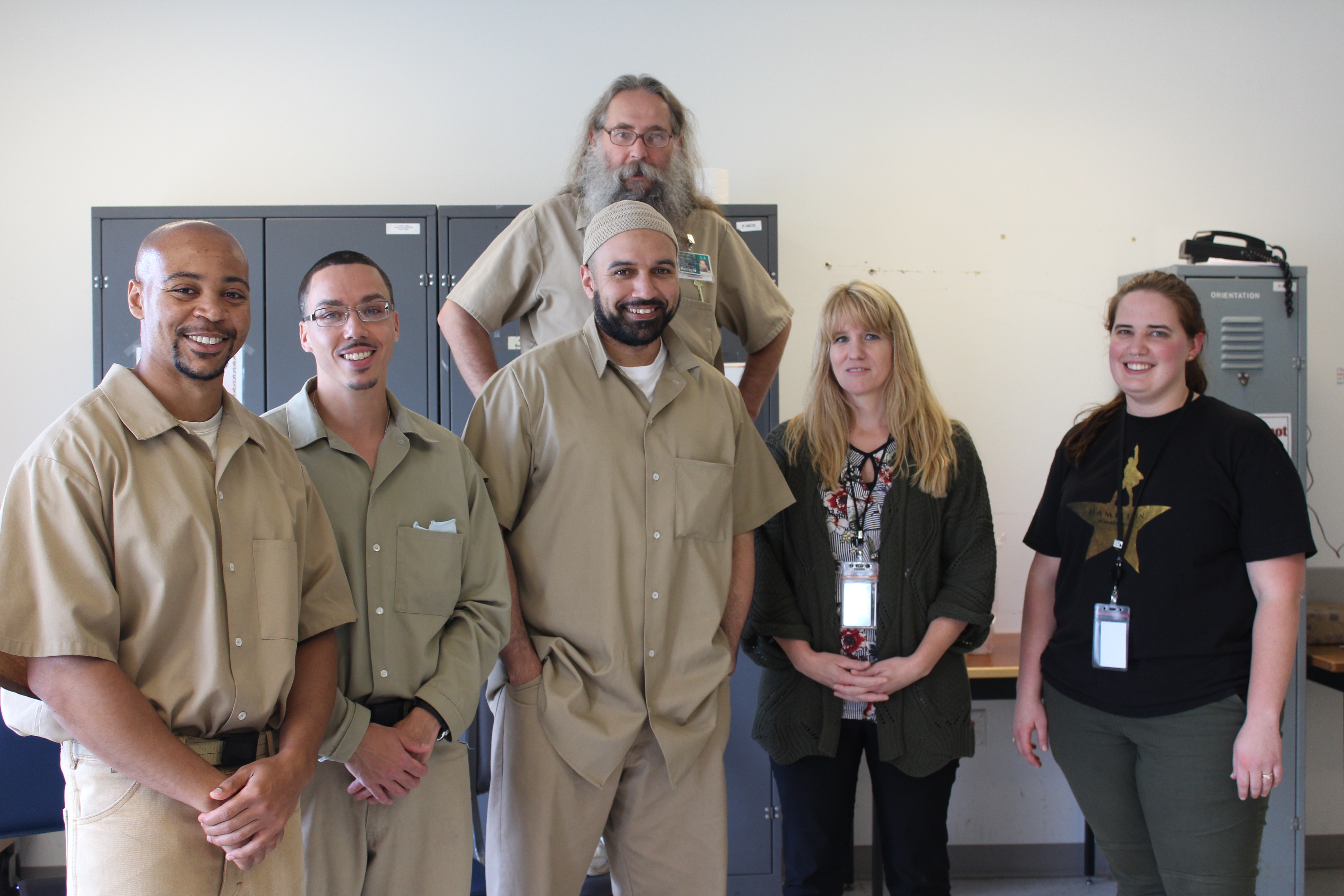
These advisors helped me formulate the roots from which my thesis grew and greatly contributed to the process, too. From left to right: Cyril Walrond, Steven Allgoewer, David Duhaime (top), Anthony Powers, Kelly Peterson, and myself. Photo credit: SPP Staff.

Over the past two years, we met on multiple occasions. To develop a deeper understanding of the subject matter, the incarcerated advisors studied the articles and references I provided; they read peer-reviewed academic articles, research planning guides, newspaper articles, and other publications. They offered feedback and ideas on several aspects of the research including topic selection, philosophical framework, research design, study population, survey design, and presentation of the topic.

Seminar

This past February, Kelly Peterson helped me set up a seminar with a larger group, and included Dr. Smith. We asked all participants to read four pieces beforehand, to prepare for the discussion. Two were data-heavy, very dense, dry academic articles describing the theoretical framework I used for my thesis. Another was a piece President Roosevelt wrote after visiting the Pacific Northwest, in which he proposed a forest plan. And the last was an academic article about common predictors of environmental attitudes.
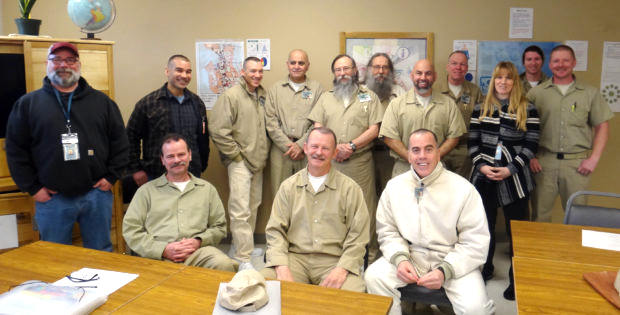
Here’s a group photo of the people who participated in the thesis seminar. Photo by Bethany Shepler.

I remember being nervous that no one would want to talk and I could not have been more wrong! They had all clearly done deep dives into the reading and made interesting connections I had missed in my own review of the literature. Everyone had thoughtful input and suggestions for things to explore and add to my thesis. The seminar was lively and thoughtful and there was never a quiet moment.

What is my thesis about?

My completed thesis is titled: A critique of the New Ecological Paradigm: Stewardship and a case study of the Pacific Northwest logging industry. It explores the concept of stewardship and how it fits into the New Ecological Paradigm. The study population was people actively working in the logging industry in the Pacific Northwest.
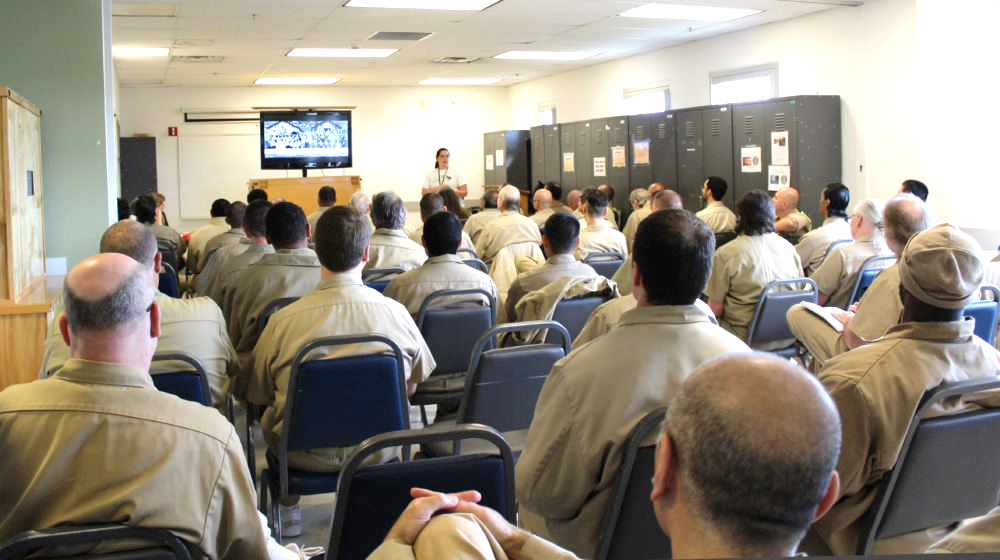
I presented my thesis as part of the Environmental Engagement Workshop Series at SCCC. Photo by Erica Benoit.

This research project was an exploratory study designed to document the ecological attitudes of loggers in the Pacific Northwest. As an exploratory study, I sought to contribute to a gap in the empirical literature: how loggers view the environment. I gathered their responses to the New Ecological Paradigm questionnaire, a measure of their ecological attitudes. Also, I collected information about each participant’s experiences in nature and their socioeconomic and demographic backgrounds.

Hanging out with loggers

Over the summer Pulley Corporation, an FSC®-Certified logging company agreed to let me shadow them for a day. This was an incredible opportunity for me and I am so grateful to everyone for answering all of my questions. Being able to speak with loggers who work in the field expanded my background knowledge on logging in the Pacific Northwest, and helped inform the survey I used to gather data. From these interactions, and many others, I noticed two attributes shared by all: a stewardship mindset and pro-ecological attitudes.

Regardless of their obvious pro-ecological attitudes, the sample population scored lower on the New Environmental Paradigm than most Washington State residents. This suggested to me that the New Environmental Paradigm measures attitudes using a socially-exclusionary lens.
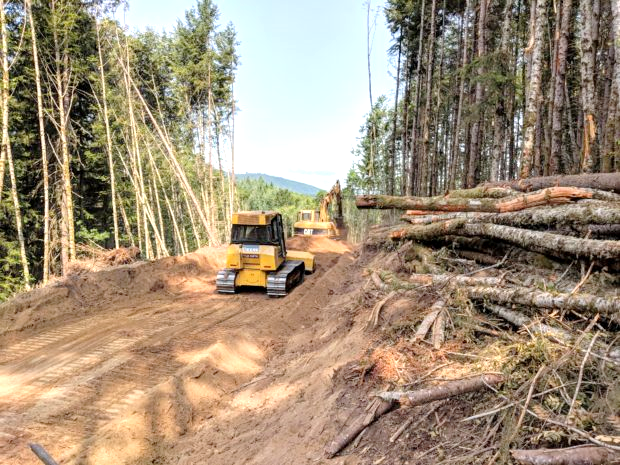
When I shadowed the crew for the day, Pulley Corporation was working at Mt. St. Helens repairing and restoring an elk migration path for the Washington Department of Fish and Wildlife. Photo by Bethany Shepler.

So, what’s in a thesis? Well, in my case, a thesis is a collaboration of very diverse groups of people, all environmentally inspired and dedicated, and all willing to support me as a graduate student. I am lucky to have all their brilliance and input in those pages.
By William Rathgeber, SPP Biological Science Technician. Photos by Marisa Pushee.

In early 2018, the Sustainability in Prison Project (SPP) partnered with Symbiotic Cycles to bring aquaponic gardening to Cedar Creek Corrections Center. I joined the program in spring of 2019 and I’m excited to be a part of this project because I view sustainability as a critical element of food security. This program exposes incarcerated individuals like myself to a new skill set required for maintaining alternative agriculture practices. I have also been excited to learn that this rapidly growing field is gaining momentum worldwide both as a backyard hobby and as a larger-scale means to harvest produce without tilling and weeding.

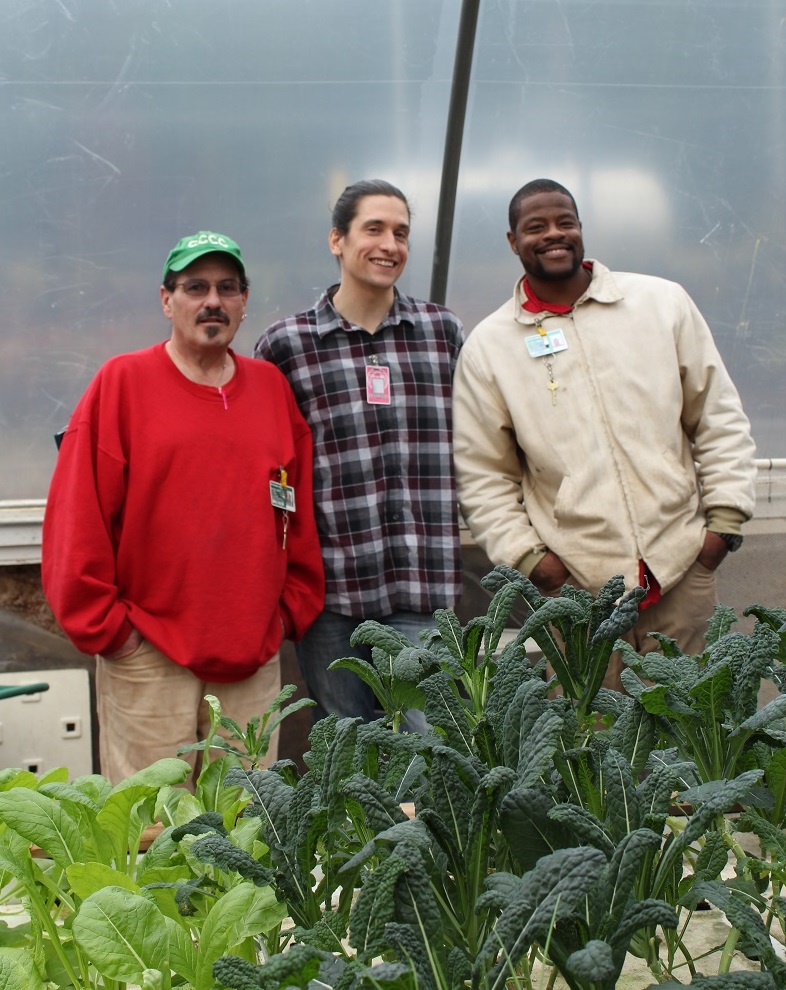
From left to right: SPP Biological Science Technician William Rathgeber, Symbiotic Cycles Co-founder Nick Naselli, and SPP Biological Science Technician Sanchez Bagley.

Aquaponic gardens can produce food naturally and organically with much less water than a conventional garden. Aquaponics is also more sustainable than traditional farming practices. The project comprises of an aquaculture system based on a symbiotic relationship between bacteria, plants, and fish in a closed ecosystem. The plants grow in a soil-free aquaculture and the plant roots clean the water for the fish while the fish provide nutrients for the plants. The plants and the fish work together so the water can be recycled indefinitely. Only evaporated water needs to be replenished. 

Environmental, economic, and health concerns are excellent reasons to adopt an aquaponic garden. Aquaponic gardening offers a chance to reduce our carbon footprint because the produce being harvested doesn’t have to travel hundreds of miles to your grocery store. It also doesn’t add fertilizers that can pollute the local water reservoir or harm the local flora and fauna. Additionally, aquaponics is becoming popular among young and old locavores (people who buy local) concerned with nutrition, avoiding artificial additives, and protecting the environment.

Kale has been a consistent success in the system, growing well through the winter.

In an increasingly environmental and sustainable focused world, these alternative agriculture practices prepare incarcerated individuals to have skill sets that will compete with the changing times. While incarcerated, we are not only educated in this alternative aquaculture practice but we get to provide the fruits of our labor to the kitchen for mainline meals. The Cedar Creek aquaponics system is supported by the design team at Symbiotic Cycles. They also provide consultation and informational on-site visits conducting hands-on question/answer seminars for Cedar Creek SPP Technicians and Centralia College Horticulture students.

Text and photos by Erica Benoit, SPP Environmental Workshop Series Coordinator

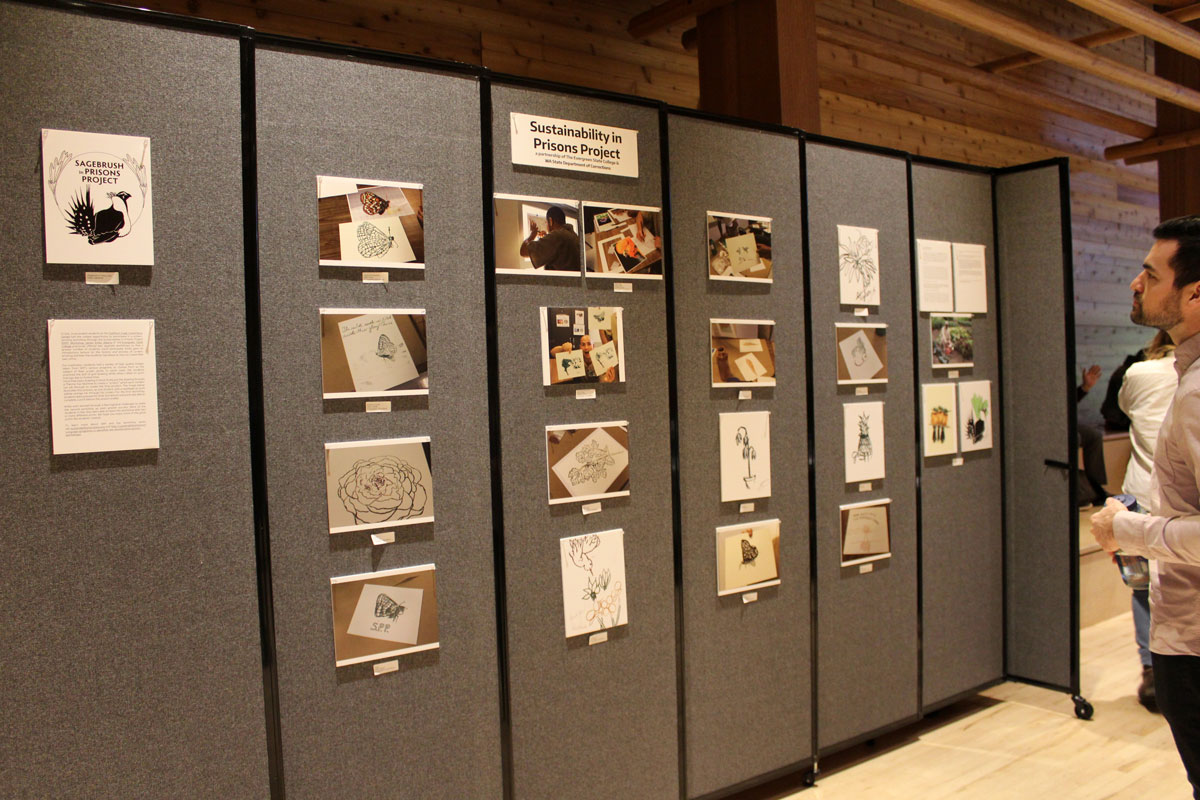
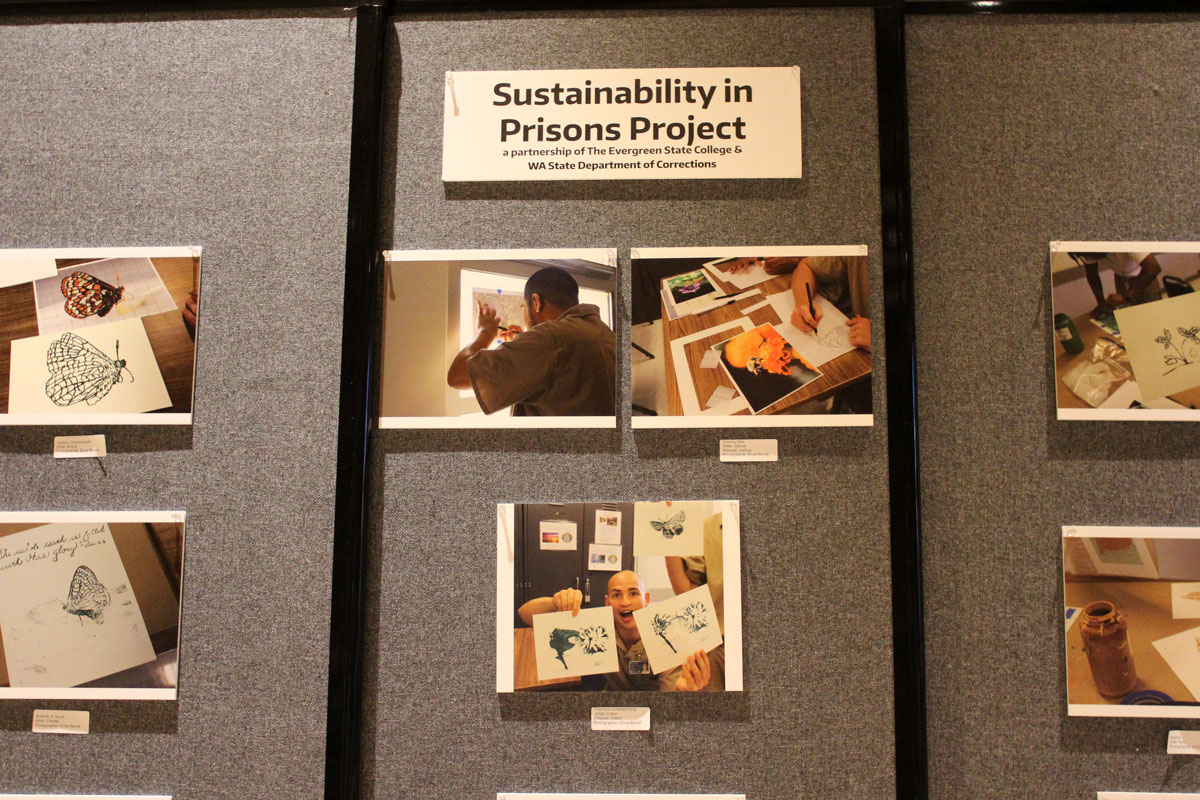
SPP artwork presented at the Northwest Nature and Health Symposium at the University of Washington

Incarcerated artists at Stafford Creek Corrections Center recently showcased their art in two venues. First, organizers of the Northwest Nature and Health Symposium at the University of Washington asked if they could display a selection of workshop series screen-prints at the conference exhibit on October 30. Soon after, Stafford Creek hosted an art show that allowed several talented artists to promote their art to the local community.

Nature & Health Symposium Exhibit

The Nature & Health Symposium is organized by University of Washington’s EarthLab. Their Nature and Health Director reached out after seeing the SPP blog about screen-printed art created in the SPP Workshop Series.

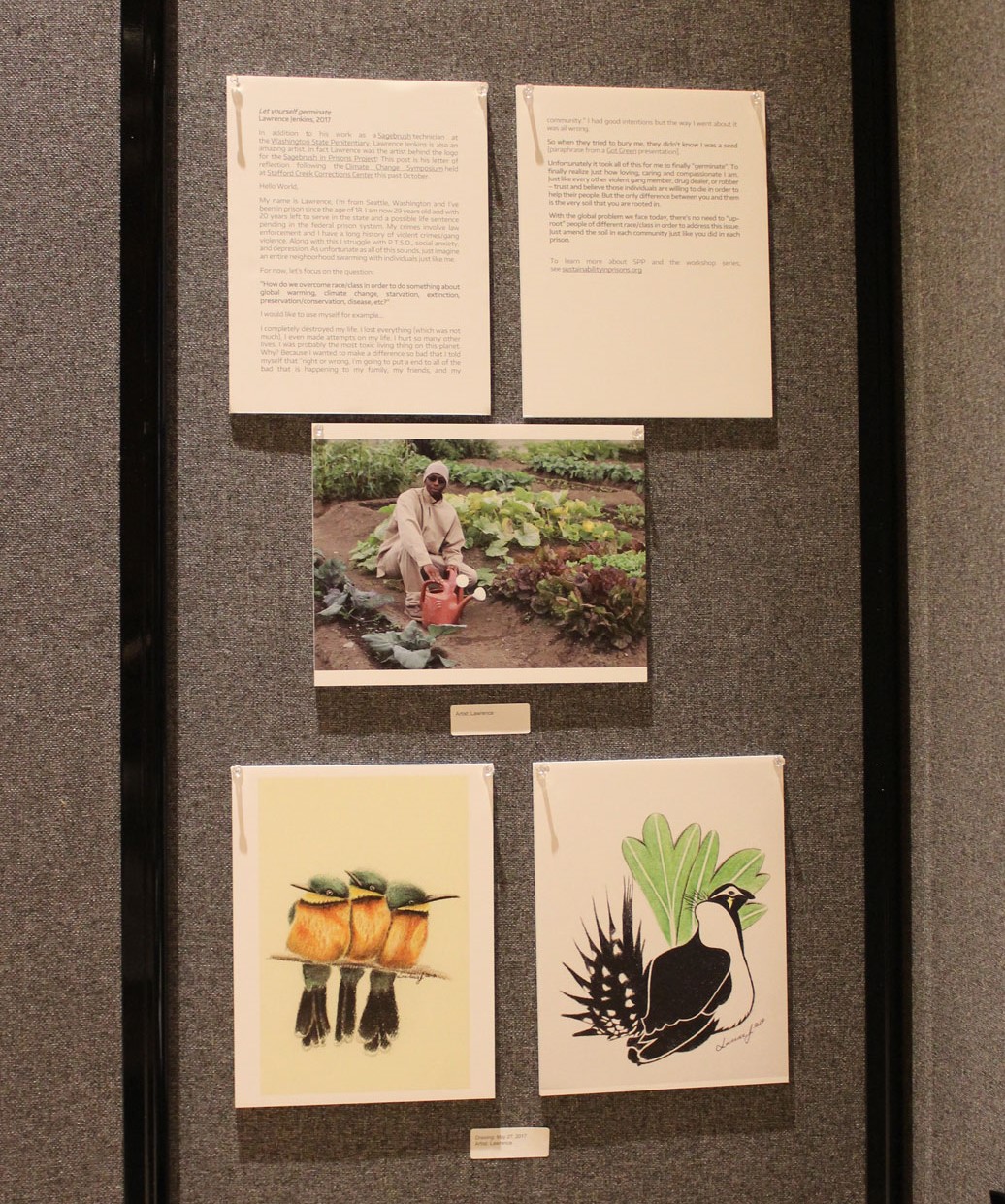
In addition to art and images from the workshops, the exhibit included writing and artwork from artist and former Sagebrush technician Lawrence Jenkins.

Stafford Creek Corrections Center Exhibit

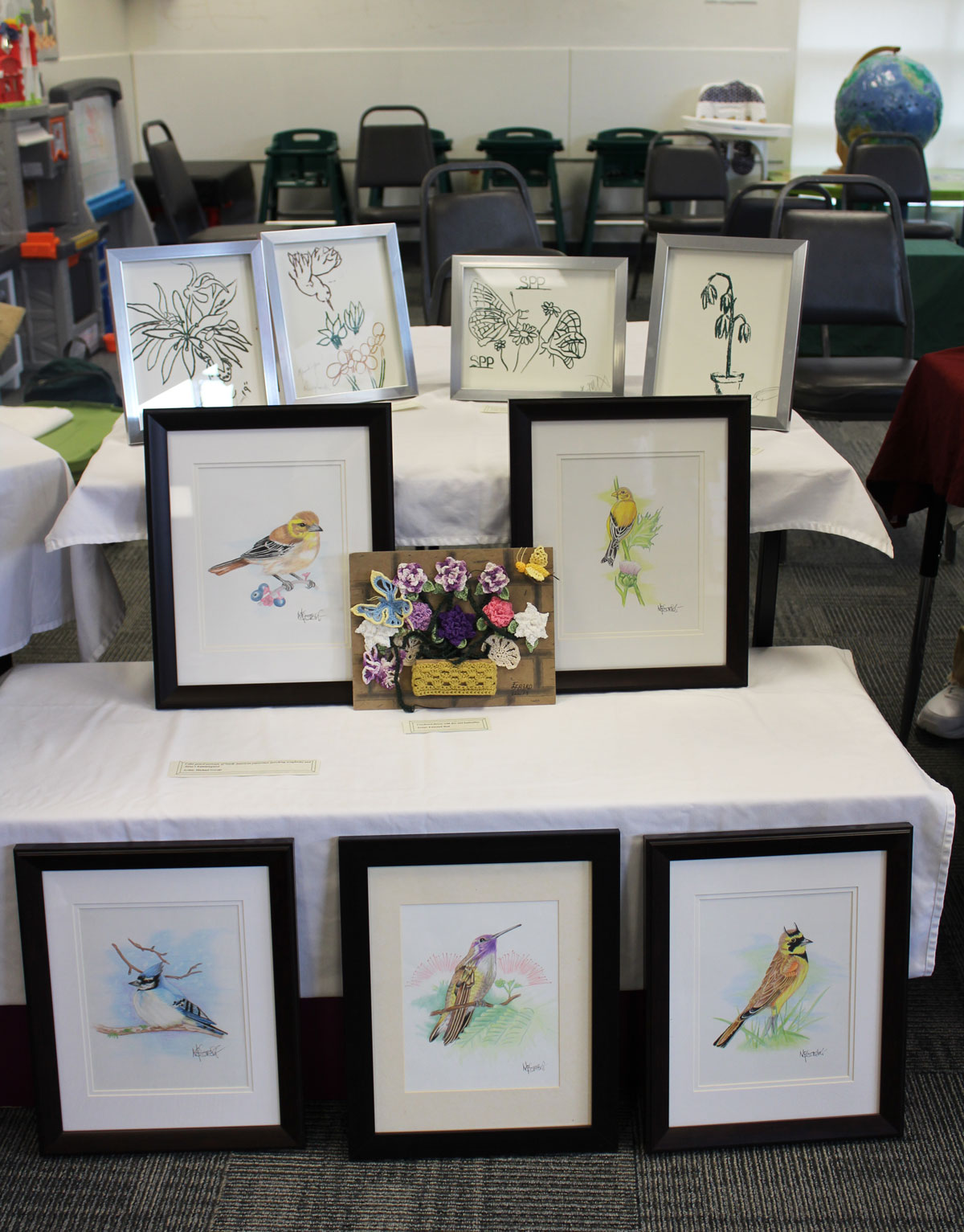
SPP table at the Stafford Creek art show.

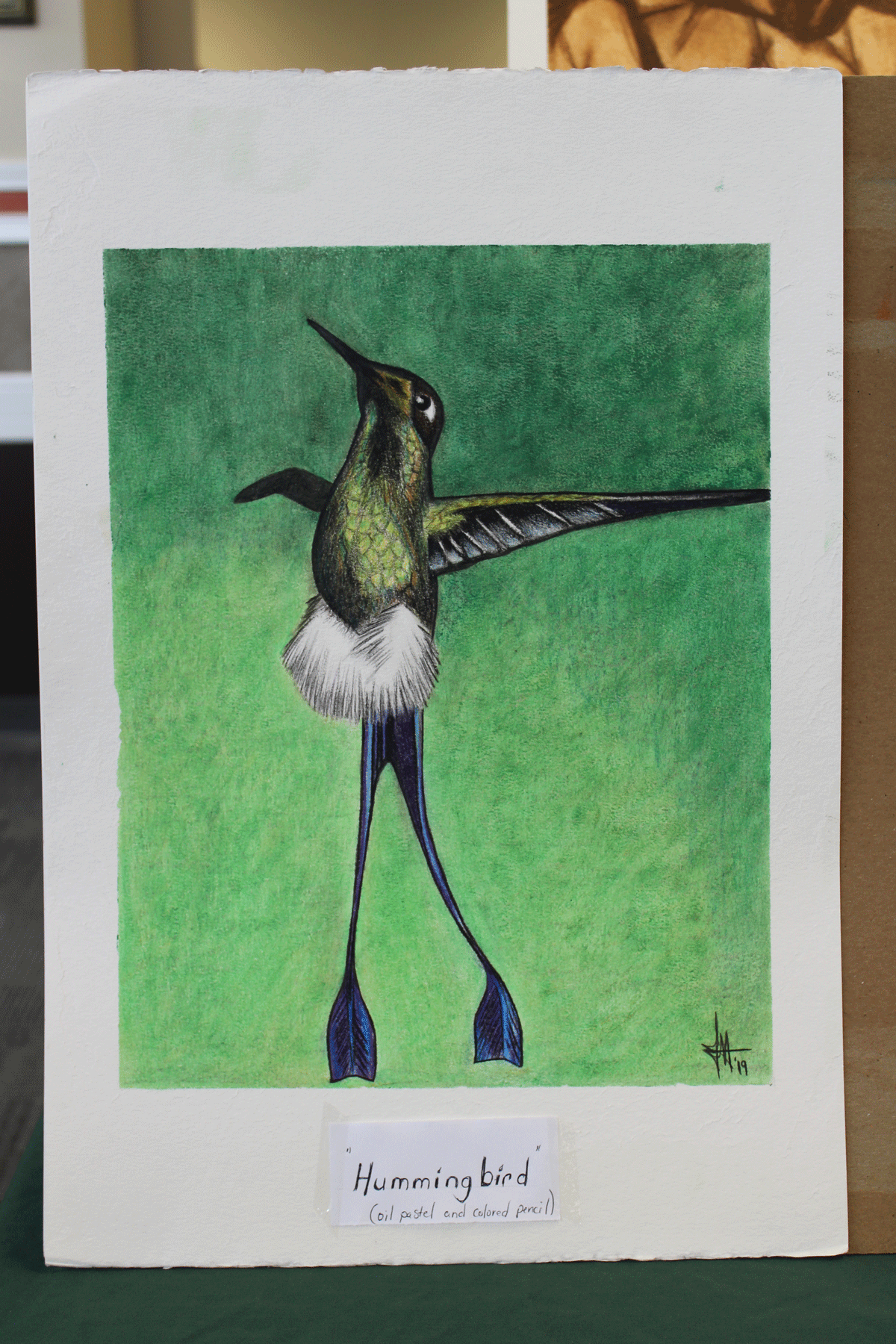
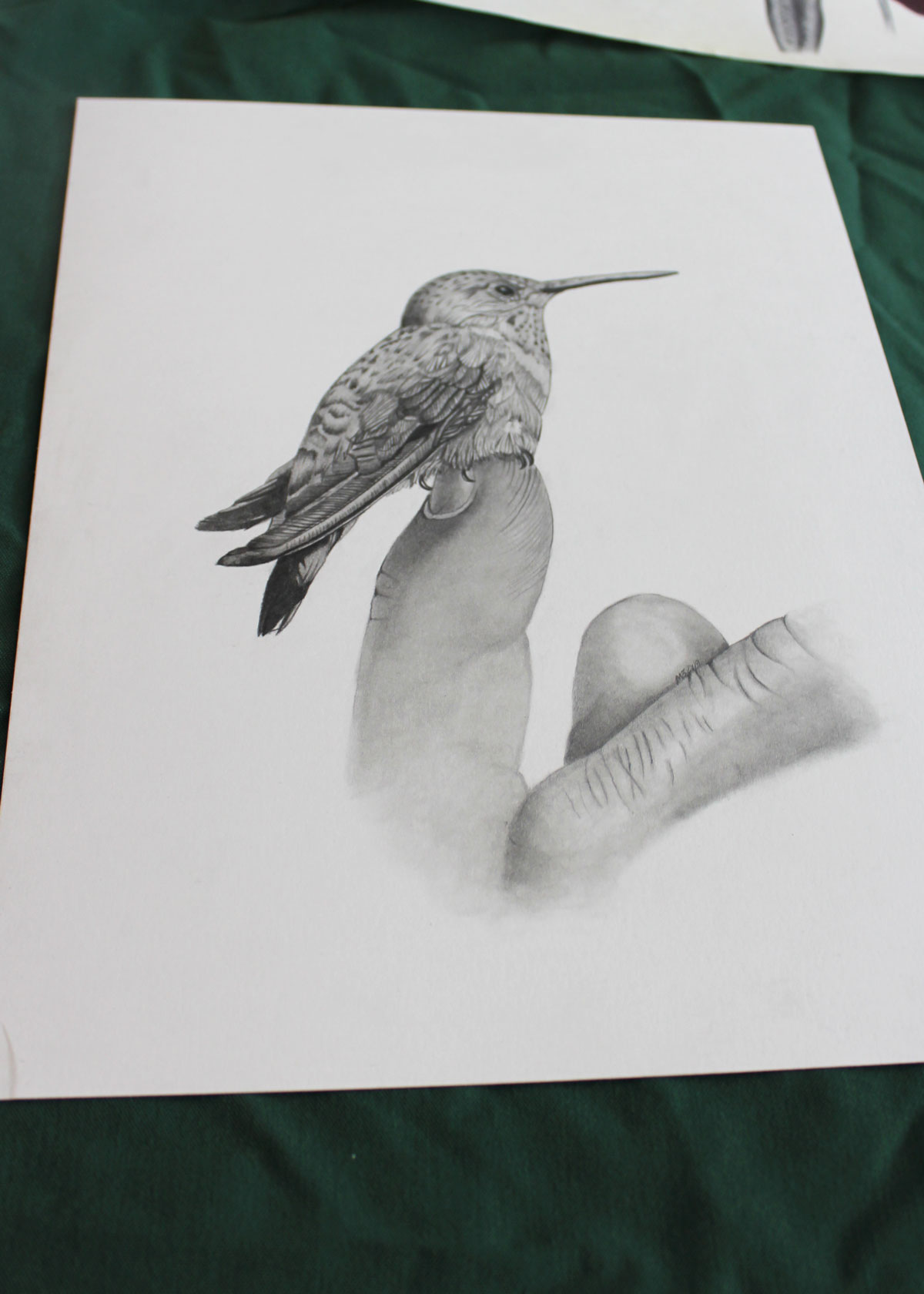
Soon after, SPP-related artwork was featured at the Stafford Creek art show. In addition to a few of the screen-prints, colored pencil portraits of North American perching songbirds (passerines) and an Anna’s hummingbird by artist Michael Gorski were included.

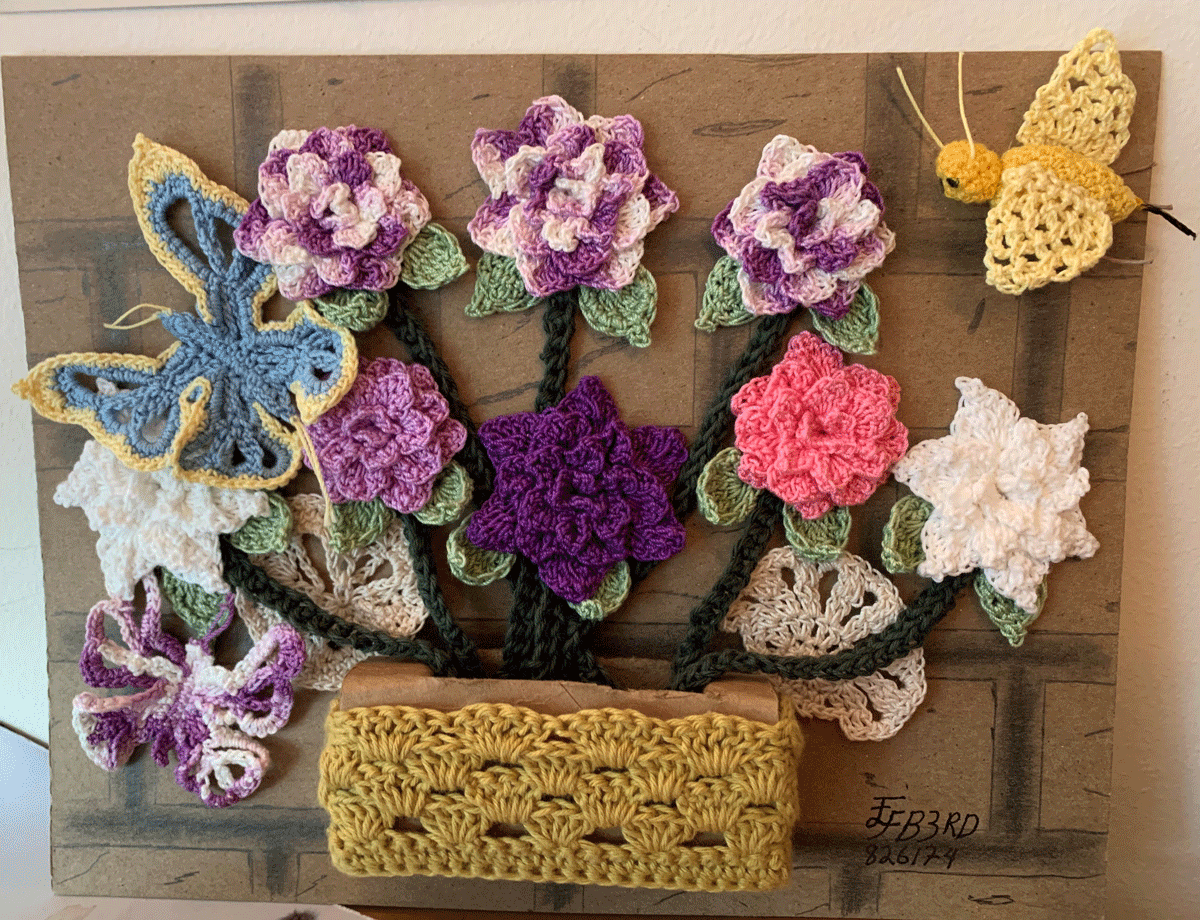
Artist Edmund Ball crocheted a beautiful piece that featured flowers, a butterfly, and a bee against a backdrop of prison bars.
Marvin Faircloth’s artwork

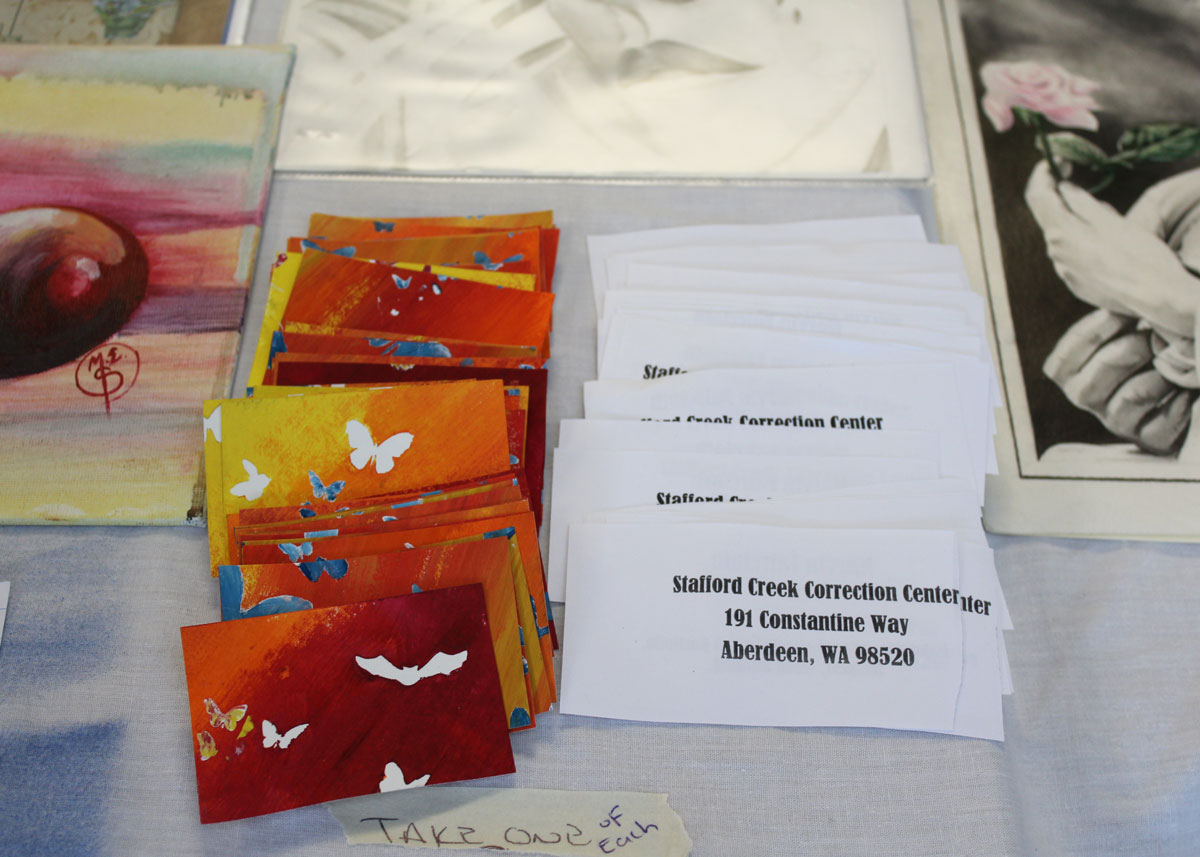
One particular artist, Marvin Faircloth, who has contributed his time and artistic ability to SPP previously, painted a colorful piece that he cut into business card sized squares to distribute to visitors to illustrate our interconnectedness. On the back of these cards, he included his name along with short quotes. I chose a card that said “Art is freedom,” which I think beautifully sums up the ability of art to reach beyond the walls of prison.

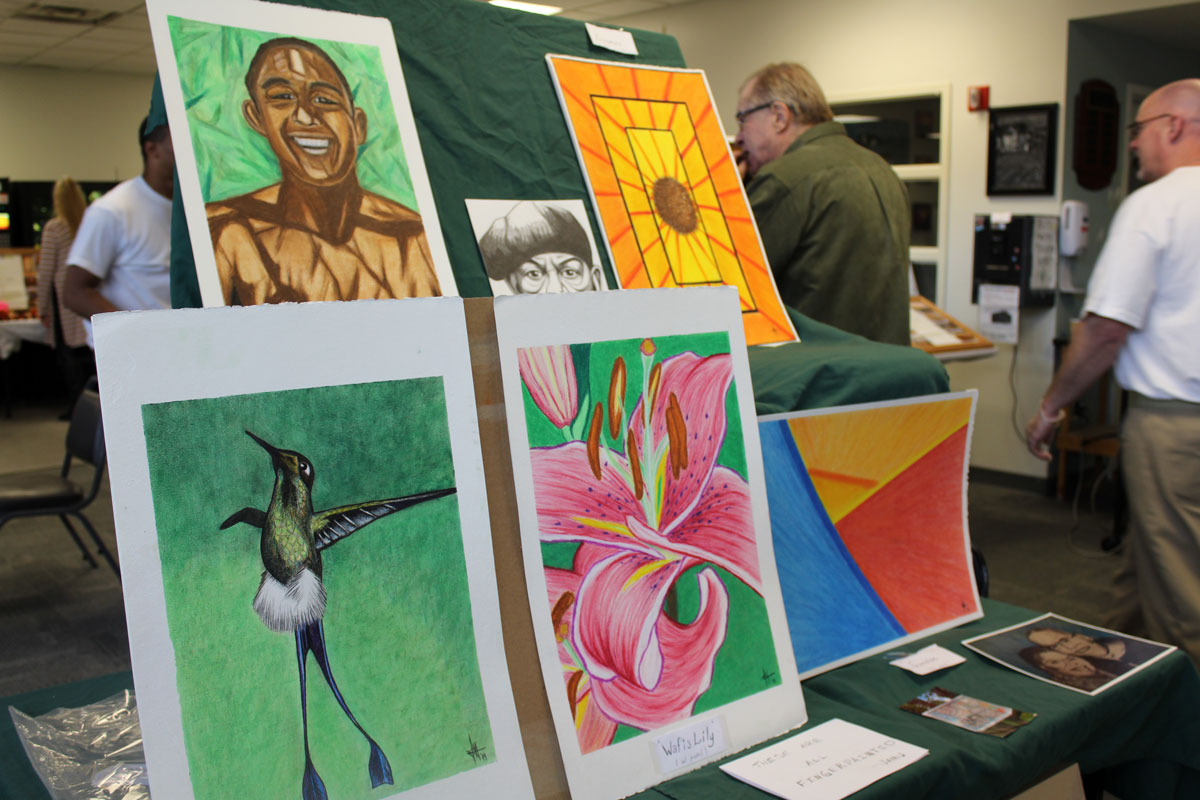
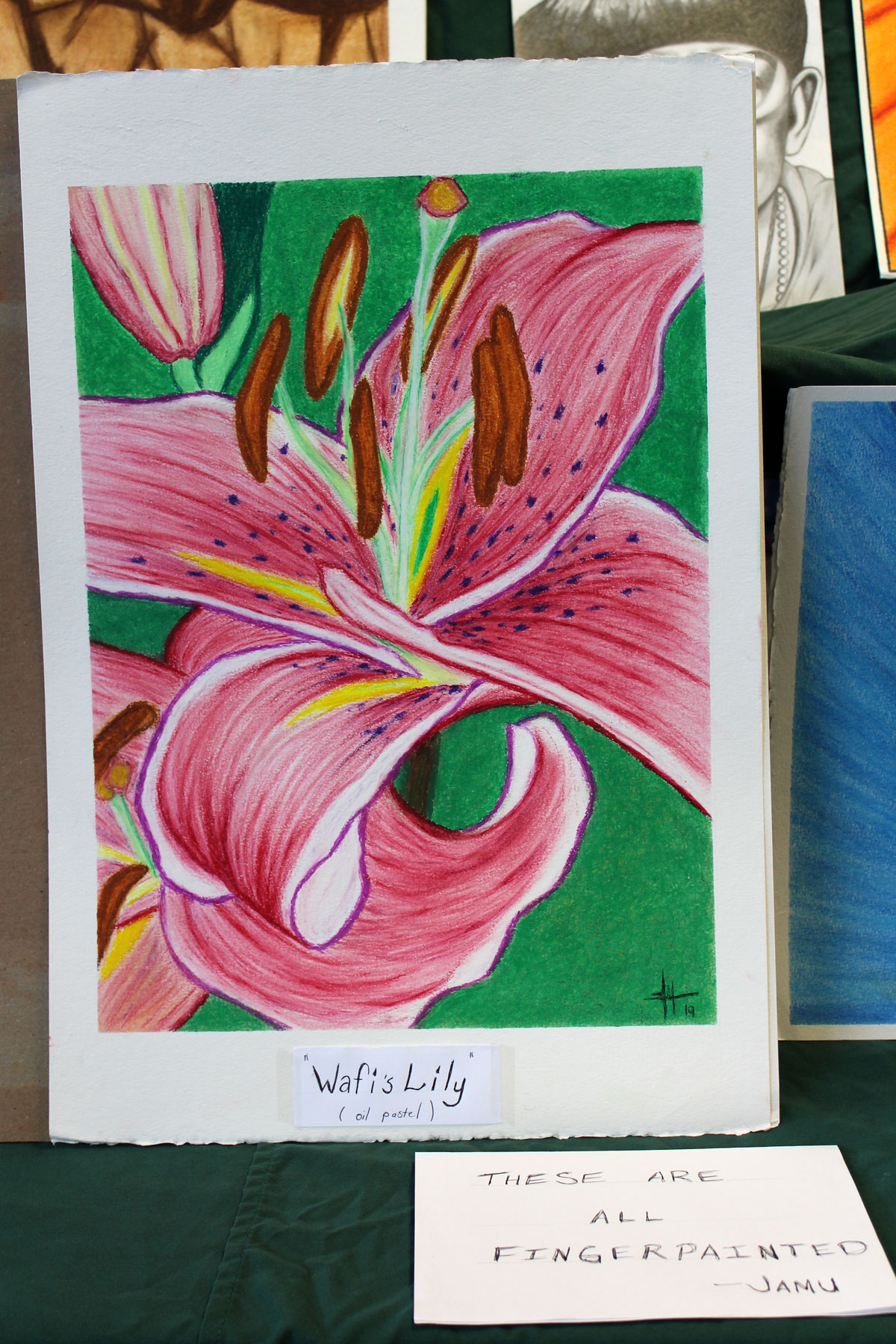
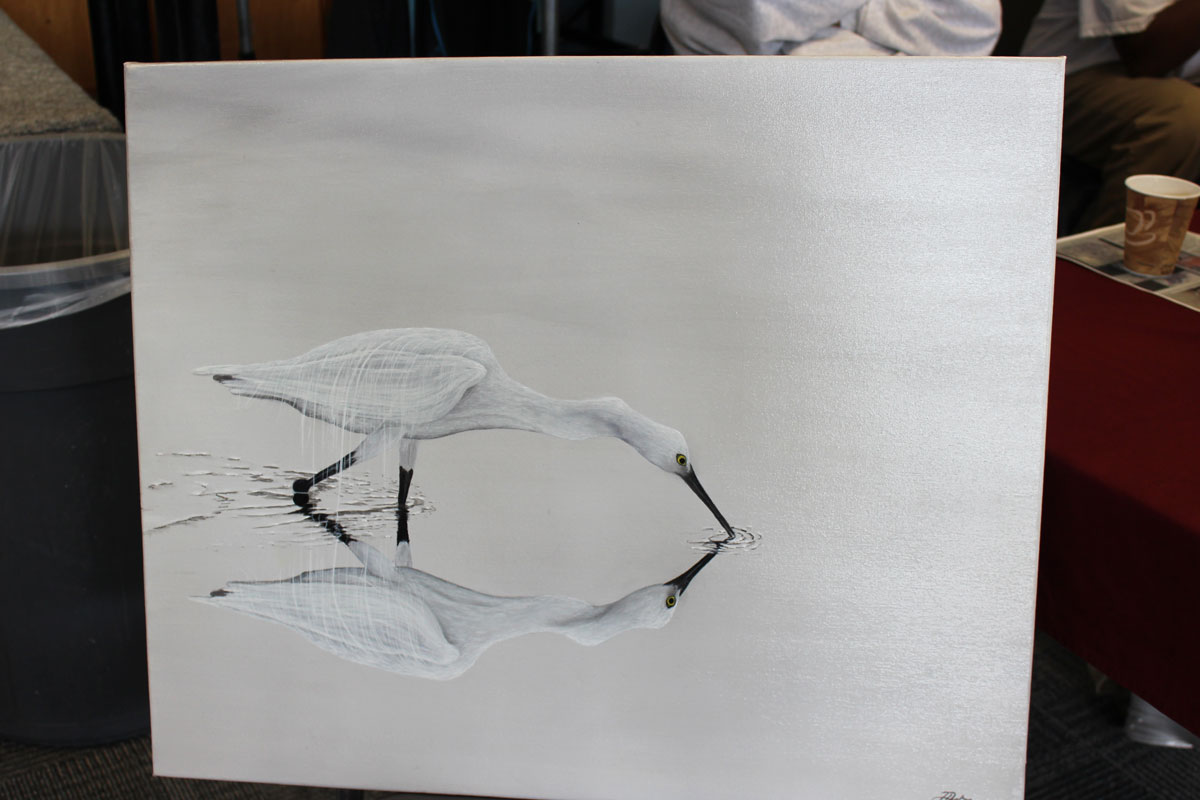
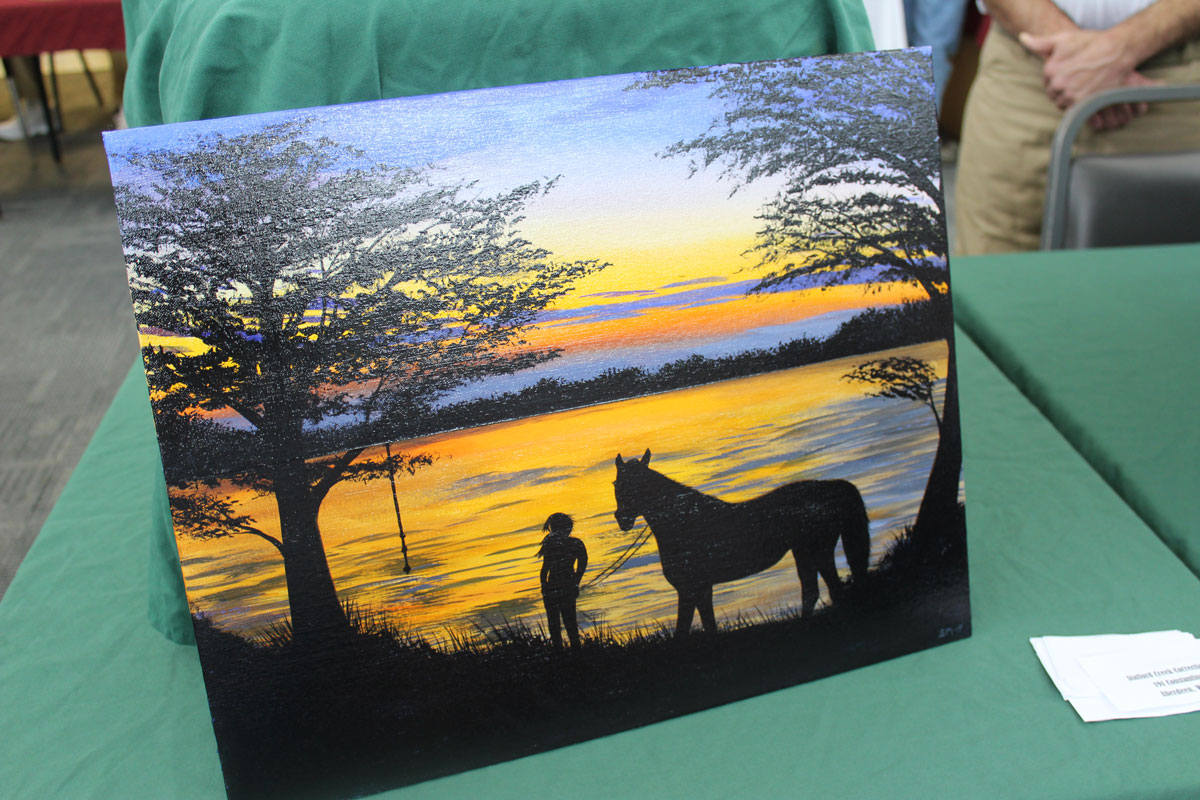
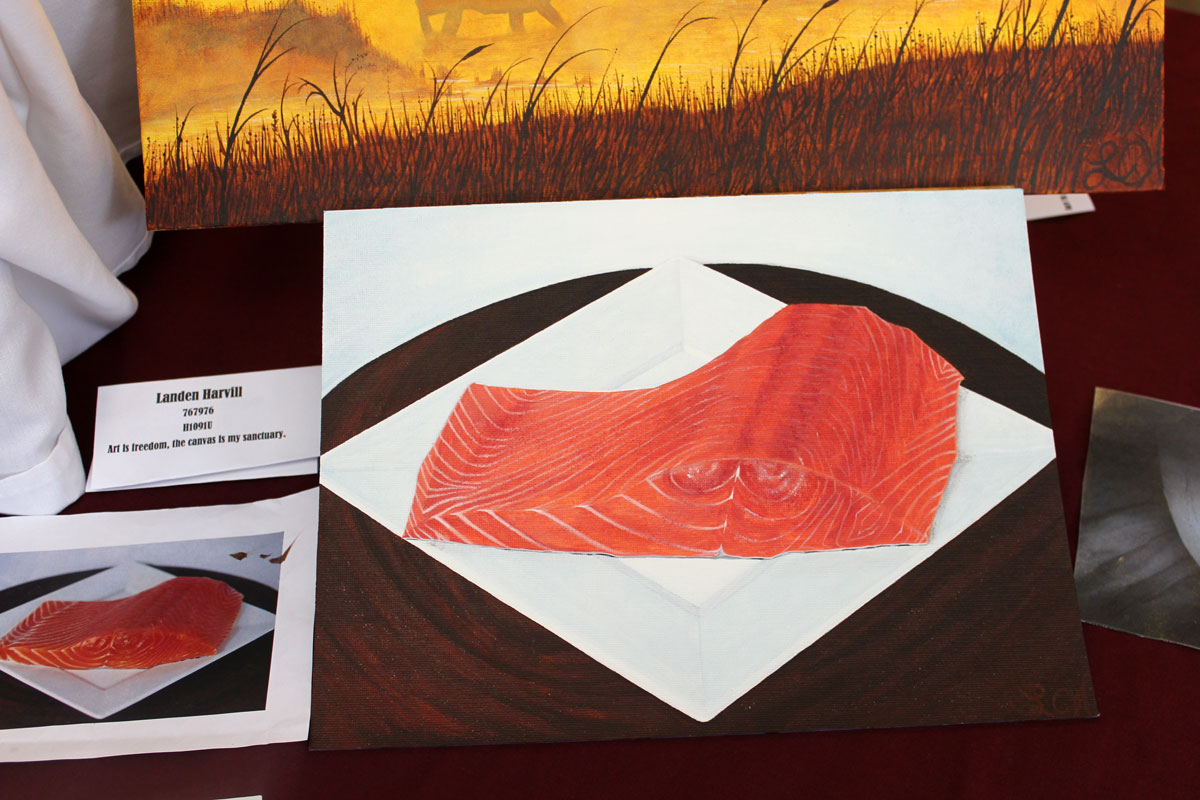
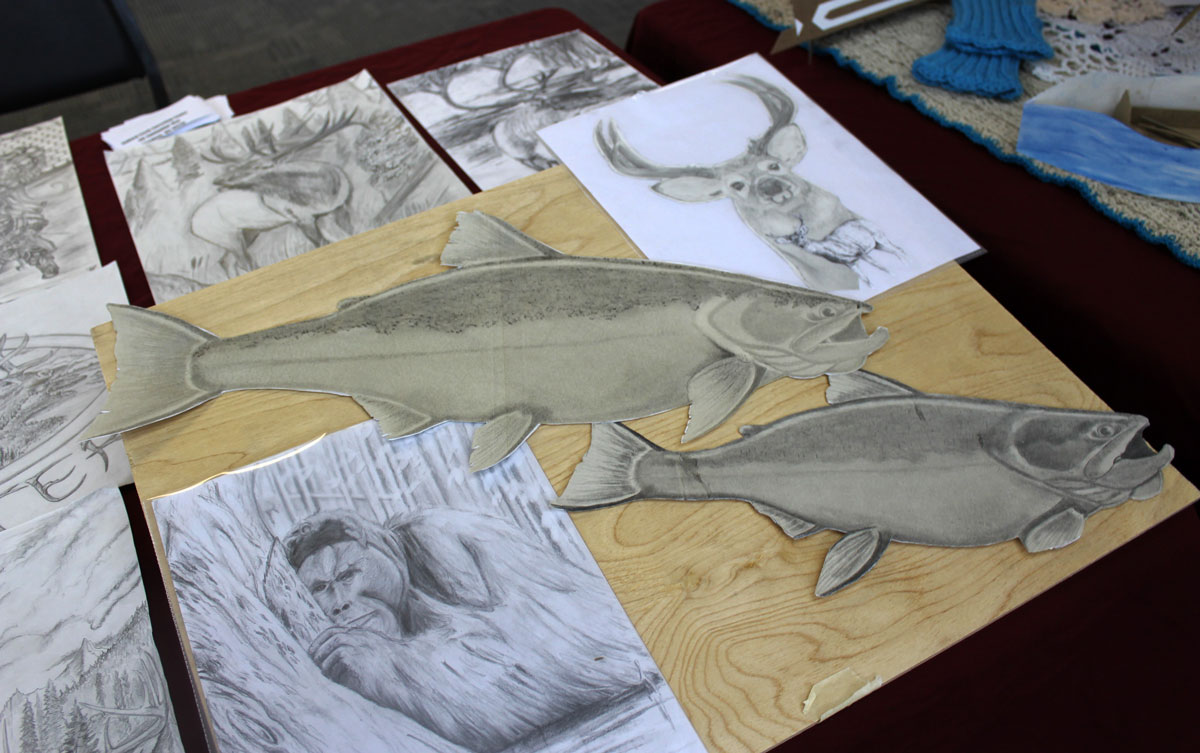
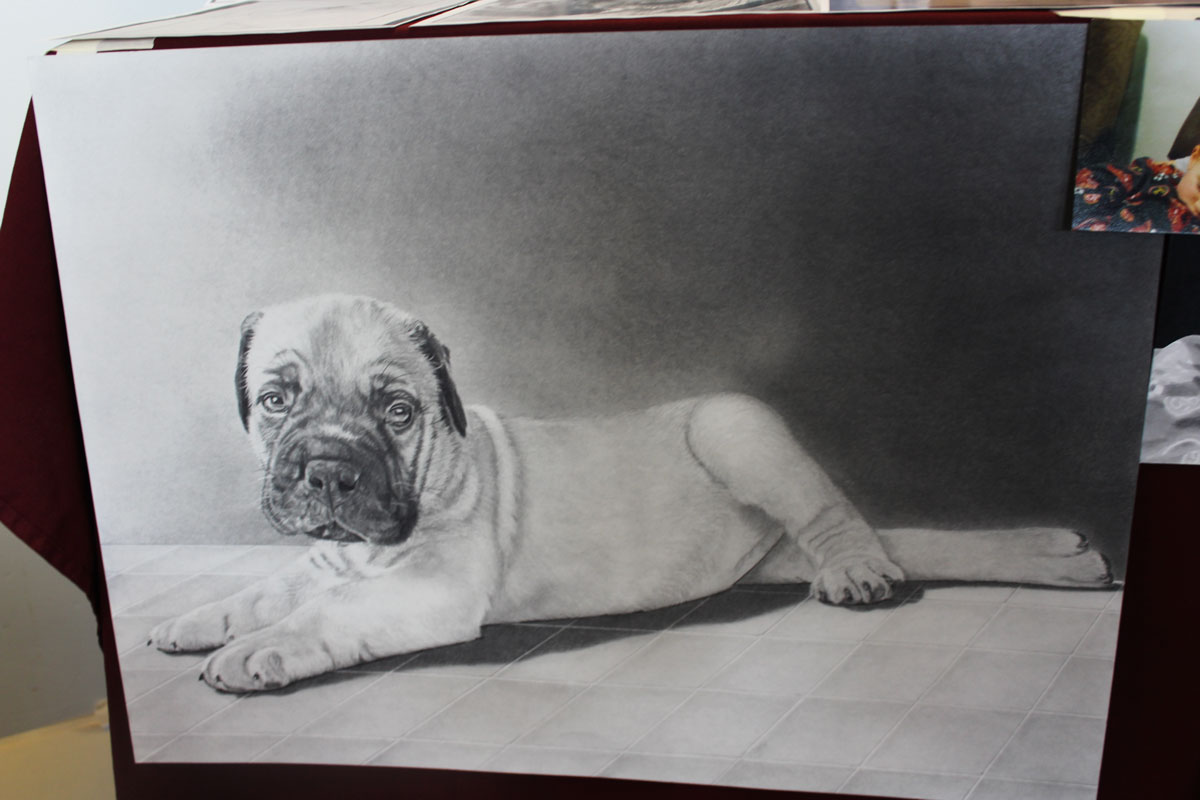
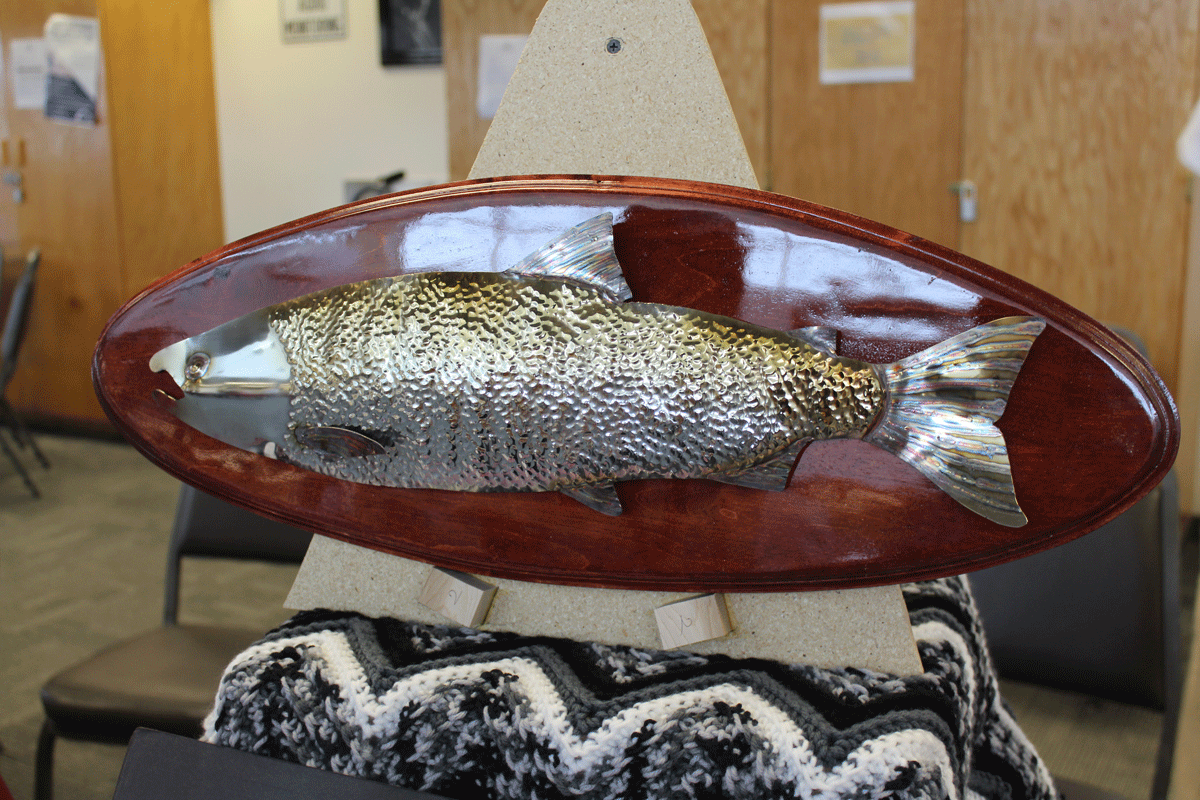
In addition to SPP art, the show included many more talented artists, some of which featured nature prominently in their work. Please enjoy the selection included below:

This artist finger painted his pieces!