By Paul Thorsteinson, Apprentice Level Beekeeper

On October 7th, 2025 the unthinkable happened. In a video conference made possible by Microsoft Teams, three separate prisons connected from different sides of the world. This meeting was the first of its kind. It consisted of two Norwegian Prisons and Stafford Creek Corrections Center in Aberdeen, Washington. The conservation that ensued was the defining aspect of what made this global connection unique. They didn’t connect to talk about criminal justice. They didn’t talk about prison cells or chow hall meals. They connected to talk about bees.

The prisoners from Stafford Creek shared a presentation about their facility’s growing apiary and the benefits of sustainable practices learned in prisons. They talk about how bees are a necessary component to ecological survival and how if bees disappeared, the entire world’s agricultural system would collapse within just four years. They shared the benefits of honey being a pure food source that never spoils. One of the most compelling examples was pots of honey found in Egyptian tombs that were still edible even after thousands of years in storage.

The Stafford Creek beekeepers went on to share with the Norwegians the different bee products they were able to make at their facility. All of the items were made from resources that were harvested directly from their local apiary. They called their process Bee Alchemy. The products ranged from candles, beard balm, lip balm, and even a few gallons of honey. All of these items made at Stafford Creek are donated back to the community.
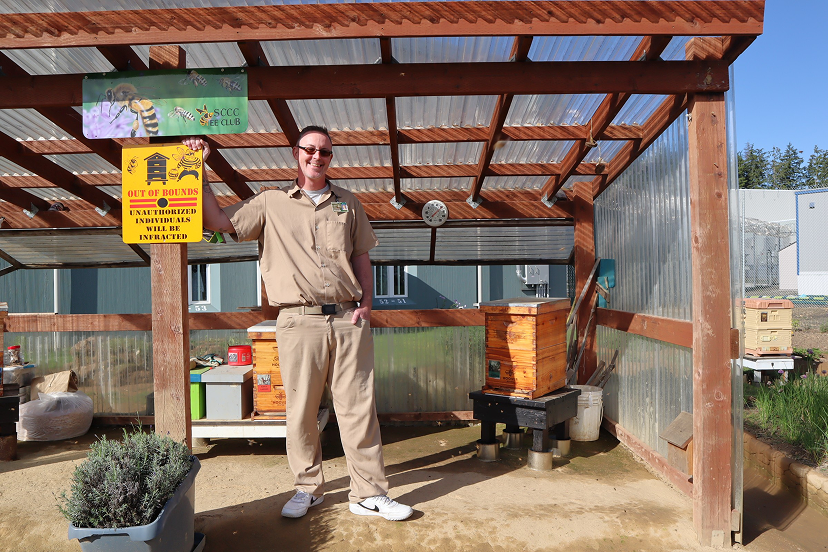
One incarcerated presenter even shared his entire testimony fully dressed in a white beekeeper’s suit. After sharing a short video of Stafford Creek’s hives, he described the overwintering practices and the necessary activities needed to improve the bees’ chances of survival during the cold, wet winter months.

The international presentation of bees to multiple incarcerated community was the first of its kind. It had never been done before. Sustainability has never been discussed by incarcerated people from different parts of the world. All of this was made possible through a new Washington Way initiative called Cell-2-Cell. It is a fully interactive connective platform that unites incarcerated people on different sides of the world so that they can share their life experiences and culture.  Starting just two years ago, Cell-2-Cell is realizing its revolutionary potential to connect communities, talk about bees, and change the world.
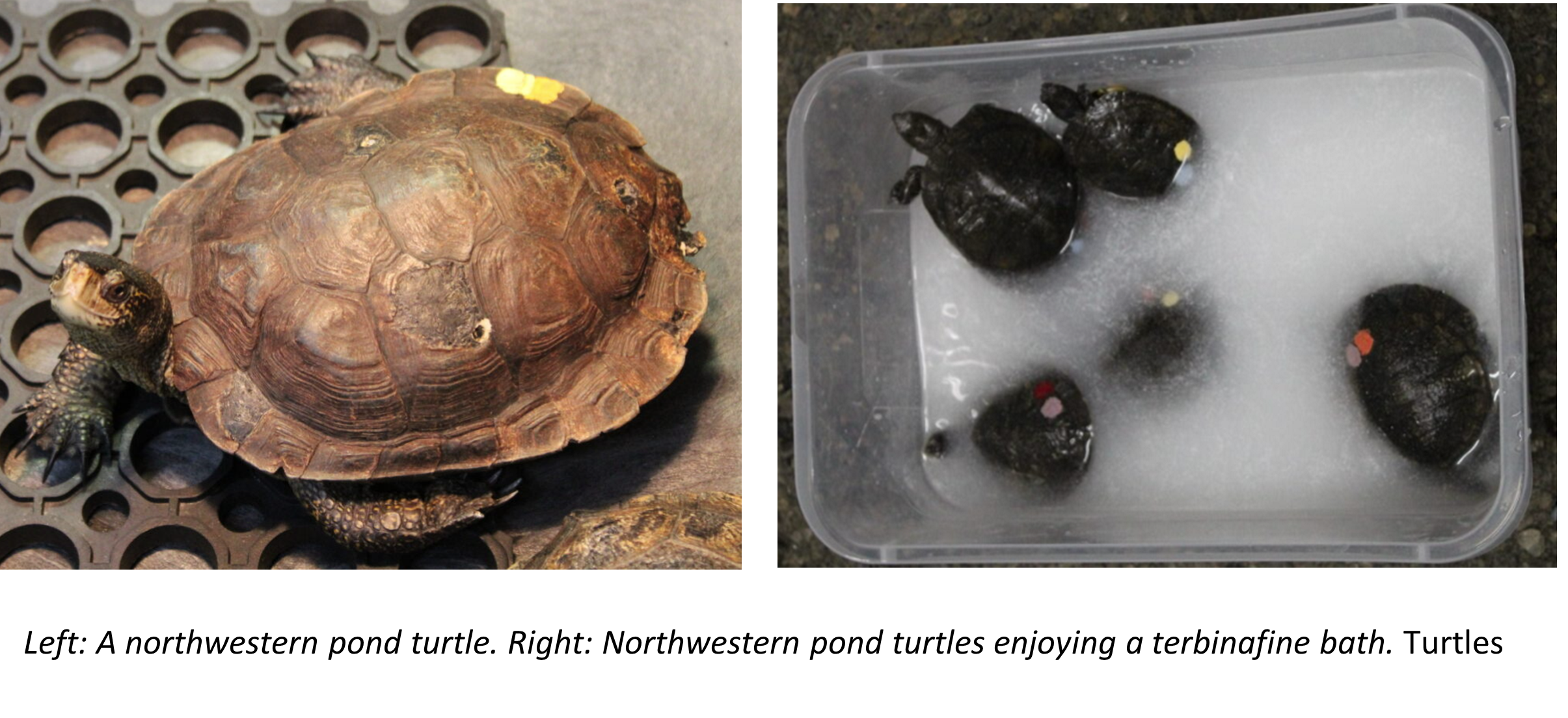
This season, the northwestern pond turtles (NWPT) in post treatment care at Cedar Creek Correction Center (CCCC) have a new routine: bath time. Turtles housed at CCCC are trapped by biologists from The Washington Department of Fish and Wildlife (WDFW) as part of a monitoring and rehabilitation effort focused on combatting a fungal-associated shell disease. This shell disease is thought to be caused by a keratin eating fungus known as Emydomyces testavorans that infect the NWPTs and create lesions and pitting on their shells. These lesions make parts of their normally hard shells soft and, if left untreated, can pose serious health risks.

SPP is partnering with WDFW to pilot a less invasive treatment option for these turtles. Based on research from the University of Illinois Wildlife Epidemiology Lab, SPP is administering an anti-fungal treatment bath for the turtles. Three times a week turtles soak for 30 minutes in a terbinafine and water solution to coat them in the medicine, in hopes of clearing them of the fungal pathogen.

This season there are 10 sub-adult turtles and 12 adult turtles in care at Cedar Creek, all of which have tested positive for E. testavorens. The 10 sub-adult turtles came to CCCC in August of 2025 and have been taking baths 3 times a week since. These sub-adults are also being periodically tested for E. testavorens, to assess the effectiveness of the terbinafine bath treatment. In addition to taking terbinafine baths 3 times a week, the 12 adult turtles also received treatments similar to past years with surgical removal of portions of the shell most severely impacted by the shell disease. This treatment took place at the Progressive Animal Welfare Society (PAWS) in the fall and winter. In February, the first round of adult turtles were transferred to Cedar Creek Correction Center for long term care prior to their release back to their native ponds in the spring.

As in past seasons, the technicians caring for the turtles work diligently to ensure environmental conditions are stable in the program area along with ensuring daily feeding and tank cleanings are performed by protocol standards. With the addition of the terbinafine treatment, the technicians are now also administering the baths to the turtles, which gave the technicians the opportunity to learn and implement new care protocols. In addition to the hands-on turtle care, northwestern pond turtle rehabilitation technicians receive education on wetland ecology, turtle biology, and animal husbandry. A total of 10 credits are offered by The Evergreen State College for technicians who complete the educational portfolio.

Thank you to all the partners and technicians for making this work possible!

By Mikala Waldrup, SPP Environmental Programs Coordinator and Michael Zirpoli, SPP Ecological Programs and Workshop Manager

This season, the northwestern pond turtles (NWPT) in post treatment care at Cedar Creek Correction Center (CCCC) have a new routine: bath time. Turtles housed at CCCC are trapped by biologists from The Washington Department of Fish and Wildlife (WDFW) as part of a monitoring and rehabilitation effort focused on combatting a fungal-associated shell disease. This shell disease is thought to be caused by a keratin eating fungus known as Emydomyces testavorans that infect the NWPTs and create lesions and pitting on their shells. These lesions make parts of their normally hard shells soft and, if left untreated, can pose serious health risks. 

SPP is partnering with WDFW to pilot a less invasive treatment option for these turtles. Based on research from the University of Illinois Wildlife Epidemiology Lab, SPP is administering an anti-fungal treatment bath for the turtles. Three times a week turtles soak for 30 minutes in a terbinafine and water solution to coat them in the medicine, in hopes of clearing them of the fungal pathogen.

This season there are 10 sub-adult turtles and 12 adult turtles in care at Cedar Creek, all of which have tested positive for E. testavorens. The 10 sub-adult turtles came to CCCC in August of 2025 and have been taking baths 3 times a week since. These sub-adults are also being periodically tested for E. testavorens, to assess the effectiveness of the terbinafine bath treatment. In addition to taking terbinafine baths 3 times a week, the 12 adult turtles also received treatments similar to past years with surgical removal of portions of the shell most severely impacted by the shell disease. This treatment took place at the Progressive Animal Welfare Society (PAWS) in the fall and winter. In February, the first round of adult turtles were transferred to Cedar Creek Correction Center for long term care prior to their release back to their native ponds in the spring.

As in past seasons, the technicians caring for the turtles work diligently to ensure environmental conditions are stable in the program area along with ensuring daily feeding and tank cleanings are performed by protocol standards. With the addition of the terbinafine treatment, the technicians are now also administering the baths to the turtles, which gave the technicians the opportunity to learn and implement new care protocols. In addition to the hands-on turtle care, northwestern pond turtle rehabilitation technicians receive education on wetland ecology, turtle biology, and animal husbandry. A total of 10 credits are offered by The Evergreen State College for technicians who complete the educational portfolio.

Thank you to all the partners and technicians for making this work possible!