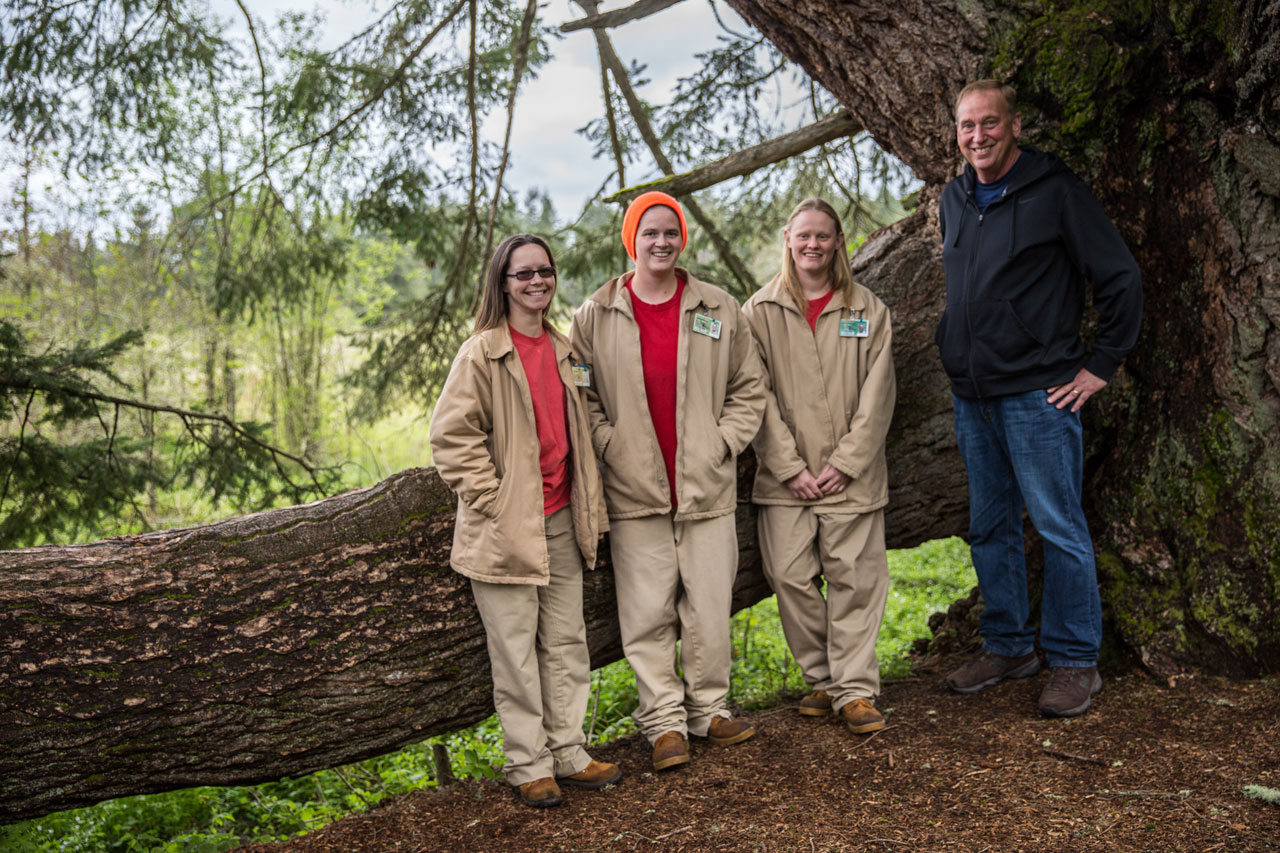
Text and photos by Keegan Curry, SPP Taylor’s Checkerspot Butterfly Program Coordinator
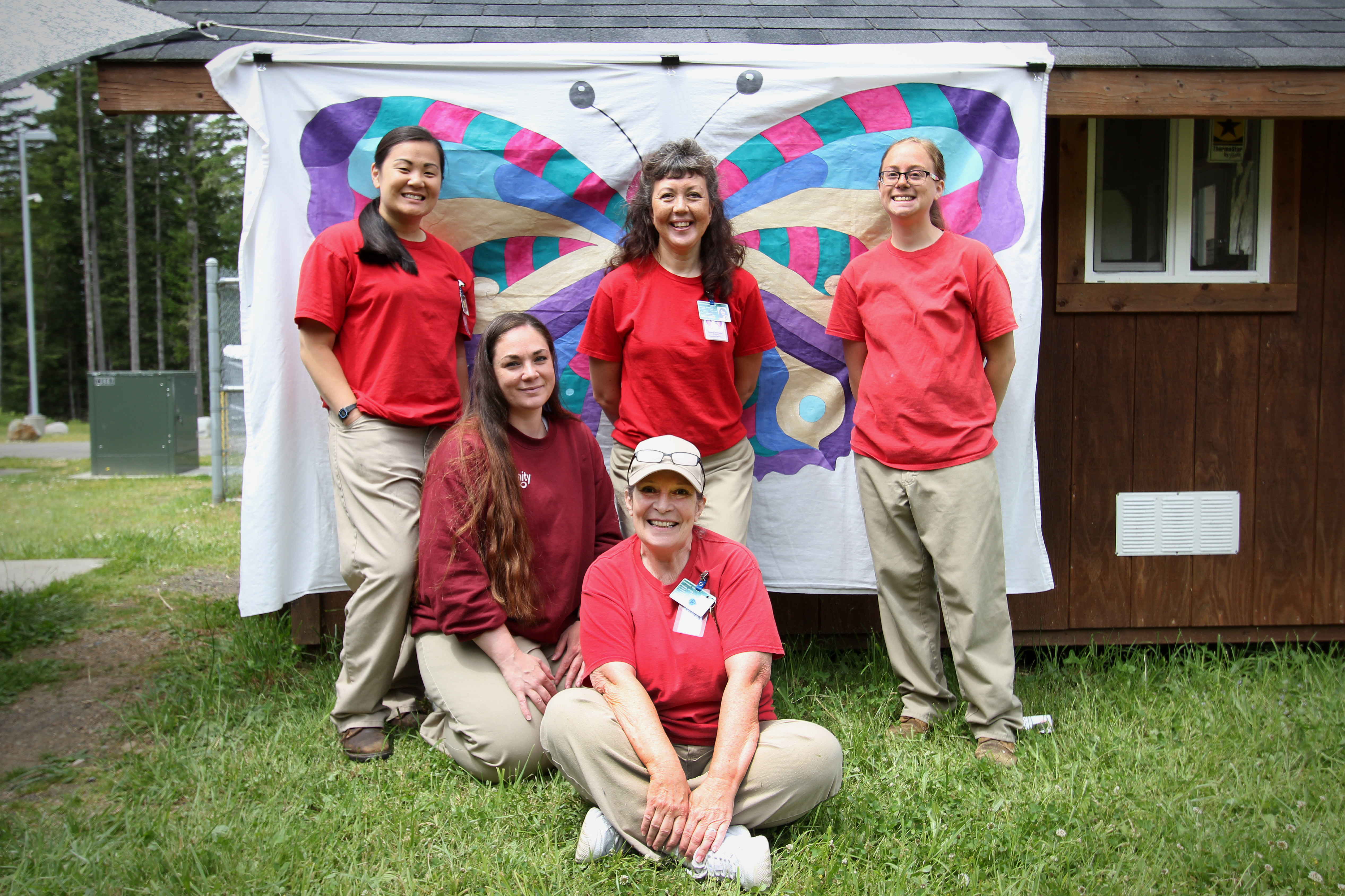
(Left to right) Jessica Stevens, Nicole Alexander, Cynthia Fetterly (seated), Susan Christopher, and Alexis Coleman pose in front of their original artwork. Ms. Stevens and Ms. Christopher painted this banner to welcome Girl Scouts Beyond Bars to the butterfly lab for a day of activities, including a unique Taylor’s checkerspot merit badge designed by Ms. Alexander.

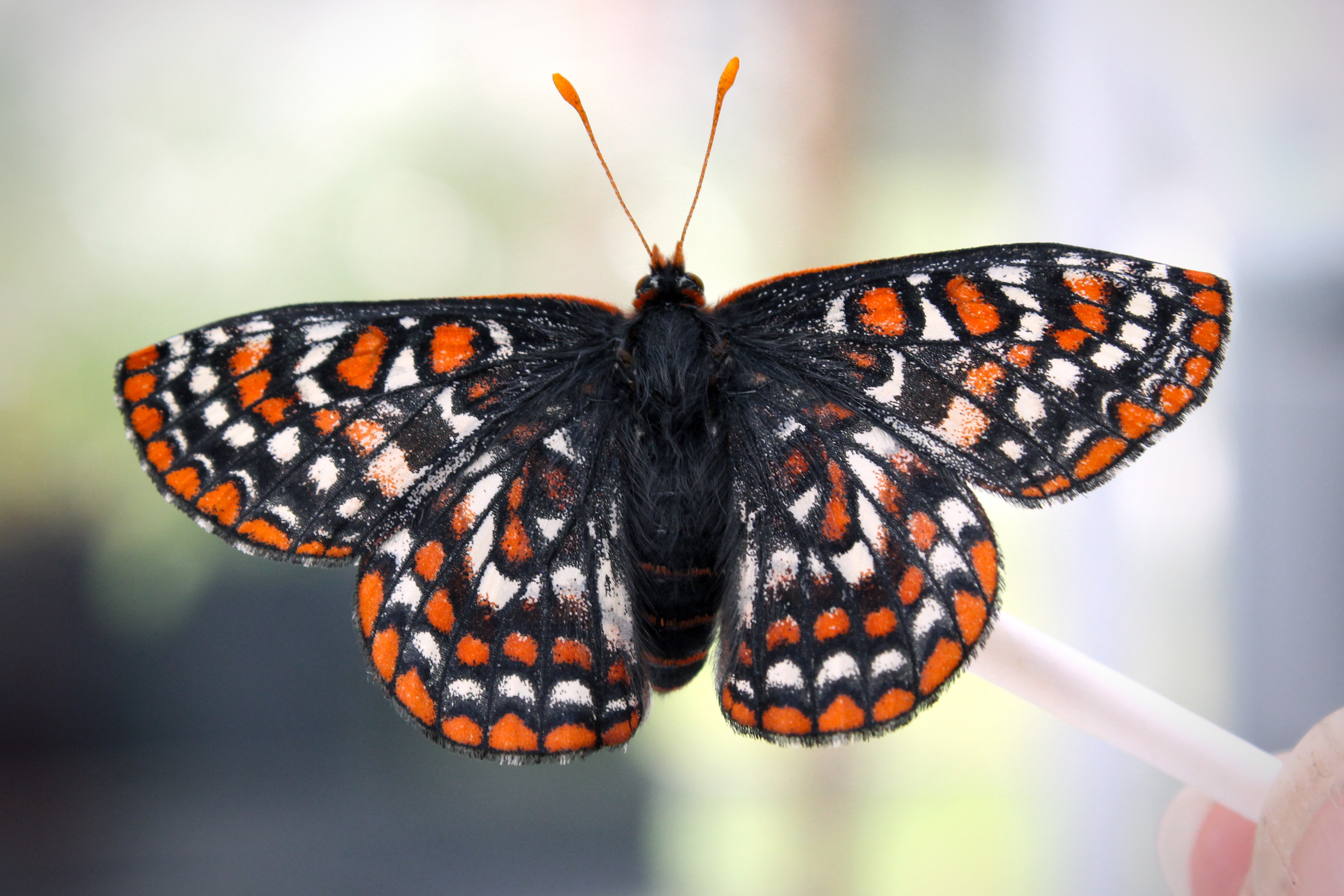
Inmates at Mission Creek Corrections Center for Women (MCCCW) continue to amaze us. Each year, a group of dedicated technicians raise and release thousands of federally-endangered Taylor’s checkerspot butterflies. Not only do these technicians follow rigorous laboratory protocols, they develop their own personal expertise and remain adaptive to the myriad challenges of animal husbandry.

This year we were lucky to have three returning technicians on the team. Jessica Stevens, Cynthia Fetterly, and Susan Christopher have completed multiple seasons in the butterfly lab and they have an in-depth understanding of each life stage. Their experience has taught them how to read these animals down to the finest details, like determining the “instar” of a growing caterpillar or predicting how the weather might influence adult mating behavior. Returning technicians play a crucial role, and it is equally important to recruit new participants. This winter we welcomed Nicole Alexander and Alexis Coleman to the butterfly crew and they began their crash course in Taylor’s checkerspot rearing. By the end of the flight season, Ms. Alexander and Ms. Coleman were well-versed in everything from pupation to egg collection!

Thanks to all of the staff from WA Department of Corrections and MCCCW who work tirelessly to coordinate this program. And of course, we wouldn’t be here without support from the Oregon Zoo and Washington Department of Fish & Wildlife. It means a lot to have zookeepers and biologists coming to MCCCW and giving incarcerated technicians the confidence to work with this fragile and beautiful species.

Take a look at these photo highlights from the past few months.
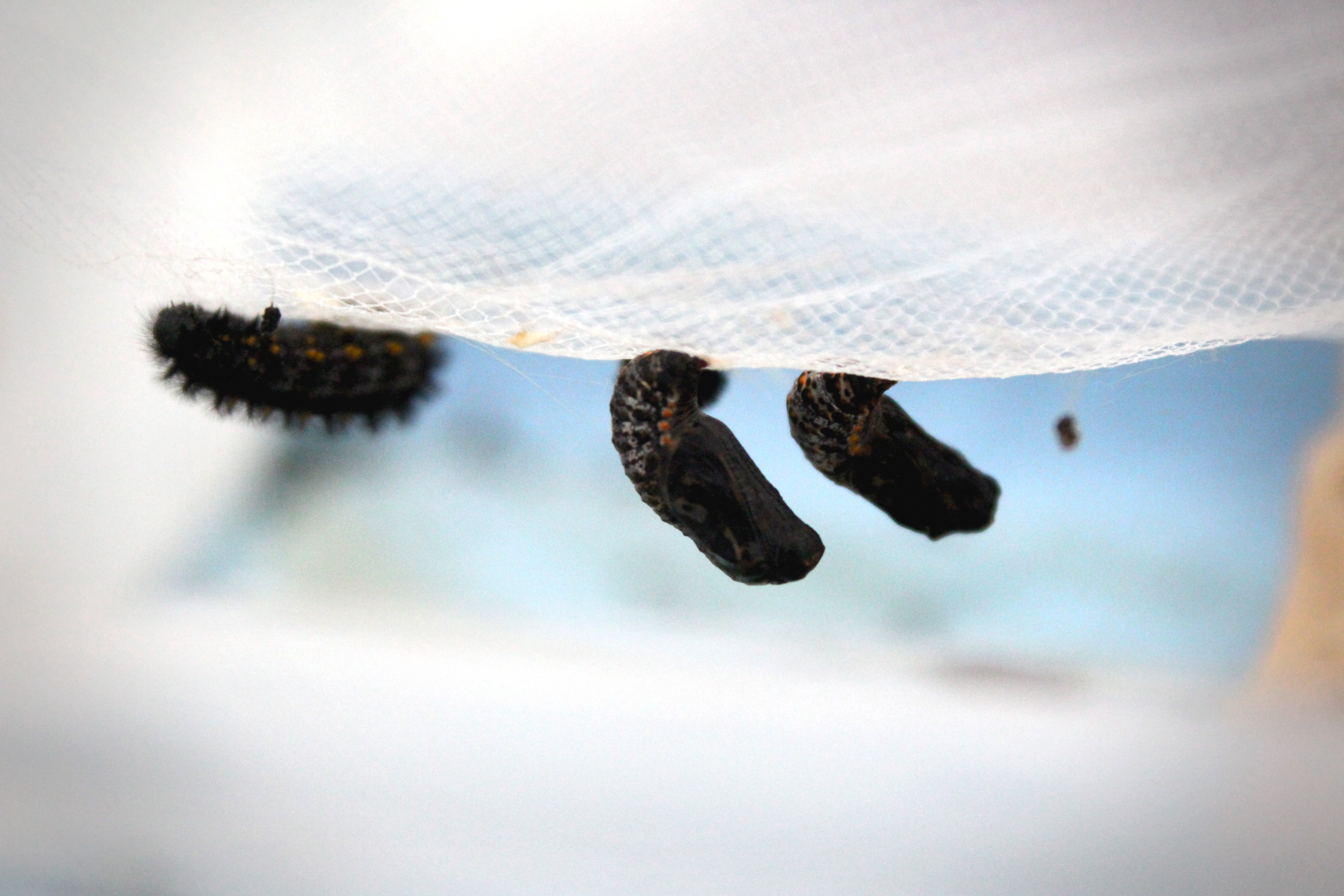
Taylor’s checkerspot caterpillars in their newly-formed cocoons. They remain in this state for up to three weeks and then emerge as butterflies (also known as “eclosion”).
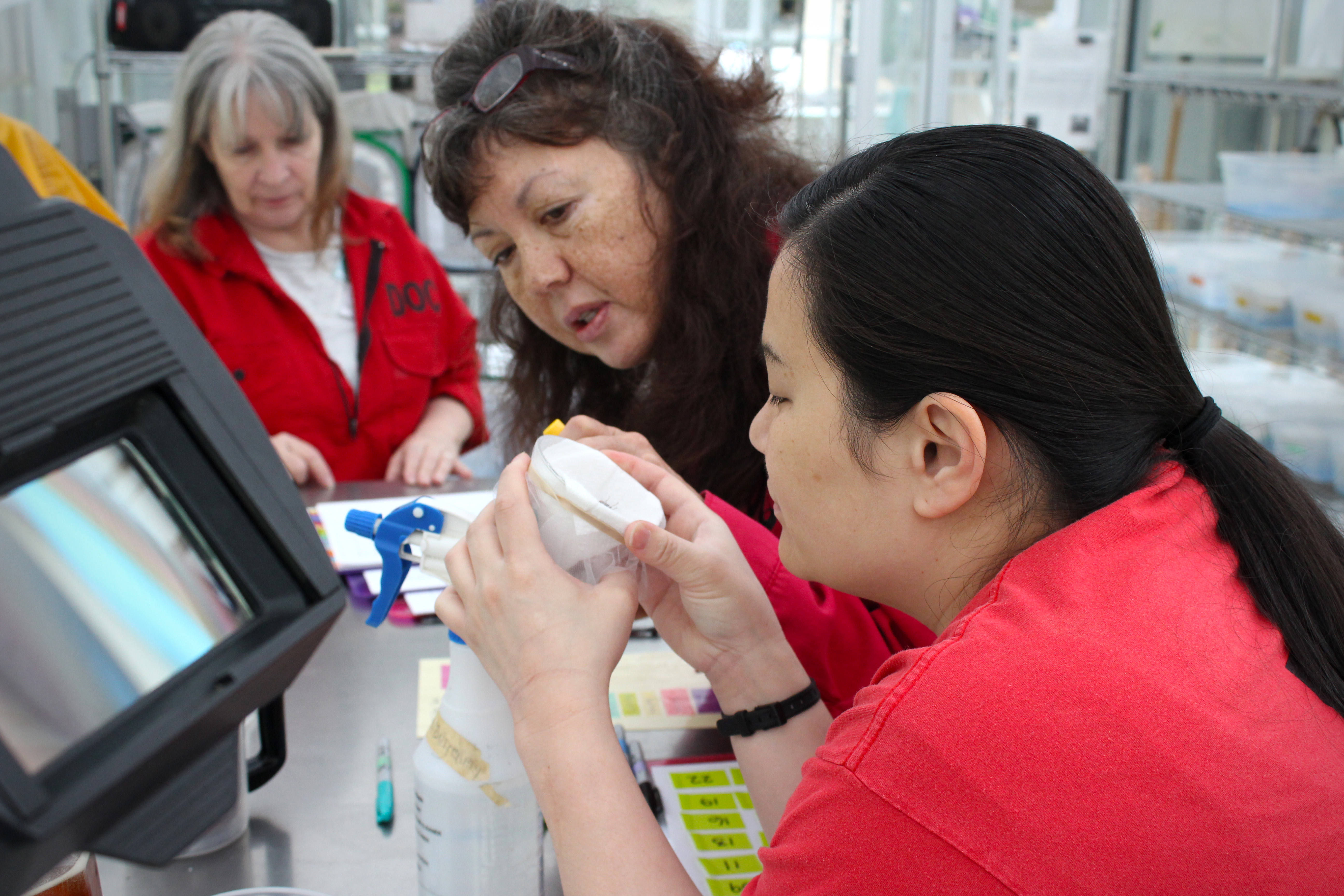
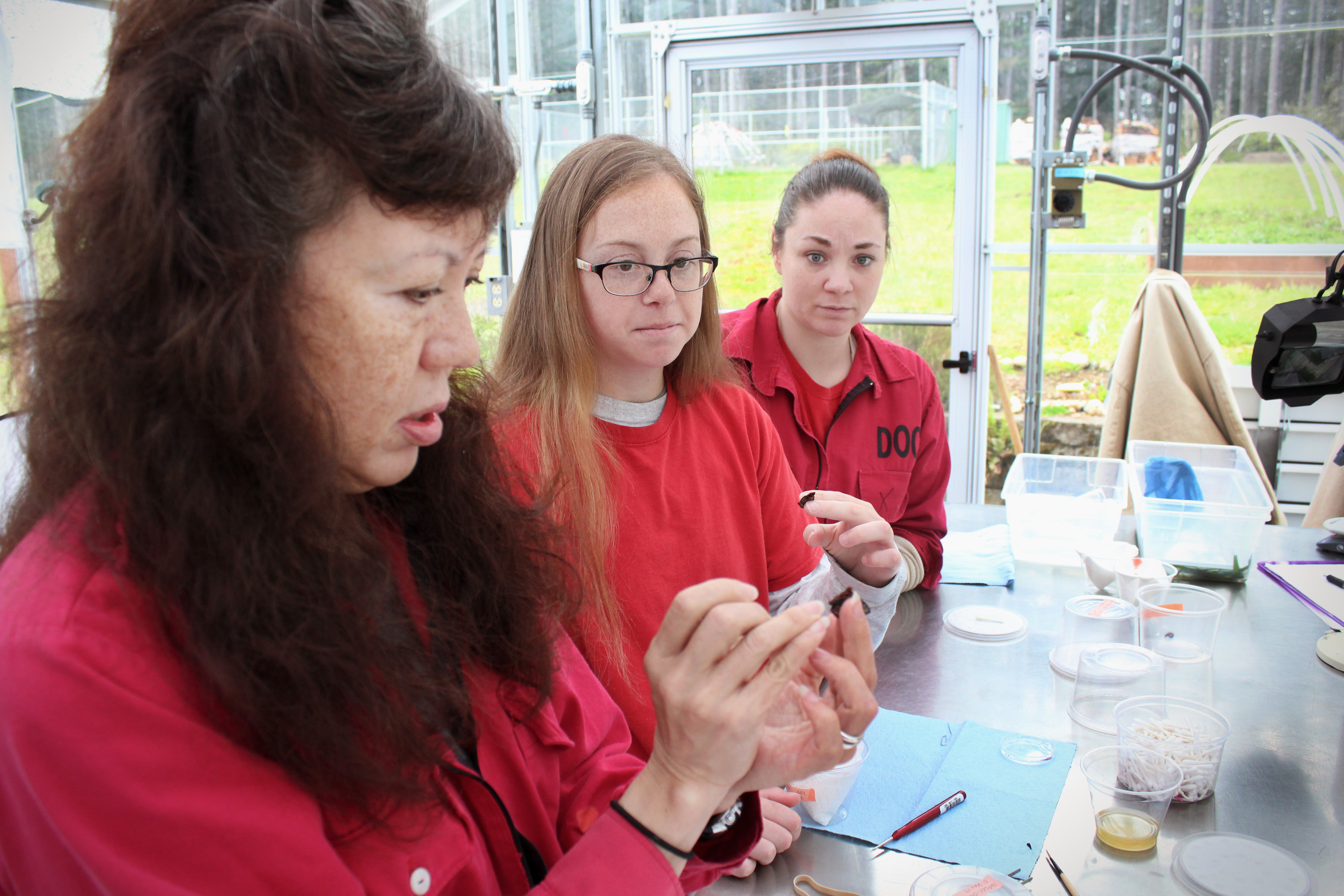
(Left to right) Cynthia Fetterly, Susan Christopher, and Jessica Stevens inspect a pupa to see if it is ready to eclose.
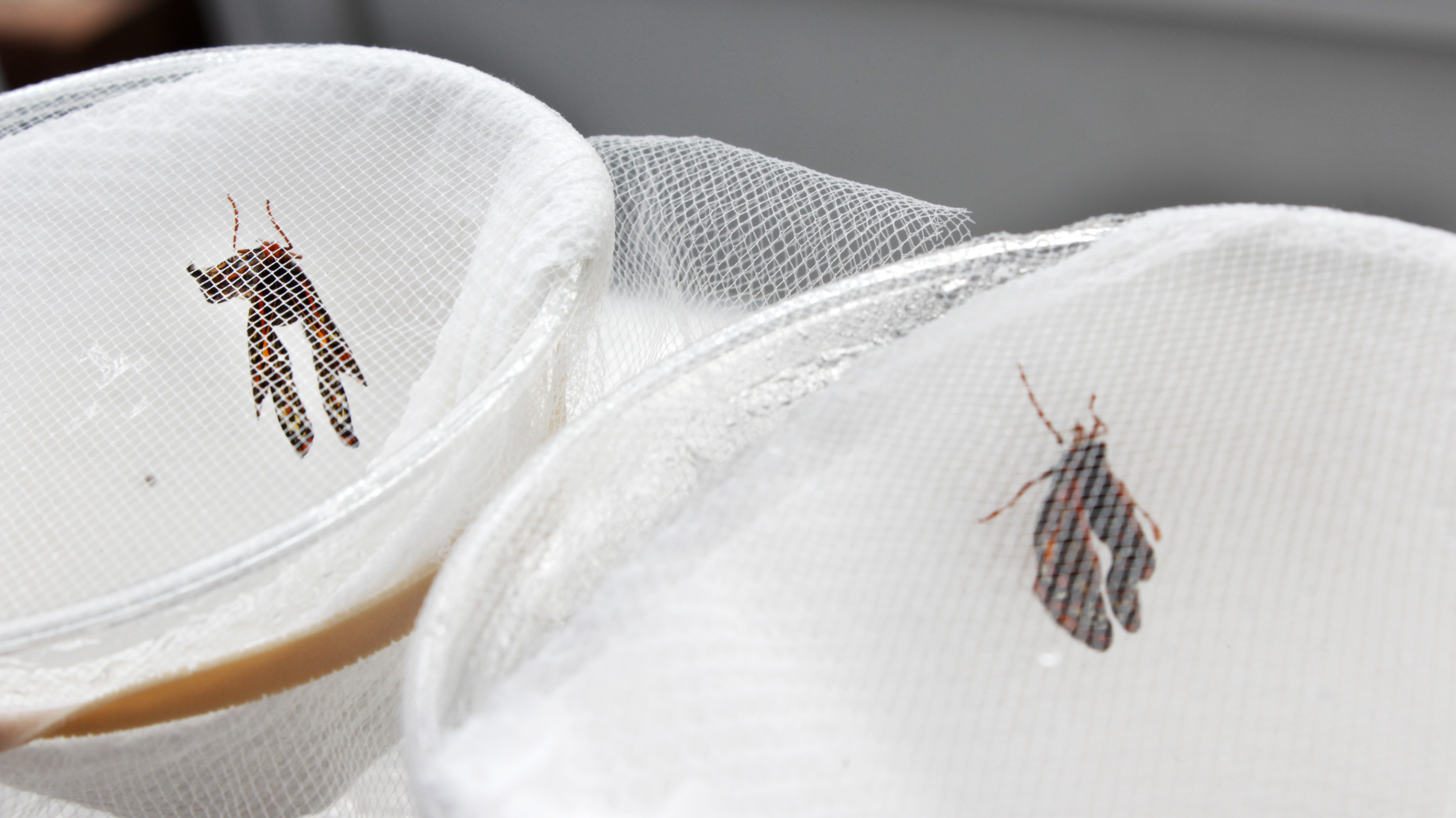
After wiggling free of their cocoons, two adult butterflies dry their wings. It can take several hours after eclosion before they are ready to fly.
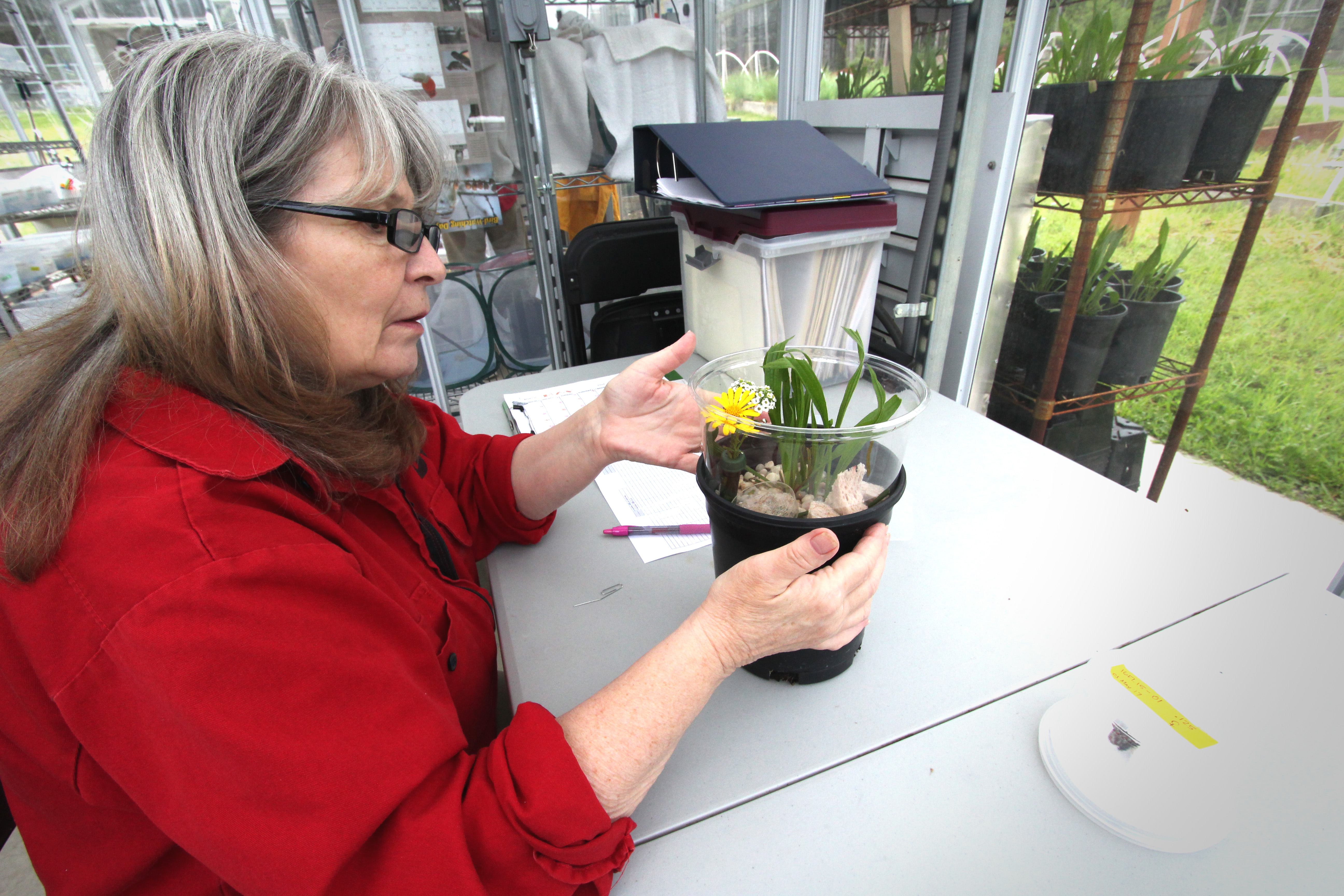
Cynthia Fetterly searches for butterfly eggs. She has to check every inch of the plant and down in the rocks at its base. It’s a tedious but crucial task.
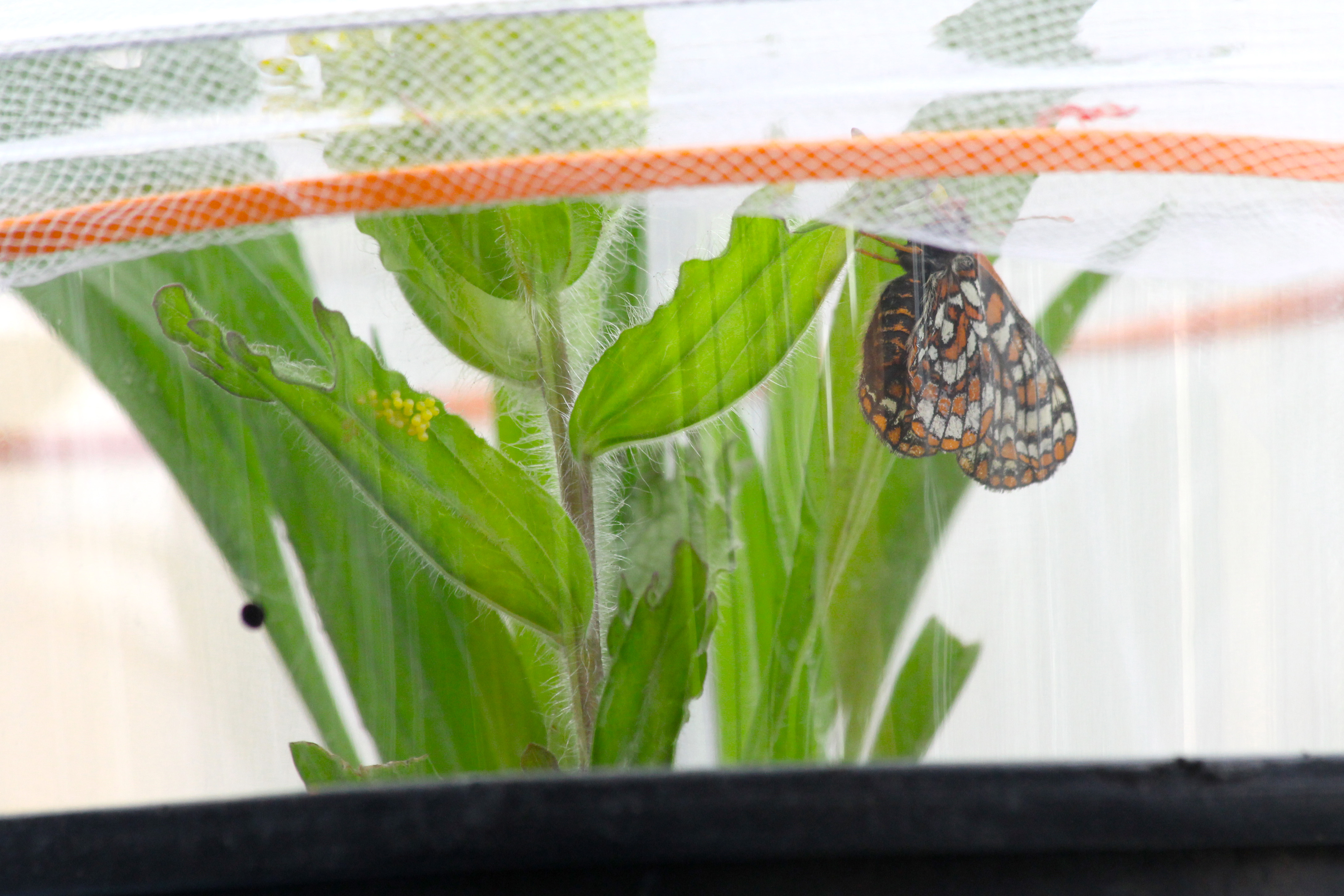
This female just laid a fresh cluster of eggs (the tiny yellow orbs on the leaf to her left).
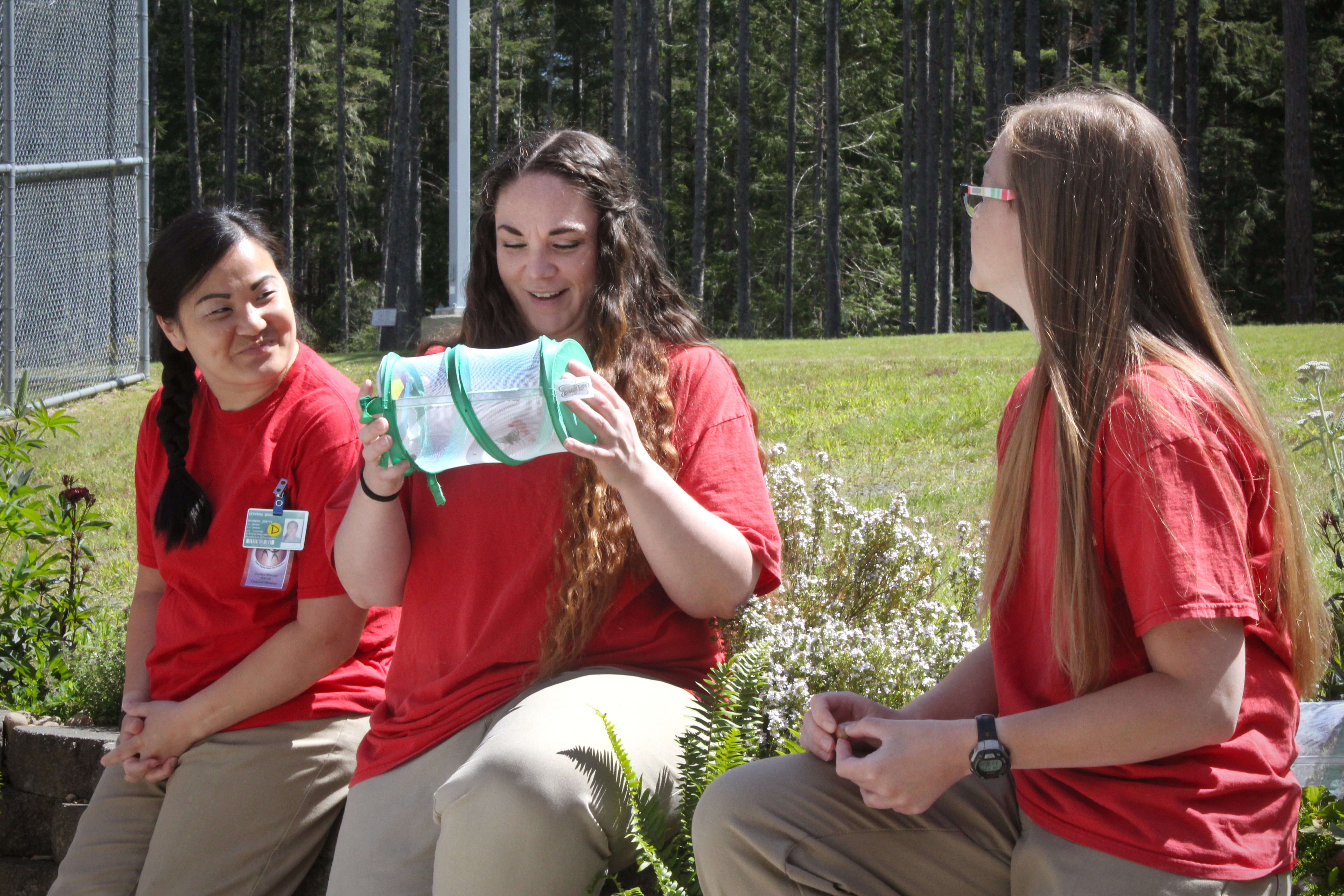
(Left to right) Susan Christopher teaches new technicians Alexis Coleman and Nicole Alexander how to safely handle adult checkerspots. Technicians inspect the size and shape of the abdomen to determine whether butterflies are male or female.
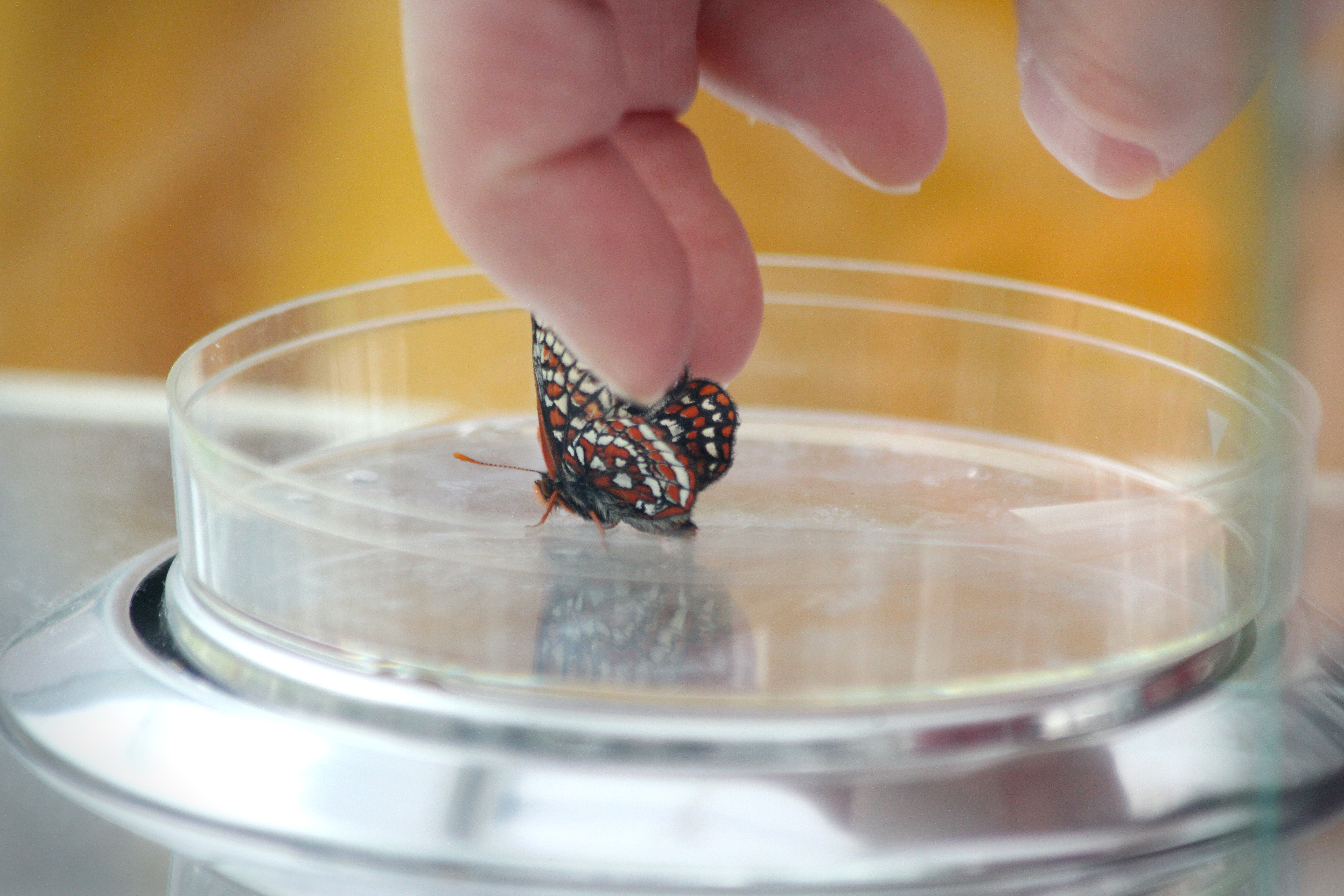
All adult checkerspots must be weighed and measured. Notice how this technician grasps the butterfly with the sides of her fingers, avoiding harm to its wings.
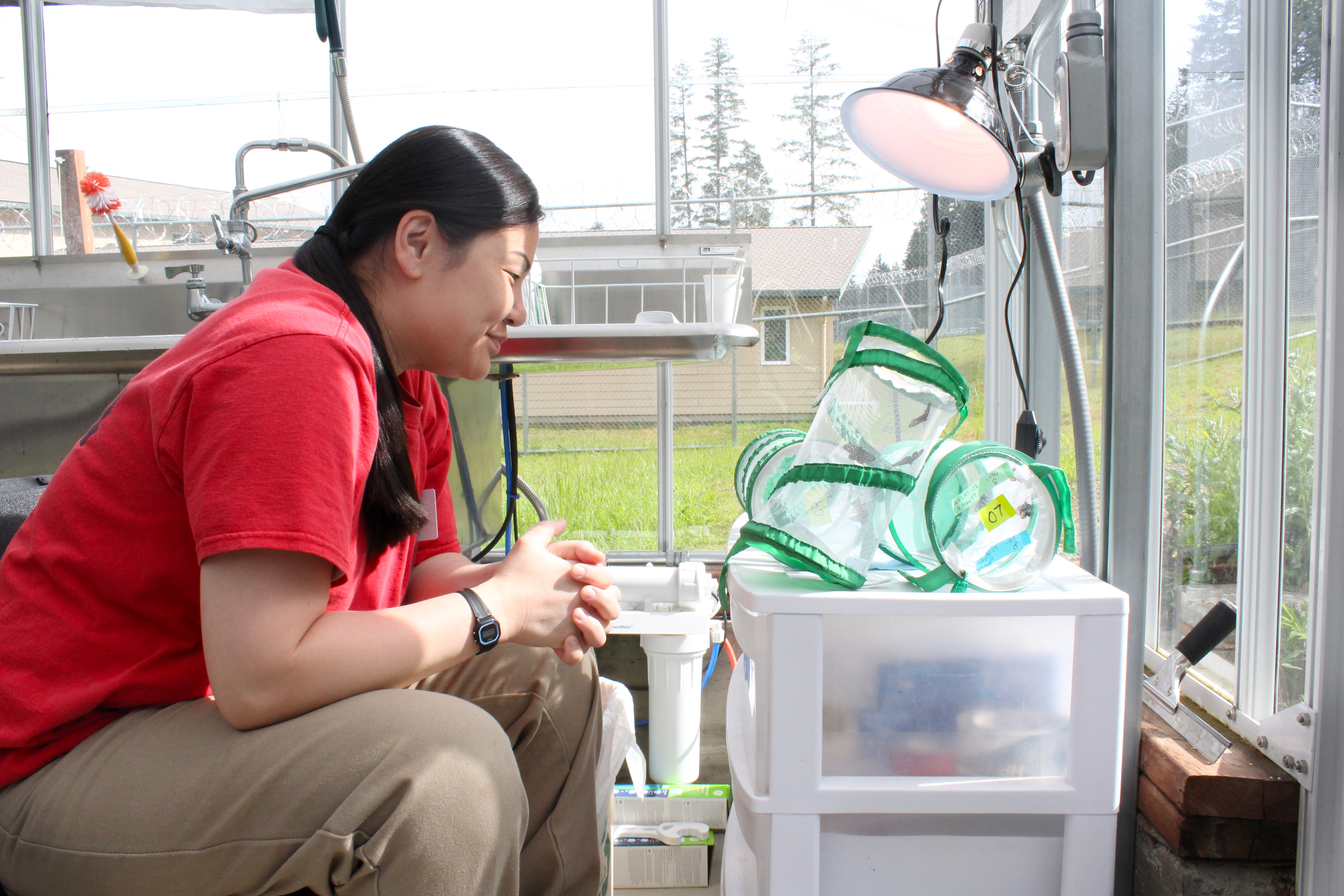
Jessica Stevens keeps a watchful eye over adult breeding tents.
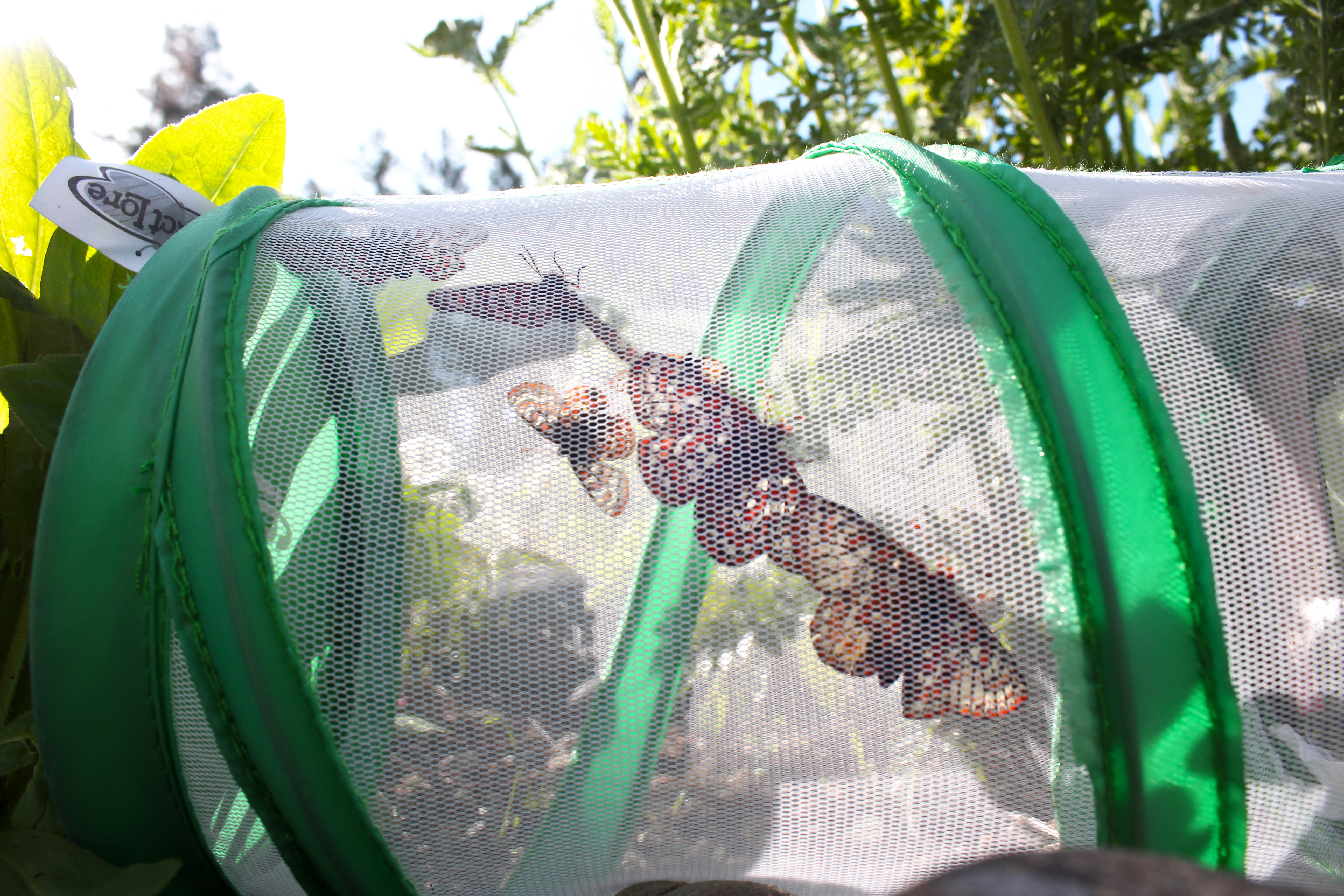
Mottled sunlight and a warm breeze are a checkerspot’s ideal conditions.
The adult life stage is a critical period in the captive rearing program. Technicians conduct dozens of breeding introductions each day, keeping track of each individual’s “matriline” in order to maintain genetic diversity.
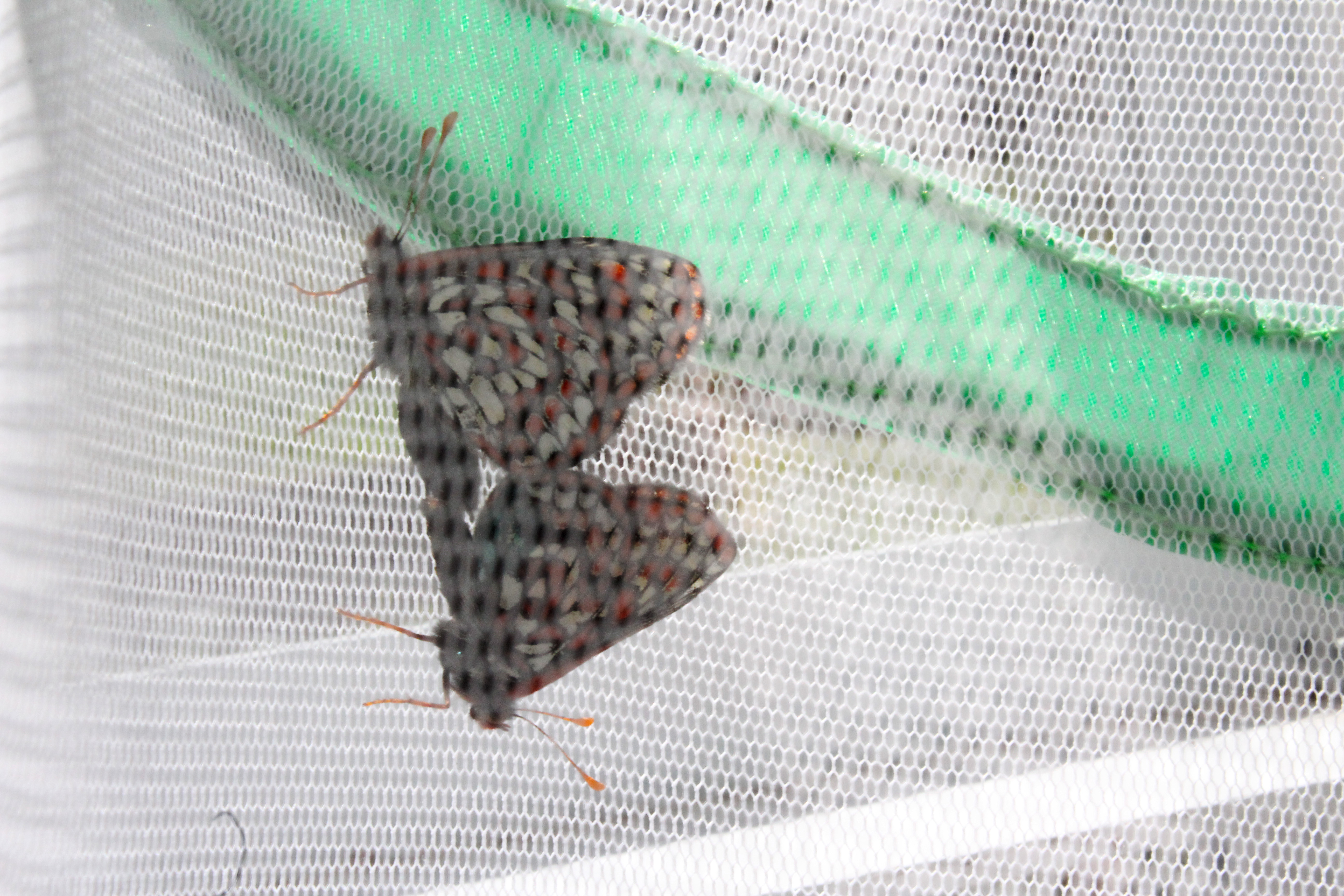
Breeding Taylor’s checkerspot takes patience. After hours of waiting and adjusting environmental conditions, these two finally decided to mate.
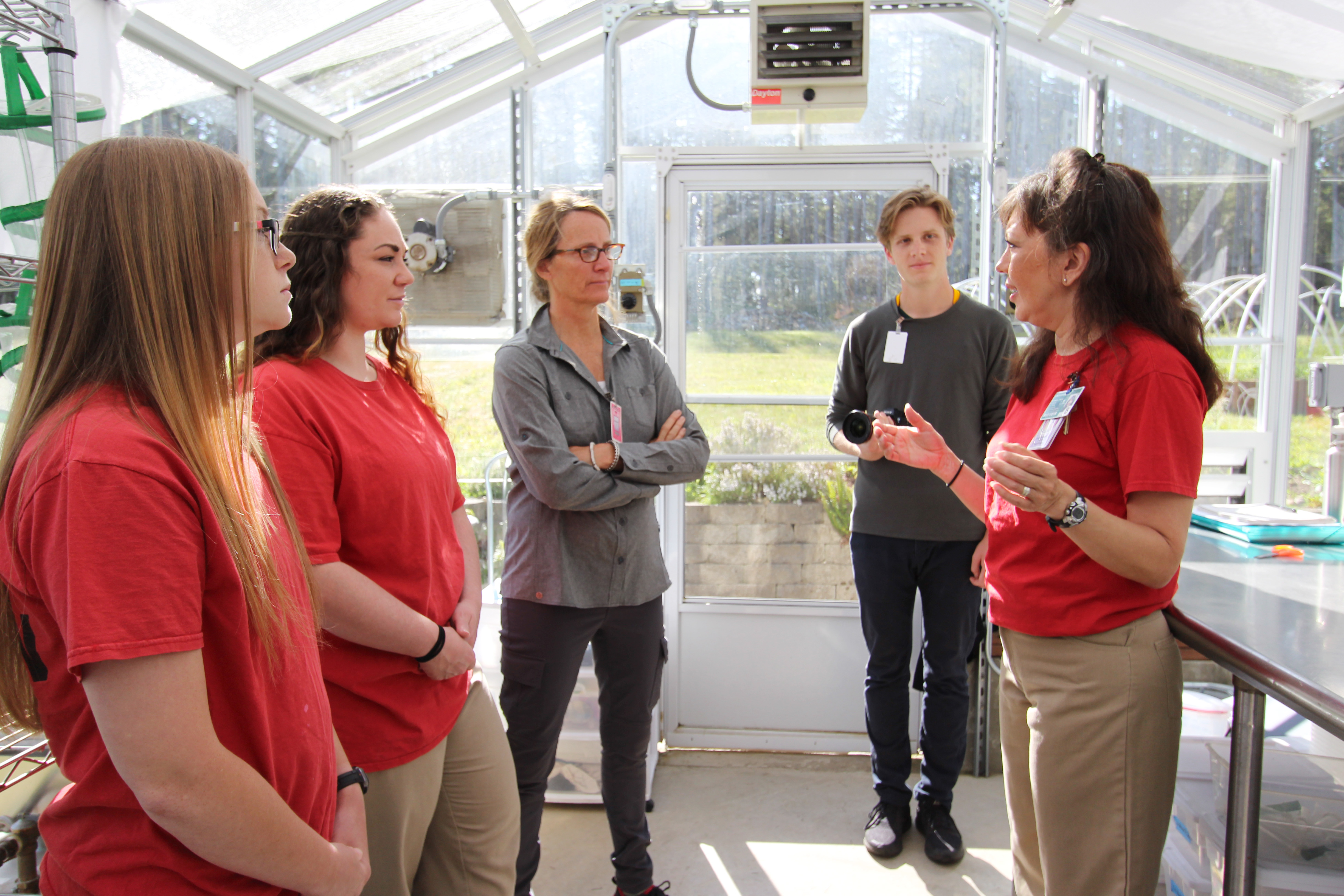
Susan Christopher leads a tour of the butterfly lab for a documentary crew from PBS Nature. Photo by Kelli Bush.
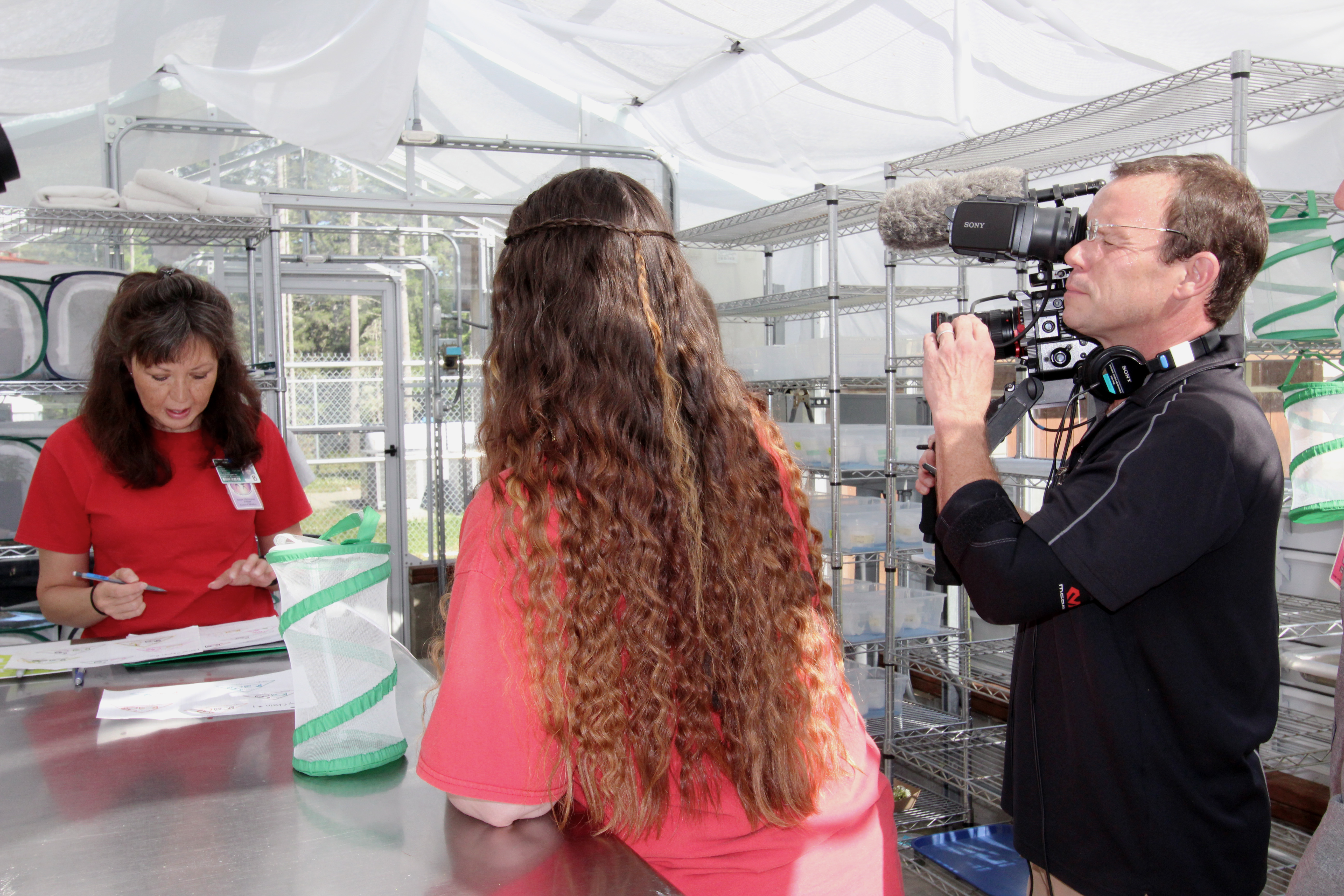
PBS Nature gathers footage of Susan Christopher and Nicole Alexander double-checking their breeding data. Photo by Kelli Bush.
It’s hard to deny the charm of the Taylor’s checkerspot butterfly. We extend our gratitude to the technicians at MCCCW who continue to prove that incarcerated people can make a difference in conserving biodiversity.


By Turtle Technician, William Anglemyer
Photos by Sadie Gilliom

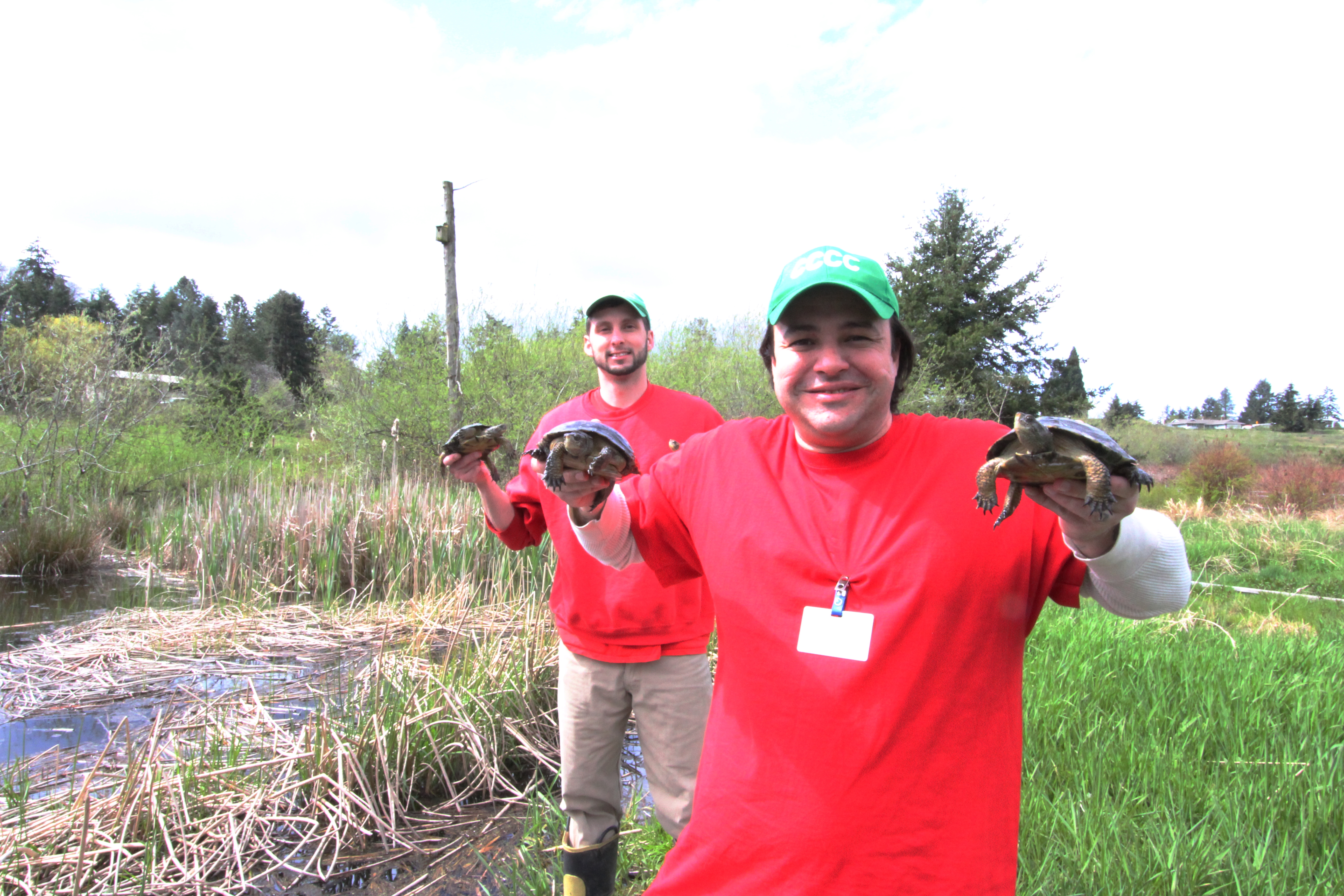
On the morning of April 17th, ten turtles from the SPP Cedar Creek Turtle Program were released onto a Washington Department of Fish and Wildlife site in Lakewood, WA. The turtles had been receiving care at the Cedar Creek Corrections Center since November of 2016.

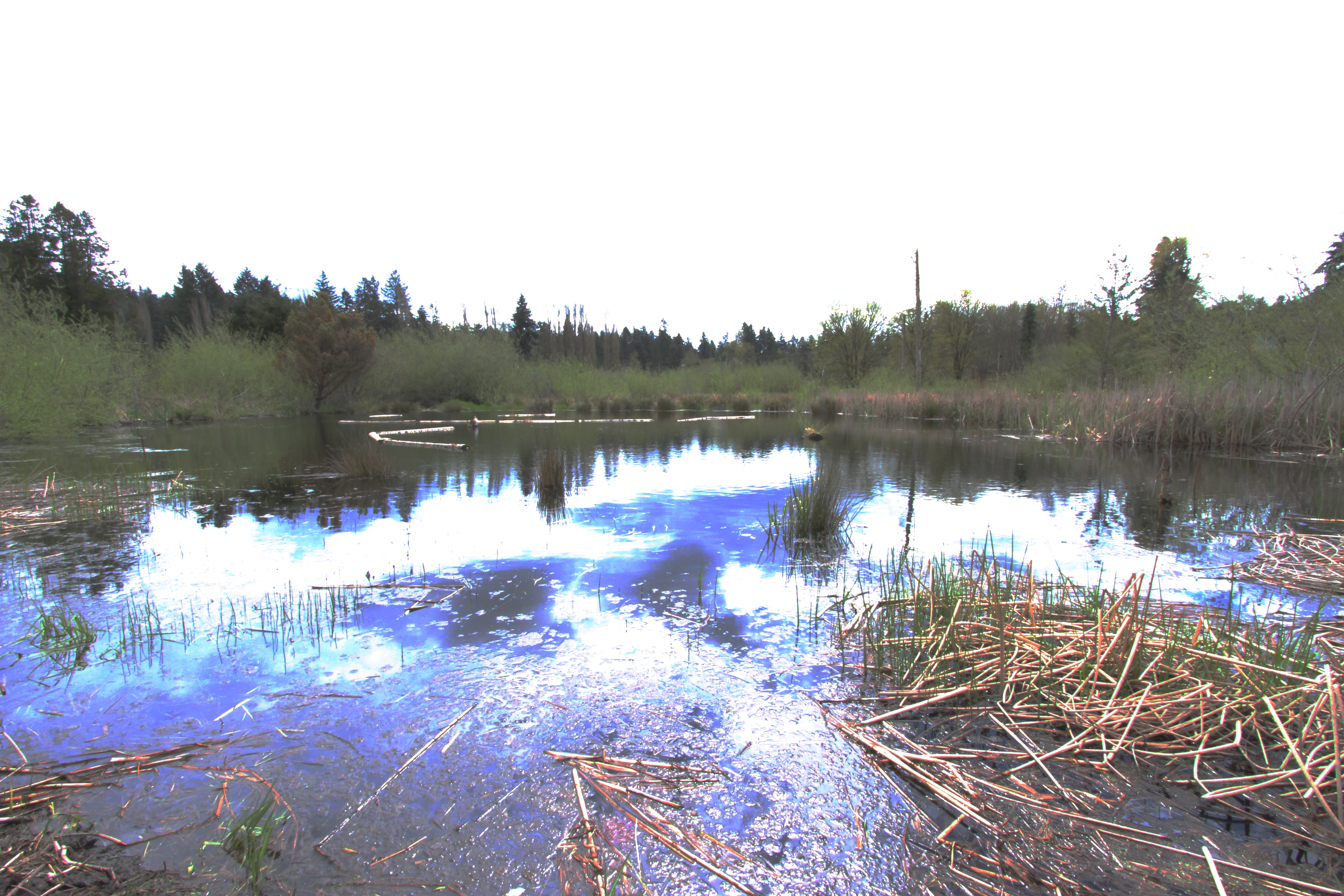
The turtle habitat

It was great to see them swim off into the ponds. Some of them had very extensive wounds when they were first arrived CCCC. As the technicians that care for the turtles after their treatment at PAWS, we were relieved to see them finally out of captivity. When they are in our care, they are provided the best treatment possible. Warm water to heal in, high protein food to eat, a clean tank habitat-all are provided at our rehabilitation facility. However, these are wild creatures and, as such, they belong in the wild-not in a tank.

Getting ready to release!

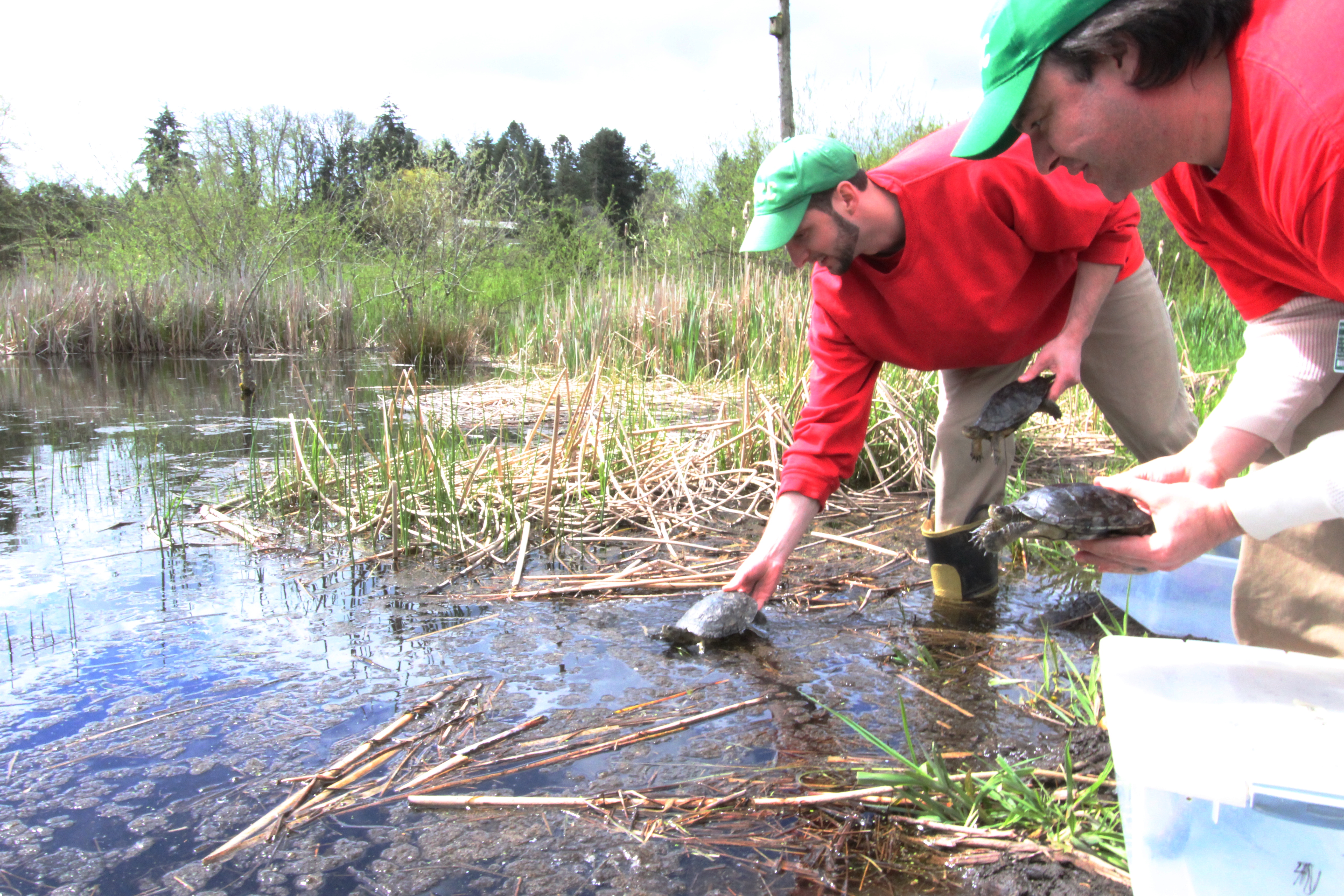
Immediately after being placed in the shallows, and even though western pond turtles are not the most expressive species, we interpreted their lack of hesitation swimming into the pond as revealing a kind of excitement for being back into the wilds. They were taken from the plastic shoebox containers used to transport them and placed them in the shallow water on the bank. We each grabbed a turtle and released them at the same time. We repeated this until all 10 turtles were released. As they left our hands, they swam as fast as they could until they disappeared into the murkiness of the pond.

Turtle Technicians, Mr. Anglemyer and Mr. Eldridge, releasing the turtles.

Sadly, we realize that this may not be the last time these turtles experience release from captivity back into the wild; some may have to return to captivity for re-treatment. The shell disease that is plaguing these turtles is still being researched and much is yet unknown. Biologists and veterinarians are working hard to figure out what causes the disease and how to cure it effectively.

Text by Jeanne Dodds, SPP Prairie Ecological Conservation Nursery Coordinator for Washington Corrections Center for Women
Photos by Ricky Osborne

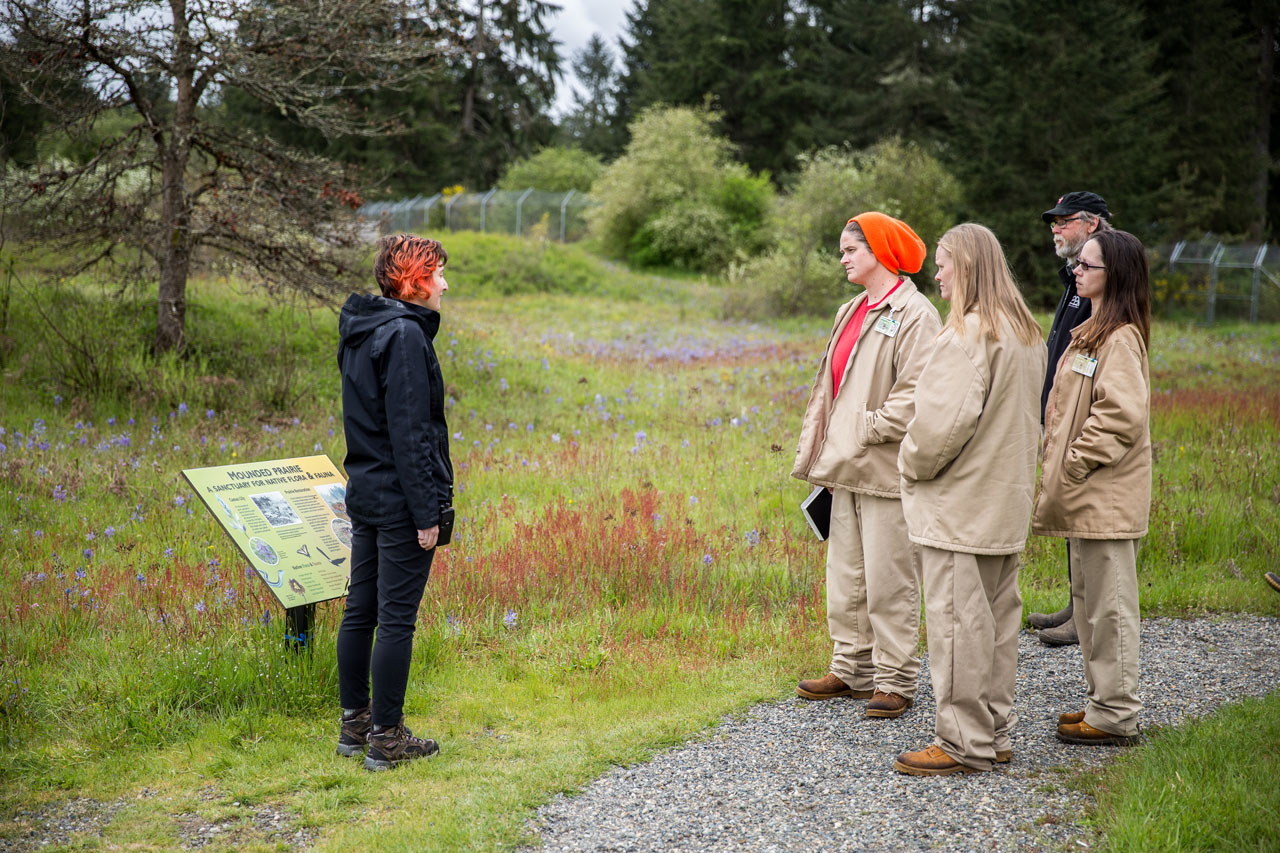
In May, Sustainability in Prisons Project (SPP) created a first-time educational experience for the prairie conservation nursery team at Washington Corrections Center for Women (WCCW). While Washington State Department of Corrections (WA Corrections) staff have had other chances to visit prairie sites, it was the first time that inmate technicians were able see for themselves the rare landscape they help restore. The WCCW team toured two partner sites, the Center for Natural Lands Management’s Violet Prairie Seed Farm, and restored prairie at Wolf Haven International. Each of these sites receives plants produced at WCCW.

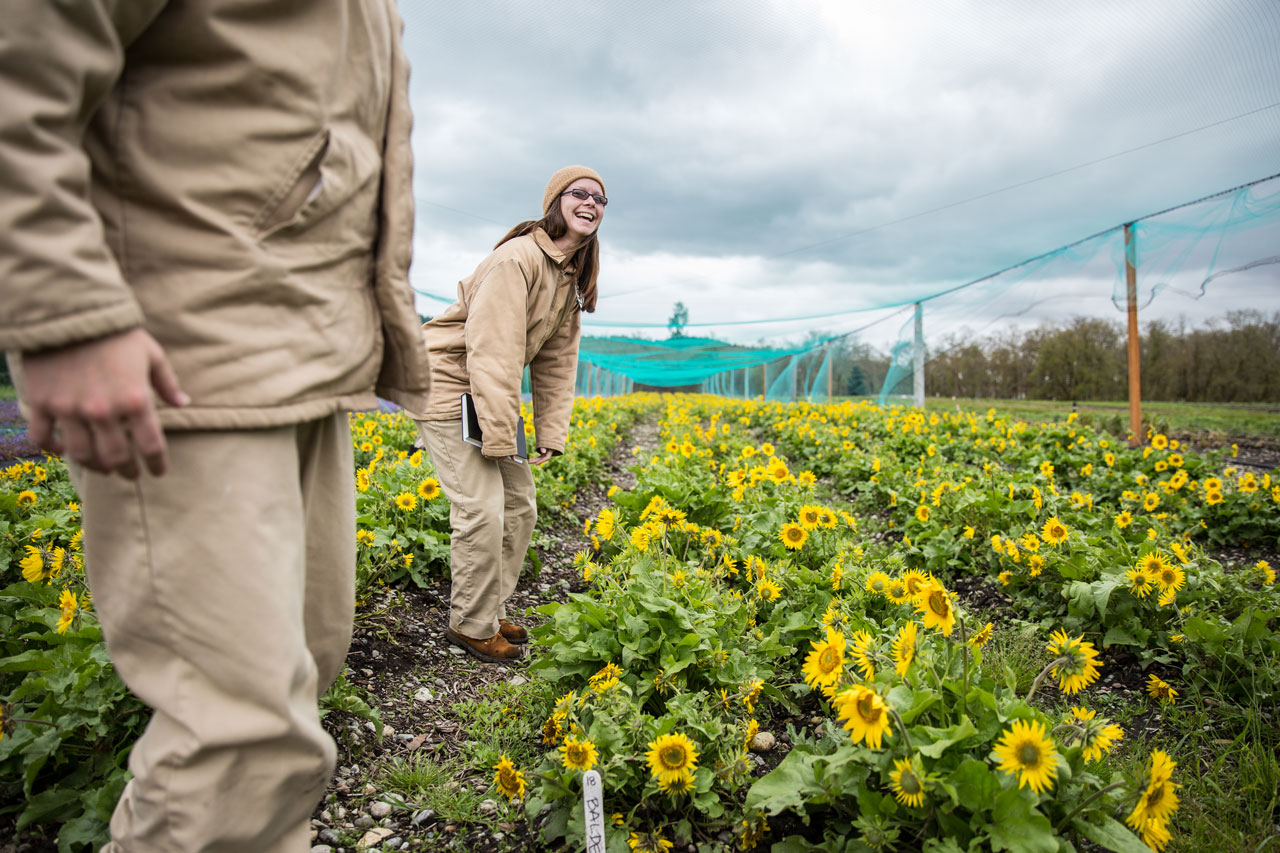
At Violet Prairie Seed Farm, Prairie Nursery Technician Samantha Morgan found out that mature Balsamorhiza deltoidea flowers smell like chocolate! Photo by Ricky Osborne.

We toured the Wolf Haven restoration site with plant conservation specialists. We observed recovering populations of golden paintbrush (Castilleja levisecta), one of the endangered plants cultivated by the technicians at WCCW, and a species critical to Taylor’s Checkerspot Butterfly recovery. At Violet Prairie Seed Farm, the farm manager and work crew members presented some of the techniques and skills necessary to produce native seed on a large scale.

These site visits provided context and information to enhance the work of the technicians in the Ecological Conservation Nursery, and also adds education, training, and connections for their futures.

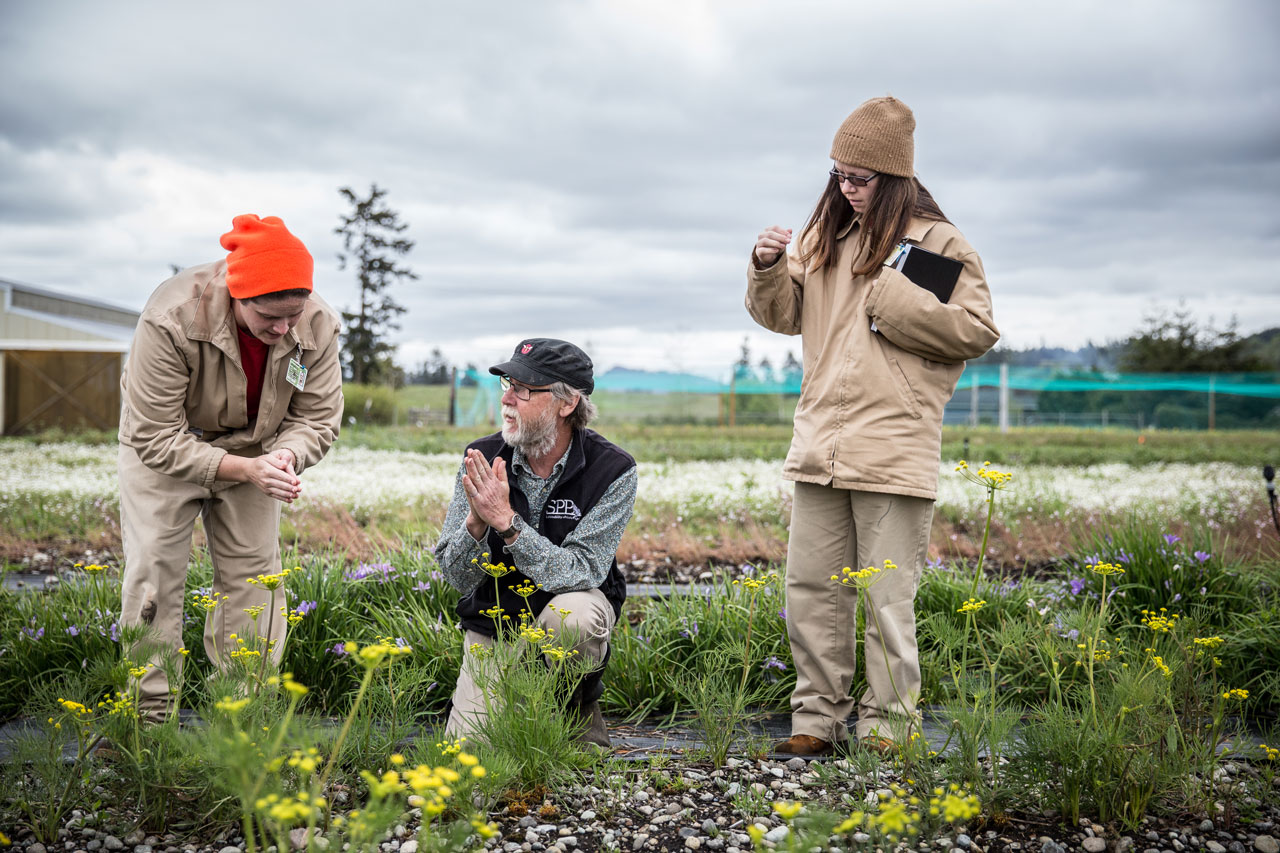
Ecological Conservation Nursery Technician Ashley McElhenie, Ecological Conservation Nursery Manager Carl Elliott, and Ecological Conservation Nursery Technician Samantha Morgan discuss growing Lomatium triternatum. Photo by Ricky Osborne.

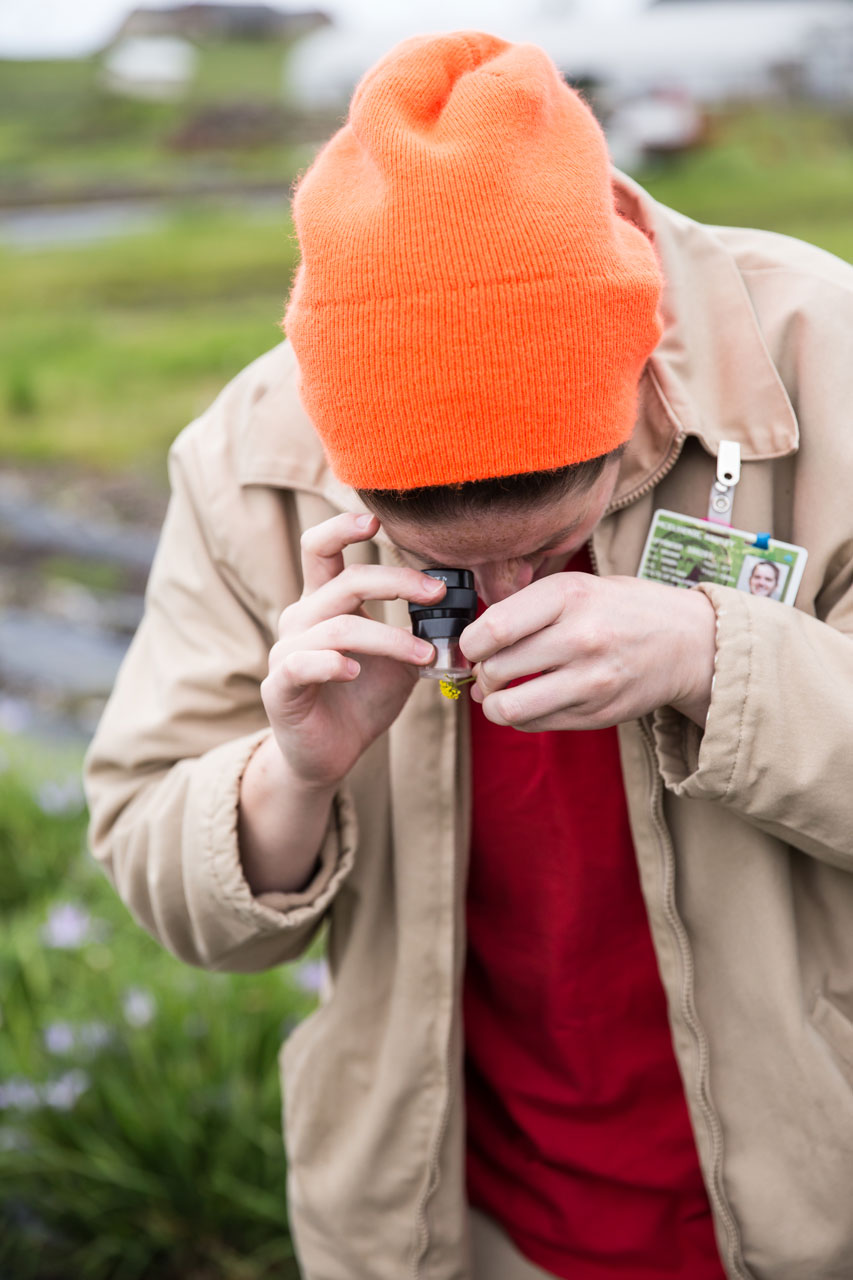
Ecological Conservation Nursery Technician Ashley McElhenie uses a hand lens to examine a Lomatium species at Violet Prairie Seed Farm. Photo by Ricky Osborne.

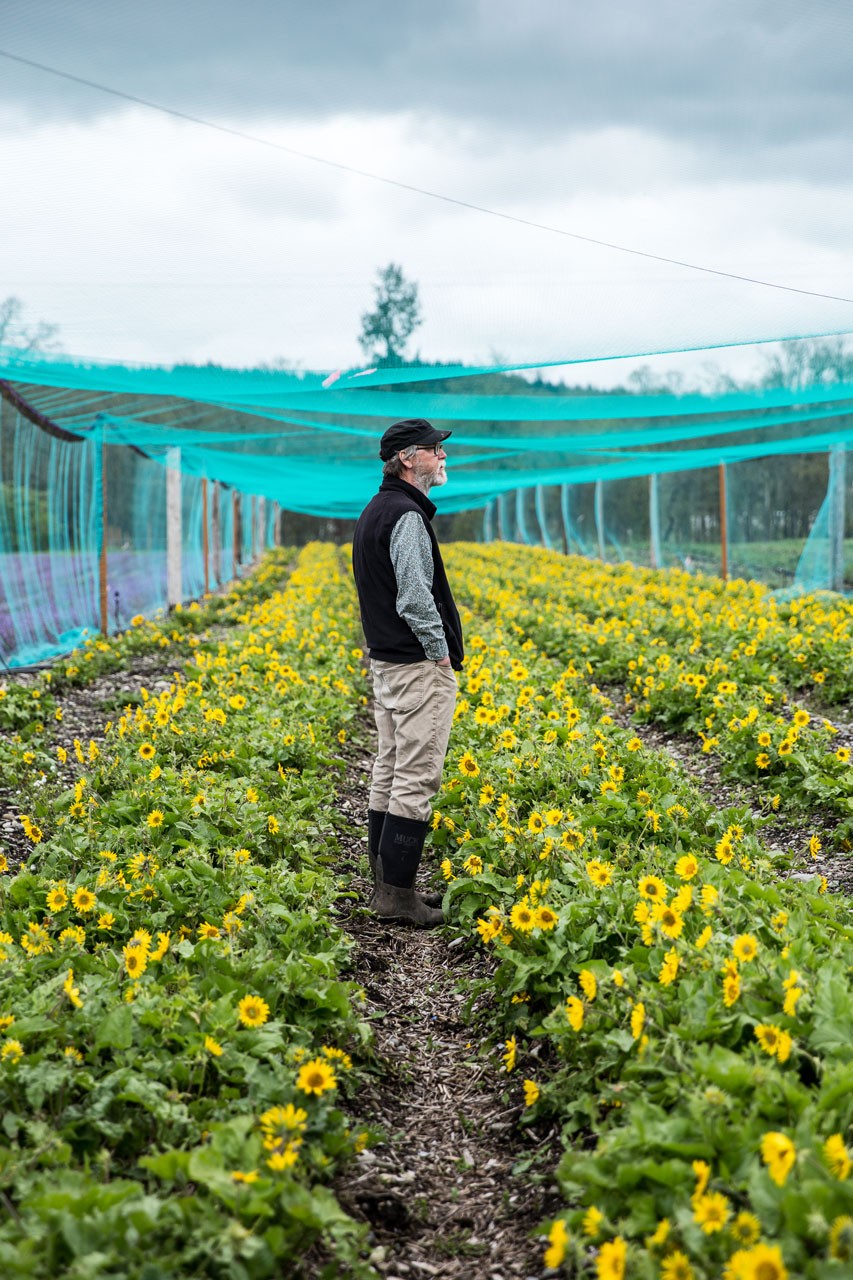
Ecological Conservation Nursery Manager Carl Elliott with rows of Balsamorhiza deltoidea, one of the primary plant species grown at WCCW. Photo by Carl Elliott.
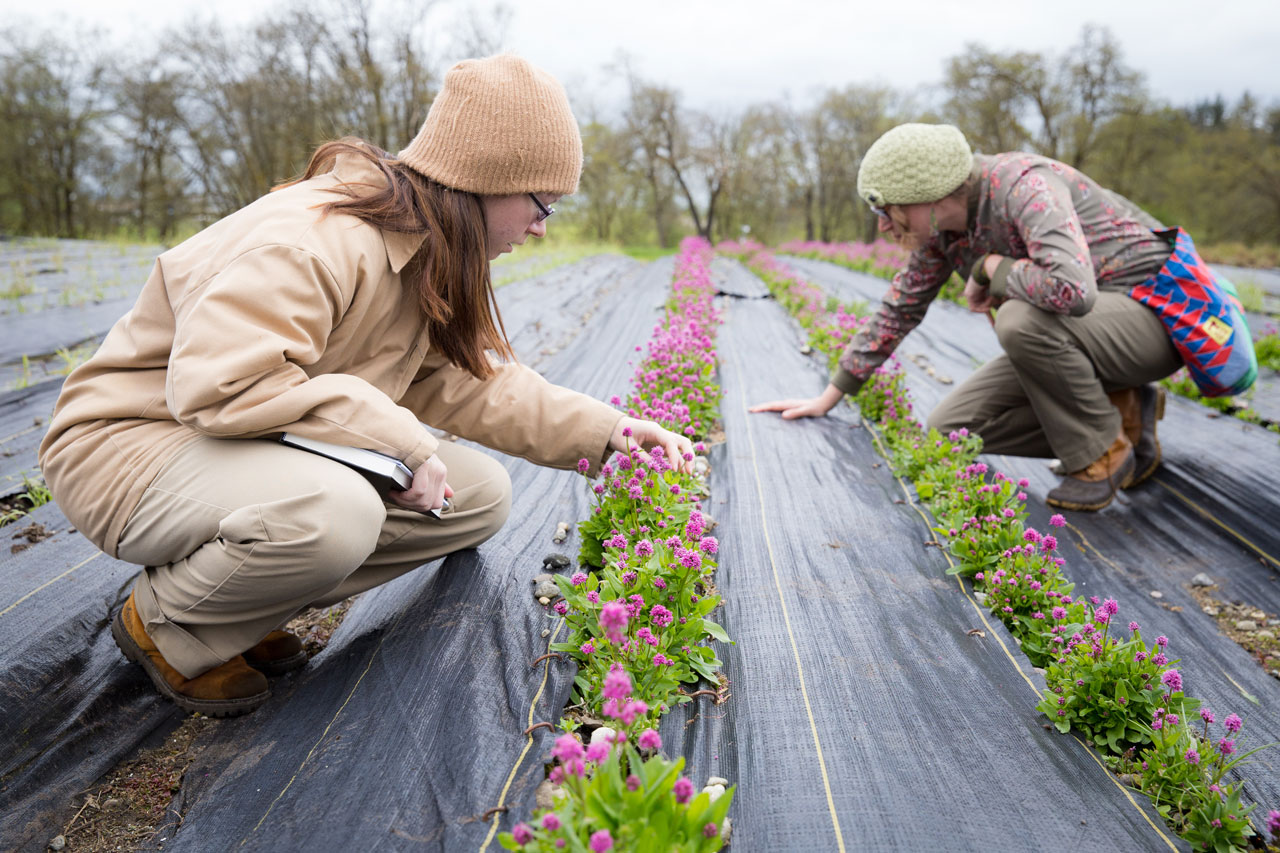
Ecological Conservation Nursery Technician Samantha Morgan and Ecological Conservation Nursery Coordinator/Graduate Research Assistant Jeanne Dodds in the fields of Plectritis congesta at Violet Prairie Seed Farm. The site visits were the technicians’ first opportunity to see the species they grow as mature plants. Photo by Ricky Osborne.
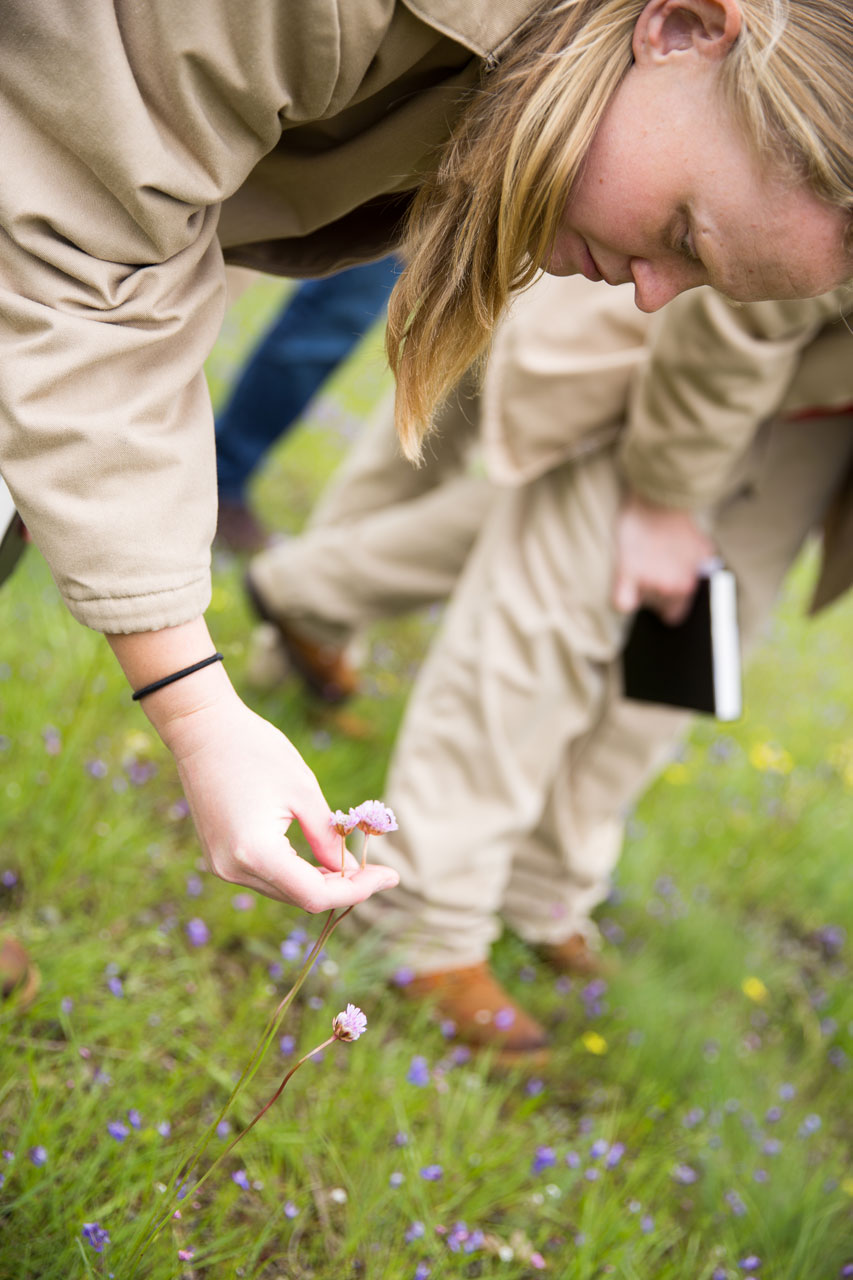
Now at Wolf Haven International, Ecological Conservation Nursery Technician Ambrosia Riche looks closely at Armeira maritima in full bloom in the wild. Photo by Ricky Osborne.
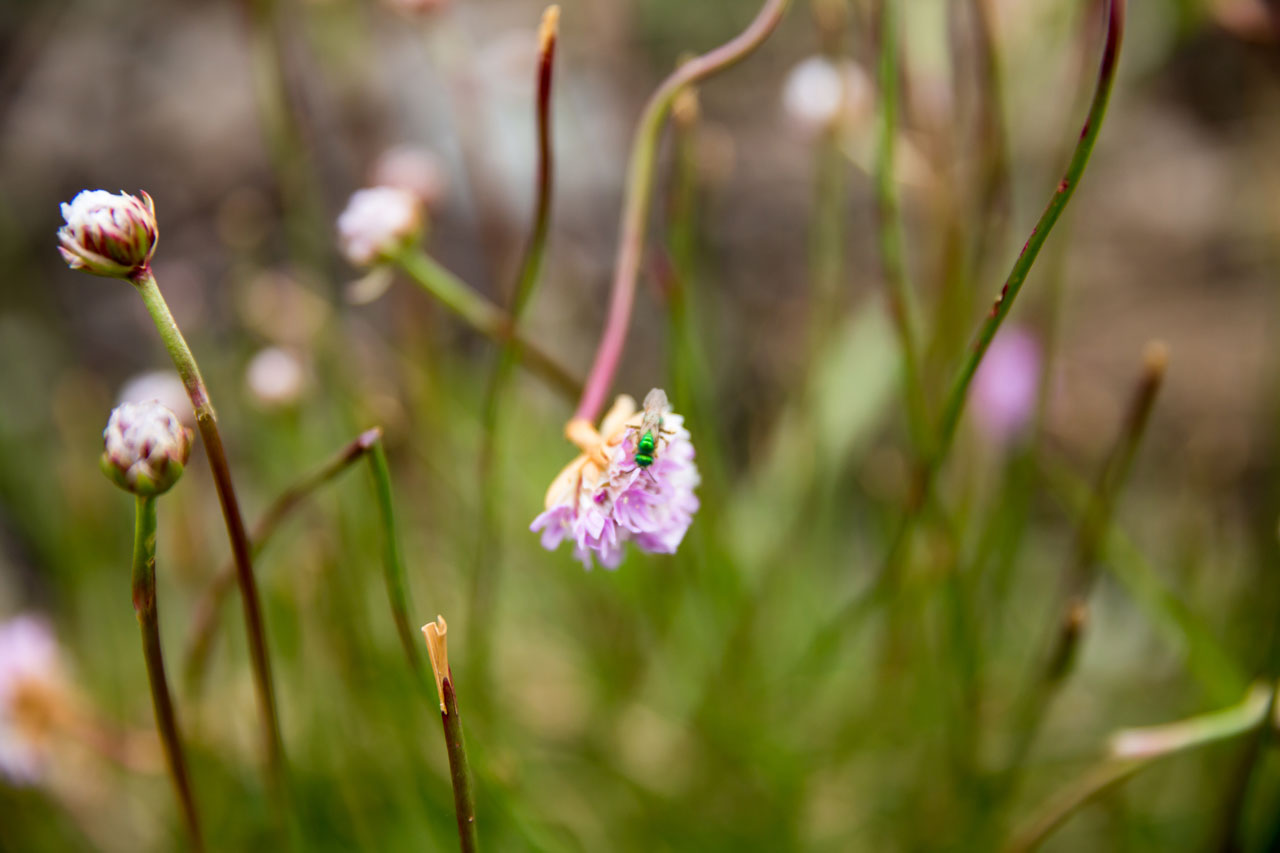
A native sweat bee on Armeria species; as a part of the Ecological Conservation Nursery educational program, technicians learn about the importance of native pollinators in prairie ecosystems. Photo by Ricky Osborne.
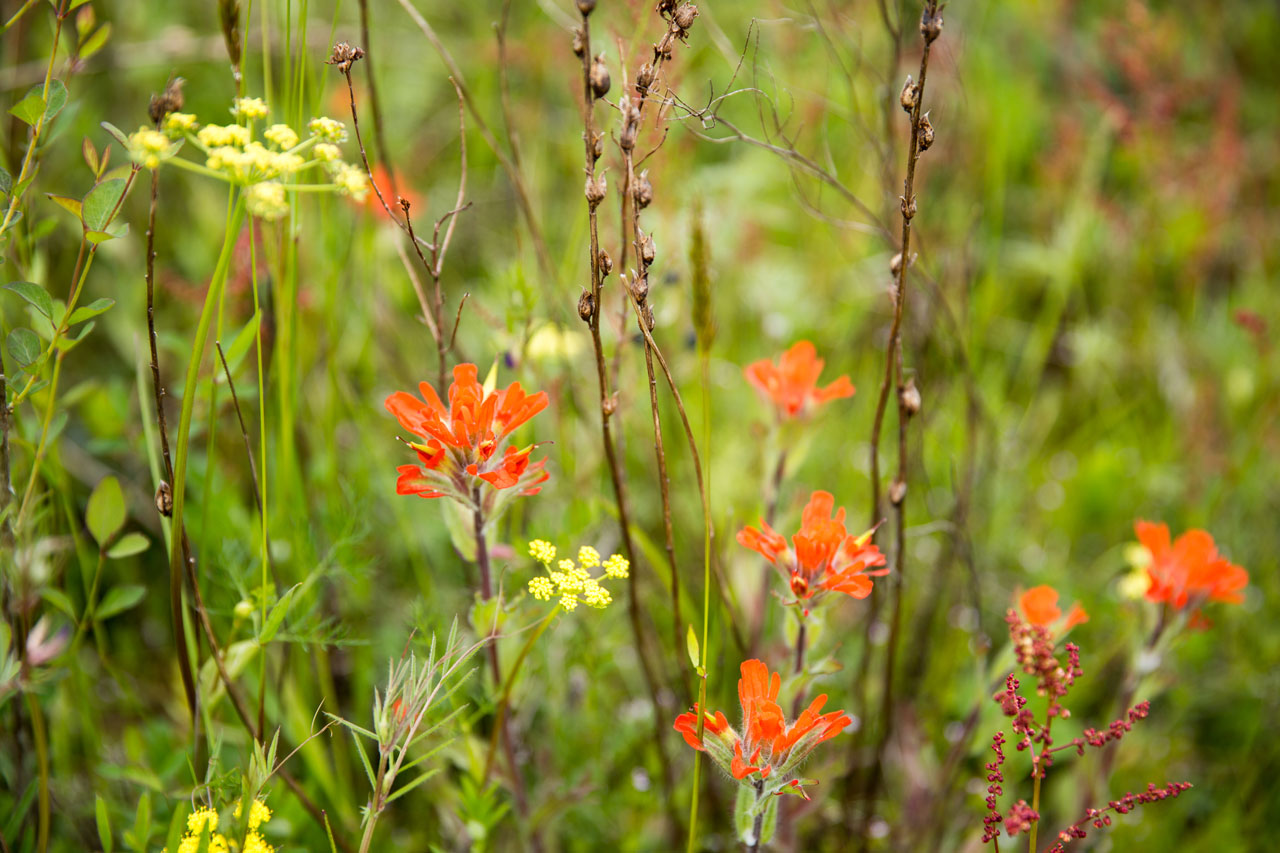
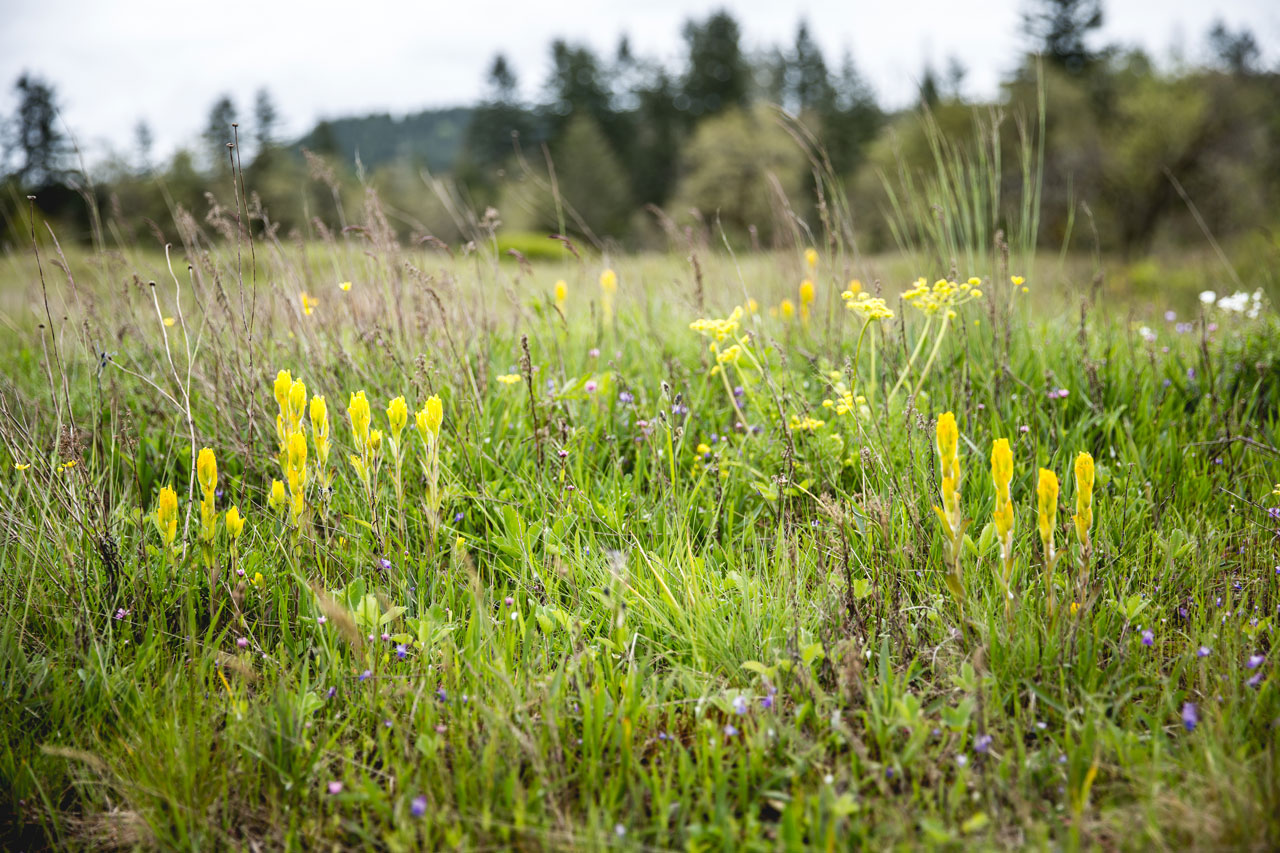
Another species grown extensively at WCCW, Castilleja hispida blooms vibrantly in the prairies at Wolf Haven International. Photo by Ricky Osborne.
Wolf Haven International Ecological Conservation Specialist Anne Schuster, Ecological Conservation Nursery Technicians Ashley McElhenie, Ambrosia Riche, Samantha Morgan, and Ecological Conservation Nursery Manager Carl Elliott discuss Mima mound prairie topography. Photo by Ricky Osborne.
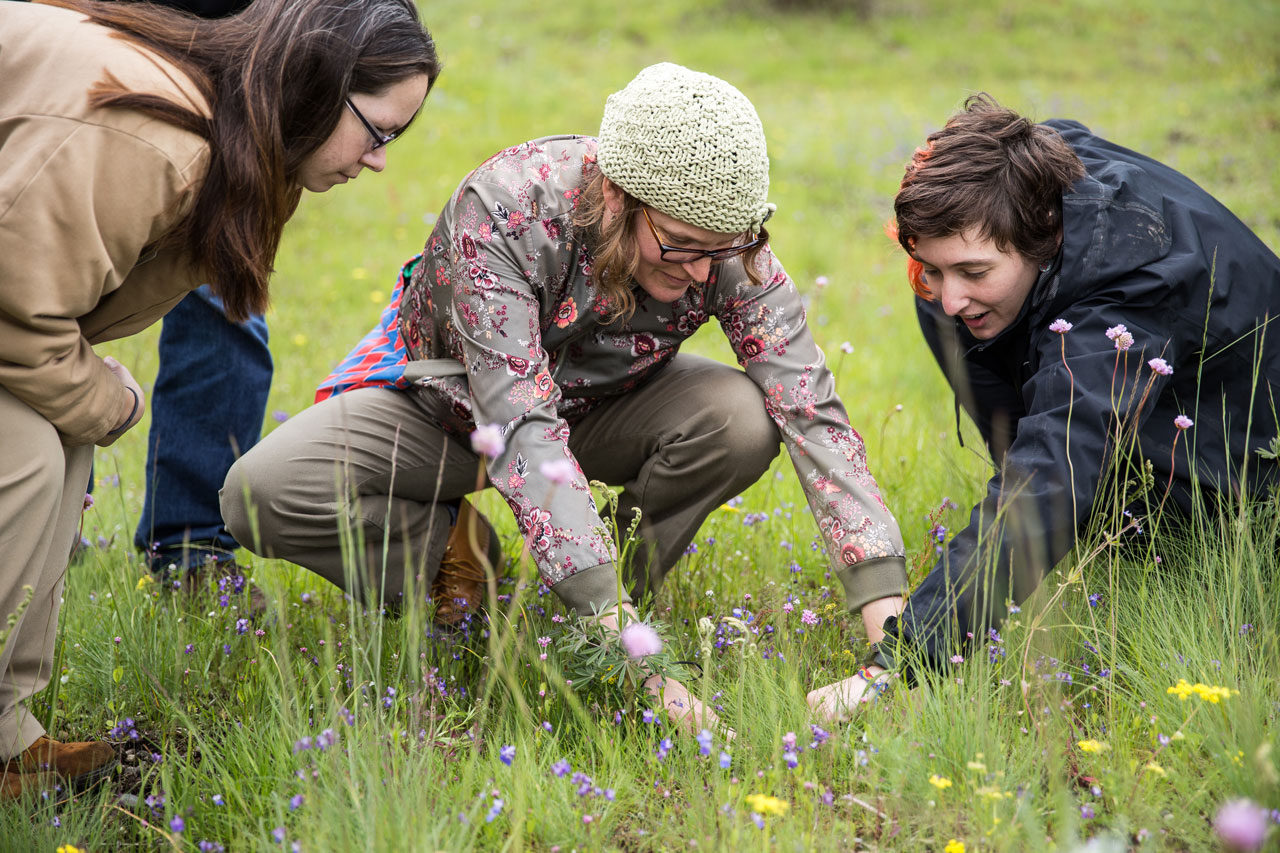
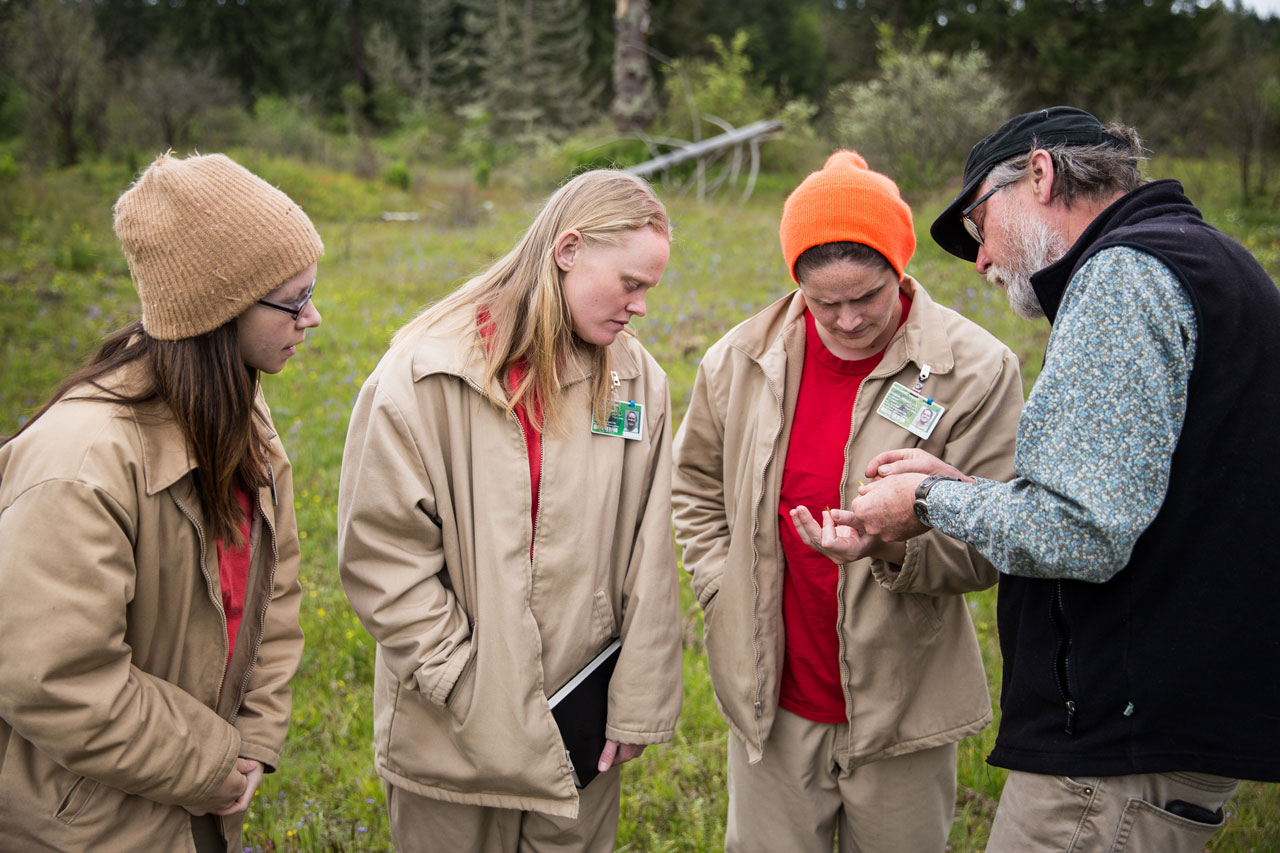
Ecological Conservation Nursery Technician Samantha Morgan, Ecological Conservation Nursery Coordinator/Graduate Research Assistant Jeanne Dodds, and Wolf Haven International Ecological Conservation Specialist Anne Schuster identify native prairie plants. Photo by Ricky Osborne.
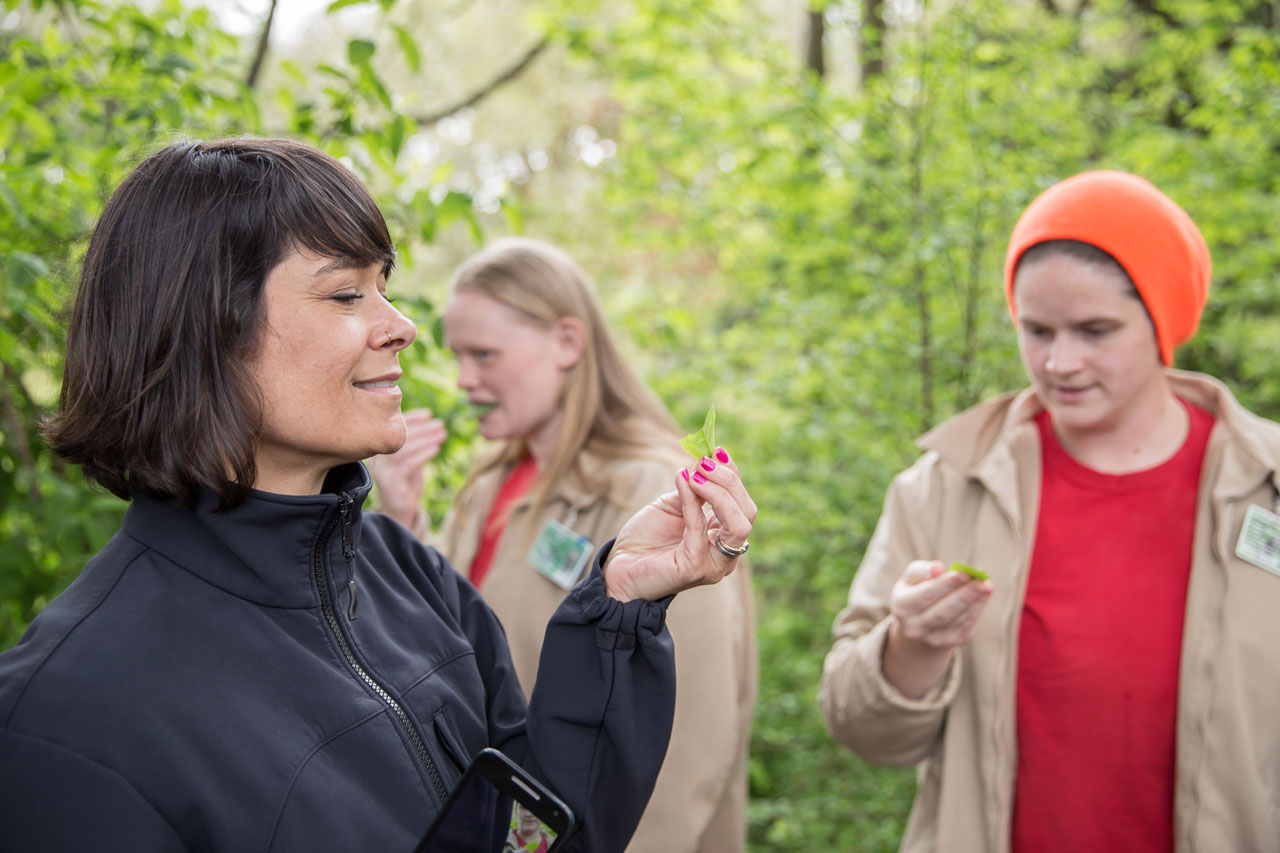
Corrections Officer Kyra Cammarata and Ecological Conservation Nursery Technicians Ambrosia Riche and Ashley McElhenie sample edible Miner’s lettuce (Claytonia perfoliata). Photo by Ricky Osborne.
Thanks in part to SPP’s conservation programs, Castilleja levisecta has returned to the prairies at Wolf Haven International. Photo by Ricky Osborne.
Ecological Conservation Nursery Technicians Samantha Morgan, Ambrosia Riche, and Ashley McElhenie identify prairie plant species with Ecological Conservation Nursery Manager Carl Elliott at Wolf Haven International. Photo by Ricky Osborne.
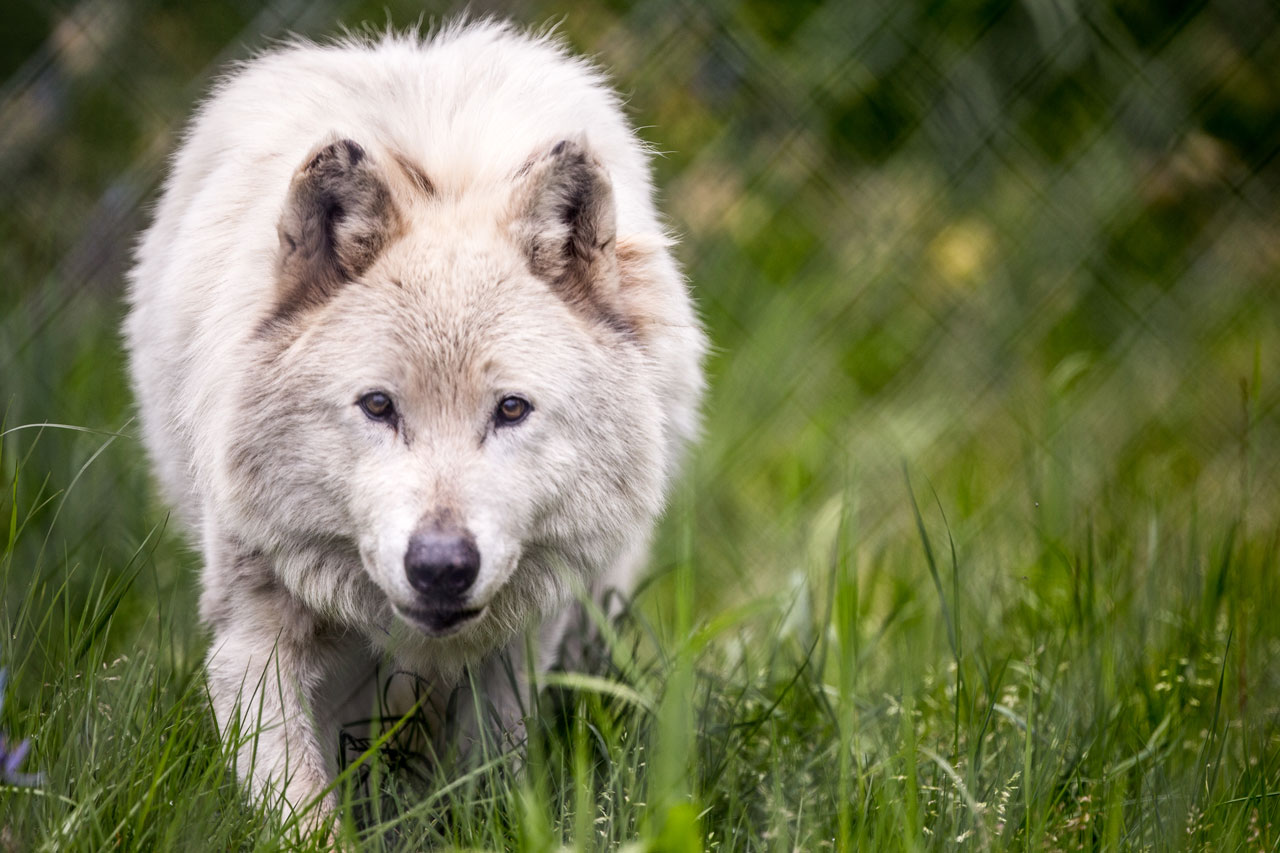
A visit from a beautiful wolf, named Myta Jr., during our tour of Wolf Haven International. Photo by Ricky Osborne.
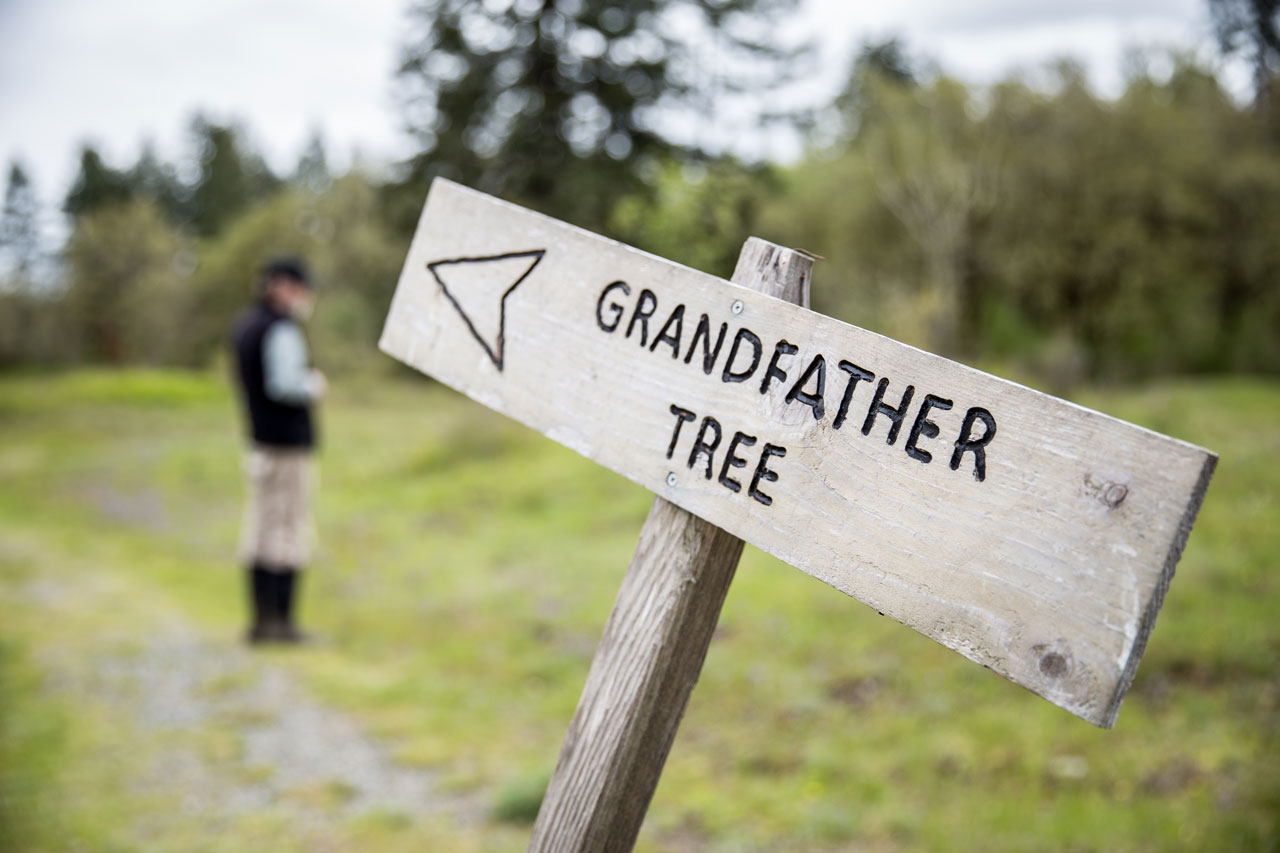
The path to the Grandfather Tree at Wolf Haven International with Ecological Conservation Nursery Manager Carl Elliott in the background. Photo by Ricky Osborne.
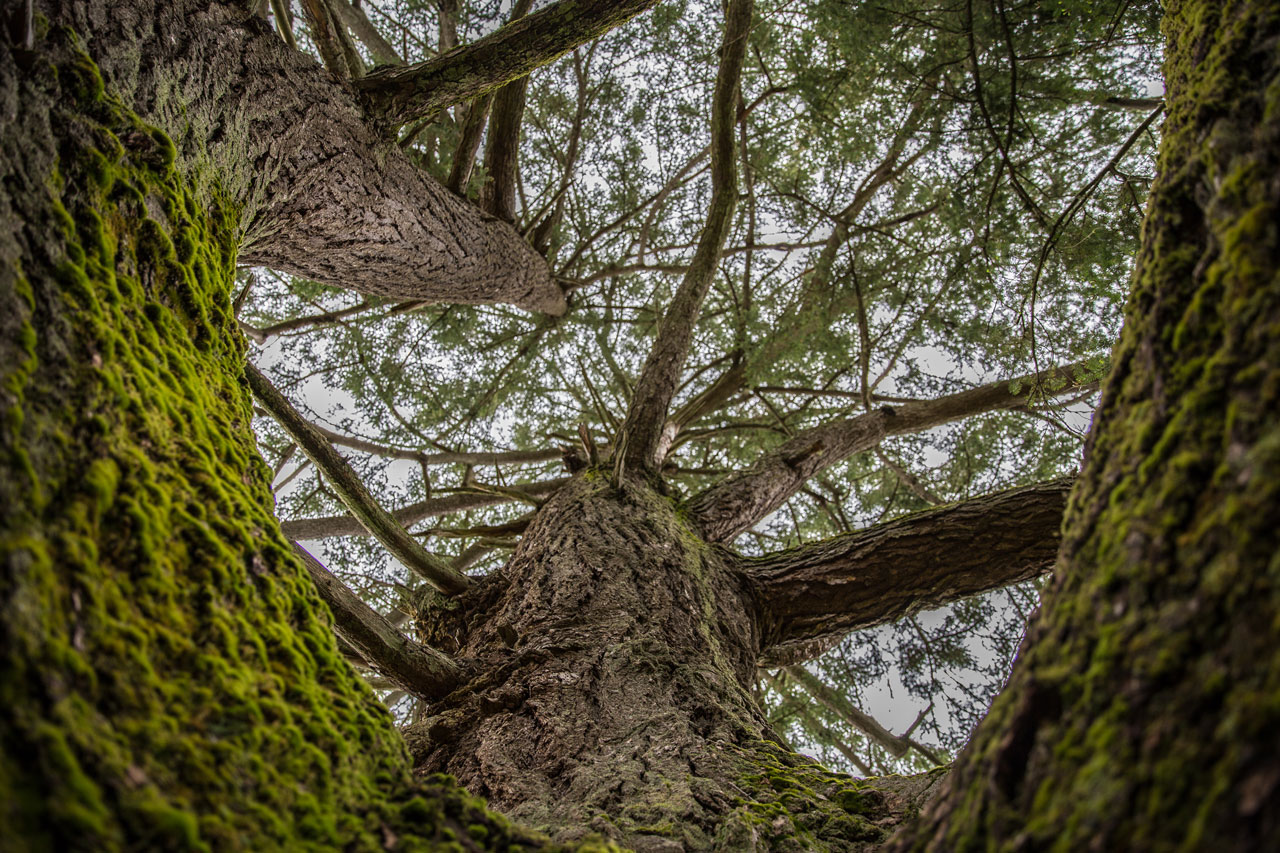
Grandfather Tree at Wolf Haven International. Photo by Ricky Osborne.
Ecological Conservation Nursery Technicians Samantha Morgan, Ambrosia Riche, and Ashley McElhenie and WCCW Ecological Conservation Nursery Liaison Scott Skaggs with the massive branches of the Grandfather Tree at Wolf Haven International. Photo by Ricky Osborne.