By Graduate Research Associate Evan Hayduk

Festuca Roemeri, Roemer’s Fescue

This is the first installment in a new series of pieces we are calling our plant profiles. Over the coming months we will highlight one of the 40 species of prairie or riparian plants that are grown at Stafford Creek Correctional Facility. This is intended to give you an idea of what we are growing, focus on the conservation importance of each species, and offer a few fun facts about each species.

Basic Information: Roemer’s fescue is a bluish, gray-green tufted bunch grass that grows from British Columbia (southeastern Vancouver Island and the Gulf Islands), and west of the Cascade Mountains in Washington, Oregon and Northern California. These areas are typically temperate, with maritime influence. Roemer’s fescue grows from sea level to about 2500 ft. The species is also found in thin-soiled windswept shorelines on the islands of the Puget Sound, the Strait of Juan de Fuca and the Straits of Georgia.

Ecological Importance: A foundation species of the prairies of the Pacific Northwest, Roemer’s fescue is predominately found in the glacial outwash prairies of the South Sound and those which have a history of anthropogenic burning.  Its quick growth makes this fescue an effective ground cover, but its bunch grass nature allows for the growth of other important prairie species, including associated species common camas (Camassia quamash), field woodrush (Luzula campestris), spike goldenrod (Solidago spanthulata), early blue violet (Viola adunca) and prairie lupine (Lupinus lepidus) to name a few.

Who is this Roemer guy anyway? Roemer’s fescue is named for Swiss physician, professor of botany and entomologist Johann Jakob Roemer (1762-1819). Roemer was best known for one of the greatest achievements in the history of Swiss entomology, the Genera insectorum Linnaei et Frabricii. Roemer also published the 16th edition of Carlos Linnaeus’ Systema Vegetabilium.
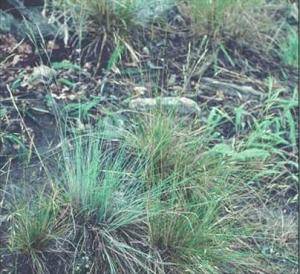
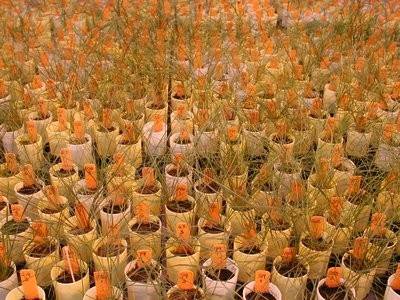
Fescue in the teaching gardens at The Evergreen State CollegeFescue plugs
Fescue plugs


December Butterfly Update

By Inmate Butterfly Technicians at Mission Creek Corrections Center for Women

Editor’s note: Below is a message from our butterfly rearing technicians at MCCCW, who are currently raising a surrogate species in preparation for their work with the endangered Taylor’s checkerspot butterfly.

During this holiday season, even though we miss our families, we are fortunate to be a part of this unique experience of rearing butterflies.  On a daily basis we clean, care for, observe, and interact with this delicate and necessary part of our environment.  We continue to learn and prepare for the crucial project ahead – captive rearing of the Taylor’s checkerspot butterfly.

It is an amazing feeling to come out to the greenhouse every day and know that we are working toward making an important change for our environment.  We are extremely lucky to be at the start of this project.  We are anticipating the arrival of the Taylor’s checkerspot in February.

To donate to SPP and support the rearing of the Taylor’s checkerspot butterfly in Washington state, click here.


Inmate Technicians Attend Annual Species Recovery Conferences

By Graduate Research Associate Dennis Aubrey

For the first time in the history of the SPP, inmate technicians were able to attend annual species working group meetings. DOC administrators at both Mission Creek Corrections Center for Women (MCCCW) and Cedar Creek Corrections Center (CCCC) were generous in their support and were able to arrange for the inmates to travel to the event.

The Taylor’s checkerspot meeting was held on November 10th at the Nisqually National Wildlife Refuge, and the two inmates who attended learned about species recovery efforts, reintroduction site assessments, genetic taxonomy work, and other ongoing research. The inmates were well received by the community and took copious notes on everything that was said.

The Oregon spotted frog meeting was a week later, at Blakely Tree Farms in Tumwater, and inmates were able to listen to detailed captive rearing reports from each of the four rearing institutions. Then they were able to share information of their own with colleagues they had heard about but never met, and techniques were learned by both sides. Additionally, release data, monitoring effort reports, and other research projects were discussed by various experts.

In both cases, the inmates involved were enthusiastic about attending and were able to get a sense of the larger effort going on outside the walls. The connections they formed with the conservation community can only help them feel more a part of the larger body of work, and more ownership of their own roles within that effort.