By Shohei Morita, Beekeeping Program Coordinator for Sustainability in Prisons Project and Kathy Grey, Beekeeping Program Liaison for Monroe Correctional Complex – Special Offender Unit
Previously published in Washington State Beekeepers Association February 2020 Newsletter. Learn more about the people in SOU’s program.

Incarcerated beekeeping students at Monroe Correctional Complex – Special Offender Unit (MCC-SOU) are among the most enthusiastic beekeepers in the state, always eager to don their bee suits and learn everything they can. But, right now, there is something they are missing – an expert beekeeping instructor!
 
Do you love challenges and gaining new and rewarding experiences? MCC-SOU is looking for enthusiastic volunteer expert beekeepers to lead beekeeping certification classes!  
 
The beekeeping program, a collaborative effort by MCC-SOU, SPP staff at Evergreen, and Washington State Beekeepers Association (WASBA), provides therapeutic educational opportunity designed to break the cycle of incarceration and rebuild honey bee populations. You can be a part of the movement to provide incarcerated adults quality environmental education and job skills experience.
 
In just a few years, 11 prison facilities across the State have attained over 550 certifications. Most of these are “Beginner” level certificates, but some incarcerated individuals have attained “Apprentice” and even “Journeyman” level certificates. The program at MCC-SOU is relatively new and staff and student investment in the program is high. In the past year, 9 incarcerated beekeepers have attained Beginner certification and 5 have reached Apprentice-level certification.
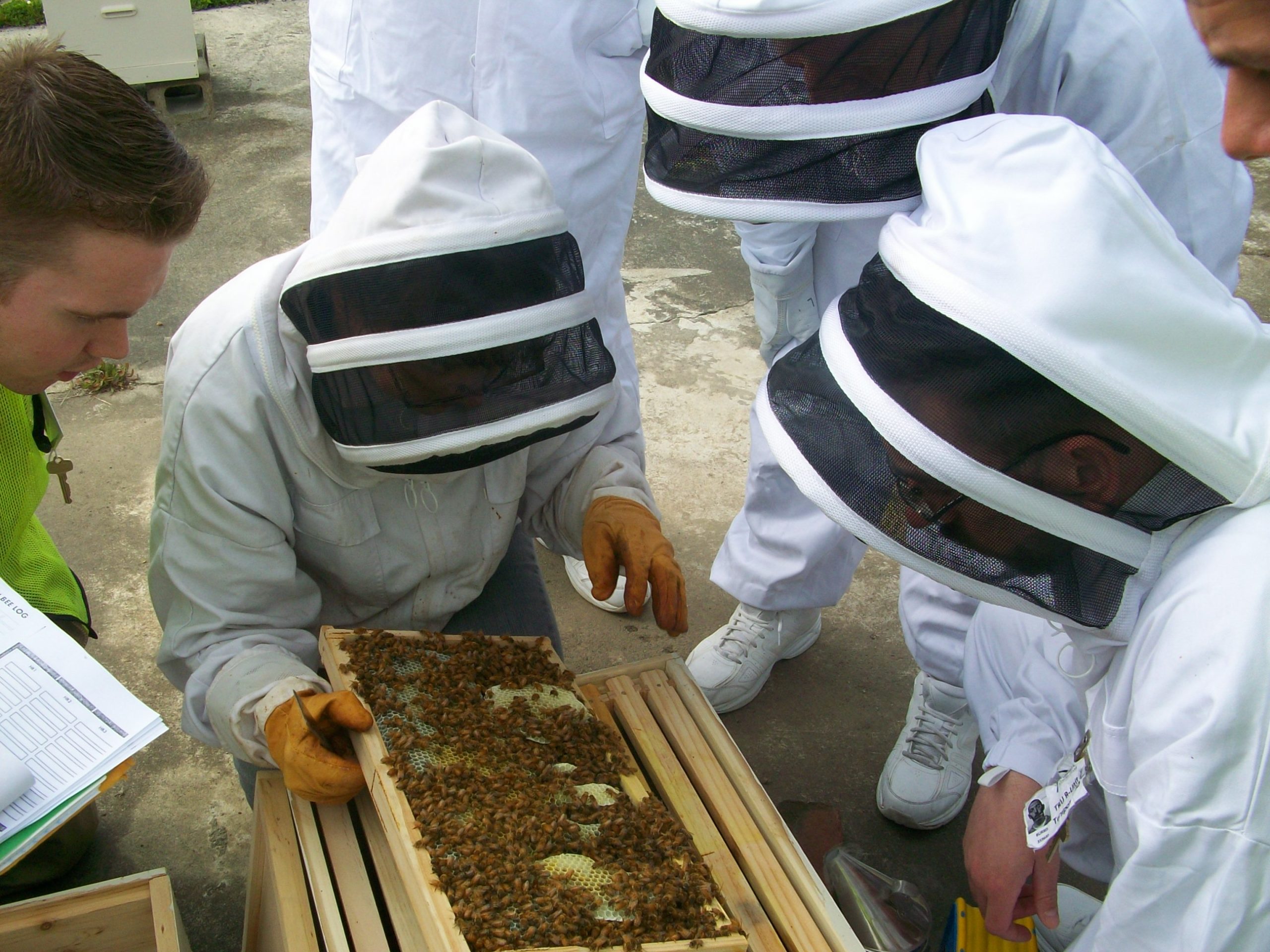
 

Beekeepers in Monroe Correctional Complex’s sister program, at the Twin Rivers Unit, work with hives; this program is wonderfully supported by the Northwest District Beekeepers Association.

As a program partner, expert beekeeping instructor(s) are in charge of teaching beekeeping classes using the WASBA curriculum and guiding field work to provide formal beekeeping education and certification. MCC-SOU is happy to work around the instructor(s) schedules, including nights or weekends. All course and teaching materials including curriculum slides and textbooks will be provided. You are more than welcome to bring and share your own personal beekeeping tools and supplies, but that is not required.  
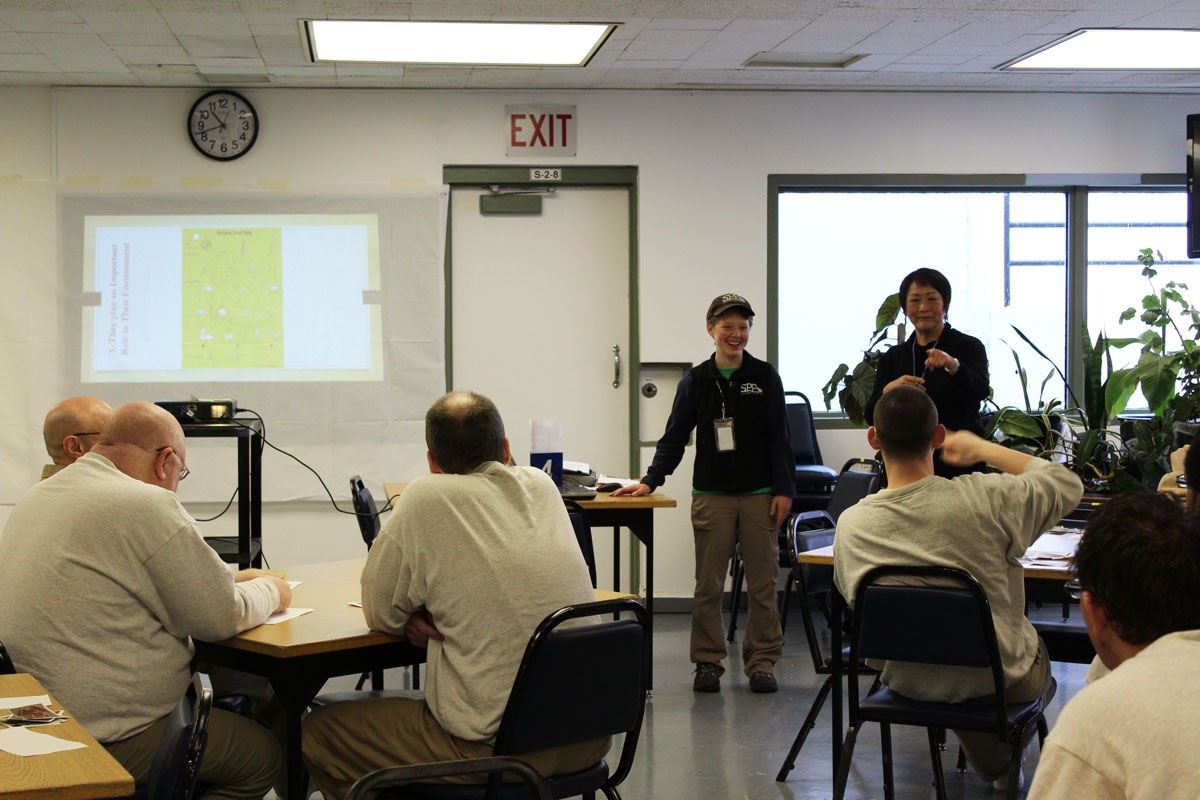
During an amphibian workshop, SOU students ask questions of guest expert Sadie Gilliom; Sadie shared that they were some of the most interested and engaged students ever! Photo by Liliana Caughman.

MCC-SOU is a unit dedicated to housing and treating individuals with mental health challenges. Therapeutic and educational programs are an important part of their care. Many men in the unit find focus and challenge to be both relieving and empowering. This is an opportunity for you to help a group of people who have traditionally been dismissed, ignored, and stomped on by society by making them feel beautiful and powerful, all through your area of expertise – beekeeping! 
  
If you are interested in volunteering or would like more information, check out this article and please contact SPP Green Track Program Coordinator, Shohei Morita at Shohei.morita1@evergreen.edu or (360)-867-5758.
 
“I was previously afraid of bees, so it was with much trepidation that I forged ahead and gained an appreciation, no a love, for these wonderful and oh so necessary creatures. The bees not only change us, they transform us into the men and beekeepers we are meant to be.” – Incarcerated student beekeeper
By Kathy Grey, Beekeeping Program Liaison for MCC-SOU

Note: please be aware that some individuals featured in this story have victims who may be re-traumatized by seeing their image; any sharing or promoting should keep that risk in mind.

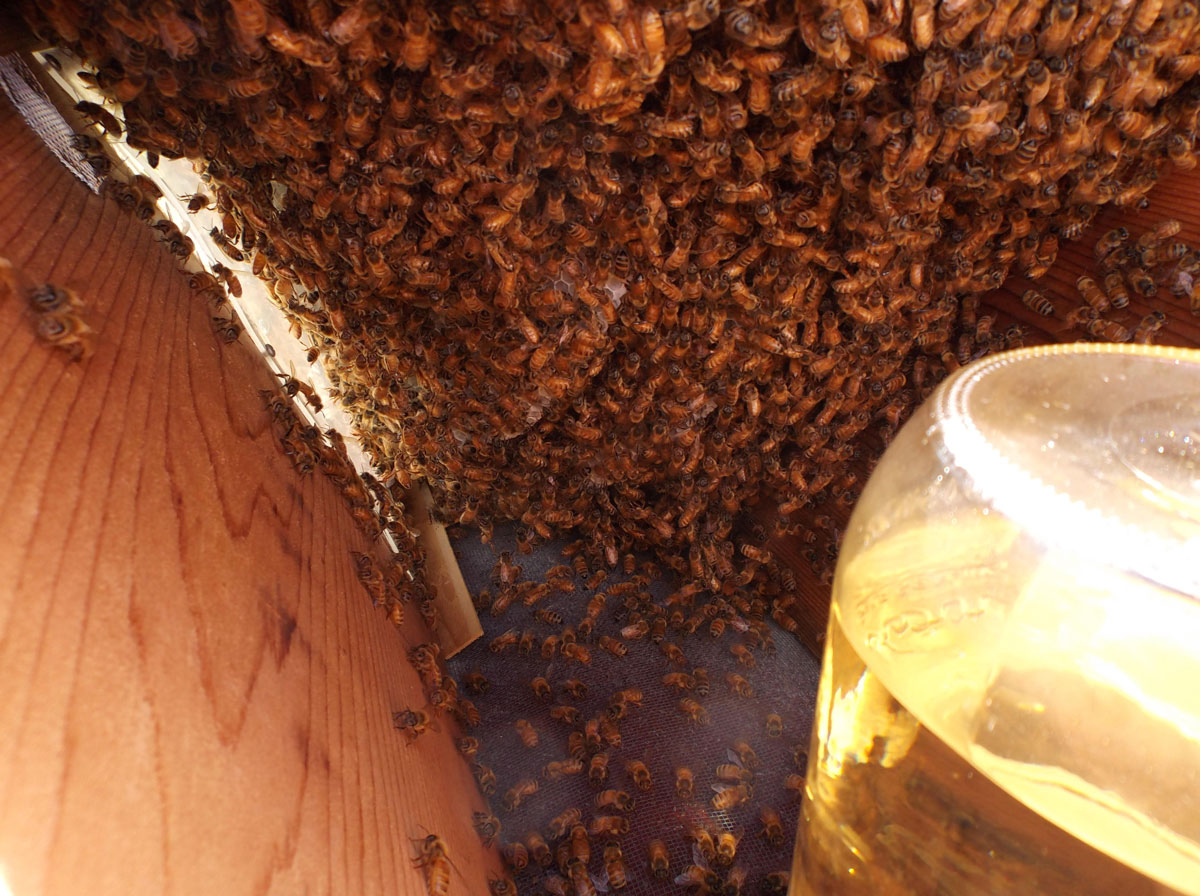
Happy and healthy bees thrive in an SOU hive. Photo by Kathy Grey.

In the spring of 2018, the Monroe Correctional Complex Special Offender Unit (SOU) embarked on a new and exciting sustainability program, beekeeping. It was a leap of faith to start such an endeavor with a group of mentally-challenged, incarcerated men and a couple of staff members who knew absolutely nothing about the world of beekeeping. Luckily, we were able to partner with Kurt Sahl, an experienced, community beekeeper and a patient and benevolent teacher. Kurt taught the 2 staff students and the 5 inmate students the basics and soon we were donning our suits and installing our bee packages and queens.  

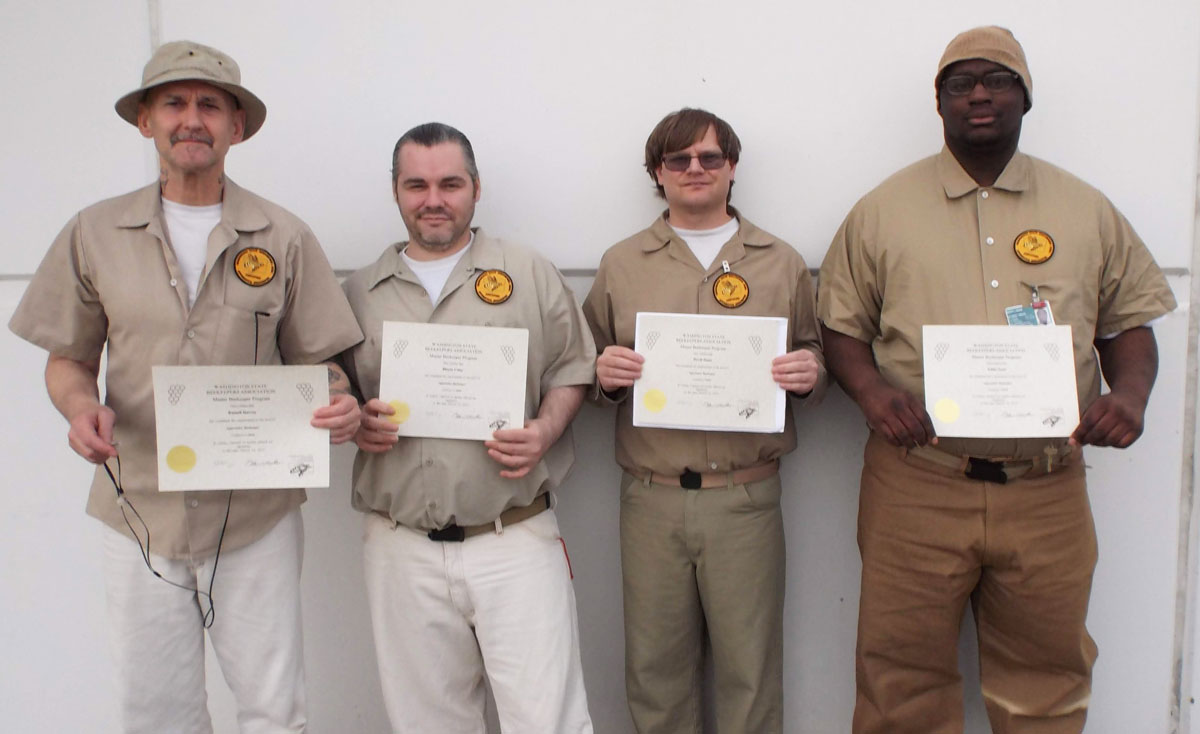
Graduates from the first class show of their certificates in 2019. Photo by Kathy Grey.

SOU had chosen to use 3 Top Bar hives and it was thrilling to see those bars transformed into comb-covered receptacles for honey and brood. We all delighted in watching our bees return to the hives packing pollen or witnessing the amazing waggle dance as one bee conveyed vital information to other worker bees. The more we learned, the more all of us became enthralled at the magic and mystery of nature. The bees had many lessons for us as well. They taught us about industry, teamwork, and selflessness.

The men treated the bees with such care and gentleness, always strategizing the best way to help them, and the whole program, succeed in our joint quest to make honey, increase brood, and stave off predators.   

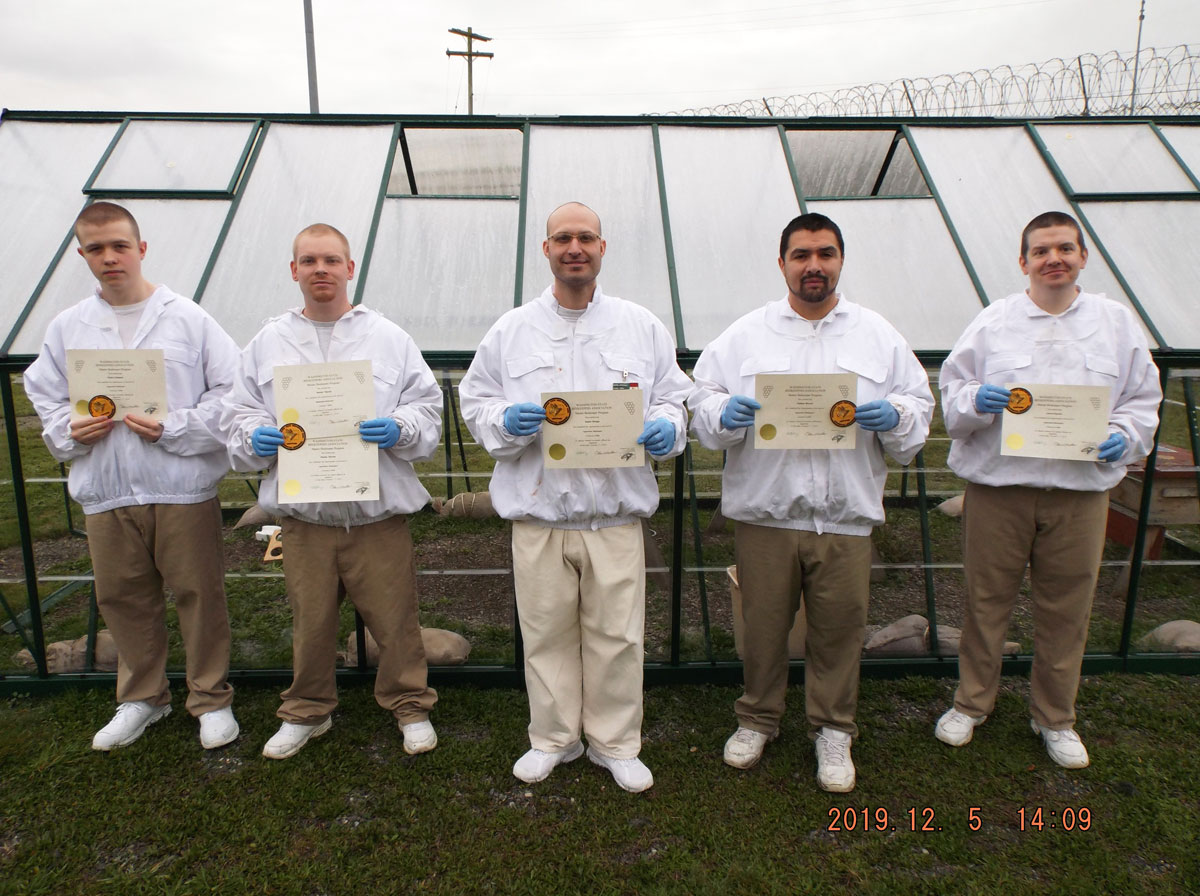
More proud graduates pose in December, 2019. Photo by Kathy Grey.

When we weren’t working in the hives, we were studying; first, for the Beginner Certification, and then on to the Apprentice Certification. The men devoured the manuals cover to cover and read all the beekeeping books the lending library had to offer. The studying paid off. Over the past 2 years, 9 out of the 10 SOU men attained their Apprentice Certification. 

Additionally, those same men have since gone on to fulfill a vital part of our mission: to talk to others, as long and as often as possible, about the present plight of our pollinators. They found a receptive audience and now SOU is a buzz with bee talk.

As one of the beekeepers said to me

I thought coming to prison was going to be the end of me. Instead I was given this gift and it has changed me in ways I never thought possible. 

I guess that kind of says it all.

Text and photos by Shohei Morita, SPP Bee Programs Coordinator

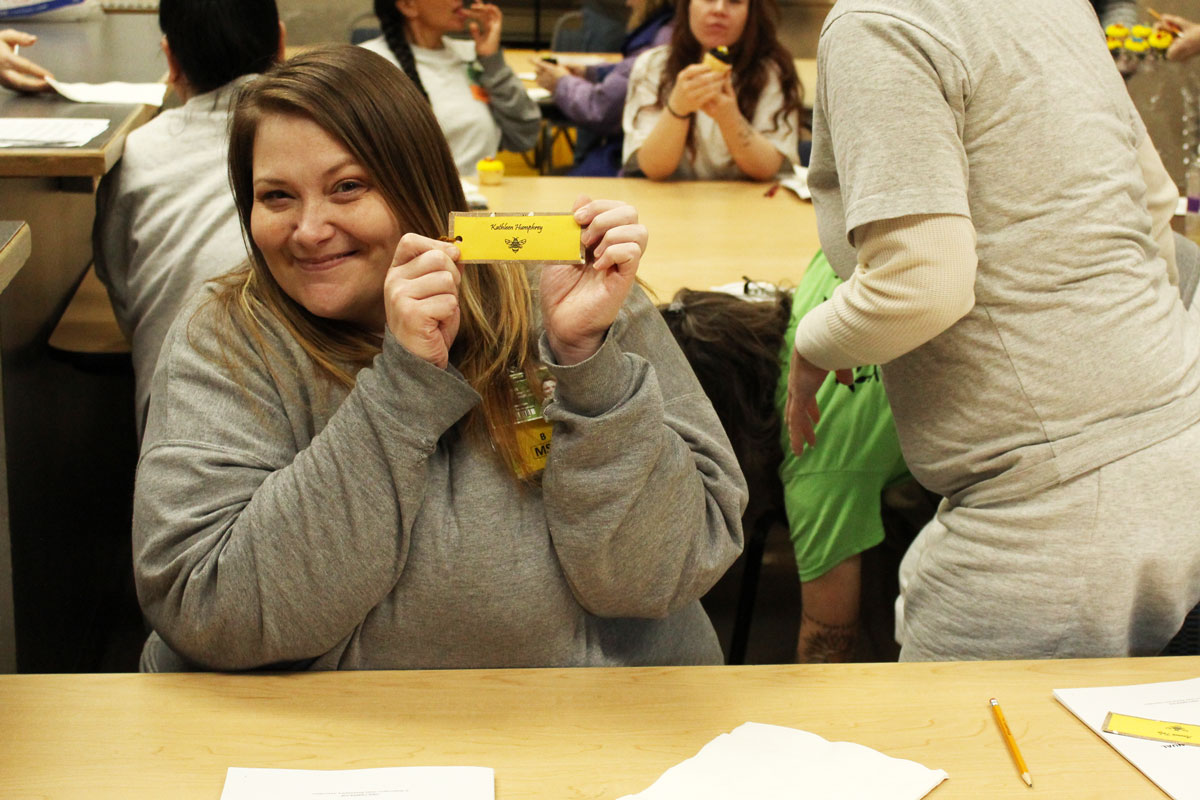
Kathleen Humphrey proudly holds her personalized bee-themed bookmark, presented to all student beekeepers to use during their future studies. (Her official certificate will arrive in the mail soon.)

Last week, we celebrated 16 incarcerated and 5 staff students who just completed Washington State Beekeepers Association (WASBA)’s beginning beekeeper course. Program partners gathered to celebrate at Washington State Corrections Center for Women (WCCW). Taught by expert beekeeper Sandra Fanara of West Sound Beekeepers Association, the students learned the basics of beekeeping. This prepares them for more advanced study and the hands-on field work involved in the apprentice level course. After completing the course, there was a celebration to recognize their accomplishment with bee themed cupcakes. Students will also receive an official certificate from WASBA.

To celebrate, I brought bee-themed cupcakes complete with tiny edible bees and flowers! They were unusually delicious.  🙂

This was the first time since 2017 that WCCW has hosted the WASBA course. We are excited that many of these students plan to immediately advance apprentice course, which will start as soon as the bees arrive in April. In prepare, students, staff, and expert beekeeper will clean all the equipment and prepare the new apiary. Then they will be ready to dive in and experience working with honeybees. We are so excited to see this program flourish and provide therapeutic and empowering experience to the students.

Thank you to our expert beekeeper Sandy Fanara, and to our DOC liaisons Carrie Hesch and Muriah Albin for their commitment and dedication to reviving this program. Most importantly, thank you and congratulations to the newly certified student beekeepers!