by Christina Stalnaker, SPP Roots of Success Coordinator and Graduate Research Assistant

I’ve had the privilege of working with and visiting several prison classrooms delivering the Roots of Success environmental literacy curriculum.  I’m encouraged to see inmates challenging themselves with material designed for graduate students (some lessons are similar to what we are learning in our MES core classes). Yet I am even more struck by the classroom atmosphere of teamwork and camaraderie.  These prisoners come from many different backgrounds and their identities often pit inmate against inmate.  I can’t help but ask myself: In this potentially volatile environment, how is a Roots course able to generate productive discussions?
Our dedicated education programs include monthly science and sustainability lectures at three prisons, an environmental literacy program at three others, and many vocational horticulture programs offered in partnership with community colleges and WSU Extension offices.  Photo by SPP staff.
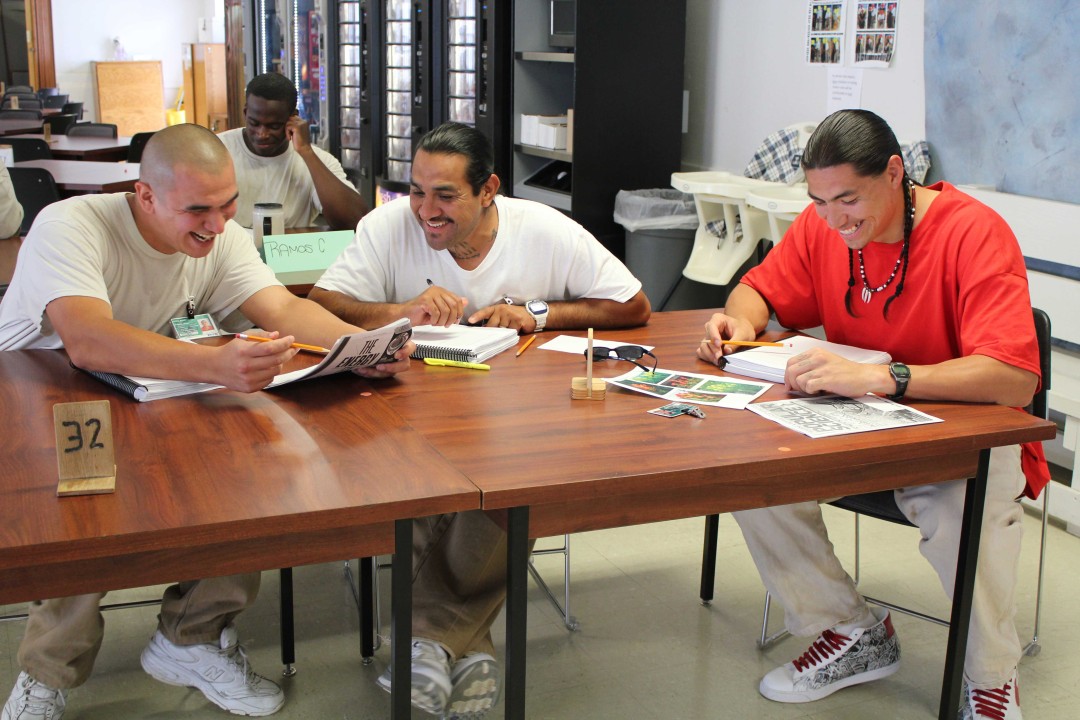
Roots students at Cedar Creek Corrections Center (CCCC) work in groups to finish assignments in their workbooks.  These activities challenge inmates to think critically about the environment. Photo by Erica Turnbull.

One unique aspect to the program is the teacher. The course is lead by inmates trained as facilitators, similar to the model for the Redemption Project. I’ve heard from pupils of both programs that they prefer to learn from other inmates. They feel the message delivered is more genuine, and not driven by authority. Chadwick Flores, Deputy Director of Roots of Success, refers to these instructors as “internal advocates.” The facilitators become supporters of sustainable practices within the prison system and inspire other offenders to work in the green economy, start green businesses, and consider how their own actions impact the environment.

Roots brings inmates from all walks of life to focus on the health of our environment. The many environmental issues we face today are sometimes overwhelming, yet they are issues that we all face. The environment is a common denominator across these diverse populations: a better future for all provides enough reason to set aside our differences and learn how to find solutions to these problems together.
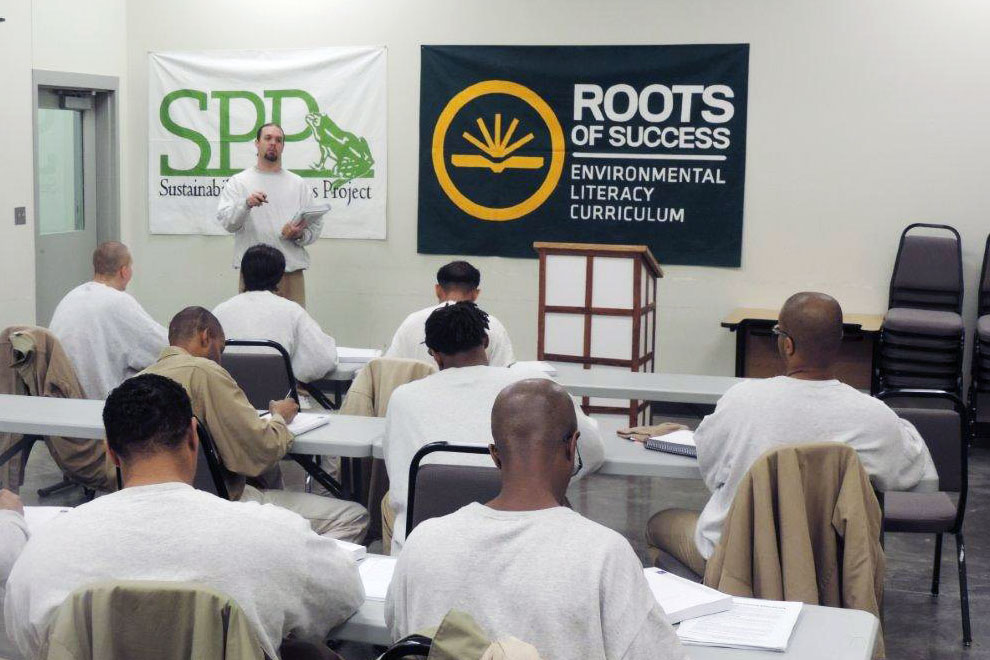
Jason McDaniels teaches the Roots of Success curriculum to fellow inmates at Coyote Ridge Corrections Center (CRCC). Photo by an inmate at Coyote Ridge Corrections Center.

Mr. Youngblood, Roots Instructor at Coyote Ridge Corrections Center, shared with us the unique dynamic of their classroom:

Roots of Success is not about getting an A+ on a test, making the Dean’s list, or getting a degree based on the number of credits you have compiled. This is real education—student-centered learning in an environment where “Each one, Teach One” is our Mantra. The students are inspired to “be more” simply because they are involved in the process of their own learning.

In the instructors evaluation there is a question that asks: “What is the single most valuable thing you gained from teaching?”  My response follows: I was amazed at the dynamic that developed… students from different cultures, races, religious beliefs, and even gang affiliations all came together and worked as a team. That was and is truly invaluable.
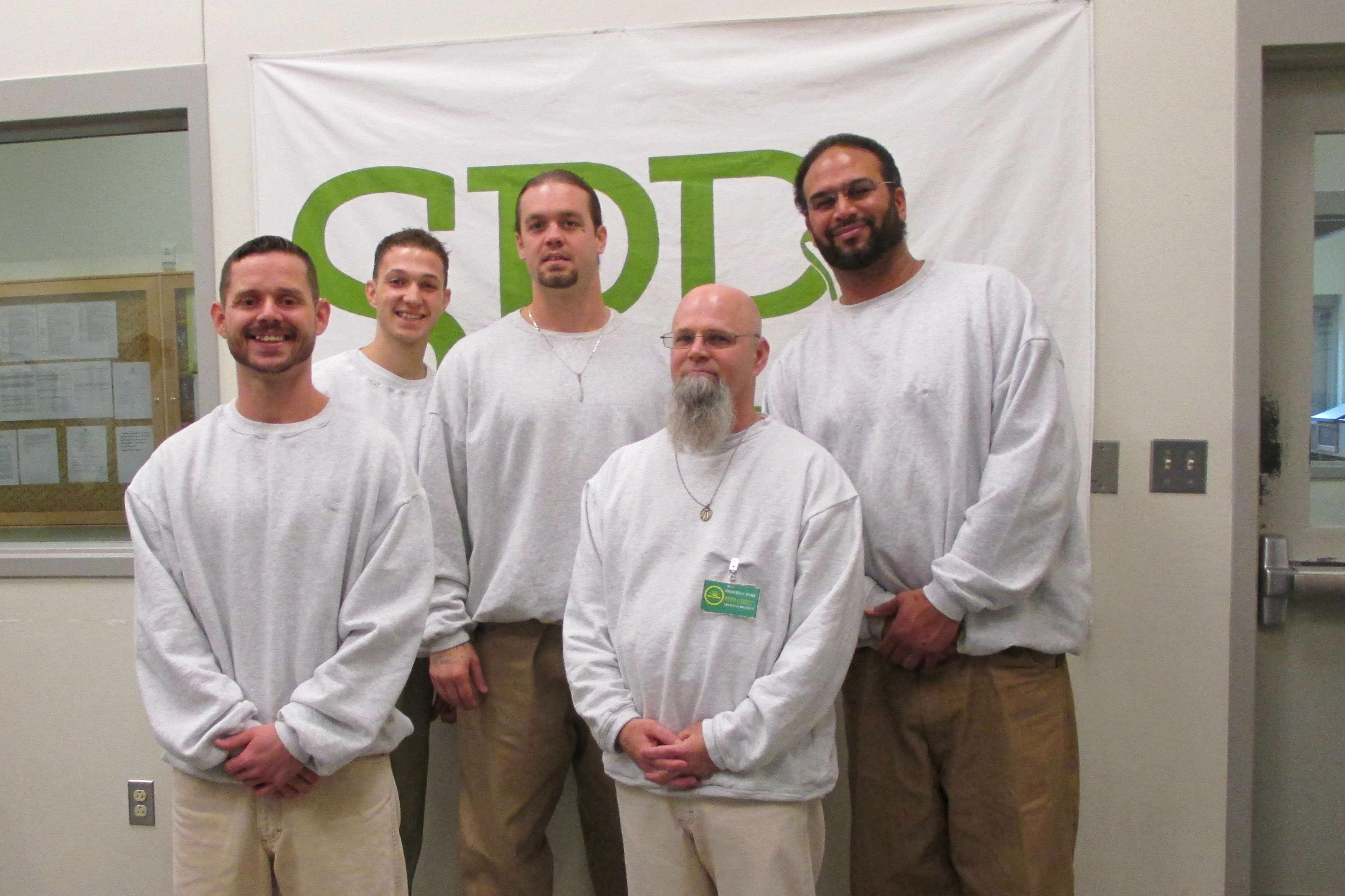
Coyote Ridge's Roots instructors; Mr. Youngblood is on the right. Photo by Joslyn Trivett.
Coyote Ridge’s Roots instructors stand in front of an SPP banner created by one of their peers; Mr. Youngblood is on the right. Photo by Joslyn Trivett.

By Austin Mays, an inmate, student, and cook at Stafford Creek Correction Center

Written November, 2014

The way food is prepared is an art. From the choice to the plate, it’s all about painting a picture. I live in a world where the art is lost. The simple things that make food taste good have been removed and replaced with mayonnaise labeled as “salad dressing”. When the best part of the meal is the water, you know something’s wrong.

My name is Austin Mays and I have been eating this food since I was 15 years old. This food is in prison. You may automatically put up your guard reading this, but I encourage you to keep an open mind.

After serving 10+ years, I have seen that the price of food has increased exponentially and in turn nutritious foods have fallen out of the reach of the budget. Feeding 1900+ inmates at one facility is quite expensive.

Cyril-Ruoso-cucumbers
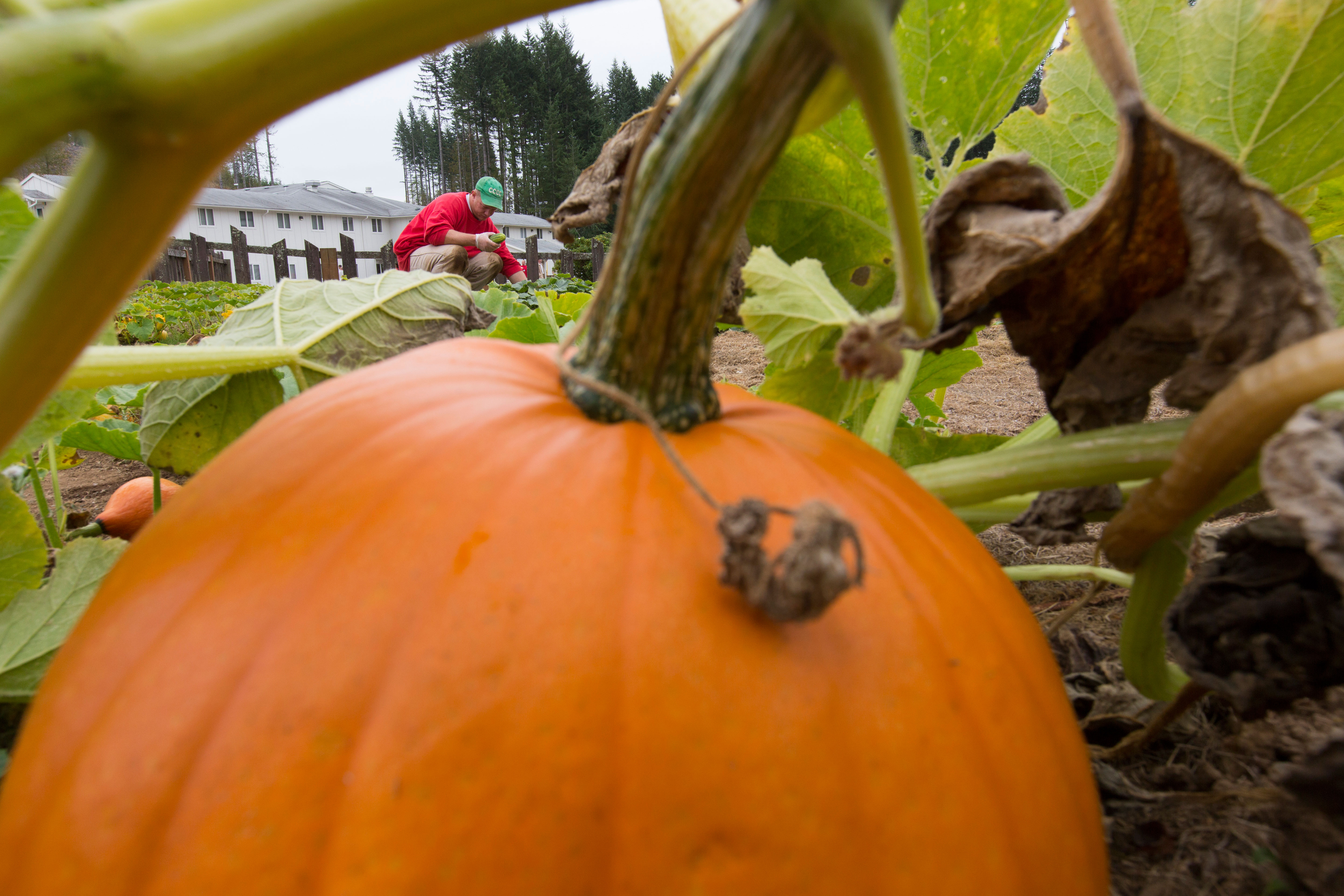
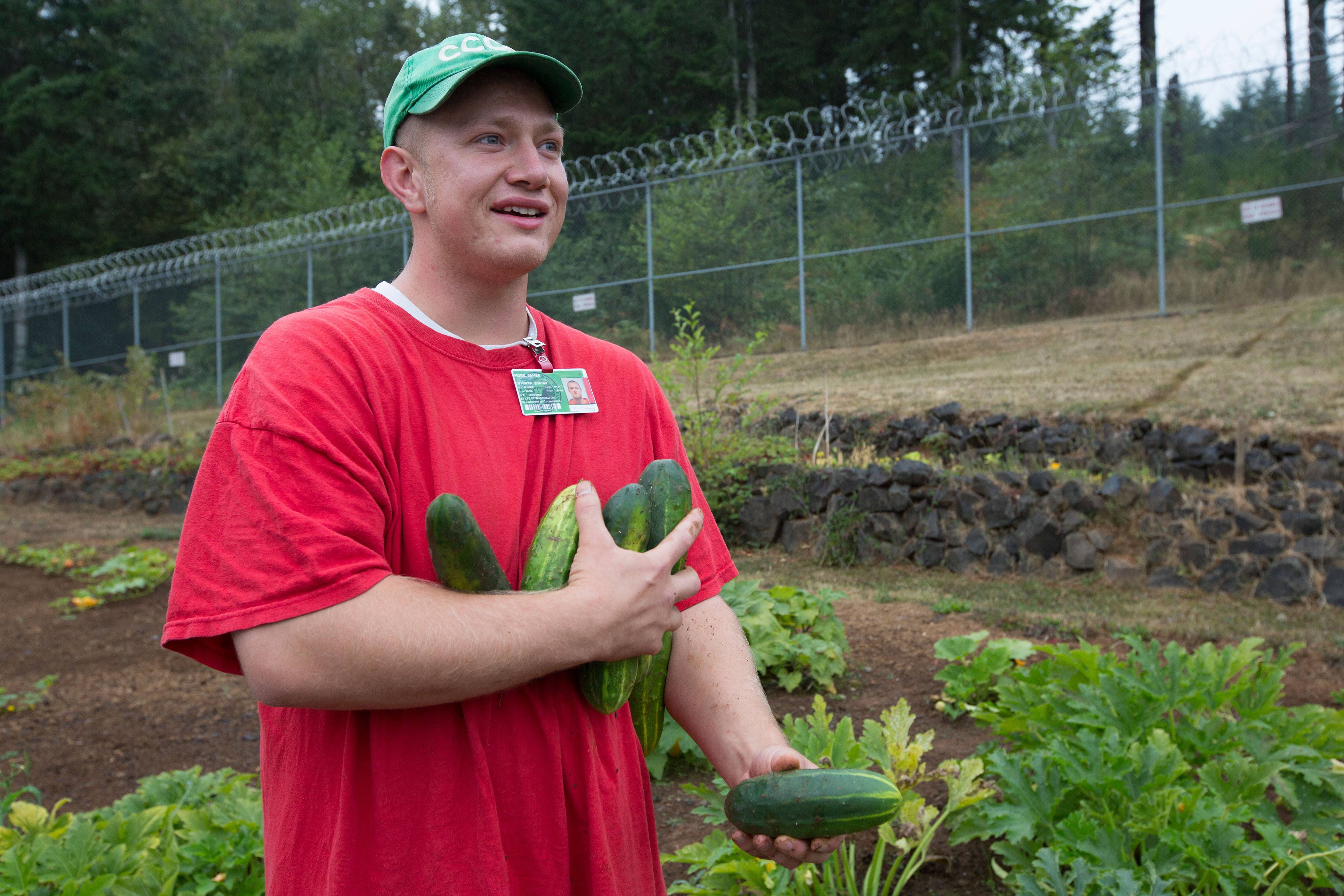
An inmate gardener at Cedar Creek Corrections Center talks about the fresh cucumbers he just harvested. Photo by Cyril Ruoso.

Fresh vegetables make all the difference

In 2013, I began a job that opened my eyes to the larger picture. I became chef in the “Hard Time Café”. This is the dining hall for all staff. On a daily basis I, along with three other individuals, serve anywhere from 40-60 staff members. What do we serve them? Leftovers. We dress up the meal that was previously served to the 1900 other inmates. A difference between the “Hard Time Café” and the main chow halls is the fresh vegetables. Each day, a salad bar is prepared with mushrooms, tomatoes, green onions, cucumbers, carrots, celery, fresh green leaf salad, and four premade salads. This is a lot of produce used daily.

Stafford Creek Corrections Center has been taking measurable steps in the direction towards becoming more self-sustaining. In the last four months, I have been able to use the produce grown by the sustainability garden in all of my salads and main course meals. For example, in October 2014, the garden produced close to a hundred pumpkins. Now, November, we are gearing up to make homemade pumpkin pie for Thanksgiving dinner. Pumpkin pies are nearly $5.00 a piece and purchasing enough for 1900 inmates would hold a heavy price tag.

A pie pumpkin grows in a prison garden. Photo by Cyril Ruoso.

Prison is its own city

Living in a place where you have little outside interaction causes you to be left behind. We, in prison, fail to see the world consuming itself. I recently graduated from “Roots of Success” (an environmental literacy curriculum) and during this course my eyes were opened. Prison is its own city. The overhead is huge and anyway we can work together to create the best living conditions, by using the natural resources around us, is the best way.

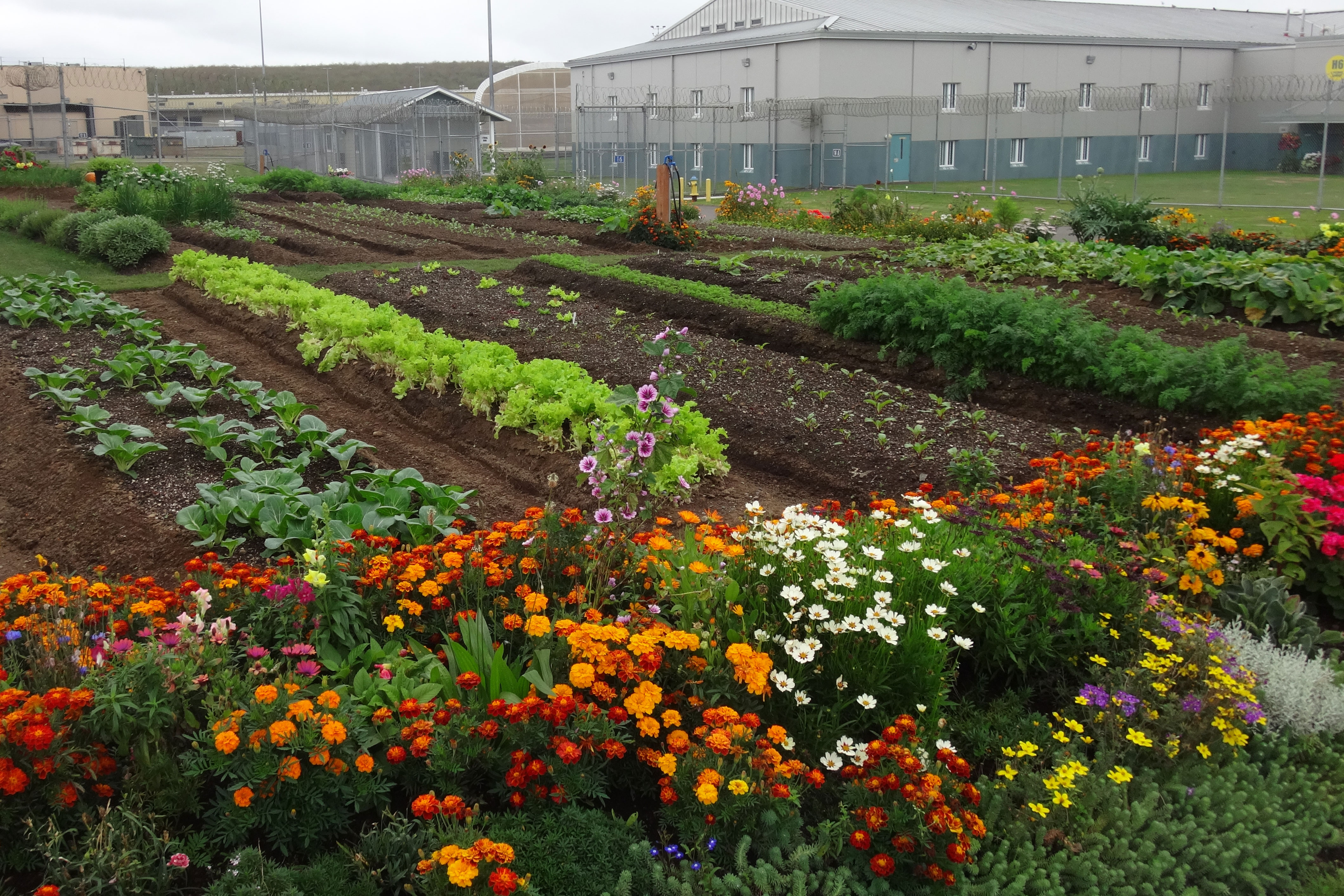
Stafford Creek Corrections Center grows flowers and vegetables in every part of the prison campus. From early spring to late fall it is a multicolored display! Photo by Joslyn Rose Trivett.

Changing lifestyles

Sustainability is not about cutting cost. It’s about changing your lifestyle and taking into account the future of your children. We are a world that feels the need to consume. Why? Because our parents tried to teach us what their parents taught them. Once we prove them wrong, we write our own path and neglect to see the big picture. Instant gratification, I want what I want and I want it now.

So, next time you buy a tomato or cut an onion, think of how far it traveled, how long it took to grow, how much money was spent on labor to process it, and how much you enjoy it. Think of… the “Hard Time Café”.

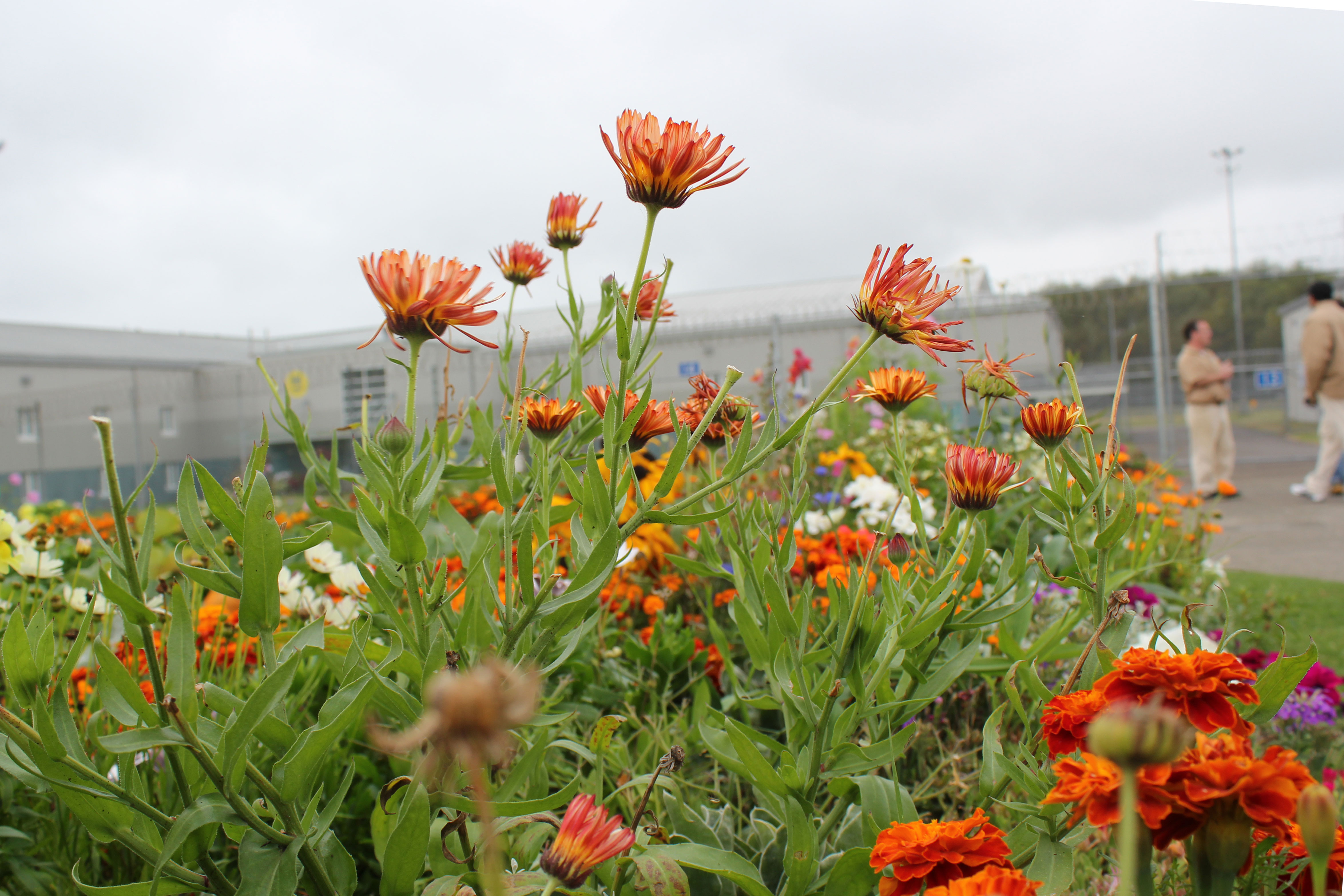
September flowers bloom at Stafford Creek Corrections Center. Photo by Joslyn Rose Trivett.