Blog post by Graduate Assistant Sarah Clarke:

In September more than 100 offenders, correctional staff and guest scientists participated in the annual health conference at the Washington Corrections Center for Women (WCCW). Titled “The Mind, the Spirit, the Environment Maintained Equals a Healthy Body Sustained,” the two-day gathering featured a fitness instructor, inspirational speaker, poet, chaplain and two faculty members from The Evergreen State College. Imagine the scene as we all committed to healthier lives through laughter, tears and even aerobics!
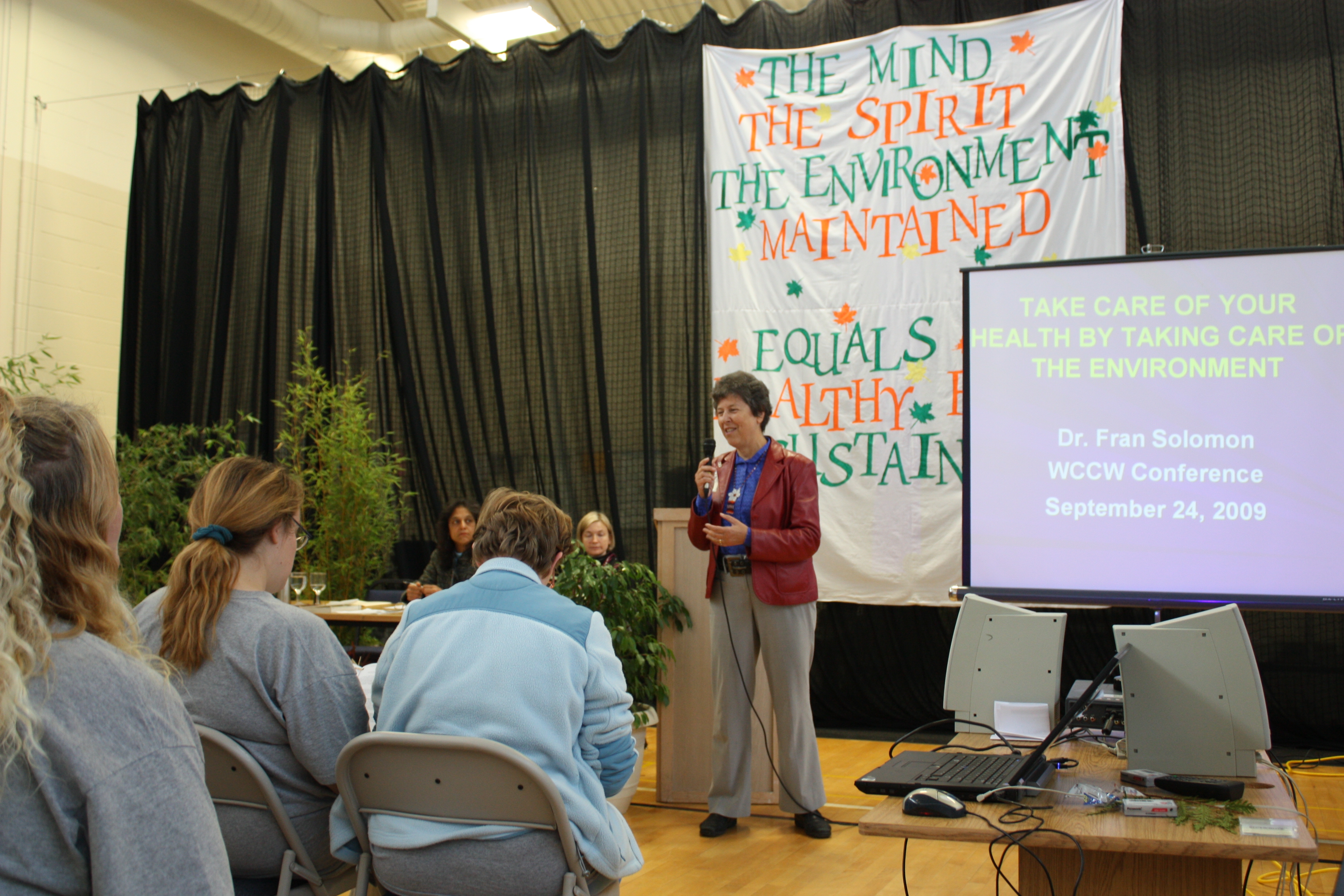
Toxicologist and Evergreen faculty member Dr. Frances Solomon teaches inmates at the Washington Corrections Center for Women during the prison's annual health conference. Photo: Jeff Muse.
Dr. Frances Solomon, a toxicologist and visiting professor at The Evergreen State College, teaches inmates at the Washington Corrections Center for Women during the prison's annual health conference. Photo: Jeff Muse.

Led by Evergreen professor and forest ecologist Dr. Nalini Nadkarni, the second day kicked off with a multimedia presentation on the role of science in our lives, the importance of trees and emerging green-collar jobs. Dr. Nadkarni also announced our hope to initiate a butterfly-rearing project with the prison’s horticultural program and the Washington Department of Fish and Wildlife.

Next up, toxicologist and watershed specialist Dr. Frances Solomon discussed the impact of toxic chemicals on the environment and human health, including illnesses such as breast cancer. Afterward, offenders were given the microphone to ask questions and express thanks during an insightful and heart-warming feedback session.
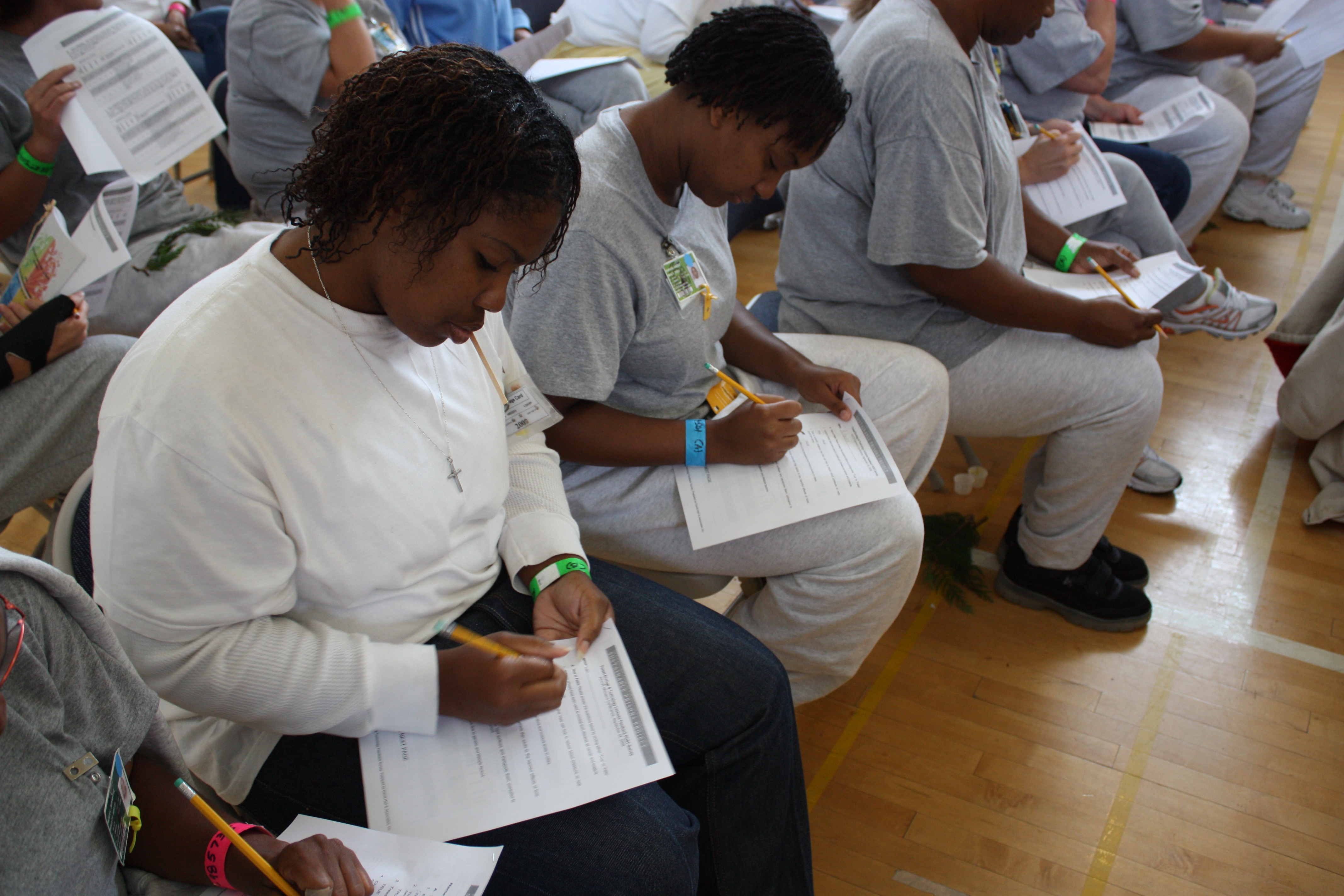
Offender feedback through surveys and interviews is essential to the Sustainable Prisons Project. Photo: Jeff Muse.

In my experience, WCCW is quite different from the men’s prisons in which most of our work takes place. Though it’s heavily secured, a gentler, family-like atmosphere pervades the facility. We hope that we honored that character and linked inmates to the world outside the fence where many have parents, siblings and children rooting for them to succeed.

Interacting with inmates and correctional staff as well as extensive survey feedback gave us a good direction for future activities. Our next presentation, led by yours truly, will be “Sustainability 101” in early December. Afterward, we’ll help the prison adopt goals and strategies for lessening its impact on the environment while improving the health of everyone who lives and works there.
Blog post by Project Manager Jeff Muse:

[youtube]http://www.youtube.com/watch?v=DQ3Mt-8IjYE[/youtube]

Blog post written by Michael Nelson, an inmate at the Stafford Creek Corrections Center (posted by Project Manager Jeff Muse as Washington State offenders do not have Internet access):

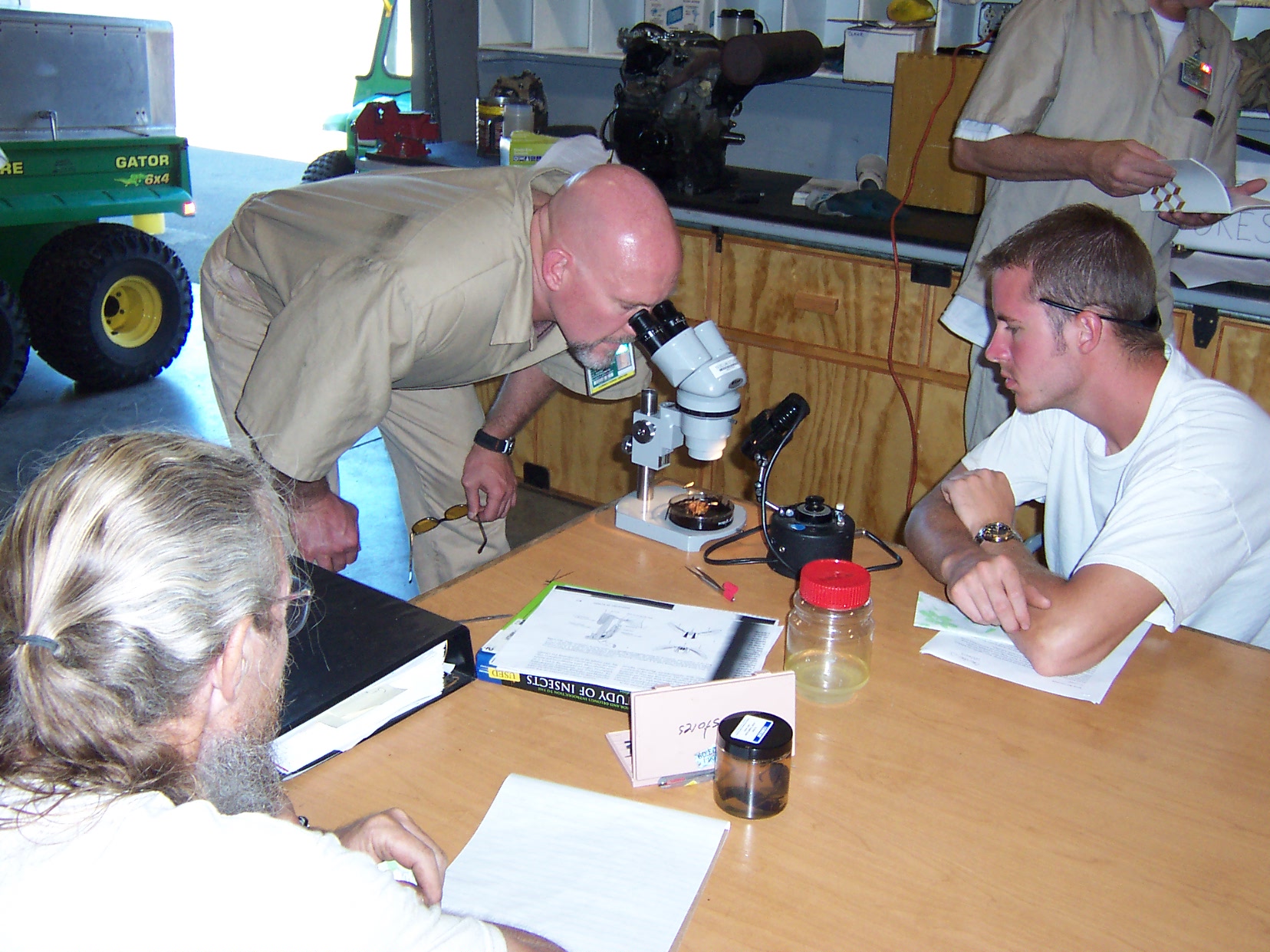
In the summer of 2009, the Sustainable Prisons Project sponsored beekeeping classes at the Stafford Creek Corrections Center (SCCC) in Aberdeen, Washington. I participated in the program which maintained four beehives inside the prison: three alongside the prison’s vast vegetable garden and one inside an “observation hive” in a commercial, cold-frame greenhouse. The program was remarkable in several respects.

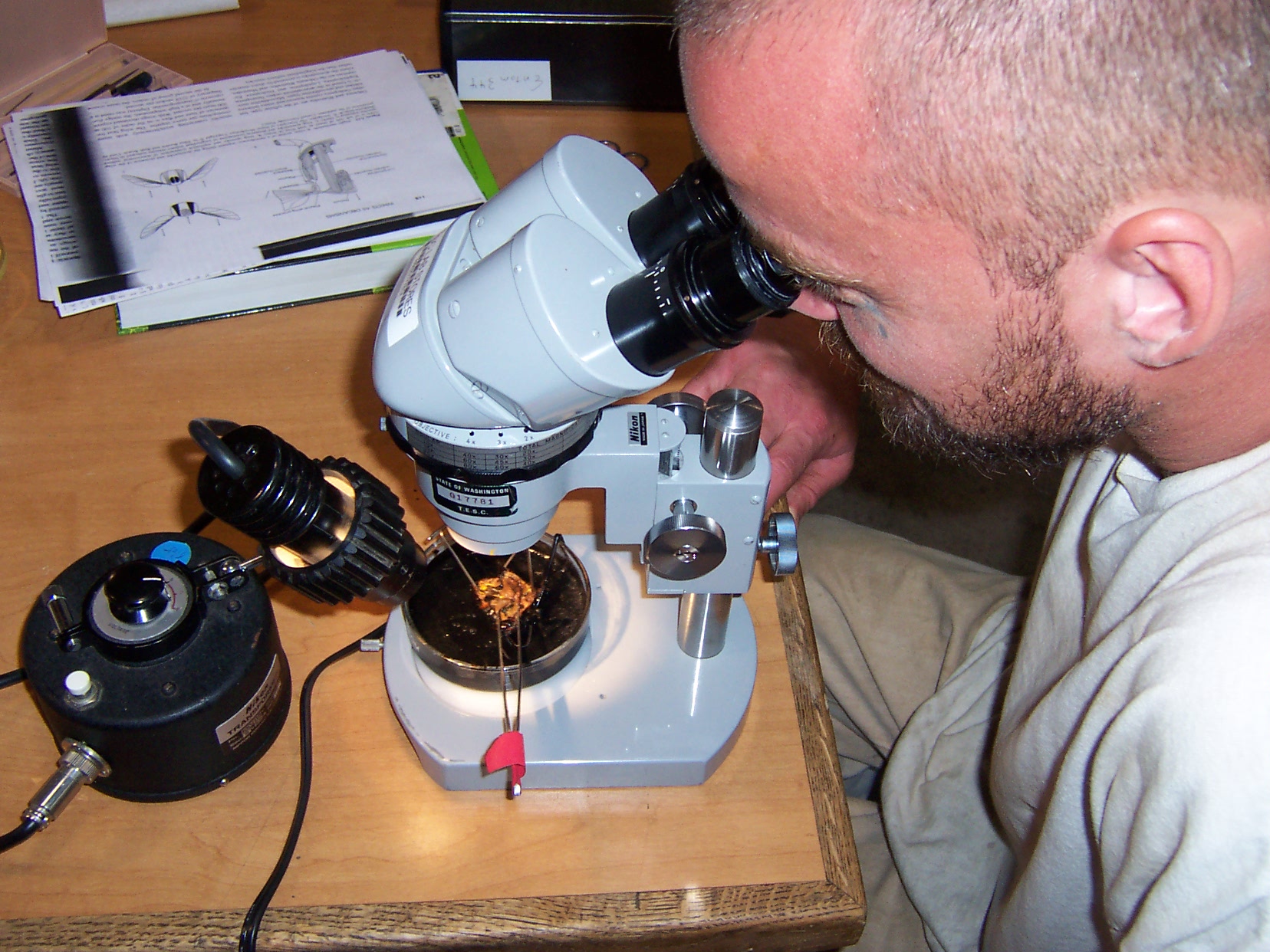
Michael Nelson (center) examines the anatomy of bees during a class at the Stafford Creek Corrections Center. Photo: Doug Raines.

My 11 years of confinement taught me prison’s hostile captor/captive dynamic. Our prisons isolate criminals — not just from the communities in which they’ve committed their crimes, but from nature, and from normal, healthy relationships. The type of “outside the box” thinking that spawned the Sustainable Prisons Project holds great promise for prison reform in ways most free-world people can’t understand. I’ll try to explain.

For two months each Wednesday at noon, entomologist Sam Hapke met with about 10 of us in SCCC’s V Building. On our first day, after some instruction, we went out to inspect the hives. Our initial fear of being stung had a weird affect on us — the “fronts” we put up as prisoners fell away in a sort of humble awe amidst the force of nature the bees represented.

It’s impossible to maintain a “tough guy” facade when handling bees. Pretense falls away in the symbiotic relationship between man and bees — things can go wrong quickly if you’re not on your best behavior. And it did cultivate our best behavior. Without our being told, we picked up on our interdependence with the bee. The larger message of our interdependence in society — which the bee is an important part of — was also immediately apparent, despite our not being told.

To me, there is something folkish about beekeeping. Perhaps my ancestors were among those early colonists who brought Apis melliflora (the “white man’s fly”) to North America. It was almost as if some Jungian collective memory was triggered in me. I felt quite at home dismantling and inspecting hives, engulfed within the swarm of bees whom I trusted somehow not to sting me. And I was never stung, despite my never wearing protective gear. I’m not afraid of being stung anymore.

I am hooked on beekeeping. From my perspective, every other prisoner in the program was affected in a similar way. The value of the program became apparent when I considered what it would be like if more prisoners were participating. You should consider that, too.

I propose a permanent relationship between agricultural researchers and inmates in Washington State. We could call the program “Apicultural Research in Prisons.” Since our civilization is utterly dependent on bees for its agriculture, and since bees are presently threatened by widespread colony collapse disorder, it would benefit us to form such partnerships with university agricultural extension services.

What better place than prisons for this kind of work? The controlled environment of facilities like SCCC lend themselves to reliable statistical research that can help scientists examine our most pressing environmental problems. It’s a natural fit, one that benefits researchers, prisoners and society.

— Michael Nelson, Stafford Creek Corrections Center, August 27, 2009

Blog post by Project Manager Jeff Muse:

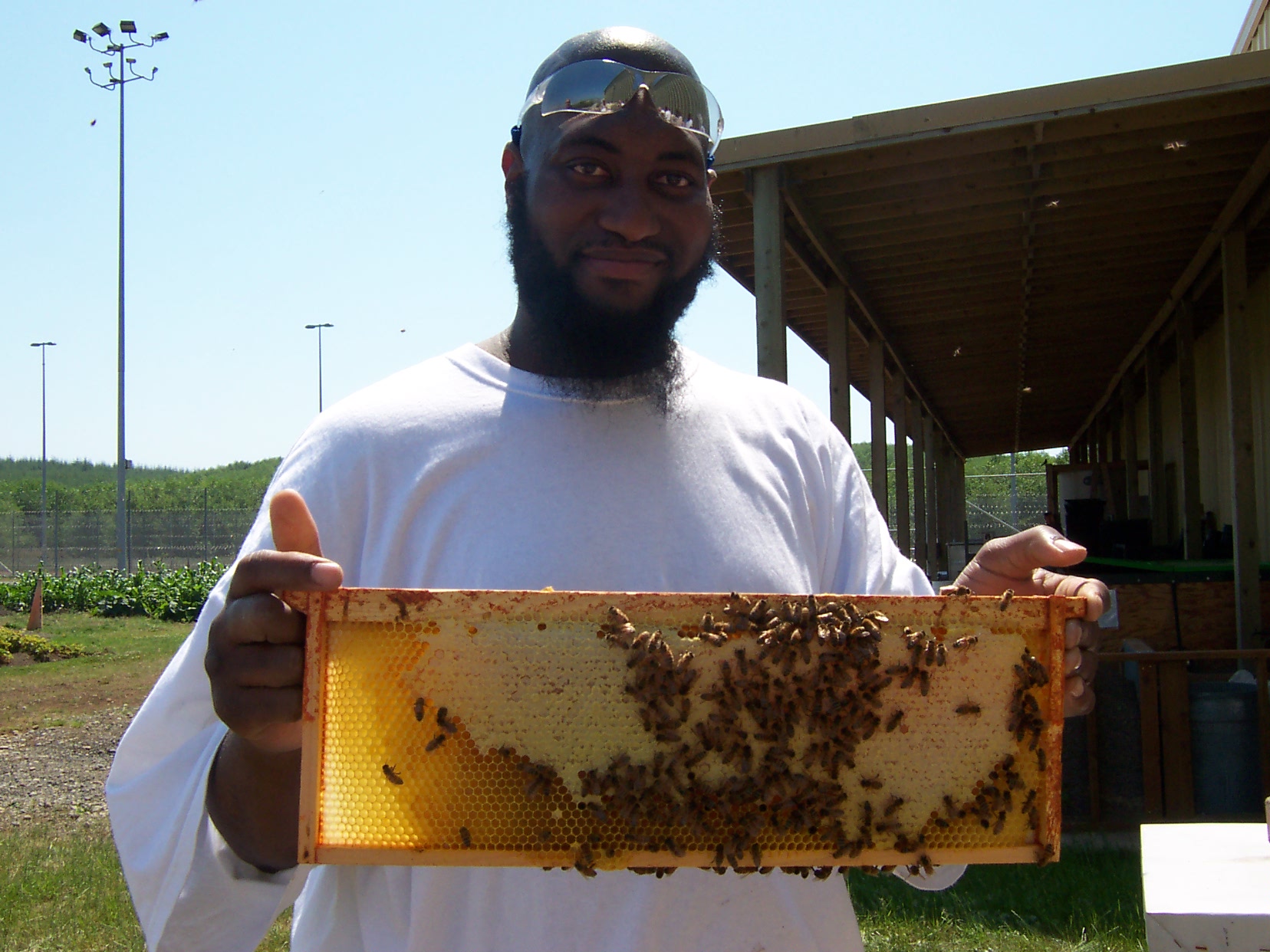
In the summer of 2009, more than a dozen offenders at the Cedar Creek and Stafford Creek corrections learned skills in beekeeping. Led by Evergreen scientist Sam Hapke and correctional staffers Vicki Briggs and Doug Raines, our part-time program involved both classroom study and outdoor work with hives in each prison.

While working in the prison garden, a Stafford Creek inmate cares for the prison's beehives. Photo: Doug Raines.
While working in the garden, a Stafford Creek inmate cares for the prison's beehives as part of a training program led by Evergreen scientist Sam Hapke. Photo: Doug Raines.

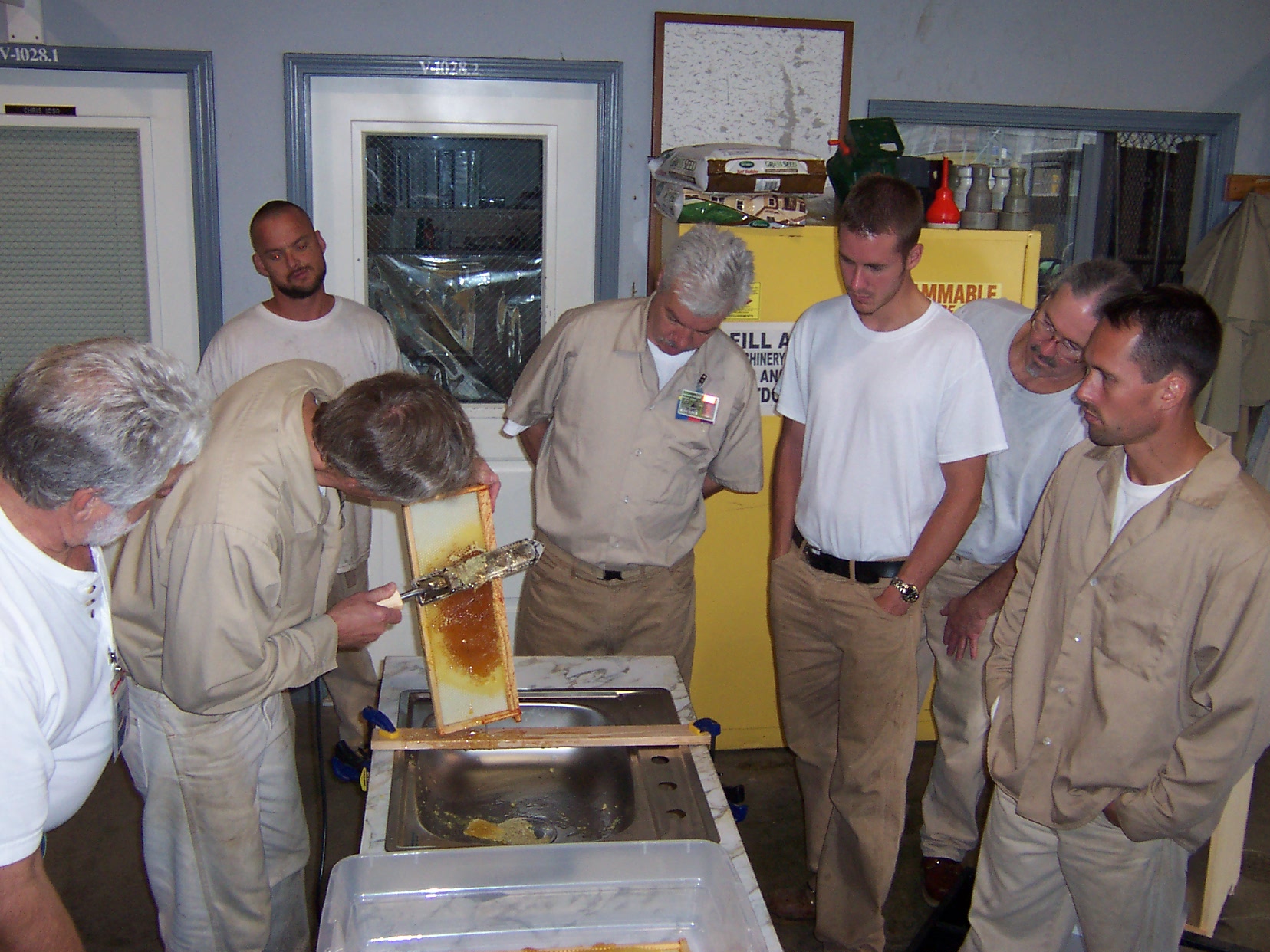
Offenders learned about bee biology and behavior, hive construction and maintenance, beekeeping equipment and commercial business practices — profitable skills for a post-prison career, be it in honey and beeswax production or pollinating fruits and vegetables in orchards and farms.

After collecting honey from the prison's beehives, Stafford Creek offenders learn how to create products such as lip balm and hand lotion. Photo: Doug Raines.

Under Hapke’s guidance, next year we hope to design and conduct inmate-led research projects with publishable results, not only advancing science, but also modeling this training program for other institutions. Often located in rural areas, prisons are uniquely positioned to support the pollination of wild and commercial plants while helping scientists study the alarming threat of bee colony collapse.

Under scientist Sam Hapke’s guidance, inmates hope to design and conduct research projects with publishable results. Often located in rural areas, prisons are uniquely positioned to support the pollination of wild and commercial plants while helping scientists study the alarming threat of bee colony collapse. Photo: Doug Raines.
A Stafford Creek inmate learns how to use a microscope for biological study. Photo: Doug Raines.