Text by Liliana Caughman, outgoing SPP Workshop Coordinator
Photos by Mark Sherwood and Kelly Peterson at SCCC
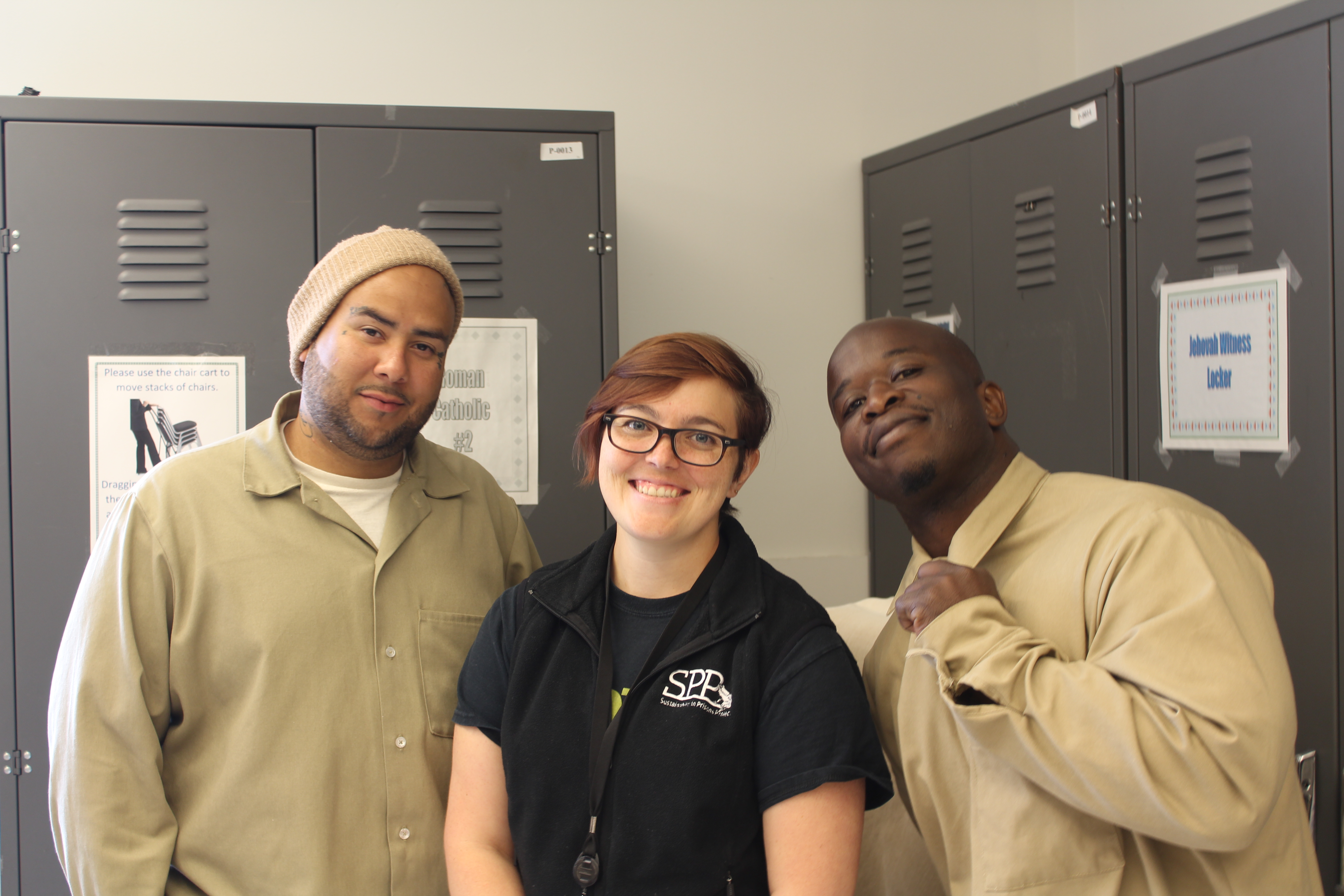
Liliana poses with Workshop students on her last day at SCCC. These two were particularly energetic and engaged, always participating in everything: they asked great questions, brought insight to environmental discussions, and were willing to hold snakes when needed!


It is strange how the past two years have flown by and it’s hard to believe that my time visiting prison has come to an end. It is stranger yet that many of the people I interacted with in prison will remain there for years to come. I can only hope that my small efforts made an active difference in the lives of the students, those who I saw month after month in SPP’s Environmental Workshop Series.
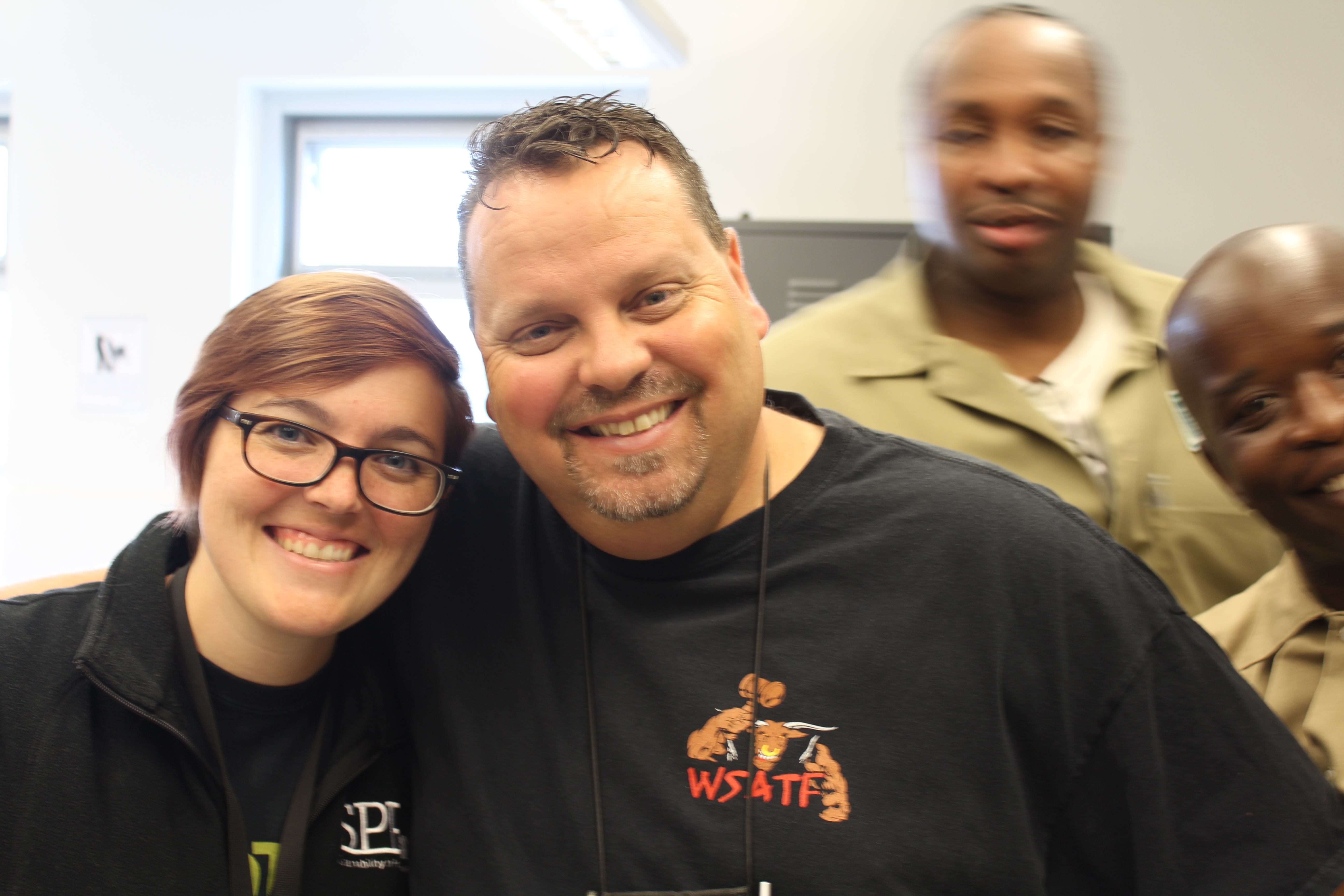
 

Mark Sherwood was a lively and dependable partner at SCCC. He bridged the gap between SPP and the incarcerated students and made sure the workshops were successful for everyone.


To me, the story of working with the Sustainability in Prisons Project (SPP) is one of cooperation, patience, and unlikely friendships.

I was troubled by prison in many ways and became more cognizant of institutional discrimination. At the same time, I also encountered such beauty. I have seen in-prison gardens expand to cover acres and beehives spread across the state. I have seen a room of 80 grown men geek-out over octopuses and vultures and climate science. I have seen hardened corrections officers shift to a focus on rehabilitation and education and understanding. I have seen how—given sufficient opportunity—hope, happiness, progress, and creativity can flourish in any environment.
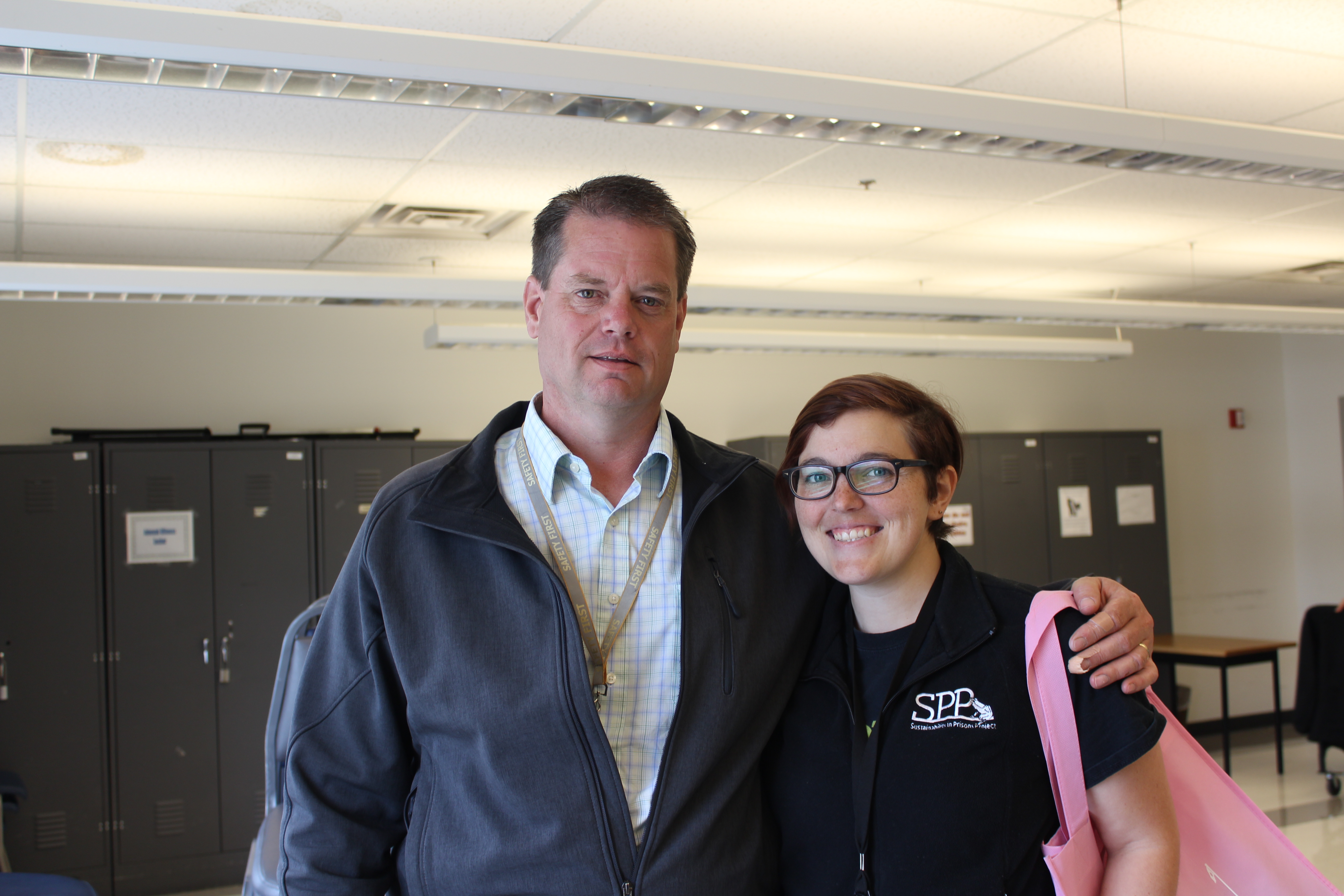
 

SPP’s work at SCCC could not happen without the ongoing support of Chris Idso. Here he says goodbye to Liliana. Chris is already so excited to get to know Erin and create more positive changes, like hosting workshops in the visiting room!


These valuable experiences will never leave me. As I continue my academic path, I will not forget about those behind bars or other vulnerable populations who are suffering. However, I will also remember the good people working in these institutions who are partners, fighting for change in the ways they know how. With all parties being valued, challenged, and heard, I know great things can happen.

Now the time has come for me to say goodbye and thank you to SPP and everyone with whom I partnered. I am proud to have been a part of this unique endeavor and look forward to watching it continue to grow.

I am also thrilled to pass on my position as Workshop Series Coordinator to Erin Lynam. With a focus on policy and passion for changing our system of incarceration, I know she will breathe new life into the program and continue its evolution.

Cheers!
Note: Roots of Success is an environmental program led by incarcerated instructors in 10 of 12 prisons in the state, and in many other corrections institutions statewide. In Washington, more than 1000 incarcerated students have graduated from the 50 hour course since 2013. More about the program here.

By Roots of Success Instructors at Airway Heights Corrections Center

Originally published by WA Corrections, Tuesday, July 11, 2017; re-printed here with permission

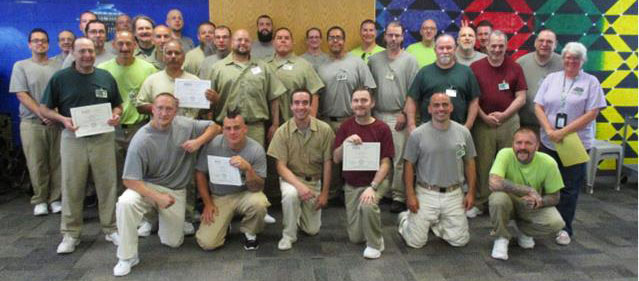
Roots of Success graduation photo from Airway Heights Corrections Center.

Roots of Success was created by Dr. Raquel Pinderhughes, a Professor of Urban Studies and Planning at the San Francisco State University, as the signature curriculum of the Environmental Literacy Curriculum Project (ELCP).

Originally, this curriculum was designed to increase environmental literacy, academic literacy, and job readiness skills. ​However, at Airway Heights Corrections Center (AHCC) this curriculum has taught inmates a fourth and much needed skill, “caring.”

In an inmate’s day-to-day journey through the Washington correctional system, and especially at AHCC, an inmate can often become disconnected from society. This has historically made the process of returning to their communities difficult. Dr. Pinderhughes’ program seeks to lessen that burden by closing inmate’s educational gap, and inspiring them to “consider the environment in their work and daily lives, develop leadership, and move people toward a place of action in order to support green pathways out of poverty, equitable green development, environmental and social justice, and community participation in decision making.” (Roots of Success, Instructor’s Manual, 2015)

After taking the course, many inmate have exhibited a profound change in their attitudes and social interactions with other inmates. In fact, AHCC administration has included this program in their “good time” restoration pathway as a means for inmates to earn back lost good time resulting from various rule violations. At the date of this article, several of the AHCC Roots of Success facilitators are successful graduates of the good time restoration pathway program. This is one of the many examples of this program’s positive impact on inmates residing at AHCC.

To find how Roots of Success has led to graduates caring more for their communities, one need to look no further than the City of Spokane, Washington, where they will find blankets made out of reclaimed used clothing (made by graduate volunteers), and fresh vegetables (grown by graduates). These resources are generated at AHCC by volunteer inmates, at no cost to tax payers, and donated to Spokane charities to help combat the cold and hunger felt by local children, individuals, and families in the Spokane area.

Already AHCC has had more than a hundred graduates of the Roots of Success program, and from those graduates, AHCC has been able to reach out into the Spokane community to begin a long needed healing process, which ever graduate now knows begins with them. What will the State of Washington and its citizens gain from this program? Mothers/daughters, and father/sons returning back to the state’s communities with an obtainable goal of helping build sustainable lifestyles. Why is this so important?​ We only have one state, and only a limited amount of resources – what better place to begin demonstrating how much we care?
Roots of Success covers 10 modules, each focused on a topic. The curriculum is solutions-based, designed to meet the needs of students not well served by mainstream education, and builds both workplace and community-based skills.