By Officer Jeff Swan

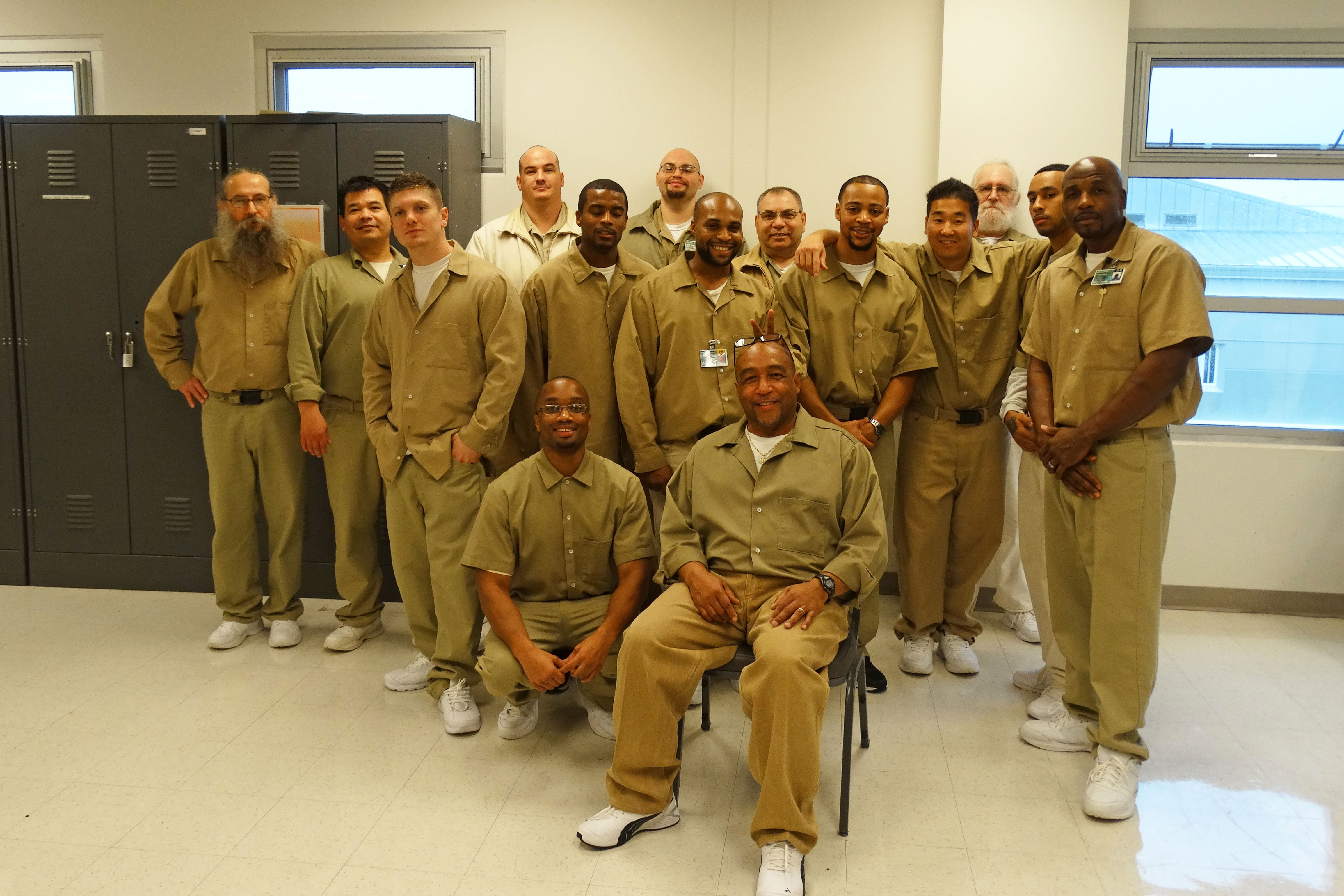
Within the last year, Washington State Reformatory (WSRU) at Monroe Correctional Complex has consolidated its wood shop, bike shop, and Worm Farm, and added wheelchair and black soldier fly programs to create a thriving Sustainable Practices Lab.

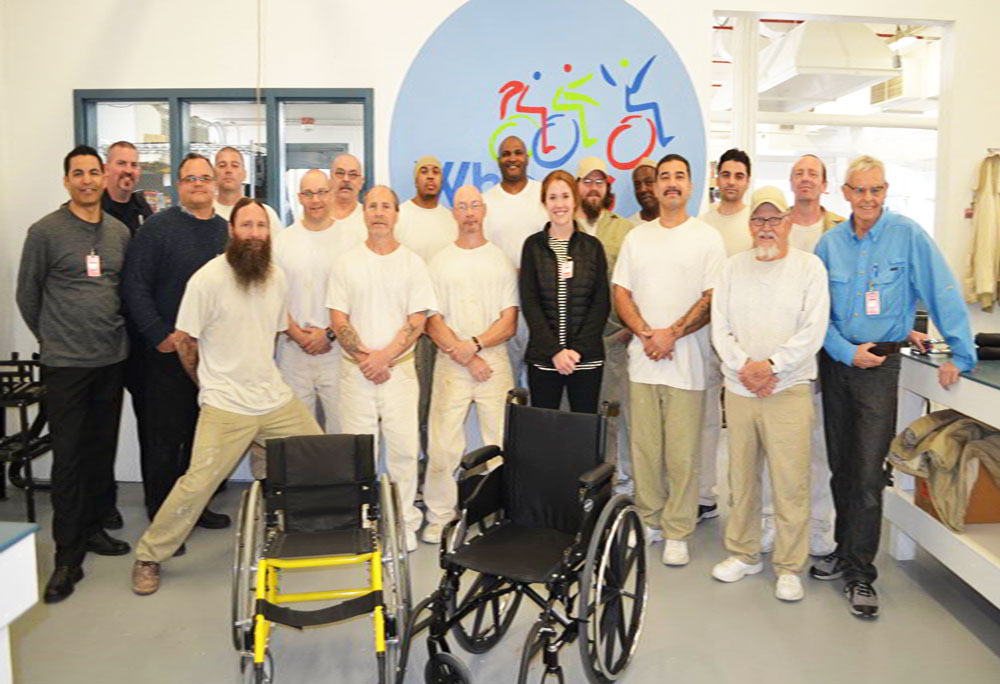
Joni and Friends’ Wheels for the World: We work with this non-profit organization to restore wheelchairs and for individuals in need in 3rd and 4th world countries. WSRU started the program in May of this year, and now has more than 275 wheelchairs nearly ready for our first shipment container, set to sail to Nigeria at the beginning of November. Our goal is to restore more than 1,000 wheelchairs every year.
spl-and-wheels-for-the-world-team1

Representatives from Wheels for the World pose with SPL program inmates and staff and two of their restored wheelchairs.
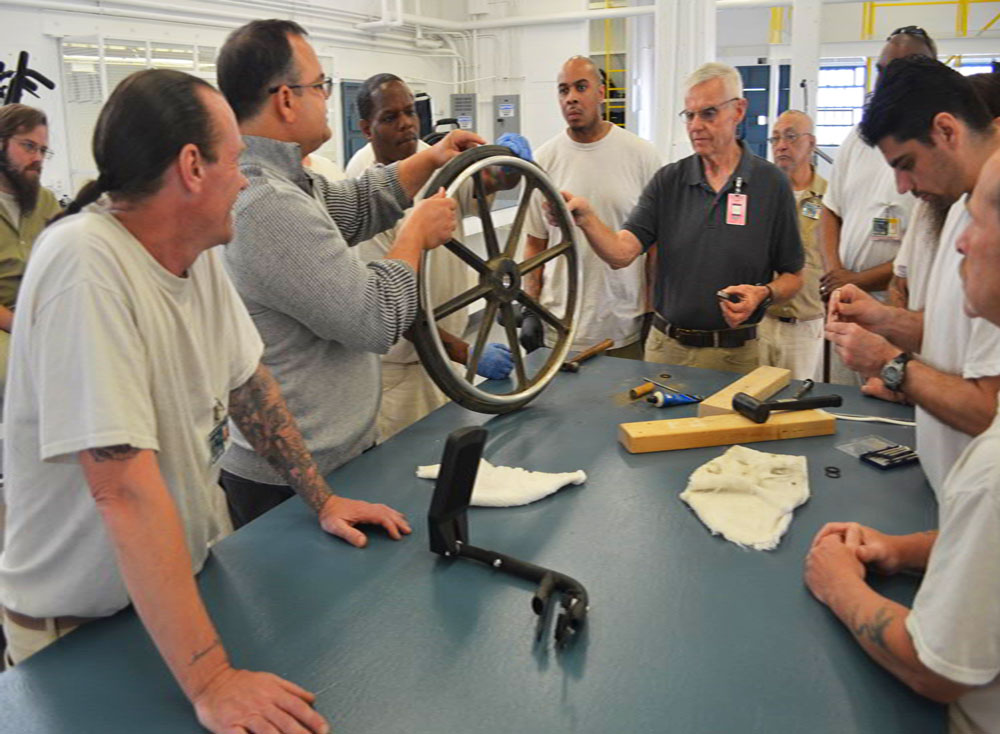
image002

A Wheels for the World representative discusses wheelchair restoration with the group.
vermiculture-logo

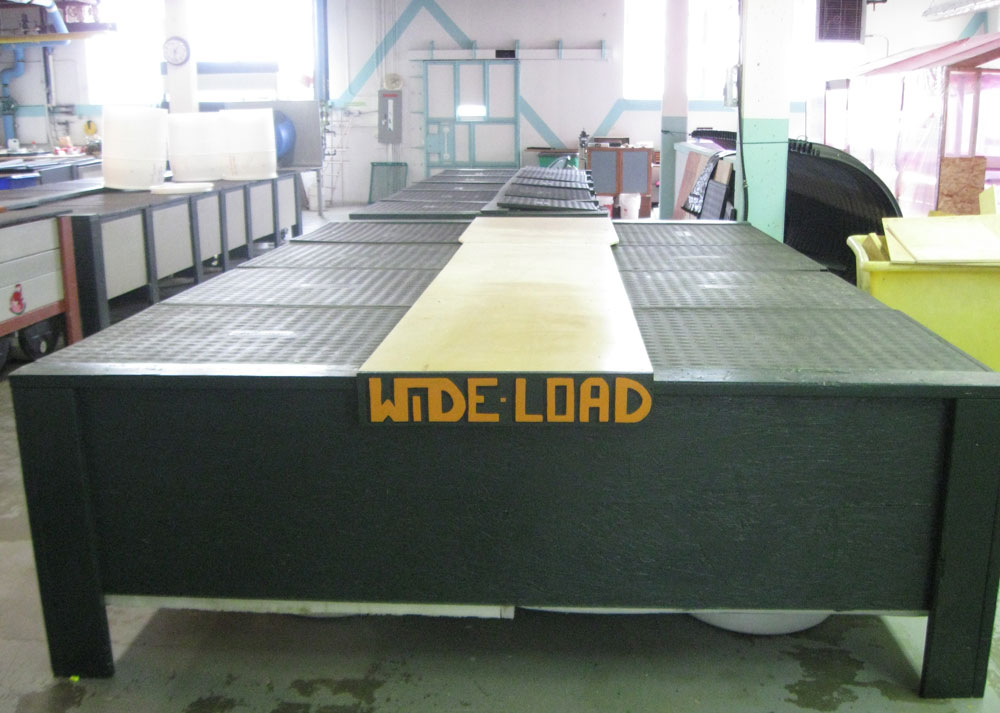
Worm Farm: Our Worm Farm is a full-scale waste management operation that uses vermicomposting to convert food waste into prized fertilizer. Technicians feed food waste to worms housed in “flow-through” bins, and collect the castings (worm manure) produced at the other end of the process. The Worm Farm houses 7 million worms in commercial-style bins, and has the capacity to handle more than 20,000 pounds of food waste per month. Food waste disposal from the WSRU has been cut by half so far, and we are on track to attain zero waste from the kitchen. (Editor’s note: The program now serves as an international model for worm composting.)
vermiculture-bins

Based on consultations with leading experts for vermiculture and vermicomposting, available materials, and trial and error, the team has built many kinds of worm bins, and continually makes improvements to the operation.
vermuculture-3%2c-black-soldier-flies-1

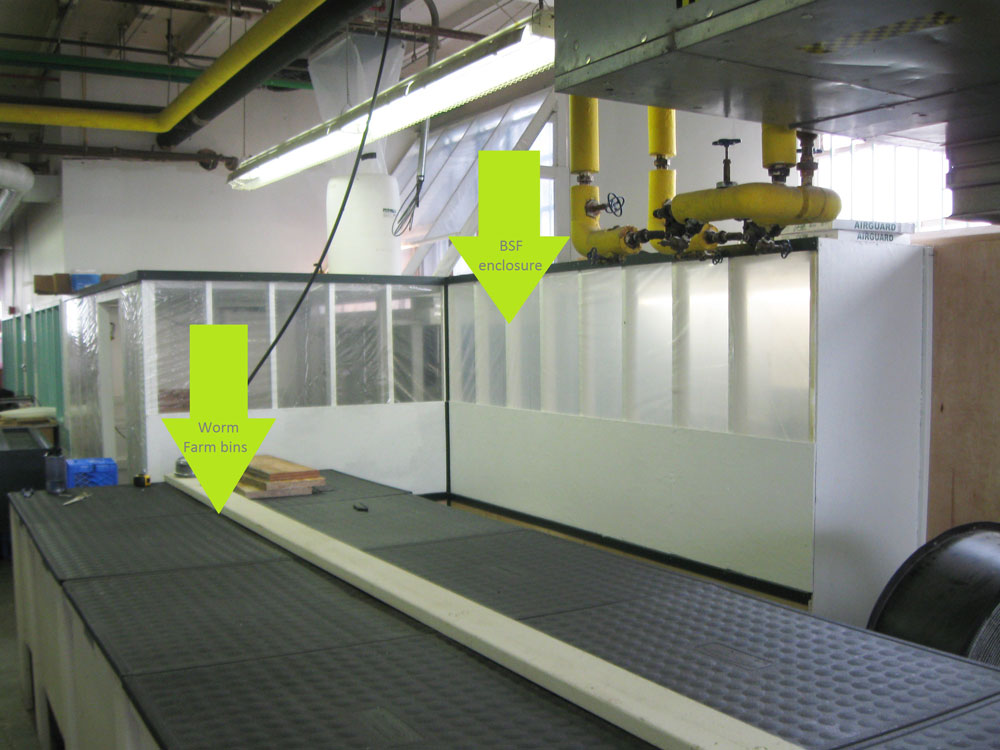
The BSF program space is a relatively small enclosure within the much larger Worm Farm—the enclosed space is easy to heat (these insects need a warm environment), and keeps flies from flying away!

Black Soldier Flies: Animal-based fats and oils cannot be fed directly to the Worm Farm worms, and the team sought a solution for handling meat and dairy waste. In August of 2015, we received approval and funding from the Sustainability in Prisons Project (SPP) to conduct a six month trial with Black Soldier Flies (BSF). The pilot showed that BSF processing is an efficient and highly productive method for converting meat and dairy waste into a beneficial product. At the conclusion of the six month trial, from more than 3 lbs/foot3/day of food waste, we had a sustained harvest of 80 ounces of larvae/day. We donate excess larvae to nearby zoos as high-quality animal feed. Building on this success, we are expanding the BSF operation.

The Bike Shop: This program provides a way for inmate to give back to their own communities by helping nearby kids and families in need. The local Sheriff’s Office and police donate unclaimed bikes to the program. Technicians assess each bike, and restore them to excellent working order. We deliver the refurbished bikes to the Snohomish Boys & Girls’ Club and local food banks for distribution to families who couldn’t otherwise afford a bike.
cars-for-charity-006

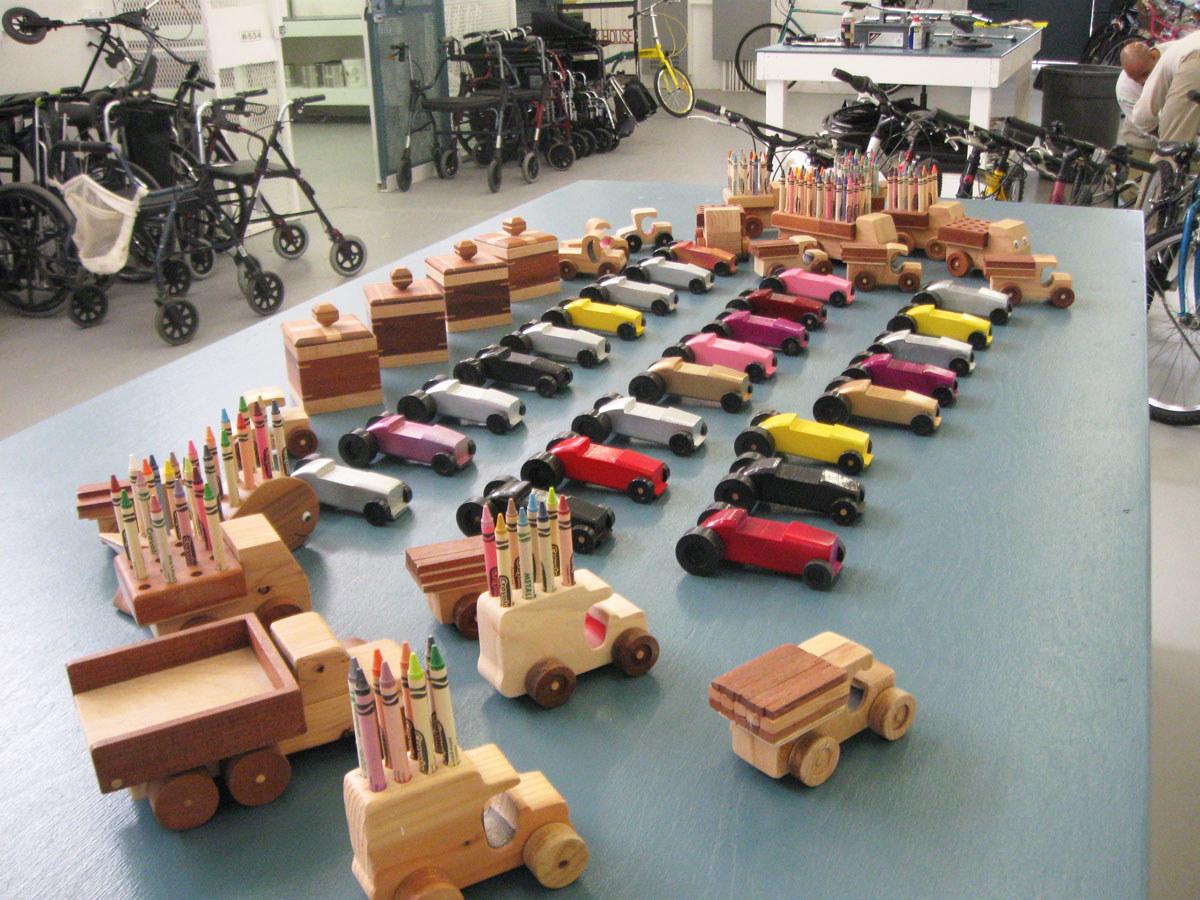
The wood shop, bike shop, and Wheels for the World share space in the SPL, and the productivity in each program is clearly visible!

Wood Shop: In the SPL’s wood shop, you will find inmates making wooden toys, cars & trucks, jewelry boxes and games. We will deliver some of these items to local fire and police departments for distribution to community members. We will donate others to local food banks and the Children’s Hospital. We retain a small portion of the creations for fund-raising; we auction them and proceeds are put back into the program to keep it self-sustaining.
by Grady Mitchell, Roots of Success Instructor and Master Trainer, Stafford Creek Corrections Center.

Grady-Mitchell-portrait
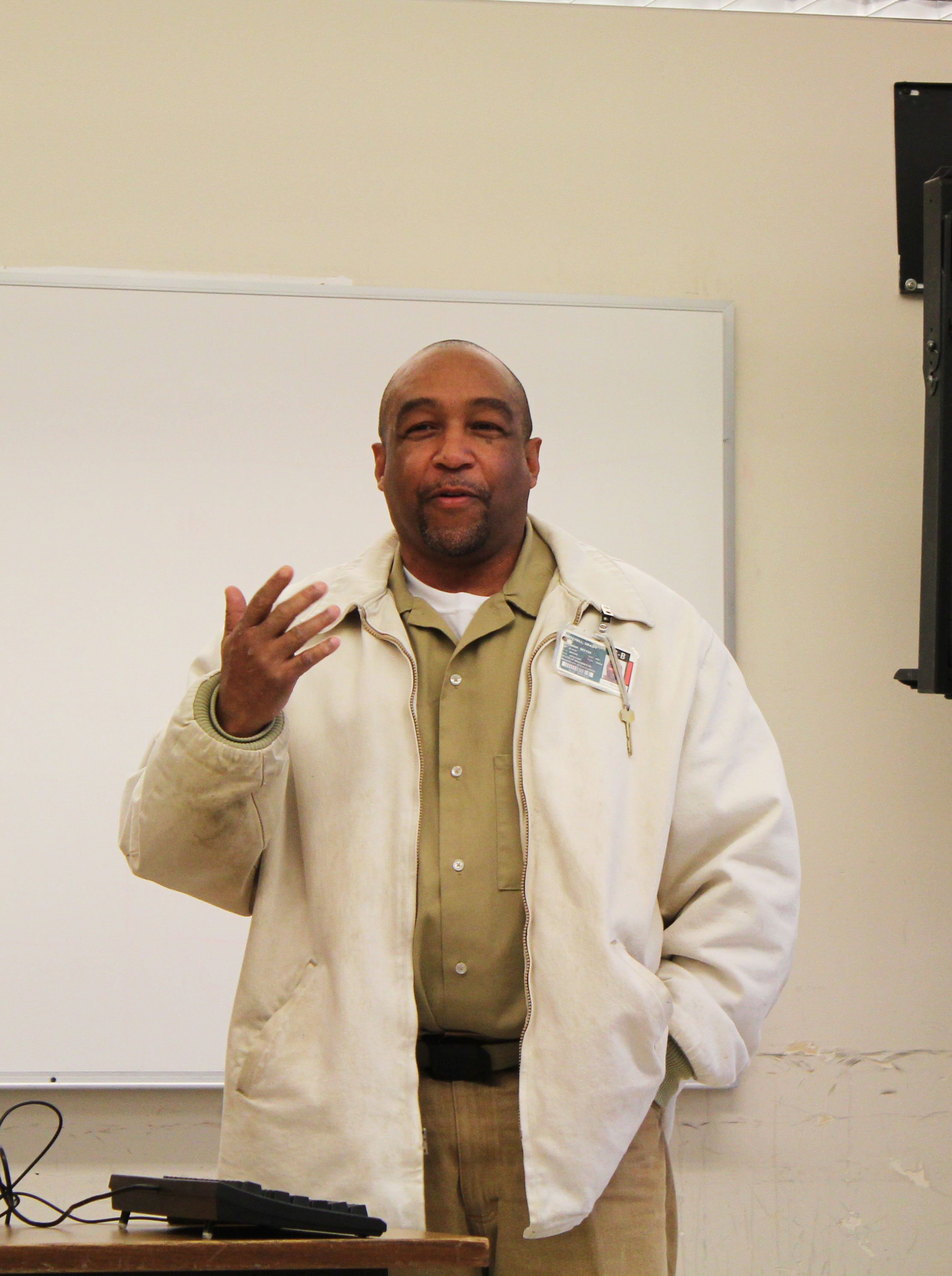
Grady Mitchell speaks to a graduating class. He has taught the Roots of Success curriculum twelve times, and was certified as a Master Instructor in 2015.

A few years ago, prior to Roots of Success (ROS) someone could have held a conversation on sustainability and I’m sure it would have been as interesting to me as popcorn without the salt. Today I am not only able to present the curriculum to students, but also have a variety of discussions with them on the subject. In a sense my own experience has given me even more material to share with students (myself and my colleagues like to refer to our classes as peer to peer education) because most of them had no idea the impact of their habits and choices have on the environment, any more than I.

Sustainability in simple terms means being able to meet our needs now without compromising the ability of future generations to meet theirs. However, this term has been taken hostage so to speak because manufacturers use it for their own selfish gain. We as consumers have to take sustainability back and know that sustainability is survivability. By adding the word ‘Just’ before Sustainability, makes it fair and equal.

This is significant to me because in order for the future generations to be sustained, an interest on the matter needs to prevail now. Failure can’t be an option because to do so could literally mean the extinction of those we love dearly and plan on leaving our legacy to. Sustainability is a built in feature of all natural environmental systems provided that human interference is absent or minimized.

Roots-Class-Photo-2-Photo-by-DOC
Grady Mitchell sits with his fellow instructors a graduating class of Roots of Success. Photo by DOC staff.

To get to a more sustainable lifestyle is going to require, inevitably, some radical changes in attitudes, values and behavior. The answer to creating global values and actions is blurred for now. How we get to less pollutants and more sustainable reliances and reuse may depend on generations yet to come (if we make it that far), because as it stands, we haven’t been doing too good of a job. Changing our personal habits; reducing the carbon footprint; our practices being altered for the benefit of sustainability is ‘just.’ In the book “Last Child in the Woods,” a phrase was coined called Nature Deficit Disorder. All it takes to cure this disorder is to get outside and enjoy nature. With seven billion people in the world, imagine the impact from just being sustainable or creating nature. Imagine a society where our lives are as immersed in nature as they are technology.

turtle-release-techs-and-piliponis
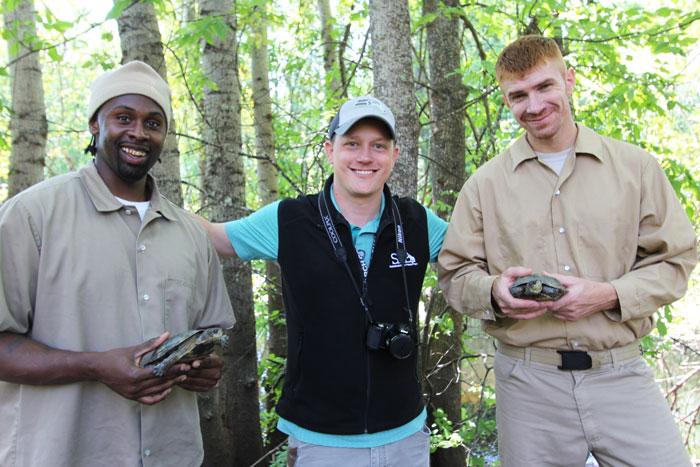
Turtle technicians x and x hold healthy western pond turtles prior to releasing them. The turtle program staff sponsor, Shaun Piliponis, stands with them. Photo by Sadie Gilliom.

In order to make sustainability more inclusive takes education and a willingness to embrace lifestyle changes. The guerrilla gardener of South Central Los Angeles, Ron Finley stated, “If kids grow kale, kids eat kale.” If the inspiration was focused on making sustainability hip, cool, the thing to do, then we have a cure for Nature Deficit Disorder. Allowing our generation to see with their own eyes and then pass it on to the next is “just.” César Chavez stated:

“Once social change begins, it cannot be reversed. You cannot uneducate the person who has learned to read. You cannot humiliate the person who feels pride. You cannot oppress the people who are not afraid anymore. We have seen the future, and the future is ours.”

One of the videos available to our students in our Roots of Success class tells us, in 1915 a Canadian commission on conservation made an interesting proclamation, they said “each generation is entitled to the Interest on the Natural Capital, but the Principal should be handed on unimpaired.” We enjoy the fruit (the interest) from the tree (the principal), but if we cut the trees down both the principal and the interest will be gone forever. So in the end, Just Sustainability could really mean we all take responsibility not only for ourselves, but for community, the planet and most important, the ones who come after us.

By Gretchen Graber, Institute for Applied Ecology Contractor

As part of the sustainability lecture series at Coyote Ridge Corrections Center, climate scientist Steve Ghan spoke about the most effective techniques to decrease global carbon emissions. Mr. Ghan thanked us for the opportunity to present his research at Coyote Ridge and said, “I got the best questions I’ve ever been asked at a public presentation. All inmates were fully engaged. The staff are professional and enjoy their work. The facility is new and very impressive.”

The lecture series is funded by Bureau of Land Management, (BLM) in Washington D.C. Along with the BLM, the lectures series is a result of partnerships between Sustainability in Prison Project (Washington State Department of Corrections + The Evergreen State College) and Institute for Applied Ecology.

Thank you to Mr. Ghan and all the volunteer presenters for their time and sharing their scientific knowledge with us!

crcc-lecturer
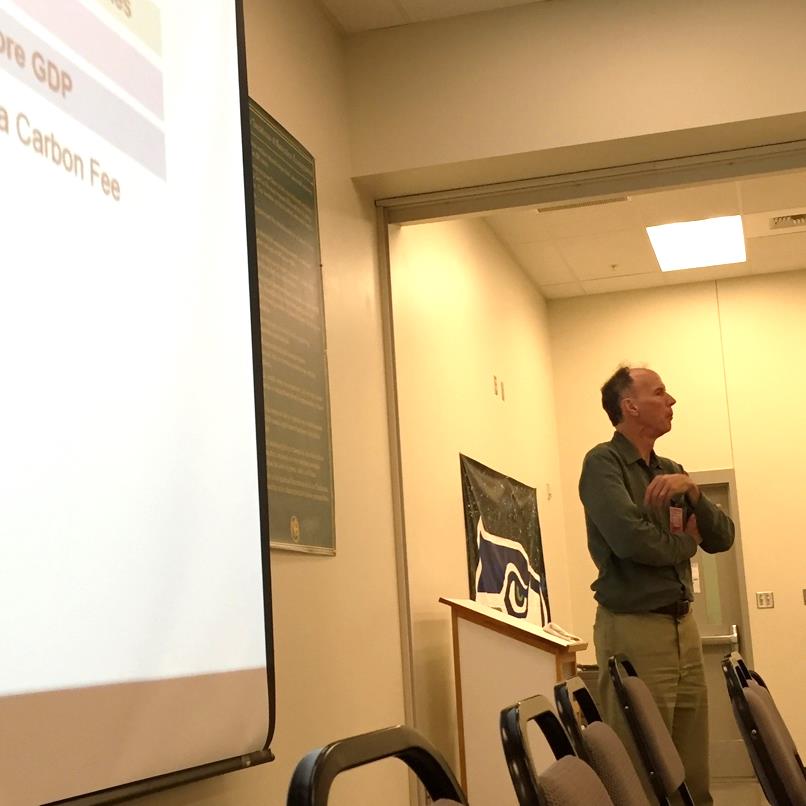
Climate scientist Steve Ghan said of the students at the prison “I got the best questions I’ve ever been asked at a public presentation.” Photo by Gretchen Graber.

We will end the year with a presentation on the advantages and disadvantages of hydraulic fracking.

Written by SPP Liaison and Classification Counselor Shawn Piliponis.

On September 8, 2016, Larch Corrections Center (LCC) reached another historical milestone as it kick-started a new apiary (beehive) program by hosting a class to educate participants about bees and beekeeping.

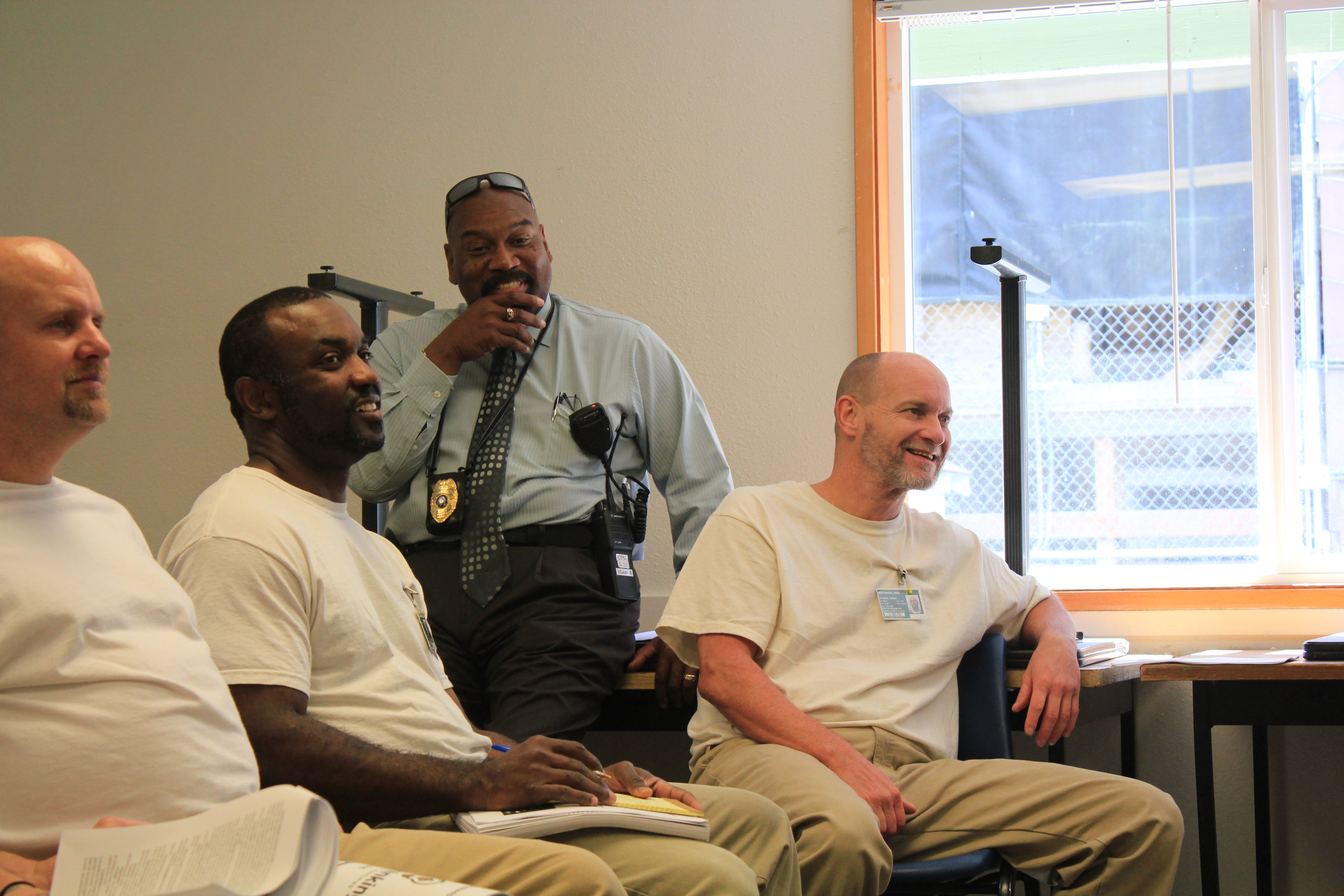
Larch Staff and students enjoying the Bee Thinking lecture. Photo by Emily Passarelli.

Inmates and staff who participated were genuinely interested in learning about bees and beekeeping, but were understandably concerned about the potential of being stung by bees. Rebekah Golden and Gabriel Quitslund from Bee Thinking in Portland, Oregon, taught how bee colonies work, which alleviated a lot of the initial fear, and those who participated walked away feeling more educated and comfortable about LCC’s new beekeeping program.

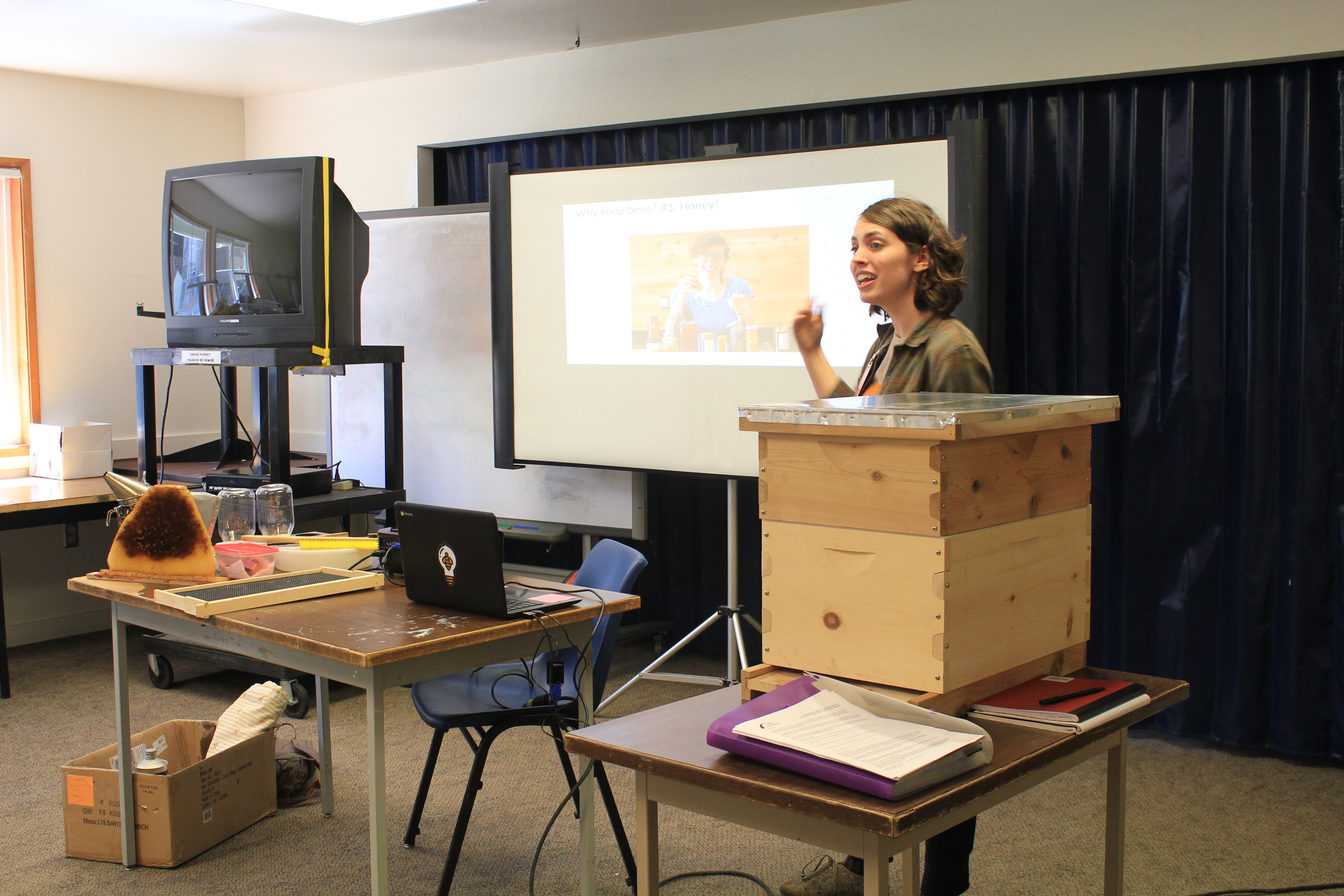
Bee Thinking's Rebekah Golden teaches a class of staff and incarcerated students about beekeeping. Photo by Emily Passarelli.
Bee Thinking’s Rebekah Golden teaches a class of staff and incarcerated students about beekeeping. Photo by Emily Passarelli.

“I want to help the offender population think outside the box by showing a variety of employment opportunities available to the offenders upon release,” said Classification Counselor Shawn Piliponis, LCC’s sustainability liaison. “My primary goal for this program is to coordinate with other organizations like SPP and Bee Thinking to provide official Beekeeper Apprentice and Master Beekeeper certifications to the offender population before they release.”

It was a voluntary class, and an instant hit among all who attended. A total of 11 inmates and 11 staff, volunteers, and contractors participated, and already there is demand for more classes from both staff and inmates.

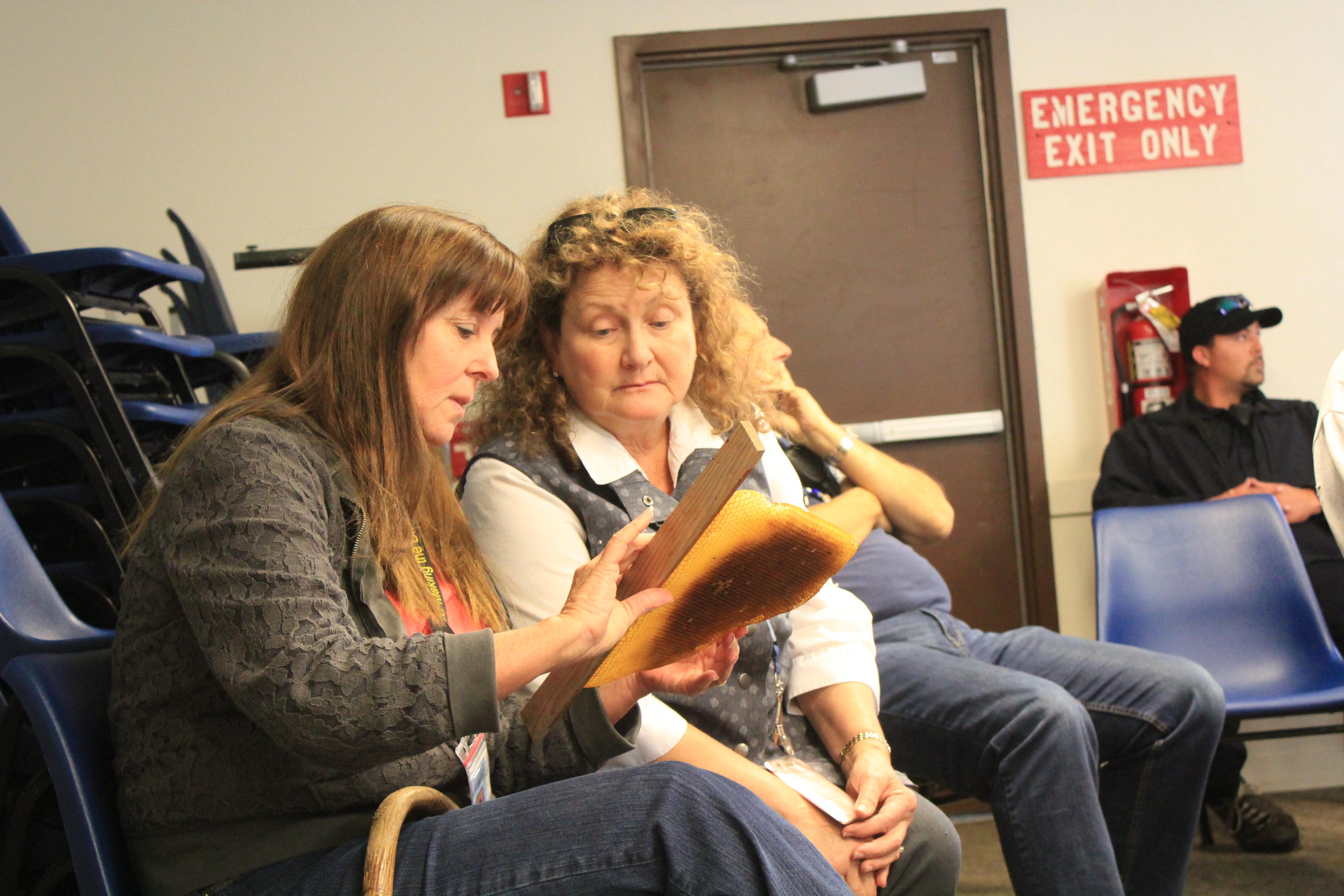
Staff get a closer look at honey comb. Photo by Emily Passarelli.

Shawn Piliponis coordinated with the Sustainability in Prisons Project (SPP)-Evergreen staff Kelli Bush, Emily Passarelli, and Sadie Gilliom to arrange and sponsor the beekeeping class for LCC inmates and staff. The class was taught by Rebekah Golden and Gabriel Quitslund from Bee Thinking in Portland, Oregon. Rebekah has worked with bees for eight years in university research labs, her own apiary, Bee Thinking’s apiaries, and other community organizations. Gabriel is a sales manager for Bee Thinking who has a vast knowledge of bees and issues related to beehives such as disease, colony collapse, and pests.

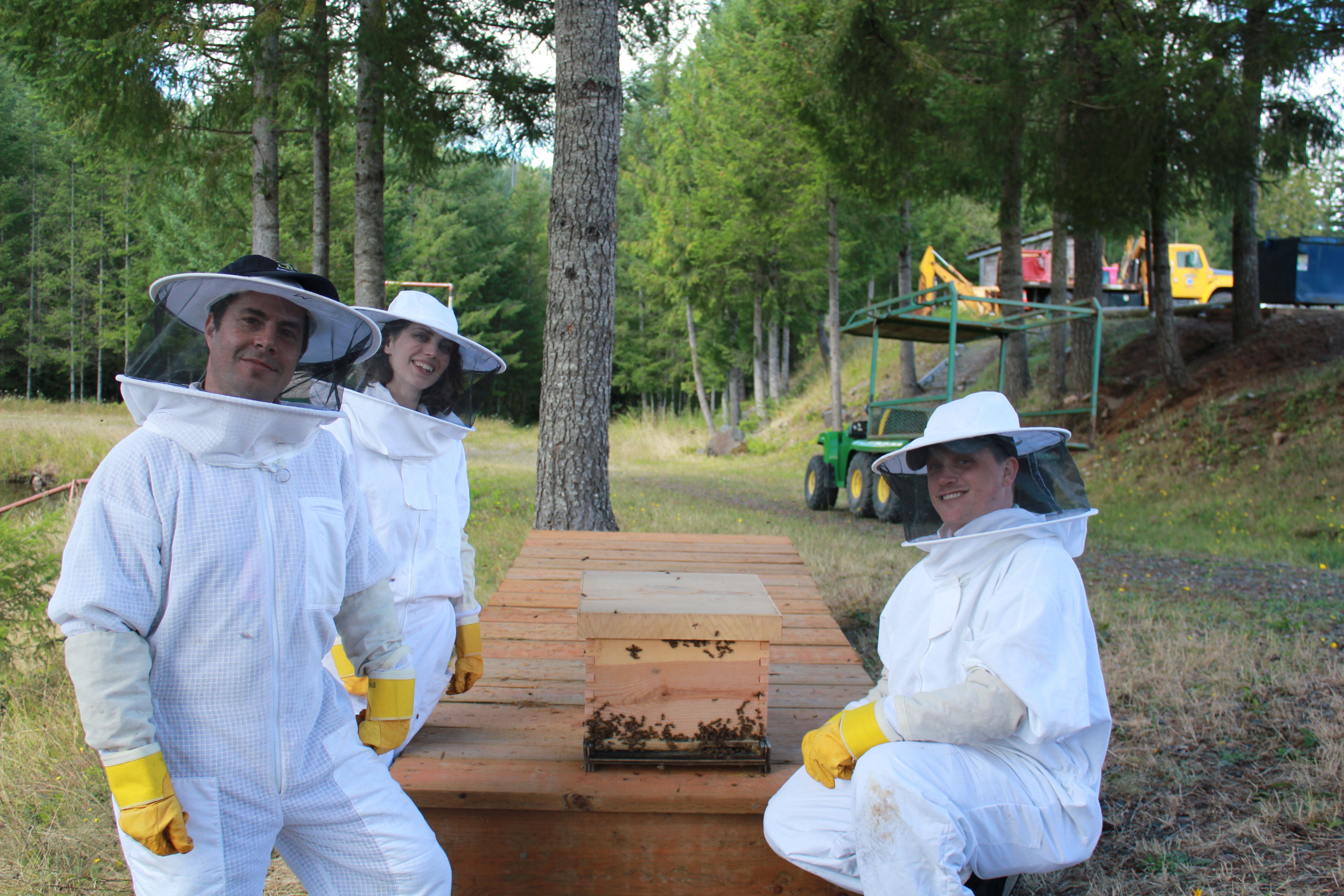
Bee Thinking's Rebekah Golden and Gabe Quitslund help CC2 Shawn Piliponis set up Larch's new beehive. Photo by Emily Passarelli.
Bee Thinking’s Rebekah Golden and Gabe Quitslund help CC2 Shawn Piliponis set up Larch’s new beehive. Photo by Emily Passarelli.

The new beekeeping program at LCC will start with a beehive donated from the beekeeping program at Stafford Creek Corrections Center (SCCC).


By Graduate Research Assistant, Jeanne Dodds

Photos by Ricky Osborne

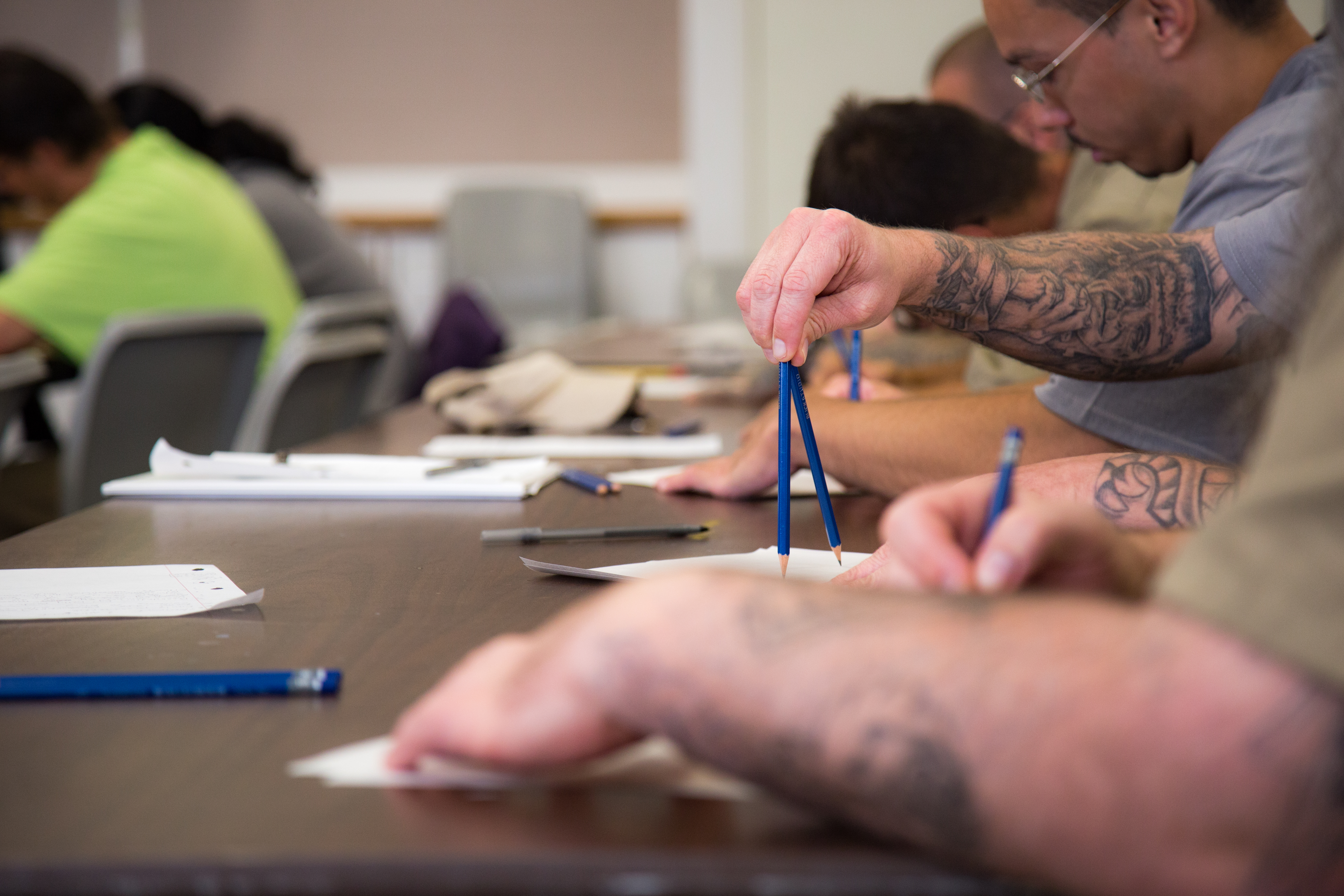
Drawing and art making are powerful tools to increase the ability to focus, relax, and develop creative problem solving in areas far beyond visual art. As an artist, illustrator and teacher, my experience working with students has illuminated the understanding that drawing teaches people to see. When we look closely in the way that illustration demands, we observe and comprehend the subtle details that make our subject significant and unique.

Teaching the art of the butterfly

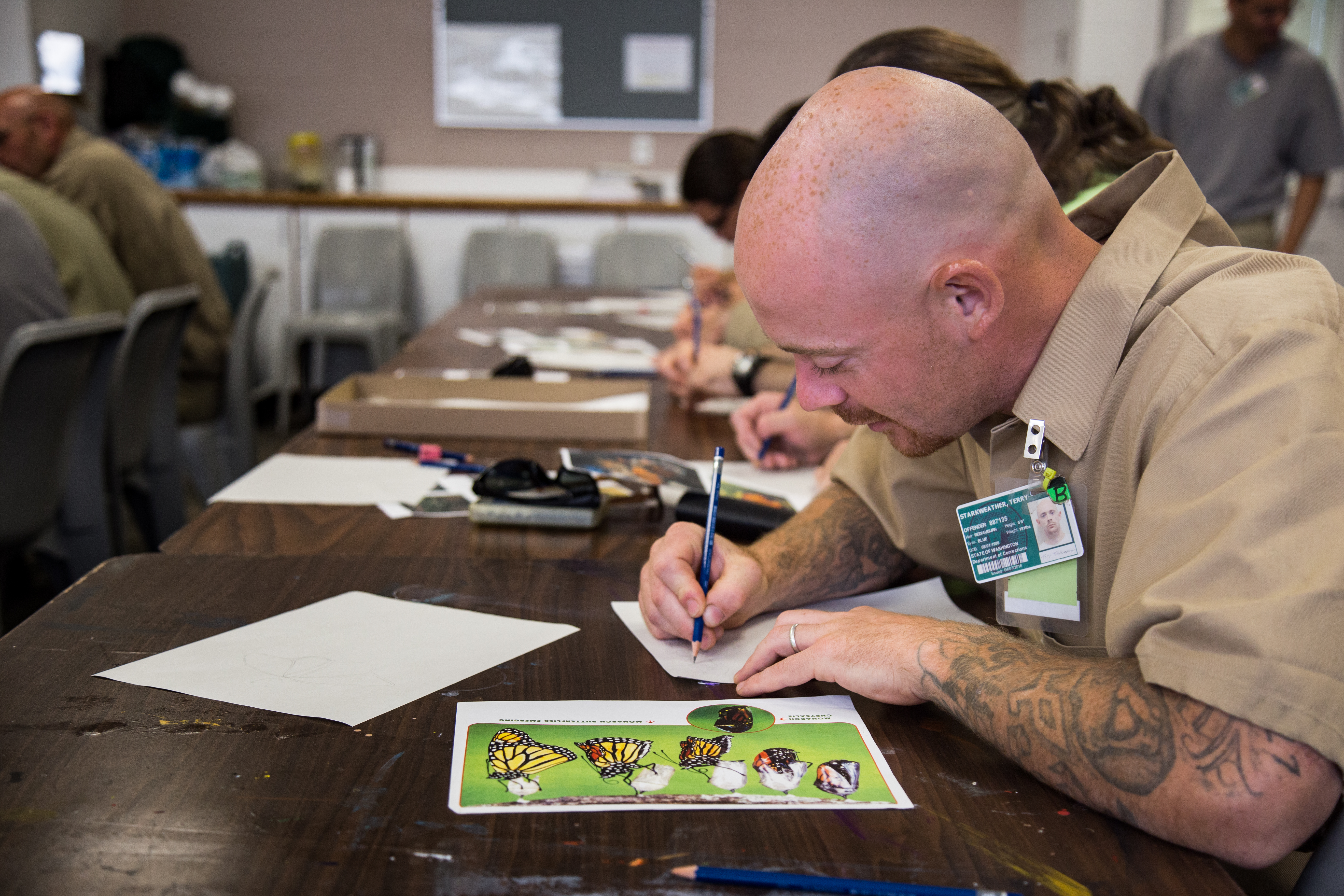
We learn so much by looking closely, understanding, and representing. These were ideas I hoped to convey when planning a natural science illustration class as part of an internship with SPP for students at Airway Heights Correctional Center.

The illustration workshop was developed around the essential relationship between milkweed and Monarch butterflies and —most importantly—how creating artwork about this relationship can inspire understanding of core issues facing the imperiled Monarch butterfly and actions we can take to preserve and restore this species.

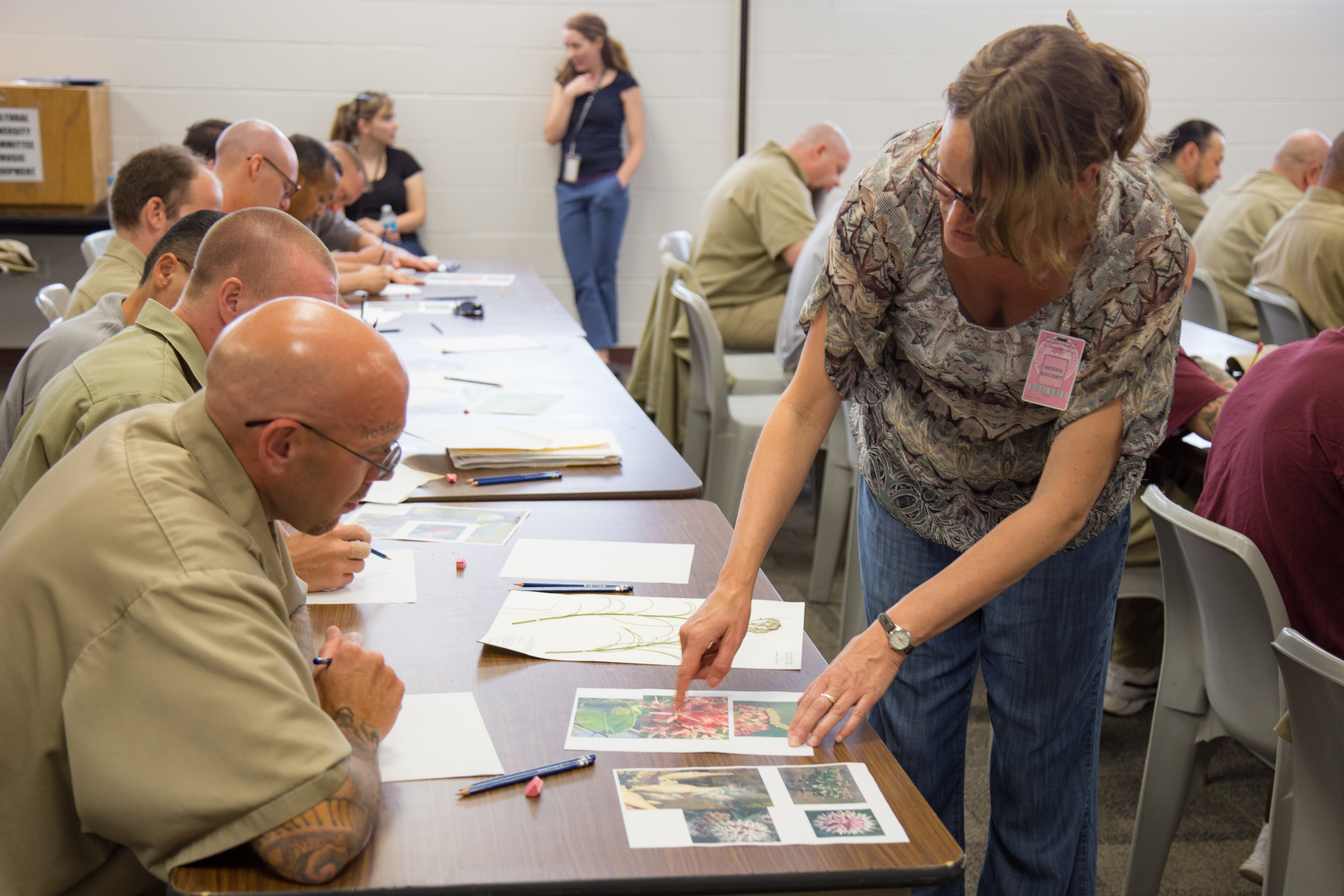
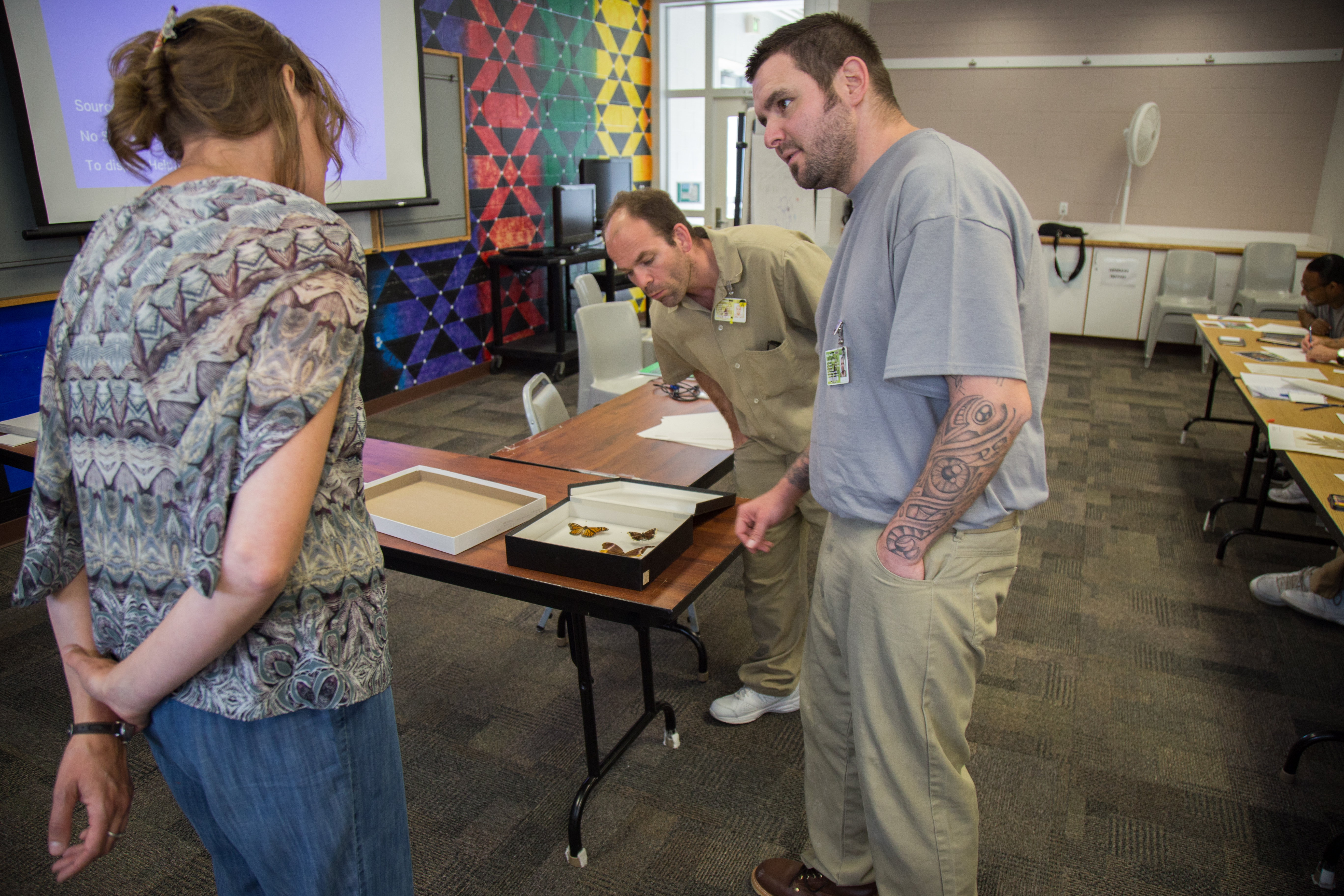
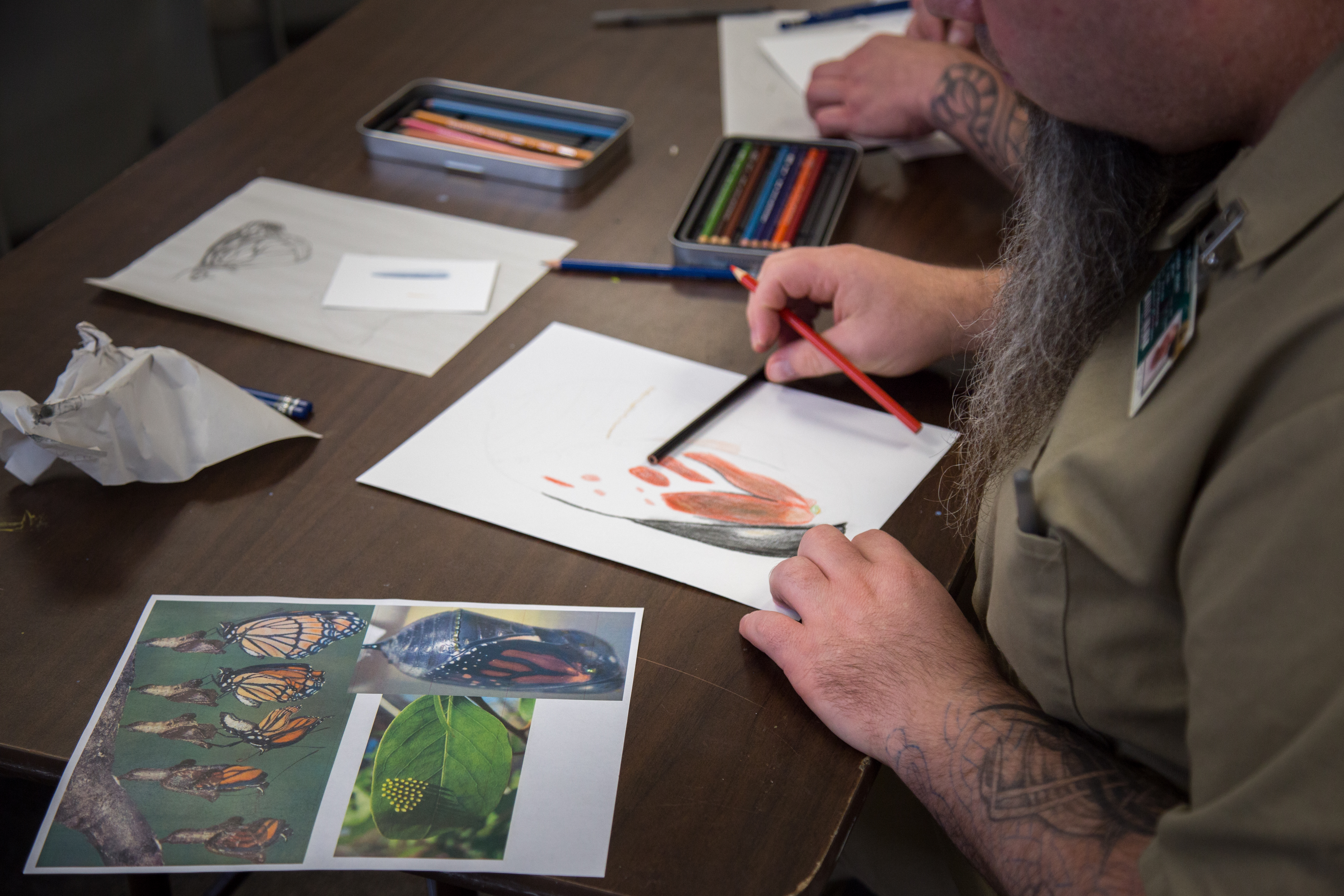
Studying the butterfly specimens

This internship project, pursued with support from SPP staff, the Endangered Species Coalition, Airway Heights, and other partners, centers on the proposal to develop a milkweed propagation site at the prison. The idea is to grow a species of milkweed, Asclepias speciosa, which is native to Washington State. Milkweed seed from plants grown in the prison would  be collected by technicians for habitat restoration at designated sites near Spokane. The project goal would be to increase habitat for the Western population of the Monarch butterfly. Milkweed is the obligate host plant for Monarchs; eggs are laid on the plant and emergent caterpillars consume the leaves of the plants, developing toxicity which makes them undesirable to predators such as birds. Habitat where milkweed has historically grown has been destroyed due to pesticide use, changes in land use patterns, and other factors. Without milkweed, the only host plant for key lifecycle stages, the survival of Monarch butterflies is imperiled.

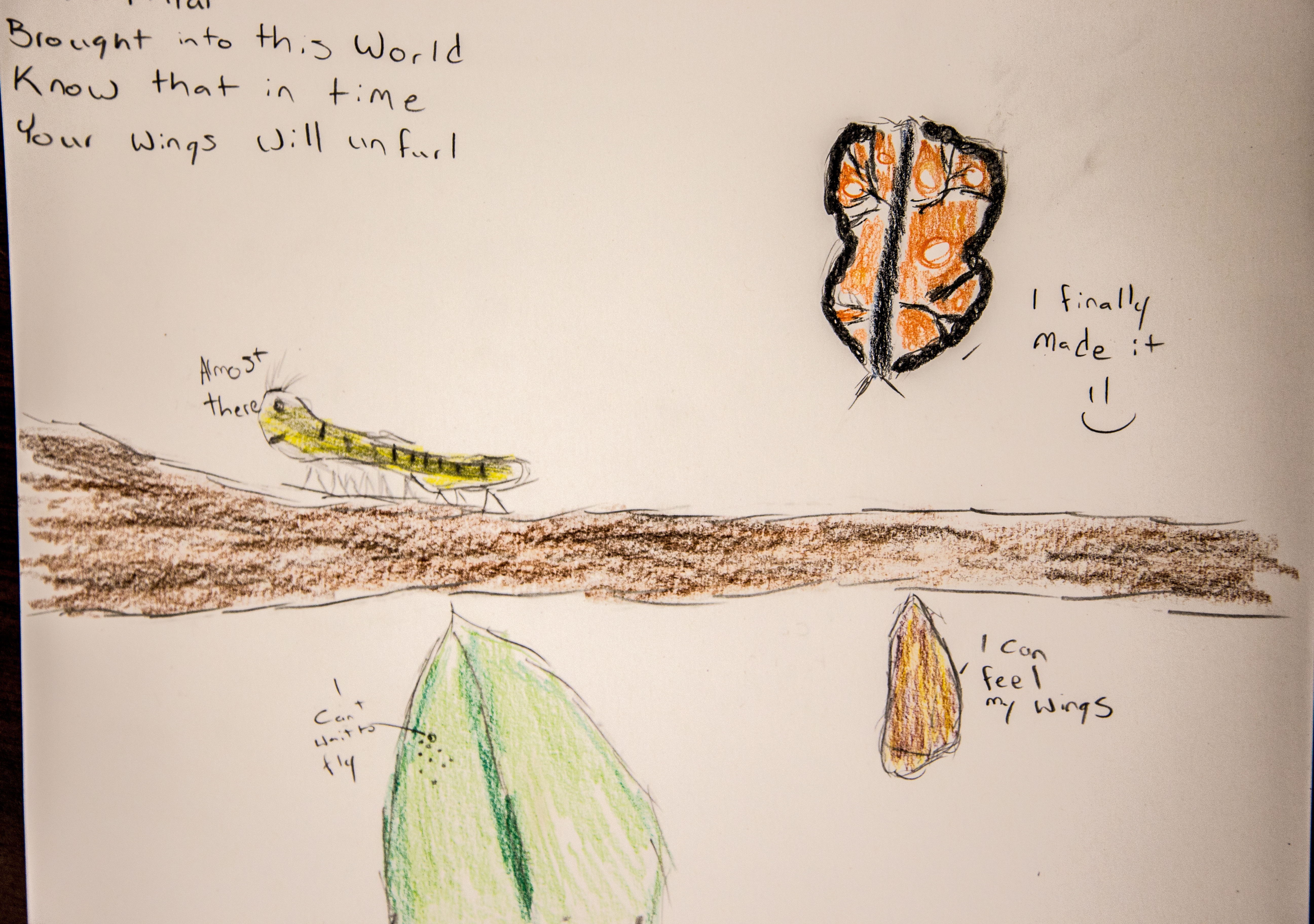
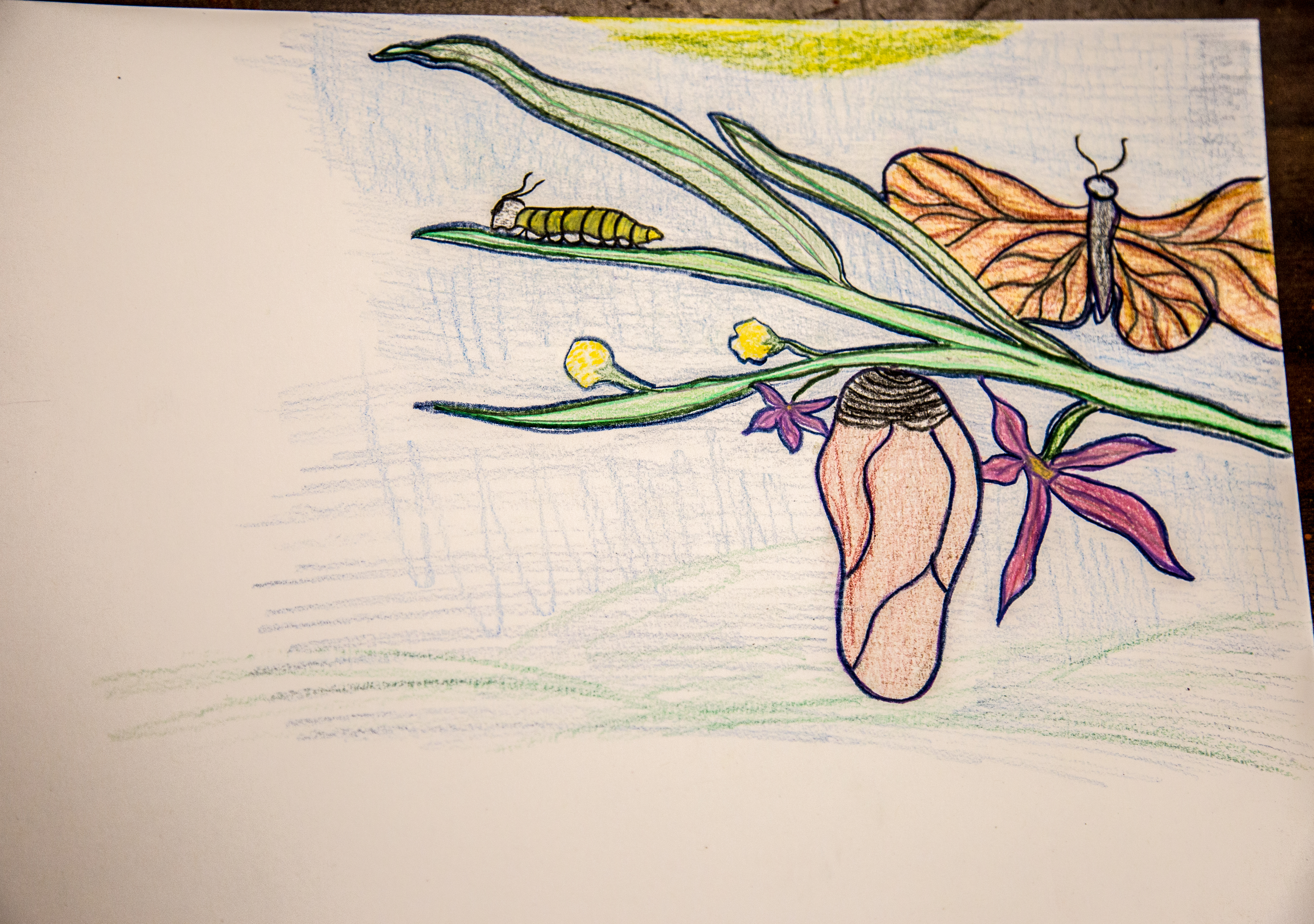
Inspiring message from an incarcerated artist: lifecycle of the Monarch

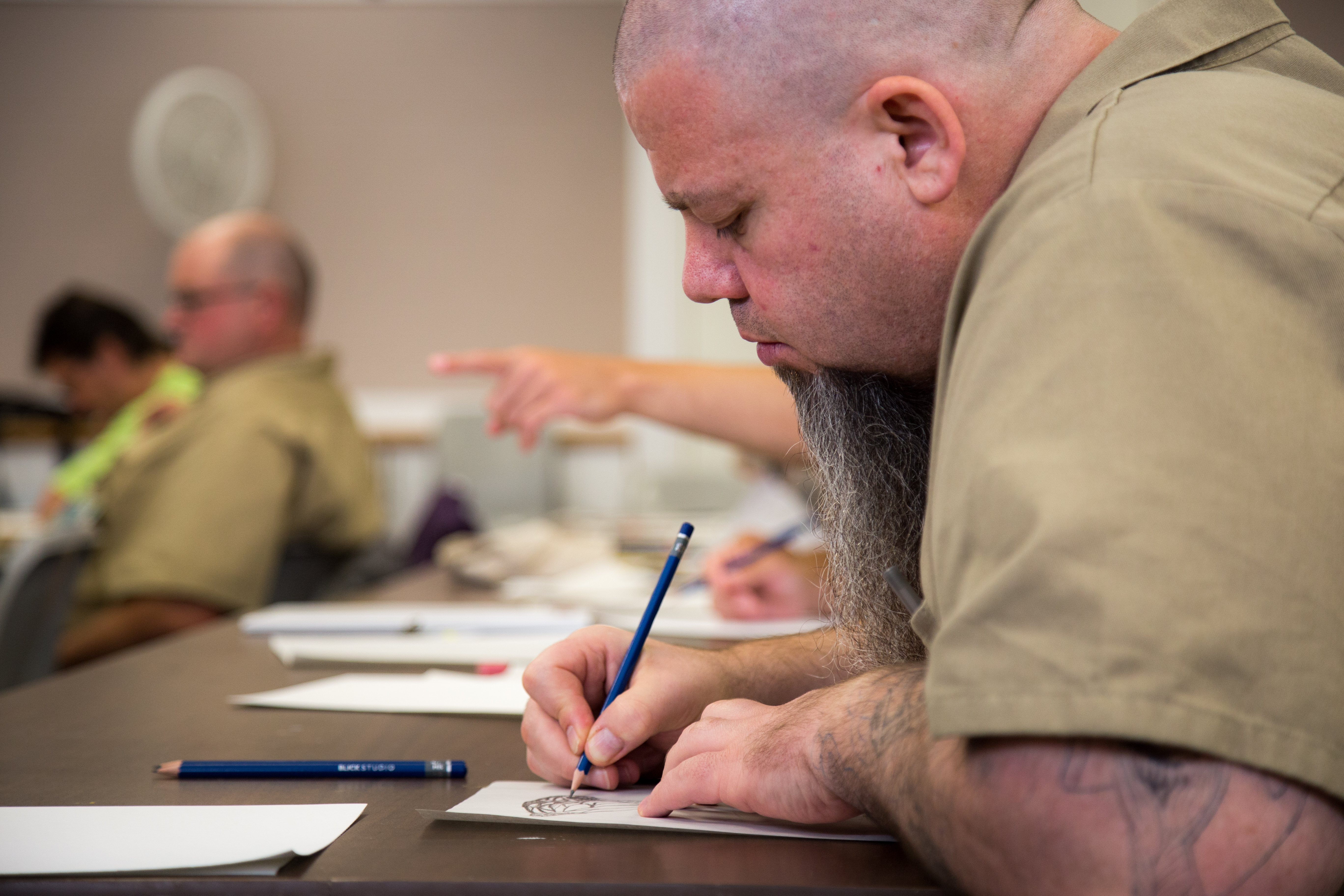
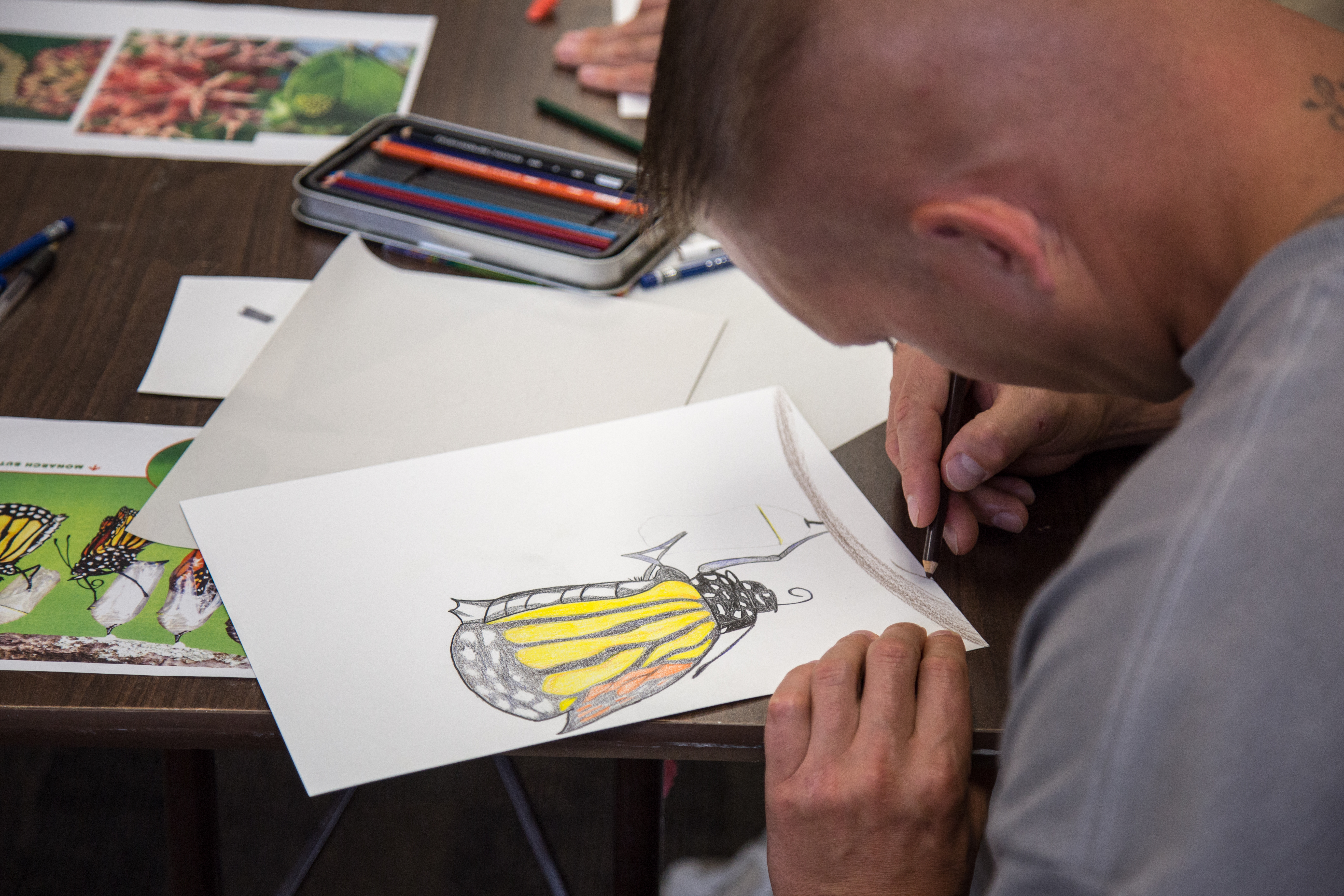
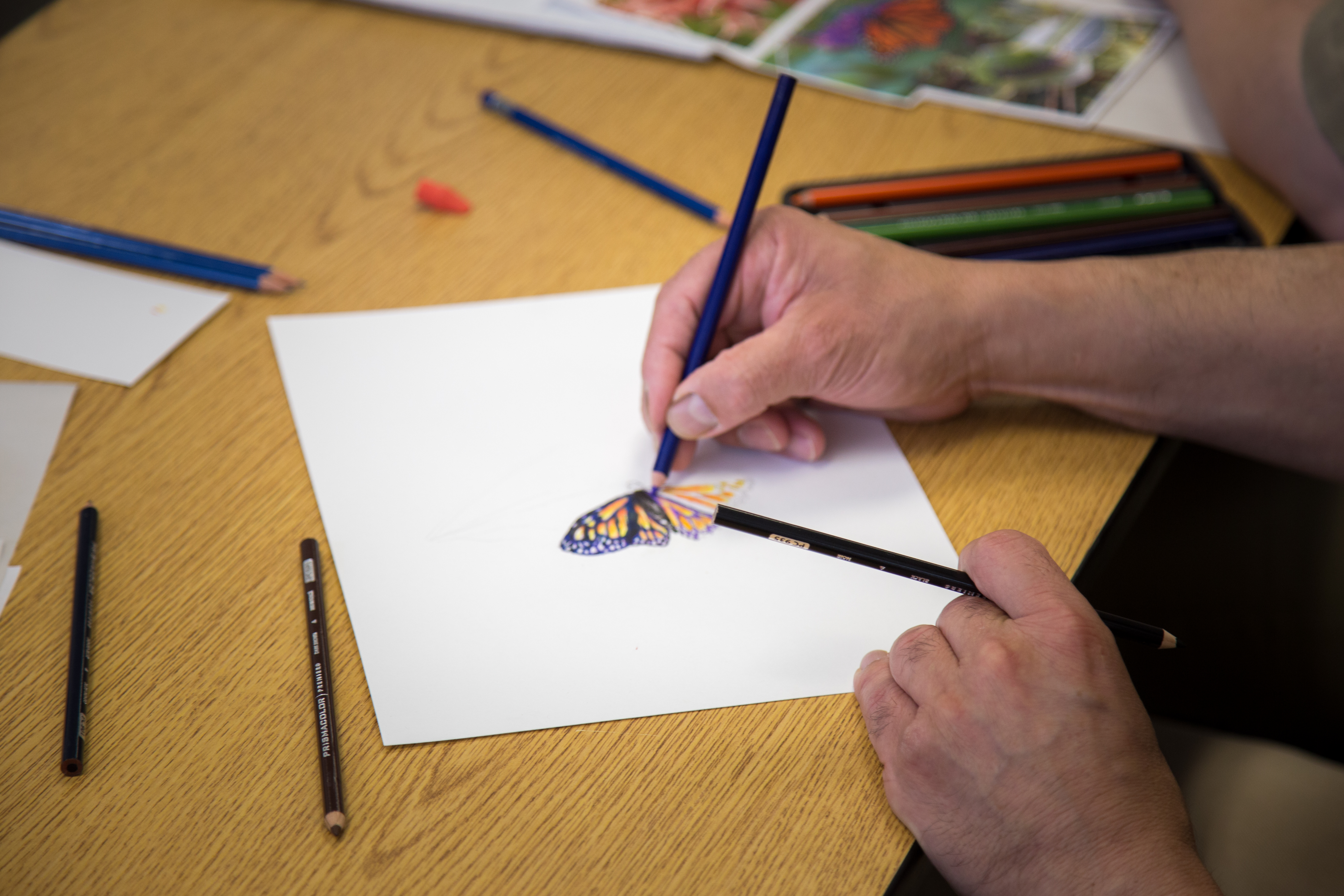
Sharing knowledge about this symbiotic relationship between butterfly and plant by creating illustrations with students and corrections staff at Airway Heights was inspiring. The workshop participants asked insightful questions, expressing concerns about how the loss of important pollinators such as Monarchs will impact other species, including humans. They saw the intricate detail of Monarch wing scales and milkweed leaves in specimens borrowed from the University of Washington. These observations were captured in detailed, creative colored pencil and graphite illustrations.

We talked about how drawing is a practice that takes patience and that mistakes made provide opportunities to reinforce skills. At the end, we viewed all of the work in a classroom gallery walk and shared what we noticed; a key observation was how everyone approached the project in their own way, some realistically, others adding words, some representing their ideas about how to protect these species. One of the most profound observations was how drawing and educational workshops like this allow students to feel reconnected to the community and themselves. It’s my hope that this connection will extend outward toward the development of a milkweed planting project and restoration of habitat for Monarchs, a species that so eloquently represents cycles of growth, transformation, and renewal.

Jeanne Dodds is a Teaching Artist, illustrator, and photographer who explores themes of connection and discord in the relationship between humans and the natural world. She is an incoming student with the fall 2016 MES cohort, and interned with SPP to research milkweed and Monarchs during summer quarter.

by Gretchen Graber, Institute for Applied Ecology

This past August, Stacy Moore from Institute of Applied Ecology, (IAE) gave a presentation on prairie restoration at Coyote Ridge Corrections Center (CRCC) in Connell, WA. The presentation is part of an on-going monthly sustainability lecture series created by the Sustainability in Prisons Project (SPP). IAE and CRCC staff work collaboratively to offer a variety of subjects including soil conservation, fracking, climate change, song birds of the shrub-steppe and monarch migration research.

Inmates ask the best questions and provide great comments about their own experience making the presentation an interactive learning experience. Often inmates ask, “How can I get involved?” to which partnership staff respond by providing additional environmental education materials and information about conservation efforts and future volunteer opportunities.

stacy-pic