Three instructors went through the training at WCC taught be Grady Mitchell. Mr. Mitchell is one of 5 Master Trainers in Washington State. Master Trainers are certified by the director and creator of Roots, Dr. Pinderhughes, to be able to train new instructors.
Five new instructors were trained at the SCCC Roots training led by Master Trainers Cyril Walrond and David Duhaime. The Roots liaison at SCCC, Kelly Peterson, added interviews to their instructor candidate selection process because they had close to 20 Roots graduates applying to be new instructors. I sat in on some of the interviews and candidates repeatedly cited the Roots community and the interactive and inclusive teaching styles of other instructors as their reasoning for wanting to become instructors.
Four instructor candidates went through the training at CRCC led by Master Trainer Keith Parkins. They engaged in conversations about facilitating the course in a way that was accessible to students of every background and how to engage students in complex conversations like environmental issues and social equity.
Thank you to DOC for making these trainings possible and thank you to Roots of Success for entrusting the training of new instructors in WA to our Master Trainers. And to all of the new Roots instructors, welcome!
Written by Alexandra James, Ecological Conservation Nursery Program Coordinator, and Bethany Shepler, Green Track Program Coordinator; Photos by Alexandra James
Students discuss environmental issues, their complexities, and how to approach finding solutions. Everyone was encouraged to discuss issues that were important to them and the ways they could research those topics to develop a better understanding of them.
Education is a core component of our mission. Our aim is to provide diverse formal and informal opportunities for education, and to offer new knowledge and new skills to inmates, staff, and community partners. We integrate education into every one of our programs, acting on every opportunity to incorporate technical and conceptual education for all participants. In addition, we have two dedicated programs with education as a central focus. These programs are the Environmental Engagement Workshop Series and Roots of Success, an environmental literacy program.
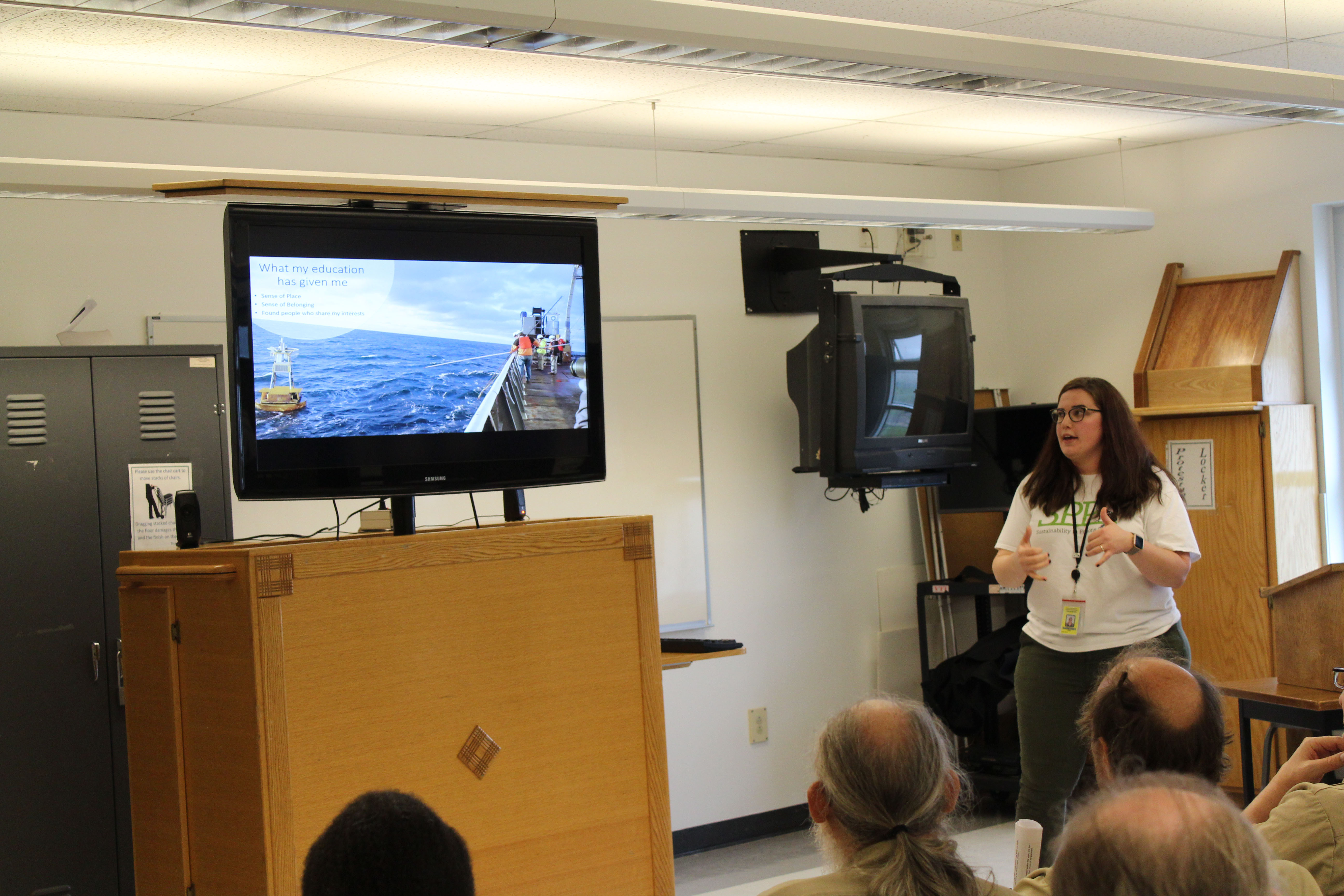
Bethany shares some of the experiences and opportunities that accompanied her education.
For our October Environmental Engagement Workshop Series at Stafford Creek Corrections Center (SCCC) we decided to focus on the practice of education itself. Bethany Shepler, SPP’s Green Track Program Coordinator, led the workshop and asked students to think about what education is and what it means to them. Students tackled conceptual questions, investigating the benefits of education for themselves and their community, whether they’re incarcerated or otherwise.
To demonstrate the value of education, Bethany talked about the impact education has on reducing recidivism rates. Recidivism is when a previously incarcerated person returns to prison after release, and while this can occur for any number of reasons, usually this happens because they fall back into their old lives. To illustrate education’s role on reducing recidivism, she highlighted the many academic studies that cite education as the most successful means of reducing recidivism.
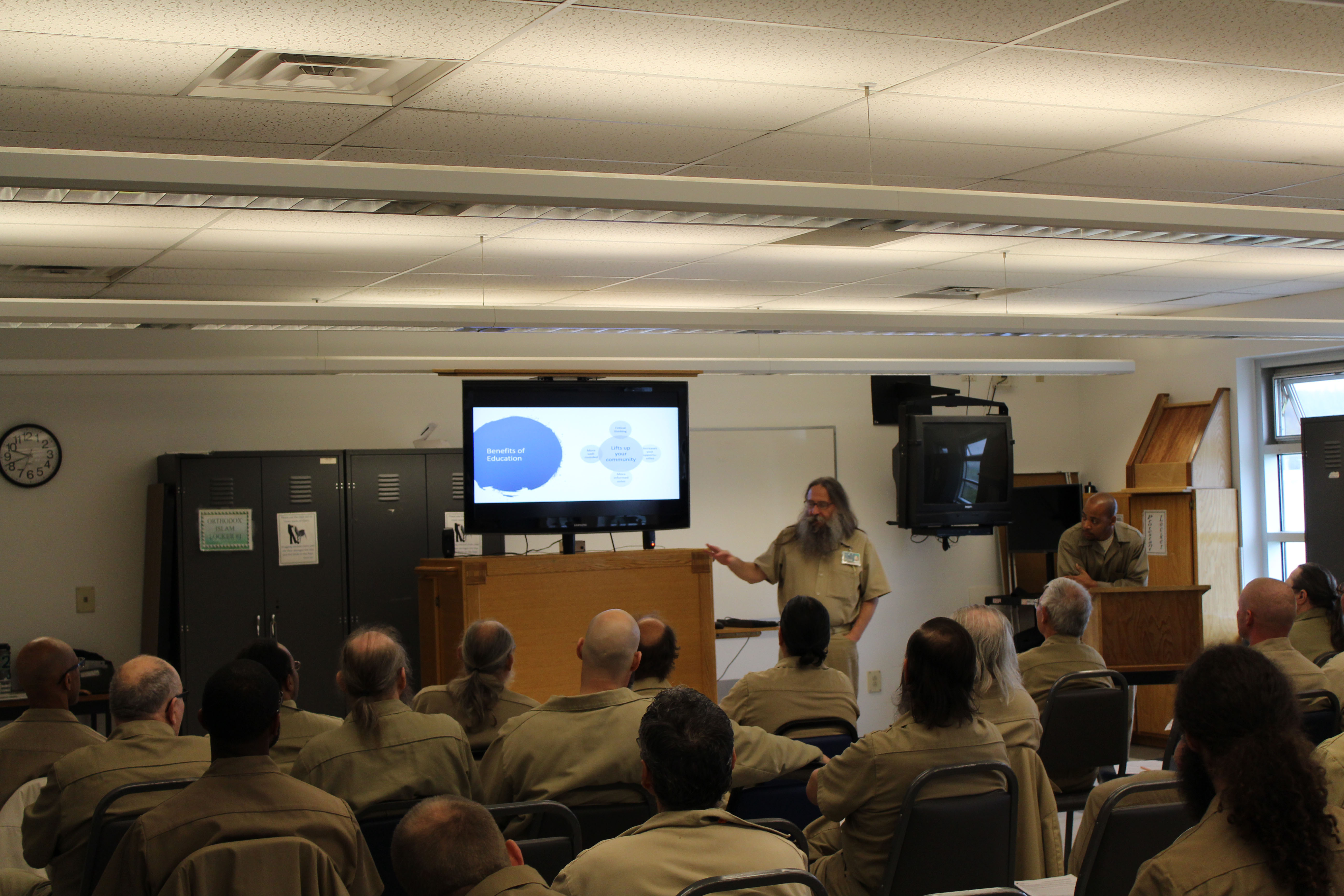
Roots instructor David Duhaime talks about how education enables you to become better at critical thinking; roots instructor Cyril Walrond is behind the podium.
None of this progress in reducing recidivism or bringing education into prisons would be possible without the support from Washington Department of Corrections (WA DOC). WA DOC stands apart from many states because of their drive to work with incarcerated individuals instead of controlling them. WA DOC focuses on education and is an advocate for positive personal change. Dan Pacholke, the previous Secretary of Prisons, gave a TED talk in 2014 where he talked about the changes WA DOC made to how it operates and thinks. It is SPP’s belief that the changes Dan Pacholke talks about and initiated are partially why WA DOC is becoming more successful at reducing recidivism.
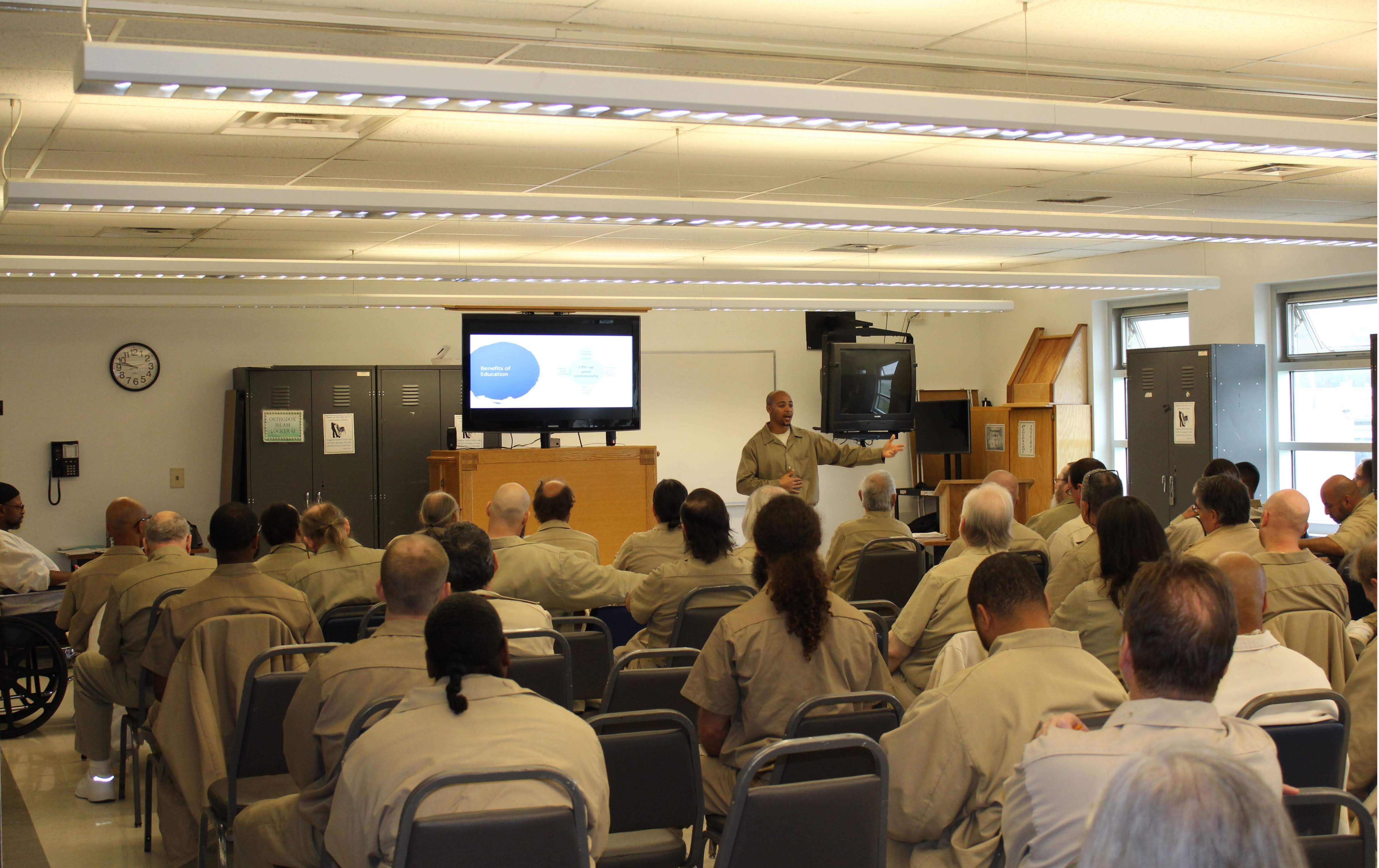
Bethany was joined by three Roots of Success instructors who engaged their peers and facilitated a discussion on the direct benefits of learning. Participants were excited to share their perspectives on education and how education has positively impacted their lives. Through dialogue and facilitated discussion, participants worked collaboratively to explore a topic of interest and report core aspects discussed back to the group – sparking great conversation and peer mentorship.
Roots instructor and Master Trainer, Cyril Walrond, encourages students to take up the initiative to start classes or projects they want to see at their facility.
There was a feeling of excitement pulsing through the room as the workshop neared its end. Two SCCC staff, Kelly Peterson and Mark Sherwood, took advantage of the excitement and shared information with participants on how to engage in various educational and trade skill opportunities within the facility, noting that opportunity starts with a general interest. Through curiosity, inquisitiveness and encouragement, education flourishes; that’s what happened at SCCC on October 18, 2018.
Text by Kelli Bush, SPP Co-Director, The Evergreen State College
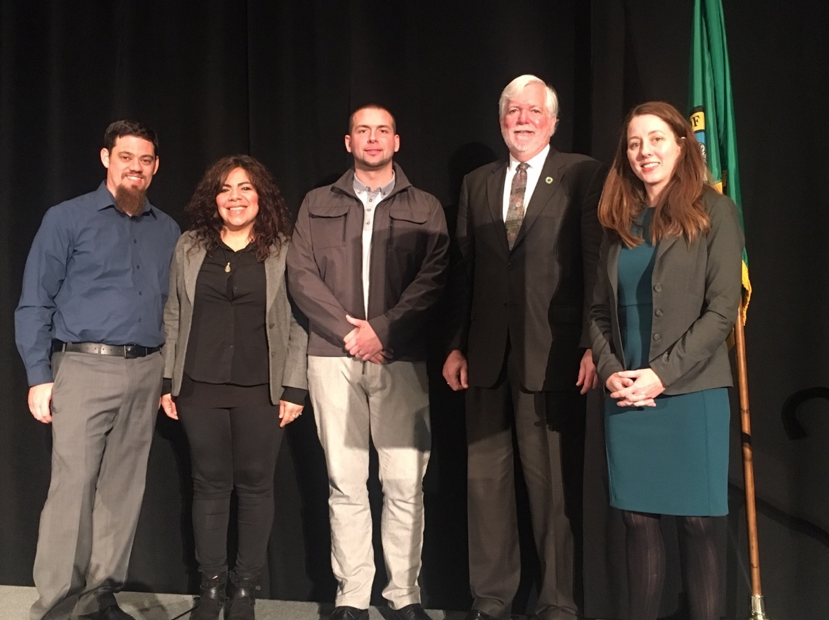
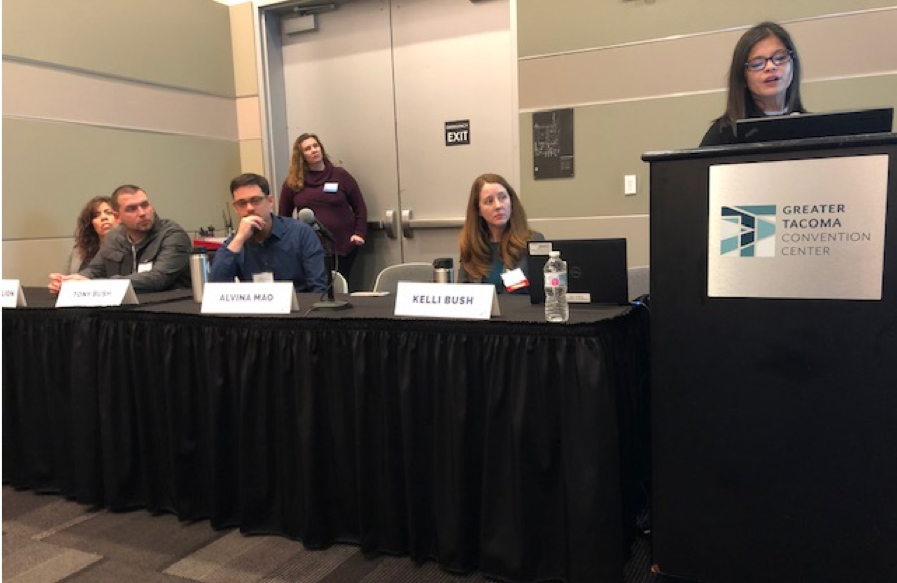
Presentation team with WSDOT Secretary Roger Millar (from left to right, Tony Bush, Carolina Landa, Brian Bedilion, Roger Millar, and Kelli Bush)Alvina Mao presenting at WSDOT Partnerships and Innovations conference
Over the past year, SPP Evergreen staff have been working with Washington Department of Transportation (WSDOT) and Washington Department of Corrections (WA Corrections) partners to develop new opportunities for education and employment pathways. The new partnership has tremendous support from WA Corrections Secretary, Stephen Sinclair, WSDOT Secretary, Roger Millar, and many staff at each agency. Building on successful prison program tours and executive leadership and committee meetings, WSDOT staff invited SPP-Evergreen staff and former SPP program participants to present at two recent conferences.
Each conference presentation included a panel with Carolina Landa and Brian Bedilion sharing their stories from pre-incarceration to post-release, Kelli Bush providing a brief overview of SPP, Alvina Mao and Eric Wolin discussing partnership alignment with WSDOT equity and inclusion goals, and Tony Bush describing education and employment pathway ideas in the environmental field.
The audience for the first conference was WSDOT environmental staff. Session participants enthusiastically expressed their appreciation to Carolina and Brian for sharing their experiences.
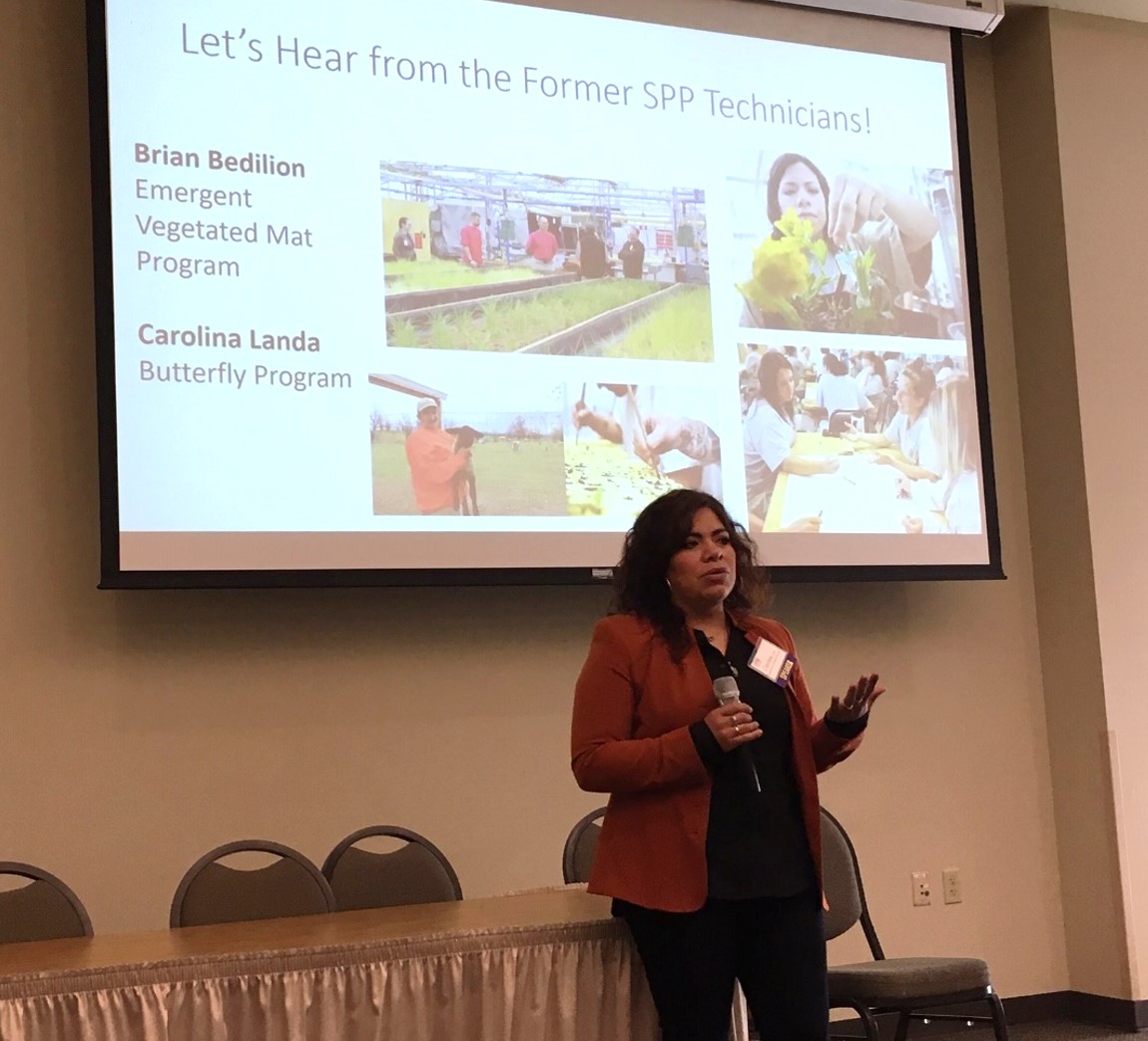
Carolina Landa presenting at WSDOT Environmental Conference
Following a successful session at the environmental conference, the panel received an invitation to present at the WSDOT Innovations and Partnership conference. The 4th Annual Innovations and Partnerships in Transportation conference included a welcome from Governor Inslee and an impressive variety of partner organizations. Our session titled “Forging a new partnership and building safe, strong communities through successful reentry” included productive discussion with attendees.
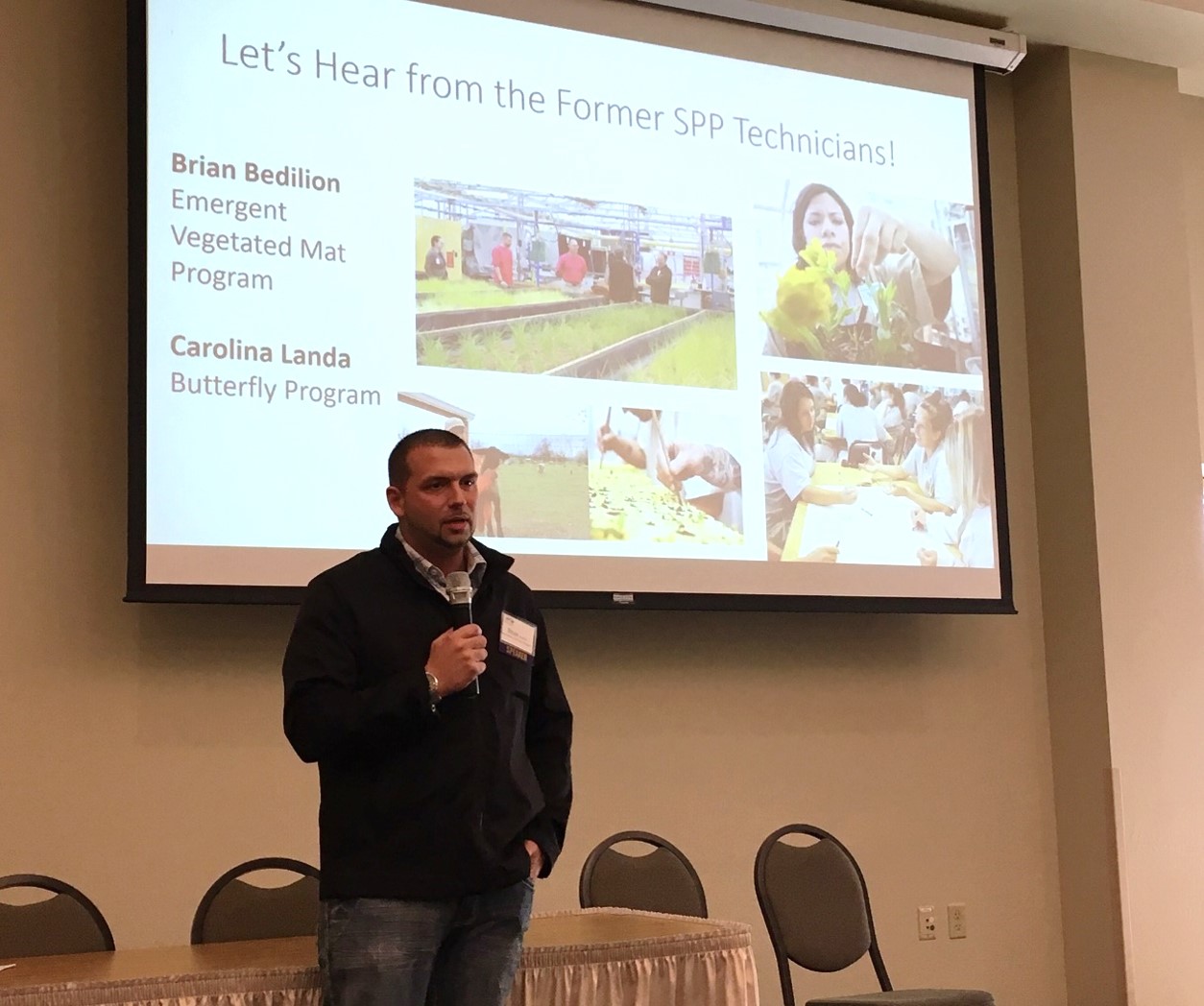
Brian Bedilion presenting at WSDOT Environmental Conference
The developing partnership among WSDOT, WA Corrections, SPP and others will provide exciting new education, training, and employment opportunities to incarcerated people in a variety of disciplines. Washington State Governor Inslee is a strong supporter of providing formerly incarcerated people employment as a way to build safer and stronger communities. The Governor signed executive order 16-05 directing state agencies to “implement further hiring policies intended to encourage full workforce participation of motivated and qualified persons with criminal histories.” We are grateful to WSDOT and WA Corrections for providing such excellent support and enthusiasm for this growing partnership.
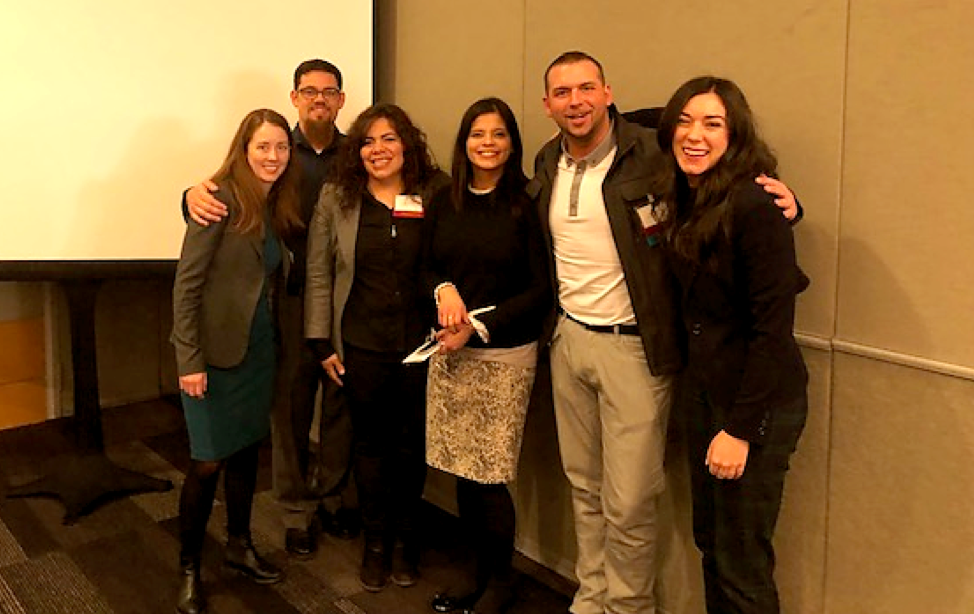
Conference presentation team (from left to right): Kelli Bush, Tony Bush, Carolina Landa, Alvina Mao, Brian Bedilion, and Molly Sullivan
Awfully good to hear from you! And wow, you want me to just keep it down to a few sentences??!! Tell you what. I’ll just give you my thoughts and you can pick and choose what you want to include in your report.
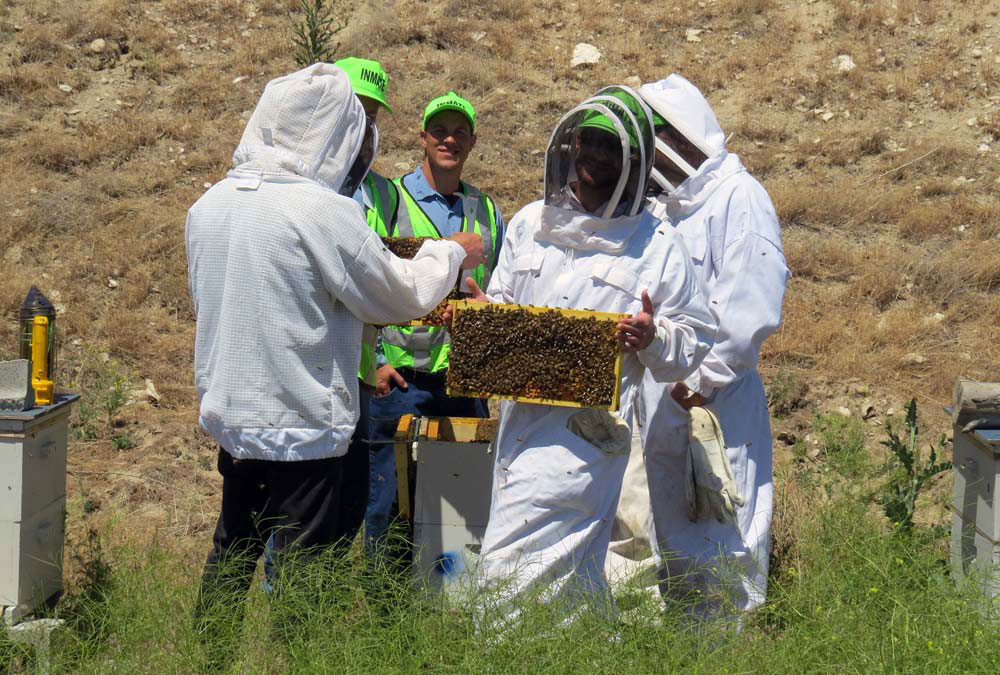
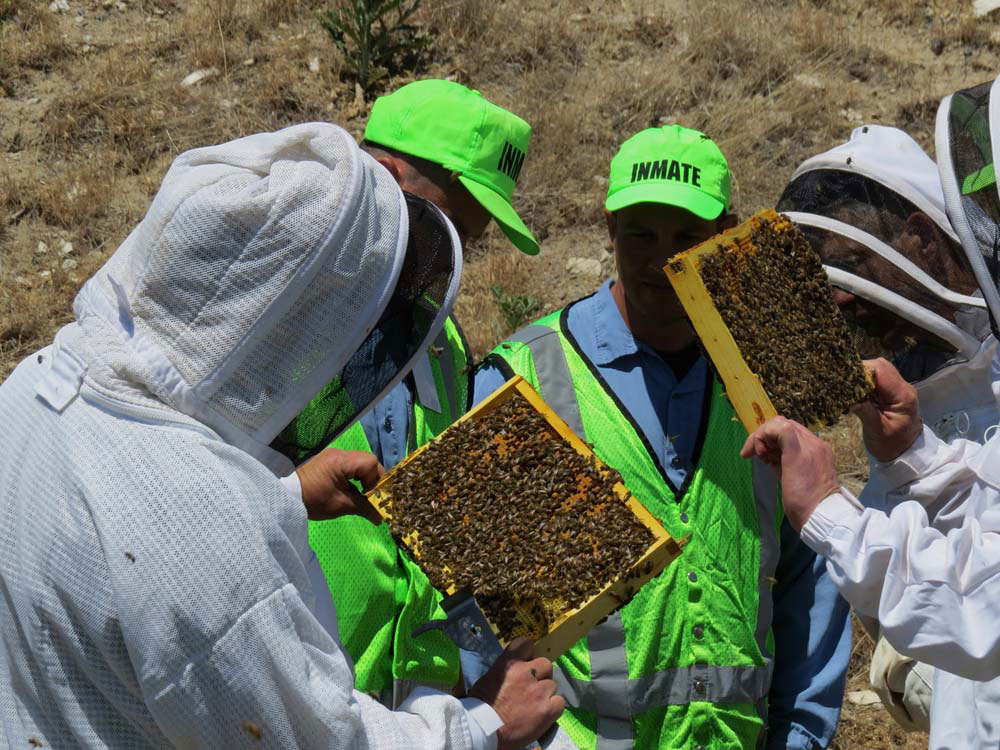
Expert Beekeeper Marc Von Huene (left) works with incarcerated beekeeping students in the field. Photo by Nancy DeWitt.
As I had never worked with inmates before I had to overcome a lot of my preconceived ideas. It’s a sad fact that many of us (my previous self included) envision inmates as those guys we see on Law and Order doing really bad things. It leads many of us to believe that they deserve to be in prison, the longer the better. But that’s so far from the truth that I’m ashamed to admit it. These are people that lost their way for any number of reasons – bad influences, bad home life, questionable friends……. And rehabilitation is absolutely the best option. I’m glad I could play my small part. I think giving these guys something to nurture and be proud of is a great way to bring out the caring people that are in each one of them.
As an audience, they were fantastic. I’ve never made presentations where the focus was as intense. And I feel my short time with these guys is totally inadequate to turn them into good beekeepers. The barriers are many – no direct communication, no internet access, limited equipment and supplies, limited time together. But they try, and even though we’ve had some pretty big failures, we still learn together.
This next year I’ll get out earlier and work to spend more time with the new batch of inmates. Hopefully the old hands will pass down their knowledge to the newcomers.
There was a lot of interest in my SRCI activities from officers in the Treasure Valley Bee Club, and the president of the Western Apicultural Society invited me to share my experience at their annual conference this last August. The presentation went well, and was definitely a break from all the professors and specialists giving the majority of the presentations. For most of them the presentation was a lot of data interspersed with stories. For me, the presentation was a story interspersed with data. It was the story about what I learned from working with the inmates and hopefully, what they learned from me. The title of my presentation was “Beekeeping Behind Bars”, and I know I opened the eyes of a lot of participants. Afterwards I had a lot of people come up to me and compliment me for the presentation and the work I was doing. Several volunteered to come out with me the next time. Yeah, it was good.
In closing I want to thank you for giving me this opportunity. I really wish I was closer to the facility, but we’ll make it work. The effort is definitely appreciated by the inmates and they deserve no less.
Hope this is enough for you. Stay in touch and let me know if you need anything else.
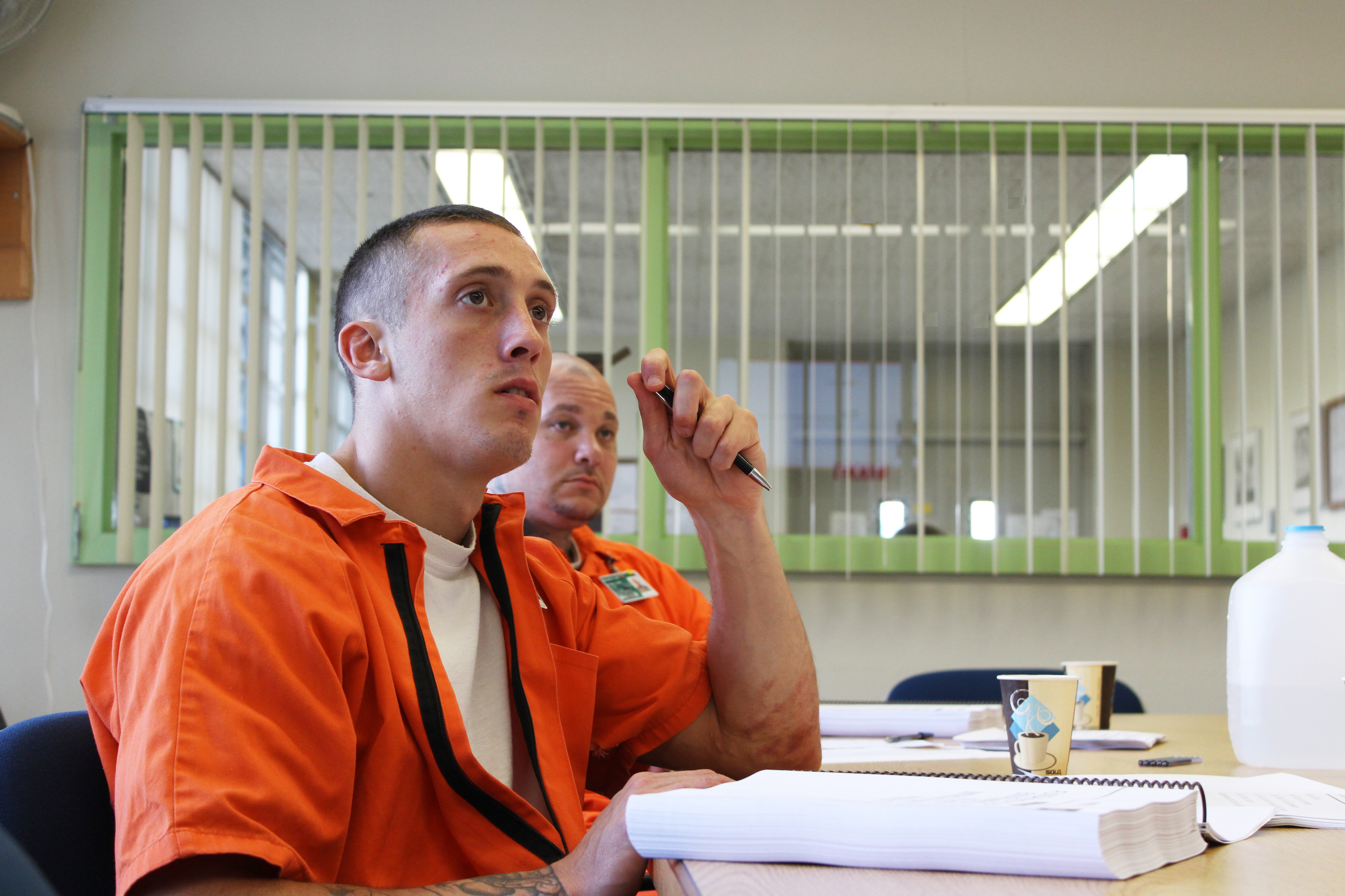
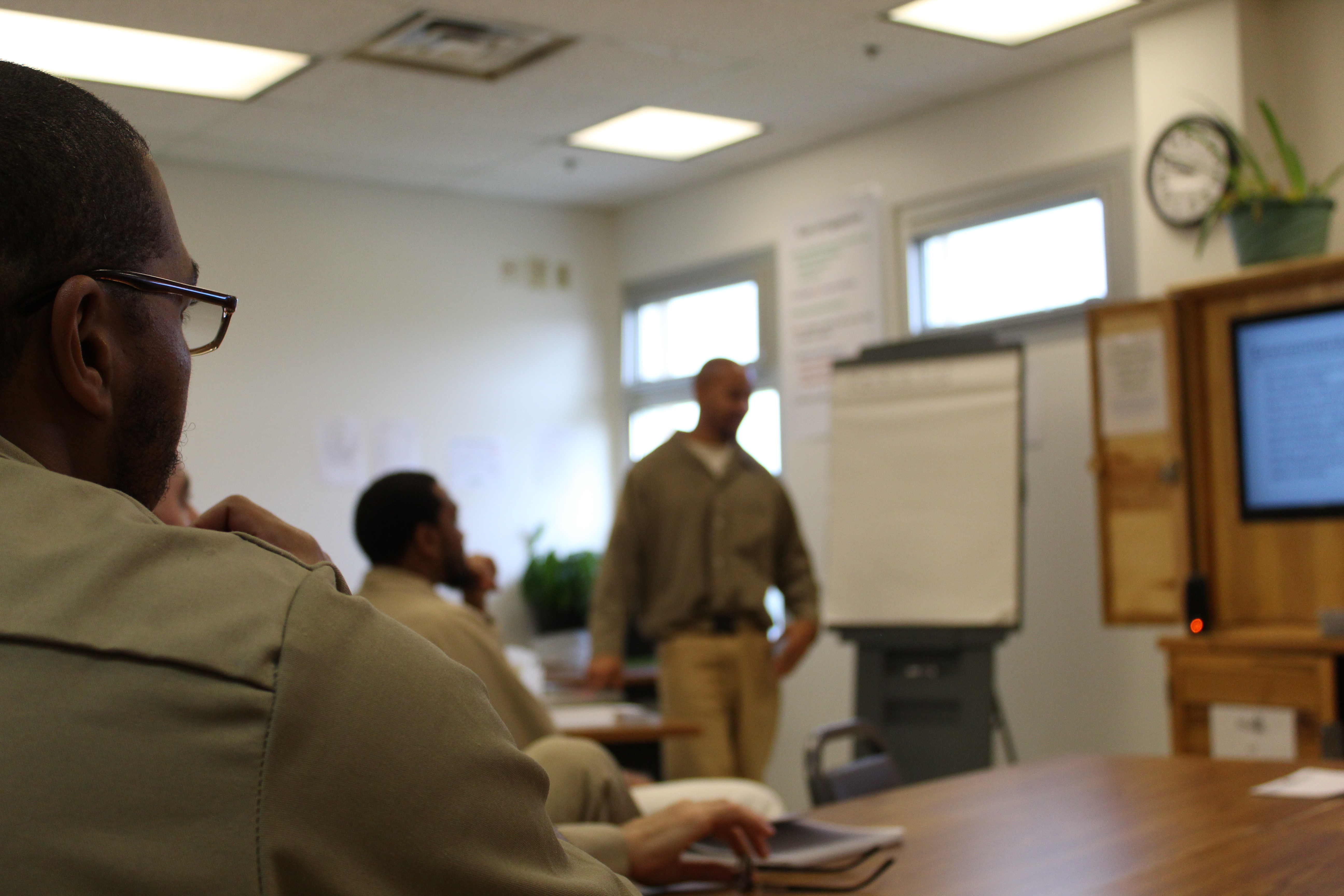 Five new instructors were trained at the SCCC Roots training led by Master Trainers Cyril Walrond and David Duhaime. The Roots liaison at SCCC, Kelly Peterson, added interviews to their instructor candidate selection process because they had close to 20 Roots graduates applying to be new instructors. I sat in on some of the interviews and candidates repeatedly cited the Roots community and the interactive and inclusive teaching styles of other instructors as their reasoning for wanting to become instructors.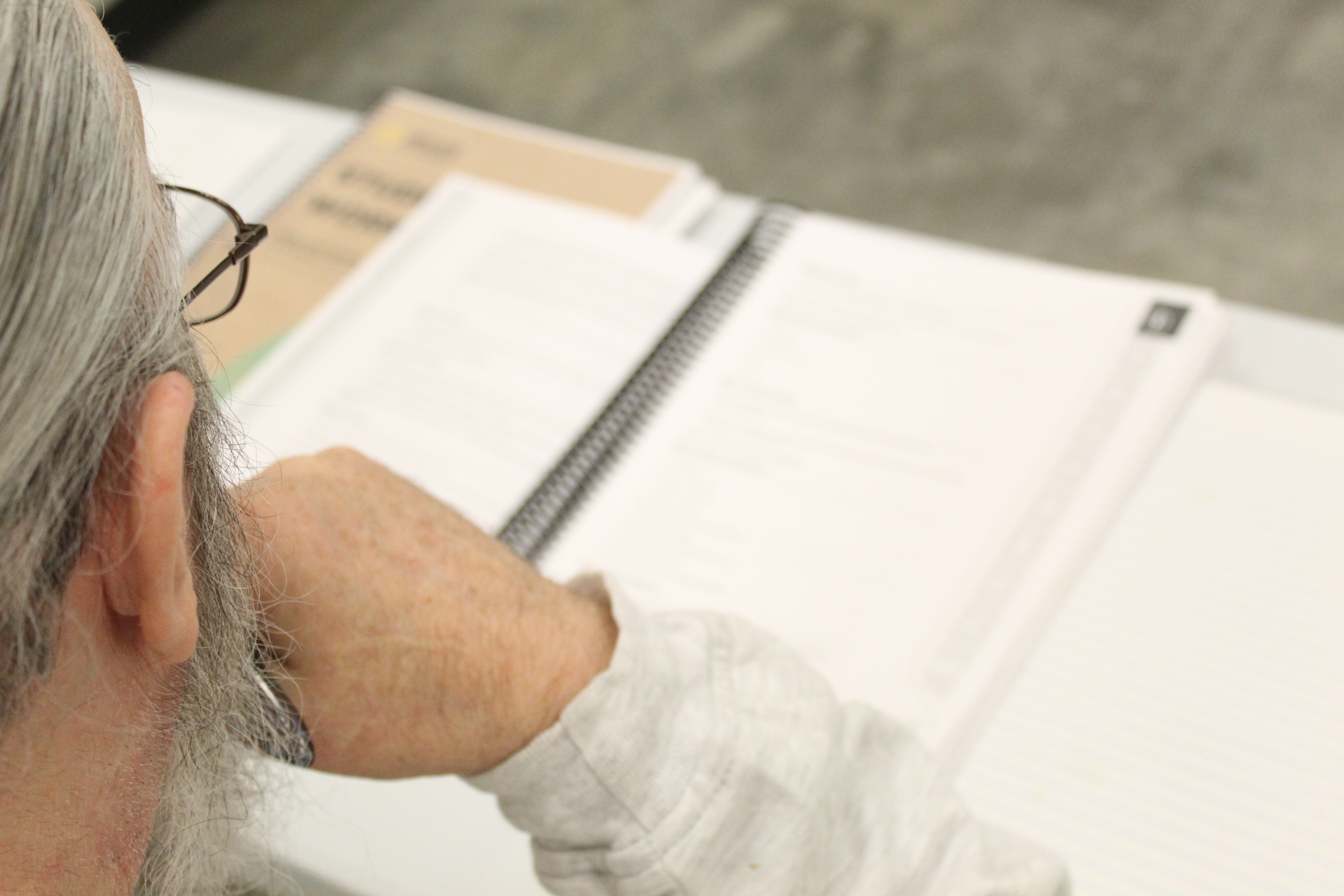
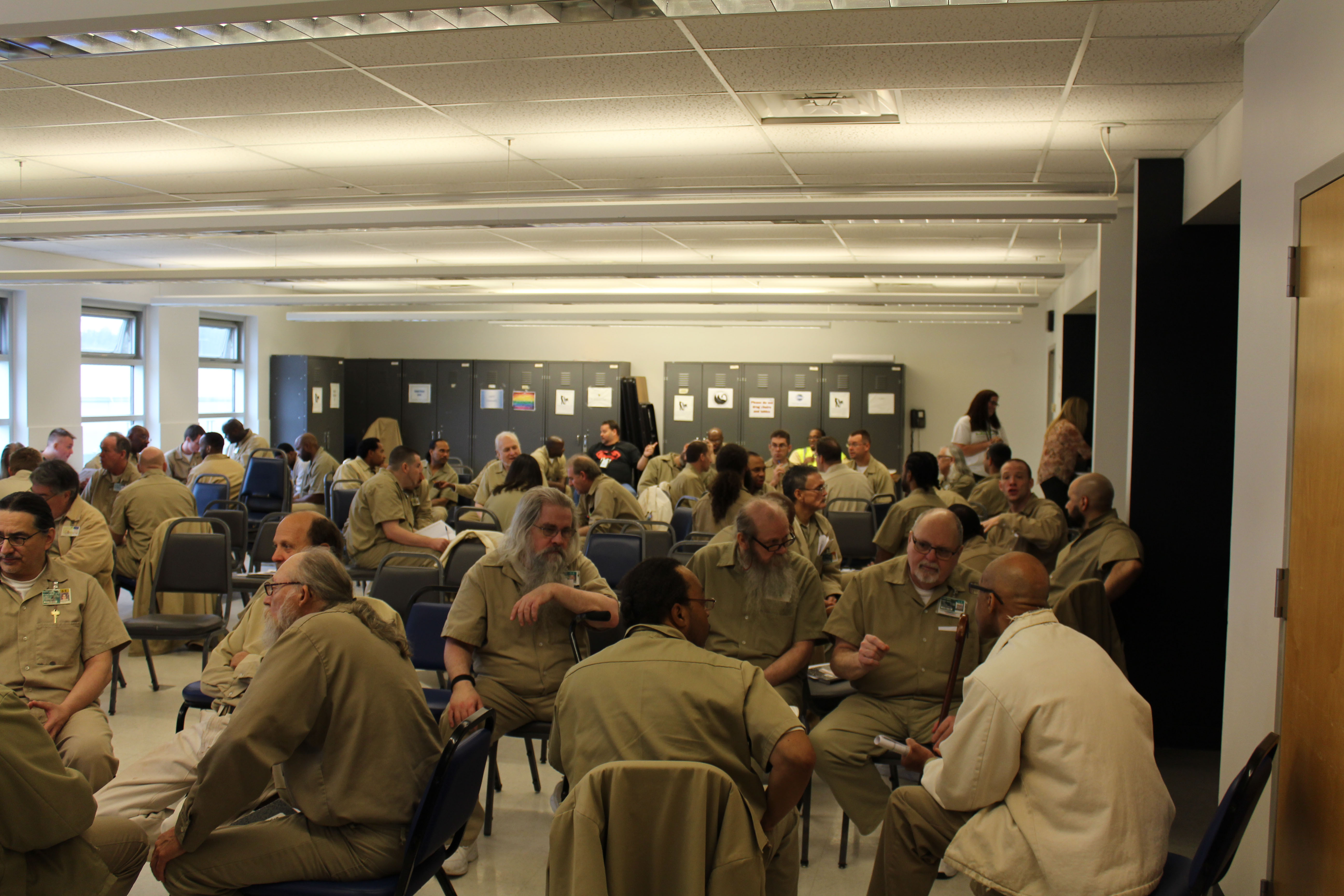
 As an audience, they were fantastic. I’ve never made presentations where the focus was as intense. And I feel my short time with these guys is totally inadequate to turn them into good beekeepers. The barriers are many – no direct communication, no internet access, limited equipment and supplies, limited time together. But they try, and even though we’ve had some pretty big failures, we still learn together.