Text by Giovanni Galarza and Joslyn Rose Trivett
Photos by Ricky Osborne
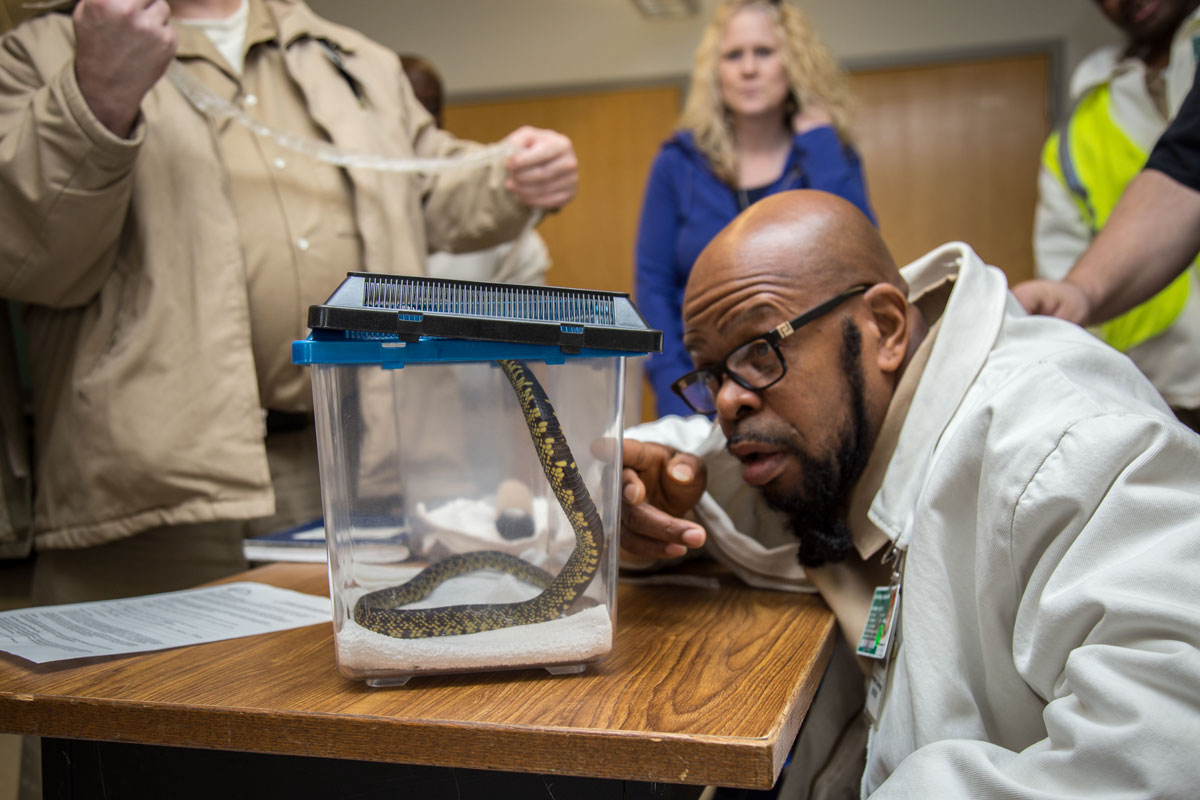
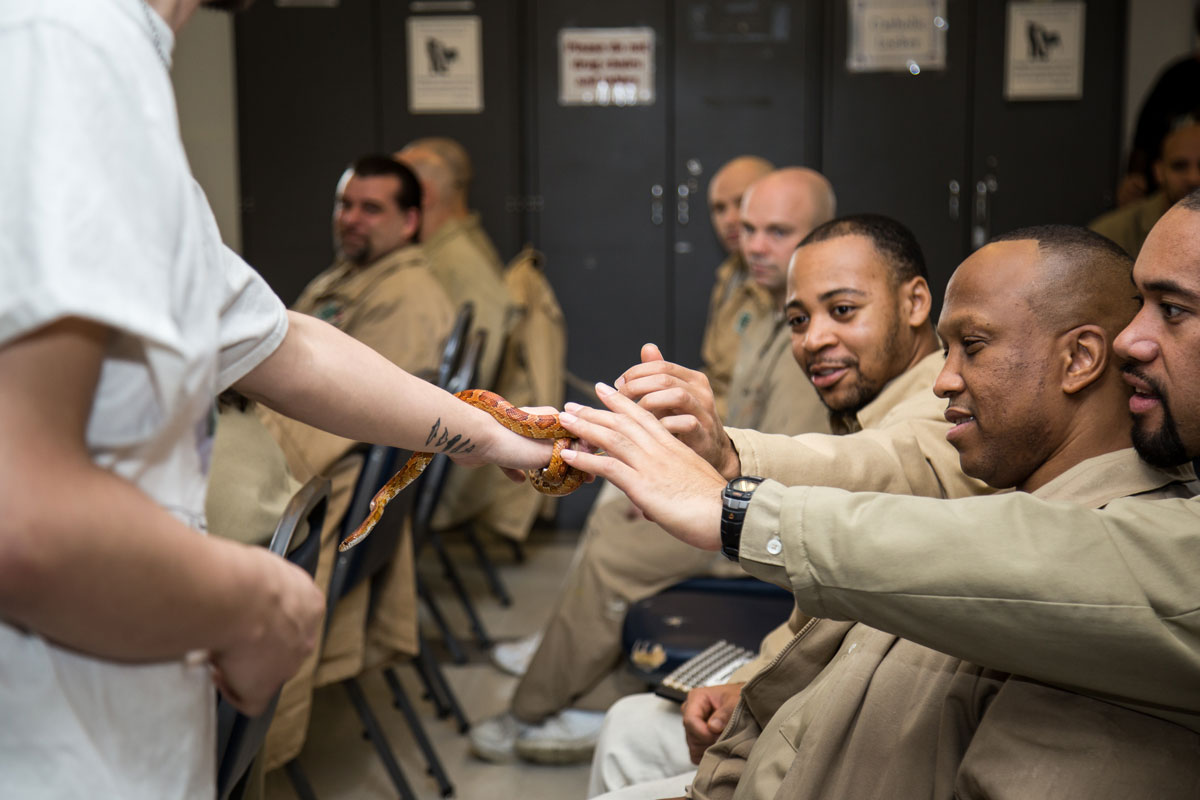
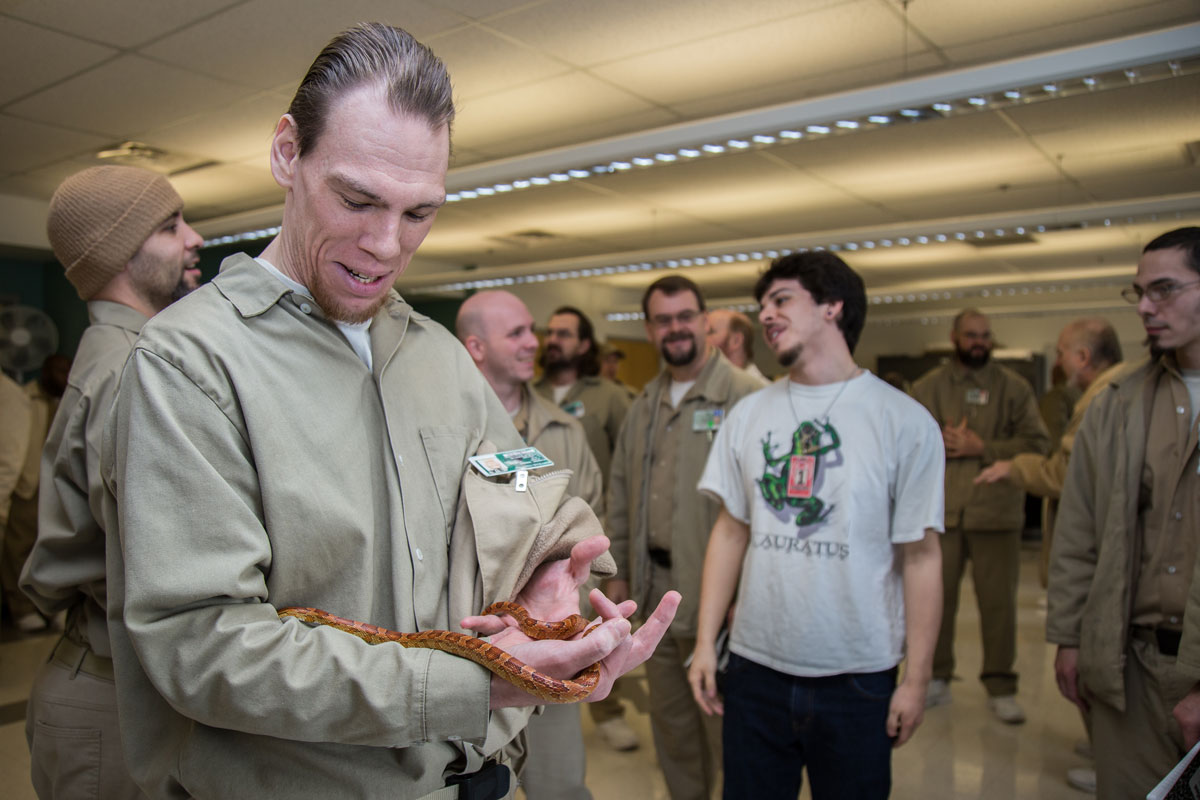
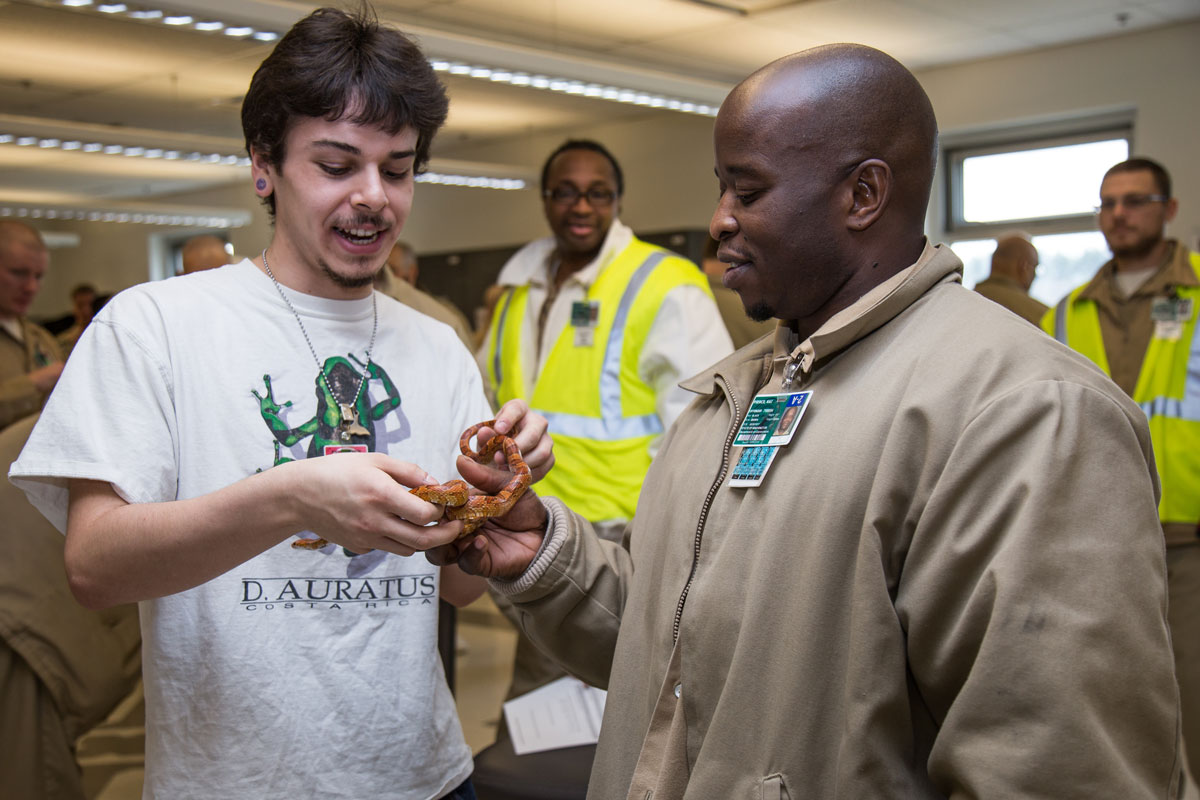
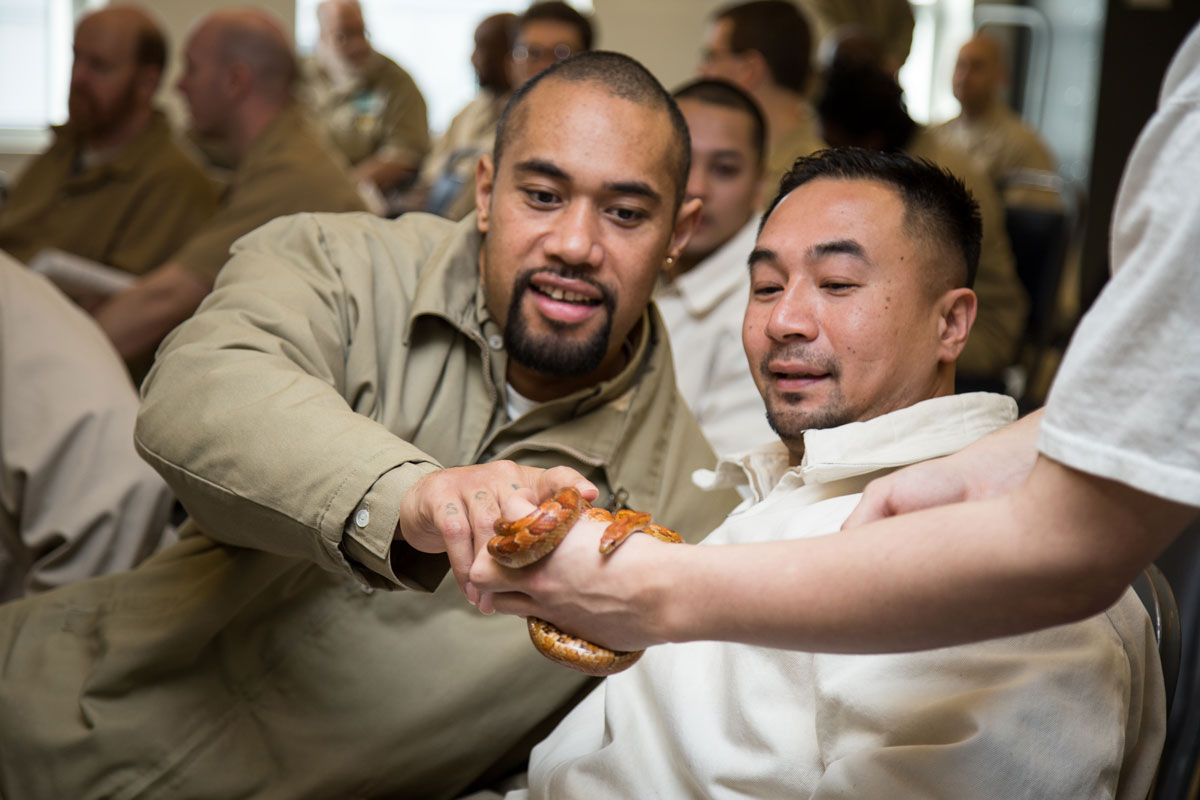
Last week, SPP’s Science and Sustainability Lecture at Stafford Creek Corrections Center brought Giovanni Galarza and two snakes into the classroom. Giovanni is an Evergreen student and herpetology enthusiast, and he gave an exceptionally compelling presentation. Thank you to Ricky Osborne for his powers of photography—seeing these images is almost as good as being there!
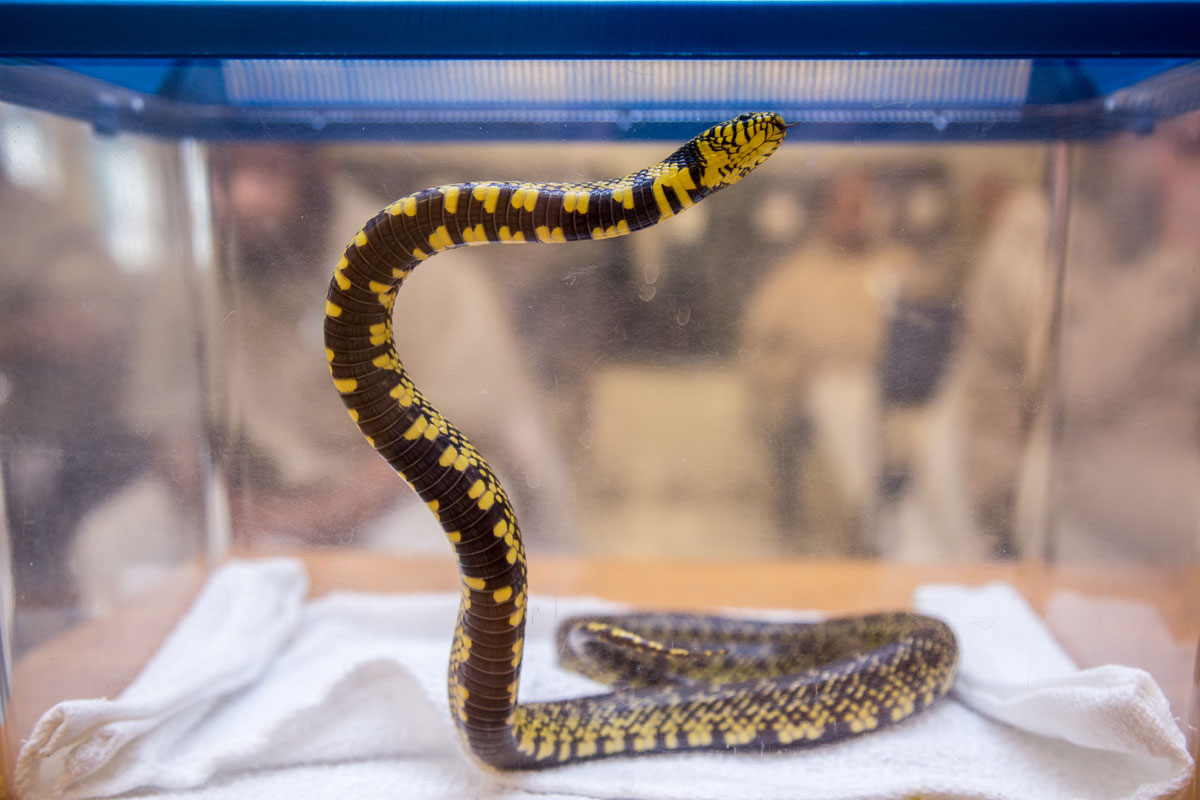
Sierra, a Desert Kingsnake, investigates his enclosure before the lecture. Desert Kingsnakes are nonvenomous snakes native to the Southwestern United States, and are immune to the venom of Rattlesnakes which they prey on.A student takes a closer look at Sierra the Kingsnake.Giovanni passes around Brandy, a young Corn Snake, for students to touch.Corn Snakes like Brandy are very docile, making it easy for everyone to get a special, hands-on experience.Giovanni assists a student with proper handling of the Corn Snake.For many in the audience, this was their first encounter with live snakes. Everybody seemed to gain a new appreciation for these beautiful and often misunderstood creatures.
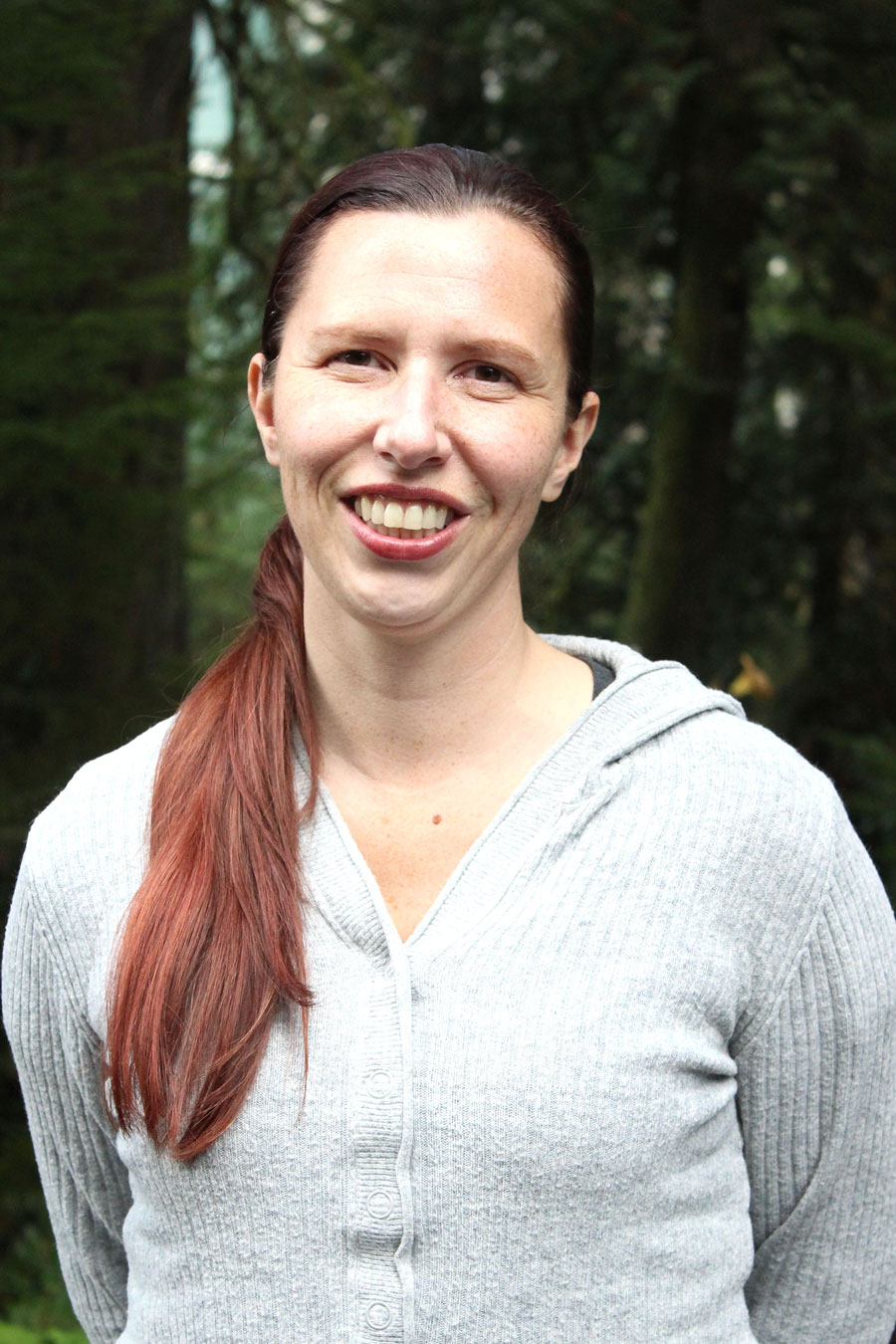
by Kristina Faires, SPP Program Enhancement Coordinator
The window I sit near and write this is open and expansive. It looks out to The Evergreen State College’s Red Square. Even on this stormy day, surrounded by Western Hemlock, Douglas Fir and many beautiful Maples, I take in my view and realize how different my world is from what it was. For 40 months I was incarcerated at Mission Creek Corrections Center for Women in Belfair, WA. The last year of my sentence I became involved with Sustainability in Prisons Project (SPP), a partnership founded by The Evergreen State College & WA State Department of Corrections. SPP brings science and nature into the prisons. It allows inmates to become involved with programs that focus on science and sustainability.
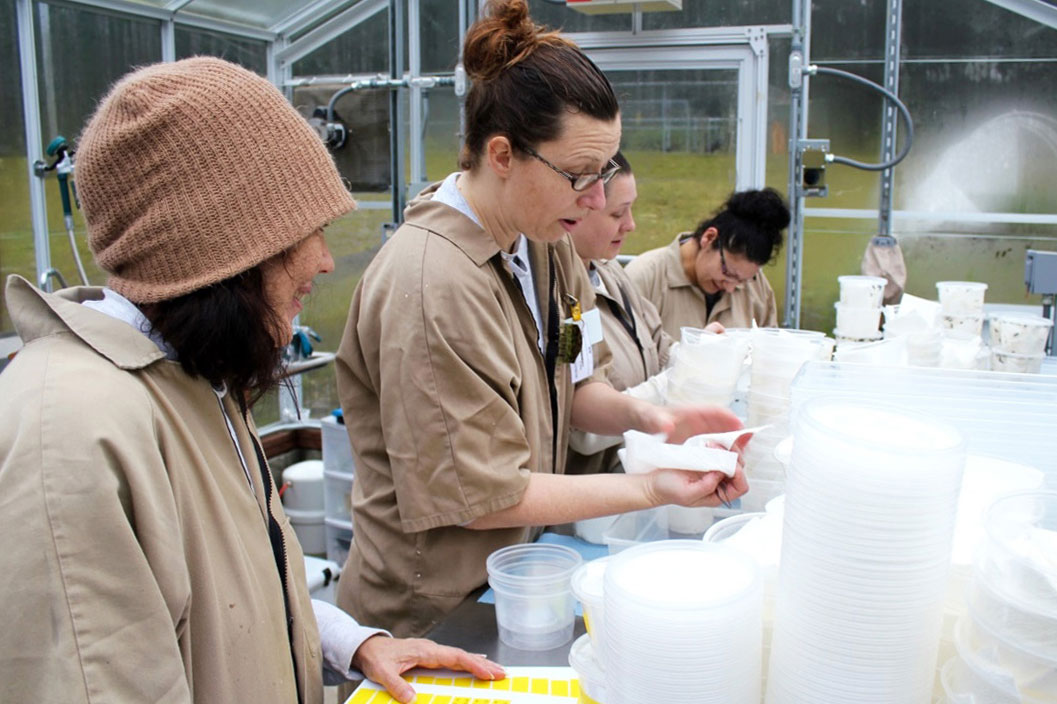
Butterfly technicians prepare materials for the spring wake up, when the caterpillars emerge from dormancy; Kristina is second from the left. Photo by Seth Dorman.
For a year I worked as a Butterfly Technician and research assistant with the endangered Taylor’s checkerspot butterfly. I cannot begin to express what a humbling experience it was. To be able to go from zero background in science, and then suddenly be immersed in an environment where I was learning new skills and collecting data as well as breeding an endangered species is crazy. For an organization to take a genuine interest in an inmate and say, “I believe in you” is amazing. They put faith in me regardless of my past choices and gave me an opportunity to grow and change along with the very thing I had been entrusted to care for. In time, not only did my competency and skill sharpen, my self-esteem grew.
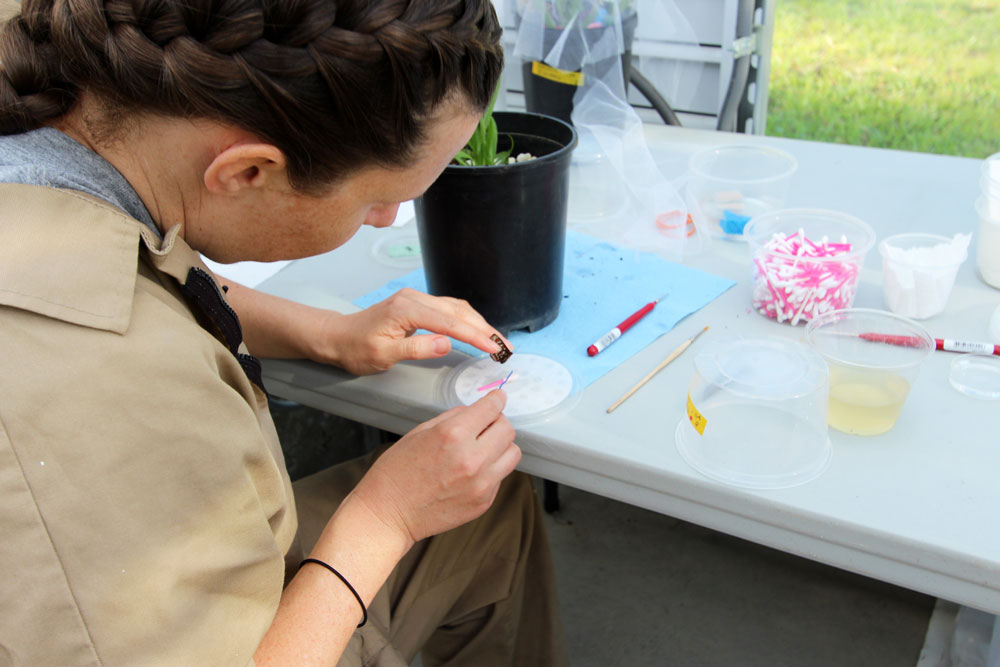
Later in the season, Kristina hand feeds an adult butterfly. Photo by Seth Dorman.
My time in the butterfly program was such a rewarding and fulfilling experience. It helped me gain some much needed perspective about my life and what I wanted it to look like. It also ignited in me a passion to learn again. I ended up giving up my work release so I could stay and receive my certificate as a Butterfly Technician from SPP. I figured what a great bridge SPP has fostered for me: I already have this working relationship with SPP and The Evergreen State College. How perfect would it be to start my new life over with this network and support system already in place? I applied for fall quarter at Evergreen and was accepted. Today I am a full-time student, with a focus on Environmental Science, and a part-time employee at SPP.
Transitioning from prison to college has been overwhelming at times. To go from an austere and rigid environment to a progressive liberal arts college where I call the shots, I choose my schedule, is liberating. To have regained my voice and to actually be heard feels good. When I look back and reflect on the person I was and compare to who I am today, I am amazed at my growth. I feel like becoming involved with SPP and butterfly program was the catalyst for my change. Just as the butterfly goes through a time of metamorphosis, I too experienced transformation. Without it, it is hard to say what my world would be today.
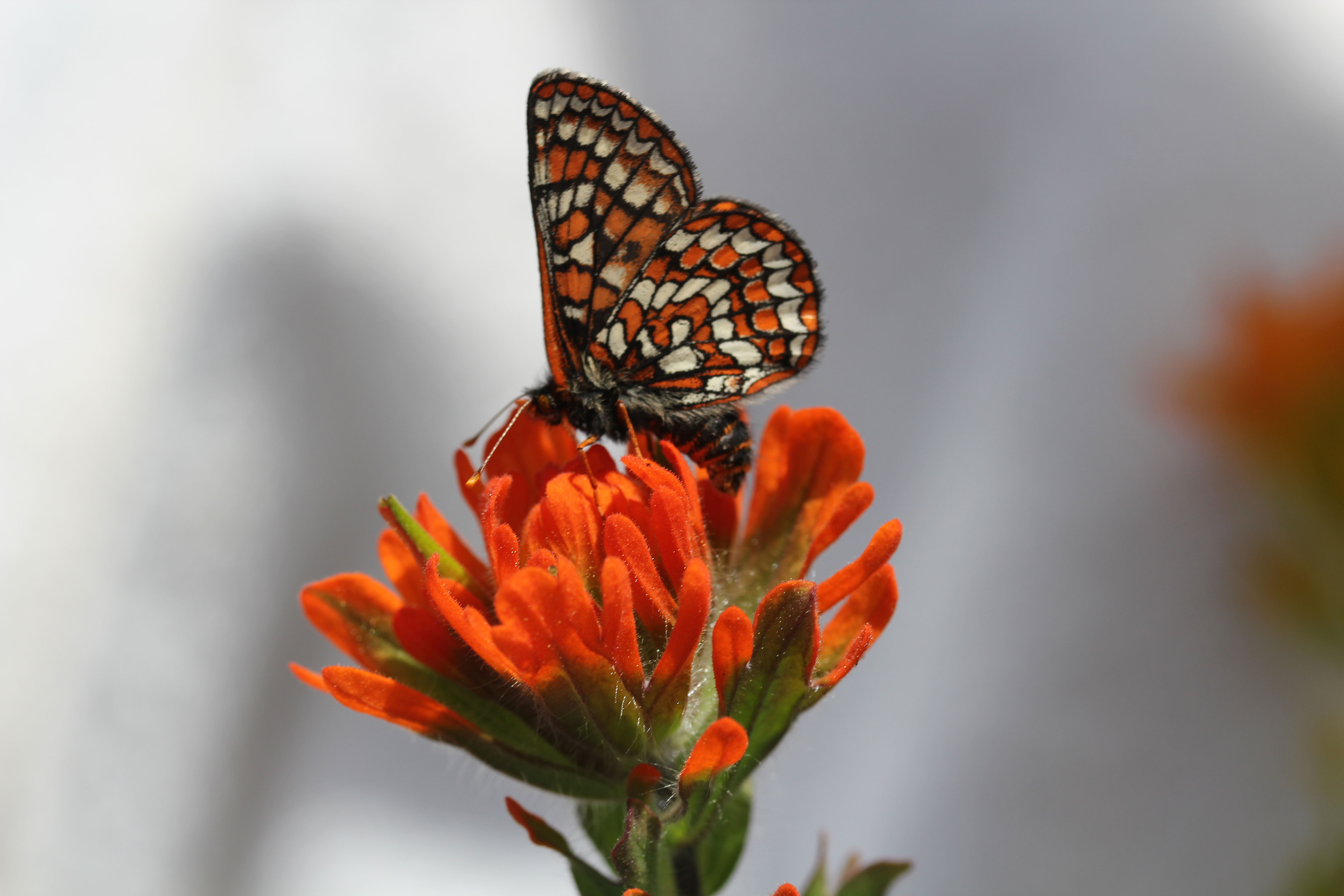
Taylor’s checkerspot butterfly nectars on a harsh paintbrush, one of the native plants that the species prefers. Photo by a butterfly technician.
Article and photos by Gretchen Graber, Sagebrush Grower Contractor at the Institute for Applied Ecology
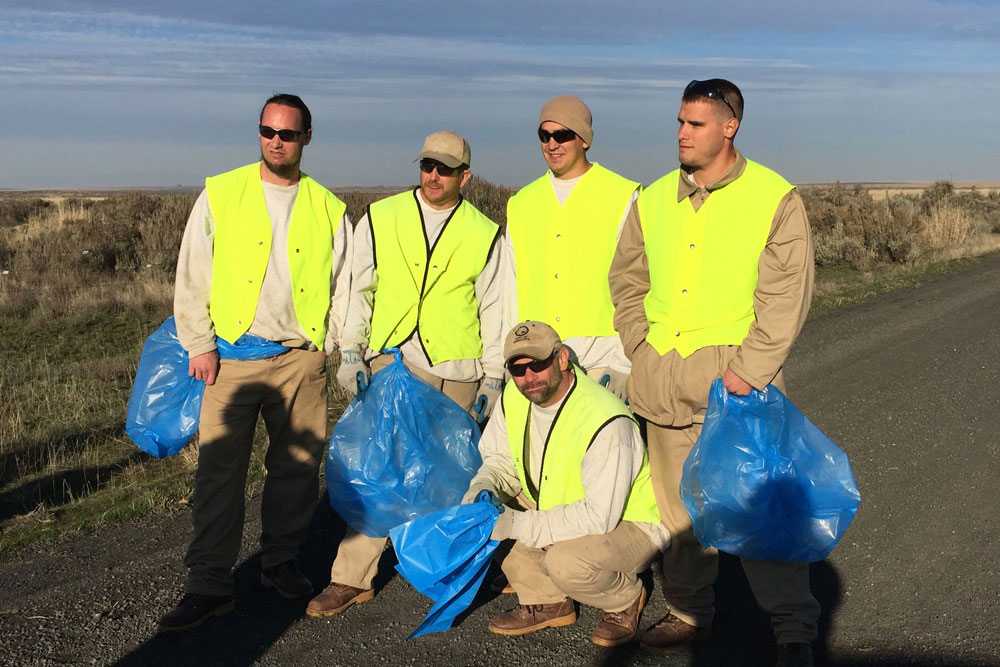
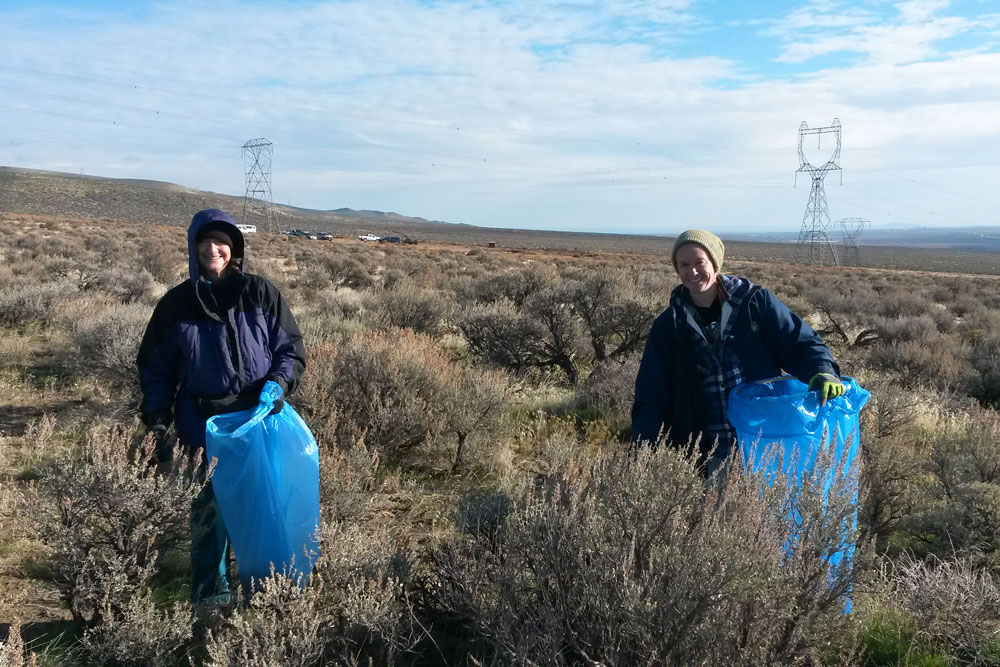
Seed collectors pose with their seed collection bags.
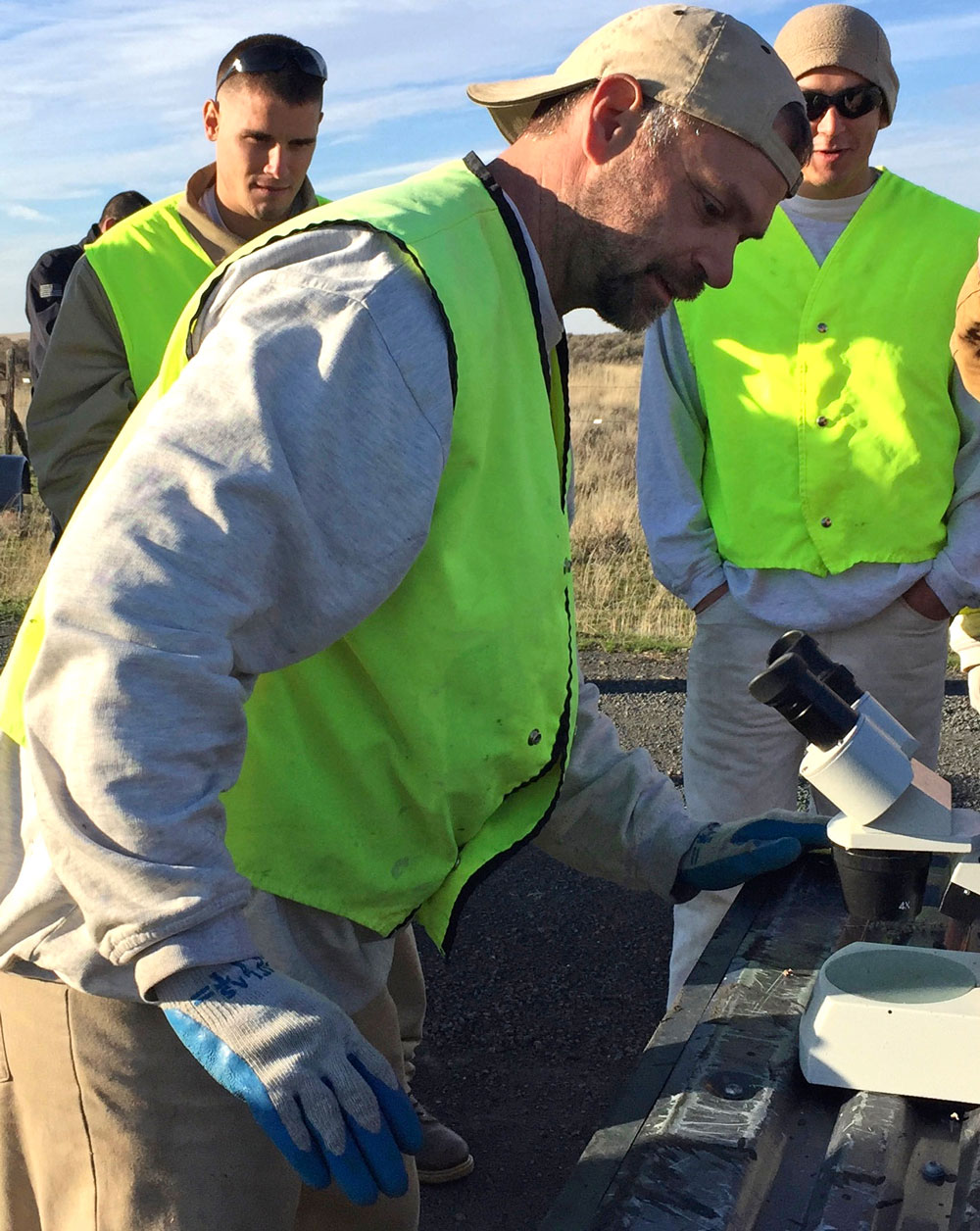
Seed collectors take turns viewing sagebrush seeds through a scope.
For the Saddle Mountain collection, many local native plant society members volunteered, and we were joined by a Juvenile Justice Center work crew. For both collections we had great weather. We enjoyed being outside learning about partnership efforts to restore shrub-steppe habitat for the continued existence of the imperiled greater-sage grouse.
We gathered seed from a subspecies of big sagebrush, called Wyoming big sagebrush (Artemisia tridentata subsp. wyomingensis). The seeds will be shipped and cleaned at the Seeds of Success seed cleaning facility in Bend, Oregon. Then it will sent back to Washington State to be used to grow next year’s crop of 60,000 Wyoming big sagebrush plugs in Coyote Ridge’s Sagebrush Nursery. We collected enough seed to create a reserve supply for the program, and share with other programs for research and conservation purposes.
Seed collectors smile from the field, surrounded by mature sagebrush.
Seeds of Success intern Shawna Kelley supported both collections, along with BLM botanist Molly Boyter. Seeds of Success supports BLM’s Native Plant Materials Development Program whose mission is to increase the quality and quantity of native plant materials available for restoring resilient ecosystems. The Wyoming sagebrush plugs will be planted onto fire damaged lands occupied by the greater-sage grouse. The entire seed collection and sharing process ensures the availability of genetically-appropriate seed for the recovery of the greater-sage grouse in Washington State. Funding for the program is provided by BLM in Washington D.C., the Institute for Applied Ecology coordinates programs regionally, and Sustainability in Prisons Project runs the Washington State program.
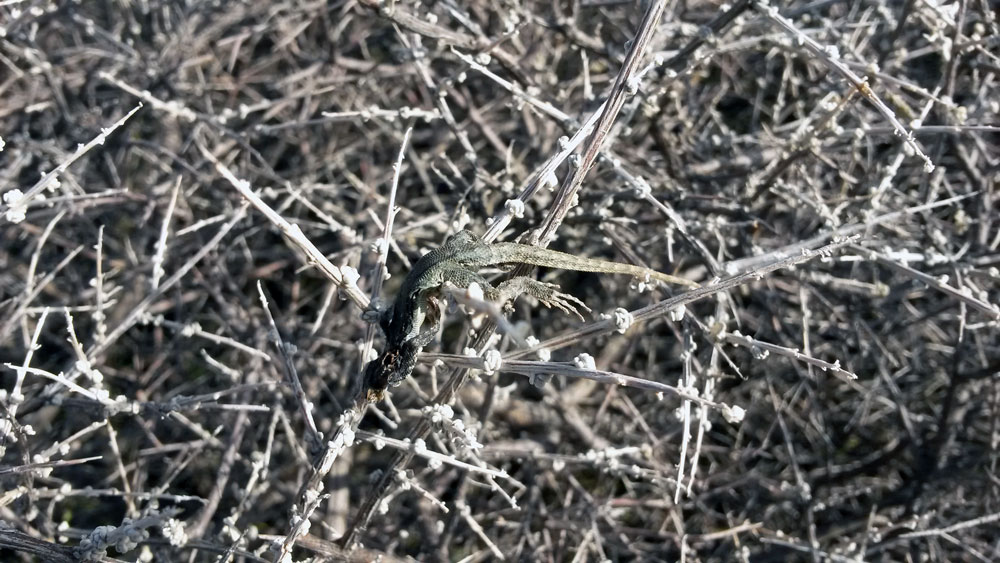
During seed collection, they discovered a dead lizard atop a spiny hopsage plant; it was probably intended for later eating by a loggerhead shrike (the Cornell laboratory describes the species as “a songbird with a raptor’s habits”).
By Amanda Mintz, Emergent Vegetation Ecological Conservation Nursery Coordinator, and Master of Environmental Studies student
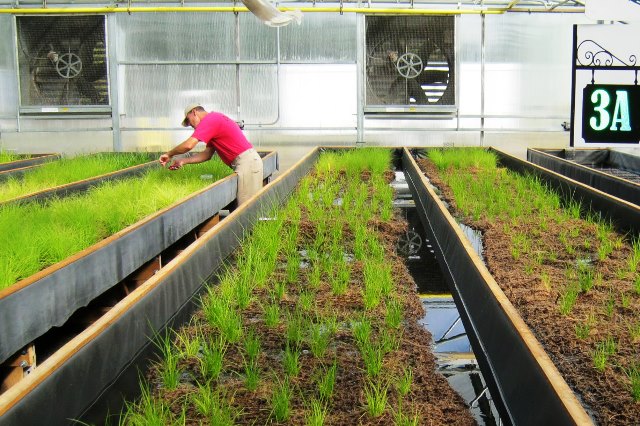
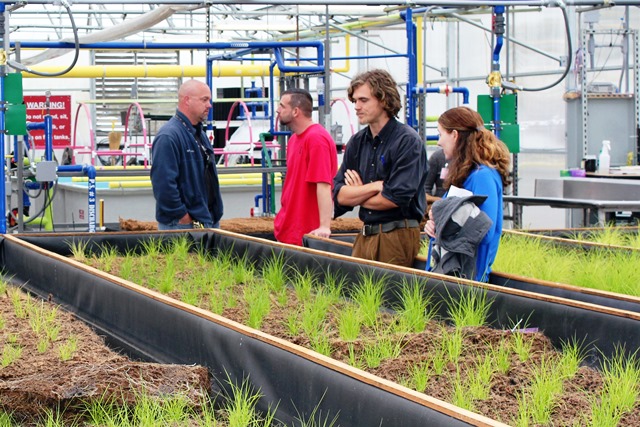
Technician Kent Dillard inspects the plants for evidence of pests. Photo by Fawn Harris.
In SPP’s new Emergent Vegetation Ecological Conservation Nursery at Stafford Creek Corrections Center, we are growing native wetland plants in coconut fiber mats for wetland restoration projects. The program relies on a team effort from incarcerated technicians, prison maintenance staff, Evergreen’s program coordinators and managers, Joint Base Lewis McChord, the Center for Natural Lands Management, Washington Department of Fish and Wildlife and the United States Fish and Wildlife. All have done an amazing job meeting the challenges of the innovative program’s technical demands.
DOC’s Jim Snider, technician Brian Bedilion, aquaponics expert Daniel Cherniske and SPP Program Manager Kelli Bush tour the nursery. Photo by Fawn Harris.
Coconut fiber mats, or “coir” mats, are commonly used in restoration for erosion control and suppression of weeds such as reed canarygrass. We are pre-planting them with wetland sedges and rushes, giving those beneficial plants a head start under nursery conditions. These plant types are known as “emergent” for their ability to grow through—emerge from—the water’s surface. Our hope is that the plants will be able to out-compete weeds and provide superior habitat for wildlife, such as the endangered Oregon spotted frog.
To grow the plants, we are using an aquaponics system. Two large fish tanks contain more than 100 koi, which produce waste that the plants use as nutrients. The water from the fish tanks circulates through the plant beds and then back to the fish tanks to pick up additional nutrients. The plants grow directly into the coir mats and do not need soil. By using an aquaponics system, we save water and reduce the need to weed or fertilize the plants.
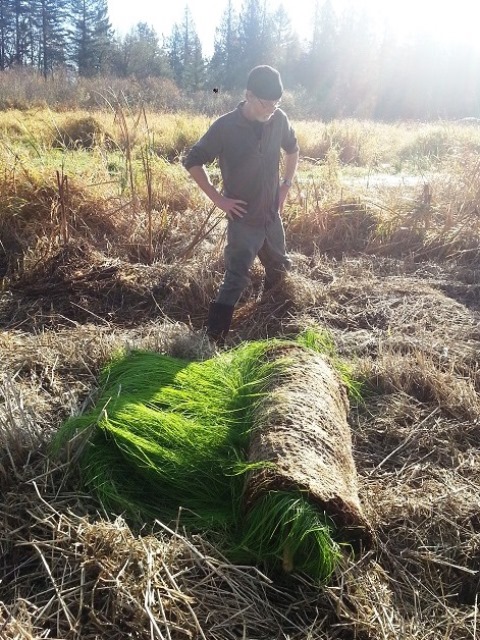
We installed the first mats at Joint Base Lewis McChord in early November, and plan to have new mats ready in just a couple of months.
Ecological Conservation Nursery Manager Carl Elliott prepares to unroll a mat at JBLM. Photo by Amanda Mintz.
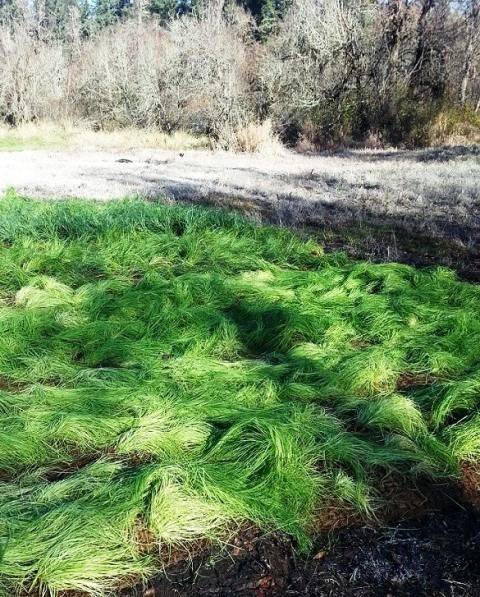
The first mats have been installed! Photo by Amanda Mintz.
 by Kristina Faires, SPP Program Enhancement Coordinator