By Carl Elliott, SPP Ecological Conservation Nursery Manager

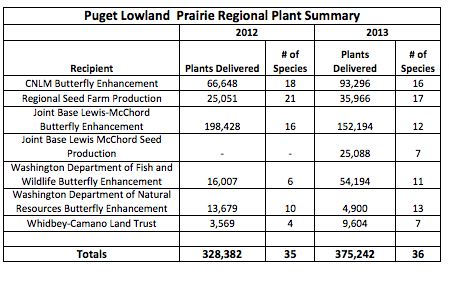
SPP’s Ecological Conservation Nursery continue to thrive at three facilities in Washington State: Stafford Creek Corrections Center, Washington Corrections Center for Women, and Shotwell’s Landing Nursery. Since 2010, we have delivered almost 1,000,000 plants for restoration and habitat enhancement projects on Puget lowland prairies— just 33,000 more plants and we’ll be there! In 2013 we provided 375,000 plugs for prairie projects (see the table below); this is a 14% increase over what we produced the year before. We achieved the increase by adding nursery capacity at Washington Corrections Center for Women, plus increased support from the dedicated prairie restoration crew from Cedar Creek Corrections Center.

This was the first season for nursery production at Washington Corrections Center for Women (WCCW). The crew of five inmate technicians carefully cultivated and shipped 80,000 native prairie plants. They were particularly success at growing blanket flower, Gaillardia aristata, a species that in past years showed low germination and growth rates. The warmer conditions in the propagation hoop houses at WCCW proved to be just the environment that allowed this species to thrive. The Ecological Conservation Nursery program benefits enormously from having a new site with an enthusiastic crew of technicians and staff.
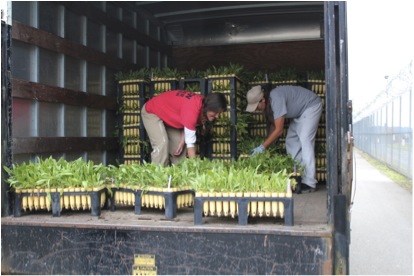
WCCW Ecological Conservation Nursery Crew loading Gaillardia aristata to be delivered to Joint Base Lewis-McChord. Photo by Bri Morningred.

SPP’s Ecological Conservation Nursery continues to be a highly collaborative effort. Regional coordination is provided by the Center for Natural Lands Management (CNLM); they bring together managers responsible for prairie habitat to develop detailed restoration and habitat enhancement plans for the Taylor’s checkerspot butterfly. The plants cultivated by SPP’s Ecological Conservation Nursery directly benefit the regional stakeholders such as the Washington Department of Fish and Wildlife, the Department of Natural Resources, Joint Base Lewis-McChord, Wolfhaven International, and CNLM. This year we also increased the number of plants going to land managers of prairies in the northern portion of the Puget lowlands, Whidbey and the San Juan Islands; we hope to further those relationships in the future.
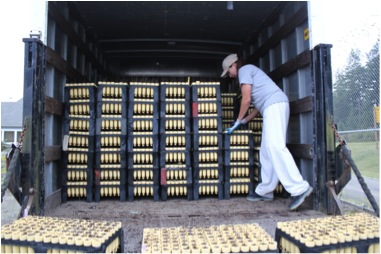
The delivery truck is almost full with 400 trays, a load of 39,000 plants. Photo by Bri Morningred

Though we came up just short of the magic number of 1,000,000 in the 2013, we feel confident that in 2014 we will blow right past that goal, and on to our next milestone!
Screen shot 2014-02-25 at 9.23.29 AM

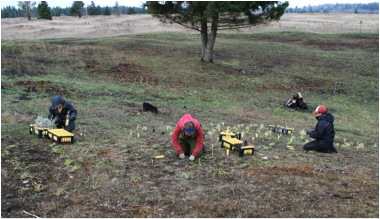
Americorps volunteers planting out SPP-grown plugs on the prairie at Glacial Heritage Reserve. Photo by CNLM staff.

Tiffany Webb, SPP’s Education and Evaluation Coordinator, and I had the chance to attend the first annual Washington Higher Education Sustainability Conference this week. We are now one day into the two-day conference and wanted to share some of the amazing and inspiring things we have seen and heard so far.

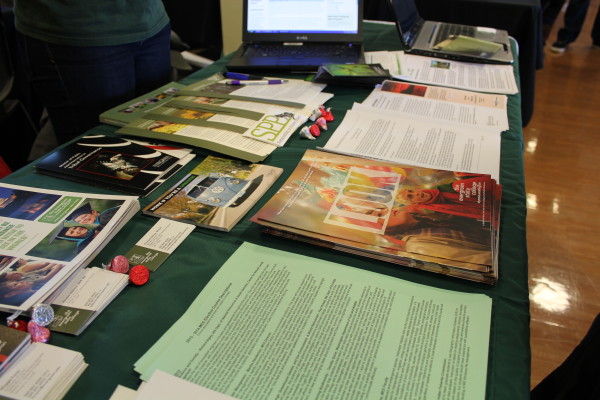
Evergreen's Master of Environmental Studies table, with SPP's materials on display
Evergreen’s Master of Environmental Studies table, with SPP’s materials on display

Hearing about the commitments that colleges all over the region are making to sustainability is impressive; from solar thermal swimming pools and gardening to making sustainability a part of all job applications. We heard about University of Washington’s socially responsible procurement, smart grid demonstration projects at University of Washington and Washington State University, and even Western Washington University’s commitment to avoiding the use of harsh cleaning chemicals in their custodial work (they had been using just iodized water, and now vinegar and water). These were just a few of the amazing things that campuses across Washington (plus some in Canada and Oregon) are doing to promote sustainability; there are far too many to list!

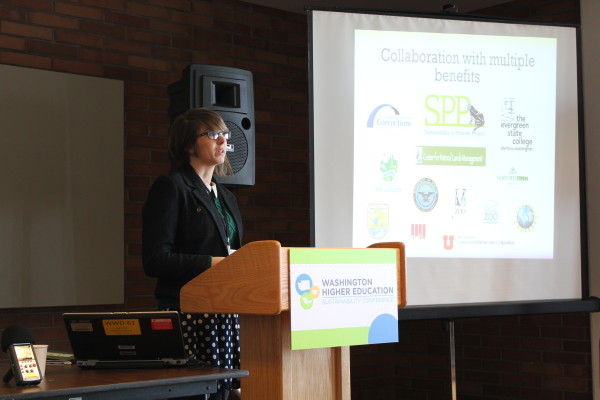
SPP's Education and Evaluation Coordinator, Tiffany Webb, presenting on SPP at WAHESC.
SPP’s Education and Evaluation Coordinator, Tiffany Webb, presenting on SPP at WAHESC

During a session on service learning, Tiffany presented on the SPP and her experience as a graduate student involved in the project. She was particularly excited to be presenting “in a room full of people who are aware of issues and want to find solutions.” She said that the attitude towards climate change science and sustainability in general was completely different than in her home state of Alabama. She was also able to attend a session about interviewing children on climate change, which she found humbling; what used to be taught only in classrooms is now being learned about at a young age through many avenues outside of the classroom. Teaching about environmental issues in the future will be very different, because of the deeper understanding of these issues that children today are raised with.

Yesterday’s talks were fascinating and we were able to take home many ideas that may be useful in the future for SPP. At the same time, it was satisfying to share our unique perspective on working with SPP as graduate students. We are both looking forward to another day of learning about incredible projects across the state today!