Text and Photos by Erin Lynam, SPP Workshop Series Coordinator and Alexandra James, SPP Ecological Conservation Nursery Coordinator
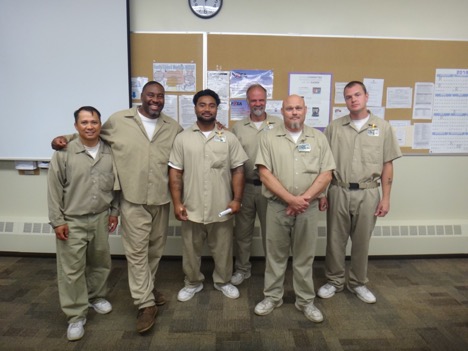
The Prairie Ecological Conservation Nursery Crew: pictured from left to right are technician Fred Burr, TAs John Thompson and Situe Fuiava, and technicians Michael Johnson and Dustin Sutherland.

July’s Environmental Workshopat Washington Corrections Center (WCC) was a very special one. This month’s guest experts were Ecological Conservation Technicians from SPP’s Ecological Conservation Nursery Program at WCC. Presenting alongside were the Teaching Assistants (TAs) that work with and support the technicians every day.

The workshop was about the technicians’ day-to-day work in WCC’s greenhouse and gardens to promote ecological and cultural restoration projects across Washington State. They covered the ecological importance of the early blue violet, especially its connection to the silverspot butterfly. They described the tedious but incredibly important process of growing violets and collecting their seeds, and how that work directly impacts the greater South Sound communities. They spoke to personal impacts their environmental work has had on them. In addition, they talked about the future of their work and the initiation of new conservation-minded projects at WCC.

SPP’s Ecological Conservation Nursery hosted by WCC continues to be among the most generative nurseries for native violet production for restoration of South Salish lowland prairies. The violets grown at WCC are used in prairie restoration efforts by state and federal agencies and conservation organizations including U.S Fish and Wildlife Service, Joint-Base Lewis McChord, WA Department of Fish and Wildlife, WA Department of Natural Resources, and the Center for Natural Lands Management. Violet seed collection is the focus for WCC’s Ecological Conservation Nursery Program, where Technicians learn how to nurture thousands of violet plants to optimize seed production. Technicians collect seeds from June to November. Collected seeds require cleaning, which requires sifting through a 5-plate seed sifter, inspection, and stowing in seed-safe containers. The technicians’ careful work ensure that seeds are well cleaned and ready for delivery to the various agencies and organizations.
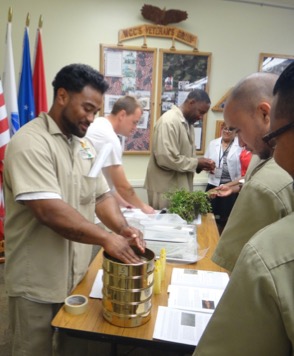
Pictured on the left side of the table, TA Situe Fuiava and technician Dustin Sutherland show the process of sorting violet seeds.

Just like anyone who has to speak in front of a group of people, the technicians and TAs were nervous, but it didn’t show: they were cool as cucumbers through the presentation. However, by sharing their immense knowledge, demonstrating how seeds are sorted, and addressing challenging questions about the conservation work they do, their workshop was both engaging and interesting. After the workshop, it was evident that the successful experience had been a boost to their confidence. They were chatty with excitement, and were even walking a little taller.

And it wasn’t just the technicians who were positively affected by their presentation; the staff was affected as well. They showed honor and excitement for the excellent crew. WCC’s Workshop Series Liaison, Jeff Sanders, said he could not stop smiling through the whole workshop. Nursery Coordinator Alexandra James expressed that she felt incredibly proud of the crew for their hard work, dedication, and passion for the program and its positive impact on our prairie ecosystems.
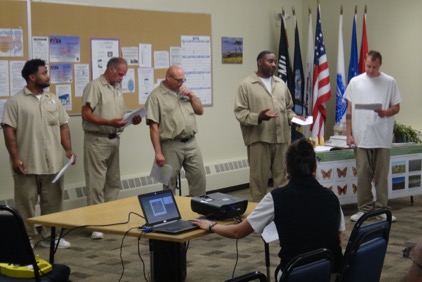
Technicians and TAs present; Ecological Conservation Nursery Coordinator, Alexandra James, was only needed for technical support.
Text by Bethany Shepler, SPP Green Track Coordinator
All photos by SPP-Evergreen staff

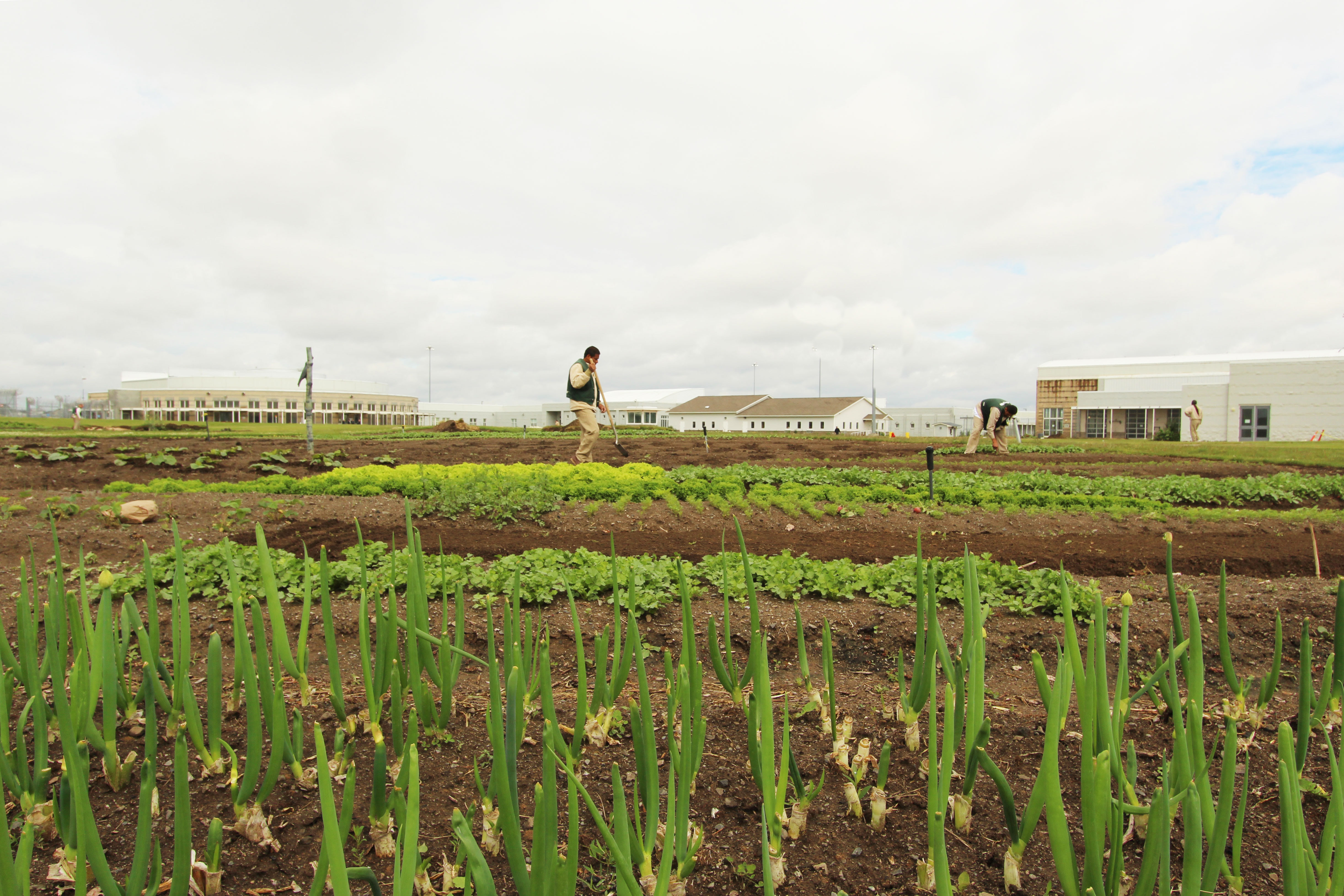
This May I visited Airway Heights Corrections Center (AHCC). It was about a year after the town discovered their drinking water was contaminated by runoff from the nearby Fairchild Air Force Base.

The town of Airway Heights was greatly impacted by the contamination, and the local prison was no exception. AHCC has a large agriculture and gardening program that was forced to throw out about 100,000 pounds of fresh vegetables grown on site because of contamination concerns.

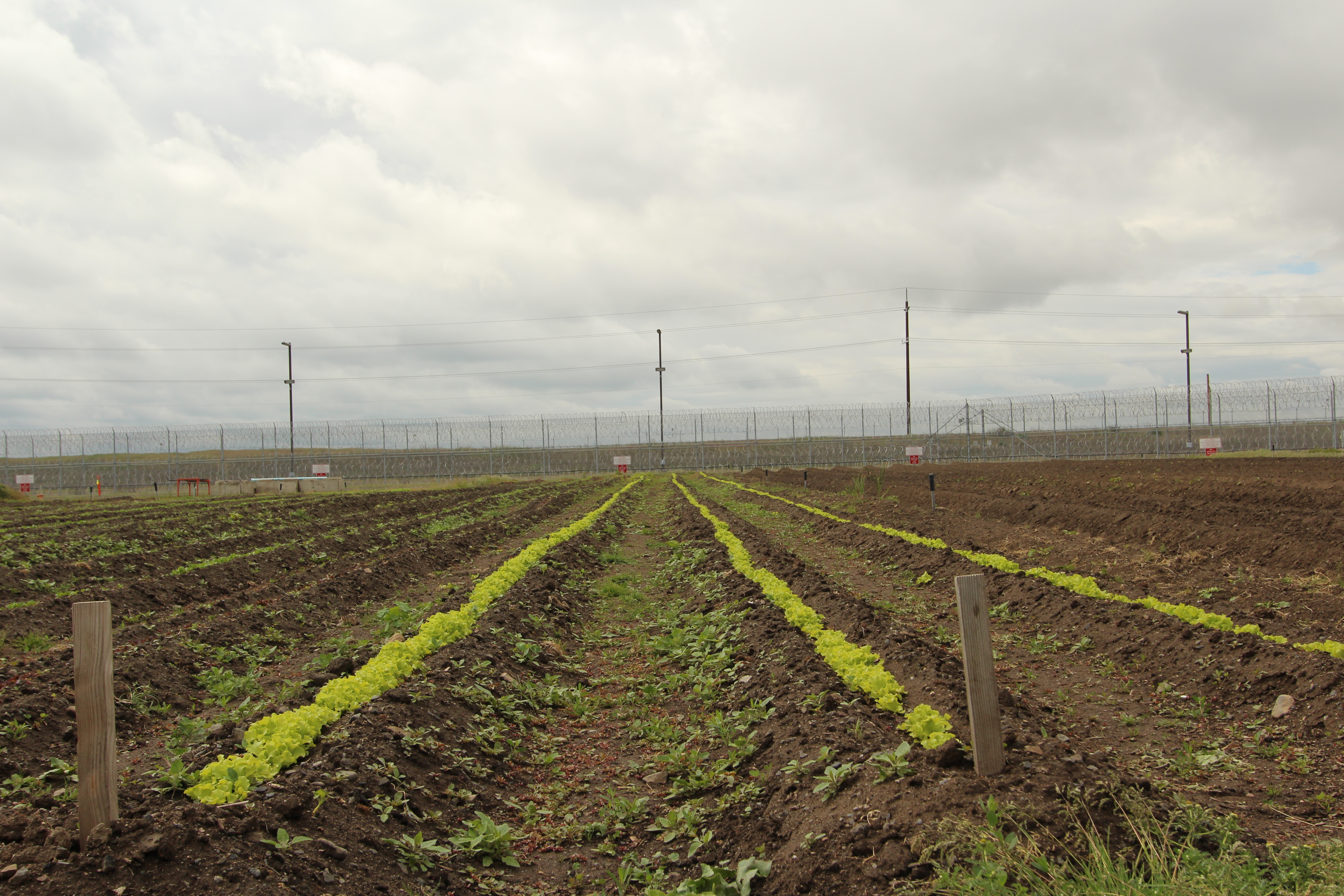
A view of a field inside at AHCC where inmates grow produce. This picture was taken in early spring of 2016.

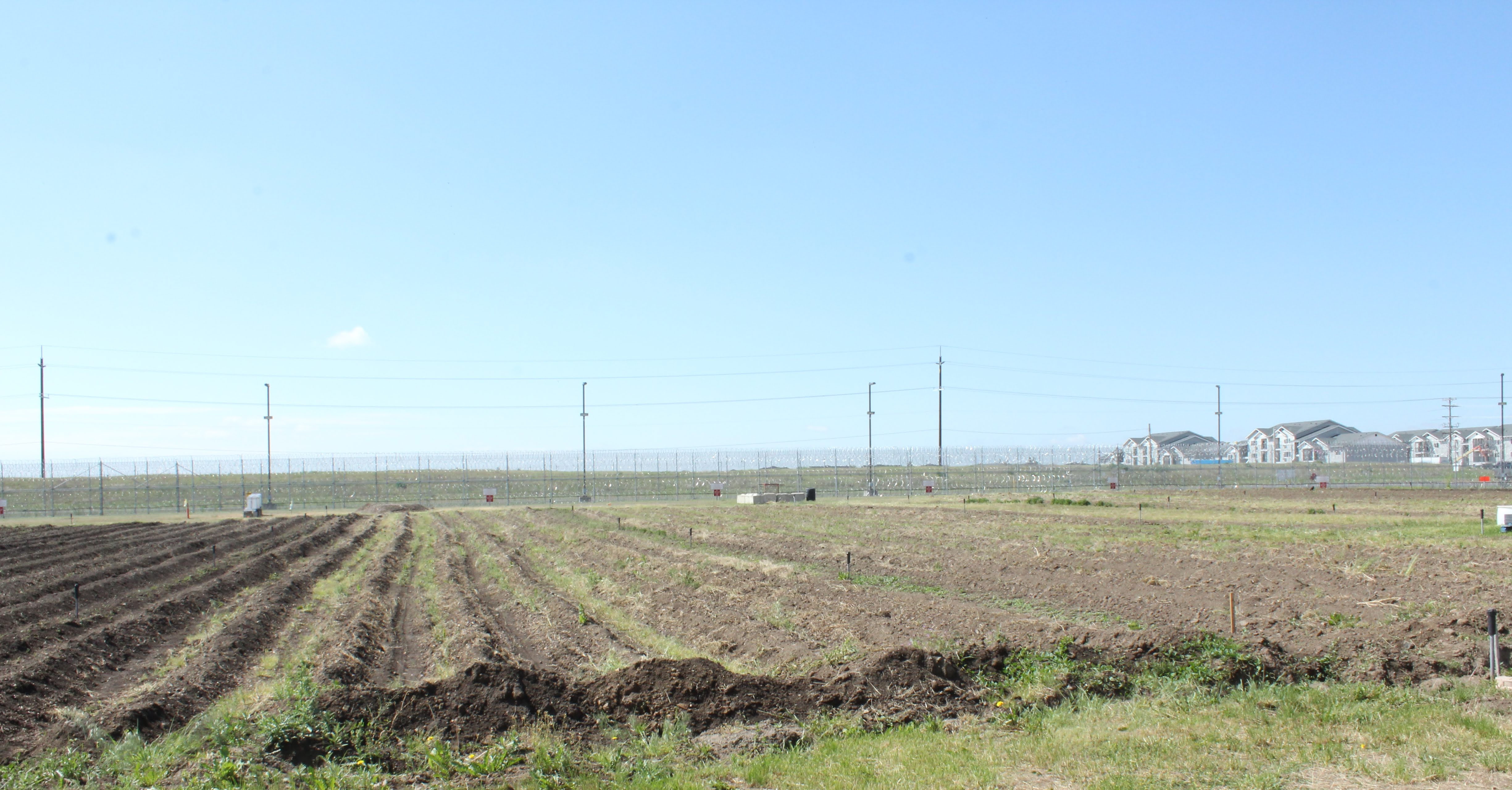
This is the same AHCC field when I visited in late May. No produce was growing, and none would be for the remainder of 2018.

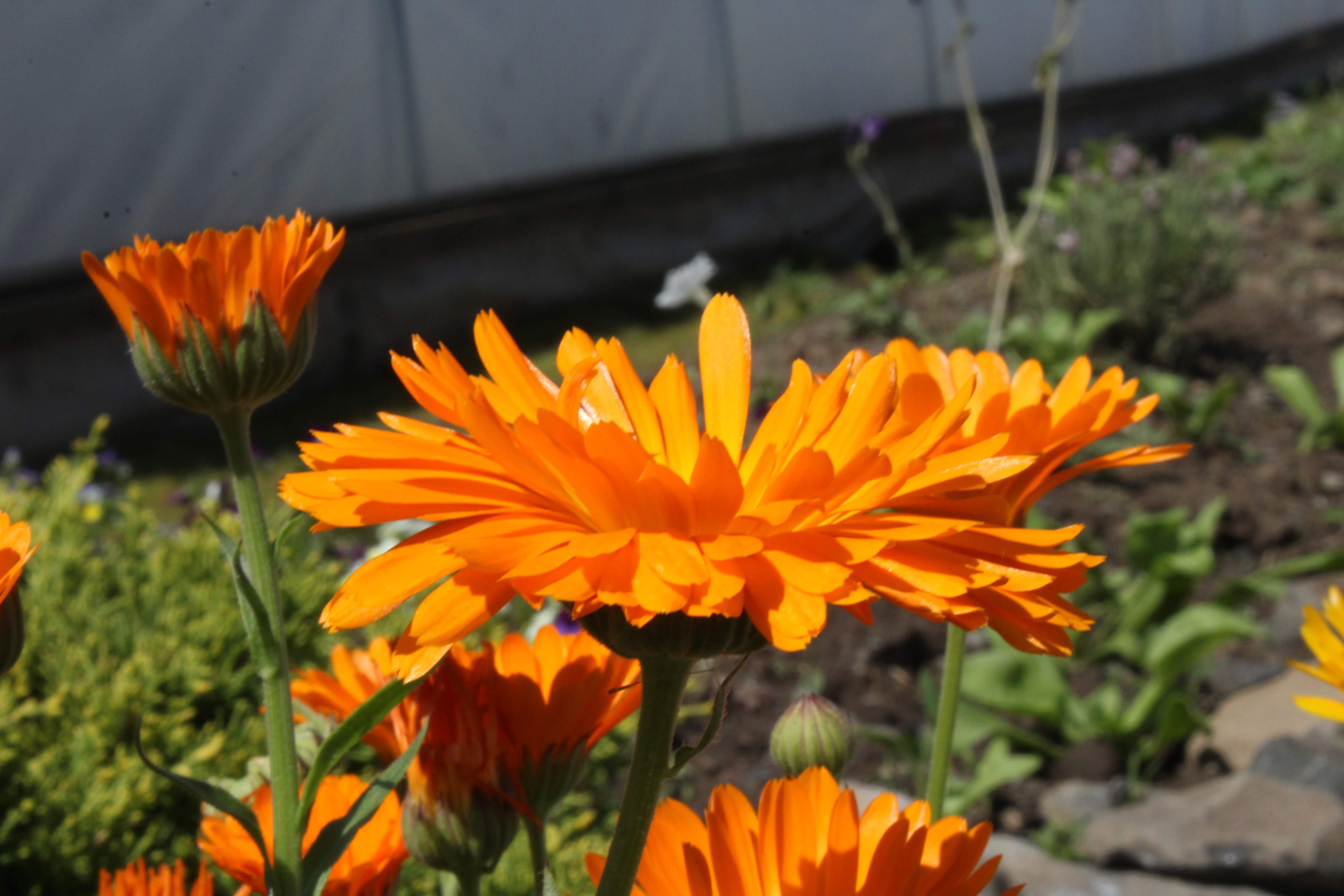
A year later, things have mostly righted themselves in Airway Heights. Prison administrators told me that soil tests have shown their soil has low amounts of contaminants in it, if any. Even so, they wanted to be sure the soil was completely clear before planting produce again. For 2018, many of the vegetable gardens were growing flowers only. Flowers can “clean” the soil by pulling the contaminants out of it.

The courtyard at AHCC full of produce in Spring of 2016.

This Spring, showy flowers are found throughout the courtyard and gardens, in most places where you could find vegetables in recent years.

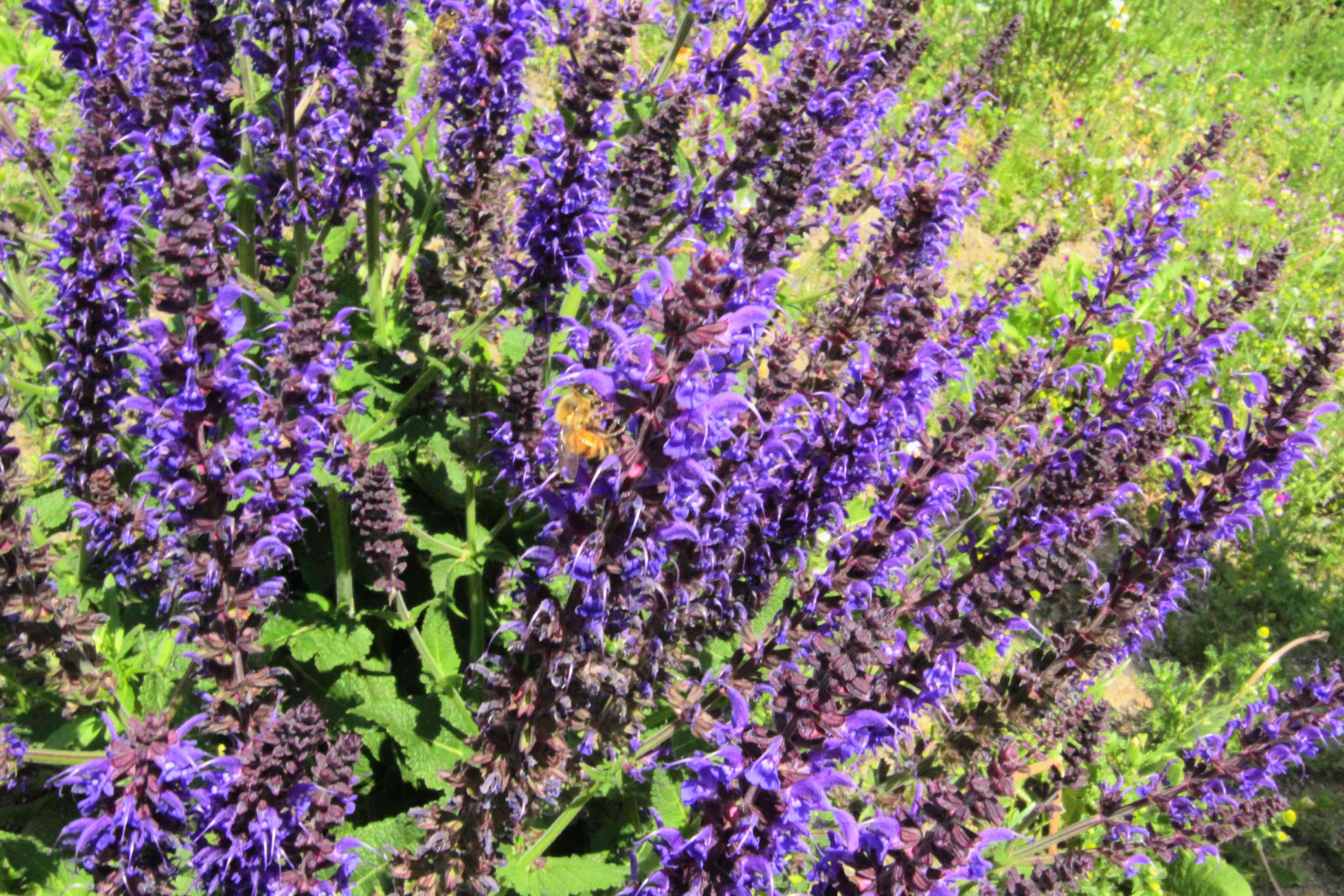
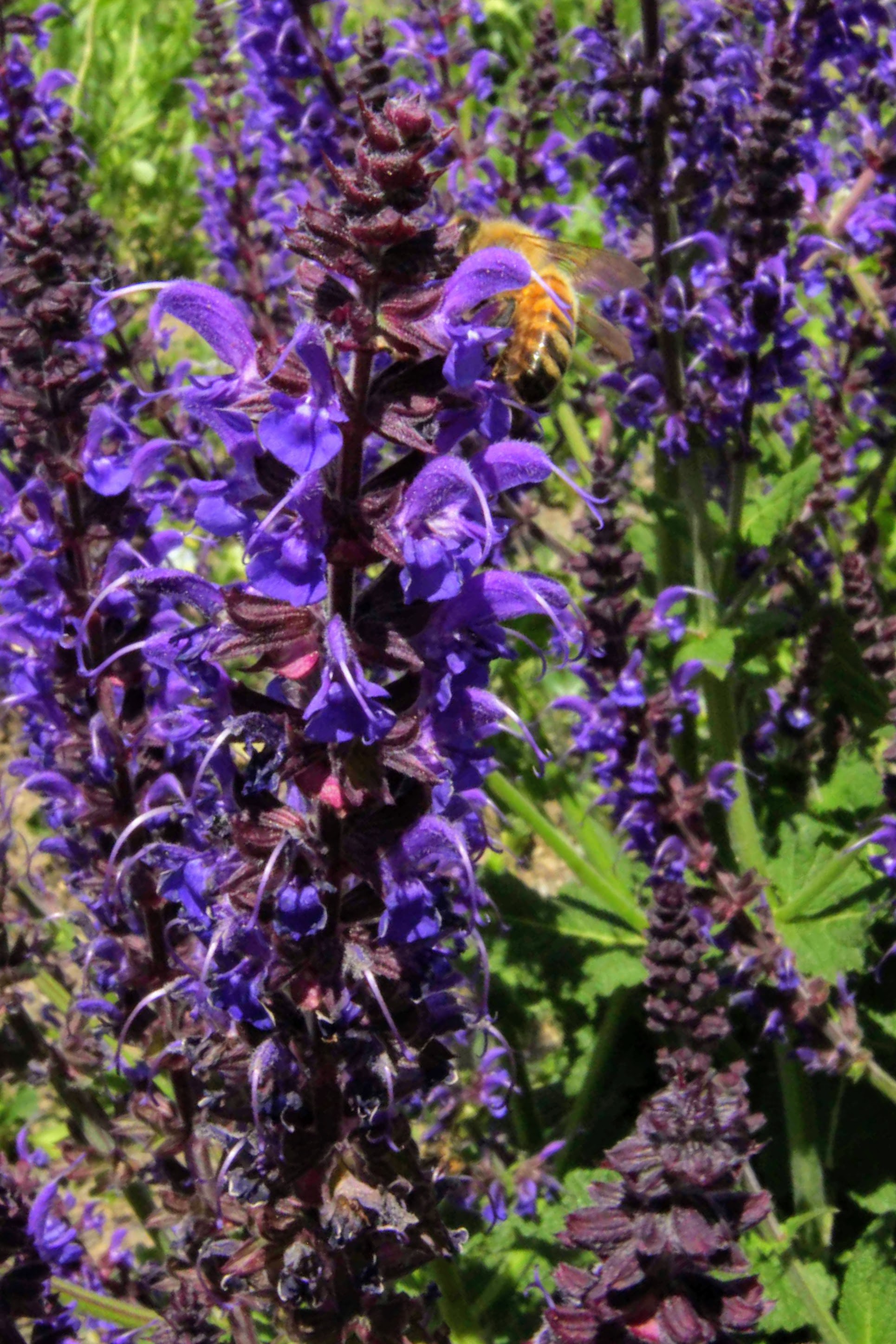
The inmates and staff are confident they will be growing produce again next year. Until then the flowers look beautiful, and the pollinators love them!

A honeybee collects pollen from bluebonnets growing in the prison courtyard.

Inmates at the WSRU Vermiculture program partner with the University of Washington to test the ability of soil health to influence human health

By Nick, Teaching Assistant for University Beyond Bars, Monroe Correctional Complex
Photos courtesy of Joel Strom, University Beyond Bars

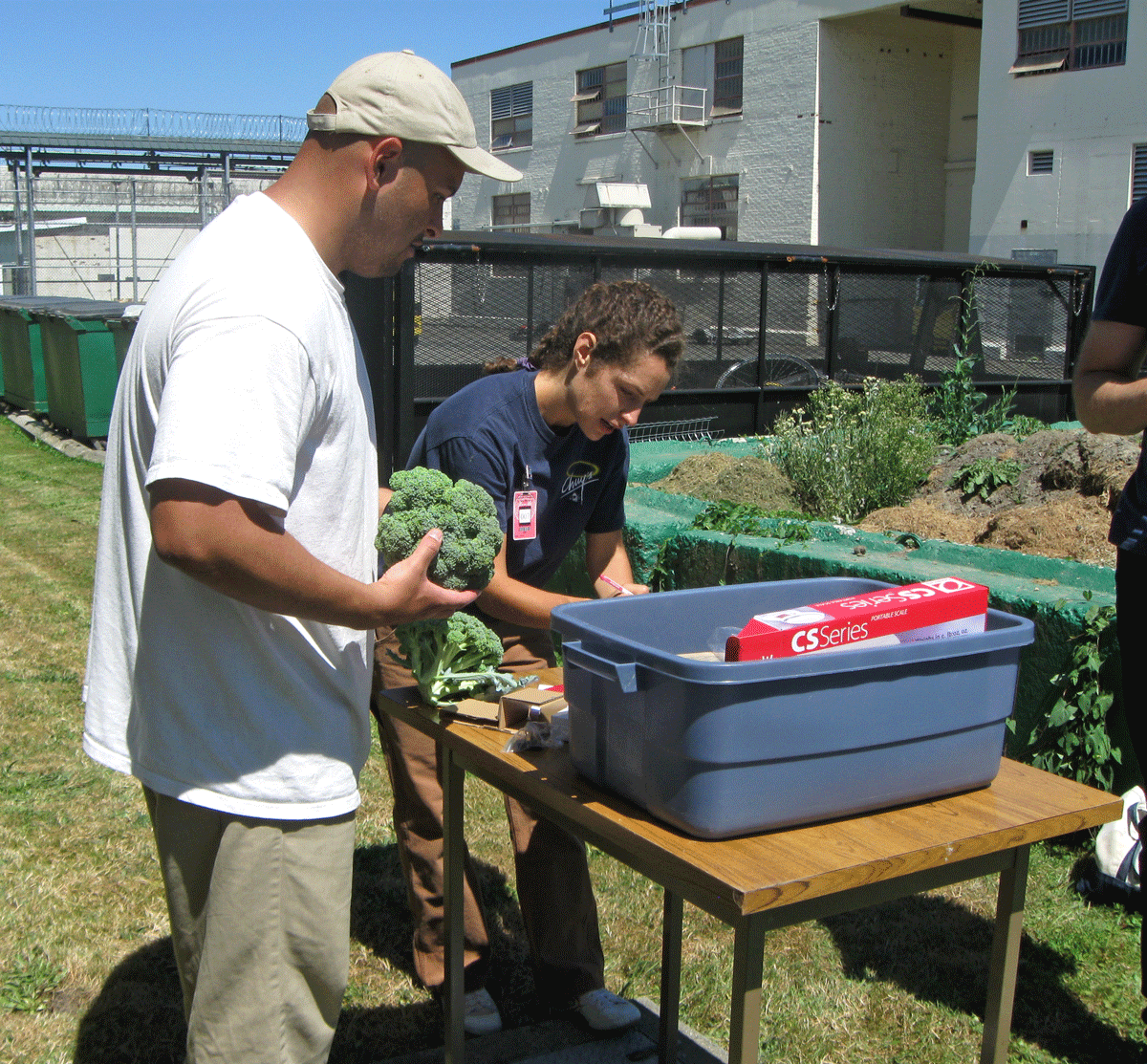
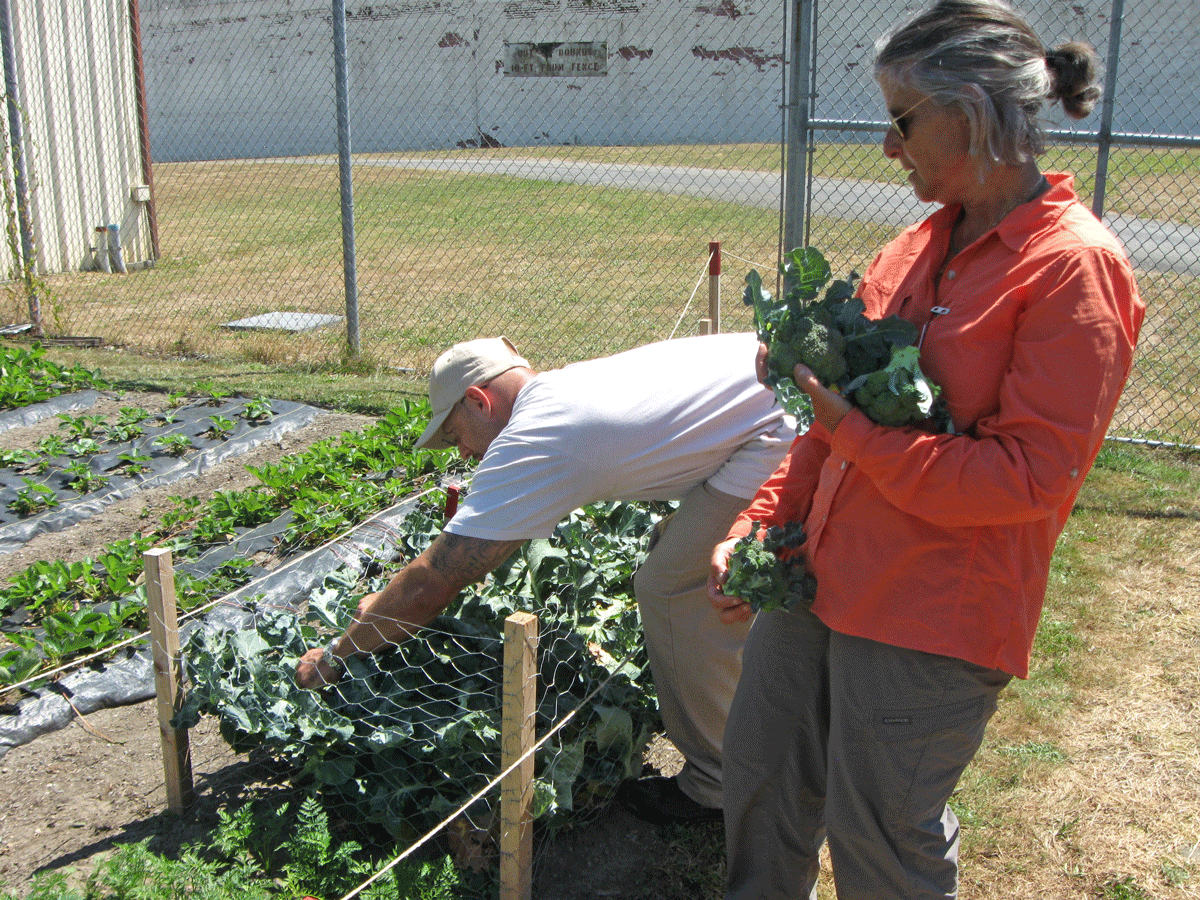
Ms. Landefeld harvests from the plots with the help of a composting technician.

With the goal of improving how we grow food, Washington State Reformatory (WSRU) vermiculture technicians and scientists from the University of Washington (UW) are studying soil health at the prison. The incarcerated technicians are assisting with scientific trials of different types of soils to see if they can produce vegetables containing higher levels of key elements that have been shown to improve human health.

Earlier this year the vermiculture program was approached by Dr. Sally Brown, a professor at the UW Ecosystem Science Division, College of Forest Resources, to assist in this project.  Dr. Brown had become familiar with the vermiculture program when she co-authored an article with one of the inmate technicians about some of the composting techniques employed at the facility. Dr. Brown had been working with graduate student Sally Landefeld on a series of trials to grow vegetables in several different types of soil to test for relationships between soil health and antioxidants and other important disease-fighting nutrients. On a tour of the facility, Dr. Brown noticed a unique opportunity in the gardens adjacent to the worm farm:  the soil there had been treated with composting by-products for several years, some areas with Bokashi-treated (fermented) compost and others with vermicompost (worm castings).

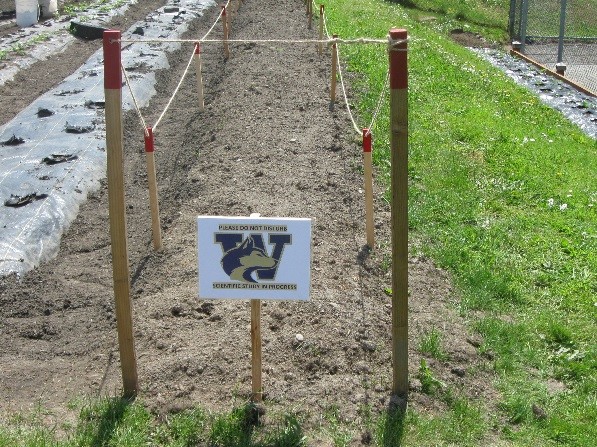
A trial plot is ready for planting; Washington State Reformatory Unit (WSRU) at Monroe Correctional Complex (MCC). Photo courtesy of Joel Strom, University Beyond Bars (UBB).

In April, Dr. Brown and Ms. Landefeld met with vermiculture technicians and set out three separate plots that would be used for the trials:

  1. No soil treatments with soil amendments
  2. Several treatments of Bokashi composted food waste over several years
  3. Heavily treated with worm castings and vermicompost.

One of the vermiculture technicians was asked to be the project lead. He and his peers prepared and marked the plots for planting.

Dr. Brown and Ms. Landefeld returned in May and planted broccoli, carrots and onions in all three plots.  Despite an ongoing battle with rabbits throughout the spring, by June the crops in all three plots were growing well.

Ms. Landefeld returned to the vermiculture program in mid-June to deliver an instructional presentation on how she decided on the path for her doctorate and what she was hoping to accomplish with the prison-hosted study. The WSRU vermiculture program offers a 1,000 hour SPP certification in collaboration with Tilth Alliance, and guest lecture are part of the curriculum. In this presentation, Ms. Landefelt said:

“We are just starting to understand the intricate relationship between soil health and public health. Healthy soil contains plenty of organic matter, which provides nutrients to plants, fosters microbial life, and improves soil physical properties including water holding ability and tilth.  If we deplete soil organic matter, we may reduce the soil’s ability to produce high yielding crops that are also rich in nutrients.  This project aims to (i) characterize soil health by analyzing soil properties including carbon, nitrogen, phosphorus, organic matter, soil structure and microbial content, and to (ii) quantify both quantity and quality of the vegetables grown on the control and high organic matter plots.  In addition to plant yield, we will test the vegetables for nutrients, vitamin B6 (pyroxidal) and phytochemicals including sulforaphane, beta-carotene (provitamin A), and quercetin.”

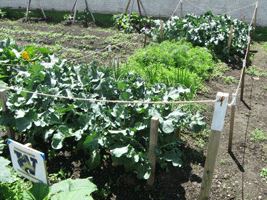
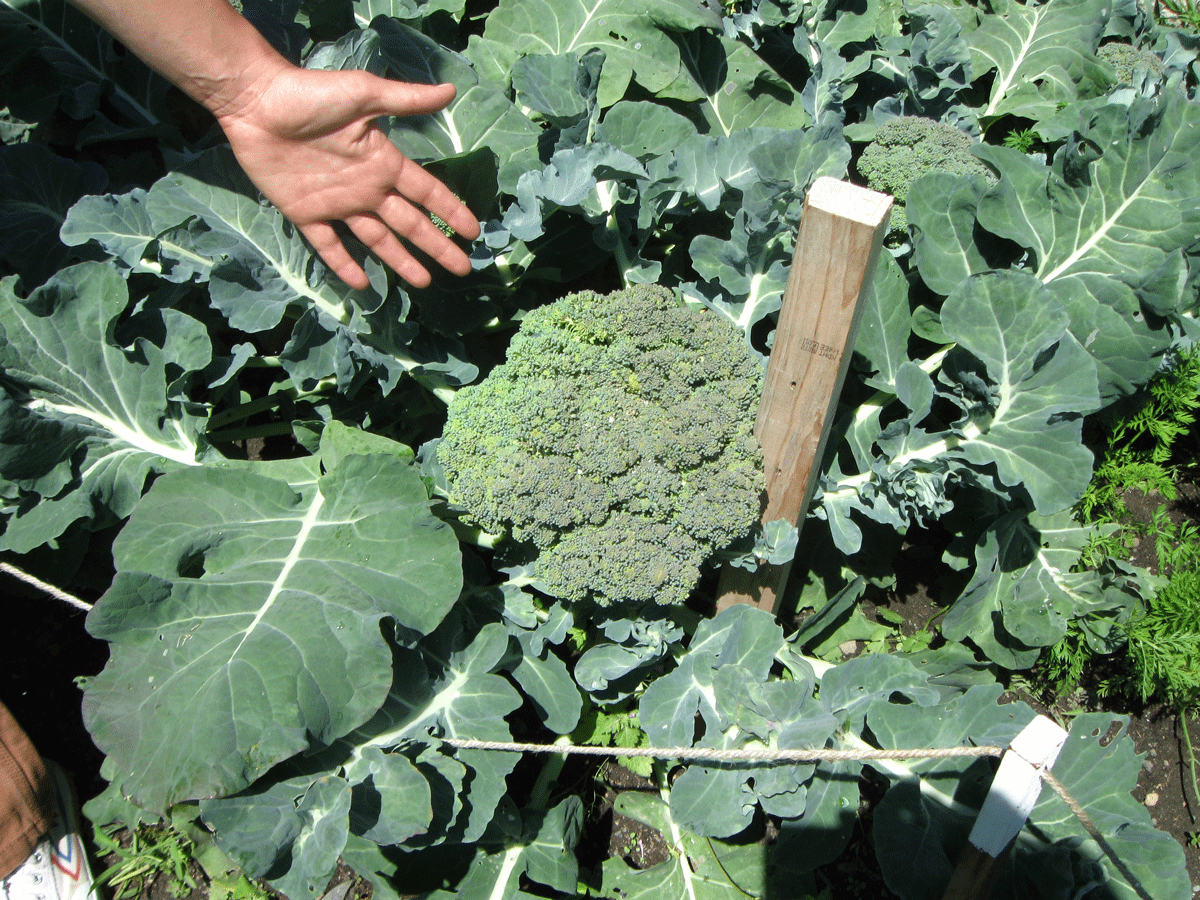
Broccoli growing in the vermicompost plot.

By mid-July, the broccoli was ready to be harvested and Dr. Brown and Ms. Landefeld worked with the technicians to harvest from all three plots.

As the project progresses they will return to the prison periodically to harvest other vegetables and take soil samples.  The vitamins and phytochemicals will be tested using a technique called liquid chromatography-mass spectrometry (LC-MS) in order to relate the phytochemical content of common garden crops with soil health.

This project is a great example of SPP’s vision to create a collaborative, intellectually stimulating environment in which incarcerated men and women play key roles in conservation and advancing scientific knowledge and has been a win-win for the vermiculture program as well as the University.

Dr. Brown and a vermiculture technician harvest from a trial plot.

Photos and text by Jacob Meyers, Prairie Ecological Conservation Nursery Coordinator

Pop. Pop. Pop. Scream. Laughter. Pop. Pop. Pop.

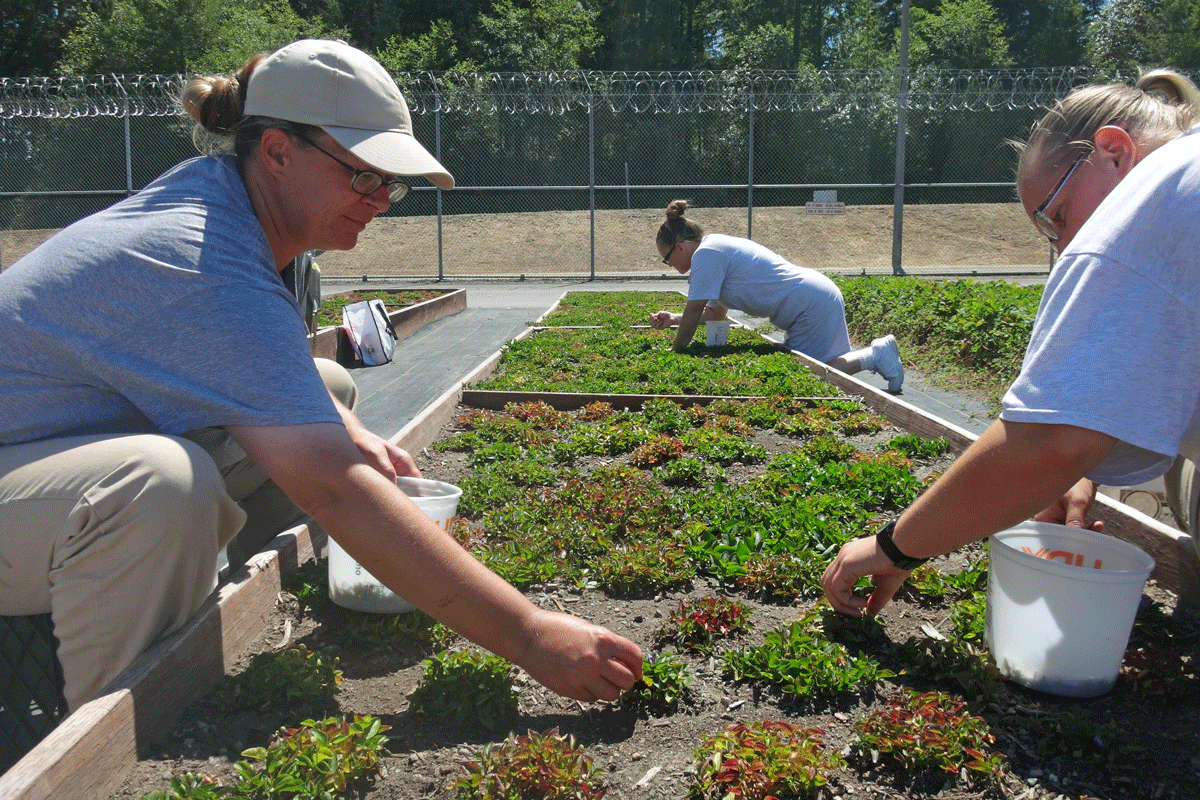
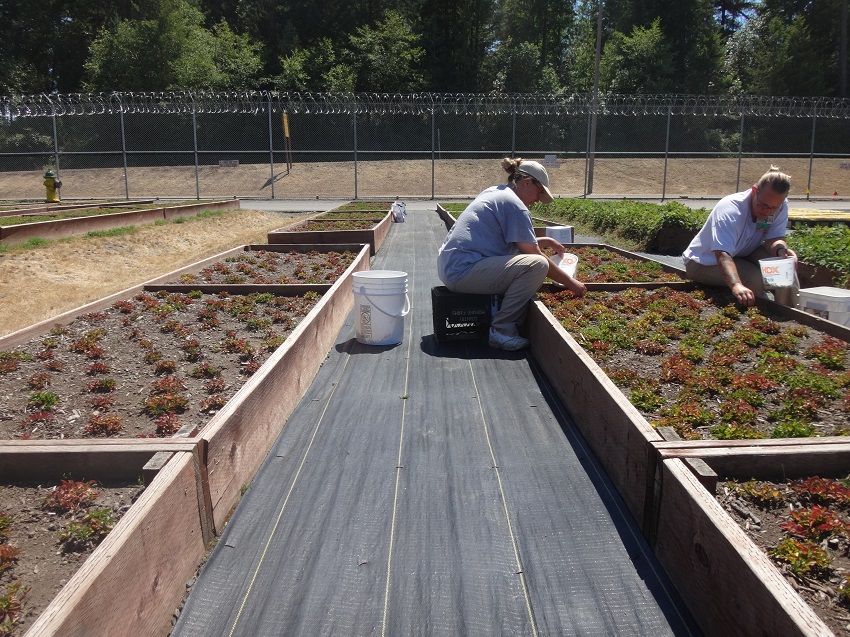
Crew members (left to right) Tammera Thurlby, Danielle Castillo, and Angela Jantzi harvesting Viola adunca on a hot summer day.

That may sound like a group of teenagers watching a horror movie while waiting for the popcorn to finish in the microwave. In reality, it was a scene that played out a couple weeks ago, as I and several nursery technicians spent the afternoon harvesting Viola (violet) seeds. The scream was mine: a seed pod caught me off guard when it unexpectedly exploded in my cup. The crew (rightfully so) hasn’t let me forget that a Viola seed pod scared me half to death. (In my defense, a spider had just crawled across my leg and I was a little bit on edge.)

It’s rarely a dull moment at WCCW these days. While most of the flowers finished blooming in early May, June and July have been full of exploding violet pods and which means there is a lot of work to be done! As my co-worker wrote a few weeks back, the early-blue violet (Viola adunca) is an extremely important prairie plant in the recovery of prairie landscapes, and to the Fritillary butterflies (Zerene FritillarySpeyeria zerene bremnerii – and the Great Spangled FritillarySpeyeria cybele pugetensis) in particular. At WCCW, we have two species of viola currently – the aforementioned early blue violet and the yellow violet (Viola praemorsa). The Viola adunca cultivated at WCCW is collected for seed to aid in the recovery of the Zerene fritillary (Speyeria zerene hippolyta) on the Oregon Coast.

Violets are commonly known to even the most inexperienced gardener. Heck, even people who don’t garden are familiar with the small, heart-shaped flowers that are typical of the genera. But what you may not know is that the Viola genus contains more than 500 species! The ones we grow at SPP are a bit hardier than your typical Viola. The species we cultivate are found in places where water is hard to come by—prairies, savannahs, sand dunes and on the edges of woodlands. Regardless of where they are found, Viola species serve as an important nectar source for pollinators.

Here are some pictures of the beautiful blooms we had at WCCW this year:


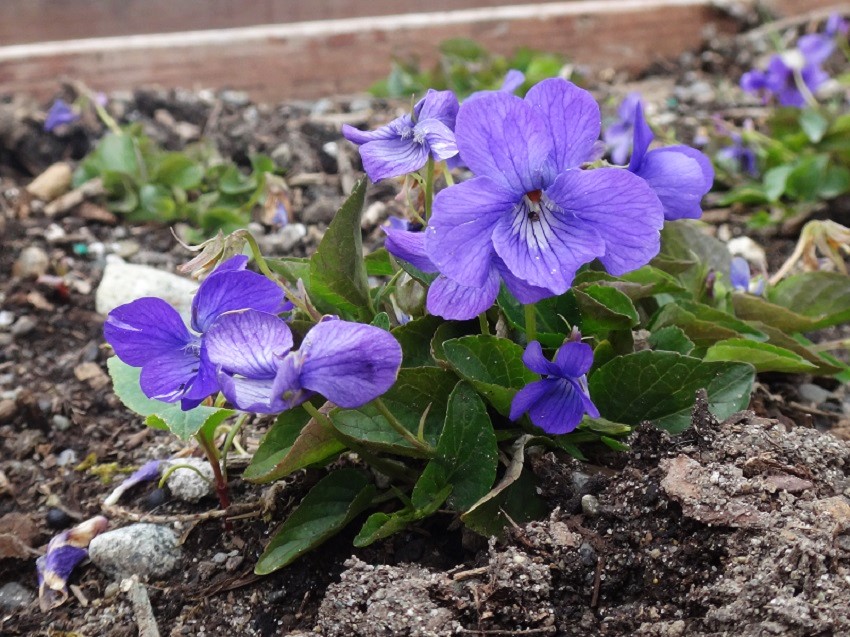
The early-blue violet (Viola adunca) is found across the cooler states and provinces of North America in coastal sand bluffs, prairies, and woods. Another of its common names is the sand violet.


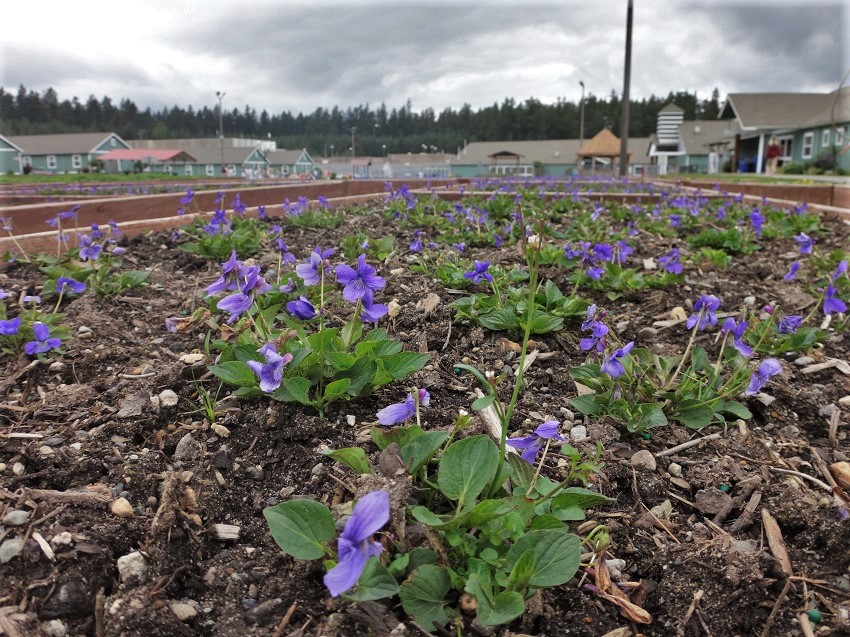
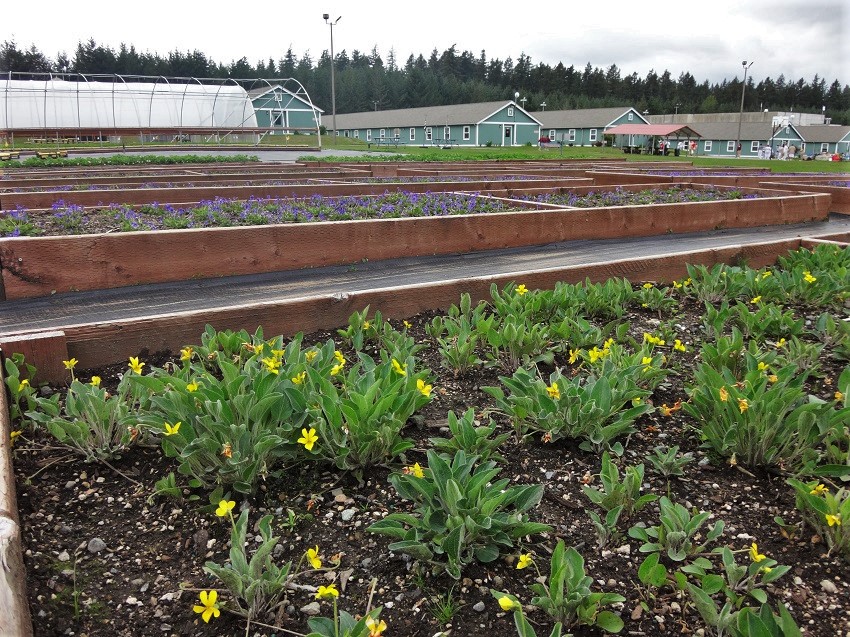
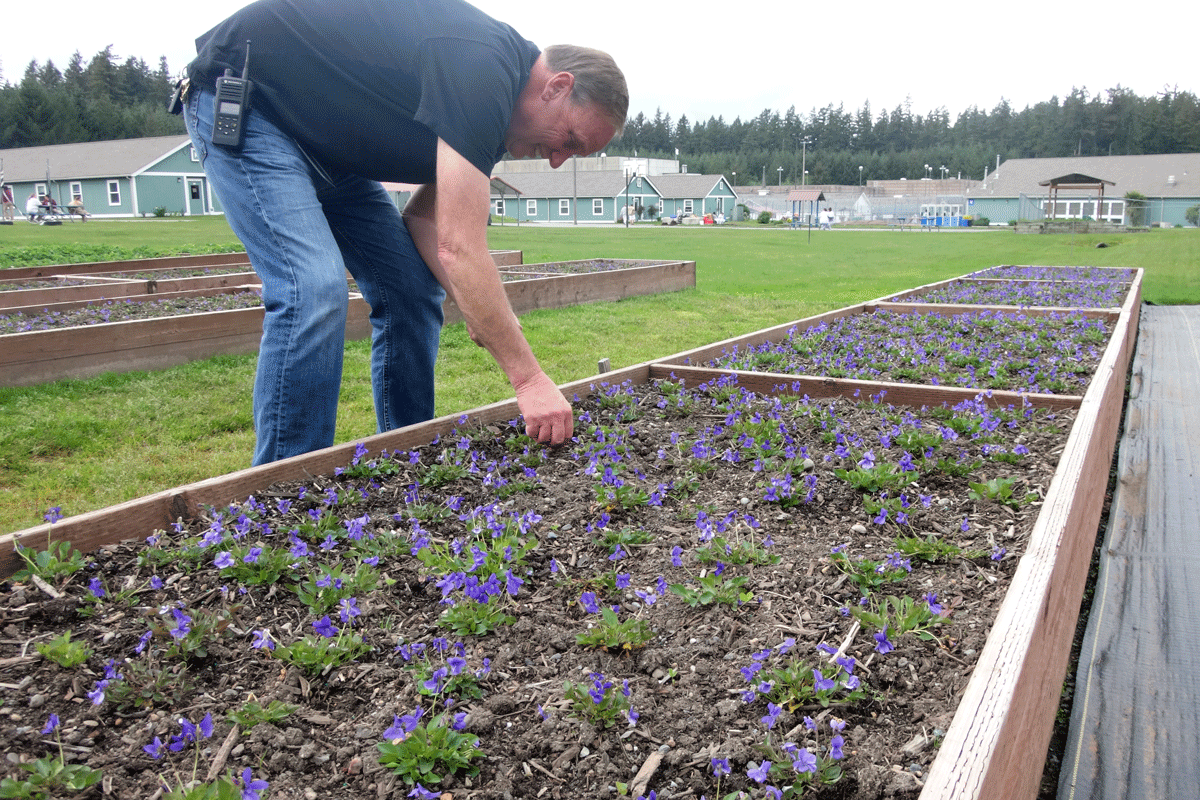
There are 8 beds of Viola adunca at WCCW. The plants are six inches apart, which is a bit tighter than is typical for a seed farm or nursery, but allows us to cram in approximately 400 Violas in each bed!!


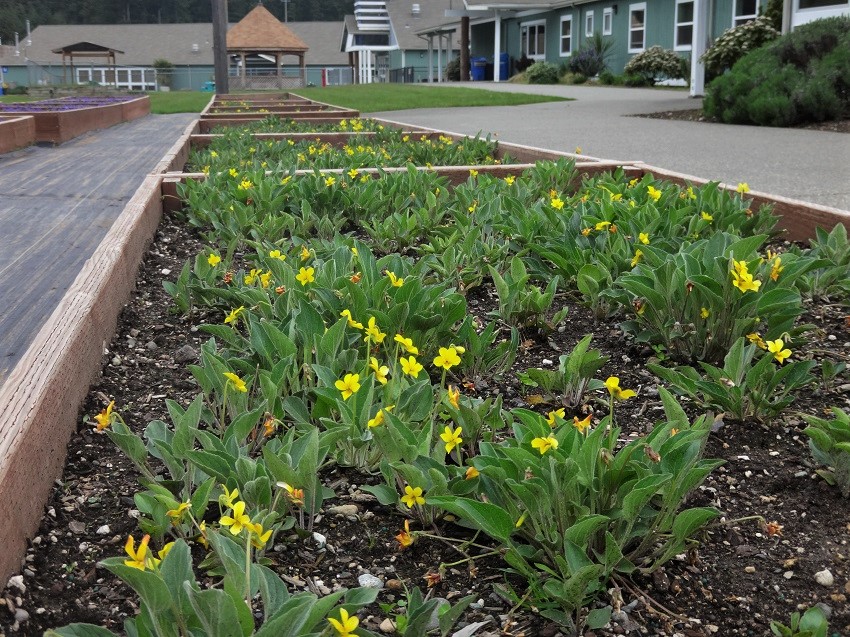
Viola praemorsa, or the canary violet, is far less common than its bluish-purple cousin. This violet is only found in western North American oak savannahs and oak woodlands.


This is a wide view of all the raised beds at WCCW. Viola praemorsa in the foreground, Viola adunca (purple flowers) beyond, and two beds of wild strawberries (Fragaria virginiana) all the way in the back. Strawberries are also an important pollinator plant in prairie habitat.


Scott Skaggs is the Grounds & Facilities Supervisor at WCCW and helps manage the Nursery Crew. In the photo above Scott is doing a little bit of spot weeding.

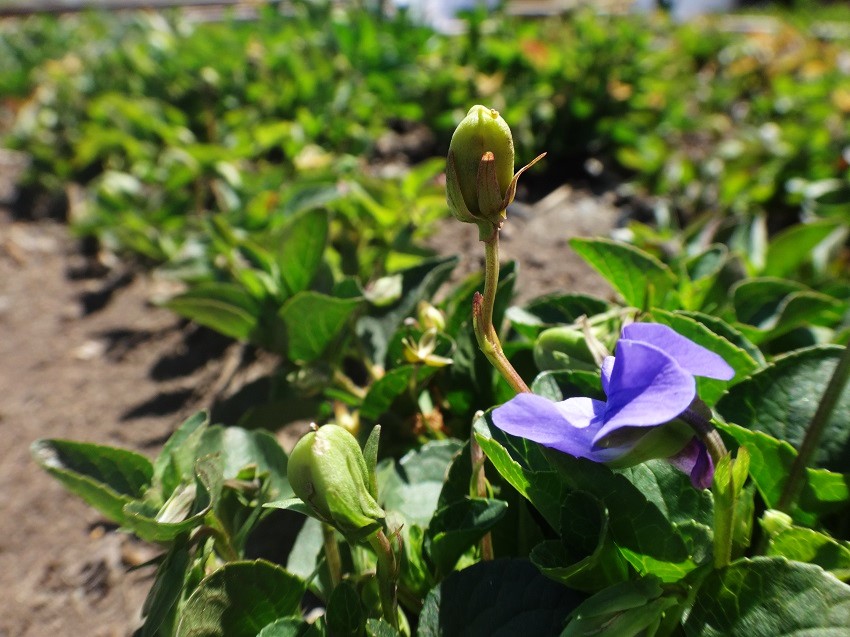
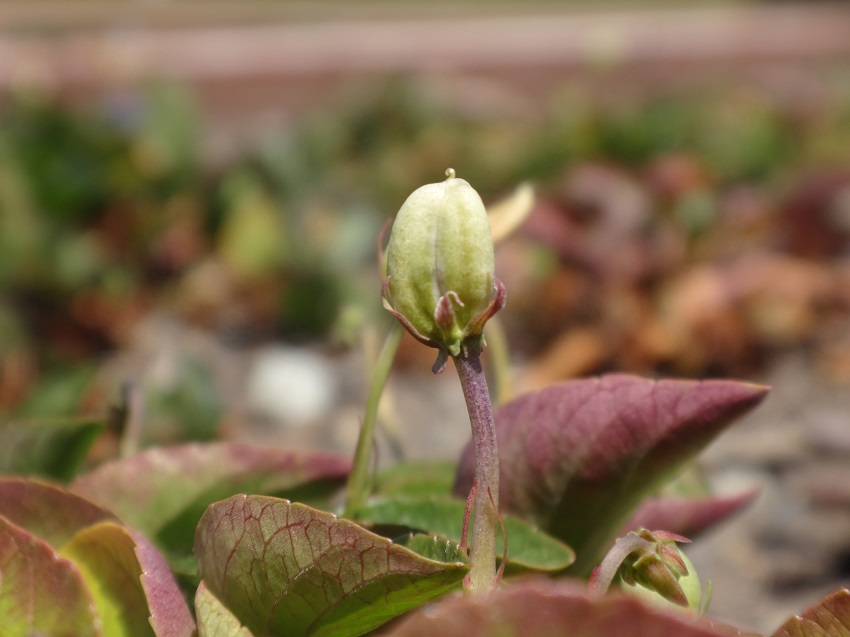
While very pretty, the beautiful flowers have a forthcoming message – it’s reproduction time! And after those beautiful signals go off and a little bit of magic (sexual reproduction via pollination), little baby plants (aka seeds) begin to emerge!! After baking in the sun for a number of days or weeks, Viola species all form capsules or “pods” that split open and disperse. Or as is the case in the species we grow at SPP – the pods explode like the one in my cup. The photos below show seed pods developing, and their processing after we harvest them.


In the above photo, a Viola adunca plant is starting the reproduction process. The seed pods are typically green colored and curled up like an umbrella when they first emerge. As the pods mature, their color whitens and the stems stands up straight in preparation for pod explosion.


A mature Viola adunca seed pod: notice the whiter coloring and erect stem; this is the perfect time to harvest the pods.


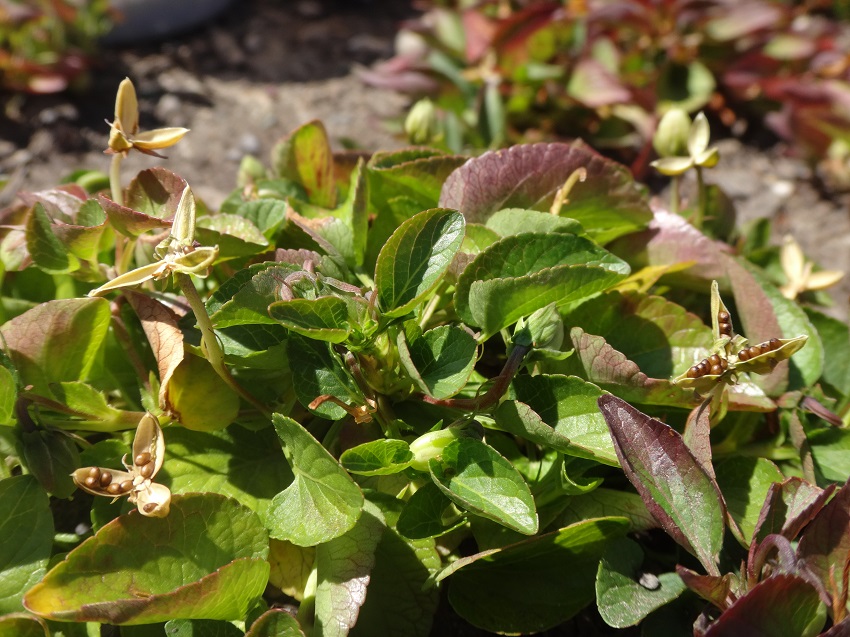
This photo shows what happens when Viola pods go unharvested. Most of the pods’ seed disperses about 5 feet in every direction during the explosion – some have been found up to 10 feet from their parent plants!!


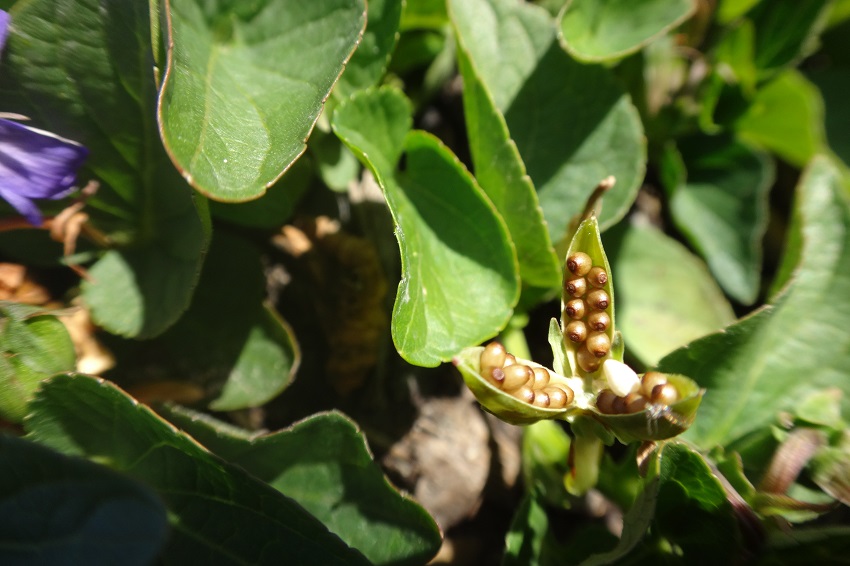
Sometimes, however, the seed stays put. This isn’t great for the plant’s reproductive success rate; for people collecting seed, it’s a welcome sight!


Harvesting all of the seed pods ready at one time can take the entire WCCW crew anywhere from 3 to 5 or 6 hours. Depending on when during the collection season we’re harvesting, there can be a lot of pods to pick!


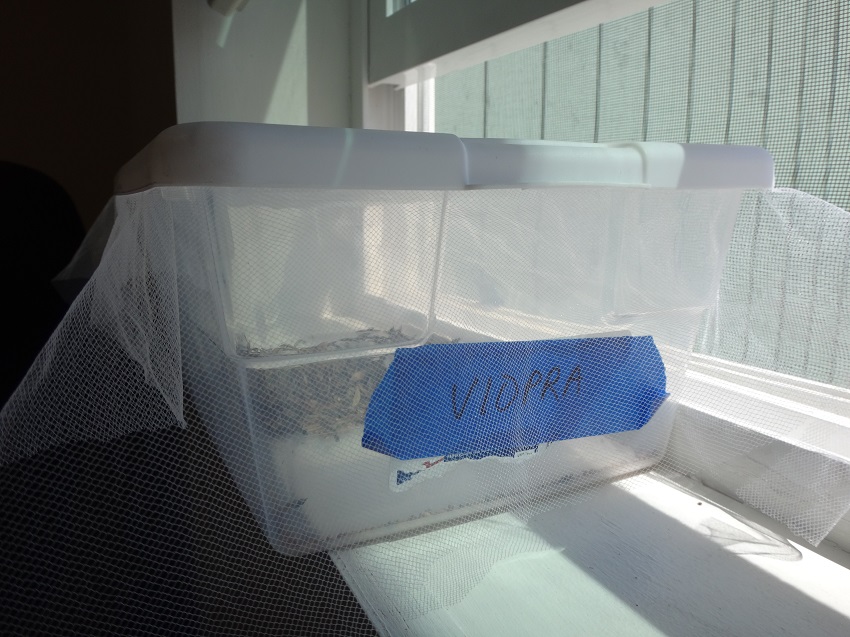
After harvesting, all of the pods go into bins where they can continue to dry out and “pop” for easy collection. Here is a bin of Viola praemorsa sitting on a window ledge to get a little extra sunlight.


A tule cloth on top keeps all the seeds from flying all over the office!


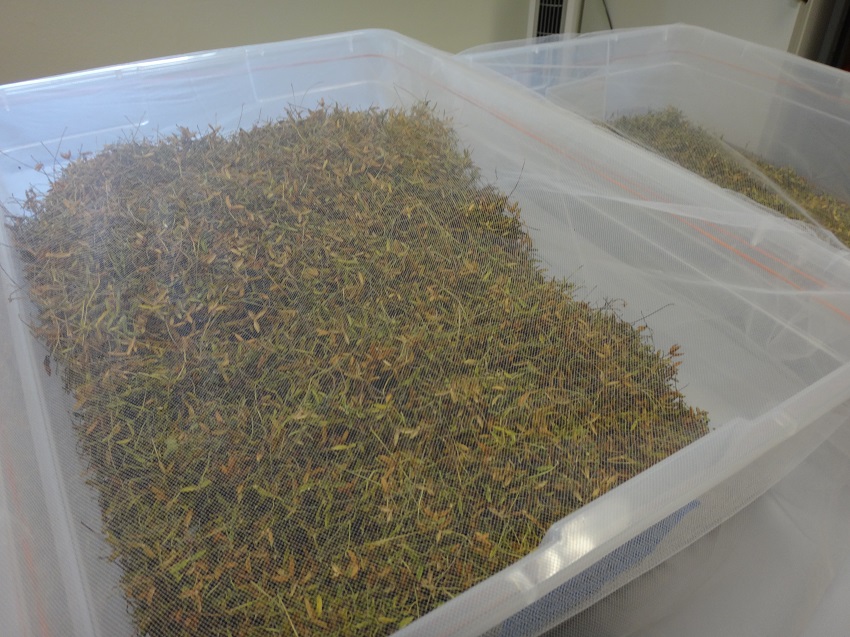
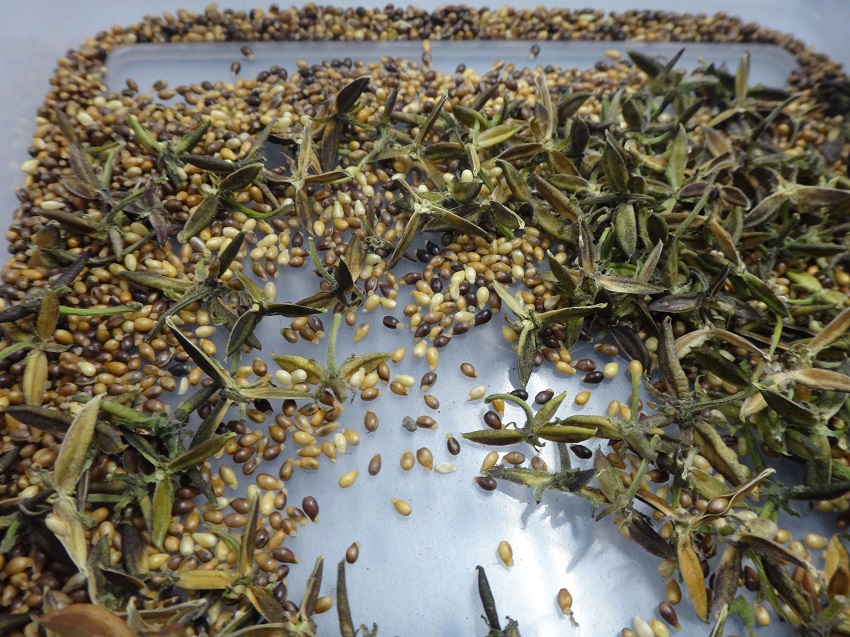
In this photo most of the pods have already exploded and left behind their seed on the bin floor. These are Viola praemorsa seed which is quite a bit larger (at least 2-3x larger) than Viola adunca seed.


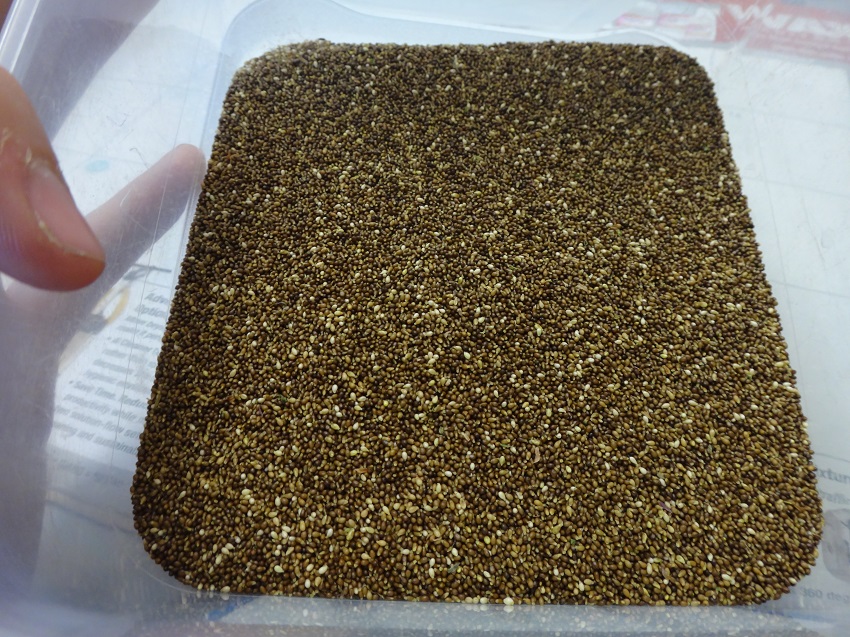
After going through several rounds of sifting with professional grade sieves all that remains is A LOT of Viola adunca seed. It has been a tremendously successful season at WCCW. We anticipate easily surpassing our goal of 2-3 pounds!


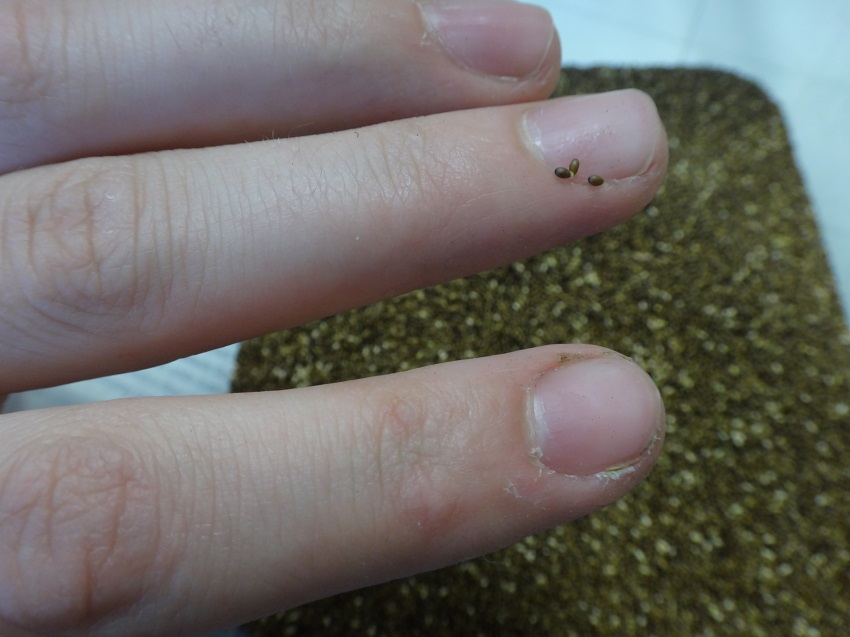
This picture illustrates just how small Viola adunca seed actually is! The small size is another reason why harvesting seed mechanically or after the pods explode is nearly impossible!!

Looking through these pictures one might be able to deduce that the task of harvesting viola seed can be monotonous, and quite time consuming. As technician Tammera Thurlby told me, “I harvested so many viola seeds/pods that when I close my eyes it’s all I can see.” But beyond helping the Fritillary butterflies prairie habitat here in the Pacific Northwest, the caring for and cultivation of violas at WCCW also produces something that might be harder to see – an opportunity for the technicians to grow and heal themselves. “My life has been a lot of taking, so it’s nice to be able to give back,” said Ms. Thurlby.

“Give back to what?” I asked.

“To everything. Helping save an endangered species, doing something positive and constructive with my life rather than destructive,” she replied.

Her words reminded me of what I heard from a technician at Stafford Creek, Michael Gorski; he said to a group of partners, “A lot of what they’re [SPP] growing is people. They’re saving lives – opening the master key for life.”

Little Viola seeds turn into plants with beautiful flowers, which in turn may feed an endangered butterfly; but you never know what kind of seed you are planting in any given moment or interaction when working with people.

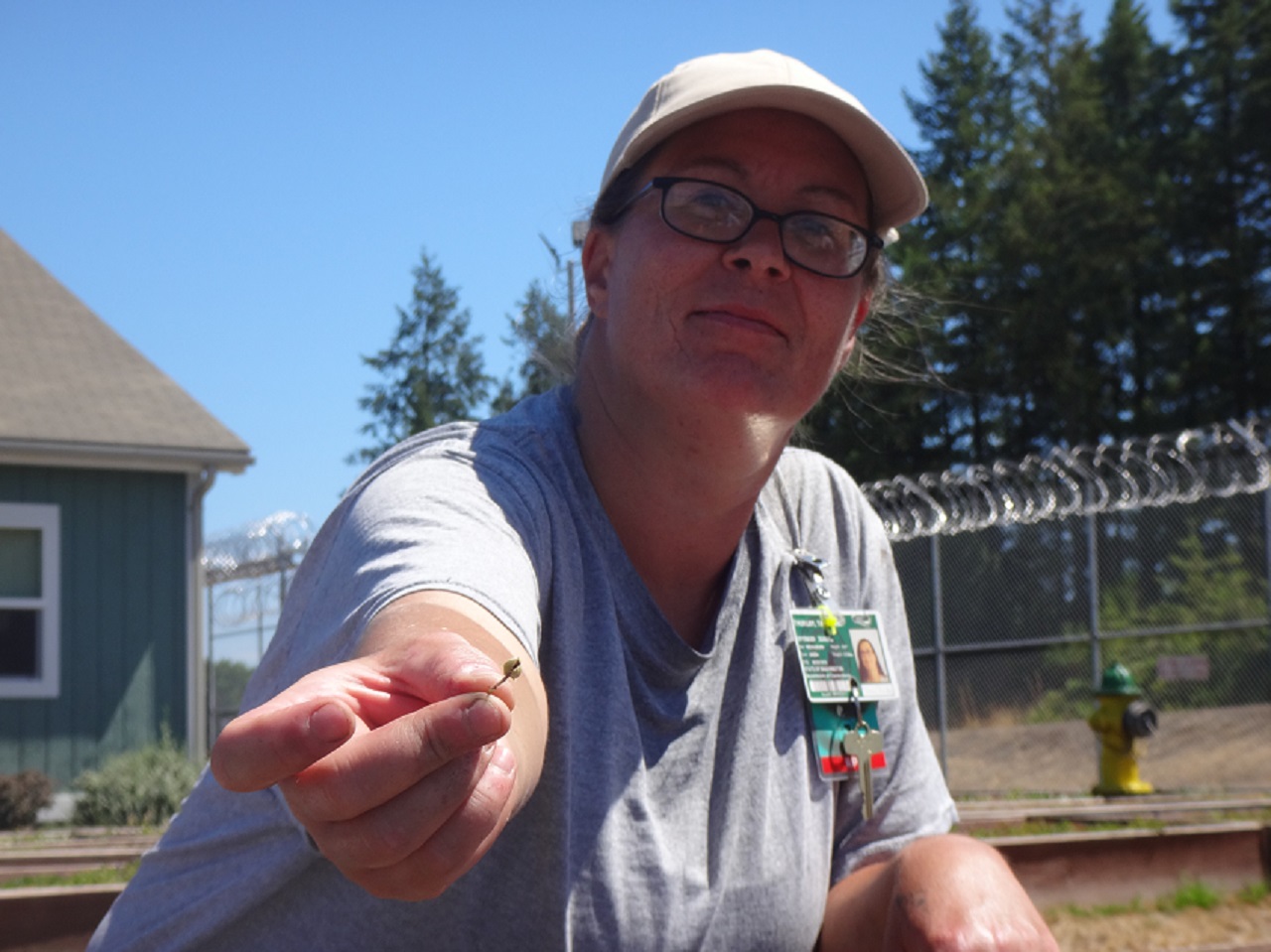
Technician Tammera Thurlby holds up a tiny Viola adunca seed pod during a day of harvesting this past summer.

By Keegan Curry, SPP Taylor’s Checkerspot Butterfly Program Coordinator

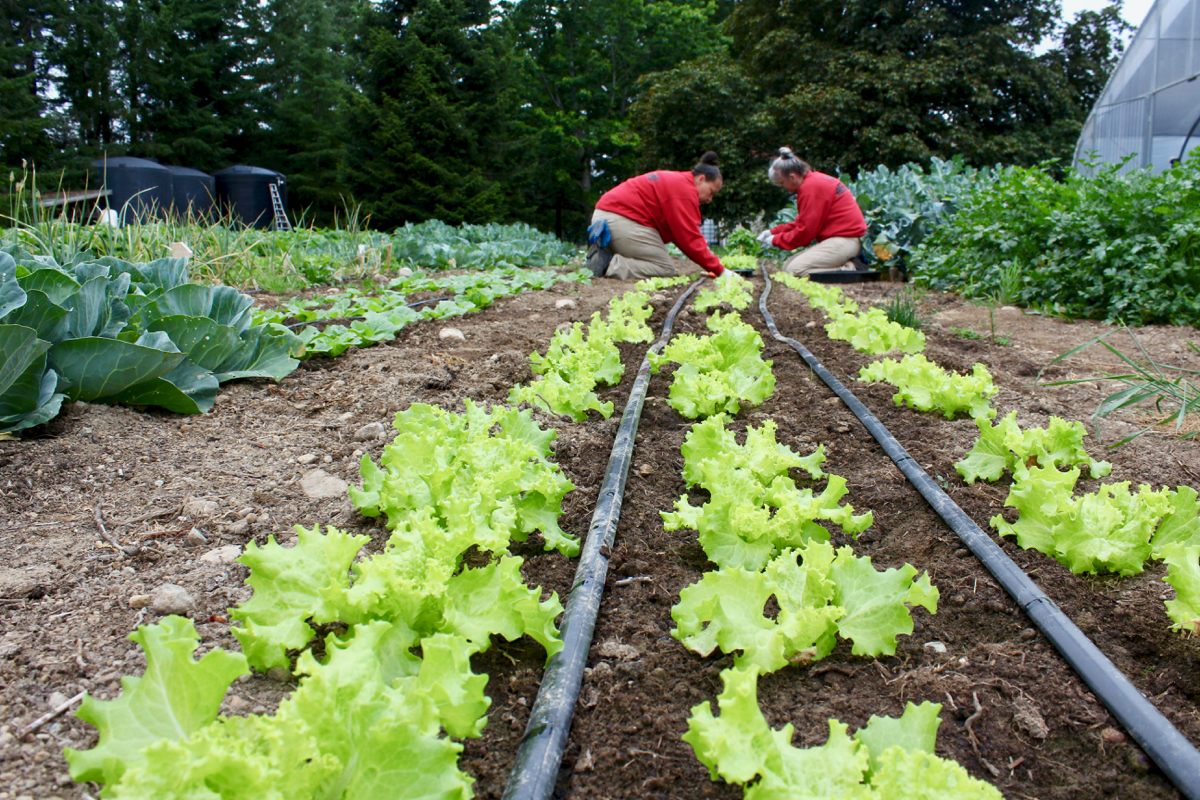
Two community service crewmembers from MCCCW transplant lettuce at the GRACE project.

I recently visited the Kitsap Ecological Conservation District (KCD) near Poulsbo, WA to learn more about their innovative GRACE project. GRACE is an acronym for Gardening for Restoration and Ecological Conservation Education. Each week, a community service crew from Mission Creek Corrections Center for Women (MCCCW) visits the KCD property and

The KCD offers assistance to landowners throughout the county to help improve their water and soil quality, along with managing other resources in the area.

tends a large vegetable garden that provides fresh produce to local food banks. This gives the incarcerated crew a chance to help those in need while gaining valuable skills in small-scale agriculture and farm management.

The project is coordinated by Resource Planner Diane Fish, whose background includes teaching Ag Entrepreneurship classes for WSU Kitsap County Extension. KCD initiated the GRACE project with a $50,000 grant from the National Association of Ecological Conservation Districts, with additional funding from the Washington State Ecological Conservation Commission.

“This is where it all happens,” said Diane as she led me through a hi-tunnel full of lush tomato plants. Beyond the tunnel lay several rows of mixed veggies, including onions, garlic, chard, kale, zucchini, yellow squash, collards, green lettuce, and more. It seemed like a diverse crop for such a small area! Shortly after my introduction to the garden, the crew from MCCCW arrived. Diane described their objectives for the morning and soon everyone had an assigned task, spade or shovel in hand.

Resource Planner Diane Fish coordinates the GRACE project, along with other KCD programs. She is an expert farm manager!

I spoke to the crew as they worked in pairs. “I didn’t know anything about gardening before I started coming here,” said one crewmember as she transplanted lettuce starts into carefully-spaced rows. “Now, I want to have my own garden at home once I get out.”

This sentiment was echoed by many women on the crew. They were also keen to mention that their labor was contributing to a good cause. Not only has the garden produced thousands of pounds of produce for local food banks, but the crew even planted a field of carving pumpkins that will be donated to food bank clients via vouchers; families who receive the vouchers can visit the KCD the week before Halloween and pick out their own jack-o-lantern free of charge!

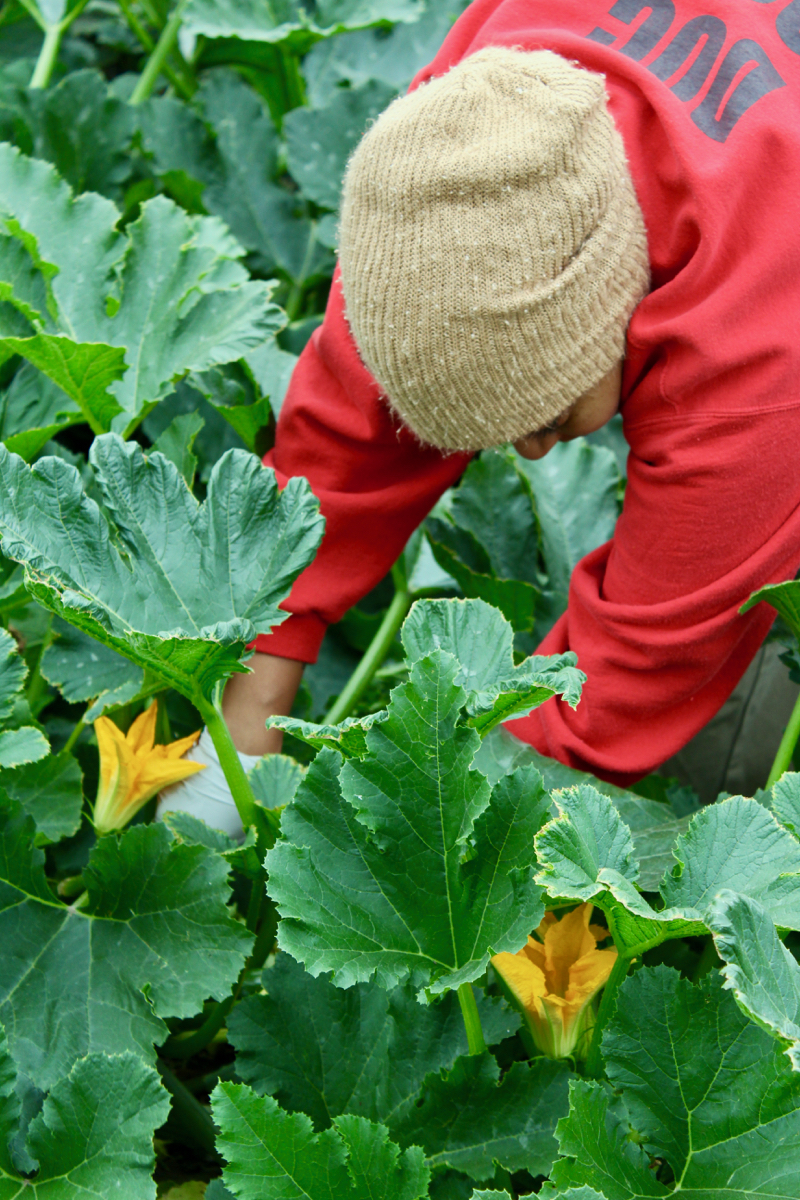
A community service crewmember searches for the ripest zucchini.

MCCCW crews have worked on various KCD projects over the years including stream restoration for salmon recovery, native habitat revegetation, and other less glamorous conservation work. I spoke to Diane again after my visit and she emphasized that these crews “really are saving the world, a little bit at a time, in all the work they do for KCD.” The GRACE project was conceived as a way to enhance the KCD’s existing collaboration with MCCCW. This special initiative adds a meaningful service experience for the incarcerated gardeners while producing much-wanted, high-quality vegetables and herbs for local food banks.

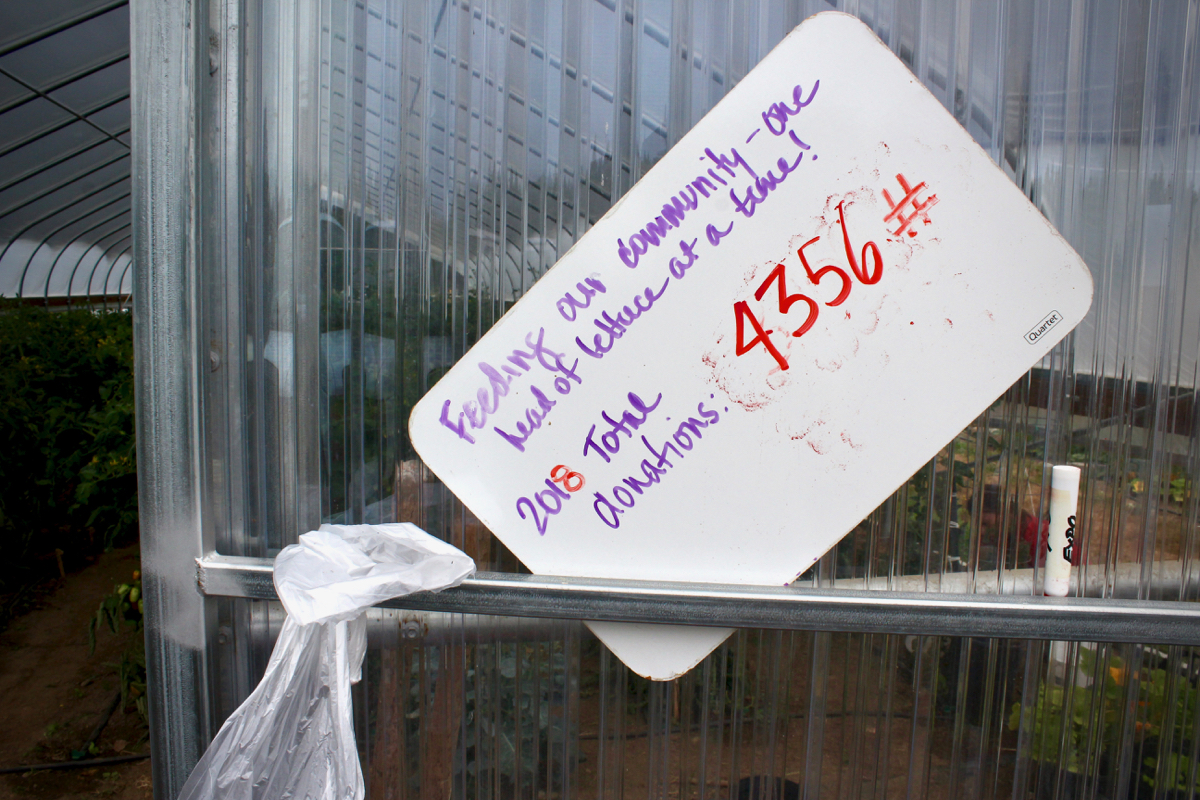
By the end of July, 2018, the GRACE project had donated 4,356 pounds of fresh produce to Central Kitsap Food Bank, St. Vincent DePaul Food Bank, and the Bremerton Foodline. And in an exciting new development, the kitchen at MCCCW has agreed to take donations of produce that can be used for the prison cafeteria.

Thank you to Diane Fish and the KCD for giving me the grand tour, and for working with MCCCW to develop this project. And thanks to the incarcerated crew for getting soil between their fingers as they work to help communities in-need. Yet again, I am reminded of the transformative power of simply growing food.

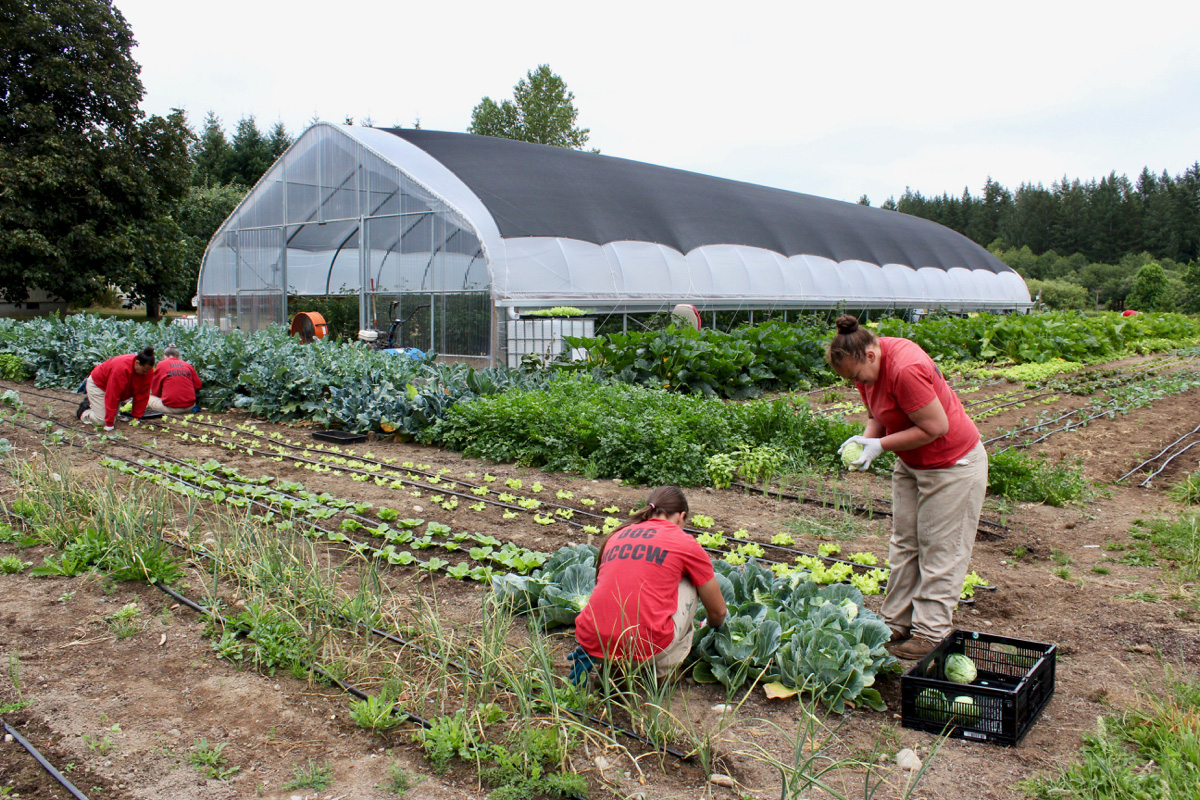
A wide shot of the GRACE project farm, with MCCCW community service crewmembers harvesting produce for this week’s donations.

A running tally of donated pounds of produce for 2018. The year is only halfway over, and the GRACE project farm is designed to yield fresh produce year-round!

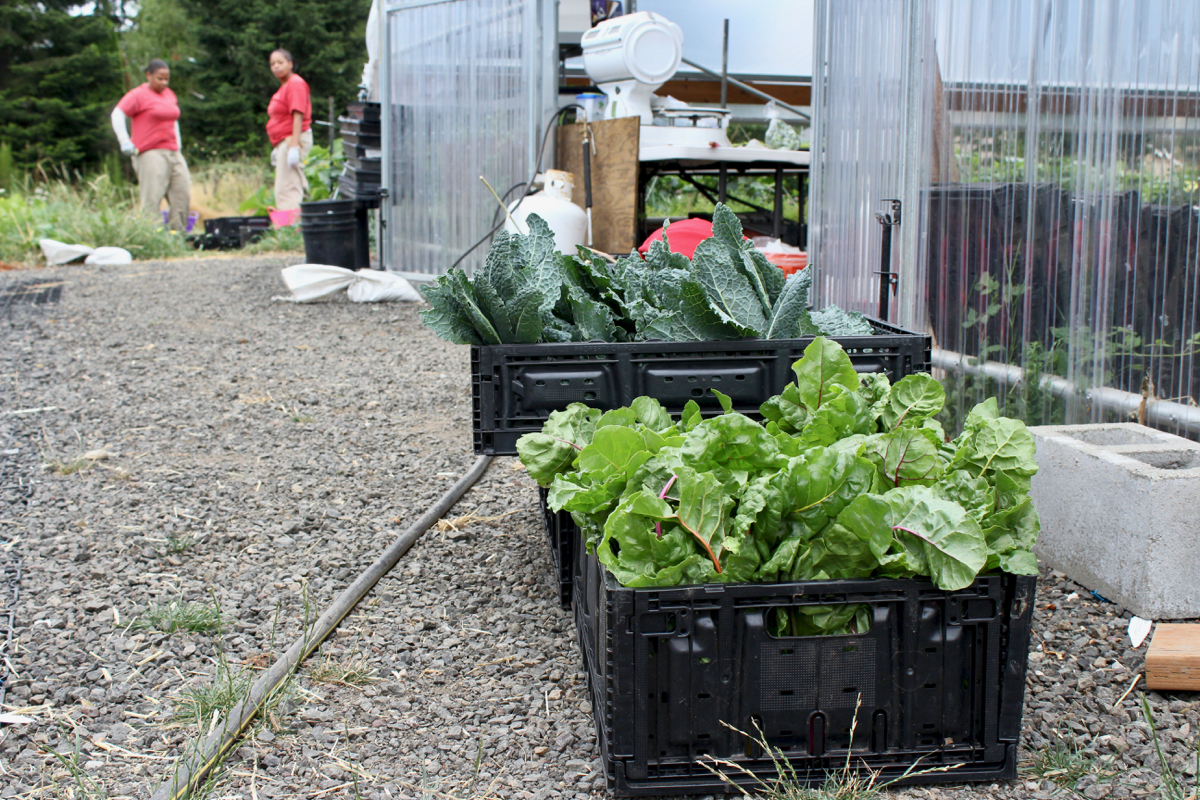
The day’s harvest begins to accumulate as community service crewmembers check on their progress. It’s satisfying to know that these bountiful crates of produce will provide nourishment for those in need.