By Graduate Research Associate Carl Elliott

The end of the growing season brings a lot of clean up and preparation for the Sustainable Prisons Project.  This year’s native prairie plants, raised in conjunction with offenders at Stafford Creek Corrections Center, are ready to be shipped off to their permanent homes. While some of the plants will be sent to Joint Base Lewis McChord (JBLM), others are being distributed across various restoration sites around the south Puget Sound prairie landscape. Many are being planted to enhance habitat sites for Taylor’s (Whulge) checkerspot (Euphydryas editha taylori) butterflies.

Delivery and installation of the 173,336 prairie plants began a few weeks ago and will continue through early spring 2011. For all the partners involved in this fantastic restoration project, this is a great accomplishment. Together we have increased the amount of plants produced by 70% compared to 2009.
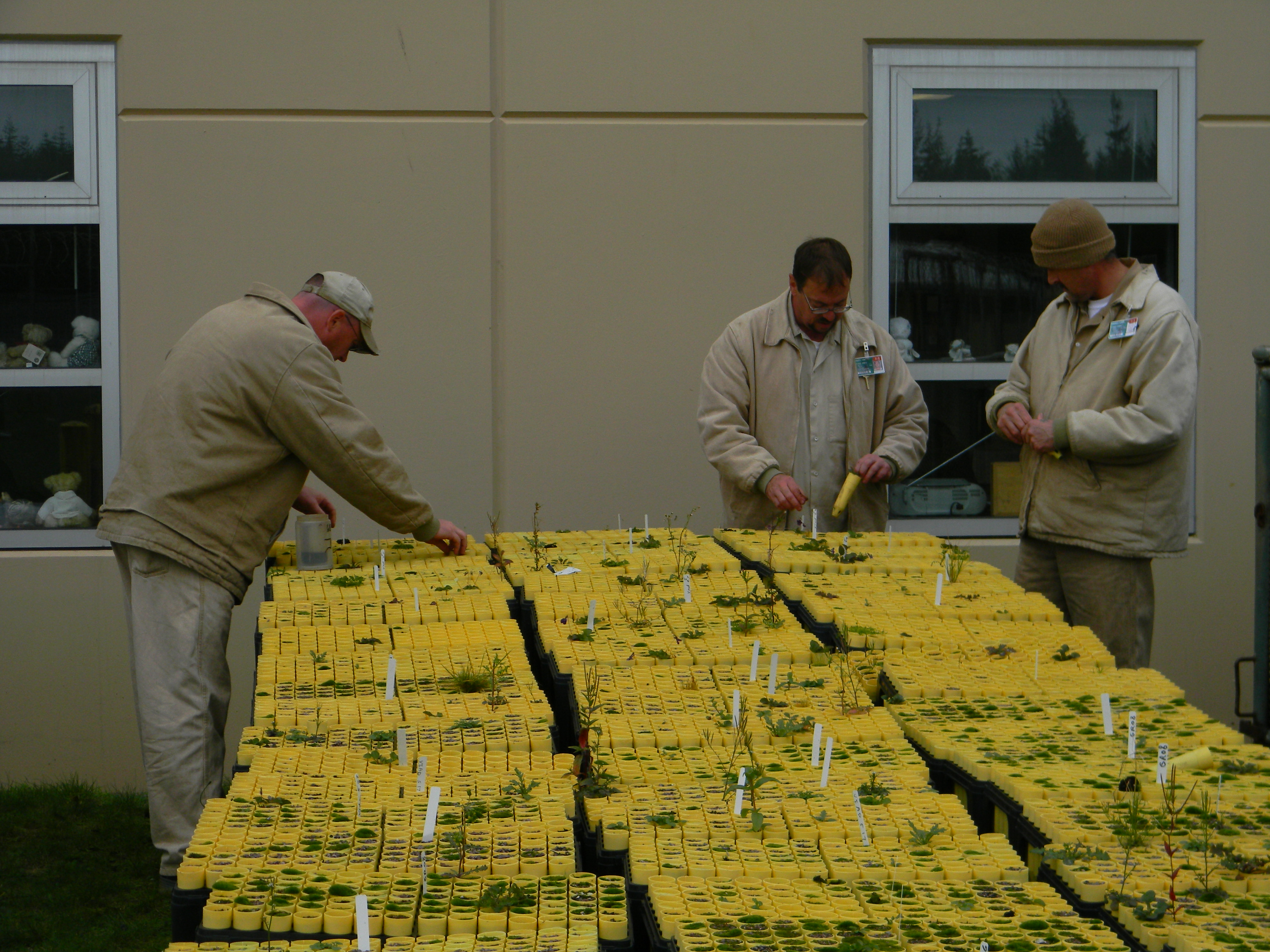
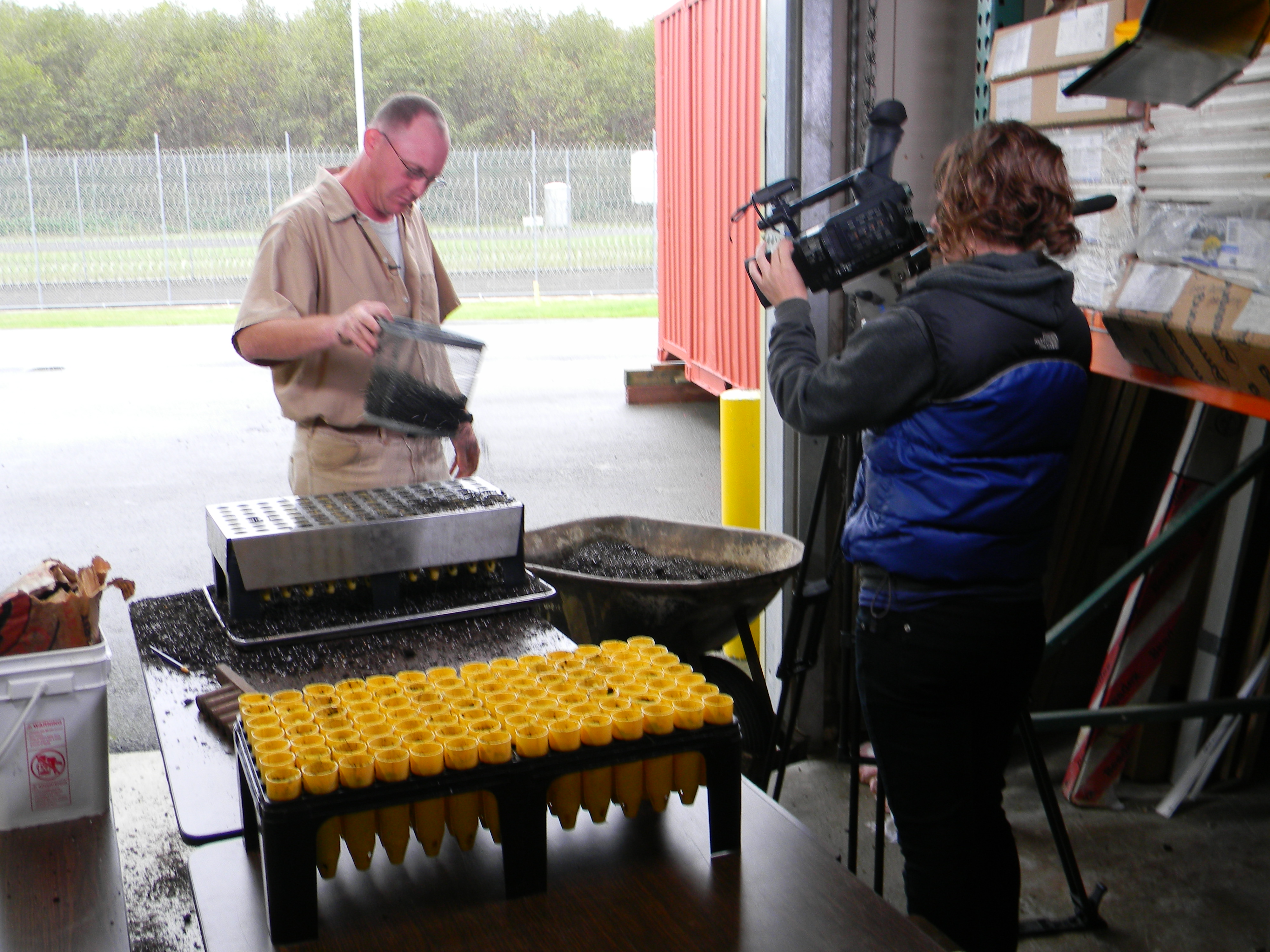
Offenders at SCCC sort prairie plant seeds.

Reaching the delivery and planting phase  is the result of a lot of hard work. One of our biggest challenges has been working with wild collected seed and recalcitrant or difficult germination strategies. The various species of native prairie seeds are sown into yellow tubes or cells, then stored in larger trays. The total number of cells sown by the offenders was 338,485 with 2 to 6 seed sown per cell.  In the end, approximately 5o% of the cells contained plants.  This low fill rate may be caused by the quality of the seed material, the low viability rate of the seed, or the variability in the dormancy to germination process.  The prairie plant restoration project at Stafford Creek Corrections Center is an evolving process – there still a lot to learn about how to best grow these native prairie plants.  Our cooperators at The Nature Conservancy are working every season to improve seed quality through better collection, threshing, and processing techniques.
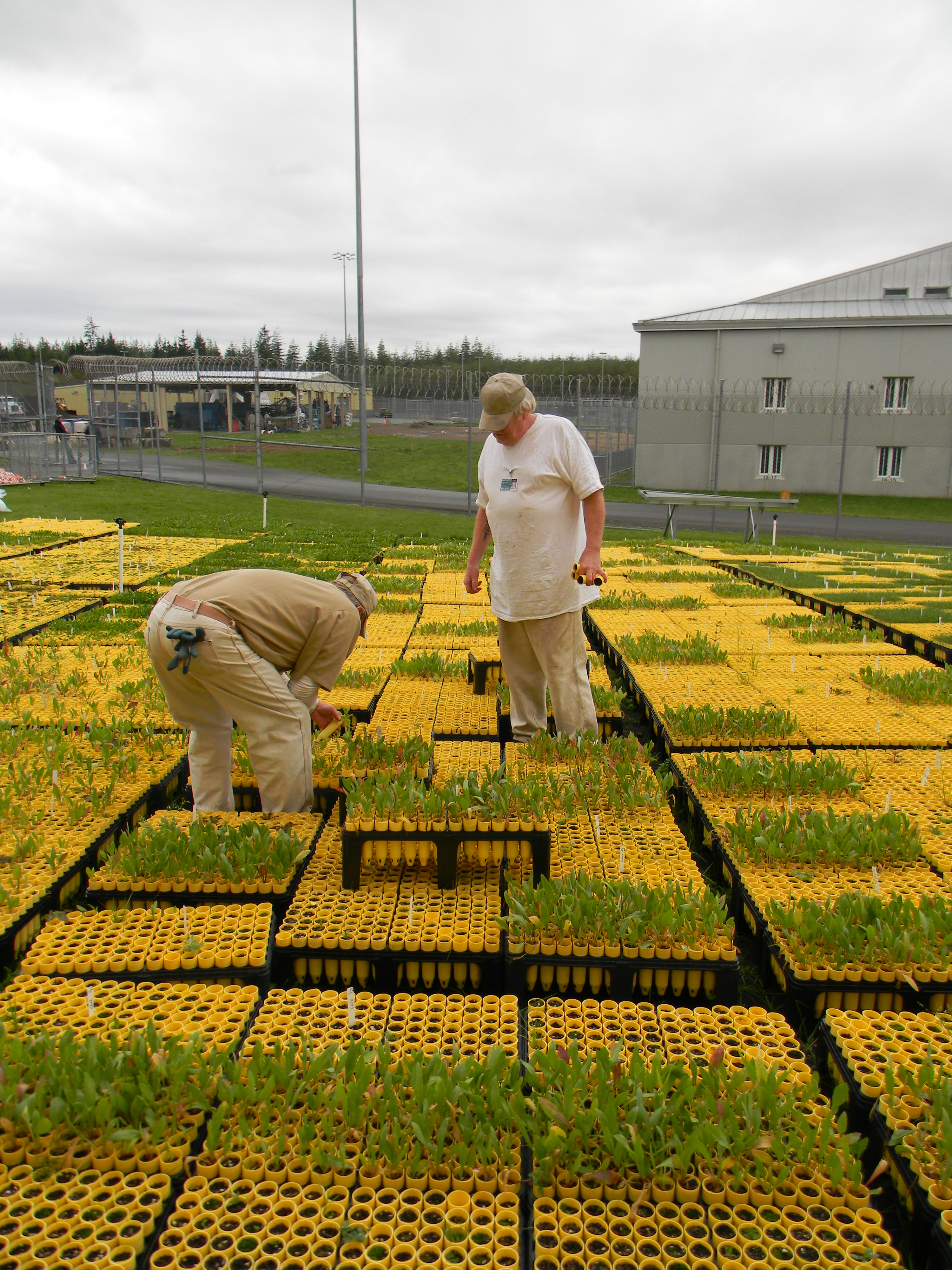
Offenders raise thousands of prairie plants each year.

Another factor in the low success rate per cell may be human error. Working with so many plants is just plain difficult sometimes. However, with time and experience the tasks become easier and more expertly accomplished. The current crew of offenders has worked diligently this summer to hone their skills and improve the efficiency of the nursery project while also improving morale and camaraderie. This effort shows in the number and quality of plants produced. They will also be able to help train and pass on these skills to offenders in the future, which will add to the success of the project.

Part of mastering any skill is the ability to teach it to others. The process of teaching a skill causes us to look more closely than we usually do to the mechanics of how we perform a task. Work conditions in a corrections center lead to frequent turn-over in the offender employees. Some sort of training tool was needed to get new offender employees up to speed and give them an understanding of the context and purpose of the nursery project.  The well-trained and skilled crew at SCCC recently helped create a video to serve as a training tool for new offenders working on the project.  Over the course of a few weeks, offenders practiced developing a script around their particular expertise in the production process. We decided to focus on five skills: 1) preparing soil and fertilizer in the cell trays, 2) sowing the seed of three species with differing seed sizes, 3) covering seed with soil or gravel grit, 4) record keeping  and 5) watering, weeding and cultivation skills.

Filming at Stafford Creek Corrections Center

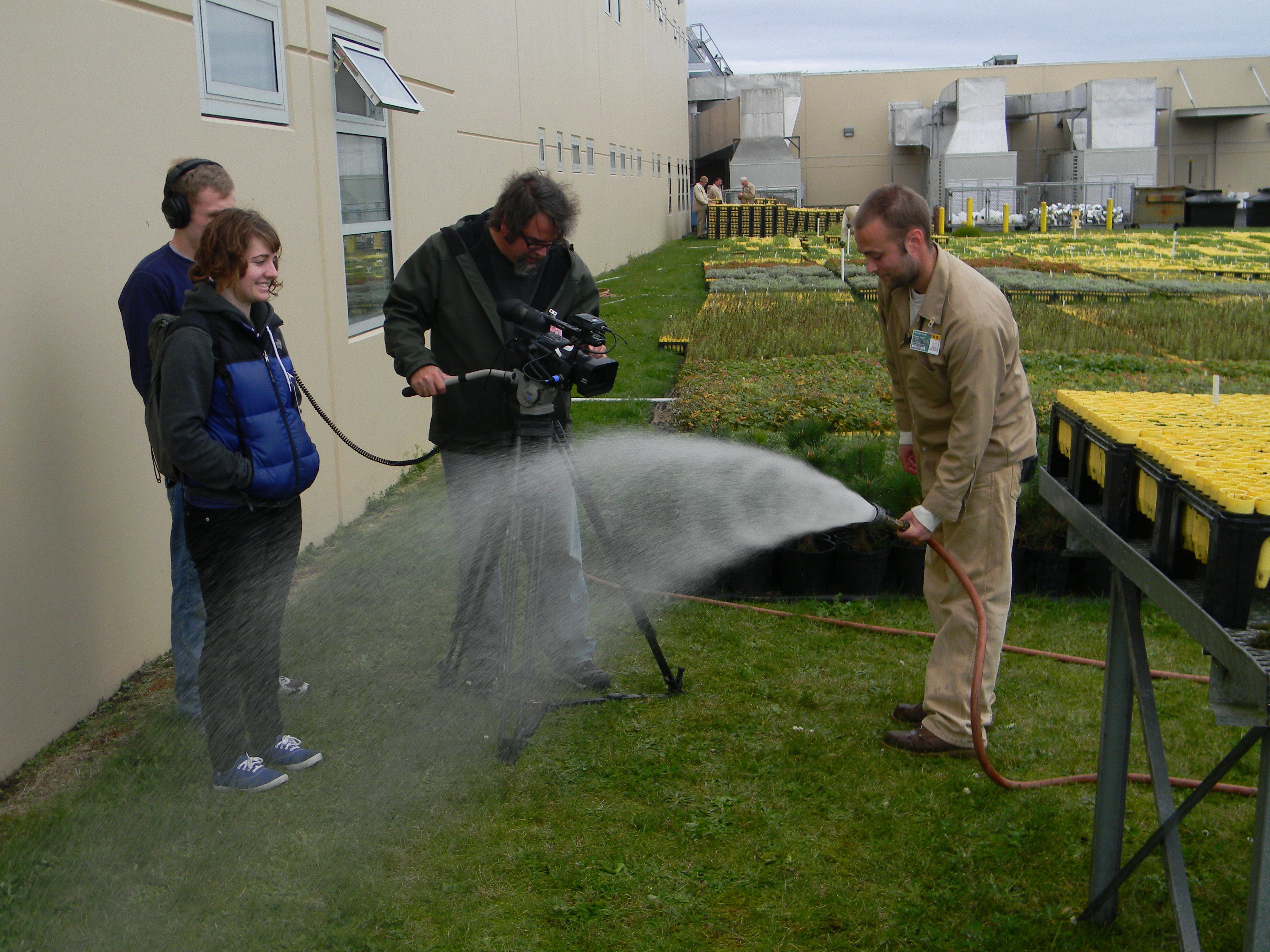
The Center for Creative and Applied Media (C-CAM) at The Evergreen State College provided the production help and equipment for a day of filming at Stafford Creek. The students and staff from C-CAM did a fantastic job drawing out the script from the offenders, as well as setting up and framing the video.
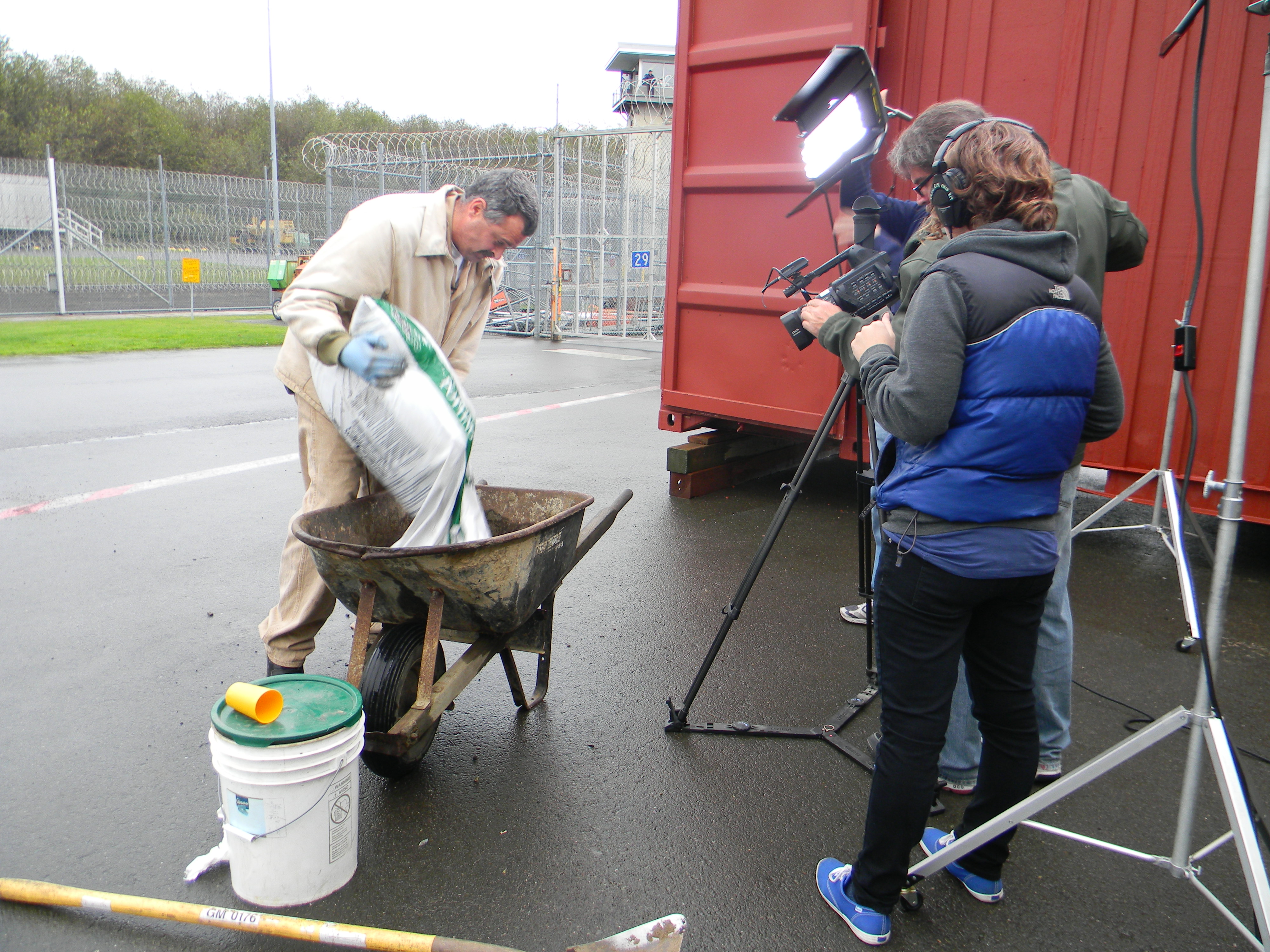
Mixing the potting soil and adding the appropriate quantity of fertilizer.
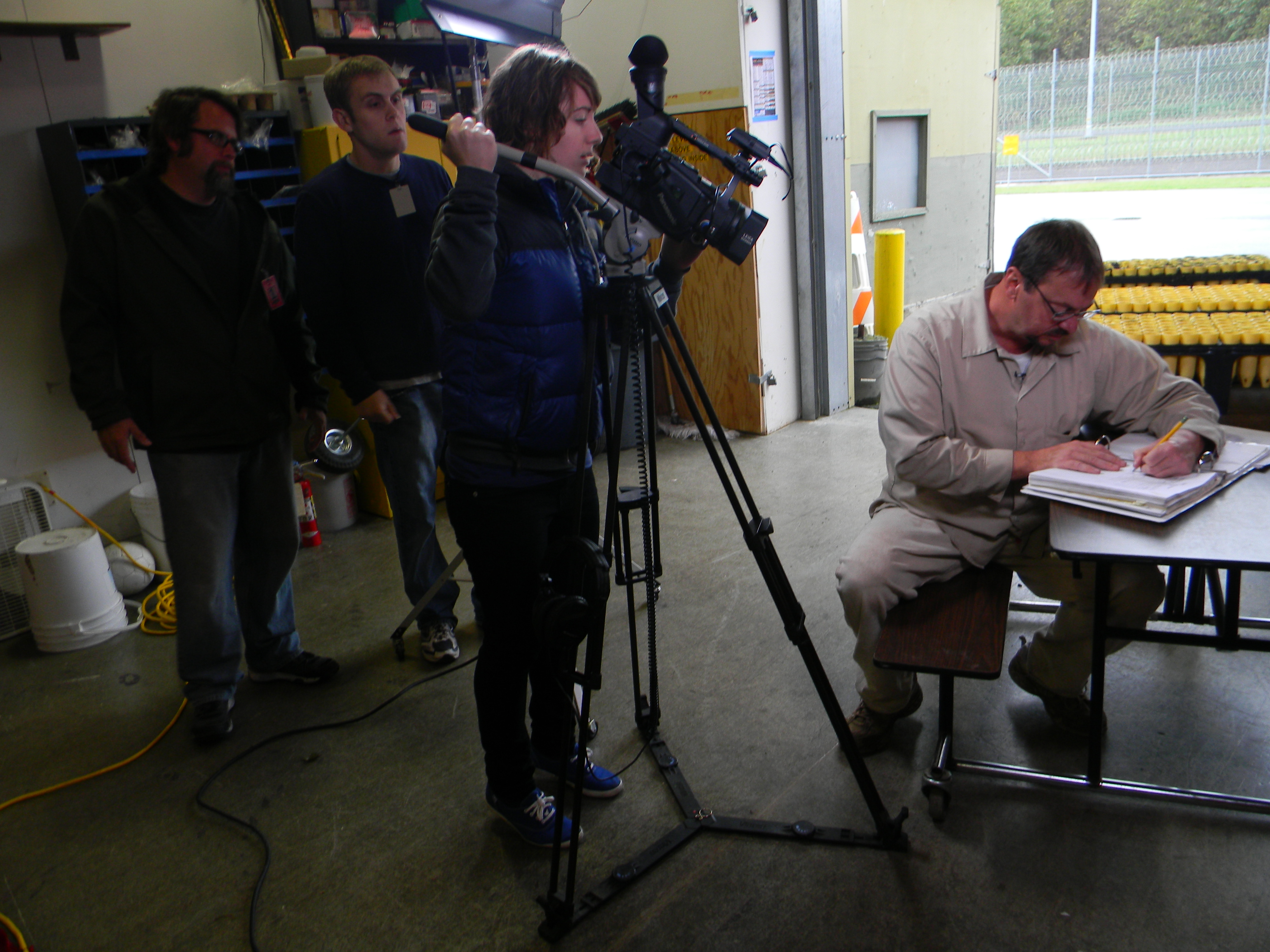
Record keeping is vital to improving the long-term success of the project.
Applying the right amount of cover soil over the seed.
Preparing to water in newly sown seeds with a gentle spring rain of water.

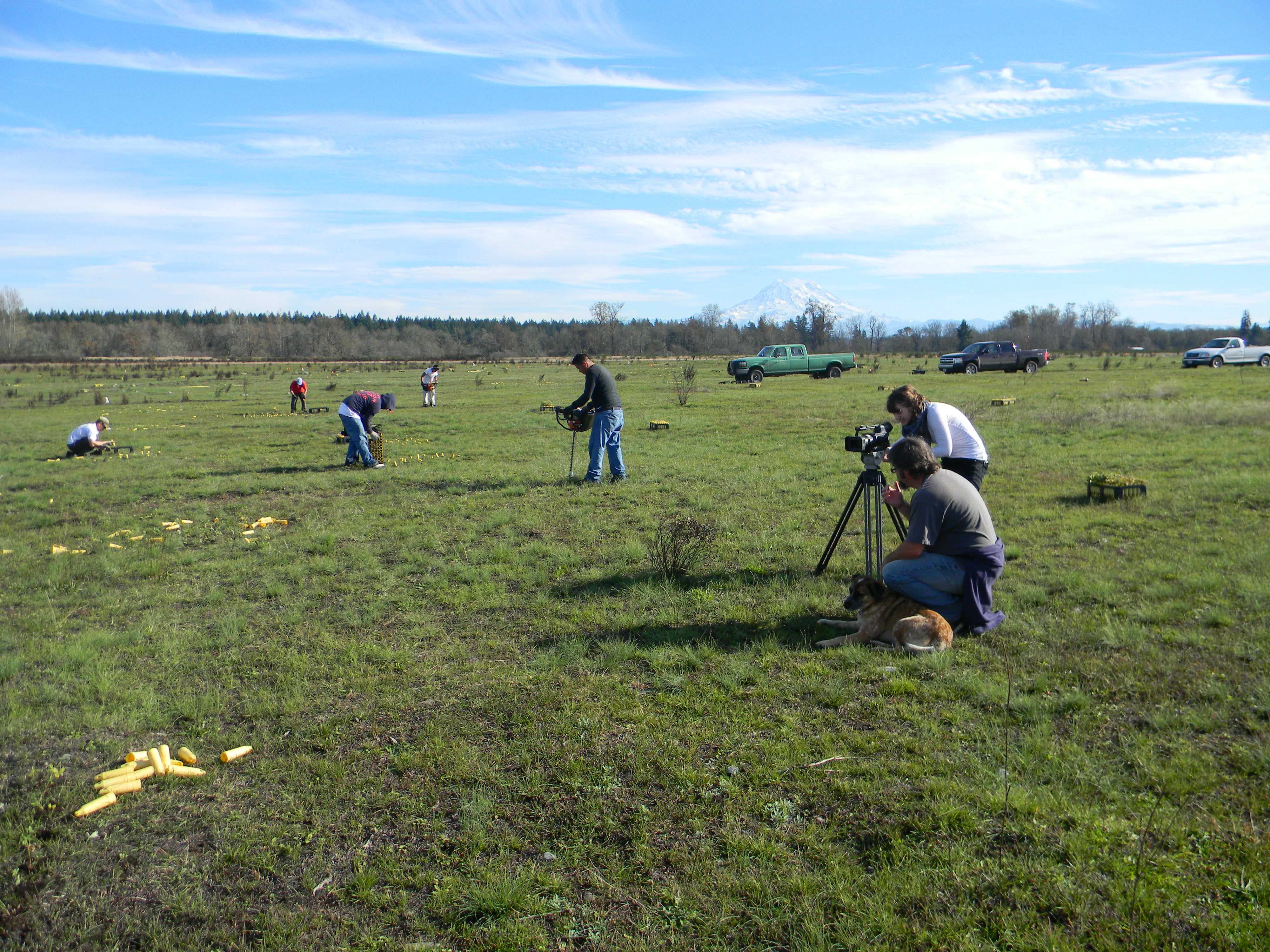
The training video would not be complete without providing the context for why this nursery project exists. The nursery work and skills are good training for offenders, but another goal is to restore important prairie habitat for threatened and endangered species throughout the south Puget Sound. Some of the plants from SCCC were delivered to a prairie on Joint Base Lewis McChord (JBLM). During the first week of November, a hard-working field crew was on hand to plant out 30,000 plants to increase butterfly nectar sources and serve as larval hosts.

Filming at the Joint Base Lewis McChord Plant Out
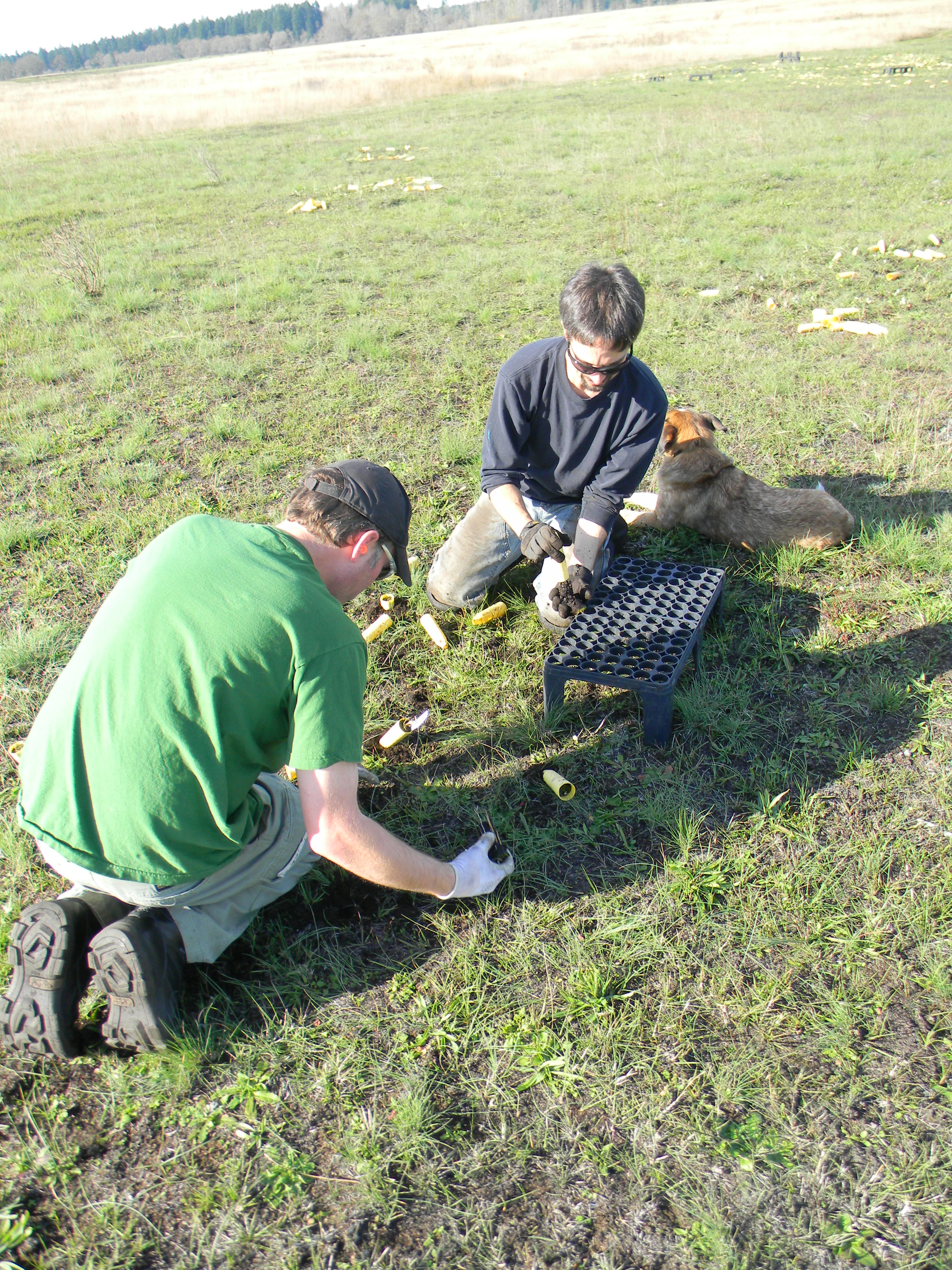
Up close and personal with some of the plant out crew; each of the 30,000 goes in one at a time.
Filming the plant out crew with Kimi the prairie dog.

Luckily, nature provided us with a spectacular backdrop and view of the prairie lands at JBLM, perfect for filming a training video.  The students from C-CAM were able to practice filming a wide variety of shots.  The resulting video will be edited over the next few months, voice-overs added, and it will be finished in February. This will be a valuable training tool for new offenders joining the nursery crew during 2011.  As training improves and new discoveries are made each season, we look forward to improved native plant propagation operations.   Watch for the finished video on our web site February 2011.
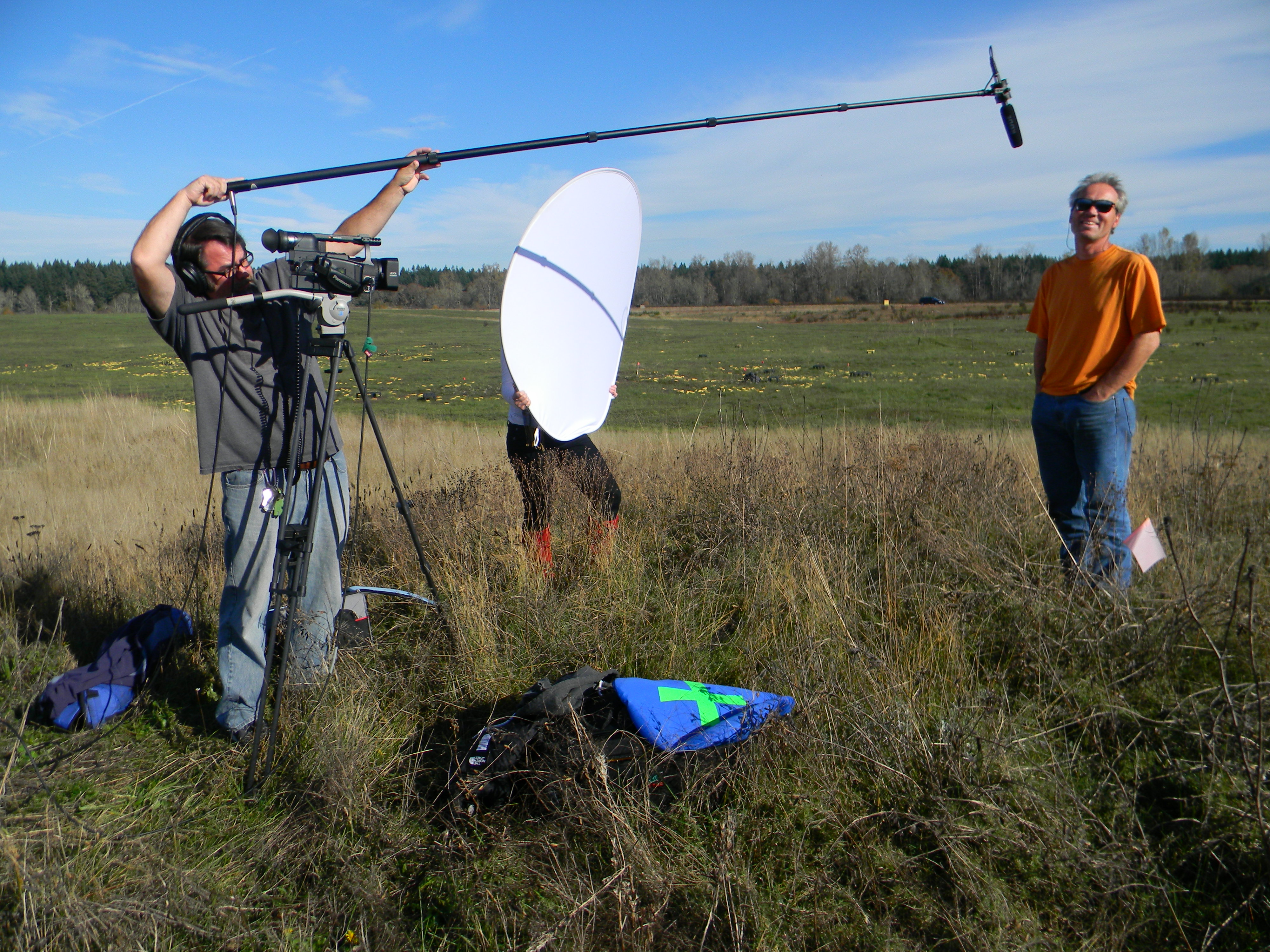
Rod Gilbert of the Fish and Wildlife Division of Joint Base Lewis McCord explaining the importance of the plant production to prairie restoration for the film.

By Graduate Research Associate Jill Cooper

This past spring, Cedar Creek Corrections Center and the Sustainable Prisons Project began experimenting with a new captive rearing project to raise crickets.  The goal of the project is to create a more sustainable, stable supply of food to meet the demand created by housing a growing population of endangered Oregon Spotted Frogs. Crickets are one of the largest expenses for the frog project. Cricket suppliers are located out of state.  Long-distance shipping complications can impact frog feeding schedules, and definitely increase the project’s carbon footprint. As a result of these issues, the offenders at CCCC decided they would try their hand at cricket husbandry and breeding.

Few organizations in Washington raise their own crickets. Most suppliers, including pet shops, purchase crickets from out of state breeders.  By locally-growing crickets for the Oregon Spotted Frog conservation project, SPP offenders and staff are taking another step toward creating a more sustainable, cost effective, and stable food supply.

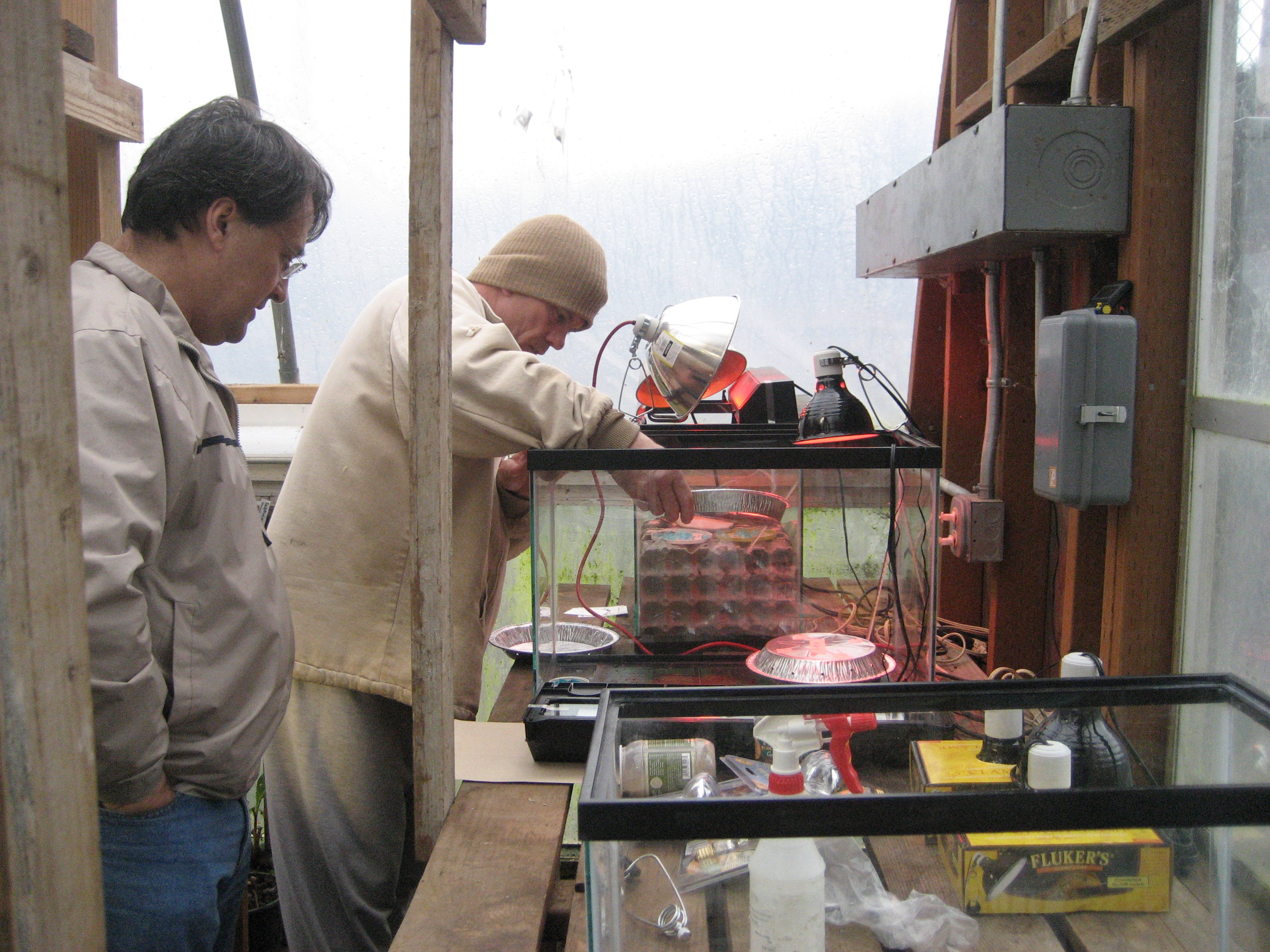
Inmates and scientists are discovering best practices for rearing crickets.

The Project is also contributing to scientific knowledge, compiling best practices protocol for raising crickets in temperate climates through trial-and-error experimentation. While visiting with offenders to check on how things have progressed, SPP Research Associate Jill Cooper was impressed to see how much the offenders had learned through observation and experience, in such a short amount of time. One inmate explained to her how the current batch of “breeders” that were delivered to the prison, “aren’t really the age which the cricket farm said they are.”  He pointed to the “ovipositor” or egg-depositing tube noting that they were obviously under developed and not ready to lay eggs yet.  Crickets chirp to indicate when they are ready to breed.  The inmate is considering starting his own cricket farm when he is released to offer a more sustainable source of crickets to customers here in the northwest.

Training Officer Ron Gagliardo of Amphibian Ark recently made a visit to CCCC to advise inmates and staff on the cricket rearing operation.  Previously from the Atlanta area, Ron has extensive experience with frog and cricket rearing.  He was a tremendous resource.  The inmates were able to ask him many questions and his input will undoubtedly improve upon the initial success of the cricket operation.

There have been many bumps along the way, but things have been looking up for the cricket operation.  Offenders are able to raise crickets to help supplement the frog’s diet, and have learned much in the process. While the cricket project can not yet support all the food needs, we estimate that the current operation will eventually support at least half of the crickets needed to feed about 200 frogs.

By Graduate Research Associate Jill Cooper

Releasing frogs at Joint Base Lewis-McChord

It has been another successful season rearing Oregon Spotted Frogs at Cedar Creek Correction Center.  A total of 1,346 were released into a wetland site on Joint-Base Lewis-McChord.  The four rearing institutions (Oregon Zoo, Woodland Park Zoo, Northwest Trek, and Cedar Creek Corrections Center) came together to release this year’s batch of frogs into the wild; a collaborative effort to stabilize the native populations.

The Sustainable Prisons Project has been working with Washington Department of Fish and Wildlife and Cedar Creek Correction Center (CCCC) to raise endangered Oregon Spotted Frogs since 2009. CCCC boasts having the largest frogs of any participating rearing institution, with100% of this year’s frogs large enough for release into the wild.

CCCC’s rearing success can be attributed to the amount of time and attention the offenders are able to give the frogs.  The offenders form genuine bonds with the frogs; some are given names, like “Lefty” or “NASCAR.”  The few deceased frogs have been placed in an offender-created “frog cemetery,” with hand-made gravestones.  One of the inmates patiently waits with his hand in the frog pond, and frogs will often come sit in his hand to be pet.

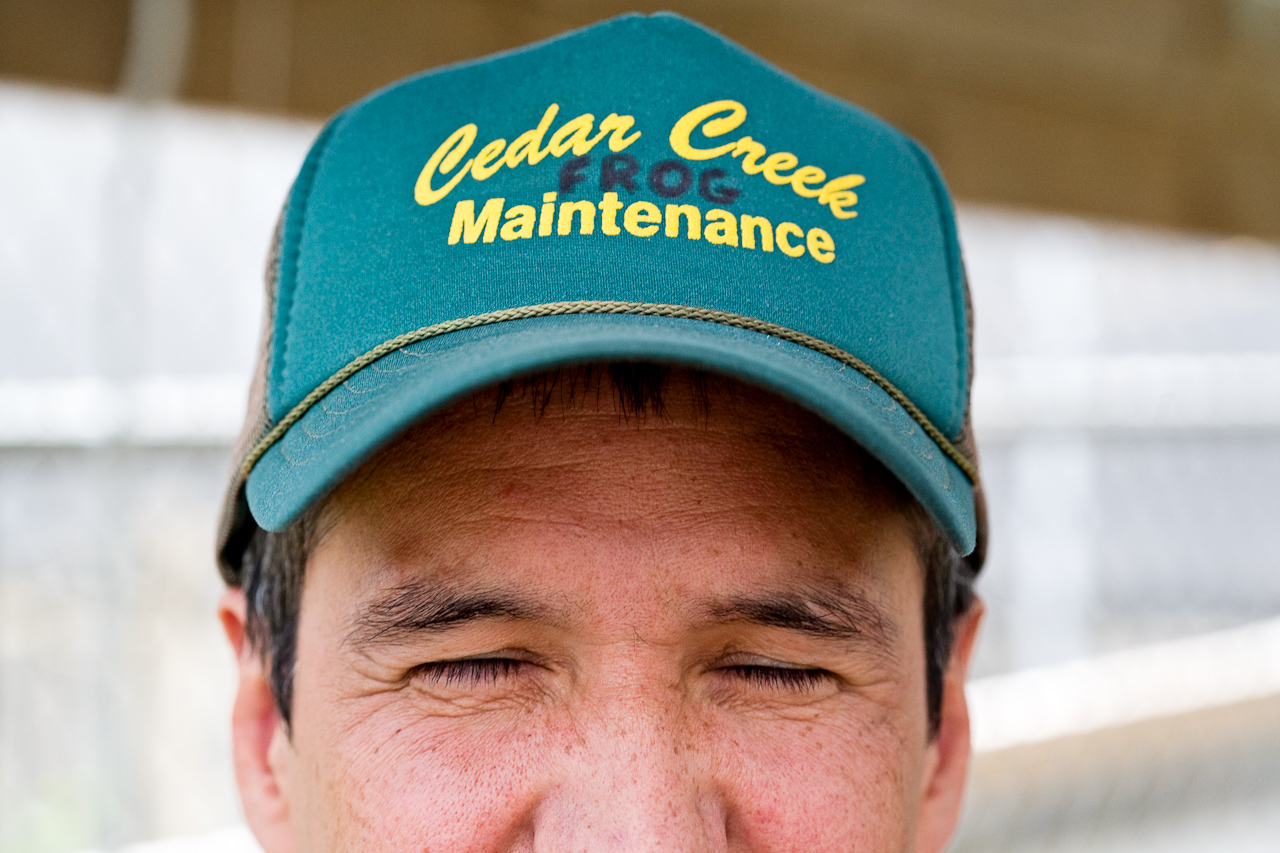
Cedar Creek Frog Maintenance

The day of the release, the frogs were loaded into containers and driven north to Joint-Base Lewis-McChord and their new home. CCCC is a minimum security pre-release facility, sometimes referred to as “camp,” where offenders are sent with minimal time remaining on their sentence. For participating offenders, the release of the frogs in part symbolizes their own impending release back into society.

Superintendent Doug Cole and Classification Counselor Marko Anderson of CCCC along with SPP Student Research Associates Liesl Plomski and Jill Cooper had the opportunity to release some of the frogs.  “It was a sight to see all 1,346 frogs hop into the water and instantly disappear with their well camouflaged bodies,” said Cooper.

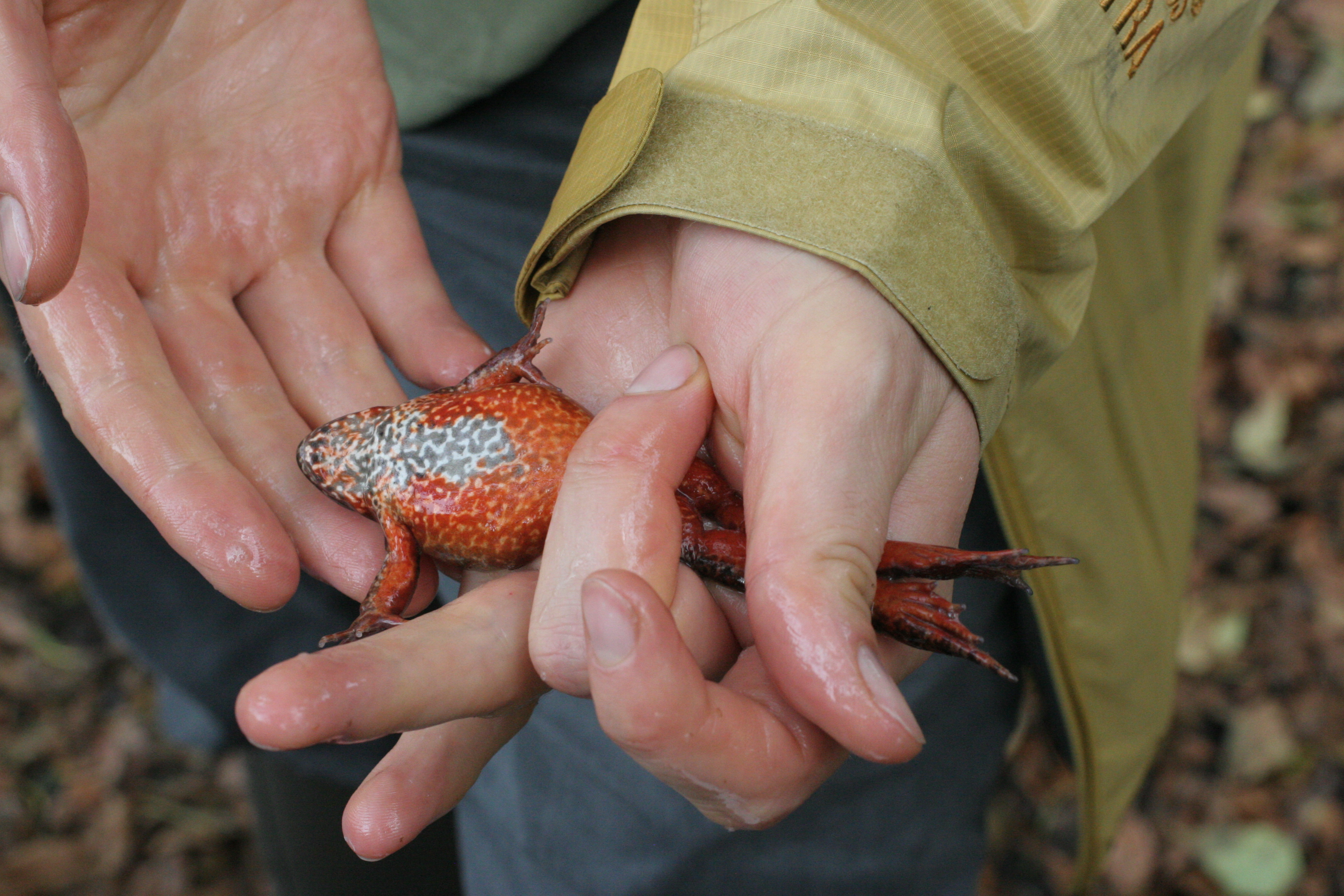
Red coloration indicates healthy growth

Each frog has a micro-chip and will be tracked by volunteers who regularly visit the wetlands to conduct research, using special wands that detect the frogs’ signals.

At the conclusion of the release, 29 of the frog “runts” from other institutions were taken back to CCCC because they were not large enough to be released.  These frogs will be nurtured during the winter and released in the spring.  One offender says that this new batch of frogs is, “more skittish than the last;” hardly any of the frogs come sit in his hand.  Nevertheless, they are rapidly growing.  In just the past few weeks, the frogs have gained weight and are already beginning to show some red coloration. With another successful year of frog-rearing logged, the future looks bright for the Cedar Creek frog team.