Part Three: Session at the Women’s Prison

If you haven’t already read Part One, you can do so here, and Part Two is here.
Photos and text by Joslyn Rose Trivett, SPP Education and Outreach Manager
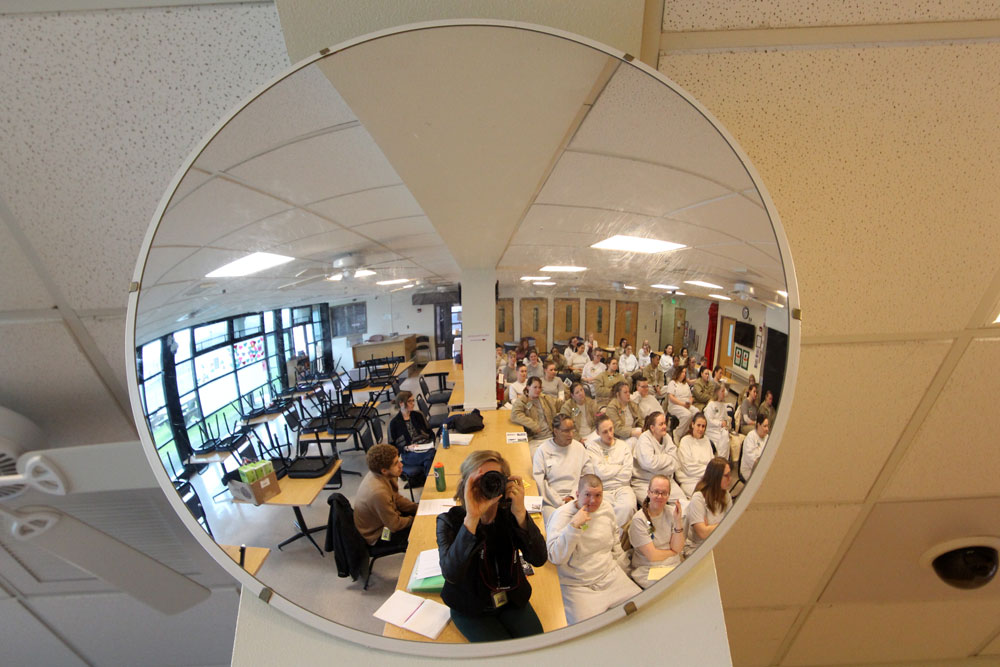
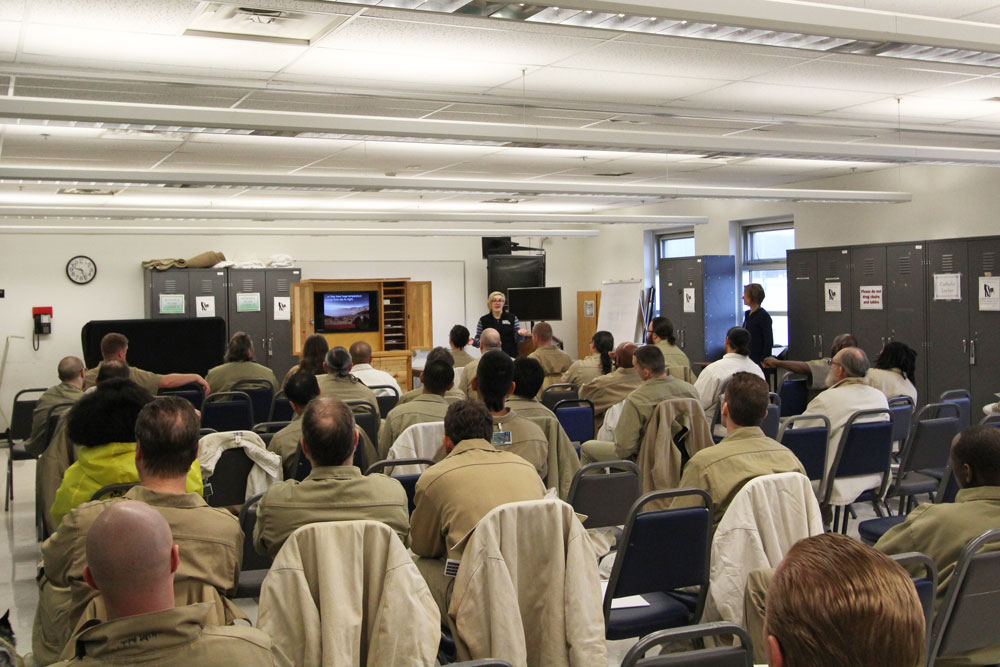
The WCCW visit room and sometimes-classroom is captured in the mirror at the front.

In January, we presented lecture survey results to students at the men’s prison, and gathered their feedback and ideas (that story here). We needed to repeat the process at Washington Corrections Center for Women (WCCW), but had to wait until there was an opening in the lecture series schedule. That time came in March.
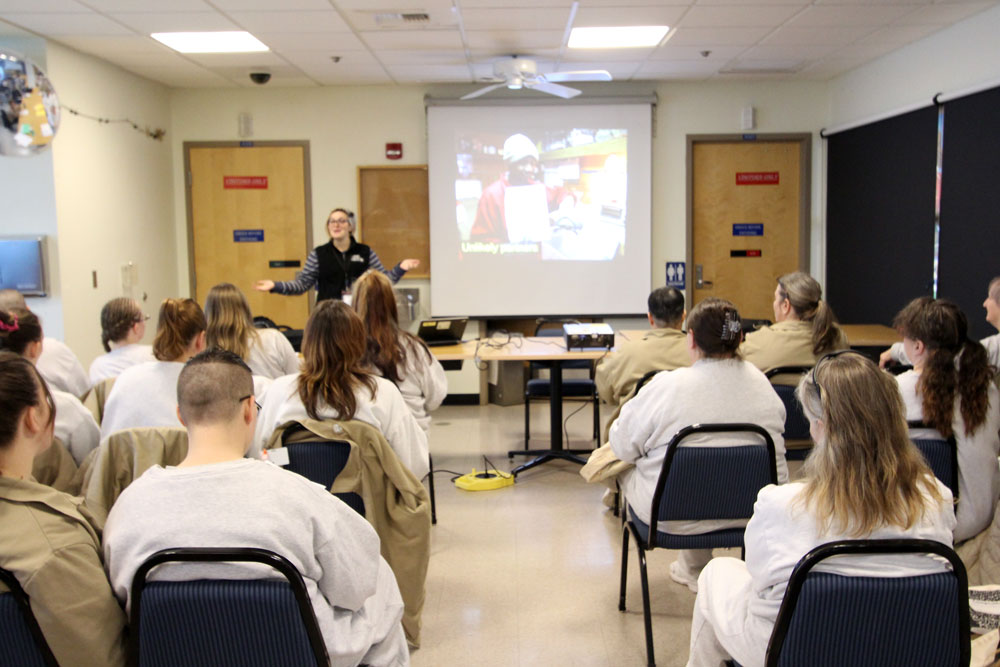
As a part of the presentation, Liliana also gave an overview of SPP programs statewide and at WCCW.

The program classroom at WCCW can have a very different feel than the one at Stafford Creek Corrections Center. Lectures are held in the visit room. The layout is not ideal, and the buzz of vending machines can be a distraction. That day, we learned from the students that program demand is met just fine by the seats and sessions available—they aren’t clamoring for more, like we hear from the male students. While Stafford Creek has nearly 2,000 residents, WCCW has less than 800, and WCCW residents can choose from a relative abundance of programming. These factors likely contribute to a somewhat more casual classroom atmosphere than at the men’s prison.

Again, Liliana Caughman presented her report from the lecture series surveys, and again the students nodded with agreement at the results. However, this group was more quick to talk about a negative result: the small number of students (5%) who respond negatively to the lectures. A student self-identified as one of these, and I was glad to hear more from her when we broke into small groups: her critique was more acute than others’, but the particulars were similar to widely-expressed comments.

More engaging!
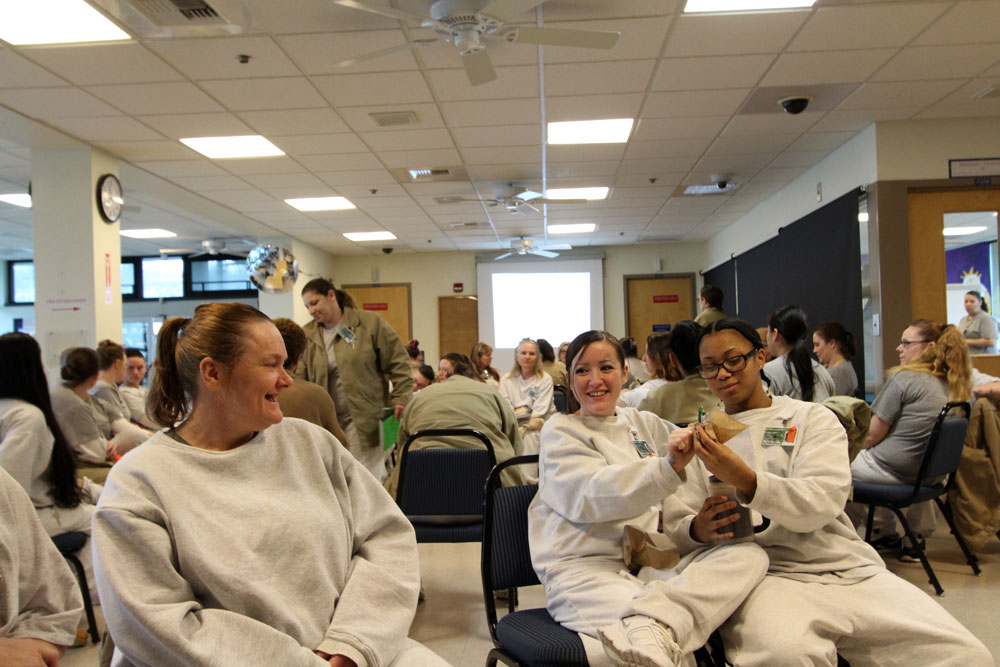
In my small group, we passed a talking piece to make sure everyone had chances to talk, and I think it made for a high quality discussion. A few students shielded themselves from potential germs by only handling the talking piece with the help of a napkin.

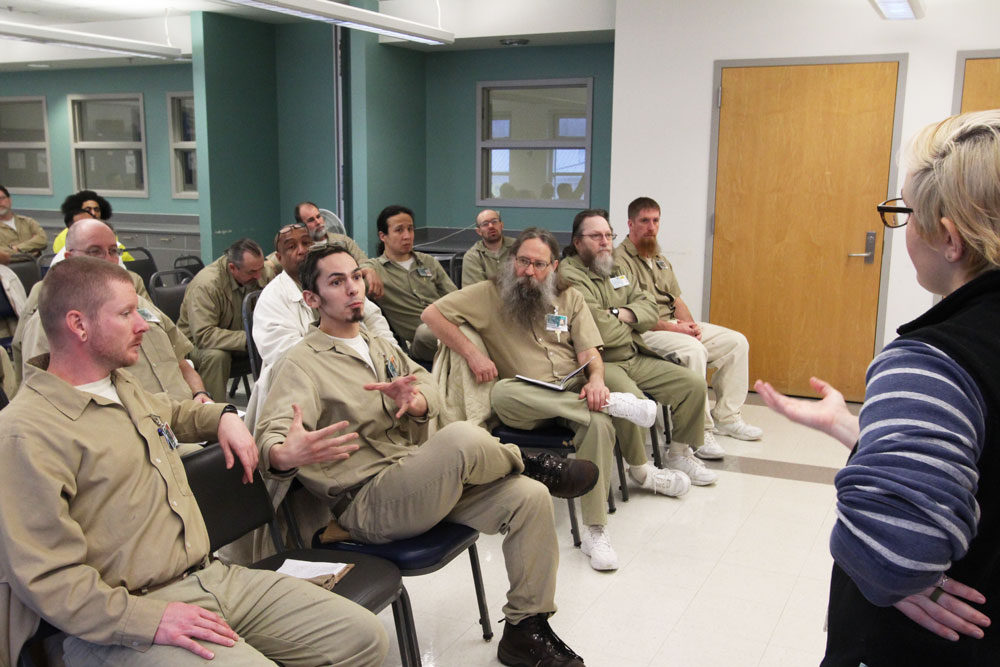
Liliana, Elijah Moloney, and I each sat with a third of the group to further discuss the program and program surveys. From nearly everyone in my group, I heard that they want more interactive and varied sessions. Several students said they struggle to sit still and pay attention through a 90 minute presentation. I heard that a short presentation is fine, and especially if it includes a way to take notes (we would need to provide the paper and pencils), humor, specimens, live animals, or video. They asked us to make time for writing, worksheets, quizzes on the content, games, and individual or small group exercises. Overall, they want content that’s more “sticky.” All this lead to the most potent suggestion: they aren’t very interested in lectures, so why not call the program something else?

Good point! I recall Sarah Weber’s research 2012 study that “… the lecture-style presentations appeared more effective for for male students, whereas workshop-style presentations appeared more effective for female students in improving inmate knowledge and attitudes on environmental topics.”  More recent results from the men’s prison, including what we heard during the January session, point to a wide-spread preference for interactive, more engaging sessions. Lectures may be more effective at conveying information, at least for some groups, but workshops have a wide-spread, strongly positive effect on environmental attitudes.

Topics & Surveys

The students asked for sessions on sociology, psychology, communications, physiology, mental plasticity, and evolution. These are some of my favorite topics too.

Like the male students, they asked for more knowledge questions. A few suggested more variety in the questions about attitude, so that respondents are less likely to answer automatically.

What next?

I find it super satisfying to have extensive qualitative and quantitative results on the program; it makes it easy to decide what next! Here is what we will do:

  • Rename the program. Science and Sustainability Lecture Series has served us well for years, but it’s time for an upgrade. Program partners have agreed on Environmental Engagement Workshop Series.

  • Update guidelines for guest presenters, with pointers on how to create inspiring, challenging, “sticky,” content.
  • Recruit guests with expertise on social, political, physiological, and evolutionary aspects of the environmental field.
  • Increase the number of knowledge questions on the surveys.
  • Use a larger set of attitude questions, varying which are included each time; some questions will ask about identity and plans for action.

We have already started work on each of these actions. Liliana has started using the new name with guest presenters, and was pleased to see that the word “workshop” had the desired effect on their planning and facilitation.

I still recognize that seven years’ data from the Science and Sustainability Lecture Series showed us that the program has been enormously successful and well received. Now we are ready to make it even better!
Part Two: Session at the Men’s Prison

If you haven’t already read Part One, you can do so here.
Phot0s and text by Joslyn Rose Trivett, SPP Education and Outreach Manager

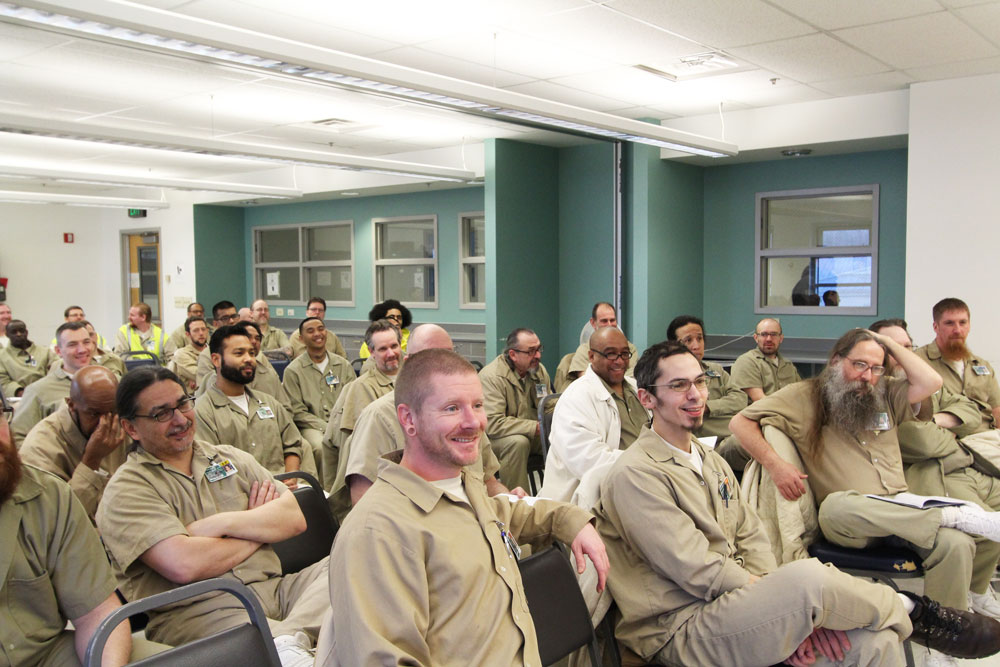
Lecture Series students at Stafford Creek Corrections Center were attentive to Liliana Caughman‘s report of survey results. They showed signs of agreeing with all that she shared from program evaluation. They know first hand that they have gained knowledge from the series, that their environmental attitudes have become more positive, and that they prefer interactive, relevant content, just as the results said.

More exciting and illuminating was the quantity and quality of ideas they offered for improving the series and evaluation surveys. Elijah Moloney, Lecture Series Intern, Liliana, and I each circled up with a third of the students present, and gathered many salient observations and recommendations.

Huge demand

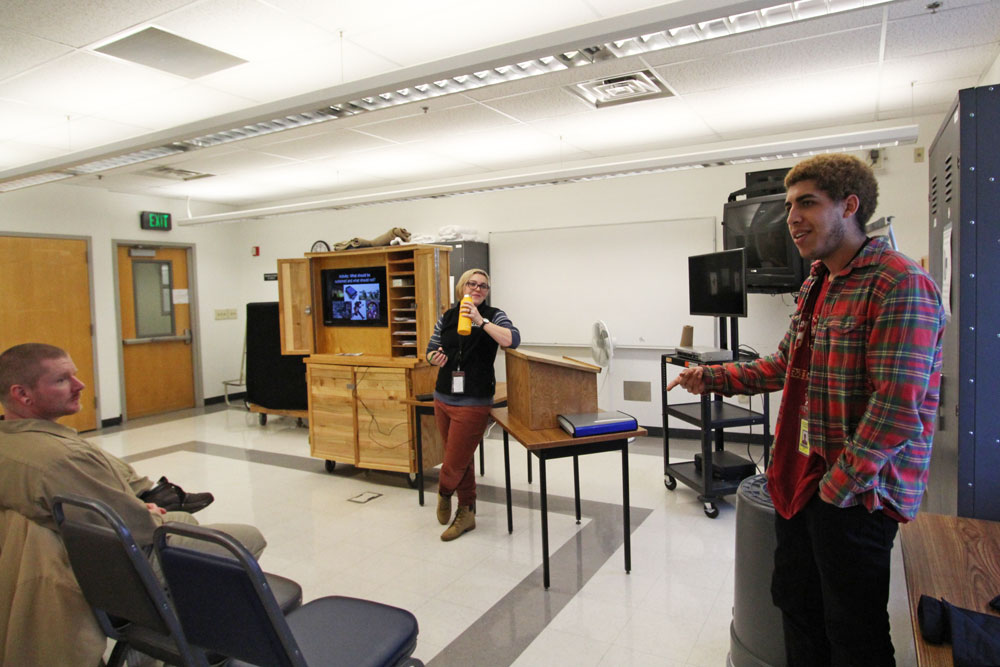
Lecture Series intern Elijah Moloney shares his views on climate change and environmental justice.

We learned that the demand at Stafford Creek to attend the series far exceeds classroom capacity–the sign up is filled almost as soon as it is posted, and many students are disappointed when they are not able to claim a seat. They said we could easily fill a classroom twice the size, and that they would be willing to undergo a pat-down search for lectures held in the much-larger visiting room. Some pointed to the value of inviting/including new folks who could represent new and diverse points of view.

Students also recognized that they prefer more interactive sessions, and want each person to have a chance to give input and ask questions. That points to increasing the number of lectures, perhaps repeating content for morning and afternoon sessions.

Topics

The students at Stafford Creek express interest in a huge variety of sustainability and environmental topics. New topic requests I heard were economic and political aspects of climate change—I agree that there is much to learn and consider in that arena! A few students spoke of their frustrations of not having their requests filled, or that they have missed the presentation when their request was met. Again, this points to the desire to increase program access and scope.
One student shared in writing that he was offended by how we described extending the environmental movement to represent all races and cultures. I am still struggling to figure out how to promote increasing environmental equity without suggesting that I am rejecting people who already identify as environmentalists or students of sustainability.

Surveys

To our surprise, the students generally supported ongoing surveys; they were not experiencing survey “burn out” as we had feared. However, they had concrete suggestions for how to revise them:

  • more true and false questions, including some more difficult queries
  • since nearly all attending the lecture series have highly positive attitudes about the environment, shift to measuring each lecture’s impact on empowering action
  • provide work sheets to fill in during and/or after the session
What an awesome group of students!

In our next post we will share what we heard from the sister program at Washington Corrections Center for Women, and divulge the program revisions we have planned in response to the students’ written and spoken input.


Text and photos by Amanda Mintz, SPP EVM Program Coordinator

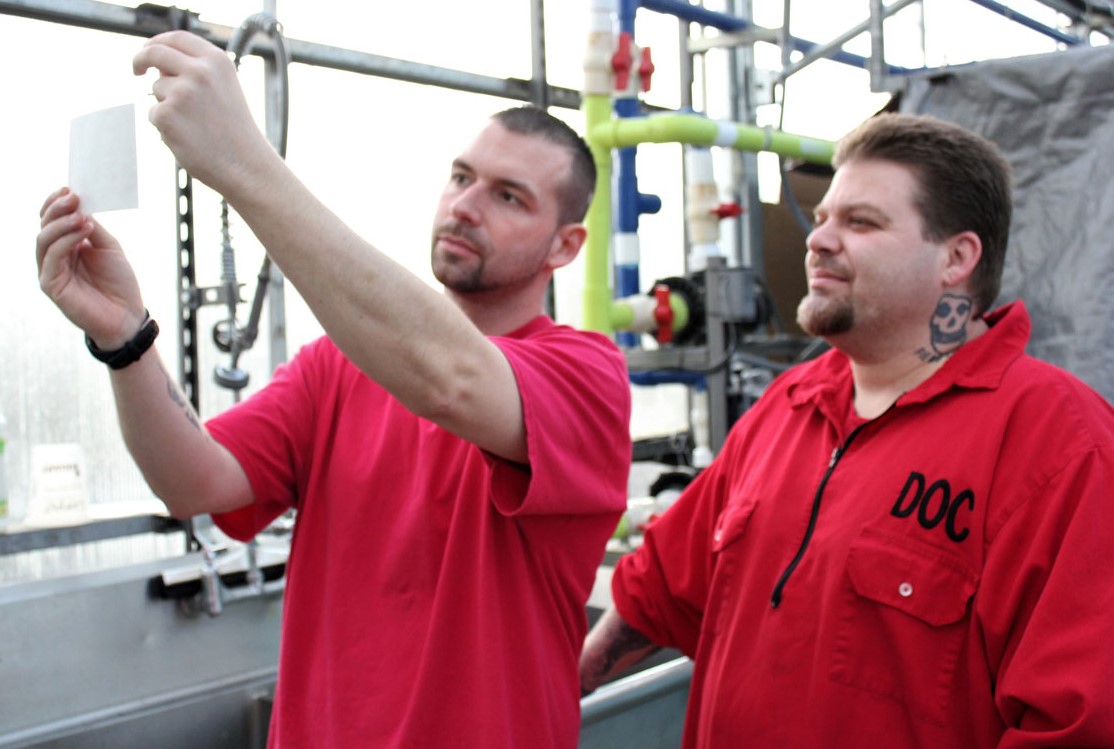
Brian Bedilion and Rudy Smale compare a water quality test to a color chart.

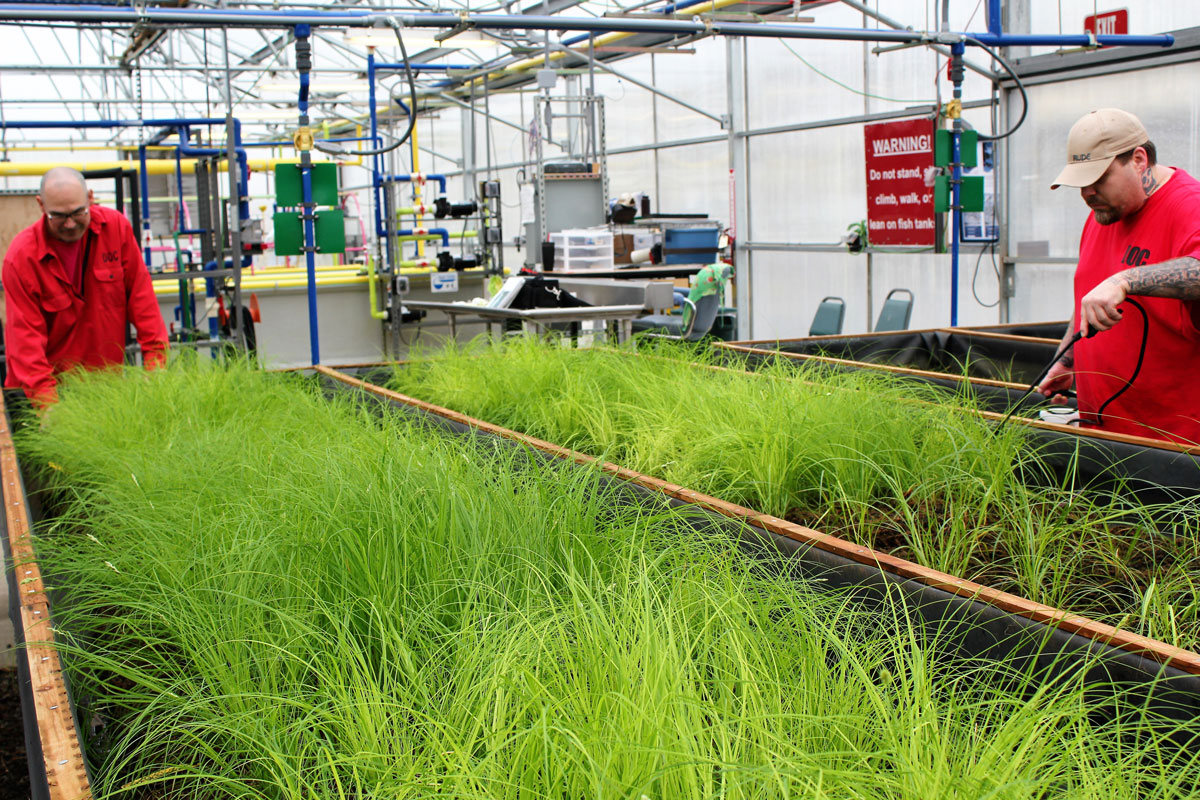
From a tilapia farm to a wetland plant nursery, the aquaponics house at Stafford Creek Corrections Center has experienced major transformations over the past year. Creating a new program brings many challenges, particularly when we start from scratch with no existing model to imitate. Careful monitoring and teamwork means we can meet those challengers, and constantly improve the system.

What’s in a Name?

We often call our program the EVM, a name that rolls easily off the tongue. But not everyone knows that EVM stands for Emergent Vegetated Mat, or what an Emergent Vegetated Mat even is! To meet this challenge, EVM program technicians receive training in wetland ecology, plant propagation, and aquaponics, and are capable of explaining what we do to anyone who asks.

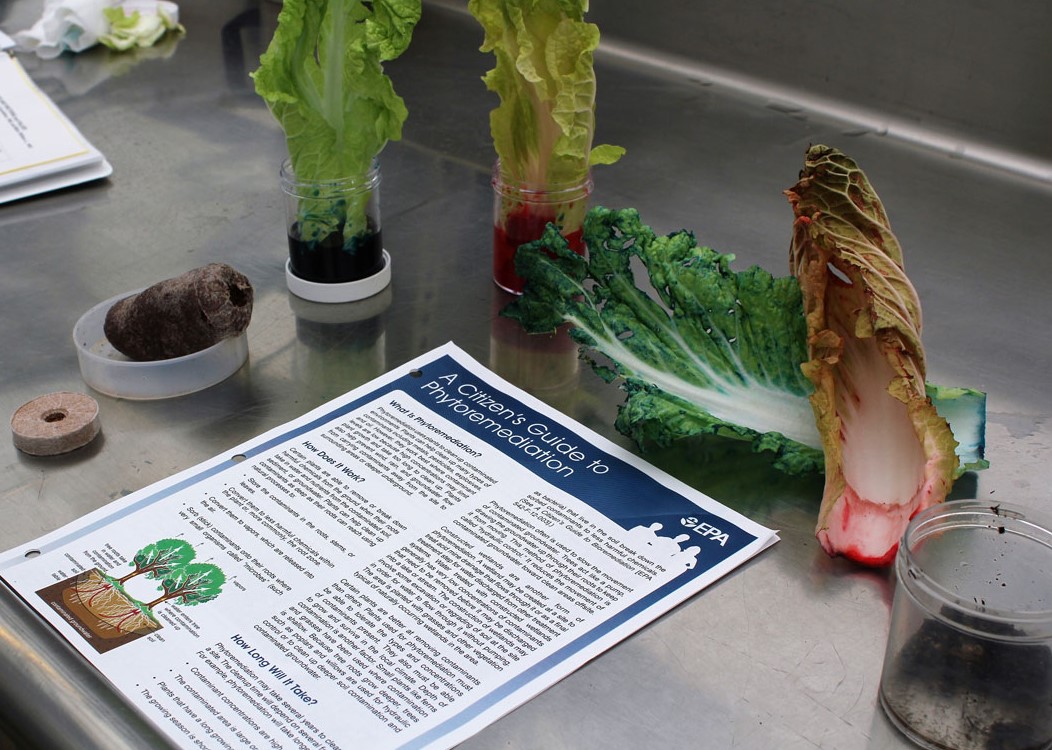
Technicians learned about the functions of wetlands, such as water holding capacity demonstrated by peat pods, and phytoremediation: the ability for wetland plants to absorb and transform pollutants.

Ecosystem Balance

Our aquaponics system relies on symbioses among fish, bacteria, and plants; for the system to thrive, maintaining optimal water quality is a constant concern. The aquaponics unit is a living system which can, at times, be unpredictable. Technicians monitor water quality daily, looking for changes in dissolved oxygen, ammonia, nitrate, and pH that could indicate a problem. Solutions to an imbalance can be as simple as increasing the water flow to plants, or as complex as adding a new heating system. With time and experience, we have learned how to increase the stability of the system through understanding the specific needs of the living things it supports.

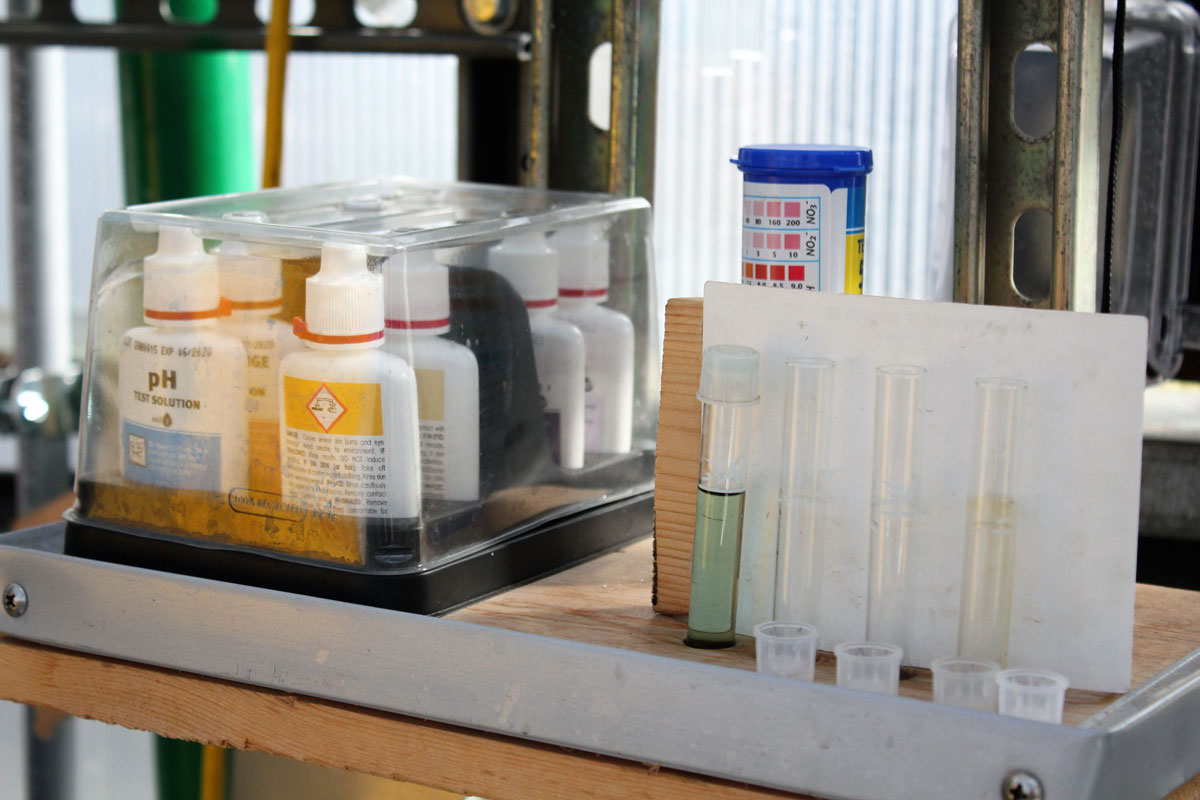
Technicians monitor water quality with aquarium test kits. Occasionally water is taken back to The Evergreen State College‘s laboratory and tested there to make sure the kits are taking accurate readings.

Critter Control

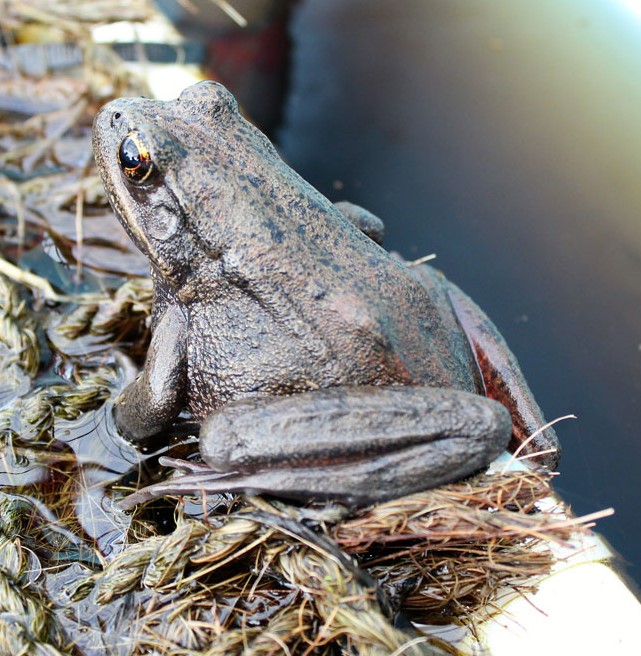
Any nursery will eventually experience a critter invasion. Red-legged frogs and spiders are frequent visitors to the facility, as are less desirable critters like aphids. Technicians use low-impact methods to keep pests at bay, such as manual removal or biodegradable soap. As you can see, our plants are thriving (and the frogs are happy)!

Kent Dillard and Rudy Smale use manual control and biodegradable soap to remove aphids from the mats without harming plants or fish.

Over the next few months, the addition of two new hoop houses will significantly increase our capacity for mat production. We look forward to facing the challenges of expanding the EVM program now that we have a year’s experience under our belts. None of these projects would be possible without the tireless effort of Stafford Creek Corrections Center maintenance mechanics and plumbers, the EVM technicians, the folks at Center for Natural Lands Management and Washington Department of Fish and Wildlife, and all our funders: Washington Department of Corrections, Department of Defense, and the United States Fish and Wildlife Service (with a little help from us at SPP)!

This red-legged frog, lounging on the edge of a coir mat, is a frequent visitor to the aquaponics house!