Part One: Surveys Say…!

Text by Joslyn Rose Trivett, SPP Education and Outreach Manager
Figures by Liliana Caughman, SPP Science and Sustainability Lecture Series Coordinator

Brittany Gallagher receives a completed survey from a student at Stafford Creek Corrections Center. Photo by Shauna Bittle.

Every SPP Science and Sustainability Lecture since 2009 has included surveys about the program. Before and after each lecture, we ask students to fill out surveys and hand them back, and usually they do. Lucky for us, the current lecture series coordinator, Liliana Caughman, is also a whiz kid with data. Building on the work of Tiffany Webb and Brittany Gallagher, Liliana examined answers from 15,874 before and after surveys from SPP lectures (do you see how big that number is?? It blows me away!).

The data show patterns that are impressive and statistically defensible. Here is a summary:

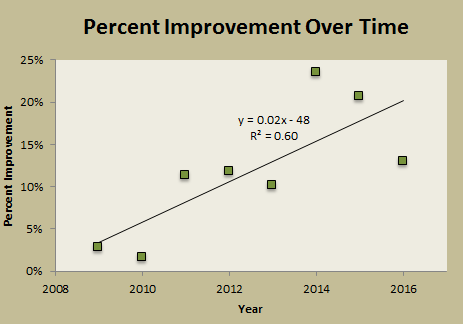
  • Figure 1.

    The students are gaining environmental knowledge from the lectures; not a big surprise, and always nice to have confirmation!


  • As the years pass, students are learning more from our lectures (see Figure 1). We wonder, does this mean they are becoming better students, or that the lectures themselves have improved?


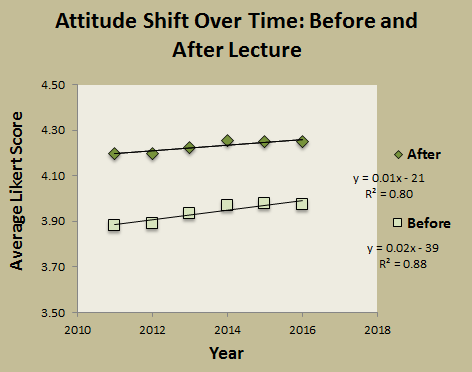
  • Figure 2.

    As Tiffany Webb found in 2014, students’ attitudes about the environment have been steadily increasing over time (see Figure 2). Many students do not become more positive about the environment as a result of a single lecture, but most started with such positive regard of environmental topics that no change is still a good thing! I see this as confirmation of what we’ve experienced: that there has been a positive culture shift within Washington State prisons.


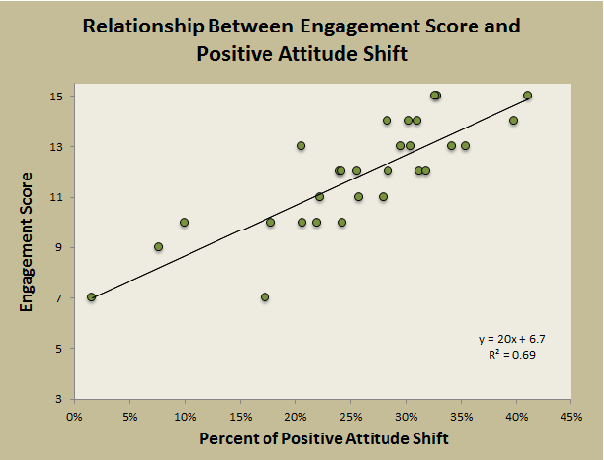
  • Figure 3.

    Liliana devised 3 criteria to describe how engaging a lecture is. She assigned a score for how much a lecture 1. provided hands-on experiences 2. empowered students to be helpful to others who are important to them 3. built community and connections between people. She compared each lecture’s engagement score with how much environmental attitudes increased for the same lecture, and found a lovely correlation (Figure 3). These results suggest that Liliana’s engagement score is valuable measure of a lecture’s quality. More importantly, I think, is that the 3 criteria become guides for guest lecturers going forward: we will ask them to make presentations with hands-on activities, ideas on how to help others, and ways to connect students to people inside and outside the prison.

Last week, we took these survey results to the classroom at Stafford Creek Corrections Center. We asked the students for their input on how the program is offered, lecture topics, and the surveys themselves. They had so much valuable feedback that I will save it for Part Two of the story. Part Three will come when we take the same presentation and questions to Washington Corrections Center for Women in March!
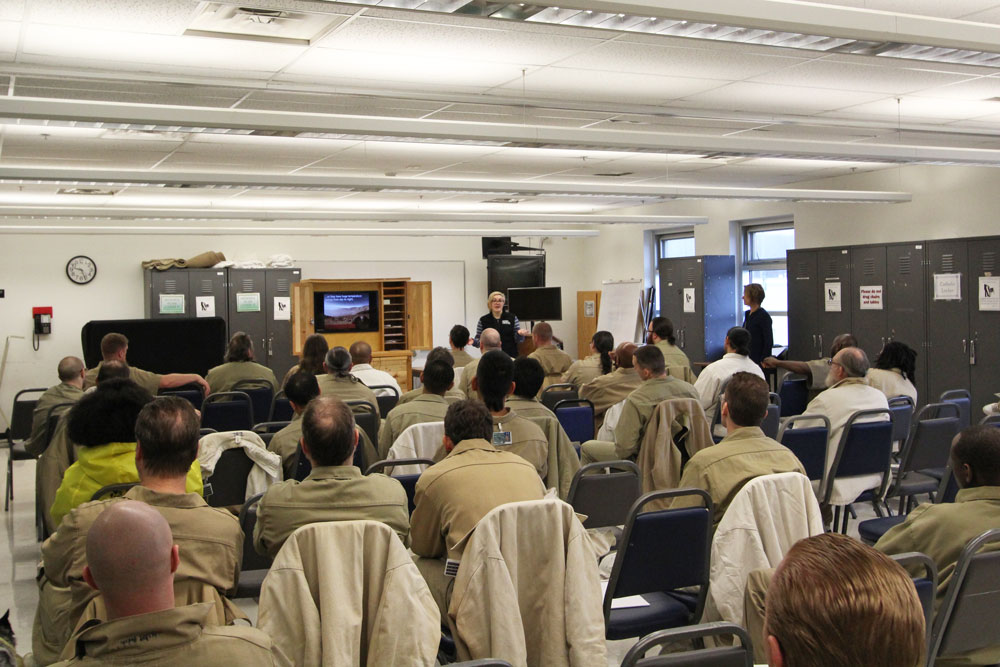
To kick off discussion of the lecture series, Liliana Caughman described what the word sustainability means to her. Photo by Elijah Moloney.


Higher Education Backs We Are Still In Coalition

by Joslyn Rose Trivett, SPP Education & Outreach Manager

Late last week, Evergreen’s President George Bridges joined hundreds of his colleagues nationwide in signing the Letter from Higher Education Leaders on Climate Action to president-elect Trump and members of Congress. In the letter, they urge the government to support:

1. Participation in the Paris Agreement, with the resulting national carbon reduction and clean energy targets, to protect the health of our current communities and our future generations.

2. Research in our academic institutions and in federal agencies to ensure that our national climate, energy, and security policies are based on leading scientific and technical knowledge.

3. Investments in the low carbon economy as part of a resilient infrastructure to ensure the country can adapt to changing climate hazards. These investments will also help grow American jobs and businesses. (Full text available here.)

In his associated statement to the Evergreen community, George said:

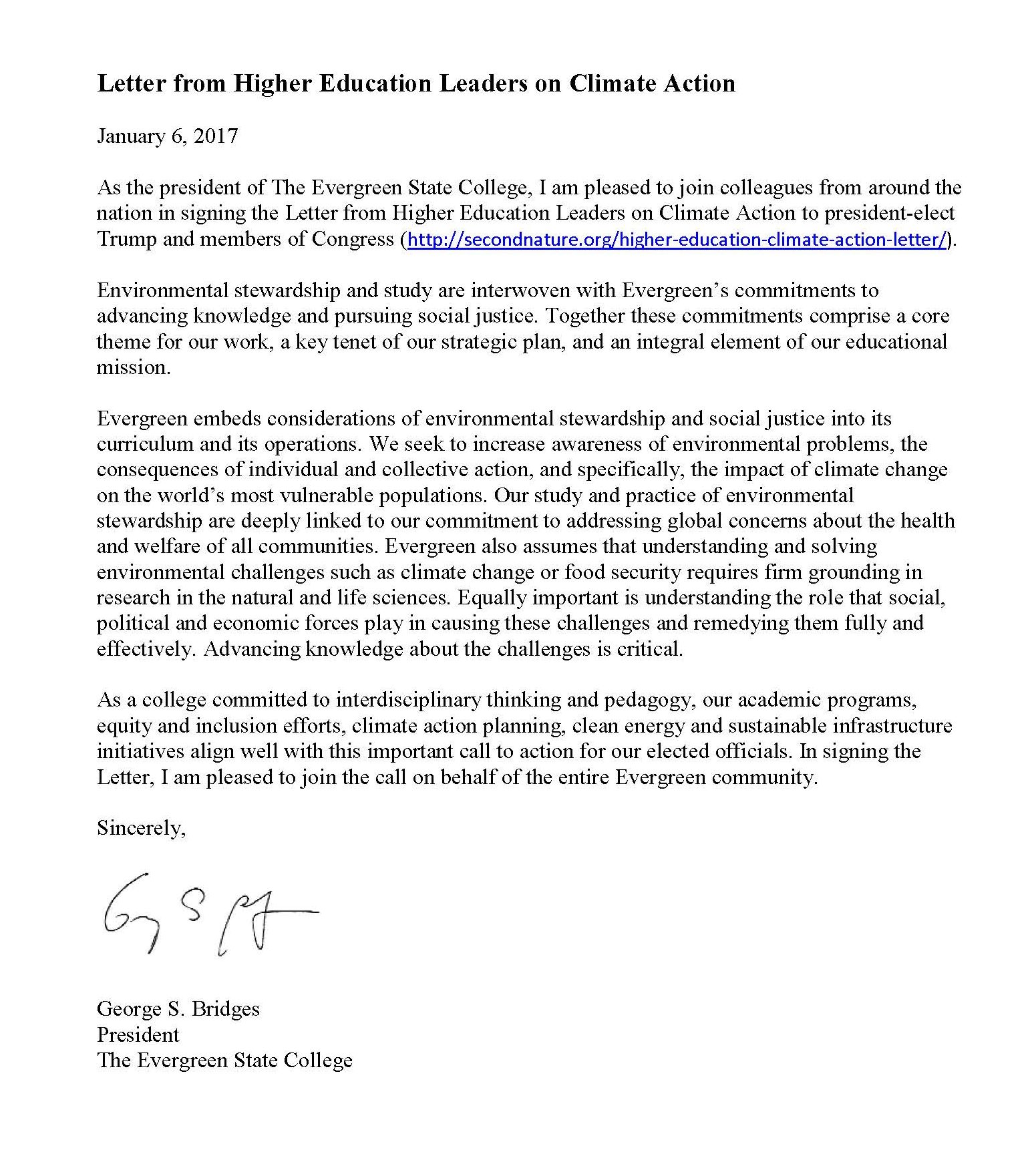
Our study and practice of environmental stewardship are deeply linked to our commitment to addressing global concerns about the health and welfare of all communities. Evergreen also assumes that understanding and solving environmental challenges such as climate change or food security requires firm grounding in research in the natural and life sciences. Equally important is understanding the role that social, political and economic forces play in causing these challenges and remedying them fully and effectively. Advancing knowledge about the challenges is critical. (Full text shown below.)

At SPP, we are tremendously grateful that the college’s president has taken a stand on what may be the most confounding, complex, and critical challenge yet faced by humankind. Thank you, George!

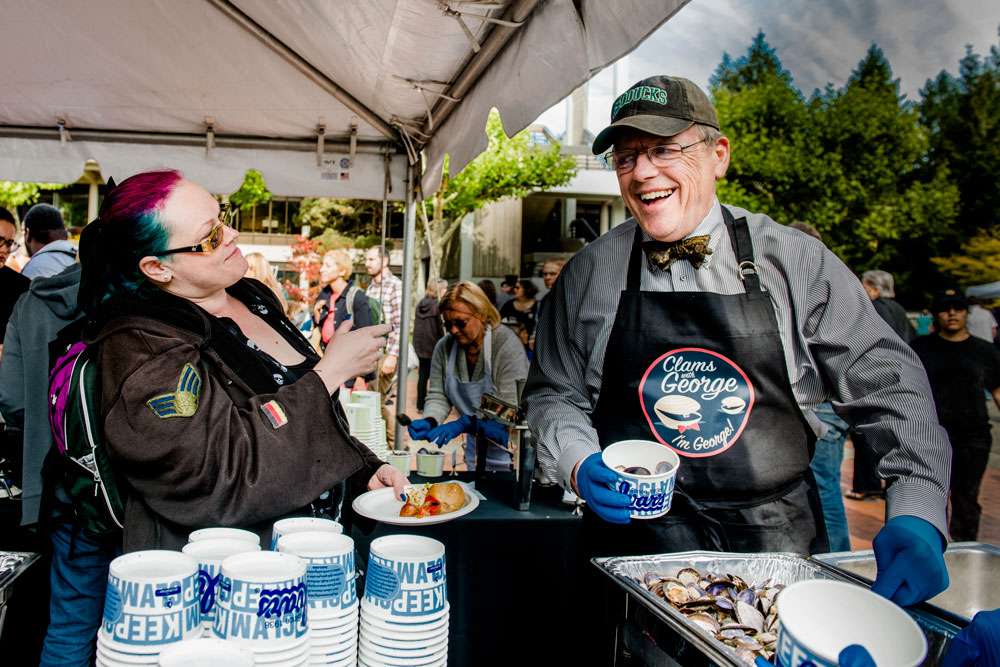
Here is George serving the campus community at the 2nd annual Clams with George free lunch; he loves to treat us! Photo from Evergreen archives.

Text and photos by Western Pond Turtle Program Coordinator, Sadie Gilliom

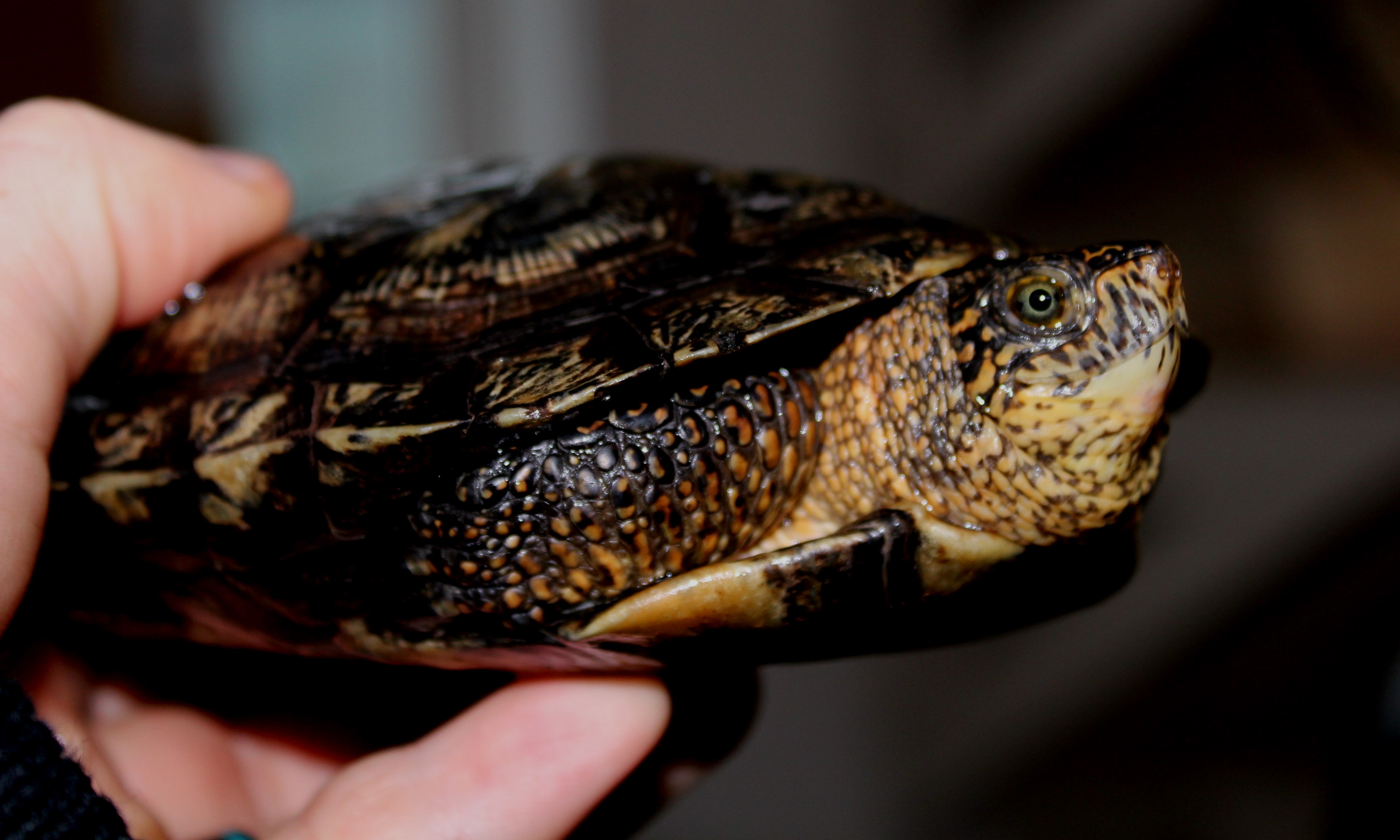
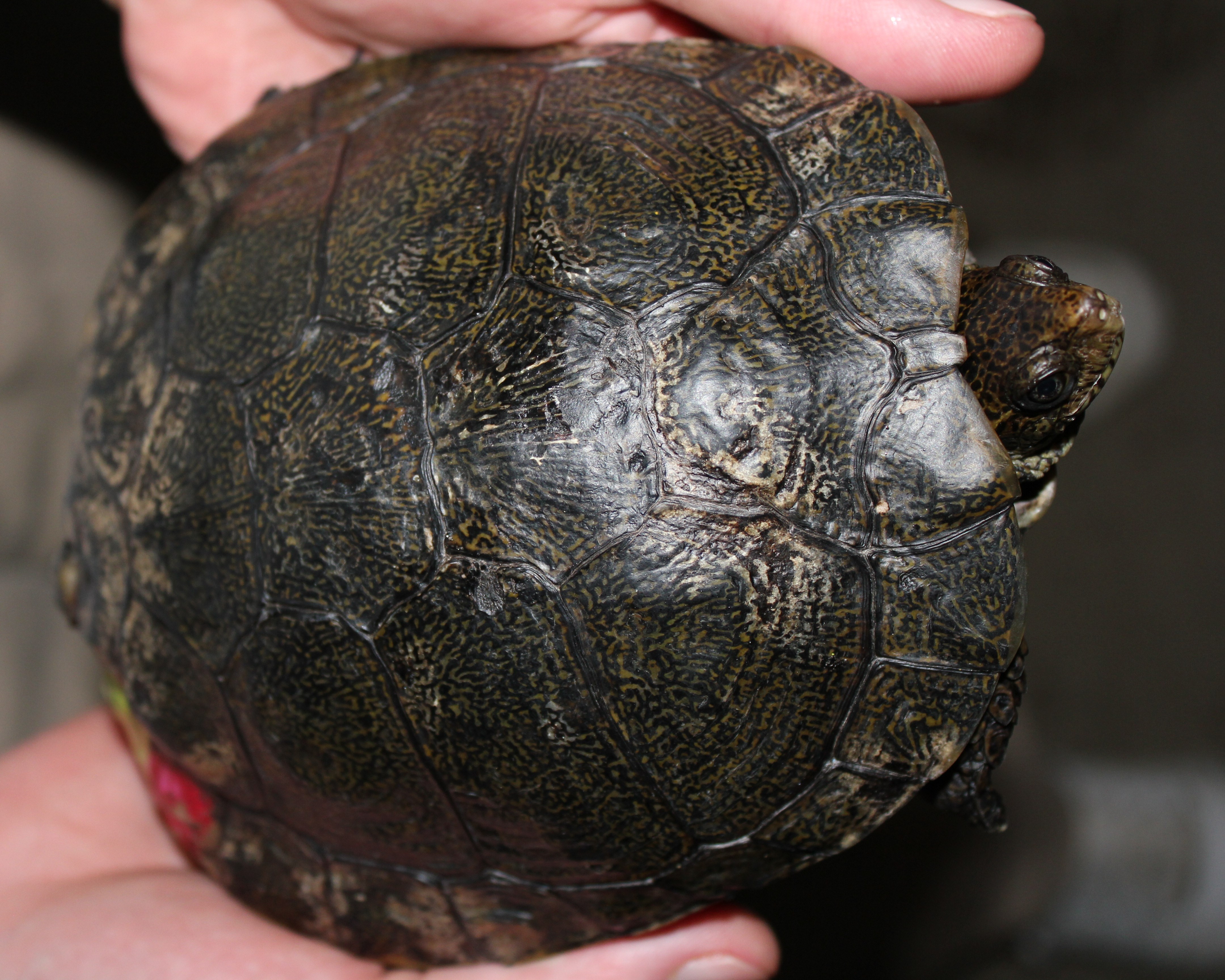
Cedar Creek and Larch Corrections Centers programs just received new turtles last week!

New turtle at Larch Corrections Center
New turtle at Cedar Creek Corrections Center

These turtles just finished their treatments at PAWS wildlife rehabilitation center and the Oregon Zoo and moved on to the prisons to be cared for and monitored by the trained turtle technicians at the prisons.

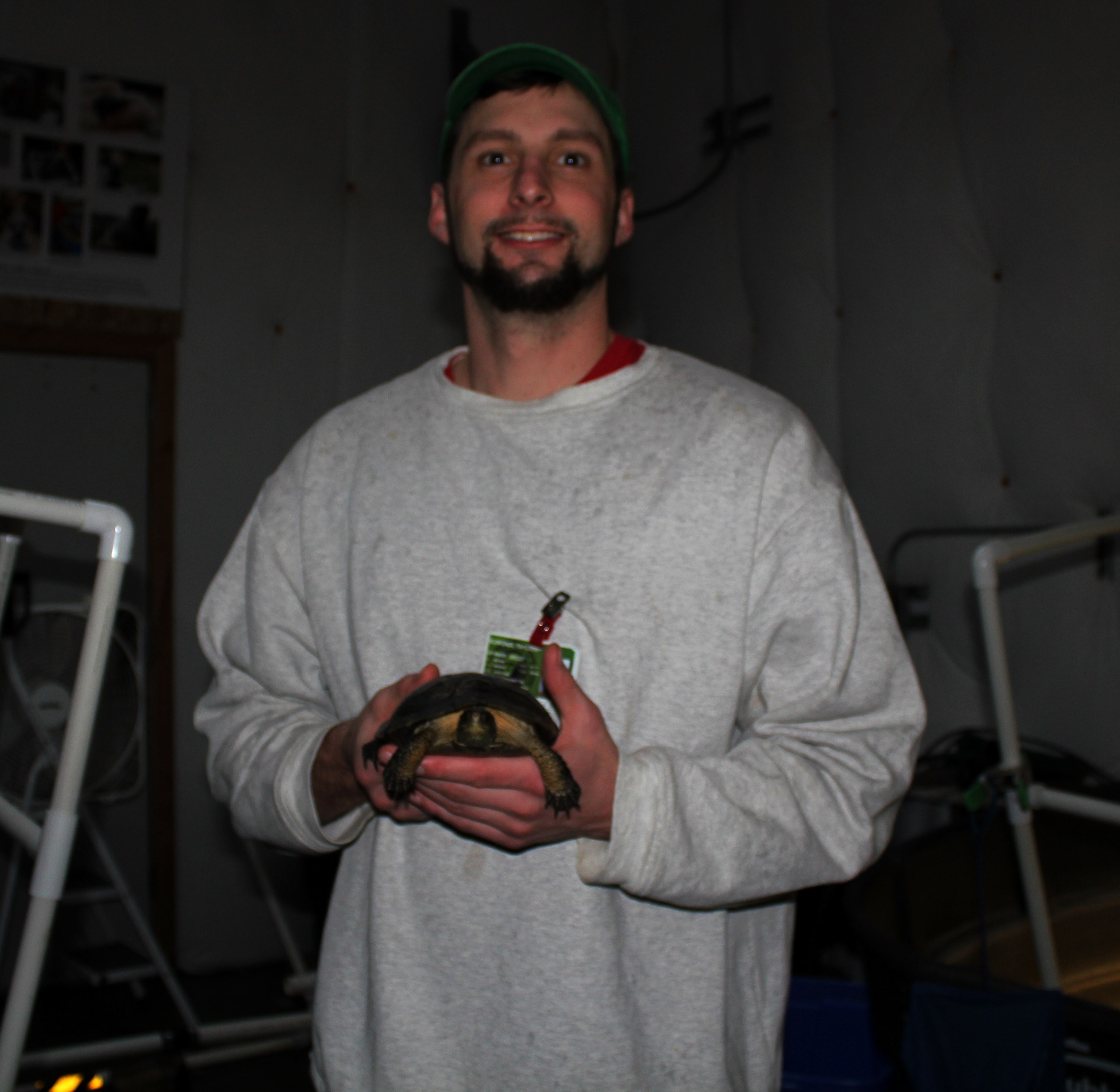
Technician Eldridge holding a new turtle at Cedar Creek

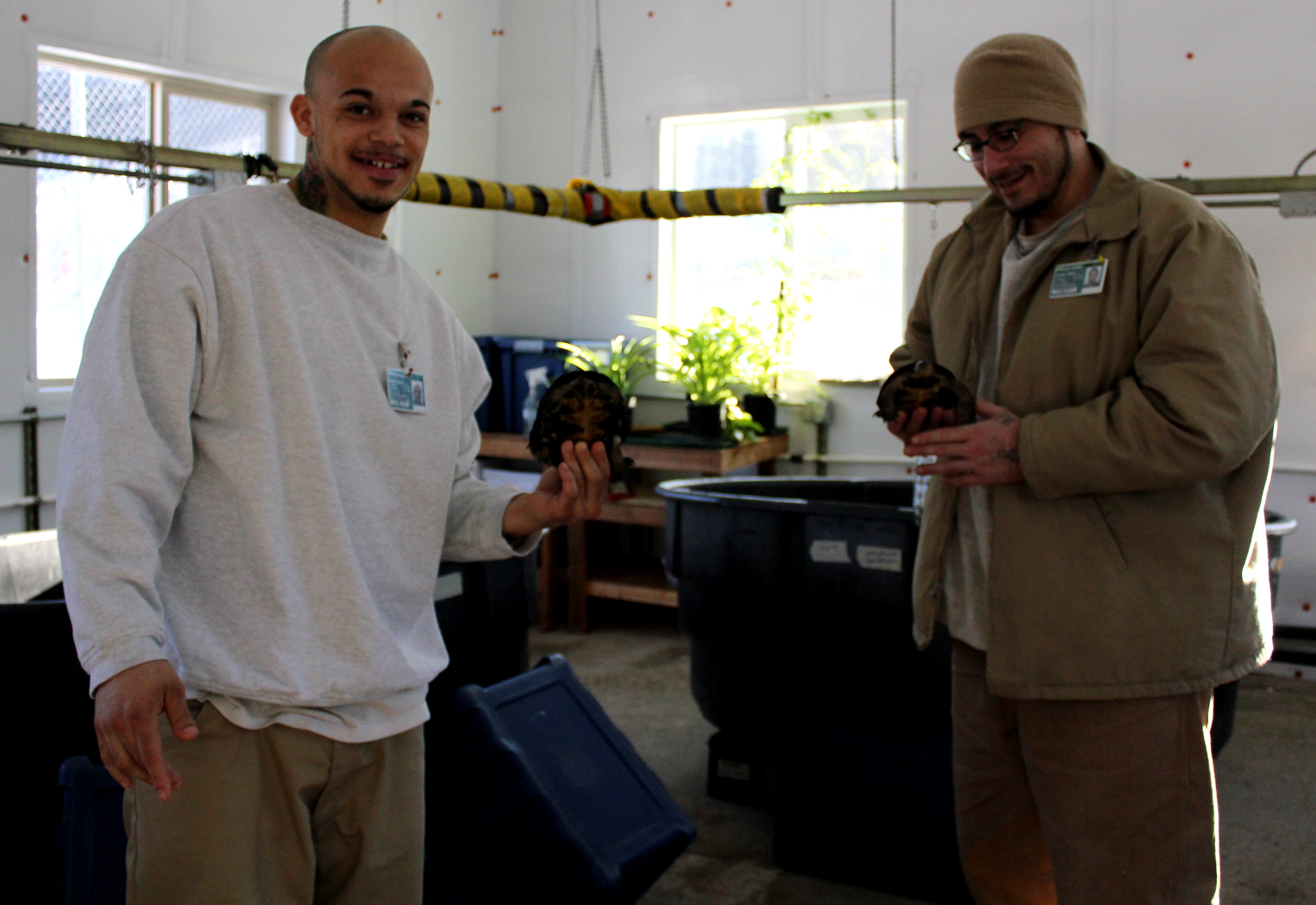
Speaking of turtle technicians, we would like to welcome two new technicians who joined the Larch program at the same time the turtles arrived. A big salutations to Mr. Gonzalez and Mr. Larson!  They are getting some great training from current lead technician, Mr. Goff, before he moves on to try out the new dog program at Larch.

Two new turtle technicians at Larch posing with new turtles

Here’s to new turtles, new technicians, and to the future release of these turtles back into the wild!

Happy New Year!