Text and photos by Keegan Curry, SPP Taylor’s Checkerspot Butterfly Coordinator
Cedar Creek Corrections Center (CCCC) has partnered with Symbiotic Cycles, LLC to expand the aquaponics system in the prison’s horticulture program. Sustainability in Prisons Project (SPP) conservation technicians will be assisting the horticulture team with aquaponics, and I recently attended a training session in support of this collaboration. Cross-training in aquaponics will allow technicians who primarily work with wildlife to gain further knowledge of sustainable practices and explore an innovative technique for growing food.
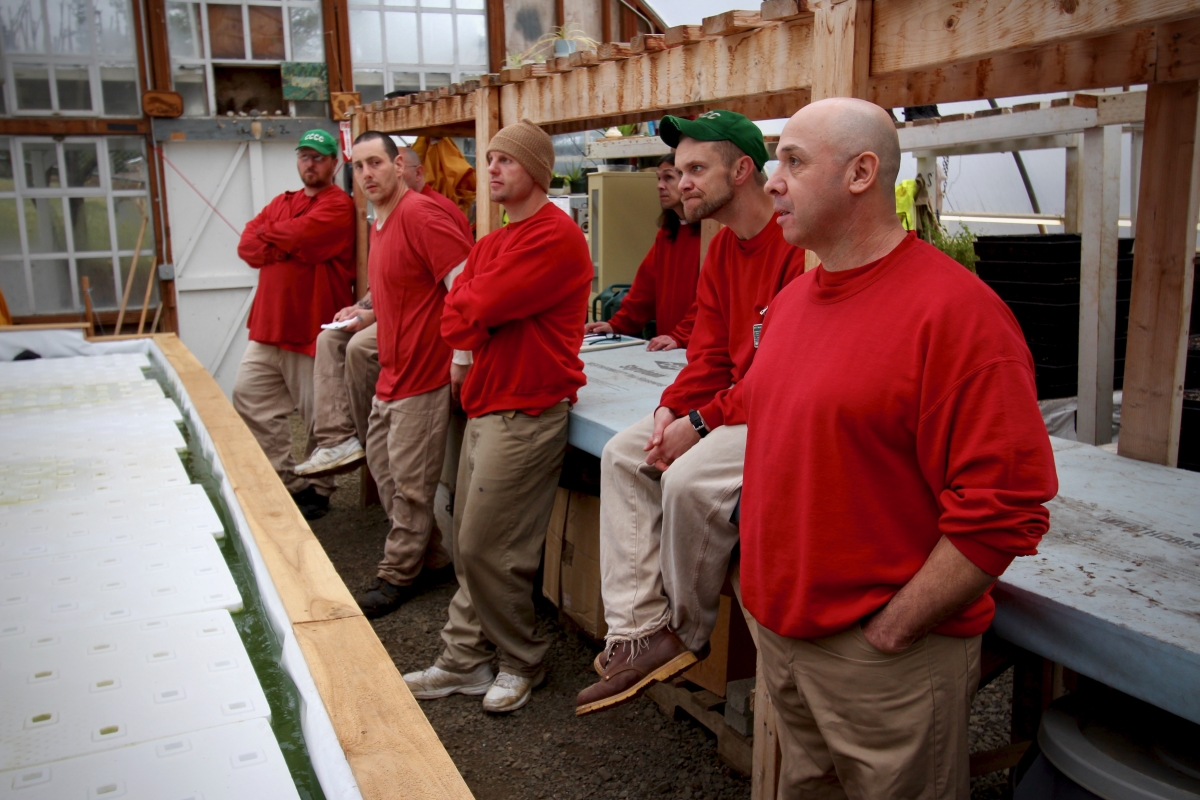
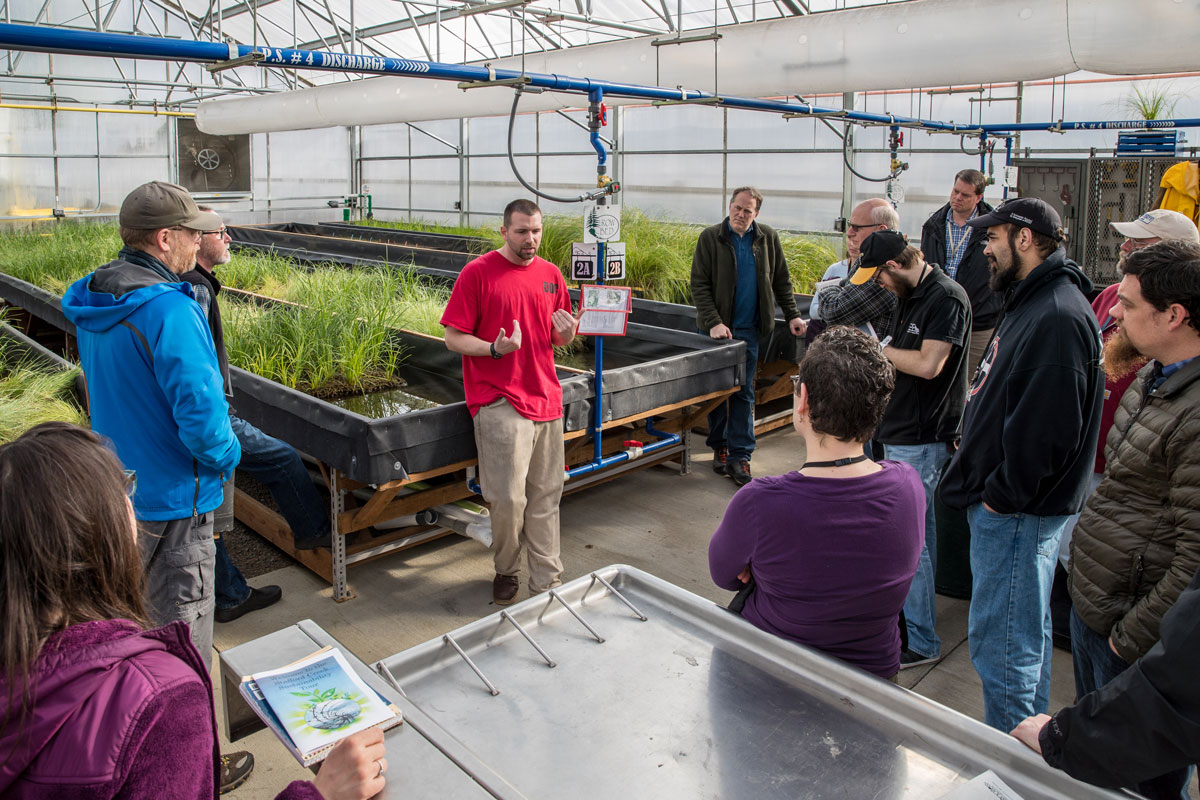
CCCC horticulture and conservation technicians listen eagerly as instructors describe the importance of regenerative agriculture.
Daniel Cherniske and Nick Naselli of Symbiotic Cycles began the training with an overview of aquaponics—the marriage of aquaculture and hydroponics—followed by a detailed system orientation. Daniel and Nick dedicated a significant portion of their training to discussing sustainable food systems. We learned about soil chemistry and the decline of vital nutrients in many industrial crops along with the wasteful overuse of freshwater resources. Aquaponics offers a unique solution to these issues by creating a “closed-loop” of recycled water and converting nutrients from fish waste and bacterial respiration into a rich growing environment. The horticulture and conservation techs couldn’t stop asking questions!
The system is now operational, thanks to the hard work of CCCC staff, inmates, and partners. Soon it will be producing fresh leafy greens for the prison kitchen while functioning as an educational laboratory.
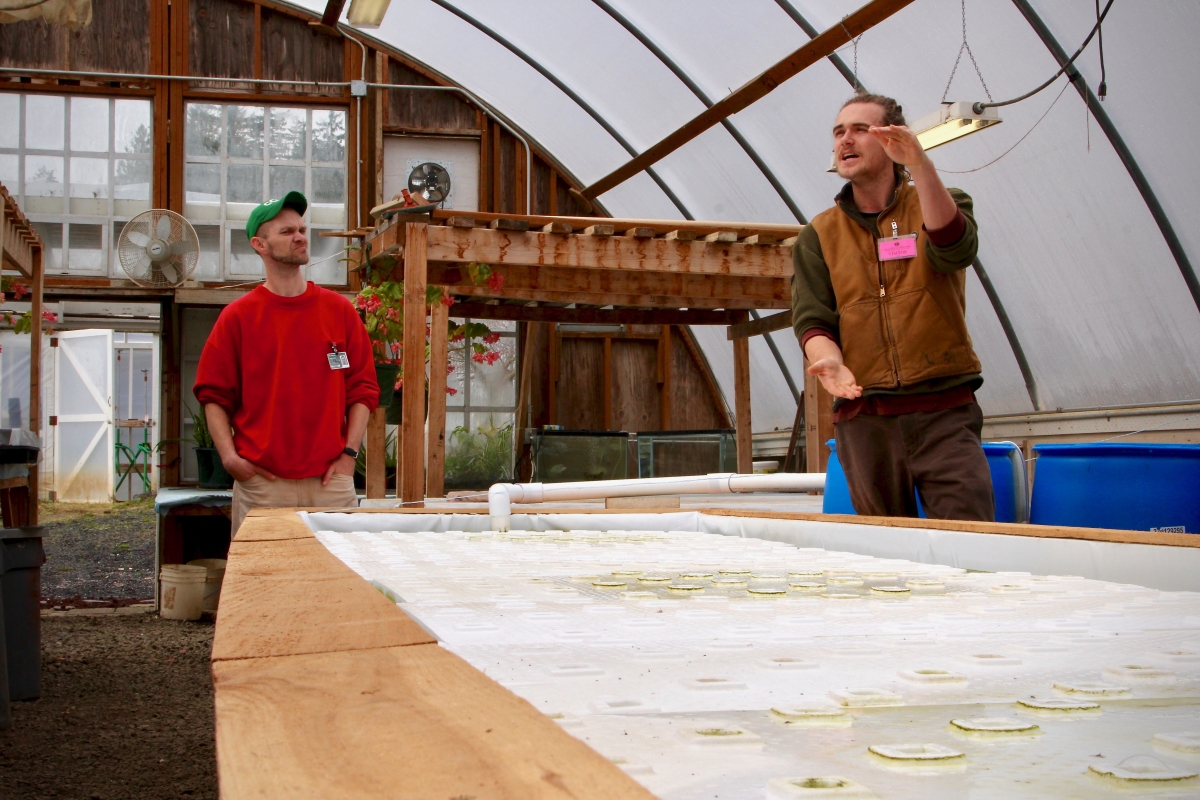
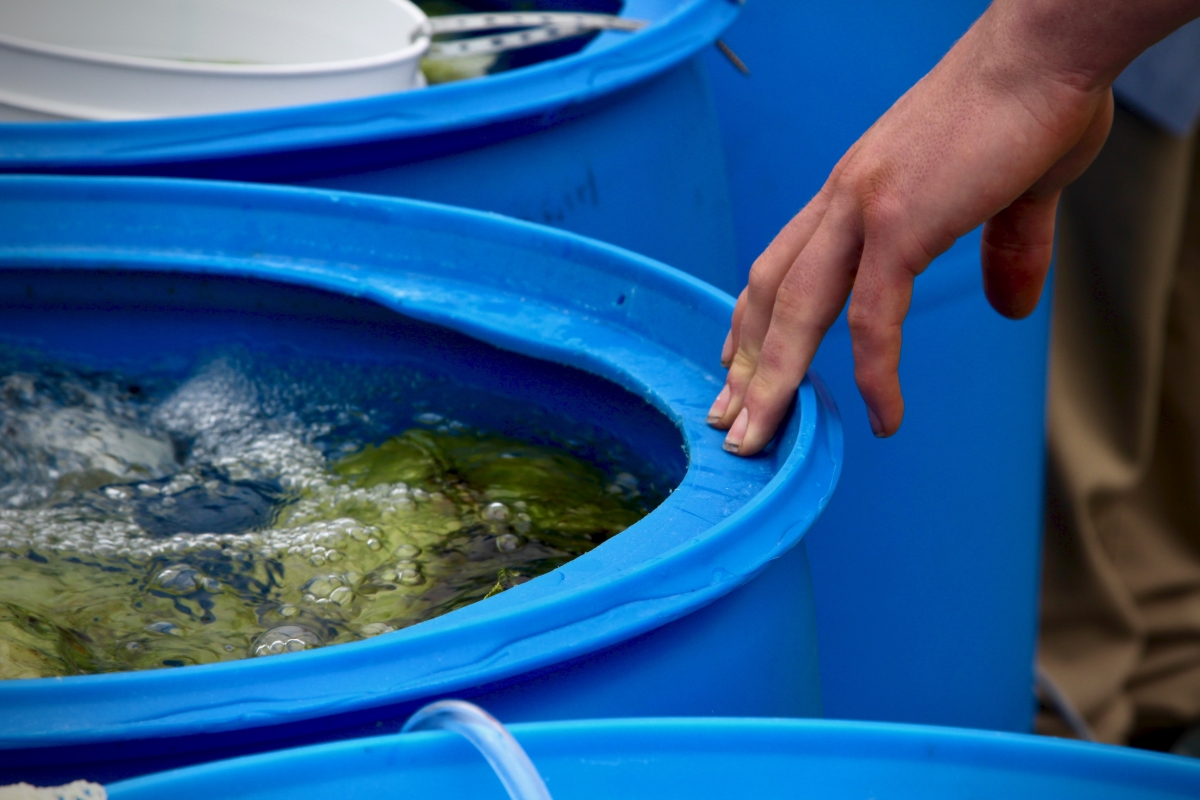
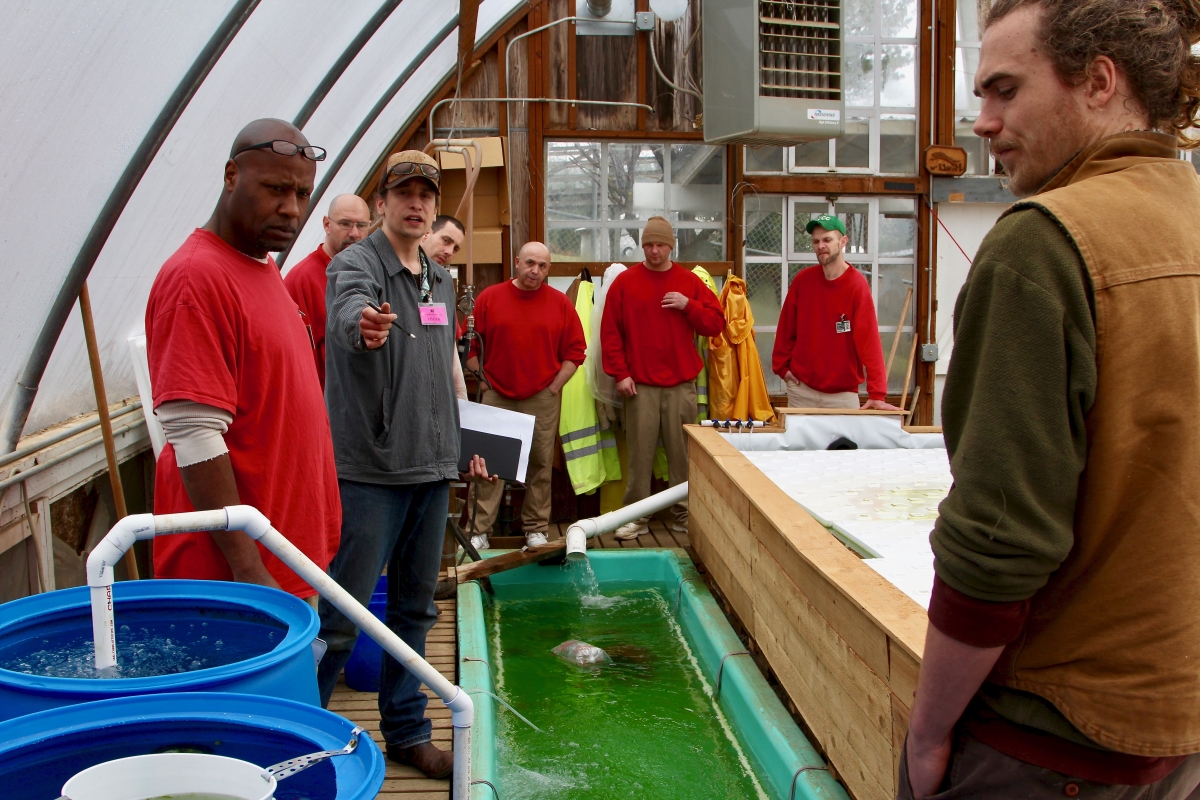
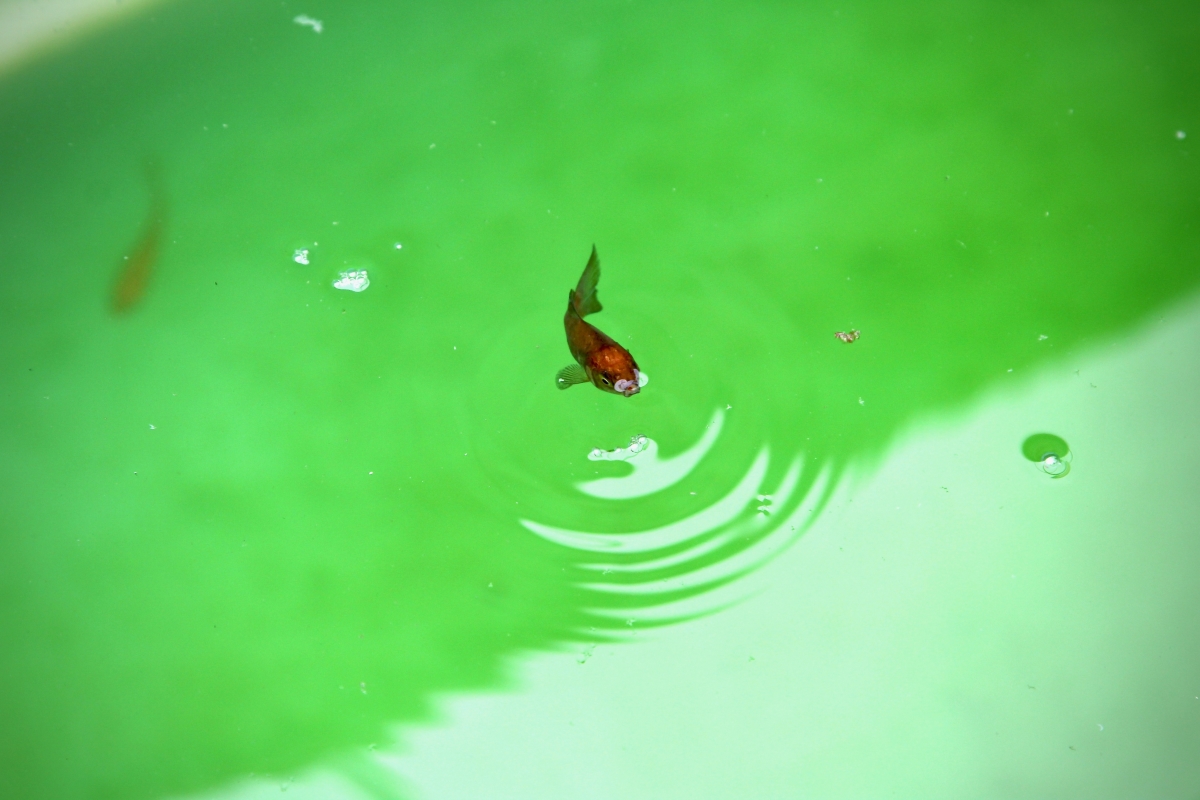
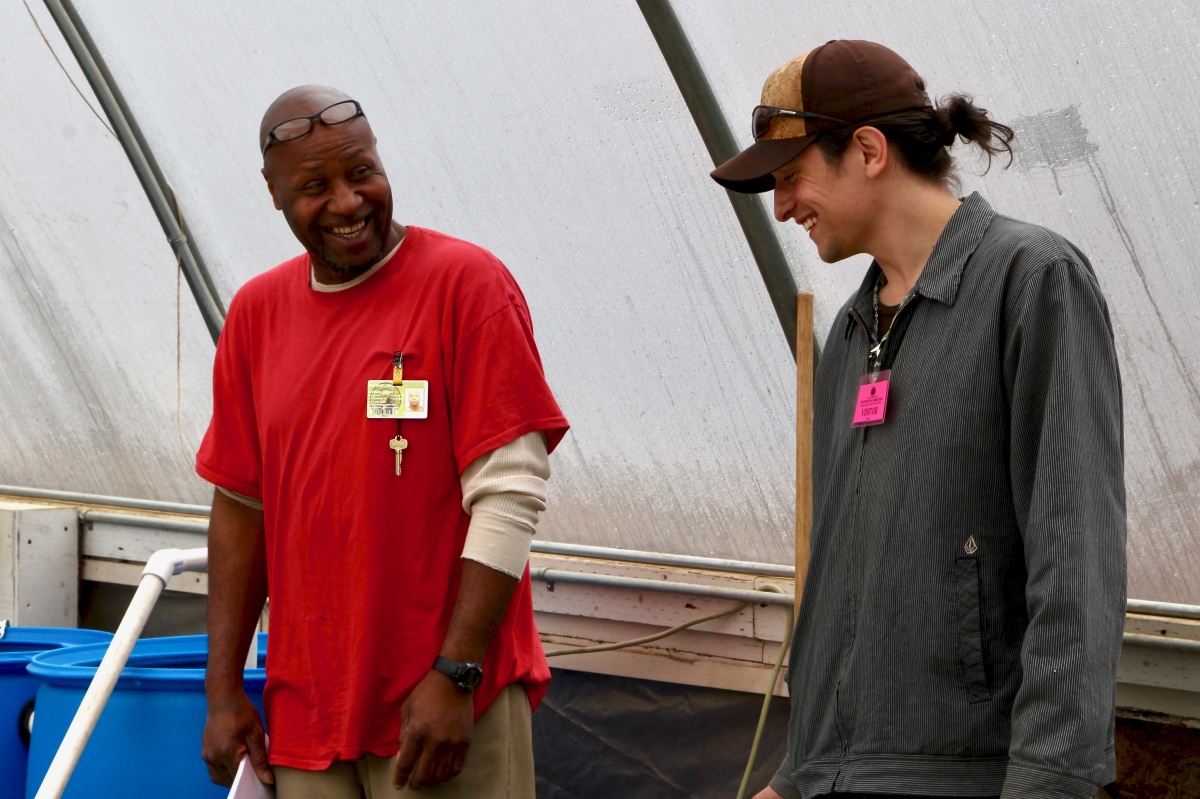
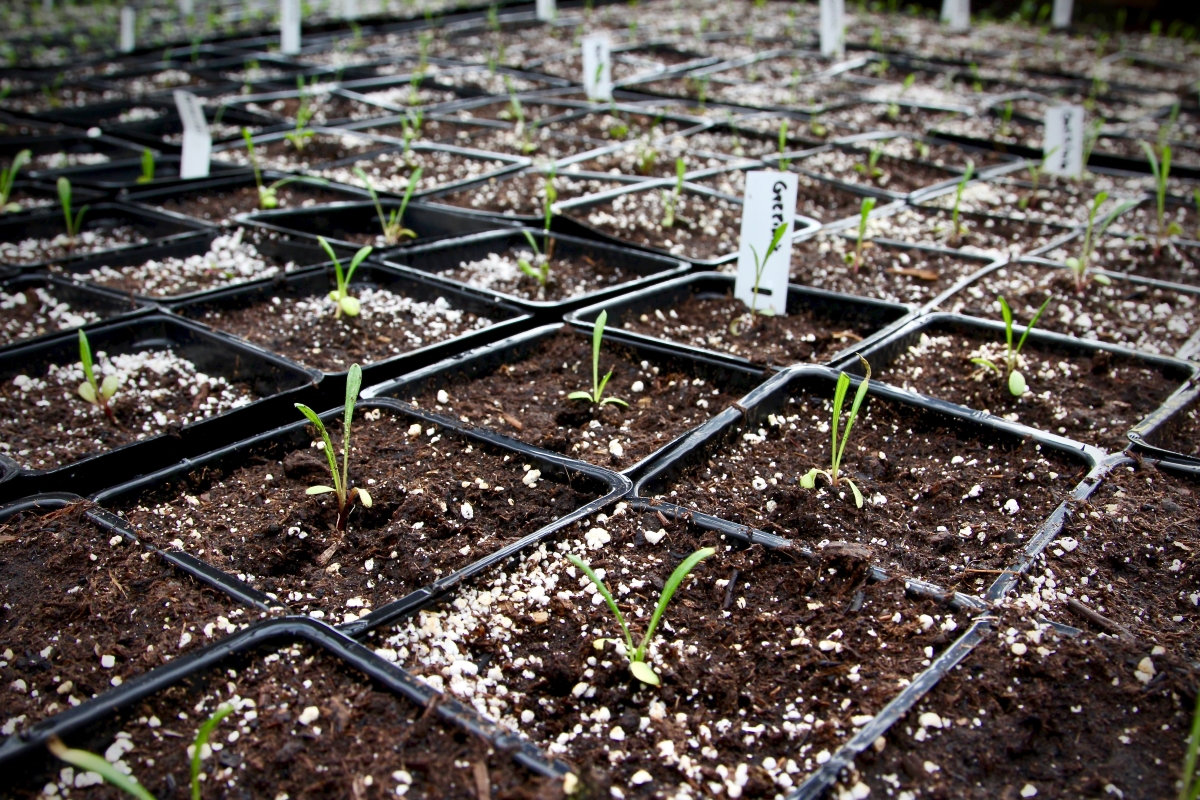
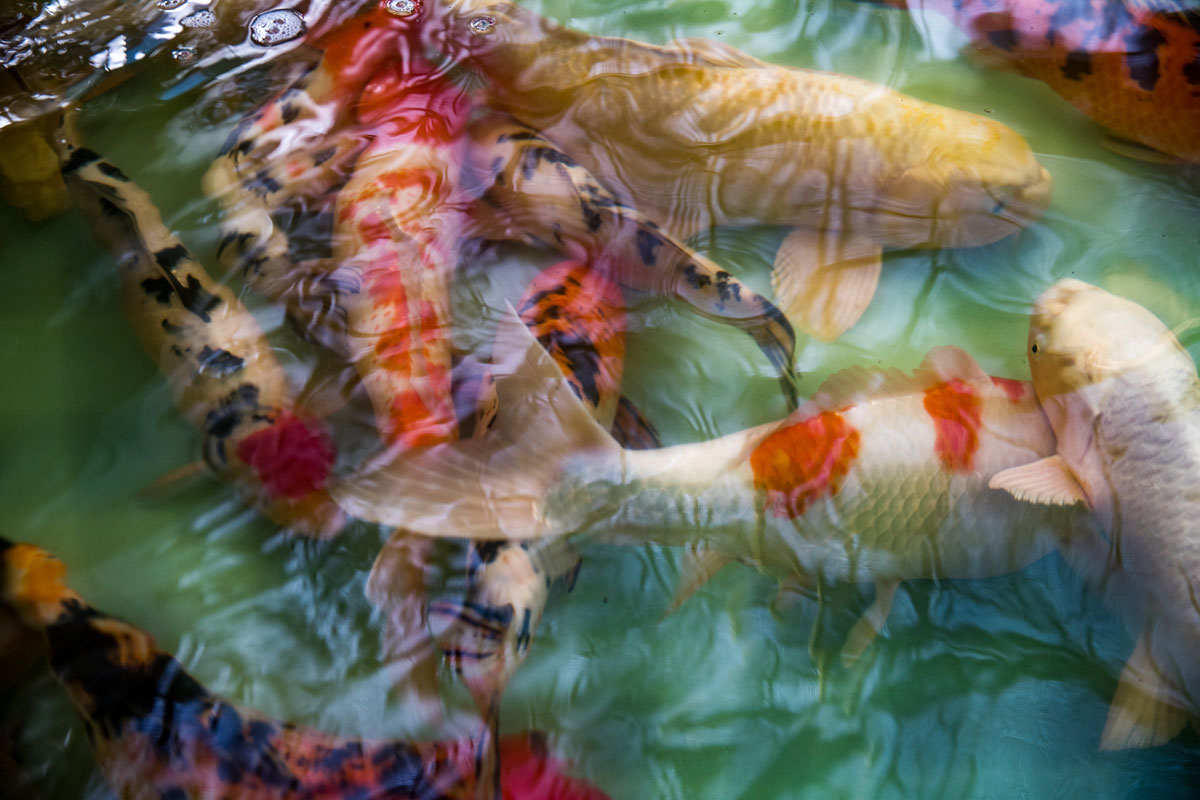
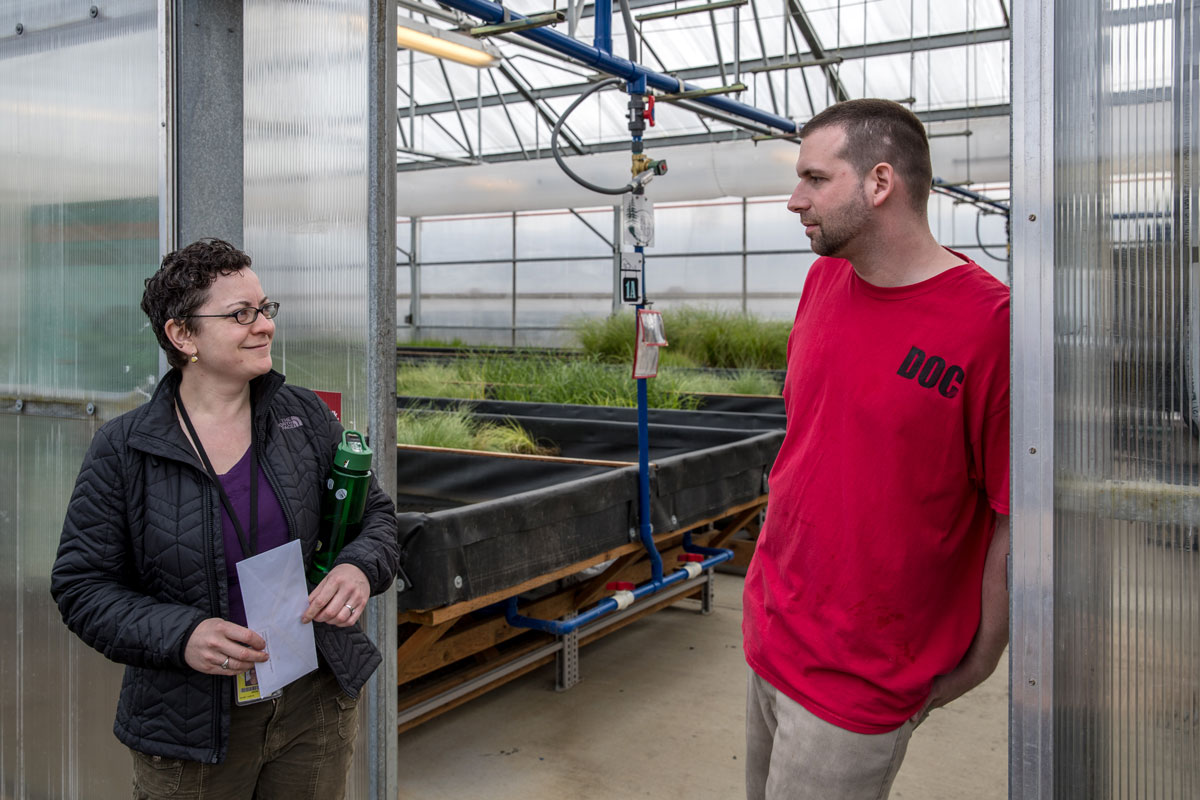
Horticulture tech William Witt looks on as Daniel Cherniske confirms that, yes, soon there will be beautiful green plants growing in this plain-looking box!These filtration barrels will house important bacteria. They are the most sensitive part of the system and technicians must be careful not to let the valves become blocked.Nick Naselli gestures to the filtration barrels that will take up water from the fish pond below.A freshly introduced goldfish, whose waste will provide important nutrients for bacteria and plant growth.Horticulture tech Lorenzo Stewart and Nick Naselli share a hilarious aquaponics joke.Sprouts like these will soon take root in a substrate of non-toxic styrofoam floating above a pool of nutrient-rich water.
By Amanda Mintz, SPP Wetland Ecological Conservation (EVM) Program Coordinator
All photos by Ricky Osborne.
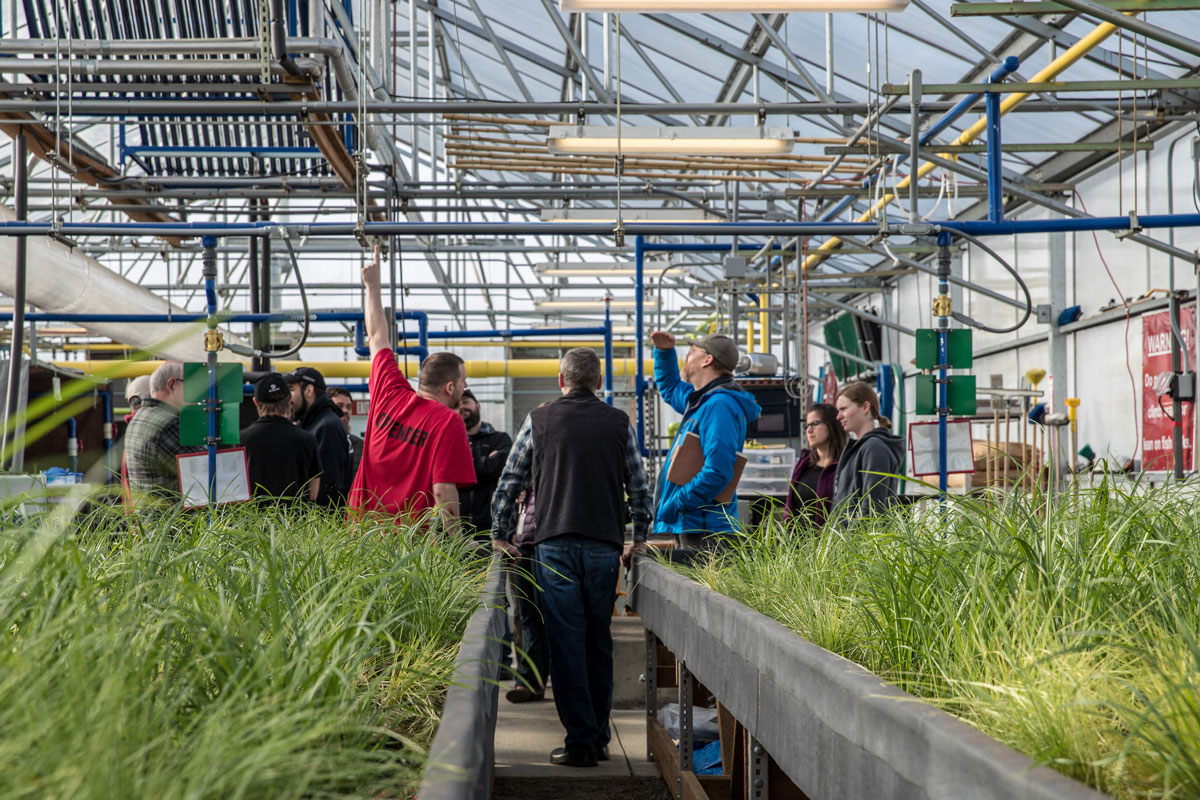
Partners view the systems inside the EVM greenhouse. Photo by Ricky Osborne.
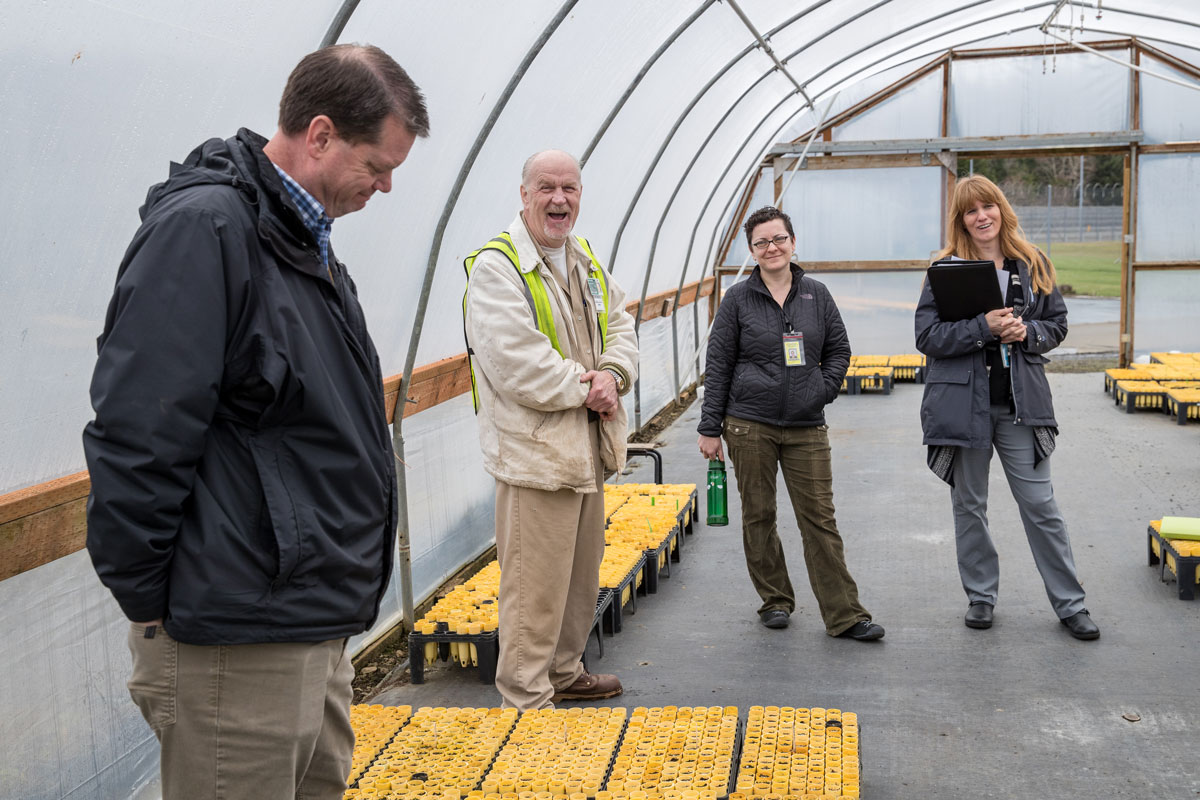
We started in the EVM greenhouse, where we discussed past mat production and future production potential. Last year, we produced and installed more than 100 mats at south Puget Sound restoration sites! The technicians described how the system works, and we all stopped to marvel at the fish—about 130 koi provide most of the nutrients absorbed by the wetland mats.
Not just beautiful, koi are hardy fish adaptable to unexpected changes in water chemistry; this makes them perfect for an aquaponics system. Photo by Ricky Osborne.
Technician Brian Bedilion, who has worked for the EVM program since its inception in 2016, explained how working for SPP has impacted his self-confidence and goals for his future. His creativity and ability to troubleshoot on-the-fly have been integral to the success of the EVM program. Brian went home on April 13; we wish him the best, and hope to see him in the field!
Technician Brian Bedilion shares how the EVM program has influenced his life. Photo by Ricky Osborne.SPP EVM Coordinator Amanda Mintz and Brian Bedilion say farewell at the end of the EMV portion of the tour. Photo by Ricky Osborne.
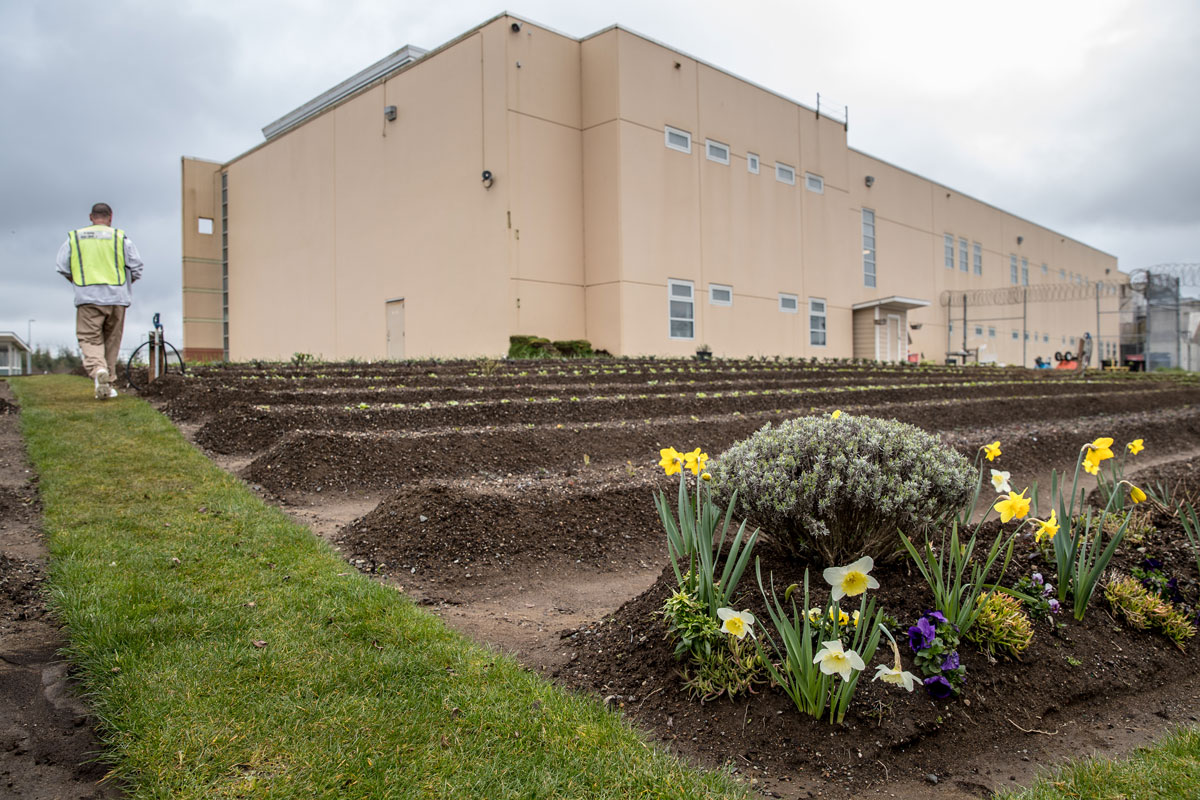
After touring the EVM greenhouse, we went inside the fence to see the prairie conservation nursery, gardens, and other sustainability programs hosted by Stafford Creek. Every living area has dedicated garden space for its residents. A larger space outside the education building is intended for men serving life sentences, and is known as the Lifer Garden. The Lifer Garden and one other at Stafford Creek grow produce for local food banks. Last year, incarcerated individuals at the prison grew and donated almost 12,000 pounds of produce!
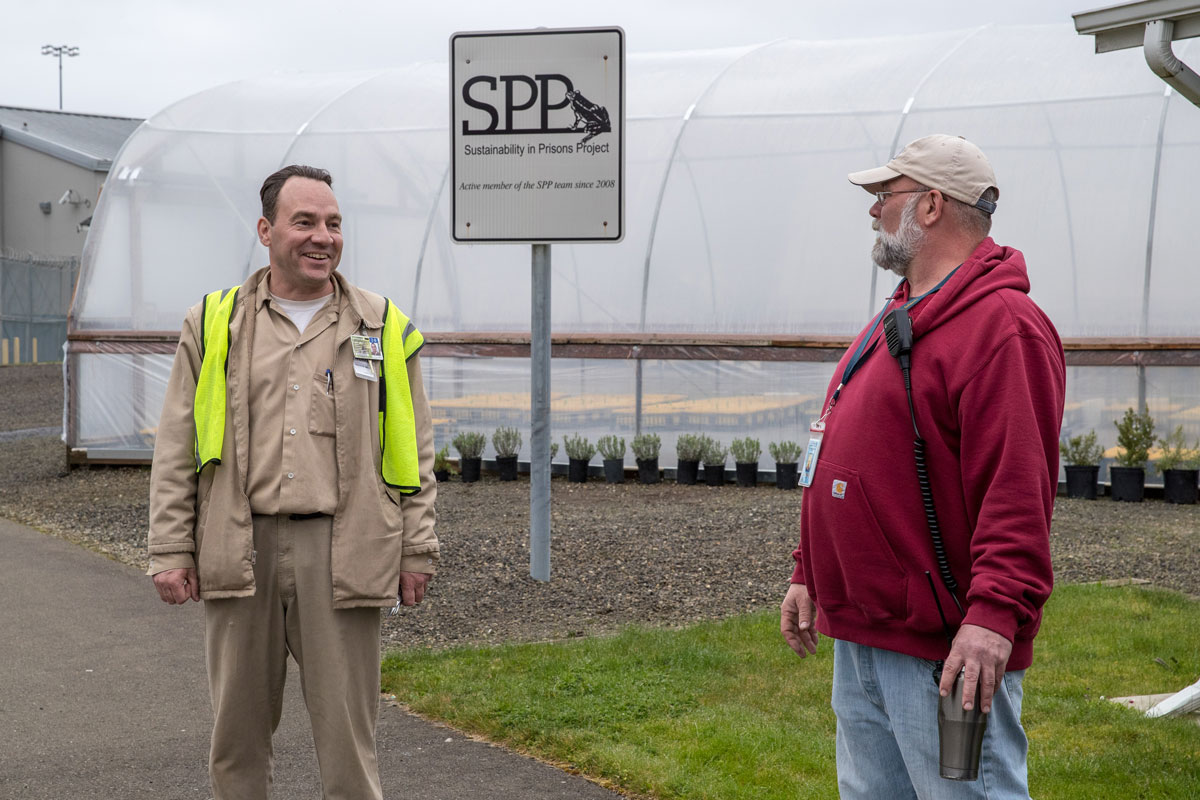
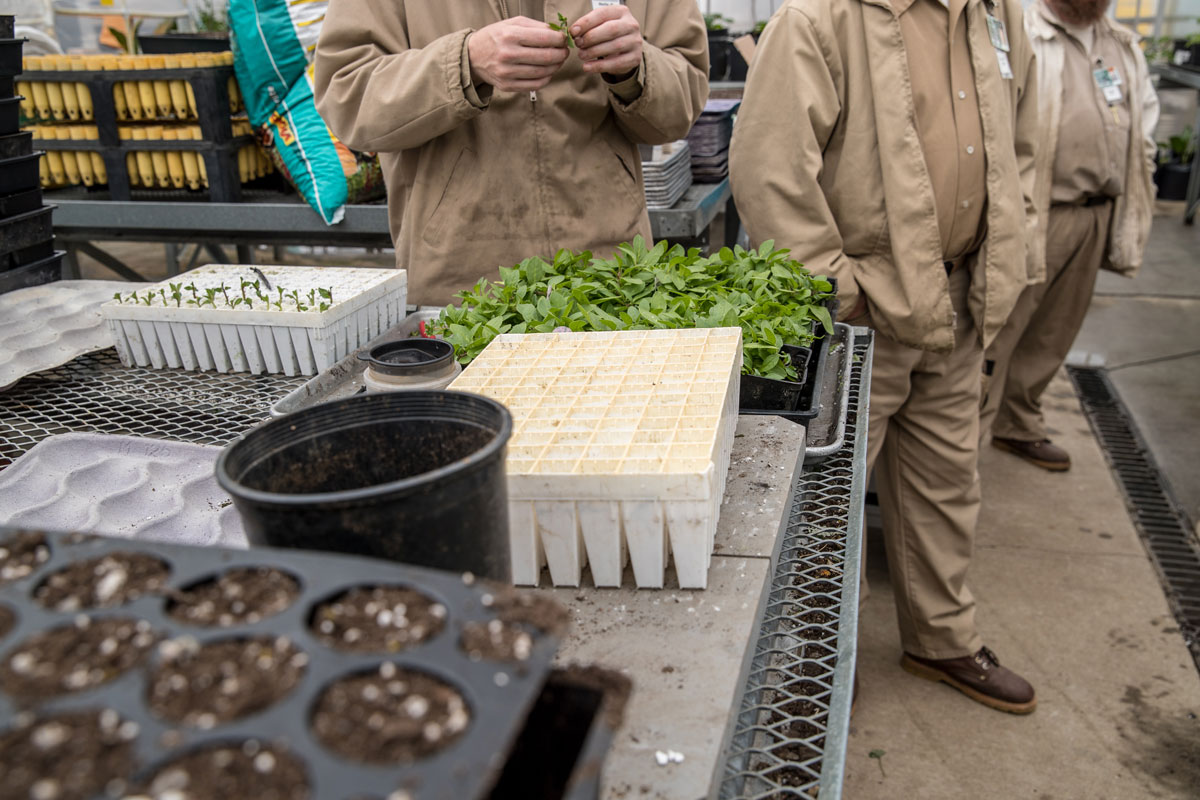
With help from Grounds Maintenance Supervisor and SPP Ecological Conservation Nursery Liaison Ed Baldwin, the Lifer Garden is designed, built and maintained by individuals serving life sentences. Photo by Ricky Osborne.Ed Baldwin and a technician talk outside the Prairie Ecological Conservation Nursery greenhouses. Photo by Ricky Osborne.The prison’s grounds crew produces plants for the prison gardens, and also cultivates plants for SPP’s Prairie Ecological Conservation Nursery. Here, a technician demonstrates propagation by cutting. Photo by Ricky Osborne.Chris Idso, left, is the longest-term champion of sustainability programs at Stafford Creek, and he’s got a good sense of humor. Photo by Ricky Osborne.
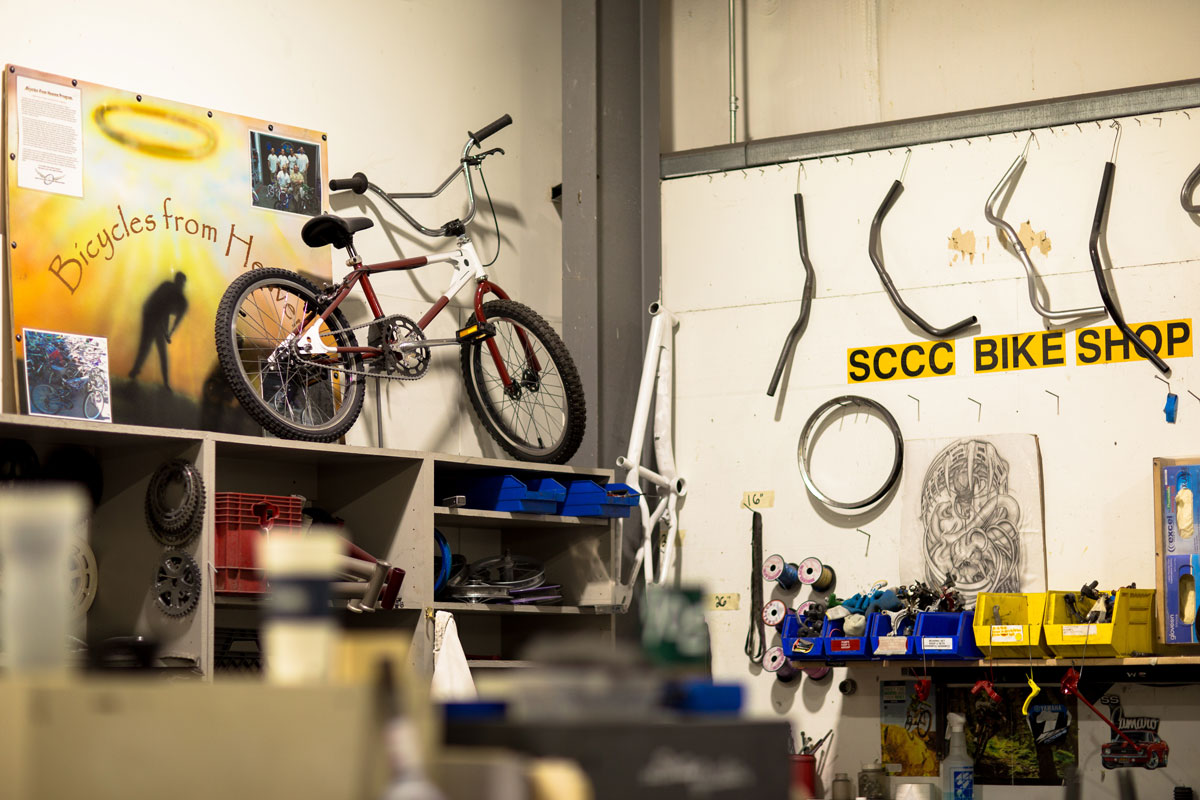
The tour ended with visits to the shop areas, where partners saw bicycle and wheelchair repair. Like all the other programs we saw at Stafford Creek, these programs bring together partners to create something of value for the benefit of our environment and our communities.
by Carl Elliott, SPP Ecological Conservation Nursery Manager
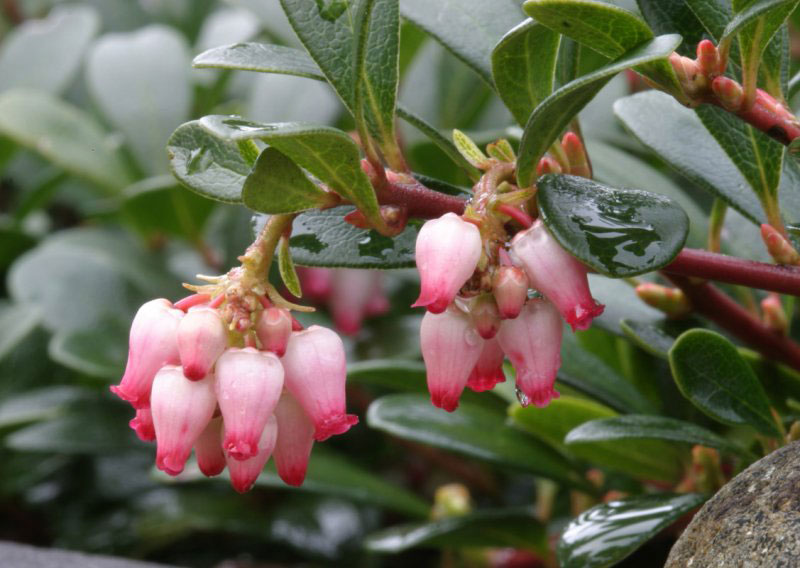
Kinnikinnick (Arctostaphylos uva-ursi) is tough to grow from seeds. Kinnikinnick seeds have compound dormancy: before germination can occur, the seed coats must be made permeable to water (breaking physical dormancy), and must undergo a number of internal biological processes (breaking physiological dormancy). Though there are known methods to overcome the double dormancy, the results are highly variable and inconsistent. Most commercial nurseries grow the plant from softwood cuttings, but these lack the genetic diversity of seed-grown stock.
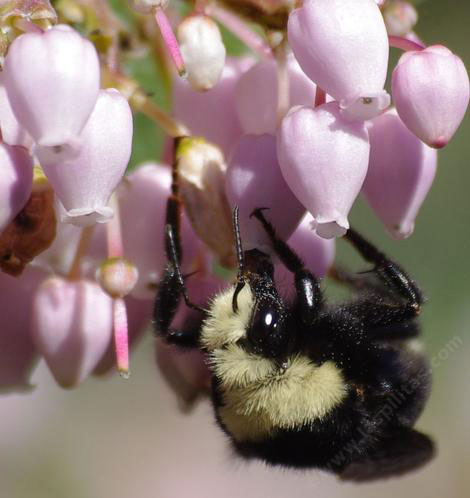
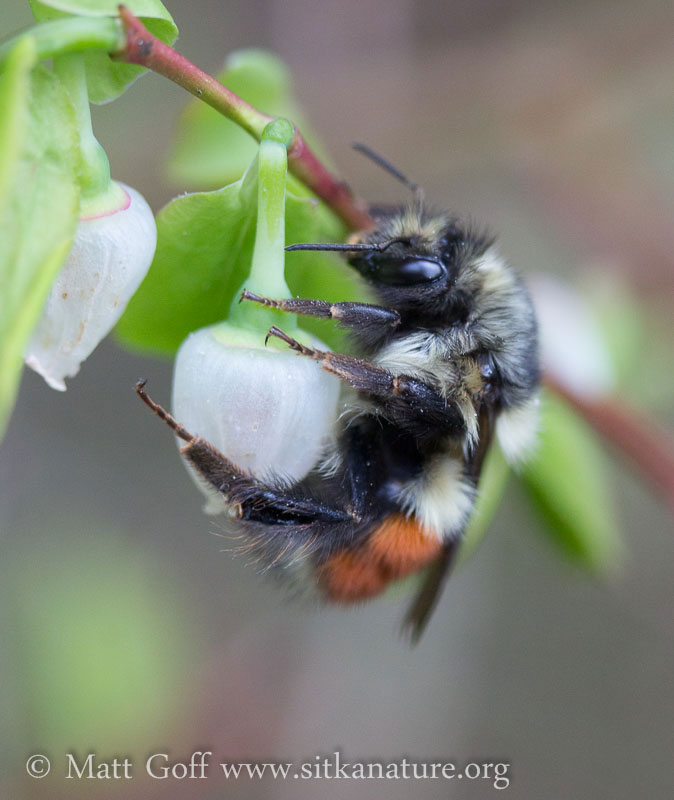
Bombus vosnesenskii collects nectar from kinnikinnick flowers.
SPP’s conservation nursery has taken on the challenge of seed-grown kinnikinnick, because of the benefits it brings to pollinators at restoration sites on Joint Base Lewis-McChord. Delightfully bright yellow-faced bumblebees (Bombus vosnesenskii) and fuzzy black-tailed bumblebees (Bombus melanopygus) perform acrobatics to collect nectar from its flowers. Both of these hardy insects fly out at any early promise of spring. These are just two of the many pollinators that gain sustenance from this important plant.
Kinnikinnick provides both an early bloom time and an extended bloom period spanning a couple of months. This blooming phenology (cycle) allows pollinating insects to build up their populations early in the season. These fortified populations carry over into the spring and summer, providing increased pollination services to many prairie plants. Susan Waters from Center for Natural Lands Management is surveying Salish lowland prairies’ pollinators, and has developed detailed graphics of pollinator networks demonstrating the importance of bumblebees as pollinators for numerous plant species used in restoration.
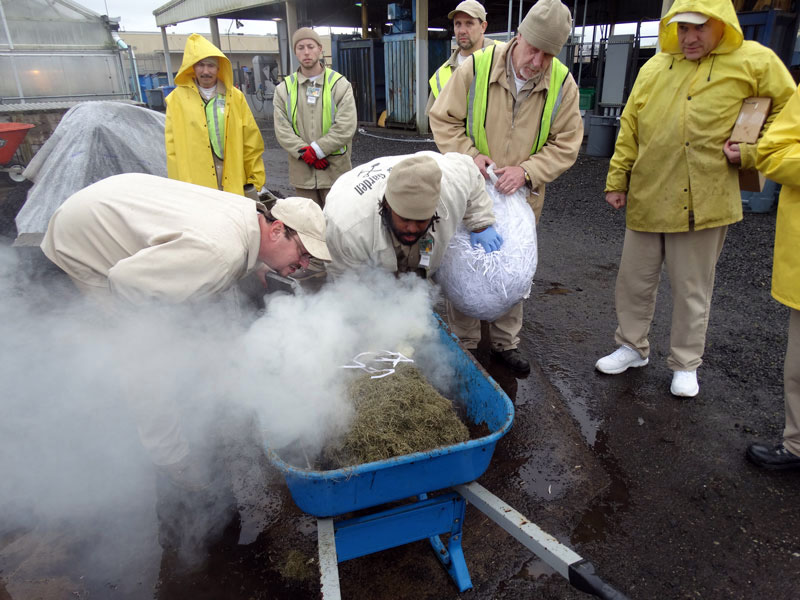
Ecological Conservation nursery technicians coax the December fire needed for one of the pre-treatment trials.
This year, SPP program team designed a study of kinnikinnick germination at Stafford Creek Corrections Center (SCCC). The nursery technicians drew from what they had learned about the scientific method from a program workshop. SPP staff and the technicians aim to find out the most consistent pre-treatment to overcome the physical dormancy, plus the best length of time in cold-moist conditions to reduce physiological dormancy. Together we developed a methodology to test means to overcome the dormancy of kinnikinnick seeds and promote germination. In December, SPP-Evergreen and SCCC staff gathered with the technicians to perform the range of pre-treatments.
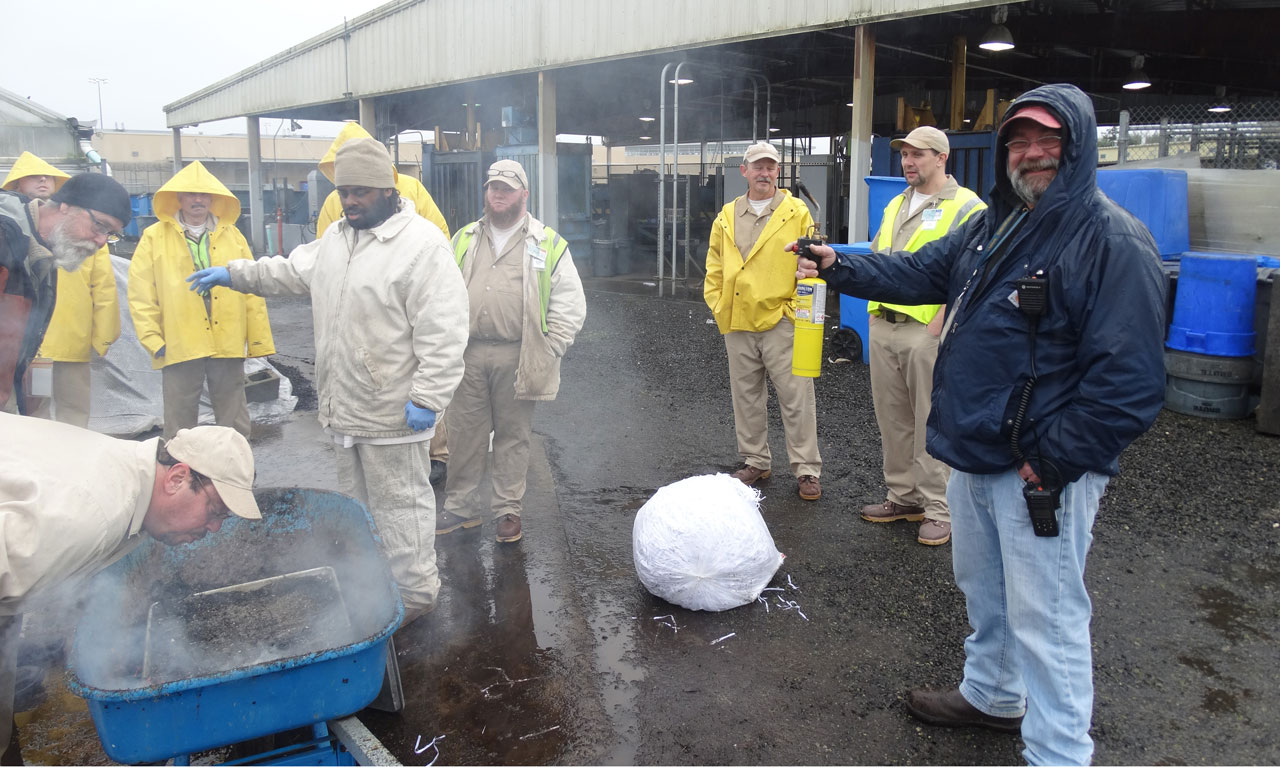
Nursery Specialist Ed Baldwin (right) pokes fun at the chances that they’ll need the fire extinguisher.
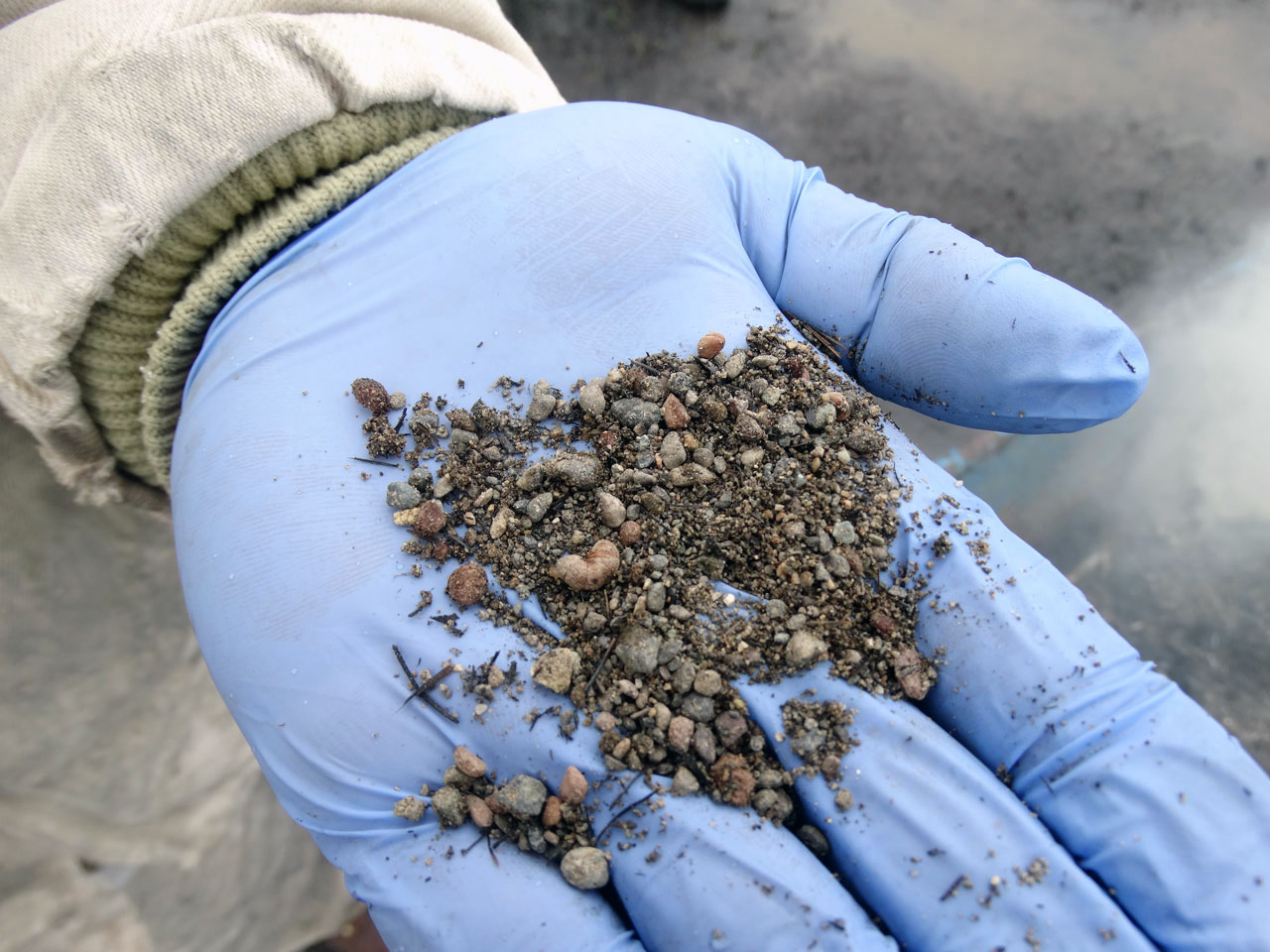
We performed three pre-treatments and a control. First was to dip the seeds in 80°C water for 2 minutes; second we immersed seeds for 24 hours in an acid bath of distilled white vinegar (the most acidic thing we could use in a corrections setting). The third treatment was a very controlled burn: after safety precautions were in place, seed was laid out on a bed of sand and covered with 2 cm of sand; 12 inches of dried grass clippings were piled and lit aflame. Since December in Aberdeen, WA is not particularly dry, fire-prone time of year, significant effort was put into keeping the flame burning.
The seed from each treatment was sown separately in the nursery’s standard cone-tainers, and will spend the winter in cold-wet stratification. Only warming weather of mid-spring can bring forth answers to our germination trials, but already the technicians, staff, and the bumble bees are betting on the outcome.
Kinnikinnick seeds look like they survived the controlled burn just fine.
Bombus melanopygus among kinnikinnick flowers.
If you are interested in learning more about bumblebees and other pollinators, check out the Xerces Society.
By Jessica Brown, SPP Turtle Program Coordinator with Biological Science Technicians at CCCC, Darin Armstrong and Noel Priestman. Photos by Jessica Brown
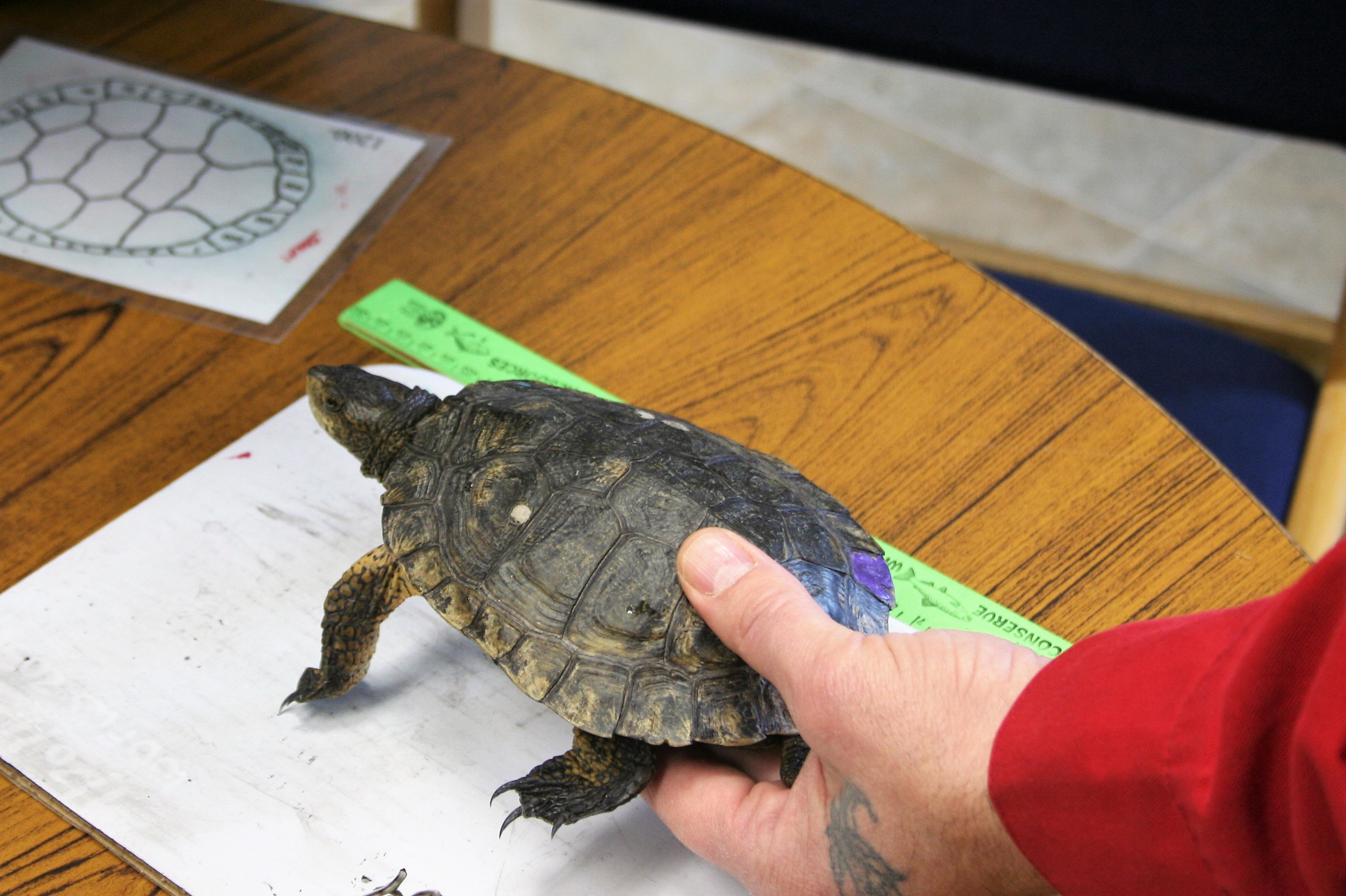
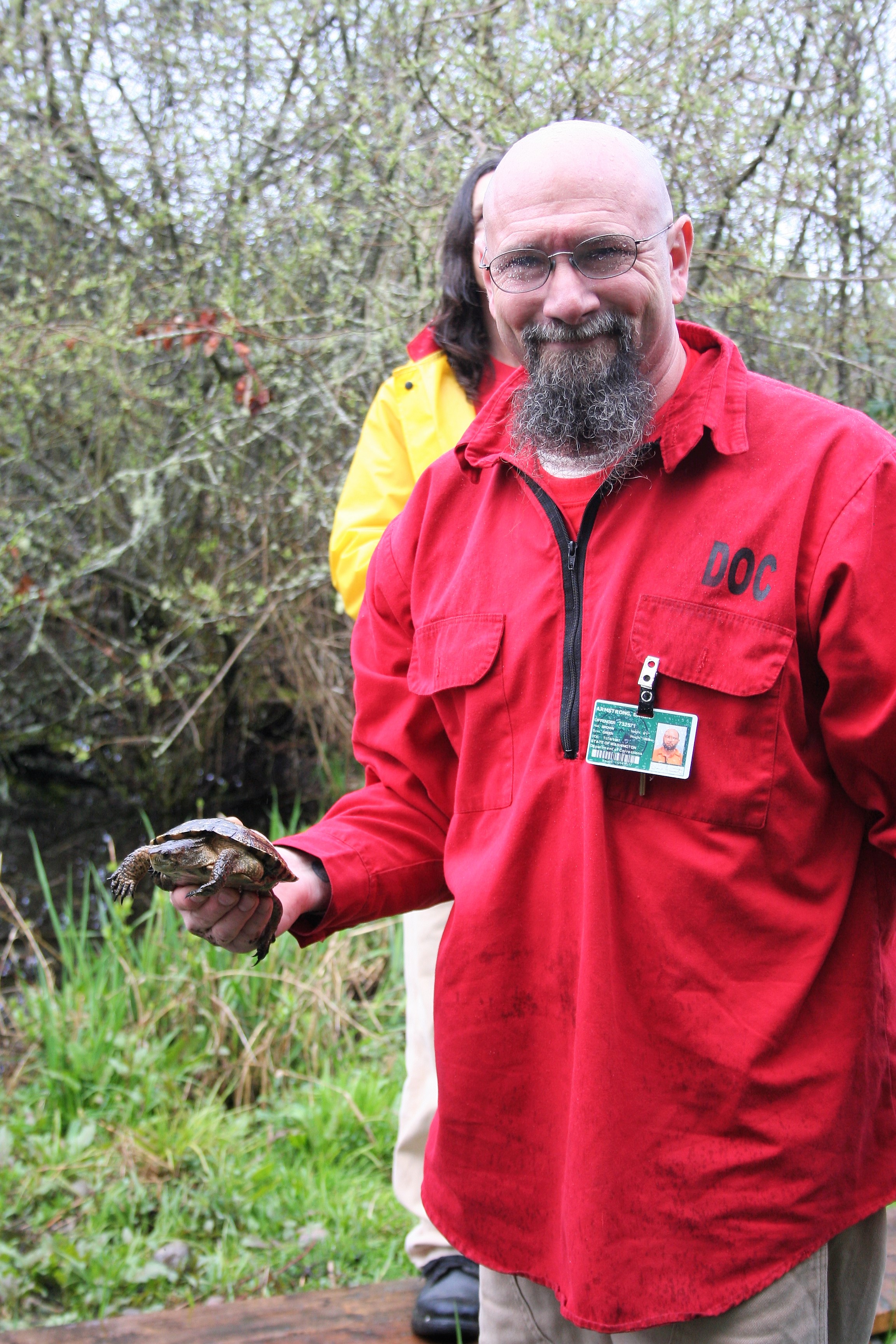
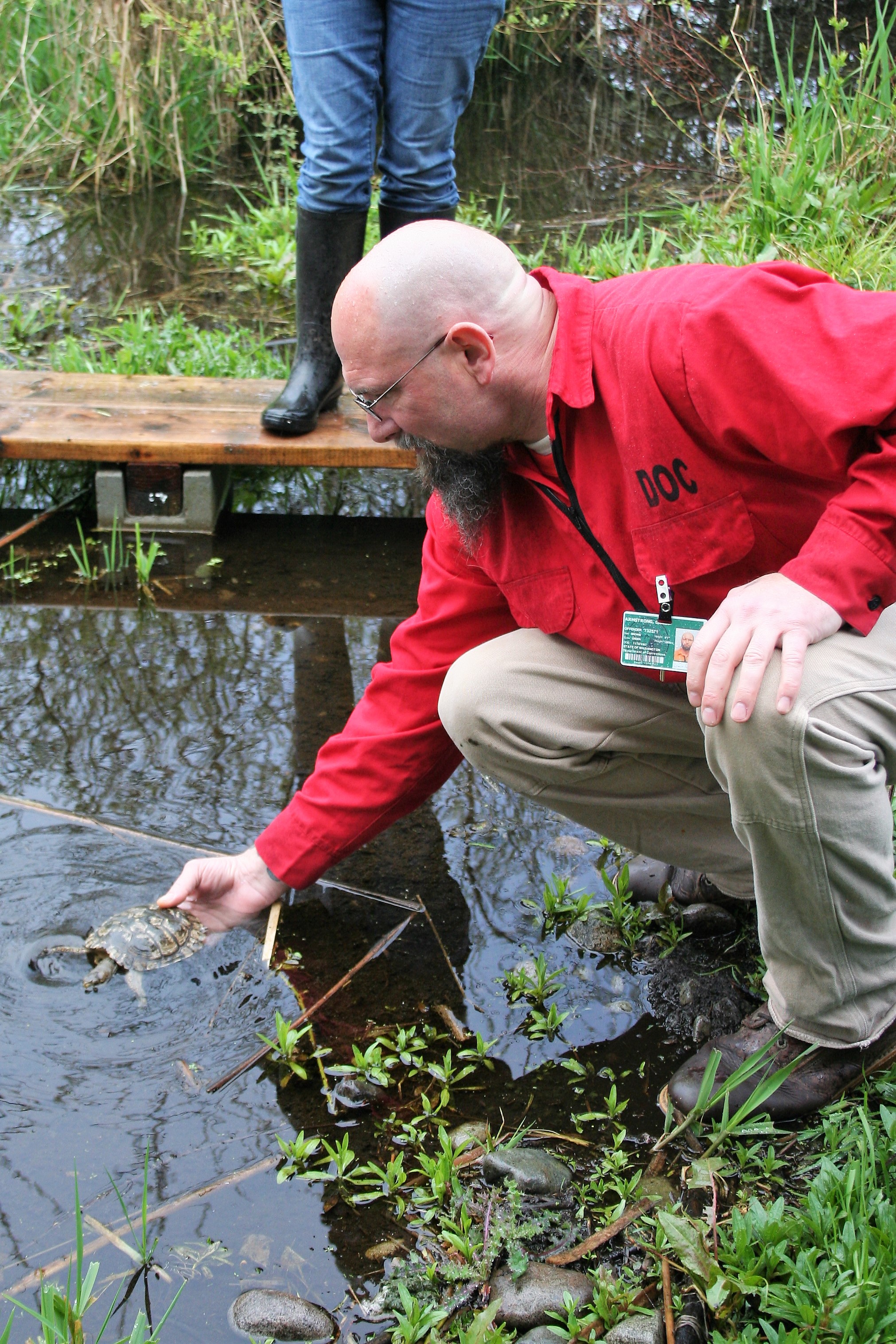
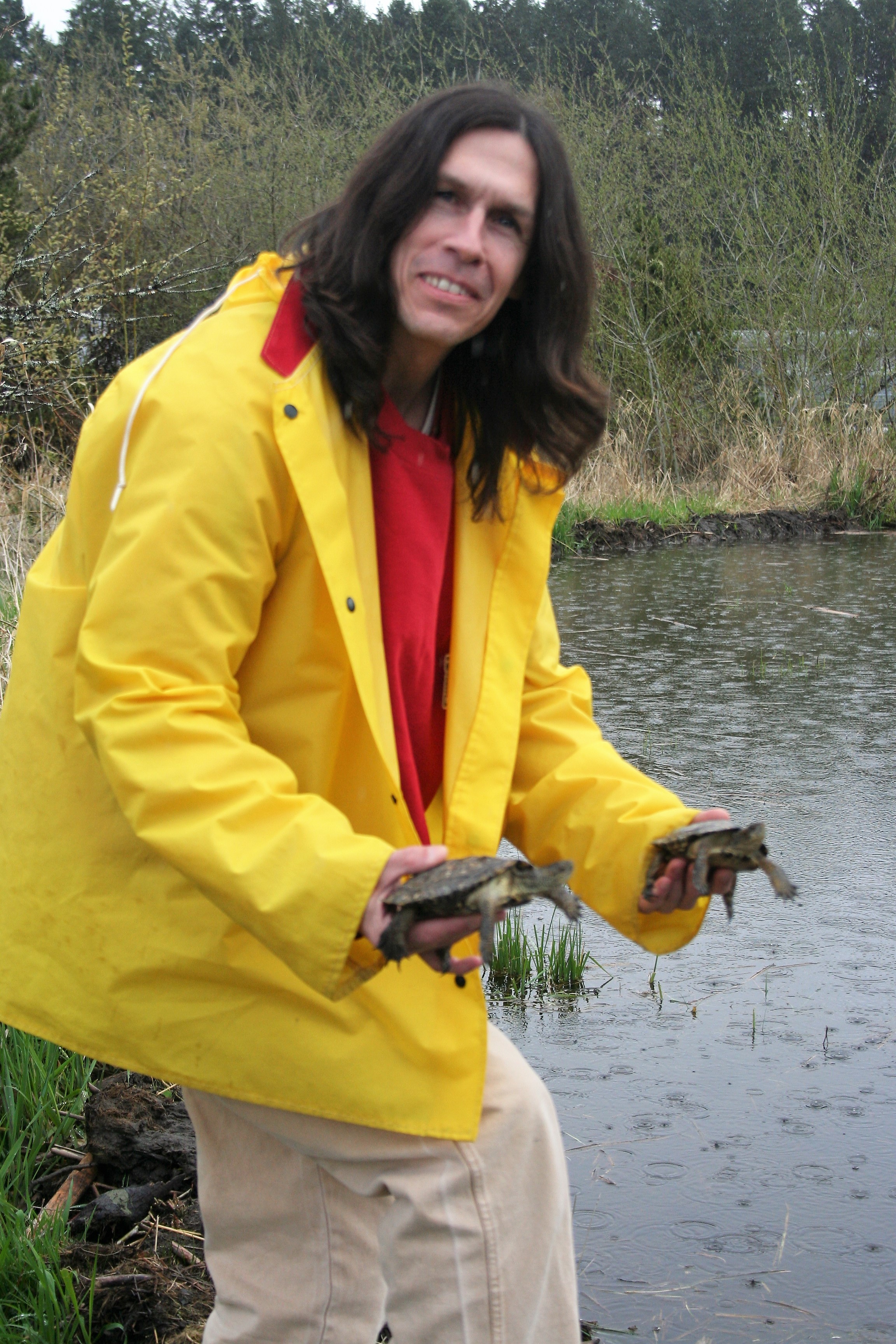
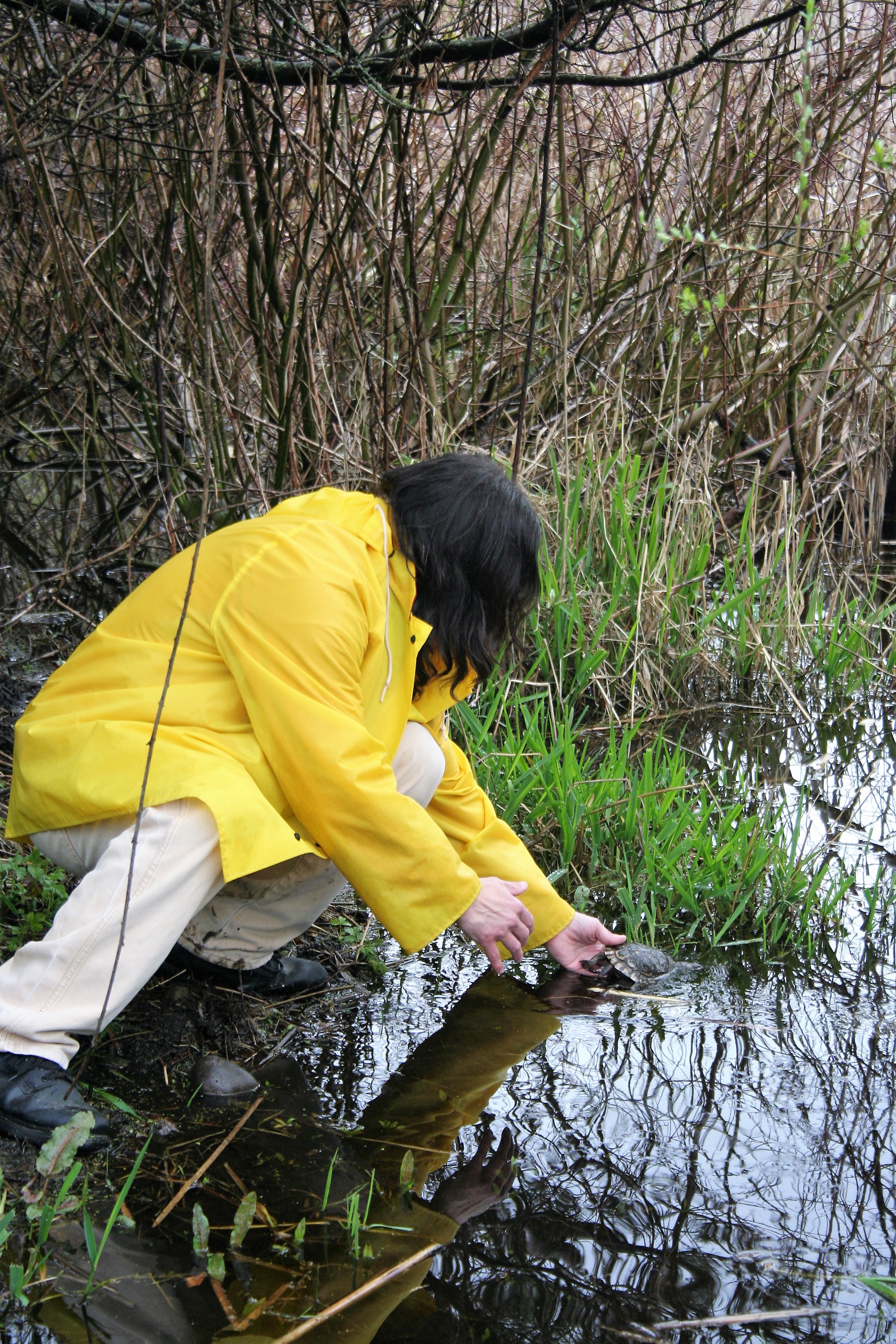
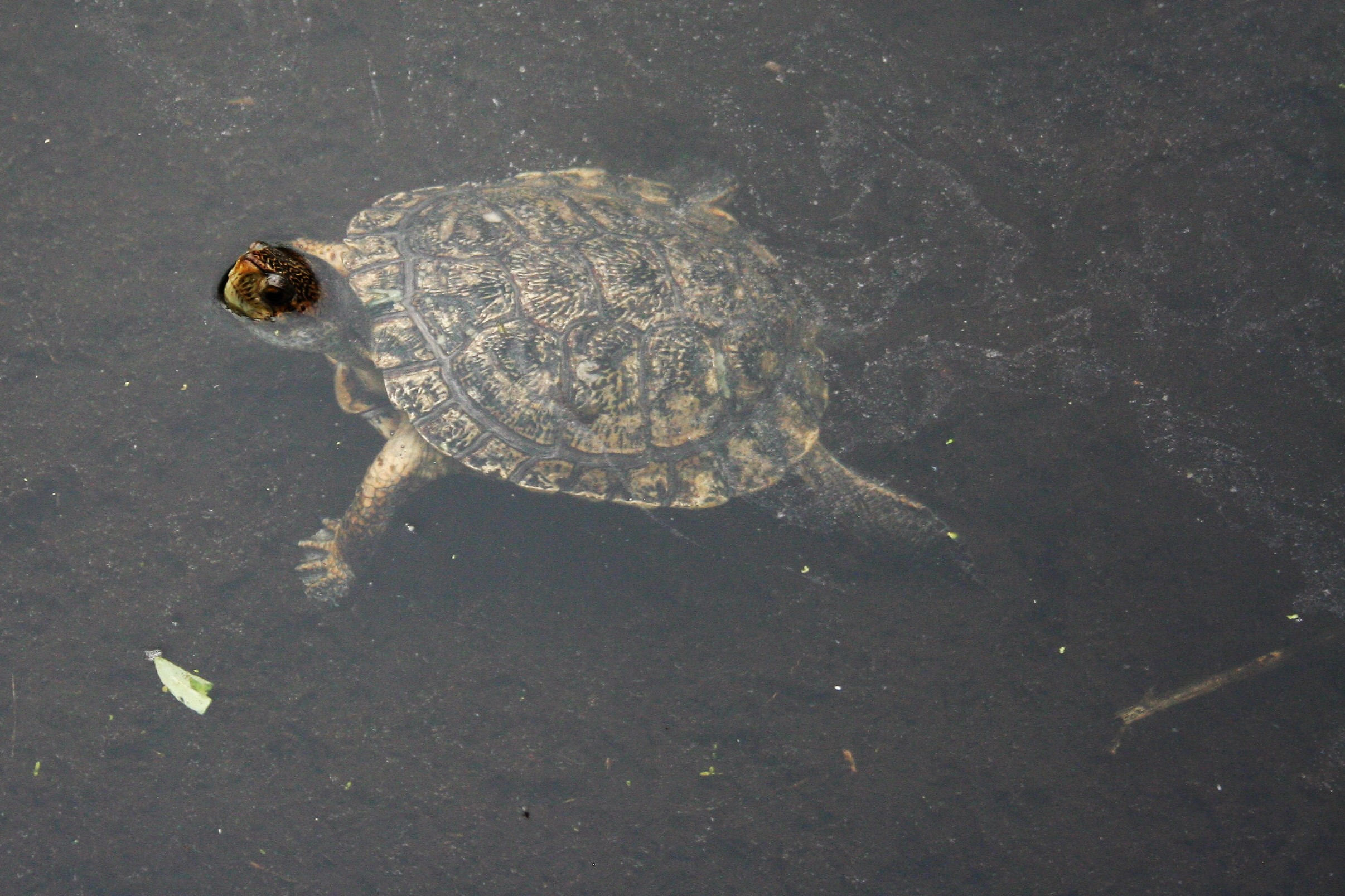
Early in April, nine western pond turtles left their temporary housing facility at Cedar Creek Correctional Center and traveled up to PAWS in Lynwood to receive their final check-up and CT scans. The turtles arrived to Cedar Creek in last Fall for rehabilitation and recovery from shell disease treatment. A group of incarcerated technicians provided expert daily care to help the turtles get healthy enough for them to return to their natural habitat. Two of the technicians were able to assist Washington Department Fish and Wildlife (WDFW) biologist, Emily Butler, with the release of 7 turtles at the South Puget Sound Habitat Area in Lakewood, WA. The technicians also had the opportunity to see newly emerged turtle hatchlings that will eventually make their way down to the ponds.
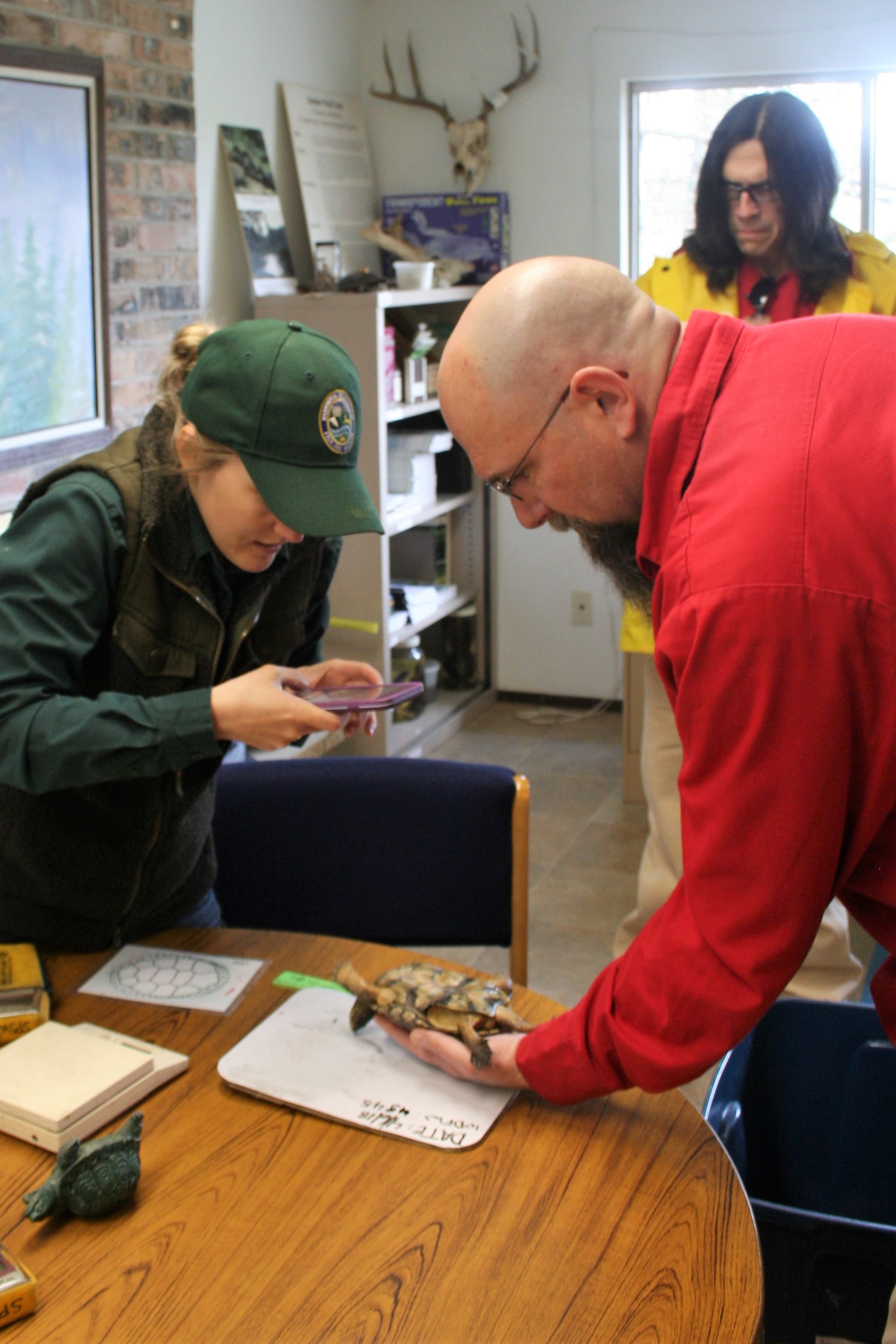
WDFW biologist, Emily Butler and technicians taking the last photos and measurements of the turtles prior to release
Technician, Darin Armstrong assisting with measurements
Here are the technician’s response to their experience of the release:
DARIN ARMSTRONG
On April 6th, I was given the opportunity to release seven western pond turtles back into their natural habitat. The experience was overwhelming and very new to me. I was able to see where the beavers have been helping to develop the ponds. The turtles took to their natural habitat quickly. The information received from Jessica and Emily was very helpful in understanding the reasons behind the type of fungus involved in shell disease and how it is healed. I thank them very much for the experience they shared.
Darin ready to release one of the turtles
Releasing the first turtle!
Noel releasing the next two turtles
NOEL PRIESTMAN
How extremely grateful I am for this chance to participate with SPP at Cedar Creek and the conservation effort to restore healthy populations of endangered western pond turtles and release them back into Washington State natural habitats where they can make a come back. I believe this experience has increased my chances to make a successful transition and make a come back of my own. What I have enjoyed most about this job is contributing my time and energy to an important service. I also like being able to give back to the community through my wholehearted effort to communicate, collaborate, and participate in a worthy cause!
Last turtle getting released!
Female western pond turtle readjusting to her habitat
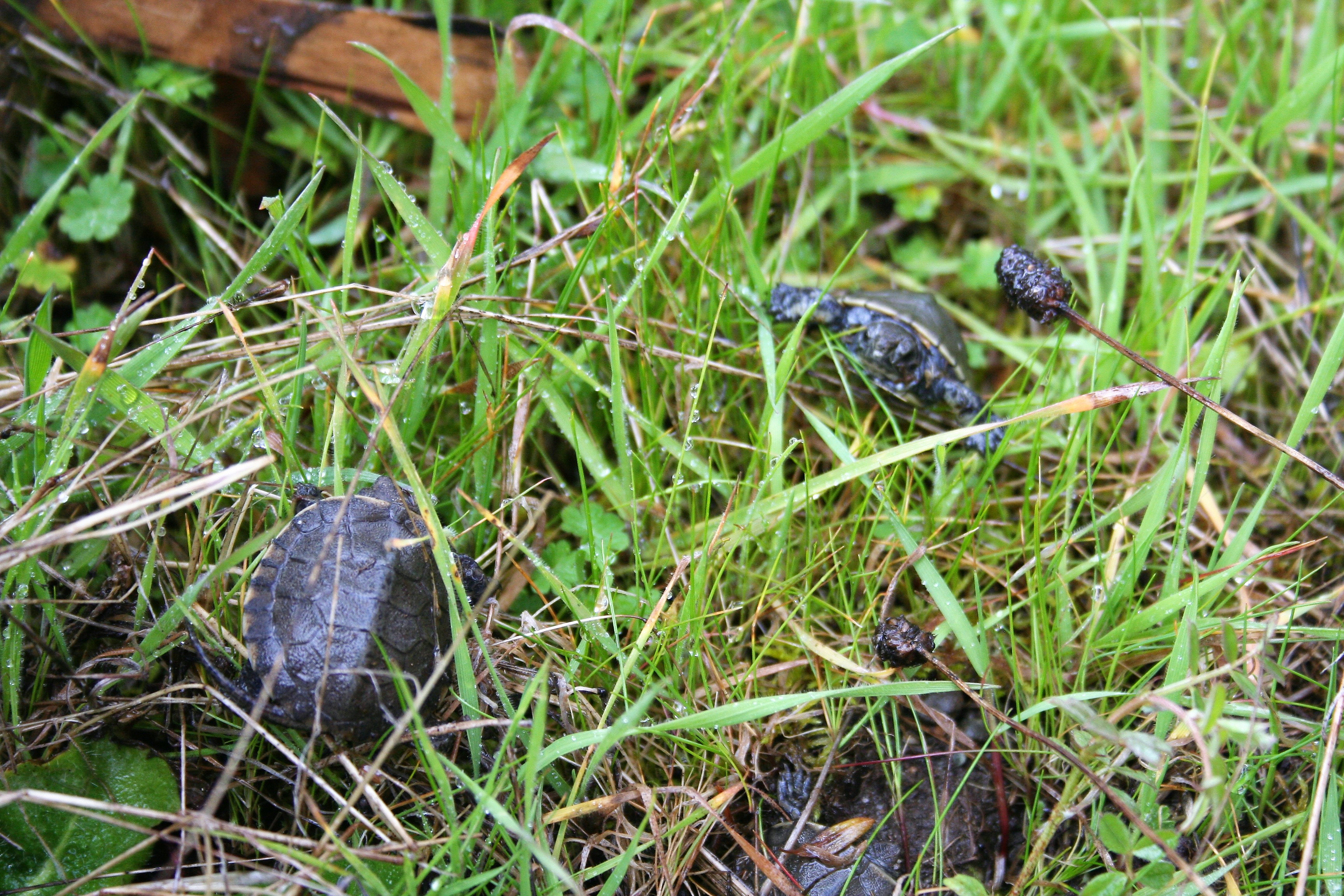
Turtle hatchlings that emerged a couple of days prior to our visit
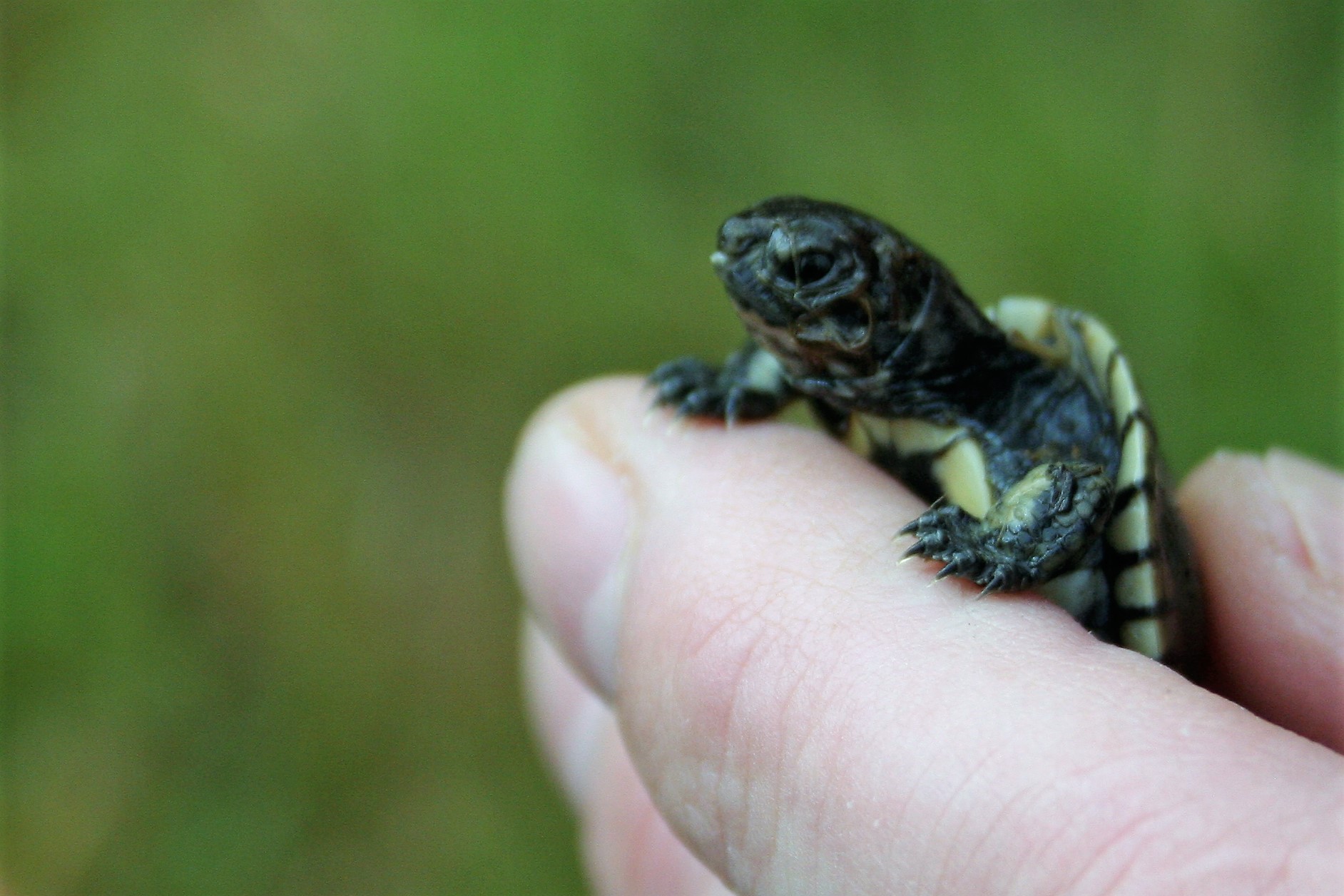
Tiny turtle hatchling
by Grady Mitchel and Anthony Powers, Roots of Success Instructors, Bethany Shepler, SPP Green Track Coordinator, and Joslyn Rose Trivett, SPP Education and Outreach Supervisor
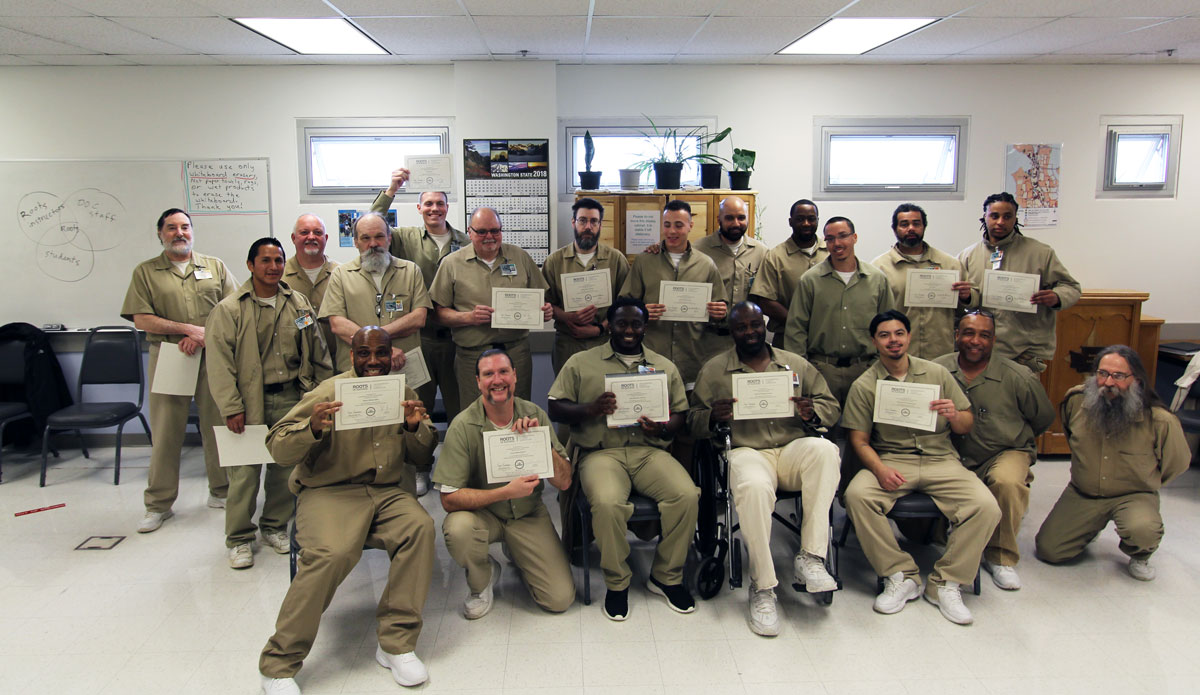
Stafford Creek Corrections Center (SCCC)’s 19th and 20th graduating cohorts proudly show their certificates.
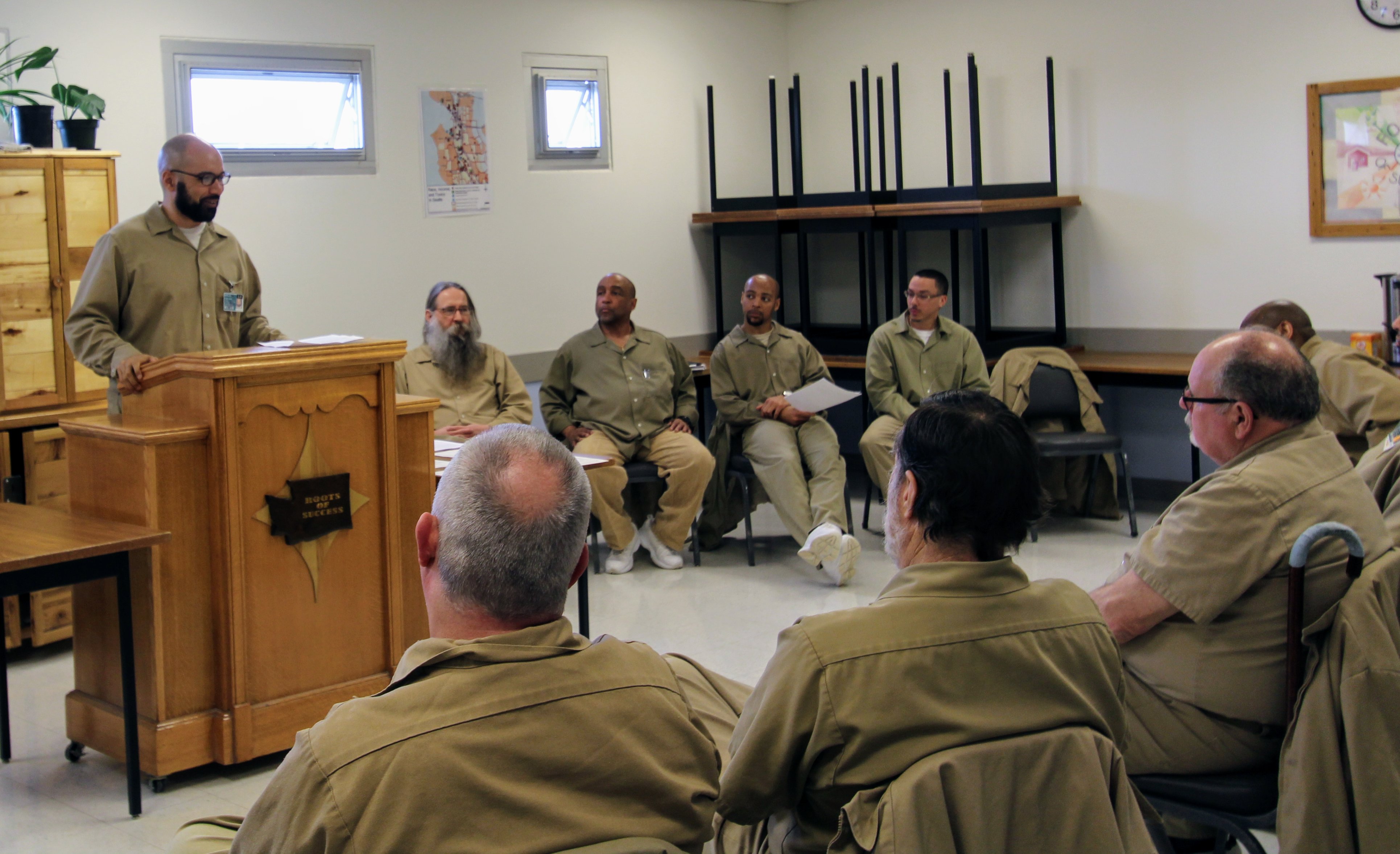
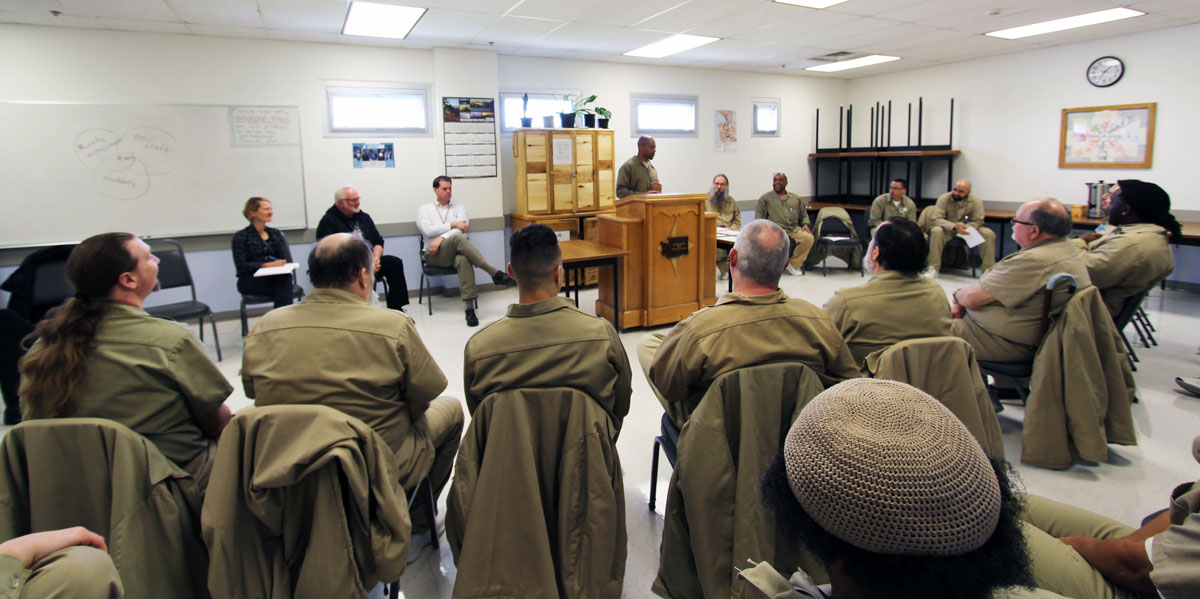
Roots of Success (Roots) is an environmental literacy curriculum taught in prisons throughout Washington State. Stafford Creek Corrections Center (SCCC) has championed the program for 5 years; in that time they have graduated more than 300 students in 20 cohorts. In March, we celebrated the two most recent cohorts of graduates.
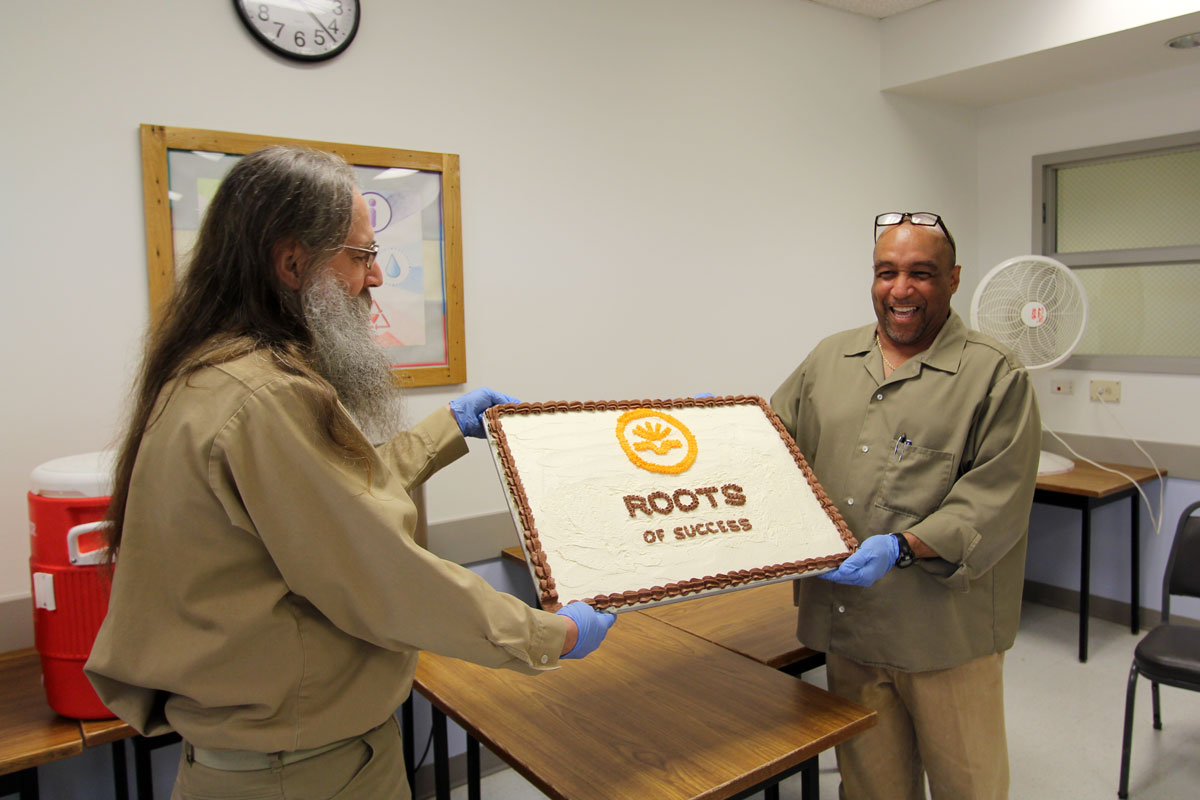
David Duhaime and Grady Mitchell hold the graduation cake made by the SCCC inmate bakery.
The prison staff and administrators gave speeches highlighting the cooperation needed by everyone for the program to operate successfully. We heard from both past and current program sponsors (Liaisons). SCCC’s first Roots Liaison, Robert Aleksinski made the excellent point that “no matter what your political views are, this is a valuable program”—a fairly rare endorsement for an environmental program. The current Roots Liaison, Kelly Peterson, talked about how her initially negative impressions of Roots had changed since she started supporting the program; when she started working with the inmate instructors and students, she was impressed by their dedication to the program and quality of their work.
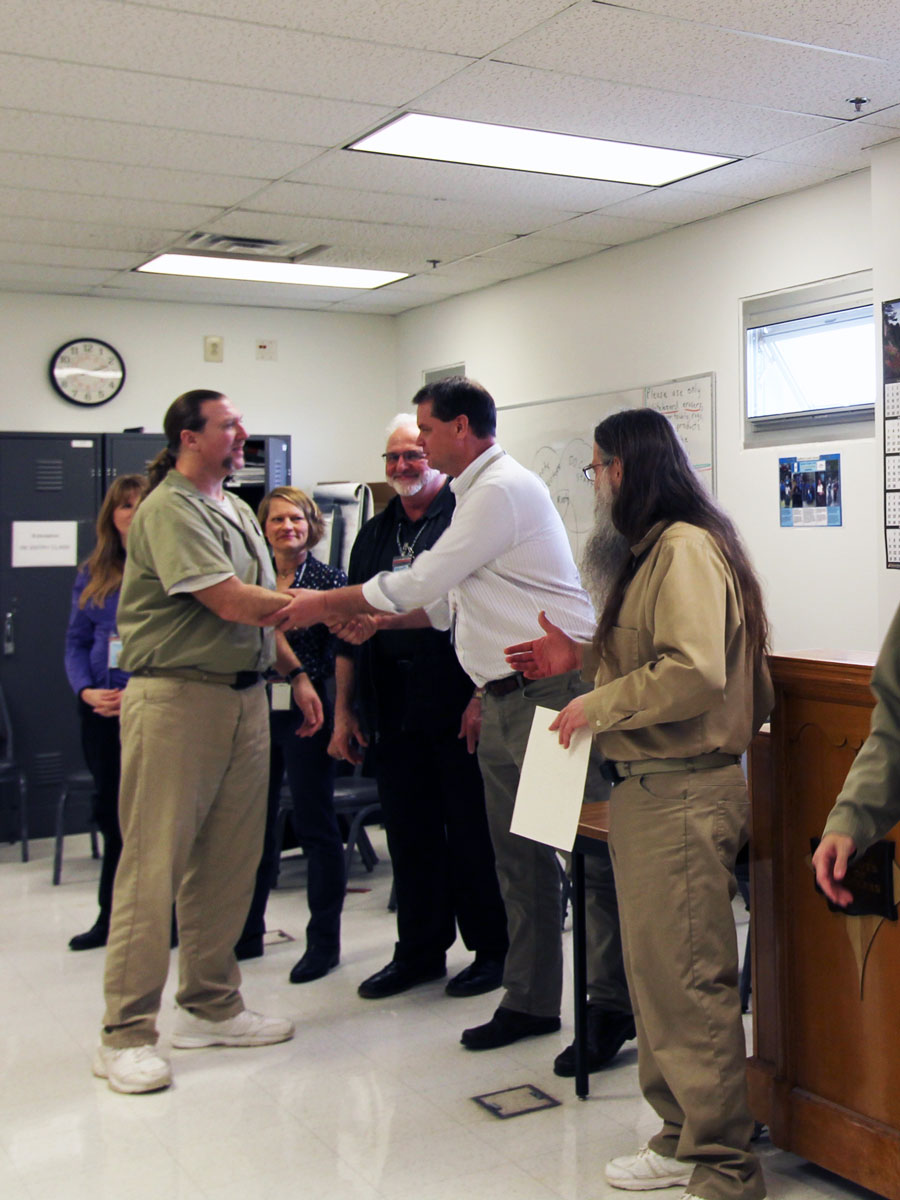
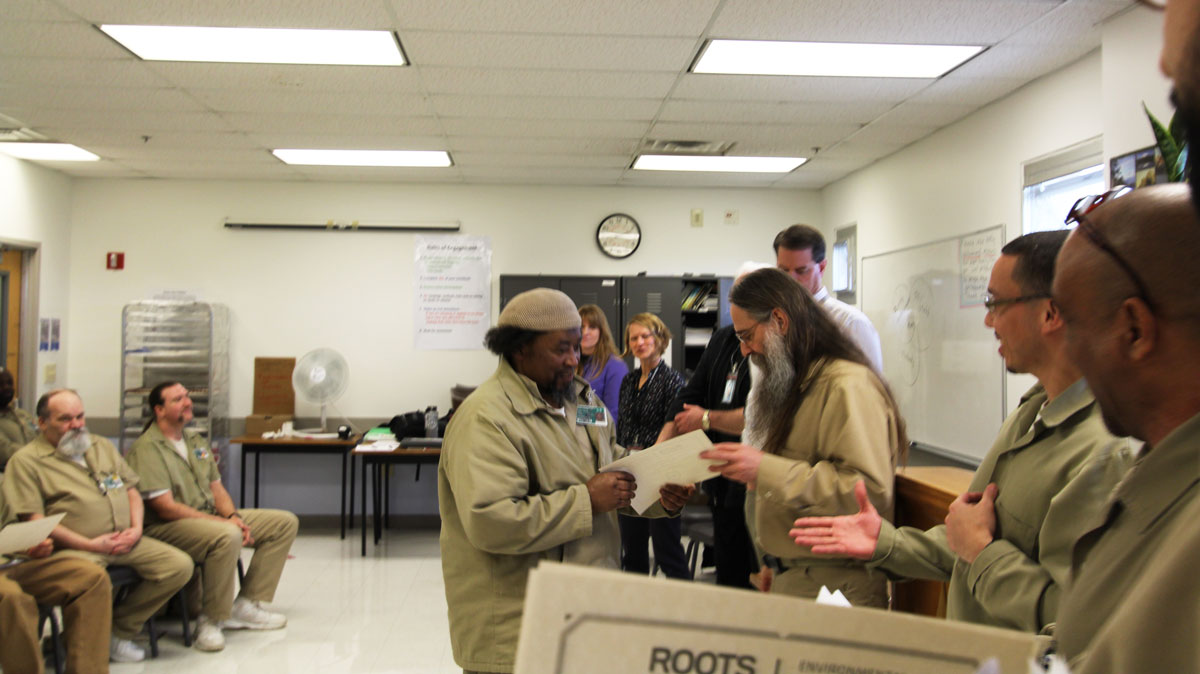
The graduating students go through a receiving line to receive congratulations and their certificates.
All five instructors shared wise words, stories, and anecdotes. All five instructors echoed the importance of collaboration among Department of Corrections (DOC) staff and administration, Roots instructors, and Roots students. For example, David Duhaime, instructor and Master Trainer, said, “all of the DOC people have been keeping this program strong.” He talked about the importance of each person involved—whether it be DOC staff, students, or instructors—bringing their own experiences and knowledge to the Roots program. He also highlighted how much students teach the instructors too: “we don’t just learn from these books; these books are real important, but what else happened is you guys came in and shared what you know.”
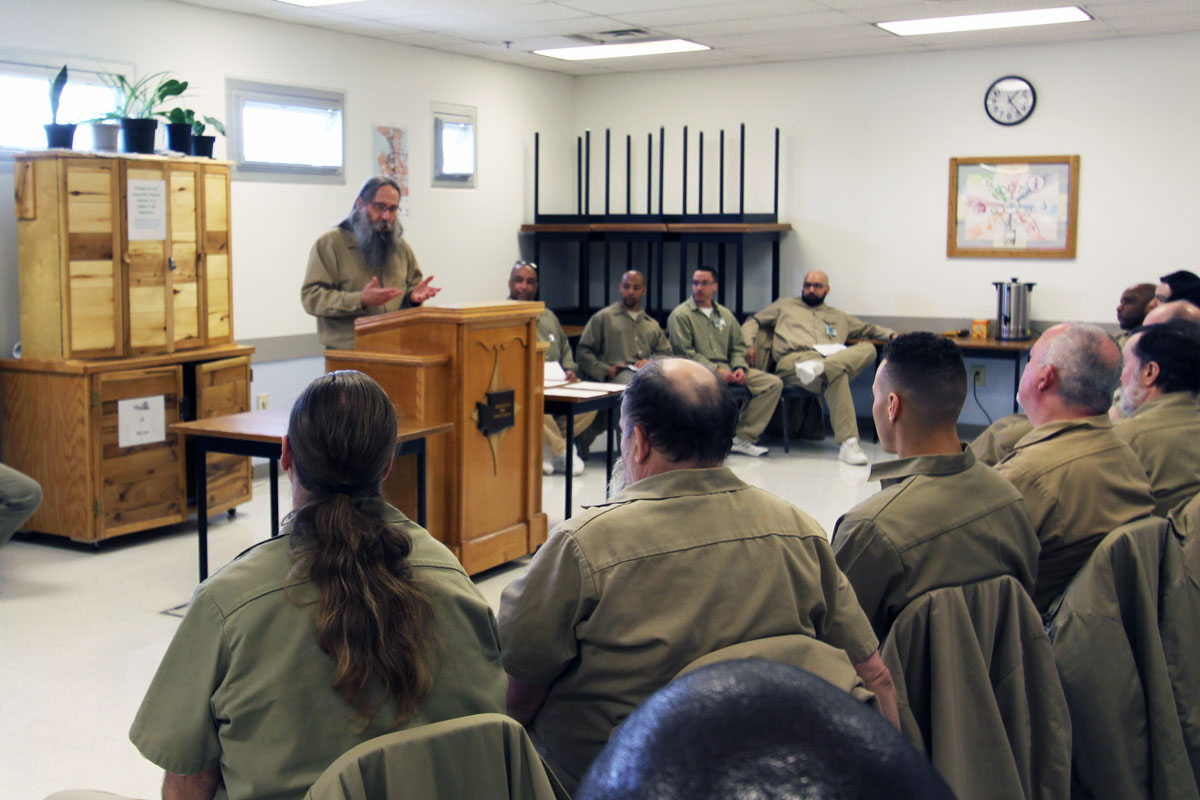
Instructor and Master Trainer David Duhaime talks to the graduating class about how the instructors learn from the students.
Here are longer excerpts from the speeches made by Roots Instructors Grady Mitchell and Anthony Powers.
Grady Mitchell: Standing in the gap
I recently spoke with a young man about standing up for those who need it. I reminded him of how much he appreciated it when someone else spoke up for him when he was confronted with a situation, and they didn’t just lay low and keep quiet. Some call this type of action as “standing in the gap” for someone. It is our desire to bring out “that voice” that is particular to each of us, in order for others to hear and understand that sustainability in this sense is all-inclusive. Now we see each other with respect, value, and appreciation for individuality.
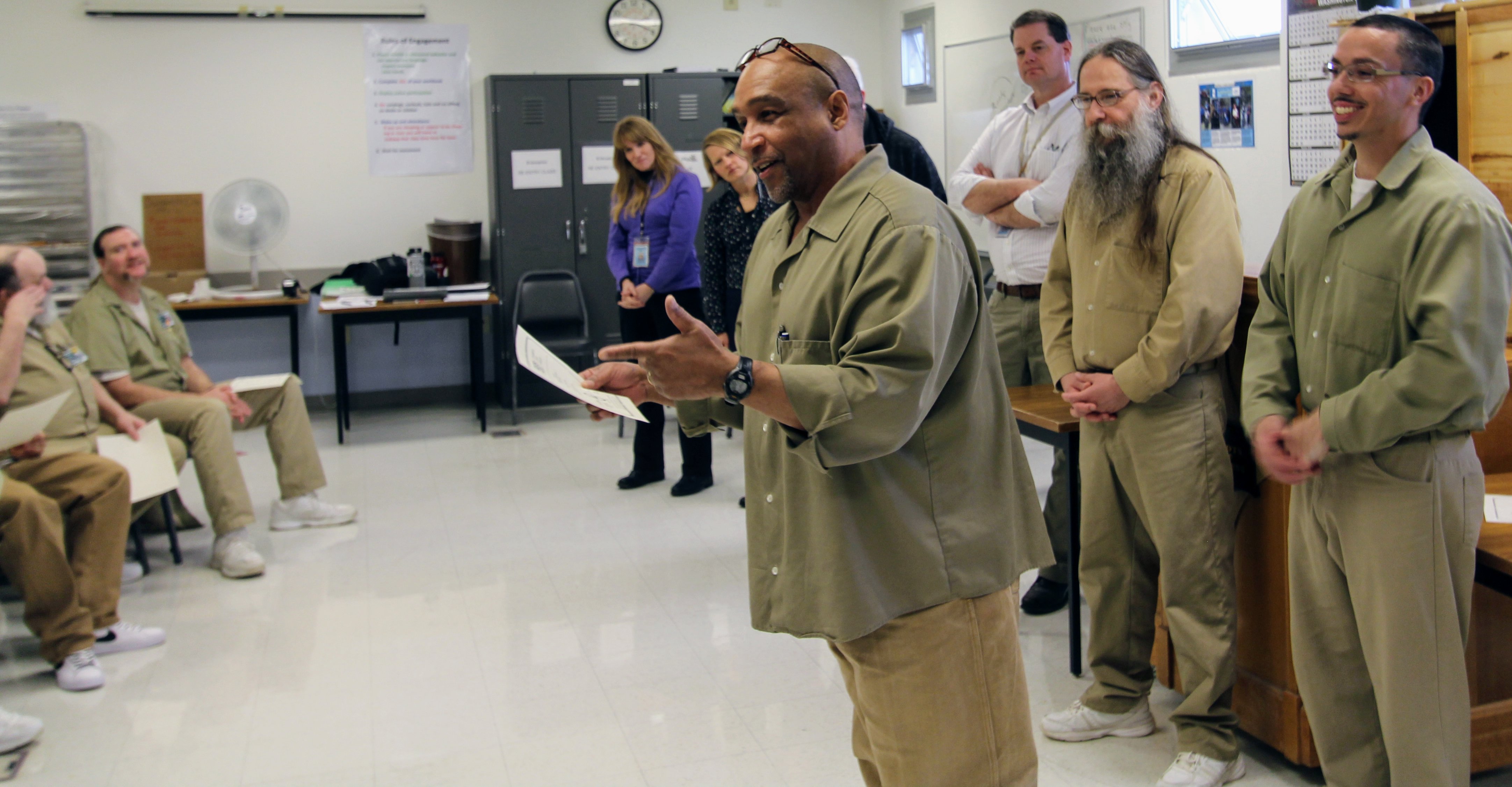
Grady Mitchell, center, talks about the student whose certificate he’s holding.
What started as impatience for some, ended in tolerance of flaws, and discovery of each other’s value. While we may not ascribe to the mores of prison or commit acts of insensitivity, do we at times perpetuate it by standing aside and staying silent? Never underestimate the phenomenal impact we’ve had on each other and no matter what your philosophy in life, you will have to be open to new ideas when it comes to the environment.
As we learn the impact our actions have on this planet, it becomes imperative that speaking up and out is equal to survival. When I speak with my grandchildren and tell them I love them it’s my call to action to be sure that I try and assure the resources they have will sustain their survival and pray the knowledge I share with them will inspire efforts within them towards their children’s survival.
Unfortunately, “standing in the gap” is not always easy and can sometimes have consequences and the threat of reprisal can deter people—both confined and free—from being righteous or doing justice. Nevertheless, there is a psychological cost involved in following this philosophy because ultimately, lying low and keeping quiet can damage you mentally.
As I talk about standing in the gap, the “gap” creates the opportunity to become useful. That space from where we are to awareness and enlightenment, is where you can find the Roots of Success.
Anthony Powers: The common thread
I have heard a common question being asked. I have even heard this question from some of the people at the Evergreen State College. The question is, “How do we get people to care about climate change?” At first, I thought that I had a reasonable answer, which is that there are a wide variety of people, each with their own personalities, characteristics, political and religious beliefs, so it would probably serve us well to come up with a variety of approaches, targeted at each group, because different things are going to motivate different people.
Instructor Anthony Powers addresses the class about how to motivate people to act environmentally.
Last month I began to think of it in a different way. A way geared more towards the collective, because there is always a common thread, there is something that every human has in common. That is when I realized an error in our current messaging, our saying that we need to save the planet. The reality is that it is more personal than that, and we need to make the message more personal. The reality is that we do not need to save the planet; we need to save ourselves. The planet is going to be just fine. Whether or not it is able to sustain our lives is a whole other thing.
The onus is ours and we are not trying to save the planet, we are trying to save ourselves as a human race, both literally and financially. Because the earth can exist without us, but we cannot exist without earth.
A graduating student receives his certificate.Master Trainer Cyril Walrond addresses the graduating class about the importance of working together to achieve goals.