Celebration and Transition

By SPP Project Manager Kelli Bush

The Sustainable Prisons Project (SPP) recently celebrated another year with our many wonderful partners.  The event, held on a cool summer evening at the Olympia Farmer’s Market, featured a wide range of guest speakers representing various aspects of the Sustainable Prisons Project.  Speakers from Department of Corrections, Joint Base Lewis McChord, The Evergreen State College (TESC), Center for Natural Land Management, Washington Department of Fish and Wildlife, and a prison volunteer each spoke about the significance of SPP from their perspective.


The event was also an opportunity to honor out-going Co-Director and Co-Founder of the SPP, Dr. Nalini Nadkarni.  Nalini has accepted a position at University of Utah as the Director of the Center for Science and Math Education.  She will remain involved with SPP as Senior Advisor.  Nalini is also continuing work to share SPP with other states, including at her new location in Utah.


We also welcomed new SPP Co-Director Dr. Carri LeRoy.  Carri began working with the SPP team in April and she officially began her new role as SPP Co-Director July 1st.  She is a stream ecologist and a member of the Masters of Environmental Studies faculty at Evergreen.  Carri is an excellent addition to the team and we look forward to continuing the Project with her leadership.


After a year filled with declining budgets we are extremely grateful to our partners, students, TESC staff, foundations, and grant funding sources that helped keep this project going.  We are excited to see what the next year brings!


To donate to the SPP and help bring conservation into Washington prisons, click here.

Taylor's checkerspot
Adult female Taylor's chekerspot

SPP Launches New Ecological Conservation Program at Mission Creek Corrections Center for Women

By Graduate Research Associate Dennis Aubrey

The Sustainable Prisons Project (SPP) and the Mission Creek Corrections Center for Women (MCCCW) are preparing to launch a brand new conservation program.  In addition to prairie plants and Oregon spotted frogs, we will be partnering on a new captive rearing program to raise Taylor’s checkerspot butterflies (Euphydryas editha taylori) for release on South Sound prairies.  The Taylor’s checkerspot is listed as a state-endangered species in Washington and is a candidate for listing under the federal Endangered Species Act.  These butterflies once flourished on glacial outwash prairies, low elevation grassy balds and coastal grassland sites from southern British Columbia to central Oregon, but in recent decades habitat loss and degradation have reduced it to a few small, isolated populations.

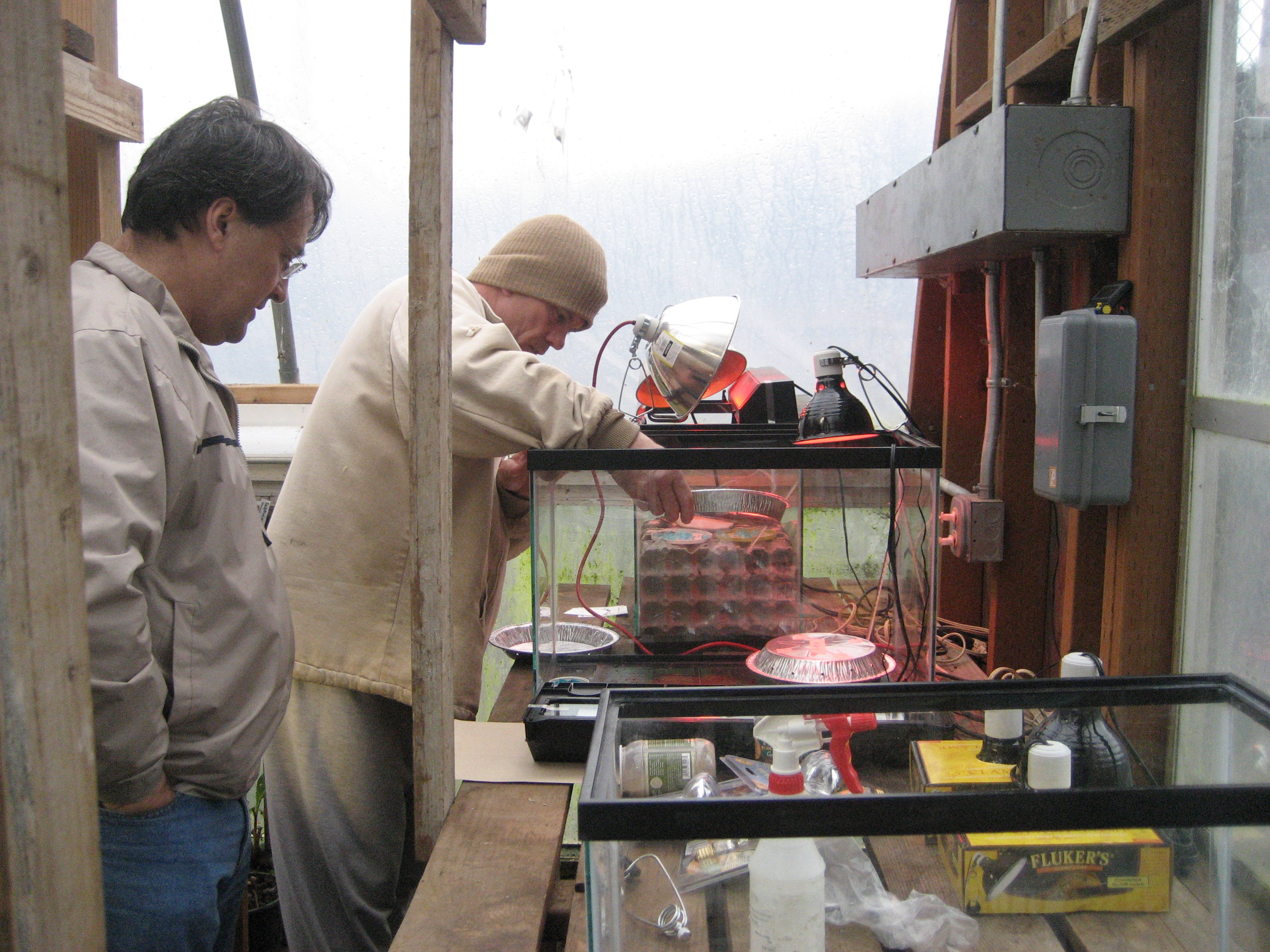
Staff at MCCCW are currently hard at work constructing a custom greenhouse at the prison which will house the program, The UV light transmission of the glass structure will provide the checkerspots with ideal growing conditions, and its interior partition will create two separate climate controlled rooms.  The building is expected to be complete by the end of the month, and the first release of larva onto South Sound prairies will occur in April 2012.  Currently the Oregon Zoo is the only facility rearing Taylor’s checkerspots.  The new structure at the prison will provide a second rearing program to assist with butterfly recovery efforts.   The project is generously funded by the Army Compatible Use Buffer (ACUB) program, US Fish and Wildlife Service, and The Nature Conservancy.  Other collaborating partners include Washington Department of Fish and Wildlife, Washington Department of Corrections, the Evergreen State College, the Oregon Zoo, and Joint Base Lewis McChord.  Even though the new rearing facility is not yet complete, SPP graduate student intern Dennis Aubrey has been busy preparing for the new program.  Dennis is receiving training from staff at the Oregon Zoo as they raise checkerspots, as well as assisting with field activities. He recently helped release 1036 prediapause checkerspot larva at the Scatter Creek Prairie restoration plots.  Along with staff at MCCCW, he also helped conduct interviews and hire inmates for the rearing technician position.  Dennis will continue to play an active role in training incarcerated women to become butterfly rearing technicians.

checkerspot release
Graduate student intern Dennis Aubrey helping release checkerspot larva at Scatter Creek

Our partners at MCCCW have been enthusiastic participants in all phases of the planning and implementation of this project.  All involved are optimistic that this is the beginning of a successful long-term undertaking to recover endangered butterflies and bring science education to incarcerated women.  This program promises to be an integral part of a growing culture of sustainability and conservation at the facility.

To donate to the SPP Taylor’s Checkerspot Program and help conserve biodiversity in Washington, click here.

Posted by Graduate Research Associate Carl Elliott

In a plant nursery that focuses on native plants and restoration, expectations are a bit different than at a traditional commercial nursery. Commercial nursery production has focused on those plants that make a good economic return for the grower. All managers of commercial nurseries know that if you have a rapid and efficient turn-over of plant material through the year, you generate a greater income per square foot. There is an industrial infrastructure and research to support the industry in this process.  For restoration nurseries interested in basic germination protocols or more complex issues of genetic integrity or in-breeding depression, there is not such a well-developed research infrastructure, and a great many questions remain to be answered.

At the conservation nursery at Stafford Creek Corrections Center, we have generated a number of basic scientific questions regarding the germination ecology of the prairie species we cultivate. One of the most engaging is the seeds response to prairie fires. Fires have been an integral tool to maintain prairies in the Pacific Northwest for at least 8,000 years. The fires in this ecosystem are not natural; they were used by First Peoples to maintain the extant and health of the prairies that are surrounded by evergreen woodlands. The seeds of over 250 species of plants have been shown to significantly increase in response to the smoke generated by fires. This is particularly true for species from fymbos matorral, chaparral and grassland ecosystems. So, our project developed a question to determine whether the smoke from fires could increase the germination rates of some of the more difficult to germinate plants.  Rather than apply smoke (and therefore fire) to the seeds themselves we applied smoke infused water as a treatment to seeds.

I took on the scientific design and execution of the seed germination experiments as part of my graduate thesis at The Evergreen State College. However, the experiment is a fully collaborative endeavor. The Nature Conservancy collected and curated the seed from their Shotwell’s Landing nursery. The offenders at Stafford Creek cleaned the seed, counted out replicates and participated in the germination experiments involving six of the species. The experiment involved measuring the germination rate of the six species. The seeds were divided into three treatment groups: two different levels of smoke water and a plain water control. The offenders applied the treatments to 10 replicates of each and the monitoring for germination went for 35 days.
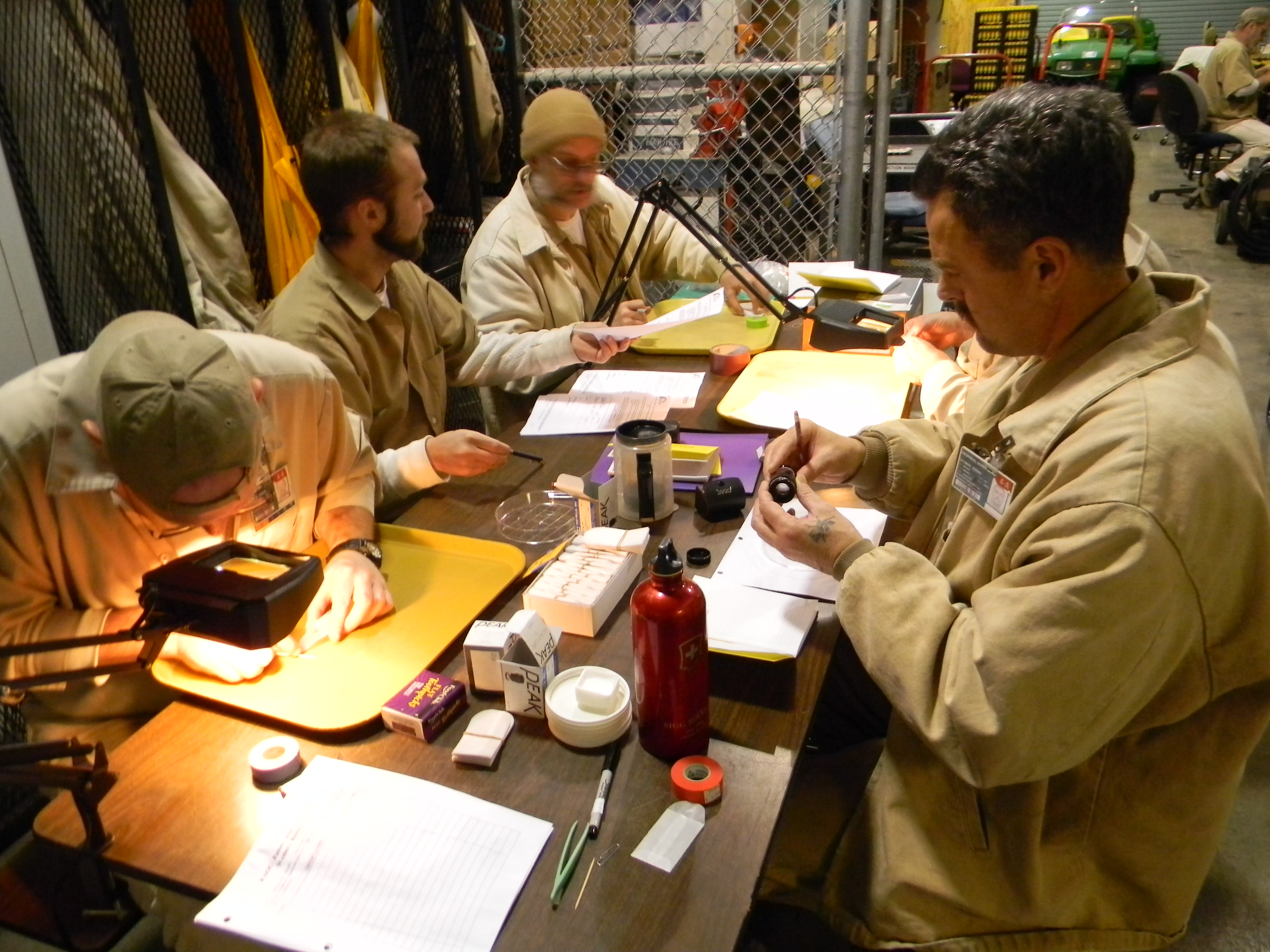
Inmates at Stafford Creek Corrections Center count seed.

To prepare for the experiments, the offenders participated in workshops designed to facilitate discussions about the scientific methods used to come to robust conclusions. It was not the first time that offenders were exposed to a scientific reasoning process. Many have previous educational experience or have attended enough lectures organized by the Sustainable Prisons Project to be confident about offering their opinions to a discussion on scientific methods. At this point the experiments are nearly complete on most of the species and we can compile and analyze the results. My goal is to be able to go over some of the statistical methods used and get the offenders input on how the results we get can be used in the nursery to increase our propagation success. Look forward to the results in future posts.
By Graduate Research Associate Alicia LeDuc

Two of SPP’s former Graduate Research Associates have completed theses for the Master of Environmental Studies program at The Evergreen State College.  Liesl Plomski and Sarah Clarke selected topics related to the Sustainable Prisons Project. Both women have been integral parts of SPP since its early inception, working closely with inmates and DOC staff in two of Washington’s prisons.

Liesl Plomski presented her thesis regarding best practices in the rearing of endangered Oregon Spotted Frogs, drawing on her experience working with inmates at the Cedar Creek Corrections Center in Little Rock, Washington.  Plomski said she enjoyed working with inmates on the conservation efforts and that, “experiencing the importance of tuning people into a passion for positive development has definitely affected my subsequent career choice since finishing at Evergreen.” Plomski now lives in Portland, Oregon where she works mentoring at-risk youth.

Sarah Clarke completed her thesis on the impact of horticulture therapy and how working with living things affects the knowledge, behavior, and attitudes of inmates participating in the Sustainable Prisons Project.  Her work included data from four institutions working with  SPP.  Reflecting on her experience with inmates at the Washington Corrections Center for Women in Gig Harbor, Washington, Clarke said, “working with SPP has profoundly changed my life.  It has been rewarding on a personal level to work with inmates and see how interacting with nature benefits them.” One of SPP’s first Graduate Research Associates, Clarke said it was exciting to be part of a ground-breaking project from the very start. “It was a meaningful job that will be hard to replace,” she said.  Clarke now works at the Evergreen State College as a youth educator in the childcare center.

Both former SPP staff attested to the personal growth and professional rewards of working with the SPP.  Referring to her work lecture coordination and project evaluation efforts, Clarke said SPP enhanced her ability to work independently, manage time efficiently, work with a wide range of people, and change roles quickly. “I gained confidence to make judgments and take actions in new territory,” she said. Plomski agreed with Clarke’s observations, adding that working with SPP also improved her communication and analytical skills while working in a variety of different settings.

Most of all, the former Research Associates attested to the immense personal reward and satisfaction they felt when working with SPP.  Plomski said, “You come home at the end of the day and honestly feel like you’ve made society a little better, you actually did something.” For Clarke, it was, “really rewarding to witness the human healing that comes from working with nature.”  Both Plomski and Clarke have made contributions that continue to leave a lasting impact on the inmates, DOC staff, and community members they worked with over the course of their tenure with the Sustainable Prisons Project.

To view Sarah Clarke’s thesis, click here.

Liesl Plomski’s thesis is available here.

By Undergraduate Research Associate Dennis Aubrey

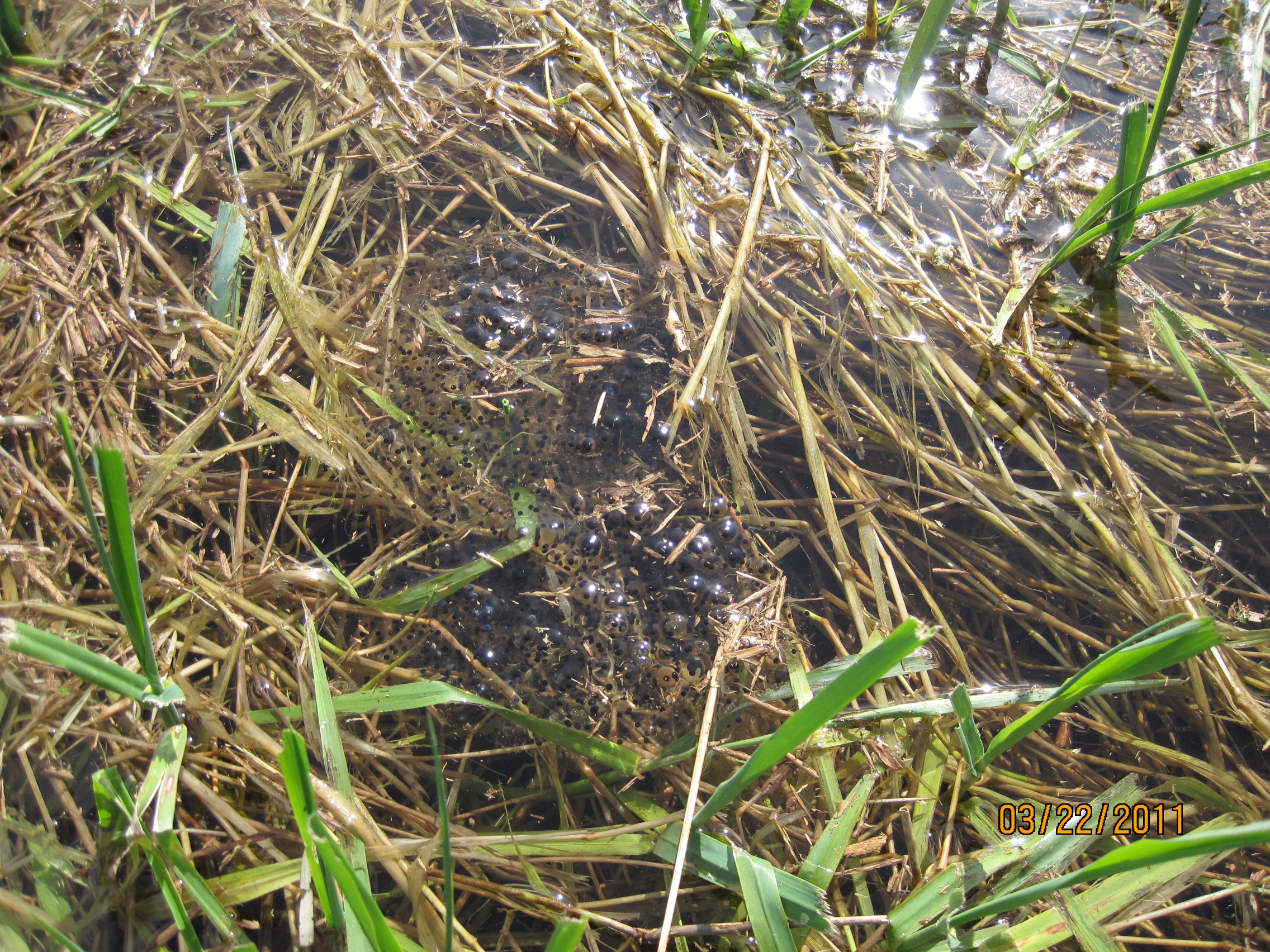
Oregon Spotted Frog egg masses at Joint Base Lewis-McChord indicate SPP's conservation efforts are working.

The most exciting news imaginable came in last week!  Biologist Jim Lynch and his team discovered the first Oregon spotted frog egg masses on Joint Base Lewis-McChord since captive rearing programs were established.

This indicates the overall success of reintroduction efforts so far.  Some of the frogs released have survived to reach sexual maturity, and furthermore have done so in large enough numbers to find one another and successfully reproduce.

The news was greeted with great relief and elation on the part of all four rearing institutions.  Until now we have been diligently working with our partners at the other captive rearing facilities, not knowing what impact the work was having on the local Oregon Spotted Frog population. Egg mass surveys will continue in the next few weeks to assess the extent of breeding success.

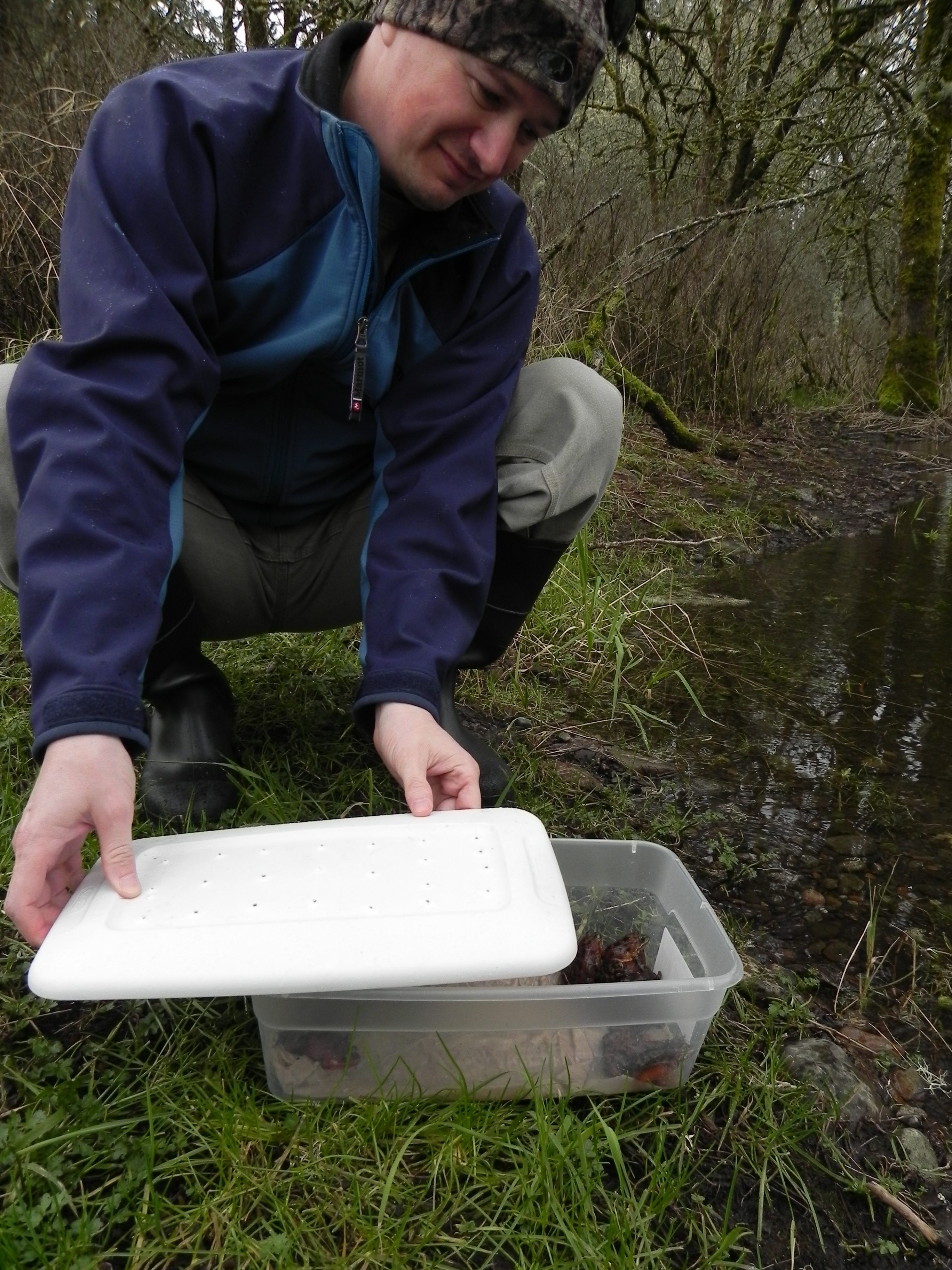
SPP research associate Dennis Aubrey releases frogs he raised with inmates at Cedar Creek Corrections Center.

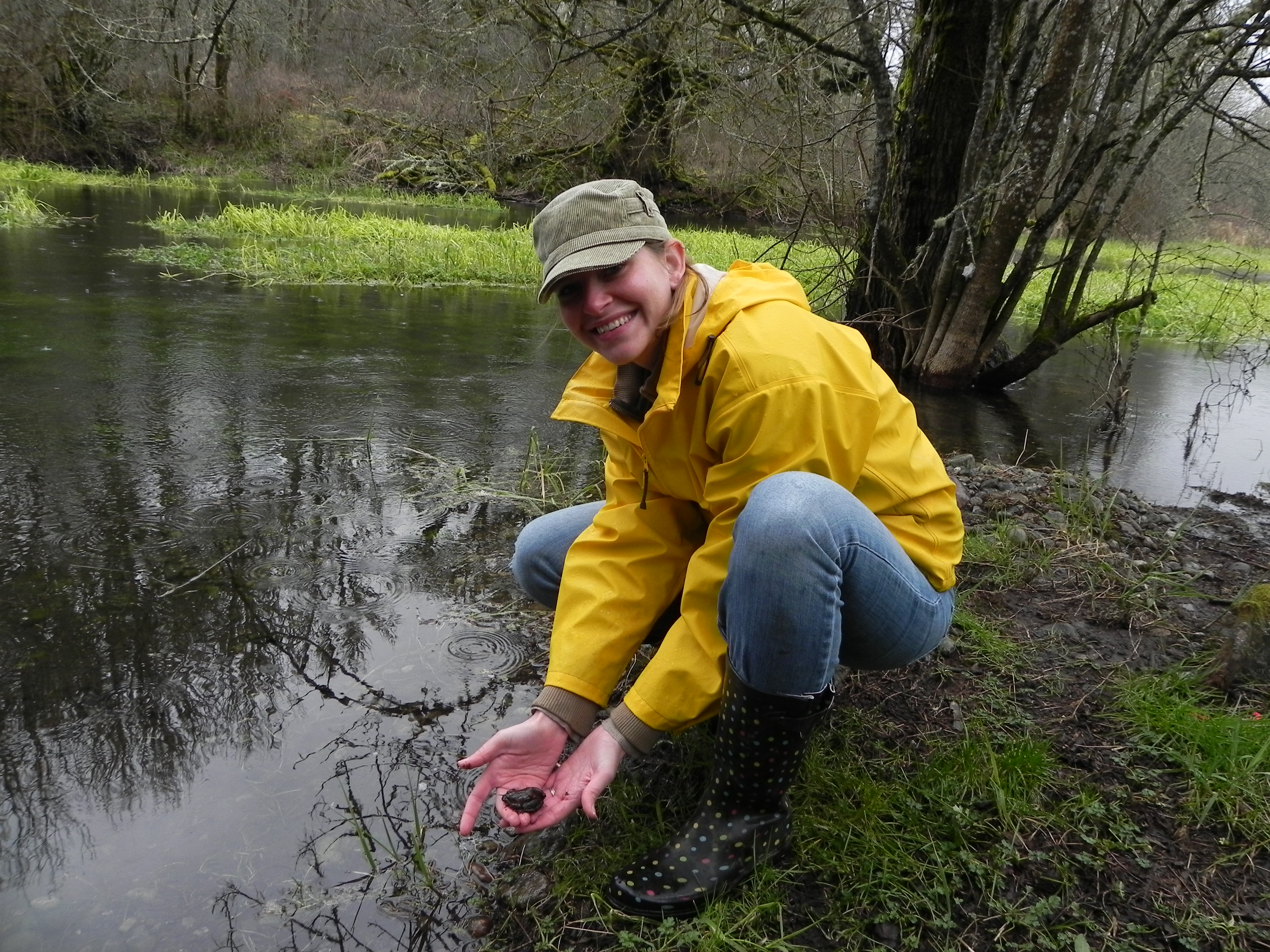
In related news, the frogs which were held over the winter at the OSF facility at Cedar Creek Corrections Center were successfully released on Ft. Lewis. We now know that they joined a waiting population of siblings! Interestingly, it was striking to note the behavioral differences in the frogs at the actual moment of release. When the lids were pulled back on the travel tubs containing the frogs, some immediately scrambled into the water and dove down to instantly bury themselves in the mud, while others were clearly reluctant to depart and had to be hand-coaxed into the cold water. The last few sat on the outstretched hands of SPP research associates Dennis Aubrey and Sarah Weber for several minutes and ultimately had to be dunked and let go before they would swim away.

SPP research associate Sarah Weber coaxes a hesistant frog into its new habitat.

To donate to the SPP Oregon Spotted Frog project and help conserve biodiversity in Washington, click here.

By Research Ambassador Program Project Manager Amy Stasch

The Sustainable Prisons Project (SPP) recently strengthened its Science and Sustainability Lecture Series with the initiation of a new partnership with the Research Ambassador Program (RAP), a project of The Evergreen State College, funded by the National Science Foundation. The RAP is led by Evergreen State College faculty member Dr. Nalini Nadkarni and Project Manager Amy Stasch.

The RAP enhances scientific engagement and scientific literacy among the public by connecting scientists with non-traditional audiences such as senior citizen centers, prisons, faith-based communities, and businesses to develop accessible and interactive communication strategies for public engagement with science. The SPP will collaborate with RAP to host visiting scientists as guest lecturers in the SPP’s monthly lecture series at three Washington State prisons.

The SPP hosted its first RAP science fellow, Katie Renwick, on Thursday, January 14th, 2011 for a presentation at the Mission Creek Corrections Center for Women, a minimum security prison located in Belfair, Washington.  Renwick is a first year doctoral student studying the interactions of bark beetle infestations, fire, disturbance, and recovery in the Rocky Mountains.  She presented an hour-long lecture about her scientific research on how ecological changes affect forests, and how they can recover after these changes.  From these concepts, offenders drew parallels to their own lives and the disturbances they have experienced and are recovering from.

The lecture was the first Science and Sustainability lecture to be hosted at Mission Creek, and received excellent turnout. The women attending were attentive and asked insightful questions. Several inmates approached Renwick following the lecture, thanking her for her time and for helping them relate their own struggles to phenomena that are continuously influencing the forests.  Through this unique encounter, Renwick was able to engage an otherwise unaware audience in scientific discussion, while attending offenders reaped the benefits of her specialized knowledge and inspiration, an experience the SPP and RAP hope to replicate in the coming months.

The SPP will continue to collaborate with the RAP and monthly lectures have already been scheduled through June 2011.

By Graduate Research Associate Alicia LeDuc

The Sustainable Prisons Project (SPP) is in the news! We have received extensive press coverage from media sources nationwide. The common threads emphasized by all are the innovative nature and the collaborative mode of the work that have contributed to the inspiring success of the SPP. Click on the links below — and feel free to provide your comments.

KBTC Northwest Now: Click here to watch the episode

Northwest Now’s Daniel Kopec hosts SPP Project Co-Director Dan Pacholke, Project Manager Kelli Bush and Cedar Creek Corrections Center Superintendent Douglas Cole to explore how the unique collaboration between the DOC and The Evergreen State College is addressing some of Washington’s pressing social and scientific concerns.

KBTC Full Focus: Being Green: Click here to watch the episode

This episode of Full Focus takes a look at how the Sustainable Prisons Project is engaging offenders in the rearing of endangered frogs and the inspiring stories that have resulted.

KCTS 9 Connects: Click here to watch the episode

KCTS 9 reporter Leslie McClurg takes the show behind bars when she visits the Washington Corrections Center for Women in Gig Harbor, Washington to discover how the SPP has inspired one offender to pursue college credit by studying sustainability while incarcerated.

The Promised Land featuring Nalini Nadkarni: Click here to listen to the episode

SPP Co-Director Nalini Nadkarni escorts host Majora Carter from the treetops of the Olympic Rainforest canopy to the incarcerated men at Stafford Creek to lead them in a lively and insightful discussion of “what should happen next” for the SPP and sustainability in society.

Science Nation: Click here to watch and read

Science Nation explores how the SPP  and inmates at Stafford Creek Corrections Center in Aberdeen, Washington are helping themselves and nature to recover by working together to raise endangered prairie plants for restoration.

PBS News Hour, Oregon Public Broadcasting:

Click here to watch the PBS news hour segment (short version)

Click here to view the OPB Oregon Field Guide segment (long version)

Oregon Public Broadcasting reporter Jule Gilfillan details how the SPP is helping the military and two Washington prisons to reduce waste and protect the environment by training offenders as conservation scientists; all while saving money and supporting biodiversity.

To donate to the Sustainable Prisons Project, CLICK HERE to visit the Evergreen Foundation’s website.

By Graduate Research Associate Jill Cooper

This past spring, Cedar Creek Corrections Center and the Sustainable Prisons Project began experimenting with a new captive rearing project to raise crickets.  The goal of the project is to create a more sustainable, stable supply of food to meet the demand created by housing a growing population of endangered Oregon Spotted Frogs. Crickets are one of the largest expenses for the frog project. Cricket suppliers are located out of state.  Long-distance shipping complications can impact frog feeding schedules, and definitely increase the project’s carbon footprint. As a result of these issues, the offenders at CCCC decided they would try their hand at cricket husbandry and breeding.

Few organizations in Washington raise their own crickets. Most suppliers, including pet shops, purchase crickets from out of state breeders.  By locally-growing crickets for the Oregon Spotted Frog conservation project, SPP offenders and staff are taking another step toward creating a more sustainable, cost effective, and stable food supply.

Inmates and scientists are discovering best practices for rearing crickets.

The Project is also contributing to scientific knowledge, compiling best practices protocol for raising crickets in temperate climates through trial-and-error experimentation. While visiting with offenders to check on how things have progressed, SPP Research Associate Jill Cooper was impressed to see how much the offenders had learned through observation and experience, in such a short amount of time. One inmate explained to her how the current batch of “breeders” that were delivered to the prison, “aren’t really the age which the cricket farm said they are.”  He pointed to the “ovipositor” or egg-depositing tube noting that they were obviously under developed and not ready to lay eggs yet.  Crickets chirp to indicate when they are ready to breed.  The inmate is considering starting his own cricket farm when he is released to offer a more sustainable source of crickets to customers here in the northwest.

Training Officer Ron Gagliardo of Amphibian Ark recently made a visit to CCCC to advise inmates and staff on the cricket rearing operation.  Previously from the Atlanta area, Ron has extensive experience with frog and cricket rearing.  He was a tremendous resource.  The inmates were able to ask him many questions and his input will undoubtedly improve upon the initial success of the cricket operation.

There have been many bumps along the way, but things have been looking up for the cricket operation.  Offenders are able to raise crickets to help supplement the frog’s diet, and have learned much in the process. While the cricket project can not yet support all the food needs, we estimate that the current operation will eventually support at least half of the crickets needed to feed about 200 frogs.

By Graduate Research Associate Jill Cooper

Releasing frogs at Joint Base Lewis-McChord

It has been another successful season rearing Oregon Spotted Frogs at Cedar Creek Correction Center.  A total of 1,346 were released into a wetland site on Joint-Base Lewis-McChord.  The four rearing institutions (Oregon Zoo, Woodland Park Zoo, Northwest Trek, and Cedar Creek Corrections Center) came together to release this year’s batch of frogs into the wild; a collaborative effort to stabilize the native populations.

The Sustainable Prisons Project has been working with Washington Department of Fish and Wildlife and Cedar Creek Correction Center (CCCC) to raise endangered Oregon Spotted Frogs since 2009. CCCC boasts having the largest frogs of any participating rearing institution, with100% of this year’s frogs large enough for release into the wild.

CCCC’s rearing success can be attributed to the amount of time and attention the offenders are able to give the frogs.  The offenders form genuine bonds with the frogs; some are given names, like “Lefty” or “NASCAR.”  The few deceased frogs have been placed in an offender-created “frog cemetery,” with hand-made gravestones.  One of the inmates patiently waits with his hand in the frog pond, and frogs will often come sit in his hand to be pet.

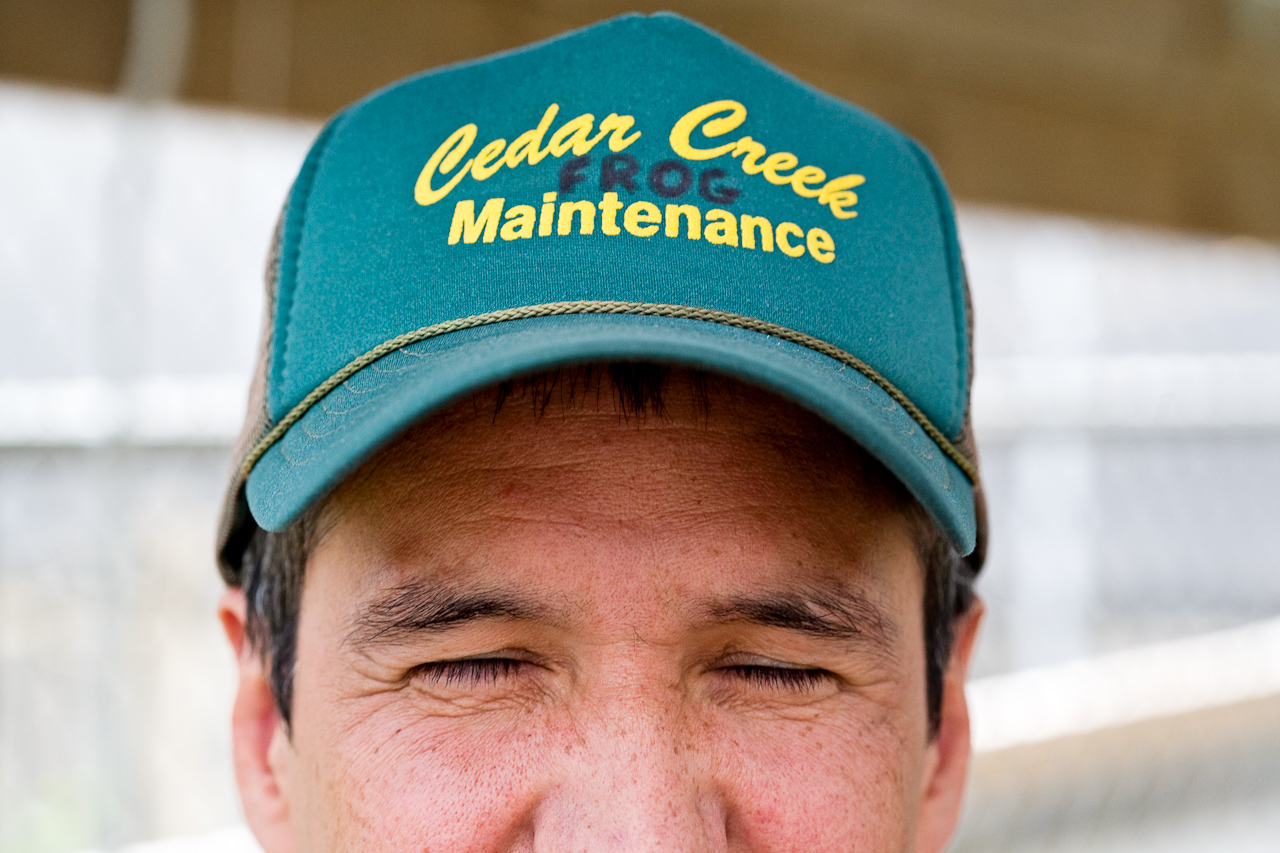
Cedar Creek Frog Maintenance

The day of the release, the frogs were loaded into containers and driven north to Joint-Base Lewis-McChord and their new home. CCCC is a minimum security pre-release facility, sometimes referred to as “camp,” where offenders are sent with minimal time remaining on their sentence. For participating offenders, the release of the frogs in part symbolizes their own impending release back into society.

Superintendent Doug Cole and Classification Counselor Marko Anderson of CCCC along with SPP Student Research Associates Liesl Plomski and Jill Cooper had the opportunity to release some of the frogs.  “It was a sight to see all 1,346 frogs hop into the water and instantly disappear with their well camouflaged bodies,” said Cooper.

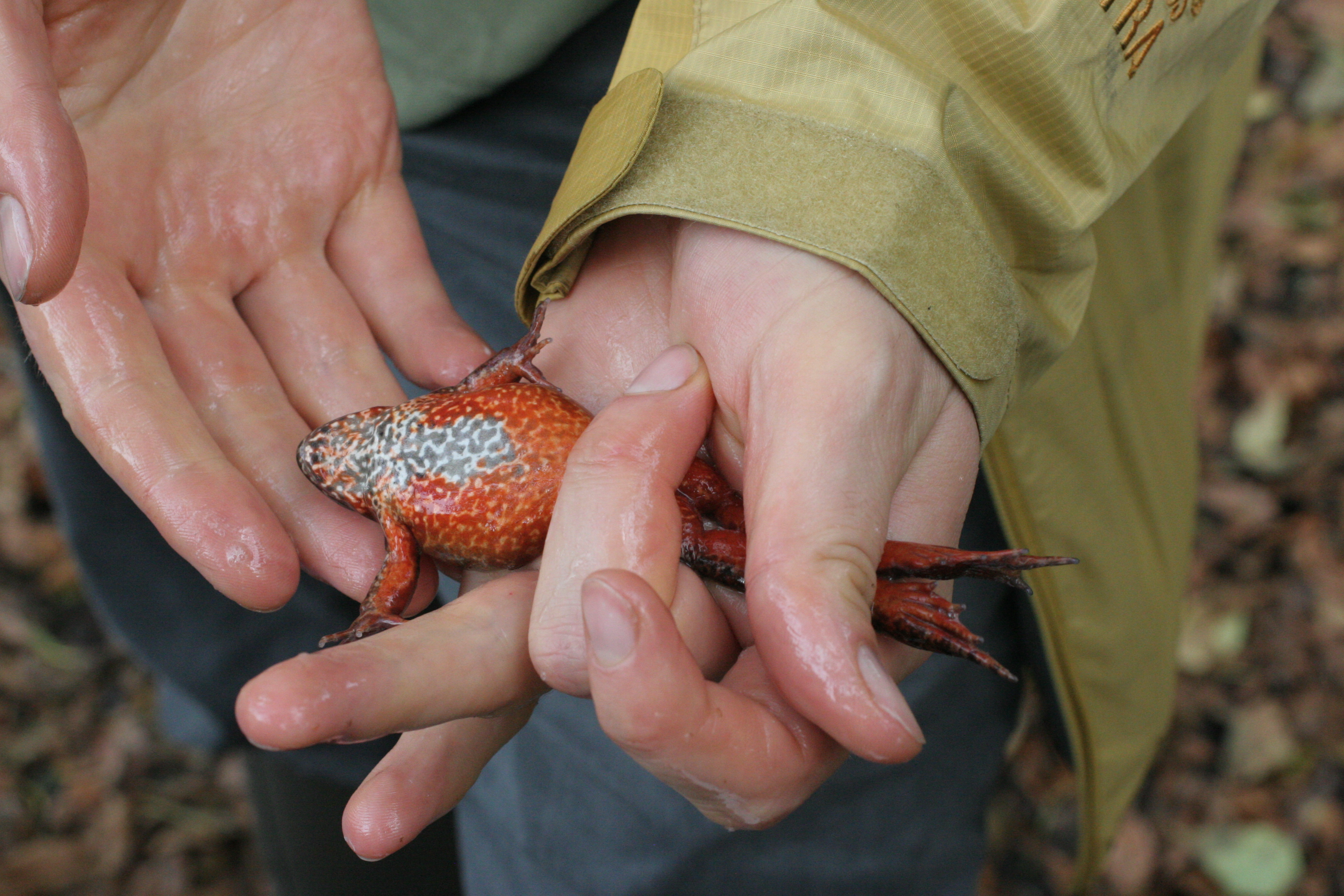
Red coloration indicates healthy growth

Each frog has a micro-chip and will be tracked by volunteers who regularly visit the wetlands to conduct research, using special wands that detect the frogs’ signals.

At the conclusion of the release, 29 of the frog “runts” from other institutions were taken back to CCCC because they were not large enough to be released.  These frogs will be nurtured during the winter and released in the spring.  One offender says that this new batch of frogs is, “more skittish than the last;” hardly any of the frogs come sit in his hand.  Nevertheless, they are rapidly growing.  In just the past few weeks, the frogs have gained weight and are already beginning to show some red coloration. With another successful year of frog-rearing logged, the future looks bright for the Cedar Creek frog team.

After six seasons as a ranger in the National Parks and Forests, and three years in graduate school, I joined the Sustainable Prisons Project team, as the interim project manager, back in March.  Over the past few months I’ve managed the project largely from the sidelines, from my keyboard and telephone.  I’ve had a few ventures to the prisons we’re active in.  After one of my visits, I returned to a staff meeting and frankly I begged to be included on the lecture schedule.

This week I had the fortune of presenting talks on bear biology both at Washington Corrections Center for Women and McNeil Island Corrections Center.  Although I’ve presented many an evening program in my days as a park ranger, and I’ve talked with a lot of different audiences, presenting in a prison is a unique experience.

The first challenge in preparing was to decide on my topic.  As a park ranger I’ve studied volcanoes, bears, caves, marine mammals, and other subjects.  Being in the Northwest, a landscape of mountains and public lands, bears seemed to be a perfect topic.  The next challenge was to decide which aspect of bears the talk should focus on. There are just too many options!  Rather than focusing on one subject I hoped to show offenders that you can study something seemingly simple, an animal such as the bear, from many perspectives.  I crammed basic bear biology, ecosystem ecology, conservation, and my favorite nature literature that has focused on bears, into 50 PowerPoint slides, and hoped for the best.  An ambitious lecture indeed, but I’ve been consistently impressed by how much information offenders eagerly and ambitiously absorb.

Last Wednesday, at the Washington Corrections Center for Women, I found an enthusiastic audience of about 30 women.  They were particularly interested to understand the life cycles of bears, and the ways that humans interact with bears.  My stories of daily life in Katmai National Park and Preserve, when I was a ranger, and how those stories relate to bear biology were hits.

On Thursday, after a quick tour of McNeil Island, our DOC staff escort led our staff to the visiting room for the lecture.  We scrambled to set up the room for the 90 offenders who signed up for the lecture, and I ticked through my PowerPoint slides, hoping I had enough material to keep the offenders occupied and engaged for nearly 90 minutes.  Quickly I realized I had no reason to worry about time, as within five minutes, offenders hands were raised as they asked intriguing and creative questions about bear foods, life cycles, biology, and the implications of climate change and habitat fragmentation.  I was floored by the depth and intelligence of the questions I was asked.  A few offenders had very good and valid ideas about how to recover imperiled brown bear populations in the lower-48.  If I knew how good the questions would be, I probably would have read just a few more scientific articles before the lecture!

As our team sat on the boat venturing back to the mainland (McNeil Island Corrections Center is indeed on an island as the name implies, with the prison operating ferry boats for staff and visitors), I found myself reflecting.   For six seasons I talked about bears, volcanoes, caves, and wildlife around campfires and amidst wild land.  These days I find myself behind numerous gates and fences presenting to offenders, and yet the offenders still manage to deeply appreciate nature and science, even from a distance.  Although it’s easy to miss the campfires and hikes of working in our National Parks, I’m developing a deep appreciation for interacting with offenders. Their deep intellect and curiosity persists, even as they serve (often long) sentences for crimes that are painful to think about. 

Our next staff meeting is on Tuesday and I think I’ll probably ask to speak at another prison.  I really appreciate the ideas that offenders brought forth, and I hope they continue to ask questions that send me to the books and journals seeking answers.