by Joslyn Rose Trivett, SPP Education and Outreach Manager

In April, I was fortunate to spend days and days immersed in the topic of astrobiology. What is astrobiology? It is the study of how stars and planets form, how that relates to life here on Earth, and the search for life elsewhere in the Universe. Alongside hundreds of incarcerated students and dozens of corrections staff in both Washington and Ohio, I got to learn about what is known, what is still unknown, and ponder immense questions. I had stars in my eyes, for sure!
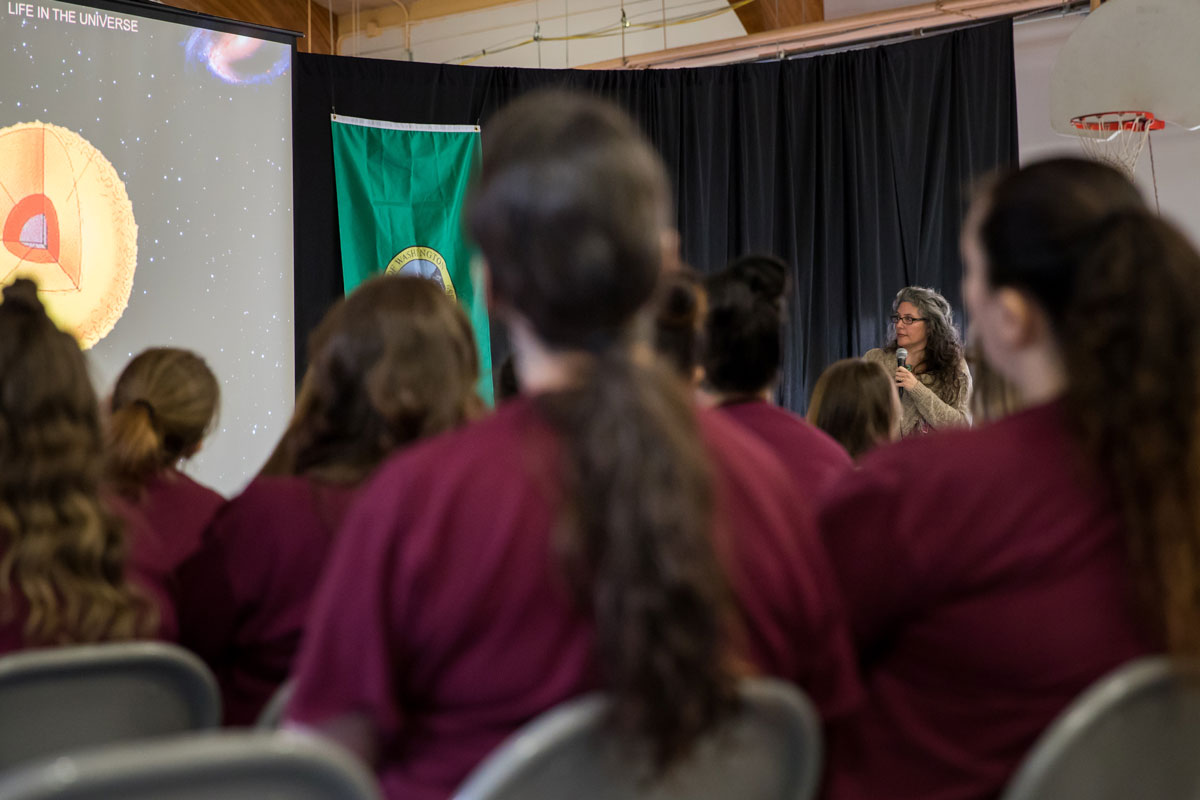
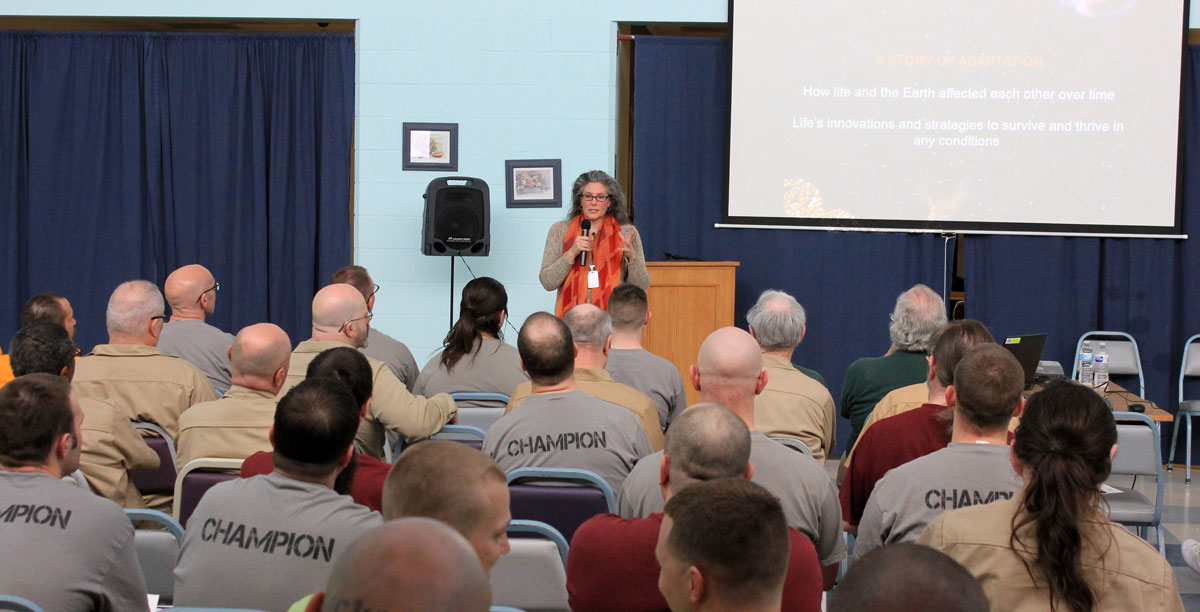
Daniella Scalice, Education and Communications Lead for NASA’s Astrobiology Program, describes element creation in the core of a star to students at Mission Creek Corrections Center. Photo by Ricky Osborne.
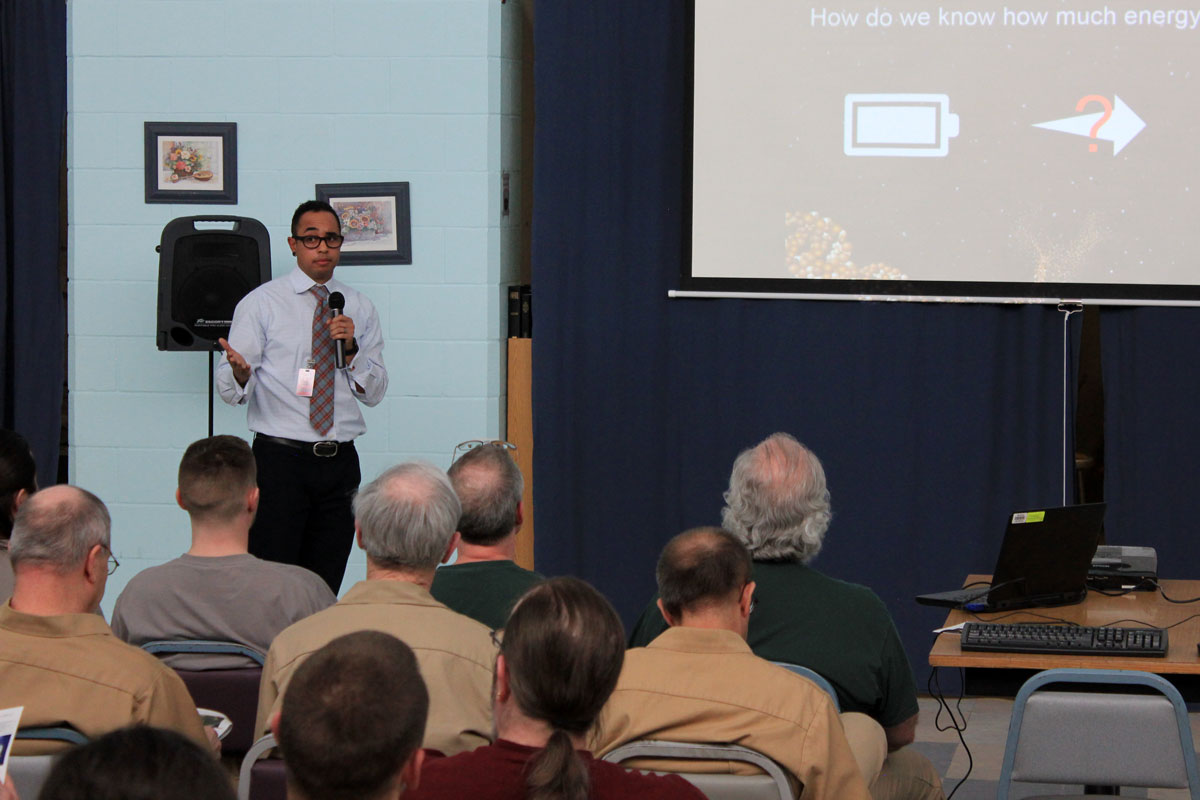
Dr Drew Gorman-Lewis, Associate Professor in the Earth and Space Sciences at University of Washington, responds to a question from a student at Airway Heights Corrections Center. Photo by Kelli Bush.
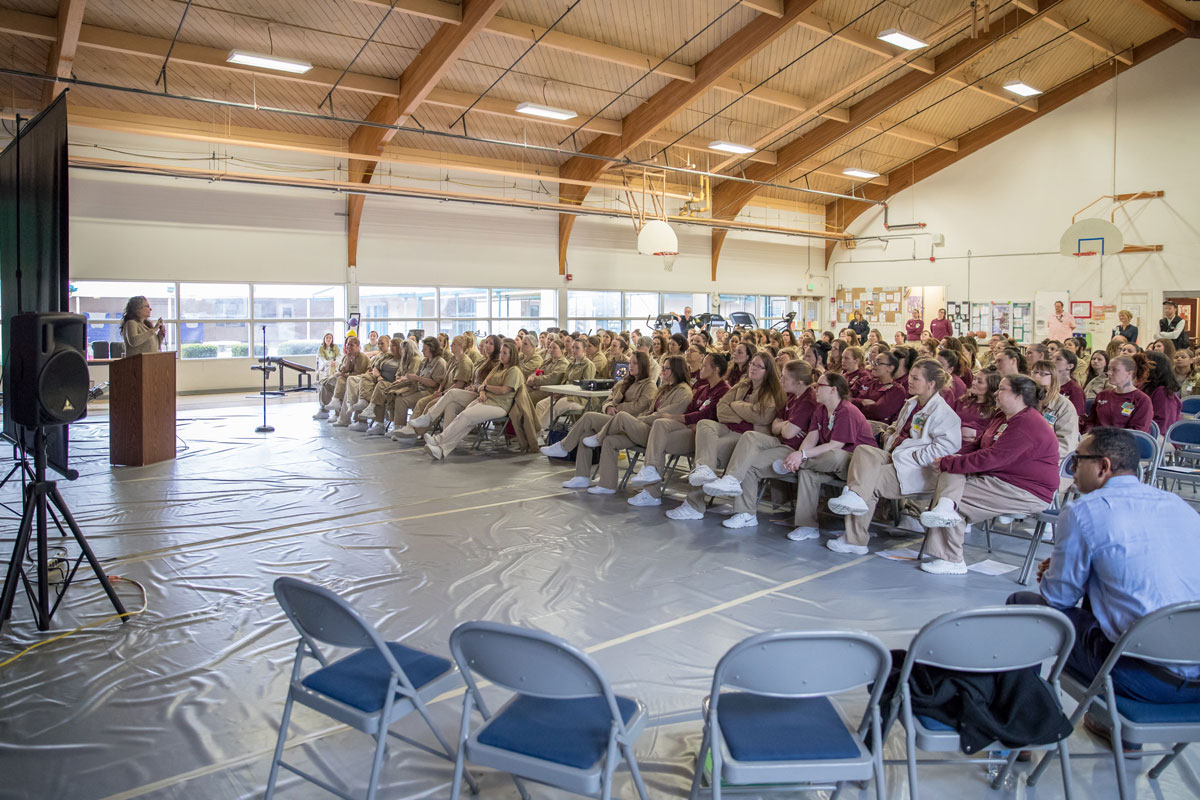
Washington State’s lecture series started at Mission Creek Corrections Center where they packed the gym; 150 students’ attention and curiosity gave us a great sense of success. Photo by Ricky Osborne.

Astrobiology for the Incarcerated is a new program, funded by the National Aeronautics and Space Administration (NASA)’s Astrobiology Program, and in partnership with Sustainability in Prisons Project (SPP) and Utah’s Initiative to bring Science Programs to the Incarcerated (INSPIRE). The program was brought to us by Daniella Scalice, Education and Communications Lead for NASA’s Astrobiology Program; she is a master of describing exquisite concepts and making them relevant to our lives.

Here I will share details from the Washington State programs; I will share Ohio’s in part 2. In Washington, Daniella was joined by Dr Drew Gorman-Lewis, Associate Professor in the Earth and Space Sciences at University of Washington. Our small team visited five prisons in four days, reaching 450 incarcerated students and 52 corrections staff. At each venue, Drew and Daniella told us a three-part story.

Part One: Creation

Daniella introduced us to the life cycle of stars—who knew that stars had life cycles!—and how their birth, maturity, and death creates and distributes most of the elements that makes up the Universe as we know it. She told us: Every atom in our bodies, the water we drink, the food we eat, our buildings, our roads, the things we buy and make, all were built in the heart of a star. It’s a dizzying concept, one that connects everyone and everything.

She outlined how these elements may have come together in the nutrient and energy rich environments of hydrothermal vents—hot water vents at the ocean floor—to create the first microbes, the first life on Earth.

Part Two: Adaptation

Part two came from Drew. He told us about his research with microbes, single-celled organisms, that live in extreme environments on earth. His personal and professional favorites live in near-boiling pools of acid—really! He emphasized that there are microbes living and thriving in nearly every environment on Earth. Those inhabitants also influence their environments; their life processes take up, transform, and leave behind new elements and structures. The microbes can quickly adapt to take advantage of new conditions, and so back and forth, life and the Earth interact and influence each other. His research investigates how much energy microbes use to live in extreme environments, and in this way sheds a bit of light on where and how we might find microbes beyond our Earth.
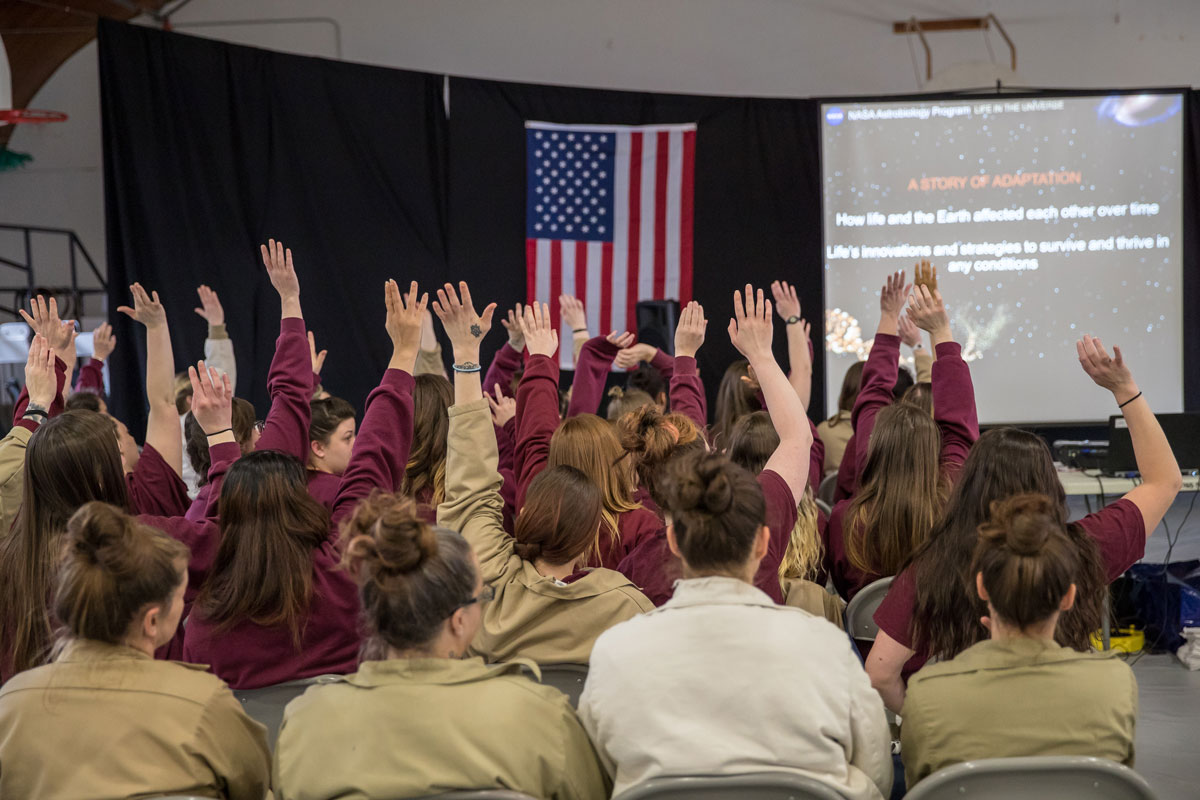
Students respond to a question from Daniella. Photo by Ricky Osborne.

Part Three: Exploration

Daniella’s part three dove into this search for life, focusing on the most promising worlds within our solar system. I was amazed to learn that there are some excellent contenders! I was particularly taken by moons of Jupiter and Saturn, Europa  and Enceladus, that have global oceans: hidden beneath icy crusts, their worlds are covered with liquid water. On Enceladus, there is also evidence of geothermal vents. Given that one of the theories for the origin of life places it in Earth vents, this news of similar environments on a moon of Saturn gave me the chills (the good kind).

At every venue, the students dazzled us with ideas and questions. I think that’s the best part for me—hearing how others are making sense of the concepts, the collective insights and exploration. I learned as much from them as from the scientists…as usual!
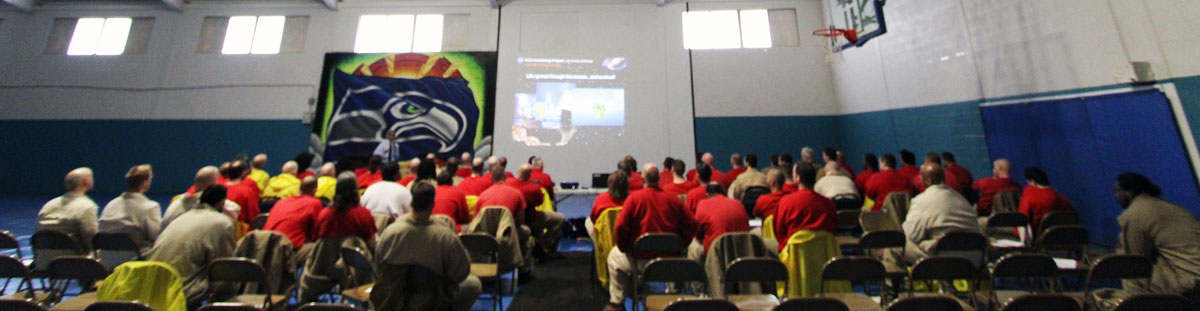
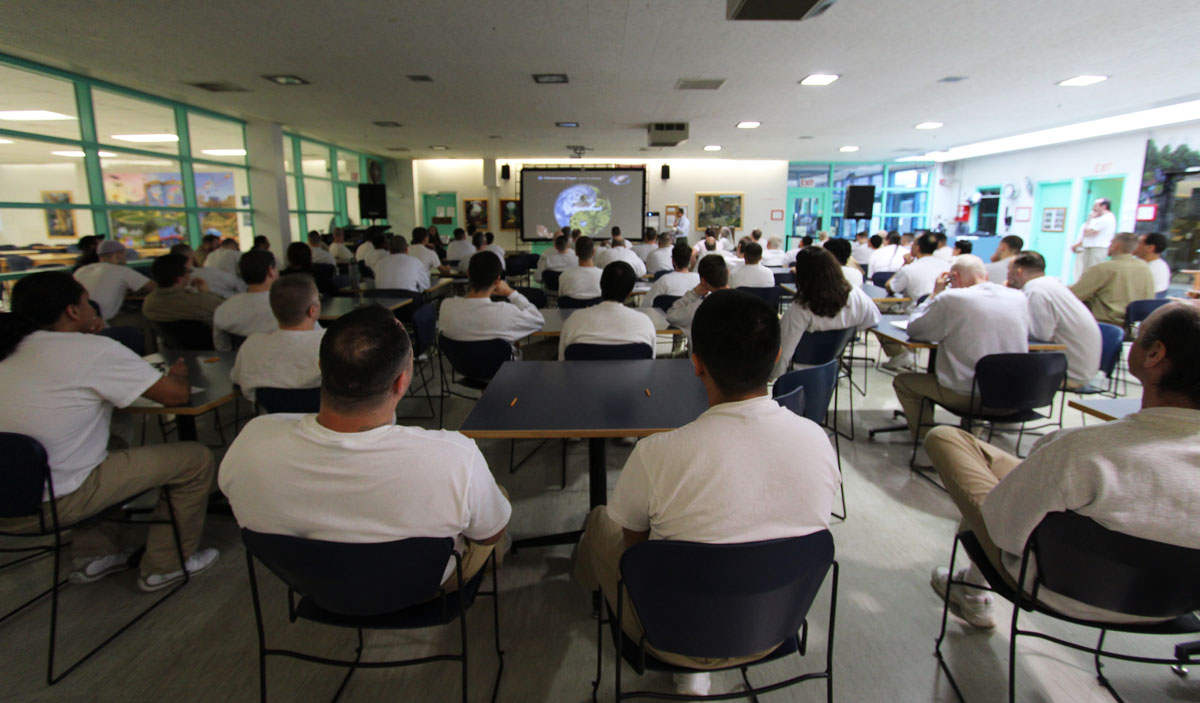
Our second stop was Cedar Creek Corrections Center. Students and staff had to walk through the rain to attend, and still brought their best selves. Photo by Joslyn Rose Trivett.
To the class at Twin Rivers Unit, Monroe Correctional Complex, Daniella emphasized that astrobiology is not possible without collaboration, and she invited the students present to bring their diversity of knowledge and insight to the topic. Photo by Joslyn Rose Trivett.
Students had trouble signing up for the session at Washington State Reformatory, also in Monroe Correctional Complex, and that seemed to mean that only the most avidly interested were present. Their questions and comments were advanced, for sure. Photo by Joslyn Rose Trivett.
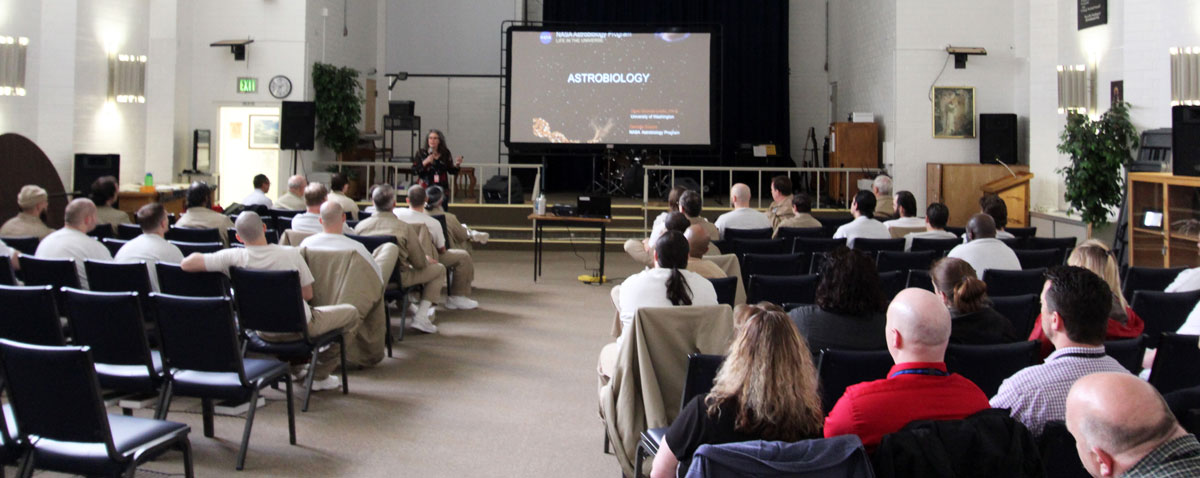
Our last stop in Washington was at Airway Heights Corrections Center. Photo by Kelli Bush.
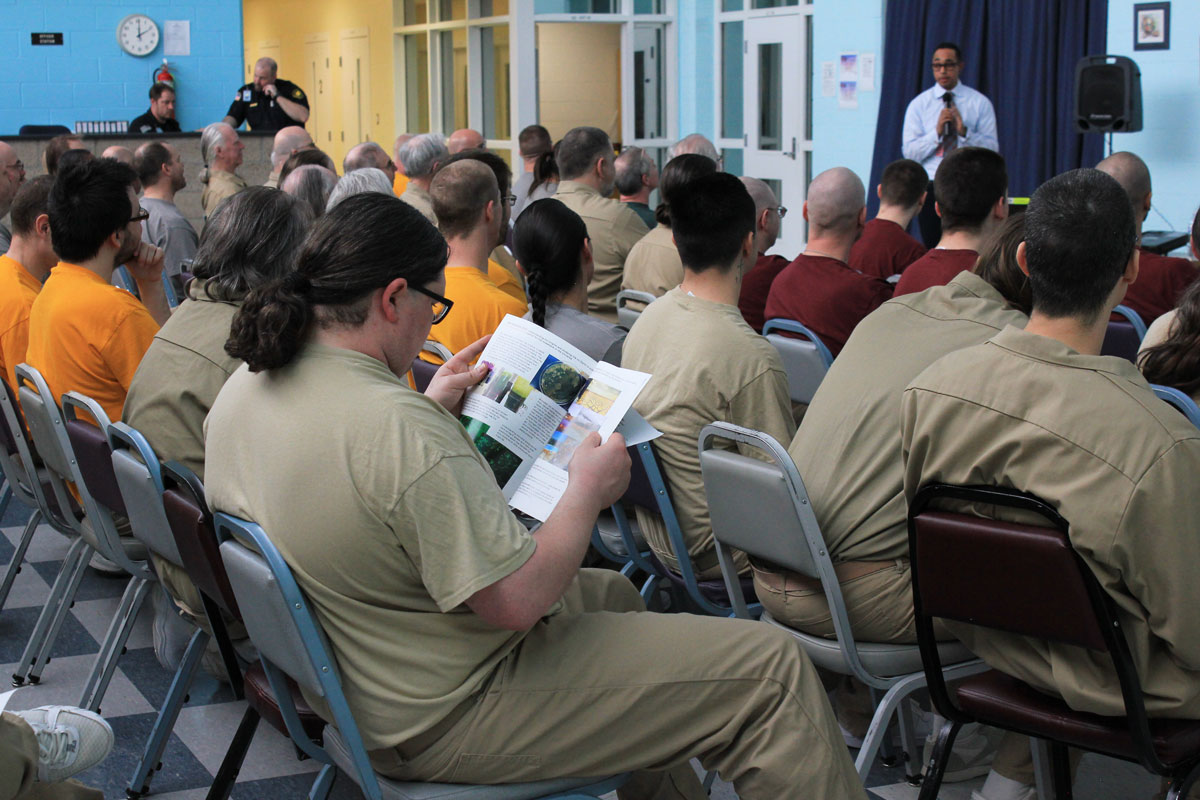
All attendees left with a gorgeous, ten page summary of the presentation. Photo by Kelli Bush.

Text by Jessica Brown, SPP Turtle Program Coordinator, Philip Fischer, U.S. Forest Service volunteer and Adam Mlady, Biological Science Technician.
Photos by Jessica Brown

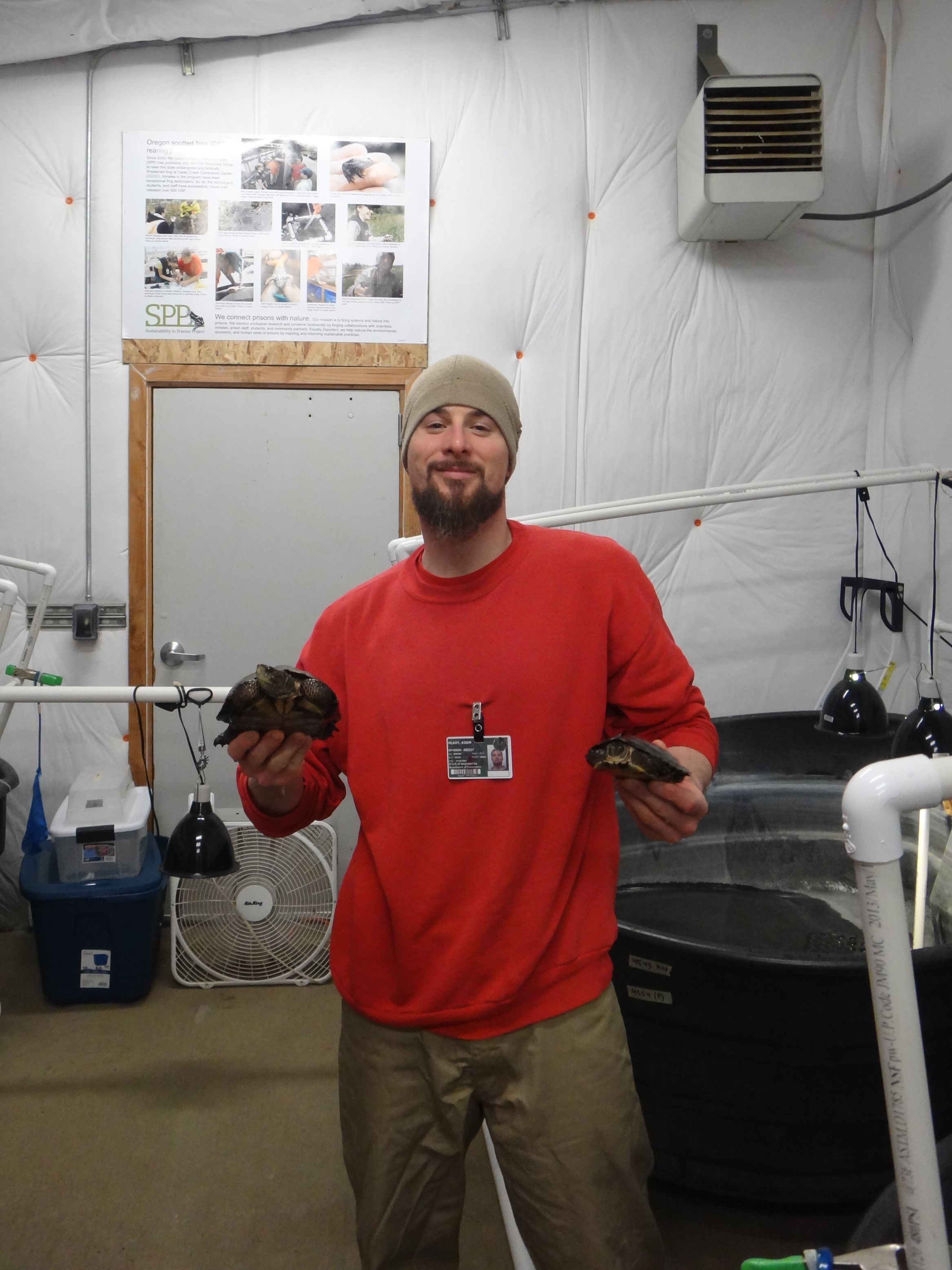
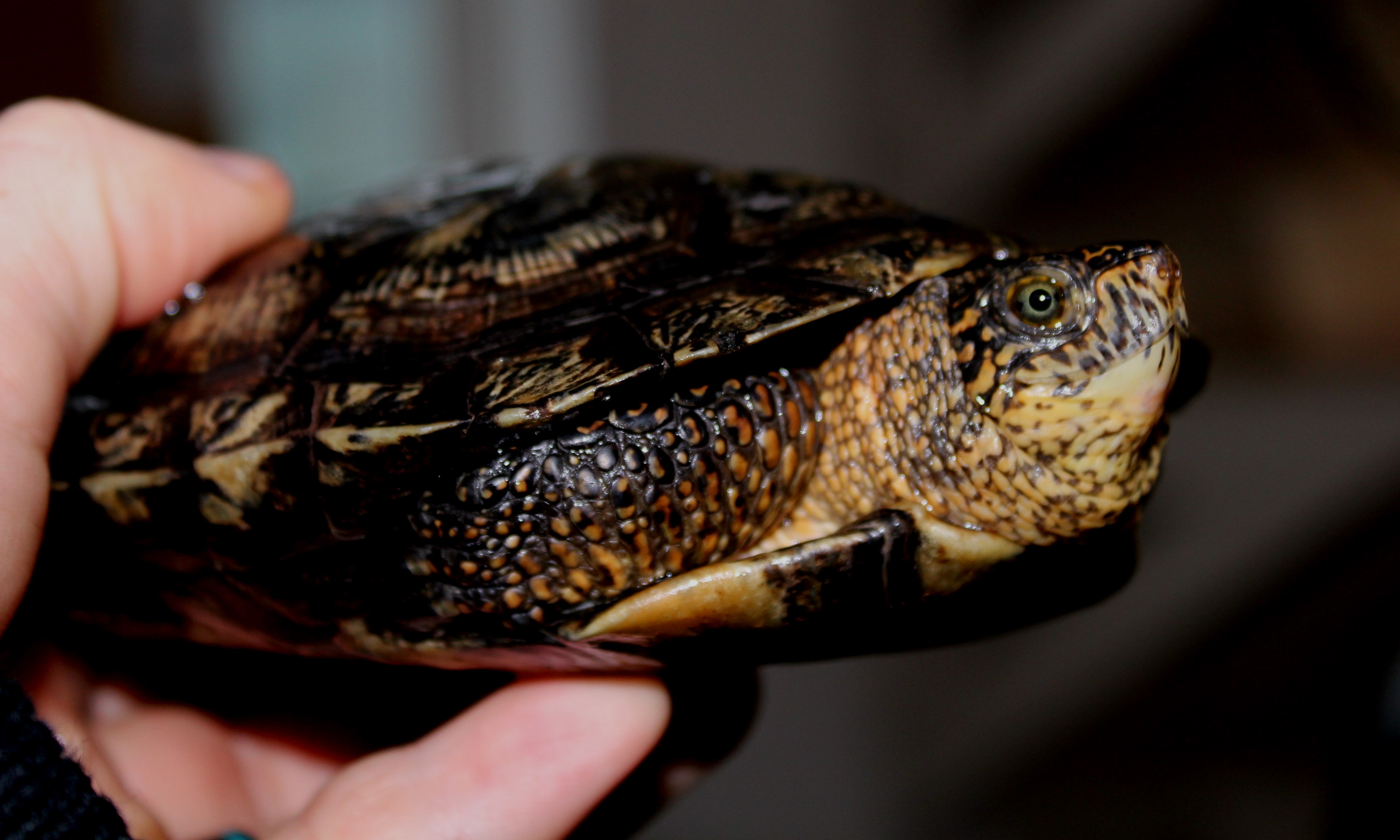
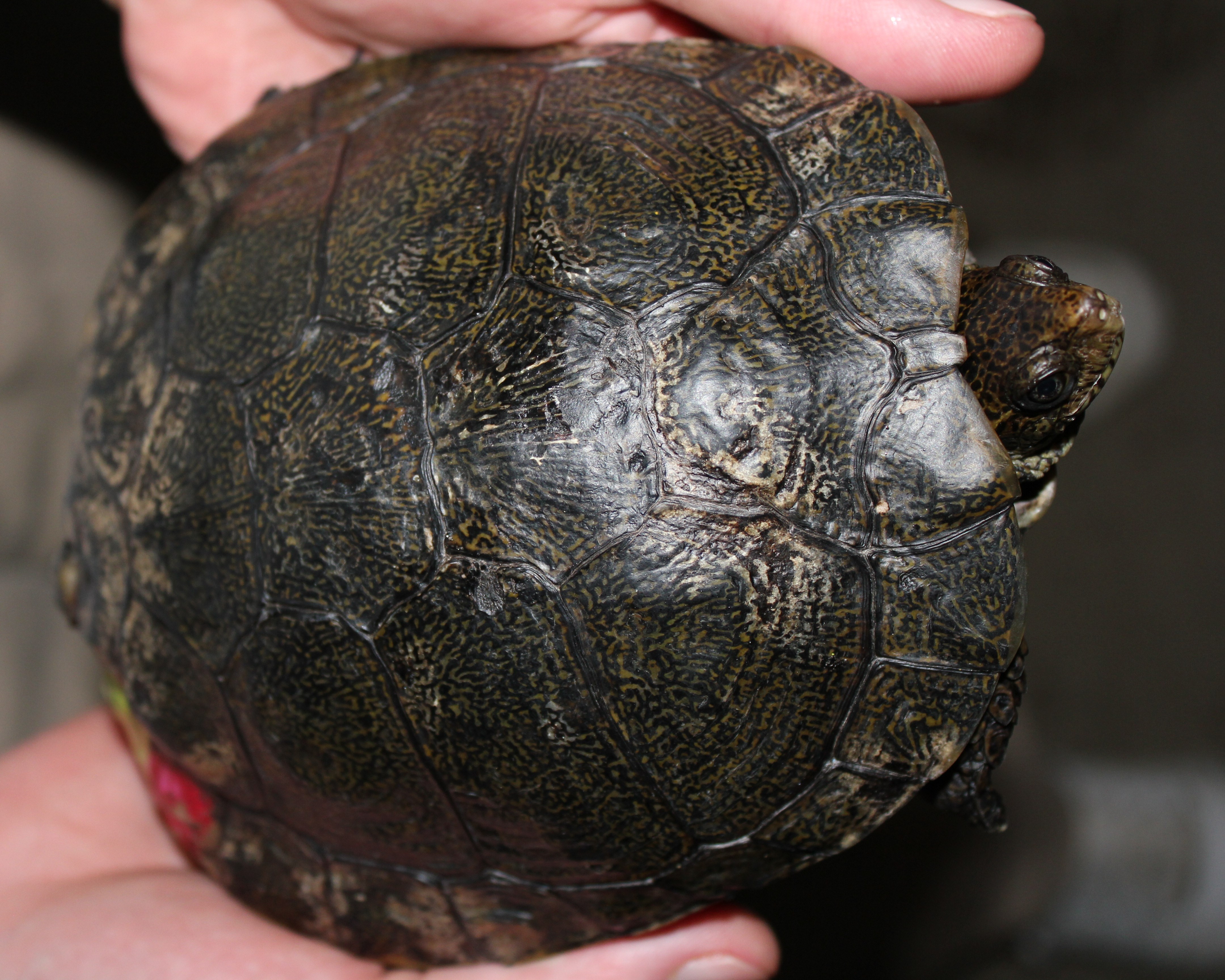
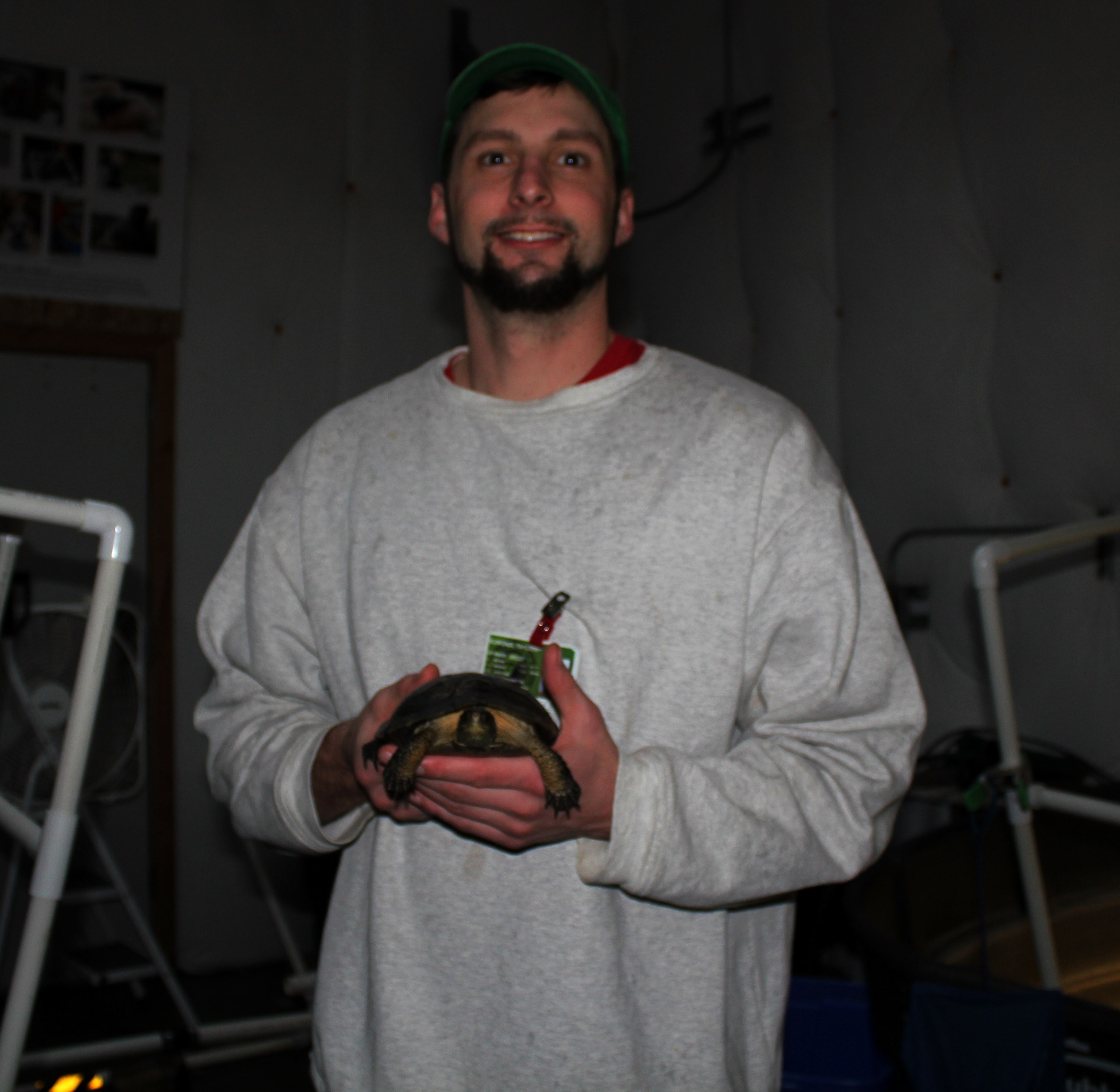
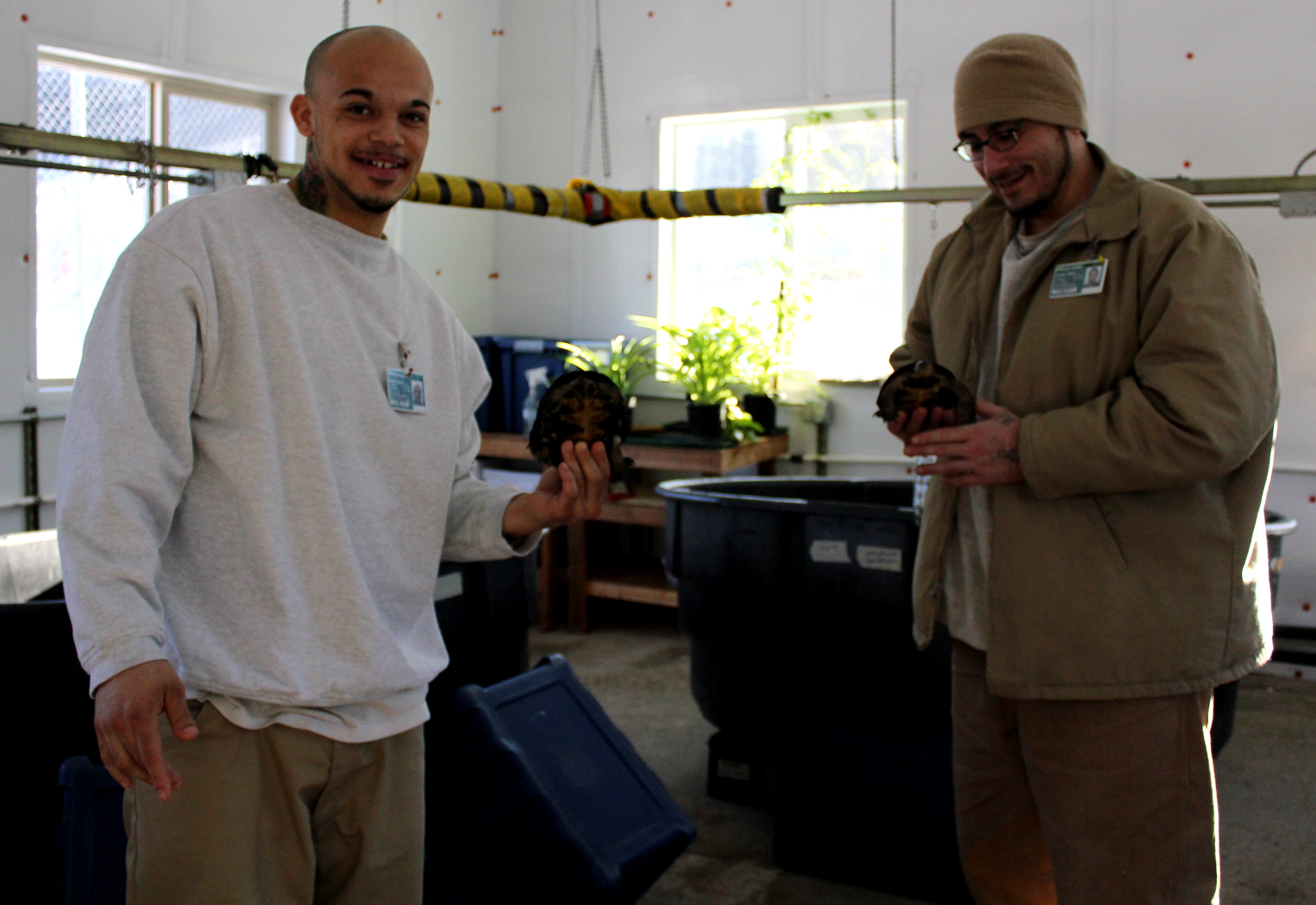
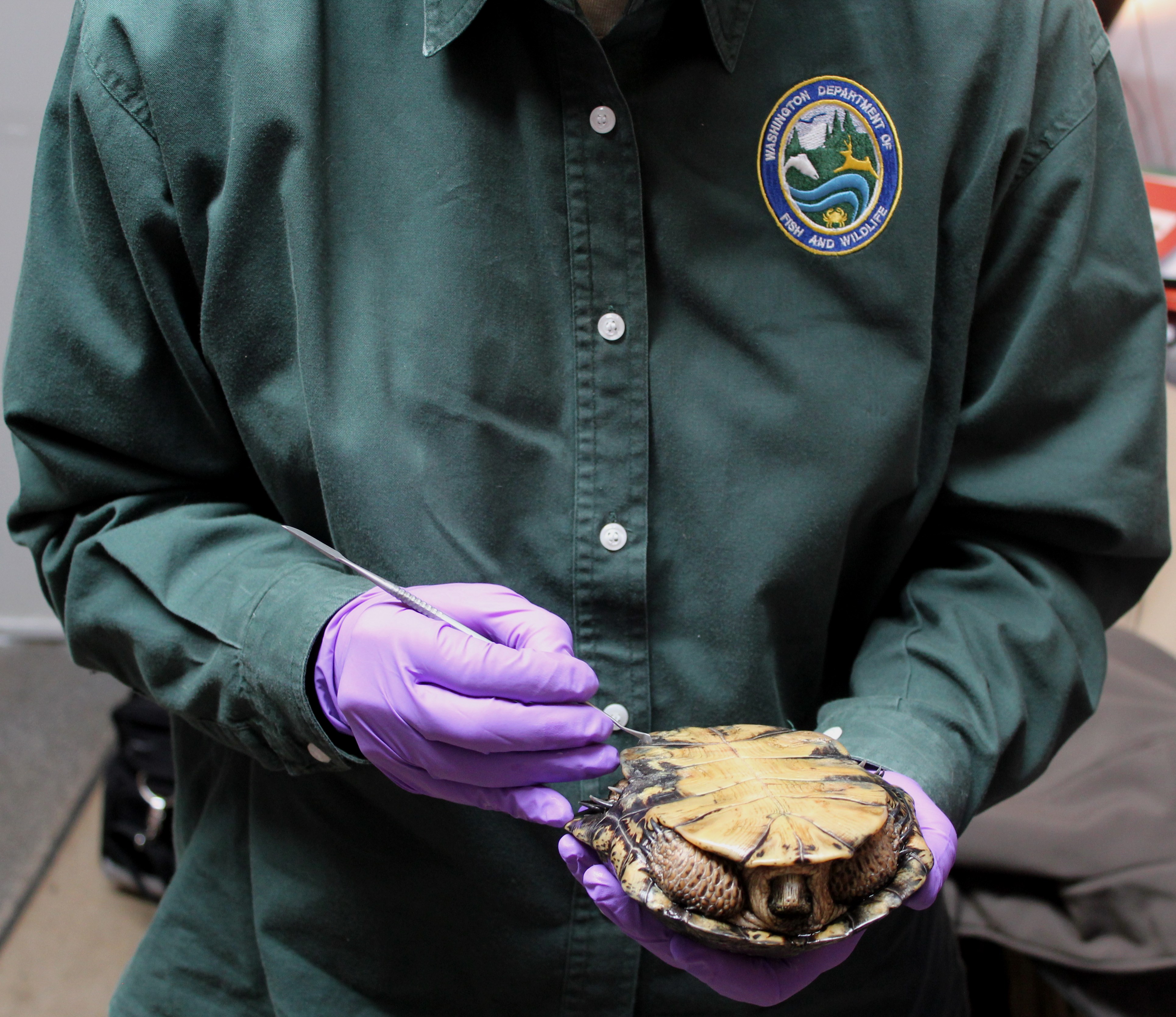
Biological Science Technician Adam Mlady holding two of the Western Pond Turtles currently housed at Cedar Creek Correctional Center.

Cedar Creek Corrections Center (Cedar Creek) was home to the very first endangered animal program in a prison: they raised and released hundreds of Oregon spotted frogs from 2009-2015. In 2018, ecological conservation at Cedar Creek is thriving and evolving to encompass a small array of conservation and sustainability programs. Offering an array of programs allows us to partner with a larger group of incarcerated technicians; there are five at this time, and we plan to add a few more. All participants will have a new position title of Biological Science Technicians, and will receive education and training in the  turtle, beekeeping and woodpecker programs, and—later on—a new aquaponics program.

Turtles

Cedar Creek hosts endangered pond turtles that need daily attention; from Technician Adam Mlady’s writing last month, “currently we have two females, one male, and are expecting seven more to be dropped off later today…Taking care of them is very rewarding. I get a sense of unity and accomplishment in ensuring they are clean and fed, and working them back to health. It’s even a sustainable project to feed them! They eat a mix of goodies, but one of the days the pond turtles get mealworms, which we grow and harvest ourselves. Eggs to larva to pupae to beetle, we are hands-on (gloved of course!) the whole way through.”
Woodpeckers

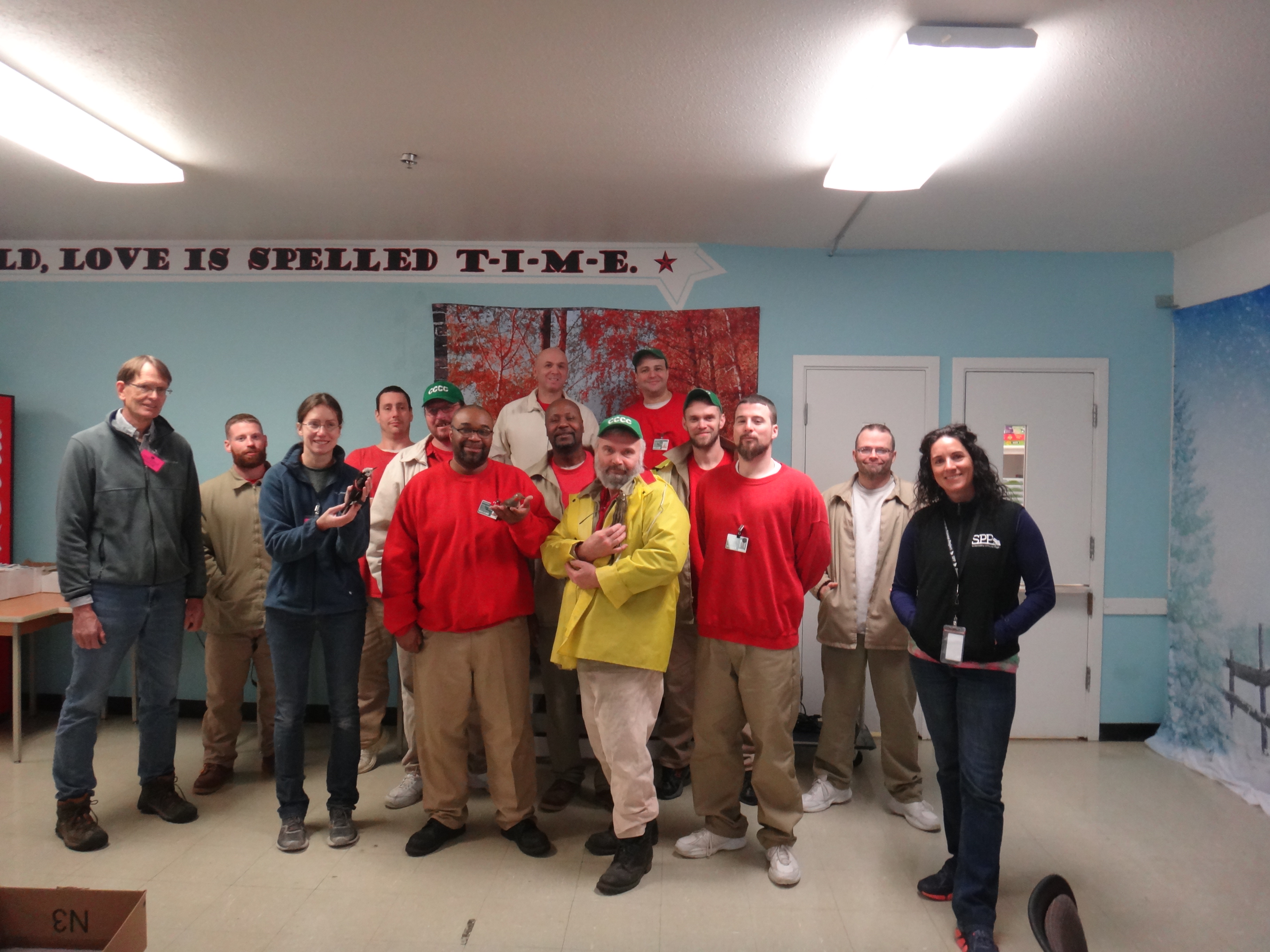
USFS trainers, SPP coordinator, and participants of the woodpecker nest monitoring project training pose with bird specimens.

In November, the Woodpecker Nest Monitoring Project was launched with a two-day training for all five turtle technicians, four greenhouse workers, and two other interested individuals. The purpose of the Woodpecker Nest Monitoring Video Review is to support a multi-year research project through the U.S. Forest Service (USFS) focused on identification of nest predators.

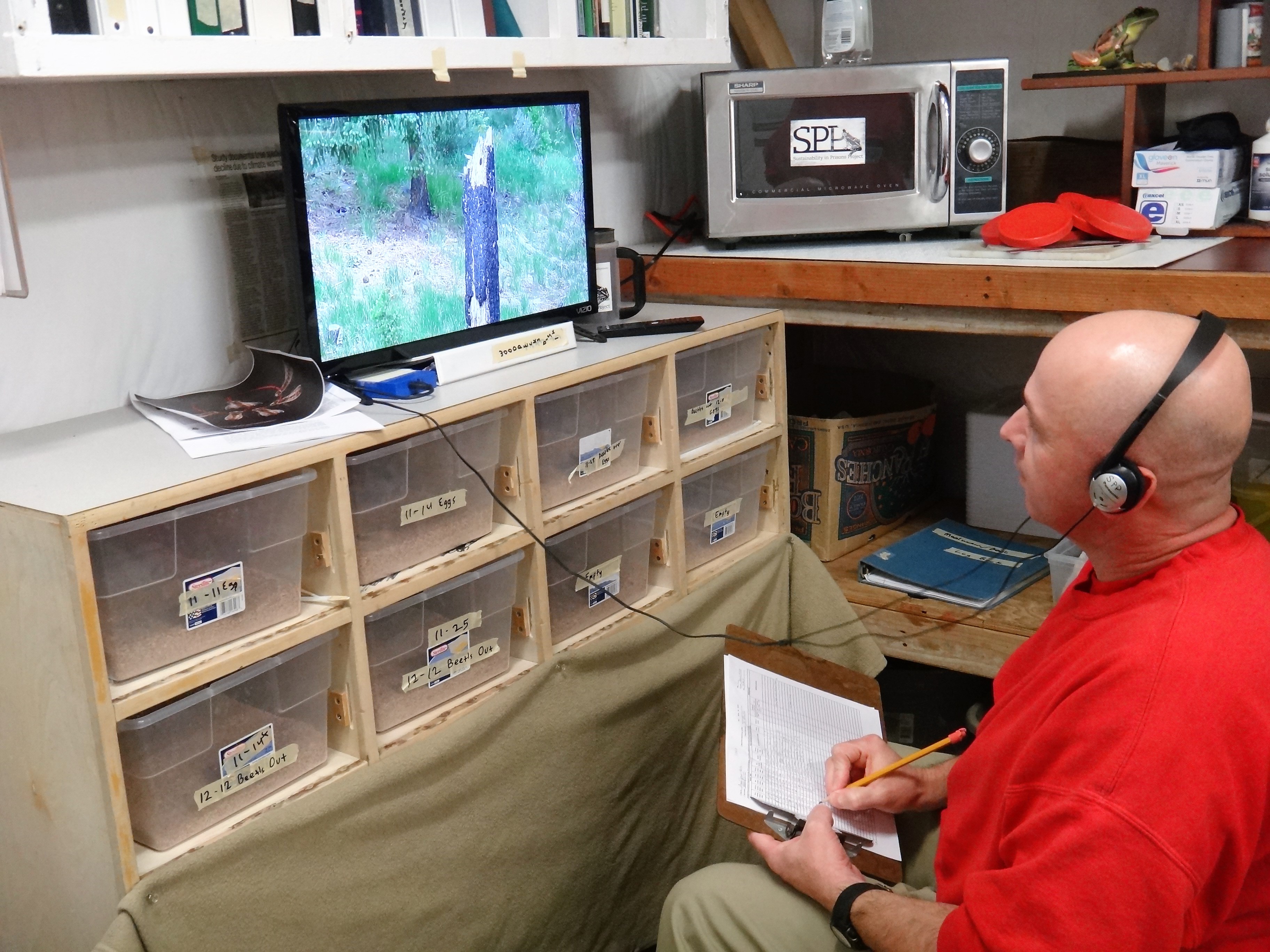
Woodpeckers are a keystone species that provide cavities not only for their own nesting use, but also for a broad spectrum of secondary cavity users including small mammals and other birds. Video footage comes from cameras operating 24/7 at cavity nests. This is the only sure way to document nest depredation, however, reviewing the enormous amount of video footage requires an equally enormous amount of reviewer time. In order to accurately monitor video footage, correctly identify species, and describe animal behaviors, reviewers need considerable training.

Biological Science Technician Modesto Silva reviewing video footage of a Northern Flicker cavity nest. This video station sits atop the mealworm rearing bins for the western pond turtle program.

Participants at Cedar Creek received six hours of education and training from Teresa Lorenz, USFS biologist and Phil Fischer, USFS volunteer, covering woodpecker, raptor, song bird, and small mammal identification; background information relating to the project, including project protocol and species behavior descriptions; and monitoring and data recording techniques. In the past, video monitoring has only been performed by undergraduate students, however, collaboration between USFS and SPP has made it possible to also bring this type of education and experience into prison.

And coming soon…

Cedar Creek has long had a productive greenhouse, including a small aquaponics system. The old aquaponics will be replaced with a more productive system designed by Symbiotic Cycles LLC, an Olympia-based company dedicated to the application of regenerative food production through aquaponics. The new design will support production of fresh greens year round for use in the kitchen.

Technician Mlady has said, “I’m really excited about the upcoming aquaponics pond we will be building. It is huge, and tucked away safely up in our camp’s greenhouse. Once we get the plumbing correctly set up, the koi fish will be able to fertilize our selected plants and vegetables. Brilliant system.” Aquaponics training will start sometime this March, and the system should be up and running soon after.

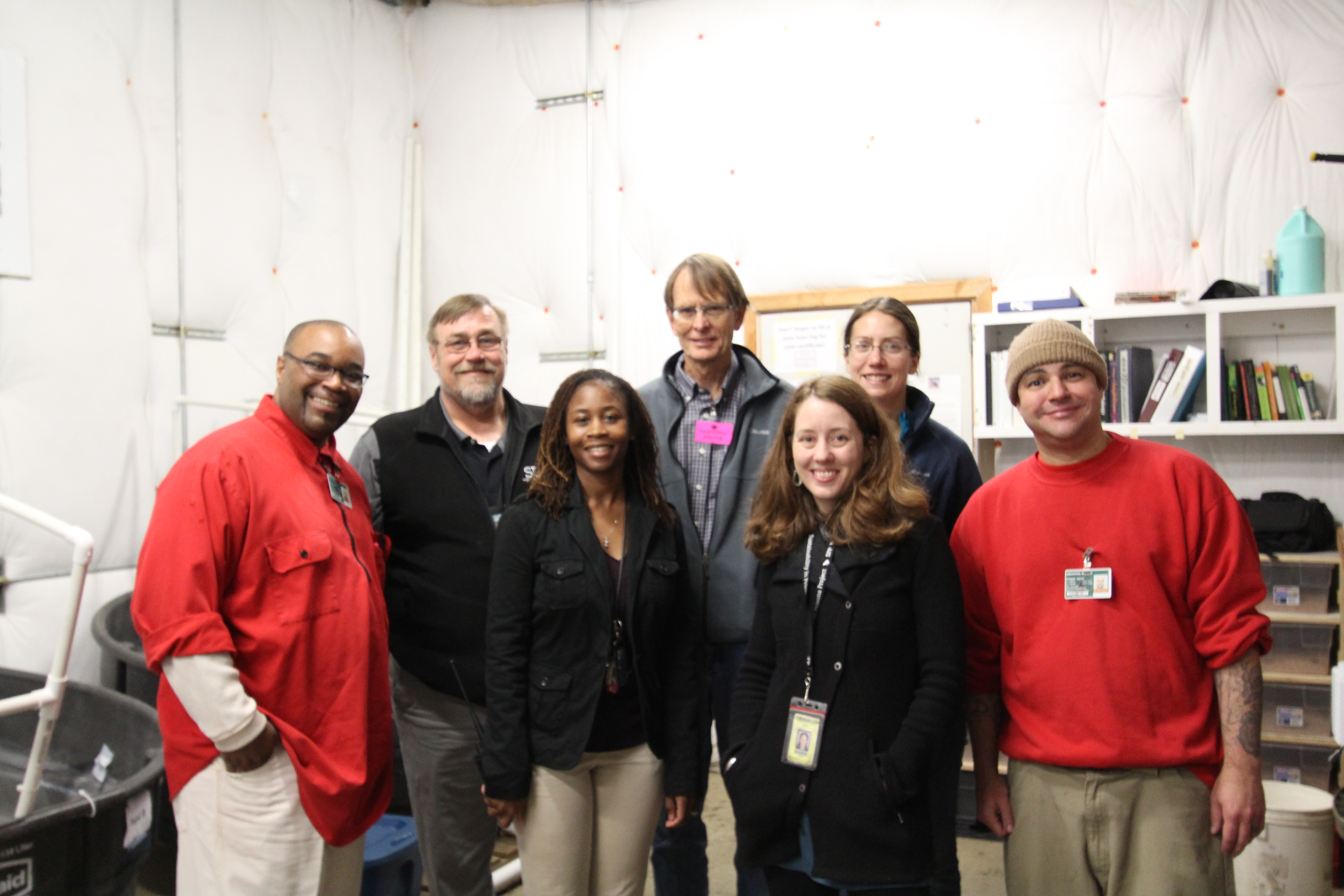
Partners in endangered species conservation for Cedar Creek Corrections Center, from left to right: Technician, John Fitzpatrick, Superintendent Douglas Cole, Loretta Adams (SPP Liaison), Philip Fischer (U.S. Forest Service), Kelli Bush (SPP Co-Director, Teresa Lorenz (U.S. Forest Service), Technician William Anglemyer). Photo by Jessica Brown.


Text and photos by Jessica Brown, SPP Turtle Program Coordinator

After several months of planning, a new wildlife conservation program at Cedar Creek Correctional Facility will soon be up and running. We are excited to team up with biologists from the U.S. Forest Service to implement the woodpecker nest monitoring program. The program is mainly a research project: technicians review video footage of endangered woodpeckers at their nests, and document activities of animals that may depredate the nest.

Partners in endangered species conservation for Cedar Creek Corrections Center, from left to right: Technician, John Fitzpatrick, Superintendent Douglas Cole, Loretta Adams (SPP Liaison), Philip Fischer (U.S. Forest Service), Kelli Bush (SPP Co-Director), Teresa Lorenz (U.S. Forest Service), Technician William Anglemyer

In part to allow the new program, Cedar Creek’s conservation efforts will be served by a larger group of incarcerated technicians, adding about 6 more individuals to the existing two turtle technicians; the larger group will rotate through turtle and woodpecker programs, plus a future aquaponics program. Woodpecker technicians in the prison will receive similar training and education to that of undergraduate students who perform the same work. They will learn about topics such as wildlife species identification, ecology, conservation, and data documentation.

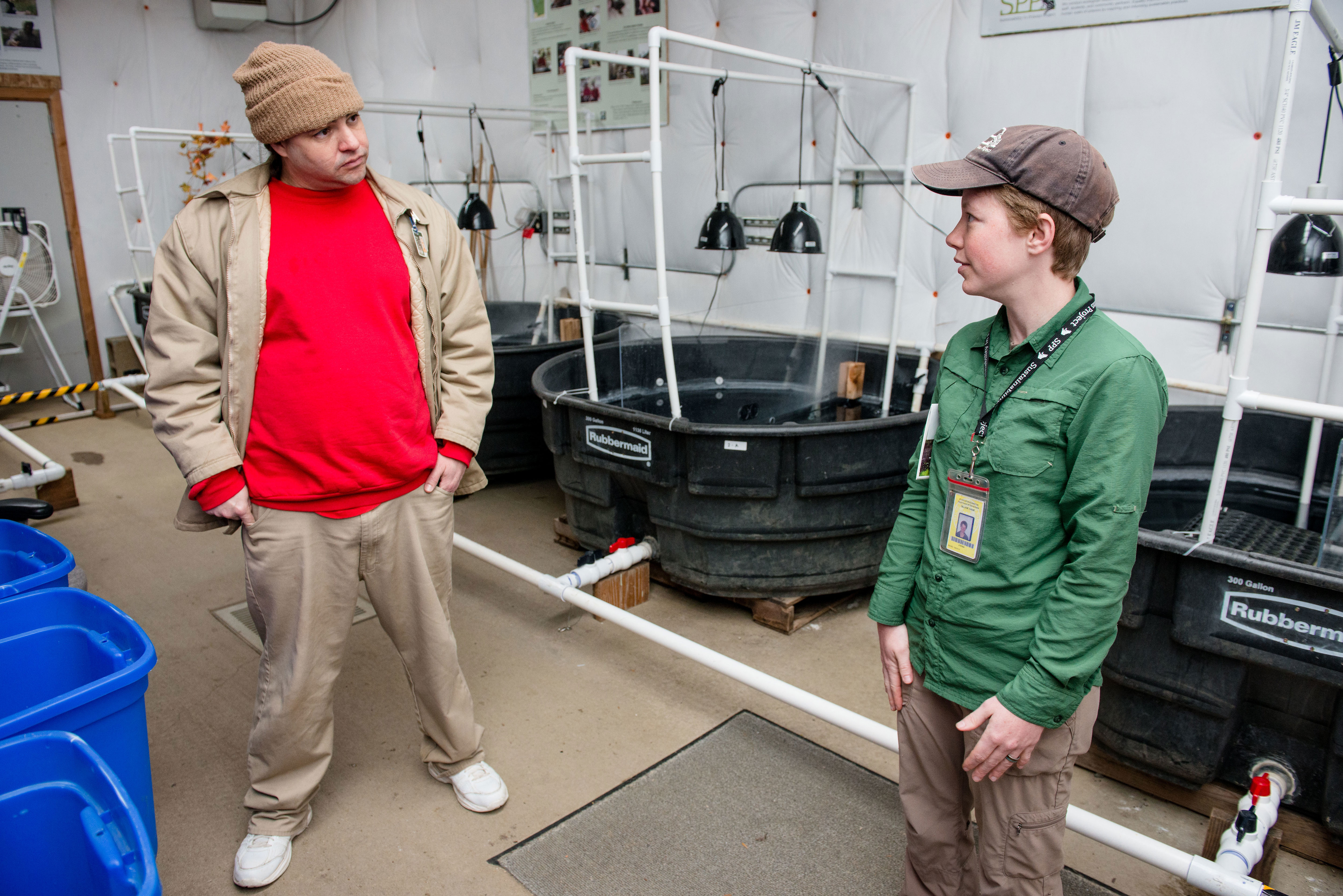
New turtle technician, Mr. Fitzpatrick leads a tour of the turtle facility at Cedar Creek.

Last month, U.S. Forest Service biologists, Teresa Lorenz and Philip Fischer were able to visit the Cedar Creek facility and turtle technicians treated them to a tour of the western pond turtle program. The newest turtle technician Mr. John Fitzpatrick did a great job of leading his first tour for an outside group. Mr. Fitzpatrick, the first incarcerated winner of a Mike Rowe Foundation scholarship, has been an excellent addition to the turtle team; he brings an infectious, positive attitude, and zest for learning. We are thankful for the animal handling skills, training, and wealth of knowledge he is receiving from veteran turtle technician Mr. William Angleymyer.

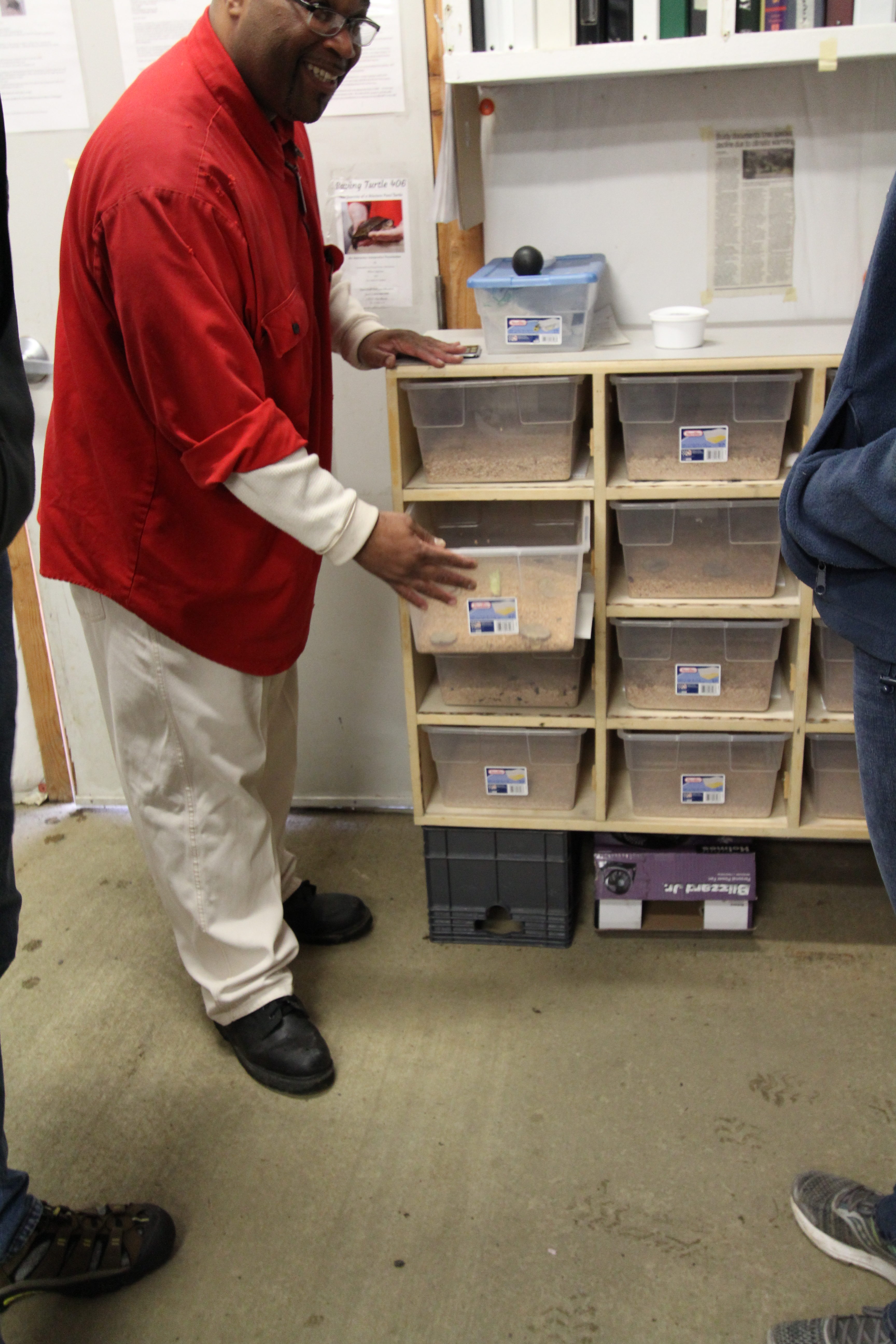
Mr. Fitzpatrick explains the mealworm rearing setup. The mealworms are a source of food for the turtles.

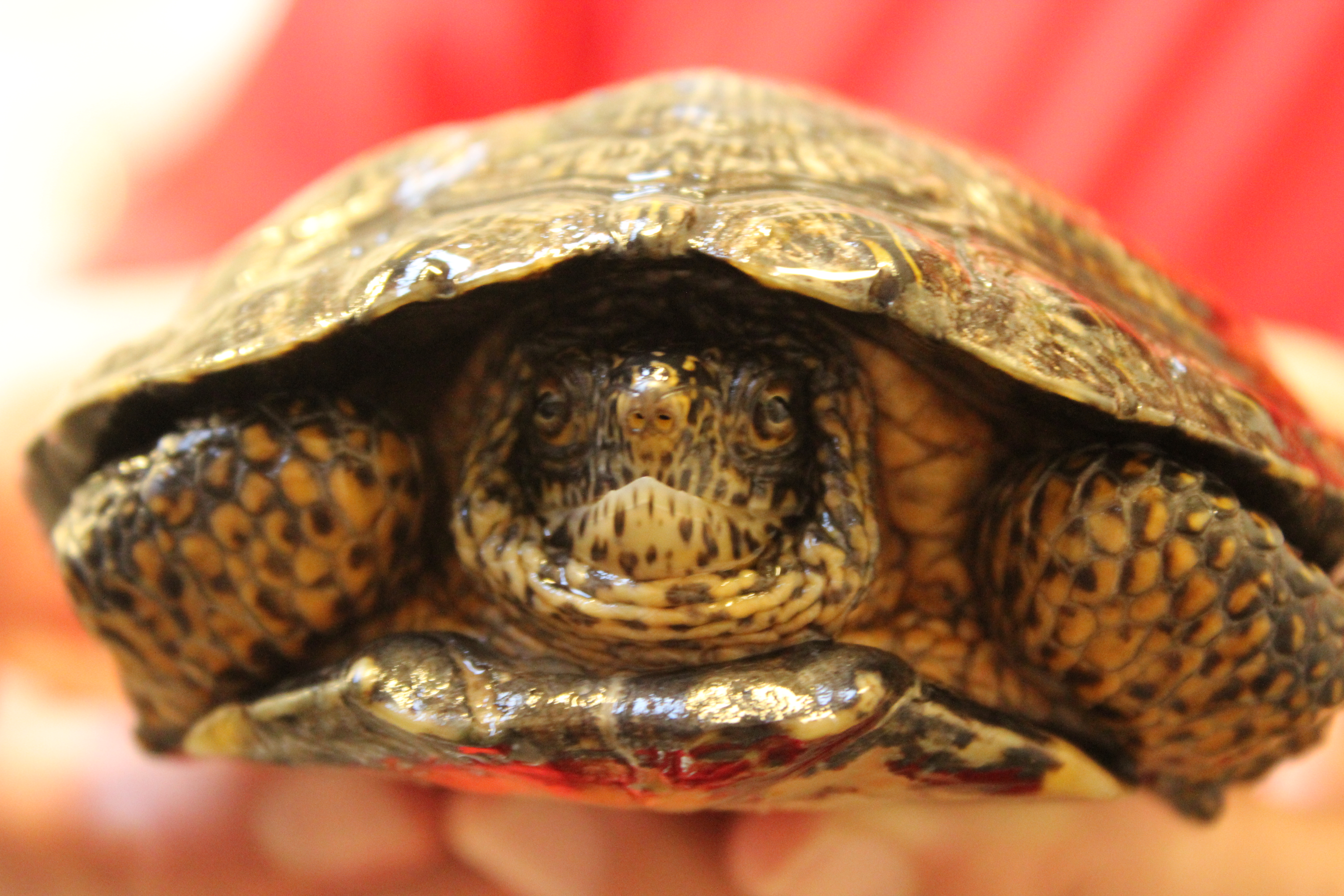
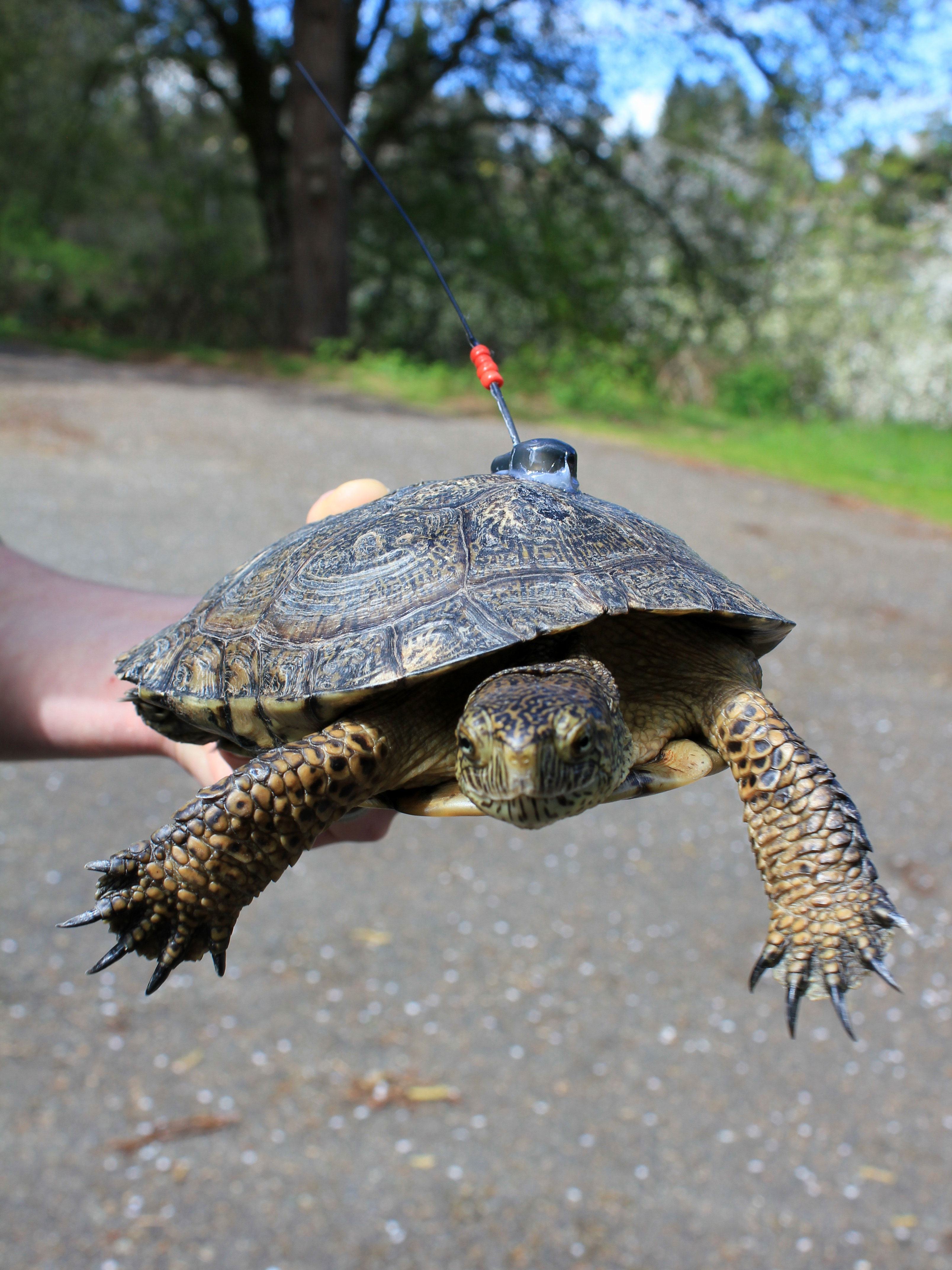
Cedar Creek currently has three resident western pond turtles, including one healthy turtle that was found by someone on the side of the road. Because this turtle is disease-free, he is being kept separately from the other turtles—in quarantine—until he can be released in the spring. The three turtles at Cedar Creek will be joined by 7 more by the end of November.

Training for the woodpecker nest monitoring project will take place in November where we will be joined with newly-hired technicians and members of the horticulture team.


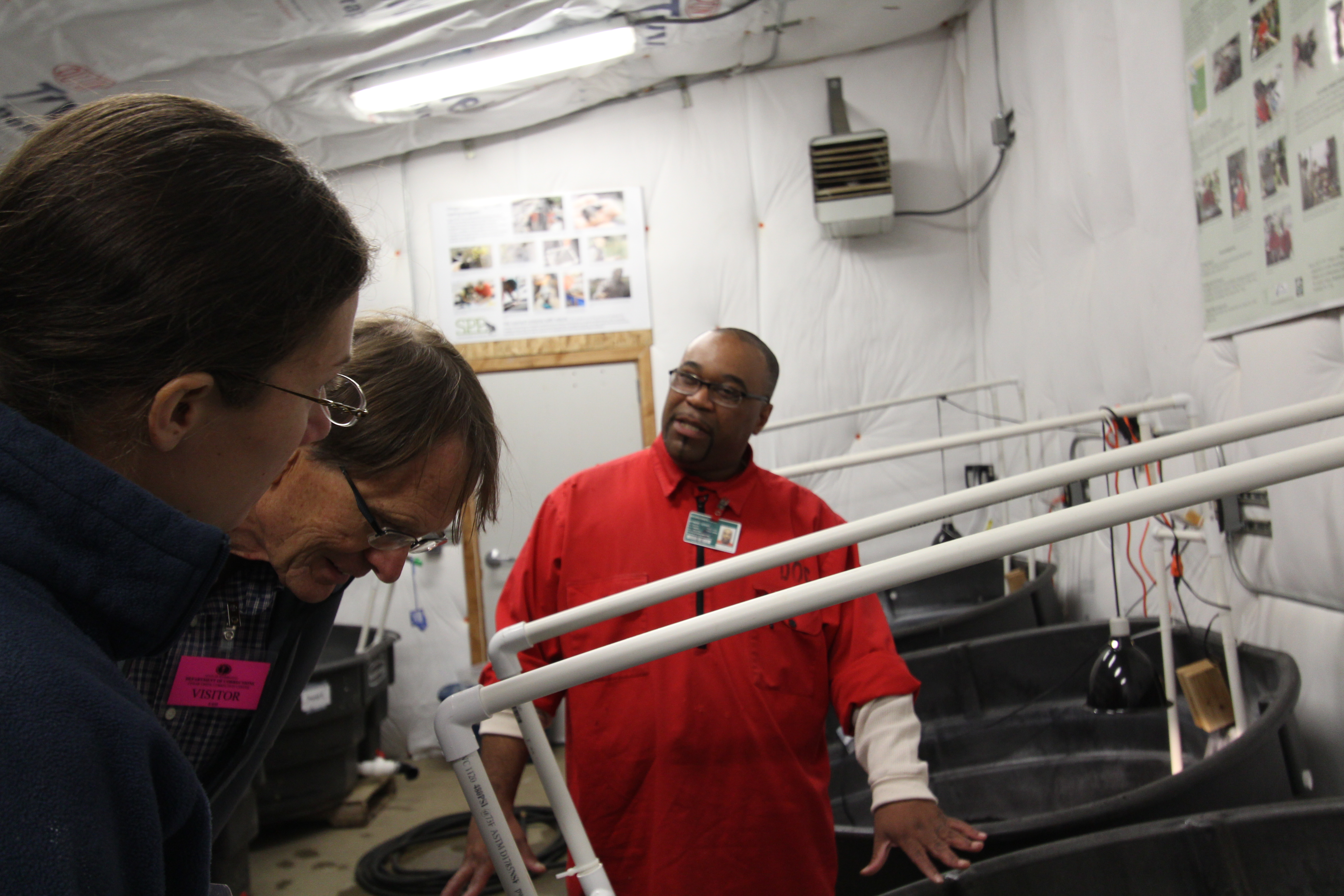
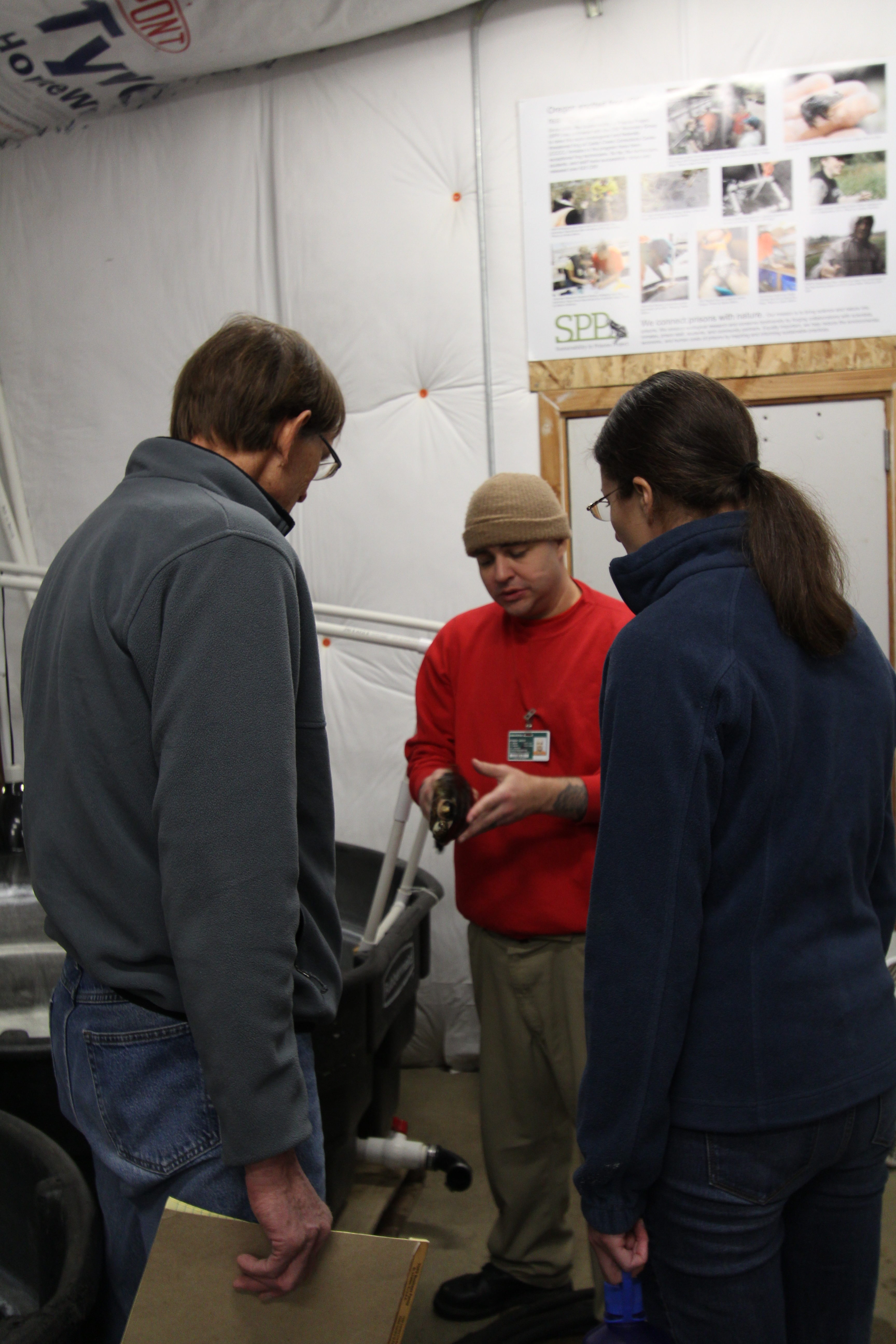
Mr. Anglemyer shows the healthy turtle to Teresa and Phil from the U.S. Forest Service.


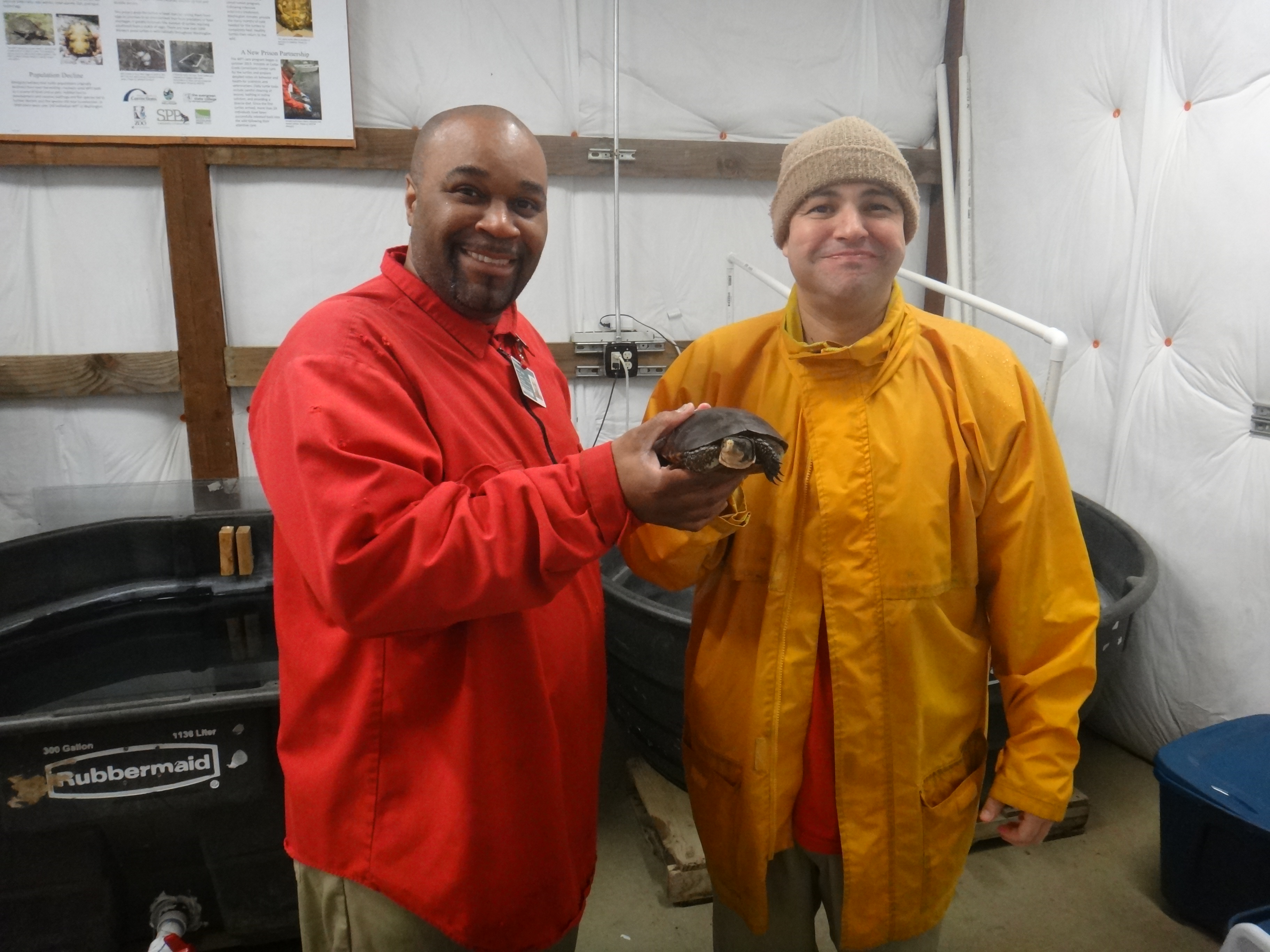
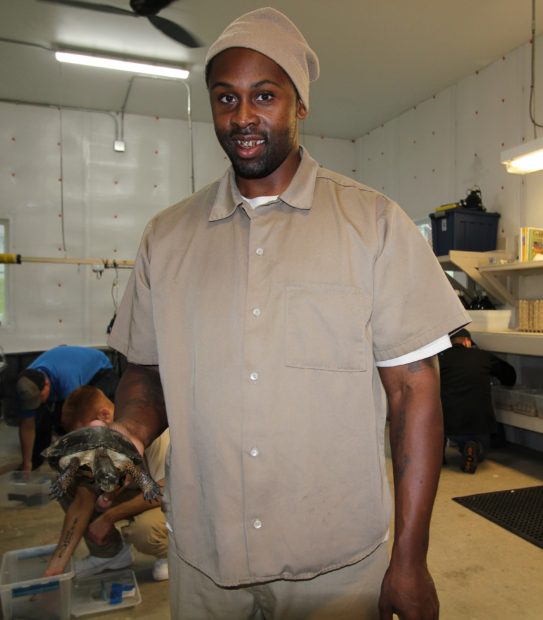
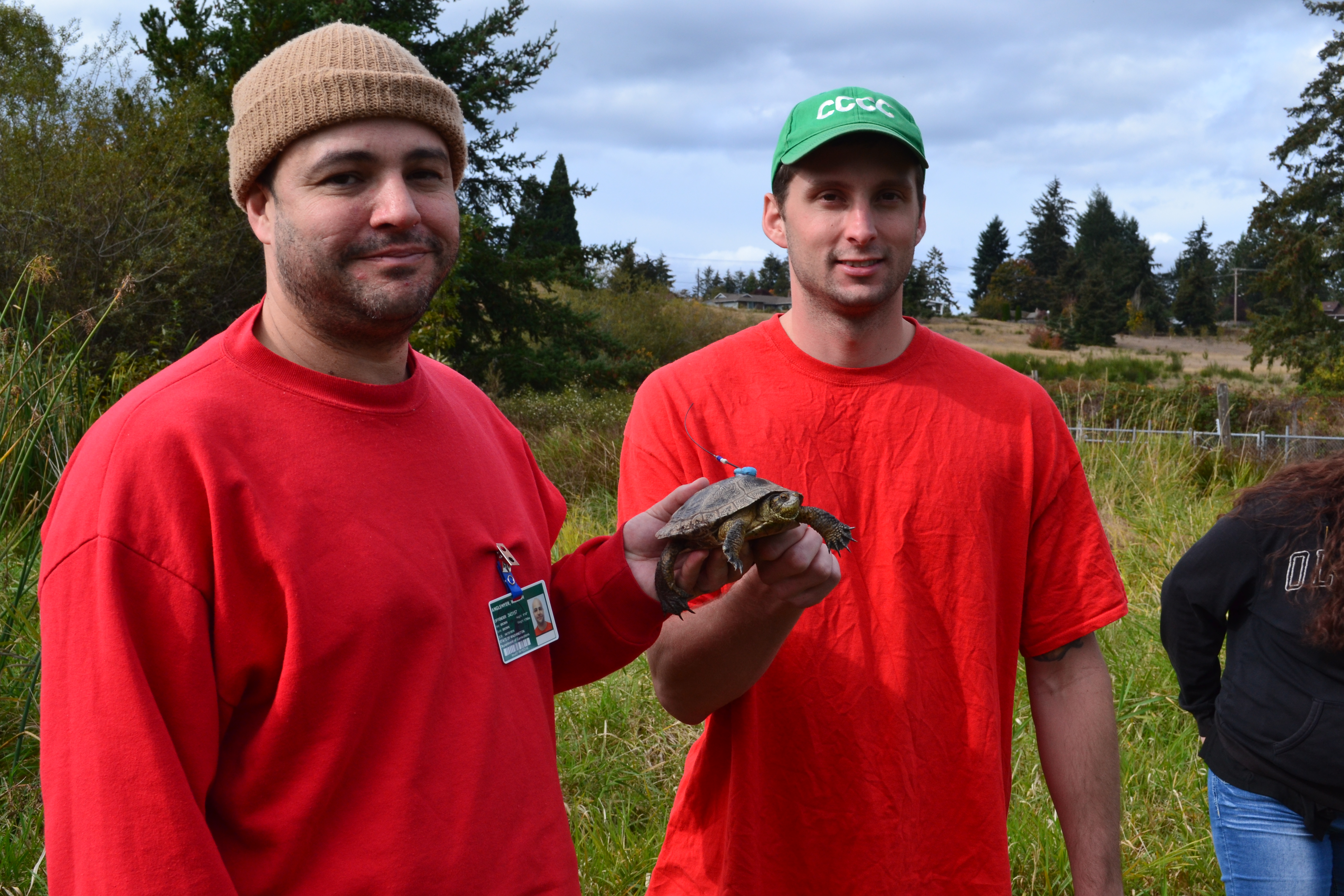
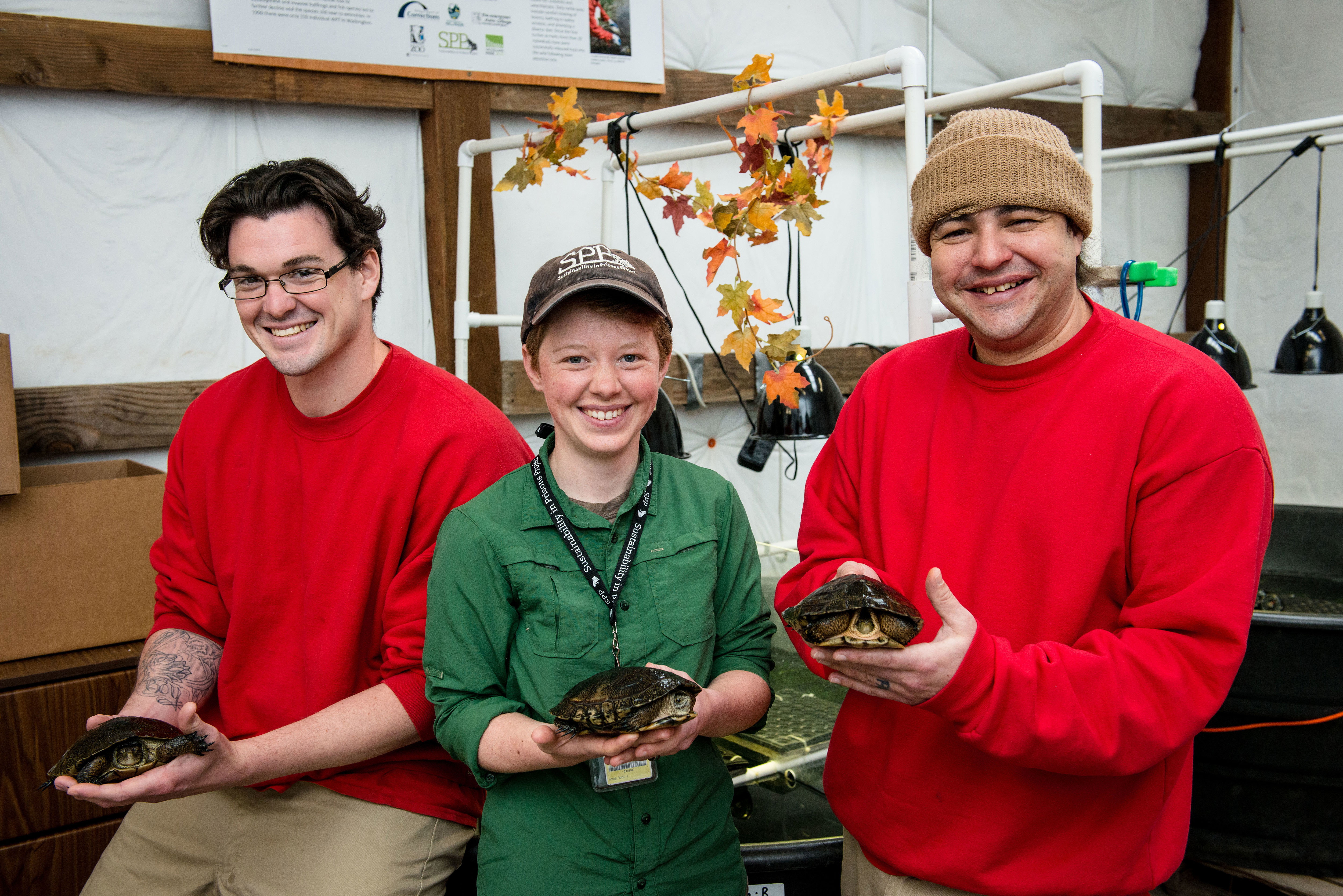
Turtle technicians Mr. Fitzpatrick and Mr. Anglemyer pose with the healthy western pond turtle.


SPP Turtle Program Coordinator, Jessica with turtle technicians, Mr. Anglemyer and Mr. Fitzpatrick

Text and photos by Atsuko Otsuka, freelance journalist and author, consultant for the Guide Dog Puppy-Raising Program and the Horse Program at Shimane Asahi Rehabilitation Program Center in Japan

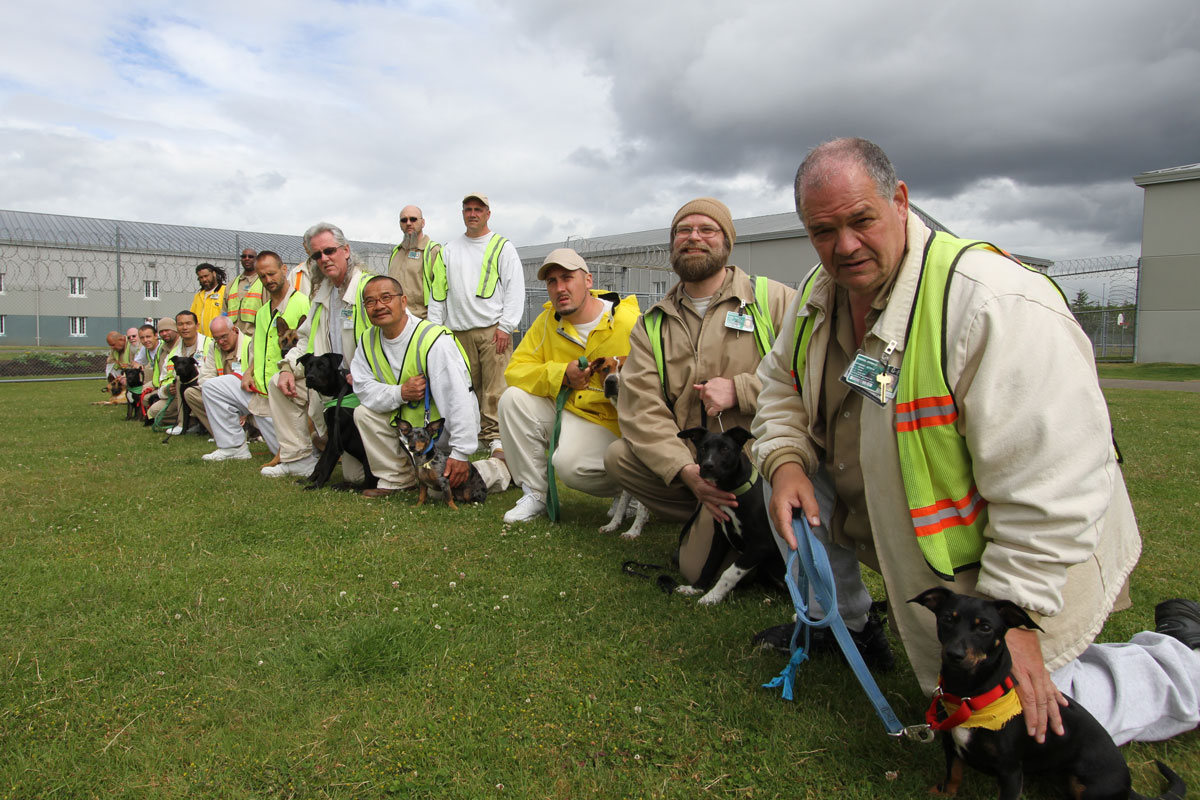
Dog handlers of Freedom Tails at Stafford Creek Corrections Center pose for a photo.

I’ve been working with the Prison Pet Partnership at Washington Corrections Center for Women (WCCW) for years, and I’ve become fascinated with the Sustainability in Prisons Project (SPP). I’ve written several books about the benefits of animal programs in correctional facilities, and I’ve successfully worked with the Japanese Ministry of Justice to establish the first dog programs in Japanese correctional facilities. My goal is to find ways to create more programs in Japan similar to those of SPP. I strongly believe that they offer a way to improve our society, the lives of our incarcerated populations, and the planet.

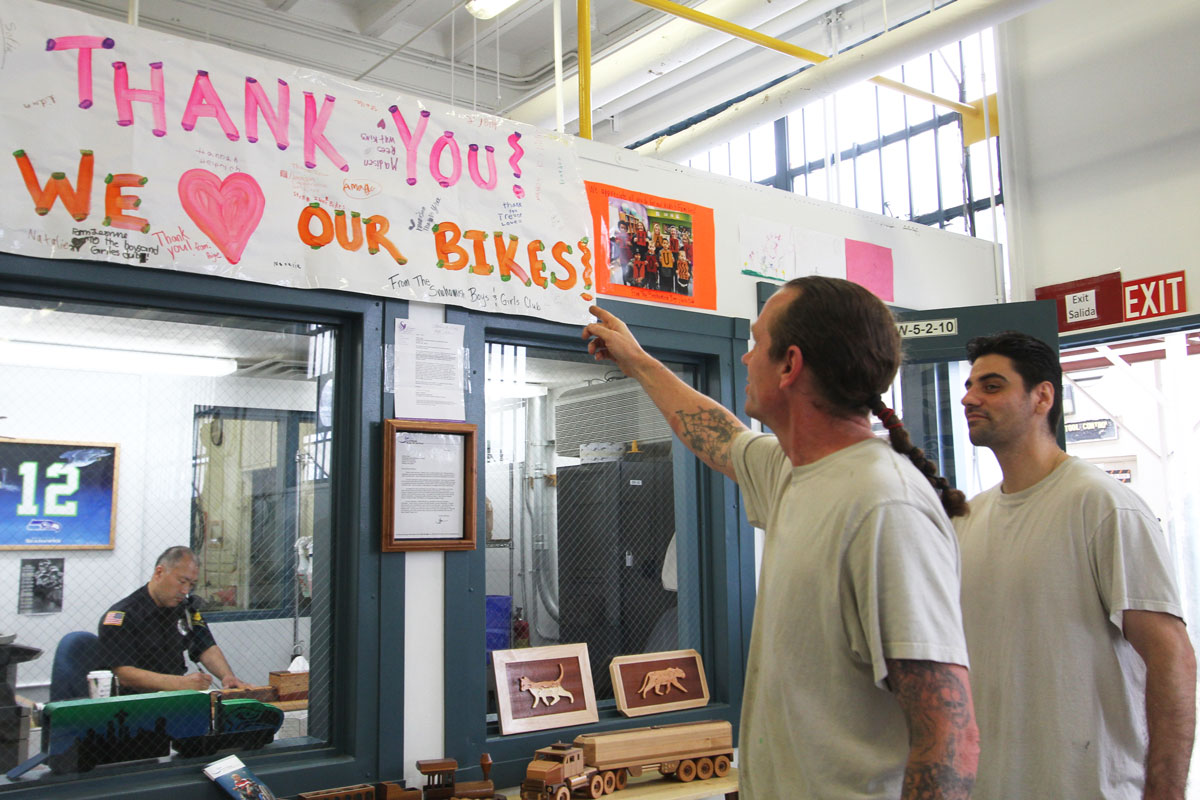
Technicians at the Sustainable Practice Lab at Monroe Correctional Complex proudly point to the “Thank you” poster from the recipients.

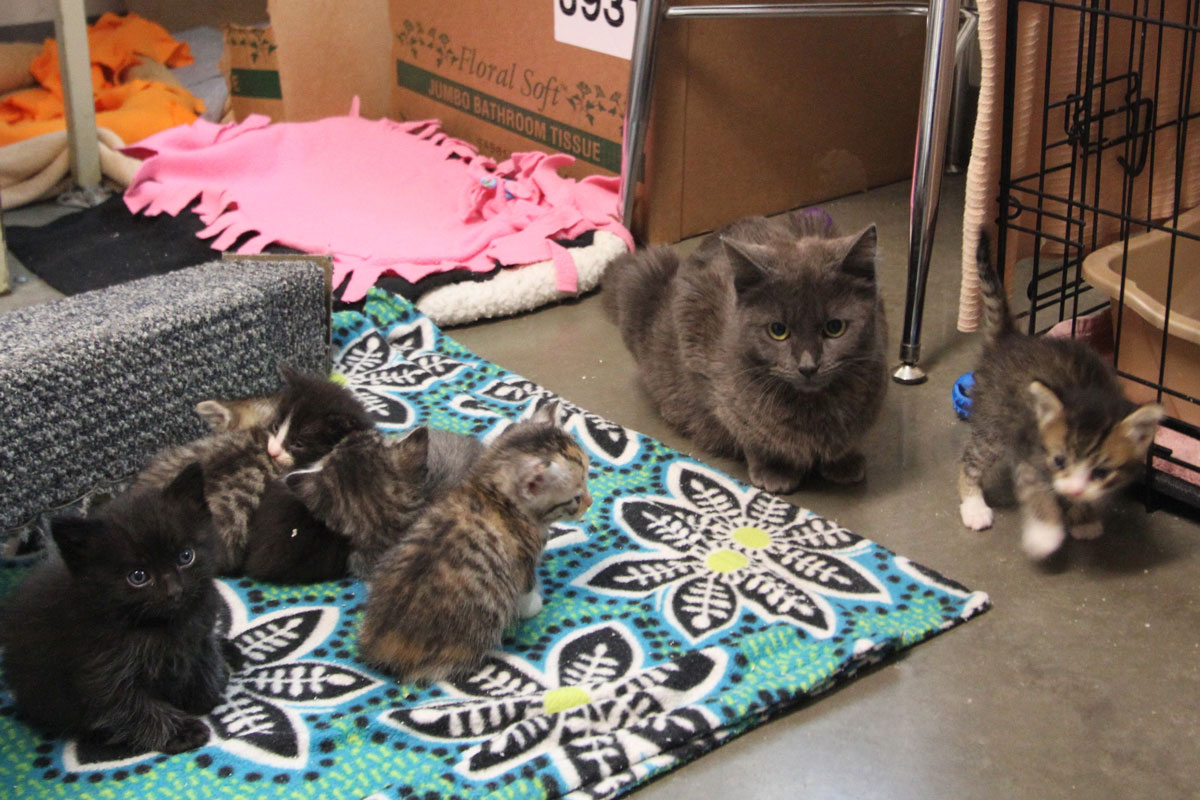
A nursing mother cat and her kittens are all cared for in the handler’s cell at Mission Creek Corrections Center for Women.

Over the past few years, I’ve had the privilege of visiting many correctional facilities in Washington where SPP is an important part of their programming and culture. My journey began with WCCW, Cedar Creek and Larch Corrections Centers. This year, I added visits to Mission Creek, Stafford Creek, Airway Heights and Monroe Correctional Complex. During these visits, I saw many wonderful programs that are expanding the worlds of the people incarcerated there, by giving them both environmental education and the opportunity to become better stewards of the earth. I was particularly impressed that all of the SPP programs I saw were designed to help their participants gain self-esteem and redemption by creating a way for them to give back to society. The passion and pride expressed by the program participants that I met was not only inspiring, but infectious.

Learn more about Atsuko and the programs at Shimane Asahi Rehabilitation Program Center.

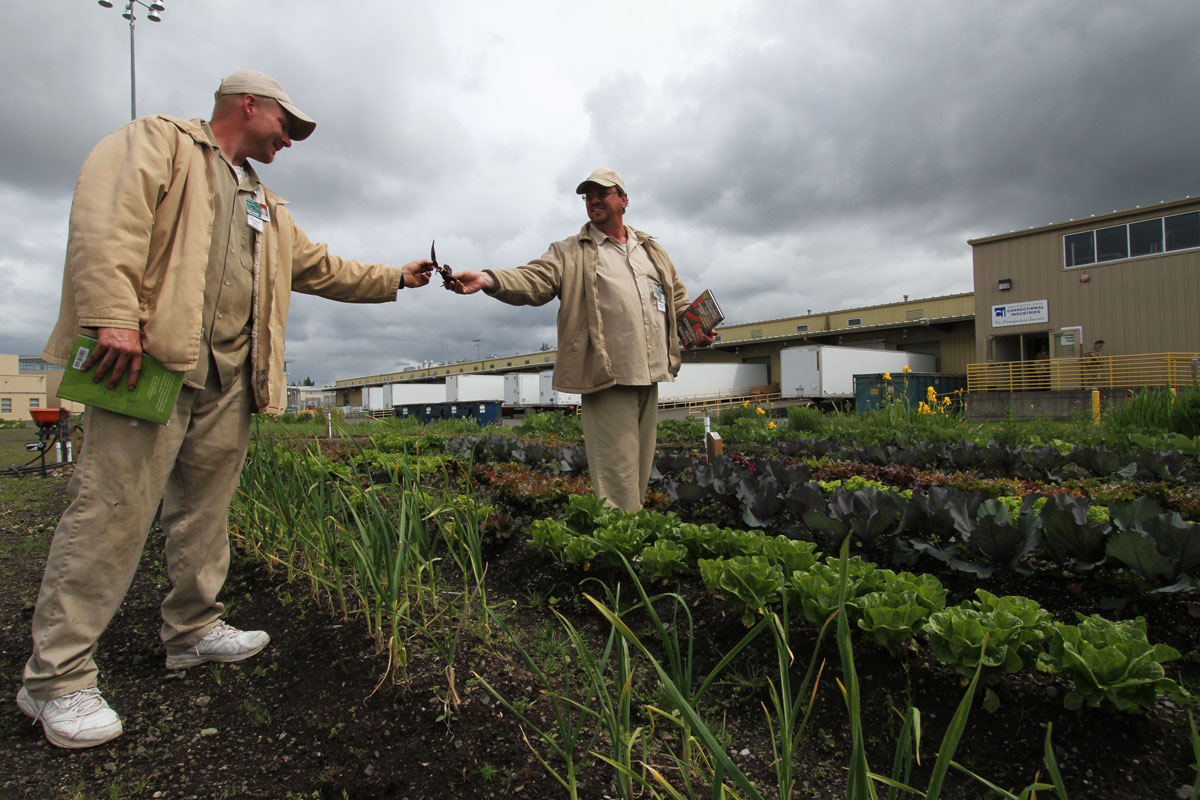
Students stop at the garden after attending a Seeds to Supper class at Stafford Creek Corrections Center.

Text and photos by Western Pond Turtle Program Coordinator, Sadie Gilliom

Cedar Creek and Larch Corrections Centers programs just received new turtles last week!

New turtle at Larch Corrections Center

New turtle at Cedar Creek Corrections Center

These turtles just finished their treatments at PAWS wildlife rehabilitation center and the Oregon Zoo and moved on to the prisons to be cared for and monitored by the trained turtle technicians at the prisons.

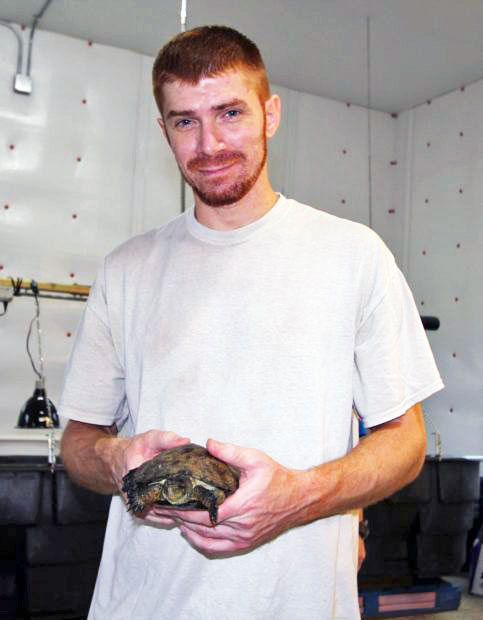
Technician Eldridge holding a new turtle at Cedar Creek

Speaking of turtle technicians, we would like to welcome two new technicians who joined the Larch program at the same time the turtles arrived. A big salutations to Mr. Gonzalez and Mr. Larson!  They are getting some great training from current lead technician, Mr. Goff, before he moves on to try out the new dog program at Larch.

Two new turtle technicians at Larch posing with new turtles

Here’s to new turtles, new technicians, and to the future release of these turtles back into the wild!

Happy New Year!

Text and photos by Sadie Gilliom, SPP Western Pond Turtle Program Coordinator

After a few months of waiting, Cedar Creek and Larch Corrections Centers have each received a new batch of turtles for their Western Pond Turtle Rehabilitation Programs!

img_9203
One particularly adorable turtle who recently arrived at Cedar Creek.

During this waiting period, the turtles received acute care for shell disease, which included antibiotics, antifungal medication and shell surgery.  The turtles that have arrived have completed treatments and just need watchful eyes and extra time to heal and wait out the winter months. The technicians provide all of this and more. They were excited to have new turtles to care for and prep for their eventual release back into the wild!

Mr. Hill, a Turtle Technician at Larch, getting ready to put a new turtle in her tank.

Mr. Goff, a Turtle Technician at Larch, getting ready to put a new turtle in her tank.

I delivered the turtles with the help of WDFW biologist, Emily Butler, to Cedar Creek on Monday November 1st and just this Monday  Larch received their turtles. We were honored to have Dr. Matt Brooks, a nutritionist from the Oregon Zoo, to help us transport the turtles to Larch.  This was Dr. Brooks’ first visit to the turtle program.  He is helping us to improve turtle health by increasing the nutritional value of their diets. We are so thankful for his help, as we are always looking for ways to improve the quality of care provided to these endangered turtles.  Thank you Dr. Brooks!

img_1071
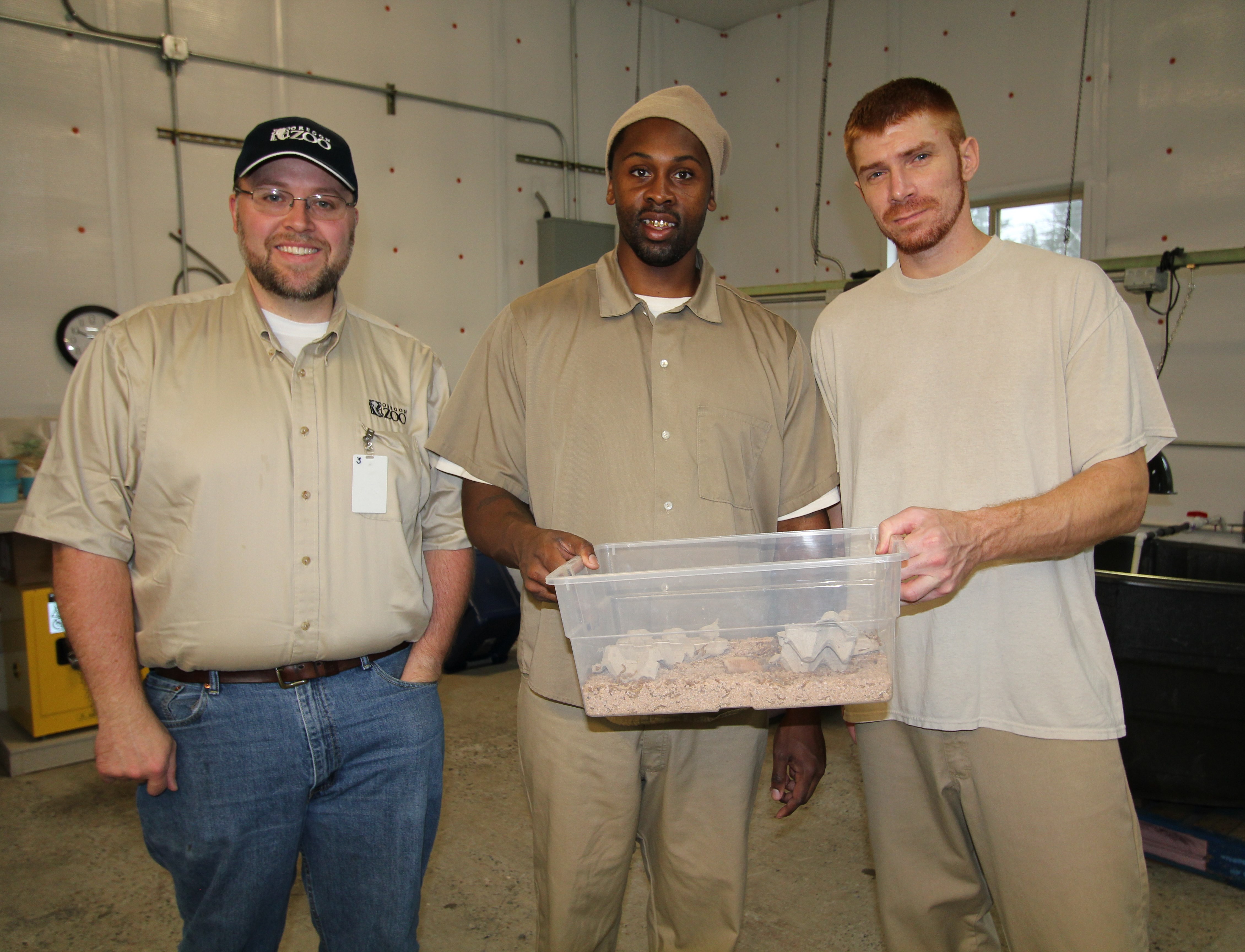
Dr. Brooks and the Turtle Technicians posing with a bin full of mealworms. Dr. Brooks took a sample of mealworms back with him to test their nutritional value.

Co-Authored by Western Pond Turtle Technicians Taylour Eldridge and William Anglemyer

On Monday October 3rd, turtle 4176 was released from the Turtle Rehabilitation program at Cedar Creek Corrections Center . She had been there for quite some time—about 4 months, with a month long intermission at PAWS wildlife rehabilitation center in Lynnwood, WA—then back for another 4 months.  She had suffered from seizure-like episodes and for awhile it looked like she wouldn’t be deemed releasable back into the wild.  We had been worried, as people who have spent time in solitary confinement ourselves, that months in captivity would have a detrimental effect on her.  So it was a great relief to finally load her into a container and board a van destined to deliver her to the Lakewood Western Pond Turtle Refuge.

Turtle Technicians, Mr. Anglemyer and Mr. Eldridge, getting ready to release turtle 4176. Photo by Sadie Gilliom.

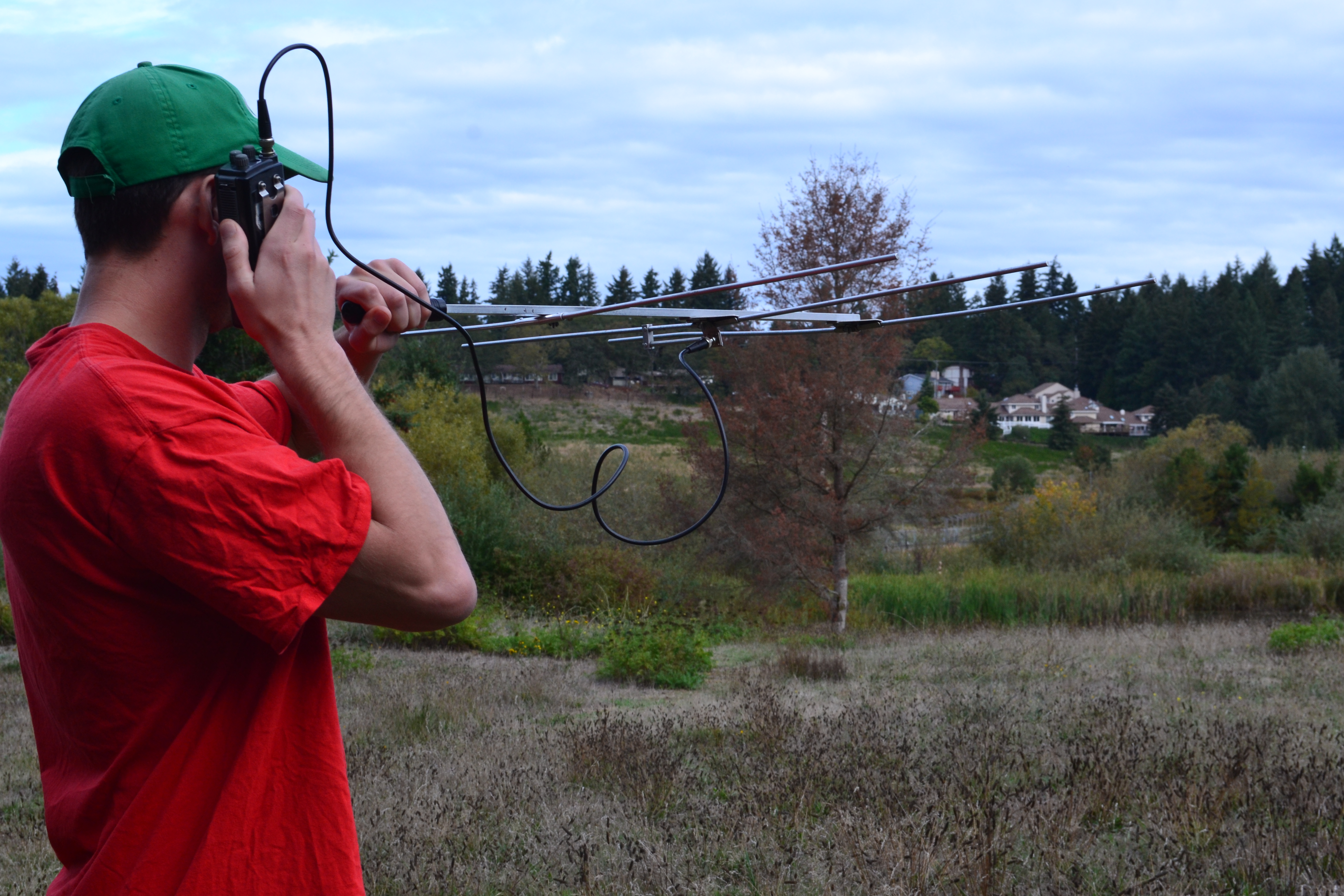
When we arrived, we were met by Washington State Fish and Wildlife Biologist, Emily Butler.  In addition to facilitating the turtle release, Ms. Butler showed us how the radio telemetry transmitters are attached to the turtles. We were then given a training on how to use the radio receivers and Ms. Butler took us to the area where the turtles lay their nests.  She had hidden two mock (plastic) turtles with transmitters attached to the shells.  We took turns using the radio receiver and the attached antenna to find the plastic turtles. We both found it quite difficult; it’s not even close to easy to use the radio telemetry equipment.  But we were eventually successful in locating them–truthfully, we received some visual hints. We have a new-found respect for anyone who has to attempt to find turtle nests in this manner.

Technician, Mr. Eldridge, learning to use the radio telemetry equipment. Photo by Sadie Gilliom.

Apart from the experience making us much more aware of the very difficult work of finding nests, it was a great learning experience which gave us a new found appreciation for the hands-on work that goes on in the field—a part of the program we’d never been privy to before. We learned of the plethora of other activities that the biologists do every day to help with the recovery of this amazing species.

We both feel good about being part of the SPP Western Pond Turtle Rehabilitation Program and we cannot think of a more worthwhile job—especially as people in an incarceration setting. We’re looking forward to helping the next batch of turtles get through their healing process and seeing them released back into the wild.  We hope the day will come soon when there are no more turtles that need help healing.  Hopefully, the future will bring multitudes of healthy turtles living in their natural habitat.

By Sadie Gilliom, SPP Western Pond Turtle Program Coordinator;
All photos by Sadie Gilliom unless otherwise noted

Congratulations to Tammy Schmidt, our partner with the Washington Department of Fish and Wildlife, on her new position! We are happy for you, Tammy, but sad to see you go.

Tammy Schmidt has dedicated much of her time in the past 3 years to the Western Pond Turtle Program at Cedar Creek Corrections Center.  As an expert in the endangered western pond turtles, this Washington Department of Fish and Wildlife biologist shared her knowledge and passion for wildlife conservation and turtle care with me and eager technicians and correctional staff.

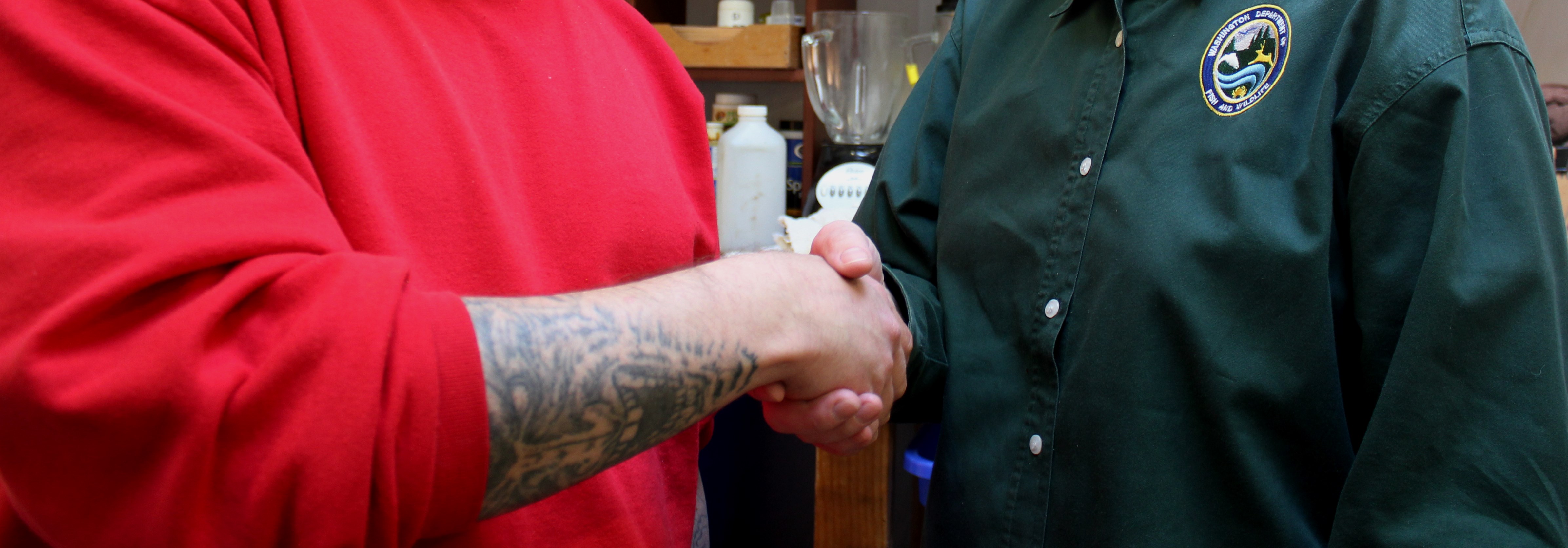
Shaking hands with a technician
Tammy shaking hands with a technician. (Note: We are respecting Tammy’s wish for privacy by not showing her face in photos.)

She brought her patience and great sense of humor to the program.  She always took the time to explain and answer the many questions we had — and repeat answers as new coordinators and technicians came into the program.

She came out to Cedar Creek once a month to check-up on the turtles’ wounds from their shell disease.  She trained the technicians and myself in how to monitor the wounds in the shells to make sure they were healing well. In case of any turtle emergency, she was the one we called.

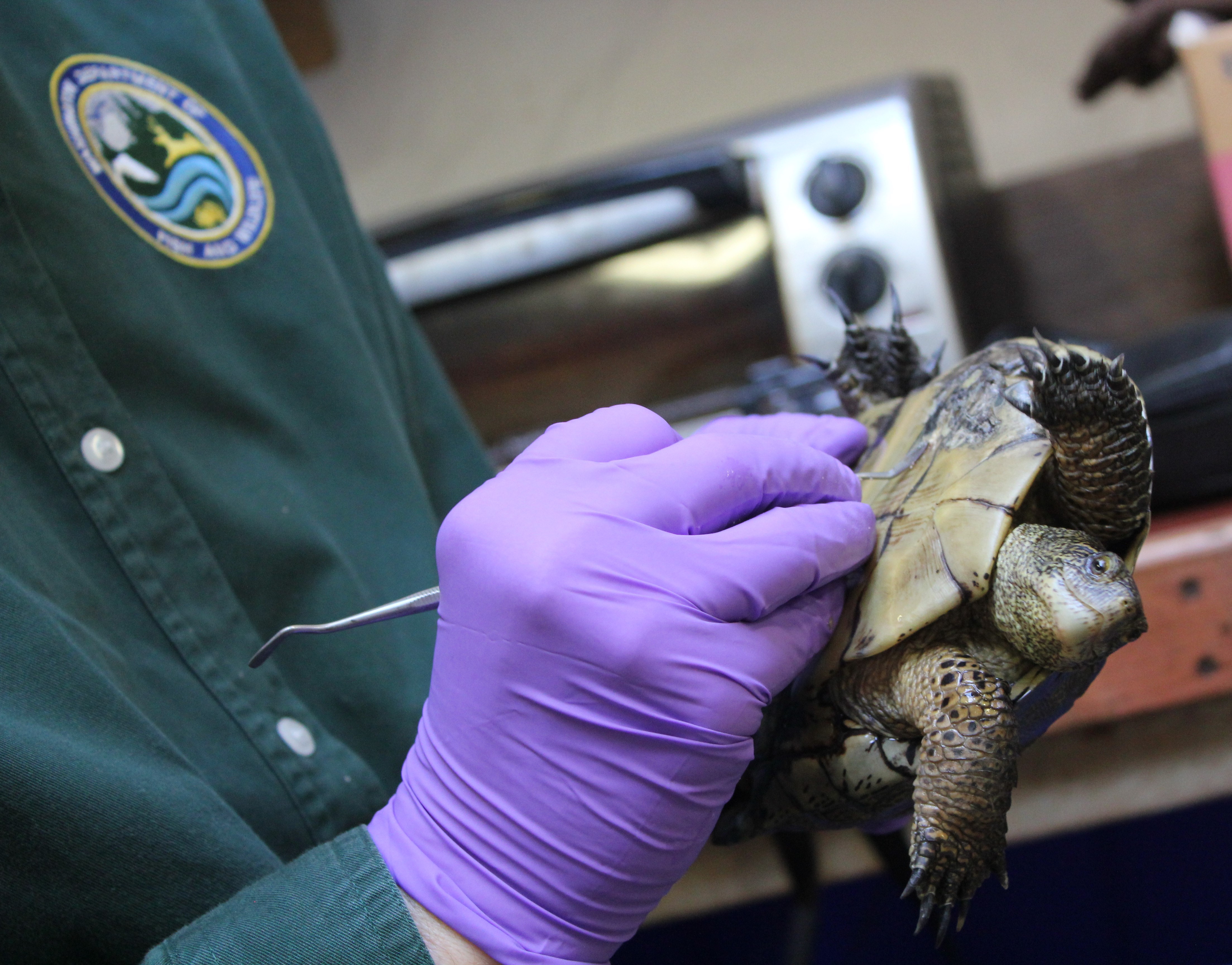
Tammy examines a turtles shell

Tammy examining a turtles shell
Tammy examining a turtles shell.

She took the technicians out to the release site, showed them how they track the turtles, and how they protected their nests with a wire protector.

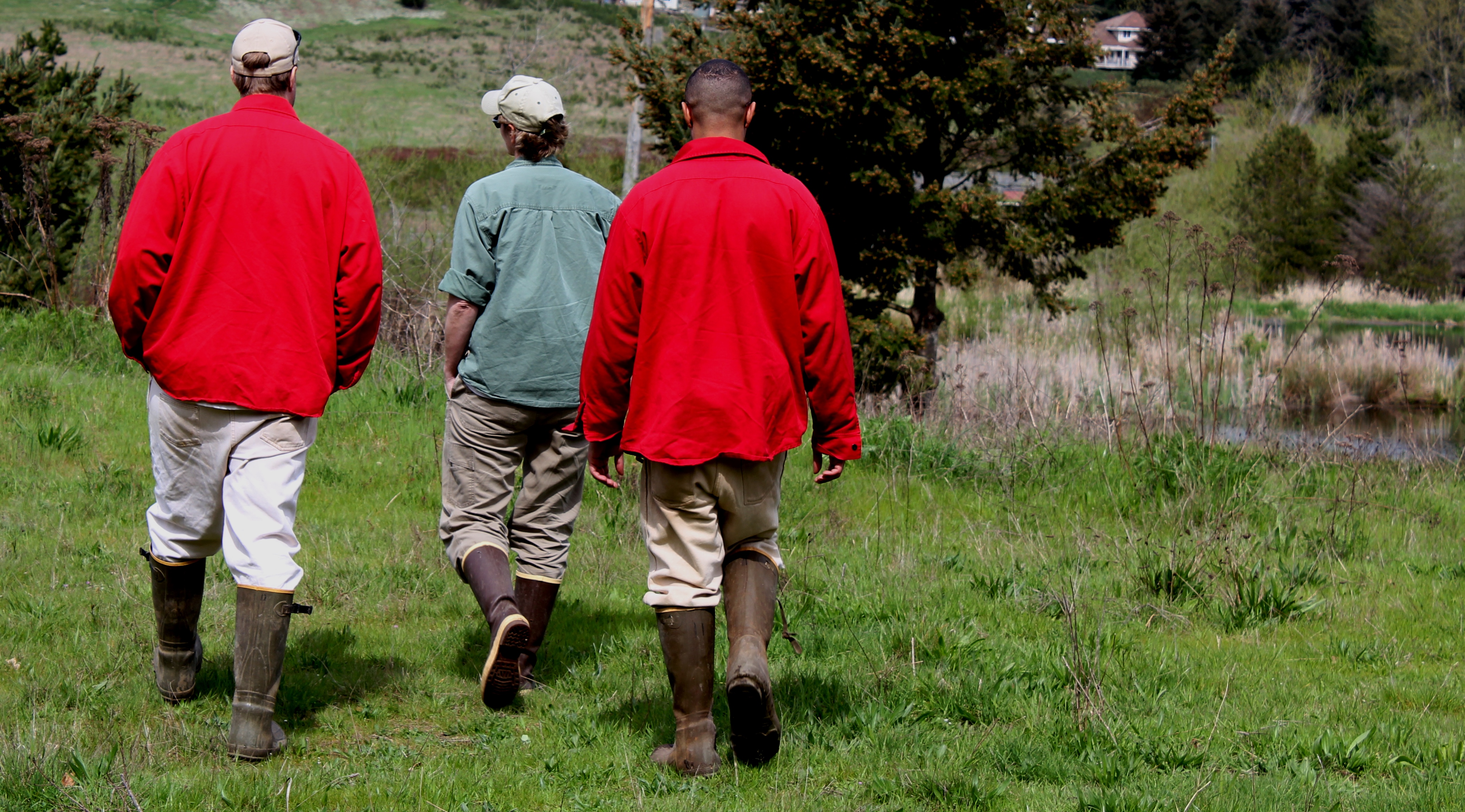
Tammy showing the technicians around the release site. Photo by Fiona Edwards
Tammy showing the technicians around the release site. Photo by Fiona Edwards.

I want to say a personal thanks to Tammy for her support during any health emergencies with the turtles, for sharing her knowledge, and for allowing me to assist with the annual exam of the turtles at the release site.

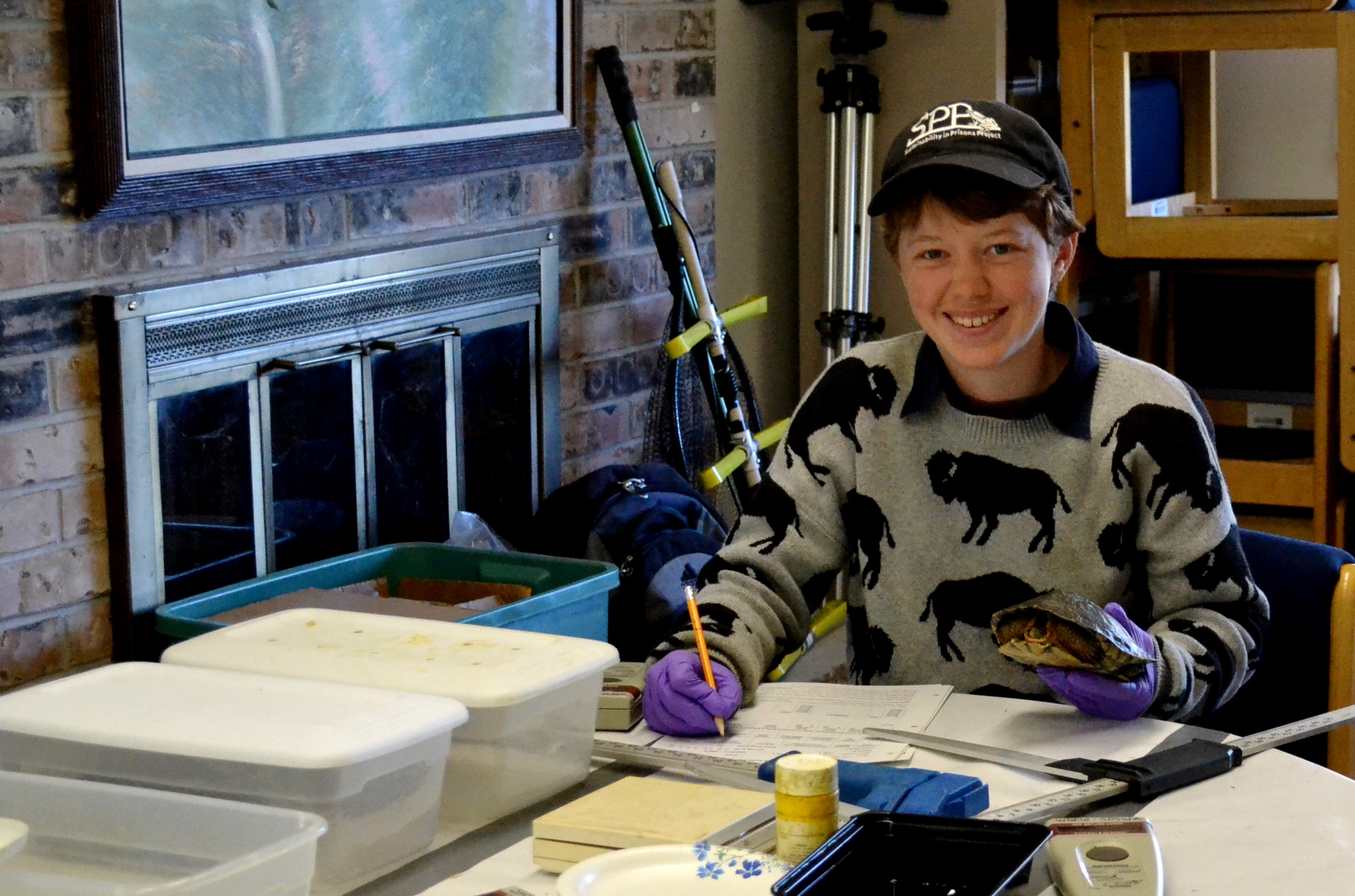
Me (Sadie) assisting Tammy with data collection
I (Sadie) assist Tammy with data collection.

Thank you, Tammy, for your huge role in making this program a possibility and for all of your support!  Best wishes on your new adventure!

by Sadie Gilliom, Western Pond Turtle Program Coordinator

Steve holds a western pond turtle just before releasing it in a Pierce County wetland. The endangered species received care from conservation technicians at Cedar Creek Corrections Center. Photo by Kelli Bush.
SPP’s Director for Washington Corrections, Steve Sinclair, holds a western pond turtle just before releasing it in a Pierce County wetland. The endangered species received care from conservation technicians at Cedar Creek Corrections Center. Photo by Kelli Bush.

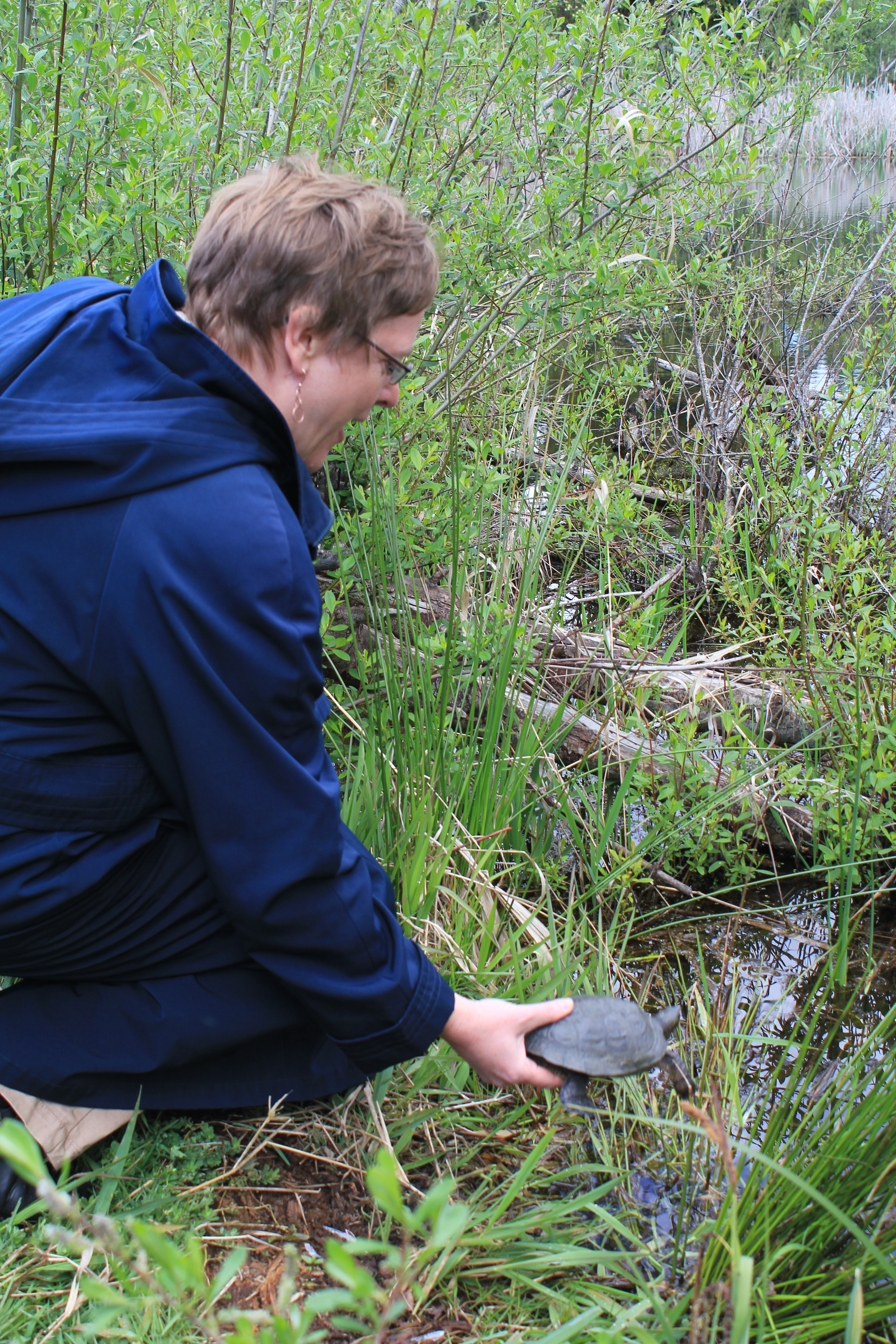
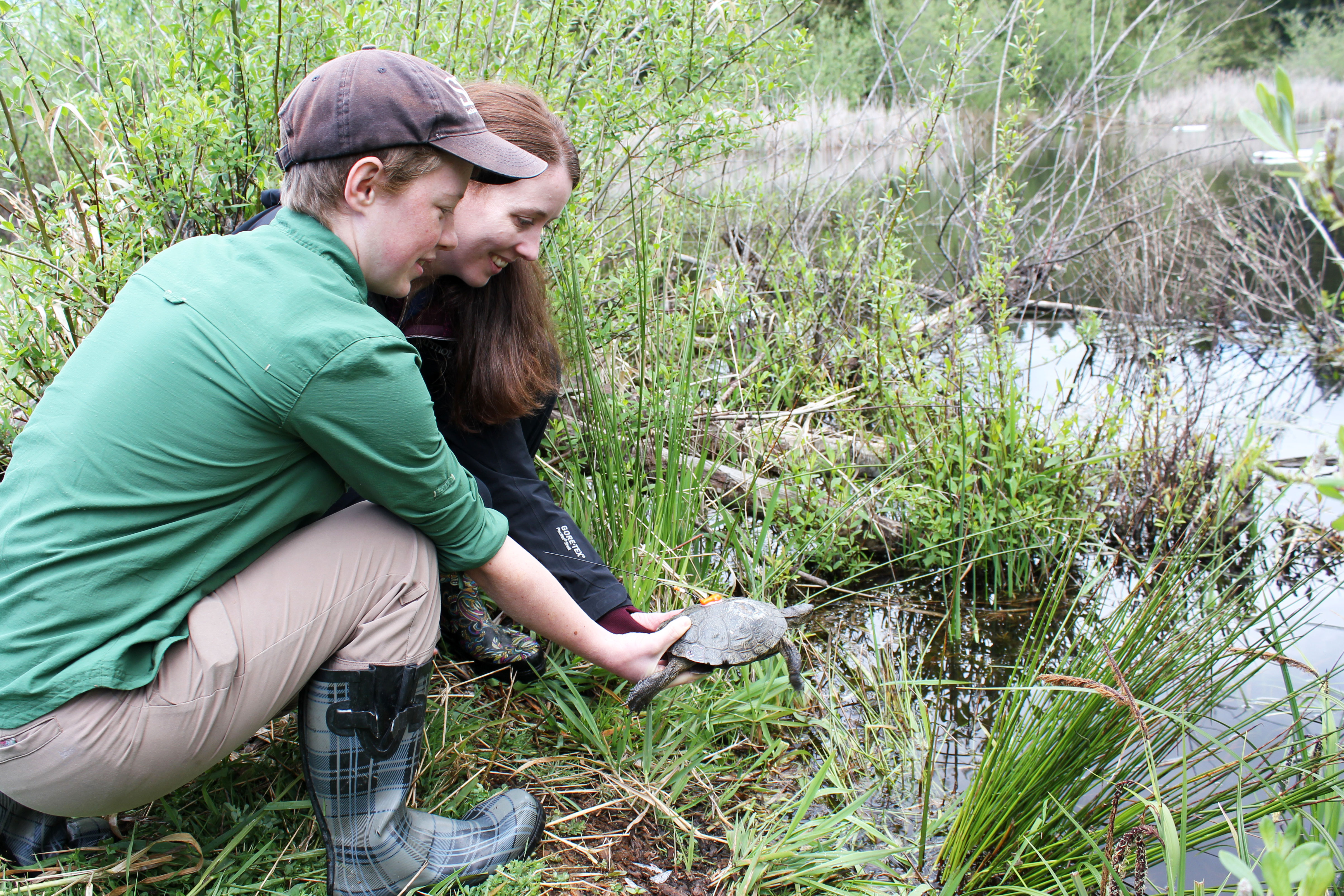
On April 14th, four western pond turtles were released back into the wild in a wetland in Pierce County. These turtles had come into the care of the western pond turtle inmate technicians at Cedar Creek Corrections Center due to shell disease. After being taken in by the Department of Fish and Wildlife, and receiving acute veterinary care at PAWs wildlife rehabilitation center, the turtles were transported to the technicians. The technicians provided expert care for the turtles and their wounds until they were healed enough to be released back into their natural habitat. Please enjoy the following pictures of this fantastic event!

Turtle Technician Anglemyer and SPP Turtle Coordinator Sadie Gilliom discuss preparation for release. Photo by Shauna Bittle, Photographer for The Evergreen State College
Turtle Technician Anglemyer and SPP Turtle Coordinator Sadie Gilliom discuss preparation for release. Photo by Shauna Bittle.

Technician Hufferd-Oulette, SPP Coordinator Sadie Gilliom and Technician Anglemyer pose with turtles getting ready for release. Photo by Shauna Bittle, Photographer for The Evergreen State College
Technician Hufferd-Oulette, SPP Coordinator Sadie Gilliom and Technician Anglemyer pose with turtles getting ready for release. Photo by Shauna Bittle.

Saying goodbye and good luck to a turtle. Photo by Shauna Bittle, Photographer of The Evergreen State College
Saying goodbye and good luck to a turtle. Photo by Shauna Bittle.

SPP Liaison and Classicifcation Counselor, Gina Sibley, helping the technicians load the turtles in the van. Photo by Evergreen photographer Shauna Bittle
SPP Liaison and Classifications Counselor, Gina Sibley, helping the technicians load the turtles in the van. Photo by Shauna Bittle.

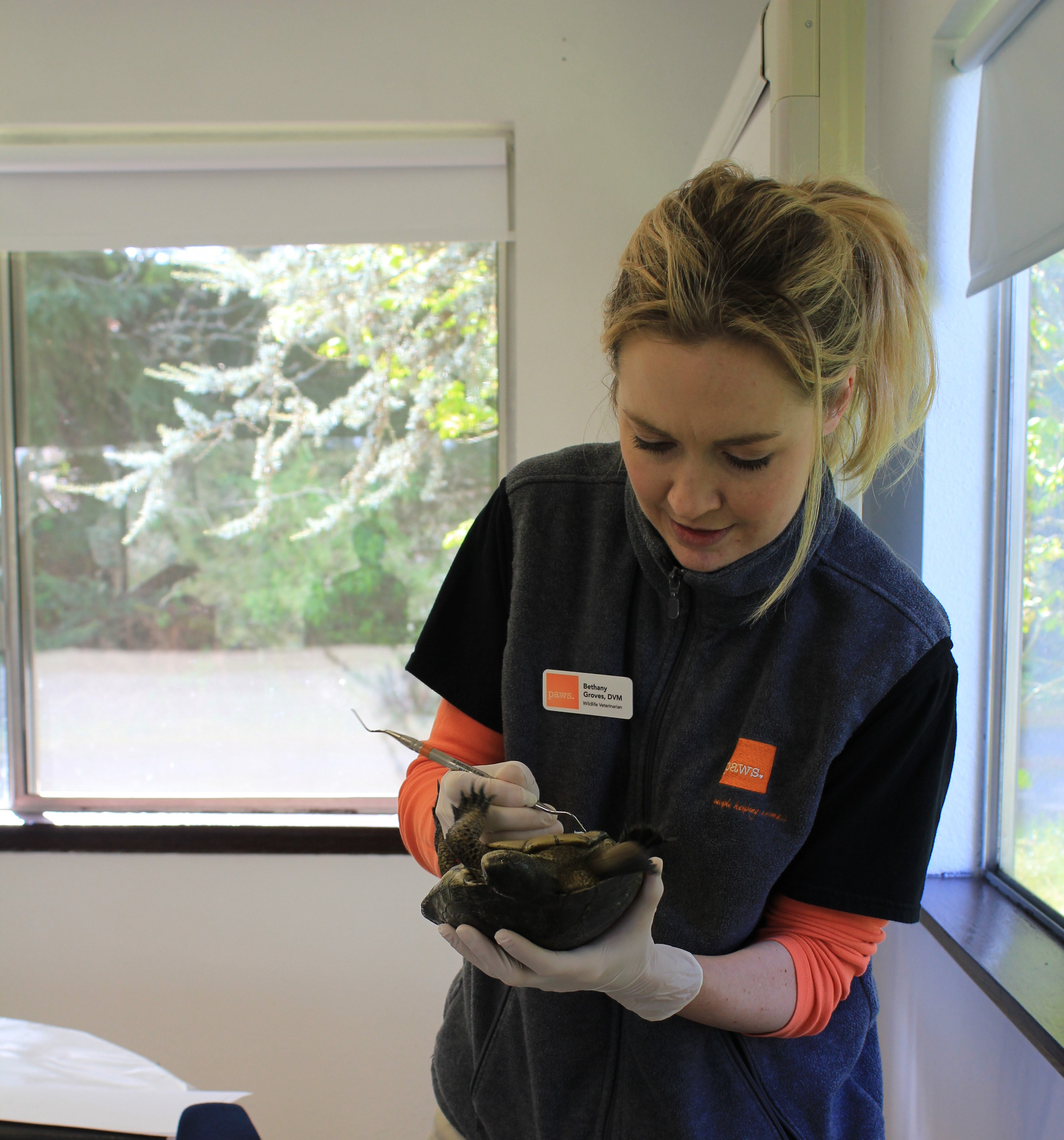
Dr. Bethany examines turtle prior to release. Photo by SPP Manager Kelli Bush
Dr. Bethany examines turtle prior to release. Photo by Kelli Bush.

Sadie helping to attach the radio trackers on the turtles. Photo by SPP manager Kelli Bush
Sadie helping to attach the radio trackers on the turtles. Photo by Kelli Bush.

Turtle ready for release! Photo by SPP manager Kelli Bush
Turtle ready for release! Photo by Kelli Bush.

Deputy Secretary, Jodi Becker-Green releasing her turtle. Photo by SPP manager Kelli Bush
Deputy Secretary Jody Becker-Green releasing her turtle. Photo by Kelli Bush.

Sadie and Kelli co-releasing the last turtle. Photo by Jody Becker-Green
Sadie and Kelli co-releasing the last turtle. Photo by Jody Becker-Green.

by Joslyn Rose Trivett, SPP Network Manager

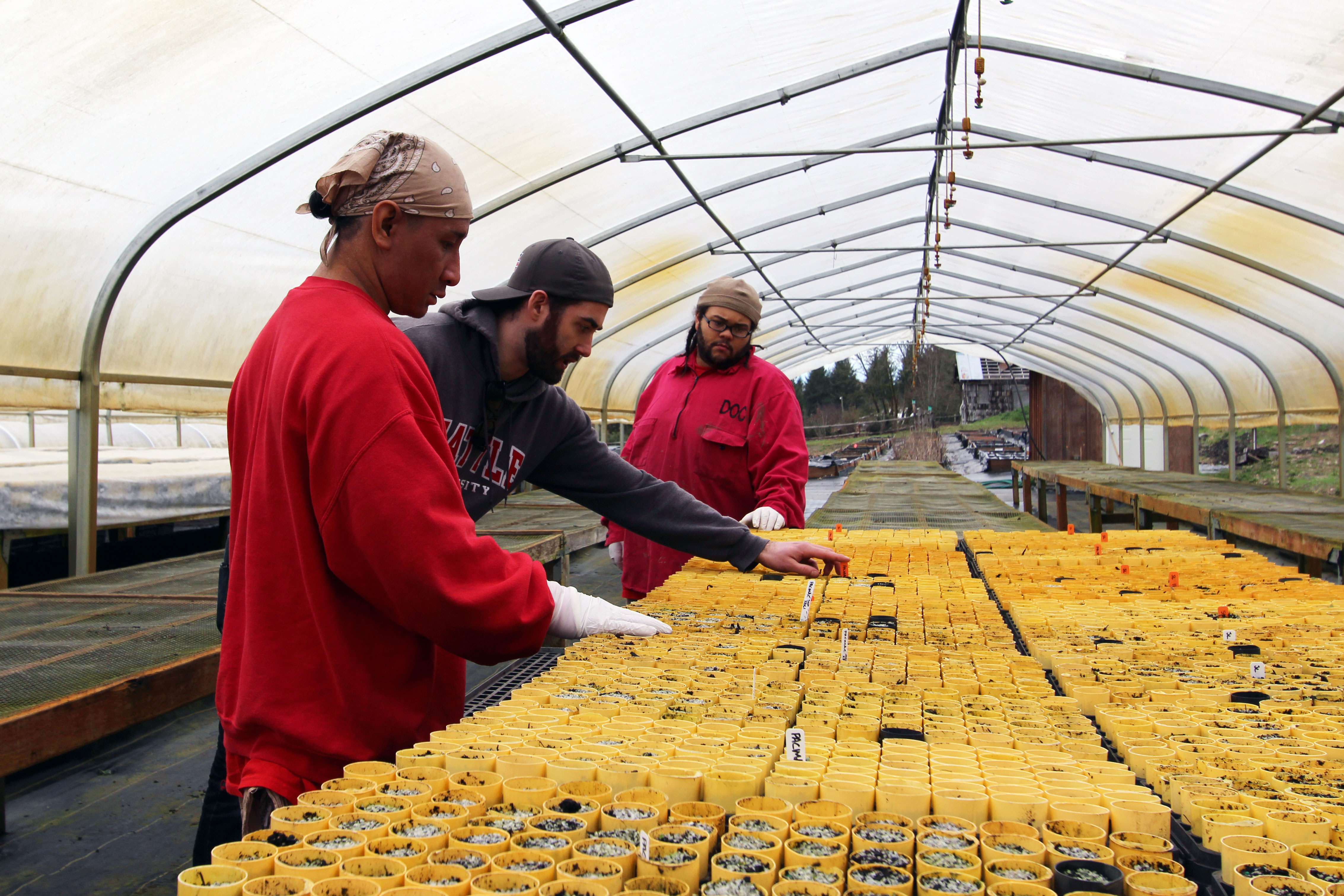
In February, I visited Shotwell’s Landing and got to see the prairie restoration crew in action. The crew is contributing to program coordinator Conrad Ely‘s thesis research for the Master of Environmental Studies program. The research builds on the work of an earlier Master’s thesis investigating how treating seeds with plant-derived smoke water, which contains many of the same chemicals present in prairie fires, can affect their germination rates and vigor—many prairie species are very difficult to propagate, and they hope to trigger germination with treatments simulating prairie fire.

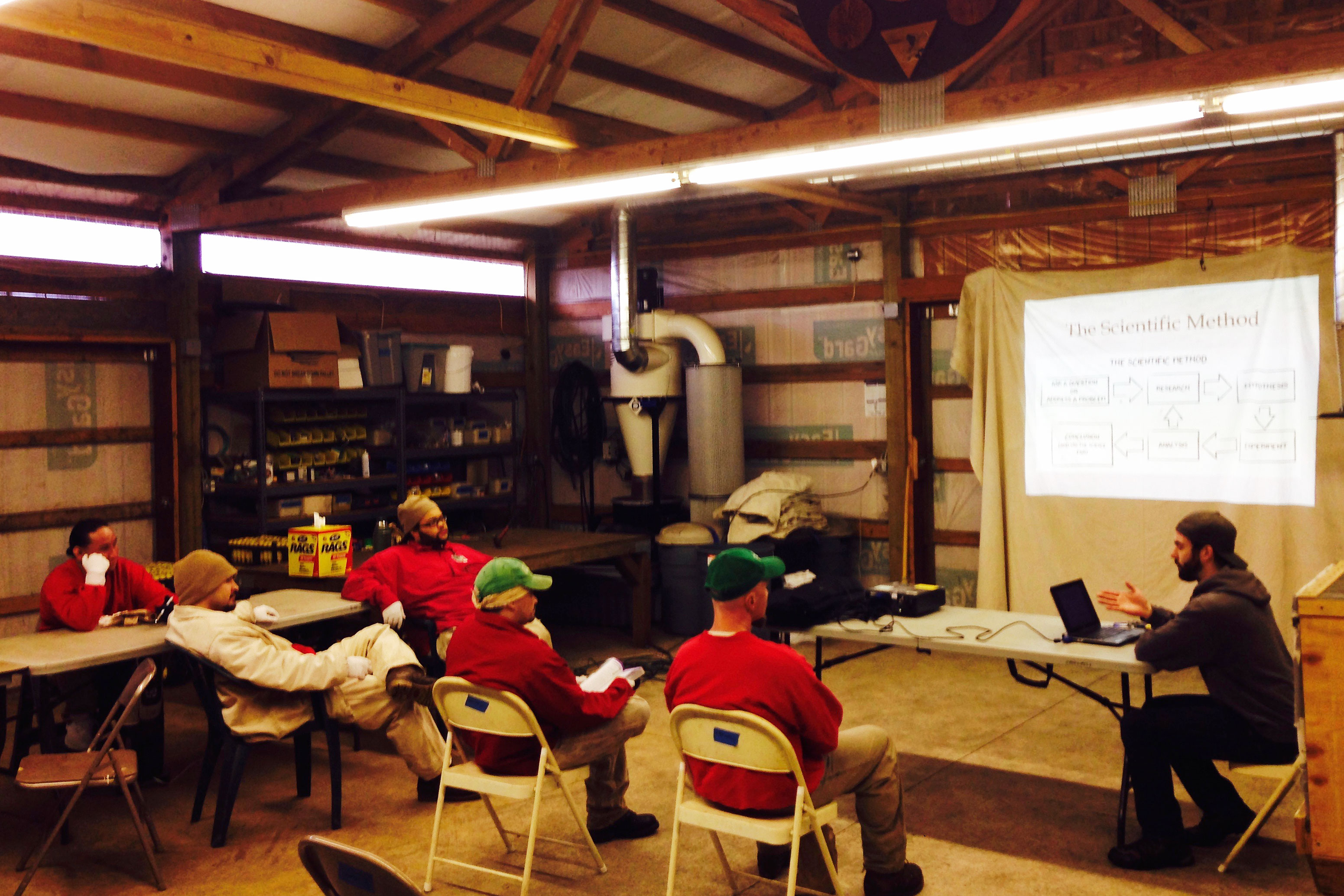
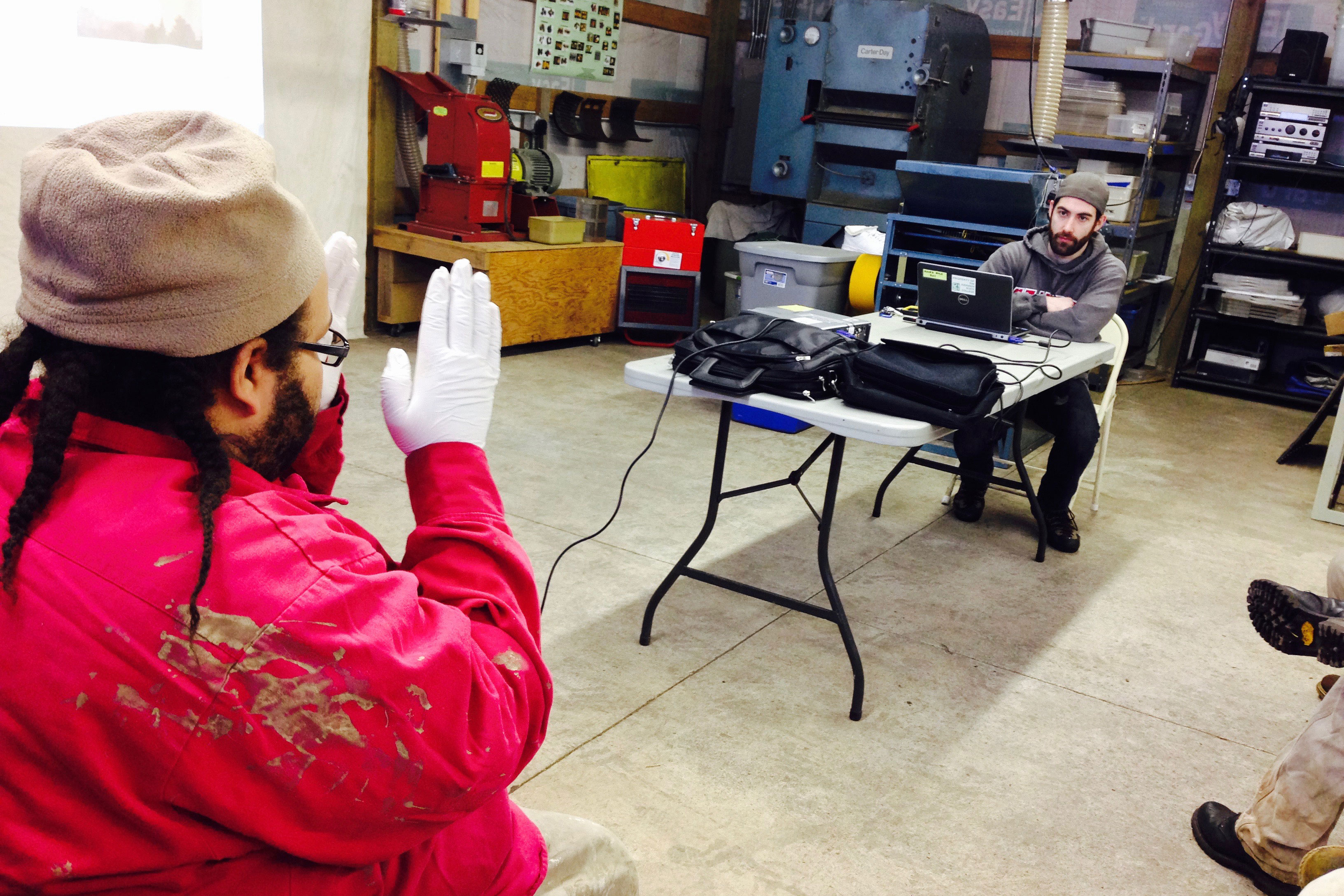
After the first nursery tasks of the day, program coordinator Conrad Ely shared a presentation on the scientific method. He tied principles of research design to their shared experiment, and then to Mima Mounds enigma. He used theories on the Mima Mounds’ formation to illustrate opportunities as well as limitations of the scientific process. From their experience with prairie restoration, the crew knows the Mounds well, and they jumped in with their own thoughts and theories.

My gratitude for everything the crew does for the region’s prairies. They are employed in prairie restoration full time, and their efforts and enthusiasm make a big difference for South Sound prairies, one of the most rare and threatened landscapes in the nation.

scientific-method
Program coordinator Conrad Ely leads discussion of the scientific method.


lunchbox-makes-his-point
Benjamin Hall brought great questions and ideas to the discussion of the Mima Mounds mystery.


keeping-track
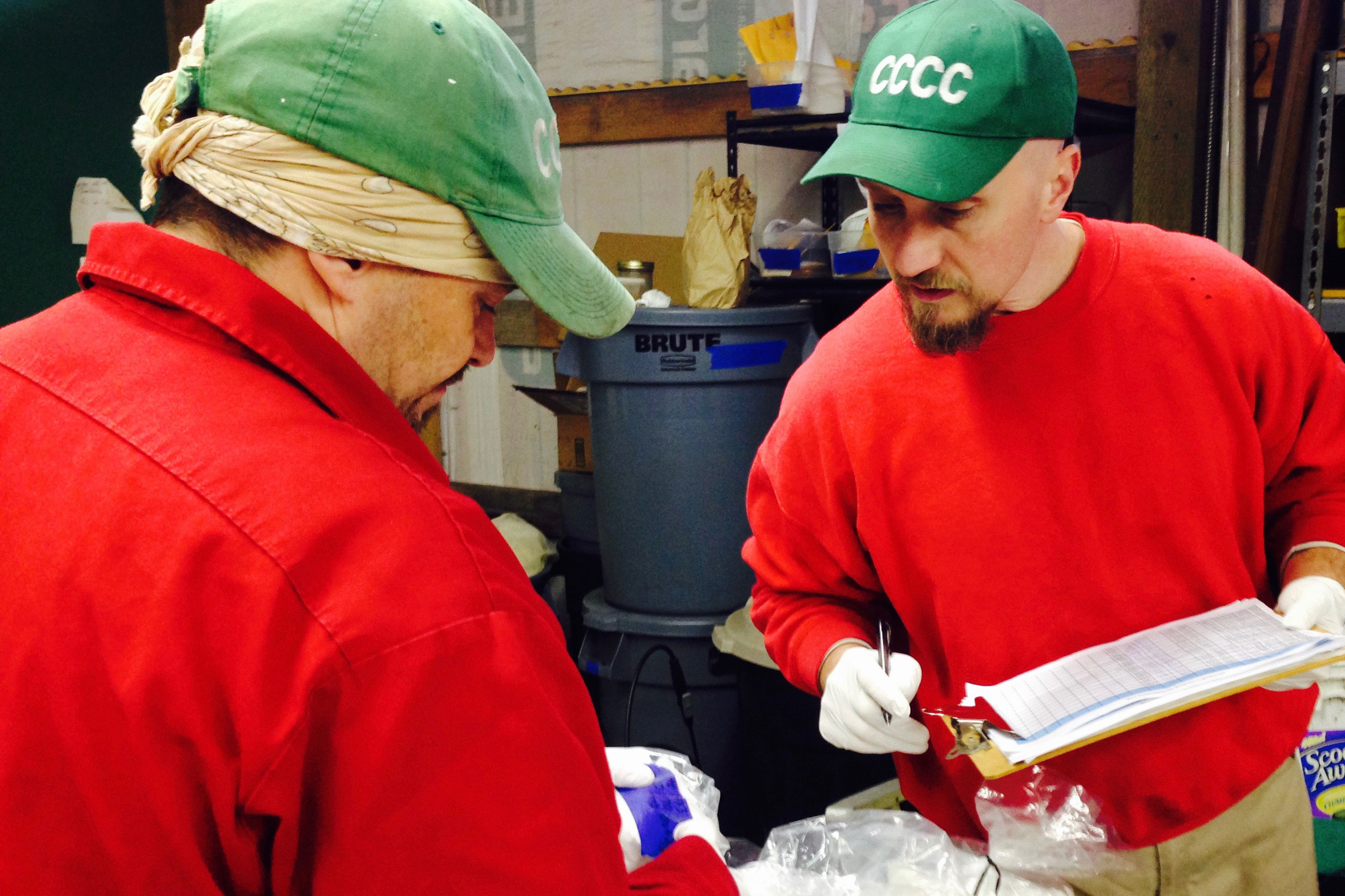
Nursery technicians Robert Bowers (left) and Andrew McManus (right) track seed lots for stratification prior to spring sowing.


conrad-and-crew
Conrad discusses germination rates with technicians Bobby Un (left) and Benjamin Hall (right).


in-the-garden
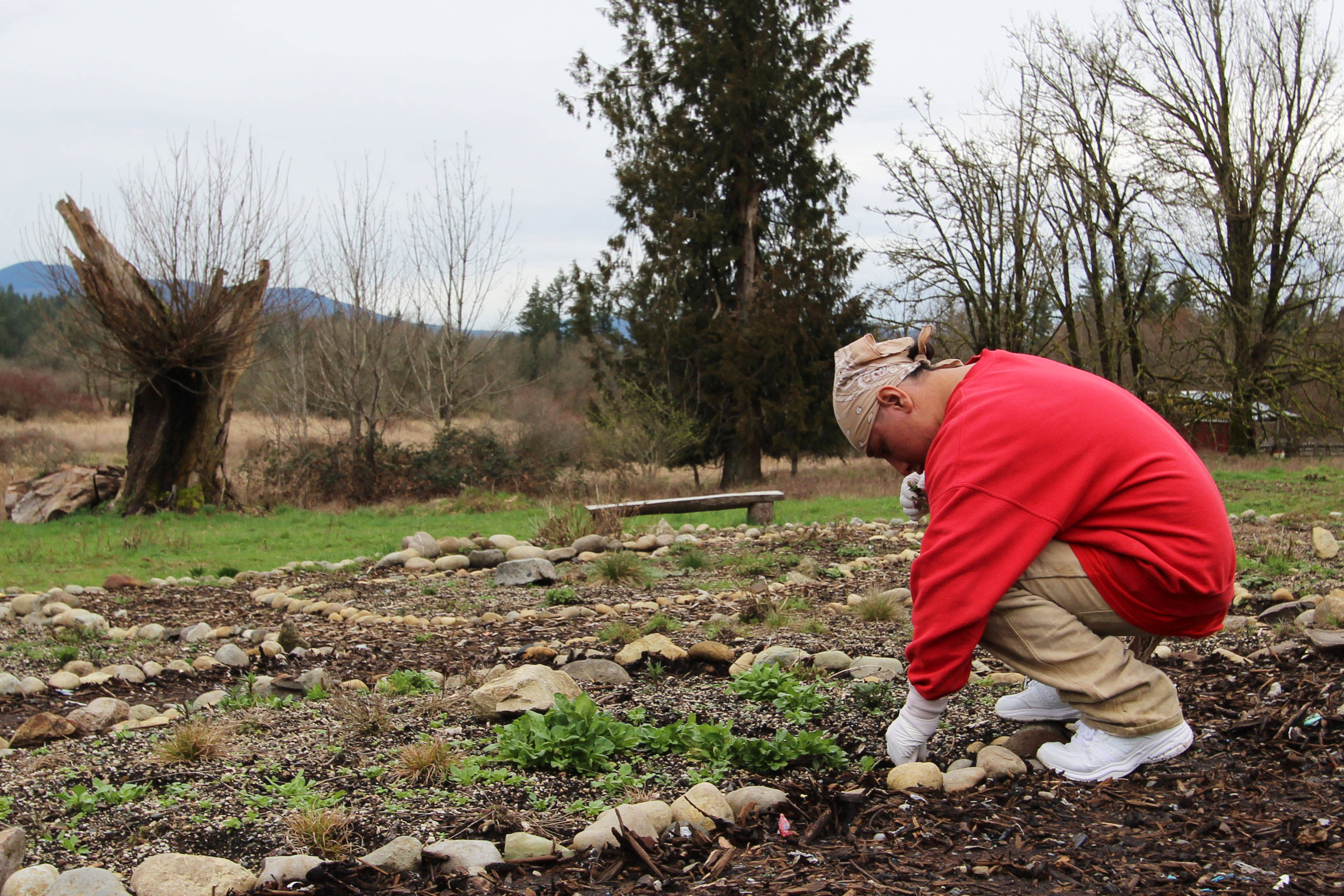
The group visited the demonstration garden at the north end of Shotwell’s Landing, mostly dormant in the winter but still a pleasing site for contemplation.