

Washington State Penitentiary (WSP)
WSP is home to the renowned Sustainable Practices Lab (SPL). The SPL hosts a variety of sustainability programs to reduce the amount of waste and support the nearby community by donating items like quilts, teddy bears, art, woodworking pieces, plants, and much more. The SPL also hosts SPP’s Sage Brush Steppe Conservation Nursery , Foundations in Gardening , and beekeeping . The SPL is also home to the podcast Concrete Mama. Outside of the SPL, WSP is full of a wide variety of gardens, including a large-scale farm that supports WSP’s kitchen and local food banks. See below for all programs reported by WSP.
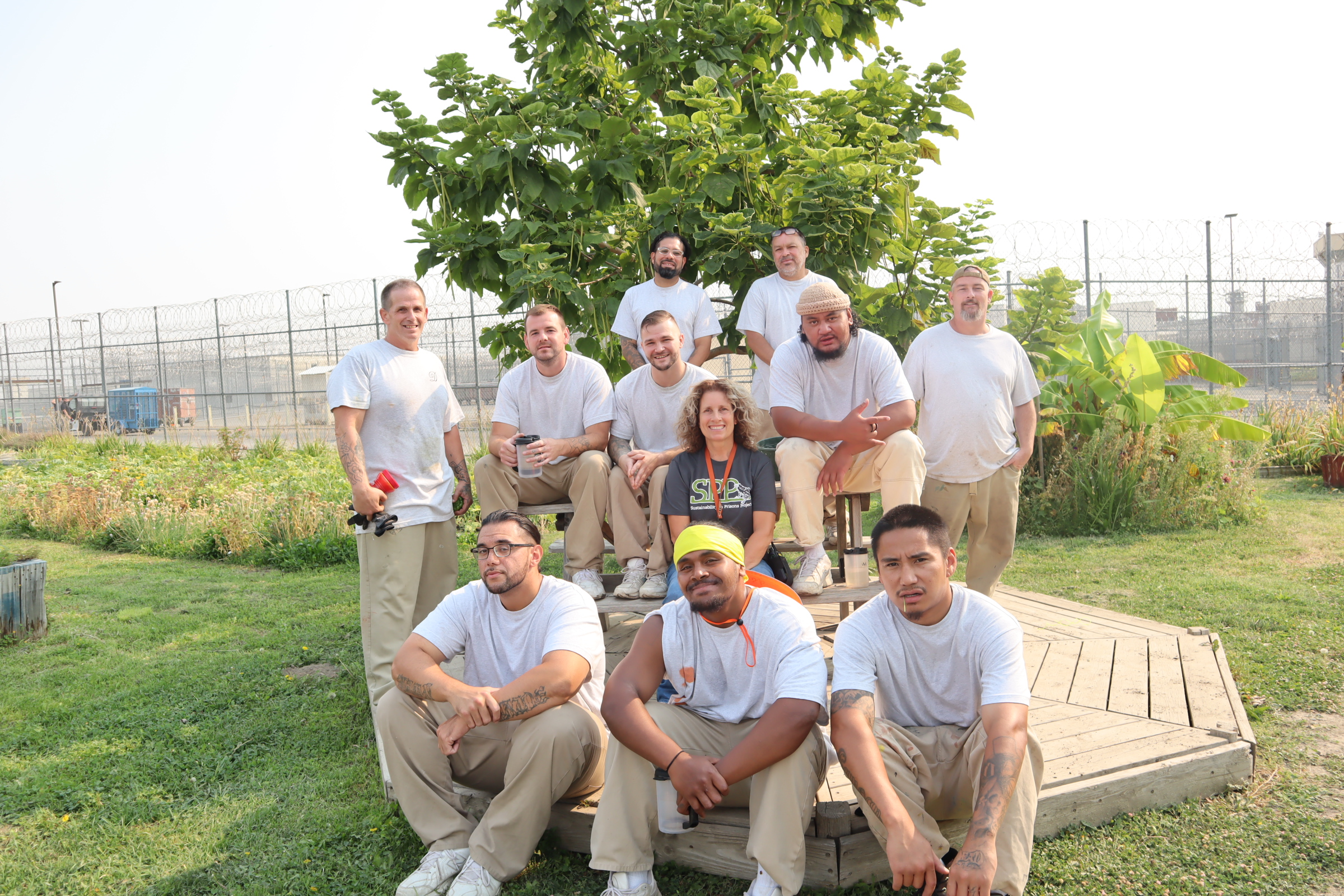
SPP’s Sagebrush Nursery Manager, Gerry Glenn, and Sagebrush Nursery Technicians pose for a group photo in the garden at WSP. Photo by SPP staff
Facility Highlights
Aquaculture and Aquaponics
Highlights as of December 2025:
This system uses a closes system loop to grow house plants and plant starts that are used across the facility.
Area:
SPL
Art program
Highlights as of December 2025:
Various art pieces created by incarcerated artists are donated to auctions that support various charities.
Area:
SPL
Partners:
Various nonprofit partners
Beekeeping
Highlights as of December 2025:
4 healthy hives that help pollinate SPL’s Green Zone.
Area:
SPL
Partners:
West Plain Beekeepers, Washington State Beekeepers Association
Community Crews
Highlights as of December 2025:
Sustainability-related activities included landscaping, mowing, trimming, brush removal, cleaning out creeks, tree and shrub planting for fish and wildlife habitat, and pumpkin harvest;
Area:
WSP-MSU
Partners:
City/County of Walla Walla, Veterans Administration, Port of Walla Walla, Walla Walla Fairgrounds, Walla Walla Landfill, Walla Walla County Private Properties, and local Cities and/or Counties such as Waitsburg, Dayton, College Place, Prescott
Composting, Main
Highlights as of December 2025:
In previous years, 75.9925 tons of post-consumer food waste to compost; 85.605 tons of post-consumer food waste to in-ground composting to improve soil in wheat fields; saves ~$150,000 in disposal fees.
Area:
WSP
Concrete Mama Podcast
Highlights as of 2025:
Second season coming in 2026. First season was very successful, even hitting No. 2 in Apple’s documentary charts.
Area:
SPL
Flower gardens
Highlights as of December 2025:
Pollinator-friendly flower gardens, boxes, and baskets; added several new planter boxes and a pollinator garden of clove.
Area:
WSP-MSU
Furniture Repair
Highlights as of 2025:
The SPL continues to repair furniture instead of throwing away and buying new furniture.
Area:
SPL
Horticulture
Highlights as of December 2020:
Five flower plots for members of mental health programming.
Area:
WSP-MHU
Partners:
Washington State University Department of Entomology
Institutional Sustainability Garden
Update year to 2025:
Grew almost 250,000 lbs. of produce that were either donated to local food banks, used in the facility kitchen, shared with other facilities, or donated to staff.
Area:
WSP
Partners:
Blue Mountain Action Council and Christian Aid Center
Quilting
Highlights as of 2025:
The SPL produces around 800 quilts per year that are donated to charities.
Area:
SPL
Rental garden boxes
Highlights as of December 2025:
48 raised bed gardens, available to individual renters for personal use; Program created with goal to reduce violence.
Area:
WSP-South Complex
Rental garden boxes
Highlights as of December 2020:
38 raised garden bed boxes used by 58 individuals; limited movement during COVID-19 pandemic caused some difficulty in accessing gardens. Despite these challenges, program received ~100,000 hours of participation.
Area:
WSP-MSU
Sagebrush Steppe Ecological Conservation Program
Highlights as of December 2025:
Expanded nursery production to include forbs and shrubs. 26 technicians completed the program in 2025.
Area:
SPL
Sheep Ecological Conservation program
Highlights as of December 2020:
Program active but some work is pending the appointment of a lead animal researcher for WSU; previous year, 9 Suffolk ewes produced 18 lambs; 10 female and 8 male; partners developed new data tracking systems and protocols. Certification and materials are in development.
Area:
WSP-MSU
Partners:
Washington Department of Fish and Wildlife, Washington State University
SPL Overview
Highlights as of 2025:
Donated over 8,500 items. Completed over 11,500 state work order. Employed over 320 incarcerated individuals.
Area:
SPL
Partners:
Sustainable Operations Lab: receive materials donations from partners; donated to 550 charities since start of SPL 2012
SPL: Foundations in Gardening
Highlights as of 2026:
40 students have completed the class since it started being offered in 2024.
Area:
SPL
SPL: Green Zone
Highlights as of December 2025:
The SPL grows a variety of fresh produce, like tomatoes, peppers, and melons, that are donated to local food banks.
Area:
SPL
Partners:
Farm to school, Lettuce Grow, Master Gardening program, OSU
SPL: Green Zone composting
Highlights as of December 2025:
40+ tons kitchen food waste combined with waste paper results in 20+ tons of finished compost; compost spread in
Area:
WSP-SPL
SPL: Learning Center
Highlights as of December 2025:
Offered SPP’s Sagebrush Courses, SPP’s Gardening Course, and 7 Habits.
Area:
SPL
SPL: Wood Shop & Carving
Highlights as of December 2020:
2,609 woodcraft items were created for state use. 1,943 items crafted and donated to nonprofits and charities.
Area:
SPL
Partners:
WSP Employees Veterans’ Committee, Hard Headz, Habitat for Humanity, Humane Society, Fallen Outdoors, Salmon for Soldiers and other non-profit groups
SPL: Worm Farm
Highlights as of December 2025:
Produced 8,000 lbs of worm castings within the past year and reduced institutional landfill impact by 8,000 lbs; worm products donated to nonprofits and used in institution gardens.
Area:
SPL
SPL:Crochet Program
Highlights as of December 2025:
A team of 4 SPL workers crochet various items for donation.
Area:
SPL
SPL:Sign Shop
Highlights as of 2025:
The Sign Shop continues to produce signs to support.
Area:
SPL
Partners:
————


Together, we weimagine what’s possible
Sustainability thrives on community. Be part of a unique collaboration that bridges
education, environmental justice, and rehabilitation in real, tangible ways.



Once a year, SPP reports on all things sustainable happening in Washington State Prisons.