

Washington Corrections Center (WCC)
WCC hosts a wide variety of SPP programs in their Sustainable Operations Lab (SPL). As a leader in composting statewide, WCC’s SPL program includes the small composting piles, vermiculture, bokashi treatment, chickens, and has experimented with Black Soldier Flies. The Foundations in Composting Course and Composting Manuals were co-created with experts at WCC. Compost is used throughout facility gardens which grow produce and flowers to donate to community organizations or use on site. The SPL also hosts the Tribal Sons Garden, which grows culturally significant plants for local tribes and incarcerated tribal members. SPP is partnering with the Tribal Sons to pilot new programs involving nature and culture.
Facility Programs Highlights
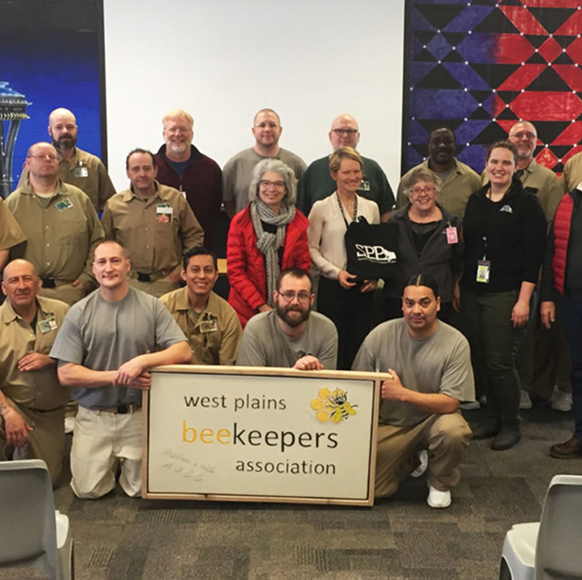
Beekeeping
Highlights as of December 2025
13 new beginner level and 7 advanced beekeepers received their certificates in 2025. The program has 5 strong hives.
Partners:
Olympia Beekeepers Association, Washington State Beekeepers Association
Chicken Program
Highlights as of December 2025
WCC has 2 flocks for a total of 61 chickens. Chickens contribute to the food waste reduction by consuming kitchen scraps and soil amendment through their droppings.
Construction
Highlights as of December 2025
WCC has established a close collaboration with in construction projects. This approach provides students with hands-on experiences. The class constructed a shed with 4 garage ports to accommodate JD tractors, equipment, and riding mowers.
Partners:
Centralia College, Kiwanis Hood Canal, Hood Canal School District, Low Income Housing Institute, Construction Trades Apprenticeship Preparation
Flower Gardens, Boxes, and Baskets
Highlights as of December 2025
A total of 7,044 flowering plants were successfully distributed around the facility and 24 baskets donated.
Partners:
Gethsemane Ministries
Foundations in Composting
Highlights as of December 2025
This curriculum was co-developed at WCC with members of the SPL crew. September 2025 saw 10 graduates complete the program.
Gardens and Greenhouses
Highlights as of December 2025
The success of this program continues to increase interest for collaboration. Hope Garden harvested 41,322 lbs. while Greenhouse #2 and #3 produced 9, 590 lbs. of food in 2025. Nearly 80% was donated to the community and the rest was used in the facility kitchen.
Partners:
Thurston County Food Bank, The Hood Canal Food Bank, Matlock Community Center, Harvest Now, Gethsemane Ministries, Kokua Services, Kitchen for the Homeless, Catholic Community Services, and WIC
Houseplants
Highlights as of December 2025
Plants in all shared and staff areas, provided and maintained by Grounds Maintenance crew.
Partners:
Hood Canal Food Bank, Thurston County Food Bank, Adopt-A-Pet, Spell-E-Bration with Sound Learning, and Squamish Tribe
Large-scale Composting
Highlights as of December 2025
The program uses bokashi, worms, chickens, static piles, black soldier flies, and an in-vessel system to turn all waste into compost. In 2025, WCC diverted 614,956 lbs. of waste, creating 307.5 cubic yards of compost.
Plant Starts
Highlights as of December 2025
In 2025, WCC donated 1,900 vegetable seeds to local tribes. Additionally,7,369 various vegetable seedling and 5,000 onion starts were provided to those in need throughout Thurston and Mason counties.
Partners:
Thurston County Food Bank, Construction Trades Apprenticeship Preparation (CTAP), SBL, Adopt a Pet Foundation, Squaxin Tribe Food Bank, Skokomish Tribe Food Bank.
Prairie Ecological Conservation Nursery
Highlights as of December 2025
In 2025, WCC added an estimated 1.38 acres of property to expand the Prairie Ecological Conservation Nursery and graduated three students.
Partners:
Center for Natural Lands Management, Joint Base Lewis-McChord, Washington Department of Natural Resources, Washington Department of Fish and Wildlife, U.S. Fish and Wildlife Service, Oregon Zoo, Friends of Puget Prairies, and Wolf Haven International
Waste sorting & Recycling
Highlights as of December 2025
All cardboard is shredded at the facility and reused in all garden areas and planters for beautification.


Together, we weimagine what’s possible
Sustainability thrives on community. Be part of a unique collaboration that bridges
education, environmental justice, and rehabilitation in real, tangible ways.



Once a year, SPP reports on all things sustainable happening in Washington State Prisons.